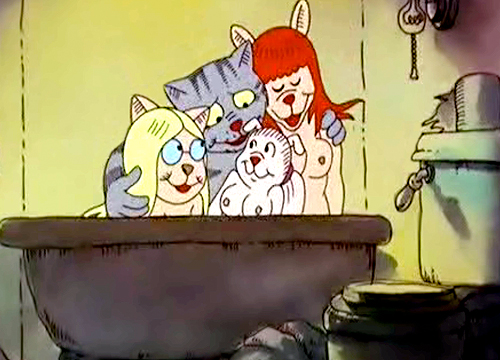
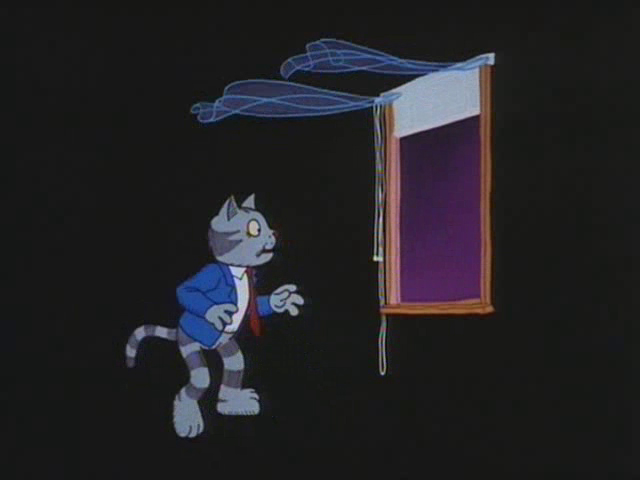
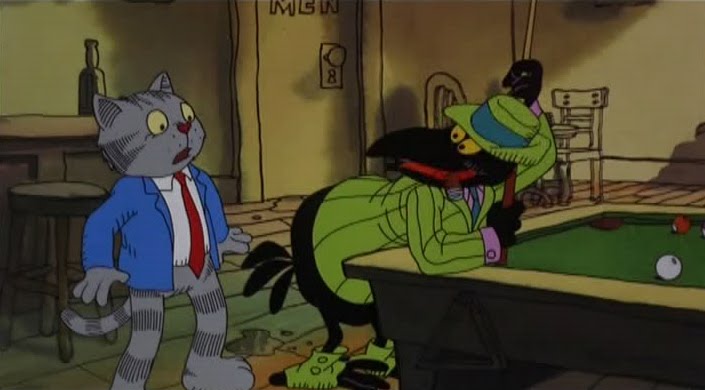
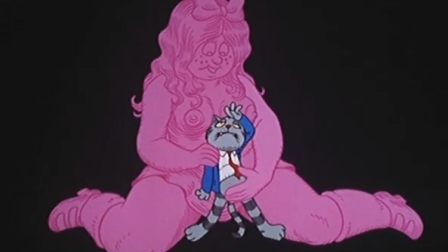
Today’s cinema adventure- Ralph Bakshi’s 1972 feature debut, his adaptation of R. Crumb’s underground comic, Fritz the Cat. The first animated film to earn an “X” rating, it met with a lot of resistance and outrage from the mainstream, and Crumb hated it, disowned it, and tried to get his name taken off the credits- but it ended up being the most financially successful independent animated feature of all time. Written and directed by Bakshi, the film follows Fritz as he takes a personal odyssey from a life of “hanging out” and looking for a good time through a drug-inspired pursuit of revolution- with plenty of shockingly permissive bad behavior along the way. Voiced by Skip Hinnant (known for his work as part of the ensemble on the classic educational show, The Electric Company), Fritz is hardly a typical cartoon hero: far from cute, barely likeable, and nobody’s idea of a role model, he indulges in one ill-advised misadventure after another, motivated by selfish hedonism even when he is ostensibly acting for what he views as the greater good. He serves as a sort of counter-cultural Candide, a naïve fool who fancies himself a sophisticate, and as such is at the mercy of a world more corrupt and complex than he imagines; in short, he is the kind of phony that the truly hip despise, and his journey of self-discovery in this worst-of-all-possible-worlds is a vehicle to expose social and political hypocrisy from every source, including (and especially) from our hero himself. This ambitious agenda may have been beyond the scope of Crumb’s original work (he certainly thought is was), but for Bakshi, it was important for the film to make a statement, which it most certainly does- in between scenes of anthropomorphic animals having sex and taking drugs, that is. Not that his intention was to shock: geared towards a drug-friendly youth culture, loaded with tons of juvenile sexual, political and racial humor, and mercilessly critical of both the radical left and the extremist right, the film is clearly aimed at an audience who shares his uncensored sensibilities. At the time of its release, it was one of those films that generated protest and controversy from people who more than likely never saw it, and was cheerfully received by a target audience hungry for the kind of frank, turned-on content it offered. Forty years later, most of its shock value and its topicality are long gone (one can see comparable content on any given episode of Family Guy today) and across the gap in time much of the film’s anarchic zeitgeist seems more than a little tiresome- as I suspect, to the more mature viewer, it did even then. Still, as a piece of history, it is fascinating to watch: the animation, though primitive and almost quaint to modern eyes, was innovative and ground-breaking at the time; it presented adult subject matter and content never before seen in animation and completely changed the industry, breaking the stereotype of cartoons being only for children; and it vividly captures a particular social strata of 1960’s culture that is often ignored by popular memory. I won’t say that you’ll enjoy it, but if you’re intrigued by looking through a window to a bygone era- and you’re open-minded and adventurous- you’ll be glad you watched it.
Category Archives: Cult
Peeping Tom (1960)
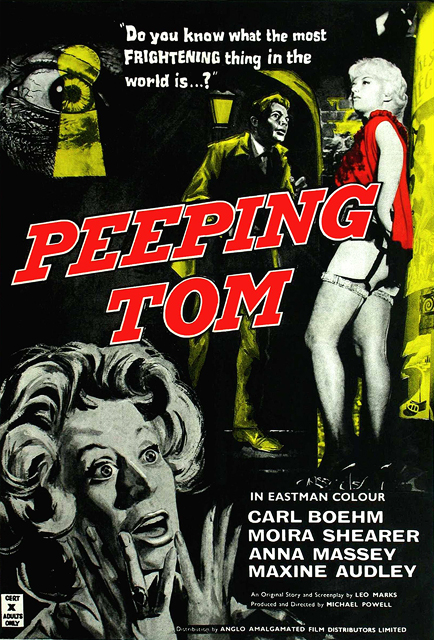
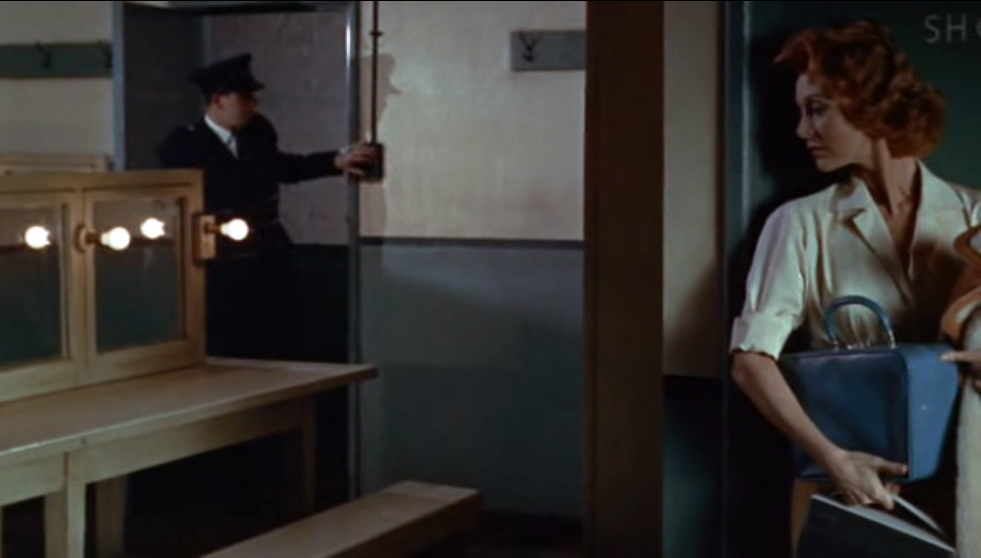
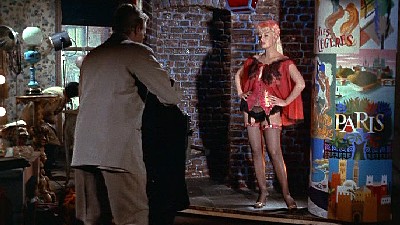
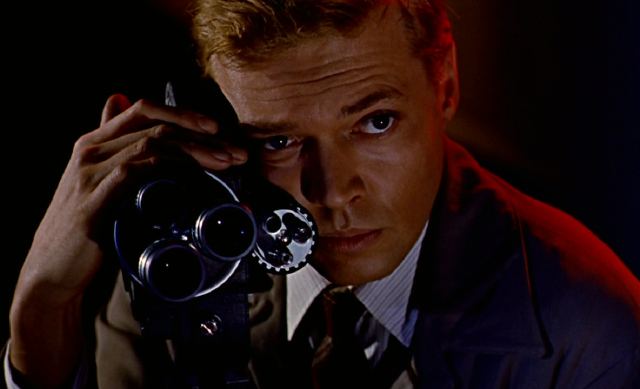
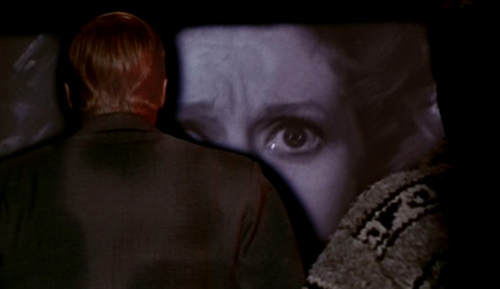
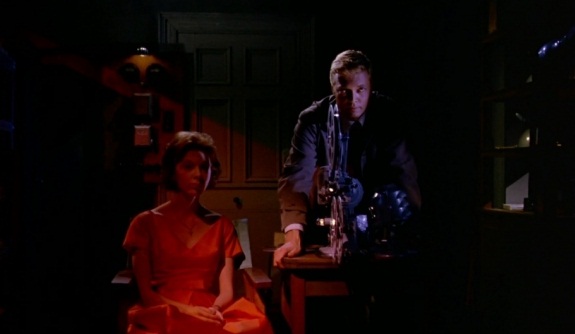
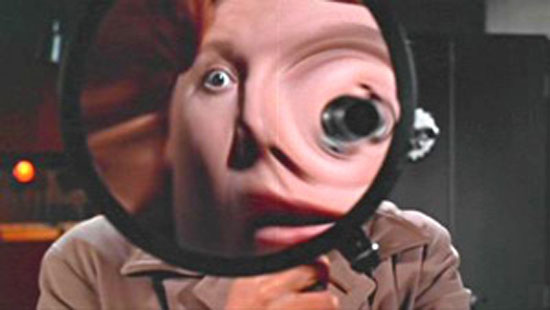
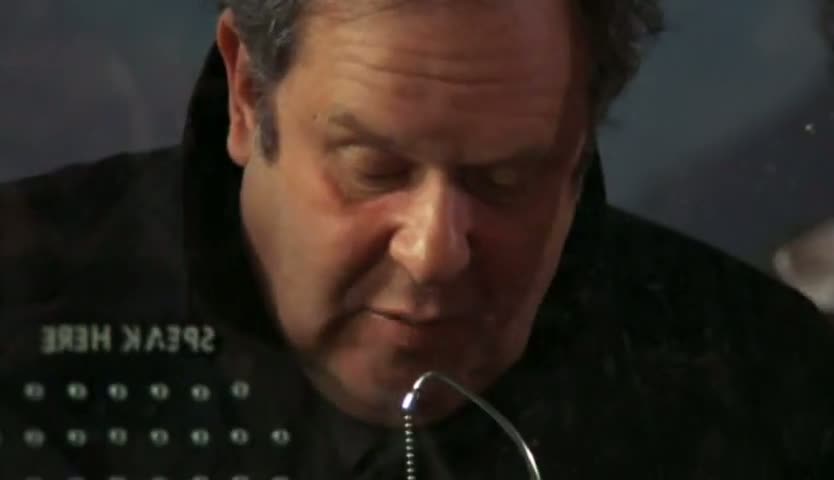
Today’s cinema adventure: Peeping Tom, the controversial 1960 thriller directed by Michael Powell, who was one of Great Britain’s most revered and respected filmmakers- that is, until the savage critical lambasting received by this feature effectively put an end to his career. Photographed in garish color reminiscent of the lurid under-the-table pornography of its time, this tale of a disturbed young recluse who films women as he murders them was such a flop upon release that it was barely shown outside of England. Over the succeeding years, however, it became a cult classic, growing in critical estimation and championed by such heavy hitters as Martin Scorsese (for one), and it is now generally acknowledged as a ground-breaking, underappreciated masterpiece of the genre. On an intellectual level, I can see why: director Powell thoroughly explores the theme of voyeurism as it applies to cinema, forcing the audience from the very first frames to identify with the killer, and using the film’s story as a vehicle to manipulate our sympathies, uncover our own guilty voyeuristic tendencies, and confront us with our darkest fears just as his protagonist does with his victims. There isn’t an extraneous or gratuitous moment in the film; every scene, every frame, every shot is calculated and geared toward the purpose- a testament to Powell’s mastery of his cinematic medium. Despite the high score on an academic level, however, the film falls short for me on the more visceral level of emotional response; part of this may be due to the fact that, after 50 years, the film’s shock value (and body count) has been far surpassed by countless other horror movies and, by today’s standard, seems fairly tame (albeit still quite unsettling on a psychological level). But I think the primary problem lies with the casting of Carl Boehm in the central role of the homicidal cameraman: not only does his German accent seem out of place for this decidedly English character, but his performance is stilted and unconvincing, making it difficult for us to sympathize with him- a necessary element to the transference of guilt to the audience which Powell works so hard to achieve. The rest of the cast is excellent (particularly the young Anna Massey and the film’s biggest star, Moira Shearer, whose small but pivotal role is the centerpiece of the film’s most masterful and harrowing sequence), but with Boehm’s wooden presence in the middle of the proceedings, the film’s overall effect is muted: it stimulates the brain, and disturbs the psyche, but the heart remains aloof. Still, it has much to recommend it, and it’s definitely worth the effort to check out a movie which, flawed or not, remains as an important footnote in cinematic history.
The Ritz (1976)
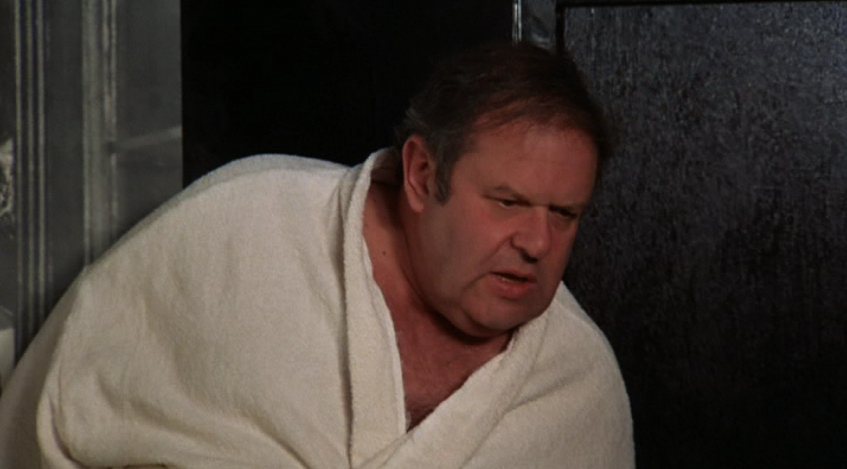
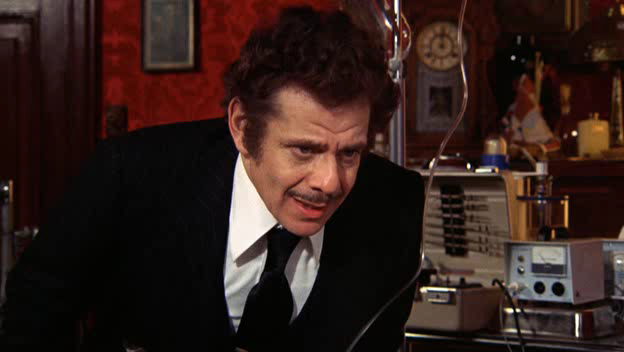
Today’s cinema adventure: The Ritz, the 1976 screen version of Terence McNally’s daring-for-its-day stage farce about a straight Midwestern businessman who hides out from his homicidal brother-in-law by checking into a gay Manhattan bathhouse. Directed by the legendary Richard Lester (known for a fast-paced, edgy style that made The Beatles A Hard Day’s Night into an instant classic) with a screenplay by the playwright himself, the film has aged into something of a curiosity of its time- a glimpse at bathhouse culture during the heady pre-AIDS era of the sexual revolution. McNally (who has become something of a gay poet laureate) made the brilliant move of taking the formula of a classic farce and placing it into what was at the time (and, sadly, to an extent, still is) a socially taboo setting; the result was a risqué piece of popular entertainment which brought underground gay culture into the spotlight and ostensibly took a small step towards making homosexual subject matter more acceptable for mainstream audiences. Unfortunately, by virtue of the requirements of the farcical genre, the characters (both gay and straight) are one-dimensional stereotypes which seem tired and offensive today, and the comedy has been rendered considerably less amusing by years of over-exposure to TV sit-coms in constant rotation. The highlight of the film is undoubtedly Rita Moreno, reprising her Tony-winning Broadway performance as Googie Gomez, a fiery Bathhouse Betty who gets caught up in the intrigue and (fortunately for the audience) performs a deliciously over-the-top lounge act for the boys; also of note are her Broadway co-stars, Jack Weston (as the hapless refugee), Jerry Stiller and future Oscar-winner F. Murray Abraham (as a flaming, self-appointed tour guide who manages to be likeable despite the heaping load of gay clichés he is required to carry), and an amusing turn by a young Treat Williams as a naïve (and squeaky-voiced) private detective. The rest of the cast fill their roles sufficiently well, Lester’s direction is sure-handed, and the look and feel of the seedy setting are captured quite authentically- but in 2012, the edge which once made it all so delightful has become painfully dull. The bottom line: as a piece of social and theatrical history, The Ritz is definitely important enough to warrant a viewing; but if you are just looking for some laughs and entertainment, you might want to skip it- or, better yet, fast forward to Rita’s scenes and just watch those.
Woman in the Dunes/Suna no onna (1964)
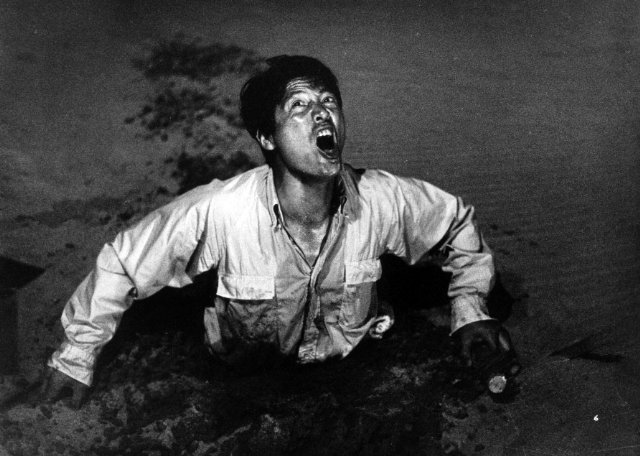
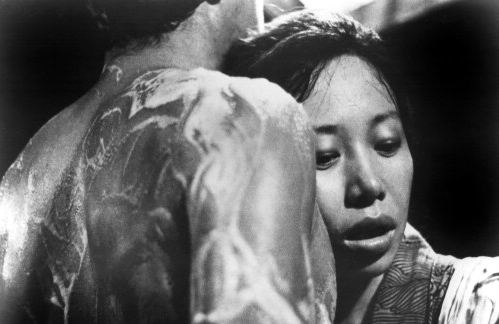
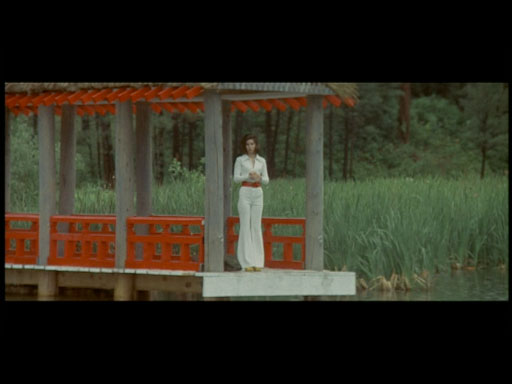
Today’s cinema adventure: Woman in the Dunes the strikingly photographed 1964 avant garde feature by Japanese filmmaker Hiroshi Teshigahara, Adapted by Kōbō Abe from his own novel, it’s a deceptively simple parable about an entomologist on a field expedition to collect specimens at a remote beach; when he misses his return bus, he seeks shelter for the night with a young widow in a local village- only to find himself trapped into remaining as her companion in a life of endless labor, shoveling sand from the quarry in which they live, both for their sustenance and to prevent their house from being buried. Within the framework of this premise are explored a multitude of giant, deeply reverberating themes, ranging from the contrast between the masculine and the feminine to man’s role in society to the very nature and meaning of existence itself- all of which plays out against the backdrop of the monumental, ever-shifting sand dunes, emphasizing the inexorable dominance of nature and the universe and transforming the primal landscape into a central character of the drama. The performances of the two principals (Eiji Okada and Kyoko Kishida) are superb, helping to create the delicate balance between realism and symbolic fantasy that propels the film- but the true star here is the magnificent black-and-white cinematography of Hiroshi Segawa, which not only captures the fluid, omnipresent sand in remarkable, crystalline detail, but conveys a sense of tangibility to every texture in the film, from the salty grit which covers every surface to the smoothness of the players’ skin, making the viewer’s experience highly visceral- and erotic. One of those world cinema classics that is a staple in film classrooms around the world, the artistry of Woman in the Dunes is indisputable- some audiences, however, may find that its blend of existential absurdism and Zen austerity creates a cool detachment that prevents emotional involvement in the action. Nevertheless, as an intellectual and philosophical exercise- and as piece of stunning visual artistry- it’s a film which packs more than enough power to make its 2 ½ hour running time seemingly fly by. A must-see for any serious film buff- but you may feel like you need a long shower to rinse off all that sand.
The Man Who Fell to Earth (1976)
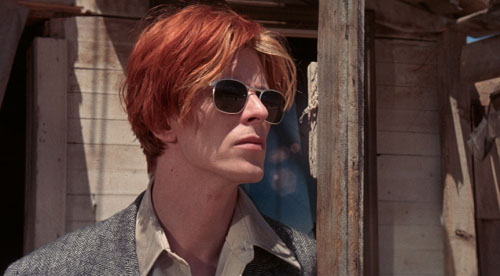
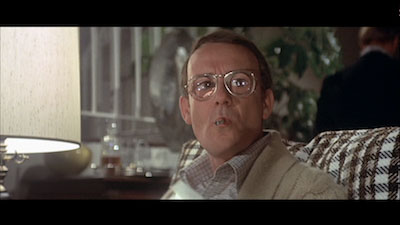
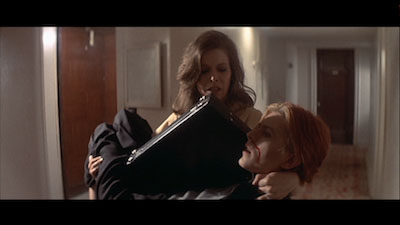
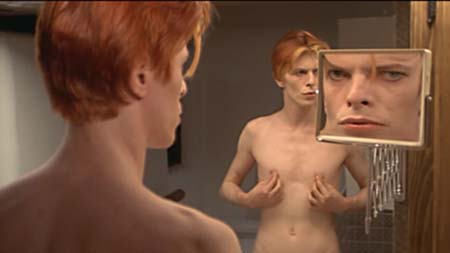
Today’s cinema adventure: The Man Who Fell to Earth, Nicholas Roeg’s 1976 feature starring David Bowie in his first leading film role. Based on a 1963 novel by Walter Tevis, it tells the story of Thomas Jerome Newton, an extra-terrestrial visitor who uses his advanced technology to build an enormous fortune, with the intention to finance the transport of water back to his drought-ravaged home planet, only to be trapped by the interference of corporate and governmental forces- and by his own indulgence in the pleasures of an earthly lifestyle. Visually arresting, leisurely paced, solemn and thoughtful in tone yet experimental and occasionally sensational in style, Roeg’s film (like it’s protagonist) is something of an enigma. Eschewing clarity for mood, the director obscures the storyline with surreal imagery depicting the visceral experiences of its characters, flashbacks to the blasted desert landscape of Newton’s world, strange episodes of temporal disturbance, and a continual shifting of focus among the perspectives of the various principals. The result is a disjointed, confusing film which seems designed to make sense only upon repeated viewings, with plot points revealed in passing by off-handed dialogue, the omission of key details which forces them to be filled in by audience assumption, and the ambiguous resolution of major story elements which leaves more questions than answers. These, however, are deliberate moves on Roeg’s part; he is less interested in presenting a cohesive science fiction narrative than in exploring a metaphor about the lure of wealth and pleasure and the corruptive influences of social and political forces, and he expresses these themes through a meticulously edited mix of hallucinogenic, serene, majestic and pedestrian images which blend to create a dreamlike final product. As for the acting, the key supporting roles are effectively filled by experienced pros Rip Torn and Buck Henry, as well as seventies flavor-of-the-day starlet Candy Clark as a blowsy hotel housekeeper who becomes Newton’s companion; but the film is, of course, centered on Bowie, here at the height of his rock icon popularity, who provides the perfect blend of childlike simplicity and jaded sophistication, exuding both poise and vulnerability and projecting the haunted longing and the bitter disillusionment that mark Newton’s odyssey through the experiences of our planet. Bowie himself has admitted to his heavy use of cocaine during the making of the film, which (though regrettable from many viewpoints) no doubt served to enhance the dissociated, alien persona which so perfectly complements its dreamy, distant mood. Added to the mix is superb cinematography by Anthony Richmond (which dazzlingly captures, among other things, the beauty of the New Mexico landscape that provides the setting for much of the film) and a well-chosen soundtrack of music (compiled by ex-Mamas-and-Papas-frontman John Phillips) featuring avant garde compositions and familiar pop tunes from various eras. The bottom line on this cult classic: if you are looking for a straightforward sci-fi tale, don’t look here- although the currently available version is a restored director’s cut which makes the plot somewhat more coherent than the highly-edited original release, you are almost guaranteed to be disappointed. However, if you are interested in a thought-provoking visual experience (or if you are a hardcore Bowie fan), this really is a must-see, and though it is ultimately somewhat cold and unsatisfying, it is a film which will stay with you for a long time afterwards.
Crimes of Passion (1984)
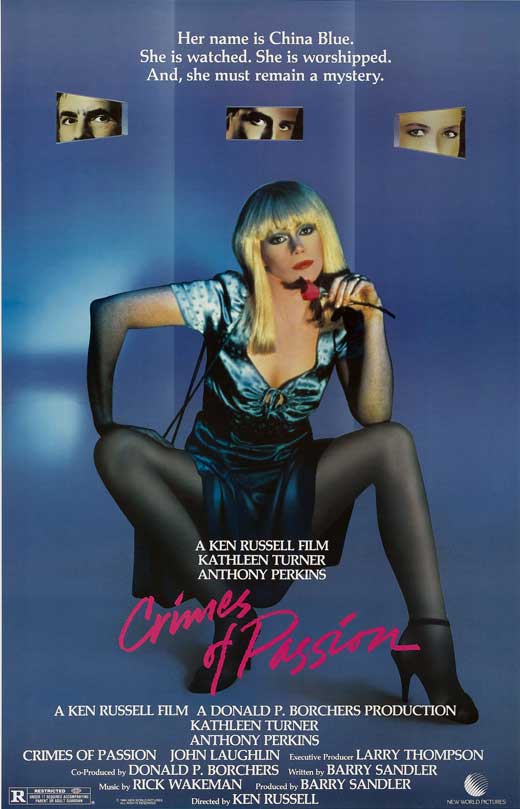
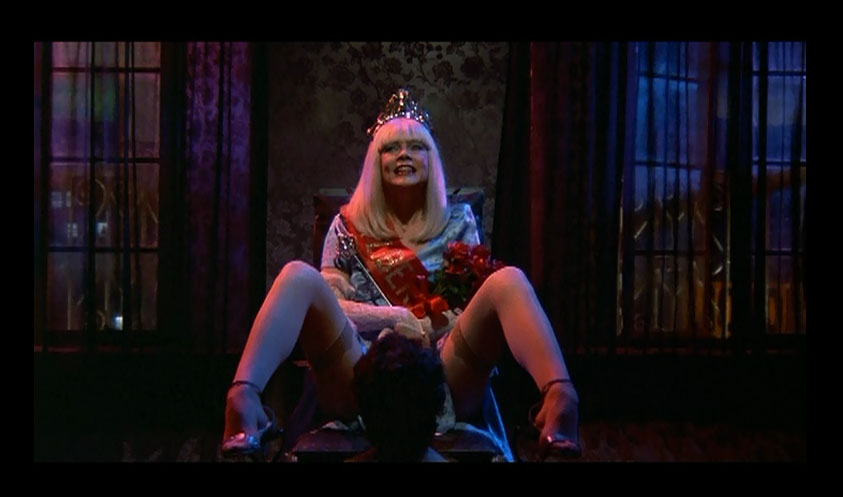
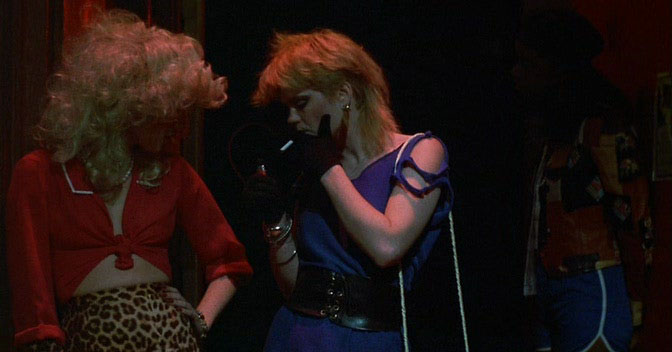
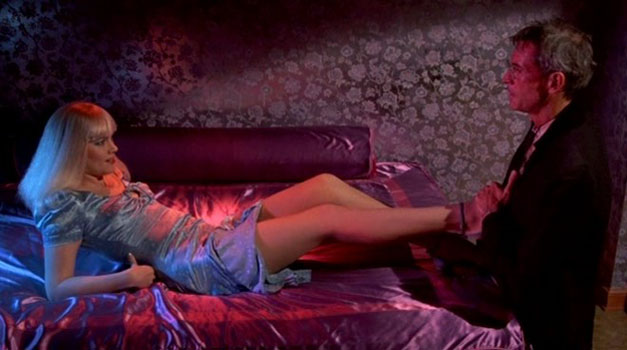
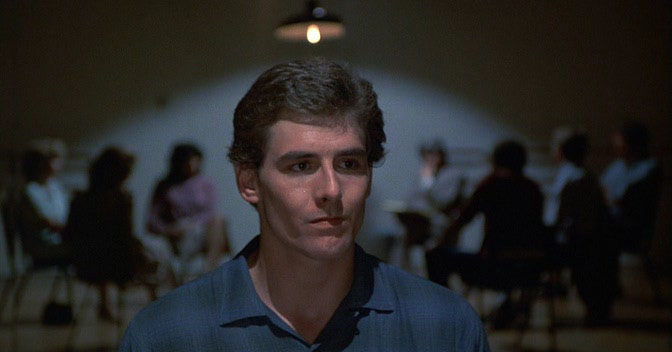
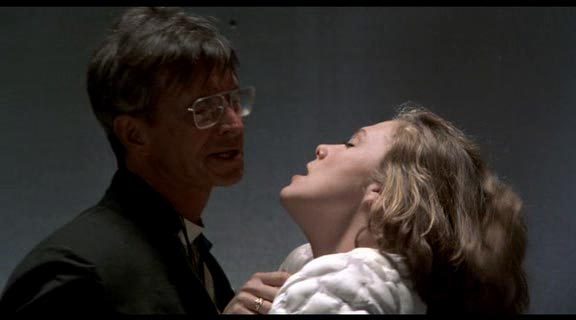
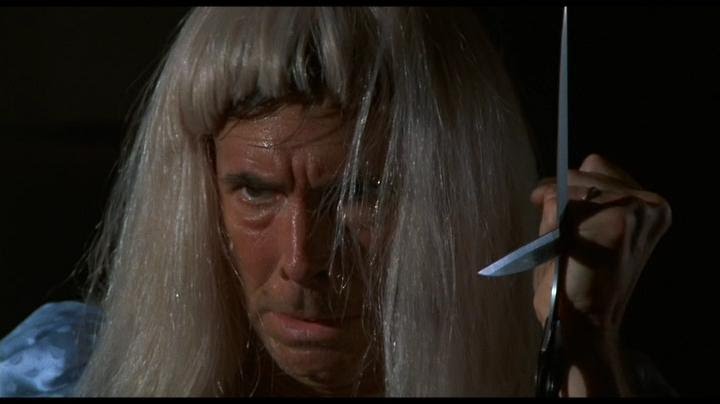
Today’s cinema adventure “Crimes of Passion, the controversial 1984 sexual thriller by cinematic bad-boy Ken Russell, centered around a hard-driven career woman who gets her sexual validation moonlighting- in disguise- as a streetwalker named “China Blue.” With his characteristic excess, both in his artistic style and his explicit depiction of sex, Russell uses the titillating scenario to explore a variety of psycho-sexual themes, portraying attitudes and behavior at both ends of the spectrum between depravity and repression; provoking numerous questions about the relationships between love, sex, truth, fantasy, shame, guilt and redemption; and exploring the difficulty of overcoming fear and immaturity in order to form an honest human connection. A heady and ambitious agenda, to be sure, and whether or not Russell and his screenwriter/producer, Barry Sandler, have succeeded in achieving it is still the subject of much debate- as with most of the director’s work, the response of critics and audiences is sharply divided between “hate it” or “love it.” My take: Russell’s madness has a method, and with his almost cartoonish depiction of the erotic underworld inhabited by China Blue and her clientele, he highlights the absurdity of our sexual prejudices and suggests that we have much more to fear from the consequences of repressing our natural desires. Helping considerably towards this goal is Kathleen Turner, at the height of her sexual appeal, delivering a remarkable performance infused not only with the necessary gleeful eroticism but also the vulnerability of a woman terrified by emotional intimacy. Also superb is Anthony Perkins, in an underrated turn as a seedy street preacher whose shame over his own pornographic impulses leads him to an obsession with “saving” China Blue; though derided by many critics as “over-the-top,” Perkins’ work here is frighteningly accurate, which should be clear to anyone who has ever had an encounter with a dangerously schizophrenic denizen of the streets. These two share several delicious scenes together, skillfully enacting an ongoing point/counterpoint about sexual morality that underscores the movie’s themes and provides many of its most delightfully melodramatic moments. Not as proficient is John Laughlin as a naive young husband whose failing marriage leads him to China Blue’s bed- but despite his somewhat stilted acting, his sincerity shines through enough to provide the necessary relief from the darkness of the skid row surroundings. Other notable elements include the costumes, scenic design and cinematography, all of which brilliantly contrast between the garish night-time world of the red-light district and the bland suburban daylight of the film’s other scenes- the two worlds seem almost as if they have been spliced together from two different films. Less successful- perhaps the film’s biggest flaw, really- is the tinny electronic score (provided by Rick Wakeman of the band Yes), which may have seemed like a good idea at the time but now provides a ludicrously dated atmosphere in a film that might otherwise seem almost timeless. Nevertheless, Russell’s film retains a surprising depth and resonance despite- or perhaps because of- the sensationalism of its hyper-sexual surface, and even if there are times when his intellectualism threatens to undermine the plot or his exploitative excess threatens to alienate his audience, the compelling performances of his two stars succeed in maintaining the emotional connection that is necessary to ensure the slow build of suspense into the climactic scenes. Overall, though Crimes of Passion lacks the audacious mastery that made instant classics of some of Russell’s earlier works, it still packs a powerful punch, melding sensuality with horror and humor with high drama, and ultimately- in my view anyway- standing as one of the most memorable and unique films of the eighties.