Snow White and the Huntsman (2012)

;

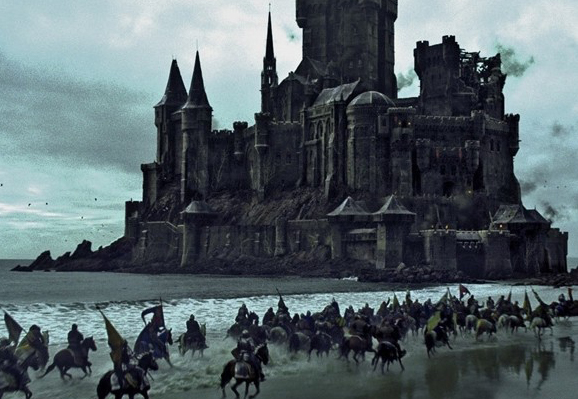
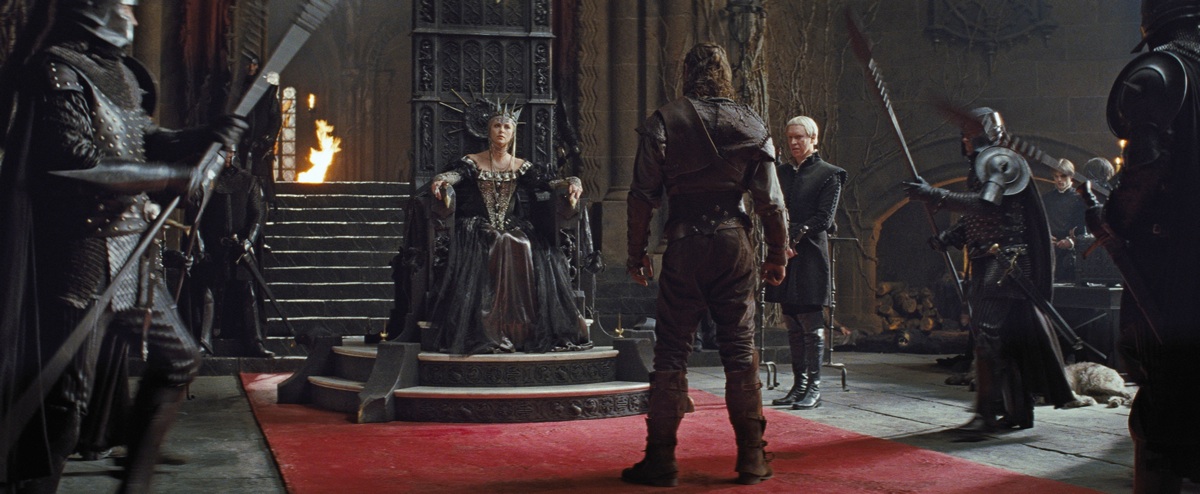
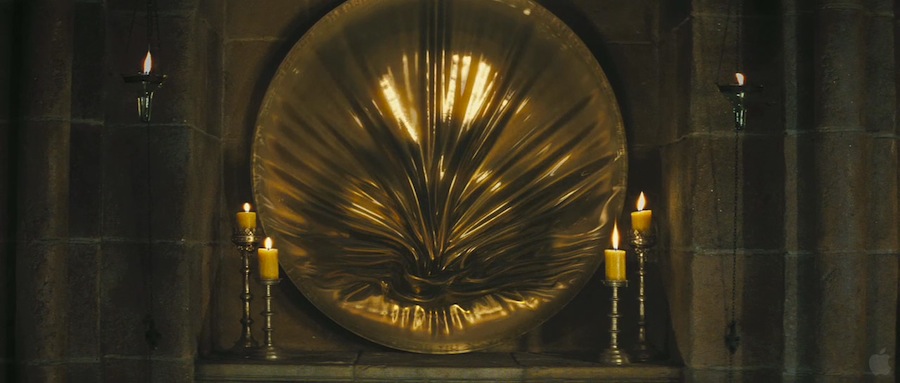
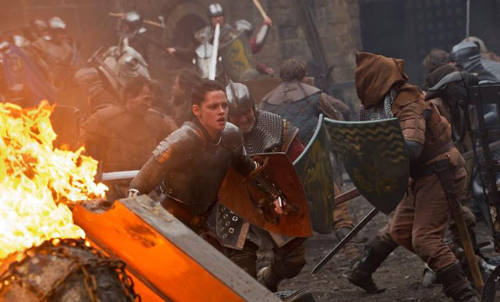
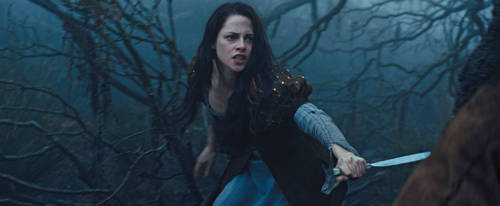
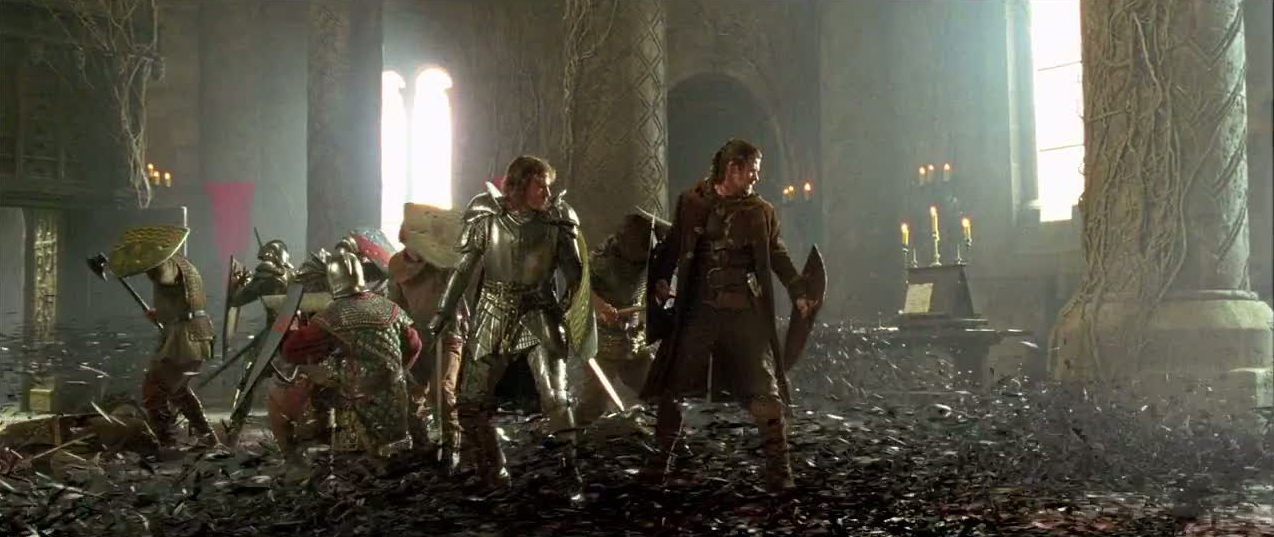
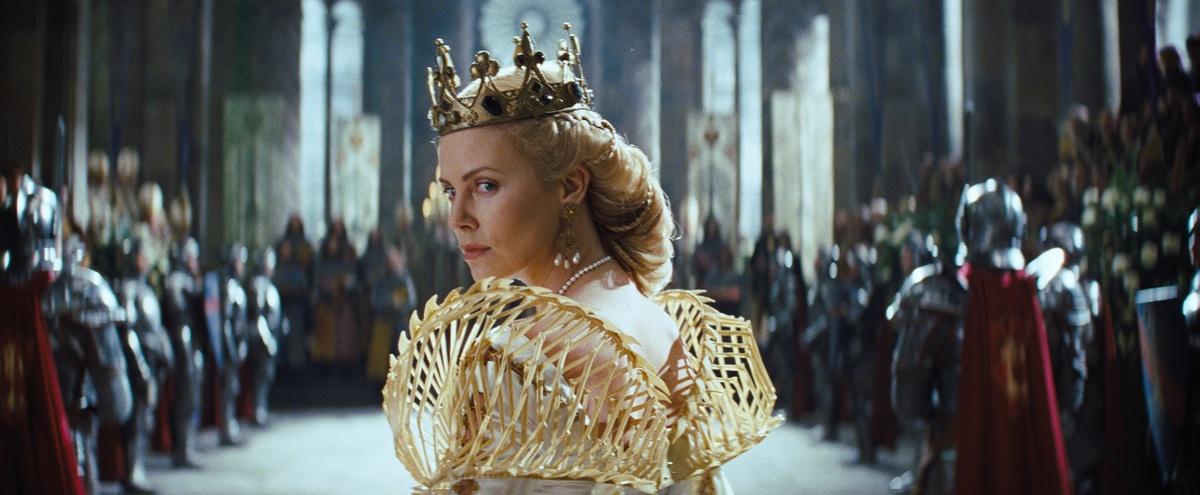
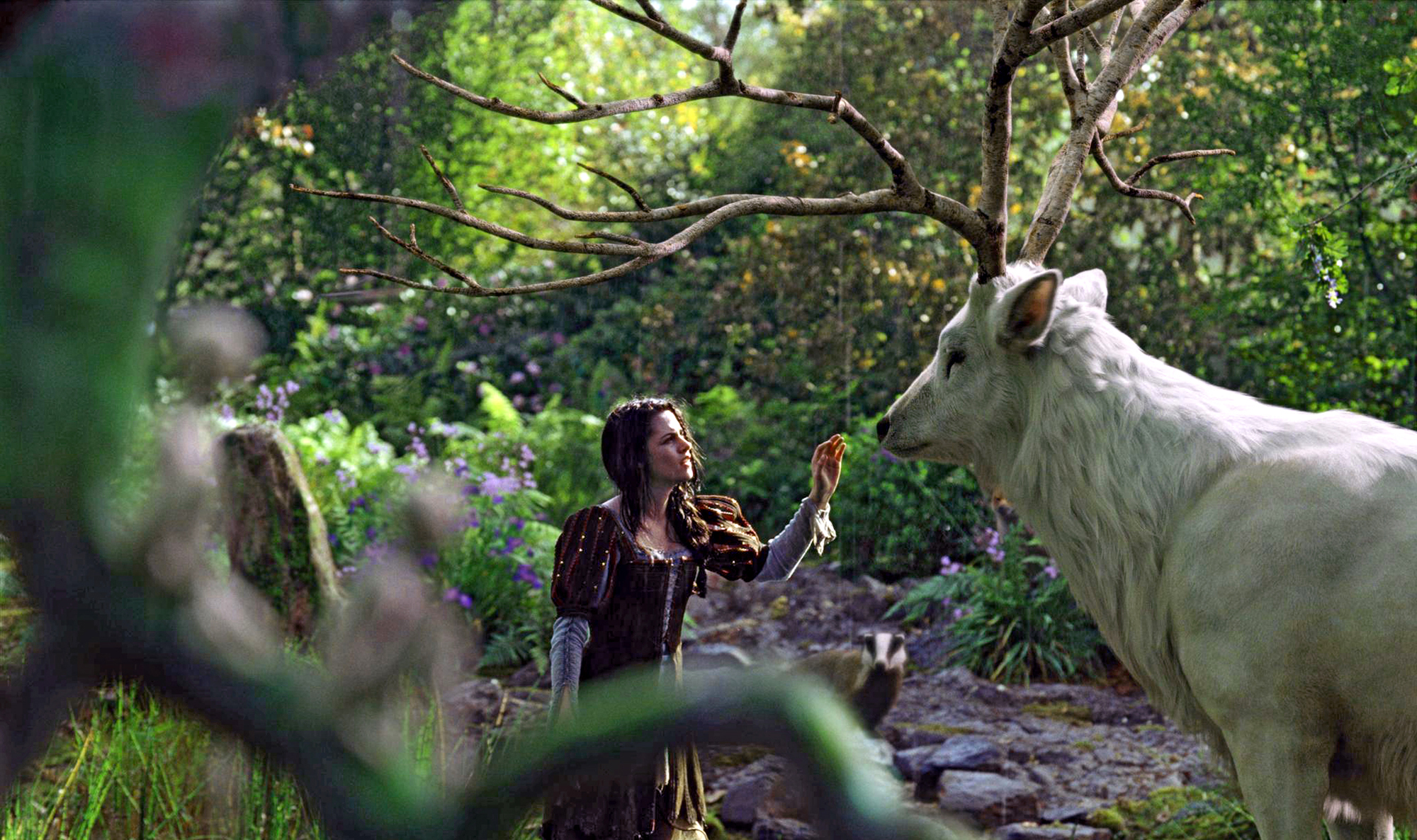
Today’s cinema adventure: Snow White and the Huntsman, a visually arresting 2012 feature that reinvents the classic fairy tale as a sword-and-sorcery fantasy with a message of female empowerment. In this version of the familiar story, the Queen is in fact a powerful sorceress who preserves her youth and beauty by draining the energy of young women, and the princess, foretold to be her undoing, is her prisoner; when Snow White escapes, the Queen sends a drunken wastrel to recapture her, but he instead becomes her protector and mentor, helping her to find the heroic force she needs to fulfill her destiny. The story is filled with great ideas, grafting elements of a medieval Arthurian-style quest saga into the Grimm Brothers’ original tale (with a dash of Shakespeare’s Macbeth), shedding insight on the origin and cause of the Queen’s wickedness and turning Snow White from a passive victim who must be validated and saved by a man (or seven) into a self-determining warrior princess who has the power to not only solve her own problems, but step into the traditionally male role of leader and bring the entire kingdom into harmony. Aiding considerably in the realization of these thematic twists is a stunning visual style that draws cinematic influence from Kurosawa and John Boorman’s Excalibur, coupled with a highly imaginative production design (under the supervision of Dominic Watkins) incorporating visual elements from the courtly romantic paintings of such artists as John Waterhouse and overflowing with the creative use of bird imagery. elemental contrasts, and the mystification of nature; of particular note are the costumes created by Colleen Atwood, especially for the Queen, and the magical CG artistry that brings life to the various fantastical settings and creatures- including the dwarfs, who are recognizable, full-scale actors rendered onto the necessarily diminutive bodies, a process that yields remarkable results but which also drew heavy protest and criticism for denying work to actual little people.

It would be nice to say that all this impressive conceptual and technical artistry was the basis for a great final product; but Snow White and the Huntsman, though passable enough as a lightweight summer diversion, fails to generate the kind of excitement and stimulation promised by its ambitious conceit. Director Rupert Sanders does a superb job of combining his various inspirations into a visual style (with the help of cinematographer Greig Frasier), but it seems hollow, lacking in the resonance and meaning required to elevate it beyond the level of a good imitation. The screenplay (by Evan Daugherty, John Lee Hancock, and Hossein Amini) fails to fully explore the possibilities suggested by the ingenious mash-up of sources at the base of their story, instead relying on familiar clichés and giving lip-service to the mythological principles inherent in the material, referencing the symbolic touchstones with all the conviction of marking off items on a checklist; the end result feels like a concept without a real direction, a meandering trip through a hodgepodge of mixed-up fantasy formulas that only pulls itself together into a resolution when it has run out of set-pieces. Likewise disappointing is the musical score by James Newton Howard, serviceable and predictable, providing the standard symphonic accompaniment heard in uncountable fantasy-adventure epics instead of taking advantage of the possibility to try something unorthodox. The acting isn’t horrible, though accents slip and mumbling abounds, but it isn’t really great, either: Charlize Theron, once again cast as a frosty bitch, manages to make us see the underlying pain of the Wicked Queen (which feels as perfunctory and inadequate as the rest of the unrealized story elements), but in the end she delivers a scenery-chewing performance that is, after all, just as over-the-top as we expect it to be; Kristen Stewart succeeds with the sweetness and vulnerability of Snow White, but somehow lacks the kind of strength to make a convincing transition into a force of destiny; Chris Hemsworth, as the roguish bad-boy who serves as secondary hero, comes off the worst, delivering a stilted, lumpish performance as a character that should provide the heart of the film. The rest of the cast all serve their purpose without surprise, providing us with the comfort of familiar stock characters instead of taking advantage of the chance to turn them inside out- a whole slew of missed opportunities in a film already over-filled with them.

That pretty much sums up the problems with Snow White and the Huntsman: despite offering a fresh perspective on its material, it’s a film which squanders its potential, offering new ideas and suggesting thought-provoking implications but delivering, in the end, just the same old Lord of the Rings-flavored conventions that make it so easy to dismiss the fantasy genre as fluff. Don’t get me wrong: I love Lord of the Rings; it’s an incredible piece of work that elevates fantasy to the level of deep, archetypal myth- but it’s already been done, and personally, the only other movie I want to see that feels just like it is the long-awaited version of The Hobbit which finds its way into theatres later this year. With Snow White and the Huntsman, I wanted something crisp and delicious, the exciting taste of a new hybrid flavor; but all this movie provides is yet another poisoned apple.

http://www.imdb.com/title/tt1735898/

Trainspotting (1996)

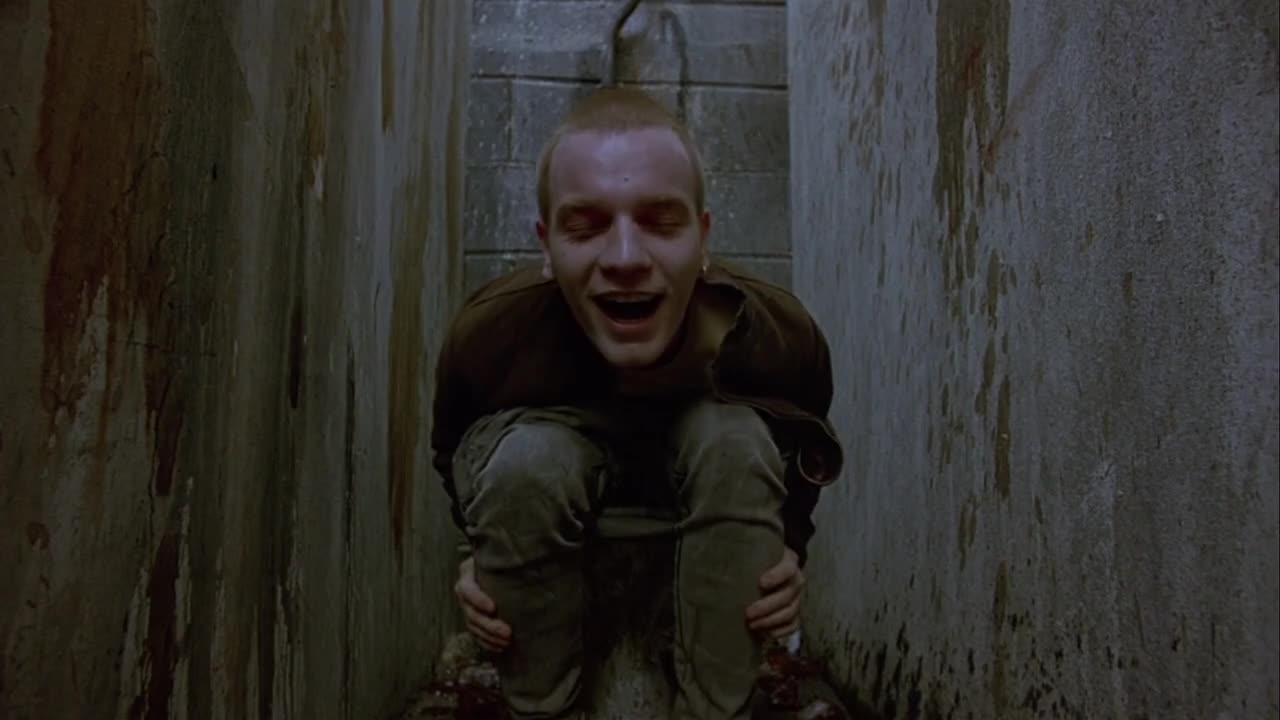
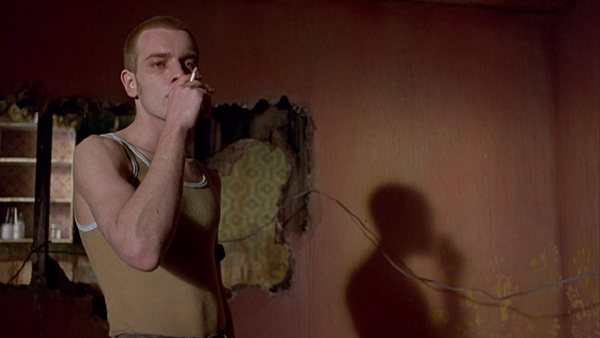
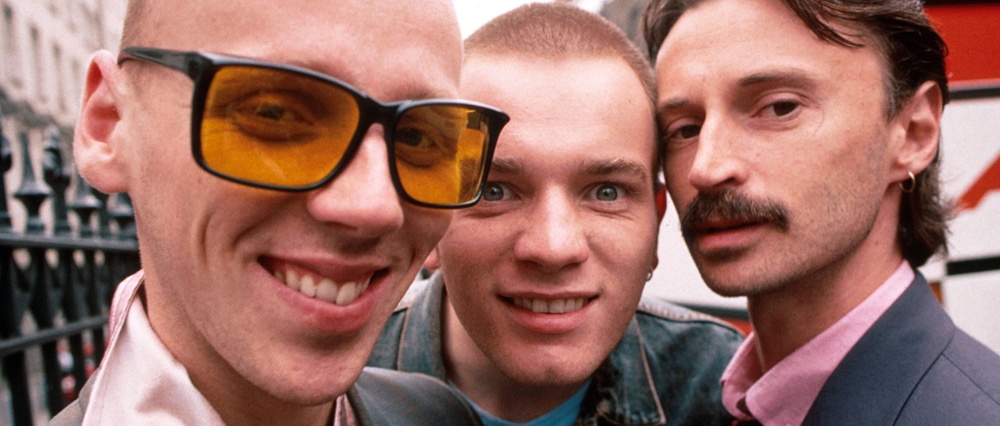
Today’s cinema adventure: Trainspotting, the 1996 breakthrough feature by future Oscar-winning director Danny Boyle, a harrowing portrait of working-class youth embracing the self-destruction of heroin addiction to escape the bleak environment of economically depressed Edinburgh. Combining the most imaginative elements of the theatrical and the cinematic, Boyle’s wildly youthful, energetic filmmaking- utilizing his now-trademark innovative visual style and edgy pop soundtrack choices- makes this highly acclaimed and popular slice of the squalid life into a treat for the eye and ear, an entertaining wild ride through a nightmare world that is ultimately as life-affirming as it is horrifying.  John Hodge’s screenplay, based on a novel by Irvine Welsh (who incidentally appears in a small role), tackles its subject without ever resorting to preachiness, instead presenting the degrading roller-coaster-existence of a drug addict as a progression of events, seen from the inside perspective, which illustrate the way their habit transforms a normal, mundane life into an surreal caricature; influenced by the “kitchen sink” and absurdist theatre styles which dominated the stage and screen dramas of mid-century Britain, Hodges grafts elements of both into an electrically contemporary milieu, undercutting the grim realism of the subject matter with ironic humor and a distinctly modern cynical edge, disarming the audience and allowing us to laugh even as we are being appalled- which gives the tragic moments the even greater impact that comes with surprise.  The young cast is uniformly superb, but the undisputed standout- and rightly so- is Ewan McGregor in his star-making performance as Renton, the central protagonist; his charisma and intensity are so powerful that he remains infinitely loveable- and believable- whether he is philosophically enduring the debasement of his addiction, gleefully pursuing criminal activity to support it, or resolutely dedicating himself to rise above his sordid background.

Listed by the British Film Institute as one of the top ten British films of all time and consistently named as one of the best films of the ’90s, Trainspotting is not for the squeamish or for those uncomfortable with moral ambiguity, and it should be said that the thick Scots dialect can be difficult to penetrate for the first 20 minutes or so; but the rewards of this vibrant, influential movie are well worth the patience and the effort for those who are up to it.  Boyle may have since surpassed his work on this early masterpiece, but for sheer audacity and unabashed youthful bravura, it still stands among the finest films of his career.

http://www.imdb.com/title/tt0117951

Velvet Goldmine (1998)

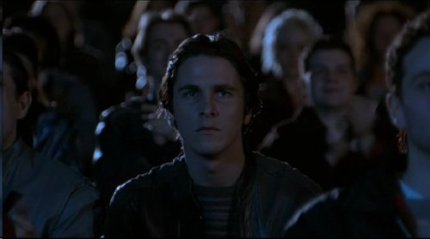
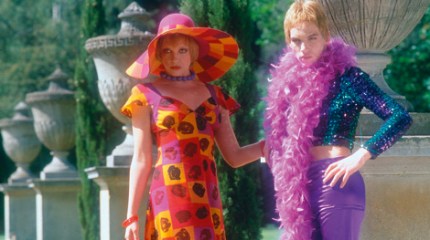
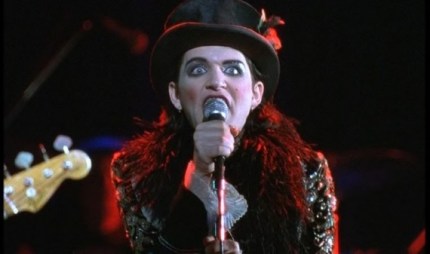
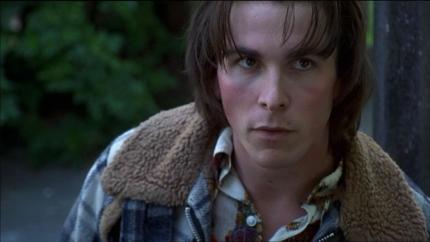
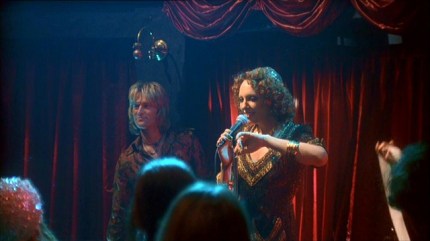
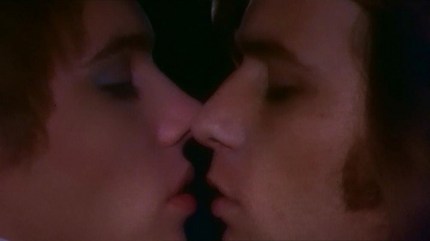
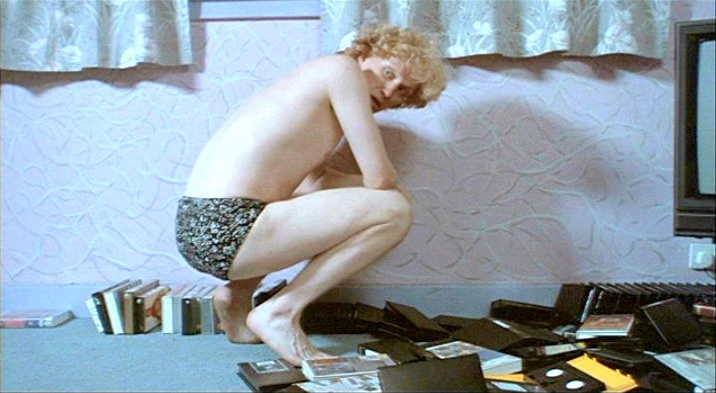
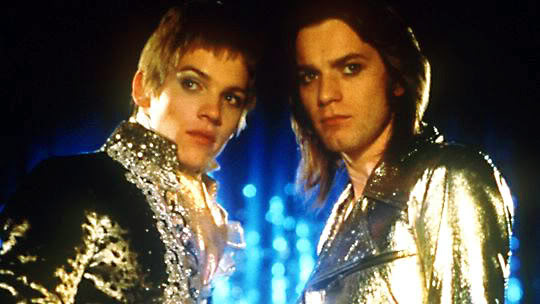
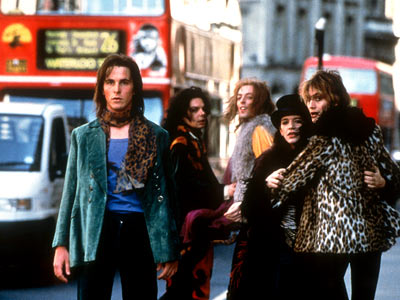
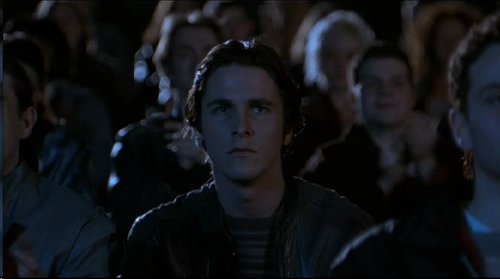
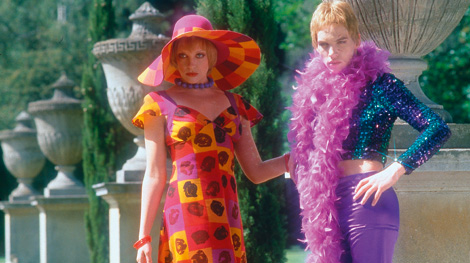
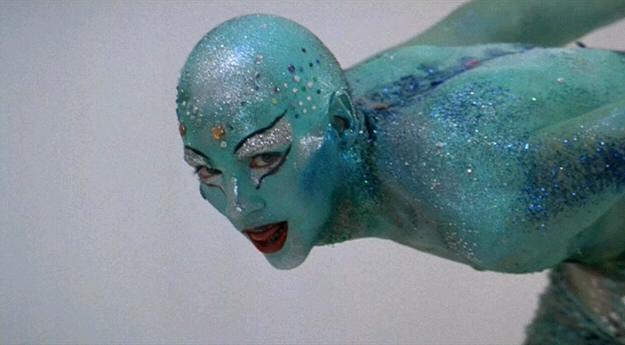
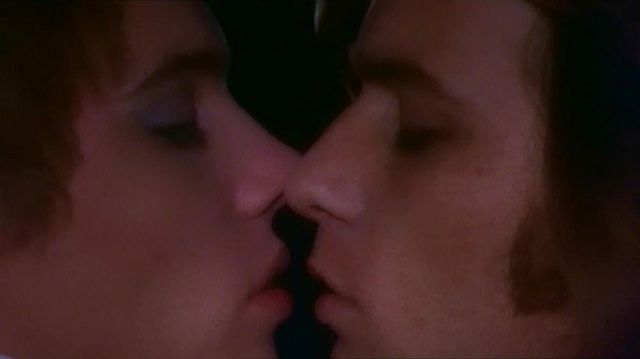
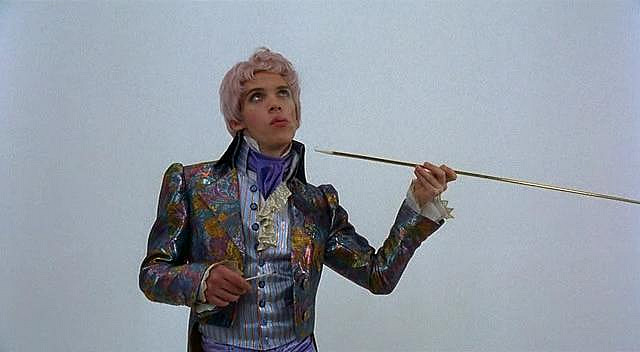
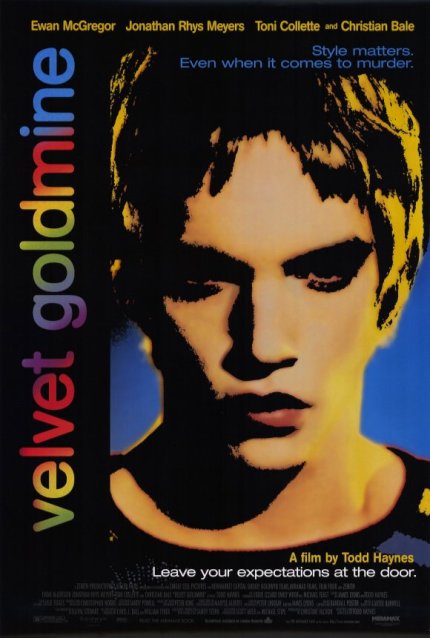
Today’s cinema adventure: Velvet Goldmine, Todd Haynes’ 1998 glam-rock fantasia with sexy, charismatic performances by Jonathan Rhys-Meyers, Ewan McGregor, and Christian Bale, a film that has gained a loyal and substantial cult following despite the poor reception it received upon its initial release. Boldly structured in the mold of Citizen Kane, it follows the attempts of a journalist to piece together the decade-old mystery surrounding a glam-rock superstar who unsuccessfully faked his own assassination before fading into obscurity. Interweaving scenes of the writer’s quest with flashbacks depicting the rise and fall of his enigmatic subject, Haynes’ film plays fast-and-loose (deliberately) with facts and fictionalizes significant real-life figures as it pays tribute to- and laments the fading of- the musical and cultural mini-era on which its focus lies. To this purpose, the film’s designers have crafted a dazzlingly surreal and authentic recreation of the English rock-and-roll scene in the early seventies, reconstructing the peculiar mix of tinsel, trash, and haute couture that defined the look of the period, as well as the darker, grittier eighties of the film’s parallel narrative. In particular, Sandy Powell’s superb costume designs succeed in capturing both the outrageous fashion of the rock-and-roll glitterati and the more subdued flavors worn by their less-glamorous followers and fans. The sparkling package is wrapped in the vivid cinematography of Maryse Alberti, which evokes the authentic photography of the day so completely there are times you swear you are looking at archival footage.

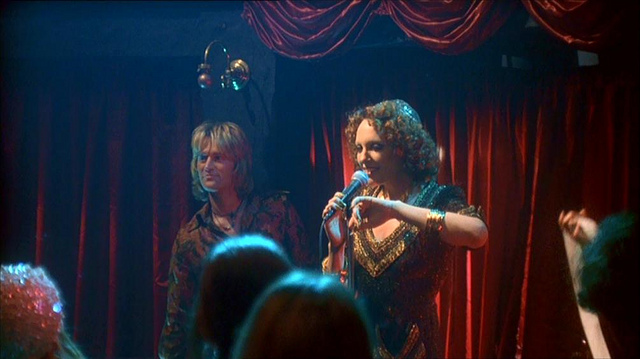
Inhabiting this time capsule world are several superb performers, each in the early stages of their highly successful respective careers. In the key role of Brian Slade is Jonathan Rhys-Meyers, who effectively embodies the ultimate glam rocker, channeling the spirit of David Bowie (on whom the character is heavily based, along with, to a smaller degree, Marc Bolan) and yet investing the performance with his own energy as well- cheeky yet vulnerable, jaded yet naïve, sexually charged yet romantic, he manifests the image of the androgynous bad boy while letting us see into the complex personality beneath it. He is matched by Ewan McGregor (as Slade’s collaborator and lover, Curt Wild- inspired in equal measure by Iggy Pop and Lou Reed), who likewise presents a convincing portrait of an archetypal glam figure- but a distinctly different one, rougher-edged yet ultimately, perhaps, deeper. The two performances complement each other like a dovetail joint, and both men are at their most impressive- and mesmerizing- when they are called upon to perform in the numerous musical sequences, pulling off the full rock star act with exuberant bravado and absolute confidence. In a less showy role- but no less superb- is Christian Bale, playing the journalist and former fan who is haunted by memories of his youthful involvement in the glam culture and of his personal connections to both the iconic stars in the history he is tracing; always a deeply compelling actor, Bale is effective throughout, but he is at his best as the rosy-cheeked youth of the flashbacks, riding the extremes of his adolescent emotions as he tentatively explores his own developing sexual and ideological identity and comes of age in a heady time of seemingly limitless possibilities. Toni Collette is both deliciously tawdry and surprisingly grounded as Slade’s wife Mandy, impressively evolving with the character in an arc that takes her from hippie muse to jaded has-been; and Eddie Izzard is appropriately loathsome as the oily manager who shepherds Slade into the world of rock-and-roll excess.

Despite the considerable strengths described above, however, Velvet Goldmine is not an unqualified success. Haynes is a gifted director, justly acclaimed for his ability to translate complex and esoteric themes into a compelling screen experience, but often criticized for failing to create a cohesive whole; his films often seem more interested in conjuring elemental forces than in using them to work toward a specific purpose. Of course, such a technique allows the audience to form their own personal conclusions; it’s an impressionistic style of filmmaking, and like other impressionistic art forms, it’s not to everyone’s taste. With this effort, his passion for the period and the attitudes it represented is very clear, and he succeeds admirably in approximating the glam milieu and bringing it to the screen. However, the formula he chooses to do so creates some problematic issues: the investigative drama which drives the plot seems a brilliant device for exploring this seminal period in contemporary pop culture, allowing him to explore the what made it such an appealing time for those who embraced its spirit and why its memory and influence linger today; however, the brooding, mournful tone of the mystery- as well as the deeply personal importance placed on discovering the answers by the film’s protagonist- suggest a weighty significance at the core of the nostalgic proceedings that somehow feels misplaced. To be sure, Haynes is presenting a document of a time in which a generation overflowed with the excitement of changing attitudes and the promise of freer personal expression, a time which was to morph all too soon into a glitzy, self-centered era in which shallow, self-destructive excess would take a heavy toll; the collective loss of innocence resulting from this social odyssey certainly spawned the kind of emotional wounds reflected by the characters in Velvet Goldmine, and the healing power of reconnecting with these cultural roots, of rediscovering the spirit that generated the whole process in the first place, is clearly a major part of the film’s intended effect. In these terms, Brian Slade provides the perfect metaphor: hungry for the freedom to be himself, whoever that may turn out to be, he soars into a fantasy world made real- only to eventually succumb to the lure of nihilistic hedonism, transforming his existence into an unsustainable nightmare from which he must eventually choose to escape or die. However, Slade is not an Everyman, not even a glorified one like Charles Foster Kane, and his experiences, though they may resemble a magnified version of those shared by many who participated in the glam sub-culture and the disco era which followed, ultimately seem more the consequence of individual character makeup than a reflection of some greater social phenomenon. More germane to the group experience, perhaps, is Bale’s journalist, burned by the broken promise of his youth and seeking a way to come to terms with the deep longings left unfulfilled; but the plot on which his redemption hinges, the conceit of uncovering the secrets of a former pop icon’s decline and fall, ultimately feels forced. After all, there is no mystery to be solved- the story to be told is so common as to be predictable- and in the end, there are no real answers to be found there, only an implausible plot twist and a phantom wound that will never stop itching. To make a resolution even less palpable, Haynes’ screenplay (from a story written by himself and James Lyons) wraps the plot about a man exploring an enigma in another, larger enigma: invoking the spirits of Oscar Wilde and Jean Genet, he introduces a mysterious, possibly extra-terrestrial gem which secretly links the characters and their histories to a long procession of pop superstars, suggesting that the cycle of fame is some sort of mystical cosmic reflex which affects our social evolution, and even hinting at the deliberate manipulation of our pop culture by an unseen and arcane outside force. Another apt metaphor, and an interesting proposition- one which seems borrowed from the handbook of glam-era theatricality as represented by such flights of fancy as Bowie’s Ziggy Stardust persona, a source of much inspiration to the events portrayed in the film- but in this case, perhaps, a needless complication in an already over-complicated mix.

Speaking of Ziggy Stardust, it seems necessary to also remark that the heavy fictionalization of the figures represented- which amounts to the creation of a sort of alternate glam universe- has been a point of considerable controversy surrounding Velvet Goldmine. Taking well-known real-life icons and re-inventing them for dramatic purposes is an acceptable tactic that goes back, no doubt, to the very beginning of story-telling; however, Haynes has here blended real events so completely into the soup that the result could be very confusing to those unfamiliar with the true history of those involved. Though Brian Slade is not David Bowie, he certainly feels like it; indeed, Bowie himself, initially involved in the project, pulled his support and the rights to use his songs after discovering that the script incorporated elements from unauthorized biographies by his former wife and others. To make matters even more confusing, mixed in with the original musical selections composed for the film are older songs by such glam-era artists as Roxy Music, T. Rex, and the New York Dolls, among others, performed by the fictional singers as if they were themselves the originators. Though I’m not one to quibble about adherence to historical accuracy- after all, my favorite movie is Lawrence of Arabia, and my love for Shakespeare is in no way affected by his fondness for rewriting history to suit his needs- in this case it seems appropriate to suggest that, before making any assumptions based on the recognizability of the figures on display in Velvet Goldmine, it would be wise to do some research and decipher who these characters really are (or, rather, really aren’t).

Nevertheless, Haynes’ film provides many pleasures: the aforementioned musical sequences, mounted with a gaudy theatrical flair that captures the glitter-rock essence to a tee, are the film’s best scenes, nostalgic yet freshly minted; and there are moments throughout that reach through the layers of conceit to grab at your heart-strings, electrifying touchstones that instantly transport you to the memory of some shared, universal experience- the yearning, impossible ache of a teen-aged Bale staring at homoerotic photos of his idols; the sharp humiliation of Collette’s Mandy Slade as she confronts her husband in the midst of his dehumanized, drugs-and-sex-saturated oblivion; the explosive, adrenaline-fueled vitality of McGregor’s first stage performance as Wild (in which, incidentally, he strips naked for his adoring audience). All in all, the exponential popularity of Velvet Goldmine is not surprising, nor is it undeserved: though it may leave us unsatisfied on some nameless level, and though it sometimes feels as though it takes itself far too seriously, its youthful exuberance and its visual perfection go a long way towards making up for its shortcomings; and even if it ultimately leads us to prefer and embrace the real-world history which it distorts for its desired effect, it seems fitting and desirable to find satisfaction in that which is real rather than in a glittery fantasy- and that, come to think of it, is perhaps the true message of Velvet Goldmine.


http://www.imdb.com/title/tt0120879/

Dali in New York (1965)

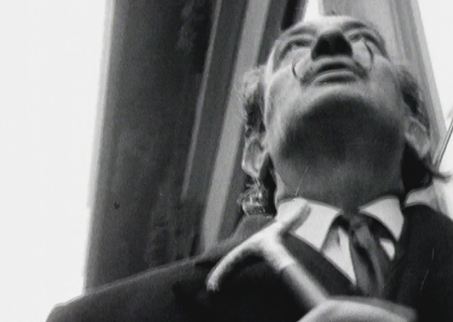
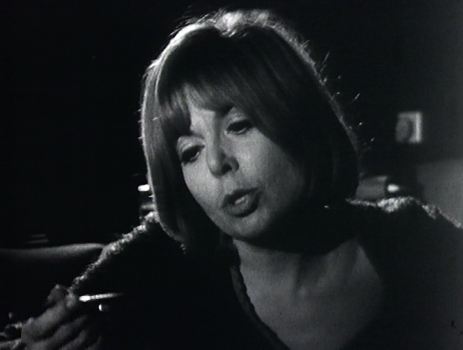
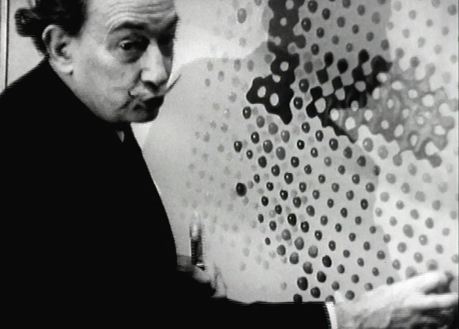
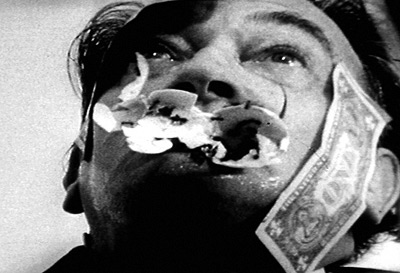
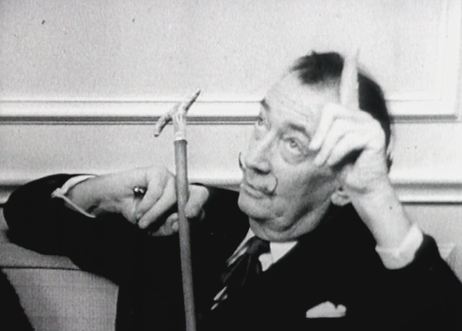
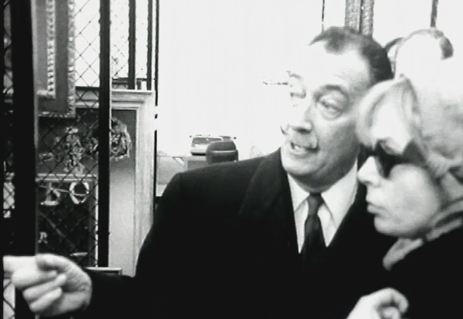
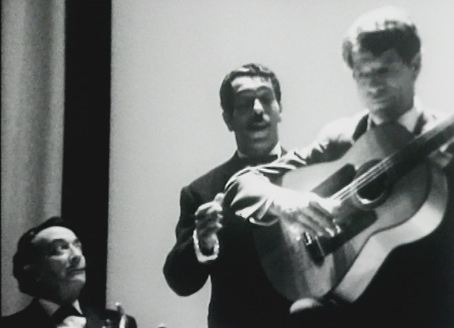
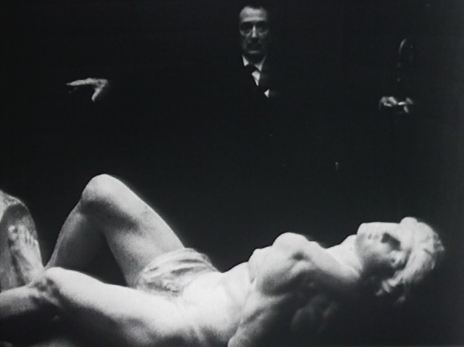
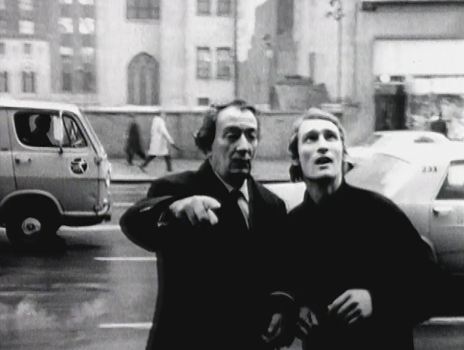
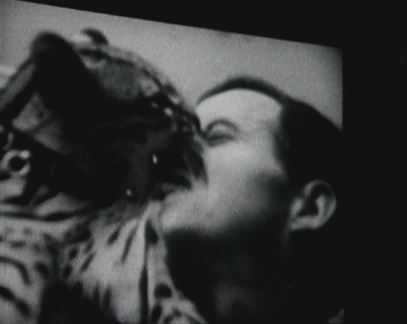
Today’s cinema adventure: Dalí in New York, a 1965 documentary by Jack Bond depicting the visit of the infamous Spanish surrealist to Manhattan in conjunction with the opening of a retrospective exhibition of his work at the Hartford Gallery of Modern Art. Shot in a distinctively sixties-avant-garde black and white by Jim Desmond, this brief (57 minutes) visit to the world of the 20th Century icon was made over two weeks prior to the opening, as Dalí made the rounds of the New York art and society scene, attending gatherings, staging “events” (such as a procession in the streets with a plaster cast of a Michelangelo statue and a photo session involving the artist lying in a coffin with an ant-filled egg in his mouth, surrounded by a million dollars in cash and an ocelot), and conversing with Bond’s collaborator, actress/writer Jane Arden- that is, until she falls from Dalí’s favor in a controversial exchange in which she refuses to humor his assertion that “everyone is my slave.” The conversations yield little by way of meaningful exchange- Arden tries too hard to engage the painter in a dialogue about his work and Dalí steadfastly resists, preferring instead to make characteristically inflammatory proclamations and declarations of his own supremacy- and the film ultimately offers little direct insight into the artist or his philosophies. Nevertheless, much can be gleaned by watching his antics and his interactions; throughout the film, he is obviously aware of the camera at all times, his eyes constantly darting to the lens as he orchestrates his image for mass consumption. Always the showman, his outrageous acts and statements are clearly calculated to promote himself and his art, and even his creative process itself seems to be little more than another tool for publicizing the “cult of Dalí,” as evidenced in the remarkable closing sequence when he paints for an audience, accompanied and inspired by the music of flamenco guitarist Manitas De Plata and singer Jose Reyes. The entourage with which he surrounds himself, which includes a “military advisor” and the supposed reincarnation of his dead brother, are all extensions of his own bizarre personality, conforming to the roles he has assigned them for his- and presumably their own- personal benefit; and his wife and muse, the austere and vaguely contemptuous Gala, is presented, as he presented her, as an idealized icon of feminine detachment: she says little, and by saying little, speaks volumes. All of this is interlaced with lengthy sequences (designed and photographed by Tom Taylor) showcasing Dalí’s familiar art, depicted by a fluid camera lovingly examining the details of his imagery and revealing some of the unifying thematic elements that were continually present in his body of work- though the black-and-white cinematography robs us of his stunning and effective use of color, making us long to rush to the nearest bookstore and browse through one of the many coffee table books offering high quality Dalí reproductions.

Dalí in New York was largely forgotten for many years, a parenthetical curiosity from a period when the famed artist was being overshadowed by representatives of the more modern movements of art, such as Warhol, whose vision of themselves as the ultimate manifestation of their work was prefigured by Dalí himself- something he alludes to in the film. After a 2007 screening at MOMA, it has been resurrected as a document of a figure whose importance to the art world is still being debated. In the twenty-plus years since his death, Salvador Dalí has become less and less remembered for the outrageous circus with which he surrounded himself and his enormous catalogue of paintings have become more and more familiar, many of them having achieved the status of icons. This little documentary is by no means a complete picture of the man or of his work, but it does offer a rare opportunity to get close to a figure who, during his life, was often dismissed as a charlatan and an opportunist, but whose work has undeniably exerted an unfathomable influence on western visual art. Most of Dalí’s rhetoric can be assessed as showmanship, not categorizable as true or false, but at least one of the statements he makes in this film is clearly wrong: at one point he declaims that his work is not important, that only Dalí himself matters. Time has thankfully proven this to be an overstatement on his part.

http://www.imdb.com/title/tt1245090/

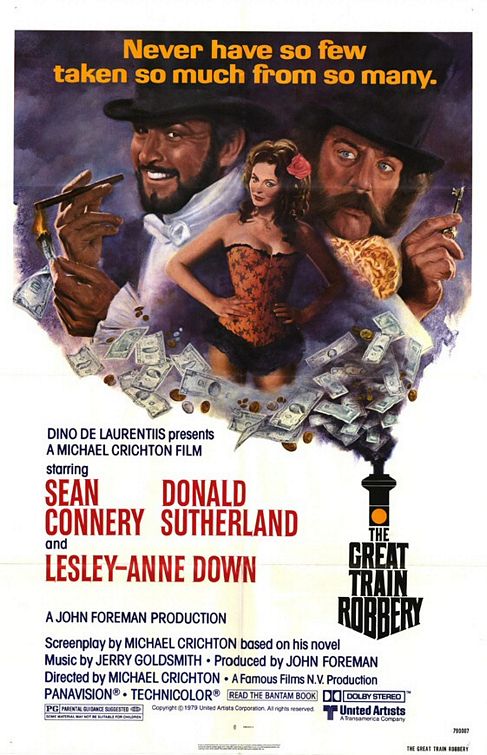
The Great Train Robbery (UK Title: The First Great Train Robbery) (1979)

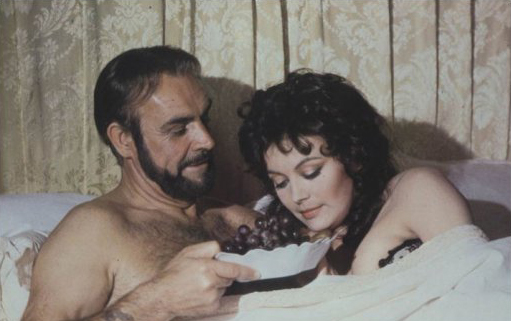
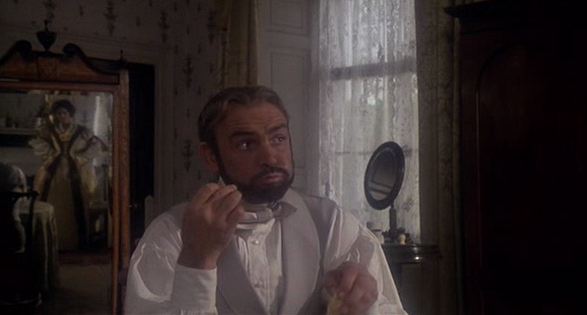
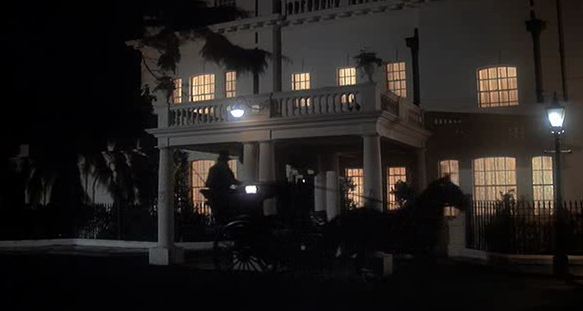
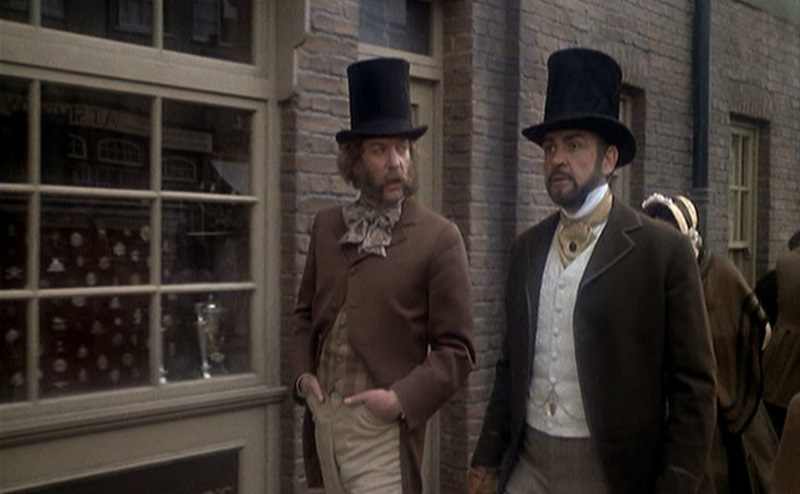
Today’s cinema adventure: The Great Train Robbery, a 1979 period caper comedy directed and written by Michael Crichton, based on his own book, which in turn was based on the real-life 1855 theft of gold bars meant as pay for the English soldiers of the Crimean War- the first robbery ever to take place aboard a moving train.  Painstakingly accurate in period detail, expertly played with just the right blend of devilish humor and edgy thrills, it features sparkling chemistry between its three stars (Sean Connery, Donald Sutherland and Lesley-Anne Down), a clever depiction of the intricate and crafty plot, a rousing score by ace film composer Jerry Goldsmith, and a magnificent climactic sequence featuring Connery (doing his own stunt work) navigating his way across the roof of the train as it speeds through the idyllic English countryside.

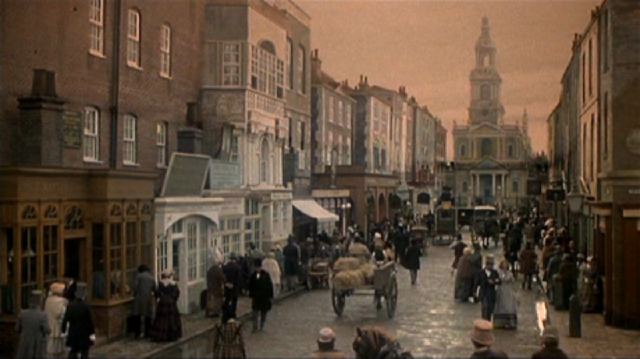
Crichton’s original novel, which took the facts of the real-life heist and transformed them into a fictional narrative by using pseudonyms, composite characters, and clever re-imagining of the details, became a best-seller in 1975 and seemed tailor-made from the outset for translation onto the screen, particularly in the wake of such successful genre entries as The Sting and Murder on the Orient Express; and while an author’s helming the adaptation of his own work might seem ill-advised, at best, in this case the choice was right on target.  Crichton was a jack-of-all-trades if ever there was one, and his understanding of the film medium here resulted in a crowd-pleasing piece of cinematic candy that sparkles with contemporary style even as it maintains its commitment to the demands of its Victorian setting.  For, though the historical accuracy of the events depicted may be tenuous, attention to period detail is rigorously observed.  Crichton paints a vivid picture of the Industrial Age, not only with the meticulous detail of the sets and costumes, but with his emphasis on the dehumanizing conditions, the corruption and inequity of the social order, and the contrast between extreme poverty and ostentatious wealth.  Not that The Great Train Robbery is a film devoted to deep meaning or social commentary; these elements are present to fuel a decidedly modern anti-establishment undercurrent and elicit audience sympathy for the roguish trio of anti-heroes, despite their unabashedly selfish motivations and their ruthless tactics, by casting them in the mold of populist outlaws- a sort of Victorian Bonnie and Clyde, plus one.  This perceptual conceit is part of what makes the film so much fun; we can be firmly on the side of these wrongdoers as we watch them execute their audacious scheme, and Crichton ensures our continued interest by doling out the details of that scheme in small pieces- we are given just enough insider information to know what is going on without being deprived of the thrill and surprises that come from seeing it carried out.

It helps that The Great Train Robbery is beautifully photographed by the legendary cinematographer Geoffrey Unsworth- one of the last films to claim that honor, it is dedicated to his memory- and that the aforementioned set and costume designs (by Bert Davey and Anthony Mendleson, respectively, in collaboration with Production Designer Maurice Carter) are sumptuously executed; each of these artists play an indispensable role in realizing the elaborately recreated 19th Century London in which the bulk of the film’s action plays out.  The previously noted Goldsmith score is effective throughout for setting the mood and tone; but when the setting finally opens up, for the climax, into the countryside, his music makes its most magnificent contribution, adding to the giddy feeling of freedom conjured by the wide open locale, and to the breathless excitement of watching as the final stages of the robbery take place- and as Connery makes his death-defying journey along the length of the moving train.  It’s a payoff almost as satisfying as the one enjoyed by the film’s characters.

The Great Train Robbery is not a profound movie, nor a deeply layered one; it is hardly one of those sublime masterpieces which holds up to repeated viewings throughout a lifetime, and yet when I watched it again recently after having not seen it for a number of years (more than I’m willing to admit to), I was thoroughly delighted to find that it was at least as enjoyable as when I saw it as an impressionable lad, sitting in a darkened theatre and wanting to grow up to be Sean Connery.  Often when a movie strives only to entertain, it falls short by trying too hard, or aiming too low, or- worst of all- trying to pretend it has a weightier agenda than it really does: The Great Train Robbery suffers from none of these shortfalls.  It sets out only to deliver a thrilling ride and it succeeds at exactly that- which is more than can be said of most of the overachieving would-be crowd-pleasers being offered up by filmmakers today.  Of course, they don’t have the benefit of Sean Connery…

http://www.imdb.com/title/tt0079240/

Nine to Five (1980)

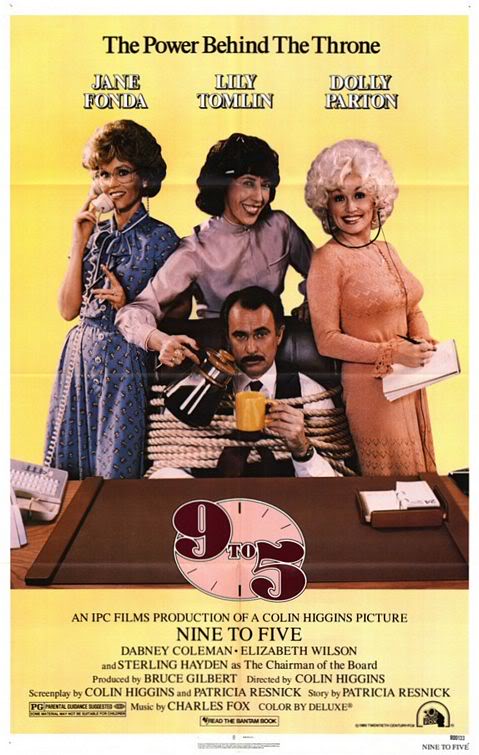
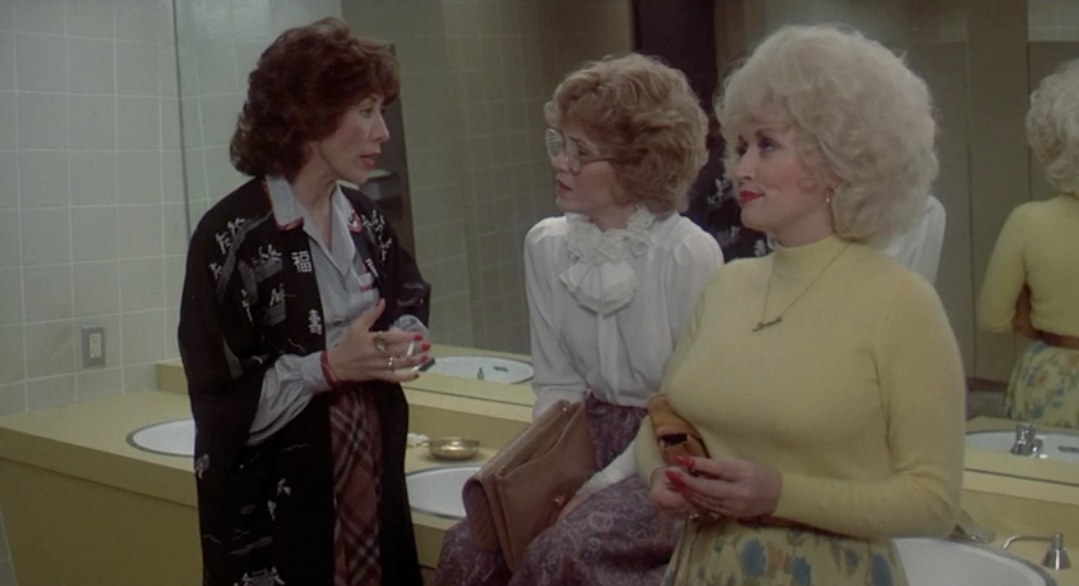
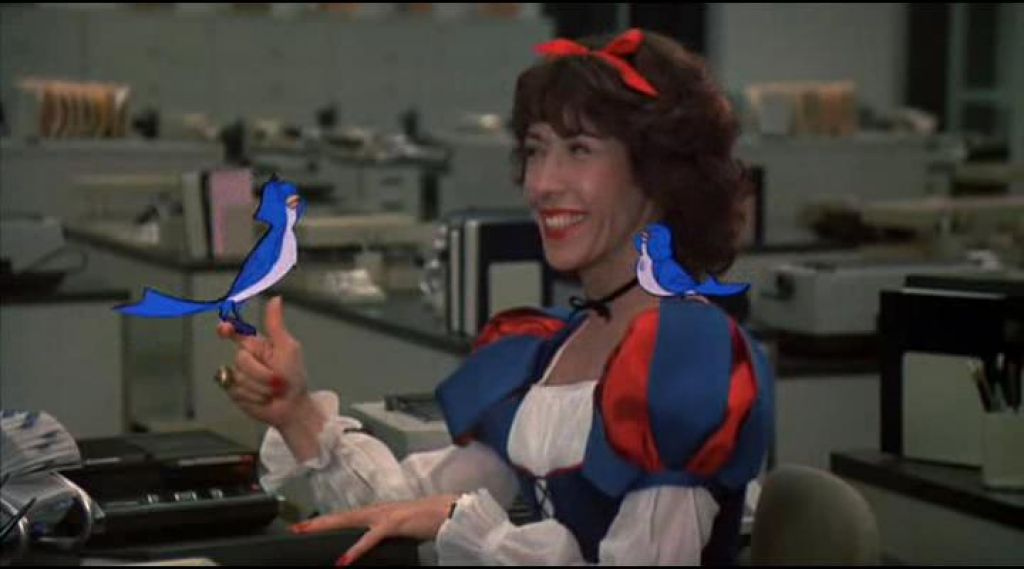
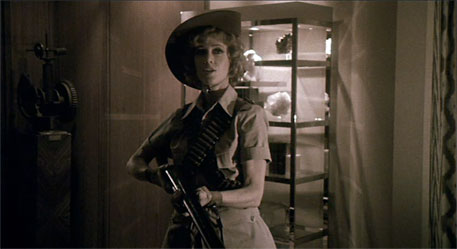
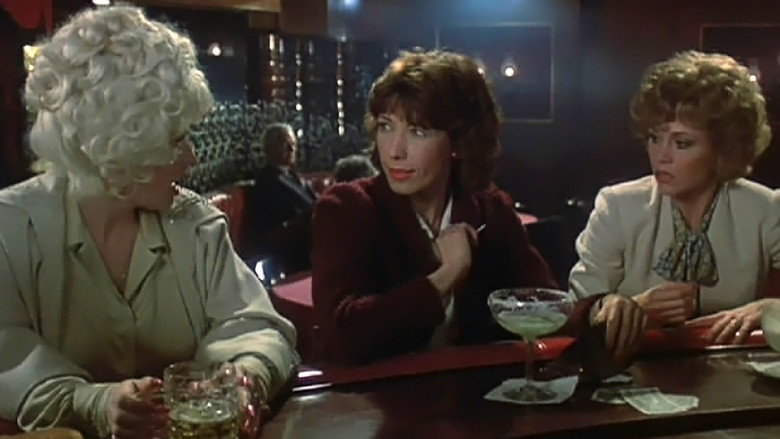
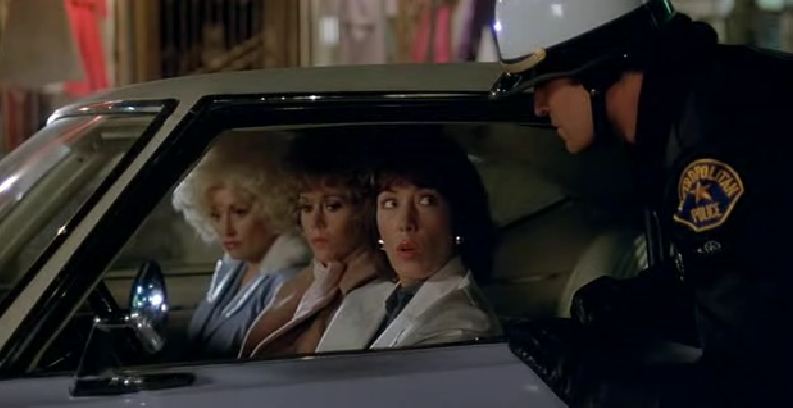
Today’s cinema adventure: Nine to Five, the 1980 comedy caper that became a popular hit on the strength of its pro-feminist sentiment and made country-western singer Dolly Parton into a bona fide movie star by teaming her with established box office draws Jane Fonda and Lily Tomlin.  Following the exploits of three long-suffering office workers whose fantasies of revenge against their chauvinistic and dishonest boss become reality when they believe they have inadvertently poisoned him, director-and-co-writer (with Patricia Resnick) Colin Higgins attempts to mine laughs from the situation as his trio of heroines take advantage of their accidental roles as champions of female empowerment to strike some serious blows against the male-dominated order and implement sweeping workplace reforms in the world of corporate greed in which they are employed.  However, despite the considerable chemistry generated by its three stars and its frequent use of broad slapstick, the film contains few laugh-out-loud moments; most of the comedy seems predictable, falling back on the familiar clichés of countless movies that came before, with the result that the humor feels forced, imposed upon a story with higher aims in order to make it more palatable.  Higgins’ direction, however, does a marvelous job of creating the impression that there is a lot more smart, funny content here than there actually is: a terrific opening montage (truthfully, the film’s best sequence) sets the stage by showing us an entire city’s worth of hassled, stressed-out, put-upon commuters struggling to start yet another demeaning, frustrating day at work; and the use of a seventies-flavored realism in the lighting and cinematography contrasts nicely with the candy-colored trappings imposed upon the grim, utilitarian settings, reinforcing the theme of humanity struggling to assert itself in an oppressive environment.  As for the performances, the three stars are unquestionably delightful together; individually, however, one can’t quite escape the feeling that something is missing.  Fonda seems out of place as the recent divorcee braving the workplace for the first time, wearing her persona of sheltered naïveté like an ill-fitting costume; and Tomlin seems equally uncomfortable in the role of an exceptional woman whose gifts have been long subjugated, exuding a subdued bitchiness that somehow feels more bitter and mean than it might if she truly sank her teeth into it.  That leaves Parton to shine, which she does, stealing every scene with her now-familiar brand of sweet-but-feisty charm; and her refreshing energy is enough to overcome the shortfalls in her co-stars’ efforts and unite the trio as a formidable team; though the ultimate effect is a suggestion that it is their combined strength that gives them their power, it seems unlikely that this was intentional.  As for the remaining cast, Dabney Coleman is so on-target as the ladies’ loathsome boss that the character shaped and limited his subsequent career irrevocably; and veterans Elizabeth Wilson and Sterling Hayden (in one of his final screen appearances) add a touch of distinction to roles which are otherwise just office stereotypes.

Nine to Five became an instant hit upon release and remains a kind of minor classic today despite its numerous flaws; indeed, despite my above criticisms, I find myself holding on to a fond memory of it.  It’s a hard film not to like, one that seems greater than the sum of its parts, inspiring its audience to cheer on its protagonists, and providing an enjoyable- if unremarkable- two hours’ worth of entertainment.  Perhaps its staying power is due to its place in history; it represents a final flourish of seventies liberalism, a celebration of progressive populist values coming just before the Reagan era rolled over the cultural landscape, re-shaping it with trickle-down economics and populating it with voraciously greedy yuppies.  Watching it today, one can’t escape a feeling of bittersweet irony: its wish-fulfillment fantasy resonates with the cause of the underdog, those overworked and underpaid minions of the corporate empire, and seems brimming with the promise that social attitudes were poised to bring about the change depicted within; in fact, the opposite proved to be true- the liberality of the seventies was about to be shelved for a decade of self-aggrandizing greed.  In a way, the film foreshadows this, too: it’s very telling that the three heroines of Nine to Five succeed by beating their oppressor at his own manipulative, dishonest game instead of changing it for the better; and in the final moments we are informed (by the obligatory “where are they now?” subtitles) that two of them will abandon the fight for equality in favor of more traditional forms of feminine success.  Still, though it does less redefining of women’s roles in the workplace than reinforcing of the old stereotype of women as the unseen force behind the scenes, there is something gratifying about watching these three feminine underdogs stick it to the man; and that alone is enough to make Nine to Five seem as infectious and invigorating as its beloved title song.

http://www.imdb.com/title/tt0080319/
Eyes Wide Open/Einayim Petukhoth (2009)

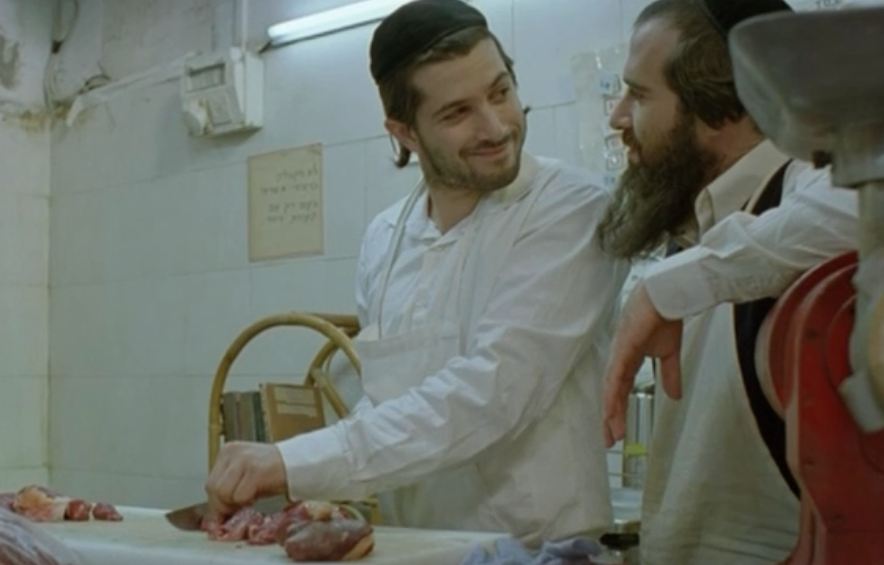
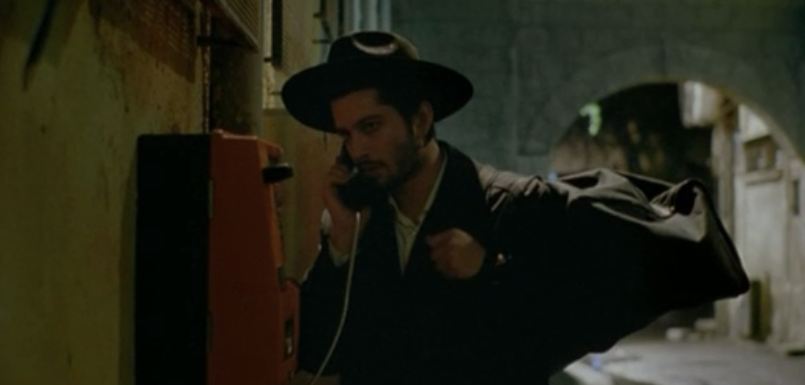
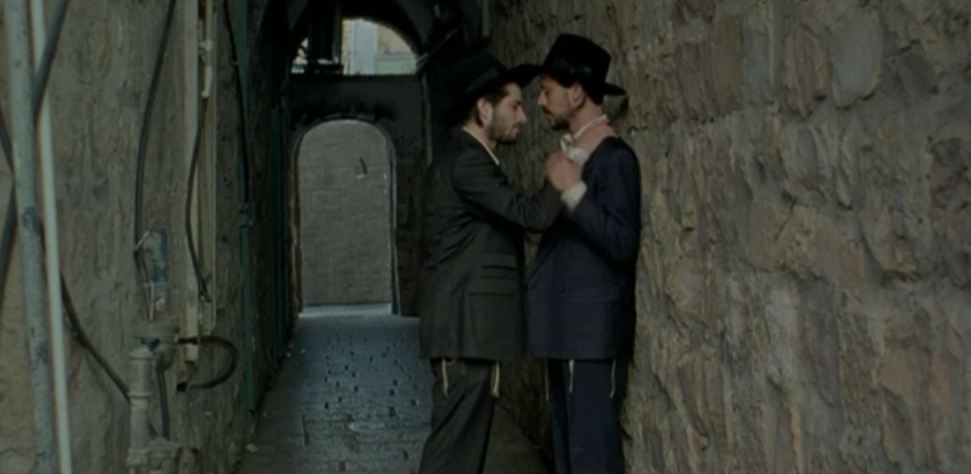
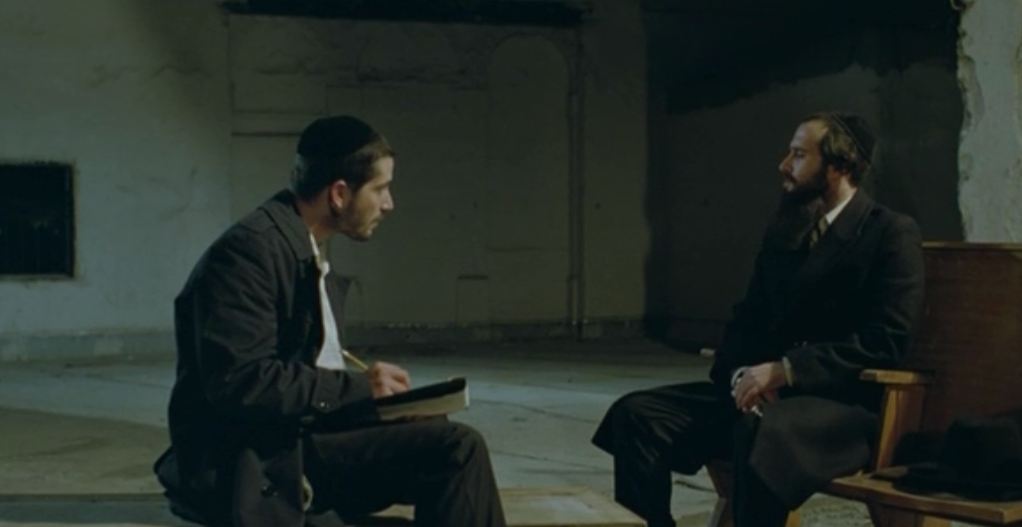
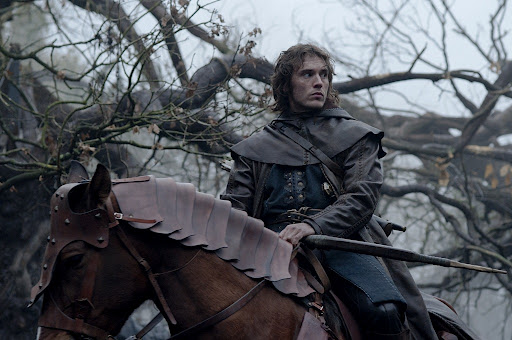
Today’s cinema adventure: Eyes Wide Open, a 2009 Hebrew-language film by first-time director Haim Tabakman depicting the spiritual and social conflict sparked by a blossoming homosexual relationship within a deeply Orthodox neighborhood of Jerusalem. One of the growing number of gay-and-lesbian-themed films to come out of Israel in recent years, it is the story of Aaron, a dedicated husband and father who inherits his father’s butcher shop; when he takes on a young homeless student as an apprentice, a forbidden attraction develops between them, eventually growing into an affair that tests his faith and threatens to cost him not only his beloved family but his place as a well-liked and respected member of the community as well. A film that treads on potentially dangerous, controversial ground, it handles its subject matter with respect for both the valued traditions of the Orthodox Jewish Church and the importance of fulfilling the needs of the heart; the screenplay by Merav Doster carefully constructs its narrative around the delicate issue at its center, choosing to offer up a chronicle of a man’s personal crisis of faith rather than an indictment of attitudes, and to focus on the honest examination of emotional experience instead of on the promotion of a particular agenda, treating its characters with sympathy regardless of which position they hold in the moral tug-of-war being staged. The result is thought-provoking without being inflammatory, moving without being manipulative, and reverent without being precious- a fine example of the kind of slice-of-life drama that achieves its goals simply by presenting its tale in a straightforward manner and allowing the viewer to make up their own mind about the issues raised within.

Despite the weighty social and spiritual matters being explored here, Eyes Wide Open is by no means an entirely solemn film. It manages to find many ways to lighten its tone, from the ironic and observational humor inherent in its situation to the more abstract metaphorical connections drawn from the large amount of meat its two main characters must handle throughout; and lest we forget it in all this talk of moral dilemmas and social obligations, this is first and foremost a romance- and a steamy one, at that. The passion between these two men is carefully crafted, building steadily from their first glimpse of each other, smoldering insistently as they grow closer and becoming stronger with each averted opportunity, until it finally explodes in a fervent love scene that is as joyful as it is erotic- and it is extremely erotic, despite (or perhaps because of) the fact that it is not visually explicit. The power of their connection does not end there, however, because the bond is not merely a sexual one; their emotional connection is built just as carefully, and it is this deeper feeling that makes their relationship so engaging and places the stakes so high. For in the end, it is the love they have for each other that turns Aaron’s life inside out, not the mere physical attraction that has brought them together; and it is the convincing portrayal of that love that keeps us invested, sharing with this illicit couple in their happiness and their heartbreak. The credit for this, of course, must go to the two actors who play them, Zoharr Strauss and Ran Danker, neither of whom, as far as I know, are gay offscreen- not that it matters. Both men are charismatic and instantly likable, and they each convey the depth and range of their roles with clarity. In particular, Strauss (who plays Aaron) does a superb job of allowing his inner landscape to show through a necessarily stoic exterior; his is the more complex role, requiring him to wrestle with a much wider range of conflicts than his younger counterpart, and he meets the challenge admirably. Which is not to say that Danker (an impossibly handsome young actor) is overshadowed or outdone; his Ezri is a portrait of a man who is resigned to the necessity of hiding his true nature, but is not ashamed of it- as he reveals in his intimate moments with Strauss when the veneer slides away and his passion and sensitivity shine through. Also delivering fine performances are Tinkerbell as Aaron’s patient wife, struggling with her growing suspicions and doing her best to fight, in her own small way, for her husband’s love; and Tzahi Grad as Aaron’s rabbi and friend, whose loyalty is stretched to its limit as he tries to maintain his support.

Director Tabakman wisely chooses to place the burden of telling the story on his actors, largely using stationary, long takes that permit an uninterrupted flow within the scenes; but he nevertheless brings his visual sense to the film with a keen eye for composing his frames, and he utilizes his Jerusalem setting- beautifully photographed by Axel Schneppat- to underscore the movie’s central conflict with the visual clash between the city’s ancient architecture and its contemporary, urban feel. His greatest accomplishment with Eyes Wide Open, however, is undoubtedly the way he allows it to deliver its full, cumulative effect without trying to tip the scales one way or the other. The scrupulous fairness with which he handles his subject is, in terms of artistic integrity, his greatest strength.

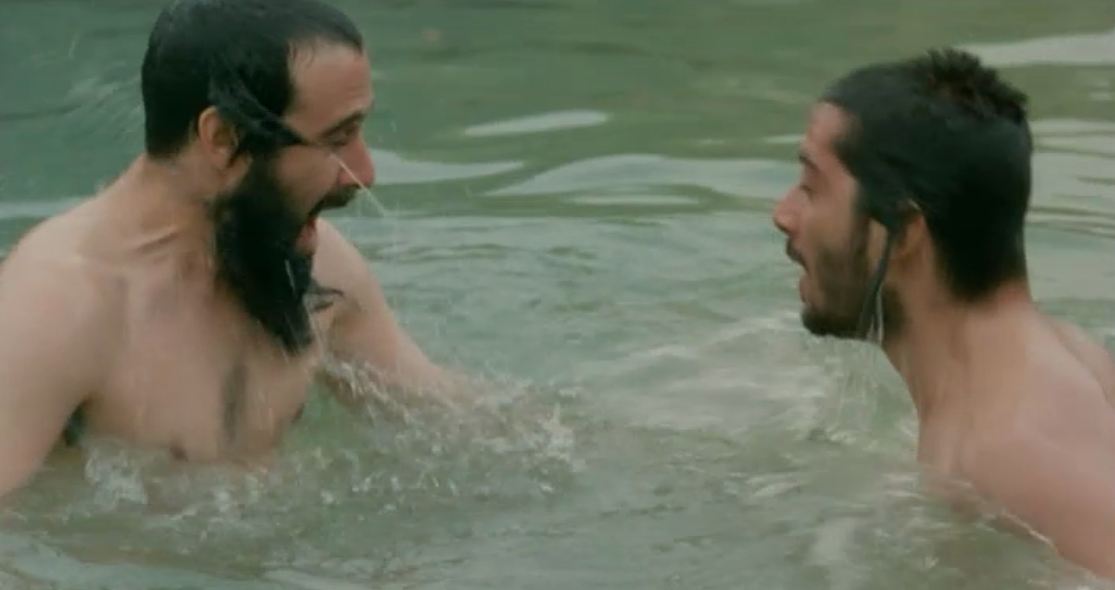
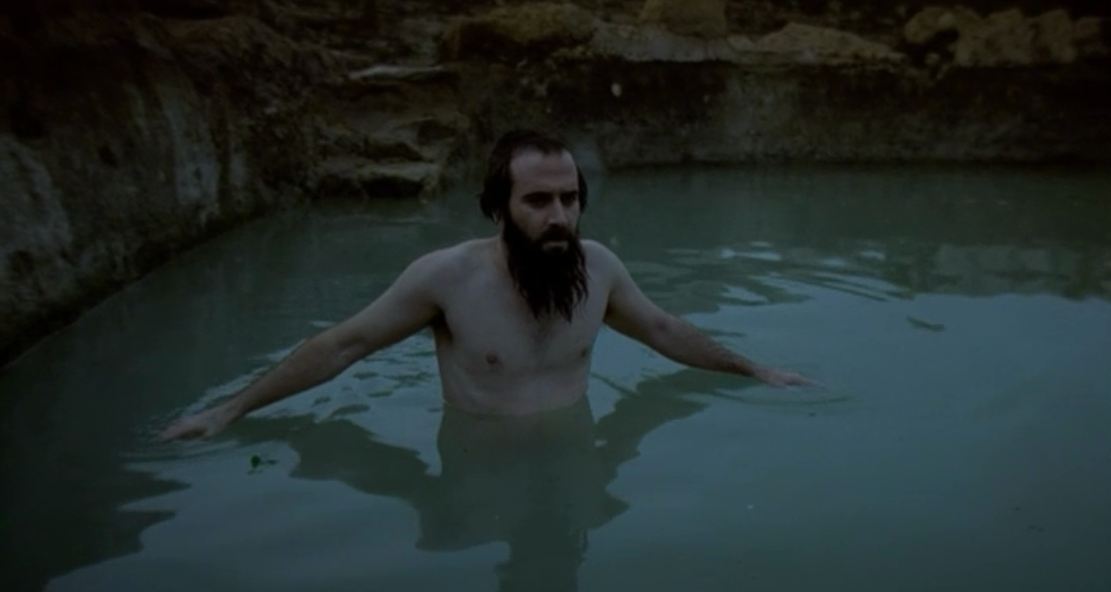
That fairness, however, also opens up the film to its greatest criticism. By refusing to overtly choose a side in this struggle between traditional religious doctrine and contemporary respect for individual freedom, the film risks interpretation as an anti-gay polemic. Certainly its treatment of homosexuality itself is beyond reproach, but so too is its sensitivity to the ancient mores of the Orthodox Hebrew culture; it is far too heavy and complicated a conflict to deserve glib or easy treatment, but those with a more progressive bent might wish for a stronger stance on the side of tolerance and equality. Personally, it is hard for me to characterize a film as anti-gay when it creates such sympathy for its homosexual characters and works so hard to generate hope from the audience for them to be together; and by virtue of exploring the conflict- which is clearly universal, for the setting could just as easily be in a heavily Christian or Muslim community- the film opens up the kind of thinking and discussion which can ultimately lead to positive change, whether socially or personally. Eyes Wide Open, however, is not a fantasy: in the end, Aaron must make a choice between holding on to the beliefs upon which he has built his life or abandoning everything he has ever known for the sake of his own happiness. The choice will not be a surprise to anyone who has paid attention to the struggle of this noble, upright man; and though one might wish that choice were a different one, how many of us would truly have the courage to make it? Still, in the film’s final moments, when Aaron is submerging himself in the waters of a cleansing spring he had once visited with Ezri, and he doesn’t come back up before the camera cuts to black, we cannot help but wonder how long he can hold his breath.

http://www.imdb.com/title/tt1424327/

An Englishman in New York (2009)

;

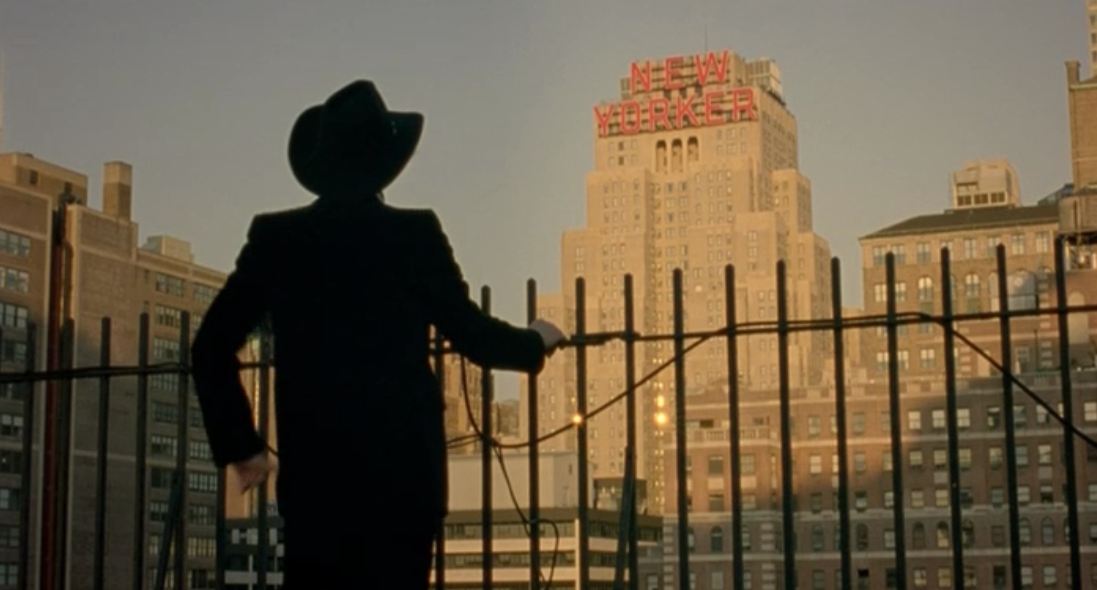
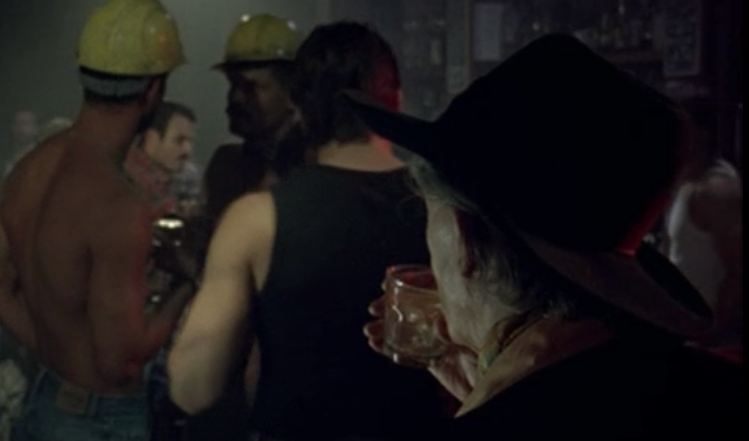
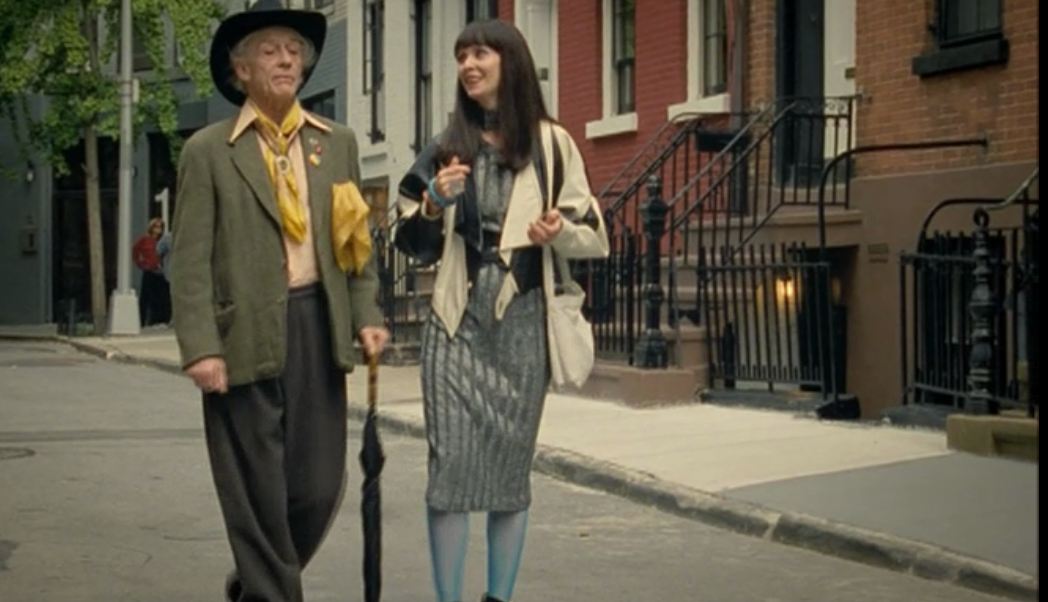
Today’s cinema adventure: An Englishman in New York, the 2009 British telefilm which marked the return of John Hurt to the role of noted real-life author/performer/raconteur/gay icon Quentin Crisp. A follow-up to the acclaimed1975 telefilm based on Crisp’s landmark memoir, The Naked Civil Servant, which made Hurt into a star and won him a BAFTA for Best Actor, this modest biopic covers the later years of the famous eccentric’s life, when he became a celebrated resident of Manhattan and a polarizing figure in the continuing struggle for gay rights. While Hurt maintains his customary brilliance in revisiting and expanding his legendary performance, this outing lacks the strong, central drive of the original film, which had the benefit of focusing on Crisp’s early struggle and triumph in asserting his homosexuality and his individuality in the repressive England of early 20th century. Part of the reason is likely that the first outing was built upon the solid ground of Crisp’s superb book, which portrayed his early life and experiences as a personal journey culminating in his courtroom victory blow against the antiquated morality laws which kept most English homosexuals fearfully cringing in the closet; but here, writer Brian Fillis attempts to encapsulate the remarkable life which followed those events into a 90 minute whirlwind, consolidating characters and contriving scenes in order to address key issues and events. To be sure, he has a cohesive purpose- the main focus here is Crisp’s fiercely guarded individuality, which put him at odds with the ongoing gay rights movement and often made him the object of exclusion within his own community (particularly after an infamous remark that AIDS was “a fad”)- and he does an admirable job of creating a portrait of a man who is forced into continuing growth in spite of himself; but the end result is considerably less satisfying than Civil Servant and leaves us wondering about many of the blank spots in between. Nevertheless, there are many reasons to admire this belated sequel, not the least of which is the rich background of late-century New York scenery lending an authentic documentary feel to the proceedings. By far, however, the greatest joy here is the magnificent performance of John Hurt, who once again captures to perfection the physical and vocal character of this legendary figure while simultaneously conveying the depth of emotion and experience which lies beneath that flamboyant exterior; in Hurt’s hands, the affectations of dress and manner become (as they were in real life) an expression of Crisp’s true self rather than a costume proclaiming his refusal to conform. Nevertheless, in spite of the more obvious success of his characterization, it is in the more intimate moments when Hurt’s brilliance as an actor really shines through- his weathered face and soulful eyes wordlessly express volumes, whether he is confronting the thoughtless prejudice of younger gay men or his own mortality. Supporting him are an array of established character actors- Dennis O’Hare, Swoosie Kurtz, Cynthia Nixon- who are never quite allowed to rise above the constraints of the condensed format, although Jonathan Tucker has some nice moments as artist Patrick Angus, whose work was championed into success by Crisp. Overall, though its hard to call An Englishman in New York a worthy successor to the still-lauded Civil Servant, it offers many rewards in its own right; and though it may ultimately contain less insight into Quentin Crisp than the Sting-penned song from which it takes its title, it is still a fitting and necessary epilogue to the story of a man who changed the world by refusing to change himself.

;

http://www.imdb.com/title/tt0997057/

;

The Cabinet of Dr. Caligari/Das Cabinet des Dr. Caligari (1920)

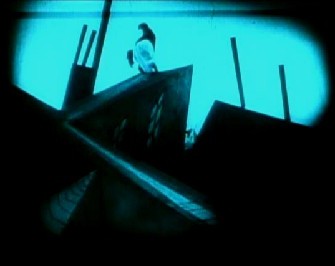
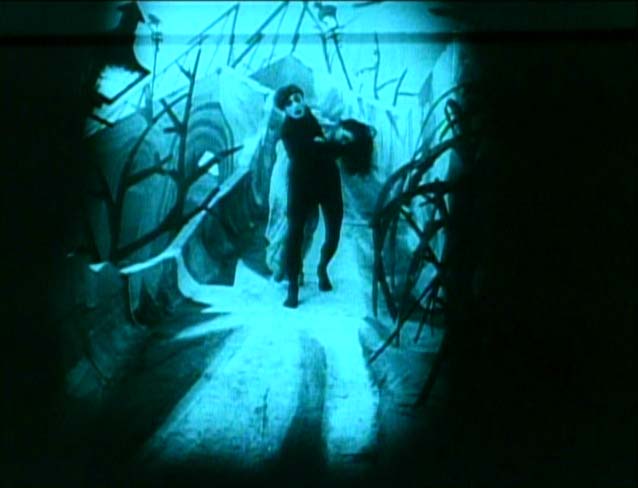
Today’s cinema adventure: The Cabinet of Dr. Caligari, the 1920 cinema cornerstone that established enduring conventions for the horror genre- indeed for cinema itself- and for the general public at least, has become one of the most recognizable representations of the German Expressionist movement.  A bizarre tale about a mysterious carnival magician whose hypnotized slave commits a series of murders at his bidding, this landmark film was first conceived by its writers, Hans Janowitz and Carl Mayer, as a way to demonstrate the effectiveness of film as a medium for Expressionist art, and also to establish a definitive look for German cinema that would distinguish it from the growing influx of American movies to their country. The resulting work is one of the most distinctive visual experiences ever produced, featuring wildly distorted scenery (abstract, asymmetrical sets with sharp, jagged lines, obvious and elaborately theatrical backdrops with painted-on shadows) highly dramatic lighting, and a heightened acting style that seems exaggerated even compared with other silent films of the time; it was an experiment which only took place because the writers persuaded producer Erich Pommer that making the film in this style would save considerable amounts of money.  These creative pioneers- including director Robert Weine, who was brought on board when rising wunderkind Fritz Lang was unavailable- believed that their bold new approach would change the art form forever; however, though Dr. Caligari met with enthusiastic response from audiences and critics alike, and stirred much excitement in the world’s blossoming film community, it failed to lead the industry away from the more mundanely representational style in which it remains more-or-less grounded to this day.

This is not to say that the film had no bearing on the future of cinema.  Its visual conceits and thematic elements have provided immeasurable inspiration for filmmakers from F.W. Murnau to Tim Burton and beyond. Its macabre tone and gruesome content influenced not only the future of the horror genre but the entire film noir movement as well.  It set the precedent for using cinematic embellishment to suggest altered states of consciousness: virtually every film depicting dreams, delusions, or drug-induced hallucinations can trace its heritage back here.  Most important of all, perhaps, was its establishment of numerous structural conventions that have been in continuous use ever since: by constructing its grim story as the remembrance of a young man who is ultimately revealed to be a delusional patient in a mental hospital, Dr. Caligari became the first film to feature a framing device bookending its main narrative, to rely on an unreliable narrator, and to surprise its audience with a twist ending.  None of this is to say that later filmmakers could not have made these innovations on their own- but Caligari went there first.

All this film class trivia is well and good, but how does The Cabinet of Dr. Caligari  hold up today for the casual viewer simply seeking entertainment?  Probably not well: the world is a much different place than it was in 1920, and we have been inundated with stories and images much more shocking and terrifying than those in this film- which, ironically, opened the door for all of them.  The conventions of fiction observed within it seem quaint and unsophisticated by our jaded modern standards, and the performances, with their jerky, unnatural physicality and their often-seemingly-inappropriate facial expressions (to say nothing of their histrionic, over-the-top style) seem unconvincing and inaccessible to us.  To top it off, its outrageously artificial visual style is so alien and disconcerting that it only serves to distance us further from the events onscreen, ensuring that we will never become viscerally engaged in the proceedings.  Of course, it’s true that these qualities were present even when Dr. Caligari was made- deliberately included as part of the Expressionist form intended and carefully crafted by its creators- but historical context has no bearing on our contemporary requirements for suspension of disbelief.

Before concluding, however, that Caligari has no value for any modern viewer who is not a film buff or an art enthusiast, it might be wise to look past the obvious sensibility gaps created by its distance from us in time.  It was never meant to be a purely escapist experience, even when it was conceived nearly a century ago; rather, it was- and is- a vivid and fully realized vehicle for Expressionist themes such as paranoia and the unreliability of perception, and an impressive presentation of the movement’s distinct visual style, comprised of crude, primal imagery that works on the subconscious to elicit a strong emotional response.  Its effectiveness is even keener in its restored form, which not only returns sharpness and luster to the once-faded print but also recreates the original hand-tinted colors, helping to clarify the story by differentiating day from night, and polishing up the intertitles with a font and style coordinated with the bizarre content of the story they tell.  A viewing of Dr. Caligari is hallucinogenic enough on a small screen, and though I’ve never had the opportunity to do so, I suspect that seeing it projected larger than life in a darkened theatre would be akin to experiencing a full dream state.

It’s also worth mentioning that although the stylized acting is hard to assess fairly from a standard modern perspective, Werner Kraus and Lil Dagover, as the mad magician and tragic damsel, respectively, have become iconic as personified archetypes of the collective consciousness; and as Cesare, the tormented somnambulist, Conrad Veidt is electrifying, using his remarkable physical skills and his expressive face to transcend both genre and style, and delivering perhaps the first truly great film performance- one which continues to inspire and influence actors to this day.

So although The Cabinet of Dr. Caligari may not offer the kinds of thrills and chills sought by the average viewer looking for a lively horror film, it certainly offers many other rewards.  There are good reasons why it has been celebrated, emulated, re-invented, re-adapted, saluted and parodied so many times over the decades; it is part of our cultural makeup, and if that is enough to get you to watch it, you may find yourself enjoying its twisted pleasures in ways you never expected.

 http://www.imdb.com/title/tt0010323/

Beginners (2011)

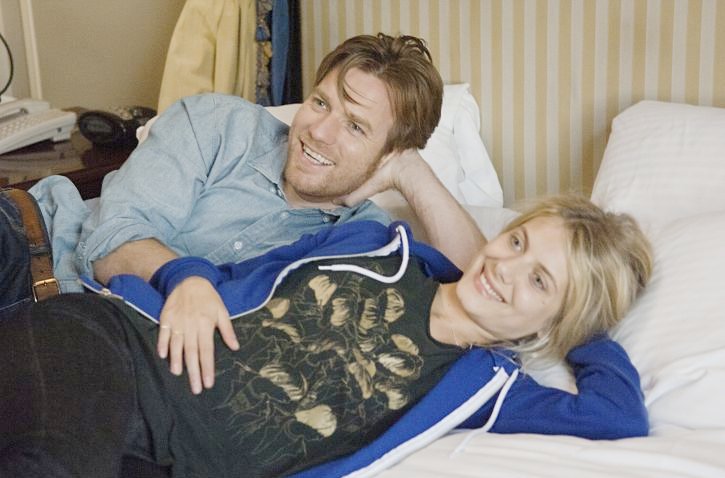
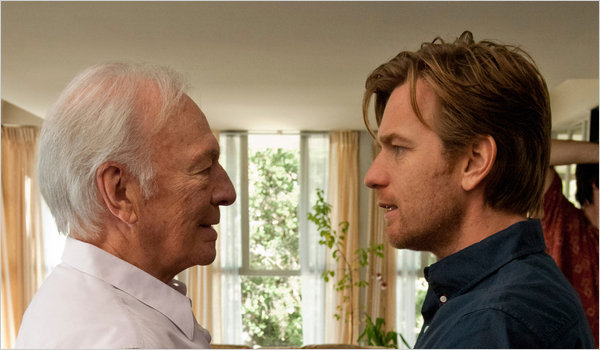
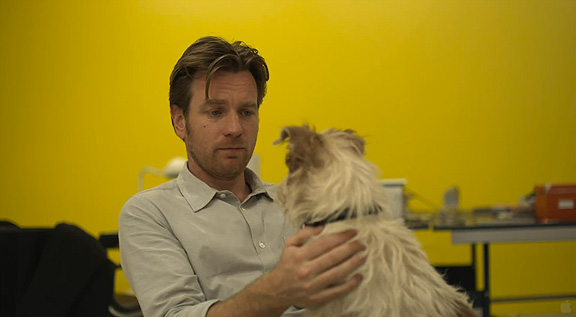
Today’s cinema adventure: Beginners, the 2011 romantic comedy/drama which garnered nearly universal critical acclaim and won multiple accolades and awards (including an Oscar) for supporting actor Christopher Plummer.  Heavily interweaving his narrative with flashbacks, filmmaker Mike Mills documents the efforts of Oliver, an L.A. graphic artist, to reconcile the memories of his childhood (and his grief over the recent death of his father) as he takes the tentative first steps towards a relationship with a young French actress.  Laced with clever, quirky humor, defying stereotypes and expectations at every turn, the film not only engages us with its charming story and likable characters but invites us to ponder the experiences of our own lives and our collective history, and how they provide us with the knowledge we need to grow and the foundation upon which to build a future beyond them.  Mills’ direction (from his own semi-autobiographical screenplay) is superb, moving the film freely between past and present, using its protagonist’s art to provide commentary and draw connections, and offering a wealth of “snapshot moments” which convey volumes about the characters and their lives without the need for extensive dialogue or exposition.  The filmmaker’s efforts would be pointless, however, if not for the superb cast, headed by the ever-lovable Ewan McGregor, giving a heart-breaking performance that manages to convey his character’s deep sadness without ever making him into a downer.  Melanie Laurent is equally effective as his new love interest- who is coping with parental issues of her own- and she, too, succeeds in maintaining both an attractive charm and a melancholy core.  But the most outstanding player here is Plummer, portraying Oliver’s father, a 75-year old man who comes out as gay following his wife’s death and embraces a new life, lived to the fullest, even as he faces his own terminal cancer.  This veteran actor is magnificent to watch as he captures the full spectrum of humanity, from the child-like glee he finds in exploring a world of which he has always dreamed to the dignity he maintains as he succumbs to the humiliation of his disease.  Fully deserving of all the accolades, it’s a performance that provides the strongest- but by no means the only- reason to see the film.  Los Angeles locals will also enjoy the Silverlake settings, lovingly captured by cinematographer Kasper Tuxen, which help to set the tone of Beginners– hip and quirky, but possessed with a keen awareness and respect for the past.  Mills’ film isn’t perfect: some would quibble that it borders on being overly precious, or that the characters’ troubles seem based on self-centered over-thinking and an arrested emotional development resulting from their insulated lifestyle.  However, this is a film about moving forward, about setting aside the emotional baggage of an imperfect past- while still honoring it- and finding the courage to face the challenges of an uncertain future.  In short, it’s a film about change, and therefore a film about fear- the kind of deeply personal fear which can make us all feel like children, no matter our age or background, and therefore cause our thinking and our behavior to seem immature from an outside standpoint.  Maturity comes with taking the leap towards something new, despite these deeply conditioned anxieties, and that is what each of the three principal characters in Beginners must do.  Frankly, I think it’s remarkable that a film addressing such a real and primal fear, and pervaded by such a tone of  bittersweet melancholy, can leave us feeling so charmed- perhaps that’s due to the fact that, above all, Beginners is a film about love, and given their emotional handicaps, if these people can make it work (and whether or not they can is by no means certain), then the rest of us can live in hope that we can, too.

http://www.imdb.com/title/tt1532503/