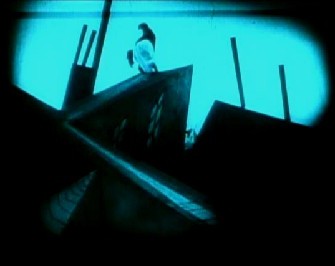
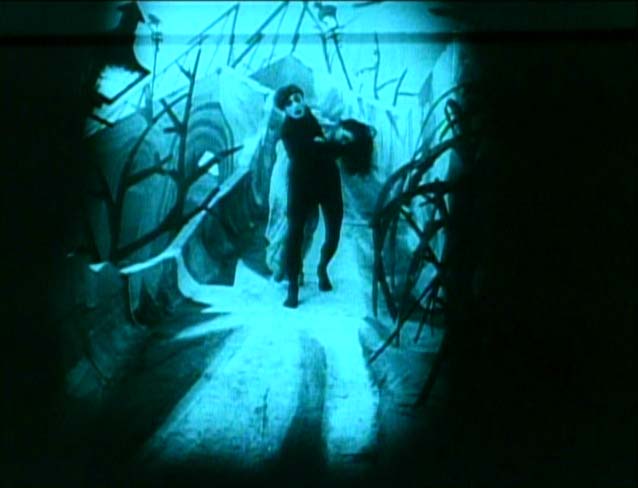
Santa Sangre (1989)


Today’s cinema adventure: Santa Sangre, the surreal 1989 horror fantasy by director Alejandro Jodorowsky, about a young man, raised in a circus, who is dominated by his puritanical mother and driven by her to exact revenge for the sinful impurity which led to her brutal dismemberment.  Hallucinatory, disturbing, and gruesome, it received only limited release in the U.S. despite its director’s status as a revered avant-garde legend and the enthusiastic reception of critics, but quickly became a cult classic and has since been made widely available for home viewing.  Hailed by many as a masterpiece, it’s a bizarre visual feast, pervaded by a garish carnival atmosphere and a sense of sickly wonder, which offers the guilty thrills of Grand Guignol horror alongside religious, psychosexual, and social themes, providing an unforgettably nightmarish cinematic journey through the arcane and the unspeakable.

The story centers on Fenix, whom we first see as a patient in a mental institution- naked, animalistic, and uncommunicative, but beginning to emerge from his isolated state in response to the gentle coaxing of his doctor.  Through flashbacks, the origins of his traumatized state are revealed; we see his childhood as the son of a circus impresario and his aerialist wife, performing as a juvenile magician and surrounded by the extreme environment and eccentric denizens of their show-business world.  His libidinous father is enamored of his newest act, a tattooed contortionist whose abused deaf-mute daughter, Alma, has become a new companion for Fenix; his mother is also the fanatical leader of a cult dedicated to the memory of a little girl whose arms were cut off by rapists.  When the authorities close and demolish her church, and she catches her husband with his tattooed mistress, it is too much for mother to take- she attempts to punish the philanderer for his faithlessness, resulting in a tragic turn of events that leads to his death and her dismemberment, a tragedy witnessed by their horrified child.  When the film returns to the present, we see the adult Fenix gradually reawakening to his memories, culminating in his escape from the hospital and a reunion with his now-armless mother; together, they form an act in which his arms become hers- an odd symbiosis which carries over into their strange and secretive offstage life.  It gradually becomes apparent that Fenix’ limbs have become subservient to his mother’s will, and he is forced to do her bidding despite his own wishes- even when it means committing murder.  The situation becomes even more complicated with the reappearance of Alma, now grown into a beautiful woman; his feelings for her threaten to disrupt the twisted bond between mother and son, triggering a final battle of wills in which Fenix must attempt to regain control of his destiny and put an end to his mother’s vengeful reign of blood, once and for all.

This scenario may seem convoluted and illogical, but in Jodorowsky’s screenplay, co-written with Roberto Leoni and producer Claudio Argento, it all makes its own kind of sense.  It is clear from the beginning of the film, when we are first introduced to our damaged protagonist (crouching naked in a white room adorned with only a severed tree trunk, which he uses much in the way of a monkey at the zoo) that we are visiting a universe where the rules of common sense and linear thinking do not apply.  It’s a primal place, a realm of deep unconscious impulses and associations, where every occurrence seems symbolic and yet has simultaneous real-world significance.  In short, it is a dream reality, and one marked by the kind of feverish dread and sadness from which we long to awaken.  Into this soul-sick, delirious setting, the film weaves its epic tale of good and evil, complicated by deep-rooted familial bonds, contradictory moral strictures, and the personal needs of heart, body and spirit.  Along the way it mercilessly exploits our expectations and challenges our sensibilities, forcing us to endure depictions of unthinkable cruelty, incomprehensible depravity, and devastating heartbreak, so that when we are confronted with the grisly violence of murder, it seems almost a relief.  Certainly these scenes provide a kind of cathartic release for all the accumulated emotional saturation to which Jodorowsky’s film subjects us; but this does not mean that Santa Sangre condones or glorifies killing.  On the contrary, these periodic bursts of bloodshed only serve to compound the psychic despair that drenches the movie, until it seems that true evil is everywhere and all the good intentions in the world are powerless to stop it.  This, of course, is the ultimate point of Santa Sangre:  it is not enough to bewail and bemoan the workings of evil, or to regret one’s own unwilling or unknowing participation in them; the consequences may be dire, and the effort may be great, but conquering evil means taking responsibility for one’s own actions and exercising one’s free will by refusing to perform its bidding.  In a film so outwardly monstrous, the biggest shock of all may be that it is, ultimately, about the triumph of good over evil.

In support of his overriding theme, Jodorowsky has assembled a film worthy of his legendary surrealist pedigree.  He fills the screen with a progression of remarkable images, drawing heavily on the filmmakers who have influenced him- particularly Federico Fellini- but infused with his own darkly visionary sensibility.  Over the course of Santa Sangre he gives us a dancing dwarf, an elephant funeral, a pimp who gives cocaine to mentally handicapped children, naked whitewashed corpses rising from their graves, dogs and chickens feasting on human blood, a cross-dressing wrestler, and any number of other fascinating, macabre, unsettling sights and sounds; it’s an inundation of the bizarre that is so perversely gripping that looking away is simply not an option.  Jodorowsky is not merely being outrageous for the sake of shock value, however; every element, no matter how bewildering it may seem, has a concise purpose here.  The theatricality of the early scenes reminds us of the traditional view of the circus as a metaphor for life, but its larger-than-life atmosphere carries over into the film’s “real-world” setting- particularly in the nighttime streets of Mexico City, bedecked with the morbidly cartoonish imagery of Dia de los Muertos and populated with a frightening menagerie of revelers- suggests that the absurdity of life itself requires no exaggerated artistic conceit to expose its folly and decadence; the recurrence of quasi-religious iconography underpins an examination of hypocrisy in a moralistic dogma more concerned with punishment than salvation, more fixated on death than life, and more reverent of representation than of reality; and the heavy use of deep psychological themes throughout- symbolic bird imagery, the multilayered opposition of illusion to unadorned reality, the merging of sex and violence, the conflict between paternal and maternal influences- is carefully accumulated towards the director’s ultimate purpose of peeling back such complications to reveal the truth that choice, in the end, is what defines us.

For those who are just looking for a horror movie, Santa Sangre delivers on those terms, as well.  All of Jodorowsky’s avant-garde explorations are woven around a lurid tale of psychosis, murder, and mayhem that could easily have come from a mind like Stephen King’s.  In keeping with the film’s ironic title, much blood is spilled during the course of its story, in celebrations of gleeful gore managed with the flair of a true cinematic master; the macabre humor with which these killings are played out is worthy of Hitchcock- whose work, like Fellini’s, is echoed throughout.  Indeed, despite its serious agenda, Jodorowsky’s movie is laced with comical moments; part of the director’s style is to capitalize on the absurdity of what he shows us, eliciting laughter in the face of the strange and unfamiliar.  In a similar manner, he finds beauty in the grotesque and joy in the sorrowful, giving Santa Sangre an unexpectedly transcendent quality for such a gruesome saga.

Populating Jodorowsky’s epic is an assorted collection of personalities, some professional actors and many, clearly, not so professional.  At least a half-dozen cast members are relatives of the director, including his sons Axel and Adan, who portray Fenix as a young man and child, respectively.  Both deliver performances to do their father proud; as does the fiery Bianca Guerra as Concha, the unforgiving mother.  Also worth mentioning are Guy Stockwell as Fenix’ über-masculine, contradictory father and Thelma Tixou as his gyrating, tattooed mistress; many of the film’s remaining cast fall into the “where-did-he-find-these-people” category, conjuring memories of Tod Browning’s Freaks– another seminal influence for Jodorowsky’s vision- and providing indelibly-stamped images for the memories of any viewer.  The acting, needless to say, is not always stellar amongst these motley supporting players, though many of them do acquit themselves admirably; but even the most stilted and awkward performances contribute to the overall surrealism of the piece, an effect that is further enhanced by the obvious dubbing of some of the dialogue- a factor no doubt made necessary by Jodorowsky’s inexplicable decision to shoot his film in English, despite its Mexican setting and the fact that most of his previous work was produced in Spanish.

Santa Sangre is one of those film experiences that reminds viewers of the dazzling potential of the cinematic medium.  It transports us to a world that we have never seen, or even imagined, and opens pathways to the deepest, most private places of our psyches, making us aware on a level that erases the extraneous differences in our lives and connects us to the shared consciousness that unites us with the rest of humanity.  It manifests its own, utterly unique style while drawing from a sea of visual influences that includes not only the aforementioned filmic inspirations but such diverse sources as Frida Kahlo, the psychedelic counterculture, and the garish camp of lucha libre.  It’s a pity, though hardly a surprise, that this and Jodorowsky’s other films have remained more-or-less obscure; their edgy, unorthodox visual poetry is hardly the stuff of safe, commercial filmmaking, and the director’s long history and reputation as an iconoclastic free spirit has no doubt kept him distant from the profit-driven film industry establishment.  Nevertheless, the French-Chilean auteur maintains a large and loyal cult following throughout the world, and has enjoyed a long and remarkable career of which filmmaking is only a single facet; he is renowned as an artist, a theatrical director, an author, and a creator of comic books, as well as for his extensive work and research in the field of “psychomagic,” which has included a painstaking recreation of the classic Marseilles Tarot deck and the development of several therapeutic practices drawing on ideas from various so-called “occult” fields towards the purpose of psychological healing.  At the time of this writing, he is 83 and still active, at last report working on a film version of his autobiography, with which his stated goal is “to lose money.”  Perhaps the recent re-emergence of Santa Sangre, lovingly restored on DVD and BluRay and widely available on web-based streaming video platforms everywhere, will introduce the dark wonders of his world to a wider segment of the population and help to create a larger audience for his latest project.  At the very least, it may lead viewers to seek out and discover Jodorowsky’s other works, such as El Topo and The Holy Mountain, so that he may, at last, get the recognition he richly deserves as one of the great auteur filmmakers of our time.

http://www.imdb.com/title/tt0098253/

 

Requiem for a Dream (2000)

Today’s cinema adventure: Requiem for a Dream, Darren Aronofsky’s 2000 film exploring the dehumanizing, destructive effects of addiction through its depiction of three seasons in the lives of a group of interconnected characters. Noted for bringing the promising Aronofsky to the forefront of attention as one of Hollywood’s hottest new directors, it garnered many accolades- especially for the performance of its veteran star, Ellen Burstyn, for whom it provided a comeback of sorts, and for its powerful musical score by Clint Mansell. It also generated much controversy over its use of graphic drug-related and sexual imagery, receiving an NC-17 rating from the MPAA despite Aronofsky’s protest and appeals. When the director refused to make cuts, the distributor, Artisan, showed rare support by deciding to release the film without a rating; on subsequent home video release, a slightly edited R-rated version was made available in addition to the original cut, ironically missing only a few brief graphic sexual images- evidently, the hardcore drug use was considered less objectionable than the sex.

The film’s interwoven plot follows the fate of four Brooklyn-ites: Sarah, an aging Jewish widow whose life is mainly occupied with watching television infomercials; her son Harry, whose recreational drug habit is funded by the repeated pawning of his mother’s TV (which she promptly buys back, every time); his girlfriend Marion, an aspiring fashion designer supported by her wealthy parents; and his best friend Tyrone, who dreams of living up to his mother’s high hopes for him even as he slings drugs on the street. When Harry and Tyrone decide to go into the heroin business for themselves, using Tyrone’s connections as a source and planning to use the profits to open a shop for Marian’s designs, the future starts to look brighter for the three young people; meanwhile Harry’s mother is notified that she has been chosen to appear as a contestant on a game show, giving her a new lease on life, as well. However, the promise of these new developments quickly sours: Tyrone is arrested after being caught in the middle of a drug gang assassination, requiring Harry to use most of their profits to bail him out; and in her desire to lose weight for her impending TV appearance, Sarah becomes dependent on prescription amphetamine diet pills. To make matters worse, a heroin shortage forces Harry and his companions to resort to desperate- and progressively more degrading- means in obtaining the drugs to support their own worsening addictions, and Sarah is plagued by disturbing hallucinations as her sanity begins to deteriorate rapidly. With their dreams of a better life now hopelessly out of reach, there is nothing for any of them to do but spiral deeper into their private hells, driven by their addictions and haunted by the memories of what might have been.

Adapted from the novel by Hubert Selby, Jr., the screenplay, co-written by Aronofsky and the author himself, paints a bleak and harrowingly realistic picture of the horrors of drug addiction; despite this, however, the film is not so much a polemic against drug abuse as it is an exploration of the very nature of addiction itself. Each of its characters uses escapism as a salve to ease the pain and monotony of their lives, whether it be heroin, food, sex, or mindless TV programming. The drugs which ultimately destroy their lives are merely a metaphor for the so-called “American Dream;” the film’s ultimate purpose is to expose it as a lie, a fabricated ideal of success which obscures the real human experiences of family, love, and community. In the pursuit of an unattainable goal, such tangible rewards go unappreciated and ignored, and are eventually lost; each of the film’s four central characters are inherently likable, essentially good-hearted individuals who embrace an illusion as a means to bring them the happiness they are sure will follow when they achieve their goals- but the means itself is a destructive, uncontrollable force which creates chaos, pulling them ever further from the fulfillment for which they long. It’s a powerful message, and the disturbing form in which it is delivered suggests some very uncomfortable questions about the level of addiction- in all its guises- permeating our society. Through the joined tales of each protagonist, we are shown the ease with which an average person can make the journey to becoming one of the millions of broken, lost souls from whom we quickly look away, terrified of being reminded of the nightmare existence which goes on between the cracks in our culture’s cheery, prosperous façade.

Jolting as the screenplay may be, what makes Requiem for a Dream such a ferocious and unforgettable film experience is Aronofsky’s audacious and hallucinatory visual style. The director keeps a clinical distance from his subjects, discouraging the formation of a sentimental connection by way of his constantly shifting perspective and his use of camera-and-editing-room trickery. He alternates between omniscient long distance shots and intimate extreme close-ups, underscores ironic parallels and repetitive patterns with rapid-fire cuts (known, incidentally, as “hip hop montage”), highlights isolation and disconnection with extensive split screen effects, heightens the surreal atmosphere with time-lapse and slow-motion photography, and takes us into the psyche of his characters with the use of lenses which recreate the grotesque and distorted imagery of their delusional perceptions. With all these visual elements in play, he still manages to build the pace steadily with progressively shorter scenes and more rapid and frequent intercutting as the movie moves towards its conclusion. It’s a visual thrill ride worthy of the Coney Island setting which provides a backdrop for several of its scenes, and a display of technical mastery that leaves no doubt of this director’s prodigious cinematic talent. More than that, though, the carefully maintained emotional detachment facilitates an empirical quality to his film, allowing him to place the emphasis on observation rather than drama. As his characters move through their experiences, Aronofsy lets the circumstantial developments of the plot serve merely as a means to elicit reactions from them, focusing instead on their behavior and psychology; he pays particular attention to the ritualization of their addictions, the fantasies and associations that arise from the situations in which they find themselves, and the ways in which they blind themselves to their own vulnerability. It’s an approach which sometimes makes us feel like a voyeur, with the characters as objects for our perusal and study- specimens instead of the more conventional vehicles for transference of audience sympathy.

It’s not all flash and style, however, and the solidly intellectual and aesthetic approach to the subject does not make for a cold film. Though Aronofsky maintains his artistic aloofness throughout, taking care not to sugarcoat his characters or their obsessions and making sure the absurdity of their fantasies never threatens to become overtly comic in tone, Requiem for a Dream is far from being devoid of humanity. On the contrary, the depth of emotion which each character experiences is given full scope and attention; it’s fair to say, in fact, that the real story lies more in their emotional journey than in the outward circumstances of their experiences. Certainly the full power of Aronofsky’s film derives from its emotional weight, and the detachment with which he depicts their struggles somehow has the effect of bringing their poignancy into stark relief, making us feel their misery far more keenly than if it were portrayed in a Hollywood-style, sentiment-drenched narrative. It’s not empathy, exactly, an effect Aronofsky works so diligently to avoid, nor is it pathos; rather, it is a form of psychic horror at the level of desperation to which these damned souls are driven to sink in their quest for gratification, something akin to the overwhelming sense of nameless loss experienced when we witness a tragic accident or a cataclysmic disaster.

Requiem for a Dream, as Aronofsky clearly understood, can only work so effectively upon us with a strong cast breathing life into the subjects under its director’s microscope. Jared Leto, as Harry, is a worthy leading man, providing a solid, grounding energy that makes even his most misguided actions seem like a reasonable idea; he gives his character intelligence and a genuinely good nature, making him the most likable figure in the film and making his deterioration the most heartbreaking to watch. Jennifer Connelly, as Marian, exudes the confidence and elegance of privilege but adds a palpable layer of little-girl insecurity; and Marlon Wayans, as Tyrone, exudes easy-going charm and a sincere warmth that makes it clear his intentions are as good as he says they are. The most unforgettable performance, however, comes from Burstyn, as Sarah; her unflinchingly honest portrayal is the centerpiece of the film, capturing us from her first moments onscreen- locking herself in the bedroom while her son steals her television, yet again, for drug money- and taking us on the ups and downs of her journey to hell without ever once resorting to cheap sentimentality or self-conscious mannerism. Her work in the final third of the film is particularly remarkable, giving it a tragic power that belies its disaffected style. It’s as real a piece of screen acting as you will ever see, fully deserving of all the acclaim it garnered for this magnificent performer; and, as a bonus, there is an added resonance in the scenes of her psychotic episodes, later in the film, which is unavoidably derived from memories of her iconic role in The Exorcist.

Aronofsky’s film benefits greatly from the work of these fine players, as well as from that of other actors in smaller roles- the criminally-underappreciated Louise Lasser, Mark Margolis, Keith David, and the grinning, unctuous Christopher MacDonald, as banal infomercial host Tappy Tibbons. There is also the gritty-yet-luminous cinematography of Matthew Libatique and the aforementioned score by Clint Mansell, performed by the Kronos String Quartet, giving the film a distinctive tone which is at once majestic and ethereal. Ultimately, however, the success of Requiem for a Dream- and it is very successful- lies with its visionary director. It is he who has taken all these elements and brought them together to serve his purpose here; in doing so, he has managed to make a film which is simultaneously beautiful and horrific, scientific and operatic, and above all, indelible. His cinematic sensibilities have since been proven repeatedly, but never more definitively than with this film, which remains his best work to date- less formulaic than The Wrestler and scarier than Black Swan. Perhaps it is because of the universality at its core; though most of us, hopefully, will not succumb to the ravages of drug addiction, we can all see ourselves reflected in the four doomed people he shows us, choosing the quick and easy way to relieve the pain and monotony of our lives- fantasy, chocolates, television, movies, the internet, or whatever we may choose- just to give us, as Sarah puts it, “a reason to get up in the morning.” It’s not a cheerful movie- though, admittedly, there are some darkly ironic moments which might bring a morbid chuckle or two- and it doesn’t offer much in the way of hope or answers to the difficult questions it raises; but, of course, that’s what makes it so great. If Requiem for a Dream wrapped itself into a neat package, assuming a comfortable, morally appropriate stance or suggesting some false-ringing glimmer of light at the end of its characters’ respective tunnels, it would be easy to process it, set it aside, and forget about it; but I guarantee you, whether you love it or hate it- and there are many on both sides of that issue- you will never be able to erase it from your memory. If that’s not a sign of a great movie, I don’t know what is.

http://www.imdb.com/title/tt0180093/
The Stunt Man (1980)

Today’s cinema adventure: The Stunt Man, the 1980 feature by director Richard Rush about a runaway fugitive who stumbles into the middle of a film shoot and finds cover working as a stunt man, only to realize that the movie’s megalomaniacal director may be planning to kill him for the sake of filming the ultimate stunt.  A difficult film to place within a genre, it was shot in 1978 and ended up shelved for two years by a studio that didn’t know how to advertise it; when it finally hit the screen it was only given a limited release, and it was largely overlooked by the public.  Nevertheless, it garnered considerable praise from critics and managed to earn several Academy Award nominations, including one for its star- and its main appeal, then and now- Peter O’Toole, whose performance represented something of a comeback in his storied career.

Adapted by Rush and Lawrence B. Marcus from a novel by Paul Brodeur, The Stunt Man follows a young Vietnam War veteran who is running from the law, having committed an unspecified crime after returning from his tour of duty.  With officers in hot pursuit, he runs into the middle of a film shoot, inadvertently disrupting a dangerous automobile stunt in which the driver is accidentally killed.  With a sudden new opening for a replacement and only a few days to finish his ambitious anti-war epic, the movie’s director, Eli Cross, takes the young outlaw under his wing, offering him a safe haven and a new identity- in exchange for completing the aborted stunt himself.  As he prepares for the big moment, learning the tricks of the trade and attempting to bond with the gregarious crew of movie-making gypsies that have taken him into their fold, he begins to suspect the flamboyant and mercurial Cross, who is obsessed with realism, of plotting to orchestrate his death in order to capture it on film.  Things are further complicated when he finds himself in a blossoming romance with the film’s leading lady, heightening his dilemma over whether to flee back into a permanent life on the run or stay and risk his own untimely demise.

If the premise seems a bit gimmicky, it is; The Stunt Man offers a highly improbable premise, riddled with plot holes and unlikely conceits.  This, however, is part of the sense of wicked fun that permeates the movie.  Rush and Marcus never take the pseudo-thriller plot too seriously; although they give an appropriate amount of weight to the psychological conflicts of its hero, they make certain that the overall tone is decidedly comic, flavored with cynical irony and self-satire, and they derive a great deal of nudging humor from the tricks they work on their audience.  Within its far-fetched scenario, The Stunt Man plays with our expectations and our preconceived assumptions in order to keep us off balance, establishing its young protagonist as our access point into its smoke-and-mirrors world and ensuring that we, like him, are constantly betrayed by appearances; this is, after all, a movie about making movies, and in keeping with its subject, nothing is what it seems.  At every turn, we are presented with illusions- many of them clearly established as such- and then find ourselves surprised when the truth behind them is revealed.  The film shrewdly manipulates our willing suspension of disbelief, understanding that we want to buy into its various cons, and exploiting our natural inclination to believe what we see.   Rush spends most of his movie exploring examples of the conflict between truth and illusion, from the oft-repeated assertion that King Kong was only 3′ 6″ to the extended sequence of WWI carnage enacted in front of a throng of horrified spectators at the beach, making for a highly amusing display of magic in which the tricks being performed mirror the tricks being played on us by the magician behind the camera.

Of course, this idea of illusion vs. reality, which fits so perfectly into the metaphoric possibilities of a self-reflexive movie about movies, is nothing new; it has been highlighted in works ranging from Fellini’s 8 1/2 to Ben Stiller’s Tropic Thunder, providing fodder for low comedy to high tragedy and everything in between.  The Stunt Man, however, ties it to another theme, perhaps more immediately relevant to the lives of everyday civilians not lucky enough to be working in the film industry- namely, the difficulty of trust in a culture full of deliberate lies and manipulation.  Our hapless hero, ironically dubbed “Lucky” by his newfound protector (or, perhaps, persecutor), is full of paranoia and mistrust, the result of buying into a much bigger and more insidious con game than any cinematic sleight-of-hand perpetrated by Eli Cross and his crew; he has been cheated by a system that sent him to war on the promise of making him a hero and now treats him as a pariah, and had his hopes for a happy future shattered by faithless friends and lovers.  When the nature of his crime is revealed, we discover it was an act of anger and frustration over the raw deal into which he has been suckered- like so many of his generation.  Is it any wonder, then, that when he is offered a new lease on life by a representative of the dream factory, a man who blatantly and unabashedly manipulates truth and illusion in order to achieve his ends, he is wary of being suckered once again?  This is the central conflict of The Stunt Man; in a world devoted to illusion and deceit, where pretty lies often disguise ugly truths and trust is only a lure by which the foolish are led like lambs to the slaughter, the only hope of self-preservation is to doubt everything and everyone around you.  As Eli Cross puts it, late in the film, “Paranoia is a social disease; it’s got by screwing your fellow man.”  Whether he offers a cure or euthanasia is the primary question of The Stunt Man, and I wouldn’t dream of answering it here.  Suffice to say that the course of treatment has a few twists and turns.

Rush guides his film with bravura flair, capitalizing on his rare opportunity to both celebrate and send up the conventions of movie-making.  Infusing it with a certain tongue-in-cheek aura of self-awareness, he nevertheless dives headlong into the numerous opportunities for old-fashioned movie spectacle, with the added layer of showing us the spectacle behind the spectacle; he gives us a delight akin to seeing a magician reveal his secrets, only to discover the revelation itself is part of the trick.  He also takes advantage of the film-within-a-film milieu to capture a sense of bygone Hollywood glamour in the midst of the nuts-and-bolts candor of the contemporary setting, aided considerably by the extensive use of the historic Coronado del Rey Hotel, which serves as a location for much of the film; and though his film is primarily focused on psychological concerns, he fills it with action, not just within the framework of the “meta-movie” but expanding it outward into the surrounding real environment of the film as well.  The result is a movie that takes its time to get to its point but maintains the feeling of a brisk pace, enhanced by all the inherent details of its film-shoot backdrop, and keeps us engaged in its game of interchanging fact and fiction right up to the final playful moment.

The Stunt Man benefits from Mario Tosi’s cinematography, with its exploration of various qualities of light, both natural and staged; and the rousing score by Dominic Frontiere conjures the circus atmosphere of the movie-making world with a bravado that matches that of its director (the one onscreen, that is), and even includes a haunting vocal tune, “Bits and Pieces,” co-written by veteran songsmith Norman Gimbel and performed by the iconic Dusty Springfield.  As for the cast, a fine ensemble of likeable faces clearly enjoys itself with the material.  The titlular hero is played by Steve Railsback (whose careeer was mostly defined by his portrayal of Charles Manson in the TV film of Helter Skelter), who lets us see the vulnerable little boy inside even as he pulls off the hard-edged toughness he uses as a protective mask, and conveys the impression of a young man walking around in a state of prolonged shell-shock- which, of course, is not far from the truth.  The beautiful Barbara Hershey is highly effective as the leading lady (of both the film and the film within it), marvelously embodying the multi-layered quality of an utterly contemporary woman; she is sensual, independent, confident and full of a zest for her life and her work, but she also reveals the insecure little girl underneath the worldly actress- and, most importantly, she manages to find the balance between candor and mystery that keeps us from really knowing the sincerity of her feelings for “Lucky.”  Alex Rocco is memorable as an exasperated local lawman, as are  Allen Goorwitz, Chuck Bail, Adam Roarke, and Sharon Farrell as various members of the film’s cast and crew; but, without question, The Stunt Man belongs to its star, Peter O’Toole.

As Eli Cross, O’Toole’s famously over-the-top persona finds its perfect match; zooming around in his helicopter, descending from the heavens on his crane, and constantly enfolding his underlings with the enormity of his personality, he gives us the ultimate egotistical film director.  He is vain, dictatorial, demanding, pretentious, manipulative, and arrogant; yet he is also generous, gregarious, compassionate, and clearly more aware than anyone else of his own ridiculousness.  Cross plays himself with gusto, and O’Toole plays Cross with just as much of it; the legendary actor has said he based his performance on David Lean, the famously godlike director who helmed, of course, Lawrence of Arabia.  This may account for the unmistakable air of authenticity that underlies his work here, for despite his fully appropriate chewing of the scenery, every moment of his performance is infused with an absolute honesty and a fully recognizable humanity.  O’Toole’s Eli Cross is exactly the kind of larger-than-life man who is both worshiped and feared by those beneath him- and considering his God-or-the-Devil role in the proceedings of The Stunt Man, it’s a quality that fits to a tee, and makes the entire film work like gangbusters.

The Stunt Man is one of those odd little films that time forgot; a staple in the early days of cable TV, many have seen it- and liked it- and yet it has slipped into relative obscurity, no doubt due to its effervescent qualities that are likely to disguise its deeper matter for audiences who aren’t paying close attention.  For myself, I have noticed that when it comes up in conversation with someone, almost invariably the other person’s eyes light up- “Oh yeah, that’s a great movie!  I haven’t thought about that one in years!”  I’m happy to say that it holds up well, perhaps seeming even better now, though clearly the behind-the-screen technology it shows us is a bit dated in some ways.  The high-spirited camaraderie it depicts among its film-making “family” is timeless, however, and so are the themes it so cagily explores.  After all, today’s world is as full of phonies and liars as ever, and it is perhaps more difficult than ever to let our defenses down, for fear of being taken in and played for a fool- or worse.  The Stunt Man, in its quaint little tale of Machiavellian plotting in an insular world, provides an apt metaphor for the difficulties of overcoming paranoia in our own.

 http://www.imdb.com/title/tt0081568/

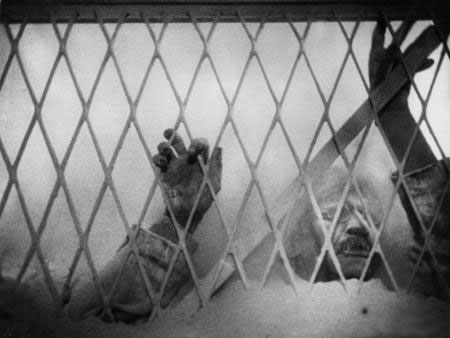
Vampyr (1932)

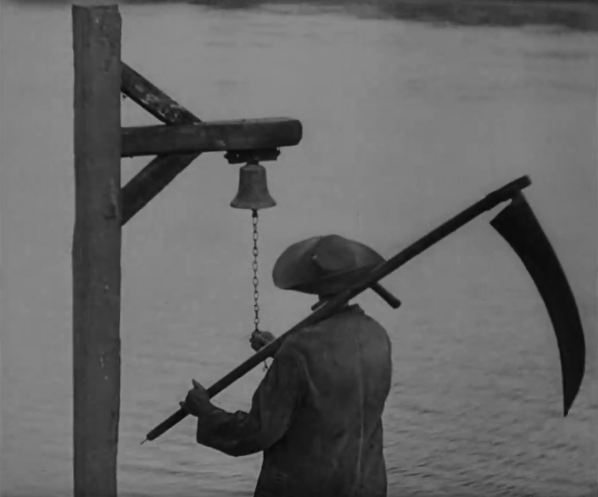
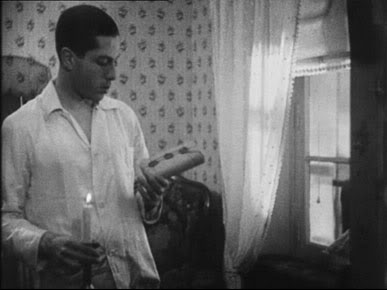
Today’s cinema adventure: Vampyr, a 1932 French/German horror film directed by Carl Theodor Dreyer, about a young man, obsessed with the occult, whose wanderings lead him into the dark troubles of a remote countryside manor, where the owner’s mysteriously ill daughter may be in the grip of horrifying powers from beyond the grave. Dreyer’s first film using sound, it was also his first effort following The Passion of Joan of Arc, a feature which, despite enthusiastic acclaim from critics, had been a box office disaster. With no studio willing to take a chance on the basis of his artistic promise alone, Dreyer found private financing from Nicolas de Brunholz, a young Baron who was a fixture of the Parisian social scene, known for his extravagant parties and his patronage of the arts, who would later become a prominent fashion editor for such magazines as Harper’s Bazaar and Vogue (and a mentor for designers Bill Blass and Calvin Klein, among others). De Brunholz’s condition for backing Dreyer’s film was that he would be its star; under the pseudonym of “Julian West,” assumed to assuage his prominent family’s disapproval of his acting ambitions, he portrays the wispy focal character of Allan Grey, and though his acting abilities were decidedly limited (and wisely un-stretched by Dreyer’s demands), his tall, slender frame and his handsome, elegant appearance set a distinctive tone at the center of the movie, aptly suggesting a strong spirit that has perhaps found himself over his head in a situation beyond his grasp.

Nevertheless, despite the support and participation of one of Europe’s most prominent society figures and the attendant buzz which surrounded it, Vampyr proved to be a worse flop than Joan of Arc, booed at its debut screening and, this time, even derided by the critics, who found it slow-moving, incoherent, and/or laughable; for many years it was widely considered Dreyer’s worst film, falling into such neglect that all but a few damaged original prints were lost. Indeed, produced to capitalize on the popularity of such American horror films as Dracula and Frankenstein (though it was initially conceived before these films had been released), it had such a marked difference in tone and style that it is easy to see why it perplexed and disappointed movie-goers of the time. The film’s failure contributed to Dreyer’s declining financial and emotional stability, which led to a nervous breakdown and kept him from making another film for another 11 years. It was only after his subsequent career and the retrospective appreciation of a later generation that reassessment granted it a status more deserved by its innovative and unique contribution to the horror genre and to cinema in general.

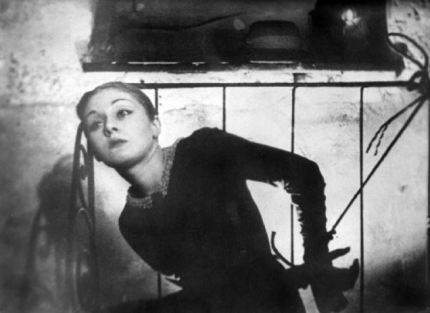
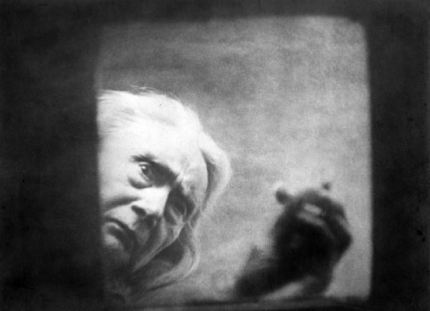
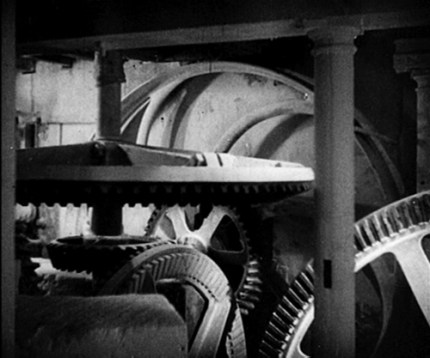
Ironically, many of the elements which made Vampyr such a flop are the reasons it is considered such so significant today. On a superficial level, it is one of the first horror films to feature a female vampire (and an elderly one at that) as its main antagonist, having been partly based on the short story Carmilla, by L. Sheridan La Fanu, a popular 19th-century fiction known for its decidedly lesbian overtones- some of which carry over into the film. It was also one of the first times the obvious sexual implications of the vampire myth were explored more overtly; though there is no explicit reference or depiction of sex, the metaphoric connection is clear, particularly in the decidedly romantic manner in which the young heroine is seen being victimized by her attacker. The film is also notable for its re-imagination of the standard, Dracula-based formula seen in most vampire movies; although it features most of the key archetypes inherent to the story, many of the familiar stock characters are absent or significantly changed, and the locations, though suitably grim and antiquated, are not the gothic staples of our expectation- the village is an idyllic, sun-scaped riverside town, devoid of torch-waving mobs, and in place of a foreboding castle for the vampire’s lair, we are given a decrepit flour mill.

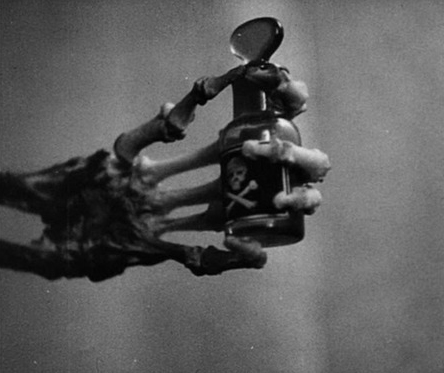
More important, however, is Vampyr‘s visual and thematic style, and the underpinnings of its influences from dominant artistic movements of the time. Dreyer’s artistic sensibilities, while distinctly his own, were clearly influenced by his involvement with the French art scene, resulting here in a movie reminiscent of works by his more directly avant-garde contemporaries such as Luis Buñuel and Jean Cocteau. His stated intention with Vampyr was to take the art of cinema in a new direction, using a vehicle which lent itself to imaginative treatment by nature of its supernatural content; in realizing this goal, he blended his own passion for realism (enhanced by his use of natural lighting and authentic location photography) with the heightened theatricality and Freudian overtones of Expressionism, the seemingly nonsensical and dreamlike imagery of Surrealism, and the piecemeal construction of Impressionism. The resultant film glows with an ethereal beauty, combining a variety of cinematographic techniques (exquisitely executed by Rudolph Maté) that range from the sharply defined to the gauzy and murky; the narrative is deliberately cloudy and illogical, filled with non-sequiturs and credibility gaps, creating the feeling of a dream or even a delusion, an effect bolstered by camera trickery that gives us such jarring elements as shadows moving independently (or in compete absence) of their owners, and otherwise commonplace actions occurring in reverse; deeply symbolic or arcane iconography is everywhere, and the screen is filled with a rich and varied texture of design- mostly the result of decor and objects inherent to the actual shooting locations; and finally, the overall effect of Vampyr is created by a cumulative process in which the broad and vivid strokes of its seemingly disjointed progression combine to form a complete picture that is unified and harmonious- if somewhat unsettling.

Adding to the hallucinatory feel of Vampyr is its primitive use of sound. The European film community was behind the curve with the new technology of talking pictures, and the location shooting of Dreyer’s movie only exacerbated the difficulties, as did his plan to shoot the film in three separate languages- French, German, and English, though the existing print was restored from surviving copies of the former two versions and there is no evidence that the latter was ever completed. The problems were surmounted by a screenplay (co-written with Dreyer by Christen Jul) containing a minimum of dialogue, mostly cryptic exchanges that were overdubbed in a studio after the fact by actors other than the ones onscreen; however, the inclusion of aural elements was an integral part of Dreyer’s technique here, and he utilizes a wide variety of eerie effects, not only to underscore the action (along with an elaborate and effective score by Wolfgang Zeller- a pioneering inclusion for early sound films, which were mostly devoid of musical accompaniment), but also to aid in telling the story, with several key scenes relying heavily on soundscapes to convey important events that are taking place off-camera.

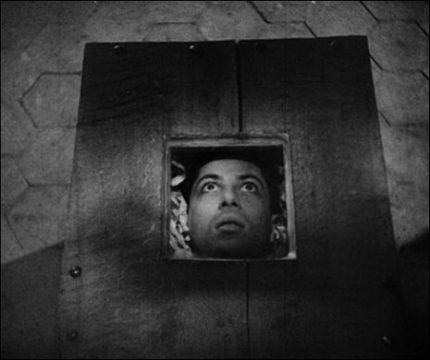
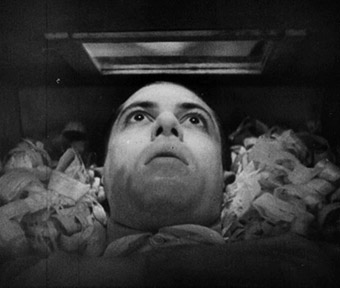
However, even with full appreciation for the skill and artistry with which it was made, watching Vampyr is hardly a thrilling experience; with its emphasis on atmosphere and its artistic conceits, it fails to concern itself with such usual priorities as pacing or continuity, and in spite of the macabre crisis it depicts it is largely lacking in suspense or action, contenting itself instead to create a series of elegiac encapsulations of mood and concept. As it approaches its ending, however, Vampyr suddenly shifts gear and delivers a pair of sequences that transform it from an intellectual exercise into a genuine horror movie. First is an extended set piece in which its protagonist has a premonition of himself lying wide-eyed in a windowed coffin, being prepared for and carried off to burial. Through the use of first-person perspective, Dreyer creates a highly uncomfortable, claustrophobic identification of the audience with the corpse, forcing us to imagine our own death and experience the ominous finality of these moments, as well as conjuring the universal fear of being buried alive. Continuing to capitalize on the latter, we are shortly afterward given a scene in which one of the characters, trapped at the bottom of a storage shaft and surrounded by the cold sterility and inhumanity of ominous industrial machinery, is slowly submerged in a cascade of sifted flour until his desperate cries for help are silenced by death. These sections of the film distill its underlying theme into a direct and palpable form; for Vampyr, at its core, is ultimately a meditation on the inescapable reality of death, the fear of which, as Dreyer rightly understood, is at the base of all our obsessive fascination with the dark mythology of our folklore and fiction. When we cringe at the imagined threat of the undead monsters or unspeakable diseases that haunt our shared nightmares, we are really responding to the shadow of our own mortality; and though an iron spike through the heart may end the vampire’s reign of terror, and an emergence from fog into a sunlit clearing may temporarily provide the comfortable reassurance that all will now be well, we know that staving off these supernatural horrors can only delay the inevitable fate which awaits us all. The power of Vampyr derives from its recognition of that fact; and though much of the film expresses the concept of death through motifs and moods that impress us without involving or exciting us, it blindsides us in its penultimate scenes with these visceral evocations of our most primal fear, rendering hollow its obligatory happy ending and leaving us with an indelible sense of the bleak hopelessness summed up in the familiar words inscribed on the lid of our hero’s hallucinatory coffin: “From dust are you made and to dust you shall return.” It’s an uncomfortable reminder, and one which Vampyr provides more vividly than the vast majority of gruesome splatter-fests that represent the horror film genre of today.

http://www.imdb.com/9/title/tt002364

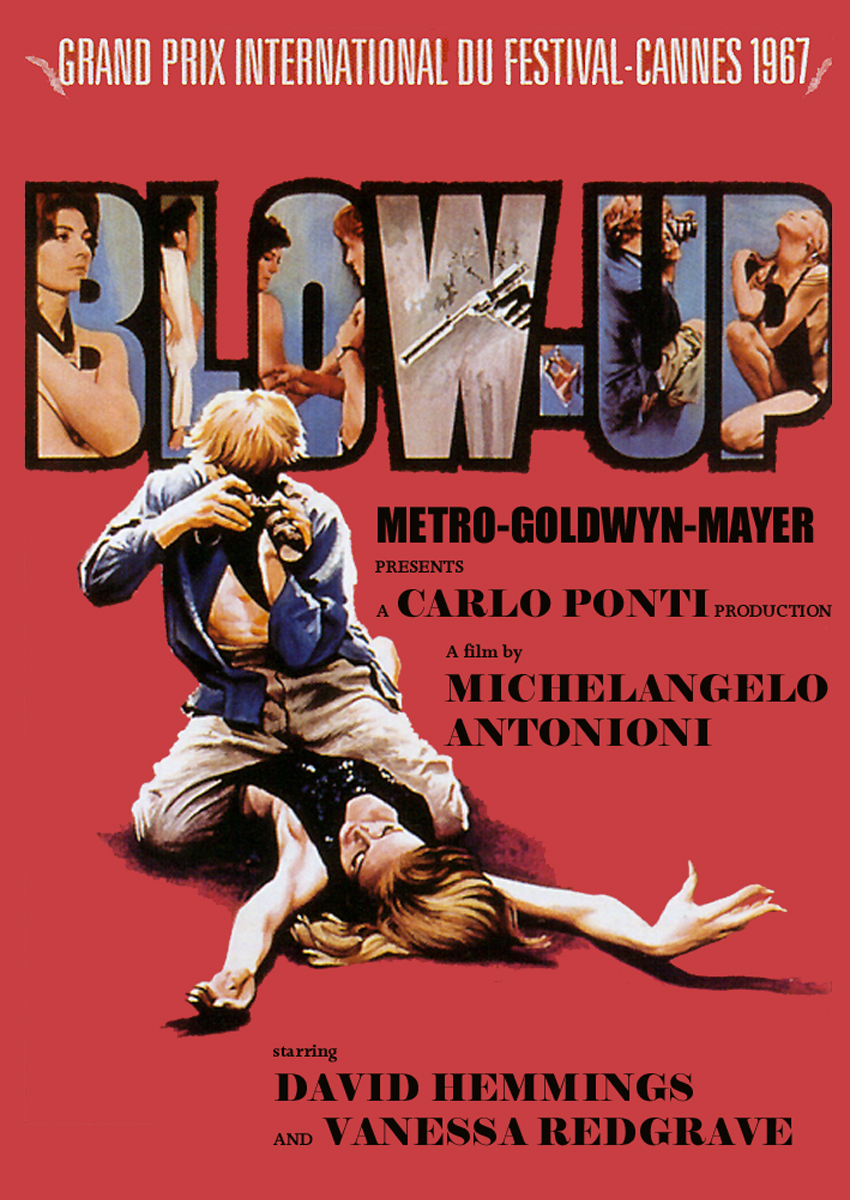
Blowup (1966)

Today’s cinema adventure: Blowup, the 1966 feature by Italian director Michelangelo Antonioni; an existential mystery set against the backdrop of “Swinging London’s” hip fashion-and-art scene. Concerning a successful young photographer who begins to suspect he has inadvertently captured images of someone being murdered in a park, the film is really an exploration of alienation and desensitization in a culture obsessed with image and surface, as well as a meditation on the deceptive nature of perception and the uncertain boundary between illusion and reality. Setting up his theme from the very first scene, in which a truckload of exuberant mimes careens into a London plaza, Antonioni proceeds to perpetrate a cinematic sleight-of-hand by luring our focus onto the ostensible subject- a callous youth, played by unlikely leading man David Hemmings, and the intrigue into which he stumbles- while using the surrounding environment to convey the real purpose of the movie. As surely as the significance of his leading character’s photos lies in the grainy, uncertain corners of their background, the real mystery of Antonioni’s film reveals itself through examination of the peripheral details of its central plot.

The action of Blowup takes place in a world full of vapid fashion models and disaffected posers, communicating in brief, distracted ambiguities and seemingly trying to appear as disinterested as possible at all times. It’s a place dominated by a game in which style is substance, and the master of this game is the photographer, Thomas. As a creator of image, he is at the center of the “in” crowd, and he flaunts the power granted him by his status; surly, entitled, smugly insolent, he treats everyone as an object or as a means to an end, striding confidently through his day and seeking relief for his terminal ennui from momentary whims- whether buying a propeller from an antique shop, having a naked romp with a pair of underage would-be models, or clamoring for a scrap of a rocker’s smashed guitar at a concert- and then becoming disenchanted as soon as he achieves his fleeting gratification. He is a reflection of the culture of desire and acquisition that surrounds him, completely disconnected from others and encased in a self-absorbed bubble of over-saturated perception; and when reality asserts itself in the form of his unwitting involvement in the enigmatic experience at the park, he is completely unprepared and ill-equipped for the situation, failing to control it with his usual tactics and unable or unwilling to communicate it to any of the emotionally distant friends or vaguely hostile strangers he encounters.

It would be easy to slide into a complex morass of analysis in discussing Blowup. It is a deceptively simple film that opens up into an unending progression of dovetailed themes and implications upon even the most superficial examination. Suffice to say that in his portrayal of this ultra-specific time and place, Antonioni captures timeless issues that affect the society of popular culture and commerce no matter what the details of their outer trappings; and in Thomas’ obsessive quest to determine the truth about what he has seen, enlarging his photos until they become as abstract as a Rorschach ink blot, he illustrates the impossibility of objective certainty and suggests that the difference between truth and illusion exists only within our highly suggestible perceptions. Ultimately, all that can definitively be said about Blowup is that it is about a man who, for a short time, at least, pays attention to something.

More to the purpose, here, is a discussion of the artistry involved in bringing all these heady concepts to the screen. Director Antonioni, already renowned for his work in Italian cinema with films like L’Avventura and La notte, enlisted the help of noted playwright Edward Bond in writing the dialogue for this, his first film in English. The resultant wordplay is a brilliant reflection of the themes explored within the screenplay (which Antonioni co-wrote with Tonino Guerra); the characters speak in terse banalities, expressing half-truths and absurdities which stand in contrast to their actions and fail to convey their true intentions- almost everything they say represents a pose, an image they wish to present, and when they must try to convey something more direct or meaningful, more often than not they collapse into an inarticulate and incomplete breakdown of communication. Yet every exchange reinforces the film’s central ideas, from the first line (one of the mimes telling a bystander, “Give me your money- do it!”) to the inscrutable response of top model Verushka when asked if she is supposed to be in Paris (“I am in Paris”). The actors contributions serve as varied brushstrokes on Antonioni’s canvas, creating the necessary blend of textures which completes the picture. Vanessa Redgrave is the mysterious woman whose secret dalliance in the park may or may not have more sinister implications; tall, bird-like, and awkwardly elegant, she superbly conveys a desperation which continually threatens to crack the mandatory veneer of cool disinterest, and gives us a character whose determination and intelligence are plainly evident (though Thomas, her circumstantial antagonist, can only see the vulnerability of her surface) and she suggests a connection to the machinations of a larger world that exists outside the insulated niche in which the film is set- one in which things actually matter. In smaller but no less important roles are Sarah Miles and John Castle, as Thomas’ married friends; standing in for the masses whose interests are captured by those who put on the show, she shows us (with minimal dialogue) the timidity and guilty fascination of someone drawn to the shallow flash represented by Thomas over the weightier substance of her painter husband; and he embodies an obtuse, intellectual aloofness that makes him simultaneously attractive and repellant. The aforementioned Verushka makes an unforgettable impression (as herself) in the iconic scene in which she is photographed by Thomas, writhing on the floor as he straddles her in a highly sexualized encounter which underlines the replacement of actual experience with the artificiality of image. As Thomas, our photographer “hero,” the previously unknown Hemmings became a major star and a symbol of the mid-sixties “mod” lifestyle; his performance, while necessarily limited in range by the scope of his character, is perfect for its purpose within Antonioni’s vision. Though Thomas is arrogant, unpleasant and shallow, Hemmings somehow manages to make him likeable in spite of these qualities, showing us the giddy and rambunctious child beneath his ultra-cool mask in the moments when he is alone, and allowing us to be comfortable when we are forced by Antonioni’s focus to identify with him.

The star of Blowup, though, is the cinematic auteur behind the camera. The film is almost certainly Antonioni’s masterpiece, a vibrant, stimulating work of art that delivers brilliantly both on the surface and on a deeper intellectual level; the entire film leaves the impression of a stunning visual experience, yet though it is filled with indelible images created by the director’s masterful eye for composition (and captured by cinematographer Carlo di Palma), the grand picture we are left with is a synthesis of all we have seen- an intangible and non-existent zephyr. Much of the film’s powerful cumulative effect comes from Antonioni’s use of contrasts- between speeds, colors, textures, people- and his knack for portraying mundane, everyday occurrences in a manner and context that makes them seem hallucinatory and surreal. His use of sound is also important; in particular, the haunting sound of the wind in the trees during the all-important park sequences suggests the vastness and the irresistible force of the ultimate reality which surrounds all the meaningless illusion with which his film’s denizens are preoccupied. His musical choices play a big part, too: the jazzy score by Herbie Hancock captures the hurky-jerky energy of the fast-paced culture in which he has immersed us, and an underlying zeitgeist is evoked by the raw and angrily frustrated sound of The Yardbirds as they play for a seemingly unimpressed crowd of club-goers in their now-famous cameo scene.

Watching Blowup today, it’s easy to see why it has been lauded as an influential classic and been the subject of so much homage and emulation. It captures a perfect snapshot of the fleeting era in which it is set, yet at the same time presents us with a timeless metaphor for our existence in a world of never-ending sensory stimulation. Though the technological methods depicted as central to the story are dated in today’s digital age- in which high-resolution photographic manipulation is instantly available in the palm of everyone’s hand- the basic theme of seeking validation for our perceptual experience is not. Furthermore, it is impossible not to observe the parallels between the pop-obsessed society depicted in the film and that which exists today: in his personification of the mod dilettante at the center of Blowup, Hemmings could just as easily be portraying (if you’ll pardon the expression) the archetypal hipster douche-bag of our contemporary world; and the crowd that surrounds him, the clubs and parties he goes to, and the interests he pursues could all be found on any Saturday-night excursion into the hip-and-happening world of our current youth culture. It’s a movie that became, no doubt with intentional irony, the “next big thing” perpetually sought by the crowd it both portrayed and appealed to; thanks to the far-reaching vision of its director, it was more than that, and it has deservedly become a cornerstone not only of cinema, but in the collective consciousness of our modern world.

http://www.imdb.com/title/tt0060176/

Trainspotting (1996)

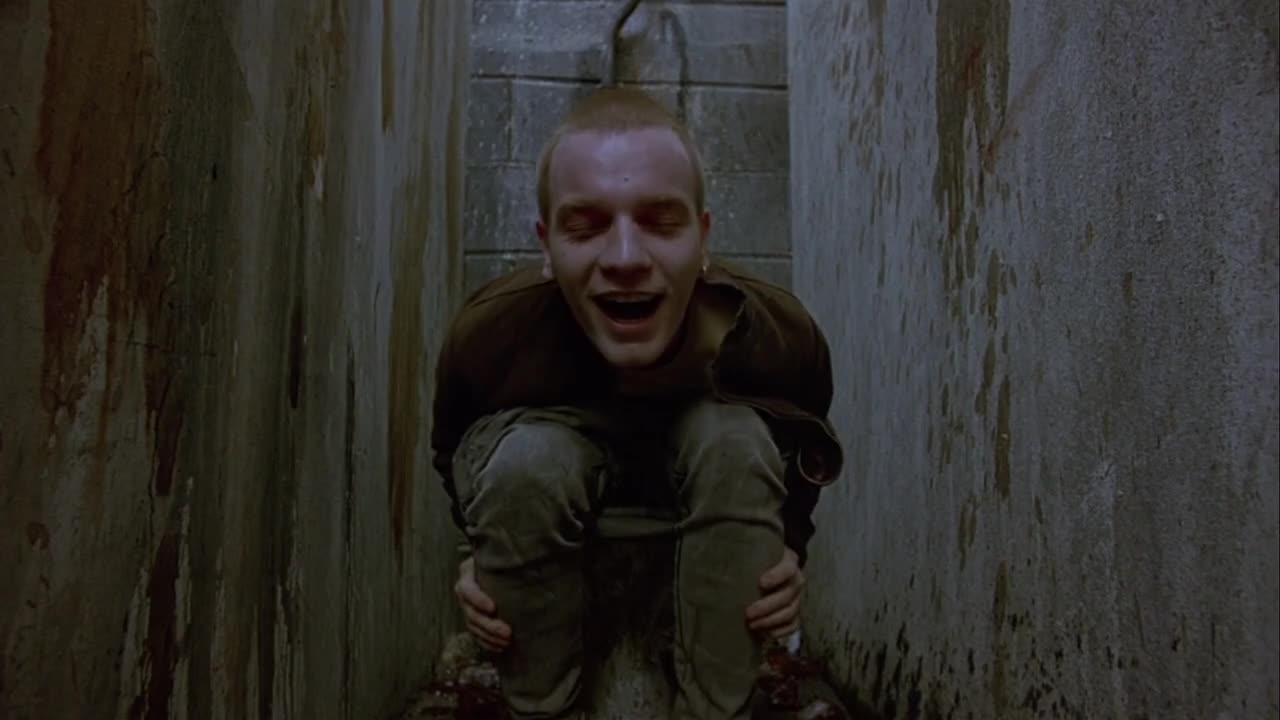
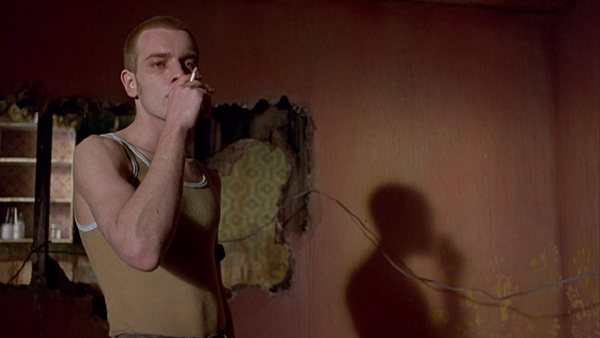
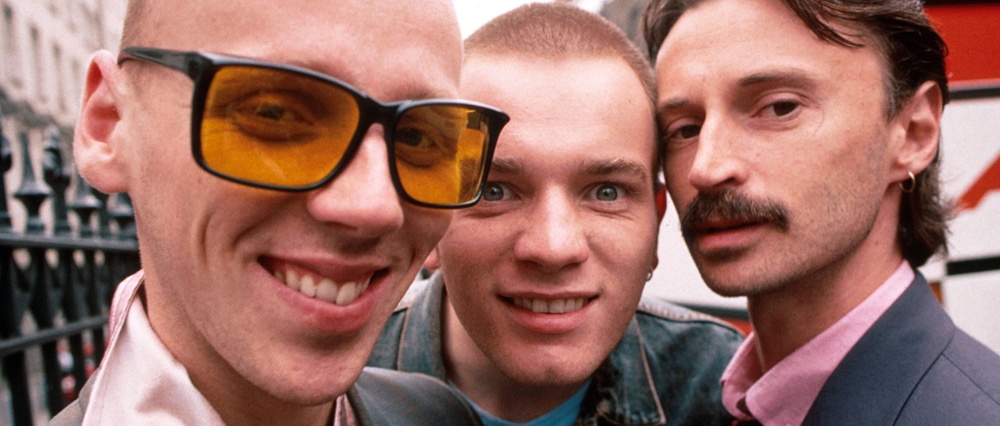
Today’s cinema adventure: Trainspotting, the 1996 breakthrough feature by future Oscar-winning director Danny Boyle, a harrowing portrait of working-class youth embracing the self-destruction of heroin addiction to escape the bleak environment of economically depressed Edinburgh. Combining the most imaginative elements of the theatrical and the cinematic, Boyle’s wildly youthful, energetic filmmaking- utilizing his now-trademark innovative visual style and edgy pop soundtrack choices- makes this highly acclaimed and popular slice of the squalid life into a treat for the eye and ear, an entertaining wild ride through a nightmare world that is ultimately as life-affirming as it is horrifying.  John Hodge’s screenplay, based on a novel by Irvine Welsh (who incidentally appears in a small role), tackles its subject without ever resorting to preachiness, instead presenting the degrading roller-coaster-existence of a drug addict as a progression of events, seen from the inside perspective, which illustrate the way their habit transforms a normal, mundane life into an surreal caricature; influenced by the “kitchen sink” and absurdist theatre styles which dominated the stage and screen dramas of mid-century Britain, Hodges grafts elements of both into an electrically contemporary milieu, undercutting the grim realism of the subject matter with ironic humor and a distinctly modern cynical edge, disarming the audience and allowing us to laugh even as we are being appalled- which gives the tragic moments the even greater impact that comes with surprise.  The young cast is uniformly superb, but the undisputed standout- and rightly so- is Ewan McGregor in his star-making performance as Renton, the central protagonist; his charisma and intensity are so powerful that he remains infinitely loveable- and believable- whether he is philosophically enduring the debasement of his addiction, gleefully pursuing criminal activity to support it, or resolutely dedicating himself to rise above his sordid background.

Listed by the British Film Institute as one of the top ten British films of all time and consistently named as one of the best films of the ’90s, Trainspotting is not for the squeamish or for those uncomfortable with moral ambiguity, and it should be said that the thick Scots dialect can be difficult to penetrate for the first 20 minutes or so; but the rewards of this vibrant, influential movie are well worth the patience and the effort for those who are up to it.  Boyle may have since surpassed his work on this early masterpiece, but for sheer audacity and unabashed youthful bravura, it still stands among the finest films of his career.

http://www.imdb.com/title/tt0117951

Velvet Goldmine (1998)

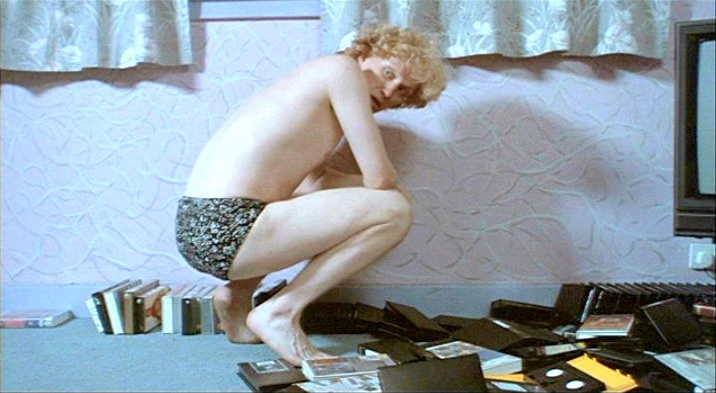
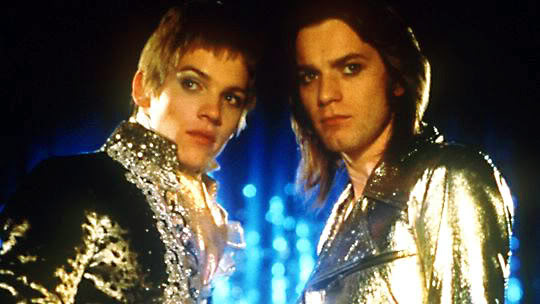
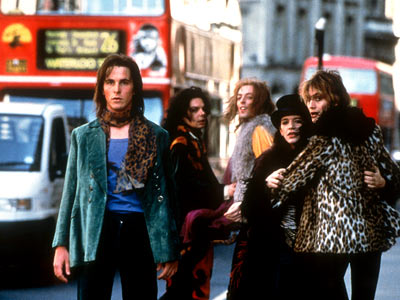
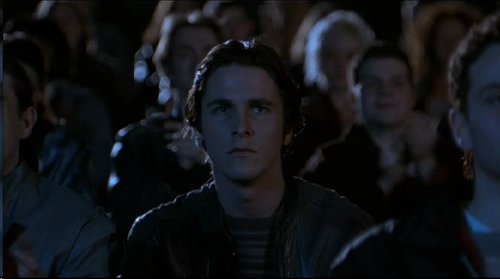
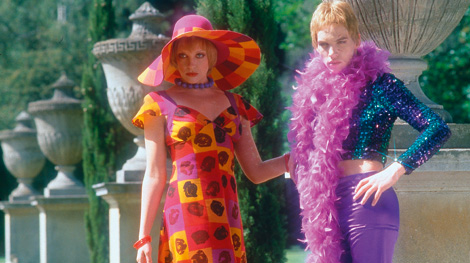
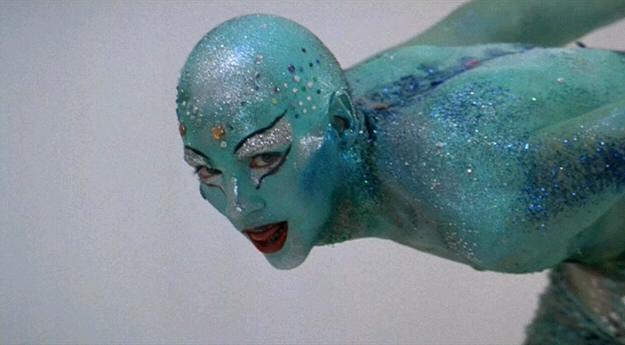
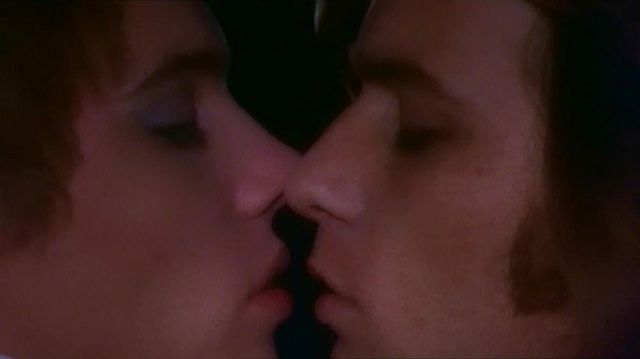
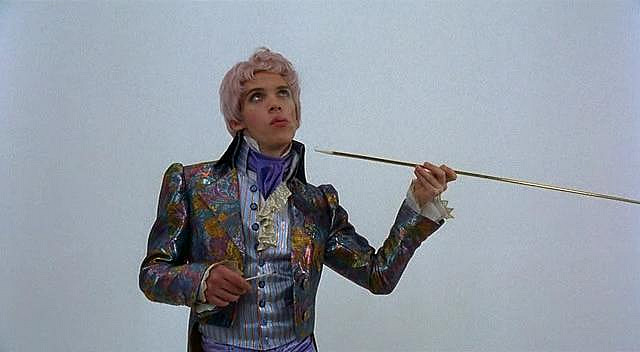
Today’s cinema adventure: Velvet Goldmine, Todd Haynes’ 1998 glam-rock fantasia with sexy, charismatic performances by Jonathan Rhys-Meyers, Ewan McGregor, and Christian Bale, a film that has gained a loyal and substantial cult following despite the poor reception it received upon its initial release. Boldly structured in the mold of Citizen Kane, it follows the attempts of a journalist to piece together the decade-old mystery surrounding a glam-rock superstar who unsuccessfully faked his own assassination before fading into obscurity. Interweaving scenes of the writer’s quest with flashbacks depicting the rise and fall of his enigmatic subject, Haynes’ film plays fast-and-loose (deliberately) with facts and fictionalizes significant real-life figures as it pays tribute to- and laments the fading of- the musical and cultural mini-era on which its focus lies. To this purpose, the film’s designers have crafted a dazzlingly surreal and authentic recreation of the English rock-and-roll scene in the early seventies, reconstructing the peculiar mix of tinsel, trash, and haute couture that defined the look of the period, as well as the darker, grittier eighties of the film’s parallel narrative. In particular, Sandy Powell’s superb costume designs succeed in capturing both the outrageous fashion of the rock-and-roll glitterati and the more subdued flavors worn by their less-glamorous followers and fans. The sparkling package is wrapped in the vivid cinematography of Maryse Alberti, which evokes the authentic photography of the day so completely there are times you swear you are looking at archival footage.

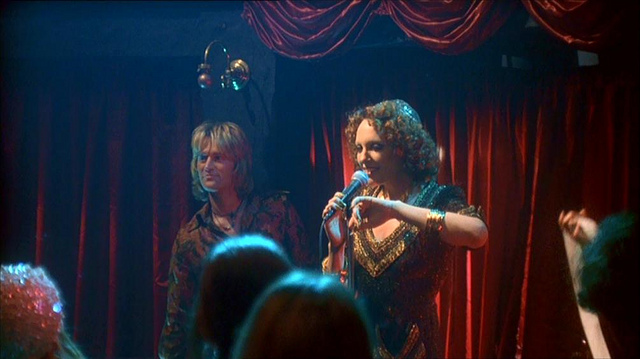
Inhabiting this time capsule world are several superb performers, each in the early stages of their highly successful respective careers. In the key role of Brian Slade is Jonathan Rhys-Meyers, who effectively embodies the ultimate glam rocker, channeling the spirit of David Bowie (on whom the character is heavily based, along with, to a smaller degree, Marc Bolan) and yet investing the performance with his own energy as well- cheeky yet vulnerable, jaded yet naïve, sexually charged yet romantic, he manifests the image of the androgynous bad boy while letting us see into the complex personality beneath it. He is matched by Ewan McGregor (as Slade’s collaborator and lover, Curt Wild- inspired in equal measure by Iggy Pop and Lou Reed), who likewise presents a convincing portrait of an archetypal glam figure- but a distinctly different one, rougher-edged yet ultimately, perhaps, deeper. The two performances complement each other like a dovetail joint, and both men are at their most impressive- and mesmerizing- when they are called upon to perform in the numerous musical sequences, pulling off the full rock star act with exuberant bravado and absolute confidence. In a less showy role- but no less superb- is Christian Bale, playing the journalist and former fan who is haunted by memories of his youthful involvement in the glam culture and of his personal connections to both the iconic stars in the history he is tracing; always a deeply compelling actor, Bale is effective throughout, but he is at his best as the rosy-cheeked youth of the flashbacks, riding the extremes of his adolescent emotions as he tentatively explores his own developing sexual and ideological identity and comes of age in a heady time of seemingly limitless possibilities. Toni Collette is both deliciously tawdry and surprisingly grounded as Slade’s wife Mandy, impressively evolving with the character in an arc that takes her from hippie muse to jaded has-been; and Eddie Izzard is appropriately loathsome as the oily manager who shepherds Slade into the world of rock-and-roll excess.

Despite the considerable strengths described above, however, Velvet Goldmine is not an unqualified success. Haynes is a gifted director, justly acclaimed for his ability to translate complex and esoteric themes into a compelling screen experience, but often criticized for failing to create a cohesive whole; his films often seem more interested in conjuring elemental forces than in using them to work toward a specific purpose. Of course, such a technique allows the audience to form their own personal conclusions; it’s an impressionistic style of filmmaking, and like other impressionistic art forms, it’s not to everyone’s taste. With this effort, his passion for the period and the attitudes it represented is very clear, and he succeeds admirably in approximating the glam milieu and bringing it to the screen. However, the formula he chooses to do so creates some problematic issues: the investigative drama which drives the plot seems a brilliant device for exploring this seminal period in contemporary pop culture, allowing him to explore the what made it such an appealing time for those who embraced its spirit and why its memory and influence linger today; however, the brooding, mournful tone of the mystery- as well as the deeply personal importance placed on discovering the answers by the film’s protagonist- suggest a weighty significance at the core of the nostalgic proceedings that somehow feels misplaced. To be sure, Haynes is presenting a document of a time in which a generation overflowed with the excitement of changing attitudes and the promise of freer personal expression, a time which was to morph all too soon into a glitzy, self-centered era in which shallow, self-destructive excess would take a heavy toll; the collective loss of innocence resulting from this social odyssey certainly spawned the kind of emotional wounds reflected by the characters in Velvet Goldmine, and the healing power of reconnecting with these cultural roots, of rediscovering the spirit that generated the whole process in the first place, is clearly a major part of the film’s intended effect. In these terms, Brian Slade provides the perfect metaphor: hungry for the freedom to be himself, whoever that may turn out to be, he soars into a fantasy world made real- only to eventually succumb to the lure of nihilistic hedonism, transforming his existence into an unsustainable nightmare from which he must eventually choose to escape or die. However, Slade is not an Everyman, not even a glorified one like Charles Foster Kane, and his experiences, though they may resemble a magnified version of those shared by many who participated in the glam sub-culture and the disco era which followed, ultimately seem more the consequence of individual character makeup than a reflection of some greater social phenomenon. More germane to the group experience, perhaps, is Bale’s journalist, burned by the broken promise of his youth and seeking a way to come to terms with the deep longings left unfulfilled; but the plot on which his redemption hinges, the conceit of uncovering the secrets of a former pop icon’s decline and fall, ultimately feels forced. After all, there is no mystery to be solved- the story to be told is so common as to be predictable- and in the end, there are no real answers to be found there, only an implausible plot twist and a phantom wound that will never stop itching. To make a resolution even less palpable, Haynes’ screenplay (from a story written by himself and James Lyons) wraps the plot about a man exploring an enigma in another, larger enigma: invoking the spirits of Oscar Wilde and Jean Genet, he introduces a mysterious, possibly extra-terrestrial gem which secretly links the characters and their histories to a long procession of pop superstars, suggesting that the cycle of fame is some sort of mystical cosmic reflex which affects our social evolution, and even hinting at the deliberate manipulation of our pop culture by an unseen and arcane outside force. Another apt metaphor, and an interesting proposition- one which seems borrowed from the handbook of glam-era theatricality as represented by such flights of fancy as Bowie’s Ziggy Stardust persona, a source of much inspiration to the events portrayed in the film- but in this case, perhaps, a needless complication in an already over-complicated mix.

Speaking of Ziggy Stardust, it seems necessary to also remark that the heavy fictionalization of the figures represented- which amounts to the creation of a sort of alternate glam universe- has been a point of considerable controversy surrounding Velvet Goldmine. Taking well-known real-life icons and re-inventing them for dramatic purposes is an acceptable tactic that goes back, no doubt, to the very beginning of story-telling; however, Haynes has here blended real events so completely into the soup that the result could be very confusing to those unfamiliar with the true history of those involved. Though Brian Slade is not David Bowie, he certainly feels like it; indeed, Bowie himself, initially involved in the project, pulled his support and the rights to use his songs after discovering that the script incorporated elements from unauthorized biographies by his former wife and others. To make matters even more confusing, mixed in with the original musical selections composed for the film are older songs by such glam-era artists as Roxy Music, T. Rex, and the New York Dolls, among others, performed by the fictional singers as if they were themselves the originators. Though I’m not one to quibble about adherence to historical accuracy- after all, my favorite movie is Lawrence of Arabia, and my love for Shakespeare is in no way affected by his fondness for rewriting history to suit his needs- in this case it seems appropriate to suggest that, before making any assumptions based on the recognizability of the figures on display in Velvet Goldmine, it would be wise to do some research and decipher who these characters really are (or, rather, really aren’t).

Nevertheless, Haynes’ film provides many pleasures: the aforementioned musical sequences, mounted with a gaudy theatrical flair that captures the glitter-rock essence to a tee, are the film’s best scenes, nostalgic yet freshly minted; and there are moments throughout that reach through the layers of conceit to grab at your heart-strings, electrifying touchstones that instantly transport you to the memory of some shared, universal experience- the yearning, impossible ache of a teen-aged Bale staring at homoerotic photos of his idols; the sharp humiliation of Collette’s Mandy Slade as she confronts her husband in the midst of his dehumanized, drugs-and-sex-saturated oblivion; the explosive, adrenaline-fueled vitality of McGregor’s first stage performance as Wild (in which, incidentally, he strips naked for his adoring audience). All in all, the exponential popularity of Velvet Goldmine is not surprising, nor is it undeserved: though it may leave us unsatisfied on some nameless level, and though it sometimes feels as though it takes itself far too seriously, its youthful exuberance and its visual perfection go a long way towards making up for its shortcomings; and even if it ultimately leads us to prefer and embrace the real-world history which it distorts for its desired effect, it seems fitting and desirable to find satisfaction in that which is real rather than in a glittery fantasy- and that, come to think of it, is perhaps the true message of Velvet Goldmine.


http://www.imdb.com/title/tt0120879/

Dali in New York (1965)

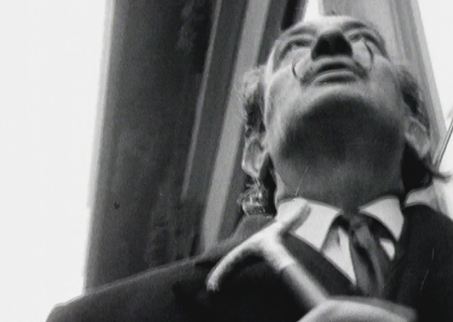
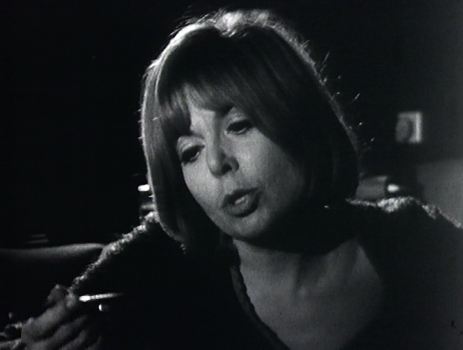
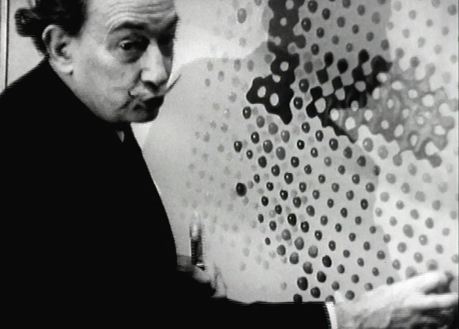
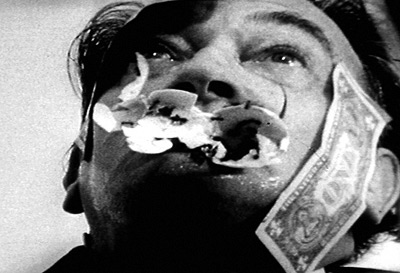
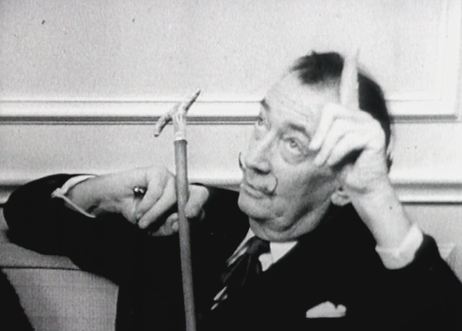
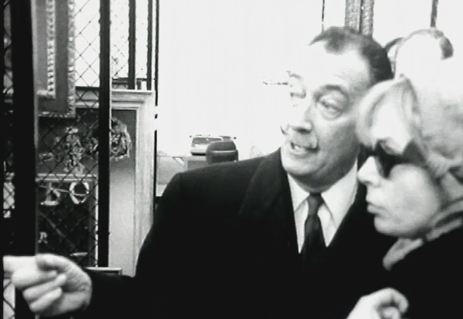
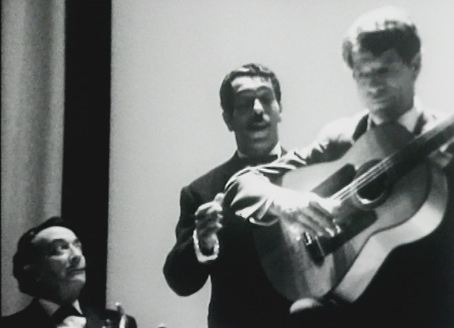
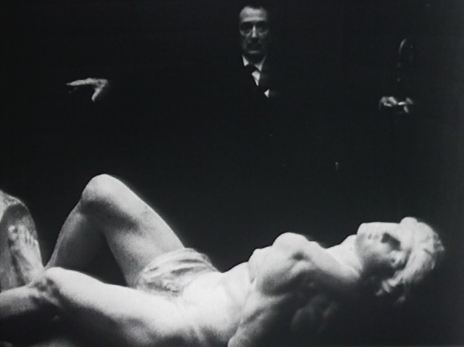
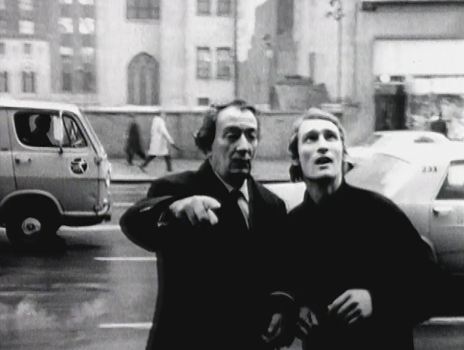
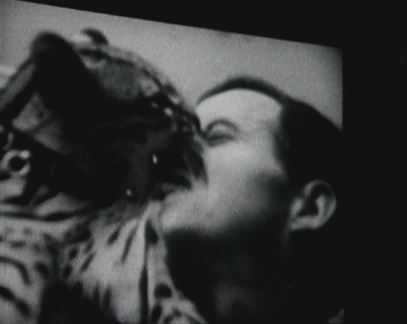
Today’s cinema adventure: Dalí in New York, a 1965 documentary by Jack Bond depicting the visit of the infamous Spanish surrealist to Manhattan in conjunction with the opening of a retrospective exhibition of his work at the Hartford Gallery of Modern Art. Shot in a distinctively sixties-avant-garde black and white by Jim Desmond, this brief (57 minutes) visit to the world of the 20th Century icon was made over two weeks prior to the opening, as Dalí made the rounds of the New York art and society scene, attending gatherings, staging “events” (such as a procession in the streets with a plaster cast of a Michelangelo statue and a photo session involving the artist lying in a coffin with an ant-filled egg in his mouth, surrounded by a million dollars in cash and an ocelot), and conversing with Bond’s collaborator, actress/writer Jane Arden- that is, until she falls from Dalí’s favor in a controversial exchange in which she refuses to humor his assertion that “everyone is my slave.” The conversations yield little by way of meaningful exchange- Arden tries too hard to engage the painter in a dialogue about his work and Dalí steadfastly resists, preferring instead to make characteristically inflammatory proclamations and declarations of his own supremacy- and the film ultimately offers little direct insight into the artist or his philosophies. Nevertheless, much can be gleaned by watching his antics and his interactions; throughout the film, he is obviously aware of the camera at all times, his eyes constantly darting to the lens as he orchestrates his image for mass consumption. Always the showman, his outrageous acts and statements are clearly calculated to promote himself and his art, and even his creative process itself seems to be little more than another tool for publicizing the “cult of Dalí,” as evidenced in the remarkable closing sequence when he paints for an audience, accompanied and inspired by the music of flamenco guitarist Manitas De Plata and singer Jose Reyes. The entourage with which he surrounds himself, which includes a “military advisor” and the supposed reincarnation of his dead brother, are all extensions of his own bizarre personality, conforming to the roles he has assigned them for his- and presumably their own- personal benefit; and his wife and muse, the austere and vaguely contemptuous Gala, is presented, as he presented her, as an idealized icon of feminine detachment: she says little, and by saying little, speaks volumes. All of this is interlaced with lengthy sequences (designed and photographed by Tom Taylor) showcasing Dalí’s familiar art, depicted by a fluid camera lovingly examining the details of his imagery and revealing some of the unifying thematic elements that were continually present in his body of work- though the black-and-white cinematography robs us of his stunning and effective use of color, making us long to rush to the nearest bookstore and browse through one of the many coffee table books offering high quality Dalí reproductions.

Dalí in New York was largely forgotten for many years, a parenthetical curiosity from a period when the famed artist was being overshadowed by representatives of the more modern movements of art, such as Warhol, whose vision of themselves as the ultimate manifestation of their work was prefigured by Dalí himself- something he alludes to in the film. After a 2007 screening at MOMA, it has been resurrected as a document of a figure whose importance to the art world is still being debated. In the twenty-plus years since his death, Salvador Dalí has become less and less remembered for the outrageous circus with which he surrounded himself and his enormous catalogue of paintings have become more and more familiar, many of them having achieved the status of icons. This little documentary is by no means a complete picture of the man or of his work, but it does offer a rare opportunity to get close to a figure who, during his life, was often dismissed as a charlatan and an opportunist, but whose work has undeniably exerted an unfathomable influence on western visual art. Most of Dalí’s rhetoric can be assessed as showmanship, not categorizable as true or false, but at least one of the statements he makes in this film is clearly wrong: at one point he declaims that his work is not important, that only Dalí himself matters. Time has thankfully proven this to be an overstatement on his part.

http://www.imdb.com/title/tt1245090/

The Cabinet of Dr. Caligari/Das Cabinet des Dr. Caligari (1920)

Today’s cinema adventure: The Cabinet of Dr. Caligari, the 1920 cinema cornerstone that established enduring conventions for the horror genre- indeed for cinema itself- and for the general public at least, has become one of the most recognizable representations of the German Expressionist movement.  A bizarre tale about a mysterious carnival magician whose hypnotized slave commits a series of murders at his bidding, this landmark film was first conceived by its writers, Hans Janowitz and Carl Mayer, as a way to demonstrate the effectiveness of film as a medium for Expressionist art, and also to establish a definitive look for German cinema that would distinguish it from the growing influx of American movies to their country. The resulting work is one of the most distinctive visual experiences ever produced, featuring wildly distorted scenery (abstract, asymmetrical sets with sharp, jagged lines, obvious and elaborately theatrical backdrops with painted-on shadows) highly dramatic lighting, and a heightened acting style that seems exaggerated even compared with other silent films of the time; it was an experiment which only took place because the writers persuaded producer Erich Pommer that making the film in this style would save considerable amounts of money.  These creative pioneers- including director Robert Weine, who was brought on board when rising wunderkind Fritz Lang was unavailable- believed that their bold new approach would change the art form forever; however, though Dr. Caligari met with enthusiastic response from audiences and critics alike, and stirred much excitement in the world’s blossoming film community, it failed to lead the industry away from the more mundanely representational style in which it remains more-or-less grounded to this day.

This is not to say that the film had no bearing on the future of cinema.  Its visual conceits and thematic elements have provided immeasurable inspiration for filmmakers from F.W. Murnau to Tim Burton and beyond. Its macabre tone and gruesome content influenced not only the future of the horror genre but the entire film noir movement as well.  It set the precedent for using cinematic embellishment to suggest altered states of consciousness: virtually every film depicting dreams, delusions, or drug-induced hallucinations can trace its heritage back here.  Most important of all, perhaps, was its establishment of numerous structural conventions that have been in continuous use ever since: by constructing its grim story as the remembrance of a young man who is ultimately revealed to be a delusional patient in a mental hospital, Dr. Caligari became the first film to feature a framing device bookending its main narrative, to rely on an unreliable narrator, and to surprise its audience with a twist ending.  None of this is to say that later filmmakers could not have made these innovations on their own- but Caligari went there first.

All this film class trivia is well and good, but how does The Cabinet of Dr. Caligari  hold up today for the casual viewer simply seeking entertainment?  Probably not well: the world is a much different place than it was in 1920, and we have been inundated with stories and images much more shocking and terrifying than those in this film- which, ironically, opened the door for all of them.  The conventions of fiction observed within it seem quaint and unsophisticated by our jaded modern standards, and the performances, with their jerky, unnatural physicality and their often-seemingly-inappropriate facial expressions (to say nothing of their histrionic, over-the-top style) seem unconvincing and inaccessible to us.  To top it off, its outrageously artificial visual style is so alien and disconcerting that it only serves to distance us further from the events onscreen, ensuring that we will never become viscerally engaged in the proceedings.  Of course, it’s true that these qualities were present even when Dr. Caligari was made- deliberately included as part of the Expressionist form intended and carefully crafted by its creators- but historical context has no bearing on our contemporary requirements for suspension of disbelief.

Before concluding, however, that Caligari has no value for any modern viewer who is not a film buff or an art enthusiast, it might be wise to look past the obvious sensibility gaps created by its distance from us in time.  It was never meant to be a purely escapist experience, even when it was conceived nearly a century ago; rather, it was- and is- a vivid and fully realized vehicle for Expressionist themes such as paranoia and the unreliability of perception, and an impressive presentation of the movement’s distinct visual style, comprised of crude, primal imagery that works on the subconscious to elicit a strong emotional response.  Its effectiveness is even keener in its restored form, which not only returns sharpness and luster to the once-faded print but also recreates the original hand-tinted colors, helping to clarify the story by differentiating day from night, and polishing up the intertitles with a font and style coordinated with the bizarre content of the story they tell.  A viewing of Dr. Caligari is hallucinogenic enough on a small screen, and though I’ve never had the opportunity to do so, I suspect that seeing it projected larger than life in a darkened theatre would be akin to experiencing a full dream state.

It’s also worth mentioning that although the stylized acting is hard to assess fairly from a standard modern perspective, Werner Kraus and Lil Dagover, as the mad magician and tragic damsel, respectively, have become iconic as personified archetypes of the collective consciousness; and as Cesare, the tormented somnambulist, Conrad Veidt is electrifying, using his remarkable physical skills and his expressive face to transcend both genre and style, and delivering perhaps the first truly great film performance- one which continues to inspire and influence actors to this day.

So although The Cabinet of Dr. Caligari may not offer the kinds of thrills and chills sought by the average viewer looking for a lively horror film, it certainly offers many other rewards.  There are good reasons why it has been celebrated, emulated, re-invented, re-adapted, saluted and parodied so many times over the decades; it is part of our cultural makeup, and if that is enough to get you to watch it, you may find yourself enjoying its twisted pleasures in ways you never expected.

 http://www.imdb.com/title/tt0010323/

We Need to Talk About Kevin (2011)

Today’s cinema adventure: We Need to Talk About Kevin, the disturbing and controversial 2011 feature based on Lionel Shriver’s award-winning 2003 novel of the same name.  Tilda Swinton stars as Eva, a woman haunted by memories and repercussions as she attempts to come to terms with the horrific acts committed by her teenaged son.  As directed by BAFTA-winner Lynne Ramsay, the film draws us in from its very first moments with arresting visuals and an enigmatic soundscape, unfolding its nightmarish story through a non-sequential progression of scenes and images that gradually piece together like the shattered fragments of Eva’s life. It’s riveting stuff: Ramsay (who also co-wrote the screenplay with husband Rory Kinnear) keeps us engaged and unsettled throughout, saturating us with stylish imagery marked by an ingenious use of color (with a decided emphasis on red, maintaining an ever-present suggestion of blood), layering in just enough foreshadowing and clues to conjure a growing sense of dread over the inevitable conclusion, infusing each scene with an atmosphere of resigned melancholy and foreboding, and dominating the proceedings with an uneasy silence which is only broken by spare, terse dialogue that shocks and pierces as much as it informs.  As we observe Eva’s disjointed recollections and her nightmarishly surreal day-to-day life, we find ourselves drawn into her psyche; forced to face the uncomfortable- and unanswerable- questions raised about the culpability of a parent in the wrongs committed by their offspring; and in the end, the biggest question may be how to find a resolution, a sense of closure which can permit the lives of those left standing to go on-  and if, indeed, such a thing is even possible.  With all these psychological themes in play, one might be tempted to consider We Need to Talk About Kevin to be a complex drama, but make no mistake about it: this is unquestionably a horror film, the kind of nightmarish thriller that is rarely made these days.  It follows no pre-molded formula, and there are none of the expected clichés of the genre: no sudden shocks, no scantily-clad female victims screaming as they flee through the dark night, no oceans of gore (for all the red flowing across our eyes, there is very little blood or violence onscreen, with Ramsay opting instead to paint the horrible pictures in our imagination where they are infinitely more disturbing).  This is not some schlocky shocker designed for a teenagers’ date night, but rather, like other great adult horror films of the past such as The Exorcist or Rosemary’s Baby, it is an exploration of evil in our lives, of how it manifests and what might be its causes; but unlike the aforementioned classics, there is no suggestion here of supernatural forces- the responsibility is placed squarely on human shoulders, with implications that are far more chilling than the presence of any demonic scapegoat.  It would be easy, in the wrong hands, for Kevin to veer off into the realm of exploitative trash; but not only is Ramsay well-equipped for the task, she has the considerable benefit of Tilda Swinton in the central role.  Swinton has proven many times that she is one of the most electrifying screen performers working today, and here she solidifies that reputation with a stunning, solid portrayal of a woman for whom the joy of motherhood has been inverted into a nightmare.  With a minimum of dialogue, she conveys Eva’s harrowing journey with masterfully subtle changes in her continuous expression of dull shock, bringing home the frustration, the terror, and the loneliness created by the growing comprehension that her child is a monster and she alone can see it.  It’s a tour-de-force performance, and its failure to receive an Academy Award nomination for Best Actress- particularly when it was recognized by virtually every other major awards organization- was surely one of the great injustices of Oscar history.  Supporting Swinton’s magnificence is John C. Reilly, likeable but obtuse as Eva’s husband, a man whose doting denial helps to enable the ever-escalating sociopathy of their son and drives an immovable wedge into their marriage; and a shining turn by Ezra Miller as the title character, who skillfully avoids the temptation of playing for sympathy- this is no misunderstood, angst-ridden adolescent, but a young cobra smugly and gleefully coiling up for a fatal strike.  Mention is also deserved for Jasper Newell, as the six-to-eight year-old Kevin, who eerily projects a malicious menace beyond his years, somehow making the younger incarnation even more frightening than his future self.  In addition to the stellar cast, Ramsay is aided in her vision by superb work from her technical collaborators: an eerie and atmospheric score by Johnny Greenwood (of Radiohead) meshes seamlessly with the carefully orchestrated sound design by Paul Davies; the cinematography by Seamus McGarvey provides some of the most vividly realized images in recent film memory, into which the simple-yet-striking costume design of Catherine George is brilliantly coordinated; and the editing by Joe Bini is a masterpiece of visual juggling, managing to maintain a steady flow throughout a narrative which freely jumps forward and back to multiple periods in time.  It is a shame- but not a surprise- that We Need to Talk About Kevin has yet to recoup the $7 million that was spent to make it; you can chalk it up as yet another sign that the contemporary film market is driven by an increasingly less sophisticated mindset, but this would be a difficult film to sell in any era, really.  It is a psychological thriller that dares to address deeply disturbing issues which most of us would prefer to keep out of sight and out of mind, and watching it is a grim and unrelenting experience which may leave you disturbed for days afterward.  If that sounds as good to you as it does to me, We Need to Talk About Kevin is a film you must not miss.

http://www.imdb.com/title/tt1242460/