Death Proof (2007)

Image

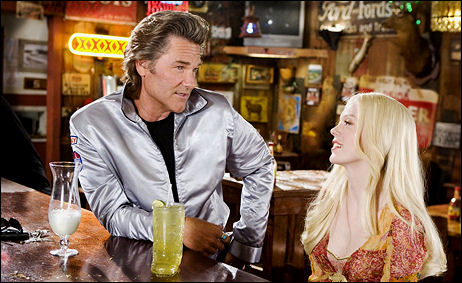
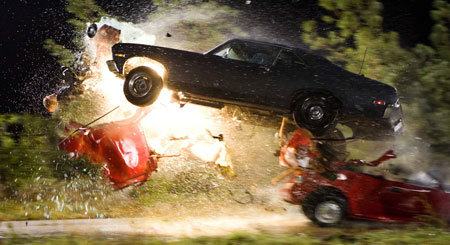
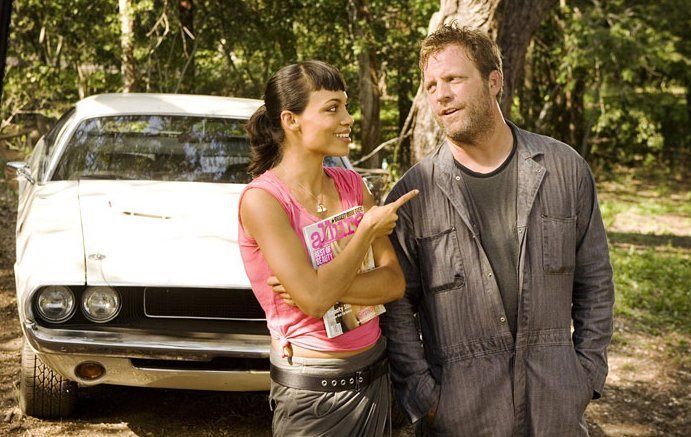
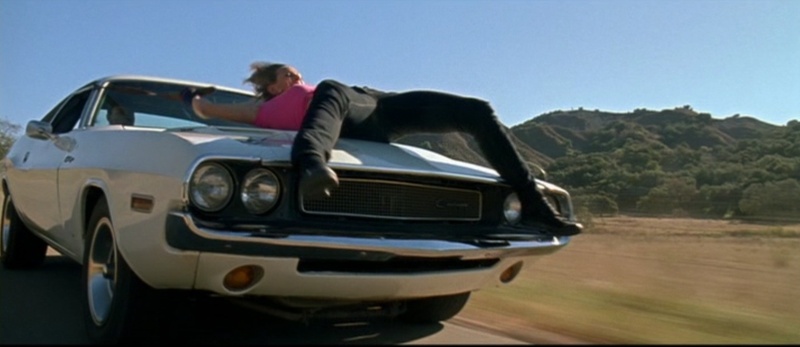
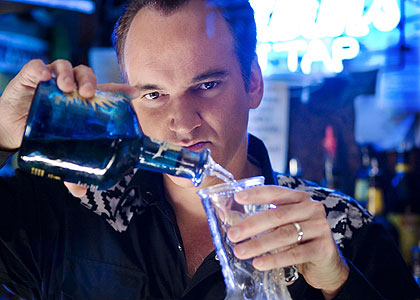
Today’s cinema adventure: Death Proof, writer/director Quentin Tarantino’s 2007 homage to the cheap exploitation movies of the sixties and seventies, originally released as half of the Grindhouse double feature (paired with Richard Rodriguez’ Planet Terror). With his trademark style on full display, Tarantino sets out to emulate- and surpass- the violent and titillating “anti-classics” he clearly loves with this tale of a psychopathic ex-stunt driver who stalks and kills young women in his souped-up, “death-proofed” muscle car. Though Kurt Russell delivers a delightful performance in the central role, and the director’s impressive visual style is as dazzling as ever, the film is ultimately sabotaged by several factors. First of all, with its conceit of recreating the genre which inspired it, Death Proof severely impairs its own ability to engage the viewer in its proceedings: the deliberately grainy cinematography, scratched film and bad splicing constantly serve as a reminder that it’s all just an elaborate gimmick; the inherently shallow formula prevents the far-fetched and sensationalistic plotline from ever becoming believable or compelling; and the characters, for all the self-consciously clever dialogue Tarantino puts in their mouths, are doomed to remain one-dimensional ciphers who exist merely to enact the filmmaker’s cars-sex-drugs-and-rock-n-roll fantasy. All these criticisms, of course, could easily serve as a description of any of the B-movies upon which Tarantino’s opus is based; and it would be correct to point out that what really matters in those films (and in this one) is the nail-biting, balls-to-the-wall action and the gratuitous violence for which everything else simply provides a framework. But where the original films managed, at their visceral best, to thrill and delight, transcending their shoddiness with their lack of pretense and their unapologetic devotion to providing guilty pleasure, Tarantino’s would-be tribute fails to achieve any of these ends. To be sure, his talent is clearly visible here: but that’s part of the problem, for where the drive-in fodder he emulates was often so bad it was good, here we have an obviously good filmmaker deliberately trying to be bad, and succeeding in just being, well, bad; and though the action sequences- two of them, to be exact- are unquestionably well-done, in order to get to them (thanks to Tarantino’s self-indulgent insistence on maintaining his own signature tension-building style) we have to sit through interminable stretches of hip, foul-mouthed dialogue, which may be meant to invest us in the characters but instead results in repeated glancing at our watches. Seriously, there was never this much talking in Death Race 2000. Don’t get me wrong- I’m not criticizing Tarantino for embracing and championing the grindhouse genre. After all, these humble movies are touchstones for a generation and have had a major influence on contemporary cinema; and in his best work (such as the Kill Bill movies and Inglorious Basterds), the director has masterfully drawn inspiration from them while incorporating their elements into his larger personal vision. With Death Proof, however, he has only succeeded in making a pale shadow of the original works, which, like a replica of some crude masterpiece of outsider art, seems pointless and unnecessary.

http://www.imdb.com/title/tt1028528/

Eating Raoul (1982)

Today’s cinema adventure: Eating Raoul, the dark 1982 low-budget satire which became a surprise hit and helped to start a wave of goofy “camp” comedies that pervaded the rest of the decade.  Director/co-writer Paul Bartel, an exploitation cinema veteran, also stars with longtime friend and frequent co-star Mary Woronov as a married pair of sexual squares who lure “swingers” to their Hollywood apartment and kill them with a frying pan in order to finance their dream of opening a restaurant.  Macabre as the premise seems- and in spite of a plot which features such elements as rape, serial murder and cannibalism- the film is kept light and fun by a healthy dose of good-natured kitsch and by its ridiculously over-the-top portrayal of the lurid “swinger” culture and its sexually liberated denizens.  Bartel and Richard Blackburn’s screenplay is loaded with pseudo-shocking dialogue which exploits the ridiculousness of both prudish repression and extreme sexuality, peppered with great deadpan one-liners, and thematically unified by an exploration of the depravity hiding just under even the most respectable-seeming surfaces.  Clever writing aside, the primary factor in the film’s success is the charm of its leading players: Bartel is somehow likeable and endearing despite his pompously indignant and über-nerdy persona; former Warhol “superstar” Woronov is a complex confection, undercutting her character’s uptight austerity with smoldering sensuality and a girlish vulnerability; and the chemistry between these oddball stars is palpable- they are clearly driven by the same skewed vision.  Rounding out the main cast is Robert Beltran, equally charming and sympathetic as Raoul, the hot-blooded Latino hoodlum who attempts to blackmail and come between the couple- and whose ultimate fate is foreshadowed by the tongue-in-cheek title of the film.  In addition, there are some delightful cameos by comedic masters such as Buck Henry, Ed Begley, Jr., and the incomparable Edie McClurg.  The sordid proceedings play out against a now-nostalgic backdrop of seedy Los Angeles locations, accompanied by a quirky and eclectic soundtrack and driven at a brisk pace by Bartel’s quietly masterful direction.  Don’t get me wrong here- Eating Raoul is by no means a masterpiece, even in the world of underground cinema- it lacks the anarchic, subversive edginess of a John Waters film, and its “shocks” are pretty tame, even by 1982 standards- but it is nevertheless a delight to watch, perhaps because for all its satirical snarkiness and its unsavory subject matter, there is an unmistakable sweetness at the center of its black little heart.

http://www.imdb.com/title/tt0083869/

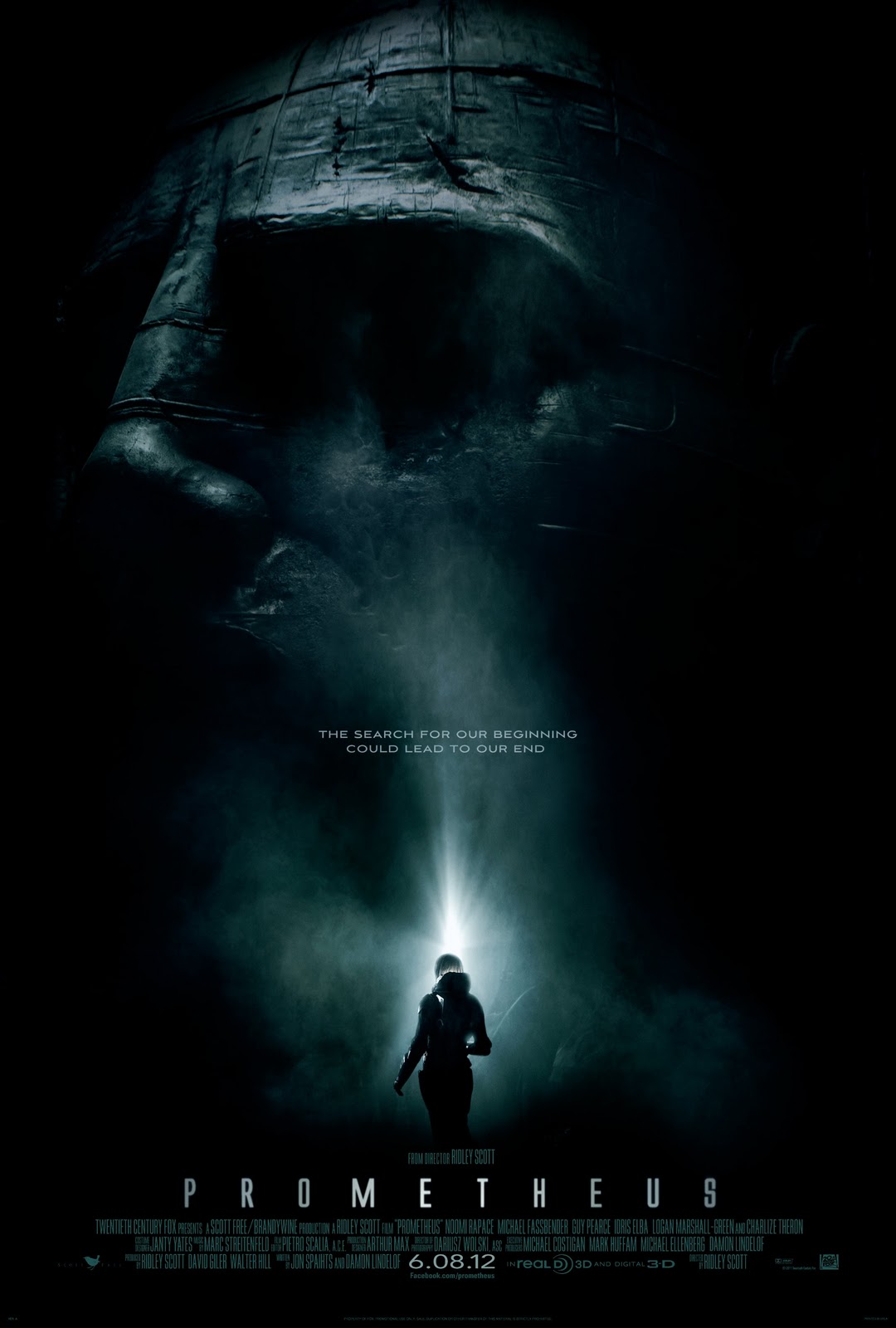
Prometheus (2012)

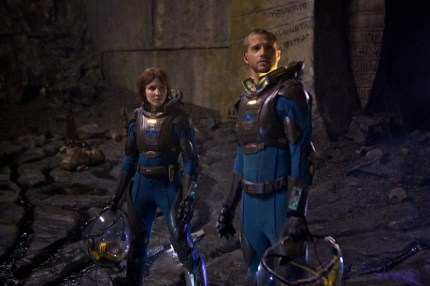
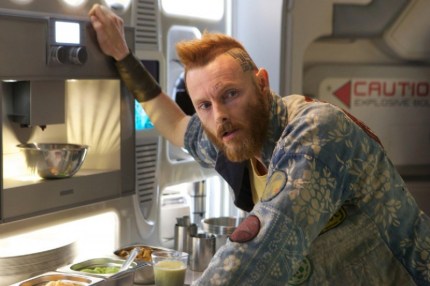
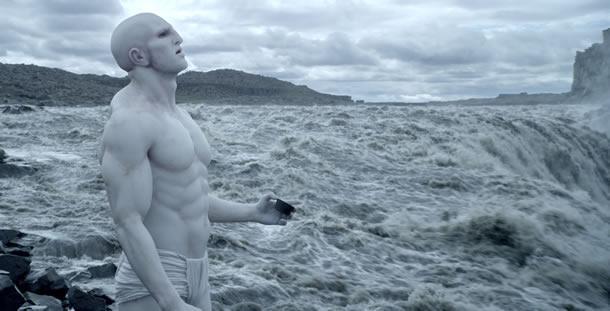
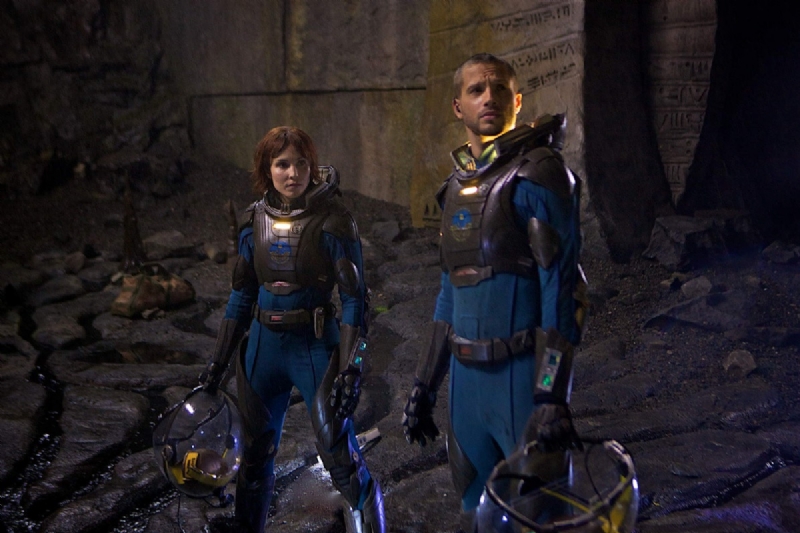
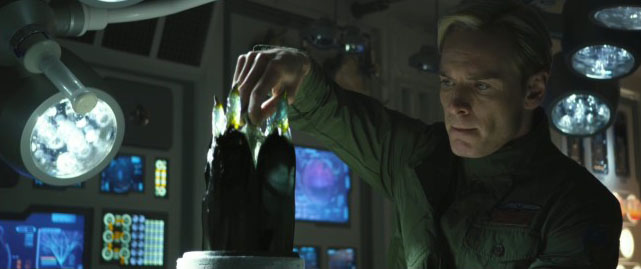
Today’s cinema adventure: Prometheus, the 2012 sci-fi thriller that marks the return of director Ridley Scott both to the genre and to the film franchise that made his name. A prequel of sorts to his 1979 classic, Alien, it follows the fate of a late-twenty-first-century space expedition which journeys to a distant planet in search of answers to the secret of human origin, revealing (partially) the background of the terrifying race of creatures that inhabited the earlier film and its sequels- but also establishing its own internal mythology, with a plot and a purpose completely independent of its predecessor, and tackling deeper, far-reaching philosophical themes along the way. Indeed, director Scott makes it clear from the very first frames that he has greater ambitions than just making a straightforward science fiction adventure: the opening shot is a direct copy of the one used by Kubrick in 2001: A Space Odyssey– in fact, the entire credits sequence is reminiscent of an important scene from 2001, and throughout Prometheus there are countless echoes- some huge, some tiny- from that venerable masterpiece. This is appropriate enough, given that Scott’s film shares many of the central themes from Kubrick’s landmark opus, such as man’s continuing quest for knowledge and his uneasy relationship with the technology he has created to aid him in that quest; indeed, the central plot (the discovery of artifacts from earth’s ancient past leads to a space mission and a confrontation with the mysteries of our creation) is essentially the same in both films. Scott, however, working from the screenplay by John Spaihts and Lost co-creator Damon Lindelof, offers his own interpretation of these ideas; his is a much darker vision of our species and its place in the universe, and one which reflects the change in our collective consciousness in the 45 years since Kubrick made his film. In place of Kubrick’s somewhat ironic vision of a future shaped by nuclear age optimism and practicality, we are given a universe more closely resembling the one seen in Scott’s earlier visits to this genre: a place in which human flaws such as ego, greed, hostility, mistrust and duplicity run rampant; and where these qualities not only threaten to undermine the greater purpose but are seen to be shared by the very creative forces that shaped us. Not that Scott gives us a universe without hope- far from it. In Prometheus, hope is arguably the central issue, and holding onto it in the face of bleak nihilism can be seen as the one saving grace of our species- coupled with undying curiosity and armed with the knowledge of what has come before, it can keep us going even when there seems no purpose for doing so. In a way, Prometheus offers us an even more inspiring conclusion than 2001, suggesting that the secret of man’s creation and continuing renewal lies within ourselves, alongside the very seeds of our own destruction- no matter what our origins may be, we are self-determining creatures and not just pawns observing a cosmic waltz in which we may be a mere side effect.

All this conjuring of the spirit of 2001 may be justified by the needs of Scott’s intellectual premise, but it also serves as a means to pay homage to his cinematic influences; the visual and thematic reflections of Kubrick’s film are just the most obvious of his tributes to the works of those who have shaped his own vision, from the overt use of Lawrence of Arabia as an inspiration for one of the central characters to the more subtle nods in the direction of such diverse movies as Citizen Kane and Forbidden Planet. With such a pedigree, it would be nice to say that Prometheus is a worthy successor to the masterworks tagged within it; but despite its lofty goals, it is a film which suffers from the all-too-common malady of formula. The cinematic building blocks so reverently placed by Scott seem to promise a work of intelligence and depth- which, for the most part, he has given us- but as the plot unfolds towards its predictably cataclysmic conclusion, his movie falls into the familiar repetition of patterns we have seen ad infinitum: the characters’ fates can be foreseen from their virtues or flaws in the same way we can tell that the bad girls are going to get offed in a slasher film, pivotal plot elements are introduced with so many red flags we can instantly see where they will lead, and, of course, anyone familiar with the original Alien and its sequels will know from the outset where the story is headed, reducing the entire experience to a detached exercise in answering questions left over from the previous franchise entries. In addition, the level of tension, so expertly built and maintained by Scott in his original film, is here allowed to rise and fall so often and with so little payoff, that by the end we are not so much excited as we are mildly curious to see how things will finally play out. Furthermore, the insistence on maintaining a rigid connection to the concrete realism dictated by its cookie-cutter storyline prohibits the director from diverging from his linear plot into the absract flights of fancy that made 2001 such a groundbreaking work and prevents him from taking his cosmic themes into an esoteric realm where they can be more fully explored.

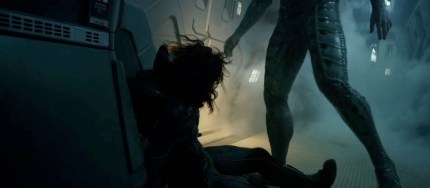
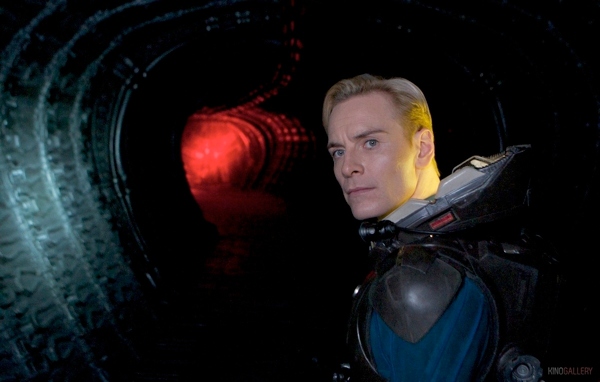
Don’t get me wrong: by any standards, Prometheus is a well-above-average film, an ambitious labor of love by a director of considerable talent; considering that its development and production history reads like an indictment of all that is wrong with the Hollywood process today, the fact that it offers so much substance along with its profit-minded formulaic plot is a miracle in itself. Scott has always been a director with remarkable gifts, particularly in visual terms, and this film certainly lives up to his reputation; it combines the immediacy of Alien with the elegiac reflection of Blade Runner; and, like both those examples, creates a stunning, immersive world for us to experience. Superbly photographed in 3-D by Dariusz Wolski, Prometheus presents a brilliant blend of its own shrewdly futuristic design and the H.R. Giger-inspired bio-technical look of the original Alien; and, to draw another comparison with 2001, it sets a new standard for special effects, with a look and a feel derived from dedication to the artistic purpose of the whole, not merely from a desire to dazzle us. This accomplishment is achieved, under the supervision of production designer Arthur Max, by a seamless blend of CG, traditional camera trickery, and live action footage, and it yields countless examples of big screen imagery which are surely destined to become iconic. All this technical wizardry is not wasted, notwithstanding the quibbles which mar the film’s narrative: Scott rises to the occasion throughout, creating moments of breathtaking beauty and visceral terror- in fact, the film’s most effective scenes (particularly a medically-themed sequence near the climax) are those which resurrect the creepy, primal body-horror around which the original was based and the fear of which is never far from our minds from the moment the exploration team lands. Aiding him in his struggle to rise above his mundane material is a fine cast which includes superb work from Charlize Theron (proving once again that she is Hollywood’s reigning ice queen), Idris Elba and Guy Pearce; standing out above the rest is the hypnotic Michael Fassbender, who provides further evidence of his substantial talent as the film’s most memorable and enigmatic character; and in the central role, Noomi Rapace makes a convincing transition from idealistic scientist to determined survivor, stirring favorable comparative memories of the franchise’s original heroine, Sigourney Weaver. The one sour performance comes from Logan Marshall-Green, whose hot-shot demeanor and club-rat looks make him not only unconvincing as a world-class scientist but also unlikable as a hero and poorly matched with Rapace’s much more sympathetic personality.

Prometheus has been anticipated as one of the year’s biggest film events, with much hype and secrecy surrounding its content and high expectations for both critical and commercial success. With all that pressure, it is not surprising that it has met, so far, with mixed reaction: hardcore fans of the genre have expressed disappointment with its emphasis on esoteric elements instead of on providing concrete answers to the mysteries it presents- many of which are left unrevealed, begging the development of a sequel despite the insistence of its makers that it is meant to be a stand-alone project- and serious-minded filmgoers have complained (as I did) of the reliance on cliché and formula in a plot which keeps it from fully realizing its higher goals. In the long term, who can really say where it will stand in the estimation of future cinemaphiles? What is certain now is that audiences seem to love it or hate it, which for me has always been the surest sign of artistic success. Summing up my own opinion, I would have to say that I loved it- with reservations. I can’t guarantee that you will share that view, but I can tell you that it’s worth a trip to your local theater to find out for yourself. You may not be satisfied, but you will almost certainly be stimulated and provoked, and isn’t that what art- and cinema in particular- is all about?

http://www.imdb.com/title/tt1446714/

;

Fritz the Cat (1972)

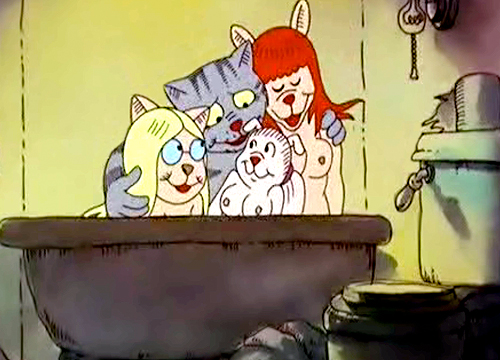
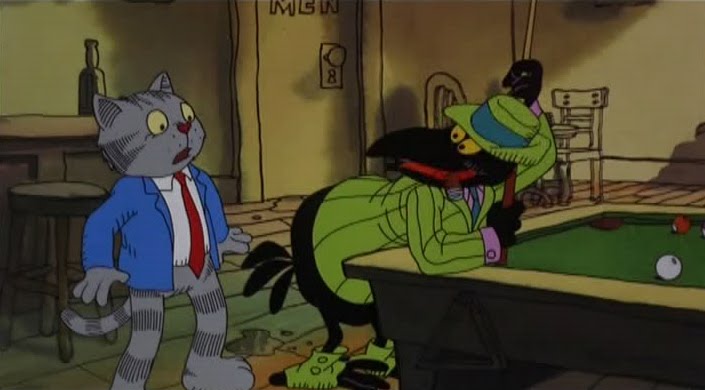
Today’s cinema adventure- Ralph Bakshi’s 1972 feature debut, his adaptation of R. Crumb’s underground comic, Fritz the Cat.  The first animated film to earn an “X” rating, it met with a lot of resistance and outrage from the mainstream, and Crumb hated it, disowned it, and tried to get his name taken off the credits- but it ended up being the most financially successful independent animated feature of all time.  Written and directed by Bakshi, the film follows Fritz as he takes a personal odyssey from a life of “hanging out” and looking for a good time through a drug-inspired pursuit of revolution- with plenty of shockingly permissive bad behavior along the way.  Voiced by Skip Hinnant (known for his work as part of the ensemble on the classic educational show, The Electric Company), Fritz is hardly a typical cartoon hero: far from cute, barely likeable, and nobody’s idea of a role model, he indulges in one ill-advised misadventure after another, motivated by selfish hedonism even when he is ostensibly acting for what he views as the greater good.  He serves as a sort of counter-cultural Candide, a naïve fool who fancies himself a sophisticate, and as such is at the mercy of a world more corrupt and complex than he imagines; in short, he is the kind of phony that the truly hip despise, and his journey of self-discovery in this worst-of-all-possible-worlds is a vehicle to expose social and political hypocrisy from every source, including (and especially) from our hero himself.  This ambitious agenda may have been beyond the scope of Crumb’s original work (he certainly thought is was), but for Bakshi, it was important for the film to make a statement, which it most certainly does- in between scenes of anthropomorphic animals having sex and taking drugs, that is.  Not that his intention was to shock: geared towards a drug-friendly youth culture, loaded with tons of juvenile sexual, political and racial humor, and mercilessly critical of both the radical left and the extremist right, the film is clearly aimed at an audience who shares his uncensored sensibilities.  At the time of its release, it was one of those films that generated protest and controversy from people who more than likely never saw it, and was cheerfully received by a target audience hungry for the kind of frank, turned-on content it offered.  Forty years later, most of its shock value and its topicality are long gone (one can see comparable content on any given episode of Family Guy today) and across the gap in time much of the film’s anarchic zeitgeist seems more than a little tiresome- as I suspect, to the more mature viewer, it did even then.  Still, as a piece of history, it is fascinating to watch: the animation, though primitive and almost quaint to modern eyes, was innovative and ground-breaking at the time; it presented adult subject matter and content never before seen in animation and completely changed the industry, breaking the stereotype of cartoons being only for children; and it vividly captures a particular social strata of 1960’s culture that is often ignored by popular memory.  I won’t say that you’ll enjoy it, but if you’re intrigued by looking through a window to a bygone era- and you’re open-minded and adventurous- you’ll be glad you watched it.
http://www.imdb.com/title/tt0068612/

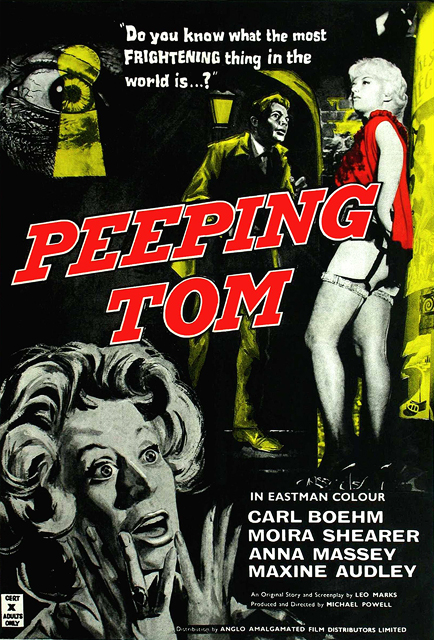
Peeping Tom (1960)

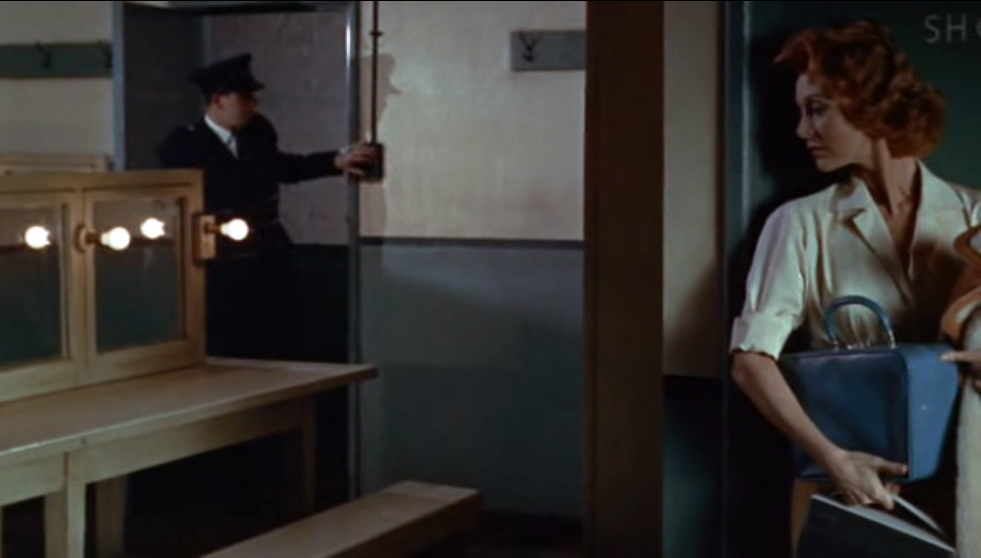
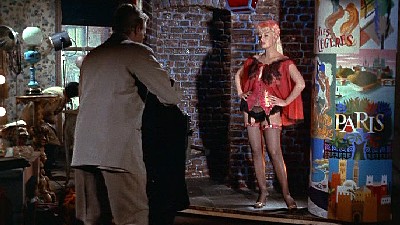
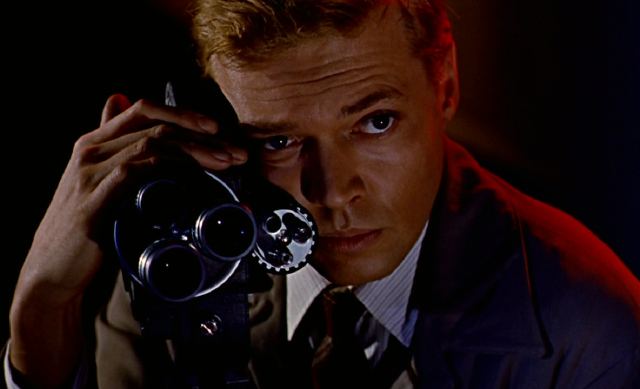
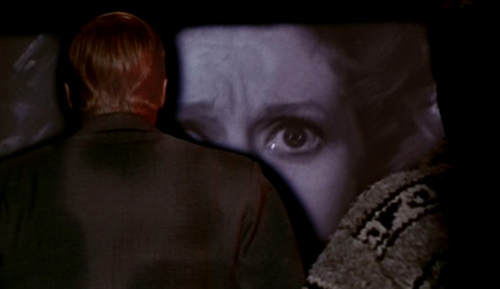
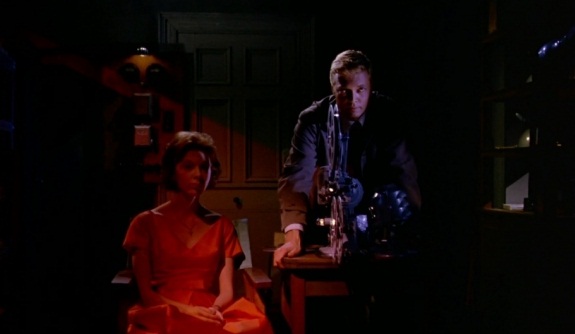
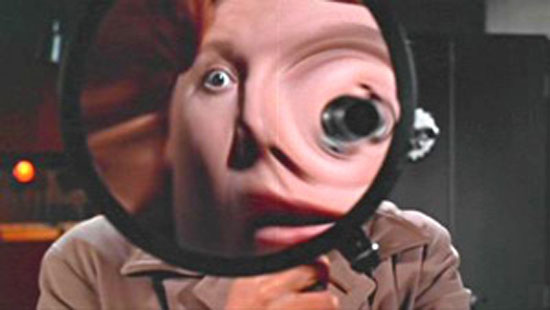
Today’s cinema adventure: Peeping Tom, the controversial 1960 thriller directed by Michael Powell, who was one of Great Britain’s most revered and respected filmmakers- that is, until the savage critical lambasting received by this feature effectively put an end to his career.   Photographed in garish color reminiscent of the lurid under-the-table pornography of its time, this tale of a disturbed young recluse who films women as he murders them was such a flop upon release that it was barely shown outside of England.  Over the succeeding years, however, it became a cult classic, growing in critical estimation and championed by such heavy hitters as Martin Scorsese (for one), and it is now generally acknowledged as a ground-breaking, underappreciated masterpiece of the genre.  On an intellectual level, I can see why: director Powell thoroughly explores the theme of voyeurism as it applies to cinema, forcing the audience from the very first frames to identify with the killer, and using the film’s story as a vehicle to manipulate our sympathies, uncover our own guilty voyeuristic tendencies, and confront us with our darkest fears just as his protagonist does with his victims.  There isn’t an extraneous or gratuitous moment in the film; every scene, every frame, every shot is calculated and geared toward the purpose- a testament to Powell’s mastery of his cinematic medium.  Despite the high score on an academic level, however, the film falls short for me on the more visceral level of emotional response; part of this may be due to the fact that, after 50 years, the film’s shock value (and body count) has been far surpassed by countless other horror movies and, by today’s standard, seems fairly tame (albeit still quite unsettling on a psychological level).  But I think the primary problem lies with the casting of Carl Boehm in the central role of the homicidal cameraman: not only does his German accent seem out of place for this decidedly English character, but his performance is stilted and unconvincing, making it difficult for us to sympathize with him- a necessary element to the transference of guilt to the audience which Powell works so hard to achieve.  The rest of the cast is excellent (particularly the young Anna Massey and the film’s biggest star, Moira Shearer, whose small but pivotal role is the centerpiece of the film’s most masterful and harrowing sequence), but with Boehm’s wooden presence in the middle of the proceedings, the film’s overall effect is muted: it stimulates the brain, and disturbs the psyche, but the heart remains aloof.  Still, it has much to recommend it, and it’s definitely worth the effort to check out a movie which, flawed or not, remains as an important footnote in cinematic history.

http://www.imdb.com/title/tt0054167/

Young Adult (2011)

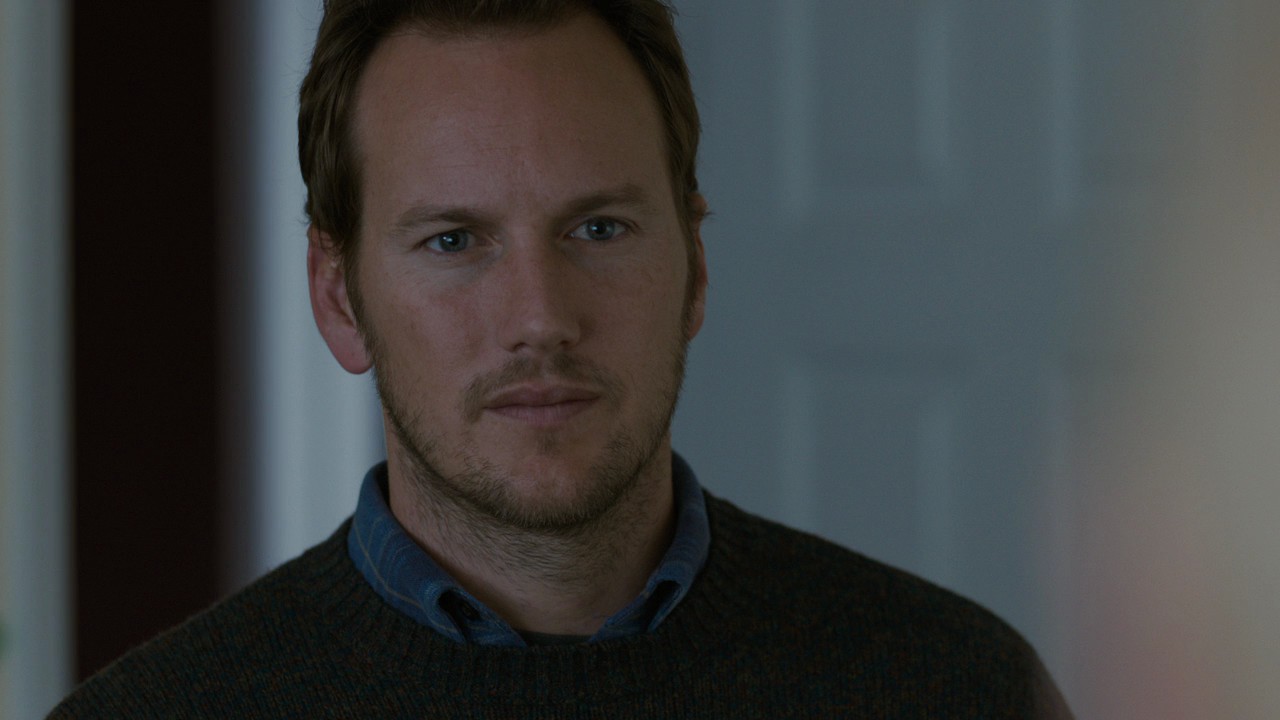
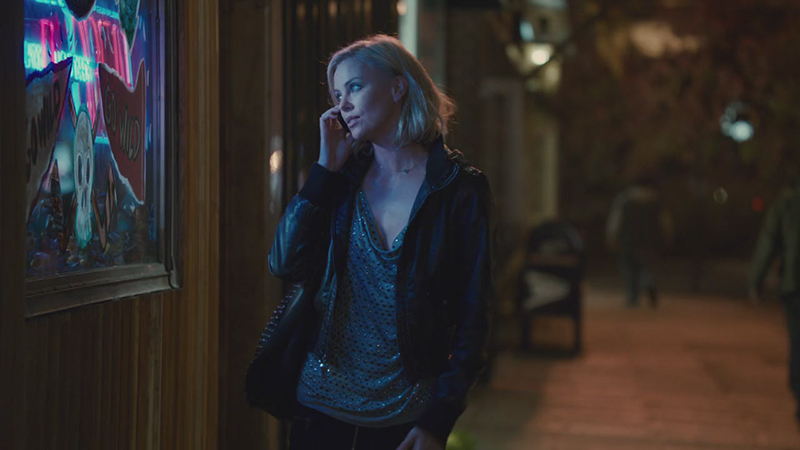
Today’s cinema adventure: Young Adult, the 2011 feature by writer Diablo Cody (Juno) and director Jason Reitman (Up in the Air).  Charlize Theron stars as Mavis, a hard-drinking thirty-something writer of teen romance novels, who attempts to resolve her fractured emotional life by returning to her small hometown and stealing her former high school sweetheart away from his wife and infant daughter.  Ostensibly a dark comedy, this piece is in fact a character study- and a bleak one- which hinges on the performance of Theron as its central character, and she rises brilliantly to the occasion.  The actress won an Oscar for playing a serial killer in Monster, and she equals that work here with her portrait of another kind of “monster,” an alcoholic whose arrested emotional development has her teetering on the brink of self-destruction, trying to use prom queen tactics in a grown-up world and unconcerned with the havoc she wreaks on the lives of those around her; but, even as Mavis’ downward spiral becomes increasingly embarrassing and her behavior grows more and more hateful, Theron succeeds in capturing the spark of humanity that allows us to see through the affectation and attitude to which she so desperately clings, and makes it possible, if not to sympathize with her, at least to understand her- and, a little unsettlingly, even to relate to her.  Providing a counterpoint to Mavis’ delusional shenanigans is Patton Oswalt, as an old schoolmate (disabled by a savage beating which may have been at least partly her fault) whose ability to see through her façade makes him both an antagonist and an unlikely ally; he delivers an unsentimental performance that keeps the character likeable while still underlining the dysfunctions that affect his own broken life.  Patrick Wilson, as the object of Mavis’ obsessions, is cast once more as the stolid-but-faded golden boy, a part which he fills to a tee- though it would have been nice to see his character laced with a little more of the darkness he has so brilliantly essayed in similar roles (Angels in America, Little Children, Watchmen).  The remainder of the cast is largely relegated to the background, where they serve as foils for the one-woman-show they surround; indeed, one of the film’s most significant characters is the scenery itself, an authentically realized small-town suburbia full of the bland and familiar icons of Middle American life, which provides a constant reminder of the comforting-and-maddening mediocrity from which- or to which- so many of us wish to escape.  As for the work of the film’s masterminds, Cody’s screenplay is full of the kind of edgy hipster irony we have come to expect from her, infusing the dialogue with a double-edged wit that makes us cringe even as we chuckle; and Reitman’s direction displays his easy skill with visual storytelling, effortlessly blending revelatory character detail and thematic reinforcement within the straight-and-steady unfolding of the narrative.  It should be said, however, that Young Adult, though strong on observation, comes up a bit short when it comes to insight; in the end, despite the exposure of numerous key moments in Mavis’ life, we are really no closer to understanding what makes her tick.  Still, perhaps it is wrong to expect easy answers in a story about an alcoholic’s decline; and even though Young Adult  lacks the disarming freshness of Juno or the unexpected emotional resonance of Up in the Air, both its creators deserve considerable praise for making a film brave enough to favor realism over sentiment by refusing to redeem or resolve.  Though there are plenty of genuine laughs here (albeit somewhat morbid ones), this film is not for the squeamish; the rest of us, however, will be refreshed by the rare honesty behind it- and rewarded by the magnificent performance of its leading player, who continues to prove that, as beautiful as she is, it is her talent that makes her a star.

http://www.imdb.com/title/tt1625346/