Blowup (1966)

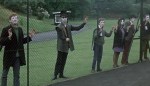
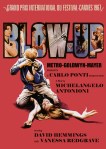
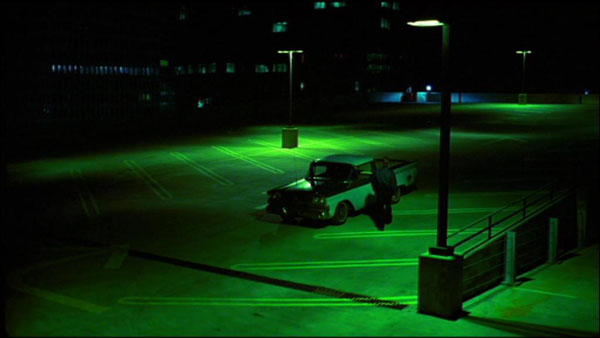
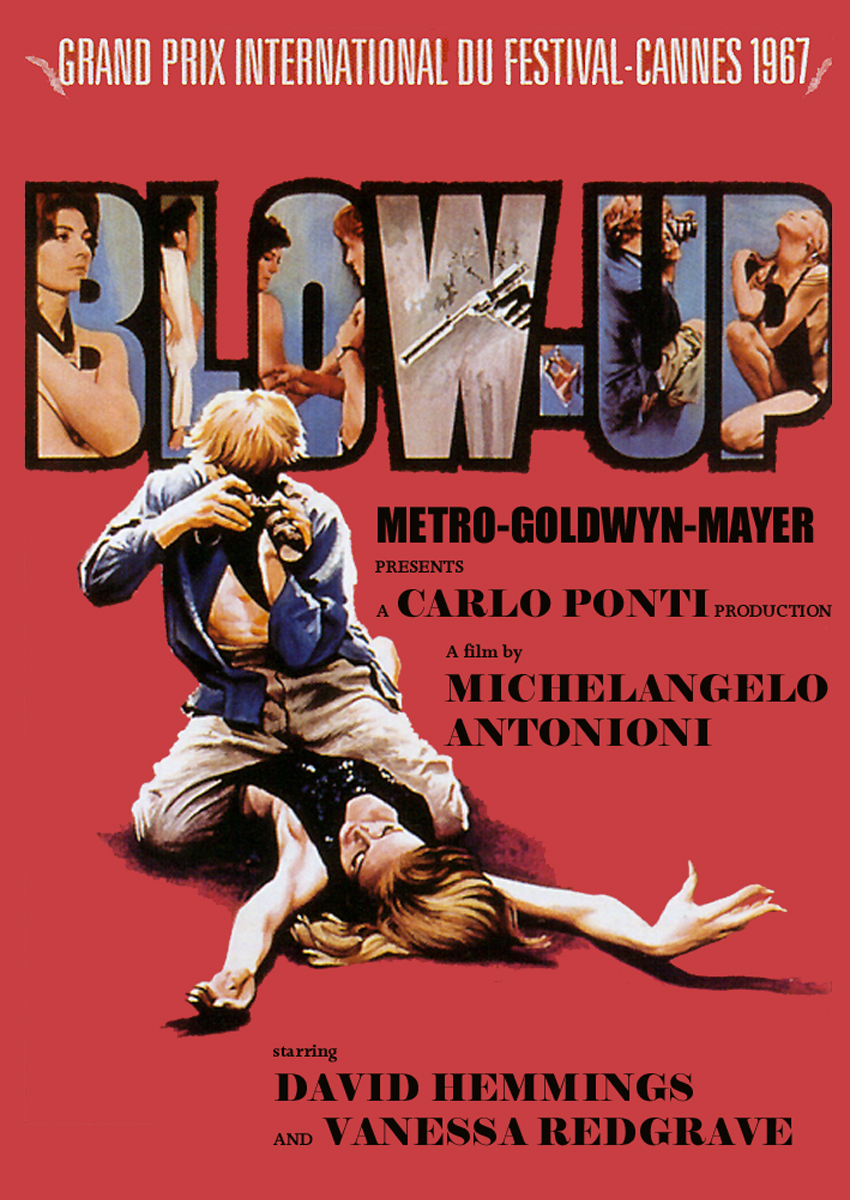
Today’s cinema adventure: Blowup, the 1966 feature by Italian director Michelangelo Antonioni; an existential mystery set against the backdrop of “Swinging London’s” hip fashion-and-art scene. Concerning a successful young photographer who begins to suspect he has inadvertently captured images of someone being murdered in a park, the film is really an exploration of alienation and desensitization in a culture obsessed with image and surface, as well as a meditation on the deceptive nature of perception and the uncertain boundary between illusion and reality. Setting up his theme from the very first scene, in which a truckload of exuberant mimes careens into a London plaza, Antonioni proceeds to perpetrate a cinematic sleight-of-hand by luring our focus onto the ostensible subject- a callous youth, played by unlikely leading man David Hemmings, and the intrigue into which he stumbles- while using the surrounding environment to convey the real purpose of the movie. As surely as the significance of his leading character’s photos lies in the grainy, uncertain corners of their background, the real mystery of Antonioni’s film reveals itself through examination of the peripheral details of its central plot.

The action of Blowup takes place in a world full of vapid fashion models and disaffected posers, communicating in brief, distracted ambiguities and seemingly trying to appear as disinterested as possible at all times. It’s a place dominated by a game in which style is substance, and the master of this game is the photographer, Thomas. As a creator of image, he is at the center of the “in” crowd, and he flaunts the power granted him by his status; surly, entitled, smugly insolent, he treats everyone as an object or as a means to an end, striding confidently through his day and seeking relief for his terminal ennui from momentary whims- whether buying a propeller from an antique shop, having a naked romp with a pair of underage would-be models, or clamoring for a scrap of a rocker’s smashed guitar at a concert- and then becoming disenchanted as soon as he achieves his fleeting gratification. He is a reflection of the culture of desire and acquisition that surrounds him, completely disconnected from others and encased in a self-absorbed bubble of over-saturated perception; and when reality asserts itself in the form of his unwitting involvement in the enigmatic experience at the park, he is completely unprepared and ill-equipped for the situation, failing to control it with his usual tactics and unable or unwilling to communicate it to any of the emotionally distant friends or vaguely hostile strangers he encounters.

It would be easy to slide into a complex morass of analysis in discussing Blowup. It is a deceptively simple film that opens up into an unending progression of dovetailed themes and implications upon even the most superficial examination. Suffice to say that in his portrayal of this ultra-specific time and place, Antonioni captures timeless issues that affect the society of popular culture and commerce no matter what the details of their outer trappings; and in Thomas’ obsessive quest to determine the truth about what he has seen, enlarging his photos until they become as abstract as a Rorschach ink blot, he illustrates the impossibility of objective certainty and suggests that the difference between truth and illusion exists only within our highly suggestible perceptions. Ultimately, all that can definitively be said about Blowup is that it is about a man who, for a short time, at least, pays attention to something.

More to the purpose, here, is a discussion of the artistry involved in bringing all these heady concepts to the screen. Director Antonioni, already renowned for his work in Italian cinema with films like L’Avventura and La notte, enlisted the help of noted playwright Edward Bond in writing the dialogue for this, his first film in English. The resultant wordplay is a brilliant reflection of the themes explored within the screenplay (which Antonioni co-wrote with Tonino Guerra); the characters speak in terse banalities, expressing half-truths and absurdities which stand in contrast to their actions and fail to convey their true intentions- almost everything they say represents a pose, an image they wish to present, and when they must try to convey something more direct or meaningful, more often than not they collapse into an inarticulate and incomplete breakdown of communication. Yet every exchange reinforces the film’s central ideas, from the first line (one of the mimes telling a bystander, “Give me your money- do it!”) to the inscrutable response of top model Verushka when asked if she is supposed to be in Paris (“I am in Paris”). The actors contributions serve as varied brushstrokes on Antonioni’s canvas, creating the necessary blend of textures which completes the picture. Vanessa Redgrave is the mysterious woman whose secret dalliance in the park may or may not have more sinister implications; tall, bird-like, and awkwardly elegant, she superbly conveys a desperation which continually threatens to crack the mandatory veneer of cool disinterest, and gives us a character whose determination and intelligence are plainly evident (though Thomas, her circumstantial antagonist, can only see the vulnerability of her surface) and she suggests a connection to the machinations of a larger world that exists outside the insulated niche in which the film is set- one in which things actually matter. In smaller but no less important roles are Sarah Miles and John Castle, as Thomas’ married friends; standing in for the masses whose interests are captured by those who put on the show, she shows us (with minimal dialogue) the timidity and guilty fascination of someone drawn to the shallow flash represented by Thomas over the weightier substance of her painter husband; and he embodies an obtuse, intellectual aloofness that makes him simultaneously attractive and repellant. The aforementioned Verushka makes an unforgettable impression (as herself) in the iconic scene in which she is photographed by Thomas, writhing on the floor as he straddles her in a highly sexualized encounter which underlines the replacement of actual experience with the artificiality of image. As Thomas, our photographer “hero,” the previously unknown Hemmings became a major star and a symbol of the mid-sixties “mod” lifestyle; his performance, while necessarily limited in range by the scope of his character, is perfect for its purpose within Antonioni’s vision. Though Thomas is arrogant, unpleasant and shallow, Hemmings somehow manages to make him likeable in spite of these qualities, showing us the giddy and rambunctious child beneath his ultra-cool mask in the moments when he is alone, and allowing us to be comfortable when we are forced by Antonioni’s focus to identify with him.

The star of Blowup, though, is the cinematic auteur behind the camera. The film is almost certainly Antonioni’s masterpiece, a vibrant, stimulating work of art that delivers brilliantly both on the surface and on a deeper intellectual level; the entire film leaves the impression of a stunning visual experience, yet though it is filled with indelible images created by the director’s masterful eye for composition (and captured by cinematographer Carlo di Palma), the grand picture we are left with is a synthesis of all we have seen- an intangible and non-existent zephyr. Much of the film’s powerful cumulative effect comes from Antonioni’s use of contrasts- between speeds, colors, textures, people- and his knack for portraying mundane, everyday occurrences in a manner and context that makes them seem hallucinatory and surreal. His use of sound is also important; in particular, the haunting sound of the wind in the trees during the all-important park sequences suggests the vastness and the irresistible force of the ultimate reality which surrounds all the meaningless illusion with which his film’s denizens are preoccupied. His musical choices play a big part, too: the jazzy score by Herbie Hancock captures the hurky-jerky energy of the fast-paced culture in which he has immersed us, and an underlying zeitgeist is evoked by the raw and angrily frustrated sound of The Yardbirds as they play for a seemingly unimpressed crowd of club-goers in their now-famous cameo scene.

Watching Blowup today, it’s easy to see why it has been lauded as an influential classic and been the subject of so much homage and emulation. It captures a perfect snapshot of the fleeting era in which it is set, yet at the same time presents us with a timeless metaphor for our existence in a world of never-ending sensory stimulation. Though the technological methods depicted as central to the story are dated in today’s digital age- in which high-resolution photographic manipulation is instantly available in the palm of everyone’s hand- the basic theme of seeking validation for our perceptual experience is not. Furthermore, it is impossible not to observe the parallels between the pop-obsessed society depicted in the film and that which exists today: in his personification of the mod dilettante at the center of Blowup, Hemmings could just as easily be portraying (if you’ll pardon the expression) the archetypal hipster douche-bag of our contemporary world; and the crowd that surrounds him, the clubs and parties he goes to, and the interests he pursues could all be found on any Saturday-night excursion into the hip-and-happening world of our current youth culture. It’s a movie that became, no doubt with intentional irony, the “next big thing” perpetually sought by the crowd it both portrayed and appealed to; thanks to the far-reaching vision of its director, it was more than that, and it has deservedly become a cornerstone not only of cinema, but in the collective consciousness of our modern world.

http://www.imdb.com/title/tt0060176/

Trainspotting (1996)

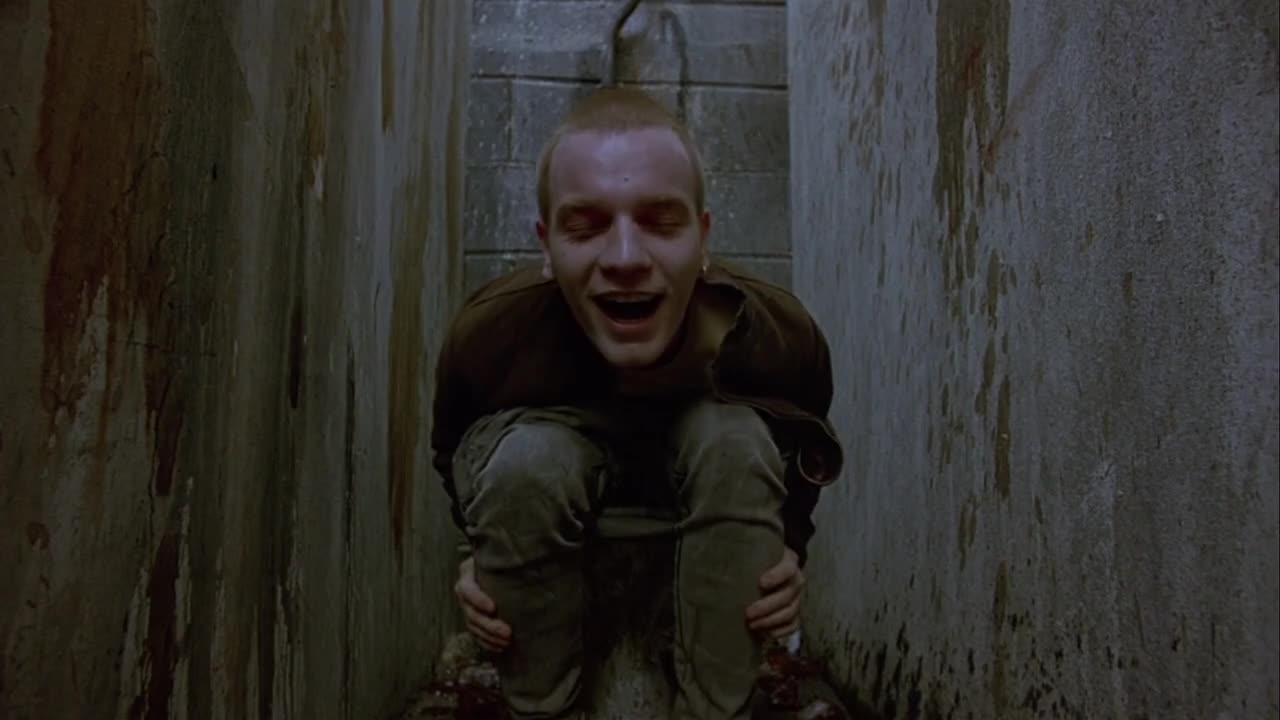
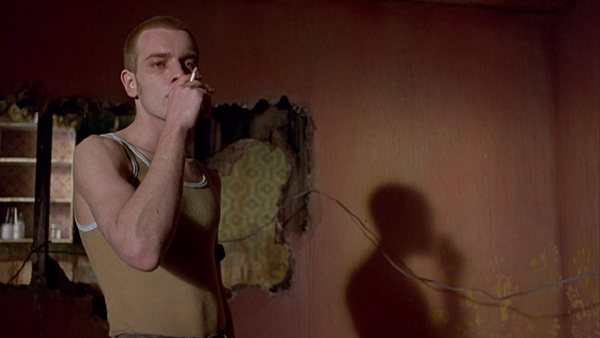
Today’s cinema adventure: Trainspotting, the 1996 breakthrough feature by future Oscar-winning director Danny Boyle, a harrowing portrait of working-class youth embracing the self-destruction of heroin addiction to escape the bleak environment of economically depressed Edinburgh. Combining the most imaginative elements of the theatrical and the cinematic, Boyle’s wildly youthful, energetic filmmaking- utilizing his now-trademark innovative visual style and edgy pop soundtrack choices- makes this highly acclaimed and popular slice of the squalid life into a treat for the eye and ear, an entertaining wild ride through a nightmare world that is ultimately as life-affirming as it is horrifying.  John Hodge’s screenplay, based on a novel by Irvine Welsh (who incidentally appears in a small role), tackles its subject without ever resorting to preachiness, instead presenting the degrading roller-coaster-existence of a drug addict as a progression of events, seen from the inside perspective, which illustrate the way their habit transforms a normal, mundane life into an surreal caricature; influenced by the “kitchen sink” and absurdist theatre styles which dominated the stage and screen dramas of mid-century Britain, Hodges grafts elements of both into an electrically contemporary milieu, undercutting the grim realism of the subject matter with ironic humor and a distinctly modern cynical edge, disarming the audience and allowing us to laugh even as we are being appalled- which gives the tragic moments the even greater impact that comes with surprise.  The young cast is uniformly superb, but the undisputed standout- and rightly so- is Ewan McGregor in his star-making performance as Renton, the central protagonist; his charisma and intensity are so powerful that he remains infinitely loveable- and believable- whether he is philosophically enduring the debasement of his addiction, gleefully pursuing criminal activity to support it, or resolutely dedicating himself to rise above his sordid background.

Listed by the British Film Institute as one of the top ten British films of all time and consistently named as one of the best films of the ’90s, Trainspotting is not for the squeamish or for those uncomfortable with moral ambiguity, and it should be said that the thick Scots dialect can be difficult to penetrate for the first 20 minutes or so; but the rewards of this vibrant, influential movie are well worth the patience and the effort for those who are up to it.  Boyle may have since surpassed his work on this early masterpiece, but for sheer audacity and unabashed youthful bravura, it still stands among the finest films of his career.

http://www.imdb.com/title/tt0117951

Velvet Goldmine (1998)

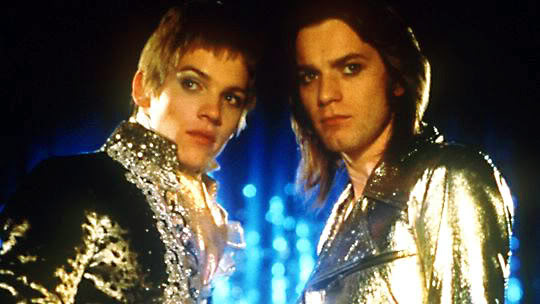
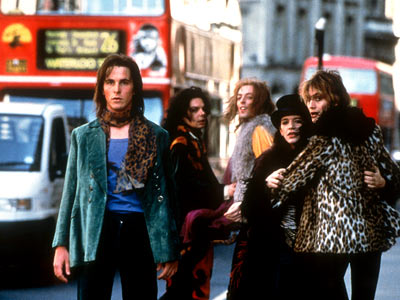
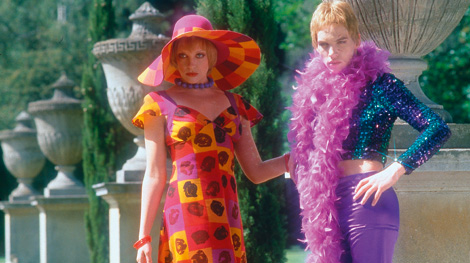
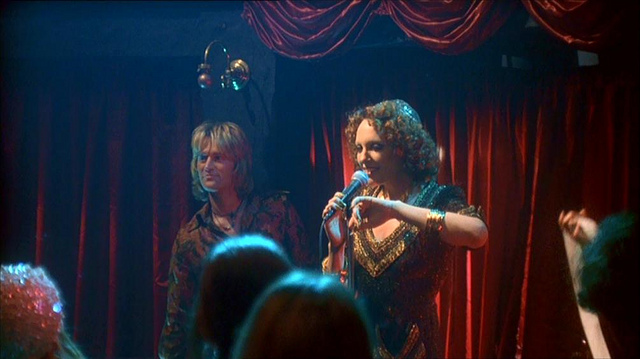
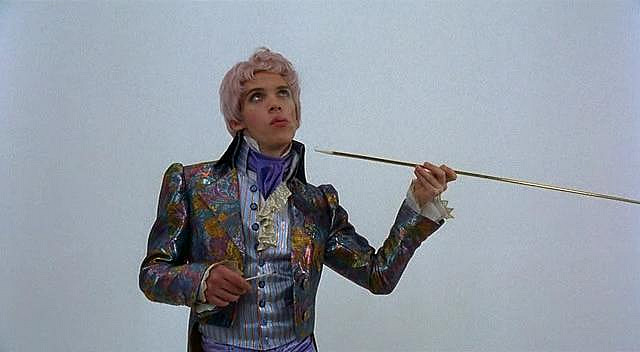
Today’s cinema adventure: Velvet Goldmine, Todd Haynes’ 1998 glam-rock fantasia with sexy, charismatic performances by Jonathan Rhys-Meyers, Ewan McGregor, and Christian Bale, a film that has gained a loyal and substantial cult following despite the poor reception it received upon its initial release. Boldly structured in the mold of Citizen Kane, it follows the attempts of a journalist to piece together the decade-old mystery surrounding a glam-rock superstar who unsuccessfully faked his own assassination before fading into obscurity. Interweaving scenes of the writer’s quest with flashbacks depicting the rise and fall of his enigmatic subject, Haynes’ film plays fast-and-loose (deliberately) with facts and fictionalizes significant real-life figures as it pays tribute to- and laments the fading of- the musical and cultural mini-era on which its focus lies. To this purpose, the film’s designers have crafted a dazzlingly surreal and authentic recreation of the English rock-and-roll scene in the early seventies, reconstructing the peculiar mix of tinsel, trash, and haute couture that defined the look of the period, as well as the darker, grittier eighties of the film’s parallel narrative. In particular, Sandy Powell’s superb costume designs succeed in capturing both the outrageous fashion of the rock-and-roll glitterati and the more subdued flavors worn by their less-glamorous followers and fans. The sparkling package is wrapped in the vivid cinematography of Maryse Alberti, which evokes the authentic photography of the day so completely there are times you swear you are looking at archival footage.

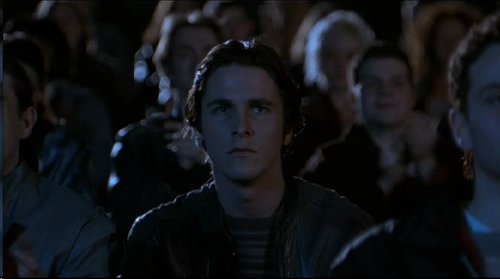
Inhabiting this time capsule world are several superb performers, each in the early stages of their highly successful respective careers. In the key role of Brian Slade is Jonathan Rhys-Meyers, who effectively embodies the ultimate glam rocker, channeling the spirit of David Bowie (on whom the character is heavily based, along with, to a smaller degree, Marc Bolan) and yet investing the performance with his own energy as well- cheeky yet vulnerable, jaded yet naïve, sexually charged yet romantic, he manifests the image of the androgynous bad boy while letting us see into the complex personality beneath it. He is matched by Ewan McGregor (as Slade’s collaborator and lover, Curt Wild- inspired in equal measure by Iggy Pop and Lou Reed), who likewise presents a convincing portrait of an archetypal glam figure- but a distinctly different one, rougher-edged yet ultimately, perhaps, deeper. The two performances complement each other like a dovetail joint, and both men are at their most impressive- and mesmerizing- when they are called upon to perform in the numerous musical sequences, pulling off the full rock star act with exuberant bravado and absolute confidence. In a less showy role- but no less superb- is Christian Bale, playing the journalist and former fan who is haunted by memories of his youthful involvement in the glam culture and of his personal connections to both the iconic stars in the history he is tracing; always a deeply compelling actor, Bale is effective throughout, but he is at his best as the rosy-cheeked youth of the flashbacks, riding the extremes of his adolescent emotions as he tentatively explores his own developing sexual and ideological identity and comes of age in a heady time of seemingly limitless possibilities. Toni Collette is both deliciously tawdry and surprisingly grounded as Slade’s wife Mandy, impressively evolving with the character in an arc that takes her from hippie muse to jaded has-been; and Eddie Izzard is appropriately loathsome as the oily manager who shepherds Slade into the world of rock-and-roll excess.

Despite the considerable strengths described above, however, Velvet Goldmine is not an unqualified success. Haynes is a gifted director, justly acclaimed for his ability to translate complex and esoteric themes into a compelling screen experience, but often criticized for failing to create a cohesive whole; his films often seem more interested in conjuring elemental forces than in using them to work toward a specific purpose. Of course, such a technique allows the audience to form their own personal conclusions; it’s an impressionistic style of filmmaking, and like other impressionistic art forms, it’s not to everyone’s taste. With this effort, his passion for the period and the attitudes it represented is very clear, and he succeeds admirably in approximating the glam milieu and bringing it to the screen. However, the formula he chooses to do so creates some problematic issues: the investigative drama which drives the plot seems a brilliant device for exploring this seminal period in contemporary pop culture, allowing him to explore the what made it such an appealing time for those who embraced its spirit and why its memory and influence linger today; however, the brooding, mournful tone of the mystery- as well as the deeply personal importance placed on discovering the answers by the film’s protagonist- suggest a weighty significance at the core of the nostalgic proceedings that somehow feels misplaced. To be sure, Haynes is presenting a document of a time in which a generation overflowed with the excitement of changing attitudes and the promise of freer personal expression, a time which was to morph all too soon into a glitzy, self-centered era in which shallow, self-destructive excess would take a heavy toll; the collective loss of innocence resulting from this social odyssey certainly spawned the kind of emotional wounds reflected by the characters in Velvet Goldmine, and the healing power of reconnecting with these cultural roots, of rediscovering the spirit that generated the whole process in the first place, is clearly a major part of the film’s intended effect. In these terms, Brian Slade provides the perfect metaphor: hungry for the freedom to be himself, whoever that may turn out to be, he soars into a fantasy world made real- only to eventually succumb to the lure of nihilistic hedonism, transforming his existence into an unsustainable nightmare from which he must eventually choose to escape or die. However, Slade is not an Everyman, not even a glorified one like Charles Foster Kane, and his experiences, though they may resemble a magnified version of those shared by many who participated in the glam sub-culture and the disco era which followed, ultimately seem more the consequence of individual character makeup than a reflection of some greater social phenomenon. More germane to the group experience, perhaps, is Bale’s journalist, burned by the broken promise of his youth and seeking a way to come to terms with the deep longings left unfulfilled; but the plot on which his redemption hinges, the conceit of uncovering the secrets of a former pop icon’s decline and fall, ultimately feels forced. After all, there is no mystery to be solved- the story to be told is so common as to be predictable- and in the end, there are no real answers to be found there, only an implausible plot twist and a phantom wound that will never stop itching. To make a resolution even less palpable, Haynes’ screenplay (from a story written by himself and James Lyons) wraps the plot about a man exploring an enigma in another, larger enigma: invoking the spirits of Oscar Wilde and Jean Genet, he introduces a mysterious, possibly extra-terrestrial gem which secretly links the characters and their histories to a long procession of pop superstars, suggesting that the cycle of fame is some sort of mystical cosmic reflex which affects our social evolution, and even hinting at the deliberate manipulation of our pop culture by an unseen and arcane outside force. Another apt metaphor, and an interesting proposition- one which seems borrowed from the handbook of glam-era theatricality as represented by such flights of fancy as Bowie’s Ziggy Stardust persona, a source of much inspiration to the events portrayed in the film- but in this case, perhaps, a needless complication in an already over-complicated mix.

Speaking of Ziggy Stardust, it seems necessary to also remark that the heavy fictionalization of the figures represented- which amounts to the creation of a sort of alternate glam universe- has been a point of considerable controversy surrounding Velvet Goldmine. Taking well-known real-life icons and re-inventing them for dramatic purposes is an acceptable tactic that goes back, no doubt, to the very beginning of story-telling; however, Haynes has here blended real events so completely into the soup that the result could be very confusing to those unfamiliar with the true history of those involved. Though Brian Slade is not David Bowie, he certainly feels like it; indeed, Bowie himself, initially involved in the project, pulled his support and the rights to use his songs after discovering that the script incorporated elements from unauthorized biographies by his former wife and others. To make matters even more confusing, mixed in with the original musical selections composed for the film are older songs by such glam-era artists as Roxy Music, T. Rex, and the New York Dolls, among others, performed by the fictional singers as if they were themselves the originators. Though I’m not one to quibble about adherence to historical accuracy- after all, my favorite movie is Lawrence of Arabia, and my love for Shakespeare is in no way affected by his fondness for rewriting history to suit his needs- in this case it seems appropriate to suggest that, before making any assumptions based on the recognizability of the figures on display in Velvet Goldmine, it would be wise to do some research and decipher who these characters really are (or, rather, really aren’t).

Nevertheless, Haynes’ film provides many pleasures: the aforementioned musical sequences, mounted with a gaudy theatrical flair that captures the glitter-rock essence to a tee, are the film’s best scenes, nostalgic yet freshly minted; and there are moments throughout that reach through the layers of conceit to grab at your heart-strings, electrifying touchstones that instantly transport you to the memory of some shared, universal experience- the yearning, impossible ache of a teen-aged Bale staring at homoerotic photos of his idols; the sharp humiliation of Collette’s Mandy Slade as she confronts her husband in the midst of his dehumanized, drugs-and-sex-saturated oblivion; the explosive, adrenaline-fueled vitality of McGregor’s first stage performance as Wild (in which, incidentally, he strips naked for his adoring audience). All in all, the exponential popularity of Velvet Goldmine is not surprising, nor is it undeserved: though it may leave us unsatisfied on some nameless level, and though it sometimes feels as though it takes itself far too seriously, its youthful exuberance and its visual perfection go a long way towards making up for its shortcomings; and even if it ultimately leads us to prefer and embrace the real-world history which it distorts for its desired effect, it seems fitting and desirable to find satisfaction in that which is real rather than in a glittery fantasy- and that, come to think of it, is perhaps the true message of Velvet Goldmine.


http://www.imdb.com/title/tt0120879/

Dali in New York (1965)

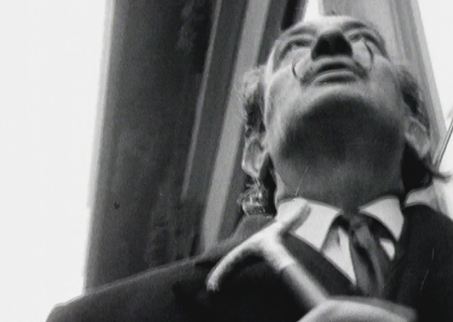
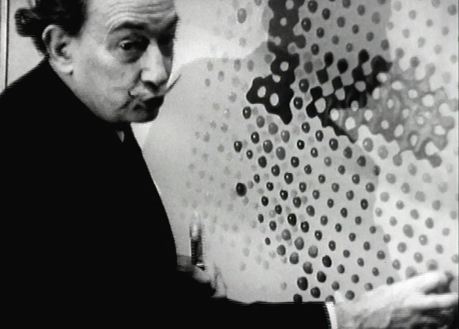
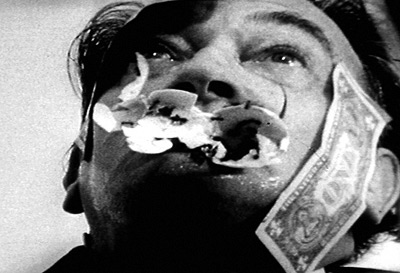
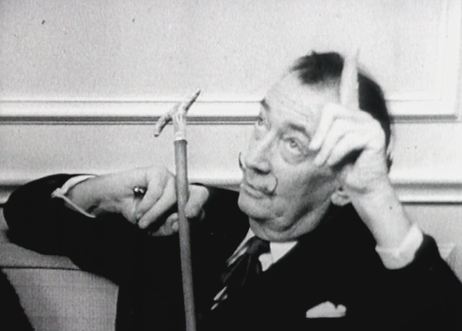
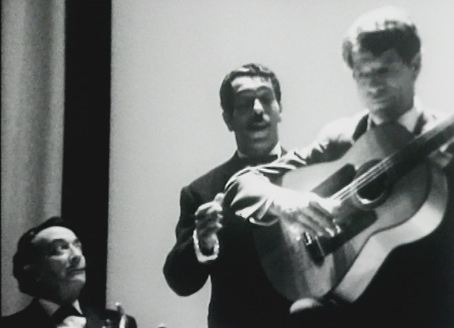
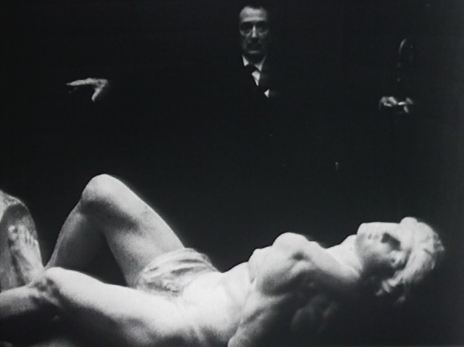
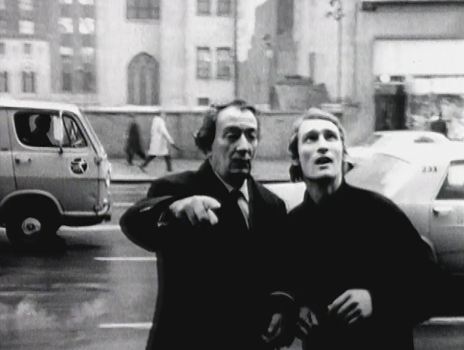
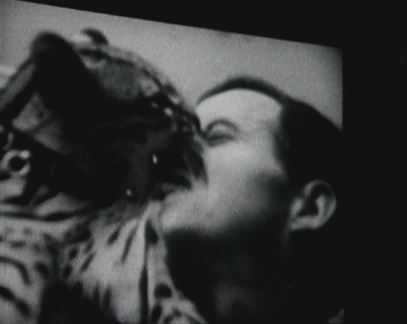
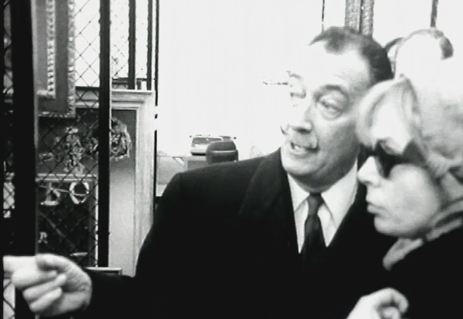
Today’s cinema adventure: Dalí in New York, a 1965 documentary by Jack Bond depicting the visit of the infamous Spanish surrealist to Manhattan in conjunction with the opening of a retrospective exhibition of his work at the Hartford Gallery of Modern Art. Shot in a distinctively sixties-avant-garde black and white by Jim Desmond, this brief (57 minutes) visit to the world of the 20th Century icon was made over two weeks prior to the opening, as Dalí made the rounds of the New York art and society scene, attending gatherings, staging “events” (such as a procession in the streets with a plaster cast of a Michelangelo statue and a photo session involving the artist lying in a coffin with an ant-filled egg in his mouth, surrounded by a million dollars in cash and an ocelot), and conversing with Bond’s collaborator, actress/writer Jane Arden- that is, until she falls from Dalí’s favor in a controversial exchange in which she refuses to humor his assertion that “everyone is my slave.” The conversations yield little by way of meaningful exchange- Arden tries too hard to engage the painter in a dialogue about his work and Dalí steadfastly resists, preferring instead to make characteristically inflammatory proclamations and declarations of his own supremacy- and the film ultimately offers little direct insight into the artist or his philosophies. Nevertheless, much can be gleaned by watching his antics and his interactions; throughout the film, he is obviously aware of the camera at all times, his eyes constantly darting to the lens as he orchestrates his image for mass consumption. Always the showman, his outrageous acts and statements are clearly calculated to promote himself and his art, and even his creative process itself seems to be little more than another tool for publicizing the “cult of Dalí,” as evidenced in the remarkable closing sequence when he paints for an audience, accompanied and inspired by the music of flamenco guitarist Manitas De Plata and singer Jose Reyes. The entourage with which he surrounds himself, which includes a “military advisor” and the supposed reincarnation of his dead brother, are all extensions of his own bizarre personality, conforming to the roles he has assigned them for his- and presumably their own- personal benefit; and his wife and muse, the austere and vaguely contemptuous Gala, is presented, as he presented her, as an idealized icon of feminine detachment: she says little, and by saying little, speaks volumes. All of this is interlaced with lengthy sequences (designed and photographed by Tom Taylor) showcasing Dalí’s familiar art, depicted by a fluid camera lovingly examining the details of his imagery and revealing some of the unifying thematic elements that were continually present in his body of work- though the black-and-white cinematography robs us of his stunning and effective use of color, making us long to rush to the nearest bookstore and browse through one of the many coffee table books offering high quality Dalí reproductions.

Dalí in New York was largely forgotten for many years, a parenthetical curiosity from a period when the famed artist was being overshadowed by representatives of the more modern movements of art, such as Warhol, whose vision of themselves as the ultimate manifestation of their work was prefigured by Dalí himself- something he alludes to in the film. After a 2007 screening at MOMA, it has been resurrected as a document of a figure whose importance to the art world is still being debated. In the twenty-plus years since his death, Salvador Dalí has become less and less remembered for the outrageous circus with which he surrounded himself and his enormous catalogue of paintings have become more and more familiar, many of them having achieved the status of icons. This little documentary is by no means a complete picture of the man or of his work, but it does offer a rare opportunity to get close to a figure who, during his life, was often dismissed as a charlatan and an opportunist, but whose work has undeniably exerted an unfathomable influence on western visual art. Most of Dalí’s rhetoric can be assessed as showmanship, not categorizable as true or false, but at least one of the statements he makes in this film is clearly wrong: at one point he declaims that his work is not important, that only Dalí himself matters. Time has thankfully proven this to be an overstatement on his part.

http://www.imdb.com/title/tt1245090/
The Cabinet of Dr. Caligari/Das Cabinet des Dr. Caligari (1920)

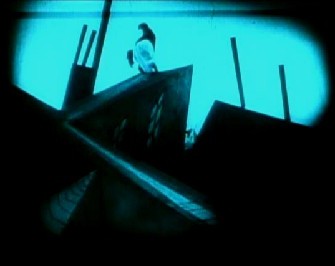
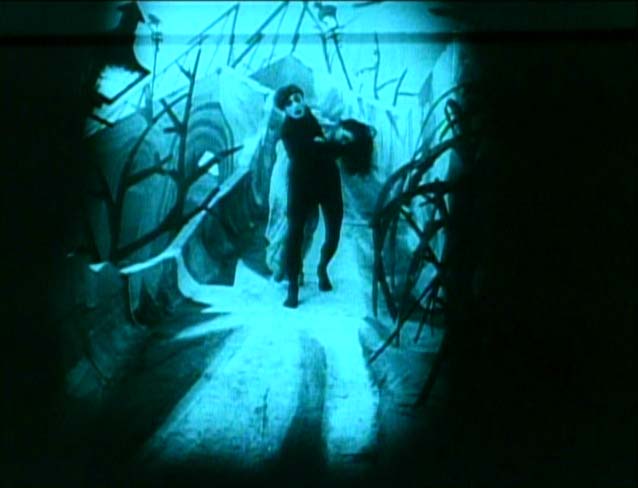
Today’s cinema adventure: The Cabinet of Dr. Caligari, the 1920 cinema cornerstone that established enduring conventions for the horror genre- indeed for cinema itself- and for the general public at least, has become one of the most recognizable representations of the German Expressionist movement.  A bizarre tale about a mysterious carnival magician whose hypnotized slave commits a series of murders at his bidding, this landmark film was first conceived by its writers, Hans Janowitz and Carl Mayer, as a way to demonstrate the effectiveness of film as a medium for Expressionist art, and also to establish a definitive look for German cinema that would distinguish it from the growing influx of American movies to their country. The resulting work is one of the most distinctive visual experiences ever produced, featuring wildly distorted scenery (abstract, asymmetrical sets with sharp, jagged lines, obvious and elaborately theatrical backdrops with painted-on shadows) highly dramatic lighting, and a heightened acting style that seems exaggerated even compared with other silent films of the time; it was an experiment which only took place because the writers persuaded producer Erich Pommer that making the film in this style would save considerable amounts of money.  These creative pioneers- including director Robert Weine, who was brought on board when rising wunderkind Fritz Lang was unavailable- believed that their bold new approach would change the art form forever; however, though Dr. Caligari met with enthusiastic response from audiences and critics alike, and stirred much excitement in the world’s blossoming film community, it failed to lead the industry away from the more mundanely representational style in which it remains more-or-less grounded to this day.

This is not to say that the film had no bearing on the future of cinema.  Its visual conceits and thematic elements have provided immeasurable inspiration for filmmakers from F.W. Murnau to Tim Burton and beyond. Its macabre tone and gruesome content influenced not only the future of the horror genre but the entire film noir movement as well.  It set the precedent for using cinematic embellishment to suggest altered states of consciousness: virtually every film depicting dreams, delusions, or drug-induced hallucinations can trace its heritage back here.  Most important of all, perhaps, was its establishment of numerous structural conventions that have been in continuous use ever since: by constructing its grim story as the remembrance of a young man who is ultimately revealed to be a delusional patient in a mental hospital, Dr. Caligari became the first film to feature a framing device bookending its main narrative, to rely on an unreliable narrator, and to surprise its audience with a twist ending.  None of this is to say that later filmmakers could not have made these innovations on their own- but Caligari went there first.

All this film class trivia is well and good, but how does The Cabinet of Dr. Caligari  hold up today for the casual viewer simply seeking entertainment?  Probably not well: the world is a much different place than it was in 1920, and we have been inundated with stories and images much more shocking and terrifying than those in this film- which, ironically, opened the door for all of them.  The conventions of fiction observed within it seem quaint and unsophisticated by our jaded modern standards, and the performances, with their jerky, unnatural physicality and their often-seemingly-inappropriate facial expressions (to say nothing of their histrionic, over-the-top style) seem unconvincing and inaccessible to us.  To top it off, its outrageously artificial visual style is so alien and disconcerting that it only serves to distance us further from the events onscreen, ensuring that we will never become viscerally engaged in the proceedings.  Of course, it’s true that these qualities were present even when Dr. Caligari was made- deliberately included as part of the Expressionist form intended and carefully crafted by its creators- but historical context has no bearing on our contemporary requirements for suspension of disbelief.

Before concluding, however, that Caligari has no value for any modern viewer who is not a film buff or an art enthusiast, it might be wise to look past the obvious sensibility gaps created by its distance from us in time.  It was never meant to be a purely escapist experience, even when it was conceived nearly a century ago; rather, it was- and is- a vivid and fully realized vehicle for Expressionist themes such as paranoia and the unreliability of perception, and an impressive presentation of the movement’s distinct visual style, comprised of crude, primal imagery that works on the subconscious to elicit a strong emotional response.  Its effectiveness is even keener in its restored form, which not only returns sharpness and luster to the once-faded print but also recreates the original hand-tinted colors, helping to clarify the story by differentiating day from night, and polishing up the intertitles with a font and style coordinated with the bizarre content of the story they tell.  A viewing of Dr. Caligari is hallucinogenic enough on a small screen, and though I’ve never had the opportunity to do so, I suspect that seeing it projected larger than life in a darkened theatre would be akin to experiencing a full dream state.

It’s also worth mentioning that although the stylized acting is hard to assess fairly from a standard modern perspective, Werner Kraus and Lil Dagover, as the mad magician and tragic damsel, respectively, have become iconic as personified archetypes of the collective consciousness; and as Cesare, the tormented somnambulist, Conrad Veidt is electrifying, using his remarkable physical skills and his expressive face to transcend both genre and style, and delivering perhaps the first truly great film performance- one which continues to inspire and influence actors to this day.

So although The Cabinet of Dr. Caligari may not offer the kinds of thrills and chills sought by the average viewer looking for a lively horror film, it certainly offers many other rewards.  There are good reasons why it has been celebrated, emulated, re-invented, re-adapted, saluted and parodied so many times over the decades; it is part of our cultural makeup, and if that is enough to get you to watch it, you may find yourself enjoying its twisted pleasures in ways you never expected.

 http://www.imdb.com/title/tt0010323/

Sebastiane (1976) [Warning: some images may be NSFW]

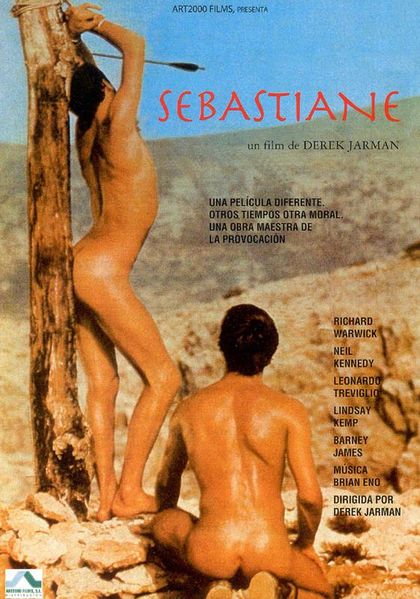
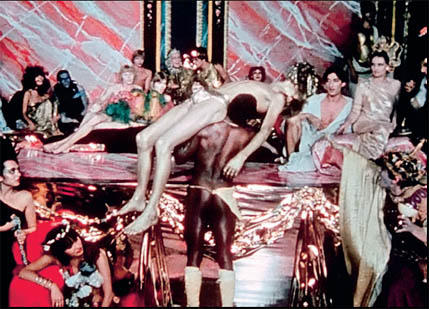
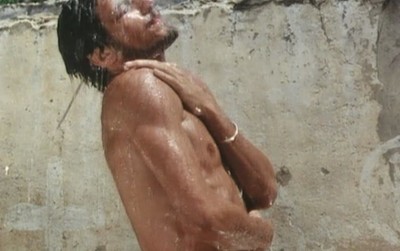
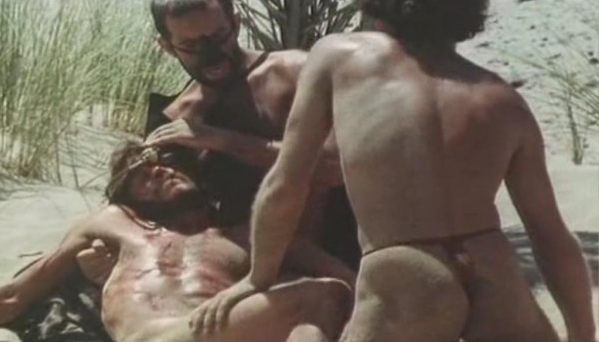
Today’s cinema adventure: Derek Jarman’s 1976 debut feature, Sebastiane, a fictionalized vision of the martyrdom of St. Sebastian, presented less as a meditation on spiritual themes than as a homoerotic fantasy in which the soldier Sebastianus, after falling from favor with the Roman Emperor Diocletian, is exiled to a remote oupost in the wilderness, where his refusal to yield to his commanding officer’s obsessive lust eventually leads to his ritual execution by arrows.  A work that is historically significant not only for being the first film produced in authentic Latin (and as such, the first British-made movie to be shown in England with subtitles), but- more importantly- for the prologue featuring an erotic dance by legendary glam-era performance artist Lindsay Kemp and his Troupe, and its inclusion of an early score by electronic music pioneer Brian Eno, Sebastiane was never anybody’s idea of a mainstream film, not even its creator’s.  Like most of Jarman’s films, it’s not big on story, but despite its shoestring budget, it is lovingly and beautifully shot, each frame artfully crafted so that the final result resembles a Renaissance painting in motion. The extensive nudity (all male, of course) was explained by Jarman as being because they “couldn’t afford costumes” (sure, Derek, sure… we believe you), and needless to say the film was highly controversial at the time of release; but although many viewers may fixate on what often seems like gratuitous nudity and sexual content, Jarman is not merely concerned with exploiting or even celebrating the male form; he has much to say about the issue of homosexual shame.  On the surface, the film would seem to comply with the traditional Catholic assertion that homosexual behavior is a sin to be forsworn, and that Sebastianus’ fate is to be sacrificed to that ideal, destroyed by unrepentant sinners for his refusal to debase himself- a decidedly conflicting message, when one considers the fact that the film is heavily laden with imagery clearly intended to elicit homosexual fantasies.  Certainly these themes of religiously-fueled guilt are in play within Sebastiane, and Jarman undoubtedly wrapped some of his own spiritual struggles into his film; but like most art, the true nature of the themes expressed lies beneath the obvious details.  Sebastianus’ rejection is of the flesh itself, regardless of sexual orientation: it is his devotion to a life of the spirit that makes him an outcast and a martyr, and it is the jealousy and pride of those who fail to understand him that leads to his death; in the end, sexuality is irrelevant here, and Jarman’s true indictment is against the base and brutal tendencies of stereotypical masculinity, the hypocrisy of judgement and violence against those who do not conform to the status quo, and the arrogance of those who choose to subvert their own spirituality to their egotistical desires and insecurities.  In short, the film is more about homophobia than homosexuality, and its abundance of homoerotic imagery is as much to incite as to excite.  Of course, that same imagery is sufficient to ensure that the majority of religious bigots will never see this film, so in a way, Sebastiane is a prime example of an artist “preaching to the choir;” and, truthfully, the copious amount of it ultimately displaces Jarman’s higher purpose, so that his inaugural cinematic excursion ends up being more stimulating on a decidedly lower level.  My own reaction: it’s a very pretty movie to look at, and probably one of the most erotic ones I have seen (much more so than porn, actually); but at times I couldn’t help being reminded of those soft-core late-night “Skinemax” flicks I would sometimes catch my Dad watching at 3 in the morning… slow motion photography of someone taking a shower, with the frame cropped in just the right place to keep it from being obscene, that sort of thing, except instead of beautiful women, here it was beautiful men.  I can’t say I had any complaints, but I was ready for it to be over about 30 minutes before it actually was.  It might have helped if the actors (Leonardo Treviglio as Sebastianus, supported by Barney James, Neil Kennedy, and Richard Warwick, among others- none of whom had significant careers afterward) had delivered performances that were as beautiful as their bodies… but I guess we can’t have everything.

http://www.imdb.com/title/tt0075177/

Death Proof (2007)

Image

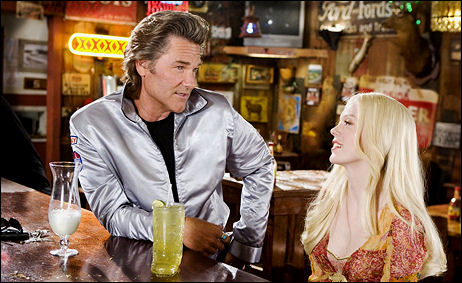
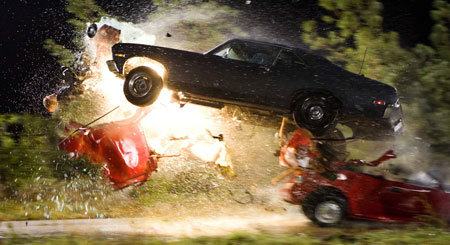
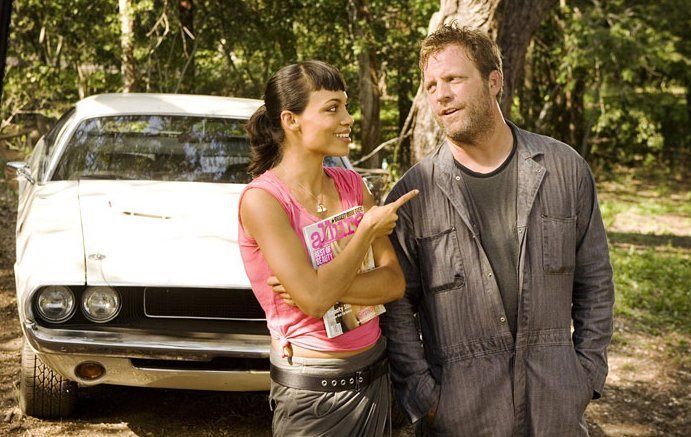
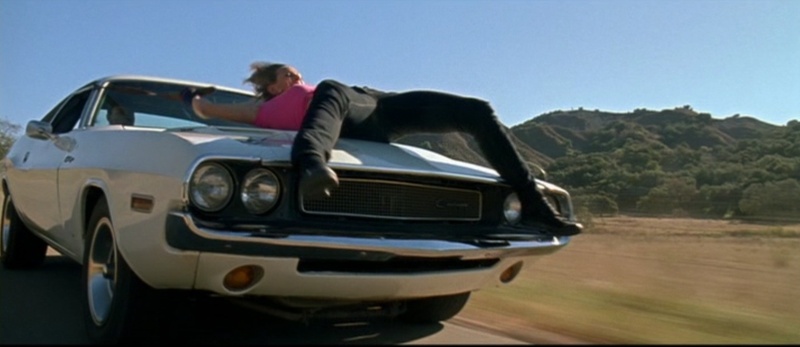
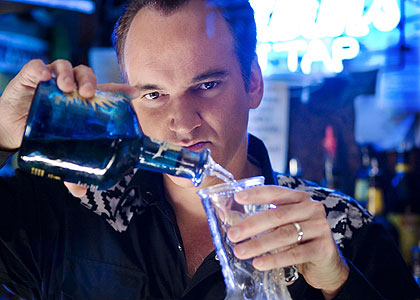
Today’s cinema adventure: Death Proof, writer/director Quentin Tarantino’s 2007 homage to the cheap exploitation movies of the sixties and seventies, originally released as half of the Grindhouse double feature (paired with Richard Rodriguez’ Planet Terror). With his trademark style on full display, Tarantino sets out to emulate- and surpass- the violent and titillating “anti-classics” he clearly loves with this tale of a psychopathic ex-stunt driver who stalks and kills young women in his souped-up, “death-proofed” muscle car. Though Kurt Russell delivers a delightful performance in the central role, and the director’s impressive visual style is as dazzling as ever, the film is ultimately sabotaged by several factors. First of all, with its conceit of recreating the genre which inspired it, Death Proof severely impairs its own ability to engage the viewer in its proceedings: the deliberately grainy cinematography, scratched film and bad splicing constantly serve as a reminder that it’s all just an elaborate gimmick; the inherently shallow formula prevents the far-fetched and sensationalistic plotline from ever becoming believable or compelling; and the characters, for all the self-consciously clever dialogue Tarantino puts in their mouths, are doomed to remain one-dimensional ciphers who exist merely to enact the filmmaker’s cars-sex-drugs-and-rock-n-roll fantasy. All these criticisms, of course, could easily serve as a description of any of the B-movies upon which Tarantino’s opus is based; and it would be correct to point out that what really matters in those films (and in this one) is the nail-biting, balls-to-the-wall action and the gratuitous violence for which everything else simply provides a framework. But where the original films managed, at their visceral best, to thrill and delight, transcending their shoddiness with their lack of pretense and their unapologetic devotion to providing guilty pleasure, Tarantino’s would-be tribute fails to achieve any of these ends. To be sure, his talent is clearly visible here: but that’s part of the problem, for where the drive-in fodder he emulates was often so bad it was good, here we have an obviously good filmmaker deliberately trying to be bad, and succeeding in just being, well, bad; and though the action sequences- two of them, to be exact- are unquestionably well-done, in order to get to them (thanks to Tarantino’s self-indulgent insistence on maintaining his own signature tension-building style) we have to sit through interminable stretches of hip, foul-mouthed dialogue, which may be meant to invest us in the characters but instead results in repeated glancing at our watches. Seriously, there was never this much talking in Death Race 2000. Don’t get me wrong- I’m not criticizing Tarantino for embracing and championing the grindhouse genre. After all, these humble movies are touchstones for a generation and have had a major influence on contemporary cinema; and in his best work (such as the Kill Bill movies and Inglorious Basterds), the director has masterfully drawn inspiration from them while incorporating their elements into his larger personal vision. With Death Proof, however, he has only succeeded in making a pale shadow of the original works, which, like a replica of some crude masterpiece of outsider art, seems pointless and unnecessary.

http://www.imdb.com/title/tt1028528/

Eating Raoul (1982)

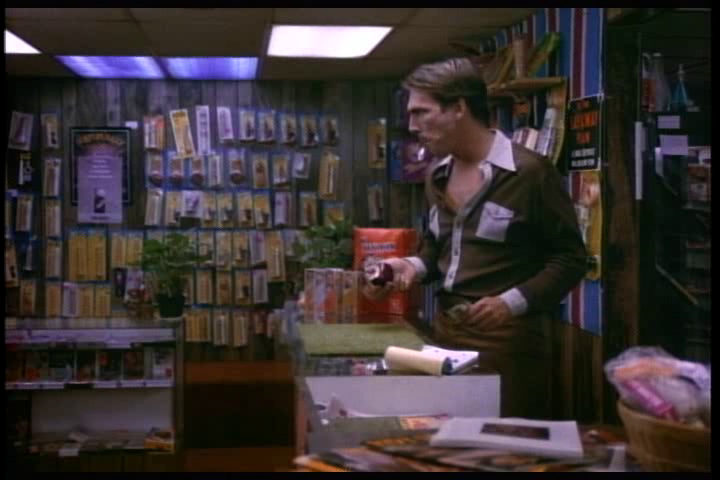
Today’s cinema adventure: Eating Raoul, the dark 1982 low-budget satire which became a surprise hit and helped to start a wave of goofy “camp” comedies that pervaded the rest of the decade.  Director/co-writer Paul Bartel, an exploitation cinema veteran, also stars with longtime friend and frequent co-star Mary Woronov as a married pair of sexual squares who lure “swingers” to their Hollywood apartment and kill them with a frying pan in order to finance their dream of opening a restaurant.  Macabre as the premise seems- and in spite of a plot which features such elements as rape, serial murder and cannibalism- the film is kept light and fun by a healthy dose of good-natured kitsch and by its ridiculously over-the-top portrayal of the lurid “swinger” culture and its sexually liberated denizens.  Bartel and Richard Blackburn’s screenplay is loaded with pseudo-shocking dialogue which exploits the ridiculousness of both prudish repression and extreme sexuality, peppered with great deadpan one-liners, and thematically unified by an exploration of the depravity hiding just under even the most respectable-seeming surfaces.  Clever writing aside, the primary factor in the film’s success is the charm of its leading players: Bartel is somehow likeable and endearing despite his pompously indignant and über-nerdy persona; former Warhol “superstar” Woronov is a complex confection, undercutting her character’s uptight austerity with smoldering sensuality and a girlish vulnerability; and the chemistry between these oddball stars is palpable- they are clearly driven by the same skewed vision.  Rounding out the main cast is Robert Beltran, equally charming and sympathetic as Raoul, the hot-blooded Latino hoodlum who attempts to blackmail and come between the couple- and whose ultimate fate is foreshadowed by the tongue-in-cheek title of the film.  In addition, there are some delightful cameos by comedic masters such as Buck Henry, Ed Begley, Jr., and the incomparable Edie McClurg.  The sordid proceedings play out against a now-nostalgic backdrop of seedy Los Angeles locations, accompanied by a quirky and eclectic soundtrack and driven at a brisk pace by Bartel’s quietly masterful direction.  Don’t get me wrong here- Eating Raoul is by no means a masterpiece, even in the world of underground cinema- it lacks the anarchic, subversive edginess of a John Waters film, and its “shocks” are pretty tame, even by 1982 standards- but it is nevertheless a delight to watch, perhaps because for all its satirical snarkiness and its unsavory subject matter, there is an unmistakable sweetness at the center of its black little heart.

http://www.imdb.com/title/tt0083869/

Prometheus (2012)

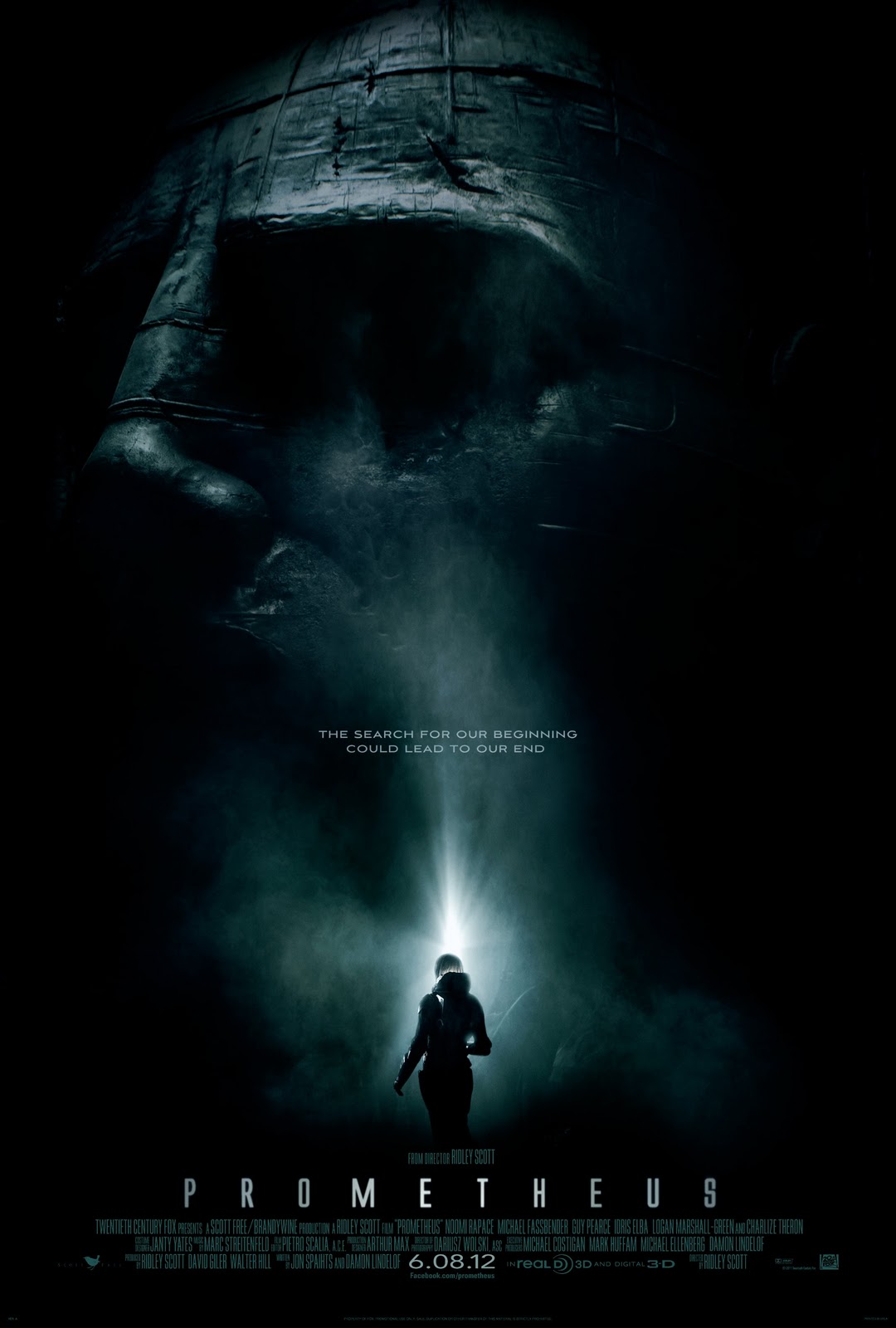
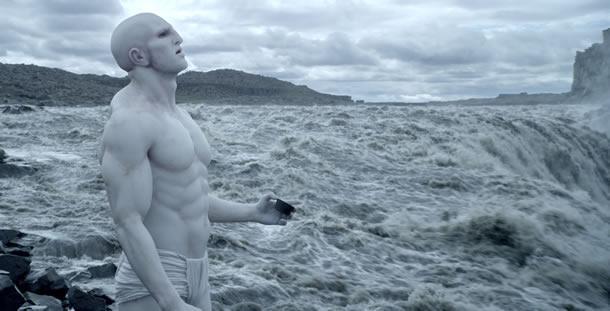
Today’s cinema adventure: Prometheus, the 2012 sci-fi thriller that marks the return of director Ridley Scott both to the genre and to the film franchise that made his name. A prequel of sorts to his 1979 classic, Alien, it follows the fate of a late-twenty-first-century space expedition which journeys to a distant planet in search of answers to the secret of human origin, revealing (partially) the background of the terrifying race of creatures that inhabited the earlier film and its sequels- but also establishing its own internal mythology, with a plot and a purpose completely independent of its predecessor, and tackling deeper, far-reaching philosophical themes along the way. Indeed, director Scott makes it clear from the very first frames that he has greater ambitions than just making a straightforward science fiction adventure: the opening shot is a direct copy of the one used by Kubrick in 2001: A Space Odyssey– in fact, the entire credits sequence is reminiscent of an important scene from 2001, and throughout Prometheus there are countless echoes- some huge, some tiny- from that venerable masterpiece. This is appropriate enough, given that Scott’s film shares many of the central themes from Kubrick’s landmark opus, such as man’s continuing quest for knowledge and his uneasy relationship with the technology he has created to aid him in that quest; indeed, the central plot (the discovery of artifacts from earth’s ancient past leads to a space mission and a confrontation with the mysteries of our creation) is essentially the same in both films. Scott, however, working from the screenplay by John Spaihts and Lost co-creator Damon Lindelof, offers his own interpretation of these ideas; his is a much darker vision of our species and its place in the universe, and one which reflects the change in our collective consciousness in the 45 years since Kubrick made his film. In place of Kubrick’s somewhat ironic vision of a future shaped by nuclear age optimism and practicality, we are given a universe more closely resembling the one seen in Scott’s earlier visits to this genre: a place in which human flaws such as ego, greed, hostility, mistrust and duplicity run rampant; and where these qualities not only threaten to undermine the greater purpose but are seen to be shared by the very creative forces that shaped us. Not that Scott gives us a universe without hope- far from it. In Prometheus, hope is arguably the central issue, and holding onto it in the face of bleak nihilism can be seen as the one saving grace of our species- coupled with undying curiosity and armed with the knowledge of what has come before, it can keep us going even when there seems no purpose for doing so. In a way, Prometheus offers us an even more inspiring conclusion than 2001, suggesting that the secret of man’s creation and continuing renewal lies within ourselves, alongside the very seeds of our own destruction- no matter what our origins may be, we are self-determining creatures and not just pawns observing a cosmic waltz in which we may be a mere side effect.

All this conjuring of the spirit of 2001 may be justified by the needs of Scott’s intellectual premise, but it also serves as a means to pay homage to his cinematic influences; the visual and thematic reflections of Kubrick’s film are just the most obvious of his tributes to the works of those who have shaped his own vision, from the overt use of Lawrence of Arabia as an inspiration for one of the central characters to the more subtle nods in the direction of such diverse movies as Citizen Kane and Forbidden Planet. With such a pedigree, it would be nice to say that Prometheus is a worthy successor to the masterworks tagged within it; but despite its lofty goals, it is a film which suffers from the all-too-common malady of formula. The cinematic building blocks so reverently placed by Scott seem to promise a work of intelligence and depth- which, for the most part, he has given us- but as the plot unfolds towards its predictably cataclysmic conclusion, his movie falls into the familiar repetition of patterns we have seen ad infinitum: the characters’ fates can be foreseen from their virtues or flaws in the same way we can tell that the bad girls are going to get offed in a slasher film, pivotal plot elements are introduced with so many red flags we can instantly see where they will lead, and, of course, anyone familiar with the original Alien and its sequels will know from the outset where the story is headed, reducing the entire experience to a detached exercise in answering questions left over from the previous franchise entries. In addition, the level of tension, so expertly built and maintained by Scott in his original film, is here allowed to rise and fall so often and with so little payoff, that by the end we are not so much excited as we are mildly curious to see how things will finally play out. Furthermore, the insistence on maintaining a rigid connection to the concrete realism dictated by its cookie-cutter storyline prohibits the director from diverging from his linear plot into the absract flights of fancy that made 2001 such a groundbreaking work and prevents him from taking his cosmic themes into an esoteric realm where they can be more fully explored.

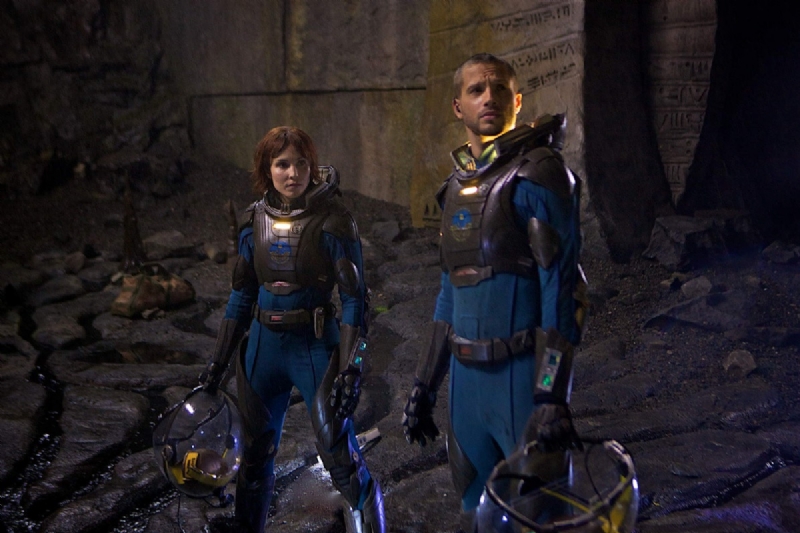
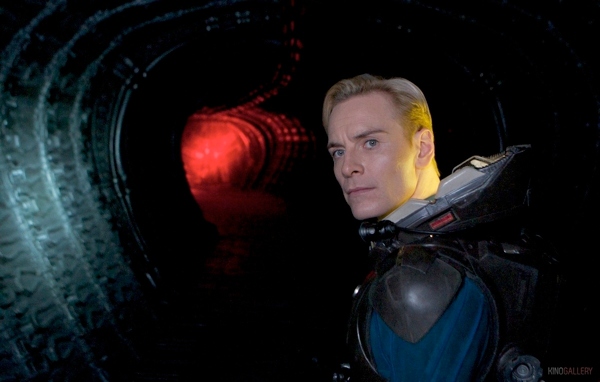
Don’t get me wrong: by any standards, Prometheus is a well-above-average film, an ambitious labor of love by a director of considerable talent; considering that its development and production history reads like an indictment of all that is wrong with the Hollywood process today, the fact that it offers so much substance along with its profit-minded formulaic plot is a miracle in itself. Scott has always been a director with remarkable gifts, particularly in visual terms, and this film certainly lives up to his reputation; it combines the immediacy of Alien with the elegiac reflection of Blade Runner; and, like both those examples, creates a stunning, immersive world for us to experience. Superbly photographed in 3-D by Dariusz Wolski, Prometheus presents a brilliant blend of its own shrewdly futuristic design and the H.R. Giger-inspired bio-technical look of the original Alien; and, to draw another comparison with 2001, it sets a new standard for special effects, with a look and a feel derived from dedication to the artistic purpose of the whole, not merely from a desire to dazzle us. This accomplishment is achieved, under the supervision of production designer Arthur Max, by a seamless blend of CG, traditional camera trickery, and live action footage, and it yields countless examples of big screen imagery which are surely destined to become iconic. All this technical wizardry is not wasted, notwithstanding the quibbles which mar the film’s narrative: Scott rises to the occasion throughout, creating moments of breathtaking beauty and visceral terror- in fact, the film’s most effective scenes (particularly a medically-themed sequence near the climax) are those which resurrect the creepy, primal body-horror around which the original was based and the fear of which is never far from our minds from the moment the exploration team lands. Aiding him in his struggle to rise above his mundane material is a fine cast which includes superb work from Charlize Theron (proving once again that she is Hollywood’s reigning ice queen), Idris Elba and Guy Pearce; standing out above the rest is the hypnotic Michael Fassbender, who provides further evidence of his substantial talent as the film’s most memorable and enigmatic character; and in the central role, Noomi Rapace makes a convincing transition from idealistic scientist to determined survivor, stirring favorable comparative memories of the franchise’s original heroine, Sigourney Weaver. The one sour performance comes from Logan Marshall-Green, whose hot-shot demeanor and club-rat looks make him not only unconvincing as a world-class scientist but also unlikable as a hero and poorly matched with Rapace’s much more sympathetic personality.

Prometheus has been anticipated as one of the year’s biggest film events, with much hype and secrecy surrounding its content and high expectations for both critical and commercial success. With all that pressure, it is not surprising that it has met, so far, with mixed reaction: hardcore fans of the genre have expressed disappointment with its emphasis on esoteric elements instead of on providing concrete answers to the mysteries it presents- many of which are left unrevealed, begging the development of a sequel despite the insistence of its makers that it is meant to be a stand-alone project- and serious-minded filmgoers have complained (as I did) of the reliance on cliché and formula in a plot which keeps it from fully realizing its higher goals. In the long term, who can really say where it will stand in the estimation of future cinemaphiles? What is certain now is that audiences seem to love it or hate it, which for me has always been the surest sign of artistic success. Summing up my own opinion, I would have to say that I loved it- with reservations. I can’t guarantee that you will share that view, but I can tell you that it’s worth a trip to your local theater to find out for yourself. You may not be satisfied, but you will almost certainly be stimulated and provoked, and isn’t that what art- and cinema in particular- is all about?

http://www.imdb.com/title/tt1446714/

;

Paris, Texas (1984)

Image

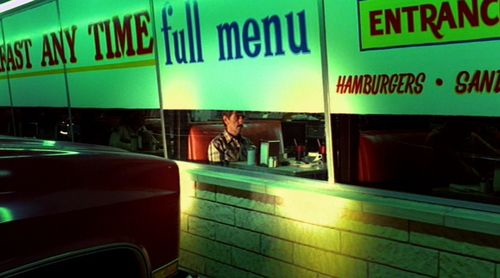
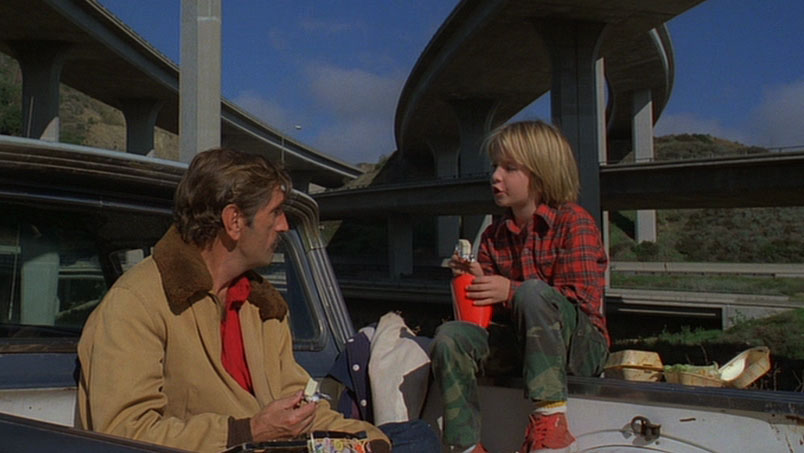
Today’s cinema adventure: Paris, Texas, director Wim Wenders’ elegiac drama that swept the 1984 Cannes Film Festival and has consistently remained on most critics’ “Best of” lists ever since.  Adapted by L.M. Kit Carson from a screenplay by esteemed playwright Sam Shepard, it tells the story of Travis, a middle-aged man who walks out of the Texas desert after disappearing for four years and, after reuniting with his brother’s family, slowly begins the effort of restoring his shattered life.  Through this simple synopsis, Wenders executes a masterful, character-driven exploration of subjects, allowing the mystery of Travis’ past to unfold through the players’ interactions and reminiscences as they take awkward steps to move towards an uncertain future- and using the microcosmic drama to stir powerfully resonant themes and conjure deep, universal emotions.  A collection of superb performances makes it all work beautifully, from veteran character actor Dean Stockwell as Travis’ well-meaning brother to newcomer Hunter Carson (son of the film’s screenwriter Carson and actress Karen Black) as the child rebuilding a relationship with a father he doesn’t remember; Nastassja Kinski, whose star turn doesn’t come until late in the film, beautifully captures the emotional fragility of a woman confronted with a past she has tried to forget (though I can’t help nit-picking that her German accent sometimes distorts an otherwise acceptable Texas drawl).  It is, however, the remarkable presence of Harry Dean Stanton, as Travis, upon which the film hangs: from the opening moments when he purposefully stumbles out of the blasted Texas landscape, he is utterly compelling, allowing his droopy, hang-dog features and his simple, unaffected delivery to express a dazzlingly complex spectrum of emotions.  It is a performance which few actors could accomplish, and the fact that it was not even nominated for an Oscar is one of those glaring omissions that makes the entire idea of Hollywood awards seem suspect and vaguely ridiculous.  Beyond the cerebral and emotional riches provided by Paris, Texas, it delivers a visual beauty thanks to the stunning cinematography of longtime Wenders collaborator Robby Müller, which captures a remarkable array of iconic American backdrops- the dusty vastness of the southwestern desert, the scenic experiences of the endless cross-country highway, the bland familiarity of suburbia, and the contrasting elegance and squalor of the big city- giving this jointly-French-and-German-produced film a distinctly American flavor rarely captured by domestic cinema.  Despite these lavish praises, this movie is probably not for everyone: viewers with a short attention span may find the leisurely pace a bit grueling (particularly in the climactic sequence, which is comprised mostly of long, lamenting monologues performed in a claustrophobic setting), and those who seek a clear-cut, definitive resolution from their entertainment may be left unsatisfied by the mixed emotions which cascade around its ambiguous conclusion.  Nevertheless, it is hard to imagine a more exemplary piece of filmmaking than Paris, Texas, and it is easy to see why it became one of the most influential and revered pieces of cinema to come out of the eighties.

http://www.imdb.com/title/tt0087884/