The Ritz (1976)

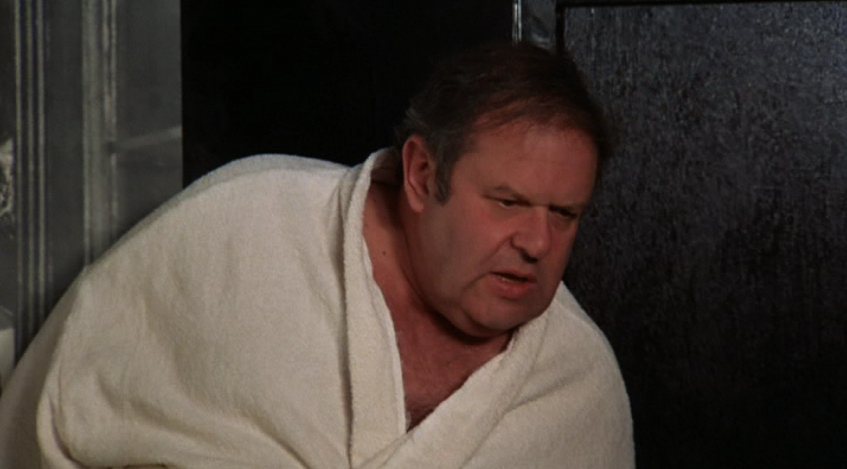
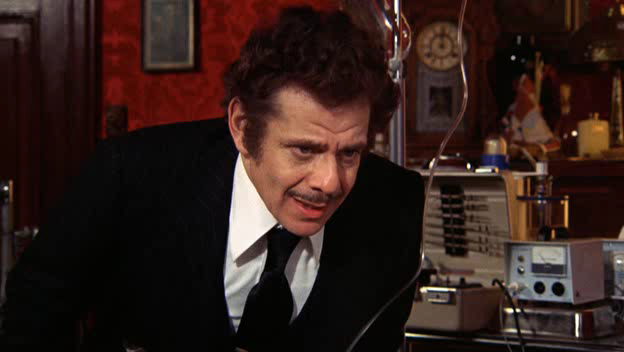
Today’s cinema adventure: The Ritz, the 1976 screen version of Terence McNally’s daring-for-its-day stage farce about a straight Midwestern businessman who hides out from his homicidal brother-in-law by checking into a gay Manhattan bathhouse. Directed by the legendary Richard Lester (known for a fast-paced, edgy style that made The Beatles A Hard Day’s Night into an instant classic) with a screenplay by the playwright himself, the film has aged into something of a curiosity of its time- a glimpse at bathhouse culture during the heady pre-AIDS era of the sexual revolution. McNally (who has become something of a gay poet laureate) made the brilliant move of taking the formula of a classic farce and placing it into what was at the time (and, sadly, to an extent, still is) a socially taboo setting; the result was a risqué piece of popular entertainment which brought underground gay culture into the spotlight and ostensibly took a small step towards making homosexual subject matter more acceptable for mainstream audiences. Unfortunately, by virtue of the requirements of the farcical genre, the characters (both gay and straight) are one-dimensional stereotypes which seem tired and offensive today, and the comedy has been rendered considerably less amusing by years of over-exposure to TV sit-coms in constant rotation. The highlight of the film is undoubtedly Rita Moreno, reprising her Tony-winning Broadway performance as Googie Gomez, a fiery Bathhouse Betty who gets caught up in the intrigue and (fortunately for the audience) performs a deliciously over-the-top lounge act for the boys; also of note are her Broadway co-stars, Jack Weston (as the hapless refugee), Jerry Stiller and future Oscar-winner F. Murray Abraham (as a flaming, self-appointed tour guide who manages to be likeable despite the heaping load of gay clichés he is required to carry), and an amusing turn by a young Treat Williams as a naïve (and squeaky-voiced) private detective. The rest of the cast fill their roles sufficiently well, Lester’s direction is sure-handed, and the look and feel of the seedy setting are captured quite authentically- but in 2012, the edge which once made it all so delightful has become painfully dull. The bottom line: as a piece of social and theatrical history, The Ritz is definitely important enough to warrant a viewing; but if you are just looking for some laughs and entertainment, you might want to skip it- or, better yet, fast forward to Rita’s scenes and just watch those.

http://www.imdb.com/title/tt0075144/
Woman in the Dunes/Suna no onna (1964)

Image

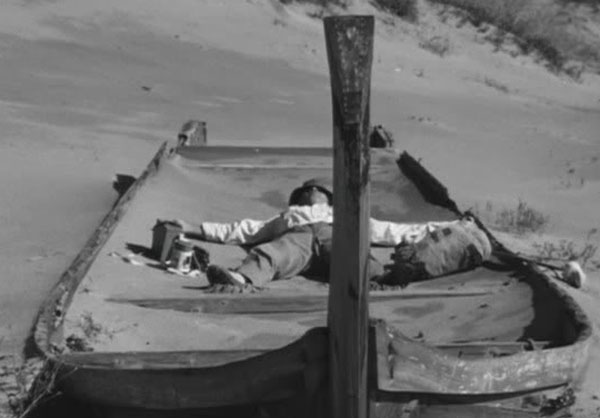
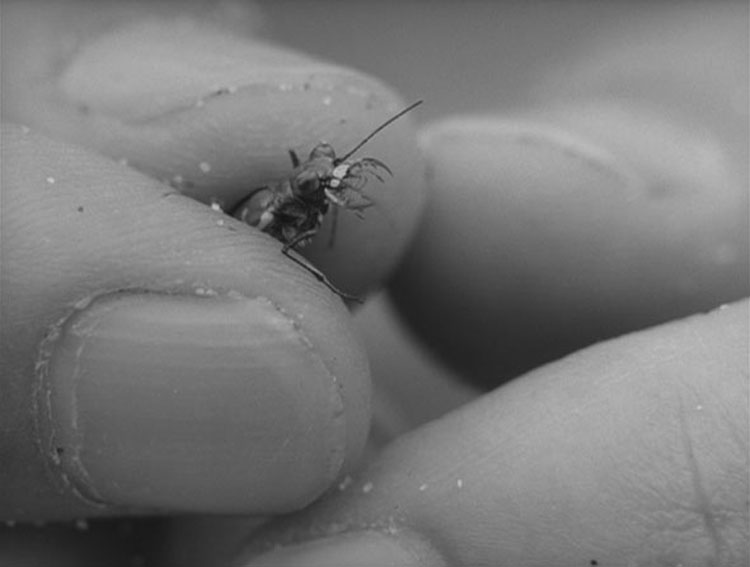
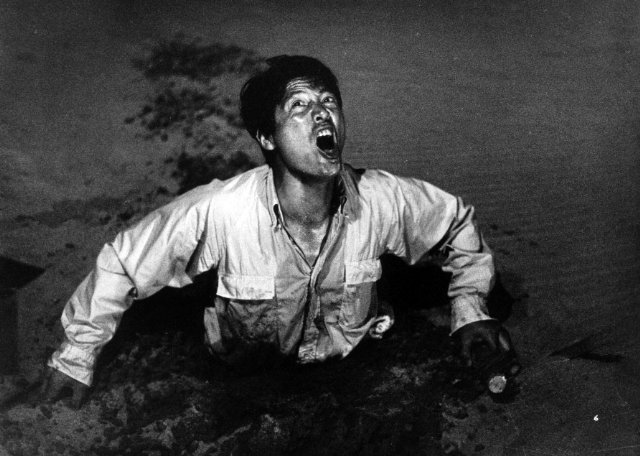
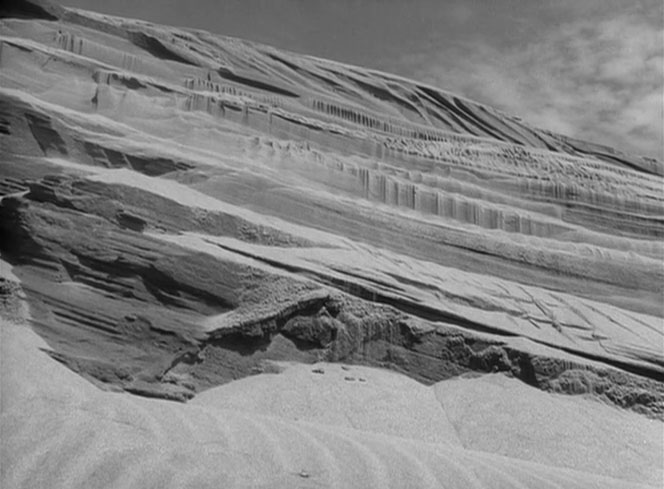
Today’s cinema adventure: Woman in the Dunes the strikingly photographed 1964 avant garde feature by Japanese filmmaker Hiroshi Teshigahara,  Adapted by Kōbō Abe from his own novel, it’s a deceptively simple parable about an entomologist on a field expedition to collect specimens at a remote beach; when he misses his return bus, he seeks shelter for the night with a young widow in a local village- only to find himself trapped into remaining as her companion in a life of endless labor, shoveling sand from the quarry in which they live, both for their sustenance and to prevent their house from being buried.  Within the framework of this premise are explored a multitude of giant, deeply reverberating themes, ranging from the contrast between the masculine and the feminine to man’s role in society to the very nature and meaning of existence itself- all of which plays out against the backdrop of the monumental, ever-shifting sand dunes, emphasizing the inexorable dominance of nature and the universe and transforming the primal landscape into a central character of the drama.  The performances of the two principals (Eiji Okada and Kyoko Kishida) are superb, helping to create the delicate balance between realism and symbolic fantasy that propels the film- but the true star here is the magnificent black-and-white cinematography of Hiroshi Segawa, which not only captures the fluid, omnipresent sand in remarkable, crystalline detail, but conveys a sense of tangibility to every texture in the film, from the salty grit which covers every surface to the smoothness of the players’ skin, making the viewer’s experience highly visceral- and erotic.  One of those world cinema classics that is a staple in film classrooms around the world, the artistry of Woman in the Dunes is indisputable- some audiences, however, may find that its blend of existential absurdism and Zen austerity creates a cool detachment that prevents emotional involvement in the action.  Nevertheless, as an intellectual and philosophical exercise- and as piece of stunning visual artistry- it’s a film which packs more than enough power to make its 2 ½ hour running time seemingly fly by.  A must-see for any serious film buff- but you may feel like you need a long shower to rinse off all that sand.

http://www.imdb.com/title/tt0058625/
Image

ImageImageImageImageImageImageImageImageImageImageImageImageImageImage

Raiders of the Lost Ark (1981)

Image

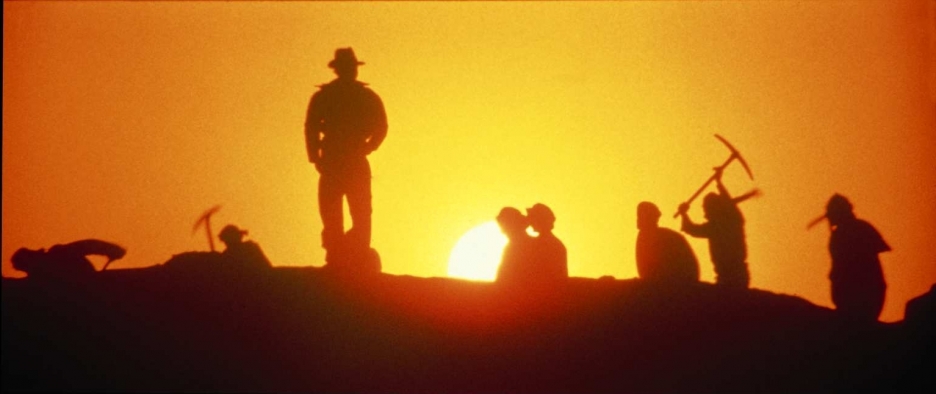
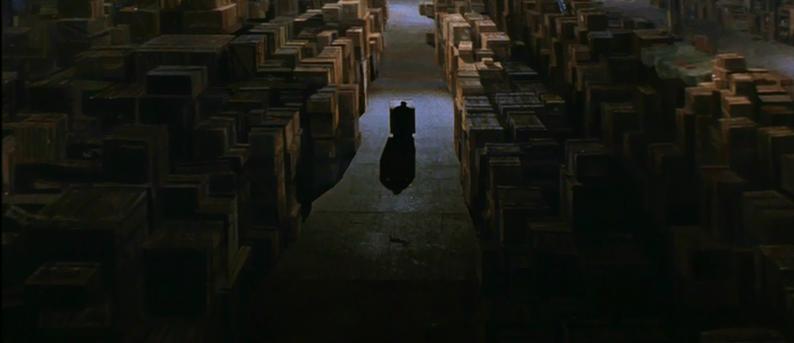
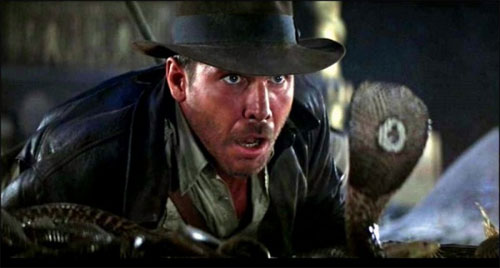
Today’s cinema adventure: Raiders of the Lost Ark, Steven Spielberg’s 1981 action-adventure-fantasy paying homage to- and gently spoofing- the cliffhanger serials of the thirties and forties- but with the benefit of a mega-budget and then-state-of-the-art special effects, courtesy of the powerhouse production provided by George Lucas.  It would be pointless and impossible for me to write anything like a critique of this film- it has passed beyond the realm of review and into cinema legend, and did so almost immediately upon release, becoming an instant classic and creating a brand new archetypal hero in Indiana Jones, the mercenary archaeologist/adventurer at its center.  It spawned a franchise of three (mostly inferior) sequels, countless unworthy imitations, and it made an icon of its star, Harrison Ford, whose roguish charm melds so perfectly into his character that it is literally impossible to imagine anyone else playing it.  And, on a personal level, it became a major touchstone in my young manhood, a cultural phenomenon into which I dove headlong, making any sort of objective viewpoint about the movie completely irrelevant.  What I will say is that, after several years since my last viewing, the movie holds up brilliantly, seeming just as fresh and fun as it was 30 years ago, managing a precarious balancing act between the serious tone necessary to sustain its premise and the sly, unapologetic goofiness that keeps it fun and reminds us, constantly, that it’s only a movie- aided immeasurably by John Williams’ rousing, multi-faceted score, with its now-familiar thematic march, which is surely one of the greatest examples of the use of music to support and drive a film.  In addition, it struck me this time around that this movie represents Spielberg’s direction at its finest, the work of a young artist at the height of his powers, using his skills for the sheer joy of it- completely without pretense or the need to make any kind of statement, merely an expression of his own love of movie magic and an invitation to us all to share it with him.  Sure, you can quibble forever over the myriad gaps in logic and continuity that render the entire story ridiculous- an intentional element drawn from the grade-Z crowd-pleasers that inspired it- or you can point out the numerous visual and stylistic references to classic movies like Treasure of the Sierra Madre or Lawrence of Arabia, from which the director derived his filmmaking vocabulary; but those things don’t matter, in the final analysis.  “Raiders” stands on its own as a great achievement in filmmaking, a timeless tribute to movies themselves and a magic potion to rekindle- even if only for a couple of hours- the adventurous imagination of the fourteen-year-old in us all.

http://www.imdb.com/title/tt0082971/

ImageImageImageImageImageImageImageImageImageImage

2001: A Space Odyssey (1968)

Image

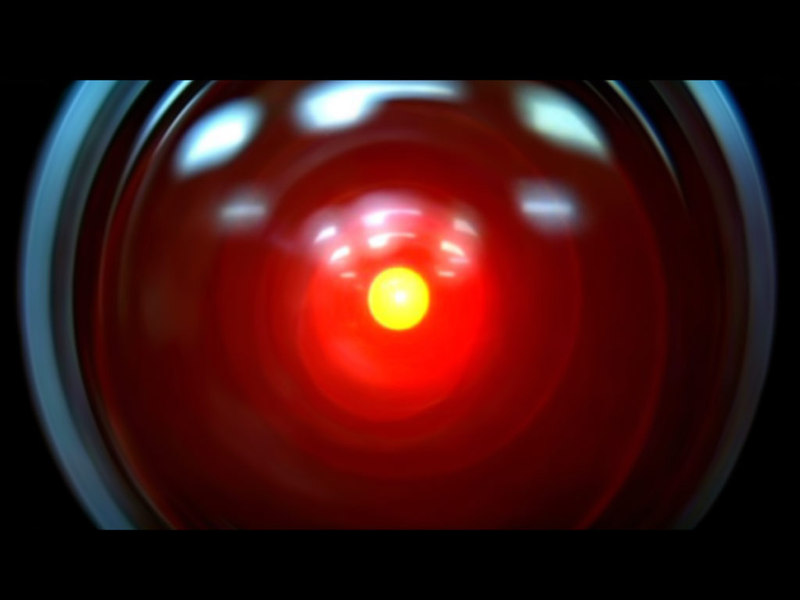
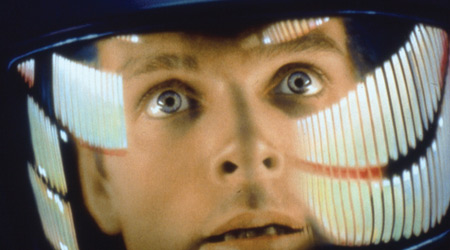
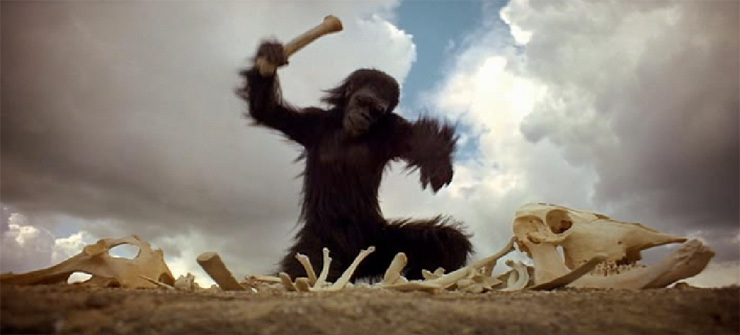
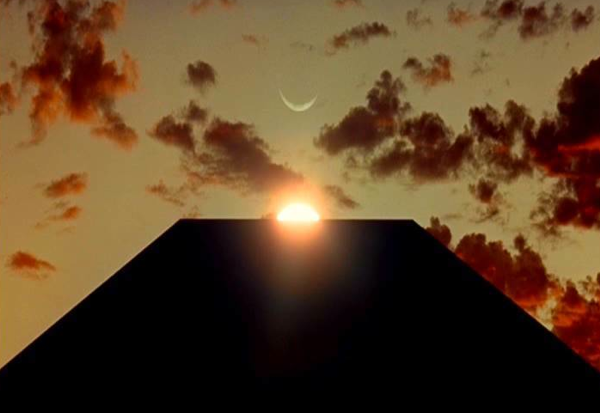
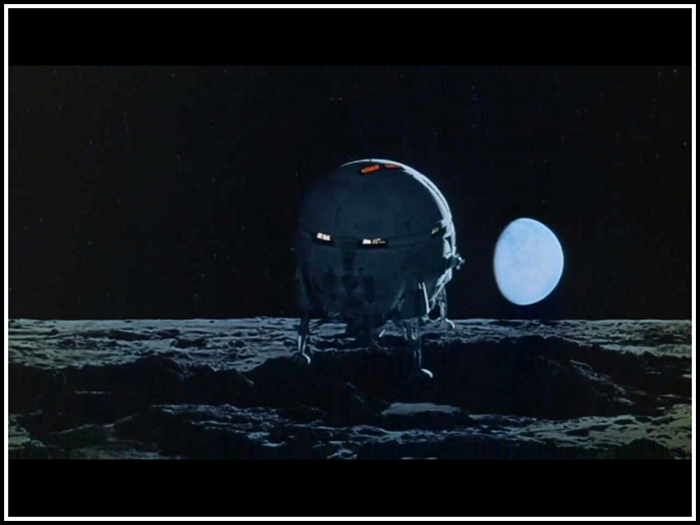
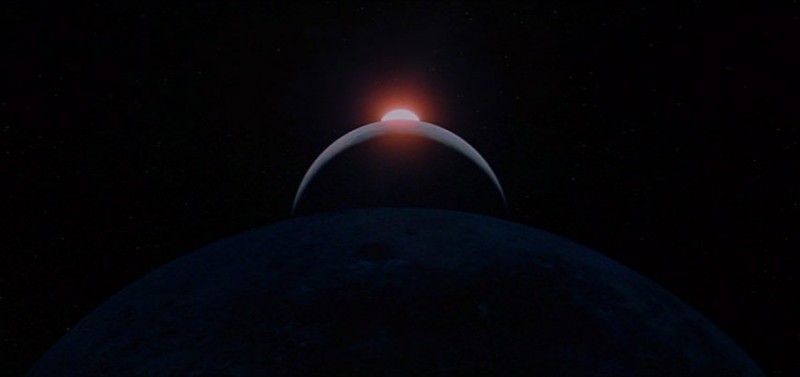
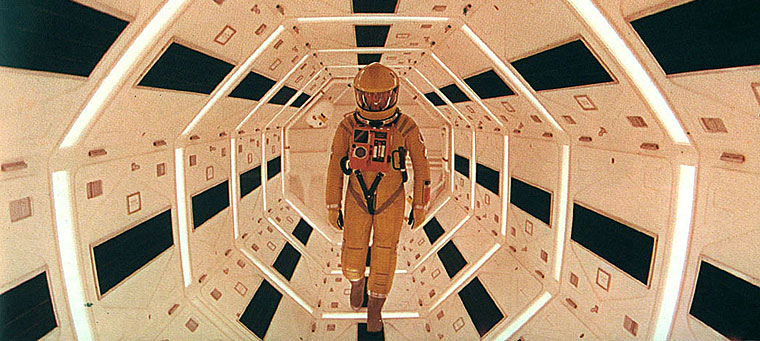
Today’s cinema adventure: 2001: A Space Odyssey, Stanley Kubrick’s landmark 1968 epic that not only revolutionized and legitimized the sci-fi genre but has come to be reckoned as one of the greatest English-language films ever made.  Working from his own screenplay (co-written by famed sci-fi author Arthur C. Clarke), which frames the expansive narrative as a sort of interplanetary mystery about the discovery of an ancient monolith and the subsequent space mission to learn its secrets, Kubrick’s mastery turns what could have been a B-movie potboiler into a breathtaking and hypnotic exploration of Man’s relationship with the universe.  With subtle, elegant simplicity, he opens up questions about our origins, our struggle to survive the threats posed both from without and within, our ability to adapt and utilize the knowledge we accumulate, the future towards which we are headed, and the nature of reality itself.  Don’t be fooled by the title into thinking that this film is dated- though the precision of the forecast may be a little off, Kubrick’s vision of the future is decidedly- even chillingly- apt (I defy anyone who knows this film to engage Siri on their iPhone without thinking uncomfortably of the infamous HAL 9000); and the special effects, designed by Douglas Trumbull, capture the immensity, the cold sterility, and the mechanics of space with an authenticity (and a beauty) that has yet to be surpassed, even in today’s CG-laden blockbusters.  I could go on and on about the ingenious use of sound, the now-iconic use of classical music for scoring, the stunning visual artistry which works on every level from the spectacular to the subliminal; and I could warn less adventurous viewers about the lengthy abstract climax which defies the logic of linear storytelling; but it seems far more useful to encourage anyone who has yet to see this cinematic treasure to do so ASAP- and preferably, if you are lucky enough, on a big screen as it was meant to be seen, as I did last night.  I can’t guarantee you won’t hate it- some do, for various reasons- but at the very least, you owe it to yourself to experience one of the masterpieces of contemporary cinema; and however you react to it, it will be sure to stimulate thought and conversation, and what more could one possibly ask from a work of art?

imdb: http://www.imdb.com/title/tt0062622/