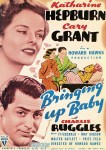
Bringing Up Baby (1938)

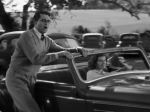
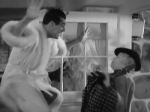
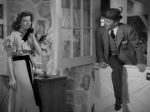
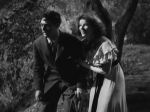
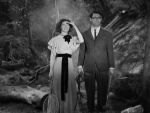
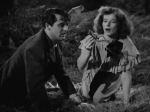
Today’s cinema adventure: Bringing Up Baby, the 1938 classic by director Howard Hawks, teaming Katharine Hepburn and Cary Grant as a pair of misfits who become entangled with each other in a complicated adventure involving (among other things) a tame leopard, a rambunctious terrier, a priceless dinosaur bone, several cases of mistaken identity, and a million dollars.  Despite good reviews and popularity with audiences in more sophisticated urban markets, it was a major box office flop upon its first release, leading to both its director and its female star being released from their contracts with RKO Pictures, the studio that produced it- indeed, Hepburn, who had headlined a string of financially disappointing movies, was labeled “box office poison” following this failure, and had to return to the Broadway stage in order to restore her reputation and her clout.  Nevertheless, a generation later, the film was rediscovered through the new medium of television, and has subsequently taken its place as one of the greats, a definitive example of the “screwball comedy” sub-genre, one of the finest vehicles to feature either of its iconic stars, and an influential piece of filmmaking that has inspired countless imitations and homages over the years.

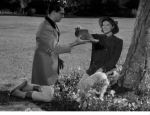
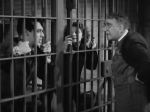
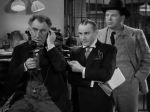
The plot, based on a short story by Hagar Wilde (who also co-authored the screenplay with Dudley Nichols), focuses on one David Huxley, a paleontologist who, on the eve of his wedding to no-nonsense colleague, Miss Swallow, is sent to secure a million dollar donation to the Manhattan museum for which they both work.   It seems an open-and-shut deal- all that is required is a meeting with the donor’s attorney, upon whose approval the money will be bestowed; but David’s appointments with the lawyer are repeatedly interrupted by Susan Vance, a dizzy young society woman who seems to turn up everywhere he goes- and whose precocious antics involve him in enough confusion and mishap to blow his chances at obtaining the money.  As it happens, though, Susan turns out to be the niece of the museum’s would-be benefactor- a wealthy widow named Mrs. Random- and she promises David (with whom she has become smitten) she will persuade her aunt to donate to the museum anyway.  She enlists his help, against his will and his better judgment, to accompany him to her aunt’s country estate in order to deliver a pet leopard (named Baby) that has been sent as a gift from her big-game-hunter-brother; once they arrive, more confusion erupts, starting with Susan’s false introduction of David as a mentally unstable friend of her brother’s, and complications continue to arise- including the theft of David’s precious brontosaurus clavicle by Mrs. Random’s dog, a mix-up between Baby and an escaped (and mean-tempered) leopard from a traveling circus, and the interference of a crotchety local constable.  Through it all, David struggles to resolve the situation and make it back to the city in time for his wedding, but it becomes clear that Susan is doing everything she can to delay him and keep him by her side.

A description of the plot, in print, seems ridiculously far-fetched and convoluted; that, however, is what gives Bringing Up Baby its zany appeal on film.  The entire movie is a whirlwind of unlikely circumstances and coincidental relationships, bound together by a premise that is as flimsy as one of the diaphanous costumes that Hepburn sports onscreen.  This is the nature of the screwball comedy; we take for granted that the scenario will be ridiculous, and as long as it yields the kind of laughs we expect, we don’t mind suspending our disbelief in the absurdity of its situations.  As scenarios go, that of Bringing Up Baby is more ridiculous than most- in fact it borders on the surreal, but we accept it without batting an eye, because it also delivers more laughs than almost any other film of its era- or any other, for that matter.  It certainly helps that director Hawks drives the proceedings at a breakneck pace, scarcely giving us time to think about the credibility gaps or even to register the fast-and-furious jokes until they have already passed us by.

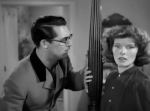
Much of the hilarity, however, arises from the chemistry of the two stars, perfectly matched and clearly relishing their roles; their comic banter arises so effortlessly as to belie the artificiality of the dialogue- indeed, the two performers ad-libbed some of the film’s best jokes- and they so completely inhabit their roles as to make us easily forget the many other personas they adopted on the screen over their long individual careers.  Grant in particular made a breakthrough here; his previous career had been mostly comprised of more-or-less dramatic (and none-too-weighty) leading man roles, and though he had previously appeared in The Awful Truth– another screwball classic in which he demonstrated his particular flair for comedy- nothing had prepared audiences for his work here.  Playing gleefully against type, the impossibly handsome Grant pulls off the role of the timid, nervous and befuddled bookworm without ever letting us doubt his awkward ineptitude; at the same time, he rattles off his barbed dialogue with the timing and wit of a master, making it clear that he is up to the challenge of sharing the screen with the formidable Hepburn.

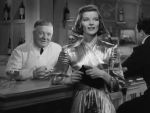
As for The Great Kate, it’s hard to see her performance here and understand why she should be deemed a liability by studio executives; her sharp, patrician bearing is brilliantly undercut with a little-girlish softness that makes her instantly lovable no matter how maddeningly daffy she gets.  Careening from haughty and indignant to doe-eyed and tender and back again through all stops in between, her portrayal of Susan drives the film and gives it a heart; and even when her behavior is at its most inane, her glittering intelligence always shines through, giving this upper-crust oddball an edge that leaves no doubt of her absolute control over the entire madcap situation.  She never overwhelms her co-star, however; the two make a magnificent team, one that is immediately recognizable as perfect for each other (a conceit on which, of course, the entire movie depends), and the obvious real-life affection between them translates into an onscreen chemistry that has rarely been matched and makes this pairing one of the most iconic co-starring turns in cinematic memory.

Perfect as they may seem in their roles, both of the stars initially had trouble with the project.  Grant feared being unable to project the necessary intellectual quality of a career scientist, and was only able to relax into the the character when director Hawks told him to base his performance on the persona of silent screen comedian Harold Lloyd; Hepburn was stymied by the over-the-top zaniness of Susan, and struggled with finding the right approach until Hawks asked veteran character actor Walter Catlett, who was playing a minor role, to coach her in the art of playing outrageous comedy- he taught her the effectiveness of underplaying and naturalistic delivery (as opposed to the more deliberately comedic style she was attempting), and she was so grateful for the help that she insisted his part- the town constable with whom she tangles in the film’s climactic scene- be expanded to give her a chance to work with him more extensively.  Their initial reticence allayed, both the film’s stars settled into the rhythm of their characters and created the sparkling joint accomplishment that makes Bringing Up Baby so delightful to this day.  Their enjoyment of each other is clear to see, and infectious; they had so much fun working together on this film that shooting went over schedule (and over budget) due to their difficulty in completing their scenes without laughing.  Though doubtless this was a thorn in the side of RKO executives who were already anxious over the project, the fun translates to the screen.

Apart from the obvious joys of Hepburn and Grant’s interplay and their attractiveness both individually and as a couple, there is a more subtle aspect to their dynamic that lends a unique flavor to the goofball romance at the center of Bringing Up Baby.  Grant, though decidedly masculine in his energy and personality, plays the passive, pursued role in this relationship, while Hepburn is clearly the active aggressor.  It seems a minor twist, but by reversing the traditional gender roles of courtship in such a way, Baby sets itself apart from most of the romantic comedies that came before it.  It would be wrong to credit the film for being the first work of fiction to do this- after all, Shakespeare wrote several plays in which this inversion was explored- but Hollywood has always been known for reinforcing stereotypes, and by swapping these accepted standards of masculine and feminine behavior Bringing Up Baby became a milestone in the depiction of gender identity on the big screen.

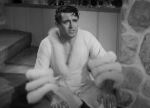
This in itself is enough to have given the movie a special significance for GLBT audiences; but there is another point of interest here for cinema historians which also gives the movie its “gay appeal.”  In one memorable scene, Cary Grant, dressed in a frilly and feminine house robe (having had his clothes stolen by Hepburn whilst showering), is forced to meet the returning aunt- a formidable dowager- at her own front door.  The understandably flustered woman, confused by the presence of a strange man in her house, presses him impatiently with questions, and most adamantly (for some reason, though it seems the least alarming aspect of the situation) she wants to know why he is wearing those clothes; the badgered Grant, already pushed to the limit of his patience by Hepburn’s continued hijacking of his formerly sedate life, leaps in the air and shouts, “Because I just went gay, all of a sudden!”  This line, ad-libbed by Grant on the set, may be the very first instance in mainstream fiction that the word “gay” was used to denote homosexuality, though within the underground gay community it had been used as a code word since at least the 1920s.  It may not have been intentional (though frankly, it’s unlikely that a group of Hollywood sophisticates such as these would be unaware of the double meaning- particularly Grant, whose famous long-term relationship with “roommate” Randolph Scott is still the subject of much debate among his many fans), but whether it was or it wasn’t, this bold double-entendre provides one of the biggest laughs in the film, and is yet another reason why Bringing Up Baby has been accorded landmark status.

Historical footnotes aside, there are plenty of reasons to watch this little gem of late-Depression escapism today.  Not only are Hepburn and Grant a rare treat to watch, they are supported by a fine cast of character players that bring to life the assortment of other lunatics surrounding the film’s dotty protagonists.  In addition to the aforementioned Walter Catlett, whose comically cagey turn as the rural lawman provides Hepburn with a magnificent foil late in the film, there’s Charlie Ruggles (as a mild-mannered and easily flustered hunter who turns up as a guest to Mrs. Random’s estate), Barry Fitzgerald (as a heavy-drinking Irish gardener, a bit of now-inappropriate ethnic profiling that nevertheless seems innocent of malice and manages to still be funny today), perennial screen waiter Fritz Feld (here cast as a smugly pompous psychiatrist whose path keeps crossing with Hepburn’s, adding to the already-convoluted tangle of misunderstandings), and the redoubtable May Robson (as the somewhat battle-axish Mrs. Random).

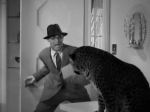
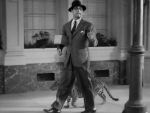
More vital than any of these notables, however, are the non-human members of the supporting cast, and they too deserve mention.  Nissa, the leopard, a veteran of numerous B-movie jungle adventures, plays the dual role of both Baby and the dangerous circus escapee; the other four-legged star, in the role of the mischievous bone-thief, George, was Skippy, a terrier whose fame as “Asta” in the popular Thin Man movies made him nearly as big a draw as the human headliners, and his appearance here is highly memorable, exhibiting the exuberant canine personality that made him a natural and ensured his place as one of the immortal screen animals.

On top of the performances, Bringing Up Baby offers a fine look at late-thirties fashion and design through its sets (a sumptuous blend of Art Deco and neo-classical influences alongside the elegantly rustic charms of the Random estate, overseen by the legendary Art Director, Van Nest Polglase) and its costumes (most particularly the various range of outfits worn by Hepburn, with which designer Howard Greer manages to add some sly satirical commentary on the frivolity of fashion into the movie’s comedic recipe).  In addition, tech aficionados may find some interest in the early special effects- quite sophisticated for the time- with which the actors are sometimes made to appear with the leopard in close proximity (especially Grant, who wouldn’t go near the creature- though the fearless Hepburn directly interacted with it and can even be seen petting it in a few scenes); in several of the split screen sequences, a moving center line was required, creating a complex challenge for the technicians of the day.  They rose to it admirably; the seams are virtually invisible to all but the most attentive observers.

Bringing Up Baby, it may be clear by now, is a seminal movie for me; I have fond memories of watching it on TV with my parents, all of us laughing out loud together, and through the years I have seen it countless times- I can practically recite the dialogue along with the actors, and yet a viewing will still have me giggling uncontrollably throughout, as well as discovering nuances and subtleties that I had never noticed before.  No doubt there are many others out there with a similar relationship to this film; it was, after all, one of the first movies selected for preservation by the Library of Congress, and it has been consistently named on lists of the 100 best or funniest movies of all time.  For most, it is the movie that comes immediately to mind when the term “screwball comedy” is mentioned, and for good reason- it’s about as screwball a comedy as you can get without veering into the realm of the Looney Tunes.  For those who have yet to discover its sublime wackiness, I will give away no more than I already have; and for those who feel their modern tastes are too sophisticated for a 75-year-old comedy to provide much amusement, I can only challenge anyone to sit through Bringing Up Baby without cracking at least a smile.  After all, it has been called more than once a movie ahead of its time- which may, better than anything, explain why a film that temporarily sank the careers of both its director and its leading lady (though not, tellingly, that of the resilient Cary Grant) went on to become one of their most enduring and beloved creations.

http://m.imdb.com/title/tt0029947/

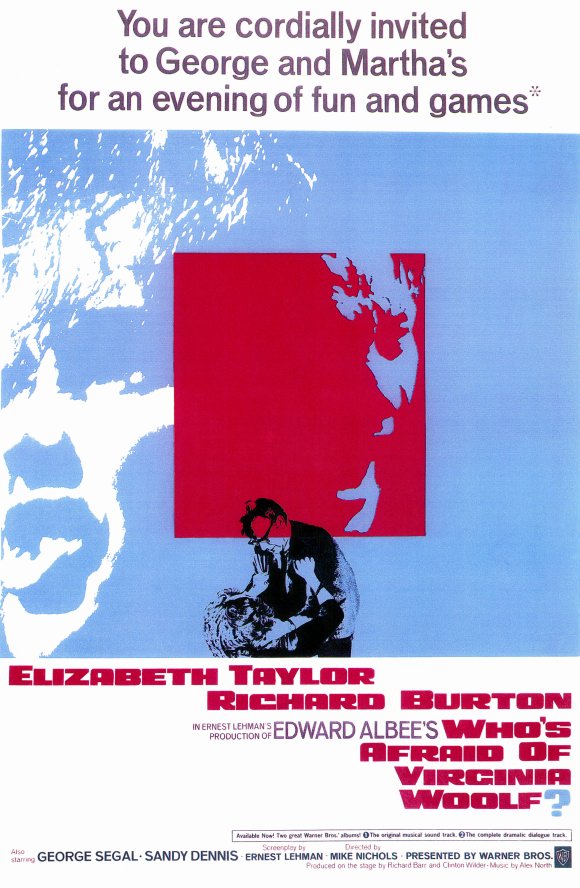
Who’s Afraid of Virginia Woolf? (1966)

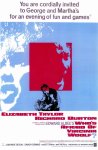
Today’s cinema adventure: Who’s Afraid of Virginia Woolf?, the auspicious 1966 debut feature from director Mike Nichols, based on the much-lauded Pulitzer-winning play by Edward Albee and starring the superstar husband-and-wife team of Elizabeth Taylor and Richard Burton.  Filmed during a fiercely guarded, top-secret nocturnal shoot, it was an eagerly awaited production which became an instant classic upon its release, and the intensity of its subject matter- particularly its then-shocking language- dealt a death blow to the antiquated Hollywood “decency” standards that dated back to the Hays Code of the thirties, leading instead- along with Antonioni’s Blowup– to the development of the MPAA rating system still utilized in the U.S. today.  In essence a powerhouse four-character showcase for tour-de-force acting, it depicts a single night of alcohol-soaked socializing between an older and a younger couple which becomes a vicious, no-holds-barred battle over the pent-up secrets, frustration, shame, and resentments that plague both marriages.  It garnered several major acting awards, including a second Oscar for Taylor, whose reputation as an actress was considerably bolstered by her remarkable, career-changing performance.

Faithfully adapted from Albee’s play by screenwriter Ernest Lehman, the story focuses on George, a middle-aged history professor, and his wife Martha, the daughter of the president of the small New England college at which he teaches.  As they are returning home at 2 AM from a faculty mixer thrown by Martha’s father, George is startled to learn she has invited a new, younger professor and his mousy wife to join them for nightcaps; though he resigns himself to their visit, he admonishes Martha against broaching any taboo subjects in conversation- particularly the impending homecoming of the pair’s teenaged son from boarding school.  When the younger couple, Nick and Honey, arrive, Martha belligerently defies her husband’s stricture, goading him into an ugly game of one-upmanship in which they both exploit every possible weakness to humiliate and hurt each other, even using their hapless guests as pawns in a dysfunctional war of wits that- it becomes clear- has escalated throughout their long marriage.  As the night progresses, their own secrets are laid bare, as well as a few of Nick and Honey’s, revealing the depth of their misery, the lengths to which they have retreated into fantasy, the extent of their verbal and emotional abuse of each other, and- perhaps most surprisingly- the intensity of the love that still endures beneath all the anger, lies, and recriminations.  By the time the sun begins to rise, both of the weary couples have undergone a purging of pretense and illusion that will leave them irrevocably changed- at least, presumably, until the next drunken faculty party.

When Who’s Afraid of Virginia Woolf? opened on Broadway in 1962, its frank and explicit dialogue, coupled with its overt sexual implications and it’s harrowing emotional intensity, led many audiences and critics to believe it was an unfilmable play.  Though it was hailed as a masterpiece, and won both the Tony and Critics’ Circle awards for Best Play, such was the controversy surrounding its content that though it was chosen by the Pulitzer judges as the winner of the prize for drama, the advisory board for the awards refused to present it, instead choosing to withhold that years’ prize in the category.   Nevertheless, Warner Brothers studio pursued the rights from playwright Albee, and despite protests and warnings from the Catholic Advisory Board and the MPAA, went ahead with plans to produce a film version that preserved the majority of the play in its original, undiluted form.  In the end, a few minor concessions were made (“Screw you” was changed to “God damn you,” at least in the American edit) and the script was abridged slightly for length, but, for the most part, the film version was released with its profanity and sexual content intact- and, perhaps unsurprisingly, became a major hit.

Although the publicity over its controversial content no doubt played a role in its box office success, Who’s Afraid of Virginia Woolf? has sustained its iconic status because it was never meant to be just a sensationalistic shock piece; the brilliance of Albee’s play crackles through every frame, with his dialogue virtually intact and his over-arcing vision maintained with an emphatic zeal for faithfulness.  Director Nichols, though already known as a wunderkind for his stage work, was making his film debut here; nevertheless he was given an unprecedented amount of freedom and control over the project, and his determination to translate the cathartic experience of the original work resulted in a film which brings the full, terrible power of the play to life.  Underneath the bombastic psychological warfare of its action, the saga of George and Martha’s walpurgisnacht is about the line between truth and illusion- more specifically, the dangers of living a life based on comforting lies and fantasy instead of frankly facing an unpleasant reality.  In mid-century America, it was a theme that hit very close to home; a generation after WWII, the cracks were beginning to show in the idyllic façade of the “American Dream,” and the growing discontent and disillusionment with its hollow ideals, which had long been voiced by the counterculture and its underground artists, had begun to find its way into the mainstream.  Virginia Woolf, with its portrait of a couple trapped in their nightmare of elaborate fictions and suppressed truth, provided a perfect catalyst for a nation afraid to face its own reality; and though its characters and setting are not overtly subversive, it is nevertheless a film which heralded the rise of anti-establishment sentiment in American cinema.  It’s telling that Nichols’ next movie, The Graduate, would be Hollywood’s first bona fide “youth culture” film to express criticism of the social status quo; Virginia Woolf is unmistakably cut from the same radical cloth.

As apt as this film was in capturing the zeitgeist of its era, the significance and power of its themes are undiminished by the passage of time; Albee’s magnificent play retains its relevance today, and this remarkable transcription of it seems as fresh and vital as if it were brand new.  Though its then-shocking profanity and its sexual frankness are now milder than much of our prime-time TV fare, the emotional intensity behind them makes for a fierceness that still leaves us reeling; it is not merely the saltier dialogue of Virginia Woolf that packs a punch, but the totality of its language- Albee’s dazzling symphony of words elicits responses on every level from the esoteric and intellectual to the visceral and primal, evoking laughter, horror, sorrow, fear, and every other conceivable reaction, in rapid succession and sometimes simultaneously.  By the end of this grueling evening of “fun and games” we are as stunned and exhausted as the film’s four characters, and like them, we are left facing the cold, unfriendly dawn in a world without illusions.  Of course, it’s not all dire depression and angst; Albee’s absurdist sensibilities are evident throughout, ensuring the continual interjection of ironic, dry, and dark humor, not to mention the considerable intelligence and wit he bestows upon his antagonistic protagonists.  Part of the great power of Virginia Woolf comes from its ability to elicit our laughter even as it is pummeling us with its existential themes and its social commentary.  Like the greatest of tragedies, it’s a play (and a film) that is full of out-and-out comedy, providing a much-needed release of tension and underscoring the ridiculousness of the human situation at the center of the drama.

Needless to say, the linguistic alchemy of Albee’s script would never work without the ability of a superb cast to bring it to life.  When Nichols chose Hollywood’s hottest power couple for the demanding roles of George and Martha, there was considerable skepticism over whether they would be up to the challenge.  Burton, of course, was well-established as a consummate actor, with copious legitimate training and a host of theatrical successes under his belt in addition to his film experience; his bride, however, was a different story.  Taylor had been a major star for two decades, and had previously proven herself as a superb actress (having already won an Oscar for her work in Butterfield 8, though many felt it was a sympathy prize); but she was primarily known for her remarkable beauty rather than her acting chops, and the role of Martha- a middle-aged, overweight, alcoholic harridan whose looks were meant to be faded, at best- was thought by most of the cognoscenti to be beyond her grasp.  Undeterred by preconceived doubts, the actress committed herself whole-heartedly to the part; she gained 30 lbs. in order to present the necessary voluptuous figure, and sank her teeth into Martha’s ugliness- both physical and spiritual- in order to do justice to the character.  Her embrace of these attributes does not result in a stereotyped, surface portrayal, however; her Martha is a monster, yes, but she is also every bit a woman- vulnerable, warm, loving, spiteful, frightened, jovial, capricious, calculating, and fully realized.  Taylor’s performance here is the crowning achievement of her career; far from being merely a star turn, it is an example of an actress claiming a role and making it so much her own that it is impossible to imagine another star playing it.  It probably goes without saying that her ferocity is matched at every step by her on- and off-screen husband; Burton, also giving a career-defining performance, gives us an unforgettable portrait of George, a character that has been described as an “angel with a devil’s tongue.”  Breathtakingly intelligent, unmistakably virile despite his crushing mantle of failure and disappointment, and compassionate behind the hostile irony of his icy mask, he takes us along on every step of George’s difficult journey, helping us to understand and to sympathize with a man who could easily come off as an impotent, disaffected snob, and making it clear that his task, like that of his sainted namesake, is to slay a dragon.  Together, Burton and Taylor become a force of nature, making George and Martha appear both as titanic archetypes of marital conflict and painfully real, fragile human beings, and convincingly conveying the familiarity and intimacy of a couple who have been through so much together they seem to think as one despite their embattled dynamic.

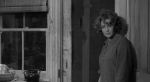
Though their roles are less showy, George Segal and Sandy Dennis, as Nick and Honey, respectively, are equally superb; as representatives of the younger generation, they enter the scene wearing the freshness and confidence of a new wave, seeming to embody the perfect picture of up-and-coming success that stands in stark contrast to the appalling discord of their hosts’ dilapidated lives.  It doesn’t take long for the shine to wear off, however; confronted with the harsh reality of their probable future reflected back at them in the grotesque form of their elders, their practiced poise begins to disintegrate, and their true natures begin to show through.  Segal’s Nick, hiding his own fears of inadequacy behind a smug golden-boy demeanor, lashes out with defensive hostility; while Dennis, a ball of barely-concealed insecurity as Honey, rapidly descends into a drunken spiral of infantile banality.  They provide the perfect foils for Burton and Taylor, helping to reveal the repeating pattern of self-deception at the core of the drama by giving us an example of a couple at the beginning of the cycle.  Dennis, like Taylor, won an Oscar, and both the men were deservedly nominated, as well, making this one of only three films ever to have gained Academy Award nominations for its entire credited cast (the others being Sleuth– the 1972 version, of course- and Give ‘Em Hell, Harry).

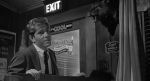
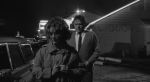
There are so many reasons to love Who’s Afraid of Virginia Woolf?: Haskell Wexler’s magnificently stark black-and-white cinematography, which captures beauty and blemishes in equally loving detail; Alex North’s haunting and evocative chamber-music score; the completely authentic setting which moves you part and parcel into George and Martha’s cluttered, musty world of booze and bric-a-brac, revealing them both as members of the intelligentsia and as the world’s worst housekeepers; and of course, overseeing it all, the sure and steady direction of Mike Nichols, who appropriately drives the piece like a master conductor presiding over a fine piece of music, finding new ways to position and move his camera, alternating between long, slow takes and short, bursting flurries, building the tension unbearably and giving the impression of heart-stopping action even though most of the film consists only of four people talking.  It earned him a place as one of Hollywood’s most respected filmmakers, and deservedly so.

Who’s Afraid of Virginia Woolf? is one of those all-too-rare instances when Hollywood has managed to transfer a brilliant stage play to the screen more-or-less intact and done it full justice; though producer Ernest Lehman takes screenplay credit, his work mostly consisted of editing Albee’s original down to a shorter running time and making a few minor adjustments to compensate for the marginally-reduced ages of its lead characters- virtually every word is Albee’s, and apart from moving a few scenes outdoors and taking the characters on an excursion to an all-night roadhouse for one key sequence, the setting remains the same, as well.  Ultimately, of course, the play is one of those masterworks, like Hamlet, which can probably never be given a definitive treatment; it continues to be mounted in theaters around the world and performed brilliantly by actors who bring their own unique individual interpretations to its iconic characters.  Even so, this important and influential film remains the version which, in the collective imagination of our pop culture, is identified as the ultimate representation of the piece.  Though other actresses may give us a deeper Martha, or other directors may find a more visionary approach to the material, this group of artists have left their indelible mark on Albee’s play, and if you only see one version of it in your lifetime, you couldn’t do better than this one.  If you have never seen it, you owe it to yourself to do so, as soon as possible; apart from the fact that it is one of the most important pieces of dramatic literature written in the last hundred years, it is also still one of the most searing, surprising and thought-provoking dramas you are likely to see, a far cry from most of the sterile, whitewashed, politically correct fodder that passes for adult entertainment today.

http://www.imdb.com/title/tt0061184/
The Phantom of the Opera (1925)

Today’s cinema adventure: The Phantom of the Opera, the 1925 silent horror film featuring the legendary Lon Chaney in his most famous and recognizable role; it was a troubled production, but it ultimately proved so successful that it sparked a two-decade reign by its studio, Universal, as the premiere source of horror on the big screen. Critics at the time were lukewarm in their overall response to the film, though most were impressed by its production values and visual style, but they bestowed unanimous acclaim upon the element which was- and remains- its greatest appeal: the electrifying performance of Chaney as the title character, and the still-terrifying makeup he designed to transform himself into a ghoulish human monster.

Based on the 1909 novel by French author Gaston Leroux, the film’s plot differs somewhat in its details from the one familiar to fans of the now-better-known stage musical based on the same source, but the general premise remains the same. The prestigious Paris Opera is haunted by a mysterious shadowy figure known only as “The Phantom,” who is, in reality, a grotesquely disfigured musical genius that dwells in a secret lair deep within the catacombs beneath the opera house. Becoming enamored of Christine, the understudy to the Opera’s temperamental prima donna, he coaches her singing from behind the walls of her dressing room, and begins to send threatening letters to the Opera’s owners demanding they allow her to replace their star onstage; when they refuse to cooperate, he sabotages a performance, crashing the grand chandelier into the audience, and then kidnaps his protégé, prompting a desperate rescue attempt by her lover, Raoul, and sparking a manhunt to capture the fiend and put an end to his reign of terror, once and for all.

This highly melodramatic plot has since been fleshed out by a numerous variety of interpretations, from the gothic horror approach of Hammer Studios to the campy glam-fantasy of Brian DePalma’s seventies cult classic, The Phantom of the Paradise; but this original screen version remains, nearly 90 years later, the most iconic. Though many in today’s world have never seen the film, it would be hard to find someone unfamiliar with the horrific countenance of Lon Chaney’s Phantom; his pale, grinning, skull-like features are still among the most recognizable in horror cinema, turning up in various forms of media throughout our popular culture- even on a postage stamp- and continuing to inspire artists and actors today in their efforts to terrify. Without question, unless you are a serious film scholar- or a hardcore completionist- Chaney is the only real reason for a modern viewer to see The Phantom of the Opera; his makeup alone is worth the time investment, an impressive creation of face paint and wire which caused him excruciating pain during filming. His appearance- the most faithful depiction of the character to date, as described in the novel- is so gruesome that audiences of the day reportedly leaped from their seats in terror, and some weaker spirits even fainted from the shock- though doubtless some of these incidents were embellished by the studio for publicity purposes. However, Chaney’s magnificently deformed visage is only part of his draw here; the reason he was one of Hollywood’s biggest stars was that he had an uncanny gift for making such monstrous characters profoundly human, finding their hearts and rendering them with a rare poignancy that ultimately made them far more sympathetic than the stiffly artificial performers that surrounded them. His work is a revelation for anyone whose conception of silent film acting is limited to the stilted, melodramatic style represented by most of his contemporaries; his gift shines through the antiquated techniques of the form, reminding us of the effectiveness of pantomime as practiced by a true master. He communicates volumes of complex emotion with his body language and tells whole stories with the subtlest of gestures. He presents such a clear portrait of the pain and sadness lurking beneath the phantom’s furious persona that we cannot help but be on his side, for all the mayhem he causes; he conveys the depth of this man’s tragic experience- the isolation, the ridicule, the self-loathing- that has led him to hide himself away from the eyes of the world, and he makes us hope alongside him that the beauty of his musical gift will be enough to make Christine see past his physical ugliness and fall in love with the tender soul it conceals. We know that it won’t work, of course, which only serves to heighten our pity for this miserable outcast, dangerously mad though he may be.

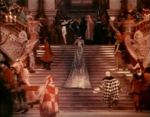
Thanks to the success of Chaney’s previous blockbuster for Universal, The Hunchback of Notre Dame, the studio knew they had a major asset; consequently they spared no expense in the preparation of this follow-up, building lavish sets of enormous scale upon which to play out the drama. The production design (headed by the uncredited Ben Carré) centers on a complete vision of the Paris Opera House, giving us its opulent interiors, its magnificent façade and spectacular rooftop, and the elaborate sets and costumes for its onstage production of Faust (which, appropriately enough, figures prominently in the plot), including a backstage view full of looming and ominous props and set pieces. As for its dark underbelly, the Phantom’s sinister hideaway is a splendidly imaginative mix of gothic gloom and regal refinement, with dark labyrinthine passageways that include such improbable elements as a horse and an underground lake, leading to residential chambers resplendent with elegant décor and devilish mechanisms. Adding to the visual bedazzlement, the film utilizes a the technique of monochromatic tinting to create moods and to differentiate settings- a fairly common method of the era, and a far cry from the drab look most modern viewers associate with the silent cinema, due to the decades in which only faded black-and-white prints of these films were available. Thanks to modern restoration, we are treated not only to the recreation of this effect, which greatly enhances the visual experience of the film, but also to the full glory of the two-tone color process used for the film’s centerpiece, a grand masked ball sequence in which the Phantom appears amongst the revelers costumed as the Red Death.

Apart from the scenery, though, when Chaney is absent from the screen we are left, for the most part, with little to hold our interest. Though it’s important to remember that the overwrought posing practiced by most of the other actors was the accepted technique of the day, and that the performers here were well-known, popular, and respected stars at the time, modern audiences are still likely to feel alienated rather than endeared by the likes of such primitive thespians as Mary Philbin and Norman Kerry, who portray Christine and Raoul, particularly when contrasted with the raw, timeless power of the film’s star. It’s not that they give bad performances- by the standard of the day, they were more than competent- but that they seem vaguely silly to us now, holdovers from the pulpy melodrama theatre which dominated American entertainment before the movies took over our collective imagination. Still, if one can get past the stylistic gap created by the intervening decades of changing fashion, it’s possible to see the talent on display here. There are some nice moments from Philbin, who was a lovely young woman, to be sure, exuding a sweetness and sincerity that seems particularly noticeable when she shares the screen with Chaney; and some of the supporting players provide memorable contributions, such as early Broadway star Snitz Edwards as a decidedly fey and cowardly stagehand who provides comic relief, and the uncredited Bernard Siegel as the Opera company’s resident “expert” on the Phantom. Kerry’s Raoul gets the worst deal, despite his then-much-heralded matinee-idol looks; his character is a stock, one-dimensional bore, and though he does give every effort to make some real feeling come through, his performance comes off as wooden and unimaginative, and the character seems almost dull-witted at times, making us root all the more for the Phantom in his efforts to win Christine away from him. Far more interesting is Arthur Edmund Carewe, who portrays Ledoux, a police detective secretly investigating the case of the mysterious opera ghost, who emerges just in time to become an ally in the quest to save Christine; despite the fact that the character was completely rewritten during the process of creating the intertitles- having originally been a Persian former associate of the Phantom now on his trail- and his scenes were filmed with a completely different backstory in mind, he still comes off better than Raoul, decisive, determined and brave. Barring her acceptance of the Phantom’s love, it would be better for Christine to fall for this hero, instead of the boring, moon-eyed stiff with whom she ends up.

The subject of Ledoux and his rewritten backstory brings up a major point in the discussion of The Phantom of the Opera- its tumultuous production history. Universal originally hired Rupert Julian, a prestigious director of stylish romances, to helm the project, but the shooting process was marred by his difficult relations with the cast and crew. Nevertheless, he succeeded in providing a final cut, more faithful to the novel’s plotline, including the mysterious Persian and keeping the original ending, in which the Phantom allows Christine and Raoul to leave together and remains in his underground hideout to die of a broken heart; unfortunately, the unfavorable reaction of preview audiences prompted the studio to embark on major rewriting and reshooting, without Julian (though his name was- and still is- retained as the credited director), which involved the creation of several subplots, new characters, more comic relief, and a different ending in which the Phantom is chased down by an angry mob and savagely murdered. Unfortunately, this version also bombed in previews, so the desperate studio scrapped most of it (though they retained the new, more “exciting” finale) and attempted to salvage the project by re-editing and rewriting the original cut (this is when the Persian became a Parisian police inspector). This time, it clicked, and the film was a huge hit- though, as mentioned, the critics found it somewhat mediocre, save for Chaney- and became a cash cow for Universal; in fact, it was so popular that upon the advent of sound a few years later, the studio shot new sequences (including more extensive scenes of the opera) and added a dubbed soundtrack featuring members of the original cast, except for Chaney (who was by then under contract with MGM). This version was also a success, but it has proven problematic for the film’s subsequent history; over the years, thanks to the negligence of the studio in preserving its original negatives, the only remaining prints of The Phantom of the Opera are a widely varying mish-mash of combinations from its different incarnations, making it virtually impossible to reconstruct its original form. As a result, the version now widely available contains material from both the final release cut of 1925 and the 1930 pseudo-talkie edition; sadly, there are sections which only survived in badly deteriorated form, making the contemporary version frustratingly patchy in its overall visual coherence. There are other inconsistencies, too, such as the use of a different actress as Carlotta (the opera’s prima donna) in the later version, a problem explained by changing the character’s former incarnation into “Carlotta’s Mother” for her retained scenes in the Opera managers’ office and billing the second actress (who appears only in the Faust performance scenes) as the actual “Carlotta.”

Despite all this, however, the current restored edition of The Phantom of the Opera preserves a valuable piece of cinematic history, and provides the interested viewer with a chance to experience the original screen version of this oft-filmed tale in a condition as close as possible to its initial, pristine form. Some of it is eye-opening, such as the important role of color in telling its story, a factor that was lost for many years; some of it, of course, comes up short of the expectation created by the film’s reputation, revealing the shortcomings observed by critics of the day, such as a somewhat shallow focus on spectacle and sensationalism at the expense of the deeper subtext inherent in its ultimately tragic tale, and the inclusion of certain bizarre, melodramatic elements designed merely to elicit audience response without consideration for their logic within the larger scope of the narrative. That said, it would be foolish not to take advantage of the opportunity to see this venerable classic, a film which has generated so much influence and so many imitators over the years that it has entered the realm of legend. Though the film itself may not live up to its legendary status, the performance at its center certainly does; in fact, seeing it today, Lon Chaney’s Phantom seems perhaps even greater than it did in 1925, as fresh and immediate as if it were filmed yesterday, despite the elevated style. This is a testament to his powerful gift, with which he was able to reach across the decades, even 80 years after his death, to touch our world with his understanding of the human soul.

http://www.imdb.com/title/tt0016220/
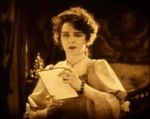
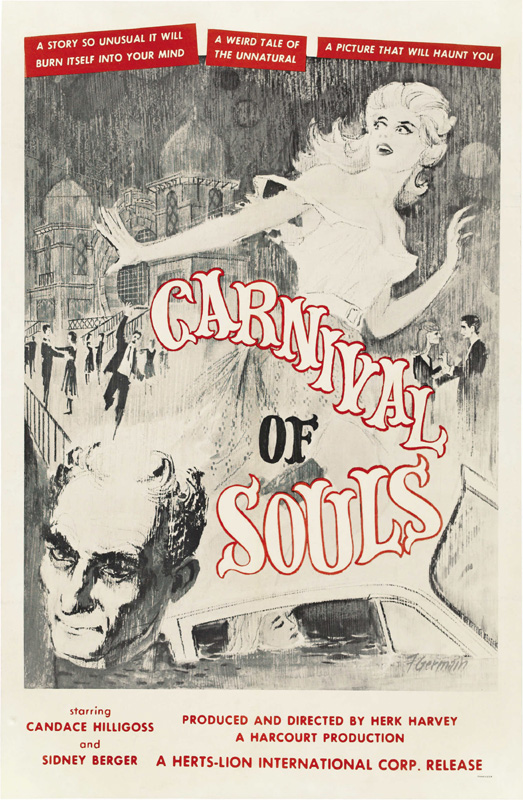
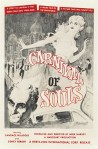
Carnival of Souls (1962)

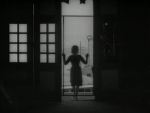
Today’s cinema adventure: Carnival of Souls, a 1962 low-budget horror film that was more or less ignored on its release, but which has gone on to become a highly influential cult classic.  Directed by Herk Harvey, a prolific lifelong creator of educational and industrial films who never made another theatrical feature, it was shot on location in Lawrence, Kansas and Salt Lake City, Utah, using a 16mm camera and reportedly with a budget of around $30,000- a cost which today would probably not even cover the price of the car that goes off a bridge in the first reel.  Needless to say, it’s a film that relies solely on atmosphere and cinematic storytelling to provide its scares, and the fact that it does so very well is no doubt responsible for its importance in the history of the modern horror genre.

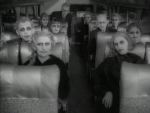
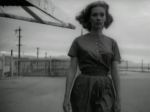
Despite its humble origins, the film’s screenplay, written by John Clifford from Harvey’s original story, is surprisingly sophisticated in its layering of thematic elements and even in the believability of its dialogue- considering the nature of its subject matter, that is.  The plot concerns Mary Henry, a young woman who works as church organist though she has no particular interest in religious sentiment.  A week before she is to begin employment in a new town, she becomes the only survivor of a car accident in which two of her friends are drowned.  Determined to go on with her life, she makes the trip to start her job as planned, but she soon finds herself being stalked by a mysterious specter- who cannot be seen by anyone else- and inexplicably drawn to an abandoned carnival pavilion on the shores of a local lake.  Her strangely cold and detached behavior, coupled with her increasing hysteria and delusional episodes, begin to alienate her new friends and associates, and she finds she must confront the mysteries that haunt her in order to escape them.  The story contains little action, per se; it mainly follows Mary as she attempts to start her new life.  Nevertheless, the tension builds steadily throughout, shrouded in a dreamlike surreality and accompanied by a tangible sense of foreboding.

Much of the film’s unsettling mood has to do with the locations.  Director Harvey supposedly got the idea for his movie while driving past the abandoned Saltair Pavilion on the Great Salt Lake in Utah.  Though most of the rest of the movie was shot in Lawrence, where he was based, he paid the Salt Lake City Chamber of Commerce $50 for one week of filming at the ruined location; it was a good investment, because the scenes in this eerie, decrepit monument to cheap thrills long past can stand with some of the creepiest images ever put on film.  It’s a marvelous symbolic element- a giant, decaying fun palace in the middle of a desolate wasteland, a haunted shell evoking the futility of the good times it once housed in the face of the eternal emptiness that surrounds it.  To put it another way, it’s an apt reminder that, in the midst of life, we are in death, making it a perfect metaphor for the uneasy thematic core of the film.

The majority of Carnival of Souls, however, takes place in the kind of quiet, small town setting that can so easily serve to conjure thoughts of malicious forces lurking beneath the mundane familiarity of its surface- particularly when captured in the stark black-and-white palette of Maurice Prather’s cheap-but-effective cinematography.  Sunlit parks or dark nighttime highways, a crowded nightclub or an empty church, a bus depot or a department store- no place feels quite right or completely safe.  Even before the car accident in the opening scene, the lonely country roads seem threatening, and from the moment Mary emerges, dripping, from the watery scene of the crash, we spend the rest of the film waiting for the drop of another proverbial shoe.

It would not be fair, though, to place all the credit for this oppressive creepiness on the happenstance of starkly-photographed scenery.  The film’s humble director was clearly a man with a vision, evidenced by the fact that he worked, without salary and with money he raised himself, to make Carnival of Souls in three weeks with a crew of five- including himself.  Though there is definitely a clunkiness in his cinematic style, this has more to do with the limitations of his budget than with his understanding of the craft or his talent; the abrupt edits and the sloppy continuity are at least partly the consequence of a tight shooting schedule and insufficient funds.  There is ample proof, throughout the film, of Harvey’s ability as a director; he frames his shots with an eye for arresting composition, and his instinct for pacing belies his lack of experience with narrative fiction.  There are numerous moments when his use of clever camera trickery parallels that of directors like Hitchcock- whose work he no doubt studied- and the overall sense of inexorable menace, though enhanced by the settings and the visual style, is ultimately achieved by his cinematic rhythm- leisurely takes punctuated by short, sharp shocks at just the right moment- and his choices of what to show us and when to show it.  To top it all off is his choice of musical accompaniment- an otherworldly organ score composed by Gene Moore, a natural extension of the heroine’s occupational duties which provides the perfect aura of fruity gothic gloom to the proceedings.

As for the actors, most of the roles are handled by local Lawrence “talent,” unprofessional actors acquainted with Harvey through his industrial work; admittedly, there are some embarrassing performances on display throughout the film, though Sidney Berger deserves a mention for his unexpectedly complex work as a loutish boarding-house neighbor who tries to woo the oddly disaffected heroine.  A nod must also go to director Harvey himself, who makes a personal appearance onscreen as the ghoulish figure who plagues Mary, sporting pale makeup and leering malevolently- which may sound easy, but requires a certain finesse to pull off effectively, which he certainly does.  Obviously, though, his movie hinges on the leading actress, and he shrewdly spent his casting budget there, hiring an unknown but highly-trained and experienced performer named Candace Hilligoss; strikingly beautiful and fully committed to her role, she carries the weight of the picture on her capable shoulders, convincingly playing a variety of far-fetched conceits and walking a thin line between ethereal detachment and frightened vulnerability.  It would be overstating the case to say that she gives a great performance, but it’s a good one- certainly much better than the vast majority of would-be starlet turns in this sort of sub-B-grade horror movie.

That, of course, is exactly what Carnival of Souls is, despite the considerable praise it may have garnered over the 50 years since its inauspicious debut.  It’s unquestionably the kind of lowbrow drive-in fodder that was churned out ad infinitum during its era- it’s just that Harvey’s enthusiasm and dedication make it several cuts above most of the others.  To be sure, there is a level of artistry here that is hard to define; it’s not quite accurate to call the director a talented amateur, and the film’s stylistic strength is not accidental- he definitely knew what he was doing.  Even so, the power of this strange little film may lie beyond the full scope of his intentions or abilities, and is perhaps rooted in the notion that lies at its heart, the one which ultimately provides its twist ending- predictable as it may be, in this day and age.  Beneath its bogey-man thrills, it conjures a profound despair, perhaps the result of touching on some deep, unnamable dread, leaving a disturbing feeling that lingers long past its final frames.  It is this quality, more than the diamond-in-the-rough technical prowess of its director, which has placed Carnival of Souls so highly in the esteem of modern horror enthusiasts and provided dark inspiration for later, greater filmmakers like George Romero, David Lynch, and Quentin Tarantino.

It probably goes without saying that by today’s standards, the fright factor of this film is very low; and by any standards, its production quality is ridiculously shoddy.  The average modern viewer will probably find it laughable, the kind of movie that has gained its popularity from falling into the so-bad-it’s-good category.  Certainly, a screening with a bunch of quick-witted friends would probably yield some pretty snarky zingers, and that’s a good enough reason to recommend it; but while you’re laughing, make sure you take a close enough look to admire the weird beauty that emanates from Carnival of Souls.  However jaded you may be, there is something there that demands attention and commands respect.

 http://www.imdb.com/title/tt0055830/

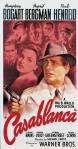
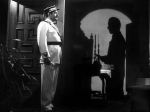
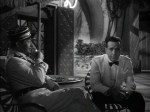
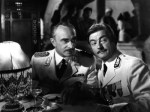
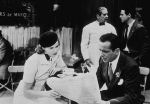
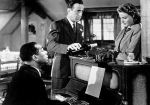
Casablanca (1942)

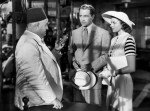
Today’s cinema adventure: Casablanca, the 1942 classic starring Humphrey Bogart and Ingrid Bergman as a pair of former lovers who are reunited amidst the turmoil and intrigue of the title city during the early years of World War II.  Frequently classified as film noir, this iconic gem is really more of a romance, though it shares many features- the cynical tone, the shadowy lighting, the focus on corruption and betrayal-  with the then-still-developing noir genre; but classification aside, the fact remains that Casablanca is one of the handful of films that can be indisputably called an iconic classic, an example of Hollywood’s golden era at its finest, and one of those cultural touchstones that never seems to lose relevance, despite the passage of years and the changing attitudes of society.  The reasons why are intangible; examining its elements individually, there seems no reason why it should have more power than any other relatively well-made pot-boiler of its time, and its production history was famously messy, with continual changes and second-guessing by its writers and producers that should logically have resulted in a complete muddle.  Instead it was, well, Casablanca.  It’s an example of one of those fortuitous combinations of people and circumstance that can only be ascribed to fate.

Though it may not be possible to fully explain the mystique of Casablanca, it is certainly easy to understand its initial success within a historical context.  It depicts a place where justice and decorum are merely a façade, creating the illusion of a level field in the deadly game of manipulation being played underneath; where sentiment and desperation are weaknesses to be exploited in the pursuit of shameless self-interest; and where law and diplomacy exist only to serve the powerful in the enforcement of their will.   In this cutthroat arena, Rick- a worldly-wise American expatriate- is the champion player, a representative of the “lost generation” who has transformed his disillusionment into a badge of honor, and who thrives in the niche he has carved for himself because he maintains a strict policy of isolationism- as he puts it, “I stick my neck out for nobody.”  It’s a strategy that works- at least until a romantic shadow from his past re-enters his life and forces him to choose between his self-protective shroud of indifference and a chance to use his position in the service of a greater good.  It was a perfect metaphor for an America that was hesitant about entering WWII after becoming jaded by the long and painful hardship of the Great Depression, and to make the allegory crystal clear, the story is populated by an assortment of international characters in various states of uneasy alliance with an ever-more-insistent Nazi presence.

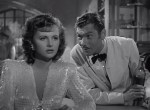
Of course, if Casablanca were only notable for its heavy-handed political parallels, it would never have stood the test of time and would be remembered only as a piece of pro-war propaganda.  It is so much more than that.  The backdrop of then-timely politics serves as a stage upon which a timeless and universal drama is played, in which a man, burned and haunted by the disappointment of his past, rediscovers his humanity; and the cornerstone which allows him to do so is also the primary reason for Casablanca‘s enduring popularity- the iconic romance at the heart of the action.  Rick and Ilsa are without question one of the most famous pairs of star-crossed lovers in the history of film, perhaps even more so than Rhett and Scarlett.  Their story tugs at the heart of anyone who has loved and lost- which means, of course, everyone- and the connection is all the stronger for those who have had the experience of losing it due to the intervention of larger forces beyond their control.  Seeing this tender couple, played so perfectly and with such exquisite chemistry by Humphrey Bogart and Ingrid Bergman, find their opportunity to be together in the middle of the momentous events swirling around them is both bittersweet and cathartic, and their famous, final exchange on the foggy nighttime runway is surely one of the most simultaneously heartbreaking and uplifting scenes in the history of cinema.

The romance may be the centerpiece of Casablanca, but Rick and Ilsa are fully realized characters on their own, too.  Bogart, though he had been active for years as a second-string movie thug and had recently made a promising splash in The Maltese Falcon, here established once and for all the screen persona which made him one of Hollywood’s most durable stars.  His Rick is the ultimate smooth operator, classy but rough-edged, sophisticated but down-to-earth, confidant but unassuming; one look and you know he is not only the toughest and most dangerous guy in the room, he’s probably also the smartest.  To complete the picture, his wisecracking irony and his stoic demeanor do nothing to hide the noble and sensitive heart that beats inside him; it is clear from his very first moments onscreen that he is a man of honor, kindness, and charity, no matter how enmeshed he may seem in the dirty politics of Casablanca, and when he is revealed as a romantic and a champion of the underdog, it comes not as a surprise but rather as a triumphant confirmation of what we already know.  It’s a role that seems tailor-made for Bogart, in retrospect, and it is virtually impossible to see how anybody else could have pulled it off.  Ingrid Bergman’s Ilsa, though not as defining a role for her as Rick was for Bogie, is nevertheless one of her most memorable creations; she is, of course, beautiful, but she also radiates sadness, nobility, compassion, and sophistication; at the same time, she wears her own shade of the resigned, hard-edged irony that colors Rick’s persona, and watching it melt away as their rekindled love transforms her into a passionate woman is one of the key elements of Casablanca.  Besides all that, she also deserves a lot of respect for being able to credibly deliver some of the most ridiculously corny lines ever written for an actress.

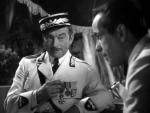
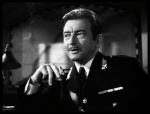
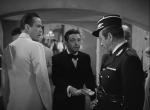
Of course, Rick and Ilsa are not the only memorable characters on the scene: the entire cast, comprised of several of the era’s most familiar stock players (many of whom were real refugees from the Nazi Reich), turns in superb and memorable performances, far too many to mention here.  It would be an unforgivable oversight, however, not to make special note of Claude Rains, as the charmingly corrupt police prefect, Renault, whose friendly rivalry and good-natured banter with Rick provides a grounding counterpoint to the love story, and whose heart of gold ultimately breaks through his cynical armor.  Also iconic are the delicious turns by film noir staples Peter Lorre and Sydney Greenstreet; the former as Ugarte, an unlucky black marketeer who seeks assistance and refuge at Rick’s nightclub (though he knows Rick “despises” him), and the latter as Signor Ferari, a bold-facedly opportunistic rival club owner with whom Rick has a grudgingly mutual respect.  Dooley Wilson projects loyalty, patience and heart as Rick’s trusted piano player- and his warm rendition of the signature song, Herman Hupfield’s ”As Time Goes By,” is one of the most memorable aspects of the film.  Conrad Veidt serves as the primary villain of the piece, an arrogant and bullying Nazi colonel whose deference to the local status quo is abandoned whenever it stands in the way of his absolute authority; a remarkably subtle and nuanced performance in a caricature of a role, delivered by one of Germany’s greatest actors, who, sadly, passed away soon afterward. Finally Paul Henreid manages the seemingly impossible task of making the character of Victor Laszlo- the underground resistance leader seeking escape from the Nazis through Casablanca, and Ilsa’s secret husband- not only believable in his too-good-to-be-true nobility but likable in spite of his position as the man standing between the film’s beloved romantic leads.

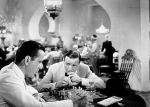
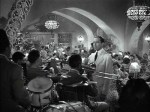
The many other delights of Casablanca are obvious in every frame.  Most noticeable is its rich visual design, beautifully captured by Arthur Edeson’s lush black-and-white cinematography, which features a synthesis of exotic and stylish elements into a mythic landscape that contrasts modern utilitarianism with decorative antiquity, a continual and elaborate play of shadows, and fantasized notions of its mythic locale.  The Casablanca of this film bears little resemblance to the real-life city which shares its name; it is pure Hollywood fantasy, designed to evoke the danger and intrigue associated with it in our imaginations.  Rick’s café, a place where Western elegance is imposed upon the Moorish sensibilities of its architecture, provides the central base for the film- it feels familiar without being quite safe, an oasis in the harsh (but still irresistibly romanticized), foreign atmosphere which makes up the rest of the city.  It’s a triumph of artistic design, influenced by Hollywood glamour and German Expressionism, and executed by Art Director Carl Jules Weyl and Set Decorator George James Hopkins.  The costumes by Orry-Kelly similarly provide a distillation of the early forties visual milieu, giving us timeless styles flavored with fantasized exotica; in particular, the powerful simplicity of Bogart’s white-jacketed evening wear, which became an instant classic, still represents the epitome of elegance in male fashion.  The musical score, by the legendary Max Steiner, is perhaps his definitive work, with its interpolation of familiar European anthems and the romantic melody of “As Time Goes By” into his own highly flamboyant and evocative compositions, and goes a long way toward setting the heightened tone which has burned Casablanca into the collective consciousness of subsequent generations.

All this excellent artistry is in the service of the film’s now-revered screenplay, by brothers Julius and Philip Epstein and Howard Koch, based on an obscure play, called Everybody Goes to Rick’s, by Murray Burnett and Joan Alison.  It is now well-known that constant rewrites kept the actor and crew uncertain throughout production, with Bergman, for instance, never knowing during filming who she was supposed to be in love with, and nobody certain of how the film would end.  This no doubt contributed to the cast’s loathing for the project at the time, and their belief that they were almost certainly making a horrible dog of a movie; fortunately, they were wrong.  Loaded with now-familiar classic lines, marked by excessively melodramatic dialogue which nevertheless wins us over by its sheer audacity and the committed, straight-faced delivery of the cast, it’s a screenplay that transforms its time-specific scenario into a tale of eternal significance, an exciting and emotionally resonant portrayal of love and idealism blossoming in a hostile environment.  The full power of these themes, however, might still have been lost or obscured without the contribution of Michael Curtiz, a versatile workman of a director who is often overlooked by cinema scholars despite an impressive and prolific body of work; with the skill of a master he weaves all the disparate threads together into a cohesive package, which revels in its intricately embellished atmosphere and its lush moods even as it drives its intrigue-laden plot at a steadily building pace towards its immensely satisfying conclusion.

Casablanca is full of memorable scenes: the capture of Ugarte, the arrival of Ilsa at Rick’s and the flashback to their romance in Paris, the cafe patrons drowning out the singing Nazis with a rousing chorus of “La Marsellaise.”  Indeed, more than almost any other film, it seems a progression of one remarkable moment after another; but, finally, it is the ending that sticks with us.  Rick and Ilsa’s farewell on the runway hits us in a place that the artificial thrills of the plot cannot, and it feels so right that it is impossible to believe that any other ending was ever considered.  Then, right on its heels, there is the not-so-surprising defection of Captain Renault from the dark side, just in time to walk off into the foggy night with Rick for “the beginning of a beautiful friendship.”  The emotional wallop is potent; and maybe the reason it hits us so hard has to do with the choice that affects us all, at one point or another, to serve our own needs or to sacrifice ourselves for the sake of others.  In a world full of suspicion, greed, and deliberate cruelty- or even just a world where nobody wants to look like a sucker- it’s a tough choice to make, and maybe Casablanca affects us so deeply because it lets us believe in the notion of “doing the right thing” even when everyone else is afraid to.  In a way, it’s a bridge between the noble sentimentality of a world long gone- if, indeed, it ever existed- and the hard-edged realism of the modern era.  We are still human, after all, even in an inhuman world, and (as the song so aptly expresses it) “the fundamental things apply, as time goes by.”

http://www.imdb.com/title/tt0034583/

Vampyr (1932)

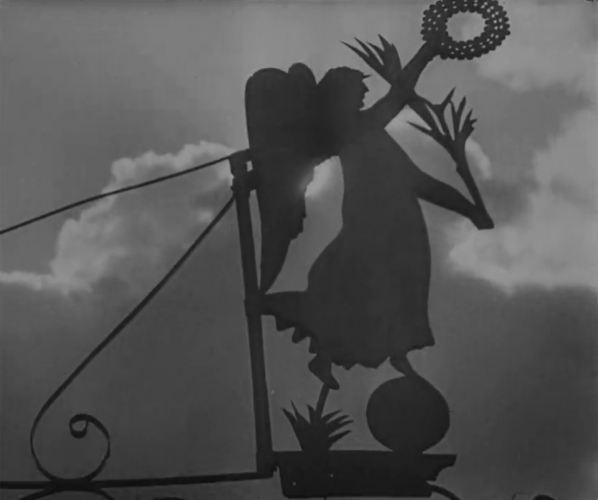
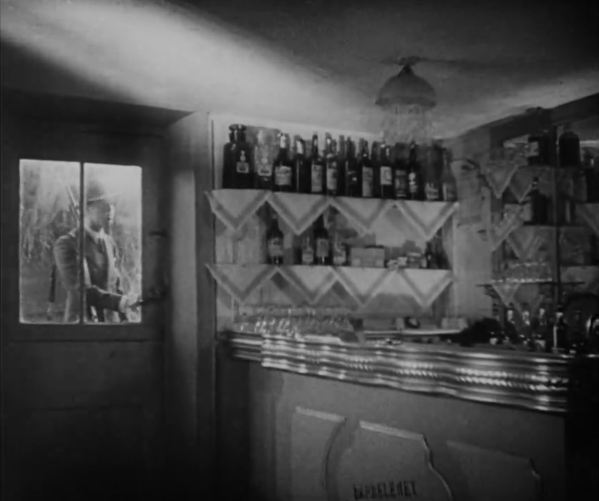
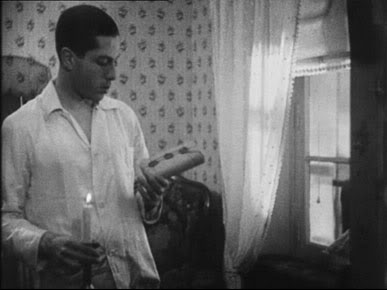
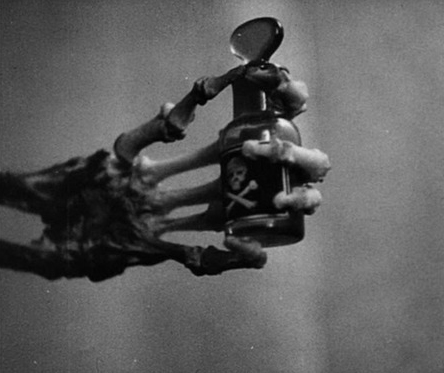
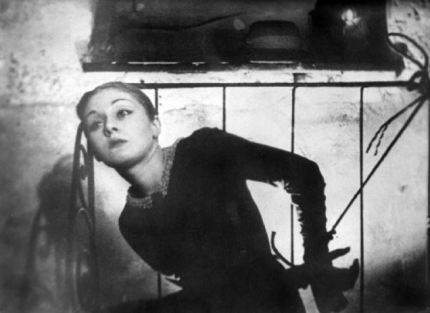
Today’s cinema adventure: Vampyr, a 1932 French/German horror film directed by Carl Theodor Dreyer, about a young man, obsessed with the occult, whose wanderings lead him into the dark troubles of a remote countryside manor, where the owner’s mysteriously ill daughter may be in the grip of horrifying powers from beyond the grave. Dreyer’s first film using sound, it was also his first effort following The Passion of Joan of Arc, a feature which, despite enthusiastic acclaim from critics, had been a box office disaster. With no studio willing to take a chance on the basis of his artistic promise alone, Dreyer found private financing from Nicolas de Brunholz, a young Baron who was a fixture of the Parisian social scene, known for his extravagant parties and his patronage of the arts, who would later become a prominent fashion editor for such magazines as Harper’s Bazaar and Vogue (and a mentor for designers Bill Blass and Calvin Klein, among others). De Brunholz’s condition for backing Dreyer’s film was that he would be its star; under the pseudonym of “Julian West,” assumed to assuage his prominent family’s disapproval of his acting ambitions, he portrays the wispy focal character of Allan Grey, and though his acting abilities were decidedly limited (and wisely un-stretched by Dreyer’s demands), his tall, slender frame and his handsome, elegant appearance set a distinctive tone at the center of the movie, aptly suggesting a strong spirit that has perhaps found himself over his head in a situation beyond his grasp.

Nevertheless, despite the support and participation of one of Europe’s most prominent society figures and the attendant buzz which surrounded it, Vampyr proved to be a worse flop than Joan of Arc, booed at its debut screening and, this time, even derided by the critics, who found it slow-moving, incoherent, and/or laughable; for many years it was widely considered Dreyer’s worst film, falling into such neglect that all but a few damaged original prints were lost. Indeed, produced to capitalize on the popularity of such American horror films as Dracula and Frankenstein (though it was initially conceived before these films had been released), it had such a marked difference in tone and style that it is easy to see why it perplexed and disappointed movie-goers of the time. The film’s failure contributed to Dreyer’s declining financial and emotional stability, which led to a nervous breakdown and kept him from making another film for another 11 years. It was only after his subsequent career and the retrospective appreciation of a later generation that reassessment granted it a status more deserved by its innovative and unique contribution to the horror genre and to cinema in general.

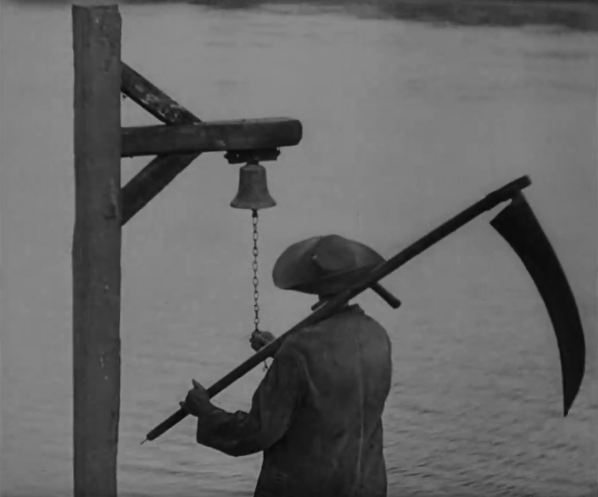
Ironically, many of the elements which made Vampyr such a flop are the reasons it is considered such so significant today. On a superficial level, it is one of the first horror films to feature a female vampire (and an elderly one at that) as its main antagonist, having been partly based on the short story Carmilla, by L. Sheridan La Fanu, a popular 19th-century fiction known for its decidedly lesbian overtones- some of which carry over into the film. It was also one of the first times the obvious sexual implications of the vampire myth were explored more overtly; though there is no explicit reference or depiction of sex, the metaphoric connection is clear, particularly in the decidedly romantic manner in which the young heroine is seen being victimized by her attacker. The film is also notable for its re-imagination of the standard, Dracula-based formula seen in most vampire movies; although it features most of the key archetypes inherent to the story, many of the familiar stock characters are absent or significantly changed, and the locations, though suitably grim and antiquated, are not the gothic staples of our expectation- the village is an idyllic, sun-scaped riverside town, devoid of torch-waving mobs, and in place of a foreboding castle for the vampire’s lair, we are given a decrepit flour mill.

More important, however, is Vampyr‘s visual and thematic style, and the underpinnings of its influences from dominant artistic movements of the time. Dreyer’s artistic sensibilities, while distinctly his own, were clearly influenced by his involvement with the French art scene, resulting here in a movie reminiscent of works by his more directly avant-garde contemporaries such as Luis Buñuel and Jean Cocteau. His stated intention with Vampyr was to take the art of cinema in a new direction, using a vehicle which lent itself to imaginative treatment by nature of its supernatural content; in realizing this goal, he blended his own passion for realism (enhanced by his use of natural lighting and authentic location photography) with the heightened theatricality and Freudian overtones of Expressionism, the seemingly nonsensical and dreamlike imagery of Surrealism, and the piecemeal construction of Impressionism. The resultant film glows with an ethereal beauty, combining a variety of cinematographic techniques (exquisitely executed by Rudolph Maté) that range from the sharply defined to the gauzy and murky; the narrative is deliberately cloudy and illogical, filled with non-sequiturs and credibility gaps, creating the feeling of a dream or even a delusion, an effect bolstered by camera trickery that gives us such jarring elements as shadows moving independently (or in compete absence) of their owners, and otherwise commonplace actions occurring in reverse; deeply symbolic or arcane iconography is everywhere, and the screen is filled with a rich and varied texture of design- mostly the result of decor and objects inherent to the actual shooting locations; and finally, the overall effect of Vampyr is created by a cumulative process in which the broad and vivid strokes of its seemingly disjointed progression combine to form a complete picture that is unified and harmonious- if somewhat unsettling.

Adding to the hallucinatory feel of Vampyr is its primitive use of sound. The European film community was behind the curve with the new technology of talking pictures, and the location shooting of Dreyer’s movie only exacerbated the difficulties, as did his plan to shoot the film in three separate languages- French, German, and English, though the existing print was restored from surviving copies of the former two versions and there is no evidence that the latter was ever completed. The problems were surmounted by a screenplay (co-written with Dreyer by Christen Jul) containing a minimum of dialogue, mostly cryptic exchanges that were overdubbed in a studio after the fact by actors other than the ones onscreen; however, the inclusion of aural elements was an integral part of Dreyer’s technique here, and he utilizes a wide variety of eerie effects, not only to underscore the action (along with an elaborate and effective score by Wolfgang Zeller- a pioneering inclusion for early sound films, which were mostly devoid of musical accompaniment), but also to aid in telling the story, with several key scenes relying heavily on soundscapes to convey important events that are taking place off-camera.

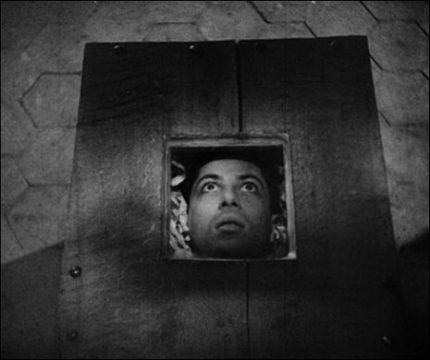
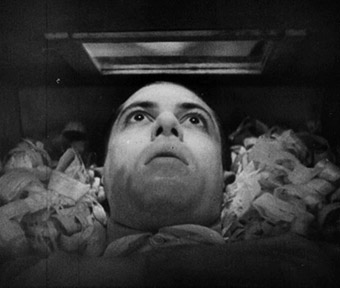
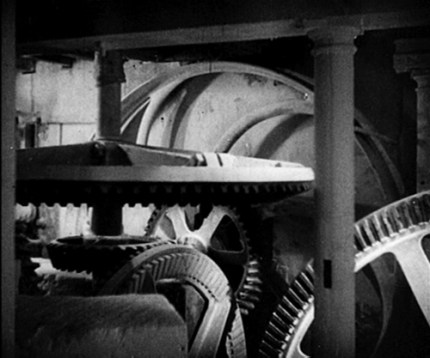
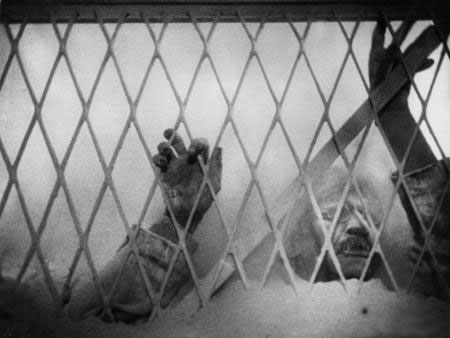
However, even with full appreciation for the skill and artistry with which it was made, watching Vampyr is hardly a thrilling experience; with its emphasis on atmosphere and its artistic conceits, it fails to concern itself with such usual priorities as pacing or continuity, and in spite of the macabre crisis it depicts it is largely lacking in suspense or action, contenting itself instead to create a series of elegiac encapsulations of mood and concept. As it approaches its ending, however, Vampyr suddenly shifts gear and delivers a pair of sequences that transform it from an intellectual exercise into a genuine horror movie. First is an extended set piece in which its protagonist has a premonition of himself lying wide-eyed in a windowed coffin, being prepared for and carried off to burial. Through the use of first-person perspective, Dreyer creates a highly uncomfortable, claustrophobic identification of the audience with the corpse, forcing us to imagine our own death and experience the ominous finality of these moments, as well as conjuring the universal fear of being buried alive. Continuing to capitalize on the latter, we are shortly afterward given a scene in which one of the characters, trapped at the bottom of a storage shaft and surrounded by the cold sterility and inhumanity of ominous industrial machinery, is slowly submerged in a cascade of sifted flour until his desperate cries for help are silenced by death. These sections of the film distill its underlying theme into a direct and palpable form; for Vampyr, at its core, is ultimately a meditation on the inescapable reality of death, the fear of which, as Dreyer rightly understood, is at the base of all our obsessive fascination with the dark mythology of our folklore and fiction. When we cringe at the imagined threat of the undead monsters or unspeakable diseases that haunt our shared nightmares, we are really responding to the shadow of our own mortality; and though an iron spike through the heart may end the vampire’s reign of terror, and an emergence from fog into a sunlit clearing may temporarily provide the comfortable reassurance that all will now be well, we know that staving off these supernatural horrors can only delay the inevitable fate which awaits us all. The power of Vampyr derives from its recognition of that fact; and though much of the film expresses the concept of death through motifs and moods that impress us without involving or exciting us, it blindsides us in its penultimate scenes with these visceral evocations of our most primal fear, rendering hollow its obligatory happy ending and leaving us with an indelible sense of the bleak hopelessness summed up in the familiar words inscribed on the lid of our hero’s hallucinatory coffin: “From dust are you made and to dust you shall return.” It’s an uncomfortable reminder, and one which Vampyr provides more vividly than the vast majority of gruesome splatter-fests that represent the horror film genre of today.

http://www.imdb.com/9/title/tt002364

Dali in New York (1965)

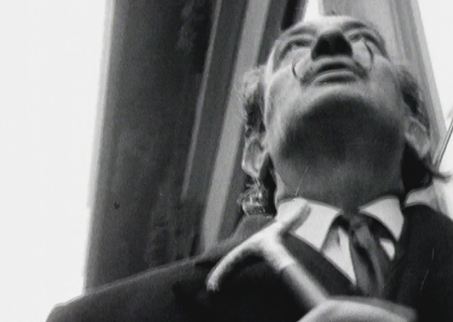
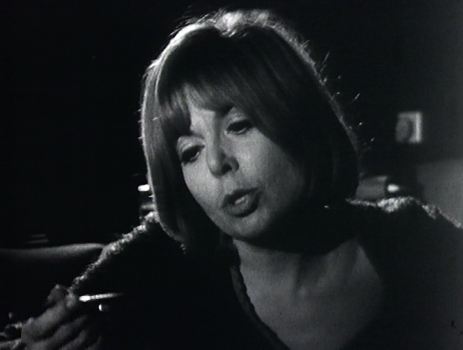
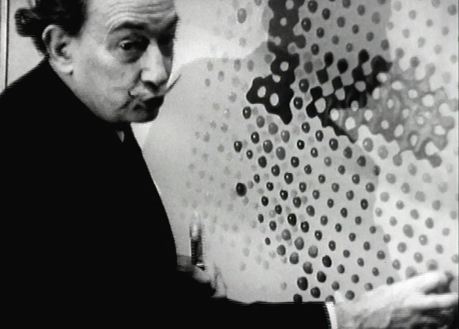
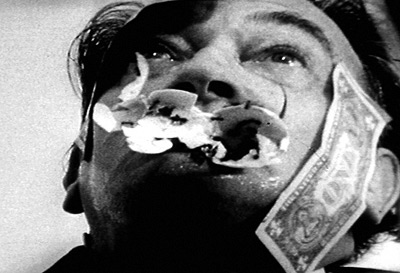
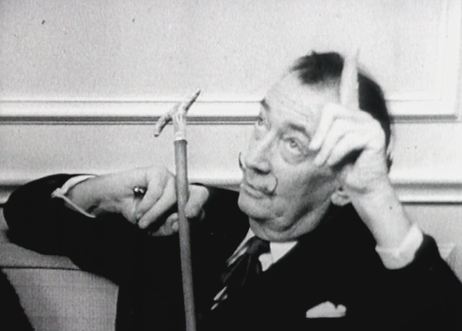
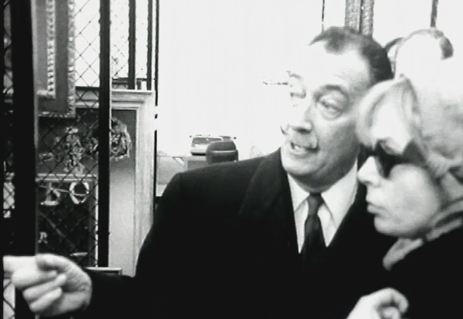
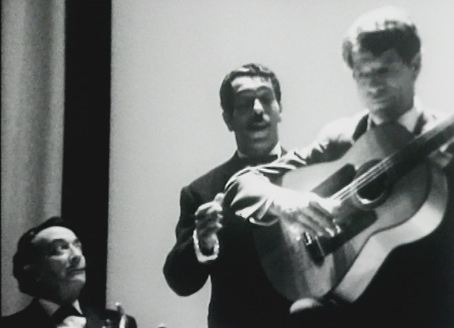
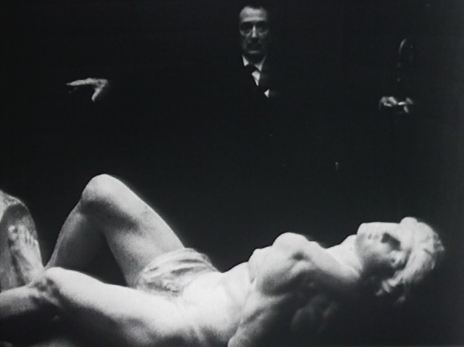
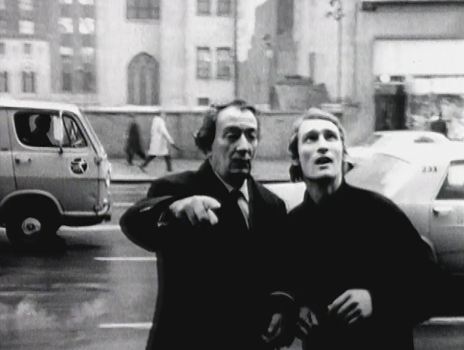
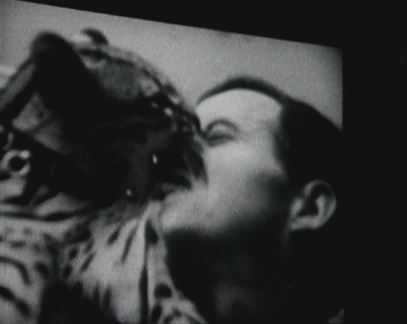
Today’s cinema adventure: Dalí in New York, a 1965 documentary by Jack Bond depicting the visit of the infamous Spanish surrealist to Manhattan in conjunction with the opening of a retrospective exhibition of his work at the Hartford Gallery of Modern Art. Shot in a distinctively sixties-avant-garde black and white by Jim Desmond, this brief (57 minutes) visit to the world of the 20th Century icon was made over two weeks prior to the opening, as Dalí made the rounds of the New York art and society scene, attending gatherings, staging “events” (such as a procession in the streets with a plaster cast of a Michelangelo statue and a photo session involving the artist lying in a coffin with an ant-filled egg in his mouth, surrounded by a million dollars in cash and an ocelot), and conversing with Bond’s collaborator, actress/writer Jane Arden- that is, until she falls from Dalí’s favor in a controversial exchange in which she refuses to humor his assertion that “everyone is my slave.” The conversations yield little by way of meaningful exchange- Arden tries too hard to engage the painter in a dialogue about his work and Dalí steadfastly resists, preferring instead to make characteristically inflammatory proclamations and declarations of his own supremacy- and the film ultimately offers little direct insight into the artist or his philosophies. Nevertheless, much can be gleaned by watching his antics and his interactions; throughout the film, he is obviously aware of the camera at all times, his eyes constantly darting to the lens as he orchestrates his image for mass consumption. Always the showman, his outrageous acts and statements are clearly calculated to promote himself and his art, and even his creative process itself seems to be little more than another tool for publicizing the “cult of Dalí,” as evidenced in the remarkable closing sequence when he paints for an audience, accompanied and inspired by the music of flamenco guitarist Manitas De Plata and singer Jose Reyes. The entourage with which he surrounds himself, which includes a “military advisor” and the supposed reincarnation of his dead brother, are all extensions of his own bizarre personality, conforming to the roles he has assigned them for his- and presumably their own- personal benefit; and his wife and muse, the austere and vaguely contemptuous Gala, is presented, as he presented her, as an idealized icon of feminine detachment: she says little, and by saying little, speaks volumes. All of this is interlaced with lengthy sequences (designed and photographed by Tom Taylor) showcasing Dalí’s familiar art, depicted by a fluid camera lovingly examining the details of his imagery and revealing some of the unifying thematic elements that were continually present in his body of work- though the black-and-white cinematography robs us of his stunning and effective use of color, making us long to rush to the nearest bookstore and browse through one of the many coffee table books offering high quality Dalí reproductions.

Dalí in New York was largely forgotten for many years, a parenthetical curiosity from a period when the famed artist was being overshadowed by representatives of the more modern movements of art, such as Warhol, whose vision of themselves as the ultimate manifestation of their work was prefigured by Dalí himself- something he alludes to in the film. After a 2007 screening at MOMA, it has been resurrected as a document of a figure whose importance to the art world is still being debated. In the twenty-plus years since his death, Salvador Dalí has become less and less remembered for the outrageous circus with which he surrounded himself and his enormous catalogue of paintings have become more and more familiar, many of them having achieved the status of icons. This little documentary is by no means a complete picture of the man or of his work, but it does offer a rare opportunity to get close to a figure who, during his life, was often dismissed as a charlatan and an opportunist, but whose work has undeniably exerted an unfathomable influence on western visual art. Most of Dalí’s rhetoric can be assessed as showmanship, not categorizable as true or false, but at least one of the statements he makes in this film is clearly wrong: at one point he declaims that his work is not important, that only Dalí himself matters. Time has thankfully proven this to be an overstatement on his part.

http://www.imdb.com/title/tt1245090/

The Cabinet of Dr. Caligari/Das Cabinet des Dr. Caligari (1920)

Today’s cinema adventure: The Cabinet of Dr. Caligari, the 1920 cinema cornerstone that established enduring conventions for the horror genre- indeed for cinema itself- and for the general public at least, has become one of the most recognizable representations of the German Expressionist movement.  A bizarre tale about a mysterious carnival magician whose hypnotized slave commits a series of murders at his bidding, this landmark film was first conceived by its writers, Hans Janowitz and Carl Mayer, as a way to demonstrate the effectiveness of film as a medium for Expressionist art, and also to establish a definitive look for German cinema that would distinguish it from the growing influx of American movies to their country. The resulting work is one of the most distinctive visual experiences ever produced, featuring wildly distorted scenery (abstract, asymmetrical sets with sharp, jagged lines, obvious and elaborately theatrical backdrops with painted-on shadows) highly dramatic lighting, and a heightened acting style that seems exaggerated even compared with other silent films of the time; it was an experiment which only took place because the writers persuaded producer Erich Pommer that making the film in this style would save considerable amounts of money.  These creative pioneers- including director Robert Weine, who was brought on board when rising wunderkind Fritz Lang was unavailable- believed that their bold new approach would change the art form forever; however, though Dr. Caligari met with enthusiastic response from audiences and critics alike, and stirred much excitement in the world’s blossoming film community, it failed to lead the industry away from the more mundanely representational style in which it remains more-or-less grounded to this day.

This is not to say that the film had no bearing on the future of cinema.  Its visual conceits and thematic elements have provided immeasurable inspiration for filmmakers from F.W. Murnau to Tim Burton and beyond. Its macabre tone and gruesome content influenced not only the future of the horror genre but the entire film noir movement as well.  It set the precedent for using cinematic embellishment to suggest altered states of consciousness: virtually every film depicting dreams, delusions, or drug-induced hallucinations can trace its heritage back here.  Most important of all, perhaps, was its establishment of numerous structural conventions that have been in continuous use ever since: by constructing its grim story as the remembrance of a young man who is ultimately revealed to be a delusional patient in a mental hospital, Dr. Caligari became the first film to feature a framing device bookending its main narrative, to rely on an unreliable narrator, and to surprise its audience with a twist ending.  None of this is to say that later filmmakers could not have made these innovations on their own- but Caligari went there first.

All this film class trivia is well and good, but how does The Cabinet of Dr. Caligari  hold up today for the casual viewer simply seeking entertainment?  Probably not well: the world is a much different place than it was in 1920, and we have been inundated with stories and images much more shocking and terrifying than those in this film- which, ironically, opened the door for all of them.  The conventions of fiction observed within it seem quaint and unsophisticated by our jaded modern standards, and the performances, with their jerky, unnatural physicality and their often-seemingly-inappropriate facial expressions (to say nothing of their histrionic, over-the-top style) seem unconvincing and inaccessible to us.  To top it off, its outrageously artificial visual style is so alien and disconcerting that it only serves to distance us further from the events onscreen, ensuring that we will never become viscerally engaged in the proceedings.  Of course, it’s true that these qualities were present even when Dr. Caligari was made- deliberately included as part of the Expressionist form intended and carefully crafted by its creators- but historical context has no bearing on our contemporary requirements for suspension of disbelief.

Before concluding, however, that Caligari has no value for any modern viewer who is not a film buff or an art enthusiast, it might be wise to look past the obvious sensibility gaps created by its distance from us in time.  It was never meant to be a purely escapist experience, even when it was conceived nearly a century ago; rather, it was- and is- a vivid and fully realized vehicle for Expressionist themes such as paranoia and the unreliability of perception, and an impressive presentation of the movement’s distinct visual style, comprised of crude, primal imagery that works on the subconscious to elicit a strong emotional response.  Its effectiveness is even keener in its restored form, which not only returns sharpness and luster to the once-faded print but also recreates the original hand-tinted colors, helping to clarify the story by differentiating day from night, and polishing up the intertitles with a font and style coordinated with the bizarre content of the story they tell.  A viewing of Dr. Caligari is hallucinogenic enough on a small screen, and though I’ve never had the opportunity to do so, I suspect that seeing it projected larger than life in a darkened theatre would be akin to experiencing a full dream state.

It’s also worth mentioning that although the stylized acting is hard to assess fairly from a standard modern perspective, Werner Kraus and Lil Dagover, as the mad magician and tragic damsel, respectively, have become iconic as personified archetypes of the collective consciousness; and as Cesare, the tormented somnambulist, Conrad Veidt is electrifying, using his remarkable physical skills and his expressive face to transcend both genre and style, and delivering perhaps the first truly great film performance- one which continues to inspire and influence actors to this day.

So although The Cabinet of Dr. Caligari may not offer the kinds of thrills and chills sought by the average viewer looking for a lively horror film, it certainly offers many other rewards.  There are good reasons why it has been celebrated, emulated, re-invented, re-adapted, saluted and parodied so many times over the decades; it is part of our cultural makeup, and if that is enough to get you to watch it, you may find yourself enjoying its twisted pleasures in ways you never expected.

 http://www.imdb.com/title/tt0010323/

The Invisible Man (1933)

Today’s cinema adventure: The Invisible Man, the 1933 feature based on H.G. Wells’ story about a well-meaning scientist who discovers the secret of invisibility only to be driven to madness by its side-effects.  Produced at the height of Universal Studios’ early-thirties cycle of horror films, it established a familiar screen icon in the form of its bandage-wrapped title character, and is still considered one of top classics of the “monster movie” genre.  Its revered status is mostly due to director James Whale (the genius responsible for the first two Frankenstein movies), who combines a flair derived from his theatrical background with a keen cinematic style; his meticulously choreographed scenes are captured with inventive camera angles and expressionistic lighting, and his innovative techniques of visual storytelling- clever segues and montages, the savvy use of special effects to enhance his story rather than to dominate it- are a bittersweet testament to the brilliance that might have led to a long and remarkable filmmaking career had his distinctive artistic sensibilities not put him at odds with the Hollywood establishment and resulted in his early retirement from the industry.  Those sensibilities are on full display here: his arch, campy style results in a film ripe with macabre humor, and one which feels decidedly subversive in its gleefully ironic portrayal of a stodgy community disrupted from within by willful anarchy. Nevertheless, despite a tone which could almost be described as self-mocking, the story never loses its dark undercurrent of unsettling horror- not the horror of violence and mayhem (though there is a fair share of that), but the horror of that unseen menace within the human psyche- the potential for corruption and dehumanization that can transform even the gentlest soul into a monster capable of unspeakable acts of cruelty.  This balance between the wacky and the weird is achieved not only by the director’s considerable gift, but hinges also on a star-making performance in the title role by Claude Rains, who manages to walk the precarious line between histrionic mania and subtle sincerity, conveying perfectly the journey of a man struggling to hold onto himself even as he disappears into ego-driven insanity, and successfully holding audience sympathy even as he plots the most horrific acts of terror and revenge.  It is a feat made even more remarkable by the fact that his face remains hidden until the final moments of the film, and which deservedly led to a career as one of Hollywood’s most prolific and well-loved character actors.  The rest of the primary cast is effective enough, considering the prosaic acting styles of the era; notable more for their later accomplishments are Henry Travers (who went on to become everybody’s favorite guardian angel in It’s a Wonderful Life) and Gloria Stuart (who, 60 years later, became the oldest Oscar-nominated performer in history for her role in Titanic).  Though most of the supporting players come off as merely adequate, however, the army of background actors are a delight- an array of craggy, comical English faces headed by the incomparable Una O’Connor as a shrill hostess whose encounter with the mysterious stranger at her inn sets the comically creepy tone for the entire film.  R.C. Sheriff’s screenplay, though it features more than a little stodgy dialogue, captures the essence of Wells’ novel- particularly its allegorical exploration of the destructive effects of drug addiction- while expanding details of character and plot and building the foundation for Whale’s subtly skewed interpretation.  The technical elements of the film are as top-notch as one would expect from a prestige production like this: the scenic design blends an art-deco flavor with the rich detail of its various English settings, the cinematography (by the great Arthur Edeson) is a sublime example of the near-forgotten beauty and power of black-and-white film, and the special effects (supervised by John Fulton), which were advanced for their time, are still fairly impressive for the most part.  Of course, for today’s average audience, The Invisible Man may bear the stigma of being dated, creaky and far too tame for modern tastes; it may also suffer mildly from its abrupt and somewhat anti-climactic resolution.  Even the most jaded viewers, however, will likely be drawn in by the considerable charm of a movie that inspires them to laugh out loud as they contemplate the deeper, darker themes which bubble within it like the test tubes in a mad scientist’s arcane lab.

http://www.imdb.com/title/tt0024184/

Woman in the Dunes/Suna no onna (1964)

Image

Today’s cinema adventure: Woman in the Dunes the strikingly photographed 1964 avant garde feature by Japanese filmmaker Hiroshi Teshigahara,  Adapted by Kōbō Abe from his own novel, it’s a deceptively simple parable about an entomologist on a field expedition to collect specimens at a remote beach; when he misses his return bus, he seeks shelter for the night with a young widow in a local village- only to find himself trapped into remaining as her companion in a life of endless labor, shoveling sand from the quarry in which they live, both for their sustenance and to prevent their house from being buried.  Within the framework of this premise are explored a multitude of giant, deeply reverberating themes, ranging from the contrast between the masculine and the feminine to man’s role in society to the very nature and meaning of existence itself- all of which plays out against the backdrop of the monumental, ever-shifting sand dunes, emphasizing the inexorable dominance of nature and the universe and transforming the primal landscape into a central character of the drama.  The performances of the two principals (Eiji Okada and Kyoko Kishida) are superb, helping to create the delicate balance between realism and symbolic fantasy that propels the film- but the true star here is the magnificent black-and-white cinematography of Hiroshi Segawa, which not only captures the fluid, omnipresent sand in remarkable, crystalline detail, but conveys a sense of tangibility to every texture in the film, from the salty grit which covers every surface to the smoothness of the players’ skin, making the viewer’s experience highly visceral- and erotic.  One of those world cinema classics that is a staple in film classrooms around the world, the artistry of Woman in the Dunes is indisputable- some audiences, however, may find that its blend of existential absurdism and Zen austerity creates a cool detachment that prevents emotional involvement in the action.  Nevertheless, as an intellectual and philosophical exercise- and as piece of stunning visual artistry- it’s a film which packs more than enough power to make its 2 ½ hour running time seemingly fly by.  A must-see for any serious film buff- but you may feel like you need a long shower to rinse off all that sand.

http://www.imdb.com/title/tt0058625/

Image

ImageImageImageImageImageImageImageImageImageImageImageImageImageImage