Sebastiane (1976) [Warning: some images may be NSFW]

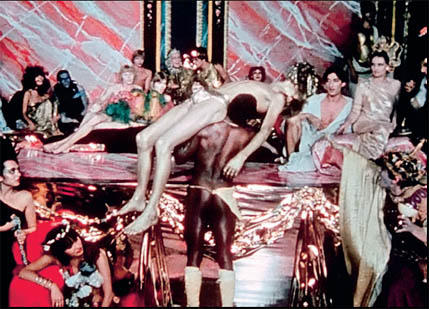
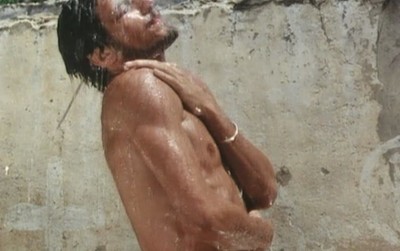
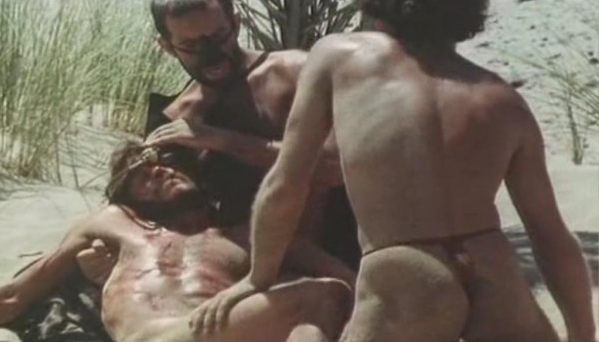
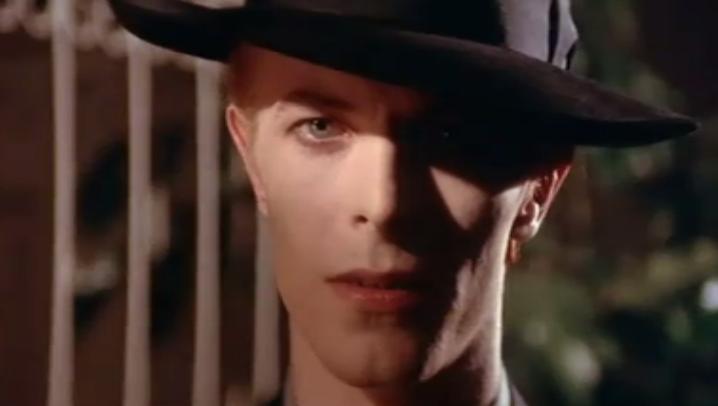
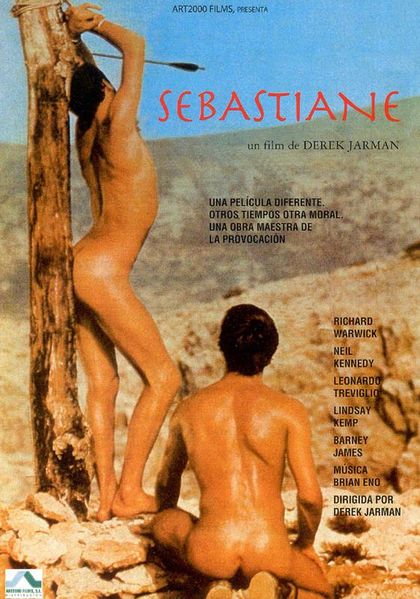
Today’s cinema adventure: Derek Jarman’s 1976 debut feature, Sebastiane, a fictionalized vision of the martyrdom of St. Sebastian, presented less as a meditation on spiritual themes than as a homoerotic fantasy in which the soldier Sebastianus, after falling from favor with the Roman Emperor Diocletian, is exiled to a remote oupost in the wilderness, where his refusal to yield to his commanding officer’s obsessive lust eventually leads to his ritual execution by arrows.  A work that is historically significant not only for being the first film produced in authentic Latin (and as such, the first British-made movie to be shown in England with subtitles), but- more importantly- for the prologue featuring an erotic dance by legendary glam-era performance artist Lindsay Kemp and his Troupe, and its inclusion of an early score by electronic music pioneer Brian Eno, Sebastiane was never anybody’s idea of a mainstream film, not even its creator’s.  Like most of Jarman’s films, it’s not big on story, but despite its shoestring budget, it is lovingly and beautifully shot, each frame artfully crafted so that the final result resembles a Renaissance painting in motion. The extensive nudity (all male, of course) was explained by Jarman as being because they “couldn’t afford costumes” (sure, Derek, sure… we believe you), and needless to say the film was highly controversial at the time of release; but although many viewers may fixate on what often seems like gratuitous nudity and sexual content, Jarman is not merely concerned with exploiting or even celebrating the male form; he has much to say about the issue of homosexual shame.  On the surface, the film would seem to comply with the traditional Catholic assertion that homosexual behavior is a sin to be forsworn, and that Sebastianus’ fate is to be sacrificed to that ideal, destroyed by unrepentant sinners for his refusal to debase himself- a decidedly conflicting message, when one considers the fact that the film is heavily laden with imagery clearly intended to elicit homosexual fantasies.  Certainly these themes of religiously-fueled guilt are in play within Sebastiane, and Jarman undoubtedly wrapped some of his own spiritual struggles into his film; but like most art, the true nature of the themes expressed lies beneath the obvious details.  Sebastianus’ rejection is of the flesh itself, regardless of sexual orientation: it is his devotion to a life of the spirit that makes him an outcast and a martyr, and it is the jealousy and pride of those who fail to understand him that leads to his death; in the end, sexuality is irrelevant here, and Jarman’s true indictment is against the base and brutal tendencies of stereotypical masculinity, the hypocrisy of judgement and violence against those who do not conform to the status quo, and the arrogance of those who choose to subvert their own spirituality to their egotistical desires and insecurities.  In short, the film is more about homophobia than homosexuality, and its abundance of homoerotic imagery is as much to incite as to excite.  Of course, that same imagery is sufficient to ensure that the majority of religious bigots will never see this film, so in a way, Sebastiane is a prime example of an artist “preaching to the choir;” and, truthfully, the copious amount of it ultimately displaces Jarman’s higher purpose, so that his inaugural cinematic excursion ends up being more stimulating on a decidedly lower level.  My own reaction: it’s a very pretty movie to look at, and probably one of the most erotic ones I have seen (much more so than porn, actually); but at times I couldn’t help being reminded of those soft-core late-night “Skinemax” flicks I would sometimes catch my Dad watching at 3 in the morning… slow motion photography of someone taking a shower, with the frame cropped in just the right place to keep it from being obscene, that sort of thing, except instead of beautiful women, here it was beautiful men.  I can’t say I had any complaints, but I was ready for it to be over about 30 minutes before it actually was.  It might have helped if the actors (Leonardo Treviglio as Sebastianus, supported by Barney James, Neil Kennedy, and Richard Warwick, among others- none of whom had significant careers afterward) had delivered performances that were as beautiful as their bodies… but I guess we can’t have everything.

http://www.imdb.com/title/tt0075177/

Dog Day Afternoon (1975)

Image

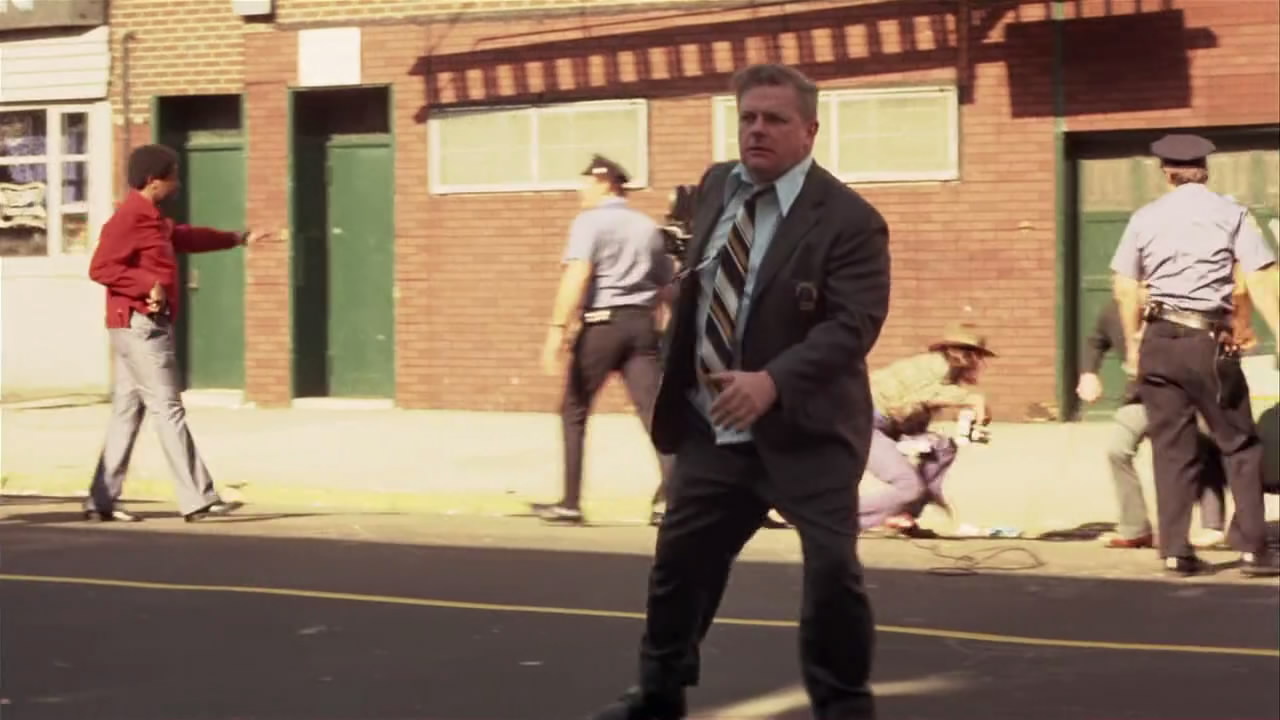
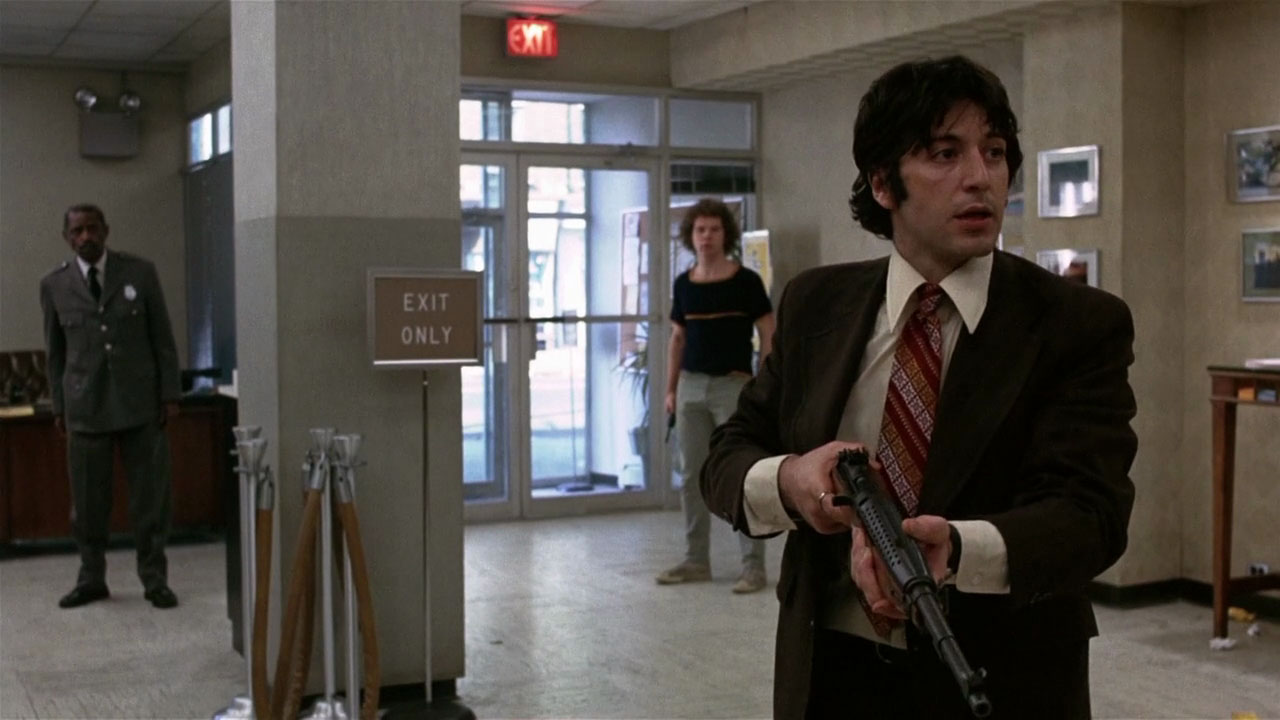
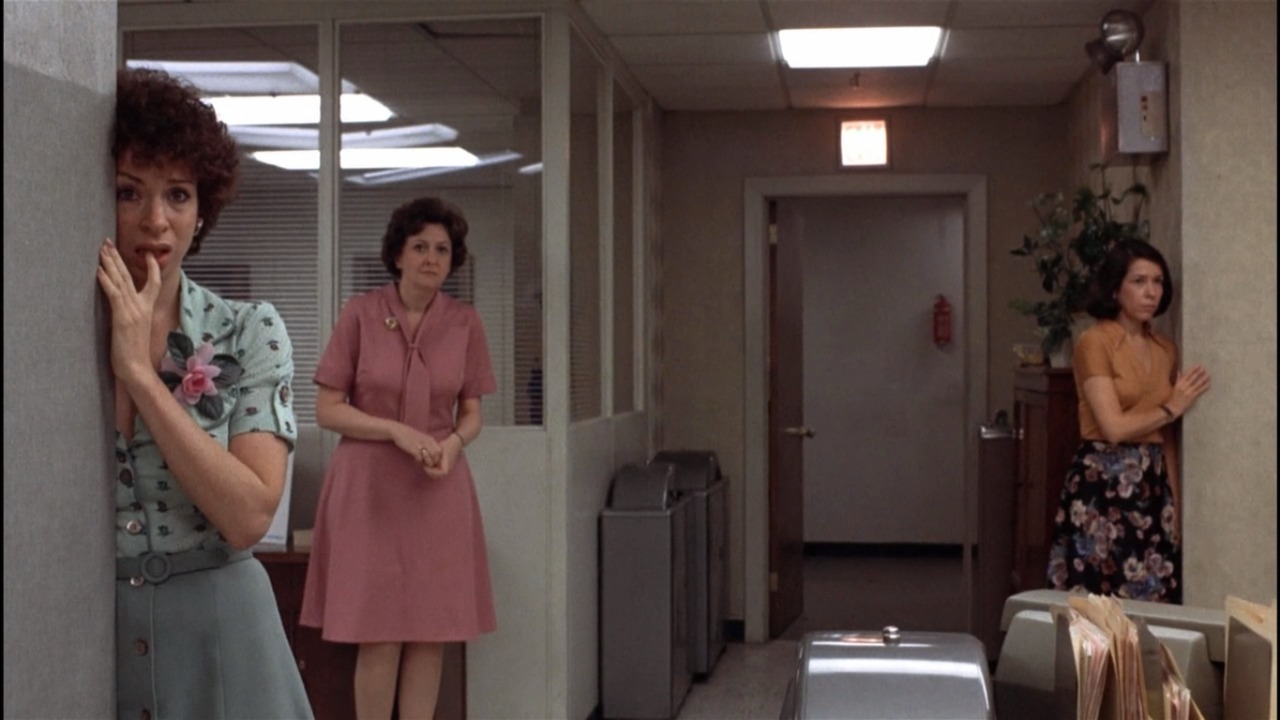
Today’s cinema adventure: Dog Day Afternoon, the 1975 Sidney Lumet feature about a real-life bank heist gone wrong, in which a troubled Vietnam war veteran attempts to obtain the money needed for his gay lover’s sex change surgery and ends up at the center of a hostage situation that turns into a media circus. A prime example of seventies “New Hollywood” cinema, this gripping gem achieved much popularity due to its anti-establishment undertones and the performance of Al Pacino, who was at the height of his rising stardom. Director Lumet, also at the peak of his career, steadily drives the brilliant Frank Pierson screenplay by allowing the story to unfold through the characters, resulting in a slow-but-steady paced film that remains emotionally grounded as it moves through the escalating complications of the plot, building tension by keeping us invested as it moves towards its inexorable conclusion; in addition, by focusing on the immediacy of the human element, Lumet succeeds in creating a microcosmic fable with complex political and social overtones woven into its fabric without ever letting these larger themes overwhelm the immediacy and intimacy of its simple story. The power of the film as a whole is seamlessly connected to the magnificence of Pacino’s embodiment of the likable loser at its center; his sharply honest portrayal allows us to instantly connect with the core of his character as he wavers between gullibility and cynicism, despair and determination, kindness and cruelty- seemingly the entire contrasting myriad of human emotion. It’s hard not to be on his side, no matter how ill-advised his actions may be; we share his giddy thrill when he stirs the crowd with his chants of “Attica!,” and we feel the crushing pressure as he tries to negotiate an acceptable way out of the no-win situation he is in- both in the bank and in his life. Backing him up is a quietly brilliant cast of supporting players, from John Cazale as his slow-witted accomplice and Charles Durning as the police negotiator trying to diffuse the situation, to the ensemble of bank-employees-turned-hostages who convincingly bond with their unwilling captor. Special praise, however, should go to Chris Sarandon, as Pacino’s gender-swapping lover, who delivers his two scenes with a sensitivity and a dignity that provide the bittersweet heart upon which the entire plot hinges. It is worth mentioning, in fact, that the homosexual elements of the film are handled with objectivity and a marked lack of stereotyping- a fact made all the more remarkable by the era in which it was made, which helps to make it stand as strong today as it did upon its first release nearly forty years ago. (As a side note, it is interesting to know that the film’s real-life inspiration, John Wojtowicz, used his proceeds from the sale of his story to finally fund his lover’s sex change; so in a roundabout way, his scheme ended up being successful after all). All in all, Dog Day Afternoon is one of those classics that define an era, a representative work from a time when American cinema blended realism with art to create a kind of visual poetry, a document testifying to the character of our culture and capturing the essence of our concerns. Not only that, it is a reminder of a time when Hollywood gave us stories that grew out of the people in them instead of relying on gimmicky, formulaic plots with the people grafted in- and though I’m not one to bemoan the passing of the “good old days,” it’s certain that today filmmaking establishment would be completely unable- or at least unwilling- to create a film with the kind of simple, non-CG-powered thrills provided here. Of course, you don’t need all these justifications for checking it out. The only reason you need is the best reason of all: it’s a damn good movie.

http://www.imdb.com/title/tt0072890/

ImageImageImageImageImageImageImageImageImageImageImage

Fritz the Cat (1972)

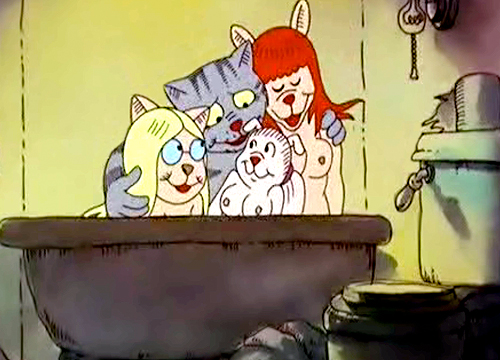
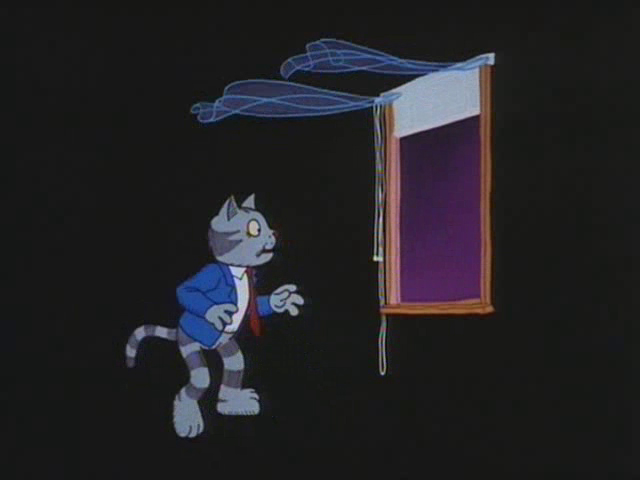
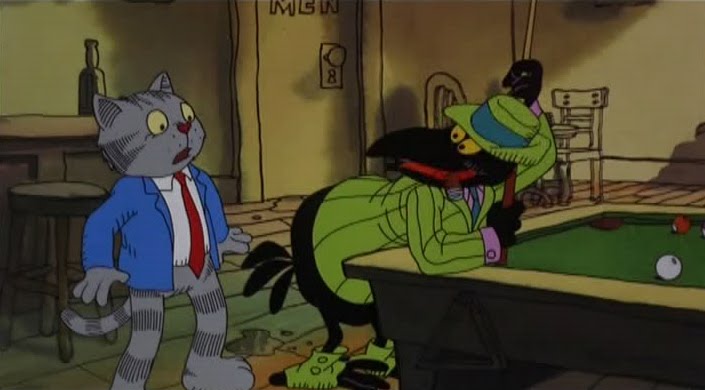
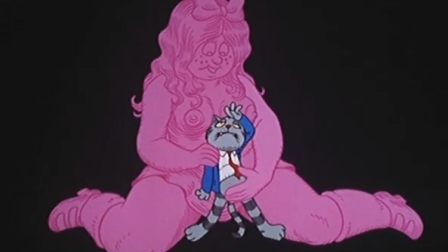
Today’s cinema adventure- Ralph Bakshi’s 1972 feature debut, his adaptation of R. Crumb’s underground comic, Fritz the Cat.  The first animated film to earn an “X” rating, it met with a lot of resistance and outrage from the mainstream, and Crumb hated it, disowned it, and tried to get his name taken off the credits- but it ended up being the most financially successful independent animated feature of all time.  Written and directed by Bakshi, the film follows Fritz as he takes a personal odyssey from a life of “hanging out” and looking for a good time through a drug-inspired pursuit of revolution- with plenty of shockingly permissive bad behavior along the way.  Voiced by Skip Hinnant (known for his work as part of the ensemble on the classic educational show, The Electric Company), Fritz is hardly a typical cartoon hero: far from cute, barely likeable, and nobody’s idea of a role model, he indulges in one ill-advised misadventure after another, motivated by selfish hedonism even when he is ostensibly acting for what he views as the greater good.  He serves as a sort of counter-cultural Candide, a naïve fool who fancies himself a sophisticate, and as such is at the mercy of a world more corrupt and complex than he imagines; in short, he is the kind of phony that the truly hip despise, and his journey of self-discovery in this worst-of-all-possible-worlds is a vehicle to expose social and political hypocrisy from every source, including (and especially) from our hero himself.  This ambitious agenda may have been beyond the scope of Crumb’s original work (he certainly thought is was), but for Bakshi, it was important for the film to make a statement, which it most certainly does- in between scenes of anthropomorphic animals having sex and taking drugs, that is.  Not that his intention was to shock: geared towards a drug-friendly youth culture, loaded with tons of juvenile sexual, political and racial humor, and mercilessly critical of both the radical left and the extremist right, the film is clearly aimed at an audience who shares his uncensored sensibilities.  At the time of its release, it was one of those films that generated protest and controversy from people who more than likely never saw it, and was cheerfully received by a target audience hungry for the kind of frank, turned-on content it offered.  Forty years later, most of its shock value and its topicality are long gone (one can see comparable content on any given episode of Family Guy today) and across the gap in time much of the film’s anarchic zeitgeist seems more than a little tiresome- as I suspect, to the more mature viewer, it did even then.  Still, as a piece of history, it is fascinating to watch: the animation, though primitive and almost quaint to modern eyes, was innovative and ground-breaking at the time; it presented adult subject matter and content never before seen in animation and completely changed the industry, breaking the stereotype of cartoons being only for children; and it vividly captures a particular social strata of 1960’s culture that is often ignored by popular memory.  I won’t say that you’ll enjoy it, but if you’re intrigued by looking through a window to a bygone era- and you’re open-minded and adventurous- you’ll be glad you watched it.

http://www.imdb.com/title/tt0068612/

The Ritz (1976)

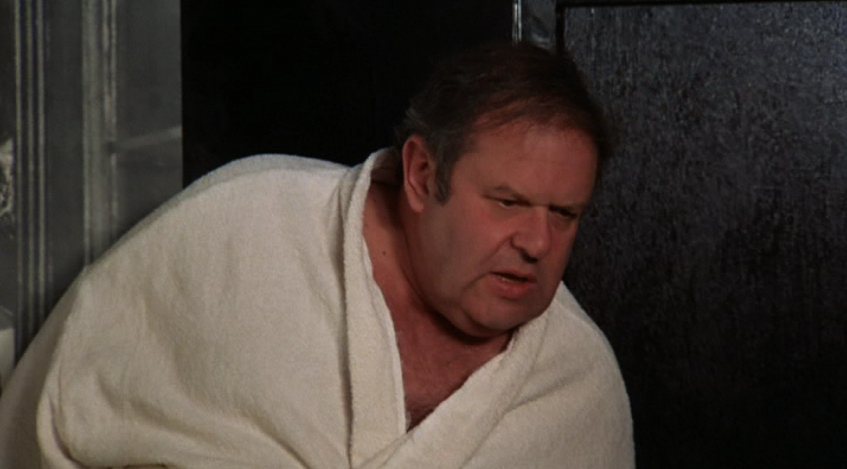
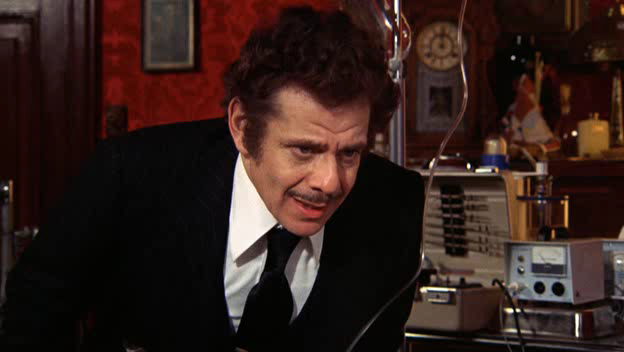
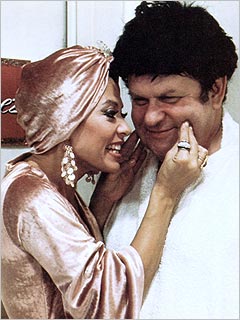
Today’s cinema adventure: The Ritz, the 1976 screen version of Terence McNally’s daring-for-its-day stage farce about a straight Midwestern businessman who hides out from his homicidal brother-in-law by checking into a gay Manhattan bathhouse. Directed by the legendary Richard Lester (known for a fast-paced, edgy style that made The Beatles A Hard Day’s Night into an instant classic) with a screenplay by the playwright himself, the film has aged into something of a curiosity of its time- a glimpse at bathhouse culture during the heady pre-AIDS era of the sexual revolution. McNally (who has become something of a gay poet laureate) made the brilliant move of taking the formula of a classic farce and placing it into what was at the time (and, sadly, to an extent, still is) a socially taboo setting; the result was a risqué piece of popular entertainment which brought underground gay culture into the spotlight and ostensibly took a small step towards making homosexual subject matter more acceptable for mainstream audiences. Unfortunately, by virtue of the requirements of the farcical genre, the characters (both gay and straight) are one-dimensional stereotypes which seem tired and offensive today, and the comedy has been rendered considerably less amusing by years of over-exposure to TV sit-coms in constant rotation. The highlight of the film is undoubtedly Rita Moreno, reprising her Tony-winning Broadway performance as Googie Gomez, a fiery Bathhouse Betty who gets caught up in the intrigue and (fortunately for the audience) performs a deliciously over-the-top lounge act for the boys; also of note are her Broadway co-stars, Jack Weston (as the hapless refugee), Jerry Stiller and future Oscar-winner F. Murray Abraham (as a flaming, self-appointed tour guide who manages to be likeable despite the heaping load of gay clichés he is required to carry), and an amusing turn by a young Treat Williams as a naïve (and squeaky-voiced) private detective. The rest of the cast fill their roles sufficiently well, Lester’s direction is sure-handed, and the look and feel of the seedy setting are captured quite authentically- but in 2012, the edge which once made it all so delightful has become painfully dull. The bottom line: as a piece of social and theatrical history, The Ritz is definitely important enough to warrant a viewing; but if you are just looking for some laughs and entertainment, you might want to skip it- or, better yet, fast forward to Rita’s scenes and just watch those.

http://www.imdb.com/title/tt0075144/

The Man Who Fell to Earth (1976)

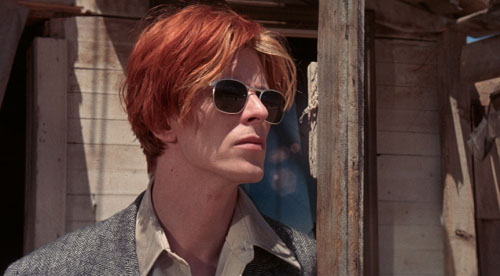
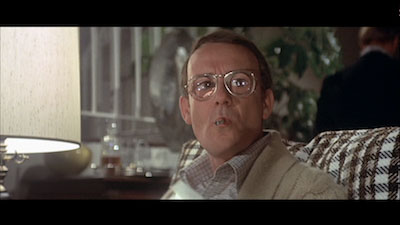
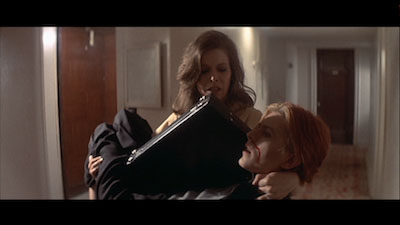
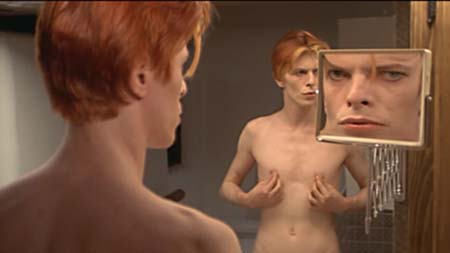
Today’s cinema adventure: The Man Who Fell to Earth, Nicholas Roeg’s 1976 feature starring David Bowie in his first leading film role.  Based on a 1963 novel by Walter Tevis, it tells the story of Thomas Jerome Newton, an extra-terrestrial visitor who uses his advanced technology to build an enormous fortune, with the intention to finance the transport of water back to his drought-ravaged home planet, only to be trapped by the interference of corporate and governmental forces- and by his own indulgence in the pleasures of an earthly lifestyle.  Visually arresting, leisurely paced, solemn and thoughtful in tone yet experimental and occasionally sensational in style, Roeg’s film (like it’s protagonist) is something of an enigma.  Eschewing clarity for mood, the director obscures the storyline with surreal imagery depicting the visceral experiences of its characters, flashbacks to the blasted desert landscape of Newton’s world, strange episodes of temporal disturbance, and a continual shifting of focus among the perspectives of the various principals.  The result is a disjointed, confusing film which seems designed to make sense only upon repeated viewings, with plot points revealed in passing by off-handed dialogue, the omission of key details which forces them to be filled in by audience assumption, and the ambiguous resolution of major story elements which leaves more questions than answers.  These, however, are deliberate moves on Roeg’s part; he is less interested in presenting a cohesive science fiction narrative than in exploring a metaphor about the lure of wealth and pleasure and the corruptive influences of social and political forces, and he expresses these themes through a meticulously edited mix of hallucinogenic, serene, majestic and pedestrian images which blend to create a dreamlike final product.  As for the acting, the key supporting roles are effectively filled by experienced pros Rip Torn and Buck Henry, as well as seventies flavor-of-the-day starlet Candy Clark as a blowsy hotel housekeeper who becomes Newton’s companion; but the film is, of course, centered on Bowie, here at the height of his rock icon popularity, who provides the perfect blend of childlike simplicity and jaded sophistication, exuding both poise and vulnerability and projecting the haunted longing and the bitter disillusionment that mark Newton’s odyssey through the experiences of our planet.  Bowie himself has admitted to his heavy use of cocaine during the making of the film, which (though regrettable from many viewpoints) no doubt served to enhance the dissociated, alien persona which so perfectly complements its dreamy, distant mood.  Added to the mix is superb cinematography by Anthony Richmond (which dazzlingly captures, among other things, the beauty of the New Mexico landscape that provides the setting for much of the film) and a well-chosen soundtrack of music (compiled by ex-Mamas-and-Papas-frontman John Phillips) featuring avant garde compositions and familiar pop tunes from various eras.  The bottom line on this cult classic: if you are looking for a straightforward sci-fi tale, don’t look here- although the currently available version is a restored director’s cut which makes the plot somewhat more coherent than the highly-edited original release, you are almost guaranteed to be disappointed.  However, if you are interested in a thought-provoking visual experience (or if you are a hardcore Bowie fan), this really is a must-see, and though it is ultimately somewhat cold and unsatisfying, it is a film which will stay with you for a long time afterwards.

http://www.imdb.com/title/tt0074851/