Nine to Five (1980)

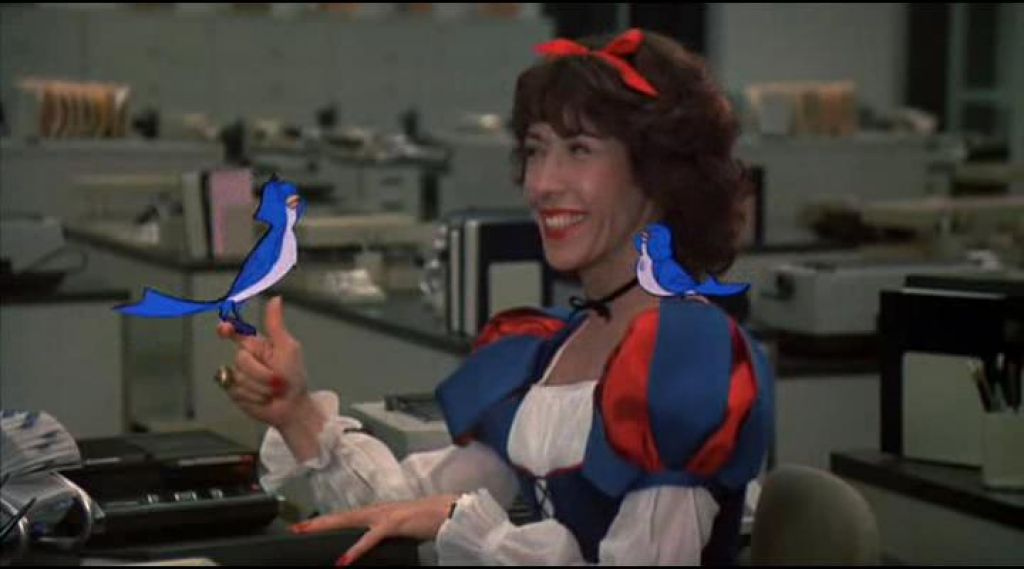
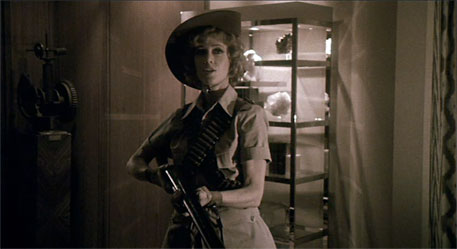
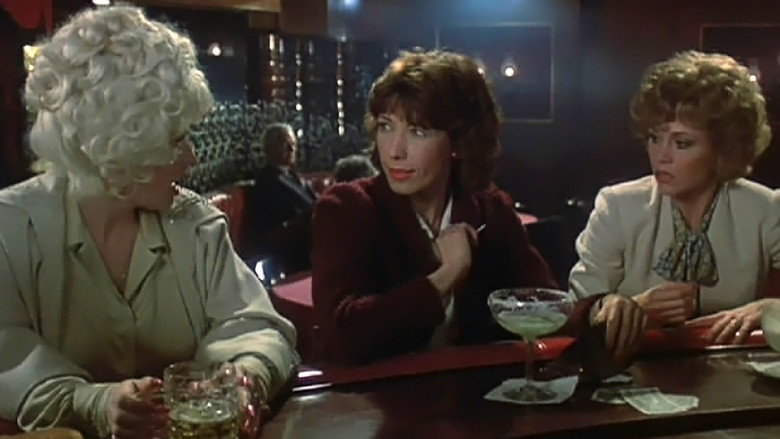
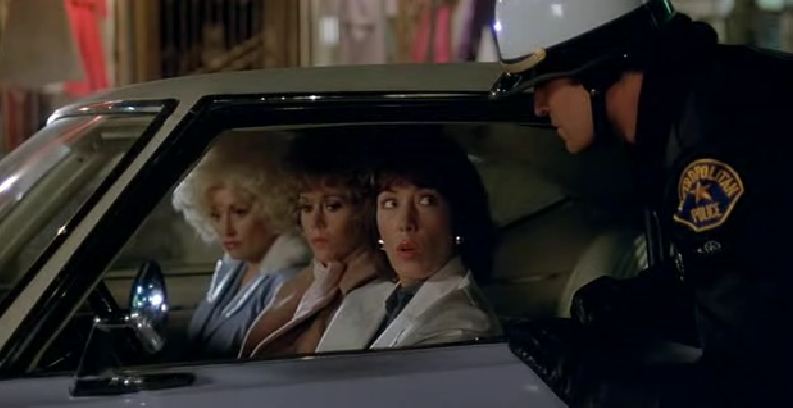
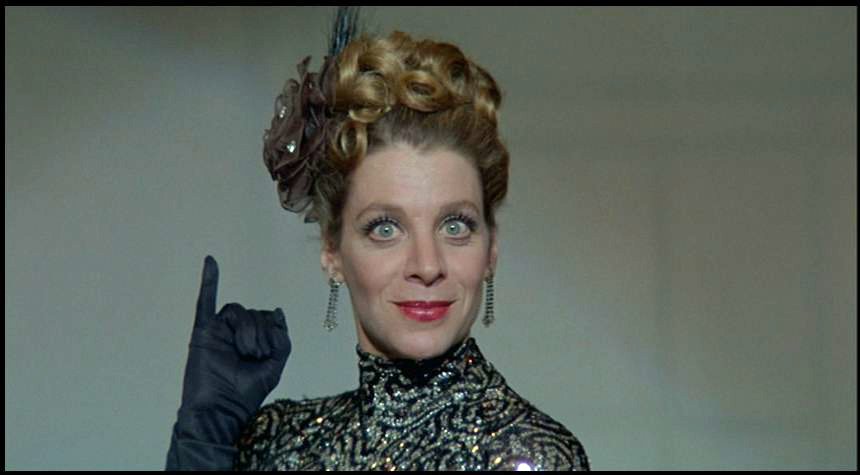
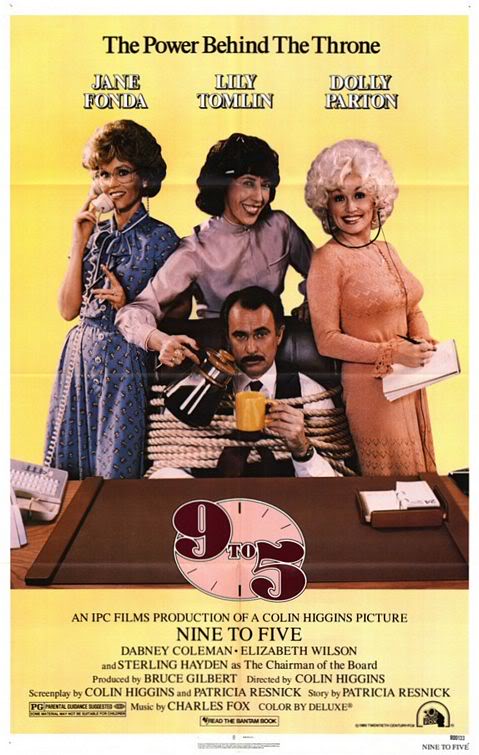
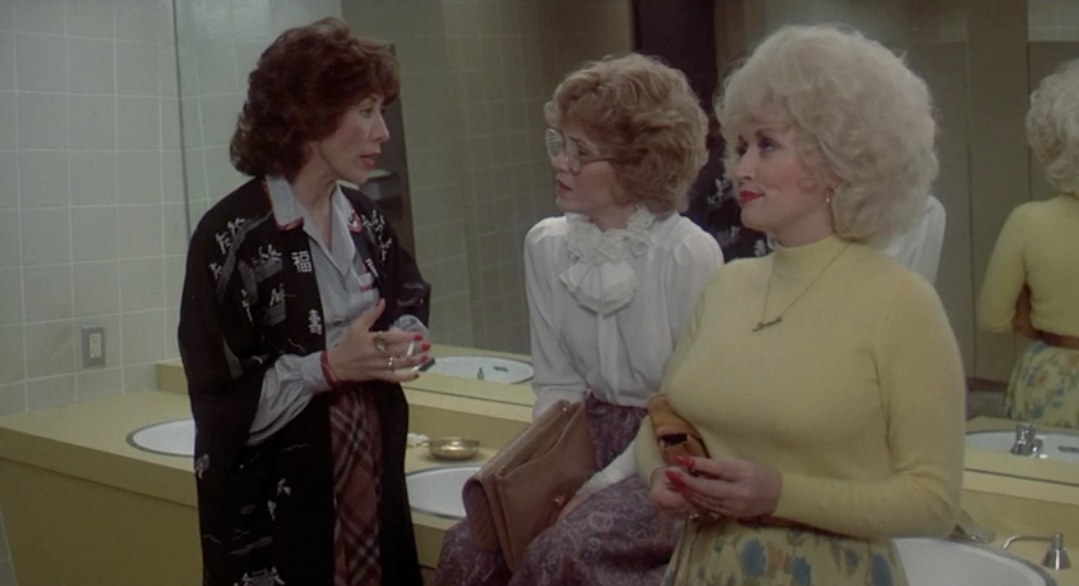
Today’s cinema adventure: Nine to Five, the 1980 comedy caper that became a popular hit on the strength of its pro-feminist sentiment and made country-western singer Dolly Parton into a bona fide movie star by teaming her with established box office draws Jane Fonda and Lily Tomlin.  Following the exploits of three long-suffering office workers whose fantasies of revenge against their chauvinistic and dishonest boss become reality when they believe they have inadvertently poisoned him, director-and-co-writer (with Patricia Resnick) Colin Higgins attempts to mine laughs from the situation as his trio of heroines take advantage of their accidental roles as champions of female empowerment to strike some serious blows against the male-dominated order and implement sweeping workplace reforms in the world of corporate greed in which they are employed.  However, despite the considerable chemistry generated by its three stars and its frequent use of broad slapstick, the film contains few laugh-out-loud moments; most of the comedy seems predictable, falling back on the familiar clichés of countless movies that came before, with the result that the humor feels forced, imposed upon a story with higher aims in order to make it more palatable.  Higgins’ direction, however, does a marvelous job of creating the impression that there is a lot more smart, funny content here than there actually is: a terrific opening montage (truthfully, the film’s best sequence) sets the stage by showing us an entire city’s worth of hassled, stressed-out, put-upon commuters struggling to start yet another demeaning, frustrating day at work; and the use of a seventies-flavored realism in the lighting and cinematography contrasts nicely with the candy-colored trappings imposed upon the grim, utilitarian settings, reinforcing the theme of humanity struggling to assert itself in an oppressive environment.  As for the performances, the three stars are unquestionably delightful together; individually, however, one can’t quite escape the feeling that something is missing.  Fonda seems out of place as the recent divorcee braving the workplace for the first time, wearing her persona of sheltered naïveté like an ill-fitting costume; and Tomlin seems equally uncomfortable in the role of an exceptional woman whose gifts have been long subjugated, exuding a subdued bitchiness that somehow feels more bitter and mean than it might if she truly sank her teeth into it.  That leaves Parton to shine, which she does, stealing every scene with her now-familiar brand of sweet-but-feisty charm; and her refreshing energy is enough to overcome the shortfalls in her co-stars’ efforts and unite the trio as a formidable team; though the ultimate effect is a suggestion that it is their combined strength that gives them their power, it seems unlikely that this was intentional.  As for the remaining cast, Dabney Coleman is so on-target as the ladies’ loathsome boss that the character shaped and limited his subsequent career irrevocably; and veterans Elizabeth Wilson and Sterling Hayden (in one of his final screen appearances) add a touch of distinction to roles which are otherwise just office stereotypes.

Nine to Five became an instant hit upon release and remains a kind of minor classic today despite its numerous flaws; indeed, despite my above criticisms, I find myself holding on to a fond memory of it.  It’s a hard film not to like, one that seems greater than the sum of its parts, inspiring its audience to cheer on its protagonists, and providing an enjoyable- if unremarkable- two hours’ worth of entertainment.  Perhaps its staying power is due to its place in history; it represents a final flourish of seventies liberalism, a celebration of progressive populist values coming just before the Reagan era rolled over the cultural landscape, re-shaping it with trickle-down economics and populating it with voraciously greedy yuppies.  Watching it today, one can’t escape a feeling of bittersweet irony: its wish-fulfillment fantasy resonates with the cause of the underdog, those overworked and underpaid minions of the corporate empire, and seems brimming with the promise that social attitudes were poised to bring about the change depicted within; in fact, the opposite proved to be true- the liberality of the seventies was about to be shelved for a decade of self-aggrandizing greed.  In a way, the film foreshadows this, too: it’s very telling that the three heroines of Nine to Five succeed by beating their oppressor at his own manipulative, dishonest game instead of changing it for the better; and in the final moments we are informed (by the obligatory “where are they now?” subtitles) that two of them will abandon the fight for equality in favor of more traditional forms of feminine success.  Still, though it does less redefining of women’s roles in the workplace than reinforcing of the old stereotype of women as the unseen force behind the scenes, there is something gratifying about watching these three feminine underdogs stick it to the man; and that alone is enough to make Nine to Five seem as infectious and invigorating as its beloved title song.

http://www.imdb.com/title/tt0080319/
Eyes Wide Open/Einayim Petukhoth (2009)

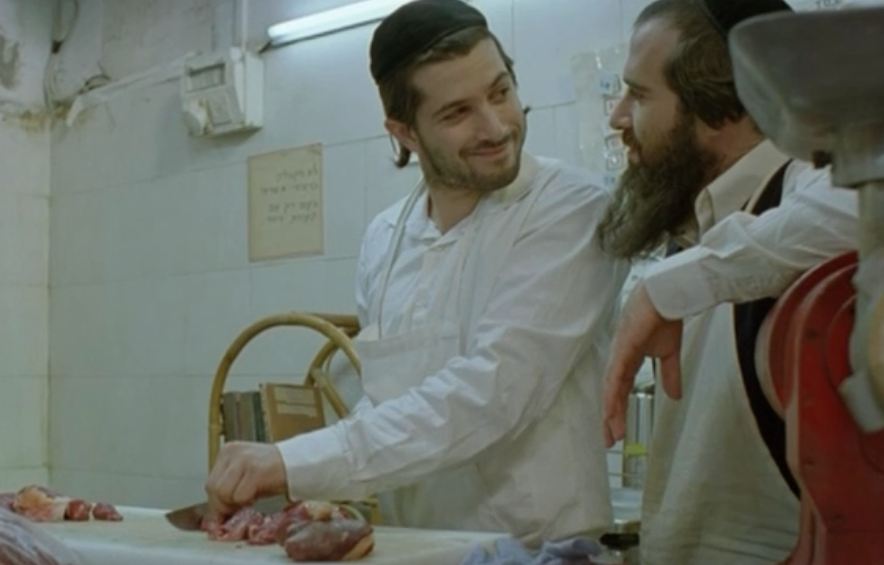
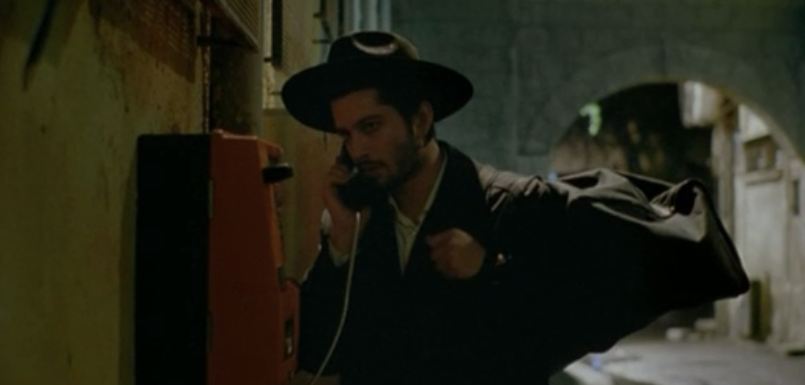
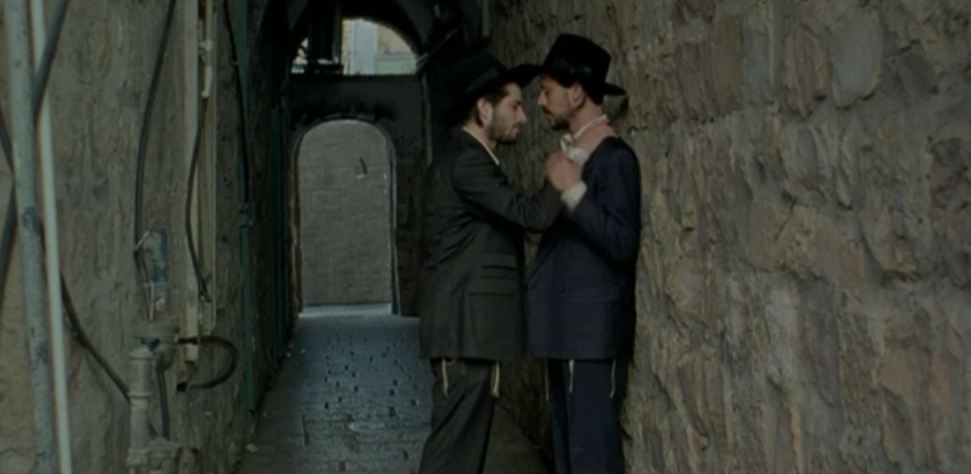
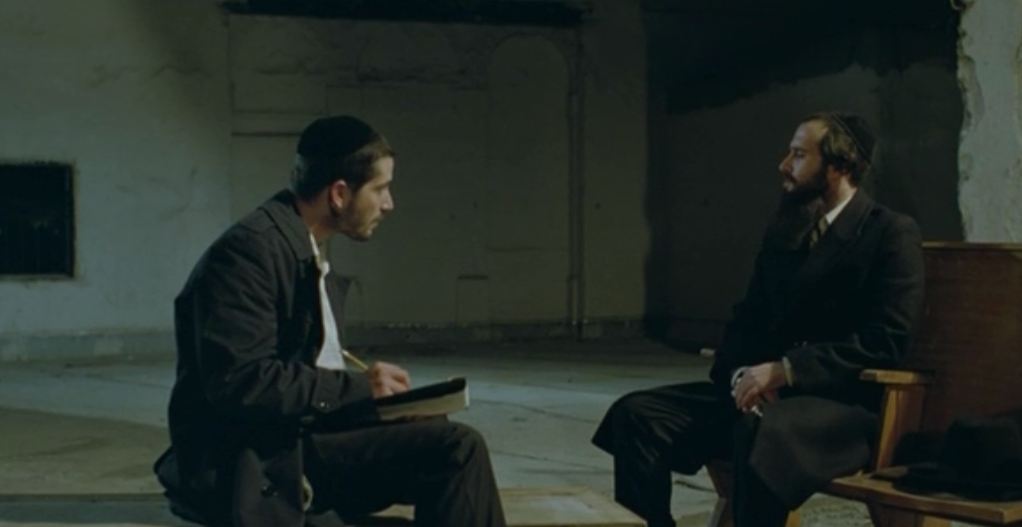
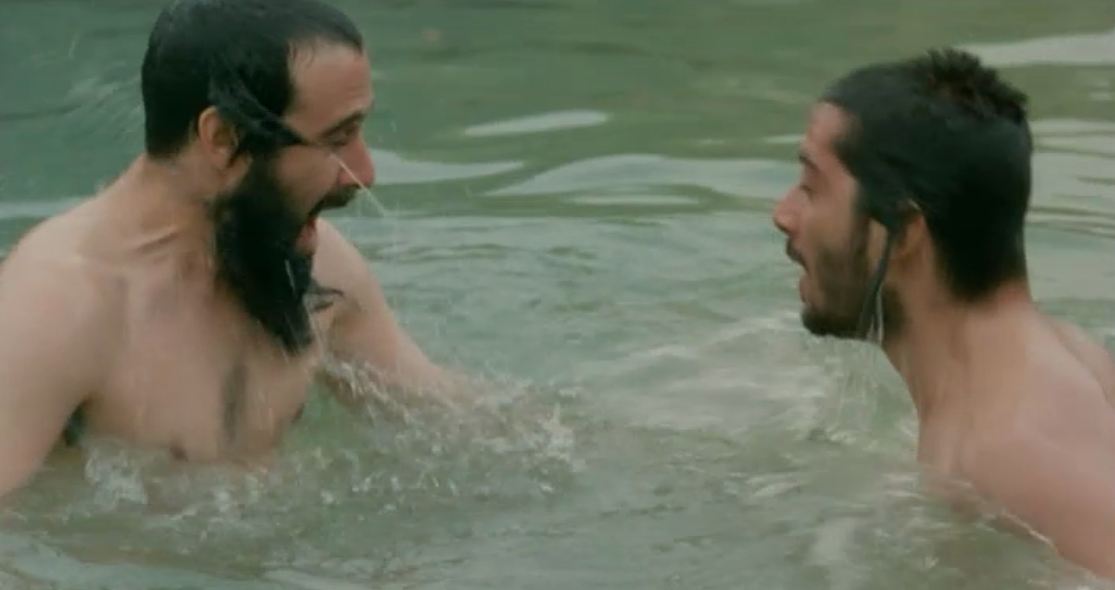
Today’s cinema adventure: Eyes Wide Open, a 2009 Hebrew-language film by first-time director Haim Tabakman depicting the spiritual and social conflict sparked by a blossoming homosexual relationship within a deeply Orthodox neighborhood of Jerusalem. One of the growing number of gay-and-lesbian-themed films to come out of Israel in recent years, it is the story of Aaron, a dedicated husband and father who inherits his father’s butcher shop; when he takes on a young homeless student as an apprentice, a forbidden attraction develops between them, eventually growing into an affair that tests his faith and threatens to cost him not only his beloved family but his place as a well-liked and respected member of the community as well. A film that treads on potentially dangerous, controversial ground, it handles its subject matter with respect for both the valued traditions of the Orthodox Jewish Church and the importance of fulfilling the needs of the heart; the screenplay by Merav Doster carefully constructs its narrative around the delicate issue at its center, choosing to offer up a chronicle of a man’s personal crisis of faith rather than an indictment of attitudes, and to focus on the honest examination of emotional experience instead of on the promotion of a particular agenda, treating its characters with sympathy regardless of which position they hold in the moral tug-of-war being staged. The result is thought-provoking without being inflammatory, moving without being manipulative, and reverent without being precious- a fine example of the kind of slice-of-life drama that achieves its goals simply by presenting its tale in a straightforward manner and allowing the viewer to make up their own mind about the issues raised within.

Despite the weighty social and spiritual matters being explored here, Eyes Wide Open is by no means an entirely solemn film. It manages to find many ways to lighten its tone, from the ironic and observational humor inherent in its situation to the more abstract metaphorical connections drawn from the large amount of meat its two main characters must handle throughout; and lest we forget it in all this talk of moral dilemmas and social obligations, this is first and foremost a romance- and a steamy one, at that. The passion between these two men is carefully crafted, building steadily from their first glimpse of each other, smoldering insistently as they grow closer and becoming stronger with each averted opportunity, until it finally explodes in a fervent love scene that is as joyful as it is erotic- and it is extremely erotic, despite (or perhaps because of) the fact that it is not visually explicit. The power of their connection does not end there, however, because the bond is not merely a sexual one; their emotional connection is built just as carefully, and it is this deeper feeling that makes their relationship so engaging and places the stakes so high. For in the end, it is the love they have for each other that turns Aaron’s life inside out, not the mere physical attraction that has brought them together; and it is the convincing portrayal of that love that keeps us invested, sharing with this illicit couple in their happiness and their heartbreak. The credit for this, of course, must go to the two actors who play them, Zoharr Strauss and Ran Danker, neither of whom, as far as I know, are gay offscreen- not that it matters. Both men are charismatic and instantly likable, and they each convey the depth and range of their roles with clarity. In particular, Strauss (who plays Aaron) does a superb job of allowing his inner landscape to show through a necessarily stoic exterior; his is the more complex role, requiring him to wrestle with a much wider range of conflicts than his younger counterpart, and he meets the challenge admirably. Which is not to say that Danker (an impossibly handsome young actor) is overshadowed or outdone; his Ezri is a portrait of a man who is resigned to the necessity of hiding his true nature, but is not ashamed of it- as he reveals in his intimate moments with Strauss when the veneer slides away and his passion and sensitivity shine through. Also delivering fine performances are Tinkerbell as Aaron’s patient wife, struggling with her growing suspicions and doing her best to fight, in her own small way, for her husband’s love; and Tzahi Grad as Aaron’s rabbi and friend, whose loyalty is stretched to its limit as he tries to maintain his support.

Director Tabakman wisely chooses to place the burden of telling the story on his actors, largely using stationary, long takes that permit an uninterrupted flow within the scenes; but he nevertheless brings his visual sense to the film with a keen eye for composing his frames, and he utilizes his Jerusalem setting- beautifully photographed by Axel Schneppat- to underscore the movie’s central conflict with the visual clash between the city’s ancient architecture and its contemporary, urban feel. His greatest accomplishment with Eyes Wide Open, however, is undoubtedly the way he allows it to deliver its full, cumulative effect without trying to tip the scales one way or the other. The scrupulous fairness with which he handles his subject is, in terms of artistic integrity, his greatest strength.

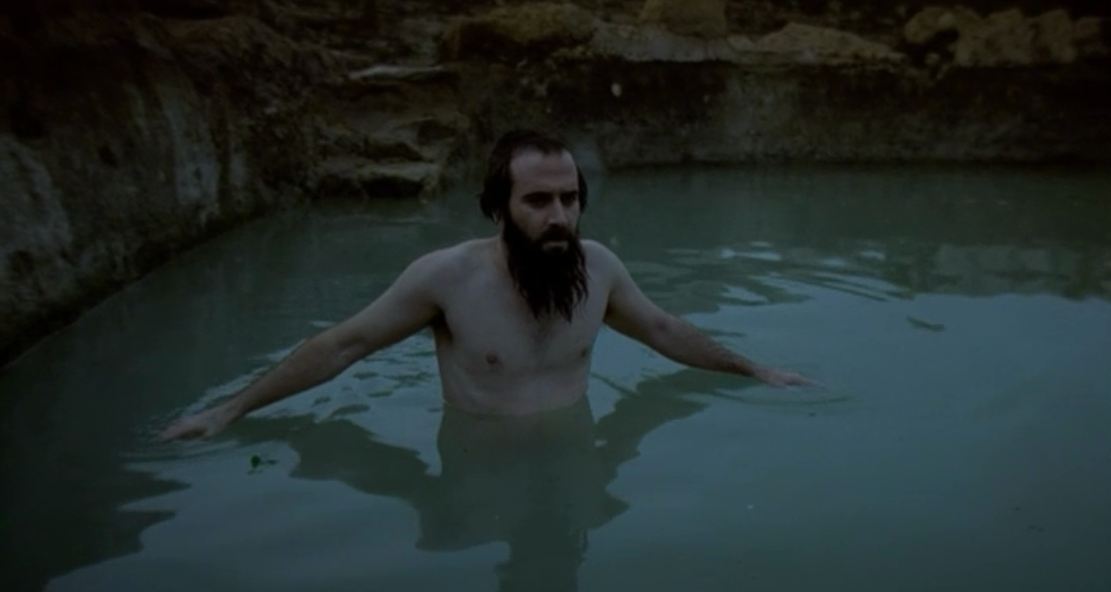
That fairness, however, also opens up the film to its greatest criticism. By refusing to overtly choose a side in this struggle between traditional religious doctrine and contemporary respect for individual freedom, the film risks interpretation as an anti-gay polemic. Certainly its treatment of homosexuality itself is beyond reproach, but so too is its sensitivity to the ancient mores of the Orthodox Hebrew culture; it is far too heavy and complicated a conflict to deserve glib or easy treatment, but those with a more progressive bent might wish for a stronger stance on the side of tolerance and equality. Personally, it is hard for me to characterize a film as anti-gay when it creates such sympathy for its homosexual characters and works so hard to generate hope from the audience for them to be together; and by virtue of exploring the conflict- which is clearly universal, for the setting could just as easily be in a heavily Christian or Muslim community- the film opens up the kind of thinking and discussion which can ultimately lead to positive change, whether socially or personally. Eyes Wide Open, however, is not a fantasy: in the end, Aaron must make a choice between holding on to the beliefs upon which he has built his life or abandoning everything he has ever known for the sake of his own happiness. The choice will not be a surprise to anyone who has paid attention to the struggle of this noble, upright man; and though one might wish that choice were a different one, how many of us would truly have the courage to make it? Still, in the film’s final moments, when Aaron is submerging himself in the waters of a cleansing spring he had once visited with Ezri, and he doesn’t come back up before the camera cuts to black, we cannot help but wonder how long he can hold his breath.

http://www.imdb.com/title/tt1424327/
An Englishman in New York (2009)

;

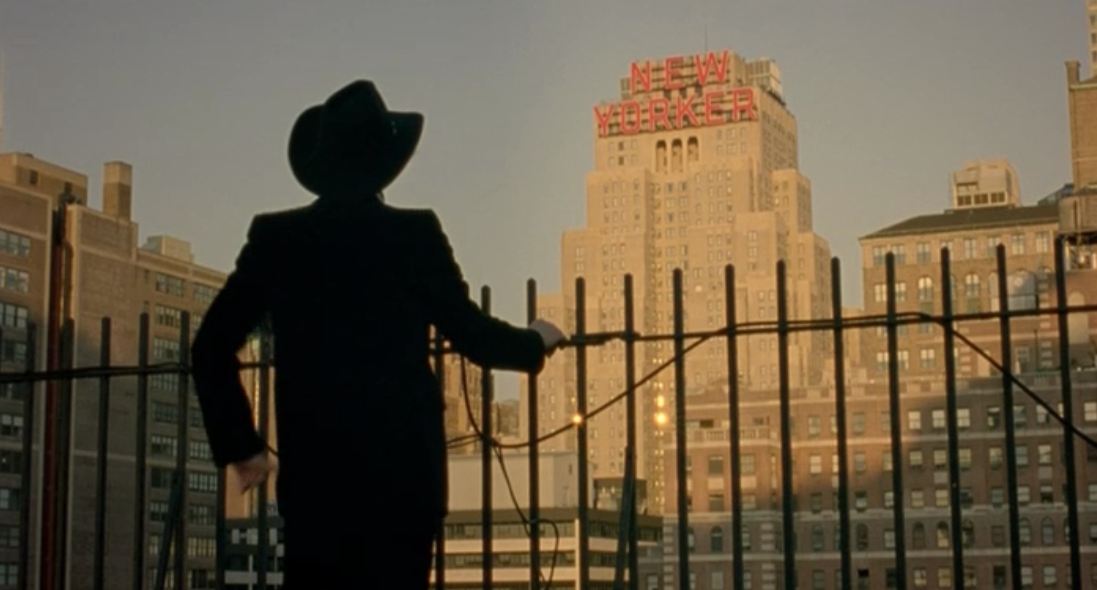
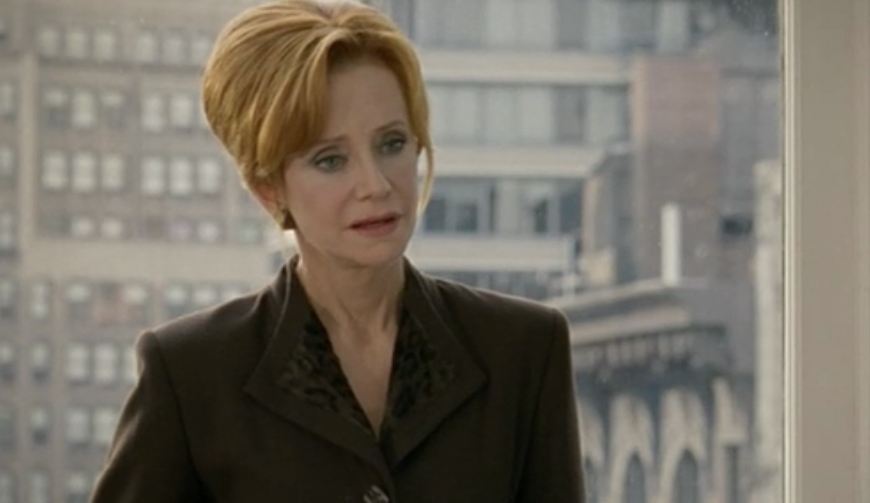
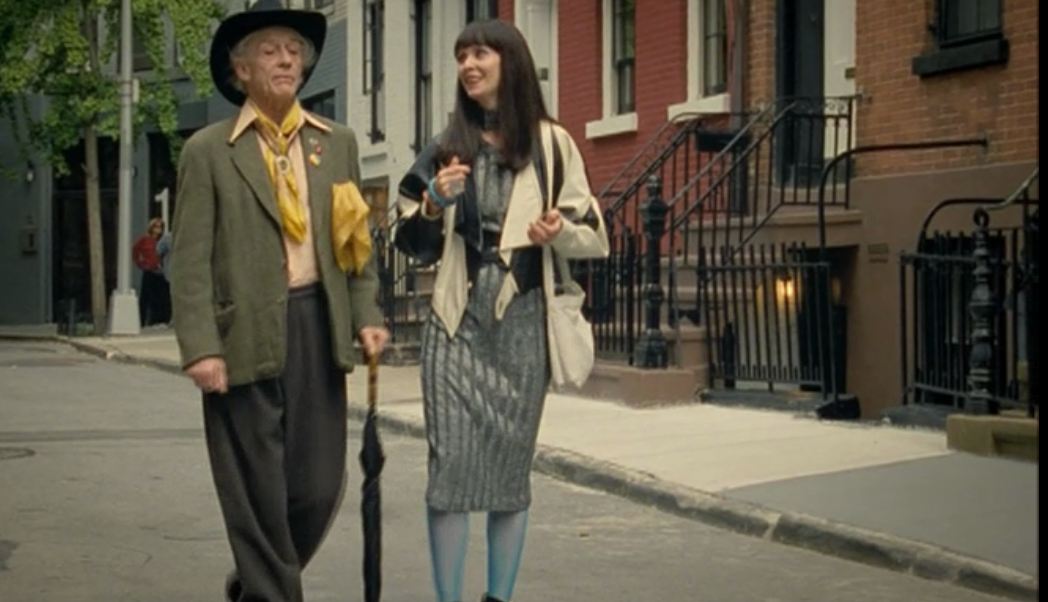
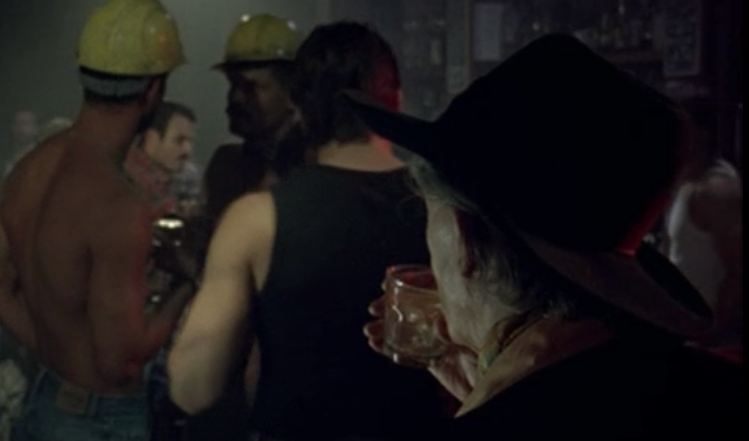
Today’s cinema adventure: An Englishman in New York, the 2009 British telefilm which marked the return of John Hurt to the role of noted real-life author/performer/raconteur/gay icon Quentin Crisp. A follow-up to the acclaimed1975 telefilm based on Crisp’s landmark memoir, The Naked Civil Servant, which made Hurt into a star and won him a BAFTA for Best Actor, this modest biopic covers the later years of the famous eccentric’s life, when he became a celebrated resident of Manhattan and a polarizing figure in the continuing struggle for gay rights. While Hurt maintains his customary brilliance in revisiting and expanding his legendary performance, this outing lacks the strong, central drive of the original film, which had the benefit of focusing on Crisp’s early struggle and triumph in asserting his homosexuality and his individuality in the repressive England of early 20th century. Part of the reason is likely that the first outing was built upon the solid ground of Crisp’s superb book, which portrayed his early life and experiences as a personal journey culminating in his courtroom victory blow against the antiquated morality laws which kept most English homosexuals fearfully cringing in the closet; but here, writer Brian Fillis attempts to encapsulate the remarkable life which followed those events into a 90 minute whirlwind, consolidating characters and contriving scenes in order to address key issues and events. To be sure, he has a cohesive purpose- the main focus here is Crisp’s fiercely guarded individuality, which put him at odds with the ongoing gay rights movement and often made him the object of exclusion within his own community (particularly after an infamous remark that AIDS was “a fad”)- and he does an admirable job of creating a portrait of a man who is forced into continuing growth in spite of himself; but the end result is considerably less satisfying than Civil Servant and leaves us wondering about many of the blank spots in between. Nevertheless, there are many reasons to admire this belated sequel, not the least of which is the rich background of late-century New York scenery lending an authentic documentary feel to the proceedings. By far, however, the greatest joy here is the magnificent performance of John Hurt, who once again captures to perfection the physical and vocal character of this legendary figure while simultaneously conveying the depth of emotion and experience which lies beneath that flamboyant exterior; in Hurt’s hands, the affectations of dress and manner become (as they were in real life) an expression of Crisp’s true self rather than a costume proclaiming his refusal to conform. Nevertheless, in spite of the more obvious success of his characterization, it is in the more intimate moments when Hurt’s brilliance as an actor really shines through- his weathered face and soulful eyes wordlessly express volumes, whether he is confronting the thoughtless prejudice of younger gay men or his own mortality. Supporting him are an array of established character actors- Dennis O’Hare, Swoosie Kurtz, Cynthia Nixon- who are never quite allowed to rise above the constraints of the condensed format, although Jonathan Tucker has some nice moments as artist Patrick Angus, whose work was championed into success by Crisp. Overall, though its hard to call An Englishman in New York a worthy successor to the still-lauded Civil Servant, it offers many rewards in its own right; and though it may ultimately contain less insight into Quentin Crisp than the Sting-penned song from which it takes its title, it is still a fitting and necessary epilogue to the story of a man who changed the world by refusing to change himself.

;

http://www.imdb.com/title/tt0997057/

;

The Cabinet of Dr. Caligari/Das Cabinet des Dr. Caligari (1920)

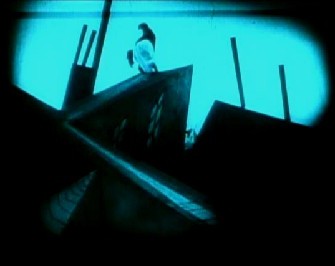
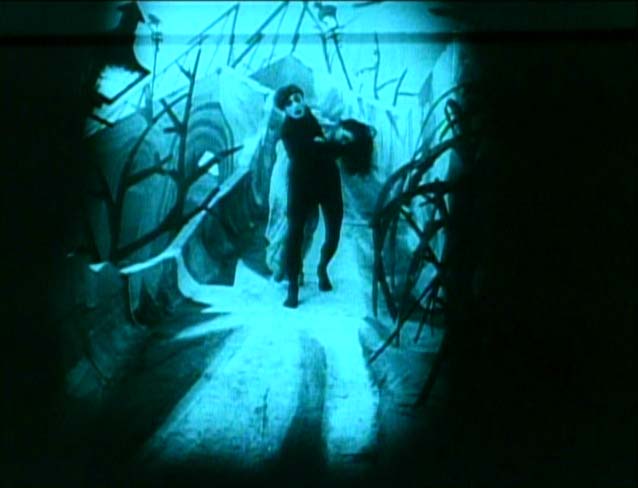
Today’s cinema adventure: The Cabinet of Dr. Caligari, the 1920 cinema cornerstone that established enduring conventions for the horror genre- indeed for cinema itself- and for the general public at least, has become one of the most recognizable representations of the German Expressionist movement.  A bizarre tale about a mysterious carnival magician whose hypnotized slave commits a series of murders at his bidding, this landmark film was first conceived by its writers, Hans Janowitz and Carl Mayer, as a way to demonstrate the effectiveness of film as a medium for Expressionist art, and also to establish a definitive look for German cinema that would distinguish it from the growing influx of American movies to their country. The resulting work is one of the most distinctive visual experiences ever produced, featuring wildly distorted scenery (abstract, asymmetrical sets with sharp, jagged lines, obvious and elaborately theatrical backdrops with painted-on shadows) highly dramatic lighting, and a heightened acting style that seems exaggerated even compared with other silent films of the time; it was an experiment which only took place because the writers persuaded producer Erich Pommer that making the film in this style would save considerable amounts of money.  These creative pioneers- including director Robert Weine, who was brought on board when rising wunderkind Fritz Lang was unavailable- believed that their bold new approach would change the art form forever; however, though Dr. Caligari met with enthusiastic response from audiences and critics alike, and stirred much excitement in the world’s blossoming film community, it failed to lead the industry away from the more mundanely representational style in which it remains more-or-less grounded to this day.

This is not to say that the film had no bearing on the future of cinema.  Its visual conceits and thematic elements have provided immeasurable inspiration for filmmakers from F.W. Murnau to Tim Burton and beyond. Its macabre tone and gruesome content influenced not only the future of the horror genre but the entire film noir movement as well.  It set the precedent for using cinematic embellishment to suggest altered states of consciousness: virtually every film depicting dreams, delusions, or drug-induced hallucinations can trace its heritage back here.  Most important of all, perhaps, was its establishment of numerous structural conventions that have been in continuous use ever since: by constructing its grim story as the remembrance of a young man who is ultimately revealed to be a delusional patient in a mental hospital, Dr. Caligari became the first film to feature a framing device bookending its main narrative, to rely on an unreliable narrator, and to surprise its audience with a twist ending.  None of this is to say that later filmmakers could not have made these innovations on their own- but Caligari went there first.

All this film class trivia is well and good, but how does The Cabinet of Dr. Caligari  hold up today for the casual viewer simply seeking entertainment?  Probably not well: the world is a much different place than it was in 1920, and we have been inundated with stories and images much more shocking and terrifying than those in this film- which, ironically, opened the door for all of them.  The conventions of fiction observed within it seem quaint and unsophisticated by our jaded modern standards, and the performances, with their jerky, unnatural physicality and their often-seemingly-inappropriate facial expressions (to say nothing of their histrionic, over-the-top style) seem unconvincing and inaccessible to us.  To top it off, its outrageously artificial visual style is so alien and disconcerting that it only serves to distance us further from the events onscreen, ensuring that we will never become viscerally engaged in the proceedings.  Of course, it’s true that these qualities were present even when Dr. Caligari was made- deliberately included as part of the Expressionist form intended and carefully crafted by its creators- but historical context has no bearing on our contemporary requirements for suspension of disbelief.

Before concluding, however, that Caligari has no value for any modern viewer who is not a film buff or an art enthusiast, it might be wise to look past the obvious sensibility gaps created by its distance from us in time.  It was never meant to be a purely escapist experience, even when it was conceived nearly a century ago; rather, it was- and is- a vivid and fully realized vehicle for Expressionist themes such as paranoia and the unreliability of perception, and an impressive presentation of the movement’s distinct visual style, comprised of crude, primal imagery that works on the subconscious to elicit a strong emotional response.  Its effectiveness is even keener in its restored form, which not only returns sharpness and luster to the once-faded print but also recreates the original hand-tinted colors, helping to clarify the story by differentiating day from night, and polishing up the intertitles with a font and style coordinated with the bizarre content of the story they tell.  A viewing of Dr. Caligari is hallucinogenic enough on a small screen, and though I’ve never had the opportunity to do so, I suspect that seeing it projected larger than life in a darkened theatre would be akin to experiencing a full dream state.

It’s also worth mentioning that although the stylized acting is hard to assess fairly from a standard modern perspective, Werner Kraus and Lil Dagover, as the mad magician and tragic damsel, respectively, have become iconic as personified archetypes of the collective consciousness; and as Cesare, the tormented somnambulist, Conrad Veidt is electrifying, using his remarkable physical skills and his expressive face to transcend both genre and style, and delivering perhaps the first truly great film performance- one which continues to inspire and influence actors to this day.

So although The Cabinet of Dr. Caligari may not offer the kinds of thrills and chills sought by the average viewer looking for a lively horror film, it certainly offers many other rewards.  There are good reasons why it has been celebrated, emulated, re-invented, re-adapted, saluted and parodied so many times over the decades; it is part of our cultural makeup, and if that is enough to get you to watch it, you may find yourself enjoying its twisted pleasures in ways you never expected.

 http://www.imdb.com/title/tt0010323/

Beginners (2011)

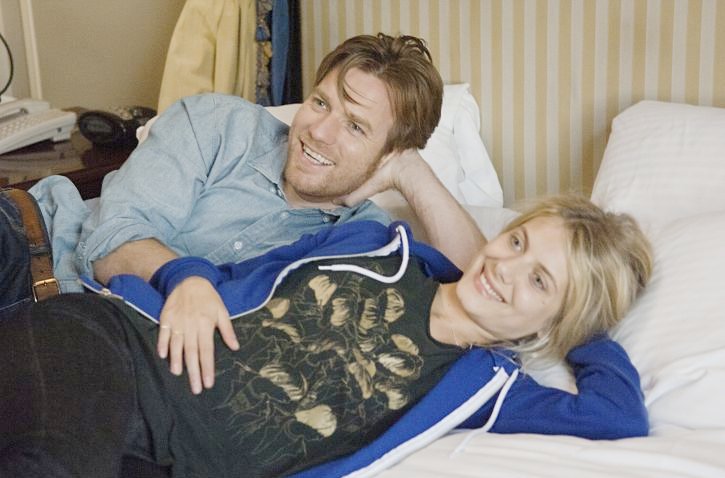
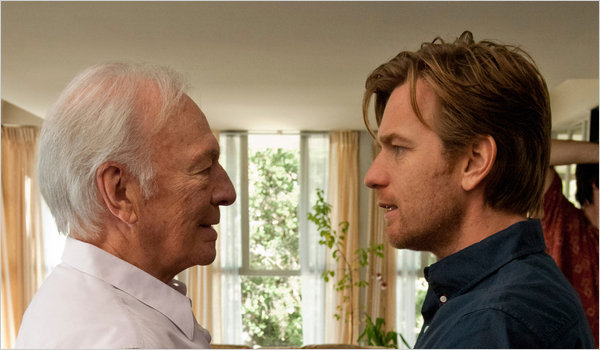
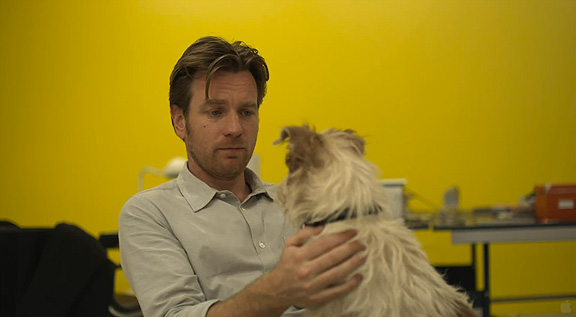
Today’s cinema adventure: Beginners, the 2011 romantic comedy/drama which garnered nearly universal critical acclaim and won multiple accolades and awards (including an Oscar) for supporting actor Christopher Plummer.  Heavily interweaving his narrative with flashbacks, filmmaker Mike Mills documents the efforts of Oliver, an L.A. graphic artist, to reconcile the memories of his childhood (and his grief over the recent death of his father) as he takes the tentative first steps towards a relationship with a young French actress.  Laced with clever, quirky humor, defying stereotypes and expectations at every turn, the film not only engages us with its charming story and likable characters but invites us to ponder the experiences of our own lives and our collective history, and how they provide us with the knowledge we need to grow and the foundation upon which to build a future beyond them.  Mills’ direction (from his own semi-autobiographical screenplay) is superb, moving the film freely between past and present, using its protagonist’s art to provide commentary and draw connections, and offering a wealth of “snapshot moments” which convey volumes about the characters and their lives without the need for extensive dialogue or exposition.  The filmmaker’s efforts would be pointless, however, if not for the superb cast, headed by the ever-lovable Ewan McGregor, giving a heart-breaking performance that manages to convey his character’s deep sadness without ever making him into a downer.  Melanie Laurent is equally effective as his new love interest- who is coping with parental issues of her own- and she, too, succeeds in maintaining both an attractive charm and a melancholy core.  But the most outstanding player here is Plummer, portraying Oliver’s father, a 75-year old man who comes out as gay following his wife’s death and embraces a new life, lived to the fullest, even as he faces his own terminal cancer.  This veteran actor is magnificent to watch as he captures the full spectrum of humanity, from the child-like glee he finds in exploring a world of which he has always dreamed to the dignity he maintains as he succumbs to the humiliation of his disease.  Fully deserving of all the accolades, it’s a performance that provides the strongest- but by no means the only- reason to see the film.  Los Angeles locals will also enjoy the Silverlake settings, lovingly captured by cinematographer Kasper Tuxen, which help to set the tone of Beginners– hip and quirky, but possessed with a keen awareness and respect for the past.  Mills’ film isn’t perfect: some would quibble that it borders on being overly precious, or that the characters’ troubles seem based on self-centered over-thinking and an arrested emotional development resulting from their insulated lifestyle.  However, this is a film about moving forward, about setting aside the emotional baggage of an imperfect past- while still honoring it- and finding the courage to face the challenges of an uncertain future.  In short, it’s a film about change, and therefore a film about fear- the kind of deeply personal fear which can make us all feel like children, no matter our age or background, and therefore cause our thinking and our behavior to seem immature from an outside standpoint.  Maturity comes with taking the leap towards something new, despite these deeply conditioned anxieties, and that is what each of the three principal characters in Beginners must do.  Frankly, I think it’s remarkable that a film addressing such a real and primal fear, and pervaded by such a tone of  bittersweet melancholy, can leave us feeling so charmed- perhaps that’s due to the fact that, above all, Beginners is a film about love, and given their emotional handicaps, if these people can make it work (and whether or not they can is by no means certain), then the rest of us can live in hope that we can, too.

http://www.imdb.com/title/tt1532503/

All That Jazz (1979)

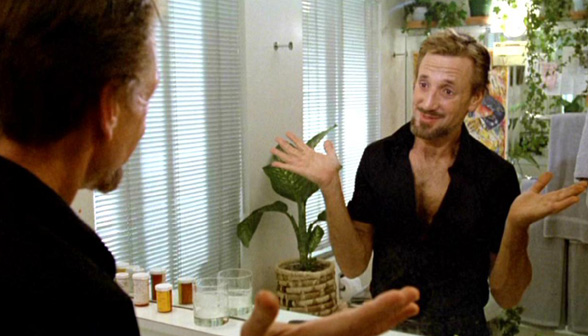
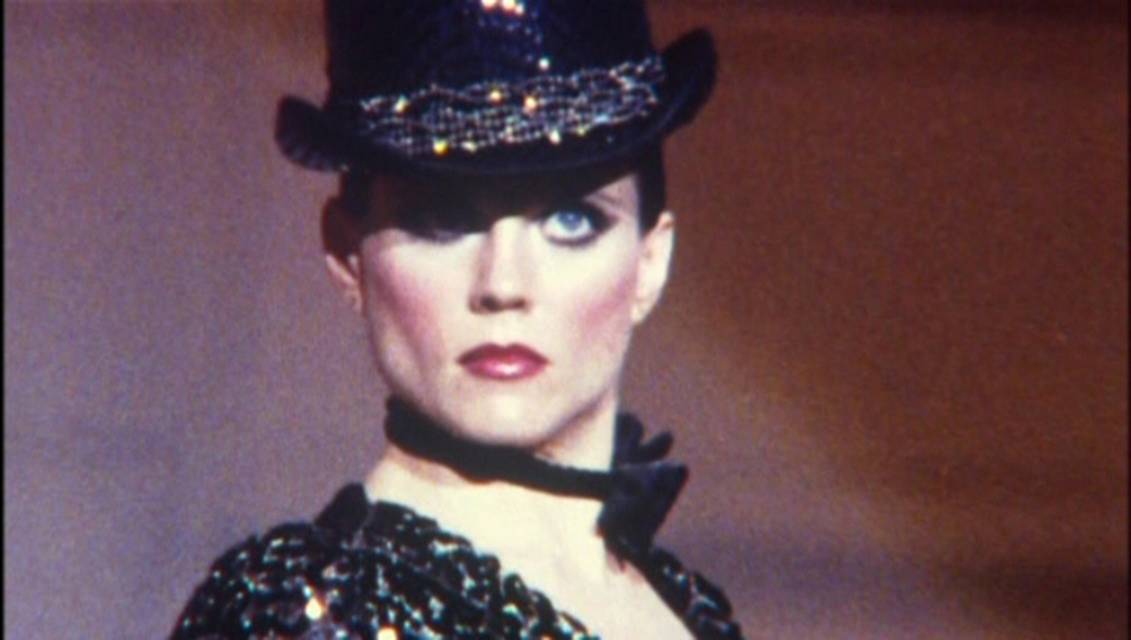
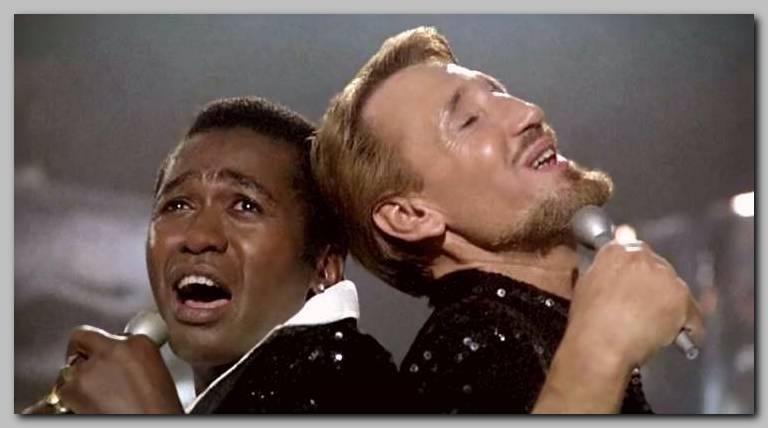
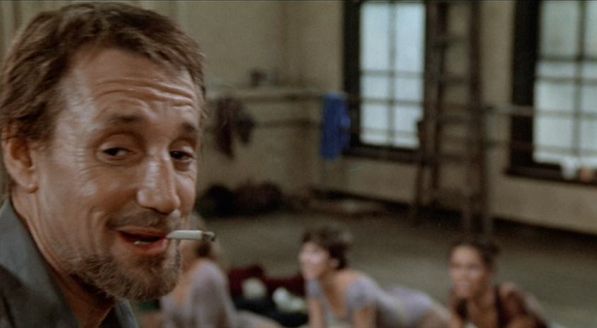
Today’s cinema adventure: All That Jazz, the 1979 feature by Bob Fosse which reinvents the “backstage musical” as a fantasia on death and show business.  Framed as a portrait of Joe Gideon, a workaholic director/choreographer whose self-destructive habits sabotage his life and his relationships, the film is in reality a thinly-veiled autobiographical exploration of Fosse himself, documenting his failures as a husband, father and lover, depicting his excessive use of cigarettes, drugs and alcohol, exposing his serial womanizing, and revealing his obsessive dedication to his work as both an escape from and a response to the downward spiral of his personal life.  More importantly, it is a vehicle for the legendary director- with the help of co-screenwriter Robert Alan Arthur- to deliver his cynical observations about the entertainment business and its people, and a stylized allegory of his long flirtation with death- personified here by a mysterious, angelic woman in white, with whom Gideon carries on a hallucinatory fantasy dialogue, interpolated with the scenes of his life in the “real” world.  Laced with gallows humor, it’s a film which gets most of its mileage from contrasts- between the slick veneer and the seedy underbelly of the world it presents, the syrupy platitudes and the cold-hearted motives of the people who inhabit it, and the self-loathing and the self-aggrandizement that characterize its central figure- and by extension, the director himself.  Standing in for Fosse onscreen is Roy Scheider, whose performance as Gideon was derived from first-hand observations on the set, and provides a highly truthful and sympathetic representation of a man, weary from a lifetime of literally and figuratively “putting on the show,” who is so jaded and hollow that he is unable- and unwilling- to distinguish truth from illusion.  The ethereally beautiful Jessica Lange provides a chilling blend of seduction and sincerity to her embodiment of the angel of death, lending real emotional weight to the prospect of a final embrace; and the remainder of the cast- which includes some of Fosse’s own paramours as some of Gideon’s, as well as a sizeable collection of real-life Broadway performers portraying various denizens of the show biz circus that surrounds his life- do a superb job of capturing the authenticity of Fosse’s world.  Of course, the real star of this mix of cold reality and Fellini-esque fantasy is Fosse himself- for as elaborate as the film’s dramatic structure may be, it serves primarily as a framework for numerous displays of his legendary gifts as a choreographer, captured by the first-class cinematography of Guiseppe Rotunno and performed by practitioners well-versed in his distinctive style by years of first-hand experience.  These range from the breathtaking and justly famous audition montage which opens the film, to the erotically-charged airline number with which Gideon shocks and dazzles his producers, to the macabre hospital hallucination sequence featuring Busby Berkely-style feather dancers, to the culminating jazz/rock fantasy that serves as a grand finale for both the film and its protagonist’s life.  Whatever unique insights may be offered by Fosse’s look at his own psyche, the foremost value of All That Jazz comes from these dance sequences which offer perhaps the quintessential representation of his iconic style on film.  For many viewers, the highly theatrical, stylized conceit upon which the film hinges may seem too heavy-handedly symbolic, but it must be remembered that Fosse is not attempting to present a universal picture of humanity and death, merely his own personal take derived from a lifetime of channeling reality into fantasy; and if the self-observations he presents ultimately seem, despite their seemingly brutal honesty, to be just one more level of show-biz B.S., his perspective on himself acts as a microcosmic illumination of the dangers and demons of the creative personality, and as a warning to avoid the pitfalls which he so whole-heartedly embraced.

http://www.imdb.com/title/tt0078754/

Moonrise Kingdom (2012)

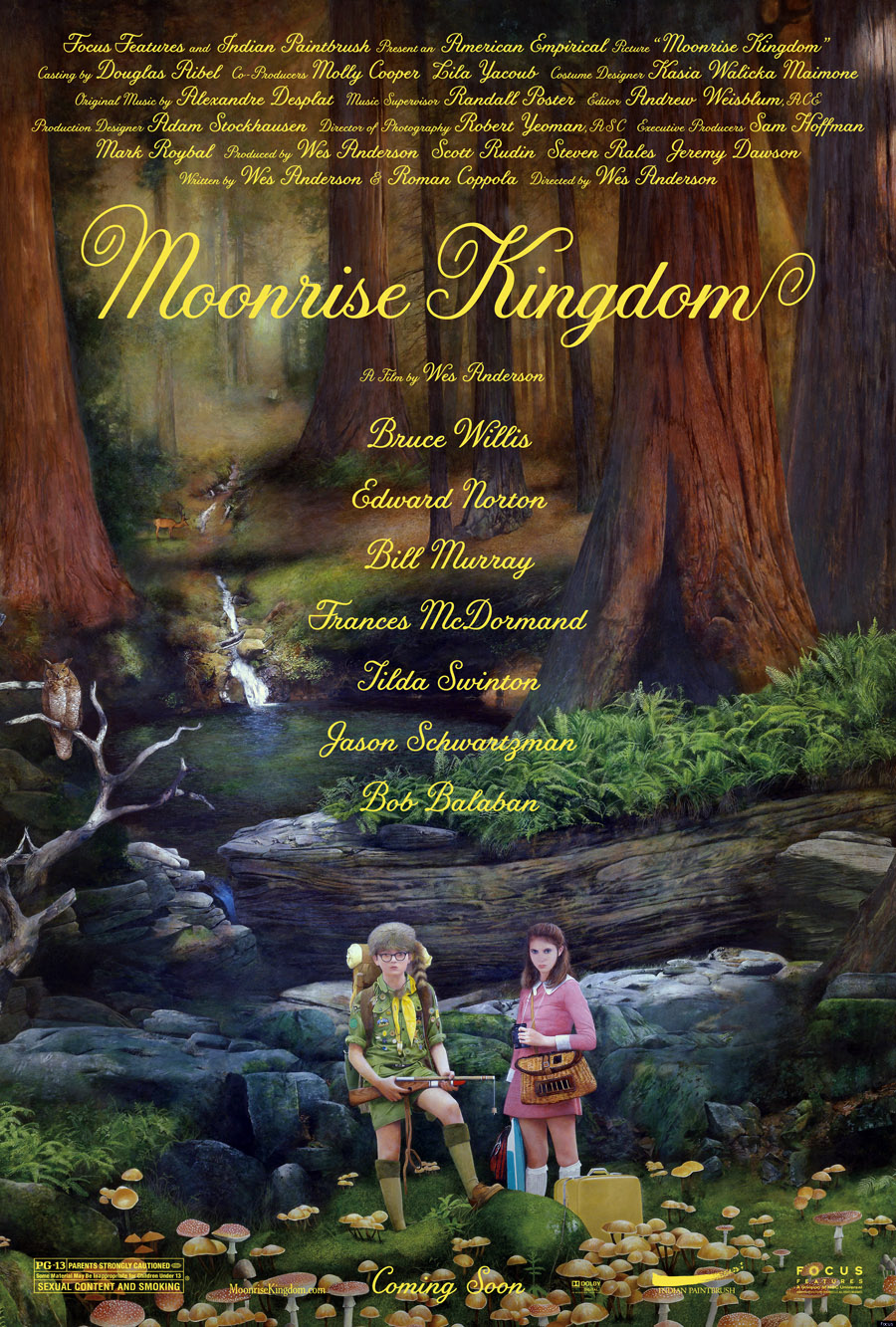
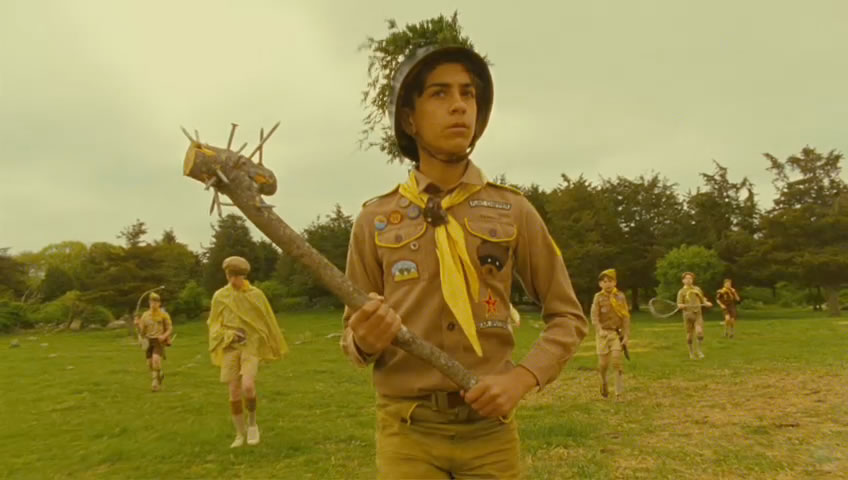
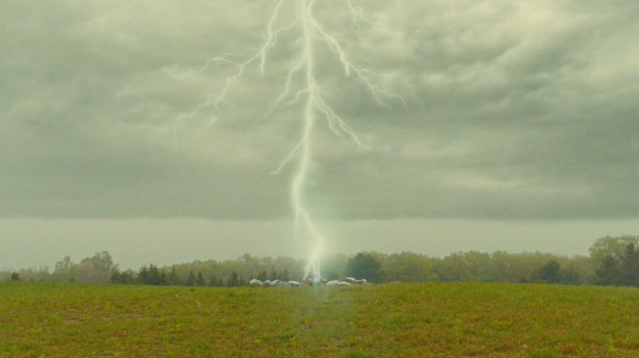
Today’s cinema adventure: Moonrise Kingdom, a 2012 feature that lets you know, from its very first frame, that it is the work of filmmaker Wes Anderson.  The quirky, bittersweet tale of a pair of star-crossed 12-year-old misfits who enact a plan to run away together, it is a film that draws heavily on the entire repertoire of its indie-icon director; all the familiar elements are here, from the visual style of vivid colors and symmetrically-framed shots to the thematic elements of dysfunctional family structures and ritualized personal mythologies.  Drawn in from the start by the methodical introduction of its characters (another Anderson trademark, here cleverly assisted by the use of Benjamin Britten’s “A Young Person’s Guide to the Orchestra” on the soundtrack), we are transported to a world at once fantastical and mundane, a nostalgic landscape of mid-century middle class life transplanted to a remote New England island setting; it is a place where the comfortable trappings of civilization exist in the midst of a verdant but unpredictable wilderness, a delicate balance reflected by its inhabitants’ constant struggle to contain the unfettered dreams of childhood by enforcing the rules of the adult world.  Here, the local scouting organization seems to carry as much civic authority as the police force (which appears to be comprised of a single officer), a meteorological researcher takes on the role of mysterious, omniscient sage, and the larger social order is dictated by a tenuous connection with an outside world represented by various austere personages mostly present only at the other end of a telephone line.  Within these oddball, darkly whimsical surroundings, Anderson unfolds a coming-of-age story, told from the perspective of the two children at its center, in which it becomes clear that the adult characters, for the most part, are the ones who must break through the barriers created by the frustration of their own youthful fantasies; the grown-ups are the ones who must “come-of-age,” and only then can the children- who think and behave in a highly adult fashion, or at least their attempted approximation of it- truly be allowed their childhood.  This inversion of formula, in which the juvenile protagonists serve as catalysts for the transformation of their adult counterparts, is certainly nothing new: it has been explored in films ranging from early classics like Chaplin’s The Kid to contemporary blockbusters like Super 8; in particular, Anderson’s film seems to draw heavily on that mid-century classic of the genre, Disney’s The Parent Trap.  This, however, is in no way meant to imply that Moonrise Kingdom is derivative or full of clichés- on the contrary, thanks to Anderson’s characteristically disarming wit and pseudo-subversive charm, it is as fresh and surprising a moviegoing experience as one could hope.  It’s probably the best Wes Anderson movie since The Royal Tennenbaums; and, of course, though the gifted director may take the lion’s share of credit for its success, it is a combination of elements provided by a worthy group of collaborators.

To begin with, the screenplay, co-written with Anderson by Roman Coppola, is full of the kind of offbeat delights we have come to expect from this director: populated with characters simultaneously familiar and unique, comprised of inventive circumstances and conceits through which the story and its various sub-plots flow, and infused with a magical tone that nevertheless keeps ever-present the potential for serious real-life consequences; the proceedings never lose their underlying weight, but they are peppered with humor throughout, ranging from the dry to the morbid, and usually unexpected; and the abundant heavy-handed symbolism (place names like “Summer’s End,” a tree house impossibly positioned at the top of a very tall tree) is treated with such good-natured irony that it comes across as clever instead of just obvious.  Anderson’s trademark visual style is captured with an almost-surreal crispness and color by cinematographer Robert D. Yeoman, and likewise contributing to the distinctive look of the film is remarkable work by Art Director Gerald Sullivan, Set Decorator Kris Moran, and Costume Designer Kasia Walicka-Maimone, who together create an eclectic style that resembles a collision of the catalogues from L.L. Bean and Eames Design Studio.  As for the soundtrack, Anderson relies both on charming original music by Alexandre Desplat and, as always, a mix of obscure-but-familiar recordings- this time mostly eschewing his usual pop/rock choices for classical selections by Britten (the aforementioned piece as well as others) and Saint-Saëns, juxtaposed with the mournful crooning of Hank Williams.

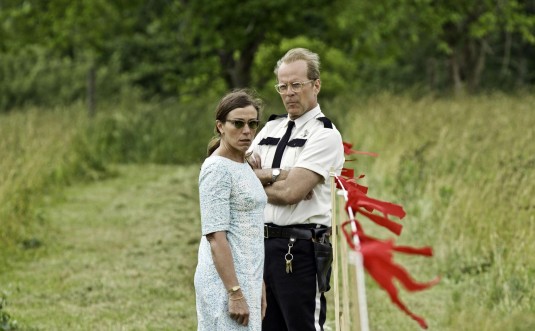
Of course, it is the ensemble cast that must ultimately bring Anderson’s cinematic symphony to life, and each member, without exception, is right on key.  Edward Norton is tremendously likable as the plucky and earnest scoutmaster; Bruce Willis, as the local police captain, plays nicely against type while still taking advantage of his image as a tough man of action; Frances McDormand and Anderson perennial Bill Murray manage to capture the percolating bitterness of a long-embattled couple without making them unsympathetic; the ever-divine Tilda Swinton radiates a kind of institutional anti-Mary-Poppins vibe as a no-nonsense bureaucrat known simply as “Social Services;” Bob Balaban, Harvey Keitel and Jason Schwartzman (another Anderson stalwart) bring their own distinctive gifts to smaller roles; and an array of young actors contribute a spectrum of personalities as the scout troupe that gets caught up in the action.  Despite this impressive collection of performances, however, the shining stars of Moonrise Kingdom are Kara Heyward and Jared Gilman, as the two pre-teen lovers around which the story revolves.  Each underplay their characters with surprising skill and maturity, capturing the dispassionate detachment affected by these antisocial youngsters while still conveying the sweetness that lurks beneath it, and complementing each other’s work with a chemistry that is rarely seen in screen pairings between seasoned adult professionals; it’s their show, and it is a testament to their talent (and their director’s) that, despite being surrounded by a gallery of all-star heavyweights that includes two Oscar-winners and several other nominees, nobody even comes close to stealing it from them.

Moonrise Kingdom is one of those rare movie experiences that creeps up on you.  After seeing it, I knew I liked it immediately, but it wasn’t until it had sunk in overnight that I realized just how much.  There is a lot to take in: a plethora of details that Anderson meticulously arranges, just as his characters often arrange the contents of their suitcases or the objects on their desk; and just as those everyday items are transformed into talismans and icons by their owners, so too are all the pieces of Anderson’s movie invested with a significance that gives them a subliminal, cumulative effect when woven together into the whole.  By the end of Moonrise Kingdom, you find that you’ve been moved on a level so deep, it doesn’t even have a name, and you didn’t even know it was happening.  It’s a feeling that makes all the delights of the previous 90 minutes seem even more rewarding.  Sadly, in a season full of mysterious alien beings and comic book action heroes, this little film is likely to be overlooked by a majority of moviegoers.  Don’t be one of them: go and see Moonrise Kingdom as soon as possible; it will likely be only the first of many times.

http://www.imdb.com/title/tt1748122/

My Week With Marilyn (2011)

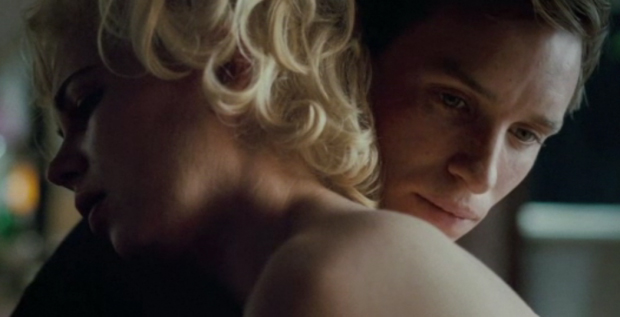
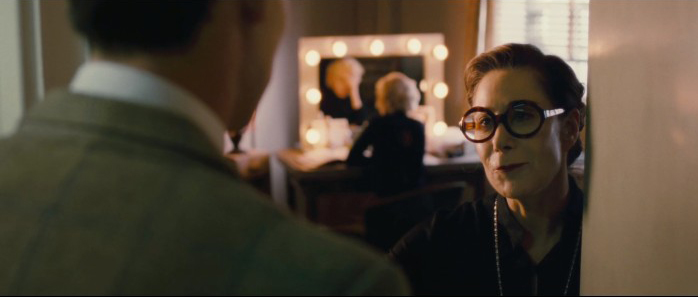
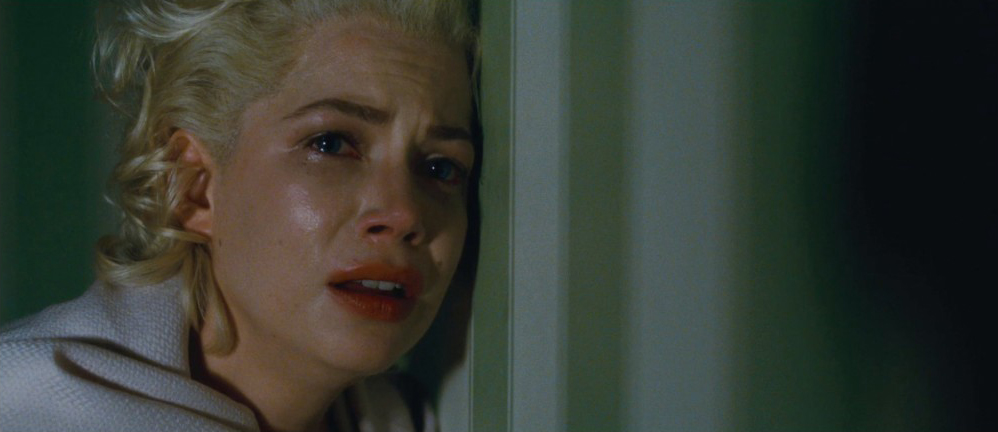
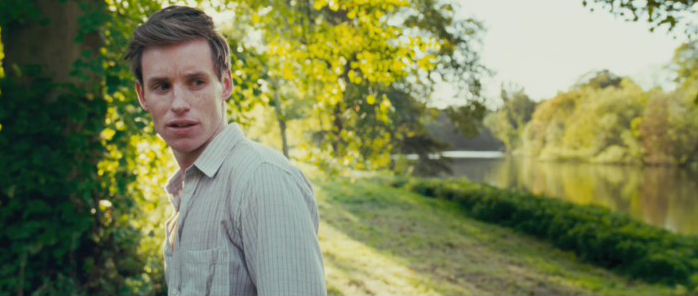
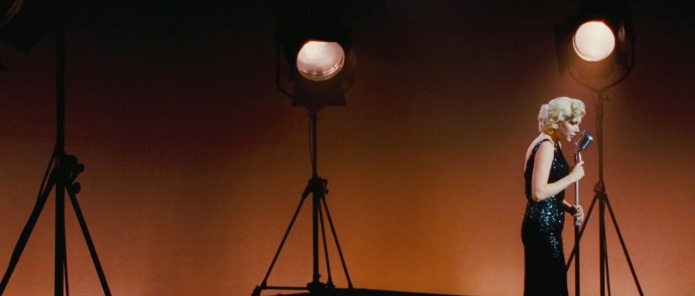
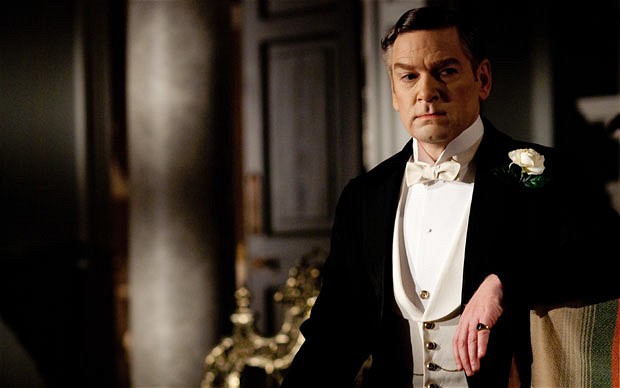
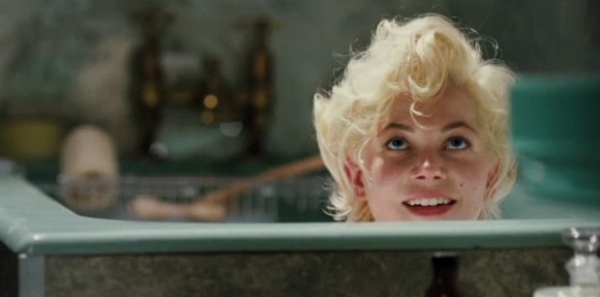
Today’s cinema adventure: My Week With Marilyn, the wistful 2011 biopic based on Colin Clark’s memoir, The Prince, the Showgirl, and Me, which detailed the author’s brief relationship with iconic starlet Marilyn Monroe during the turbulent filming of The Prince and the Showgirl with actor/director Sir Laurence Olivier.  Whereas many film biographies attempt to shed light on their subjects by presenting their life in its entirety, this charming true-life romance focuses instead on a short episode, using it as prism to cast insight into the legendary actress and her contemporaries.  As a result, the film has an intimacy and an authenticity lacking in most Hollywood bios, and the narrowing of focus allows the performers to explore the nuances of their real-life characters with much greater depth and detail, heightening the illusion that we are watching real people instead of the larger-than-life caricatures to which we are so often subjected.  Those performers, without exception, rise to the occasion: the entire ensemble clearly relishes its chance to embody this slice of mid-century mythology.  The much-lauded Michelle Williams is largely successful in capturing the enigmatic persona that made Marilyn the biggest star in the world; she gives us the contrasting blend of sensuality and insecurity we expect but infuses it with a humanity that allows us to perceive the underlying causes of her fragility and need for validation, as well as the irresistible charm that won the hearts of so many.  To be sure, her transformation is less than total- her physical attributes are not quite right, and her bearing sometimes seems mote timid than self-assured- but, of course, she is ultimately an actress interpreting a role, not a reincarnation, and as such she deserves much praise for conveying the essence of an oft-imitated woman who was, in fact, inimitable.   Less glamorous, but perhaps even more impressive, is Kenneth Branagh’s work as Olivier which likewise captures the great actor’s outward persona with remarkable accuracy while showing the inner landscape of a man struggling to keep his place at the top in the face of changing standards in the art he has mastered for so long; Olivier was not only an early mentor for Branagh but an actor with whom his own career has often been compared, so he seems well-suited to the daunting task of personifying the legendary thespian- a task which he clearly relishes, recreating Olivier’s physicality and vocal patterns with intimate familiarity with0ut resorting to out-and-out mimicry, and treating his subject with obvious respect even when portraying some of his less attractive facets.   As these two enact their clash of titans, they are surrounded by a host of worthy supporting performances, including Julia Ormond’s brief but canny portrayal of Vivien Leigh, Emma Watson’s decidedly non-Hermoine-esque turn as a wardrobe girl, and the always magisterial Dame Judi Dench as the always magisterial Dame Sybil Thorndike; but special praise should be reserved for Eddie Redmayne, who, stuck with the potentially thankless role of providing a foil for his co-stars, manages also to provide a solid ground for the proceedings by giving a quietly convincing performance as the young film crewman coming of age in the shadow of giants, and never lets us quite forget that this is, after all, his story.  With all this great acting going on, it’s easy to overlook the film’s other pleasures- the meticulous costume and scene design; the rich, golden-hued cinematography by Ben Smithard; the understated archness of the screenplay by Adrian Hodges- all overseen by the steady hand of first-time director Simon Curtis, whose wise approach here is to step back and let all these elements leave their marks without the unnecessary assistance of showy cinematic trickery.  The end result is a movie which, like the famous figure at its center, is lovely, effervescent, and hauntingly sad.  It does not promise nor does it try to present the final word on Marilyn- or Olivier, for that matter- and for that very reason, probably comes closer to giving us a truthful, fair vision of these two legends than any scandal-raking exposé could hope to deliver.

http://www.imdb.com/title/tt1655420/

Microcosmos: le peuple de l’herbe (1996)

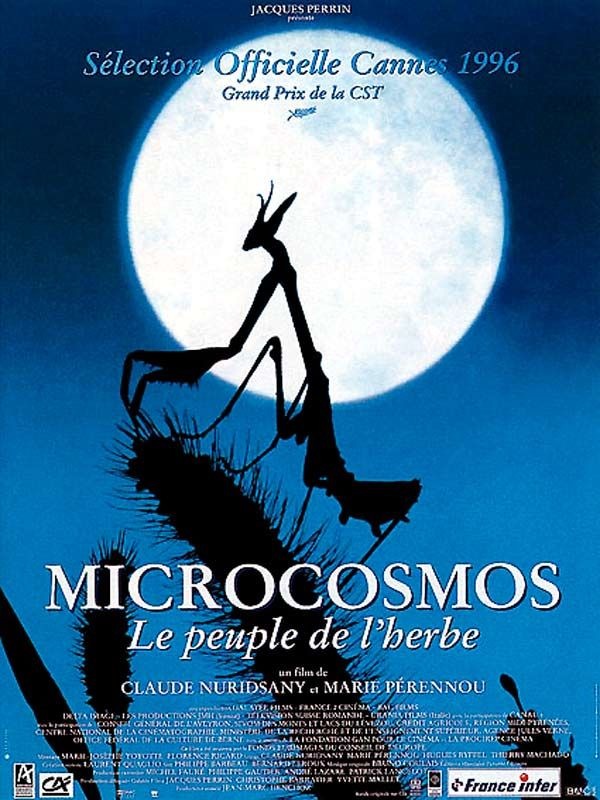
Today’s cinema adventure: Microcosmos: le peuple de l’herbe (the grass people), a 1996 French documentary depicting the behavior and interaction of various insects and other minuscule creatures as recorded with specially-developed cameras and microphones that reveal their tiny world in a staggering and beautiful wealth of detail.  Fifteen years in the making and originally shown on French television, it was marketed in the U.S. as a family-friendly nature film and became a relative hit at the box office- for easily understandable reasons.  With remarkable cinematography that rivals today’s high-def technology in clarity and depth, directors Claude Nuridsany and Marie Pérennou construct a riveting chronicle of the world under our feet, accomplishing the improbable effect of inspiring empathy with the kinds of animals that, for most, normally inspire nothing but revulsion. Spiders, snails, mantises, ants, bees, earthworms, dung beetles and water bugs enact their daily experiences, and the titanic nature of their struggles is made visceral by the scale in which they are shown; the audience, transported into their tiny realm, is given a bug’s eye view of what it takes to survive, as well as being treated to some breathtaking footage of nature’s beauty, all to the accompaniment of a haunting score by film composer Bruno Coulais.  Even more remarkable is that, with a bare minimum of narration (provided in the English-language version by Kristen Scott-Thomas), the audience is treated to drama, suspense, and even humor, arising naturally from the behavior of the film’s multi-legged cast; the overall result is a film experience that is not only educational, but entertaining, awe-inspiring, and, somehow, strangely moving.

http://www.imdb.com/title/tt0117040/

Sebastiane (1976) [Warning: some images may be NSFW]

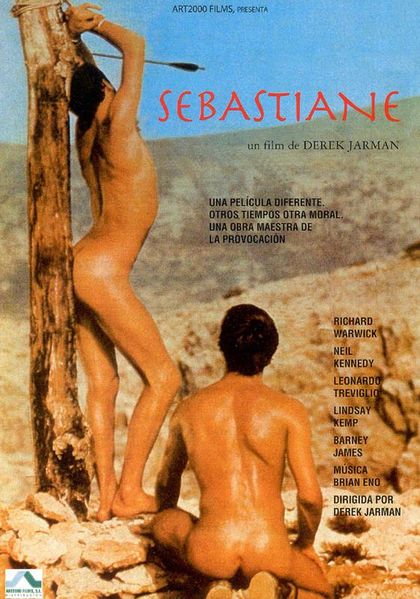
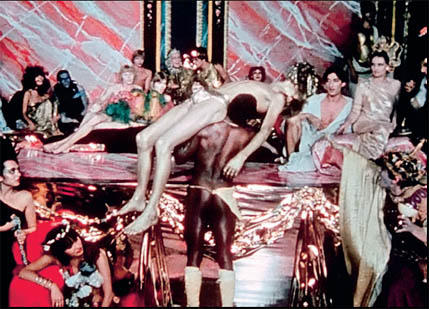
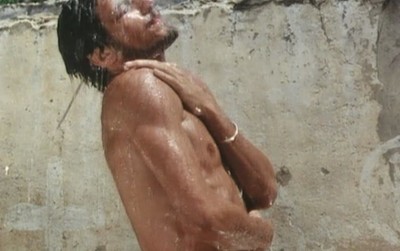
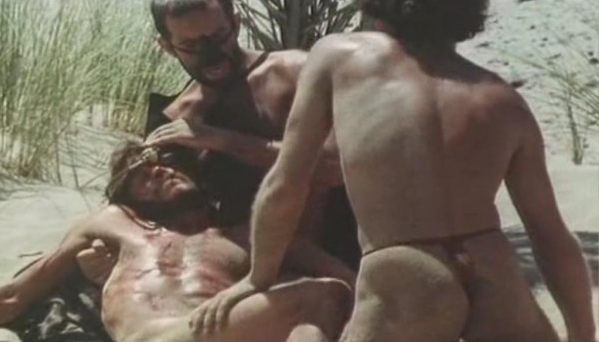
Today’s cinema adventure: Derek Jarman’s 1976 debut feature, Sebastiane, a fictionalized vision of the martyrdom of St. Sebastian, presented less as a meditation on spiritual themes than as a homoerotic fantasy in which the soldier Sebastianus, after falling from favor with the Roman Emperor Diocletian, is exiled to a remote oupost in the wilderness, where his refusal to yield to his commanding officer’s obsessive lust eventually leads to his ritual execution by arrows.  A work that is historically significant not only for being the first film produced in authentic Latin (and as such, the first British-made movie to be shown in England with subtitles), but- more importantly- for the prologue featuring an erotic dance by legendary glam-era performance artist Lindsay Kemp and his Troupe, and its inclusion of an early score by electronic music pioneer Brian Eno, Sebastiane was never anybody’s idea of a mainstream film, not even its creator’s.  Like most of Jarman’s films, it’s not big on story, but despite its shoestring budget, it is lovingly and beautifully shot, each frame artfully crafted so that the final result resembles a Renaissance painting in motion. The extensive nudity (all male, of course) was explained by Jarman as being because they “couldn’t afford costumes” (sure, Derek, sure… we believe you), and needless to say the film was highly controversial at the time of release; but although many viewers may fixate on what often seems like gratuitous nudity and sexual content, Jarman is not merely concerned with exploiting or even celebrating the male form; he has much to say about the issue of homosexual shame.  On the surface, the film would seem to comply with the traditional Catholic assertion that homosexual behavior is a sin to be forsworn, and that Sebastianus’ fate is to be sacrificed to that ideal, destroyed by unrepentant sinners for his refusal to debase himself- a decidedly conflicting message, when one considers the fact that the film is heavily laden with imagery clearly intended to elicit homosexual fantasies.  Certainly these themes of religiously-fueled guilt are in play within Sebastiane, and Jarman undoubtedly wrapped some of his own spiritual struggles into his film; but like most art, the true nature of the themes expressed lies beneath the obvious details.  Sebastianus’ rejection is of the flesh itself, regardless of sexual orientation: it is his devotion to a life of the spirit that makes him an outcast and a martyr, and it is the jealousy and pride of those who fail to understand him that leads to his death; in the end, sexuality is irrelevant here, and Jarman’s true indictment is against the base and brutal tendencies of stereotypical masculinity, the hypocrisy of judgement and violence against those who do not conform to the status quo, and the arrogance of those who choose to subvert their own spirituality to their egotistical desires and insecurities.  In short, the film is more about homophobia than homosexuality, and its abundance of homoerotic imagery is as much to incite as to excite.  Of course, that same imagery is sufficient to ensure that the majority of religious bigots will never see this film, so in a way, Sebastiane is a prime example of an artist “preaching to the choir;” and, truthfully, the copious amount of it ultimately displaces Jarman’s higher purpose, so that his inaugural cinematic excursion ends up being more stimulating on a decidedly lower level.  My own reaction: it’s a very pretty movie to look at, and probably one of the most erotic ones I have seen (much more so than porn, actually); but at times I couldn’t help being reminded of those soft-core late-night “Skinemax” flicks I would sometimes catch my Dad watching at 3 in the morning… slow motion photography of someone taking a shower, with the frame cropped in just the right place to keep it from being obscene, that sort of thing, except instead of beautiful women, here it was beautiful men.  I can’t say I had any complaints, but I was ready for it to be over about 30 minutes before it actually was.  It might have helped if the actors (Leonardo Treviglio as Sebastianus, supported by Barney James, Neil Kennedy, and Richard Warwick, among others- none of whom had significant careers afterward) had delivered performances that were as beautiful as their bodies… but I guess we can’t have everything.

http://www.imdb.com/title/tt0075177/