Vampyr (1932)

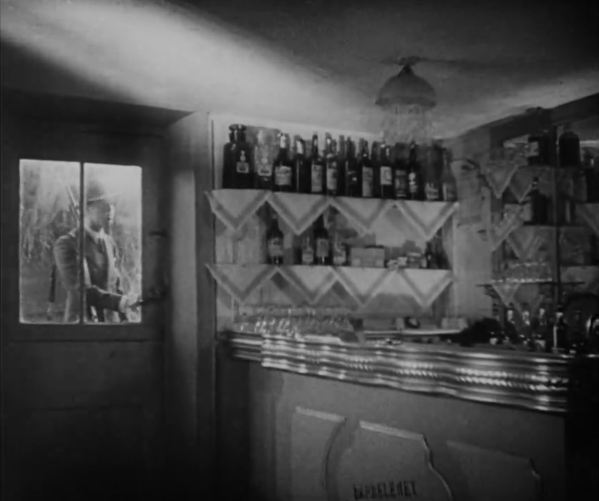
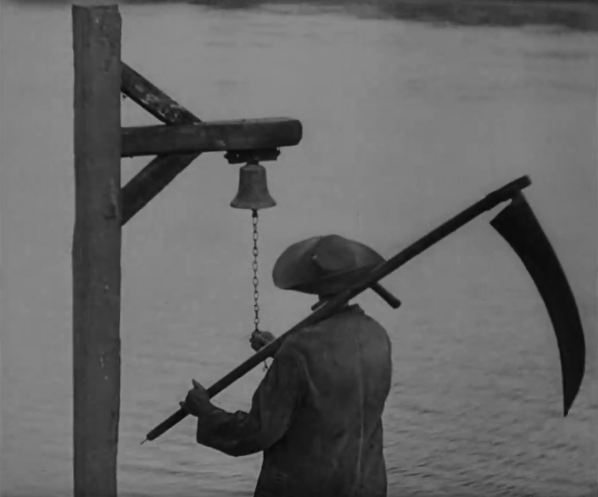
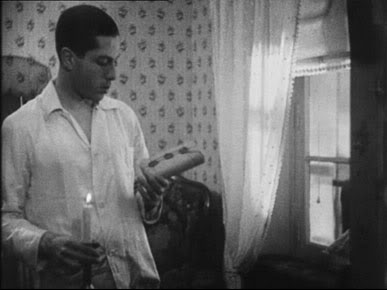
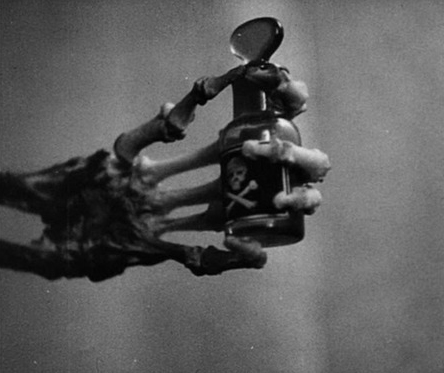
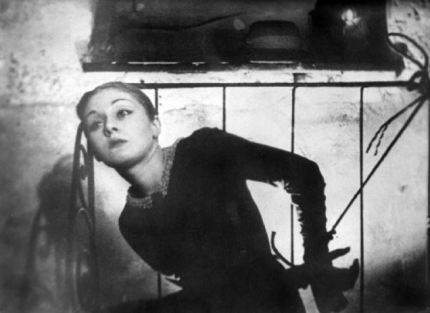
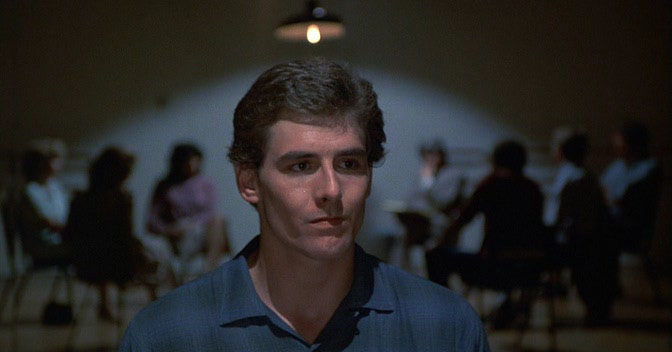
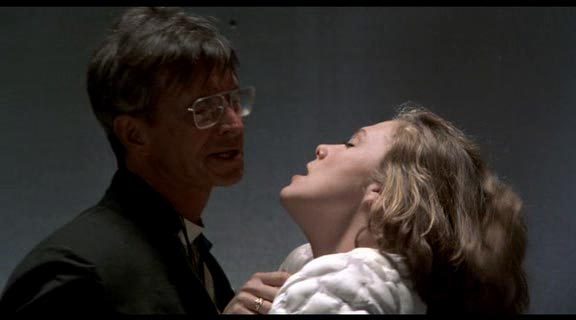
Today’s cinema adventure: Vampyr, a 1932 French/German horror film directed by Carl Theodor Dreyer, about a young man, obsessed with the occult, whose wanderings lead him into the dark troubles of a remote countryside manor, where the owner’s mysteriously ill daughter may be in the grip of horrifying powers from beyond the grave. Dreyer’s first film using sound, it was also his first effort following The Passion of Joan of Arc, a feature which, despite enthusiastic acclaim from critics, had been a box office disaster. With no studio willing to take a chance on the basis of his artistic promise alone, Dreyer found private financing from Nicolas de Brunholz, a young Baron who was a fixture of the Parisian social scene, known for his extravagant parties and his patronage of the arts, who would later become a prominent fashion editor for such magazines as Harper’s Bazaar and Vogue (and a mentor for designers Bill Blass and Calvin Klein, among others). De Brunholz’s condition for backing Dreyer’s film was that he would be its star; under the pseudonym of “Julian West,” assumed to assuage his prominent family’s disapproval of his acting ambitions, he portrays the wispy focal character of Allan Grey, and though his acting abilities were decidedly limited (and wisely un-stretched by Dreyer’s demands), his tall, slender frame and his handsome, elegant appearance set a distinctive tone at the center of the movie, aptly suggesting a strong spirit that has perhaps found himself over his head in a situation beyond his grasp.

Nevertheless, despite the support and participation of one of Europe’s most prominent society figures and the attendant buzz which surrounded it, Vampyr proved to be a worse flop than Joan of Arc, booed at its debut screening and, this time, even derided by the critics, who found it slow-moving, incoherent, and/or laughable; for many years it was widely considered Dreyer’s worst film, falling into such neglect that all but a few damaged original prints were lost. Indeed, produced to capitalize on the popularity of such American horror films as Dracula and Frankenstein (though it was initially conceived before these films had been released), it had such a marked difference in tone and style that it is easy to see why it perplexed and disappointed movie-goers of the time. The film’s failure contributed to Dreyer’s declining financial and emotional stability, which led to a nervous breakdown and kept him from making another film for another 11 years. It was only after his subsequent career and the retrospective appreciation of a later generation that reassessment granted it a status more deserved by its innovative and unique contribution to the horror genre and to cinema in general.

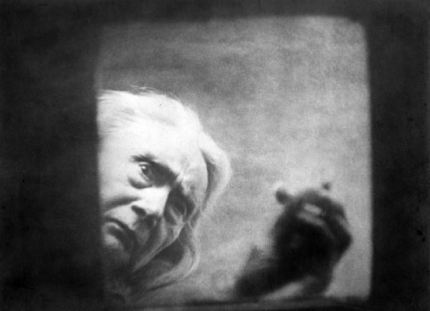
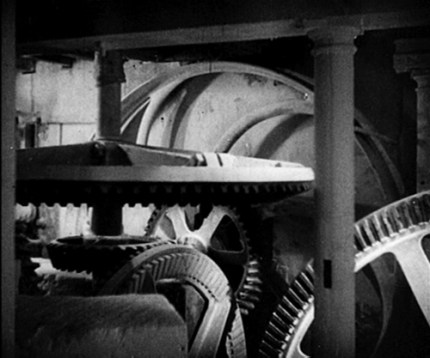
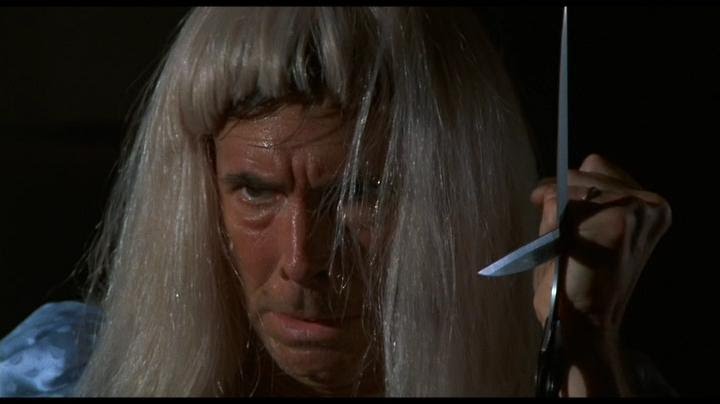
Ironically, many of the elements which made Vampyr such a flop are the reasons it is considered such so significant today. On a superficial level, it is one of the first horror films to feature a female vampire (and an elderly one at that) as its main antagonist, having been partly based on the short story Carmilla, by L. Sheridan La Fanu, a popular 19th-century fiction known for its decidedly lesbian overtones- some of which carry over into the film. It was also one of the first times the obvious sexual implications of the vampire myth were explored more overtly; though there is no explicit reference or depiction of sex, the metaphoric connection is clear, particularly in the decidedly romantic manner in which the young heroine is seen being victimized by her attacker. The film is also notable for its re-imagination of the standard, Dracula-based formula seen in most vampire movies; although it features most of the key archetypes inherent to the story, many of the familiar stock characters are absent or significantly changed, and the locations, though suitably grim and antiquated, are not the gothic staples of our expectation- the village is an idyllic, sun-scaped riverside town, devoid of torch-waving mobs, and in place of a foreboding castle for the vampire’s lair, we are given a decrepit flour mill.

More important, however, is Vampyr‘s visual and thematic style, and the underpinnings of its influences from dominant artistic movements of the time. Dreyer’s artistic sensibilities, while distinctly his own, were clearly influenced by his involvement with the French art scene, resulting here in a movie reminiscent of works by his more directly avant-garde contemporaries such as Luis Buñuel and Jean Cocteau. His stated intention with Vampyr was to take the art of cinema in a new direction, using a vehicle which lent itself to imaginative treatment by nature of its supernatural content; in realizing this goal, he blended his own passion for realism (enhanced by his use of natural lighting and authentic location photography) with the heightened theatricality and Freudian overtones of Expressionism, the seemingly nonsensical and dreamlike imagery of Surrealism, and the piecemeal construction of Impressionism. The resultant film glows with an ethereal beauty, combining a variety of cinematographic techniques (exquisitely executed by Rudolph Maté) that range from the sharply defined to the gauzy and murky; the narrative is deliberately cloudy and illogical, filled with non-sequiturs and credibility gaps, creating the feeling of a dream or even a delusion, an effect bolstered by camera trickery that gives us such jarring elements as shadows moving independently (or in compete absence) of their owners, and otherwise commonplace actions occurring in reverse; deeply symbolic or arcane iconography is everywhere, and the screen is filled with a rich and varied texture of design- mostly the result of decor and objects inherent to the actual shooting locations; and finally, the overall effect of Vampyr is created by a cumulative process in which the broad and vivid strokes of its seemingly disjointed progression combine to form a complete picture that is unified and harmonious- if somewhat unsettling.

Adding to the hallucinatory feel of Vampyr is its primitive use of sound. The European film community was behind the curve with the new technology of talking pictures, and the location shooting of Dreyer’s movie only exacerbated the difficulties, as did his plan to shoot the film in three separate languages- French, German, and English, though the existing print was restored from surviving copies of the former two versions and there is no evidence that the latter was ever completed. The problems were surmounted by a screenplay (co-written with Dreyer by Christen Jul) containing a minimum of dialogue, mostly cryptic exchanges that were overdubbed in a studio after the fact by actors other than the ones onscreen; however, the inclusion of aural elements was an integral part of Dreyer’s technique here, and he utilizes a wide variety of eerie effects, not only to underscore the action (along with an elaborate and effective score by Wolfgang Zeller- a pioneering inclusion for early sound films, which were mostly devoid of musical accompaniment), but also to aid in telling the story, with several key scenes relying heavily on soundscapes to convey important events that are taking place off-camera.

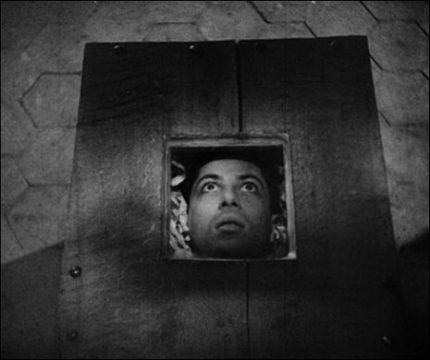
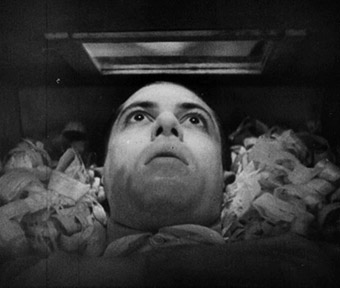
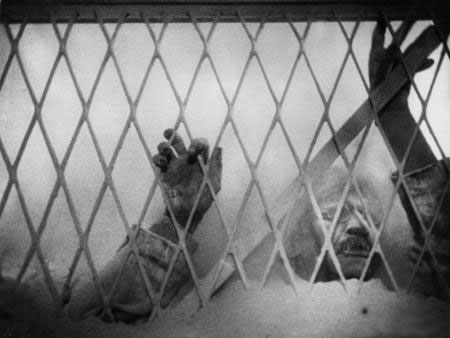
However, even with full appreciation for the skill and artistry with which it was made, watching Vampyr is hardly a thrilling experience; with its emphasis on atmosphere and its artistic conceits, it fails to concern itself with such usual priorities as pacing or continuity, and in spite of the macabre crisis it depicts it is largely lacking in suspense or action, contenting itself instead to create a series of elegiac encapsulations of mood and concept. As it approaches its ending, however, Vampyr suddenly shifts gear and delivers a pair of sequences that transform it from an intellectual exercise into a genuine horror movie. First is an extended set piece in which its protagonist has a premonition of himself lying wide-eyed in a windowed coffin, being prepared for and carried off to burial. Through the use of first-person perspective, Dreyer creates a highly uncomfortable, claustrophobic identification of the audience with the corpse, forcing us to imagine our own death and experience the ominous finality of these moments, as well as conjuring the universal fear of being buried alive. Continuing to capitalize on the latter, we are shortly afterward given a scene in which one of the characters, trapped at the bottom of a storage shaft and surrounded by the cold sterility and inhumanity of ominous industrial machinery, is slowly submerged in a cascade of sifted flour until his desperate cries for help are silenced by death. These sections of the film distill its underlying theme into a direct and palpable form; for Vampyr, at its core, is ultimately a meditation on the inescapable reality of death, the fear of which, as Dreyer rightly understood, is at the base of all our obsessive fascination with the dark mythology of our folklore and fiction. When we cringe at the imagined threat of the undead monsters or unspeakable diseases that haunt our shared nightmares, we are really responding to the shadow of our own mortality; and though an iron spike through the heart may end the vampire’s reign of terror, and an emergence from fog into a sunlit clearing may temporarily provide the comfortable reassurance that all will now be well, we know that staving off these supernatural horrors can only delay the inevitable fate which awaits us all. The power of Vampyr derives from its recognition of that fact; and though much of the film expresses the concept of death through motifs and moods that impress us without involving or exciting us, it blindsides us in its penultimate scenes with these visceral evocations of our most primal fear, rendering hollow its obligatory happy ending and leaving us with an indelible sense of the bleak hopelessness summed up in the familiar words inscribed on the lid of our hero’s hallucinatory coffin: “From dust are you made and to dust you shall return.” It’s an uncomfortable reminder, and one which Vampyr provides more vividly than the vast majority of gruesome splatter-fests that represent the horror film genre of today.

http://www.imdb.com/9/title/tt002364
Drive (2011)

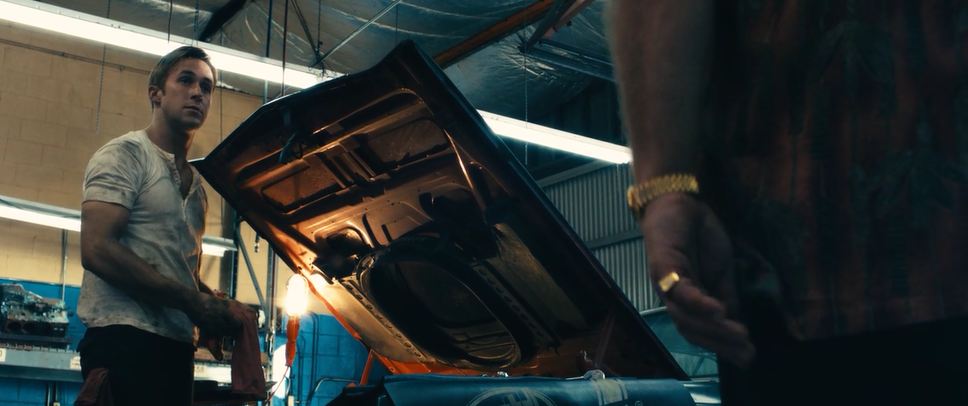
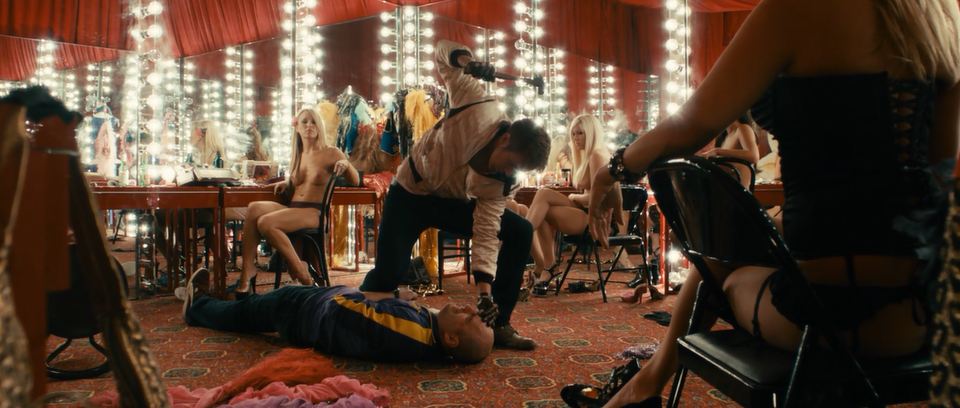
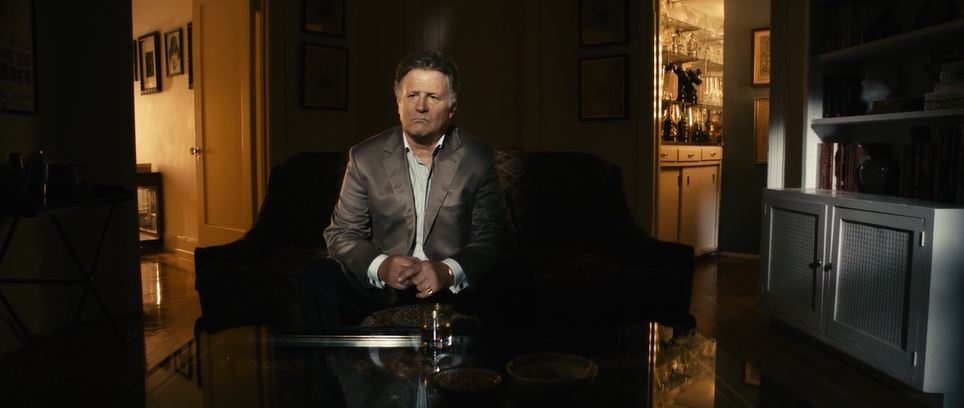
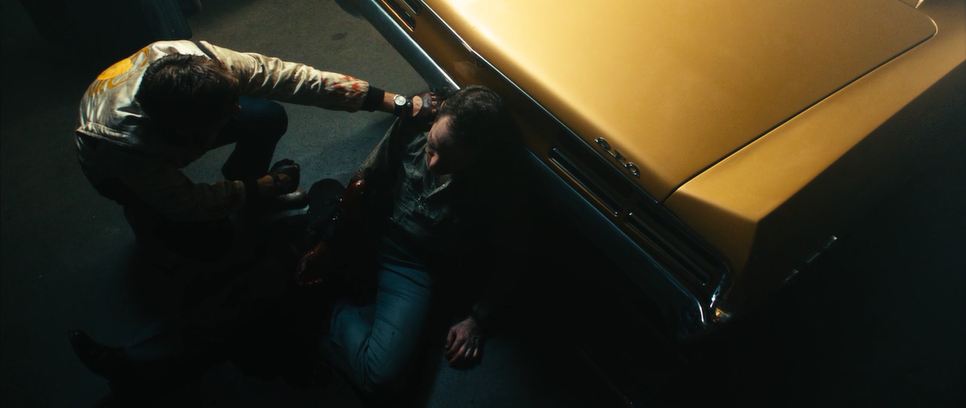
Today’s cinema adventure: Drive, the slick 2011 crime thriller starring Ryan Gosling as a Hollywood stunt driver and mechanic who moonlights as a wheelman for high-dollar robberies; a highly marketable package featuring a lot of action and a little romance, which garnered much praise for its visual style- a glossy mix of 1980s-flavored grittiness and edgy contemporary flash- and drew controversy for its bursts of brutal violence.  Essentially a post-modern film noir, set in a seemingly lawless Los Angeles populated and controlled by ruthless criminals, it seethes with an atmosphere of cynical amorality in which life is cheap and trust is for suckers and fools; and yet for all its hip, hard-edged posing, this movie is, at its core, pure Hollywood fantasy of a decidedly old-school nature.  In essence, in fact, it’s a modernized, urban reworking of Shane, the revered and iconic western classic from 1953.  All the plot elements are there: a loner with a mysterious past befriends a struggling family and becomes their protector against the machinations of a powerful gang of thugs, eventually taking justice into his own hands and embarking on a one-man crusade to eliminate the threat once and for all.  Though the details have been modernized and reconfigured a bit, the structural blueprint is the same, from the dominant themes of family and justice vs. power and greed to the fact that its tarnished hero doesn’t carry a gun.

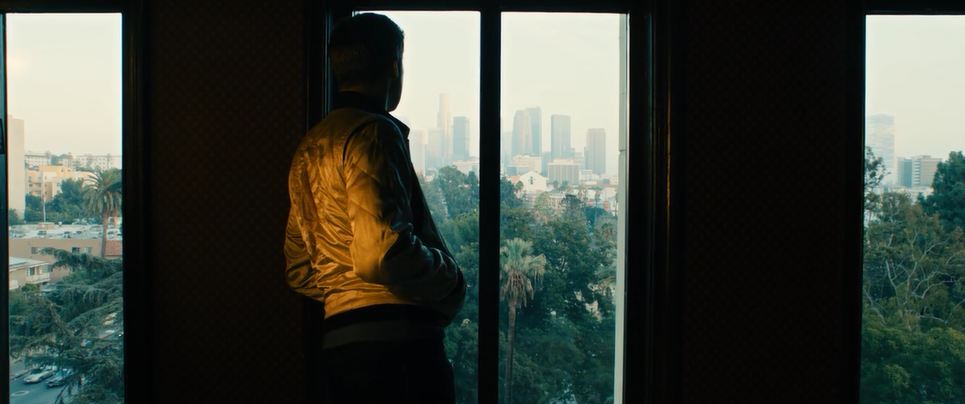
If noting this obvious parallel to a cinematic touchstone sounds like a negative criticism, it isn’t: many good films are built upon a framework borrowed from great films that came before, and although its plot line is clearly second-hand, Drive certainly re-interprets the story on its own terms.  Part of the credit lies with Hossein Amini’s terse screenplay (adapted from a book by James Sallis), which cleverly updates the details of the plot and its characters while retaining the essence of its central conflicts.  The foremost contributor to the success of this re-invention of cinematic myth, however, is director Nicholas Winding Refn, a Danish-born filmmaker whose lack of native familiarity with the distinctly American setting and milieu has allowed him to approach the material with the empirical eye of an observer.  One of the consequences of his outsider’s viewpoint is the superb use of the L.A. locale, so often taken for granted by resident directors; he takes full advantage of it, not so much in his depiction of specific landmarks, but in the way he captures the character of it, particularly the Echo Park district where much of the action takes place.  He also brings a detached objectivity that somehow adds to the emotional resonance of the story, helping it to feel freshly-minted despite the echoes of its heritage that bounce through every scene.  With the help of cinematographer Newton Thomas Sigel, he fully utilizes his locations to create an impressive visual coherence, infusing the squalid city streets with a slick, art-house sheen that echoes the feel of genre icons like Thief and To Live and Die in L.A. while still asserting Drive’s independence and modernity with its own up-to-the-minute, slo-mo/hi-res personality.  This effect is enhanced by the dreamlike electronic score by Cliff Martinez, which also facilitates the deliberate build-and-release of tension that pushes the film towards its inevitable conclusion.

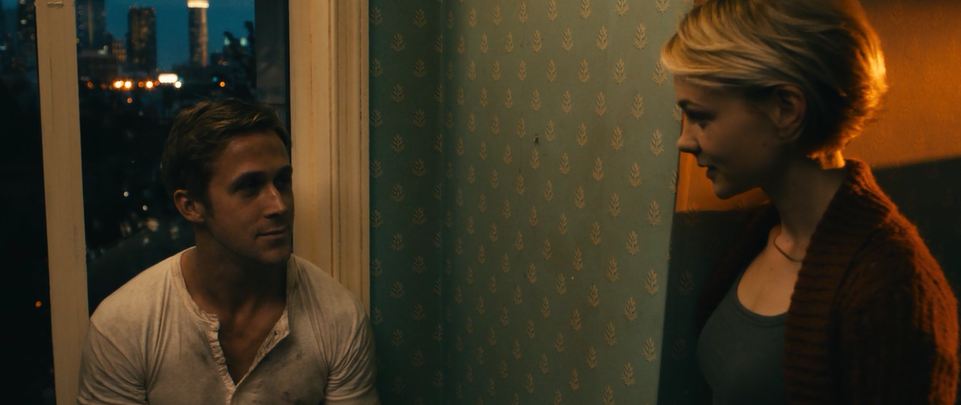
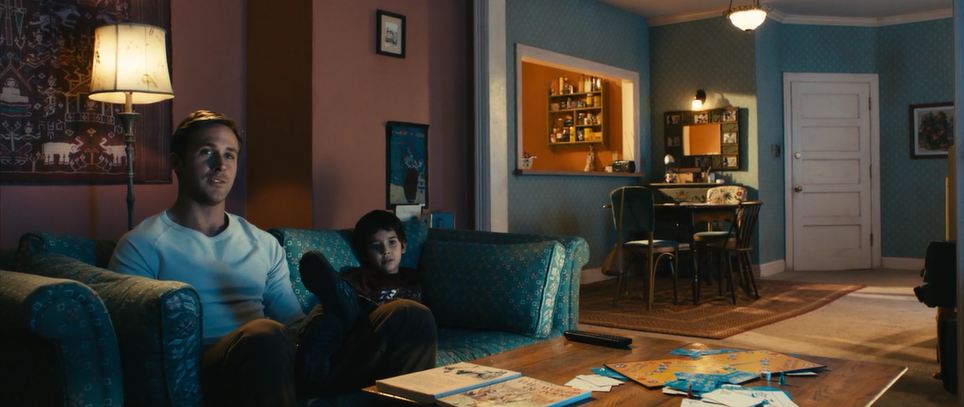
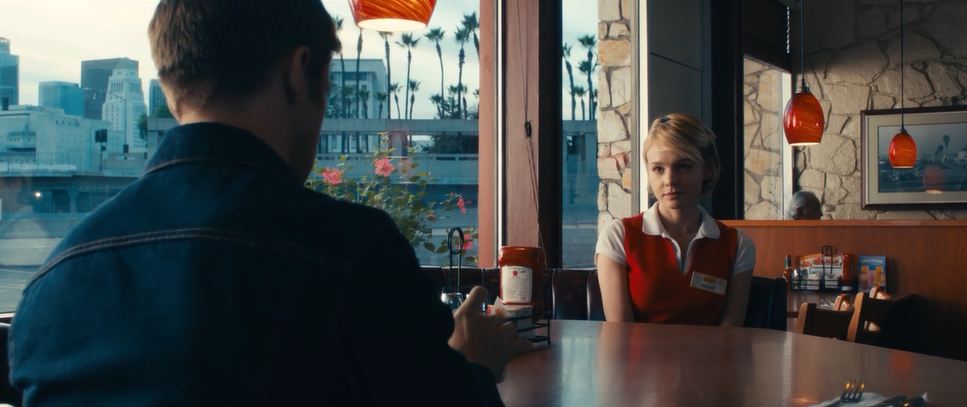
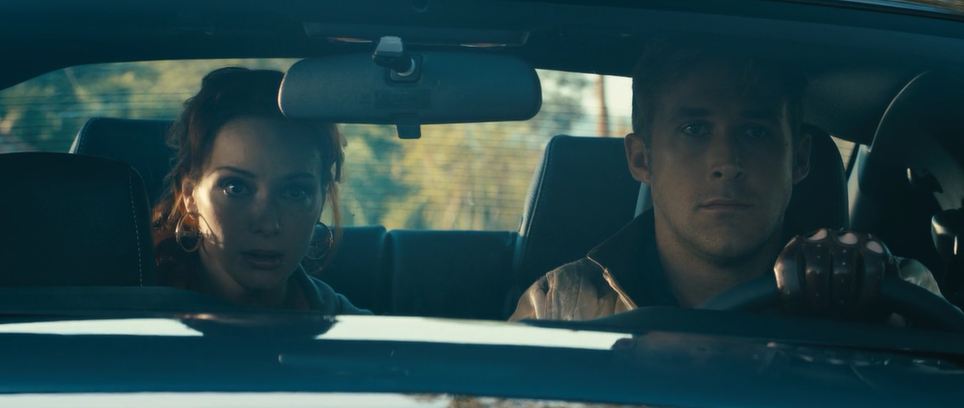
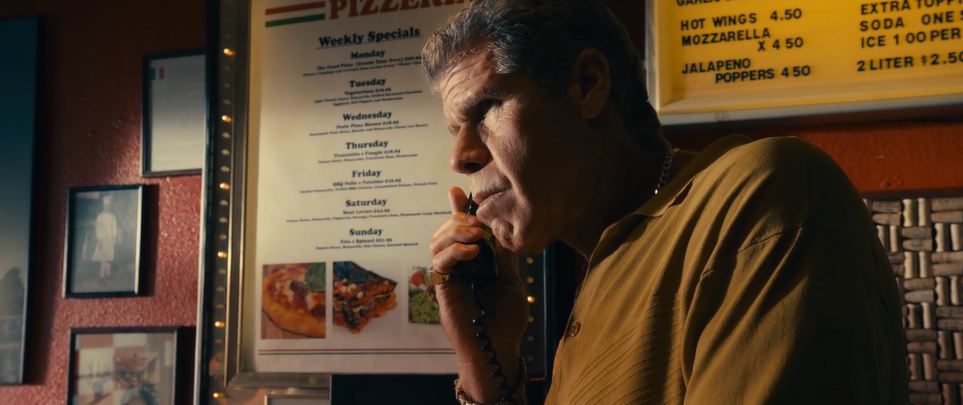
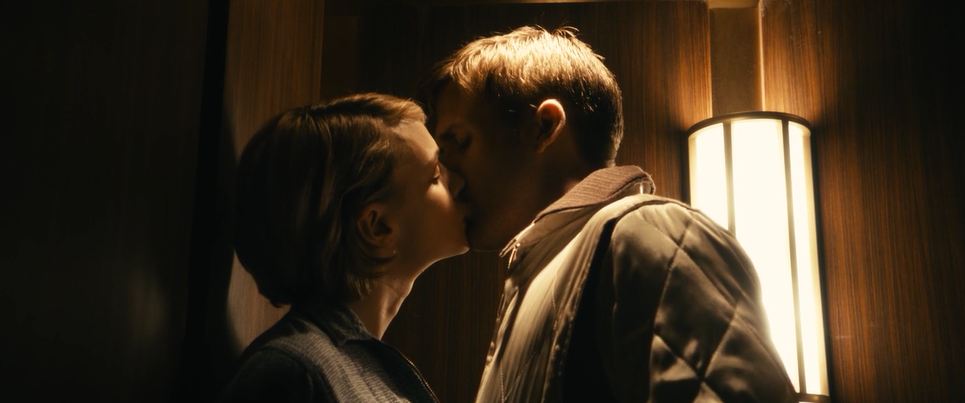
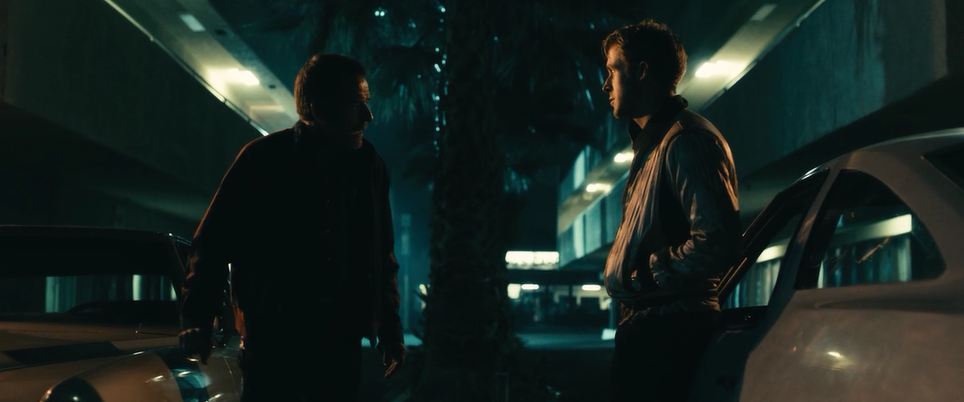
On the business end of the camera is an attractive cast comprised of talented up-and-comers, seasoned veterans, and a strategically familiar collection of supporting players.  In the latter category are a trio of high-profile TV transplants: Christina Hendricks (compelling and memorable in a bad girl role that allows her to show a markedly different side than the one we see on Mad Men, but ultimately wasted in what amounts to little more than a cameo), Bryan Cranston (in a kinder, gentler variation of his Breaking Bad persona as Gosling’s employer and surrogate father figure), and Sons of Anarchy’s Ron Perlman (lending his star power and his imposing presence to a part that could otherwise be played by any tough-guy actor).  As the little family whose plight provides the catalyst for the film’s action are Oscar Isaacs (playing admirably against expectation as the ex-convict father striving to break free of his shady past, and nicely fleshing out a character which is ultimately little more than a plot device), young Kaden Leos (projecting a muted wisdom beyond his years and showing considerable onscreen chemistry with Gosling in their scenes together, which goes a long way towards providing the heart of the film), and English actress Carey Mulligan.  Mulligan has perhaps the most difficult role here, in which she is required to maintain a quiet, attractive nobility while navigating a complex subtext of resignation, repressed attraction and nagging fear.  She manages it well, inhabiting all those facets and bringing intelligence, sweetness, and dignity to the part (making it seem, perhaps, much more fully realized than it actually is), as well as creating her own chemistry with co-star Gosling; their scenes together are nearly wordless, for the most part, yet the pair infuses the silence with volumes of unspoken feeling, and when they finally kiss, the cumulative passion of their previous interactions is sufficiently powerful to warrant the highly cinematic approach with which director Refn chooses to showcase it.

Which, of course, brings us to our star: Gosling’s character (never named, but listed in the credits merely as “Driver”), like his cowboy counterpart in Shane, is rough-edged and dangerous, despite his All-American good looks and his quiet demeanor.  Yet, street-savvy thug or not, he is also possessed of a resolutely ethical core which drives him from within just as deliberately as he himself drives his own restored 1973 Malibu.  In order to successfully embody this urban paladin, Gosling must convincingly seem both too hard to be good and too good to be true- and he must do so with an amount of dialogue that can be described as sparing, at best.  He pulls it off brilliantly, managing to be believable on both ends of this extreme spectrum with a likeably stoic performance that is (appropriately enough) reminiscent of Steve McQueen at his anti-heroic best.  It’s a hypnotic performance, and watching the young actor confidently stand in the center of this film, it’s easy to see why he is one of the hottest leading men of the new Hollywood generation.

As good as Gosling is, though, the standout performance in Drive comes from a surprising source: Albert Brooks, known for his comedic work both as an actor and filmmaker, here plays against type as a ruthless gangster.  It’s a shrewd bit of casting, and Brooks takes full advantage of it, undercutting the cold-bloodedness of the character with his familiar, likeably nebbish persona; the result is a contrast between charm and menace that makes him easily one of the most chilling big-screen bad guys in recent memory.  Despite the impressive work of director Refn and the stellar turns of the other leading players, his performance is perhaps the one element of Drive which elevates it from the level of a well-made potboiler to that of a potential Hollywood classic.

As to that, only time will tell.  Drive has a dazzling quality that keeps you mesmerized while its subliminal elements do their work; fooled by the flashy surface, we fail to recognize that we are being shrewdly manipulated by the familiar undercurrents that pull our sympathies and shape our expectations.  As a result, we are more inclined to suspend our disbelief in the blatantly romantic premise at the core of the movie, a premise summed up in its tagline, “Some heroes are real;” or at least, in theory we should be.  Some viewers, however, may not be taken in by the smoke and mirrors, and may find they are unwilling to buy into a plot that, though appropriate for a larger-than-life epic of frontier justice and heroic gunslingers, seems decidedly unconvincing for a gritty tale of corruption and betrayal in the seedy urban underworld.  It should also be noted that, in spite of its family-friendly roots, this movie contains some very graphic and disturbing violence- in particular, an elevator scene (from which the aforementioned controversy resulted) that had to be edited into a toned-down version, and which is still shockingly gruesome- so more squeamish viewers should stand warned that they might want to stay away.  However, for most filmgoers- particularly those with an admiration for the nuts and bolts of the art- Drive will likely provide a rich experience, perhaps even more so for those savvy viewers who can recognize the archetypal formula from which it is derived.  Though its plot may hold few surprises (at least for anyone who has seen Shane), and though it may, in the final analysis, be unconvincing, there is still a fascination in seeing the ways in which Refn and his crew have molded it into its new form, and the attendant implications that arise from its transposition in setting, such as the differences (and similarities) in the portrayal of masculine and feminine roles, the metaphoric associations of our obsessive American car culture, and the difficulties of defining ethical behavior in a world complicated by conflicting moral standards.   Unacknowledged remake though it may be, it is nevertheless an inventive and original piece of filmmaking, and even if we already know where its taking us, it makes getting there an exhilarating ride.

http://www.imdb.com/title/tt0780504/

The Great Train Robbery (UK Title: The First Great Train Robbery) (1979)

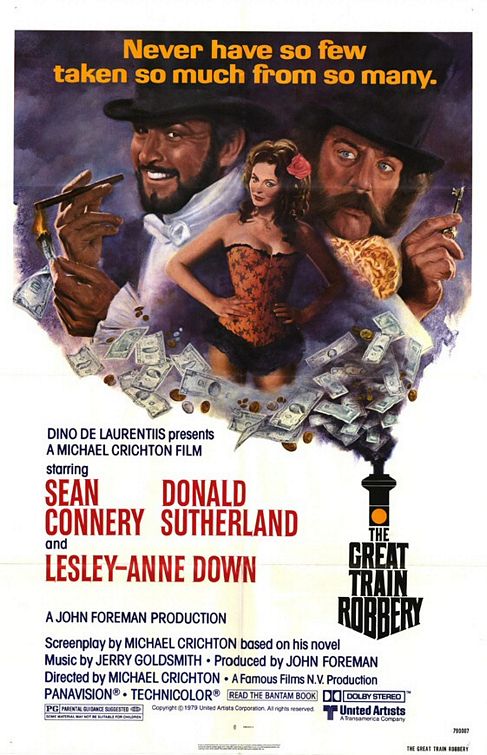
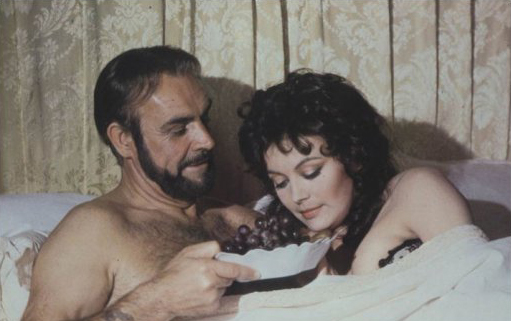
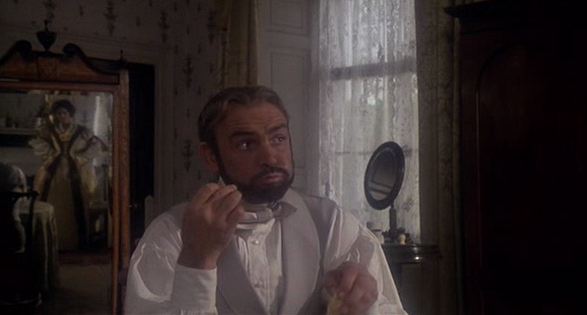
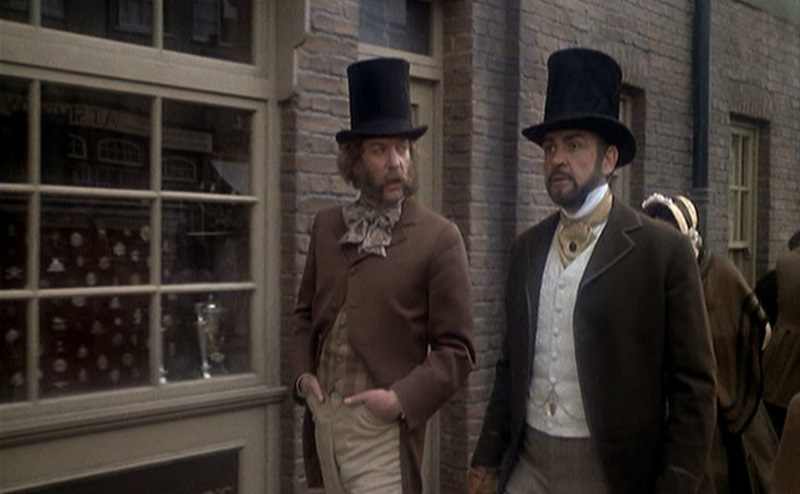
Today’s cinema adventure: The Great Train Robbery, a 1979 period caper comedy directed and written by Michael Crichton, based on his own book, which in turn was based on the real-life 1855 theft of gold bars meant as pay for the English soldiers of the Crimean War- the first robbery ever to take place aboard a moving train.  Painstakingly accurate in period detail, expertly played with just the right blend of devilish humor and edgy thrills, it features sparkling chemistry between its three stars (Sean Connery, Donald Sutherland and Lesley-Anne Down), a clever depiction of the intricate and crafty plot, a rousing score by ace film composer Jerry Goldsmith, and a magnificent climactic sequence featuring Connery (doing his own stunt work) navigating his way across the roof of the train as it speeds through the idyllic English countryside.

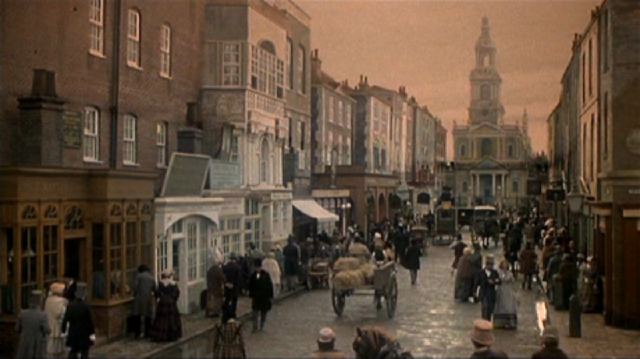
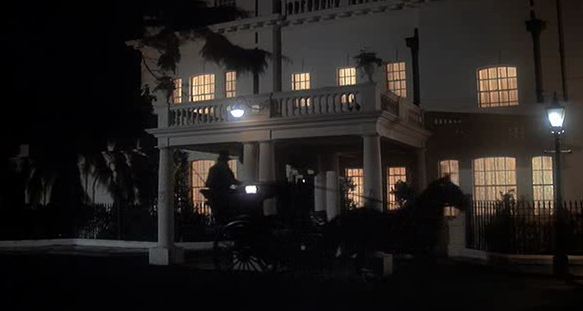
Crichton’s original novel, which took the facts of the real-life heist and transformed them into a fictional narrative by using pseudonyms, composite characters, and clever re-imagining of the details, became a best-seller in 1975 and seemed tailor-made from the outset for translation onto the screen, particularly in the wake of such successful genre entries as The Sting and Murder on the Orient Express; and while an author’s helming the adaptation of his own work might seem ill-advised, at best, in this case the choice was right on target.  Crichton was a jack-of-all-trades if ever there was one, and his understanding of the film medium here resulted in a crowd-pleasing piece of cinematic candy that sparkles with contemporary style even as it maintains its commitment to the demands of its Victorian setting.  For, though the historical accuracy of the events depicted may be tenuous, attention to period detail is rigorously observed.  Crichton paints a vivid picture of the Industrial Age, not only with the meticulous detail of the sets and costumes, but with his emphasis on the dehumanizing conditions, the corruption and inequity of the social order, and the contrast between extreme poverty and ostentatious wealth.  Not that The Great Train Robbery is a film devoted to deep meaning or social commentary; these elements are present to fuel a decidedly modern anti-establishment undercurrent and elicit audience sympathy for the roguish trio of anti-heroes, despite their unabashedly selfish motivations and their ruthless tactics, by casting them in the mold of populist outlaws- a sort of Victorian Bonnie and Clyde, plus one.  This perceptual conceit is part of what makes the film so much fun; we can be firmly on the side of these wrongdoers as we watch them execute their audacious scheme, and Crichton ensures our continued interest by doling out the details of that scheme in small pieces- we are given just enough insider information to know what is going on without being deprived of the thrill and surprises that come from seeing it carried out.

It helps that The Great Train Robbery is beautifully photographed by the legendary cinematographer Geoffrey Unsworth- one of the last films to claim that honor, it is dedicated to his memory- and that the aforementioned set and costume designs (by Bert Davey and Anthony Mendleson, respectively, in collaboration with Production Designer Maurice Carter) are sumptuously executed; each of these artists play an indispensable role in realizing the elaborately recreated 19th Century London in which the bulk of the film’s action plays out.  The previously noted Goldsmith score is effective throughout for setting the mood and tone; but when the setting finally opens up, for the climax, into the countryside, his music makes its most magnificent contribution, adding to the giddy feeling of freedom conjured by the wide open locale, and to the breathless excitement of watching as the final stages of the robbery take place- and as Connery makes his death-defying journey along the length of the moving train.  It’s a payoff almost as satisfying as the one enjoyed by the film’s characters.

The Great Train Robbery is not a profound movie, nor a deeply layered one; it is hardly one of those sublime masterpieces which holds up to repeated viewings throughout a lifetime, and yet when I watched it again recently after having not seen it for a number of years (more than I’m willing to admit to), I was thoroughly delighted to find that it was at least as enjoyable as when I saw it as an impressionable lad, sitting in a darkened theatre and wanting to grow up to be Sean Connery.  Often when a movie strives only to entertain, it falls short by trying too hard, or aiming too low, or- worst of all- trying to pretend it has a weightier agenda than it really does: The Great Train Robbery suffers from none of these shortfalls.  It sets out only to deliver a thrilling ride and it succeeds at exactly that- which is more than can be said of most of the overachieving would-be crowd-pleasers being offered up by filmmakers today.  Of course, they don’t have the benefit of Sean Connery…

http://www.imdb.com/title/tt0079240/

Death Proof (2007)

Image

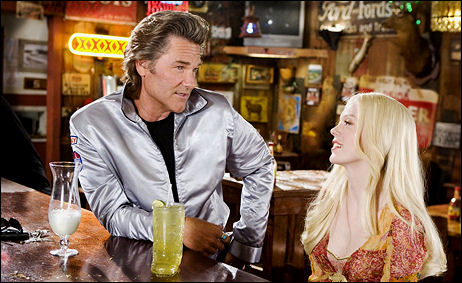
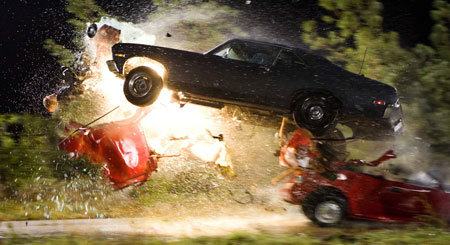
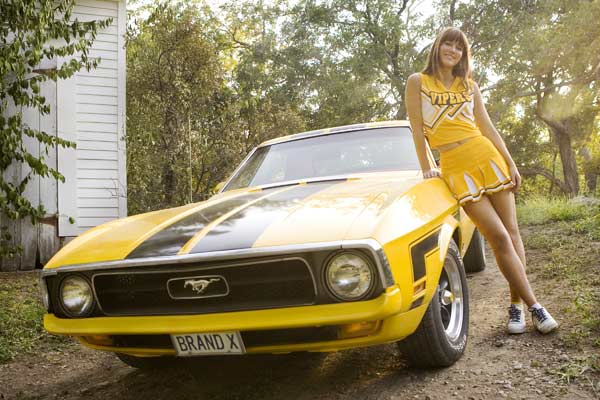
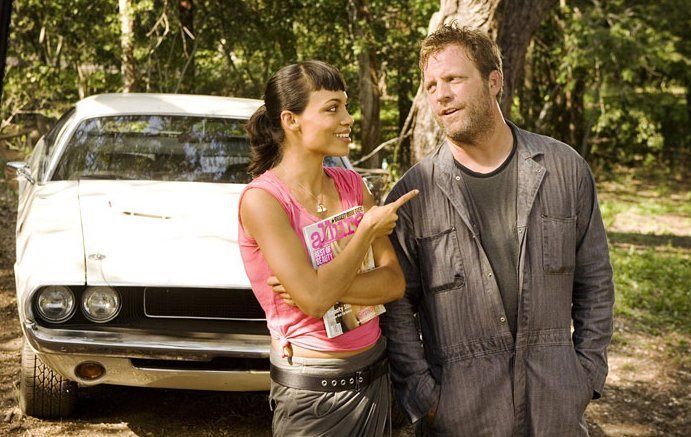
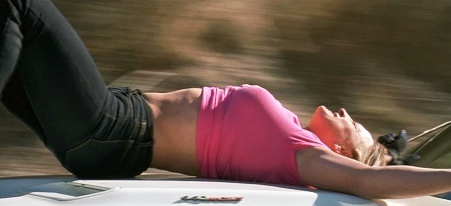
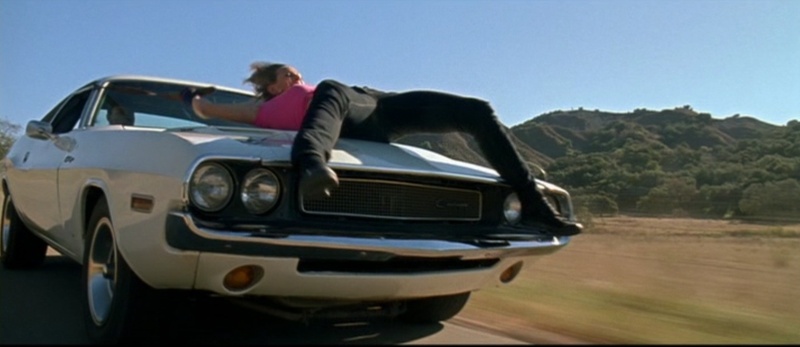
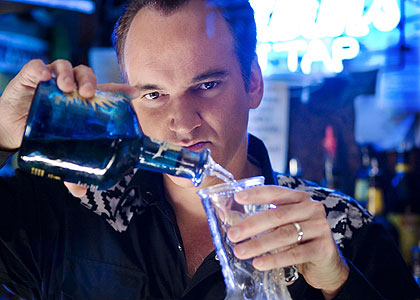
Today’s cinema adventure: Death Proof, writer/director Quentin Tarantino’s 2007 homage to the cheap exploitation movies of the sixties and seventies, originally released as half of the Grindhouse double feature (paired with Richard Rodriguez’ Planet Terror). With his trademark style on full display, Tarantino sets out to emulate- and surpass- the violent and titillating “anti-classics” he clearly loves with this tale of a psychopathic ex-stunt driver who stalks and kills young women in his souped-up, “death-proofed” muscle car. Though Kurt Russell delivers a delightful performance in the central role, and the director’s impressive visual style is as dazzling as ever, the film is ultimately sabotaged by several factors. First of all, with its conceit of recreating the genre which inspired it, Death Proof severely impairs its own ability to engage the viewer in its proceedings: the deliberately grainy cinematography, scratched film and bad splicing constantly serve as a reminder that it’s all just an elaborate gimmick; the inherently shallow formula prevents the far-fetched and sensationalistic plotline from ever becoming believable or compelling; and the characters, for all the self-consciously clever dialogue Tarantino puts in their mouths, are doomed to remain one-dimensional ciphers who exist merely to enact the filmmaker’s cars-sex-drugs-and-rock-n-roll fantasy. All these criticisms, of course, could easily serve as a description of any of the B-movies upon which Tarantino’s opus is based; and it would be correct to point out that what really matters in those films (and in this one) is the nail-biting, balls-to-the-wall action and the gratuitous violence for which everything else simply provides a framework. But where the original films managed, at their visceral best, to thrill and delight, transcending their shoddiness with their lack of pretense and their unapologetic devotion to providing guilty pleasure, Tarantino’s would-be tribute fails to achieve any of these ends. To be sure, his talent is clearly visible here: but that’s part of the problem, for where the drive-in fodder he emulates was often so bad it was good, here we have an obviously good filmmaker deliberately trying to be bad, and succeeding in just being, well, bad; and though the action sequences- two of them, to be exact- are unquestionably well-done, in order to get to them (thanks to Tarantino’s self-indulgent insistence on maintaining his own signature tension-building style) we have to sit through interminable stretches of hip, foul-mouthed dialogue, which may be meant to invest us in the characters but instead results in repeated glancing at our watches. Seriously, there was never this much talking in Death Race 2000. Don’t get me wrong- I’m not criticizing Tarantino for embracing and championing the grindhouse genre. After all, these humble movies are touchstones for a generation and have had a major influence on contemporary cinema; and in his best work (such as the Kill Bill movies and Inglorious Basterds), the director has masterfully drawn inspiration from them while incorporating their elements into his larger personal vision. With Death Proof, however, he has only succeeded in making a pale shadow of the original works, which, like a replica of some crude masterpiece of outsider art, seems pointless and unnecessary.

http://www.imdb.com/title/tt1028528/

Prometheus (2012)

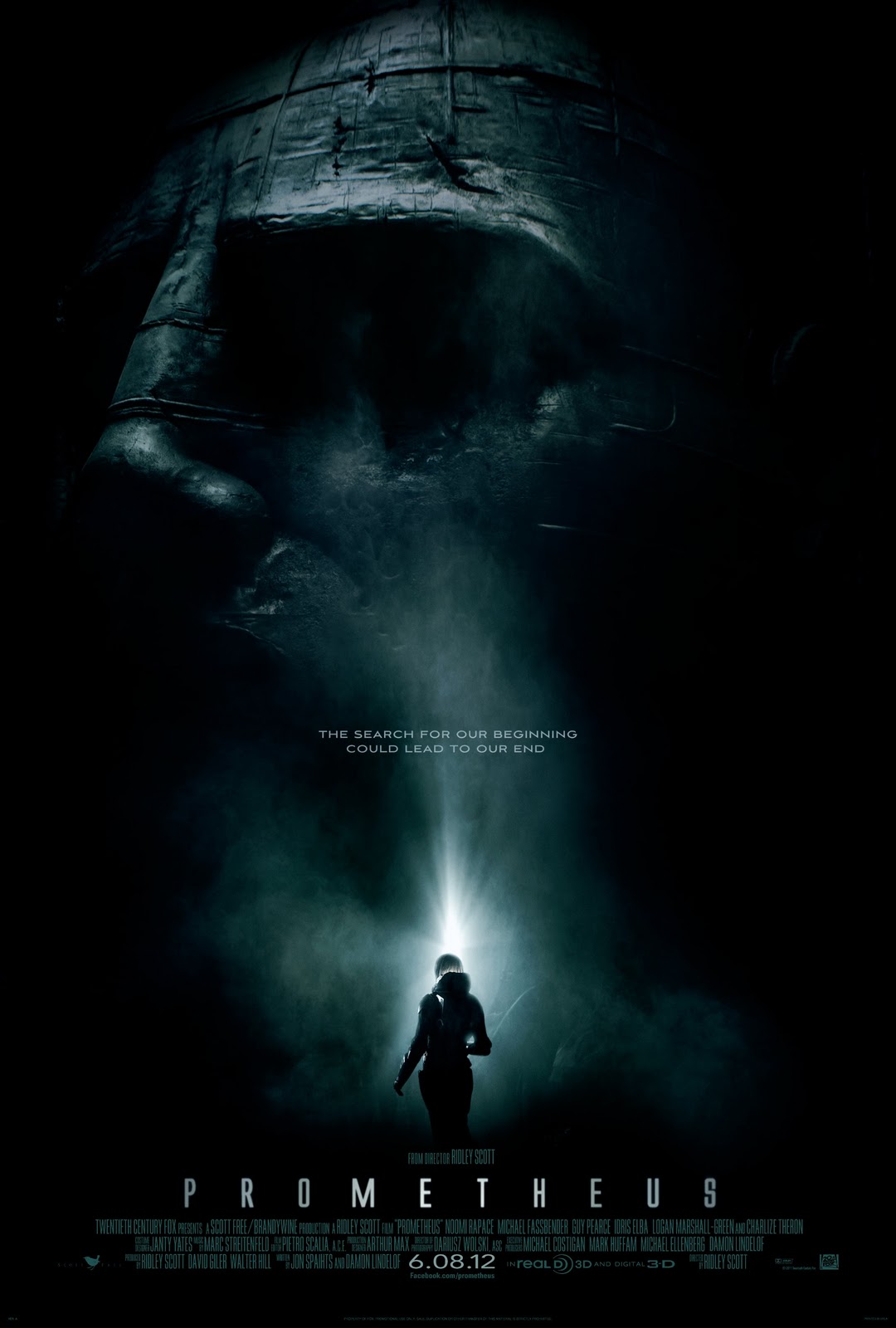
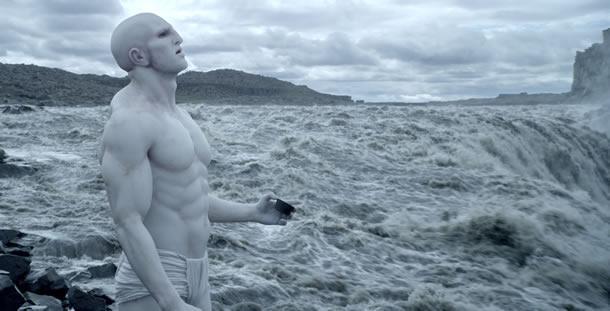
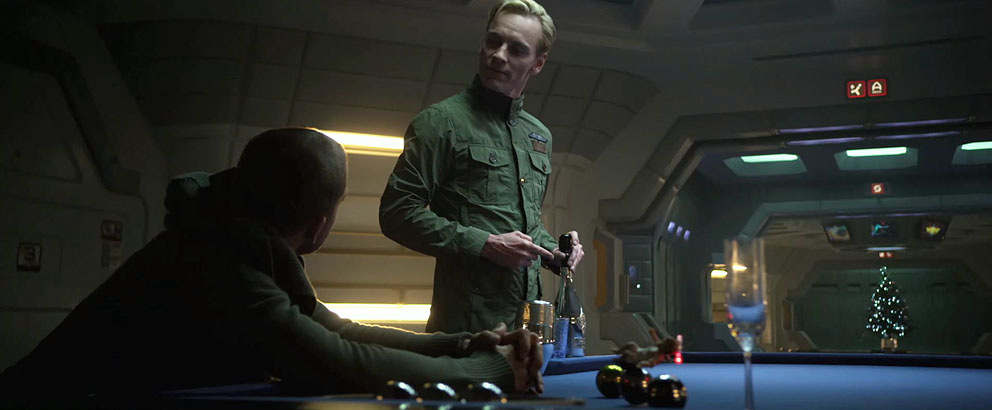
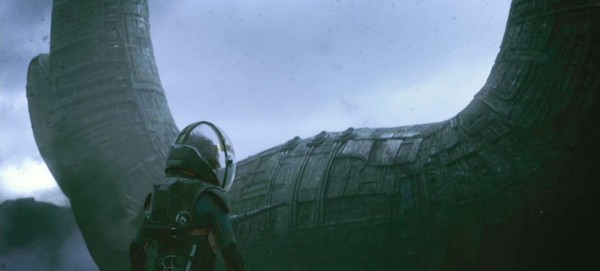
Today’s cinema adventure: Prometheus, the 2012 sci-fi thriller that marks the return of director Ridley Scott both to the genre and to the film franchise that made his name. A prequel of sorts to his 1979 classic, Alien, it follows the fate of a late-twenty-first-century space expedition which journeys to a distant planet in search of answers to the secret of human origin, revealing (partially) the background of the terrifying race of creatures that inhabited the earlier film and its sequels- but also establishing its own internal mythology, with a plot and a purpose completely independent of its predecessor, and tackling deeper, far-reaching philosophical themes along the way. Indeed, director Scott makes it clear from the very first frames that he has greater ambitions than just making a straightforward science fiction adventure: the opening shot is a direct copy of the one used by Kubrick in 2001: A Space Odyssey– in fact, the entire credits sequence is reminiscent of an important scene from 2001, and throughout Prometheus there are countless echoes- some huge, some tiny- from that venerable masterpiece. This is appropriate enough, given that Scott’s film shares many of the central themes from Kubrick’s landmark opus, such as man’s continuing quest for knowledge and his uneasy relationship with the technology he has created to aid him in that quest; indeed, the central plot (the discovery of artifacts from earth’s ancient past leads to a space mission and a confrontation with the mysteries of our creation) is essentially the same in both films. Scott, however, working from the screenplay by John Spaihts and Lost co-creator Damon Lindelof, offers his own interpretation of these ideas; his is a much darker vision of our species and its place in the universe, and one which reflects the change in our collective consciousness in the 45 years since Kubrick made his film. In place of Kubrick’s somewhat ironic vision of a future shaped by nuclear age optimism and practicality, we are given a universe more closely resembling the one seen in Scott’s earlier visits to this genre: a place in which human flaws such as ego, greed, hostility, mistrust and duplicity run rampant; and where these qualities not only threaten to undermine the greater purpose but are seen to be shared by the very creative forces that shaped us. Not that Scott gives us a universe without hope- far from it. In Prometheus, hope is arguably the central issue, and holding onto it in the face of bleak nihilism can be seen as the one saving grace of our species- coupled with undying curiosity and armed with the knowledge of what has come before, it can keep us going even when there seems no purpose for doing so. In a way, Prometheus offers us an even more inspiring conclusion than 2001, suggesting that the secret of man’s creation and continuing renewal lies within ourselves, alongside the very seeds of our own destruction- no matter what our origins may be, we are self-determining creatures and not just pawns observing a cosmic waltz in which we may be a mere side effect.

All this conjuring of the spirit of 2001 may be justified by the needs of Scott’s intellectual premise, but it also serves as a means to pay homage to his cinematic influences; the visual and thematic reflections of Kubrick’s film are just the most obvious of his tributes to the works of those who have shaped his own vision, from the overt use of Lawrence of Arabia as an inspiration for one of the central characters to the more subtle nods in the direction of such diverse movies as Citizen Kane and Forbidden Planet. With such a pedigree, it would be nice to say that Prometheus is a worthy successor to the masterworks tagged within it; but despite its lofty goals, it is a film which suffers from the all-too-common malady of formula. The cinematic building blocks so reverently placed by Scott seem to promise a work of intelligence and depth- which, for the most part, he has given us- but as the plot unfolds towards its predictably cataclysmic conclusion, his movie falls into the familiar repetition of patterns we have seen ad infinitum: the characters’ fates can be foreseen from their virtues or flaws in the same way we can tell that the bad girls are going to get offed in a slasher film, pivotal plot elements are introduced with so many red flags we can instantly see where they will lead, and, of course, anyone familiar with the original Alien and its sequels will know from the outset where the story is headed, reducing the entire experience to a detached exercise in answering questions left over from the previous franchise entries. In addition, the level of tension, so expertly built and maintained by Scott in his original film, is here allowed to rise and fall so often and with so little payoff, that by the end we are not so much excited as we are mildly curious to see how things will finally play out. Furthermore, the insistence on maintaining a rigid connection to the concrete realism dictated by its cookie-cutter storyline prohibits the director from diverging from his linear plot into the absract flights of fancy that made 2001 such a groundbreaking work and prevents him from taking his cosmic themes into an esoteric realm where they can be more fully explored.

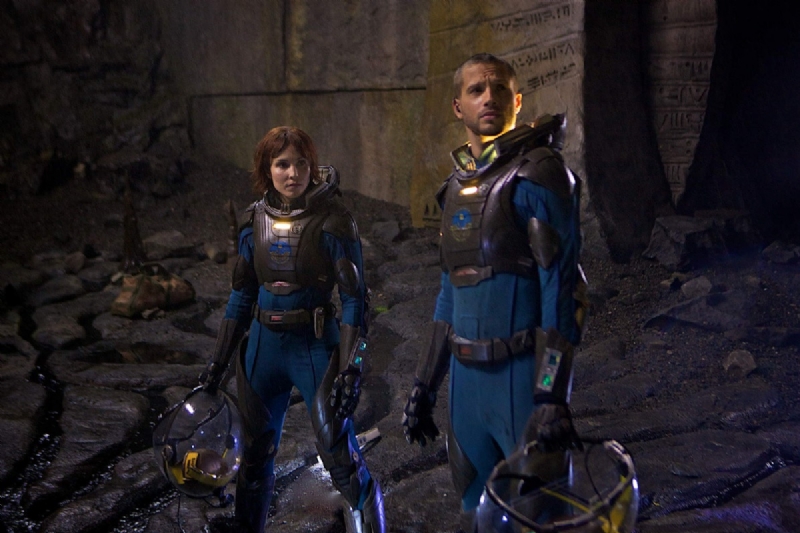
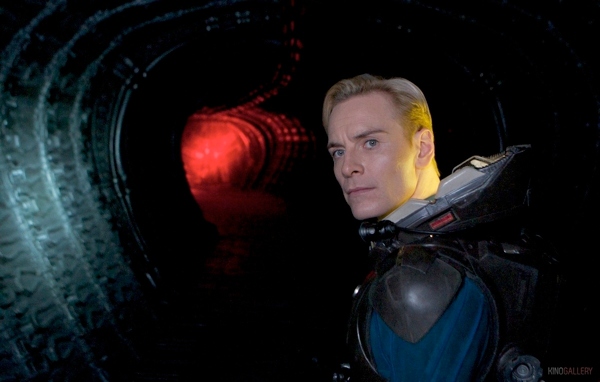
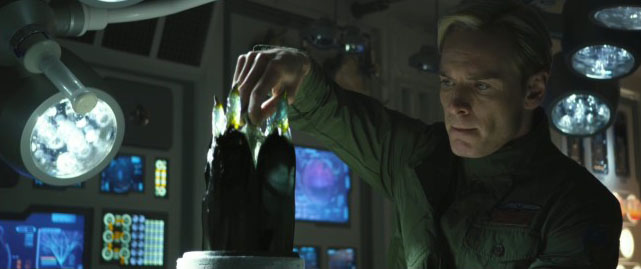
Don’t get me wrong: by any standards, Prometheus is a well-above-average film, an ambitious labor of love by a director of considerable talent; considering that its development and production history reads like an indictment of all that is wrong with the Hollywood process today, the fact that it offers so much substance along with its profit-minded formulaic plot is a miracle in itself. Scott has always been a director with remarkable gifts, particularly in visual terms, and this film certainly lives up to his reputation; it combines the immediacy of Alien with the elegiac reflection of Blade Runner; and, like both those examples, creates a stunning, immersive world for us to experience. Superbly photographed in 3-D by Dariusz Wolski, Prometheus presents a brilliant blend of its own shrewdly futuristic design and the H.R. Giger-inspired bio-technical look of the original Alien; and, to draw another comparison with 2001, it sets a new standard for special effects, with a look and a feel derived from dedication to the artistic purpose of the whole, not merely from a desire to dazzle us. This accomplishment is achieved, under the supervision of production designer Arthur Max, by a seamless blend of CG, traditional camera trickery, and live action footage, and it yields countless examples of big screen imagery which are surely destined to become iconic. All this technical wizardry is not wasted, notwithstanding the quibbles which mar the film’s narrative: Scott rises to the occasion throughout, creating moments of breathtaking beauty and visceral terror- in fact, the film’s most effective scenes (particularly a medically-themed sequence near the climax) are those which resurrect the creepy, primal body-horror around which the original was based and the fear of which is never far from our minds from the moment the exploration team lands. Aiding him in his struggle to rise above his mundane material is a fine cast which includes superb work from Charlize Theron (proving once again that she is Hollywood’s reigning ice queen), Idris Elba and Guy Pearce; standing out above the rest is the hypnotic Michael Fassbender, who provides further evidence of his substantial talent as the film’s most memorable and enigmatic character; and in the central role, Noomi Rapace makes a convincing transition from idealistic scientist to determined survivor, stirring favorable comparative memories of the franchise’s original heroine, Sigourney Weaver. The one sour performance comes from Logan Marshall-Green, whose hot-shot demeanor and club-rat looks make him not only unconvincing as a world-class scientist but also unlikable as a hero and poorly matched with Rapace’s much more sympathetic personality.

Prometheus has been anticipated as one of the year’s biggest film events, with much hype and secrecy surrounding its content and high expectations for both critical and commercial success. With all that pressure, it is not surprising that it has met, so far, with mixed reaction: hardcore fans of the genre have expressed disappointment with its emphasis on esoteric elements instead of on providing concrete answers to the mysteries it presents- many of which are left unrevealed, begging the development of a sequel despite the insistence of its makers that it is meant to be a stand-alone project- and serious-minded filmgoers have complained (as I did) of the reliance on cliché and formula in a plot which keeps it from fully realizing its higher goals. In the long term, who can really say where it will stand in the estimation of future cinemaphiles? What is certain now is that audiences seem to love it or hate it, which for me has always been the surest sign of artistic success. Summing up my own opinion, I would have to say that I loved it- with reservations. I can’t guarantee that you will share that view, but I can tell you that it’s worth a trip to your local theater to find out for yourself. You may not be satisfied, but you will almost certainly be stimulated and provoked, and isn’t that what art- and cinema in particular- is all about?

http://www.imdb.com/title/tt1446714/

;

The Invisible Man (1933)

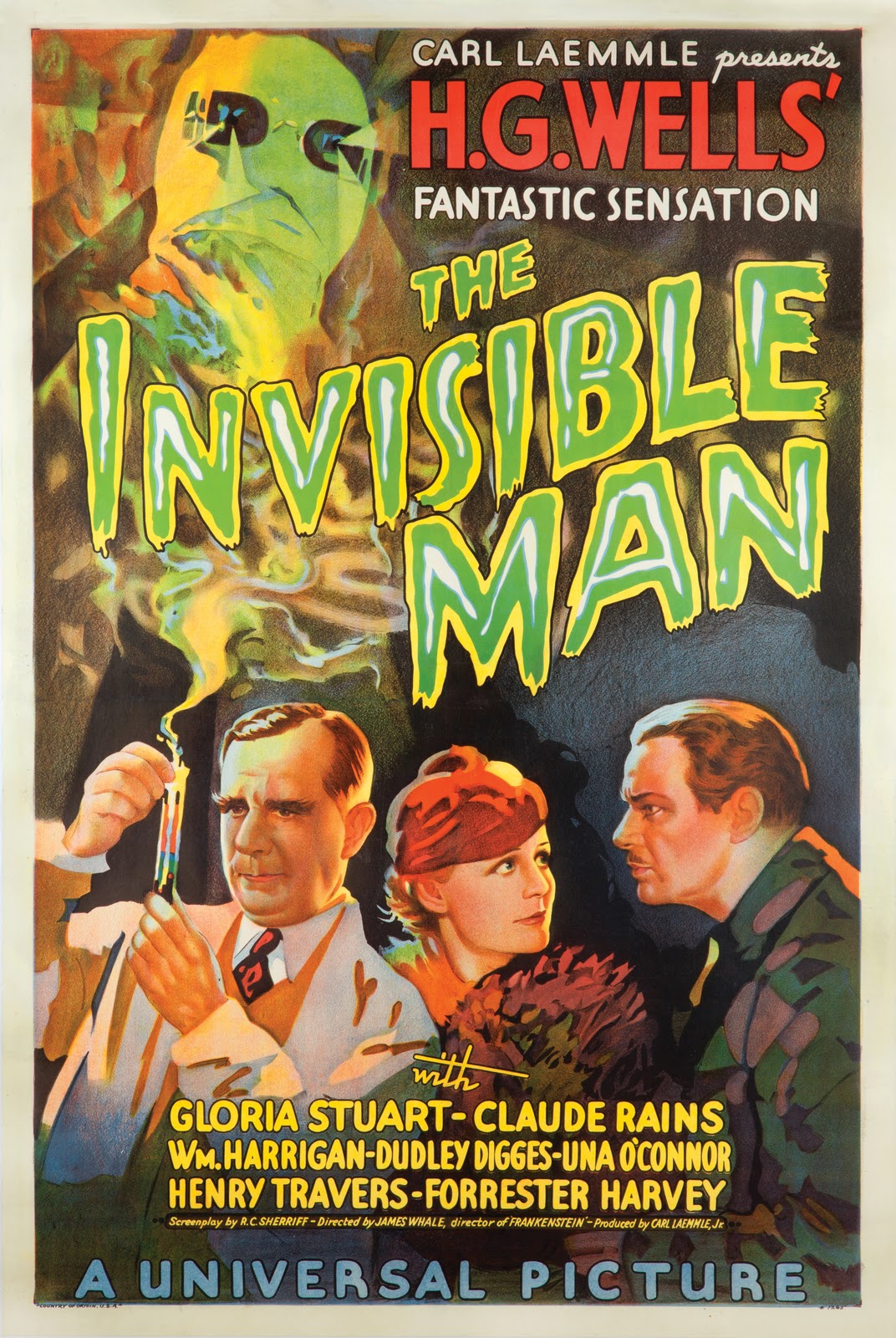
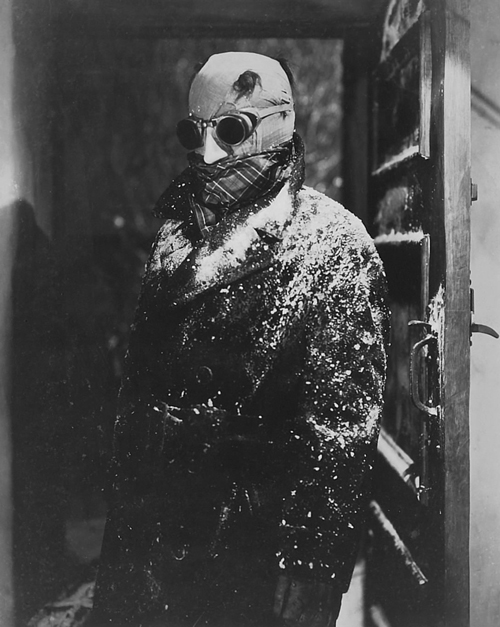
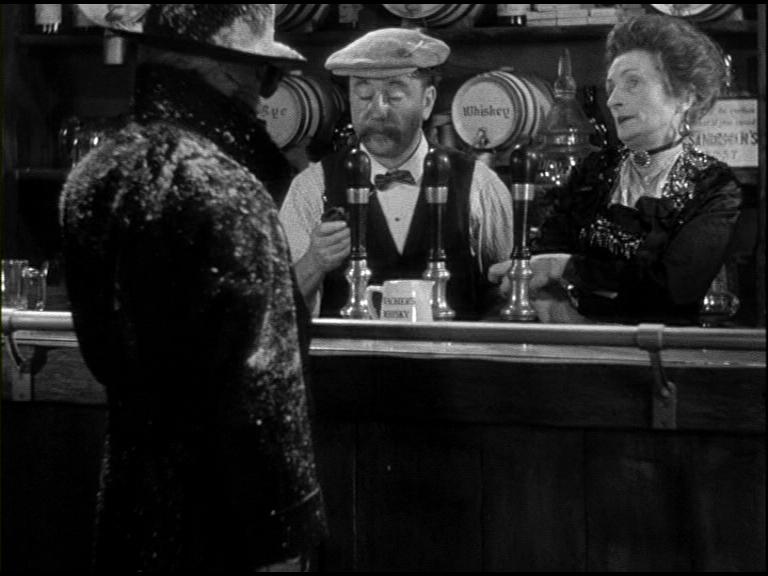
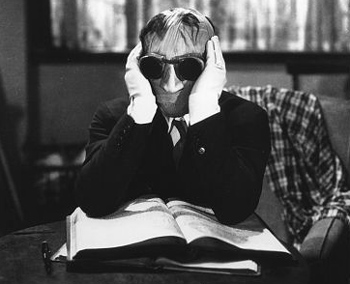
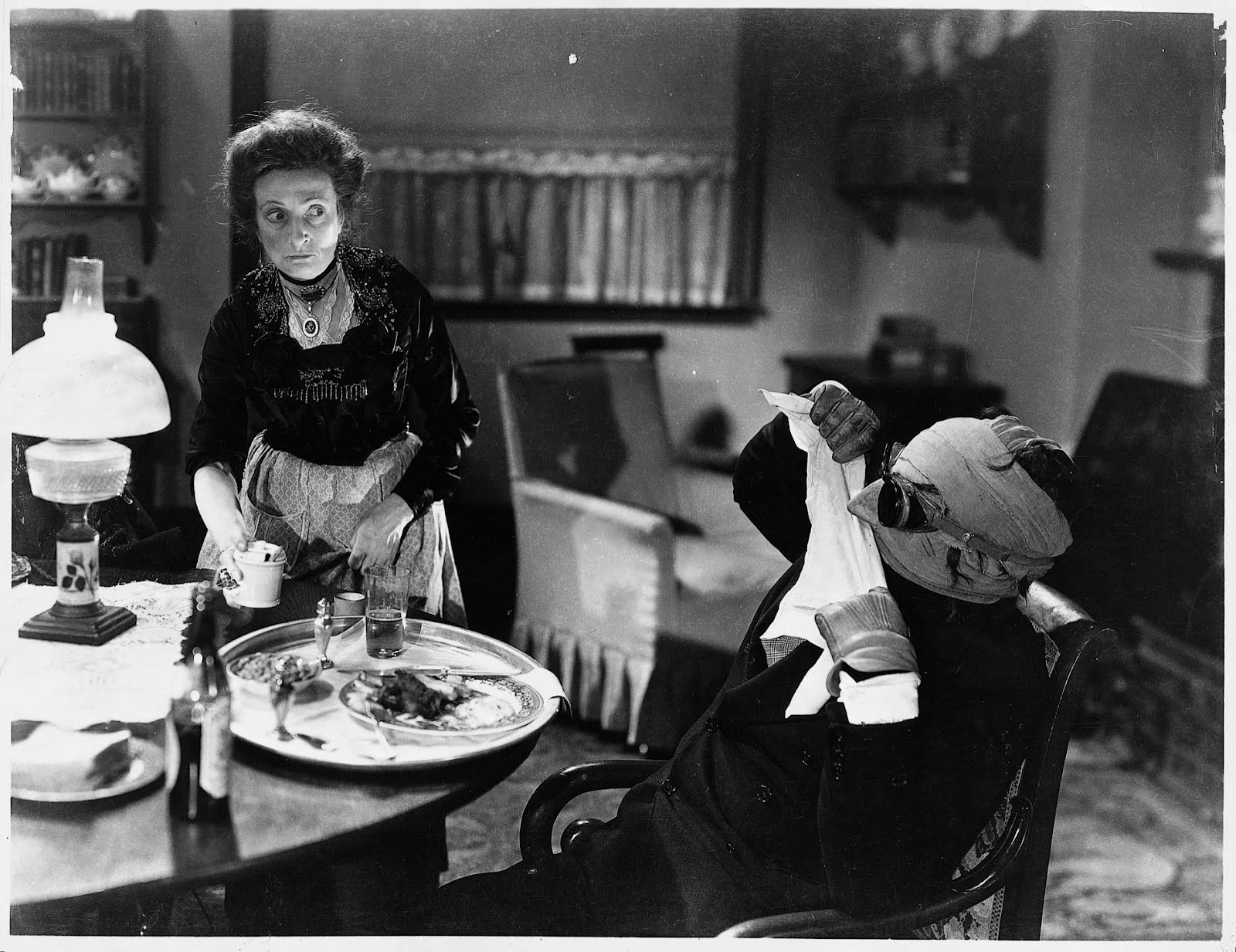
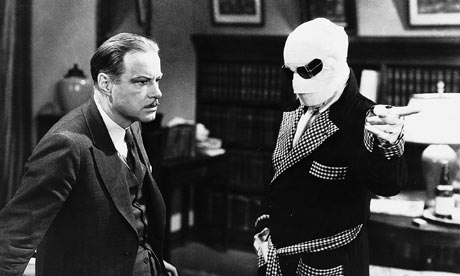
Today’s cinema adventure: The Invisible Man, the 1933 feature based on H.G. Wells’ story about a well-meaning scientist who discovers the secret of invisibility only to be driven to madness by its side-effects.  Produced at the height of Universal Studios’ early-thirties cycle of horror films, it established a familiar screen icon in the form of its bandage-wrapped title character, and is still considered one of top classics of the “monster movie” genre.  Its revered status is mostly due to director James Whale (the genius responsible for the first two Frankenstein movies), who combines a flair derived from his theatrical background with a keen cinematic style; his meticulously choreographed scenes are captured with inventive camera angles and expressionistic lighting, and his innovative techniques of visual storytelling- clever segues and montages, the savvy use of special effects to enhance his story rather than to dominate it- are a bittersweet testament to the brilliance that might have led to a long and remarkable filmmaking career had his distinctive artistic sensibilities not put him at odds with the Hollywood establishment and resulted in his early retirement from the industry.  Those sensibilities are on full display here: his arch, campy style results in a film ripe with macabre humor, and one which feels decidedly subversive in its gleefully ironic portrayal of a stodgy community disrupted from within by willful anarchy. Nevertheless, despite a tone which could almost be described as self-mocking, the story never loses its dark undercurrent of unsettling horror- not the horror of violence and mayhem (though there is a fair share of that), but the horror of that unseen menace within the human psyche- the potential for corruption and dehumanization that can transform even the gentlest soul into a monster capable of unspeakable acts of cruelty.  This balance between the wacky and the weird is achieved not only by the director’s considerable gift, but hinges also on a star-making performance in the title role by Claude Rains, who manages to walk the precarious line between histrionic mania and subtle sincerity, conveying perfectly the journey of a man struggling to hold onto himself even as he disappears into ego-driven insanity, and successfully holding audience sympathy even as he plots the most horrific acts of terror and revenge.  It is a feat made even more remarkable by the fact that his face remains hidden until the final moments of the film, and which deservedly led to a career as one of Hollywood’s most prolific and well-loved character actors.  The rest of the primary cast is effective enough, considering the prosaic acting styles of the era; notable more for their later accomplishments are Henry Travers (who went on to become everybody’s favorite guardian angel in It’s a Wonderful Life) and Gloria Stuart (who, 60 years later, became the oldest Oscar-nominated performer in history for her role in Titanic).  Though most of the supporting players come off as merely adequate, however, the army of background actors are a delight- an array of craggy, comical English faces headed by the incomparable Una O’Connor as a shrill hostess whose encounter with the mysterious stranger at her inn sets the comically creepy tone for the entire film.  R.C. Sheriff’s screenplay, though it features more than a little stodgy dialogue, captures the essence of Wells’ novel- particularly its allegorical exploration of the destructive effects of drug addiction- while expanding details of character and plot and building the foundation for Whale’s subtly skewed interpretation.  The technical elements of the film are as top-notch as one would expect from a prestige production like this: the scenic design blends an art-deco flavor with the rich detail of its various English settings, the cinematography (by the great Arthur Edeson) is a sublime example of the near-forgotten beauty and power of black-and-white film, and the special effects (supervised by John Fulton), which were advanced for their time, are still fairly impressive for the most part.  Of course, for today’s average audience, The Invisible Man may bear the stigma of being dated, creaky and far too tame for modern tastes; it may also suffer mildly from its abrupt and somewhat anti-climactic resolution.  Even the most jaded viewers, however, will likely be drawn in by the considerable charm of a movie that inspires them to laugh out loud as they contemplate the deeper, darker themes which bubble within it like the test tubes in a mad scientist’s arcane lab.

http://www.imdb.com/title/tt0024184/

Peeping Tom (1960)

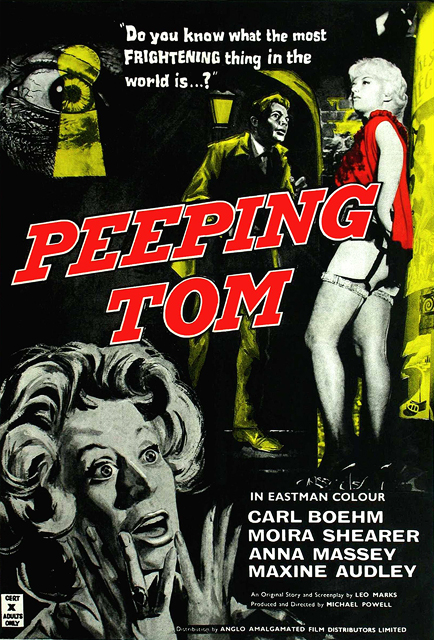
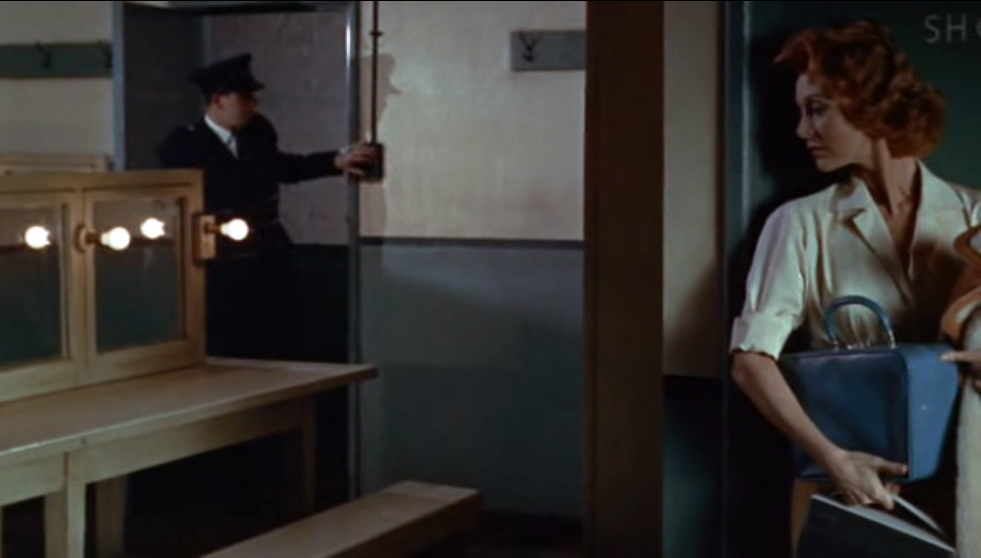
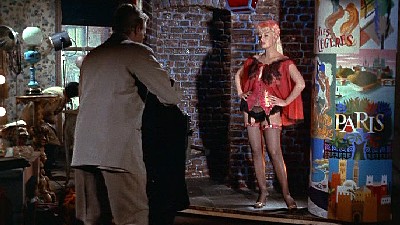
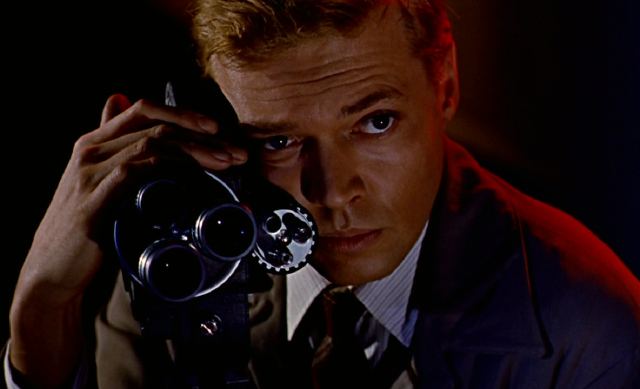
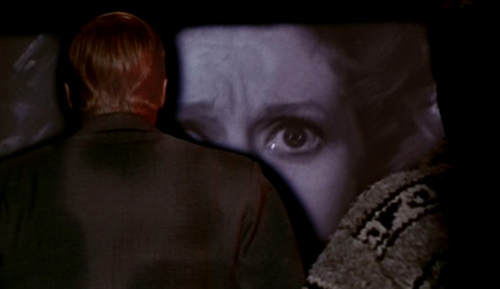
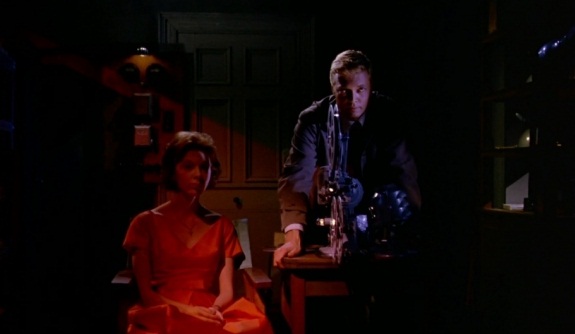
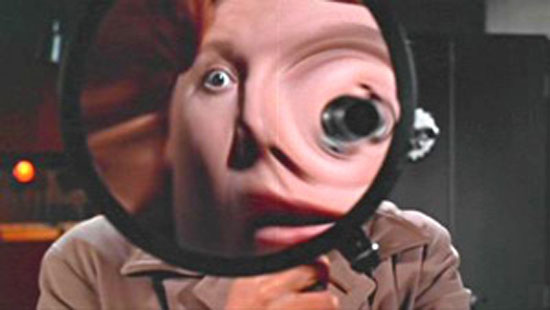
Today’s cinema adventure: Peeping Tom, the controversial 1960 thriller directed by Michael Powell, who was one of Great Britain’s most revered and respected filmmakers- that is, until the savage critical lambasting received by this feature effectively put an end to his career.   Photographed in garish color reminiscent of the lurid under-the-table pornography of its time, this tale of a disturbed young recluse who films women as he murders them was such a flop upon release that it was barely shown outside of England.  Over the succeeding years, however, it became a cult classic, growing in critical estimation and championed by such heavy hitters as Martin Scorsese (for one), and it is now generally acknowledged as a ground-breaking, underappreciated masterpiece of the genre.  On an intellectual level, I can see why: director Powell thoroughly explores the theme of voyeurism as it applies to cinema, forcing the audience from the very first frames to identify with the killer, and using the film’s story as a vehicle to manipulate our sympathies, uncover our own guilty voyeuristic tendencies, and confront us with our darkest fears just as his protagonist does with his victims.  There isn’t an extraneous or gratuitous moment in the film; every scene, every frame, every shot is calculated and geared toward the purpose- a testament to Powell’s mastery of his cinematic medium.  Despite the high score on an academic level, however, the film falls short for me on the more visceral level of emotional response; part of this may be due to the fact that, after 50 years, the film’s shock value (and body count) has been far surpassed by countless other horror movies and, by today’s standard, seems fairly tame (albeit still quite unsettling on a psychological level).  But I think the primary problem lies with the casting of Carl Boehm in the central role of the homicidal cameraman: not only does his German accent seem out of place for this decidedly English character, but his performance is stilted and unconvincing, making it difficult for us to sympathize with him- a necessary element to the transference of guilt to the audience which Powell works so hard to achieve.  The rest of the cast is excellent (particularly the young Anna Massey and the film’s biggest star, Moira Shearer, whose small but pivotal role is the centerpiece of the film’s most masterful and harrowing sequence), but with Boehm’s wooden presence in the middle of the proceedings, the film’s overall effect is muted: it stimulates the brain, and disturbs the psyche, but the heart remains aloof.  Still, it has much to recommend it, and it’s definitely worth the effort to check out a movie which, flawed or not, remains as an important footnote in cinematic history.

http://www.imdb.com/title/tt0054167/

We Need to Talk About Kevin (2011)

Today’s cinema adventure: We Need to Talk About Kevin, the disturbing and controversial 2011 feature based on Lionel Shriver’s award-winning 2003 novel of the same name.  Tilda Swinton stars as Eva, a woman haunted by memories and repercussions as she attempts to come to terms with the horrific acts committed by her teenaged son.  As directed by BAFTA-winner Lynne Ramsay, the film draws us in from its very first moments with arresting visuals and an enigmatic soundscape, unfolding its nightmarish story through a non-sequential progression of scenes and images that gradually piece together like the shattered fragments of Eva’s life. It’s riveting stuff: Ramsay (who also co-wrote the screenplay with husband Rory Kinnear) keeps us engaged and unsettled throughout, saturating us with stylish imagery marked by an ingenious use of color (with a decided emphasis on red, maintaining an ever-present suggestion of blood), layering in just enough foreshadowing and clues to conjure a growing sense of dread over the inevitable conclusion, infusing each scene with an atmosphere of resigned melancholy and foreboding, and dominating the proceedings with an uneasy silence which is only broken by spare, terse dialogue that shocks and pierces as much as it informs.  As we observe Eva’s disjointed recollections and her nightmarishly surreal day-to-day life, we find ourselves drawn into her psyche; forced to face the uncomfortable- and unanswerable- questions raised about the culpability of a parent in the wrongs committed by their offspring; and in the end, the biggest question may be how to find a resolution, a sense of closure which can permit the lives of those left standing to go on-  and if, indeed, such a thing is even possible.  With all these psychological themes in play, one might be tempted to consider We Need to Talk About Kevin to be a complex drama, but make no mistake about it: this is unquestionably a horror film, the kind of nightmarish thriller that is rarely made these days.  It follows no pre-molded formula, and there are none of the expected clichés of the genre: no sudden shocks, no scantily-clad female victims screaming as they flee through the dark night, no oceans of gore (for all the red flowing across our eyes, there is very little blood or violence onscreen, with Ramsay opting instead to paint the horrible pictures in our imagination where they are infinitely more disturbing).  This is not some schlocky shocker designed for a teenagers’ date night, but rather, like other great adult horror films of the past such as The Exorcist or Rosemary’s Baby, it is an exploration of evil in our lives, of how it manifests and what might be its causes; but unlike the aforementioned classics, there is no suggestion here of supernatural forces- the responsibility is placed squarely on human shoulders, with implications that are far more chilling than the presence of any demonic scapegoat.  It would be easy, in the wrong hands, for Kevin to veer off into the realm of exploitative trash; but not only is Ramsay well-equipped for the task, she has the considerable benefit of Tilda Swinton in the central role.  Swinton has proven many times that she is one of the most electrifying screen performers working today, and here she solidifies that reputation with a stunning, solid portrayal of a woman for whom the joy of motherhood has been inverted into a nightmare.  With a minimum of dialogue, she conveys Eva’s harrowing journey with masterfully subtle changes in her continuous expression of dull shock, bringing home the frustration, the terror, and the loneliness created by the growing comprehension that her child is a monster and she alone can see it.  It’s a tour-de-force performance, and its failure to receive an Academy Award nomination for Best Actress- particularly when it was recognized by virtually every other major awards organization- was surely one of the great injustices of Oscar history.  Supporting Swinton’s magnificence is John C. Reilly, likeable but obtuse as Eva’s husband, a man whose doting denial helps to enable the ever-escalating sociopathy of their son and drives an immovable wedge into their marriage; and a shining turn by Ezra Miller as the title character, who skillfully avoids the temptation of playing for sympathy- this is no misunderstood, angst-ridden adolescent, but a young cobra smugly and gleefully coiling up for a fatal strike.  Mention is also deserved for Jasper Newell, as the six-to-eight year-old Kevin, who eerily projects a malicious menace beyond his years, somehow making the younger incarnation even more frightening than his future self.  In addition to the stellar cast, Ramsay is aided in her vision by superb work from her technical collaborators: an eerie and atmospheric score by Johnny Greenwood (of Radiohead) meshes seamlessly with the carefully orchestrated sound design by Paul Davies; the cinematography by Seamus McGarvey provides some of the most vividly realized images in recent film memory, into which the simple-yet-striking costume design of Catherine George is brilliantly coordinated; and the editing by Joe Bini is a masterpiece of visual juggling, managing to maintain a steady flow throughout a narrative which freely jumps forward and back to multiple periods in time.  It is a shame- but not a surprise- that We Need to Talk About Kevin has yet to recoup the $7 million that was spent to make it; you can chalk it up as yet another sign that the contemporary film market is driven by an increasingly less sophisticated mindset, but this would be a difficult film to sell in any era, really.  It is a psychological thriller that dares to address deeply disturbing issues which most of us would prefer to keep out of sight and out of mind, and watching it is a grim and unrelenting experience which may leave you disturbed for days afterward.  If that sounds as good to you as it does to me, We Need to Talk About Kevin is a film you must not miss.

http://www.imdb.com/title/tt1242460/

Crimes of Passion (1984)

Image

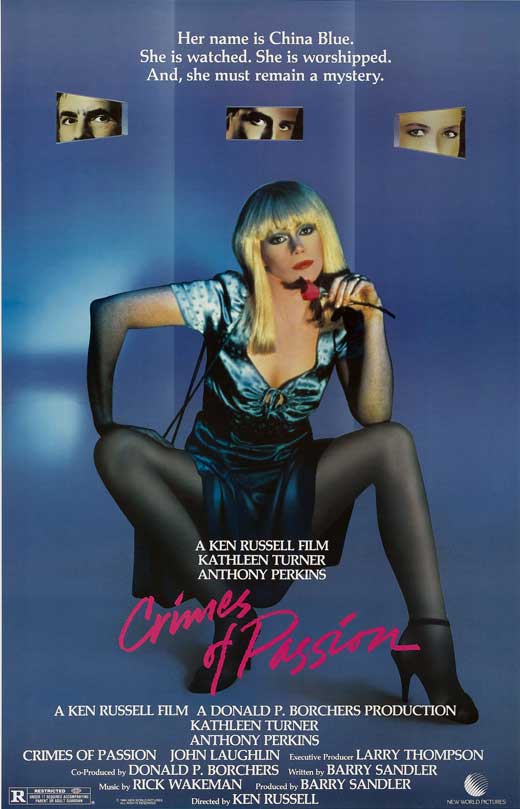
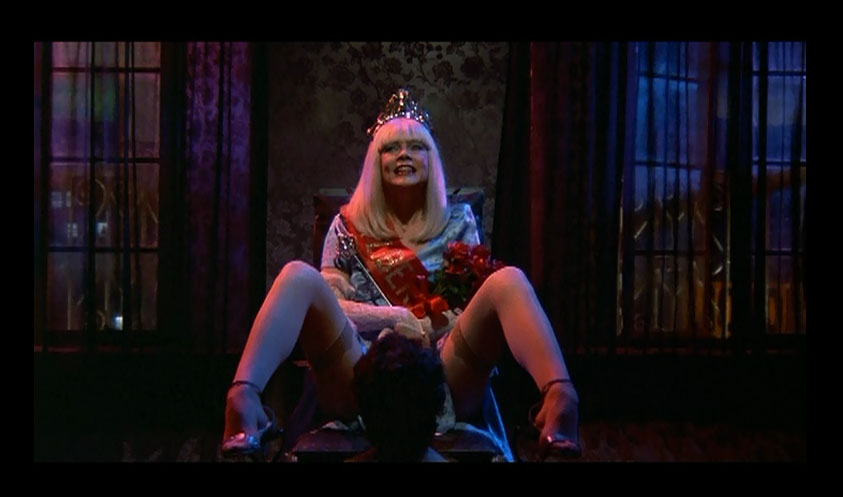
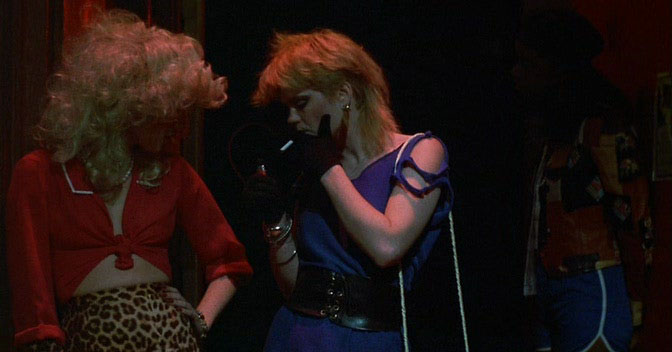
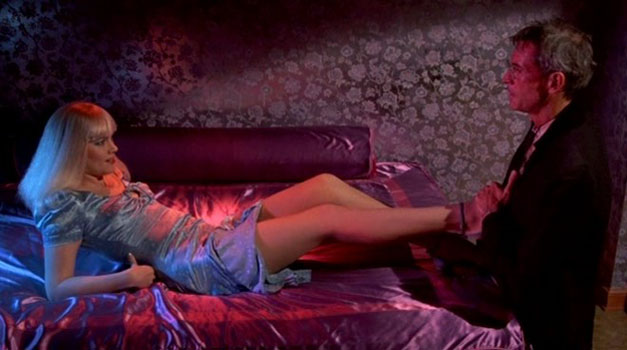
Today’s cinema adventure “Crimes of Passion, the controversial 1984 sexual thriller by cinematic bad-boy Ken Russell, centered around a hard-driven career woman who gets her sexual validation moonlighting- in disguise- as a streetwalker named “China Blue.” With his characteristic excess, both in his artistic style and his explicit depiction of sex, Russell uses the titillating scenario to explore a variety of psycho-sexual themes, portraying attitudes and behavior at both ends of the spectrum between depravity and repression; provoking numerous questions about the relationships between love, sex, truth, fantasy, shame, guilt and redemption; and exploring the difficulty of overcoming fear and immaturity in order to form an honest human connection. A heady and ambitious agenda, to be sure, and whether or not Russell and his screenwriter/producer, Barry Sandler, have succeeded in achieving it is still the subject of much debate- as with most of the director’s work, the response of critics and audiences is sharply divided between “hate it” or “love it.” My take: Russell’s madness has a method, and with his almost cartoonish depiction of the erotic underworld inhabited by China Blue and her clientele, he highlights the absurdity of our sexual prejudices and suggests that we have much more to fear from the consequences of repressing our natural desires. Helping considerably towards this goal is Kathleen Turner, at the height of her sexual appeal, delivering a remarkable performance infused not only with the necessary gleeful eroticism but also the vulnerability of a woman terrified by emotional intimacy. Also superb is Anthony Perkins, in an underrated turn as a seedy street preacher whose shame over his own pornographic impulses leads him to an obsession with “saving” China Blue; though derided by many critics as “over-the-top,” Perkins’ work here is frighteningly accurate, which should be clear to anyone who has ever had an encounter with a dangerously schizophrenic denizen of the streets. These two share several delicious scenes together, skillfully enacting an ongoing point/counterpoint about sexual morality that underscores the movie’s themes and provides many of its most delightfully melodramatic moments. Not as proficient is John Laughlin as a naive young husband whose failing marriage leads him to China Blue’s bed- but despite his somewhat stilted acting, his sincerity shines through enough to provide the necessary relief from the darkness of the skid row surroundings. Other notable elements include the costumes, scenic design and cinematography, all of which brilliantly contrast between the garish night-time world of the red-light district and the bland suburban daylight of the film’s other scenes- the two worlds seem almost as if they have been spliced together from two different films. Less successful- perhaps the film’s biggest flaw, really- is the tinny electronic score (provided by Rick Wakeman of the band Yes), which may have seemed like a good idea at the time but now provides a ludicrously dated atmosphere in a film that might otherwise seem almost timeless. Nevertheless, Russell’s film retains a surprising depth and resonance despite- or perhaps because of- the sensationalism of its hyper-sexual surface, and even if there are times when his intellectualism threatens to undermine the plot or his exploitative excess threatens to alienate his audience, the compelling performances of his two stars succeed in maintaining the emotional connection that is necessary to ensure the slow build of suspense into the climactic scenes. Overall, though Crimes of Passion lacks the audacious mastery that made instant classics of some of Russell’s earlier works, it still packs a powerful punch, melding sensuality with horror and humor with high drama, and ultimately- in my view anyway- standing as one of the most memorable and unique films of the eighties.

http://www.imdb.com/title/tt0087100/

ImageImageImageImageImageImageImageImageImage