The Cabinet of Dr. Caligari/Das Cabinet des Dr. Caligari (1920)

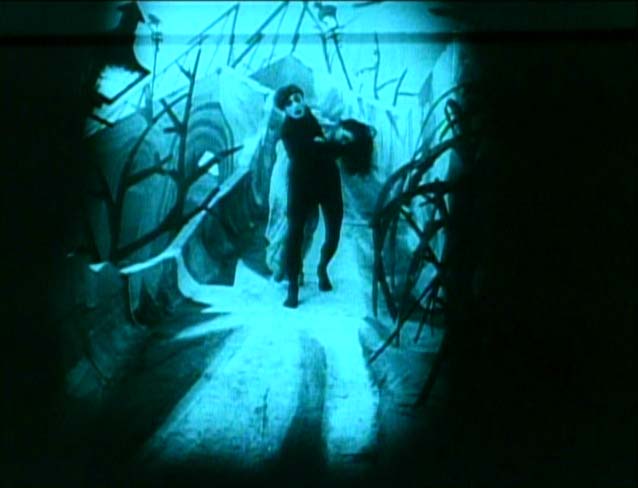
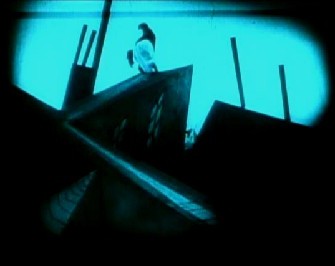
Today’s cinema adventure: The Cabinet of Dr. Caligari, the 1920 cinema cornerstone that established enduring conventions for the horror genre- indeed for cinema itself- and for the general public at least, has become one of the most recognizable representations of the German Expressionist movement.  A bizarre tale about a mysterious carnival magician whose hypnotized slave commits a series of murders at his bidding, this landmark film was first conceived by its writers, Hans Janowitz and Carl Mayer, as a way to demonstrate the effectiveness of film as a medium for Expressionist art, and also to establish a definitive look for German cinema that would distinguish it from the growing influx of American movies to their country. The resulting work is one of the most distinctive visual experiences ever produced, featuring wildly distorted scenery (abstract, asymmetrical sets with sharp, jagged lines, obvious and elaborately theatrical backdrops with painted-on shadows) highly dramatic lighting, and a heightened acting style that seems exaggerated even compared with other silent films of the time; it was an experiment which only took place because the writers persuaded producer Erich Pommer that making the film in this style would save considerable amounts of money.  These creative pioneers- including director Robert Weine, who was brought on board when rising wunderkind Fritz Lang was unavailable- believed that their bold new approach would change the art form forever; however, though Dr. Caligari met with enthusiastic response from audiences and critics alike, and stirred much excitement in the world’s blossoming film community, it failed to lead the industry away from the more mundanely representational style in which it remains more-or-less grounded to this day.

This is not to say that the film had no bearing on the future of cinema.  Its visual conceits and thematic elements have provided immeasurable inspiration for filmmakers from F.W. Murnau to Tim Burton and beyond. Its macabre tone and gruesome content influenced not only the future of the horror genre but the entire film noir movement as well.  It set the precedent for using cinematic embellishment to suggest altered states of consciousness: virtually every film depicting dreams, delusions, or drug-induced hallucinations can trace its heritage back here.  Most important of all, perhaps, was its establishment of numerous structural conventions that have been in continuous use ever since: by constructing its grim story as the remembrance of a young man who is ultimately revealed to be a delusional patient in a mental hospital, Dr. Caligari became the first film to feature a framing device bookending its main narrative, to rely on an unreliable narrator, and to surprise its audience with a twist ending.  None of this is to say that later filmmakers could not have made these innovations on their own- but Caligari went there first.

All this film class trivia is well and good, but how does The Cabinet of Dr. Caligari  hold up today for the casual viewer simply seeking entertainment?  Probably not well: the world is a much different place than it was in 1920, and we have been inundated with stories and images much more shocking and terrifying than those in this film- which, ironically, opened the door for all of them.  The conventions of fiction observed within it seem quaint and unsophisticated by our jaded modern standards, and the performances, with their jerky, unnatural physicality and their often-seemingly-inappropriate facial expressions (to say nothing of their histrionic, over-the-top style) seem unconvincing and inaccessible to us.  To top it off, its outrageously artificial visual style is so alien and disconcerting that it only serves to distance us further from the events onscreen, ensuring that we will never become viscerally engaged in the proceedings.  Of course, it’s true that these qualities were present even when Dr. Caligari was made- deliberately included as part of the Expressionist form intended and carefully crafted by its creators- but historical context has no bearing on our contemporary requirements for suspension of disbelief.

Before concluding, however, that Caligari has no value for any modern viewer who is not a film buff or an art enthusiast, it might be wise to look past the obvious sensibility gaps created by its distance from us in time.  It was never meant to be a purely escapist experience, even when it was conceived nearly a century ago; rather, it was- and is- a vivid and fully realized vehicle for Expressionist themes such as paranoia and the unreliability of perception, and an impressive presentation of the movement’s distinct visual style, comprised of crude, primal imagery that works on the subconscious to elicit a strong emotional response.  Its effectiveness is even keener in its restored form, which not only returns sharpness and luster to the once-faded print but also recreates the original hand-tinted colors, helping to clarify the story by differentiating day from night, and polishing up the intertitles with a font and style coordinated with the bizarre content of the story they tell.  A viewing of Dr. Caligari is hallucinogenic enough on a small screen, and though I’ve never had the opportunity to do so, I suspect that seeing it projected larger than life in a darkened theatre would be akin to experiencing a full dream state.

It’s also worth mentioning that although the stylized acting is hard to assess fairly from a standard modern perspective, Werner Kraus and Lil Dagover, as the mad magician and tragic damsel, respectively, have become iconic as personified archetypes of the collective consciousness; and as Cesare, the tormented somnambulist, Conrad Veidt is electrifying, using his remarkable physical skills and his expressive face to transcend both genre and style, and delivering perhaps the first truly great film performance- one which continues to inspire and influence actors to this day.

So although The Cabinet of Dr. Caligari may not offer the kinds of thrills and chills sought by the average viewer looking for a lively horror film, it certainly offers many other rewards.  There are good reasons why it has been celebrated, emulated, re-invented, re-adapted, saluted and parodied so many times over the decades; it is part of our cultural makeup, and if that is enough to get you to watch it, you may find yourself enjoying its twisted pleasures in ways you never expected.

 http://www.imdb.com/title/tt0010323/
Death Proof (2007)

Image

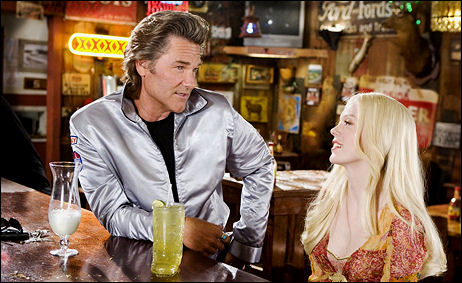
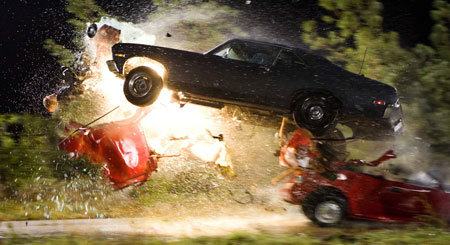
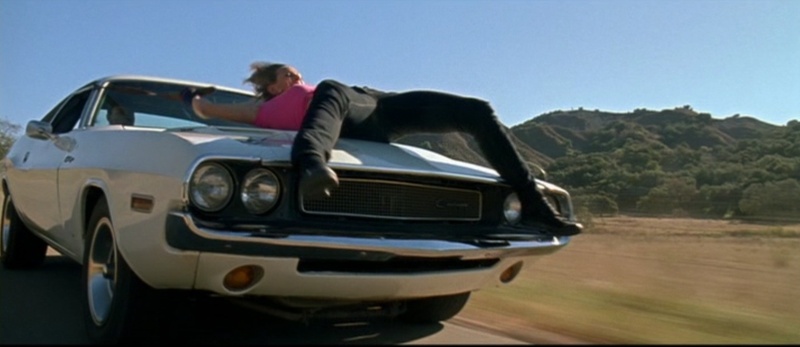
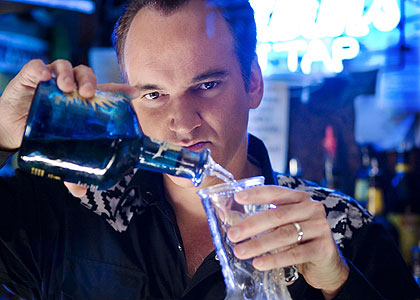
Today’s cinema adventure: Death Proof, writer/director Quentin Tarantino’s 2007 homage to the cheap exploitation movies of the sixties and seventies, originally released as half of the Grindhouse double feature (paired with Richard Rodriguez’ Planet Terror). With his trademark style on full display, Tarantino sets out to emulate- and surpass- the violent and titillating “anti-classics” he clearly loves with this tale of a psychopathic ex-stunt driver who stalks and kills young women in his souped-up, “death-proofed” muscle car. Though Kurt Russell delivers a delightful performance in the central role, and the director’s impressive visual style is as dazzling as ever, the film is ultimately sabotaged by several factors. First of all, with its conceit of recreating the genre which inspired it, Death Proof severely impairs its own ability to engage the viewer in its proceedings: the deliberately grainy cinematography, scratched film and bad splicing constantly serve as a reminder that it’s all just an elaborate gimmick; the inherently shallow formula prevents the far-fetched and sensationalistic plotline from ever becoming believable or compelling; and the characters, for all the self-consciously clever dialogue Tarantino puts in their mouths, are doomed to remain one-dimensional ciphers who exist merely to enact the filmmaker’s cars-sex-drugs-and-rock-n-roll fantasy. All these criticisms, of course, could easily serve as a description of any of the B-movies upon which Tarantino’s opus is based; and it would be correct to point out that what really matters in those films (and in this one) is the nail-biting, balls-to-the-wall action and the gratuitous violence for which everything else simply provides a framework. But where the original films managed, at their visceral best, to thrill and delight, transcending their shoddiness with their lack of pretense and their unapologetic devotion to providing guilty pleasure, Tarantino’s would-be tribute fails to achieve any of these ends. To be sure, his talent is clearly visible here: but that’s part of the problem, for where the drive-in fodder he emulates was often so bad it was good, here we have an obviously good filmmaker deliberately trying to be bad, and succeeding in just being, well, bad; and though the action sequences- two of them, to be exact- are unquestionably well-done, in order to get to them (thanks to Tarantino’s self-indulgent insistence on maintaining his own signature tension-building style) we have to sit through interminable stretches of hip, foul-mouthed dialogue, which may be meant to invest us in the characters but instead results in repeated glancing at our watches. Seriously, there was never this much talking in Death Race 2000. Don’t get me wrong- I’m not criticizing Tarantino for embracing and championing the grindhouse genre. After all, these humble movies are touchstones for a generation and have had a major influence on contemporary cinema; and in his best work (such as the Kill Bill movies and Inglorious Basterds), the director has masterfully drawn inspiration from them while incorporating their elements into his larger personal vision. With Death Proof, however, he has only succeeded in making a pale shadow of the original works, which, like a replica of some crude masterpiece of outsider art, seems pointless and unnecessary.

http://www.imdb.com/title/tt1028528/

Dog Day Afternoon (1975)

Image

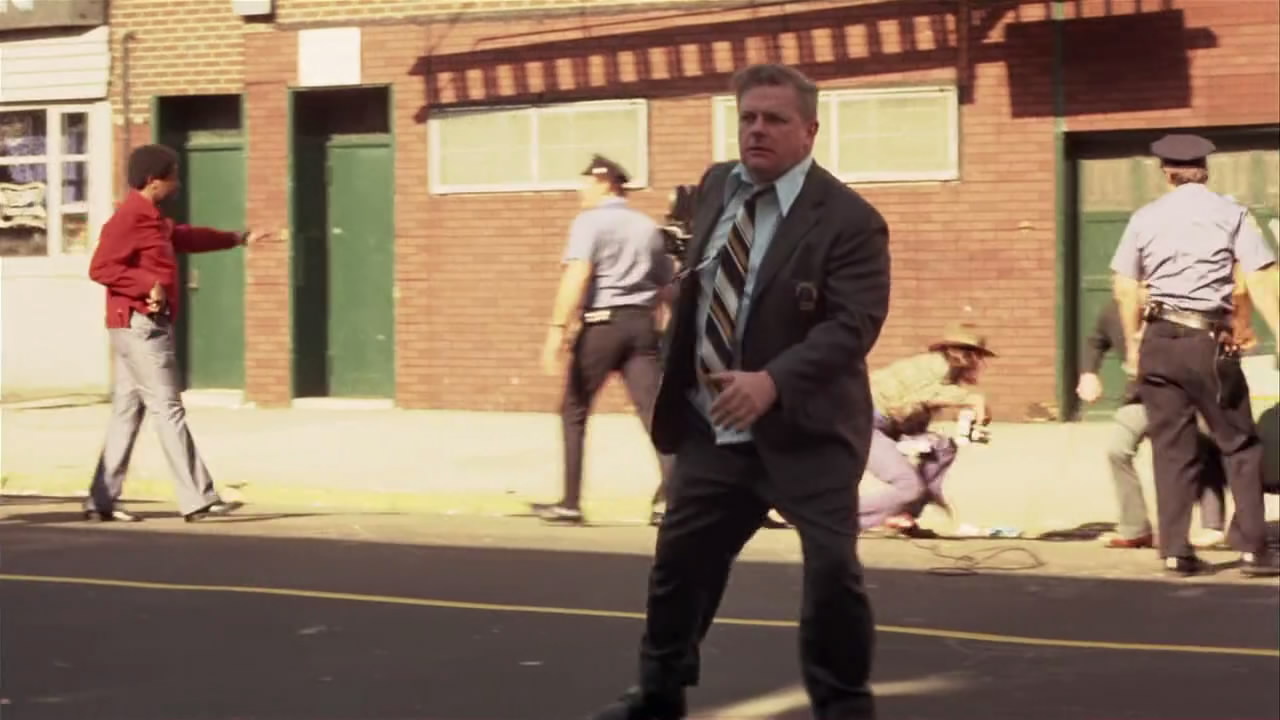
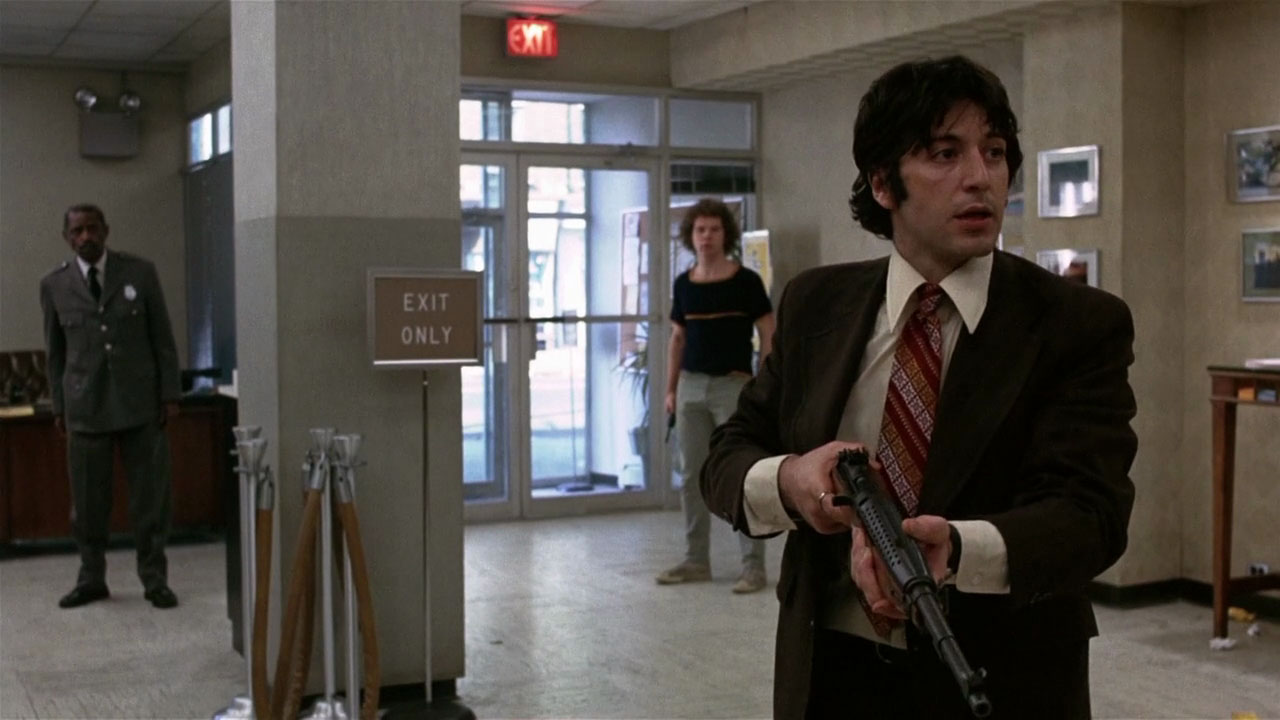
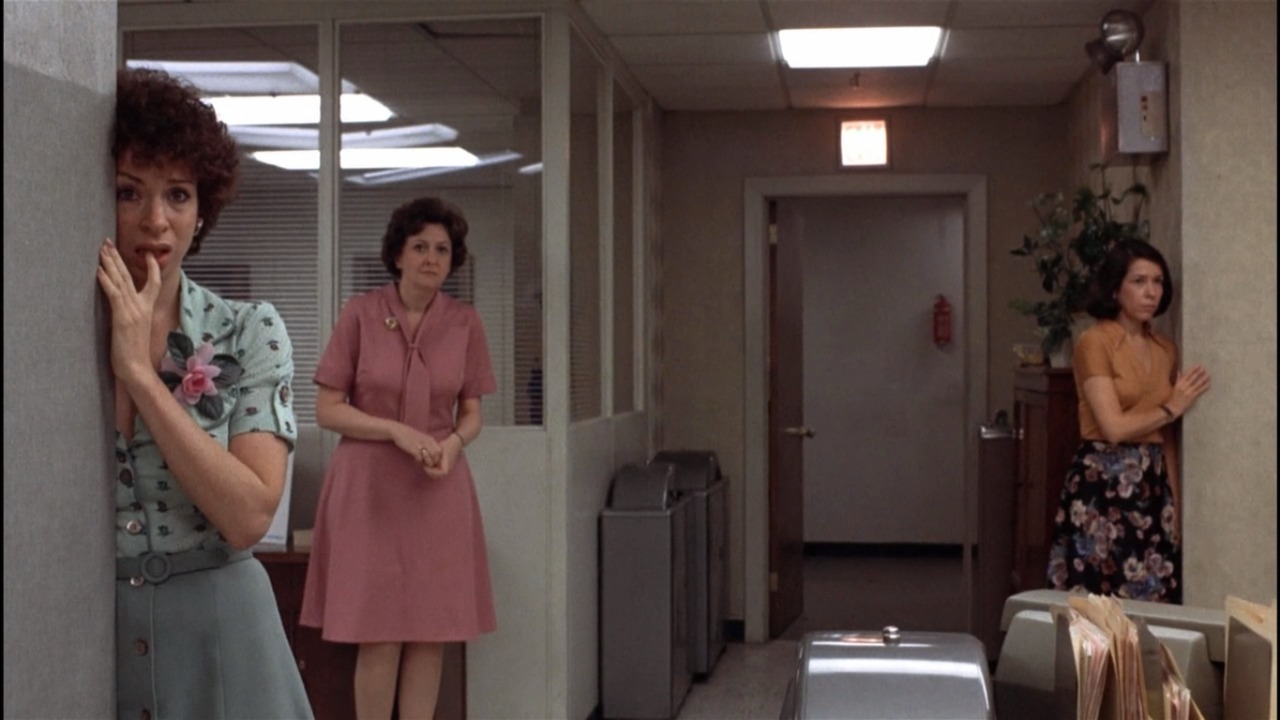
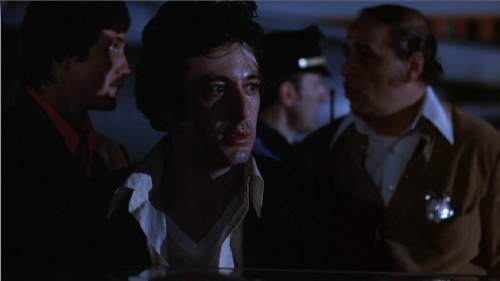
Today’s cinema adventure: Dog Day Afternoon, the 1975 Sidney Lumet feature about a real-life bank heist gone wrong, in which a troubled Vietnam war veteran attempts to obtain the money needed for his gay lover’s sex change surgery and ends up at the center of a hostage situation that turns into a media circus. A prime example of seventies “New Hollywood” cinema, this gripping gem achieved much popularity due to its anti-establishment undertones and the performance of Al Pacino, who was at the height of his rising stardom. Director Lumet, also at the peak of his career, steadily drives the brilliant Frank Pierson screenplay by allowing the story to unfold through the characters, resulting in a slow-but-steady paced film that remains emotionally grounded as it moves through the escalating complications of the plot, building tension by keeping us invested as it moves towards its inexorable conclusion; in addition, by focusing on the immediacy of the human element, Lumet succeeds in creating a microcosmic fable with complex political and social overtones woven into its fabric without ever letting these larger themes overwhelm the immediacy and intimacy of its simple story. The power of the film as a whole is seamlessly connected to the magnificence of Pacino’s embodiment of the likable loser at its center; his sharply honest portrayal allows us to instantly connect with the core of his character as he wavers between gullibility and cynicism, despair and determination, kindness and cruelty- seemingly the entire contrasting myriad of human emotion. It’s hard not to be on his side, no matter how ill-advised his actions may be; we share his giddy thrill when he stirs the crowd with his chants of “Attica!,” and we feel the crushing pressure as he tries to negotiate an acceptable way out of the no-win situation he is in- both in the bank and in his life. Backing him up is a quietly brilliant cast of supporting players, from John Cazale as his slow-witted accomplice and Charles Durning as the police negotiator trying to diffuse the situation, to the ensemble of bank-employees-turned-hostages who convincingly bond with their unwilling captor. Special praise, however, should go to Chris Sarandon, as Pacino’s gender-swapping lover, who delivers his two scenes with a sensitivity and a dignity that provide the bittersweet heart upon which the entire plot hinges. It is worth mentioning, in fact, that the homosexual elements of the film are handled with objectivity and a marked lack of stereotyping- a fact made all the more remarkable by the era in which it was made, which helps to make it stand as strong today as it did upon its first release nearly forty years ago. (As a side note, it is interesting to know that the film’s real-life inspiration, John Wojtowicz, used his proceeds from the sale of his story to finally fund his lover’s sex change; so in a roundabout way, his scheme ended up being successful after all). All in all, Dog Day Afternoon is one of those classics that define an era, a representative work from a time when American cinema blended realism with art to create a kind of visual poetry, a document testifying to the character of our culture and capturing the essence of our concerns. Not only that, it is a reminder of a time when Hollywood gave us stories that grew out of the people in them instead of relying on gimmicky, formulaic plots with the people grafted in- and though I’m not one to bemoan the passing of the “good old days,” it’s certain that today filmmaking establishment would be completely unable- or at least unwilling- to create a film with the kind of simple, non-CG-powered thrills provided here. Of course, you don’t need all these justifications for checking it out. The only reason you need is the best reason of all: it’s a damn good movie.

http://www.imdb.com/title/tt0072890/

ImageImageImageImageImageImageImageImageImageImageImage

Peeping Tom (1960)

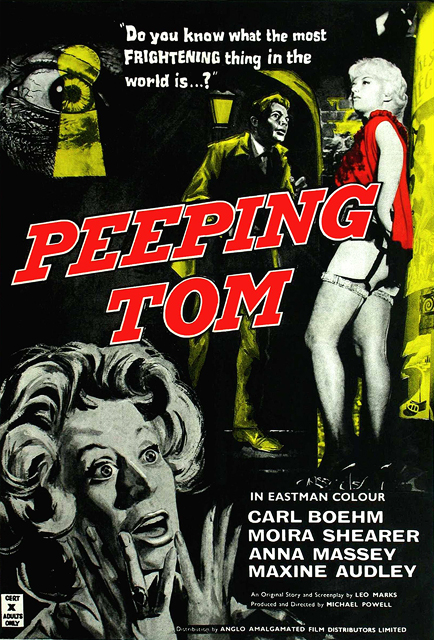
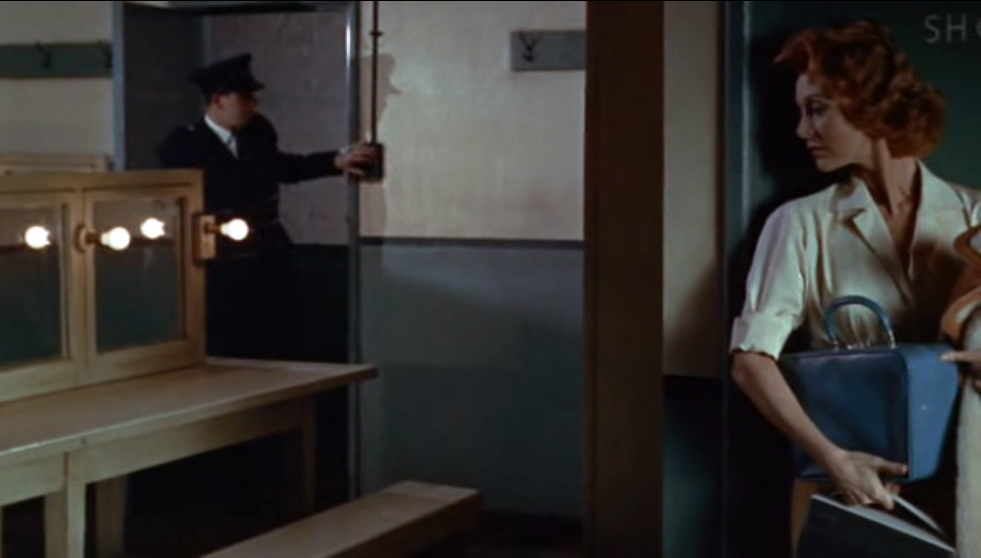
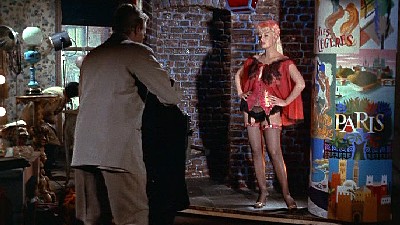
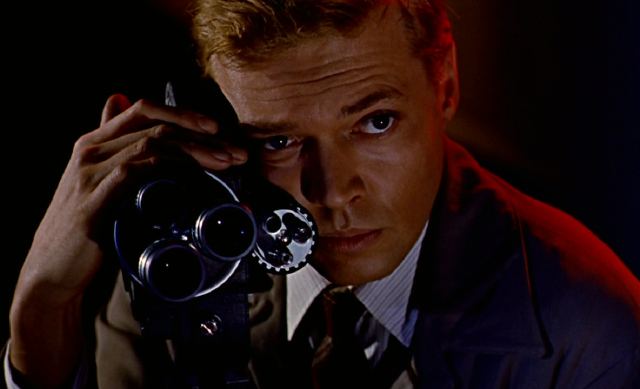
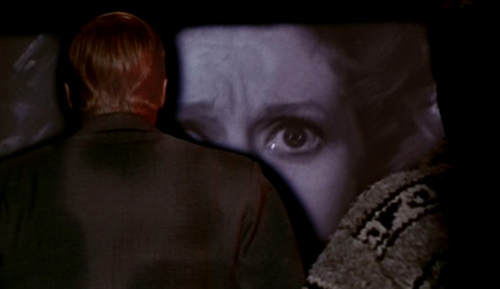
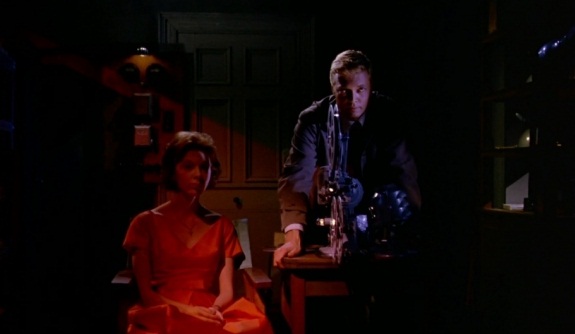
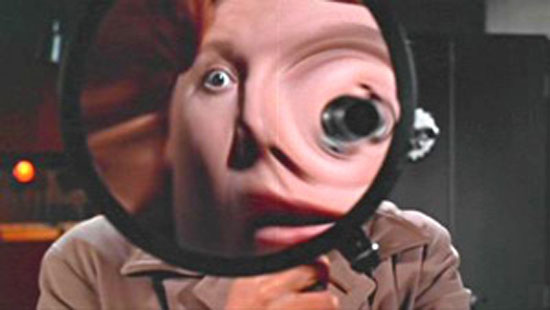
Today’s cinema adventure: Peeping Tom, the controversial 1960 thriller directed by Michael Powell, who was one of Great Britain’s most revered and respected filmmakers- that is, until the savage critical lambasting received by this feature effectively put an end to his career.   Photographed in garish color reminiscent of the lurid under-the-table pornography of its time, this tale of a disturbed young recluse who films women as he murders them was such a flop upon release that it was barely shown outside of England.  Over the succeeding years, however, it became a cult classic, growing in critical estimation and championed by such heavy hitters as Martin Scorsese (for one), and it is now generally acknowledged as a ground-breaking, underappreciated masterpiece of the genre.  On an intellectual level, I can see why: director Powell thoroughly explores the theme of voyeurism as it applies to cinema, forcing the audience from the very first frames to identify with the killer, and using the film’s story as a vehicle to manipulate our sympathies, uncover our own guilty voyeuristic tendencies, and confront us with our darkest fears just as his protagonist does with his victims.  There isn’t an extraneous or gratuitous moment in the film; every scene, every frame, every shot is calculated and geared toward the purpose- a testament to Powell’s mastery of his cinematic medium.  Despite the high score on an academic level, however, the film falls short for me on the more visceral level of emotional response; part of this may be due to the fact that, after 50 years, the film’s shock value (and body count) has been far surpassed by countless other horror movies and, by today’s standard, seems fairly tame (albeit still quite unsettling on a psychological level).  But I think the primary problem lies with the casting of Carl Boehm in the central role of the homicidal cameraman: not only does his German accent seem out of place for this decidedly English character, but his performance is stilted and unconvincing, making it difficult for us to sympathize with him- a necessary element to the transference of guilt to the audience which Powell works so hard to achieve.  The rest of the cast is excellent (particularly the young Anna Massey and the film’s biggest star, Moira Shearer, whose small but pivotal role is the centerpiece of the film’s most masterful and harrowing sequence), but with Boehm’s wooden presence in the middle of the proceedings, the film’s overall effect is muted: it stimulates the brain, and disturbs the psyche, but the heart remains aloof.  Still, it has much to recommend it, and it’s definitely worth the effort to check out a movie which, flawed or not, remains as an important footnote in cinematic history.

http://www.imdb.com/title/tt0054167/

We Need to Talk About Kevin (2011)

Today’s cinema adventure: We Need to Talk About Kevin, the disturbing and controversial 2011 feature based on Lionel Shriver’s award-winning 2003 novel of the same name.  Tilda Swinton stars as Eva, a woman haunted by memories and repercussions as she attempts to come to terms with the horrific acts committed by her teenaged son.  As directed by BAFTA-winner Lynne Ramsay, the film draws us in from its very first moments with arresting visuals and an enigmatic soundscape, unfolding its nightmarish story through a non-sequential progression of scenes and images that gradually piece together like the shattered fragments of Eva’s life. It’s riveting stuff: Ramsay (who also co-wrote the screenplay with husband Rory Kinnear) keeps us engaged and unsettled throughout, saturating us with stylish imagery marked by an ingenious use of color (with a decided emphasis on red, maintaining an ever-present suggestion of blood), layering in just enough foreshadowing and clues to conjure a growing sense of dread over the inevitable conclusion, infusing each scene with an atmosphere of resigned melancholy and foreboding, and dominating the proceedings with an uneasy silence which is only broken by spare, terse dialogue that shocks and pierces as much as it informs.  As we observe Eva’s disjointed recollections and her nightmarishly surreal day-to-day life, we find ourselves drawn into her psyche; forced to face the uncomfortable- and unanswerable- questions raised about the culpability of a parent in the wrongs committed by their offspring; and in the end, the biggest question may be how to find a resolution, a sense of closure which can permit the lives of those left standing to go on-  and if, indeed, such a thing is even possible.  With all these psychological themes in play, one might be tempted to consider We Need to Talk About Kevin to be a complex drama, but make no mistake about it: this is unquestionably a horror film, the kind of nightmarish thriller that is rarely made these days.  It follows no pre-molded formula, and there are none of the expected clichés of the genre: no sudden shocks, no scantily-clad female victims screaming as they flee through the dark night, no oceans of gore (for all the red flowing across our eyes, there is very little blood or violence onscreen, with Ramsay opting instead to paint the horrible pictures in our imagination where they are infinitely more disturbing).  This is not some schlocky shocker designed for a teenagers’ date night, but rather, like other great adult horror films of the past such as The Exorcist or Rosemary’s Baby, it is an exploration of evil in our lives, of how it manifests and what might be its causes; but unlike the aforementioned classics, there is no suggestion here of supernatural forces- the responsibility is placed squarely on human shoulders, with implications that are far more chilling than the presence of any demonic scapegoat.  It would be easy, in the wrong hands, for Kevin to veer off into the realm of exploitative trash; but not only is Ramsay well-equipped for the task, she has the considerable benefit of Tilda Swinton in the central role.  Swinton has proven many times that she is one of the most electrifying screen performers working today, and here she solidifies that reputation with a stunning, solid portrayal of a woman for whom the joy of motherhood has been inverted into a nightmare.  With a minimum of dialogue, she conveys Eva’s harrowing journey with masterfully subtle changes in her continuous expression of dull shock, bringing home the frustration, the terror, and the loneliness created by the growing comprehension that her child is a monster and she alone can see it.  It’s a tour-de-force performance, and its failure to receive an Academy Award nomination for Best Actress- particularly when it was recognized by virtually every other major awards organization- was surely one of the great injustices of Oscar history.  Supporting Swinton’s magnificence is John C. Reilly, likeable but obtuse as Eva’s husband, a man whose doting denial helps to enable the ever-escalating sociopathy of their son and drives an immovable wedge into their marriage; and a shining turn by Ezra Miller as the title character, who skillfully avoids the temptation of playing for sympathy- this is no misunderstood, angst-ridden adolescent, but a young cobra smugly and gleefully coiling up for a fatal strike.  Mention is also deserved for Jasper Newell, as the six-to-eight year-old Kevin, who eerily projects a malicious menace beyond his years, somehow making the younger incarnation even more frightening than his future self.  In addition to the stellar cast, Ramsay is aided in her vision by superb work from her technical collaborators: an eerie and atmospheric score by Johnny Greenwood (of Radiohead) meshes seamlessly with the carefully orchestrated sound design by Paul Davies; the cinematography by Seamus McGarvey provides some of the most vividly realized images in recent film memory, into which the simple-yet-striking costume design of Catherine George is brilliantly coordinated; and the editing by Joe Bini is a masterpiece of visual juggling, managing to maintain a steady flow throughout a narrative which freely jumps forward and back to multiple periods in time.  It is a shame- but not a surprise- that We Need to Talk About Kevin has yet to recoup the $7 million that was spent to make it; you can chalk it up as yet another sign that the contemporary film market is driven by an increasingly less sophisticated mindset, but this would be a difficult film to sell in any era, really.  It is a psychological thriller that dares to address deeply disturbing issues which most of us would prefer to keep out of sight and out of mind, and watching it is a grim and unrelenting experience which may leave you disturbed for days afterward.  If that sounds as good to you as it does to me, We Need to Talk About Kevin is a film you must not miss.

http://www.imdb.com/title/tt1242460/