Parting Glances (1986)

Today’s cinema adventure: Parting Glances, the 1986 first (and only) feature by writer/director Bill Sherwood, hailed as a landmark in the history of gay cinema and also notable for featuring actor Steve Buscemi in his first major film role.  Made on a shoestring budget in 1984 and finally released two years later, it was chosen as the first movie to be restored by the Outfest Legacy Project in 2007, and it still stands today as one of the most refreshingly authentic representations of gay life yet to be seen on the American screen.

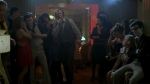
Shot entirely on location in New York, the film follows a young upwardly mobile couple, Michael and Robert, through the events of a 24-hour period; Robert is preparing to leave for a two-year work assignment in Africa, while Michael, facing the prospect of being left alone, ponders the uncertainty of their future together- as well as the inevitable demise of his AIDS-infected ex-boyfriend, Nick, with whom he still shares a deep bond.  As the couple attend a dinner party with Robert’s boss and then a farewell gathering with their friends, the movie gives us a cross-sectional slice-of-gay-life view of mid-eighties New York, using the various interactions and activities of its characters to explore not only the relationships at its center, but also the concerns and issues that affect them as a community and as individuals.

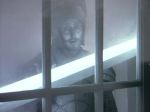
One of the primary reasons for the importance of Parting Glances, of course, is the window it provides into the days when the AIDS epidemic was at its height; it was a time when being diagnosed with the disease was, in essence, a death sentence, and the gay community was being ravaged.  This humble little film was one of the first to deal with this issue, and certainly the first to treat it with candor rather than with alarmist sensationalism.  Though only one of the characters is afflicted by the virus, it is clear through the conversations and situations we are privy to throughout that it’s a situation that deeply affects them all; it hovers around the edges of their lives like the ominous Don Giovanni-inspired specter that appears to Nick in a few key scenes, a factor in everything they do, say, or plan.  Despite its omnipresence, however, the subject of AIDS does not receive the kind of dour and mournful treatment one might expect, particularly from a film made in the midst of its darkest hold on the hearts and minds of the gay community; nor is it handled with the precious, maudlin sentimentality of so many of the movies that came after.  On the contrary, though its weight and seriousness are never in question, Parting Glances takes a disarmingly light-hearted approach to the disease: Nick does not play the morose and tragic victim; his ultimate decline and fall are a given, but, for now at least, he is still relatively healthy, and his brash,  vibrant personality is the heart of the movie.  He faces his fate with staunch acceptance, yes, but also with a hearty helping of gallows humor and nothing-to-lose directness.  The dire eventuality of his situation is implicit, and this film feels no need to hammer the audience with it; its focus, rather, is on the present moment, and the opportunity it affords for taking stock, seizing the day, and perhaps most importantly, tending the needs of the heart.

Though AIDS looms heavily over Parting Glances, it is by no means the only subject with which the film concerns itself.  The central storyline, after all, deals with the relationship of Michael and Robert, and its future- or its lack of one- is not contingent on a life-threatening disease; rather, it hinges on their own respective ambivalence, their fear of commitment, and their ability to be emotionally available to each other.  In short, the obstacles in their joint path, though they may be somewhat obscured or confused by the comparatively minor attendant factors of same-sex unions, are the same ones faced by any couple, gay or straight; the film does an admirable job of underlining this universality, placing the pair in juxtaposition with other couples, straight and not-so-straight, throughout its proceedings, and while it makes no judgments regarding the validity or moral superiority of any of these relationships, the dynamic between our two protagonists seems to stack up at least as favorably, more or less, as any of the others.  Michael’s relationship with Nick is also a key factor here- their easy chemistry and bantering rapport contrast sharply with the often strident interactions of Michael and Robert, opening up questions about compatibility and the line between romance and friendship- particularly among same-sex partners.  There are plenty of non-romantic relationships on display here, too: Michael and several other characters connect closely with Joan, the “hag” who hosts the going-away party and serves as a sort of combination best gal-pal and den mother; there’s also Robert’s boss and his wife, who bond with Robert and Michael, respectively; Robert’s former high school girlfriend, now married but still a confidante; and a number of other friends and acquaintances who interact with the couple and each other throughout the course of the film.  All of these exchanges offer insight into the social tapestry of this insular community, and key us into the pulse of this specific time and place, as well as revealing the repetition of timeless patterns and themes within the sphere of human connectivity, gay, straight, or anywhere in between.

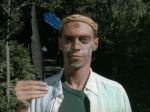
It might seem like there’s a lot going on in Parting Glances, and of course, there is; but despite its busy agenda, it never feels as if it were packed too full, nor does any of it seem forced.  Thanks to Sherwood’s witty, flowing screenplay, all the major issues and themes work their way unobtrusively into the dialogue, weaving through the conversations naturalistically and convincingly instead of being introduced as didactic rhetoric; these are real people discussing their lives, not mouthpieces presenting a case, and as a result, the movie feels like a stimulating party instead of a public debate.  This organic quality is enhanced all the more by Sherwood’s engaging cast, who are clearly having a wonderful time as they present us with a wide variety of familiar “types” (as opposed to stereotypes) within the gay and gay-friendly community.  As Michael and Robert, respectively, are Richard Ganoung and John Bolger; both are attractive and likable, but they are not a cookie-cutter couple- each has their own distinctive persona, and they both clash with and complement each other in a highly realistic and believable manner.  Kathy Kinney plays Joan, providing a grounded, female presence with a character that rises above potential cliché; she is both insightful and incorrigible, and she conveys- subtly, and without self-pity- the resignation of a life possibly lived vicariously through her friends.  Also memorable is Adam Nathan, as a self-assured young “twinkie” who sets his sights on Michael; ready to claim the world from an elder generation that is not willing, quite yet, to give it up to him, he succeeds in being endearing instead of insufferable, and his scene with Nick on the stairs outside the party is a highlight of the film.  The standout performance, though, comes from Buscemi, who does a remarkable job of playing Nick; the character is doomed but delightful, a combination which could easily seem glib and artificial in the hands of a lesser actor, but he pulls it off superbly, making it clear that his sardonic wit and his edgy personality are part and parcel of who he is- not an affectation in response to his status as a member of the walking dead- and that underneath them there is a large and generous heart.  His desire to leave behind a legacy for his friends goes beyond the material items in his last will, semi-substantial though they may be (he is, it seems, a minor rock-and-roll star); he actively means to make a difference in their lives, and Buscemi’s work allows us to see the genuine love at the source of these efforts.  Lest we think his Nick is too good to be true, though, he still manages to get across, in little ways, here and there, that he is not altogether okay with what is happening to him, despite his brave face; but this never gets in the way of the positive energy he exudes throughout.  It’s a performance that should have made Buscemi a star, much sooner, and would have, no doubt- if the movie had been more widely seen.

There are numerous other enjoyable qualities here, not the least of which is the way the film captures the look and feel of mid-eighties New York; this is no surprise, of course, considering that is when and where it was filmed, but some credit is still deserved by the production designer (John Loggia), the art directors (Daniel Haughey and Mark Sweeney), and the set decorator (Anne Mitchell) for deciding what should go into the series of well-appointed homes and apartments that provide the setting, as well as to cinematographer Jacek Laskus for deciding how to film it, with special kudos to all involved for making it look so polished despite the bargain-basement budget.  Also contributing to its evocation of time and place are the soundtrack choices, a combination of songs by Bronski Beat and original, very posh-sounding piano music by Mike Nolan, with some operatic selections thrown in, by way of Nick’s LP player, for good measure.

It seems somehow wrong to say that a movie made at the height of the AIDS crisis, featuring AIDS as a major subject and set among the gay community, is entertaining and fun; but that’s exactly what Parting Glances is.  Though it is unquestionably dramatic in its overall scope and intention, it makes sure even the heaviest matter is carried along by an effervescent current, and precisely because it doesn’t continually remind us of how poignant and moving it should be, it ends up being extremely poignant and extremely moving- particularly, I might add, for those who have lost friends like Nick in the long battle with AIDS.  As its title suggests, this is a movie about saying goodbye, not just to the dead, but to the living as well- the continuation of Michael and Robert’s relationship is by no means a sure thing at the end, after all; but bittersweet as it may be, it is also a film about moving forward.  The script clips along, the actors and the camera are constantly in motion, and the entire flow carries us through to the end, leaving us with a tangible momentum.  People come and go, things change, but the world keeps moving, and maybe part of what Parting Glances suggests is that our only real way of leaving something of ourselves in the mix is to make sure our lives touch those of the people who surround us.  In this day and age, it’s possible to watch Parting Glances and entertain the hope that Nick will be one of those lucky survivors who managed to hang on to life until medical science caught up enough with the disease to at least stave off death, and that he, like so many millions today, could still be out there thriving as an HIV-positive man.  If so, he would be luckier than the film’s creator, who passed away from the disease in 1990, without making another film and without surviving to see the way this one was embraced and revered by his own community, as well as by the larger cinematic world.  His movie stays with us, however, and through it, he continues to touch lives today.  So perhaps, truly, he was a very lucky man indeed.

http://www.imdb.com/title/tt0091725/

C.R.A.Z.Y. (2005)

Today’s cinema adventure: C.R.A.Z.Y., a 2005 French-Canadian feature by director Jean-Marc Valée about the experiences of  a young man wrestling with his sexual identity as he grows up in a large, conservative, male-dominated Montreal family through the sixties and seventies.  The screenplay, based on the real experiences of François Boublay (who co-wrote with Valée), took 10 years to complete, but the end result was one of Canada’s most successful films of all time, becoming a box office hit and sweeping the Genie awards (the Canadian equivalent of the Oscars, for those who don’t know) with 11 wins out of 13 nominations.

Beginning with his birth on Christmas Day, 1960, the film follows the memories of Zac Beaulieu, whose family consists of three older brothers and (eventually) one younger; their father, Gervais, is a loving but authoritarian working class man with traditional ideas of masculinity, and their mother, Laurianne, a doting but submissive woman with deeply-held Catholic beliefs.  Over the course of twenty years, Zac endures the burden of being “different” in the midst of this painfully average, sometimes dysfunctional clan.  First he is branded as a “special” child with a gift for healing; then, as he grows older, he must face the ever-growing challenge of coming to terms with his homosexuality, an unthinkable and insurmountable obstacle to harmony with his family- and in particular, to his relationship with his beloved father.

With Zac’s journey to maturity and self-acceptance at its core, C.R.A.Z.Y. takes its audience on an inside tour of middle-class family life in suburbia; not only do we experience the painful struggle of a young gay man trying to first deny, then repress his sexuality in an un-accepting home environment, but also the other all-too-common scenario of drug addiction, as Zac’s older brother battles an escalating habit that is discouraged but enabled by parents without the knowledge or skills to make a difference.  Lest it seem, however, that the film presents only a bleak and dour perspective, rest assured that the conflicts and tragedies are woven delicately into a total picture that includes a great deal of quirky humor, as well as portraying the many small joys and transcendent moments that bind a family together- and the private experiences, indelibly printed in memory, that give meaning to an individual life.  In the end, though we see Zac and his family embroiled in much turmoil throughout- and mostly with each other- Valée’s film is about love, and its power to redeem and unite, no matter what seemingly irreconcilable differences may exist or how many mistakes have been made between us.

One of the key elements that contributes to the film’s effectiveness (and it is very effective) is the way it captures the third-quarter-20th-Century setting, giving it a particular significance for viewers who, like its lead character, grew up in this era.  Part of the way it does this, of course, is through its superb scenic and costume design; there is an authenticity to the choices that has to do with capturing the everyday look of the era, rather than attempting to give us a flashy, definitive period style.  It is however, the use of music that conjures the period most noticeably, all the more so because it plays a key role in the plot.  Music provides a common bond between father and son, and is an important outlet for both characters.  Highly specific choices are featured prominently throughout: for instance, father Gervais has a fondness for singing along with “Emmenez-moi,” by Charles Aznavour, mirrored later by Zac’s impassioned bedroom performance of David Bowie’s “Space Oddity;” and in one of Zac’s flights of imaginative fantasy, he has a vision of his epiphanic levitation in the church to the strains of the Rolling Stones’ “Sympathy for the Devil.”  The heavy use of the above artists, along with Pink Floyd, Patsy Cline and others, led to the somewhat staggering fact that more than half the film’s budget went to the acquisition of rights for these songs, and director Valée took a cut in his own salary in order to ensure their inclusion.

The excellence of C.R.A.Z.Y. is the result of top-notch work from everyone involved, and it’s an example of a film that is so dependent on the seamless combination of its elements that it seems unfair to single out individuals for specific praise.  Nevertheless, a few standout cast contributions deserve mention.  Most obvious, of course, is the performance of Marc-André Grondin as Zac; whether he is willfully disregarding his father’s behavioral strictures, furtively eyeing his cousin’s teen-dream boyfriend, determinedly trudging through a blizzard as penance for his sinful thoughts, or finding an outlet for his stifled passions through his love of music, he lets us inside and allows us to feel like participants in his story.  The performers who leave the deepest impression, however, are Michel Côté and Danielle Proulx, completely authentic as his father and mother; they inhabit this pair without judgment or caricature, showing us their many flaws but also the good intentions and endearing qualities that make them lovable.  Côté in particular gives an unforgettable portrait of a man who is at once larger than life and touchingly human; volatile, masculine, and charismatic, he commands the screen and makes it very clear why this relationship is so important to Zac.

C.R.A.Z.Y. is not a film that invites in-depth analysis of its underlying themes and archetypal symbols, though these things are present; rather, it is a heartfelt, sometimes painful slice-of-life movie filled with bittersweet nostalgia, ironic hindsight, disarming levity, achingly familiar moments of commonality, flashes of revelatory observation, and a cumulative emotional resonance that subtly builds to an unexpectedly powerful climax.  It accomplishes a rare feat for this type of movie, allowing us to be drawn so completely into this family that we truly feel a part of it.  This is partly due to the way Valée and Boublay show us the kind of mundane everyday details that become shared touchstones through repetition and associated memories, and their effort to invest each member of the family with as much individual life as possible, even the brothers whose smaller roles in the proceedings leave them more or less in the background; the final effect is that these characters seem like real people in our lives, people that we know intimately, and this serves to deepen our connection to them and give their experiences the weight of shared universal memory.  Perhaps most importantly, the movie possesses a sincerity which derives largely from the genuine love it has for all of its characters- even as it reveals their maddening imperfections and their often inadequate skills at coping and communication.  This quality alone makes it superb, far-and-away superior to so many similar cinematic memory-plays that start promisingly and then devolve into just another manipulative tear-jerker before the final scenes; but what makes it a truly remarkable film is the primary perspective it takes in its exploration of the trials and tribulations of family life.  With Zac as our window into the Beaulieu clan, our sympathies are naturally transferred to him, and we are therefore led to identify with his personal conflict, which is, of course, the central focus of the film.  His gradual progression- an anguished process of fear, denial, self-loathing, and self-deception, built around his emerging homosexuality-  is thereby made relevant to audiences without firsthand understanding of his experience, a sadly familiar one to millions of gay and lesbian people the world over. It’s a heartbreakingly complete and specific portrayal: Zac’s fear of humiliation and rejection from his family, his desperate bargaining through prayer to have his “curse” removed, his rejection of faith and rebellion against normalcy even as he continues to hide his true nature; all these and more are important facets of the movie’s dominant subject matter, and though it’s all so common as to border on cliché, it’s a social phenomenon that has been long obscured by stigma.  By investing us in Zac from the beginning of his life, the movie opens it up to be shared- and experienced, at least through extension- by all.  I may be wrong, but I can, unfortunately, think of no American film that even comes close to making the reality of growing up gay so painfully accessible to a wider audience; I invite your corrective examples, because if there are such films, I very much want to see them.

http://www.imdb.com/title/tt0401085/

Death Race 2000 (1975)

Today’s cinema adventure: Death Race 2000, the 1975 fantasy-adventure exploitation film, produced by B-movie king Roger Corman and directed by Paul Bartel, about a gladiatorial motor race taking place in a futuristic America ruled by a totalitarian government. Marked by its clearly low budget and campy sensibilities, it was (of course) lambasted by critics upon release- but has since become a bona fide cult classic, spawning numerous spin-offs in other media, countless imitators, and a big-budget Hollywood remake.

Wanting to capitalize on the publicity surrounding the then-upcoming film Rollerball, Corman found suitable source material in a short story, by sometime colleague Ib Melchior (who has a fascinating history in his own right, which you can read about here), called The Racer. Adapted into a screenplay by Robert Thom, then rewritten by Charles Griffith at the insistence of director Bartel, it visualizes a not-too-distant future in which America has been devastated by economic collapse and is under the control of an Orwellian regime (headed by a smarmy figure known simply as “Mr. President”), possessing the combined authority of church, state and media, and dedicated to a policy of “minority privilege.” Sponsored by the government is a yearly cross-country race in which contestants- paired with “navigators” who are apparently also designated sex partners- not only vie to be first across the finish line, but are awarded points for killing hapless pedestrians. Televised and spun for mass consumption, this ritualistic slaughter is further complicated by the interference of a group of rebels bent on sabotaging the proceedings and kidnapping the star driver, a mythic figure known as Frankenstein, whose survival of previous races has left him half-man/half-machine- or at least, according to his P.R.

Corman had always targeted the youth audience with his trend-savvy drive-in fodder, and by the 1970s had become associated with the counter-culture movement; Death Race 2000 struck just the right blend of anti-establishment sentiment and testosterone-fueled fantasy for his purposes. Using mostly re-bodied Volkswagens to stand-in for the souped-up fantasy roadsters driven by the race contestants, filmed on public roadways without permits, and starring David Carradine for box office insurance, the film was shot for a budget of $300,000 and ended up earning $5 million- critical derision notwithstanding.

The disapproval of 1975 critics was perhaps easy to understand. Death Race 2000 is a prime example of quickie low-budget movie making designed to attract a young and unsophisticated audience by titillating them with gratuitous violence and nudity. However, though that audience of pot-smoking drop-outs (and wannabe drop-outs) may have responded to these elements- which the movie certainly delivered- they also responded to something the establishment critics didn’t seem to notice: wrapped up in its lurid, ridiculous premise and its cheap, exploitational thrills is a core of smart social satire and subversive anarchy that captured the zeitgeist of these disillusioned flower-children; the darkly zany vision of the future presented here was clearly an over-the-top parody of the present-day world they lived in, from which the only real possibility of escape was to destroy the system from within- and this, of course, is exactly the scenario of Death Race 2000. While the movie’s well-intentioned revolutionaries are largely ineffectual in their war against the established order, and its media-hypnotized masses are willing lambs to the slaughter, its darkly wisecracking anti-hero- a trusted tool of the government and the best player in their monstrous game- is the only one who has the power to bring an end to their reign of deceit and oppression. It’s anti-authoritarian wish-fulfillment fantasy at its most unapologetic, and the sentiment that drives it is arguably even stronger today than it was then.

Despite this heavy-sounding sociopolitical subtext, the primary reason for watching Death Race 2000 is the same today as it was 37 years ago: it’s a hoot. Director Bartel brings his brand of dry whackiness to the table here, making the most of the story’s frequently ludicrous conceits with tongue-in-cheek self-parody; we don’t have to take the movie seriously because he reminds us throughout that it doesn’t take itself that way, allowing us to shut down our brains and just enjoy the absurdities onscreen. As for all that gratuitous nudity and violence, it certainly is gratuitous- and gleefully so; the movie revels in its tawdriness, delivering glossy, seventies-flavored sex and gore as often as possible without any attempt to justify it. The bloody parts, in particular, are highlighted with great delight, and they are somehow all the more satisfying for being so clearly fake; indeed, most of the carnage borders on slapstick comedy, and the truly graphic stuff is so fleeting you can miss it if you blink- because if it lasted any longer the bargain-basement trickery being employed would be even more obvious than it is already. It’s just more of the ridiculousness that gives the movie its deliberately mindless appeal; and it probably goes without saying that, by today’s standards, what we see in Death Race 2000 is pretty tame. At any rate, what 1975 critics found objectionable seems today like a pretty good recommendation for the film.

The acting here is more or less what you might expect- which means, actually, that it’s pretty good, all things considered. Each performer brings exactly what is required to their character, and in many cases adds a substantial portion of their own personality to it as well, fleshing out these formulaic ciphers and giving them a life over-and-above their roles in this twisted Wacky Racers-style scenario. Some of the faces are familiar, such as future Love Boat-and-U.S.-Congressional lacky Fred Grandy and former Warhol “superstar” Mary Woronov, the latter in particular being one of the film’s highlights with her surprisingly multi-faceted performance as one of the race’s contestants- although, in truth, Woronov’s presence in such films is always a delight, due to her ability to bring so much of her smart, sexy and sweet self into the mix, so her performance here is not that surprising, after all. For many, the biggest surprise will be the presence of Sylvester Stallone as Frankenstein’s chief rival in the race, a swaggering braggart in a gangster persona who takes everything way too seriously; Stallone, who was doubtless working on the screenplay for Rocky even as he filmed this, shows the charisma and ability that would soon make him a star, even though it’s hard to tell, sometimes, if his effectiveness here is due to his actual work or to the foreshadowing of his future screen persona. As for the movie’s star, David Carradine, he was fresh from his success on TV’s Kung Fu, and he was anxious to shed the image he had gained from it (though Corman had initially wanted anti-establishment icon Peter Fonda for the role); he gives a performance that, in another context, would probably have gained him a lot of critical acclaim, investing his brooding, bitter, bad-ass character with the depth, intelligence and humor necessary to make him not only interesting, but likeable- and, importantly, though perhaps incidentally, creates a persona that adds weight to the underlying elements that give Death Race 2000 its unexpected substance.

As for the film’s technical aspects, it manages to find a fairly coherent visual style despite its low budget, injecting its fruity satirical elements into the design in such a way that the cheapness actually seems to enhance the final effect. The costumes are a blend of cock-eyed futuristic imagining and modern-day tackiness, though its worth noting the striking resemblance between Frankenstein’s intimidating black outfit with the iconic design for Darth Vader, who would first appear on the screen a good two years later. The scenic elements are handled with a similar hybrid approach. The tinselly, cartoonish trappings of the futuristic setting are grafted onto the obviously contemporary surroundings, making its satirical connection to the present more obvious; the garish, cartoonish designs for the cars smacks of adolescent male automotive fantasy, and the fact that these re-purposed vehicles actually seem to perform is impressive in itself- in reality they were usually filmed rolling downhill after being pushed into motion, and the cameras were sped up to make it look like they were moving faster than they really were. The more elaborate effects- such as the single matte painting used to create the future New York skyline- are laughably shoddy, which of course only adds to the overall appeal, as do such obvious earmarks of the grade-Z budget as the undisguised exit door in Frankenstein’s “hotel suite” and the amateurish graphics of the various signage used throughout.

Death Race 2000 was remade a few years back, boosted with big Hollywood money but no doubt targeted at this generation’s version of the same audience. I confess I haven’t seen it; but I must say I find it difficult to believe that an A-list production would have quite the same effect as the original. Watching Corman and Bartel’s film gives the impression that you are somehow participating in an underground revolution, poking fun at “The Man” under his oblivious nose. With real money and studio backing, it seems to me such a film would have a different kind of phoniness to it, one far more insidious and subtle than the cardboard backdrops and obvious stage blood of the original- but that’s a review I haven’t written yet, though perhaps one day I will. In the meantime, I can heartily endorse the low-rent thrills of this cult-classic gem from the past; though the future it foresees is a little behind schedule, it still may come- but if it does, at least we can say we were warned.

http://www.imdb.com/title/tt0072856/\

Cold Comfort Farm (1995)

Today’s cinema adventure: Cold Comfort Farm, the 1995 screen adaptation of Stella Gibbons’ popular 1932 novel parodying the English literary tradition of melodramatic rural fiction.  Directed by Oscar-winning director John Schlesinger (Midnight Cowboy) and produced by BBC television for broadcast in the UK, it was later released theatrically in America, adding the prestige of modest box office success to the critical acclaim it had already received.  The novel from which it was derived poked fun at the conventions used by such authors as D.H. Lawrence and the Bronte sisters, in which life in the English countryside was depicted as a grim and gothic affair, with characters in the grip of long-festering guilt or otherwise self-defeating psychological dysfunctions, usually in connection with some shameful or dishonorable act committed generations before.  The plot of Cold Comfort Farm turns this formula on its ear, as a cheerfully modern young woman comes to live on her relatives’ country estate and sets about applying common sense and psychology to the long-standing status quo that keeps them mired in old-fashioned and unnecessary gloom.

Kate Beckinsale stars as Flora, the heroine, bringing a smart, no-nonsense charm to the character and making us easily believe in her ability to brush aside decades-old stagnation as if it were the cobwebs in a doorway.  Surrounding her as the eccentric Doom-Starkadder clan are a host of veteran British thespians, all clearly relishing the chance to sink their teeth into these deliciously ludicrous roles.  Eileen Atkins is hilariously dour as Aunt Judith, fatalistic, terminally depressed and possessed of a somewhat unhealthy obsession for her libidinous son, Seth; and as the latter, Rufus Sewell strikes the perfect satirical balance to make his vainglorious, womanizing character likable instead of insufferable.  Ian McKellen enjoys an uncharacteristically rough-edged turn as Uncle Amos, an amateur preacher, sporting a ridiculous mash-up of a rural accent as he gleefully spews his fire-and-brimstone sermon from the pulpit.  Sheila Burrell is delightfully domineering as Aunt Ada Doom, the reclusive and tight-fisted matriarch of Cold Comfort Farm, ruling her family with brittle authority as the continually reminds them that she “saw something nasty in the woodshed.”  Rounding out the household are fine performances from Freddie Jones, Miriam Margolyes, and Ivan Kaye, among others; and in non-family roles, there is standout work from Stephen Fry as a pretentiously progressive writer enamored of Flora, and the always-magnificent Joanna Lumley as an impeccable London widow who serves as her friend and mentor.

The screenplay by Malcolm Bradbury captures the goofy sense of fun intended by author Gibbons, sending up the melodramatic conceits of this popular sub-genre of British literature with a smart, optimistic viewpoint and a healthy dose of subtly hilarious wordplay; there are some truly memorable lines (my favorite comes from Amos as he preaches before his quivering congregation: “There’ll be no butter in Hell!”) and the plotting, though ultimately just as unconvincingly tidy as the overwrought romances  being parodied, weaves cleverly enough through its pleasant course that we don’t really mind its unbelievability.  There is also plenty of authentic English scenery- idyllic woodlands and meadows, rustic villages and farmlands, elegantly-appointed estates and salons- to provide eye candy along the way, and director Schlesinger keeps things visually stimulating by keeping his camera moving and using a wide variety of angles and perspectives- as well, of course, as keeping us continually focused on the real meat of the matter, superb actors portraying delightful characters.

Cold Comfort Farm is not a deep movie, nor does it yield a lot of stimulating conversation regarding its themes or its technique, at least not in most circles.  It does, however, yield a lot of fun; it’s smart and literate enough to satisfy those seeking intellectual diversion, yet completely accessible for the viewer with no connection to the English Lit crowd, and it provides plenty of hearty laughs for both kinds of audiences (as well as the rest of us who probably fall somewhere in between).  After all, outrageous behavior is outrageous behavior, whether or not you have read any of Thomas Hardy’s books, and in Cold Comfort Farm, there is no shortage of it.

http://www.imdb.com/title/tt0112701/

Breakfast at Tiffany’s (1961)

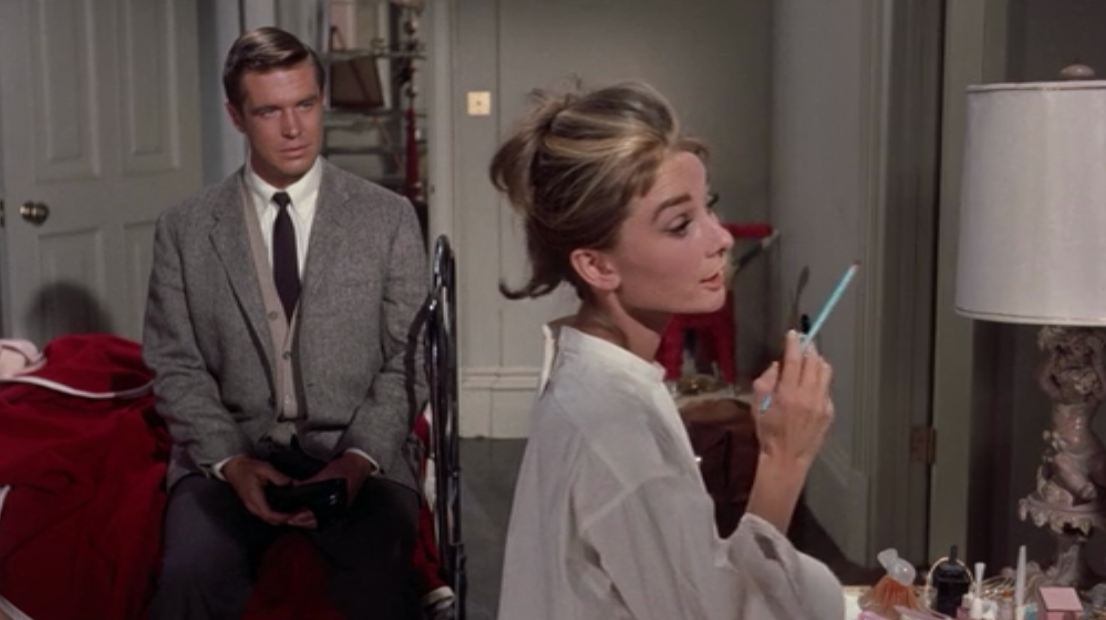
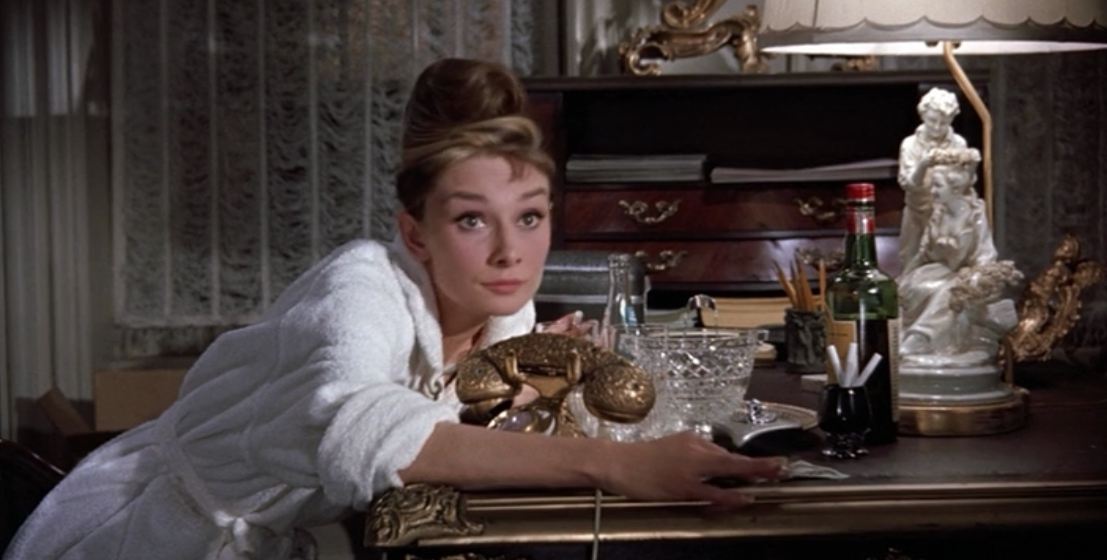
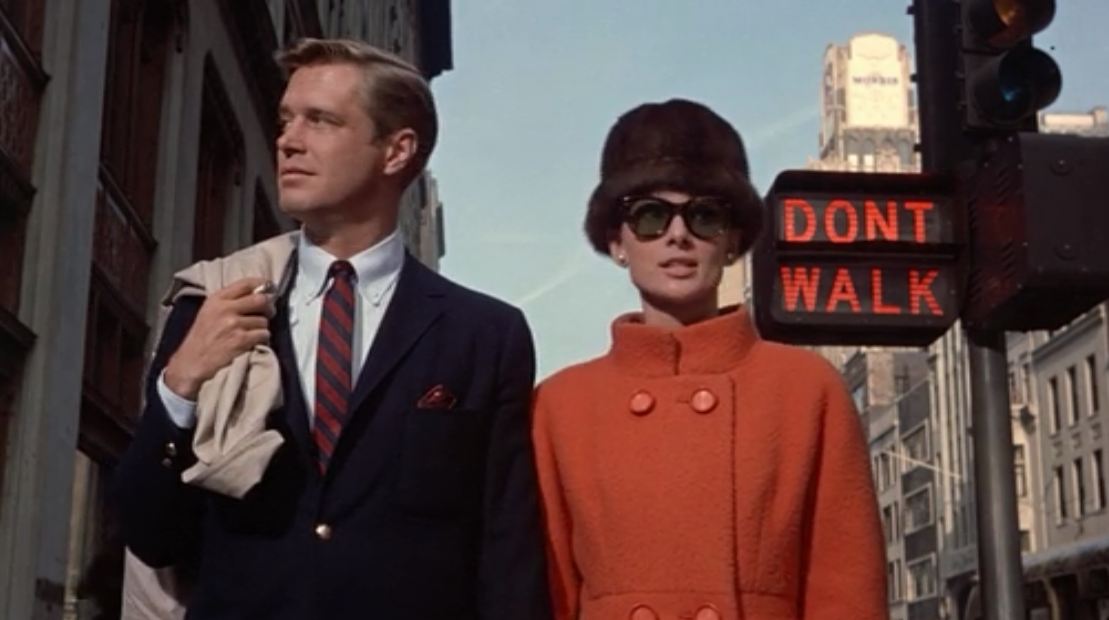
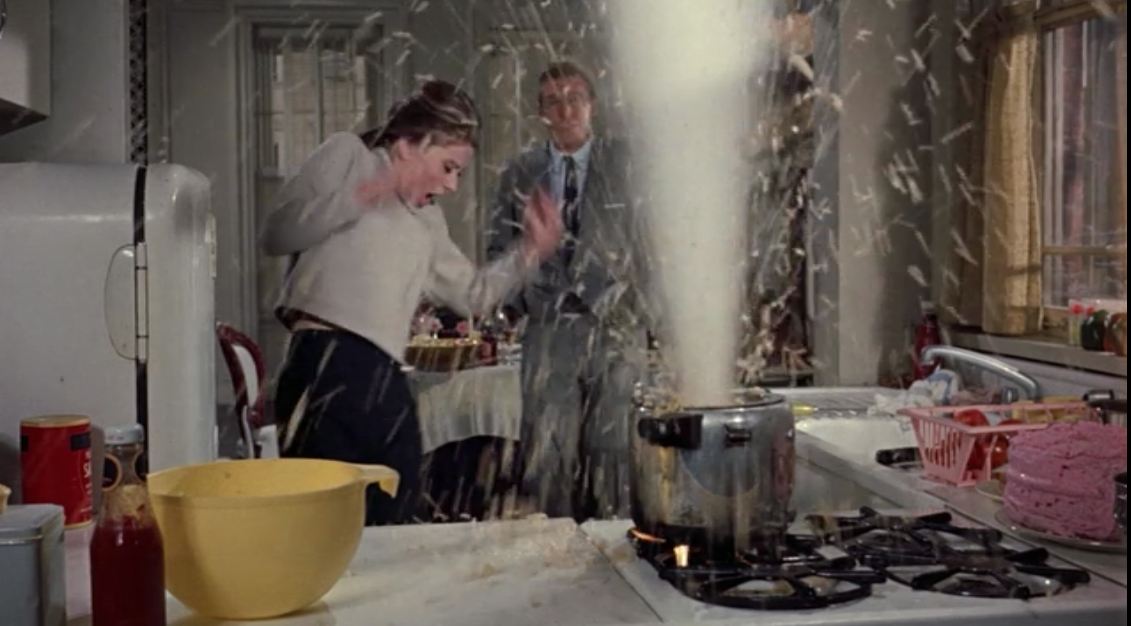
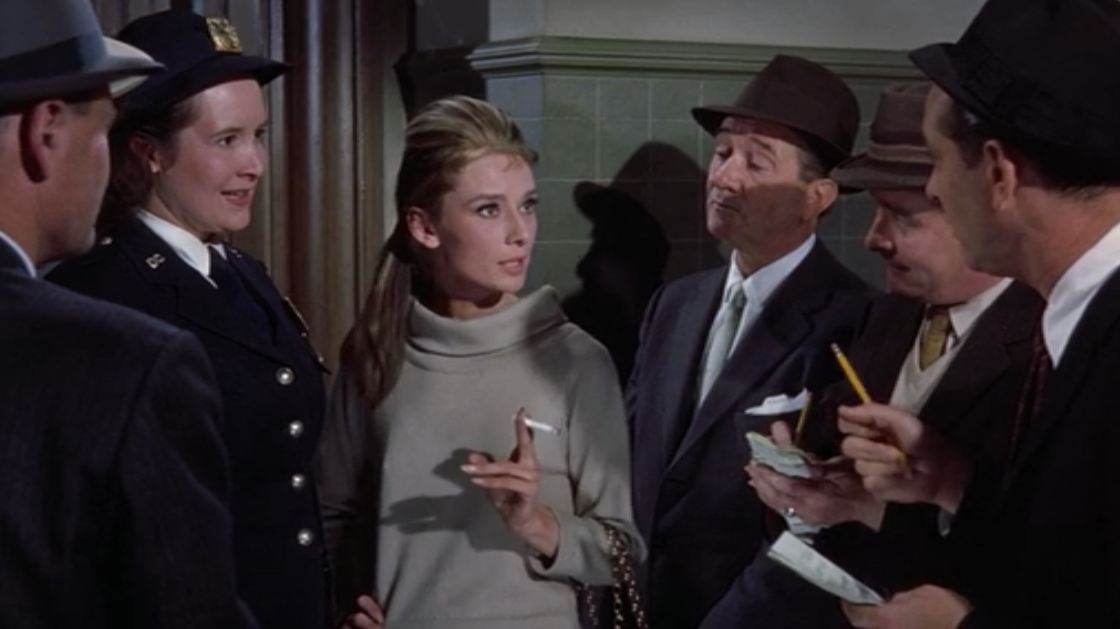
Today’s cinema adventure: Breakfast at Tiffany’s, the much-beloved 1961 romantic comedy classic widely regarded as the ultimate vehicle for its star, Audrey Hepburn. Adapted from Truman Capote’s semi-autobiographical novella of the same name, it is the story of the relationship between Holly Golightly, an unconventional “free spirit,” and a young writer who becomes her neighbor; drawn by her zest for life, he grows closer to her, discovering along the way that her true nature may not be as carefree as it seems. George Axelrod’s screenplay updates the action to the then-present day from the 1940s setting of Capote’s original story, and makes other significant changes to give it a more cinematic flow as well as to make it more palatable for audiences of the time. Most notably, it removes several potentially controversial elements, such as Holly’s unwed pregnancy and the homosexuality of the writer (unnamed in the novella), the latter adjustment also allowing the transformation of the central relationship from a friendship to a romance- a decision undoubtedly motivated by a goal to help the film become a popular hit- a goal which, needless to say, ultimately proved successful.

Despite the changes, Breakfast at Tiffany’s remains surprisingly racy for its era- both central characters are openly depicted as prostitutes, more or less- and the plot remains somewhat uneventful, on the surface at least, focusing more on the unfolding of character than action. However, director Blake Edwards guides it well, wisely allowing the effervescent charm of his leading lady to captivate the audience, and supporting her by never letting his camera stray too far away from her for very long; he prevents the apartment-house setting from becoming monotonous with frequent expansions into other, well-chosen locations (taking full advantage of New York’s local color, as captured by cinematographer Franz Planer), as well as with a fluid camera continually finding new perspectives from which to view the action, and the occasional diversion into a suitably zany situation. He coordinates all the pieces- particularly Henry Mancini’s Oscar-winning score- with care, to make the entire package seem a bubbly, delightful romp, in spite of the bittersweet sense of melancholy that underlies much of it; this surfaces in moments that feel poignant rather than heavy, and in the end, though the film’s resolution may be its most un-Capote-esque characteristic, we are left all the happier for having had our heart-strings tugged, just a little.

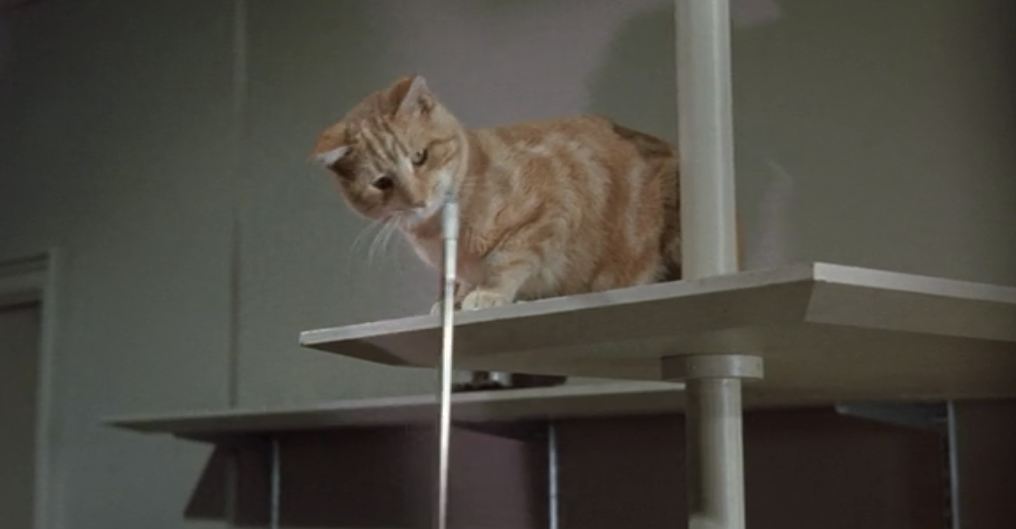
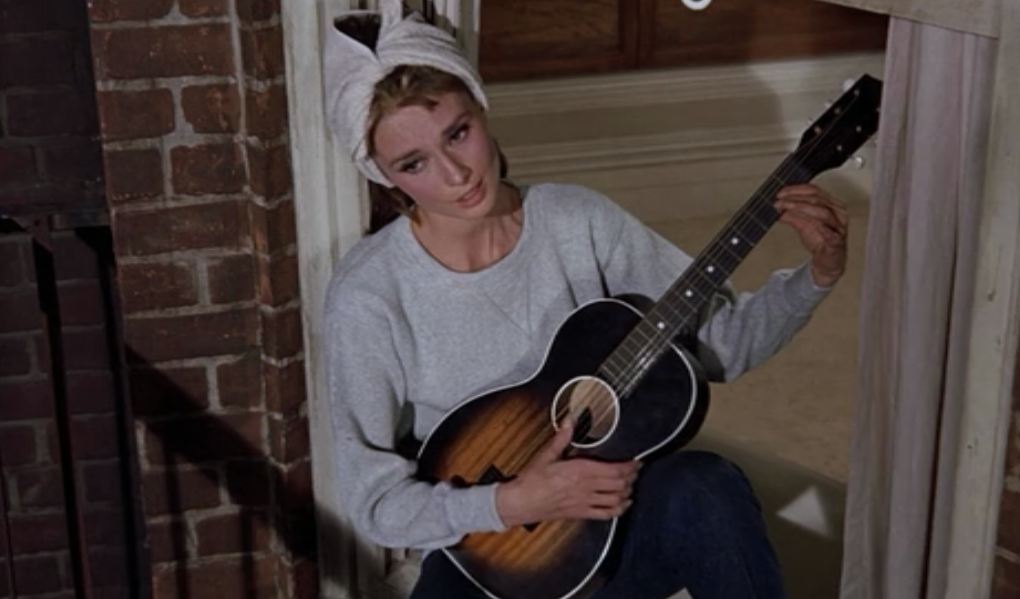
There are many things about Breakfast at Tiffany’s that have become iconic: the opening sequence of Holly eating pastry outside the window of the eponymous store, the little black Givenchy dress she wears (possibly the most well-known and influential piece of women’s clothing of the 20th century), her sunglasses and impossibly long cigarette holder, the irresistibly charming marmalade cat, and of course, Mancini and Johnny Mercer’s Oscar-winning song, “Moon River,” wistfully performed by Hepburn as she sits on the fire escape with a guitar; but by far the most iconic element of the film is Hepburn’s performance itself. As Holly- a role she reportedly found challenging due to her own natural shyness, in direct opposition of the character’s extroverted, impetuous and gleefully shocking behavior- she embodies the kooky, waifish image she came to represent, exuding intelligence, sweetness, exuberance, and, above all, elegance; and in the service of the character, she captures both the genuine delight she takes in her existence and a sense of the nagging fear and sadness that pursue her. She is, in the words of one character, a “real phony,” and one who is never, for a moment, unlikeable, even in her most selfish and spiteful moments- you somehow know that, before much time passes, her natural goodness will come shining back to the surface and all will be well. Capote wrote Holly Golightly with Marilyn Monroe in mind, but it’s hard to imagine anyone except Hepburn in the part; her work here established the persona for which she would be best remembered and set the tone for the characters she would play for the next decade. In short, it was one of those rare matches of actor and role that seem almost to be the result of divine intervention.

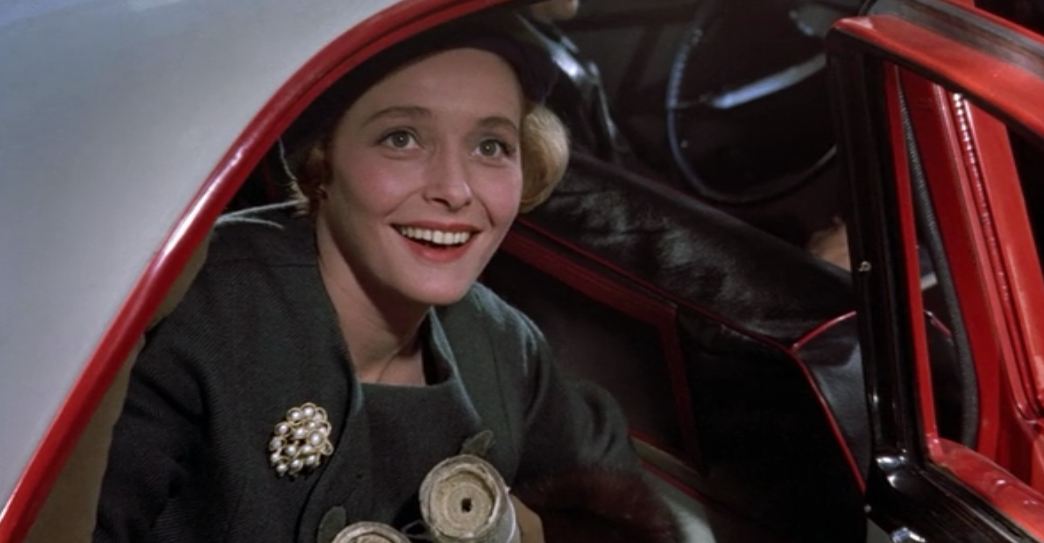
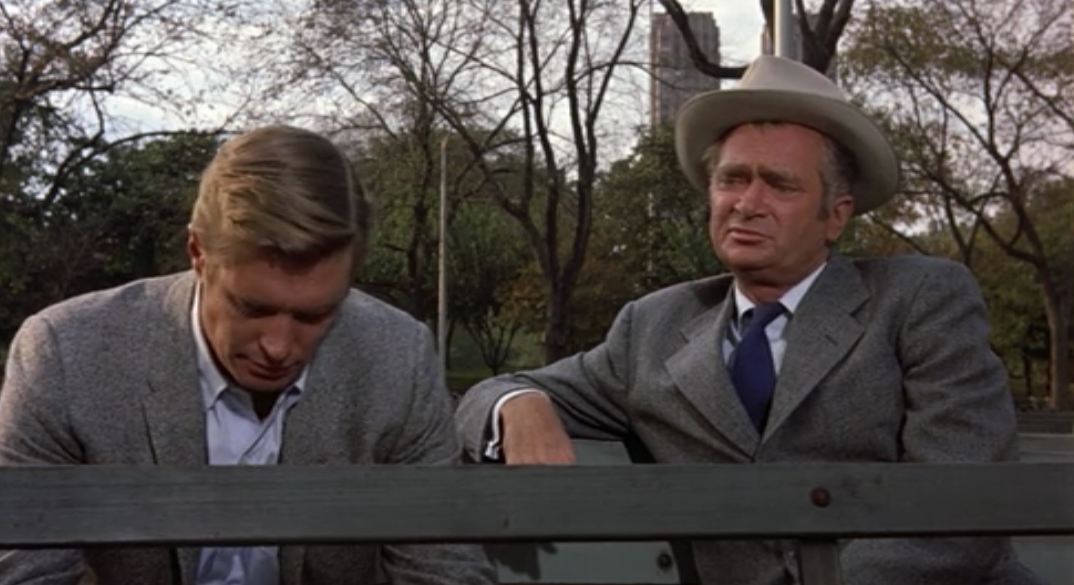
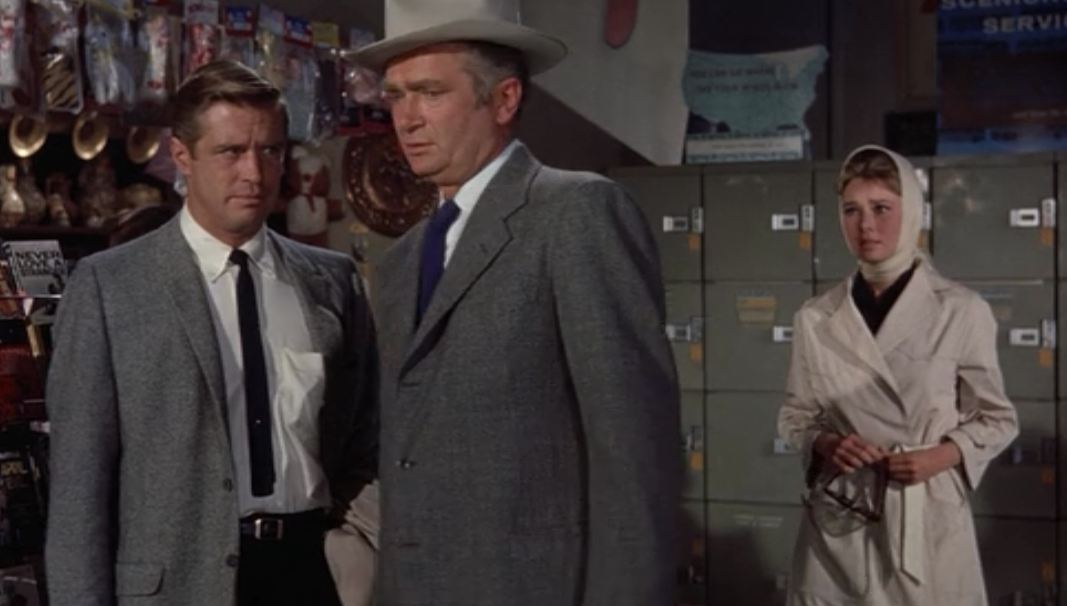
Breakfast at Tiffany’s is not a one-woman show, however, no matter how much it may sometimes feel like it: there are other actors here that deserve some credit for making it such a special film. Most obviously, of course, is George Peppard, giving perhaps his most memorable big-screen performance, as the smitten writer; he makes a good match for Hepburn, establishing an easy chemistry with her and making their too-good-to-be-true romance seem believable, as well as showing us his growth (thanks to Holly’s influence) from disillusioned self-loathing to determined self-confidence. As the wealthy married woman who “keeps” him, Patricia Neal gives us a necessary contrast to Hepburn, with a jaded frankness that feels far phonier than Holly’s good-natured pretension; and, in a turn that revitalized his career and led directly to his success on television’s The Beverly Hillbillies, Buddy Ebsen gives us a tender portrayal of Holly’s abandoned backwoods husband, who comes to the big city trying to reclaim the darling girl for whom he still carries a torch.

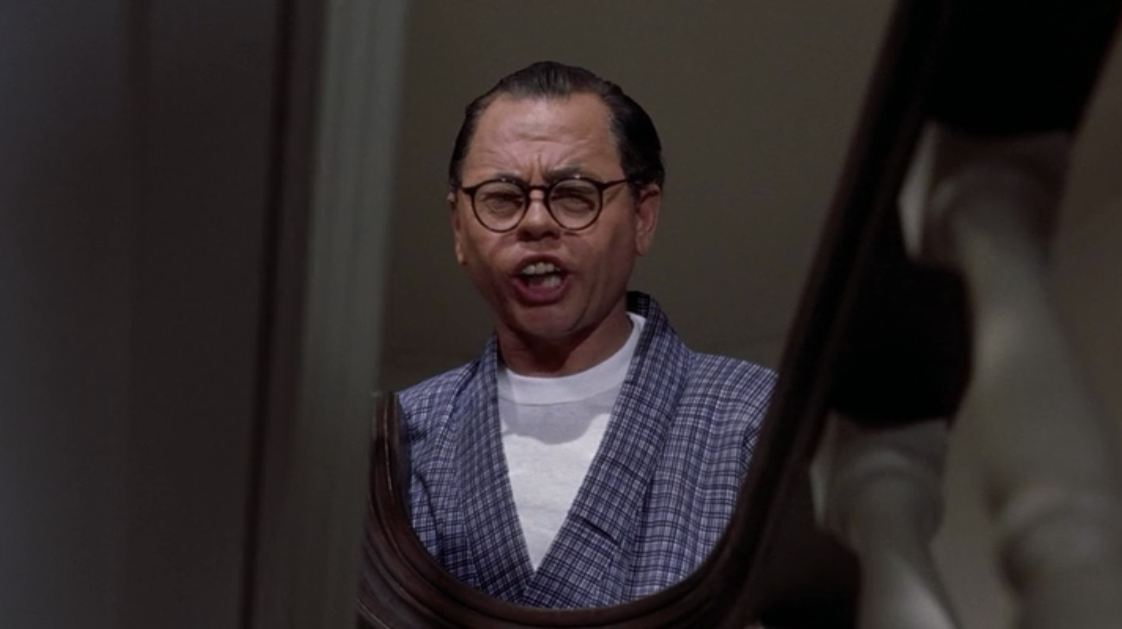
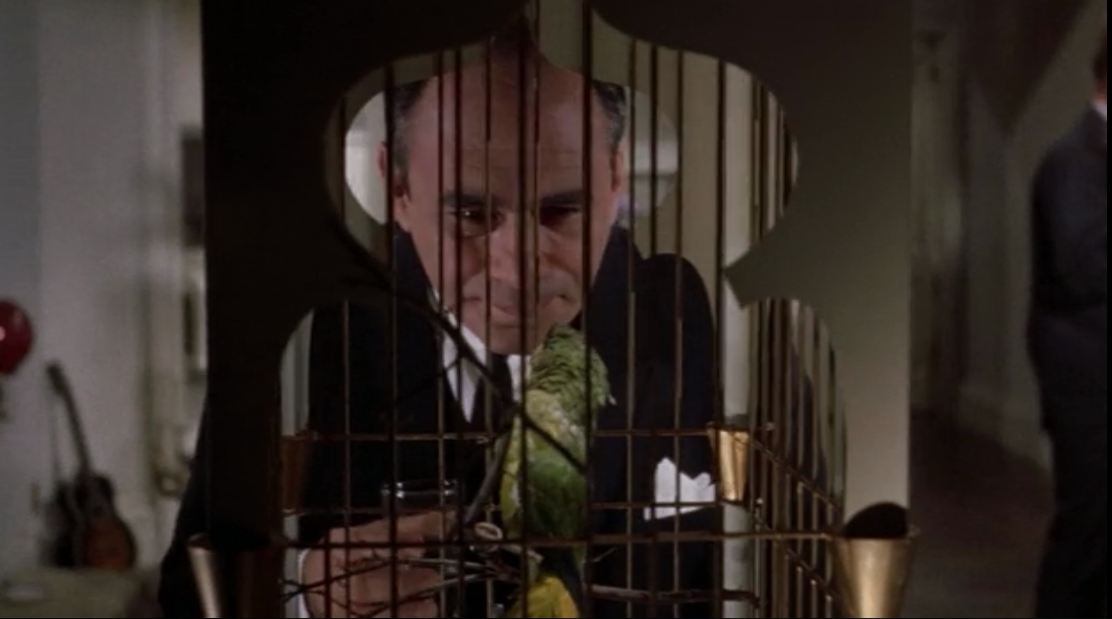
There is, of course, one ugly, distasteful flavor in this otherwise delicious confection. Any discussion of Breakfast at Tiffany’s, sadly, must include mention of the notorious presence of Hollywood veteran Mickey Rooney as Mr. Yunioshi, Holly’s long-suffering Japanese neighbor. The casting of a Caucasian actor in an Asian role, unfortunate as it may seem, was fairly standard practice at the time this film was made, and is not, in itself, so unforgivable; however, the clownish, offensively stereotyped performance given by Rooney, the result of director Edwards’ choice to make the character a source of wacky comedy relief, is so outrageously over-the-top that it was immediately branded inappropriate and racist even at the time of the movie’s release. Not helping matters is the ridiculous “yellowface” makeup worn by Rooney- including a cartoonish set of prosthetic buck teeth- that seems completely out of place in a film which is otherwise grounded in a fairly realistic- if romanticized- sensibility. For their part, all those involved in the decision to present the character in this manner- including Rooney, who insists he was playing it as directed- have apologized repeatedly and expressed their regret for making such an ill-considered choice; but, nevertheless, it remains as a nadir in Hollywood’s difficult history of racial insensitivity, and as a black mark on a film that is otherwise worthy of being considered a true gem.

Setting aside Mr. Yunioshi, there are other, less-disturbing quibbles which might be made about Breakfast at Tiffany’s, primarily by those who feel, perhaps rightly, that the re-invention of Capote’s narrative as a love story undermines its original intention as a slice-of-life remembrance in the vein of Christopher Isherwood’s Berlin Stories, not to mention converting it from a candid observation of human nature into a starry-eyed, feel-good Hollywood romance; but there’s enough of Capote’s worldly view in its screen incarnation to make sure that, in spite of its sweetness, it’s never syrupy, and his creative force is certainly preserved in the fullness of Holly Golightly, his own favorite of all his characters. It’s a testament to the power of his talent that we love her so much, and it is because we love her that we wish for her happiness. Let’s face it: there is something in us all that wants to believe in a dream-factory fantasy which permits two such flawed, potentially tragic people to come together and escape the tawdry reality of their world. By permitting Holly Golightly to finally make the jump, and allow herself to belong to another person (and a cat), the film version gives us hope and makes us strive for the happy ending in our own lives. After all, on some level, we are all “real phonies,” and it’s good to see one of our own find happiness.

http://www.imdb.com/title/tt0054698/

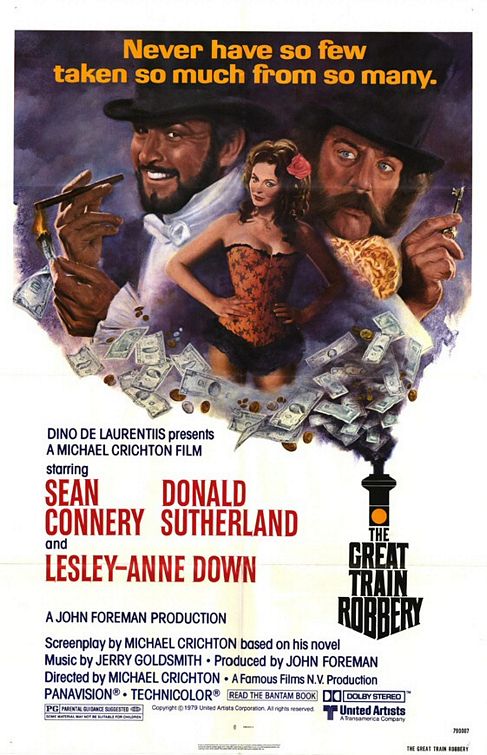
The Great Train Robbery (UK Title: The First Great Train Robbery) (1979)

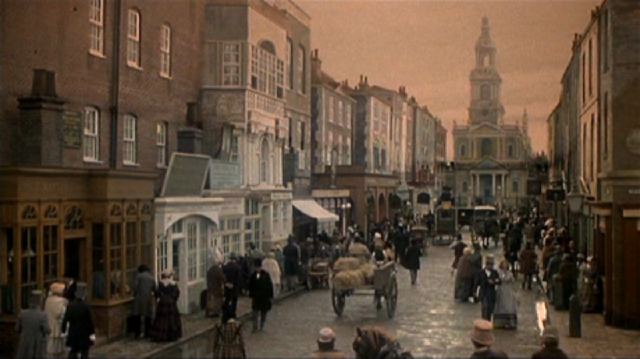
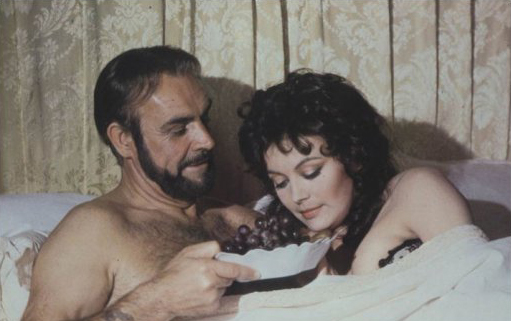
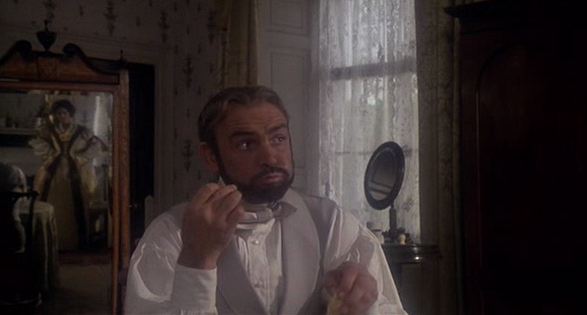
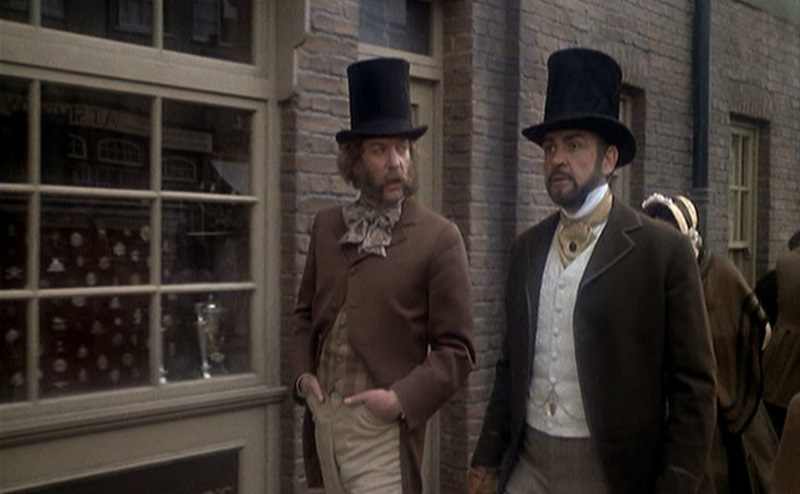
Today’s cinema adventure: The Great Train Robbery, a 1979 period caper comedy directed and written by Michael Crichton, based on his own book, which in turn was based on the real-life 1855 theft of gold bars meant as pay for the English soldiers of the Crimean War- the first robbery ever to take place aboard a moving train.  Painstakingly accurate in period detail, expertly played with just the right blend of devilish humor and edgy thrills, it features sparkling chemistry between its three stars (Sean Connery, Donald Sutherland and Lesley-Anne Down), a clever depiction of the intricate and crafty plot, a rousing score by ace film composer Jerry Goldsmith, and a magnificent climactic sequence featuring Connery (doing his own stunt work) navigating his way across the roof of the train as it speeds through the idyllic English countryside.

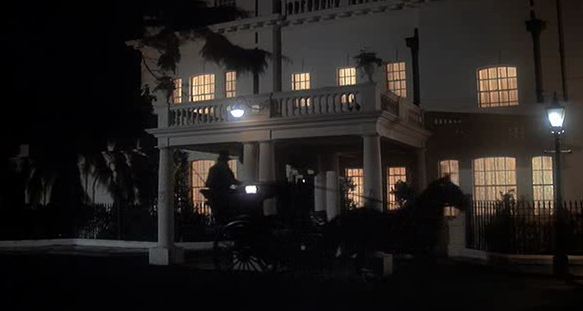
Crichton’s original novel, which took the facts of the real-life heist and transformed them into a fictional narrative by using pseudonyms, composite characters, and clever re-imagining of the details, became a best-seller in 1975 and seemed tailor-made from the outset for translation onto the screen, particularly in the wake of such successful genre entries as The Sting and Murder on the Orient Express; and while an author’s helming the adaptation of his own work might seem ill-advised, at best, in this case the choice was right on target.  Crichton was a jack-of-all-trades if ever there was one, and his understanding of the film medium here resulted in a crowd-pleasing piece of cinematic candy that sparkles with contemporary style even as it maintains its commitment to the demands of its Victorian setting.  For, though the historical accuracy of the events depicted may be tenuous, attention to period detail is rigorously observed.  Crichton paints a vivid picture of the Industrial Age, not only with the meticulous detail of the sets and costumes, but with his emphasis on the dehumanizing conditions, the corruption and inequity of the social order, and the contrast between extreme poverty and ostentatious wealth.  Not that The Great Train Robbery is a film devoted to deep meaning or social commentary; these elements are present to fuel a decidedly modern anti-establishment undercurrent and elicit audience sympathy for the roguish trio of anti-heroes, despite their unabashedly selfish motivations and their ruthless tactics, by casting them in the mold of populist outlaws- a sort of Victorian Bonnie and Clyde, plus one.  This perceptual conceit is part of what makes the film so much fun; we can be firmly on the side of these wrongdoers as we watch them execute their audacious scheme, and Crichton ensures our continued interest by doling out the details of that scheme in small pieces- we are given just enough insider information to know what is going on without being deprived of the thrill and surprises that come from seeing it carried out.

It helps that The Great Train Robbery is beautifully photographed by the legendary cinematographer Geoffrey Unsworth- one of the last films to claim that honor, it is dedicated to his memory- and that the aforementioned set and costume designs (by Bert Davey and Anthony Mendleson, respectively, in collaboration with Production Designer Maurice Carter) are sumptuously executed; each of these artists play an indispensable role in realizing the elaborately recreated 19th Century London in which the bulk of the film’s action plays out.  The previously noted Goldsmith score is effective throughout for setting the mood and tone; but when the setting finally opens up, for the climax, into the countryside, his music makes its most magnificent contribution, adding to the giddy feeling of freedom conjured by the wide open locale, and to the breathless excitement of watching as the final stages of the robbery take place- and as Connery makes his death-defying journey along the length of the moving train.  It’s a payoff almost as satisfying as the one enjoyed by the film’s characters.

The Great Train Robbery is not a profound movie, nor a deeply layered one; it is hardly one of those sublime masterpieces which holds up to repeated viewings throughout a lifetime, and yet when I watched it again recently after having not seen it for a number of years (more than I’m willing to admit to), I was thoroughly delighted to find that it was at least as enjoyable as when I saw it as an impressionable lad, sitting in a darkened theatre and wanting to grow up to be Sean Connery.  Often when a movie strives only to entertain, it falls short by trying too hard, or aiming too low, or- worst of all- trying to pretend it has a weightier agenda than it really does: The Great Train Robbery suffers from none of these shortfalls.  It sets out only to deliver a thrilling ride and it succeeds at exactly that- which is more than can be said of most of the overachieving would-be crowd-pleasers being offered up by filmmakers today.  Of course, they don’t have the benefit of Sean Connery…

http://www.imdb.com/title/tt0079240/

Nine to Five (1980)

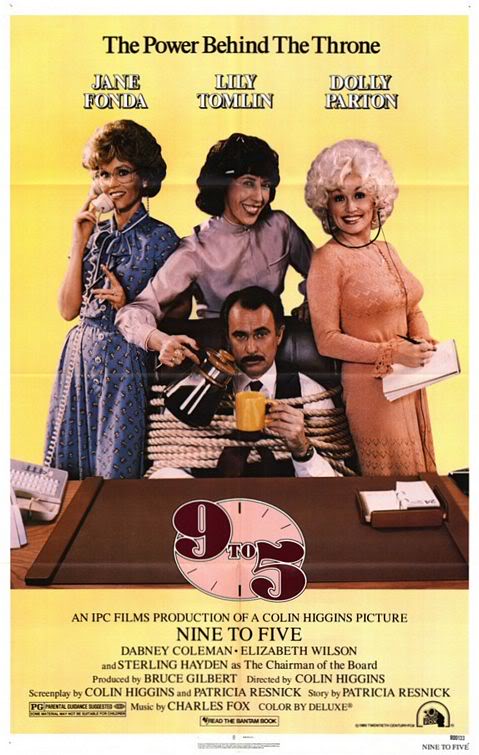
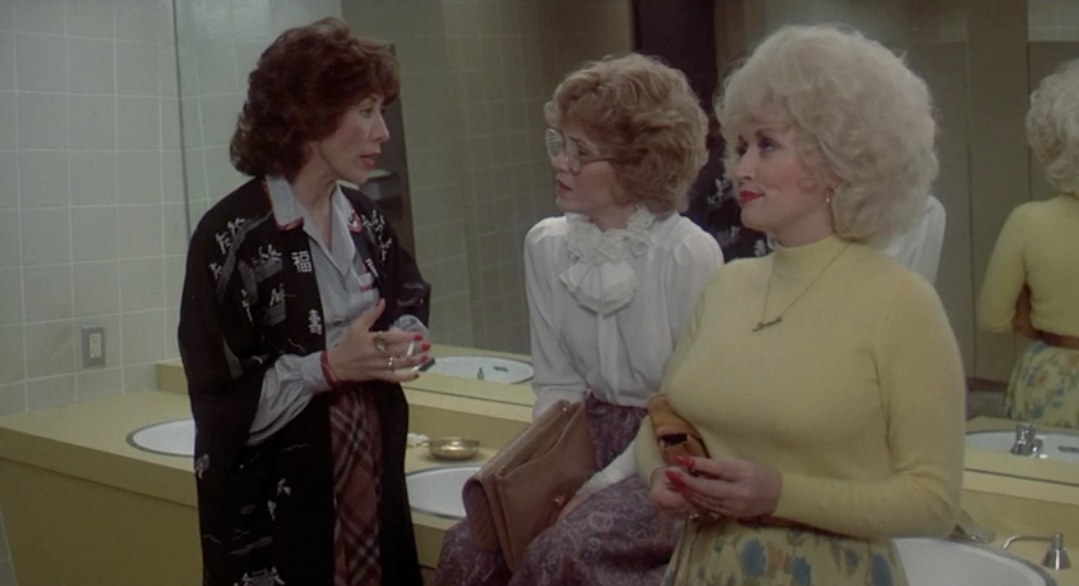
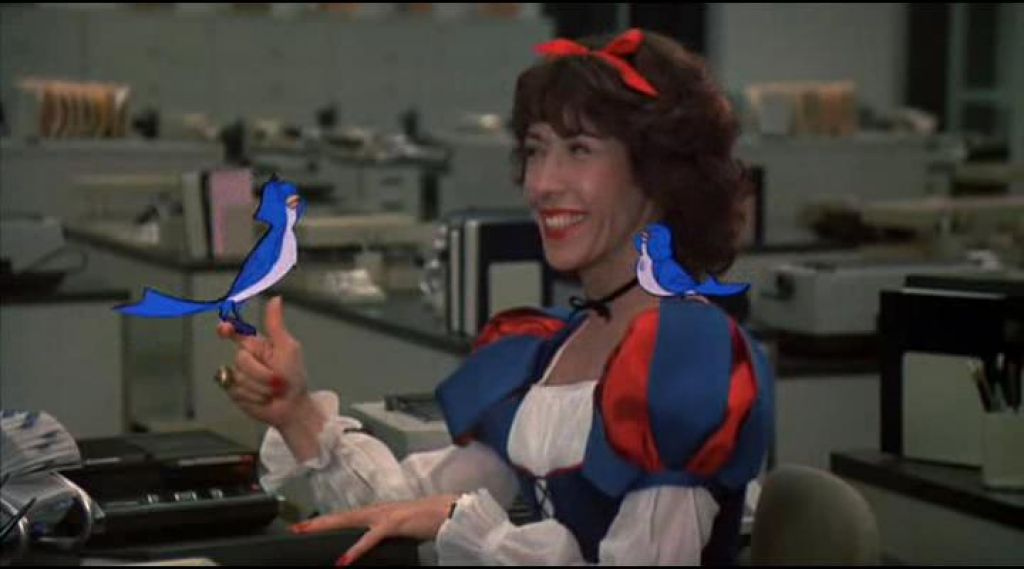
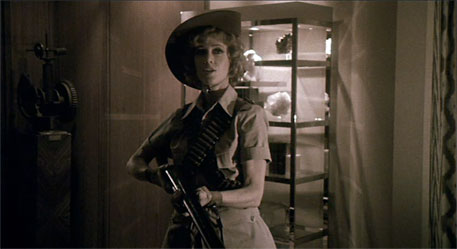
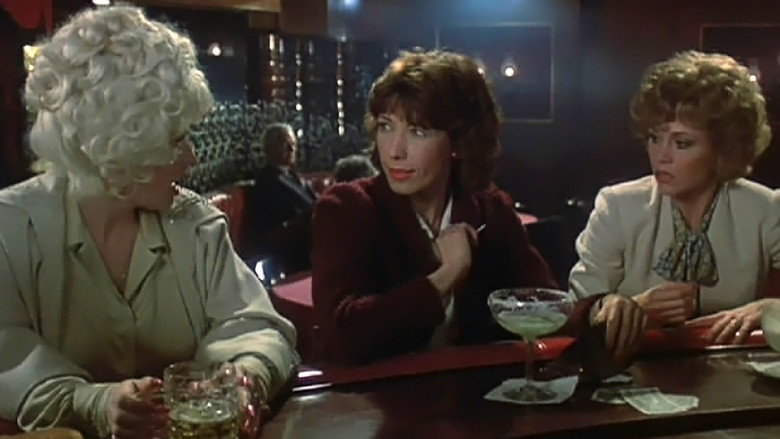
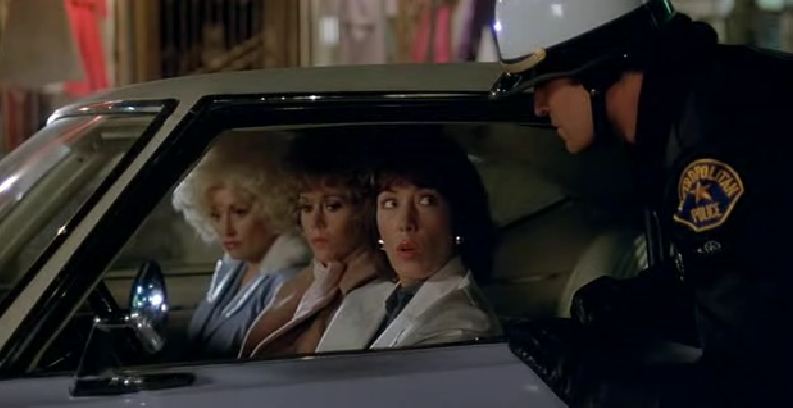
Today’s cinema adventure: Nine to Five, the 1980 comedy caper that became a popular hit on the strength of its pro-feminist sentiment and made country-western singer Dolly Parton into a bona fide movie star by teaming her with established box office draws Jane Fonda and Lily Tomlin.  Following the exploits of three long-suffering office workers whose fantasies of revenge against their chauvinistic and dishonest boss become reality when they believe they have inadvertently poisoned him, director-and-co-writer (with Patricia Resnick) Colin Higgins attempts to mine laughs from the situation as his trio of heroines take advantage of their accidental roles as champions of female empowerment to strike some serious blows against the male-dominated order and implement sweeping workplace reforms in the world of corporate greed in which they are employed.  However, despite the considerable chemistry generated by its three stars and its frequent use of broad slapstick, the film contains few laugh-out-loud moments; most of the comedy seems predictable, falling back on the familiar clichés of countless movies that came before, with the result that the humor feels forced, imposed upon a story with higher aims in order to make it more palatable.  Higgins’ direction, however, does a marvelous job of creating the impression that there is a lot more smart, funny content here than there actually is: a terrific opening montage (truthfully, the film’s best sequence) sets the stage by showing us an entire city’s worth of hassled, stressed-out, put-upon commuters struggling to start yet another demeaning, frustrating day at work; and the use of a seventies-flavored realism in the lighting and cinematography contrasts nicely with the candy-colored trappings imposed upon the grim, utilitarian settings, reinforcing the theme of humanity struggling to assert itself in an oppressive environment.  As for the performances, the three stars are unquestionably delightful together; individually, however, one can’t quite escape the feeling that something is missing.  Fonda seems out of place as the recent divorcee braving the workplace for the first time, wearing her persona of sheltered naïveté like an ill-fitting costume; and Tomlin seems equally uncomfortable in the role of an exceptional woman whose gifts have been long subjugated, exuding a subdued bitchiness that somehow feels more bitter and mean than it might if she truly sank her teeth into it.  That leaves Parton to shine, which she does, stealing every scene with her now-familiar brand of sweet-but-feisty charm; and her refreshing energy is enough to overcome the shortfalls in her co-stars’ efforts and unite the trio as a formidable team; though the ultimate effect is a suggestion that it is their combined strength that gives them their power, it seems unlikely that this was intentional.  As for the remaining cast, Dabney Coleman is so on-target as the ladies’ loathsome boss that the character shaped and limited his subsequent career irrevocably; and veterans Elizabeth Wilson and Sterling Hayden (in one of his final screen appearances) add a touch of distinction to roles which are otherwise just office stereotypes.

Nine to Five became an instant hit upon release and remains a kind of minor classic today despite its numerous flaws; indeed, despite my above criticisms, I find myself holding on to a fond memory of it.  It’s a hard film not to like, one that seems greater than the sum of its parts, inspiring its audience to cheer on its protagonists, and providing an enjoyable- if unremarkable- two hours’ worth of entertainment.  Perhaps its staying power is due to its place in history; it represents a final flourish of seventies liberalism, a celebration of progressive populist values coming just before the Reagan era rolled over the cultural landscape, re-shaping it with trickle-down economics and populating it with voraciously greedy yuppies.  Watching it today, one can’t escape a feeling of bittersweet irony: its wish-fulfillment fantasy resonates with the cause of the underdog, those overworked and underpaid minions of the corporate empire, and seems brimming with the promise that social attitudes were poised to bring about the change depicted within; in fact, the opposite proved to be true- the liberality of the seventies was about to be shelved for a decade of self-aggrandizing greed.  In a way, the film foreshadows this, too: it’s very telling that the three heroines of Nine to Five succeed by beating their oppressor at his own manipulative, dishonest game instead of changing it for the better; and in the final moments we are informed (by the obligatory “where are they now?” subtitles) that two of them will abandon the fight for equality in favor of more traditional forms of feminine success.  Still, though it does less redefining of women’s roles in the workplace than reinforcing of the old stereotype of women as the unseen force behind the scenes, there is something gratifying about watching these three feminine underdogs stick it to the man; and that alone is enough to make Nine to Five seem as infectious and invigorating as its beloved title song.

http://www.imdb.com/title/tt0080319/

Beginners (2011)

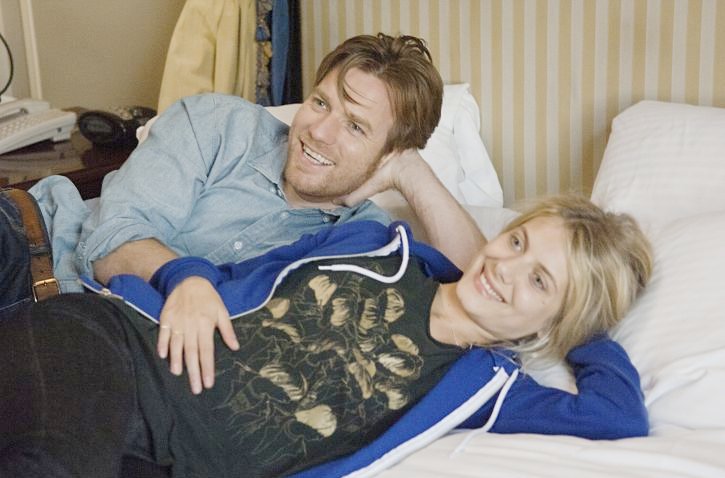
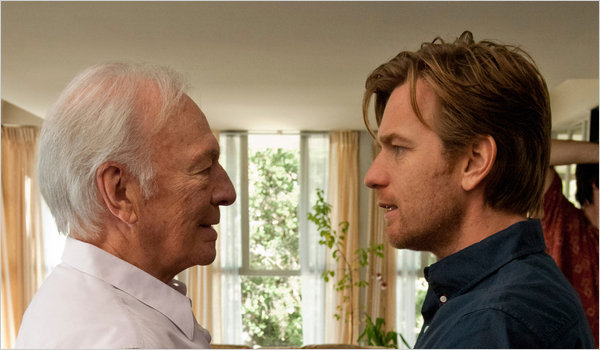
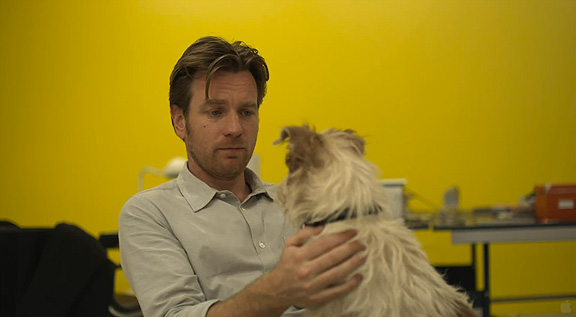
Today’s cinema adventure: Beginners, the 2011 romantic comedy/drama which garnered nearly universal critical acclaim and won multiple accolades and awards (including an Oscar) for supporting actor Christopher Plummer.  Heavily interweaving his narrative with flashbacks, filmmaker Mike Mills documents the efforts of Oliver, an L.A. graphic artist, to reconcile the memories of his childhood (and his grief over the recent death of his father) as he takes the tentative first steps towards a relationship with a young French actress.  Laced with clever, quirky humor, defying stereotypes and expectations at every turn, the film not only engages us with its charming story and likable characters but invites us to ponder the experiences of our own lives and our collective history, and how they provide us with the knowledge we need to grow and the foundation upon which to build a future beyond them.  Mills’ direction (from his own semi-autobiographical screenplay) is superb, moving the film freely between past and present, using its protagonist’s art to provide commentary and draw connections, and offering a wealth of “snapshot moments” which convey volumes about the characters and their lives without the need for extensive dialogue or exposition.  The filmmaker’s efforts would be pointless, however, if not for the superb cast, headed by the ever-lovable Ewan McGregor, giving a heart-breaking performance that manages to convey his character’s deep sadness without ever making him into a downer.  Melanie Laurent is equally effective as his new love interest- who is coping with parental issues of her own- and she, too, succeeds in maintaining both an attractive charm and a melancholy core.  But the most outstanding player here is Plummer, portraying Oliver’s father, a 75-year old man who comes out as gay following his wife’s death and embraces a new life, lived to the fullest, even as he faces his own terminal cancer.  This veteran actor is magnificent to watch as he captures the full spectrum of humanity, from the child-like glee he finds in exploring a world of which he has always dreamed to the dignity he maintains as he succumbs to the humiliation of his disease.  Fully deserving of all the accolades, it’s a performance that provides the strongest- but by no means the only- reason to see the film.  Los Angeles locals will also enjoy the Silverlake settings, lovingly captured by cinematographer Kasper Tuxen, which help to set the tone of Beginners– hip and quirky, but possessed with a keen awareness and respect for the past.  Mills’ film isn’t perfect: some would quibble that it borders on being overly precious, or that the characters’ troubles seem based on self-centered over-thinking and an arrested emotional development resulting from their insulated lifestyle.  However, this is a film about moving forward, about setting aside the emotional baggage of an imperfect past- while still honoring it- and finding the courage to face the challenges of an uncertain future.  In short, it’s a film about change, and therefore a film about fear- the kind of deeply personal fear which can make us all feel like children, no matter our age or background, and therefore cause our thinking and our behavior to seem immature from an outside standpoint.  Maturity comes with taking the leap towards something new, despite these deeply conditioned anxieties, and that is what each of the three principal characters in Beginners must do.  Frankly, I think it’s remarkable that a film addressing such a real and primal fear, and pervaded by such a tone of  bittersweet melancholy, can leave us feeling so charmed- perhaps that’s due to the fact that, above all, Beginners is a film about love, and given their emotional handicaps, if these people can make it work (and whether or not they can is by no means certain), then the rest of us can live in hope that we can, too.

http://www.imdb.com/title/tt1532503/

Moonrise Kingdom (2012)

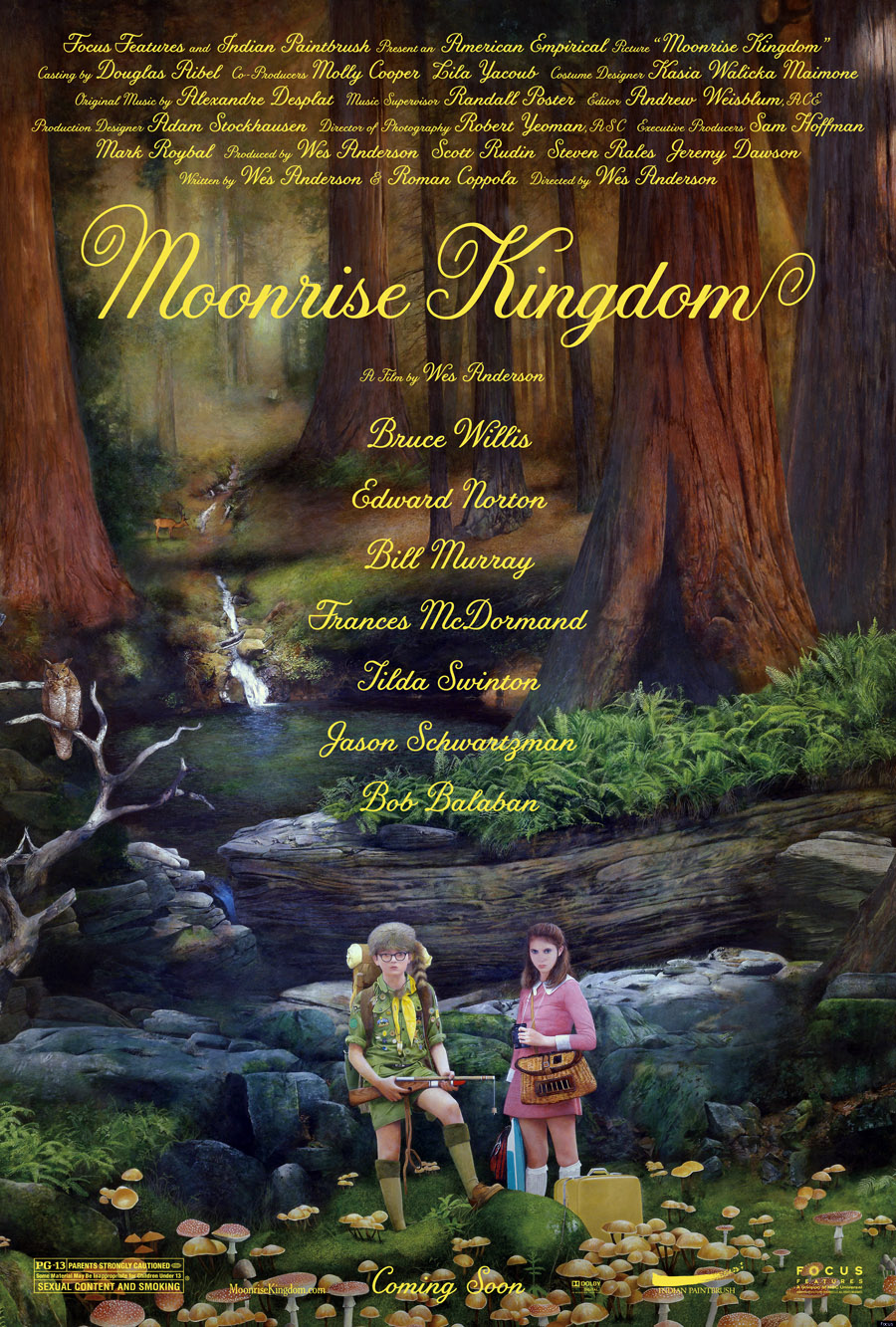
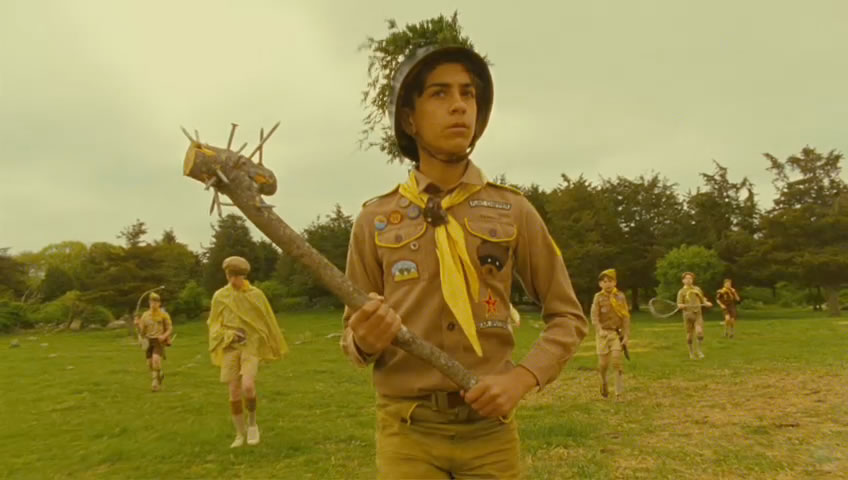
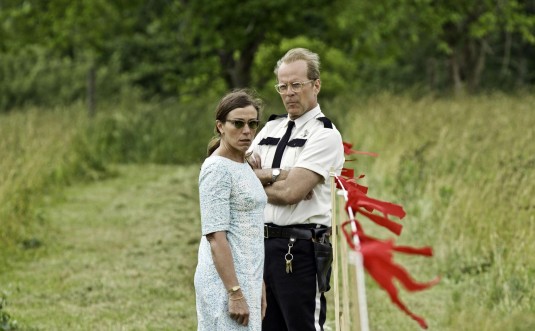
Today’s cinema adventure: Moonrise Kingdom, a 2012 feature that lets you know, from its very first frame, that it is the work of filmmaker Wes Anderson.  The quirky, bittersweet tale of a pair of star-crossed 12-year-old misfits who enact a plan to run away together, it is a film that draws heavily on the entire repertoire of its indie-icon director; all the familiar elements are here, from the visual style of vivid colors and symmetrically-framed shots to the thematic elements of dysfunctional family structures and ritualized personal mythologies.  Drawn in from the start by the methodical introduction of its characters (another Anderson trademark, here cleverly assisted by the use of Benjamin Britten’s “A Young Person’s Guide to the Orchestra” on the soundtrack), we are transported to a world at once fantastical and mundane, a nostalgic landscape of mid-century middle class life transplanted to a remote New England island setting; it is a place where the comfortable trappings of civilization exist in the midst of a verdant but unpredictable wilderness, a delicate balance reflected by its inhabitants’ constant struggle to contain the unfettered dreams of childhood by enforcing the rules of the adult world.  Here, the local scouting organization seems to carry as much civic authority as the police force (which appears to be comprised of a single officer), a meteorological researcher takes on the role of mysterious, omniscient sage, and the larger social order is dictated by a tenuous connection with an outside world represented by various austere personages mostly present only at the other end of a telephone line.  Within these oddball, darkly whimsical surroundings, Anderson unfolds a coming-of-age story, told from the perspective of the two children at its center, in which it becomes clear that the adult characters, for the most part, are the ones who must break through the barriers created by the frustration of their own youthful fantasies; the grown-ups are the ones who must “come-of-age,” and only then can the children- who think and behave in a highly adult fashion, or at least their attempted approximation of it- truly be allowed their childhood.  This inversion of formula, in which the juvenile protagonists serve as catalysts for the transformation of their adult counterparts, is certainly nothing new: it has been explored in films ranging from early classics like Chaplin’s The Kid to contemporary blockbusters like Super 8; in particular, Anderson’s film seems to draw heavily on that mid-century classic of the genre, Disney’s The Parent Trap.  This, however, is in no way meant to imply that Moonrise Kingdom is derivative or full of clichés- on the contrary, thanks to Anderson’s characteristically disarming wit and pseudo-subversive charm, it is as fresh and surprising a moviegoing experience as one could hope.  It’s probably the best Wes Anderson movie since The Royal Tennenbaums; and, of course, though the gifted director may take the lion’s share of credit for its success, it is a combination of elements provided by a worthy group of collaborators.

To begin with, the screenplay, co-written with Anderson by Roman Coppola, is full of the kind of offbeat delights we have come to expect from this director: populated with characters simultaneously familiar and unique, comprised of inventive circumstances and conceits through which the story and its various sub-plots flow, and infused with a magical tone that nevertheless keeps ever-present the potential for serious real-life consequences; the proceedings never lose their underlying weight, but they are peppered with humor throughout, ranging from the dry to the morbid, and usually unexpected; and the abundant heavy-handed symbolism (place names like “Summer’s End,” a tree house impossibly positioned at the top of a very tall tree) is treated with such good-natured irony that it comes across as clever instead of just obvious.  Anderson’s trademark visual style is captured with an almost-surreal crispness and color by cinematographer Robert D. Yeoman, and likewise contributing to the distinctive look of the film is remarkable work by Art Director Gerald Sullivan, Set Decorator Kris Moran, and Costume Designer Kasia Walicka-Maimone, who together create an eclectic style that resembles a collision of the catalogues from L.L. Bean and Eames Design Studio.  As for the soundtrack, Anderson relies both on charming original music by Alexandre Desplat and, as always, a mix of obscure-but-familiar recordings- this time mostly eschewing his usual pop/rock choices for classical selections by Britten (the aforementioned piece as well as others) and Saint-Saëns, juxtaposed with the mournful crooning of Hank Williams.

Of course, it is the ensemble cast that must ultimately bring Anderson’s cinematic symphony to life, and each member, without exception, is right on key.  Edward Norton is tremendously likable as the plucky and earnest scoutmaster; Bruce Willis, as the local police captain, plays nicely against type while still taking advantage of his image as a tough man of action; Frances McDormand and Anderson perennial Bill Murray manage to capture the percolating bitterness of a long-embattled couple without making them unsympathetic; the ever-divine Tilda Swinton radiates a kind of institutional anti-Mary-Poppins vibe as a no-nonsense bureaucrat known simply as “Social Services;” Bob Balaban, Harvey Keitel and Jason Schwartzman (another Anderson stalwart) bring their own distinctive gifts to smaller roles; and an array of young actors contribute a spectrum of personalities as the scout troupe that gets caught up in the action.  Despite this impressive collection of performances, however, the shining stars of Moonrise Kingdom are Kara Heyward and Jared Gilman, as the two pre-teen lovers around which the story revolves.  Each underplay their characters with surprising skill and maturity, capturing the dispassionate detachment affected by these antisocial youngsters while still conveying the sweetness that lurks beneath it, and complementing each other’s work with a chemistry that is rarely seen in screen pairings between seasoned adult professionals; it’s their show, and it is a testament to their talent (and their director’s) that, despite being surrounded by a gallery of all-star heavyweights that includes two Oscar-winners and several other nominees, nobody even comes close to stealing it from them.

Moonrise Kingdom is one of those rare movie experiences that creeps up on you.  After seeing it, I knew I liked it immediately, but it wasn’t until it had sunk in overnight that I realized just how much.  There is a lot to take in: a plethora of details that Anderson meticulously arranges, just as his characters often arrange the contents of their suitcases or the objects on their desk; and just as those everyday items are transformed into talismans and icons by their owners, so too are all the pieces of Anderson’s movie invested with a significance that gives them a subliminal, cumulative effect when woven together into the whole.  By the end of Moonrise Kingdom, you find that you’ve been moved on a level so deep, it doesn’t even have a name, and you didn’t even know it was happening.  It’s a feeling that makes all the delights of the previous 90 minutes seem even more rewarding.  Sadly, in a season full of mysterious alien beings and comic book action heroes, this little film is likely to be overlooked by a majority of moviegoers.  Don’t be one of them: go and see Moonrise Kingdom as soon as possible; it will likely be only the first of many times.

http://www.imdb.com/title/tt1748122/

Six Degrees of Separation (1993)

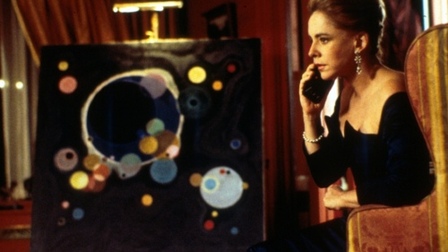
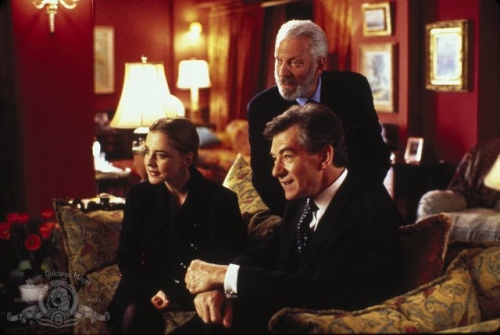
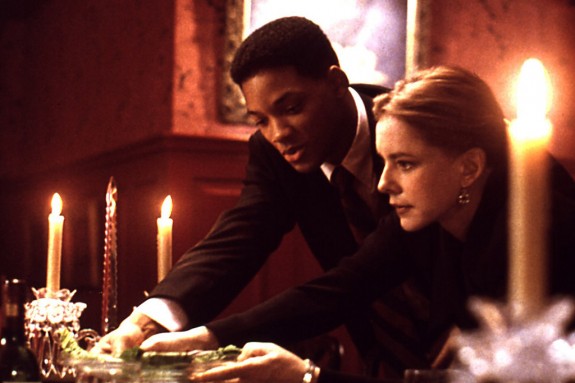
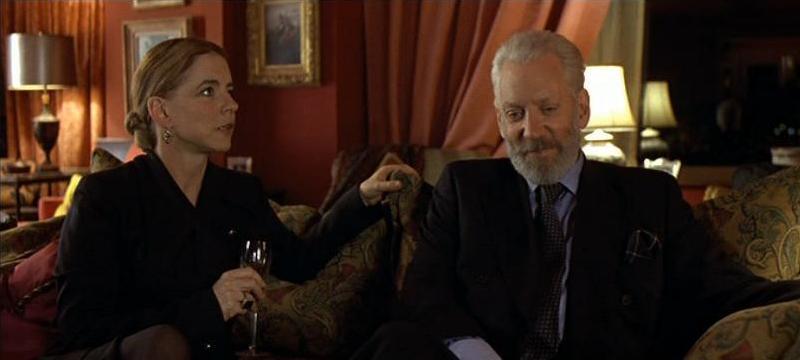
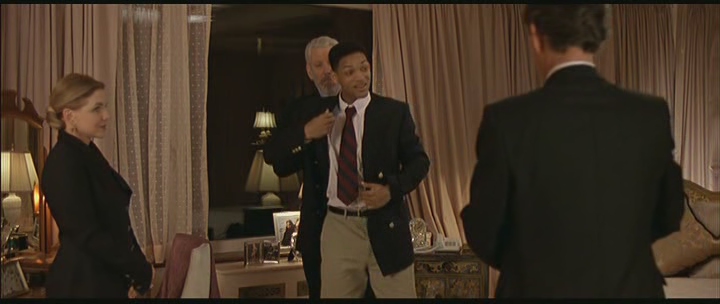
Today’s cinema adventure: Six Degrees of Separation, the 1993 adaptation of John Guare’s Pulitzer-nominated play of the same name, starring Stockard Channing, Donald Sutherland and Will Smith, with a screenplay by the playwright himself. Through the tale of a well-to-do Manhattan couple whose lives are infiltrated by a mysterious and charismatic young con artist, Guare uses his gift for language to explore how our connections to other people weave us into a tapestry of shared experience and lead us to new perspectives on our lives and ourselves, and to subtly reveal how the parallels between us transcend the illusory differences of class, race, sexuality and culture and expose the sometimes uncomfortable truths which unite us all; however, in the translation from stage to film, the complex, literate and emotionally resonant dialogue sometimes borders on sounding awkward and stilted, the central premise comes across as contrived and unconvincing, and the powerful revelations of the play seem almost artificial and trite. The fault lies with director Fred Schepisi, who- instead of utilizing the potential of the cinematic medium to enhance and illuminate the play- has taken the rather pedestrian approach of grafting it into a straightforward narrative, expanding the action into a variety of real-world settings which only serve to distance us from the characters and undermine the cumulative power of the unfolding story. The endless progression of upper-crust social gatherings and well-appointed locations continually remind us that we are watching a movie about the problems of spoiled rich people, instead of providing us with the class-dissolving intimacy of a more abstract theatrical experience; and as a result, instead of an emotional catharsis, we are given an intellectual exercise. Nevertheless, the power of Guare’s original work shines through (albeit in diluted form) thanks to the talented ensemble cast, which clearly relishes the opportunity to speak his words and embody his characters, and if the movie is ultimately a bit disappointing, they at least ensure that it is never boring. Sutherland is, as always, interesting to watch, and Channing does possibly her best screen work here- she earned a well- deserved Oscar nomination for her performance; Ian McKellen shines as wealthy dinner guest who is also taken in by the young hustler, as do Heather Graham and Eric Thal as a younger, less affluent couple whose experience with him yields considerably more tragic results.  In the key role of the enigmatic stranger, Will Smith copiously displays the charm that made him a star; but my favorite performance comes from Anthony Michael Hall, whose brief appearance as a key character steals the show and makes us keenly regret his relative disappearance from the film industry.  As a side note, from the standpoint of social history, Six Degrees represents a minor landmark in the acceptance of gay-themed subject matter in mainstream cinema with its inclusion of the con man’s homosexual trysts, which may generate interest for some viewers; for everyone else, however, it’s a film that is worth the time investment, for the sake of the performances and the opportunity to experience Guare’s script- just manage your expectations, or you may end up feeling you are the one who’s been conned.

http://www.imdb.com/title/tt0108149/