Lawrence of Arabia 50th Anniversary Event: Digitally Restored

For its 50th Anniversary, David Lean’s Oscar-wining masterpiece has been restored to better than its original glory and is being screened for one day only at theaters across the U.S.  This stunningly beautiful movie can only be fully appreciated on the big screen, so if you are free this Thursday (Oct. 4, 2012) and you are reasonably close to one of the locations, I strongly advise you to jump on this rare opportunity to see it the way it was meant to be seen.  You can get tickets at the website below!  Maybe I’ll see you there!

Lawrence of Arabia 50th Anniversary Event: Digitally Restored.

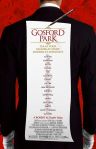
Gosford Park (2001)

Today’s cinema adventure: Gosford Park, the 2001 period mystery-comedy directed by Robert Altman and featuring an all-star ensemble cast in a screenplay by future Downton Abbey writer Julian Fellowes.  Set on an English country estate in the early 1930s, it uses the familiar premise of an Agatha-Christie-style whodunnit as a pretense to explore the complex social structure and interrelationships among the wealthy landed gentry and the servant class that runs their households, exposing the busy undercurrent of secrets and scandals that flows beneath the genteel and proper surface of upper class British society.  One of Altman’s most successful films, it was popular at the box office as well as with most critics, and it received a number of awards and nominations, including an Oscar for Fellowes’ screenplay, Best Film at the BAFTAs and Best Ensemble Cast (the rough equivalent of Best Picture) from the SAG Awards.

The film takes its title from the name of the estate on which it is set, owned by Sir William McCordle, where a number of guests gather for a weekend hunting party.  Most are relatives or family associates- Lady McCordle’s sisters and their husbands, daughter Isobel’s suitor, a dowager cousin- but among their midst are also a few strangers, including a Hollywood producer named Weissman and noted film star Ivor Novello.  This elite crowd, however, constitutes a minority of the population here in Gosford Park; the household is crowded with an army of servants, bustling around the clock to serve their masters, and their number is increased by the influx of personal valets and maids who attend the estate’s guests.  As the weekend progresses, rigorous adherence to decorum and tradition dominates the outward appearance of this gathering and its festivities, despite the myriad personal agendas, hidden relationships, false pretenses, secret histories, private resentments, and unseen tragedies that exist behind the scenes.  These underlying dramas are unexpectedly brought to the surface when a murder takes place, prompting the intrusion of the local police inspector whose investigation lays bare many of the dirty little secrets on both sides of the class divide- as well as some which cross that inflexible boundary.  The solution to the mystery, masked beneath layers of assumption, convention, and privilege, may be a simple crime of passion or a calculated act motivated by financial gain- or it may ultimately hinge on the conflict between an unjust social system and the most basic impulses of humanity.

Director Altman was known for his explorations of different subcultures (the military in M*A*S*H, the country music community in Nashville, the Hollywood film industry in The Player), using an interwoven tapestry of characters and events to offer social observation and commentary through the prism of these microcosmic settings; by the time of Gosford Park, his reputation was such that he had no trouble securing the impressive collection of collaborators necessary to bring to life this meticulous recreation of Edwardian country life between the wars.  Screenwriter Fellowes, an actor who had (at the time) never previously authored a screenplay, was approached by the director due to his extensive knowledge of the complex workings of the domestic management of the era and the culture of the serving class upon which it all depended; he wrote a script, and served as the film’s technical advisor as well, allowing him to rewrite and hone portions of his work on the set.  As with most of Altman’s films, some of the dialogue was also improvised during filming, particularly in the scenes involving a large group of actors, lending an authenticity to the sound of the conversations and contributing to the overall feel that we, the audience, are eavesdropping upon the characters’ private lives; even so, under Fellowes’ guidance, the entire, sprawling saga is united with a cohesive singularity of purpose and consistency of style, providing the master director a solid structure upon which to build his own vision.

Altman’s signature format, in which a focused perspective is imposed upon an almost documentary approach to the narrative, at first might seem a bit ill-suited to a costume piece like Gosford Park; we are conditioned by experience to expect a more theatrical presentation in films such as this.  However, the Altman treatment works brilliantly here, particularly given the director’s purpose; like all of his films, Gosford Park is less concerned with plot (though the story is intricately woven and ultimately, very compelling) than it is with its characters and its observations of human behavior.  Like a fly on the wall, we are privy to the public and private interactions of the denizens of this estate and their guests, but these exchanges seem part of a bigger landscape, as if they were individual trees or a babbling brook in a painting of a countryside; in other words, the concerns of the characters are details which contribute to the more significant whole, a complete portrait of a way of life.  The details of a nobleman’s financial schemes or backstairs dalliances are granted no more importance than the polishing of the silver for dinner service; indeed, the mundane details of this rarefied lifestyle are far more interesting to Altman than the various worldly concerns of the characters, and, thanks to his careful choices in focus, he makes them so for us, too.

In keeping with his detached observational technique, the director similarly places emphasis on the intricacies of his characters’ behavior and personalities.  Each individual is seen in relation to the others, illuminating their social roles and the subtleties of the relationships between the various subdivisions, even within the two primary groups.  Money, status, seniority, tradition, convention- all these and more play a part in determining the “pecking order,” and the rules of this rigid structure far outweigh any considerations based on emotion or concern for humanity; there is no tolerance for those who forget or disguise their rightful place in the order of things, and the public display of passion, particularly when it crosses the sacred class boundaries by which the entire cultural system is governed, is a greater transgression of decency and decorum than a discreetly-executed murder.  It is this obsession with maintaining appearances, of keeping all the warts and wrinkles of being human out of sight at all cost, that ultimately emerges as the over-reaching theme of Gosford Park; it is also seen, by microcosmic implication, as the mechanism for the looming downfall of this ponderous, antiquated way of life- for in the deeply buried untidiness of past scandal lies the seed of the consequence which rises from the well-hidden, forgotten depths to strike a blow against the entrenched injustice of the entire system.  In this way, despite its almost reverent depiction of an ultra-conservative world in which even the most downtrodden are contemptuous of change, Gosford Park manages to echo the anti-establishment sentiment usually associated with Altman’s work.

Such socio-political conclusions are left, however, to be drawn (or not) by the viewer; Altman adopts an objective eye, almost like a field researcher doing an anthropological study.  He records the events of the weekend with a slowly moving camera, lingering here or there to pick up an interesting detail or reveal a fact which might not be apparent to the passing eye, and trusting Fellowes’ words to carry the narrative, along with any thematic elements that may be present.  Of course, it falls to the cast to bring life to the script and give the director the behaviors with which to fill his lens; and the collection of superb actors on display in Gosford Park does so magnificently, capturing every subtle nuance of their roles and deftly providing an ocean of subtext without ever disturbing the naturalistic atmosphere that is Altman’s milieu.  Most of these players are experienced in theatre, which serves them well as Altman allows his focus to move freely amongst the characters the way the eye travels around the stage at a live performance; as they conduct their conversations, steal their glances at each other, clear the table, pour the sherry, and all the other living activities on display at a dinner party, the audience may or may not be watching- they must be “on” at all times, regardless.  They speak realistically, often overlapping dialogue and talking simultaneously, as Altman shrewdly hovers just long enough to permit us to hear the crucial bits; and in the smaller scenes, depicting the private moments spent alone or in pairs, though the emphasis is often on what is seen and what is left unsaid rather than what is spoken, the vital information is communicated, nevertheless, through the minutest of gestures and expressions.  It’s an impressive collection of performances, one of the finest examples of true ensemble screen acting in recent memory.

This incomparable cast includes a mix of actors, from the legendary to the unknown, all of whom deliver exemplary performances; a few stand out, deserving special nods, not so much because they are superior but because their roles give them the chance to shine individually. Most noticeable, perhaps, is the always delicious Maggie Smith as a snobbish and acid-tongued dowager countess (foreshadowing her Emmy-winning role in Fellowes’ wildly successful Downton Abbey series a decade later); Helen Mirren exudes the anonymous perfectionism and the crisp, selfless honor of a lifetime in service, and late in the film releases an unforgettable flood of repressed humanity that drives home everything Gosford Park is about; Michael Gambon, as the misanthropic lord of the manor, and Kristin Scott-Thomas, as his icy and discontented wife, personify the insulated ennui of the inconceivably wealthy-and-powerful upper class; Stephen Fry has a remarkable turn as the police inspector, turning the familiar stock character of this genre on its ear by being dull and sycophantic instead of brilliant and unflappable; Emily Watson gives us a portrait of youth and good nature being bent by servitude towards frustration, bitterness and cynicism, putting a human face on the socially-sanctioned exploitation of the serving class; and relative newcomer Kelly Macdonald is charming and likable as the deceptively naive young ladies’ maid who provides our window of access into the austere and intimidating world of the film.  Also lending the weight of their presence are such thespian luminaries as Alan Bates, Derek Jacobi, Eileen Atkins, and Charles Dance; a newer generation asserts itself through the work of Clive Owen and Jeremy Northam, and representing the American contingent are the stalwart Bob Balaban and the handsome Ryan Phillippe, as the film producer and his valet, respectively, present for the purpose of researching an upcoming movie project and concealing a number of secrets in their own right.

The three-way combination of director, screenwriter, and cast is supported by a top-notch assembly of technical and visual elements; filmed on location at several authentic English country houses and a painstakingly constructed soundstage set at Shepperton Studios, the atmosphere of Gosford Park is so completely realized that we are wholly transported to this bygone place and time.  The sumptuous production design executed under the supervision of the director’s son, Stephen Altman, and the dazzling array of costumes, designed by Jenny Beavan, all captured by the rich cinematography of Andrew Dunn- these contributions help to make the movie a total immersion in the period it portrays.  Completing the effect is the wistfully nostalgic score by Patrick Doyle, evoking the sadness of a dying age, and rounded out by the inclusion of several songs by the real-life Ivor Novello, performed exquisitely by actor Northam, both on camera and off.

With the popularity of the aforementioned Downton Abbey, many will no doubt be drawn to this previous work by its author; it should be noted that, though the intricacies of English country life are depicted with the same painstaking accuracy as in Gosford Park, the tone here is much different than in the hit series.  Altman’s style and purpose are far removed from the tone of fond admiration which pervades Downton, and his characters are less likely to incur our affections and loyalties than those to be found on Lord Grantham’s estate.  As with all of the director’s work, Gosford Park is not for every taste- the cool detachment, the oddly stylized naturalism, the oblique and almost passive-aggressive social criticism, the ironic and oh-so-dry humor, and- perhaps most of all- the constantly roving focus that makes it difficult to anchor one’s emotional perspective in the story; these are all common obstacles for many viewers who dislike Robert Altman films, and they are certainly present here.  Conversely, fans of the director’s work may be turned off by the movie’s cloistered atmosphere, a far cry from the more free-wheeling, overtly colorful setting of his usual, decidedly American subjects.  Nevertheless, Gosford Park is one of Altman’s most accessible pictures, appealing to a wide range of audiences that might not otherwise be appreciative of his sometimes obtuse approach.  In some ways his most atypical project, and in others a quintessentially Altman creation, it cannot be termed his masterpiece, by any means, but it must be ranked highly in his canon as one of his most successful films in terms of overall accomplishment of its intended goals.  Taken independently from Altman’s other work, it certainly stands as a prime example of what can happen when style, content, and execution come together so coherently that the end result is as polished and nearly perfect as a film can be.  For my part, Gosford Park is the kind of movie that makes me remember why I love movies; even if it’s not your cup of tea (to use an apt expression), it’s worth a look just to see what happens when genuine cinematic teamwork makes all the pieces fit as neatly as a good butler’s tuxedo.

http://www.imdb.com/title/tt0280707/

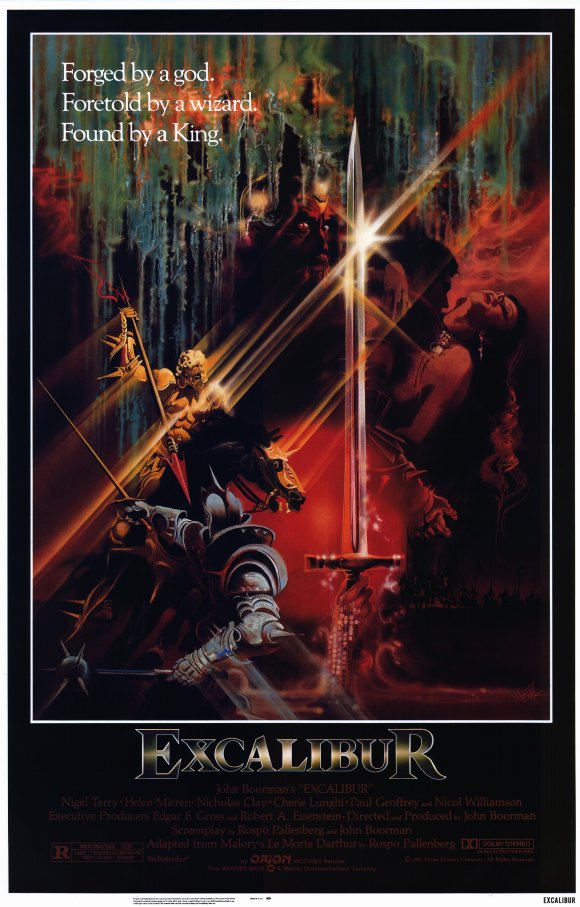
Excalibur (1981)

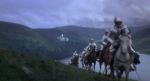
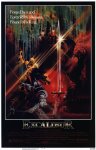
Today’s cinema adventure: Excalibur, John Boorman’s 1981 filmic retelling of the mythic life of King Arthur, rendered against a lush backdrop of Irish locations and featuring a host of future stars before they became familiar faces.  It was a moderate hit at the box office, despite the mixed reviews of critics who praised its visual style but expressed bewilderment over its handling of the Arthurian legends; subsequent reviewers have gained an appreciation for its unique style, however, and not only has it grown in popularity among fans of the fantasy genre (over which it has exerted considerable influence), it is considered by many literary scholars and mythological experts to be the most faithful and definitive screen representation of its subject to date.

Boorman had wanted to make an Arthurian film since before his success with the thriller Deliverance in 1972, albeit focusing more specifically on Arthur’s mentor, Merlin; he presented his ideas to United Artists, who instead offered him the job of making a film version of J.R.R. Tolkein’s The Lord of the Rings.  Agreeing to the challenge, he collaborated with Rospo Pallenberg on a screenplay for a three-hour adaptation of the classic, as well as creating extensive preliminary designs for the film.  The studio, however, passed on it, having decided the project was too costly. Boorman attempted to sell other studios on the film, but to no avail; however, he was able to secure sufficient interest from backers to revive his Merlin idea. With Pallenberg as co-writer once more, he fashioned the screenplay for Excalibur, and eventually incorporated many of the design concepts from the aborted Rings project to bring his Arthurian vision to life.  Drawing mostly from Thomas Malory’s epic 16th-Century romance, Le Morte d’Arthur, with some elements added from other early versions of the tale- as well as a few original twists of their own- their script is a stripped-down narrative of the archaic British legend, focusing on the key themes of its mythology- the transition from the brutality of the Dark Ages to a more enlightened time of justice and chivalry, the passing of old pagan beliefs with the rise of the Christian faith, the connection between the well-being of the land and its king, and the legend’s parallels with the Christ story.

The film chronicles the Arthurian tale from before its hero’s birth, depicting the rise and fall of his father, Uther, who, with the help of the mysterious necromancer, Merlin, unites the divided land and becomes its king, only to be defeated and overthrown as a result of his selfishness and lust; the sword of power, Excalibur, is driven into a stone, able to be removed only by his rightful successor, and Merlin spirits away his only child to be humbly and anonymously raised in secret.  When the boy grows to maturity, his destiny unfolds; he draws the sword from the stone, becoming the unlikely king, and is tutored in the ways of rulership by Merlin, who has reappeared to continue his shepherding of mankind into a more enlightened future.  In time, Arthur re-unites and brings peace to the land, establishing justice and a code of chivalry, and creating a fellowship of champions to represent these ideals- the Knights of the Round Table; along the way he wins the love of Guenevere, who becomes his queen, and Lancelot, who becomes his best friend and greatest knight- but therein lies the seed of doom for the utopia he has built, for their eventual betrayal of their king will tear the land apart, leaving it vulnerable to the dark ambitions of the sorceress Morgana, Arthur’s jealous half-sister.  The saga ultimately leads to the redemption of Arthur’s dream, through the quest for the Holy Grail, and his final battle with the forces of his bastard son, Mordred, and reaches its bittersweet conclusion with the heroic king’s final mystic voyage to the Isle of Avalon, where he will wait until the world is ready once more to welcome his vision of peace.

This epic tale has found expression in countless works of fiction throughout the centuries, but a comparatively small number of films have dealt with it, and even fewer have attempted to tackle the story in its entirety.  It’s easy to understand why: though it is full of possibilities for adventure, romance, and drama, it is highly esoteric at its core, rich with symbolic content that makes a literal screen depiction somewhat problematic.  To be sure, there are many possible approaches to the material which can bypass these elements; but when stripped of deeper meaning, the stories seem, well, pretty cheesy.  Boorman, however, takes the opposite approach with Excalibur– far from downplaying or obscuring the archetypal connections of the myth, he places his focus squarely on them.  The pageant of the story’s familiar events moves by quickly, depicted with indelible imagery and loaded with the kind of clanging medieval action that we expect from such a movie, but infused throughout with a deliberate awareness of its thematic essence; each episode plays like a ritual, enacted for the purpose of illuminating the spiritual and psychological experience it represents.  The “Dark Ages” in which the story takes place are clearly not based in a factual period, but are rather a manifestation of the collective unconscious, a dream-world in which the artistic imagination is unfettered by concerns of historical accuracy or temporal logic.  Boorman’s vision incorporates both the realistic and the fantastical, blending authenticity of detail with wild stylization in his depiction of costumes and armor, weaponry and technology, architecture, and even geography.  All these factors are represented by a mix of designs that spans some 500-odd years of period style, a deliberately anachronistic conceit intended to remind us that we are witness to an idealize fantasy and not a recreation of a specific era.  He further elaborates this meta-reality by enhancing it with his trademark emphasis on the primal power of nature, as well as with an extensive use of back-lighting and reflected colors to evoke a surreal, other-worldly aura; and as he moves the narrative towards its climax, he progressively blurs the line between reality and dreams, so that by the end, the two have become one and the same.

Although Boorman’s film is designed to elucidate the inner mechanics of its source material, his intention is not to provide an academic experience; his purpose goes far beyond a desire to illustrate the coded significance of a classic myth for an audience already familiar with its meaning.  Instead, Excalibur is an attempt to translate this antiquated story for modern consumption, to stimulate a kind of communion in which contemporary viewers can share the revelations within and experience them as relevant to their own lives.  To this end, the director uses all his cinematic skills to convey the universally understandable human element of the tale even as he unmasks the hidden principles underpinning it; he removes all but the most important episodes of the epic saga, distilling it into a document of the emotional arc experienced by the characters as they progress through its momentous events.  Consequently, the film creates a delicate balance between its larger-than-life atmosphere and the intimacy with which its key figures are portrayed.  It’s a disconcerting effect, to be sure- Arthur and his comrades converse in an odd combination of lofty speech and familiar banality, seeming at once to be both elevated and de-mystified versions of the archetypes they personify, and the visual interpretation of the tale evokes both the romanticized pageantry of an illuminated manuscript and the garish gore of a Hammer horror movie.  Doubtless this odd approach, which makes for a film that seems reverent and iconoclastic at the same time, accounts for the initial confusion of critics who saw Boorman’s film as a stylistic mess; but on a visceral level, it works exactly as the director intended, allowing audiences to access the story on both a metaphoric and a personal level.  In some ways, Boorman’s film is reminiscent of the work of Kurosawa and other masters of the Japanese cinema, presenting his epic of a mythic realm with a stunning visual approach that captures both the timelessness of its powerful symbolism and the immediacy of its underlying human story with equal power. For some, it may be disconcerting to see this legendary tale- perhaps the most seminal story in modern western culture- being presented in the milieu of a Samurai film, and the jarring contrasts inherent in the movie’s dual purpose may strike certain viewers as vaguely ridiculous, as if there had been a sudden invasion by members of the Monty Python troupe; but for those who can get themselves in tune with Boorman’s somewhat unorthodox vibe here, his vision yields remarkable riches.

Excalibur’s visual realization of the Arthurian world is, of course, the film’s most universally acclaimed feature. Boorman has drawn inspiration from the classic chivalric paintings of the Romantic era, as well as from his obvious passion for technical accuracy in his depiction of medieval warfare; the result is another level of contrast which infuses his movie with both ethereal beauty and barbaric cruelty. The striking and imaginative costumes merge prehistoric, pagan, courtly and even space-age styles for a highly distinctive and fantastical look, while the settings are a splendid mix of the highly theatrical and the naturalistic. Much of the film was shot on location at various real-life castles and ruins, and for the interior scenes, elaborate soundstage sets were built, using highly theatrical designs, as well as mirrors and matte paintings to create an even more expansive feel. The extensive forest scenery, most of which was located within a mile of Boorman’s home in Ireland, is all genuine; lush and verdant, it has a preternatural beauty that goes a long way towards making “the Land” into a viable character in the film. Extensive rain during production helped keep the locations vibrant, and the natural magic of the setting was enhanced by being back-lit with green to bring even more color into the scene. As captured by the Oscar-nominated cinematography by Alex Thompson, the entire package is a breathtakingly gorgeous feast for the eyes, full of unforgettable imagery.

As for Boorman’s cast, it was comprised by mostly unknown or little known actors- at least, they were at the time. Liam Neeson, Patrick Stewart, Gabriel Byrne, and Ciarán Hinds all made early appearances is supporting roles, and each of them stands out in their few minutes (or less) onscreen.  The beautiful Cherie Lunghi brings a disarming contemporary charm to Guenevere, making this complex feminine icon into a believable, understandable human being- no small feat, considering the multitude of differing feminine attributes she must represent in the story.  Nicholas Clay is stiff but sincere (and supremely handsome) as Lancelot, embodying the character’s soon-to-be-tarnished moral purity and suitably conveying the strength- if not the depth- of his passion for both his lover and his friend.  In the crucial role of Arthur is Nigel Terry, whose most prominent big screen performance prior to this was as one of the scheming princes of The Lion in Winter over a decade before; he has an Everyman simplicity that makes him an ideal stand-in for this common man’s king, bringing candor and humility to the role while also rising to the task of conveying the hero’s substantial nobility and determination, and though at times his delivery borders on being a bit awkward, the honesty of his performance shines through his expressive eyes throughout, accomplishing one of the film’s primary purposes by making this towering mythological figure touchingly and accessibly human.

The center ring in Excalibur, however, is occupied by two electrifying performers who, although they technically play supporting roles, are definitely the star attraction.  Helen Mirren, already a renowned stage actress, with a few notable roles onscreen, was nevertheless mostly unknown to film audiences in 1981; but as Morgana- the duplicitous sorceress who engages in a duel of wits and a battle of wills with the powerful Merlin as she plots to usurp her half-brother’s kingdom through witchcraft, incest, and deceit- she took a major step forward in becoming a recognizable force to be reckoned with.  She gives a deliciously theatrical performance, brimming with raw sexuality, barely concealed contempt, and an almost child-like transparency, and if at times she seems over-the-top, she is positively subtle in comparison to her co-star.  That position is occupied by Nicol Williamson, at the time the film’s biggest star, with whom Mirren exhibits a palpable antipathy; the pair had developed a strained relationship while starring together in a stage production of Macbeth and were not on speaking terms, but each accepted their roles without knowing the other had been cast- and the resultant fireworks give their screen time together an intensity that would be impossible to fake.  As electric as they are together, though, it’s still Williamson’s show.  As Merlin, he is magnificently outrageous; sporting a chrome skull-cap that makes him look as much like Ming the Merciless as the archetypal wizard he portrays, he chews the scenery with gusto, careening madly between blatant comedy and deadly serious intensity, declaiming his dialogue with a clipped, eccentric panache that helps to burn his numerous memorable lines instantaneously into the brain.  Off-kilter and alien, he seems like the product of another reality- which of course, he is- but underneath his potentially off-putting manic demeanor he is so endearing, so compassionate, so loving, that we cannot help but like him.  Somehow, he makes Merlin the most human character in the film; and though Boorman’s original plan to center his Arthurian epic on this mystical personage evolved into a more all-encompassing view of the tale, Williamson makes certain that he is still the most distinctive and memorable figure onscreen.

There are so many things I could go on about in this discussion of Excalibur: the battle choreography, the willingness to explore such esoterica as the concept of the Holy Grail, the brilliant and stirring use of classical music by Wagner and Orff alongside the original score of Trevor Jones.  Ultimately though, these things are best discovered through a viewing of this odd and underappreciated classic, not by reading about them here.  It’s probably clear by now that Excalibur is one of my personal favorites; this admission, however, should not stand as a disclaimer against my personal bias, but rather as a testimony to the greatness of the film.  Quibbling about stylistic issues is perfectly understandable, but in the long run, if you take Excalibur on its own terms, you cannot help but find that it is moving, exciting, funny, sad, and spectacular, and that not only does it stick in your brain for a long time afterwards, it holds up well and reveals new surprises on repeated viewings. That’s a pretty powerful recommendation in itself, but if you need more incentive, consider this: the story of Arthur and his knights is one of the most important influences there is on our culture.  Many of the underlying tenets of our modern world view are derived from it, the kind of concepts we take so completely for granted that we don’t even think about questioning their validity or where they came from; yet a majority of contemporary people have merely a passing knowledge of this landmark tale, derived from such popular culture manifestations as Disney’s The Sword in the Stone or the musical Camelot, which may have certain charms in their own right but do little towards encapsulating the majestic scope of their original source.  John Boorman has given us a worthy rendition of the story here, preserving the integrity of its core significance while setting it in a form which allows it to live for an audience of today.  at could be wrong with taking a glimpse at this shared cultural dream of our past, perhaps to gain a little understanding of where we have come from, and why we have made the journey?  After all, a myth is like a road map, allowing us enrich our lives today with the knowledge gained by those who came before us.  It can only be beneficial to revisit Arthur and his once-and-future kingdom of Camelot, especially in a form as vital and exhilarating as this film; there are lessons worth remembering here, and in the words of the king’s wise and trusted teacher, “it is the doom of men that they forget.”

http://www.imdb.com/title/tt0082348/

Cold Comfort Farm (1995)

Today’s cinema adventure: Cold Comfort Farm, the 1995 screen adaptation of Stella Gibbons’ popular 1932 novel parodying the English literary tradition of melodramatic rural fiction.  Directed by Oscar-winning director John Schlesinger (Midnight Cowboy) and produced by BBC television for broadcast in the UK, it was later released theatrically in America, adding the prestige of modest box office success to the critical acclaim it had already received.  The novel from which it was derived poked fun at the conventions used by such authors as D.H. Lawrence and the Bronte sisters, in which life in the English countryside was depicted as a grim and gothic affair, with characters in the grip of long-festering guilt or otherwise self-defeating psychological dysfunctions, usually in connection with some shameful or dishonorable act committed generations before.  The plot of Cold Comfort Farm turns this formula on its ear, as a cheerfully modern young woman comes to live on her relatives’ country estate and sets about applying common sense and psychology to the long-standing status quo that keeps them mired in old-fashioned and unnecessary gloom.

Kate Beckinsale stars as Flora, the heroine, bringing a smart, no-nonsense charm to the character and making us easily believe in her ability to brush aside decades-old stagnation as if it were the cobwebs in a doorway.  Surrounding her as the eccentric Doom-Starkadder clan are a host of veteran British thespians, all clearly relishing the chance to sink their teeth into these deliciously ludicrous roles.  Eileen Atkins is hilariously dour as Aunt Judith, fatalistic, terminally depressed and possessed of a somewhat unhealthy obsession for her libidinous son, Seth; and as the latter, Rufus Sewell strikes the perfect satirical balance to make his vainglorious, womanizing character likable instead of insufferable.  Ian McKellen enjoys an uncharacteristically rough-edged turn as Uncle Amos, an amateur preacher, sporting a ridiculous mash-up of a rural accent as he gleefully spews his fire-and-brimstone sermon from the pulpit.  Sheila Burrell is delightfully domineering as Aunt Ada Doom, the reclusive and tight-fisted matriarch of Cold Comfort Farm, ruling her family with brittle authority as the continually reminds them that she “saw something nasty in the woodshed.”  Rounding out the household are fine performances from Freddie Jones, Miriam Margolyes, and Ivan Kaye, among others; and in non-family roles, there is standout work from Stephen Fry as a pretentiously progressive writer enamored of Flora, and the always-magnificent Joanna Lumley as an impeccable London widow who serves as her friend and mentor.

The screenplay by Malcolm Bradbury captures the goofy sense of fun intended by author Gibbons, sending up the melodramatic conceits of this popular sub-genre of British literature with a smart, optimistic viewpoint and a healthy dose of subtly hilarious wordplay; there are some truly memorable lines (my favorite comes from Amos as he preaches before his quivering congregation: “There’ll be no butter in Hell!”) and the plotting, though ultimately just as unconvincingly tidy as the overwrought romances  being parodied, weaves cleverly enough through its pleasant course that we don’t really mind its unbelievability.  There is also plenty of authentic English scenery- idyllic woodlands and meadows, rustic villages and farmlands, elegantly-appointed estates and salons- to provide eye candy along the way, and director Schlesinger keeps things visually stimulating by keeping his camera moving and using a wide variety of angles and perspectives- as well, of course, as keeping us continually focused on the real meat of the matter, superb actors portraying delightful characters.

Cold Comfort Farm is not a deep movie, nor does it yield a lot of stimulating conversation regarding its themes or its technique, at least not in most circles.  It does, however, yield a lot of fun; it’s smart and literate enough to satisfy those seeking intellectual diversion, yet completely accessible for the viewer with no connection to the English Lit crowd, and it provides plenty of hearty laughs for both kinds of audiences (as well as the rest of us who probably fall somewhere in between).  After all, outrageous behavior is outrageous behavior, whether or not you have read any of Thomas Hardy’s books, and in Cold Comfort Farm, there is no shortage of it.

http://www.imdb.com/title/tt0112701/

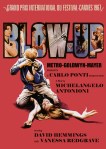
Blowup (1966)

Today’s cinema adventure: Blowup, the 1966 feature by Italian director Michelangelo Antonioni; an existential mystery set against the backdrop of “Swinging London’s” hip fashion-and-art scene. Concerning a successful young photographer who begins to suspect he has inadvertently captured images of someone being murdered in a park, the film is really an exploration of alienation and desensitization in a culture obsessed with image and surface, as well as a meditation on the deceptive nature of perception and the uncertain boundary between illusion and reality. Setting up his theme from the very first scene, in which a truckload of exuberant mimes careens into a London plaza, Antonioni proceeds to perpetrate a cinematic sleight-of-hand by luring our focus onto the ostensible subject- a callous youth, played by unlikely leading man David Hemmings, and the intrigue into which he stumbles- while using the surrounding environment to convey the real purpose of the movie. As surely as the significance of his leading character’s photos lies in the grainy, uncertain corners of their background, the real mystery of Antonioni’s film reveals itself through examination of the peripheral details of its central plot.

The action of Blowup takes place in a world full of vapid fashion models and disaffected posers, communicating in brief, distracted ambiguities and seemingly trying to appear as disinterested as possible at all times. It’s a place dominated by a game in which style is substance, and the master of this game is the photographer, Thomas. As a creator of image, he is at the center of the “in” crowd, and he flaunts the power granted him by his status; surly, entitled, smugly insolent, he treats everyone as an object or as a means to an end, striding confidently through his day and seeking relief for his terminal ennui from momentary whims- whether buying a propeller from an antique shop, having a naked romp with a pair of underage would-be models, or clamoring for a scrap of a rocker’s smashed guitar at a concert- and then becoming disenchanted as soon as he achieves his fleeting gratification. He is a reflection of the culture of desire and acquisition that surrounds him, completely disconnected from others and encased in a self-absorbed bubble of over-saturated perception; and when reality asserts itself in the form of his unwitting involvement in the enigmatic experience at the park, he is completely unprepared and ill-equipped for the situation, failing to control it with his usual tactics and unable or unwilling to communicate it to any of the emotionally distant friends or vaguely hostile strangers he encounters.

It would be easy to slide into a complex morass of analysis in discussing Blowup. It is a deceptively simple film that opens up into an unending progression of dovetailed themes and implications upon even the most superficial examination. Suffice to say that in his portrayal of this ultra-specific time and place, Antonioni captures timeless issues that affect the society of popular culture and commerce no matter what the details of their outer trappings; and in Thomas’ obsessive quest to determine the truth about what he has seen, enlarging his photos until they become as abstract as a Rorschach ink blot, he illustrates the impossibility of objective certainty and suggests that the difference between truth and illusion exists only within our highly suggestible perceptions. Ultimately, all that can definitively be said about Blowup is that it is about a man who, for a short time, at least, pays attention to something.

More to the purpose, here, is a discussion of the artistry involved in bringing all these heady concepts to the screen. Director Antonioni, already renowned for his work in Italian cinema with films like L’Avventura and La notte, enlisted the help of noted playwright Edward Bond in writing the dialogue for this, his first film in English. The resultant wordplay is a brilliant reflection of the themes explored within the screenplay (which Antonioni co-wrote with Tonino Guerra); the characters speak in terse banalities, expressing half-truths and absurdities which stand in contrast to their actions and fail to convey their true intentions- almost everything they say represents a pose, an image they wish to present, and when they must try to convey something more direct or meaningful, more often than not they collapse into an inarticulate and incomplete breakdown of communication. Yet every exchange reinforces the film’s central ideas, from the first line (one of the mimes telling a bystander, “Give me your money- do it!”) to the inscrutable response of top model Verushka when asked if she is supposed to be in Paris (“I am in Paris”). The actors contributions serve as varied brushstrokes on Antonioni’s canvas, creating the necessary blend of textures which completes the picture. Vanessa Redgrave is the mysterious woman whose secret dalliance in the park may or may not have more sinister implications; tall, bird-like, and awkwardly elegant, she superbly conveys a desperation which continually threatens to crack the mandatory veneer of cool disinterest, and gives us a character whose determination and intelligence are plainly evident (though Thomas, her circumstantial antagonist, can only see the vulnerability of her surface) and she suggests a connection to the machinations of a larger world that exists outside the insulated niche in which the film is set- one in which things actually matter. In smaller but no less important roles are Sarah Miles and John Castle, as Thomas’ married friends; standing in for the masses whose interests are captured by those who put on the show, she shows us (with minimal dialogue) the timidity and guilty fascination of someone drawn to the shallow flash represented by Thomas over the weightier substance of her painter husband; and he embodies an obtuse, intellectual aloofness that makes him simultaneously attractive and repellant. The aforementioned Verushka makes an unforgettable impression (as herself) in the iconic scene in which she is photographed by Thomas, writhing on the floor as he straddles her in a highly sexualized encounter which underlines the replacement of actual experience with the artificiality of image. As Thomas, our photographer “hero,” the previously unknown Hemmings became a major star and a symbol of the mid-sixties “mod” lifestyle; his performance, while necessarily limited in range by the scope of his character, is perfect for its purpose within Antonioni’s vision. Though Thomas is arrogant, unpleasant and shallow, Hemmings somehow manages to make him likeable in spite of these qualities, showing us the giddy and rambunctious child beneath his ultra-cool mask in the moments when he is alone, and allowing us to be comfortable when we are forced by Antonioni’s focus to identify with him.

The star of Blowup, though, is the cinematic auteur behind the camera. The film is almost certainly Antonioni’s masterpiece, a vibrant, stimulating work of art that delivers brilliantly both on the surface and on a deeper intellectual level; the entire film leaves the impression of a stunning visual experience, yet though it is filled with indelible images created by the director’s masterful eye for composition (and captured by cinematographer Carlo di Palma), the grand picture we are left with is a synthesis of all we have seen- an intangible and non-existent zephyr. Much of the film’s powerful cumulative effect comes from Antonioni’s use of contrasts- between speeds, colors, textures, people- and his knack for portraying mundane, everyday occurrences in a manner and context that makes them seem hallucinatory and surreal. His use of sound is also important; in particular, the haunting sound of the wind in the trees during the all-important park sequences suggests the vastness and the irresistible force of the ultimate reality which surrounds all the meaningless illusion with which his film’s denizens are preoccupied. His musical choices play a big part, too: the jazzy score by Herbie Hancock captures the hurky-jerky energy of the fast-paced culture in which he has immersed us, and an underlying zeitgeist is evoked by the raw and angrily frustrated sound of The Yardbirds as they play for a seemingly unimpressed crowd of club-goers in their now-famous cameo scene.

Watching Blowup today, it’s easy to see why it has been lauded as an influential classic and been the subject of so much homage and emulation. It captures a perfect snapshot of the fleeting era in which it is set, yet at the same time presents us with a timeless metaphor for our existence in a world of never-ending sensory stimulation. Though the technological methods depicted as central to the story are dated in today’s digital age- in which high-resolution photographic manipulation is instantly available in the palm of everyone’s hand- the basic theme of seeking validation for our perceptual experience is not. Furthermore, it is impossible not to observe the parallels between the pop-obsessed society depicted in the film and that which exists today: in his personification of the mod dilettante at the center of Blowup, Hemmings could just as easily be portraying (if you’ll pardon the expression) the archetypal hipster douche-bag of our contemporary world; and the crowd that surrounds him, the clubs and parties he goes to, and the interests he pursues could all be found on any Saturday-night excursion into the hip-and-happening world of our current youth culture. It’s a movie that became, no doubt with intentional irony, the “next big thing” perpetually sought by the crowd it both portrayed and appealed to; thanks to the far-reaching vision of its director, it was more than that, and it has deservedly become a cornerstone not only of cinema, but in the collective consciousness of our modern world.

http://www.imdb.com/title/tt0060176/

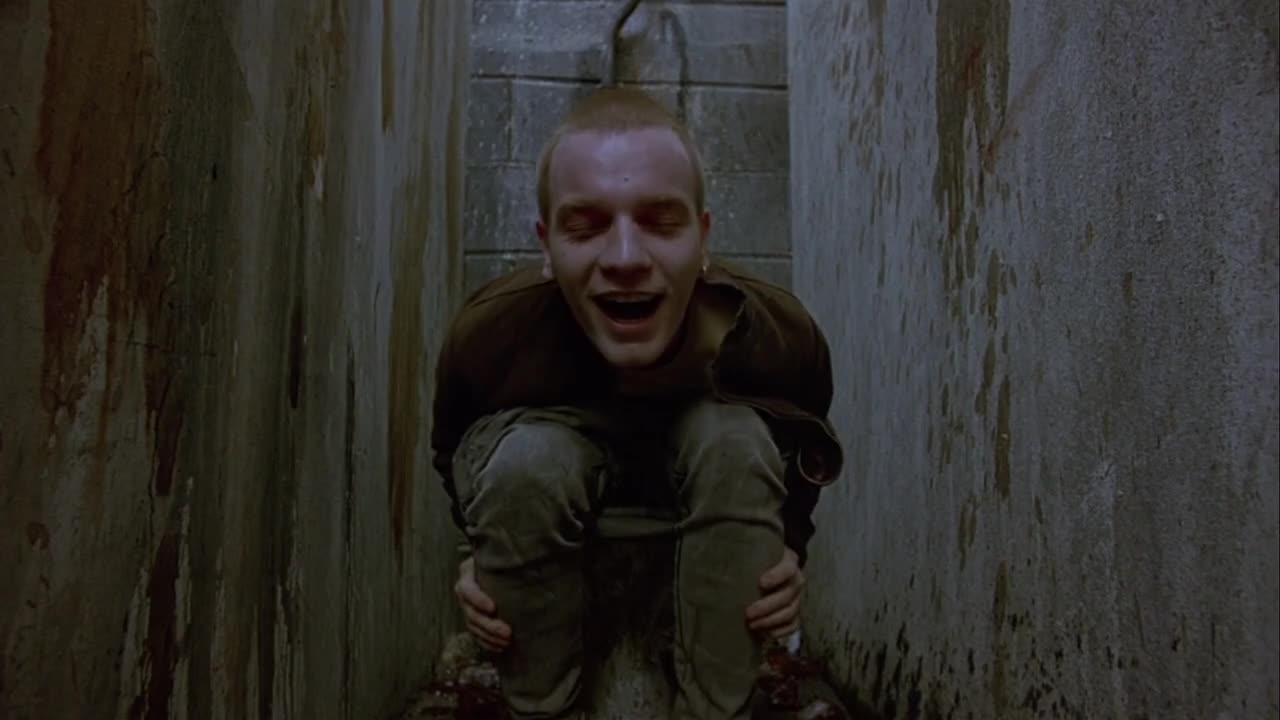
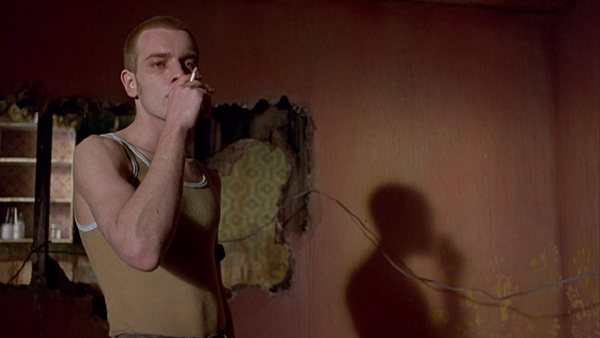
Trainspotting (1996)

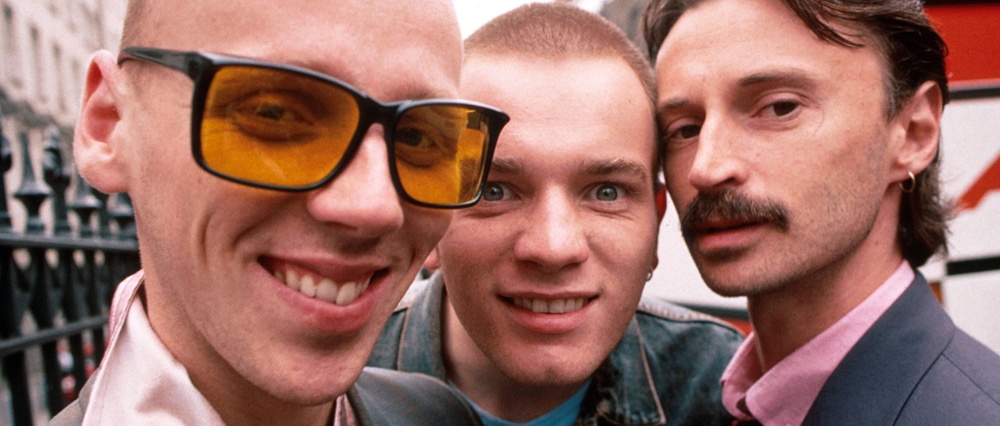
Today’s cinema adventure: Trainspotting, the 1996 breakthrough feature by future Oscar-winning director Danny Boyle, a harrowing portrait of working-class youth embracing the self-destruction of heroin addiction to escape the bleak environment of economically depressed Edinburgh. Combining the most imaginative elements of the theatrical and the cinematic, Boyle’s wildly youthful, energetic filmmaking- utilizing his now-trademark innovative visual style and edgy pop soundtrack choices- makes this highly acclaimed and popular slice of the squalid life into a treat for the eye and ear, an entertaining wild ride through a nightmare world that is ultimately as life-affirming as it is horrifying.  John Hodge’s screenplay, based on a novel by Irvine Welsh (who incidentally appears in a small role), tackles its subject without ever resorting to preachiness, instead presenting the degrading roller-coaster-existence of a drug addict as a progression of events, seen from the inside perspective, which illustrate the way their habit transforms a normal, mundane life into an surreal caricature; influenced by the “kitchen sink” and absurdist theatre styles which dominated the stage and screen dramas of mid-century Britain, Hodges grafts elements of both into an electrically contemporary milieu, undercutting the grim realism of the subject matter with ironic humor and a distinctly modern cynical edge, disarming the audience and allowing us to laugh even as we are being appalled- which gives the tragic moments the even greater impact that comes with surprise.  The young cast is uniformly superb, but the undisputed standout- and rightly so- is Ewan McGregor in his star-making performance as Renton, the central protagonist; his charisma and intensity are so powerful that he remains infinitely loveable- and believable- whether he is philosophically enduring the debasement of his addiction, gleefully pursuing criminal activity to support it, or resolutely dedicating himself to rise above his sordid background.

Listed by the British Film Institute as one of the top ten British films of all time and consistently named as one of the best films of the ’90s, Trainspotting is not for the squeamish or for those uncomfortable with moral ambiguity, and it should be said that the thick Scots dialect can be difficult to penetrate for the first 20 minutes or so; but the rewards of this vibrant, influential movie are well worth the patience and the effort for those who are up to it.  Boyle may have since surpassed his work on this early masterpiece, but for sheer audacity and unabashed youthful bravura, it still stands among the finest films of his career.

http://www.imdb.com/title/tt0117951

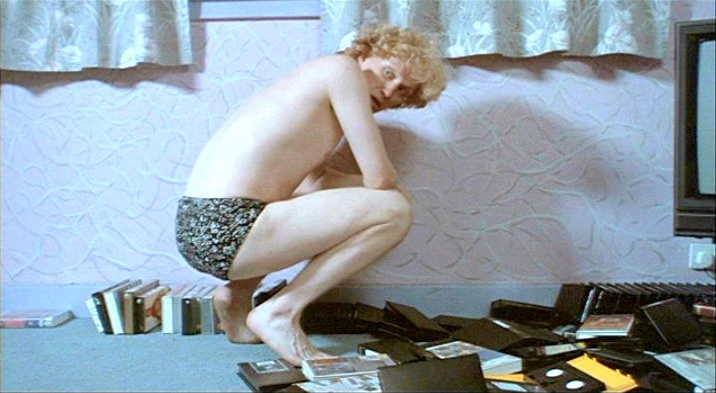
Velvet Goldmine (1998)

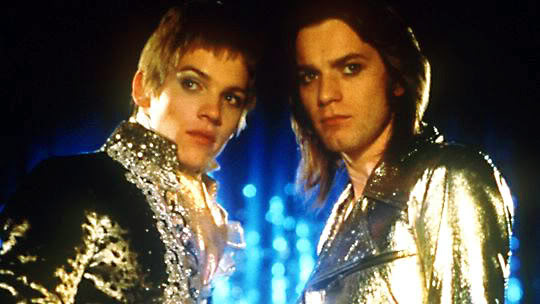
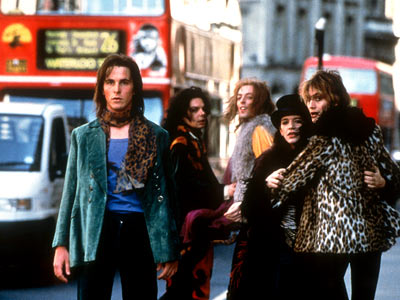
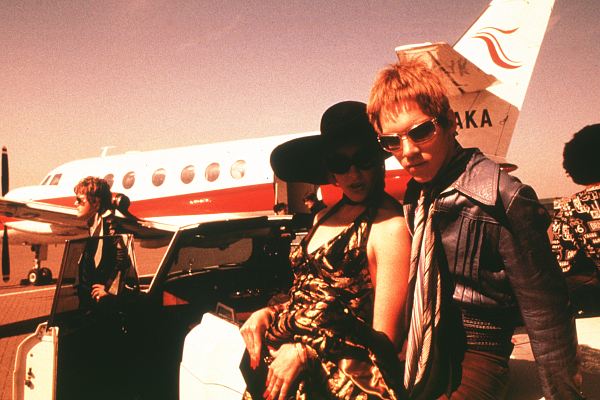
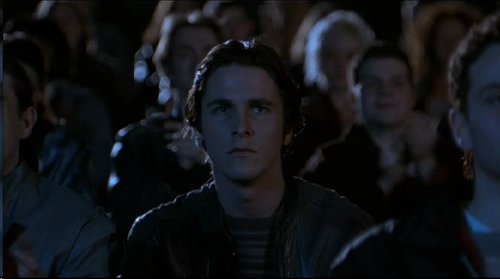
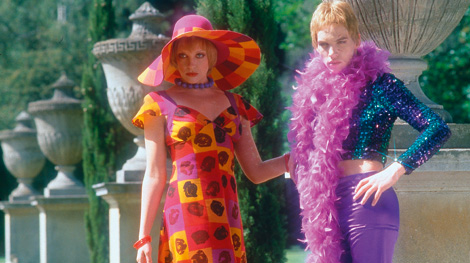
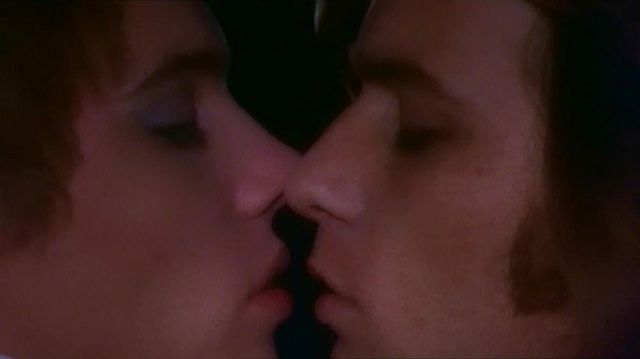
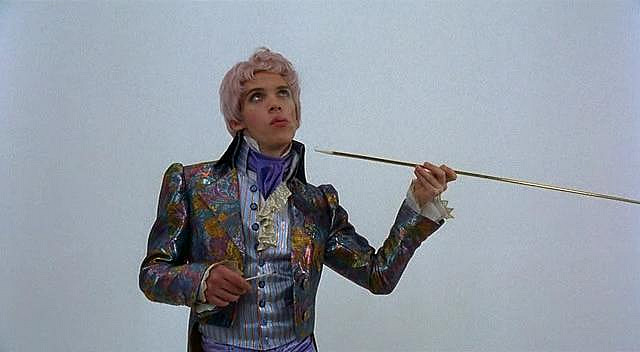
Today’s cinema adventure: Velvet Goldmine, Todd Haynes’ 1998 glam-rock fantasia with sexy, charismatic performances by Jonathan Rhys-Meyers, Ewan McGregor, and Christian Bale, a film that has gained a loyal and substantial cult following despite the poor reception it received upon its initial release. Boldly structured in the mold of Citizen Kane, it follows the attempts of a journalist to piece together the decade-old mystery surrounding a glam-rock superstar who unsuccessfully faked his own assassination before fading into obscurity. Interweaving scenes of the writer’s quest with flashbacks depicting the rise and fall of his enigmatic subject, Haynes’ film plays fast-and-loose (deliberately) with facts and fictionalizes significant real-life figures as it pays tribute to- and laments the fading of- the musical and cultural mini-era on which its focus lies. To this purpose, the film’s designers have crafted a dazzlingly surreal and authentic recreation of the English rock-and-roll scene in the early seventies, reconstructing the peculiar mix of tinsel, trash, and haute couture that defined the look of the period, as well as the darker, grittier eighties of the film’s parallel narrative. In particular, Sandy Powell’s superb costume designs succeed in capturing both the outrageous fashion of the rock-and-roll glitterati and the more subdued flavors worn by their less-glamorous followers and fans. The sparkling package is wrapped in the vivid cinematography of Maryse Alberti, which evokes the authentic photography of the day so completely there are times you swear you are looking at archival footage.

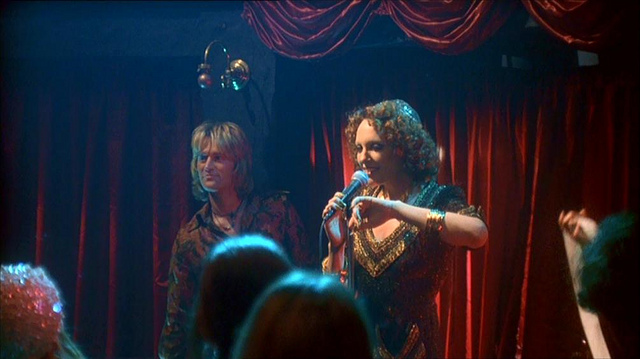
Inhabiting this time capsule world are several superb performers, each in the early stages of their highly successful respective careers. In the key role of Brian Slade is Jonathan Rhys-Meyers, who effectively embodies the ultimate glam rocker, channeling the spirit of David Bowie (on whom the character is heavily based, along with, to a smaller degree, Marc Bolan) and yet investing the performance with his own energy as well- cheeky yet vulnerable, jaded yet naïve, sexually charged yet romantic, he manifests the image of the androgynous bad boy while letting us see into the complex personality beneath it. He is matched by Ewan McGregor (as Slade’s collaborator and lover, Curt Wild- inspired in equal measure by Iggy Pop and Lou Reed), who likewise presents a convincing portrait of an archetypal glam figure- but a distinctly different one, rougher-edged yet ultimately, perhaps, deeper. The two performances complement each other like a dovetail joint, and both men are at their most impressive- and mesmerizing- when they are called upon to perform in the numerous musical sequences, pulling off the full rock star act with exuberant bravado and absolute confidence. In a less showy role- but no less superb- is Christian Bale, playing the journalist and former fan who is haunted by memories of his youthful involvement in the glam culture and of his personal connections to both the iconic stars in the history he is tracing; always a deeply compelling actor, Bale is effective throughout, but he is at his best as the rosy-cheeked youth of the flashbacks, riding the extremes of his adolescent emotions as he tentatively explores his own developing sexual and ideological identity and comes of age in a heady time of seemingly limitless possibilities. Toni Collette is both deliciously tawdry and surprisingly grounded as Slade’s wife Mandy, impressively evolving with the character in an arc that takes her from hippie muse to jaded has-been; and Eddie Izzard is appropriately loathsome as the oily manager who shepherds Slade into the world of rock-and-roll excess.

Despite the considerable strengths described above, however, Velvet Goldmine is not an unqualified success. Haynes is a gifted director, justly acclaimed for his ability to translate complex and esoteric themes into a compelling screen experience, but often criticized for failing to create a cohesive whole; his films often seem more interested in conjuring elemental forces than in using them to work toward a specific purpose. Of course, such a technique allows the audience to form their own personal conclusions; it’s an impressionistic style of filmmaking, and like other impressionistic art forms, it’s not to everyone’s taste. With this effort, his passion for the period and the attitudes it represented is very clear, and he succeeds admirably in approximating the glam milieu and bringing it to the screen. However, the formula he chooses to do so creates some problematic issues: the investigative drama which drives the plot seems a brilliant device for exploring this seminal period in contemporary pop culture, allowing him to explore the what made it such an appealing time for those who embraced its spirit and why its memory and influence linger today; however, the brooding, mournful tone of the mystery- as well as the deeply personal importance placed on discovering the answers by the film’s protagonist- suggest a weighty significance at the core of the nostalgic proceedings that somehow feels misplaced. To be sure, Haynes is presenting a document of a time in which a generation overflowed with the excitement of changing attitudes and the promise of freer personal expression, a time which was to morph all too soon into a glitzy, self-centered era in which shallow, self-destructive excess would take a heavy toll; the collective loss of innocence resulting from this social odyssey certainly spawned the kind of emotional wounds reflected by the characters in Velvet Goldmine, and the healing power of reconnecting with these cultural roots, of rediscovering the spirit that generated the whole process in the first place, is clearly a major part of the film’s intended effect. In these terms, Brian Slade provides the perfect metaphor: hungry for the freedom to be himself, whoever that may turn out to be, he soars into a fantasy world made real- only to eventually succumb to the lure of nihilistic hedonism, transforming his existence into an unsustainable nightmare from which he must eventually choose to escape or die. However, Slade is not an Everyman, not even a glorified one like Charles Foster Kane, and his experiences, though they may resemble a magnified version of those shared by many who participated in the glam sub-culture and the disco era which followed, ultimately seem more the consequence of individual character makeup than a reflection of some greater social phenomenon. More germane to the group experience, perhaps, is Bale’s journalist, burned by the broken promise of his youth and seeking a way to come to terms with the deep longings left unfulfilled; but the plot on which his redemption hinges, the conceit of uncovering the secrets of a former pop icon’s decline and fall, ultimately feels forced. After all, there is no mystery to be solved- the story to be told is so common as to be predictable- and in the end, there are no real answers to be found there, only an implausible plot twist and a phantom wound that will never stop itching. To make a resolution even less palpable, Haynes’ screenplay (from a story written by himself and James Lyons) wraps the plot about a man exploring an enigma in another, larger enigma: invoking the spirits of Oscar Wilde and Jean Genet, he introduces a mysterious, possibly extra-terrestrial gem which secretly links the characters and their histories to a long procession of pop superstars, suggesting that the cycle of fame is some sort of mystical cosmic reflex which affects our social evolution, and even hinting at the deliberate manipulation of our pop culture by an unseen and arcane outside force. Another apt metaphor, and an interesting proposition- one which seems borrowed from the handbook of glam-era theatricality as represented by such flights of fancy as Bowie’s Ziggy Stardust persona, a source of much inspiration to the events portrayed in the film- but in this case, perhaps, a needless complication in an already over-complicated mix.

Speaking of Ziggy Stardust, it seems necessary to also remark that the heavy fictionalization of the figures represented- which amounts to the creation of a sort of alternate glam universe- has been a point of considerable controversy surrounding Velvet Goldmine. Taking well-known real-life icons and re-inventing them for dramatic purposes is an acceptable tactic that goes back, no doubt, to the very beginning of story-telling; however, Haynes has here blended real events so completely into the soup that the result could be very confusing to those unfamiliar with the true history of those involved. Though Brian Slade is not David Bowie, he certainly feels like it; indeed, Bowie himself, initially involved in the project, pulled his support and the rights to use his songs after discovering that the script incorporated elements from unauthorized biographies by his former wife and others. To make matters even more confusing, mixed in with the original musical selections composed for the film are older songs by such glam-era artists as Roxy Music, T. Rex, and the New York Dolls, among others, performed by the fictional singers as if they were themselves the originators. Though I’m not one to quibble about adherence to historical accuracy- after all, my favorite movie is Lawrence of Arabia, and my love for Shakespeare is in no way affected by his fondness for rewriting history to suit his needs- in this case it seems appropriate to suggest that, before making any assumptions based on the recognizability of the figures on display in Velvet Goldmine, it would be wise to do some research and decipher who these characters really are (or, rather, really aren’t).

Nevertheless, Haynes’ film provides many pleasures: the aforementioned musical sequences, mounted with a gaudy theatrical flair that captures the glitter-rock essence to a tee, are the film’s best scenes, nostalgic yet freshly minted; and there are moments throughout that reach through the layers of conceit to grab at your heart-strings, electrifying touchstones that instantly transport you to the memory of some shared, universal experience- the yearning, impossible ache of a teen-aged Bale staring at homoerotic photos of his idols; the sharp humiliation of Collette’s Mandy Slade as she confronts her husband in the midst of his dehumanized, drugs-and-sex-saturated oblivion; the explosive, adrenaline-fueled vitality of McGregor’s first stage performance as Wild (in which, incidentally, he strips naked for his adoring audience). All in all, the exponential popularity of Velvet Goldmine is not surprising, nor is it undeserved: though it may leave us unsatisfied on some nameless level, and though it sometimes feels as though it takes itself far too seriously, its youthful exuberance and its visual perfection go a long way towards making up for its shortcomings; and even if it ultimately leads us to prefer and embrace the real-world history which it distorts for its desired effect, it seems fitting and desirable to find satisfaction in that which is real rather than in a glittery fantasy- and that, come to think of it, is perhaps the true message of Velvet Goldmine.


http://www.imdb.com/title/tt0120879/

The Great Train Robbery (UK Title: The First Great Train Robbery) (1979)

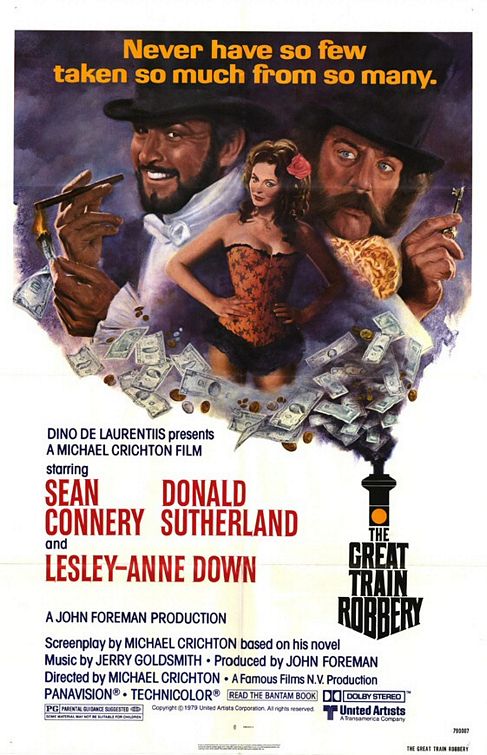
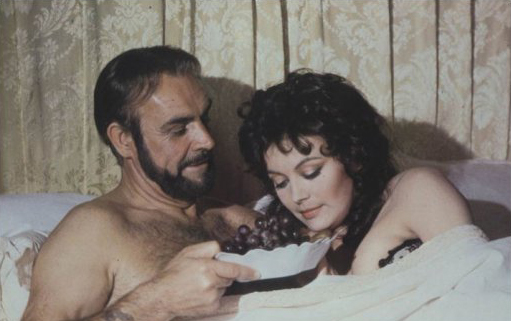
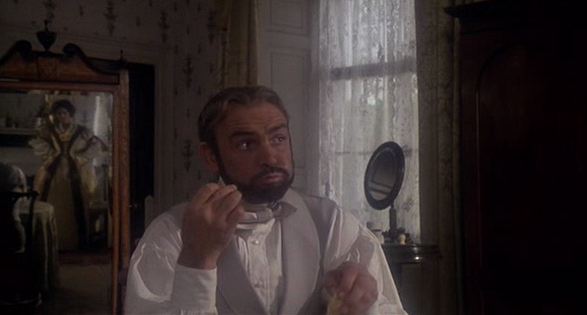
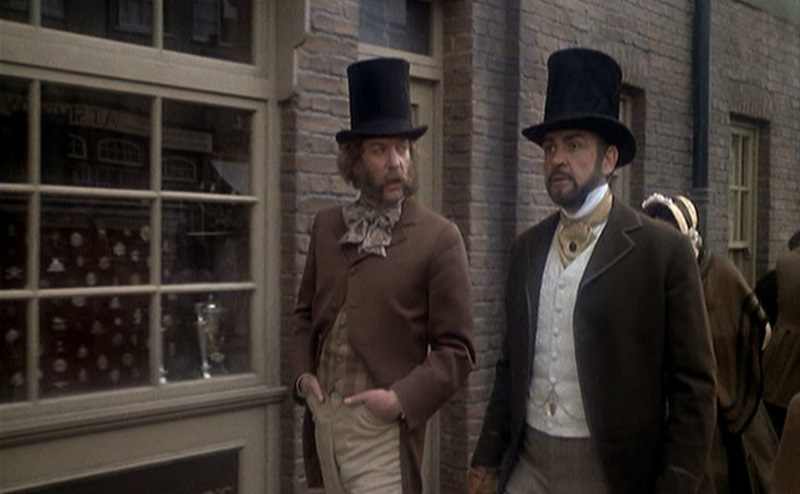
Today’s cinema adventure: The Great Train Robbery, a 1979 period caper comedy directed and written by Michael Crichton, based on his own book, which in turn was based on the real-life 1855 theft of gold bars meant as pay for the English soldiers of the Crimean War- the first robbery ever to take place aboard a moving train.  Painstakingly accurate in period detail, expertly played with just the right blend of devilish humor and edgy thrills, it features sparkling chemistry between its three stars (Sean Connery, Donald Sutherland and Lesley-Anne Down), a clever depiction of the intricate and crafty plot, a rousing score by ace film composer Jerry Goldsmith, and a magnificent climactic sequence featuring Connery (doing his own stunt work) navigating his way across the roof of the train as it speeds through the idyllic English countryside.

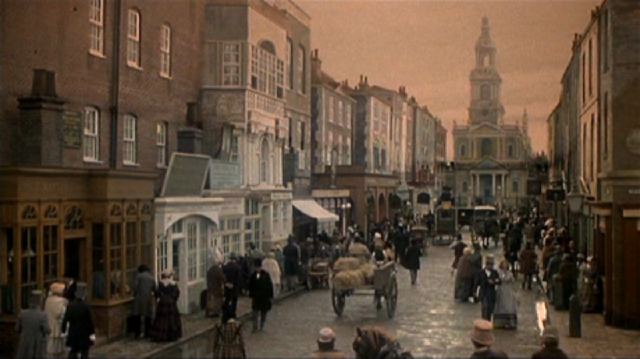
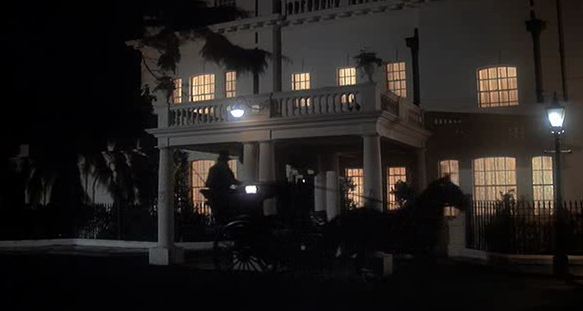
Crichton’s original novel, which took the facts of the real-life heist and transformed them into a fictional narrative by using pseudonyms, composite characters, and clever re-imagining of the details, became a best-seller in 1975 and seemed tailor-made from the outset for translation onto the screen, particularly in the wake of such successful genre entries as The Sting and Murder on the Orient Express; and while an author’s helming the adaptation of his own work might seem ill-advised, at best, in this case the choice was right on target.  Crichton was a jack-of-all-trades if ever there was one, and his understanding of the film medium here resulted in a crowd-pleasing piece of cinematic candy that sparkles with contemporary style even as it maintains its commitment to the demands of its Victorian setting.  For, though the historical accuracy of the events depicted may be tenuous, attention to period detail is rigorously observed.  Crichton paints a vivid picture of the Industrial Age, not only with the meticulous detail of the sets and costumes, but with his emphasis on the dehumanizing conditions, the corruption and inequity of the social order, and the contrast between extreme poverty and ostentatious wealth.  Not that The Great Train Robbery is a film devoted to deep meaning or social commentary; these elements are present to fuel a decidedly modern anti-establishment undercurrent and elicit audience sympathy for the roguish trio of anti-heroes, despite their unabashedly selfish motivations and their ruthless tactics, by casting them in the mold of populist outlaws- a sort of Victorian Bonnie and Clyde, plus one.  This perceptual conceit is part of what makes the film so much fun; we can be firmly on the side of these wrongdoers as we watch them execute their audacious scheme, and Crichton ensures our continued interest by doling out the details of that scheme in small pieces- we are given just enough insider information to know what is going on without being deprived of the thrill and surprises that come from seeing it carried out.

It helps that The Great Train Robbery is beautifully photographed by the legendary cinematographer Geoffrey Unsworth- one of the last films to claim that honor, it is dedicated to his memory- and that the aforementioned set and costume designs (by Bert Davey and Anthony Mendleson, respectively, in collaboration with Production Designer Maurice Carter) are sumptuously executed; each of these artists play an indispensable role in realizing the elaborately recreated 19th Century London in which the bulk of the film’s action plays out.  The previously noted Goldsmith score is effective throughout for setting the mood and tone; but when the setting finally opens up, for the climax, into the countryside, his music makes its most magnificent contribution, adding to the giddy feeling of freedom conjured by the wide open locale, and to the breathless excitement of watching as the final stages of the robbery take place- and as Connery makes his death-defying journey along the length of the moving train.  It’s a payoff almost as satisfying as the one enjoyed by the film’s characters.

The Great Train Robbery is not a profound movie, nor a deeply layered one; it is hardly one of those sublime masterpieces which holds up to repeated viewings throughout a lifetime, and yet when I watched it again recently after having not seen it for a number of years (more than I’m willing to admit to), I was thoroughly delighted to find that it was at least as enjoyable as when I saw it as an impressionable lad, sitting in a darkened theatre and wanting to grow up to be Sean Connery.  Often when a movie strives only to entertain, it falls short by trying too hard, or aiming too low, or- worst of all- trying to pretend it has a weightier agenda than it really does: The Great Train Robbery suffers from none of these shortfalls.  It sets out only to deliver a thrilling ride and it succeeds at exactly that- which is more than can be said of most of the overachieving would-be crowd-pleasers being offered up by filmmakers today.  Of course, they don’t have the benefit of Sean Connery…

http://www.imdb.com/title/tt0079240/

An Englishman in New York (2009)

;

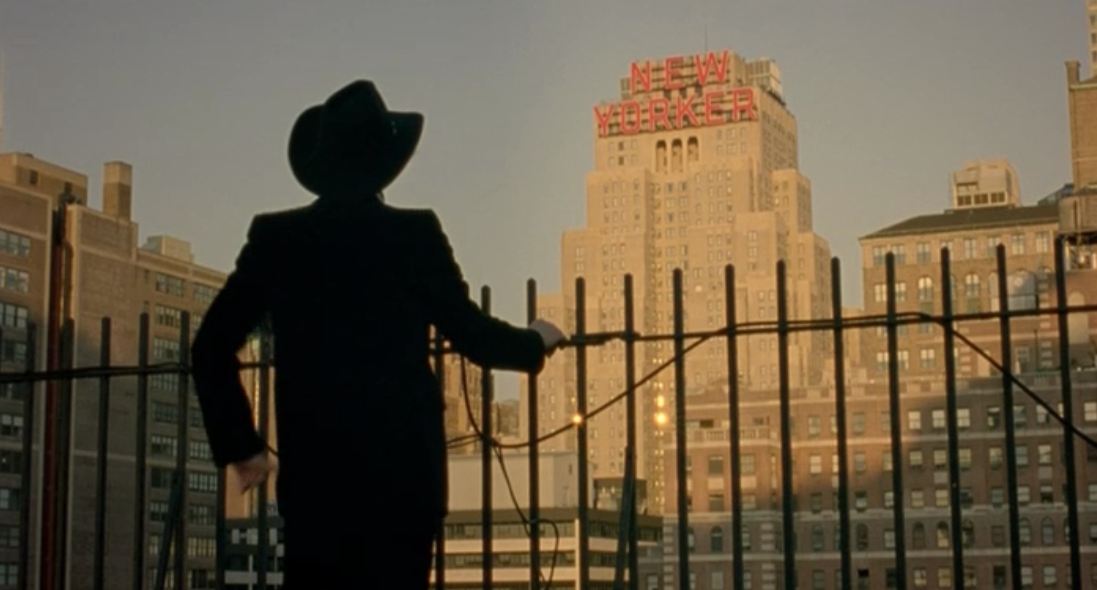
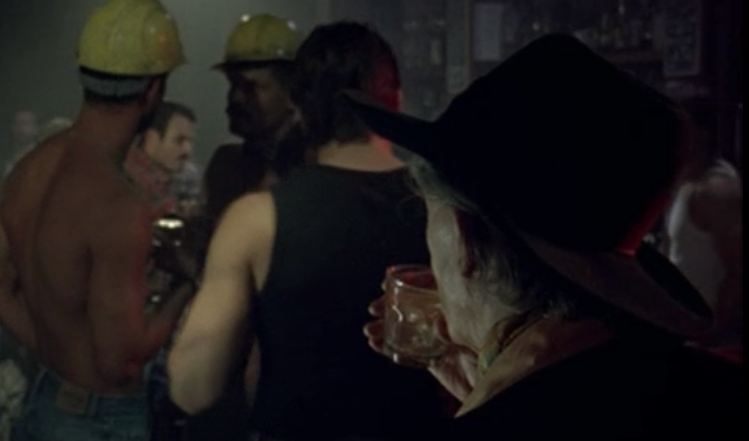
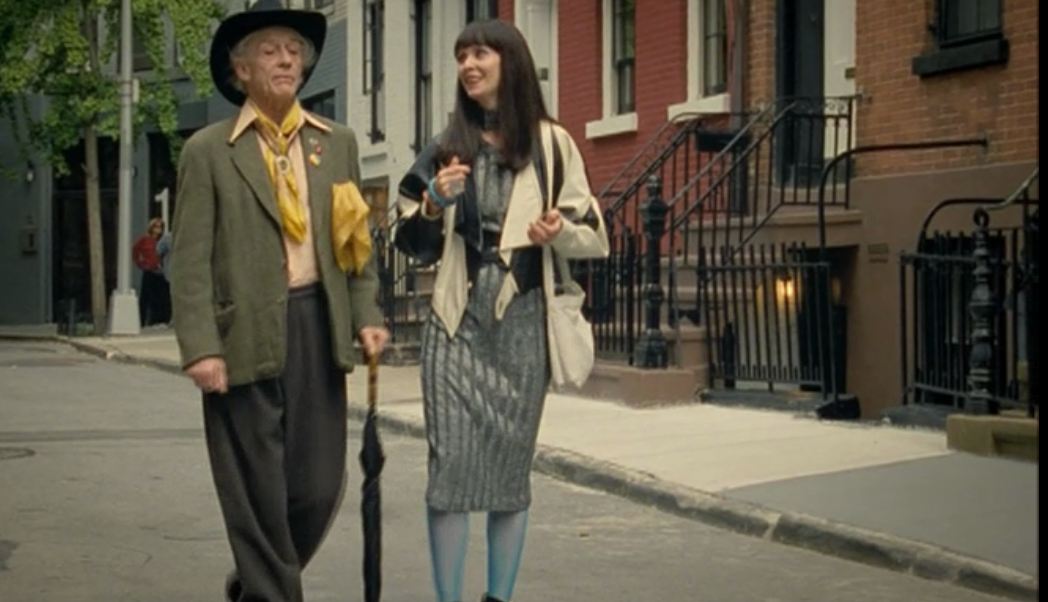
Today’s cinema adventure: An Englishman in New York, the 2009 British telefilm which marked the return of John Hurt to the role of noted real-life author/performer/raconteur/gay icon Quentin Crisp. A follow-up to the acclaimed1975 telefilm based on Crisp’s landmark memoir, The Naked Civil Servant, which made Hurt into a star and won him a BAFTA for Best Actor, this modest biopic covers the later years of the famous eccentric’s life, when he became a celebrated resident of Manhattan and a polarizing figure in the continuing struggle for gay rights. While Hurt maintains his customary brilliance in revisiting and expanding his legendary performance, this outing lacks the strong, central drive of the original film, which had the benefit of focusing on Crisp’s early struggle and triumph in asserting his homosexuality and his individuality in the repressive England of early 20th century. Part of the reason is likely that the first outing was built upon the solid ground of Crisp’s superb book, which portrayed his early life and experiences as a personal journey culminating in his courtroom victory blow against the antiquated morality laws which kept most English homosexuals fearfully cringing in the closet; but here, writer Brian Fillis attempts to encapsulate the remarkable life which followed those events into a 90 minute whirlwind, consolidating characters and contriving scenes in order to address key issues and events. To be sure, he has a cohesive purpose- the main focus here is Crisp’s fiercely guarded individuality, which put him at odds with the ongoing gay rights movement and often made him the object of exclusion within his own community (particularly after an infamous remark that AIDS was “a fad”)- and he does an admirable job of creating a portrait of a man who is forced into continuing growth in spite of himself; but the end result is considerably less satisfying than Civil Servant and leaves us wondering about many of the blank spots in between. Nevertheless, there are many reasons to admire this belated sequel, not the least of which is the rich background of late-century New York scenery lending an authentic documentary feel to the proceedings. By far, however, the greatest joy here is the magnificent performance of John Hurt, who once again captures to perfection the physical and vocal character of this legendary figure while simultaneously conveying the depth of emotion and experience which lies beneath that flamboyant exterior; in Hurt’s hands, the affectations of dress and manner become (as they were in real life) an expression of Crisp’s true self rather than a costume proclaiming his refusal to conform. Nevertheless, in spite of the more obvious success of his characterization, it is in the more intimate moments when Hurt’s brilliance as an actor really shines through- his weathered face and soulful eyes wordlessly express volumes, whether he is confronting the thoughtless prejudice of younger gay men or his own mortality. Supporting him are an array of established character actors- Dennis O’Hare, Swoosie Kurtz, Cynthia Nixon- who are never quite allowed to rise above the constraints of the condensed format, although Jonathan Tucker has some nice moments as artist Patrick Angus, whose work was championed into success by Crisp. Overall, though its hard to call An Englishman in New York a worthy successor to the still-lauded Civil Servant, it offers many rewards in its own right; and though it may ultimately contain less insight into Quentin Crisp than the Sting-penned song from which it takes its title, it is still a fitting and necessary epilogue to the story of a man who changed the world by refusing to change himself.

;

http://www.imdb.com/title/tt0997057/

;

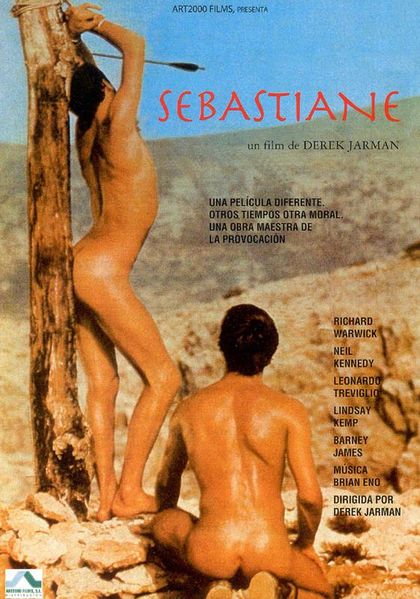
Sebastiane (1976) [Warning: some images may be NSFW]

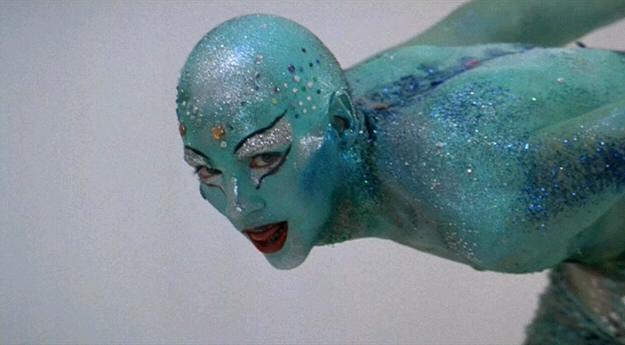
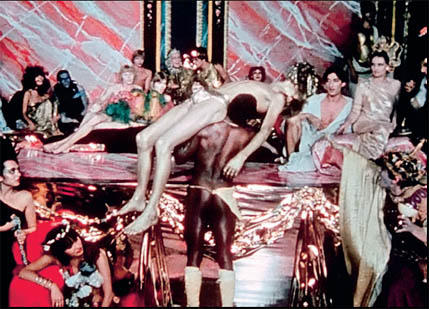
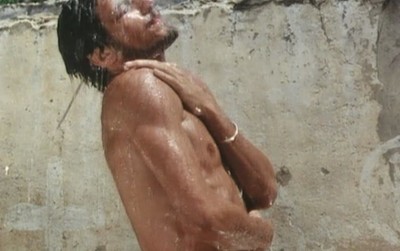
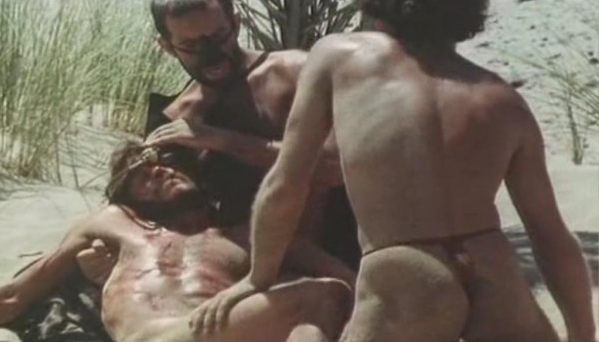
Today’s cinema adventure: Derek Jarman’s 1976 debut feature, Sebastiane, a fictionalized vision of the martyrdom of St. Sebastian, presented less as a meditation on spiritual themes than as a homoerotic fantasy in which the soldier Sebastianus, after falling from favor with the Roman Emperor Diocletian, is exiled to a remote oupost in the wilderness, where his refusal to yield to his commanding officer’s obsessive lust eventually leads to his ritual execution by arrows.  A work that is historically significant not only for being the first film produced in authentic Latin (and as such, the first British-made movie to be shown in England with subtitles), but- more importantly- for the prologue featuring an erotic dance by legendary glam-era performance artist Lindsay Kemp and his Troupe, and its inclusion of an early score by electronic music pioneer Brian Eno, Sebastiane was never anybody’s idea of a mainstream film, not even its creator’s.  Like most of Jarman’s films, it’s not big on story, but despite its shoestring budget, it is lovingly and beautifully shot, each frame artfully crafted so that the final result resembles a Renaissance painting in motion. The extensive nudity (all male, of course) was explained by Jarman as being because they “couldn’t afford costumes” (sure, Derek, sure… we believe you), and needless to say the film was highly controversial at the time of release; but although many viewers may fixate on what often seems like gratuitous nudity and sexual content, Jarman is not merely concerned with exploiting or even celebrating the male form; he has much to say about the issue of homosexual shame.  On the surface, the film would seem to comply with the traditional Catholic assertion that homosexual behavior is a sin to be forsworn, and that Sebastianus’ fate is to be sacrificed to that ideal, destroyed by unrepentant sinners for his refusal to debase himself- a decidedly conflicting message, when one considers the fact that the film is heavily laden with imagery clearly intended to elicit homosexual fantasies.  Certainly these themes of religiously-fueled guilt are in play within Sebastiane, and Jarman undoubtedly wrapped some of his own spiritual struggles into his film; but like most art, the true nature of the themes expressed lies beneath the obvious details.  Sebastianus’ rejection is of the flesh itself, regardless of sexual orientation: it is his devotion to a life of the spirit that makes him an outcast and a martyr, and it is the jealousy and pride of those who fail to understand him that leads to his death; in the end, sexuality is irrelevant here, and Jarman’s true indictment is against the base and brutal tendencies of stereotypical masculinity, the hypocrisy of judgement and violence against those who do not conform to the status quo, and the arrogance of those who choose to subvert their own spirituality to their egotistical desires and insecurities.  In short, the film is more about homophobia than homosexuality, and its abundance of homoerotic imagery is as much to incite as to excite.  Of course, that same imagery is sufficient to ensure that the majority of religious bigots will never see this film, so in a way, Sebastiane is a prime example of an artist “preaching to the choir;” and, truthfully, the copious amount of it ultimately displaces Jarman’s higher purpose, so that his inaugural cinematic excursion ends up being more stimulating on a decidedly lower level.  My own reaction: it’s a very pretty movie to look at, and probably one of the most erotic ones I have seen (much more so than porn, actually); but at times I couldn’t help being reminded of those soft-core late-night “Skinemax” flicks I would sometimes catch my Dad watching at 3 in the morning… slow motion photography of someone taking a shower, with the frame cropped in just the right place to keep it from being obscene, that sort of thing, except instead of beautiful women, here it was beautiful men.  I can’t say I had any complaints, but I was ready for it to be over about 30 minutes before it actually was.  It might have helped if the actors (Leonardo Treviglio as Sebastianus, supported by Barney James, Neil Kennedy, and Richard Warwick, among others- none of whom had significant careers afterward) had delivered performances that were as beautiful as their bodies… but I guess we can’t have everything.

http://www.imdb.com/title/tt0075177/