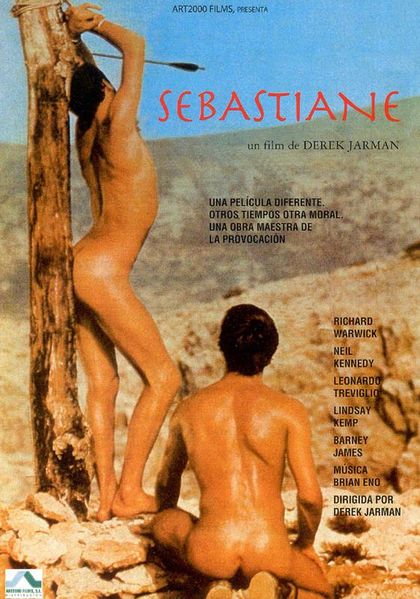
Sebastiane (1976) [Warning: some images may be NSFW]

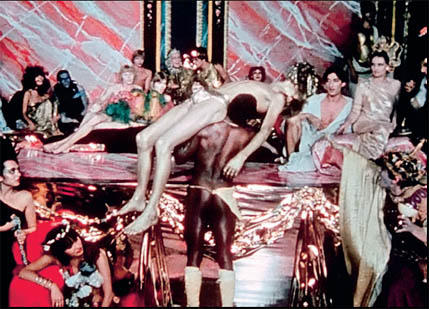
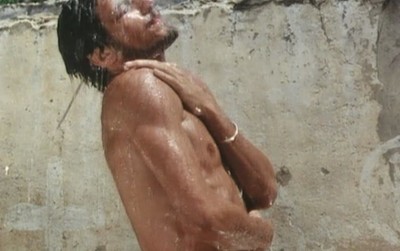
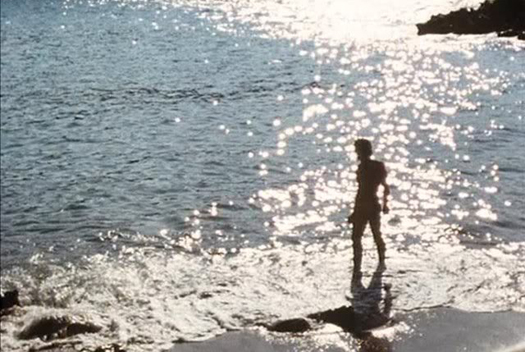
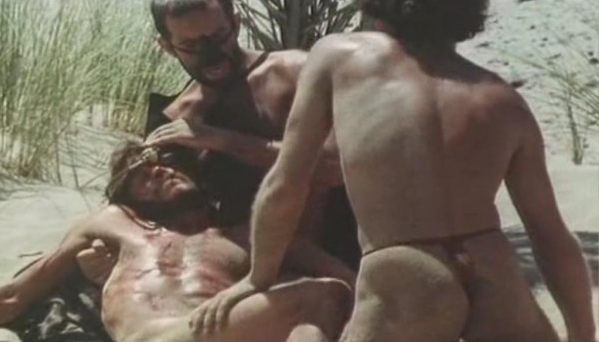
Today’s cinema adventure: Derek Jarman’s 1976 debut feature, Sebastiane, a fictionalized vision of the martyrdom of St. Sebastian, presented less as a meditation on spiritual themes than as a homoerotic fantasy in which the soldier Sebastianus, after falling from favor with the Roman Emperor Diocletian, is exiled to a remote oupost in the wilderness, where his refusal to yield to his commanding officer’s obsessive lust eventually leads to his ritual execution by arrows.  A work that is historically significant not only for being the first film produced in authentic Latin (and as such, the first British-made movie to be shown in England with subtitles), but- more importantly- for the prologue featuring an erotic dance by legendary glam-era performance artist Lindsay Kemp and his Troupe, and its inclusion of an early score by electronic music pioneer Brian Eno, Sebastiane was never anybody’s idea of a mainstream film, not even its creator’s.  Like most of Jarman’s films, it’s not big on story, but despite its shoestring budget, it is lovingly and beautifully shot, each frame artfully crafted so that the final result resembles a Renaissance painting in motion. The extensive nudity (all male, of course) was explained by Jarman as being because they “couldn’t afford costumes” (sure, Derek, sure… we believe you), and needless to say the film was highly controversial at the time of release; but although many viewers may fixate on what often seems like gratuitous nudity and sexual content, Jarman is not merely concerned with exploiting or even celebrating the male form; he has much to say about the issue of homosexual shame.  On the surface, the film would seem to comply with the traditional Catholic assertion that homosexual behavior is a sin to be forsworn, and that Sebastianus’ fate is to be sacrificed to that ideal, destroyed by unrepentant sinners for his refusal to debase himself- a decidedly conflicting message, when one considers the fact that the film is heavily laden with imagery clearly intended to elicit homosexual fantasies.  Certainly these themes of religiously-fueled guilt are in play within Sebastiane, and Jarman undoubtedly wrapped some of his own spiritual struggles into his film; but like most art, the true nature of the themes expressed lies beneath the obvious details.  Sebastianus’ rejection is of the flesh itself, regardless of sexual orientation: it is his devotion to a life of the spirit that makes him an outcast and a martyr, and it is the jealousy and pride of those who fail to understand him that leads to his death; in the end, sexuality is irrelevant here, and Jarman’s true indictment is against the base and brutal tendencies of stereotypical masculinity, the hypocrisy of judgement and violence against those who do not conform to the status quo, and the arrogance of those who choose to subvert their own spirituality to their egotistical desires and insecurities.  In short, the film is more about homophobia than homosexuality, and its abundance of homoerotic imagery is as much to incite as to excite.  Of course, that same imagery is sufficient to ensure that the majority of religious bigots will never see this film, so in a way, Sebastiane is a prime example of an artist “preaching to the choir;” and, truthfully, the copious amount of it ultimately displaces Jarman’s higher purpose, so that his inaugural cinematic excursion ends up being more stimulating on a decidedly lower level.  My own reaction: it’s a very pretty movie to look at, and probably one of the most erotic ones I have seen (much more so than porn, actually); but at times I couldn’t help being reminded of those soft-core late-night “Skinemax” flicks I would sometimes catch my Dad watching at 3 in the morning… slow motion photography of someone taking a shower, with the frame cropped in just the right place to keep it from being obscene, that sort of thing, except instead of beautiful women, here it was beautiful men.  I can’t say I had any complaints, but I was ready for it to be over about 30 minutes before it actually was.  It might have helped if the actors (Leonardo Treviglio as Sebastianus, supported by Barney James, Neil Kennedy, and Richard Warwick, among others- none of whom had significant careers afterward) had delivered performances that were as beautiful as their bodies… but I guess we can’t have everything.

http://www.imdb.com/title/tt0075177/

Paris, Texas (1984)

Image

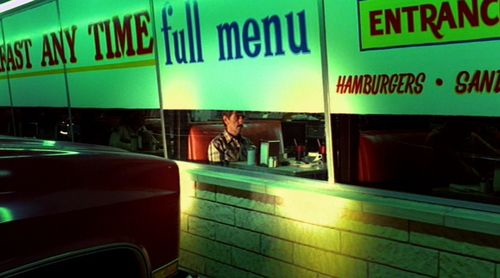
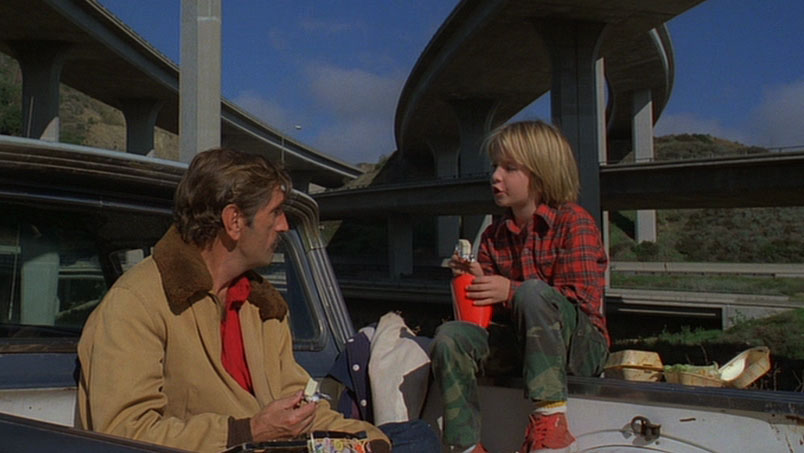
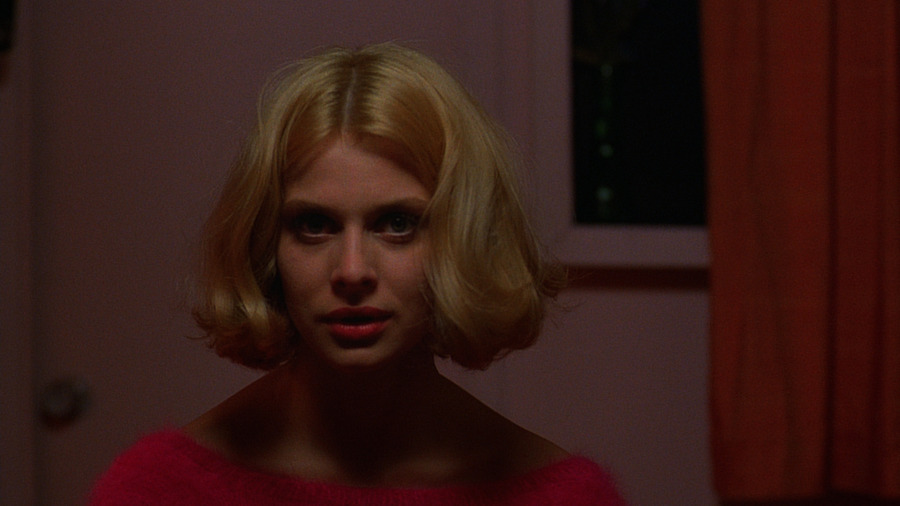
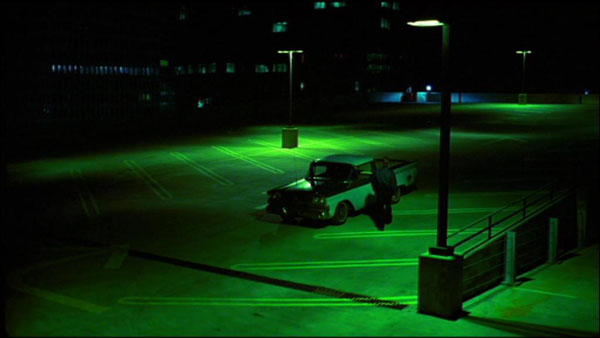
Today’s cinema adventure: Paris, Texas, director Wim Wenders’ elegiac drama that swept the 1984 Cannes Film Festival and has consistently remained on most critics’ “Best of” lists ever since.  Adapted by L.M. Kit Carson from a screenplay by esteemed playwright Sam Shepard, it tells the story of Travis, a middle-aged man who walks out of the Texas desert after disappearing for four years and, after reuniting with his brother’s family, slowly begins the effort of restoring his shattered life.  Through this simple synopsis, Wenders executes a masterful, character-driven exploration of subjects, allowing the mystery of Travis’ past to unfold through the players’ interactions and reminiscences as they take awkward steps to move towards an uncertain future- and using the microcosmic drama to stir powerfully resonant themes and conjure deep, universal emotions.  A collection of superb performances makes it all work beautifully, from veteran character actor Dean Stockwell as Travis’ well-meaning brother to newcomer Hunter Carson (son of the film’s screenwriter Carson and actress Karen Black) as the child rebuilding a relationship with a father he doesn’t remember; Nastassja Kinski, whose star turn doesn’t come until late in the film, beautifully captures the emotional fragility of a woman confronted with a past she has tried to forget (though I can’t help nit-picking that her German accent sometimes distorts an otherwise acceptable Texas drawl).  It is, however, the remarkable presence of Harry Dean Stanton, as Travis, upon which the film hangs: from the opening moments when he purposefully stumbles out of the blasted Texas landscape, he is utterly compelling, allowing his droopy, hang-dog features and his simple, unaffected delivery to express a dazzlingly complex spectrum of emotions.  It is a performance which few actors could accomplish, and the fact that it was not even nominated for an Oscar is one of those glaring omissions that makes the entire idea of Hollywood awards seem suspect and vaguely ridiculous.  Beyond the cerebral and emotional riches provided by Paris, Texas, it delivers a visual beauty thanks to the stunning cinematography of longtime Wenders collaborator Robby Müller, which captures a remarkable array of iconic American backdrops- the dusty vastness of the southwestern desert, the scenic experiences of the endless cross-country highway, the bland familiarity of suburbia, and the contrasting elegance and squalor of the big city- giving this jointly-French-and-German-produced film a distinctly American flavor rarely captured by domestic cinema.  Despite these lavish praises, this movie is probably not for everyone: viewers with a short attention span may find the leisurely pace a bit grueling (particularly in the climactic sequence, which is comprised mostly of long, lamenting monologues performed in a claustrophobic setting), and those who seek a clear-cut, definitive resolution from their entertainment may be left unsatisfied by the mixed emotions which cascade around its ambiguous conclusion.  Nevertheless, it is hard to imagine a more exemplary piece of filmmaking than Paris, Texas, and it is easy to see why it became one of the most influential and revered pieces of cinema to come out of the eighties.

http://www.imdb.com/title/tt0087884/

We Need to Talk About Kevin (2011)

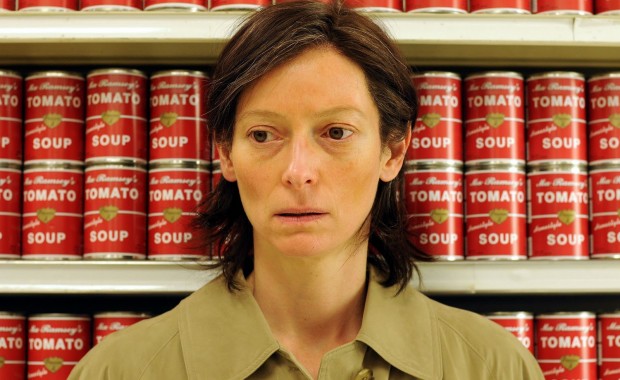
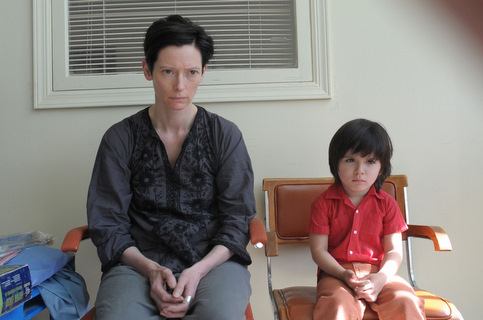
Today’s cinema adventure: We Need to Talk About Kevin, the disturbing and controversial 2011 feature based on Lionel Shriver’s award-winning 2003 novel of the same name.  Tilda Swinton stars as Eva, a woman haunted by memories and repercussions as she attempts to come to terms with the horrific acts committed by her teenaged son.  As directed by BAFTA-winner Lynne Ramsay, the film draws us in from its very first moments with arresting visuals and an enigmatic soundscape, unfolding its nightmarish story through a non-sequential progression of scenes and images that gradually piece together like the shattered fragments of Eva’s life. It’s riveting stuff: Ramsay (who also co-wrote the screenplay with husband Rory Kinnear) keeps us engaged and unsettled throughout, saturating us with stylish imagery marked by an ingenious use of color (with a decided emphasis on red, maintaining an ever-present suggestion of blood), layering in just enough foreshadowing and clues to conjure a growing sense of dread over the inevitable conclusion, infusing each scene with an atmosphere of resigned melancholy and foreboding, and dominating the proceedings with an uneasy silence which is only broken by spare, terse dialogue that shocks and pierces as much as it informs.  As we observe Eva’s disjointed recollections and her nightmarishly surreal day-to-day life, we find ourselves drawn into her psyche; forced to face the uncomfortable- and unanswerable- questions raised about the culpability of a parent in the wrongs committed by their offspring; and in the end, the biggest question may be how to find a resolution, a sense of closure which can permit the lives of those left standing to go on-  and if, indeed, such a thing is even possible.  With all these psychological themes in play, one might be tempted to consider We Need to Talk About Kevin to be a complex drama, but make no mistake about it: this is unquestionably a horror film, the kind of nightmarish thriller that is rarely made these days.  It follows no pre-molded formula, and there are none of the expected clichés of the genre: no sudden shocks, no scantily-clad female victims screaming as they flee through the dark night, no oceans of gore (for all the red flowing across our eyes, there is very little blood or violence onscreen, with Ramsay opting instead to paint the horrible pictures in our imagination where they are infinitely more disturbing).  This is not some schlocky shocker designed for a teenagers’ date night, but rather, like other great adult horror films of the past such as The Exorcist or Rosemary’s Baby, it is an exploration of evil in our lives, of how it manifests and what might be its causes; but unlike the aforementioned classics, there is no suggestion here of supernatural forces- the responsibility is placed squarely on human shoulders, with implications that are far more chilling than the presence of any demonic scapegoat.  It would be easy, in the wrong hands, for Kevin to veer off into the realm of exploitative trash; but not only is Ramsay well-equipped for the task, she has the considerable benefit of Tilda Swinton in the central role.  Swinton has proven many times that she is one of the most electrifying screen performers working today, and here she solidifies that reputation with a stunning, solid portrayal of a woman for whom the joy of motherhood has been inverted into a nightmare.  With a minimum of dialogue, she conveys Eva’s harrowing journey with masterfully subtle changes in her continuous expression of dull shock, bringing home the frustration, the terror, and the loneliness created by the growing comprehension that her child is a monster and she alone can see it.  It’s a tour-de-force performance, and its failure to receive an Academy Award nomination for Best Actress- particularly when it was recognized by virtually every other major awards organization- was surely one of the great injustices of Oscar history.  Supporting Swinton’s magnificence is John C. Reilly, likeable but obtuse as Eva’s husband, a man whose doting denial helps to enable the ever-escalating sociopathy of their son and drives an immovable wedge into their marriage; and a shining turn by Ezra Miller as the title character, who skillfully avoids the temptation of playing for sympathy- this is no misunderstood, angst-ridden adolescent, but a young cobra smugly and gleefully coiling up for a fatal strike.  Mention is also deserved for Jasper Newell, as the six-to-eight year-old Kevin, who eerily projects a malicious menace beyond his years, somehow making the younger incarnation even more frightening than his future self.  In addition to the stellar cast, Ramsay is aided in her vision by superb work from her technical collaborators: an eerie and atmospheric score by Johnny Greenwood (of Radiohead) meshes seamlessly with the carefully orchestrated sound design by Paul Davies; the cinematography by Seamus McGarvey provides some of the most vividly realized images in recent film memory, into which the simple-yet-striking costume design of Catherine George is brilliantly coordinated; and the editing by Joe Bini is a masterpiece of visual juggling, managing to maintain a steady flow throughout a narrative which freely jumps forward and back to multiple periods in time.  It is a shame- but not a surprise- that We Need to Talk About Kevin has yet to recoup the $7 million that was spent to make it; you can chalk it up as yet another sign that the contemporary film market is driven by an increasingly less sophisticated mindset, but this would be a difficult film to sell in any era, really.  It is a psychological thriller that dares to address deeply disturbing issues which most of us would prefer to keep out of sight and out of mind, and watching it is a grim and unrelenting experience which may leave you disturbed for days afterward.  If that sounds as good to you as it does to me, We Need to Talk About Kevin is a film you must not miss.

http://www.imdb.com/title/tt1242460/

Woman in the Dunes/Suna no onna (1964)

Image

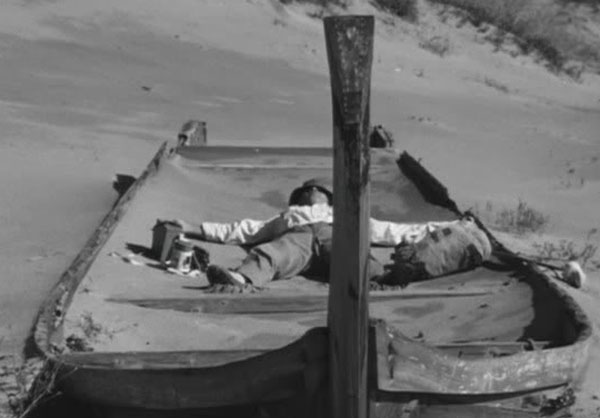
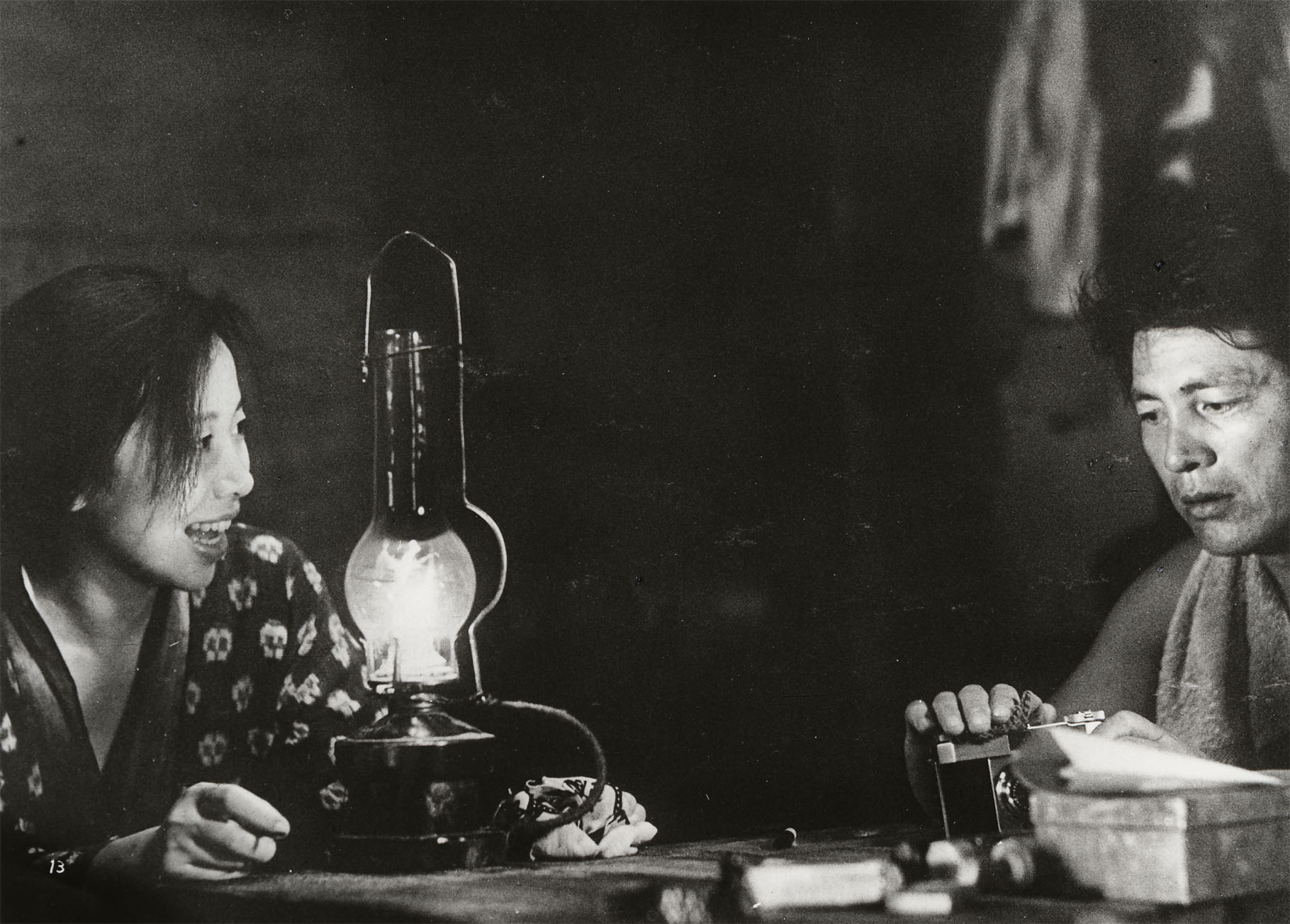
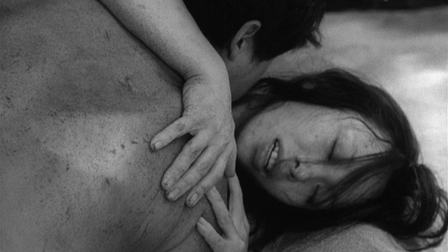
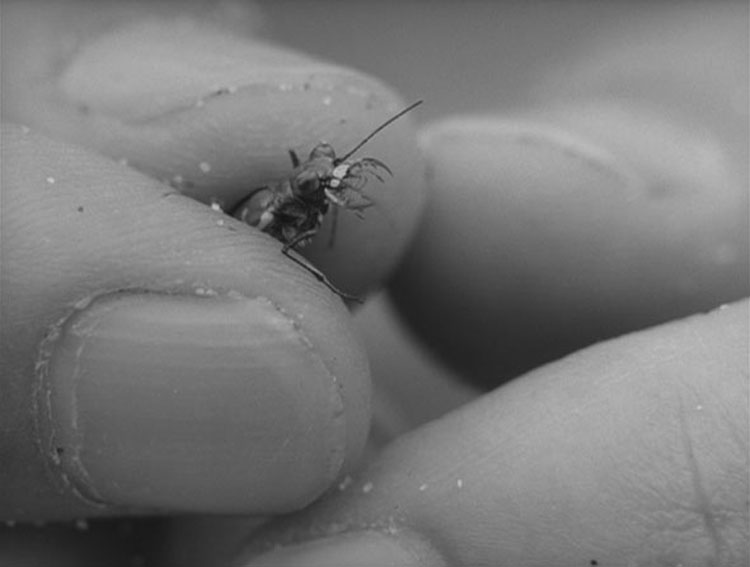
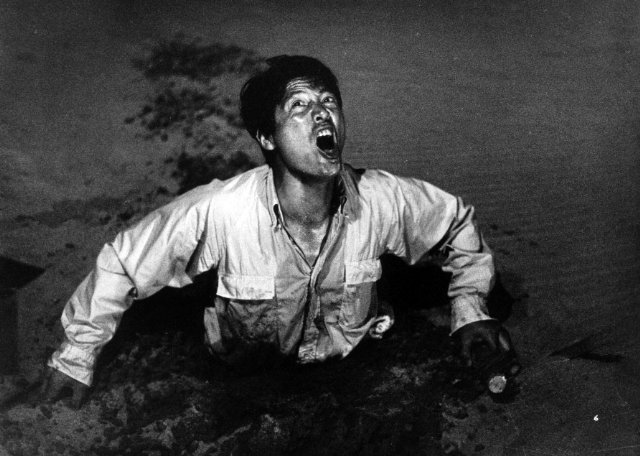
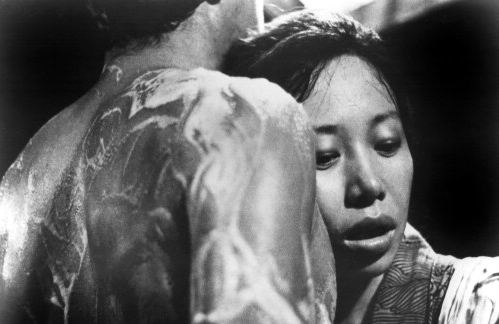
Today’s cinema adventure: Woman in the Dunes the strikingly photographed 1964 avant garde feature by Japanese filmmaker Hiroshi Teshigahara,  Adapted by Kōbō Abe from his own novel, it’s a deceptively simple parable about an entomologist on a field expedition to collect specimens at a remote beach; when he misses his return bus, he seeks shelter for the night with a young widow in a local village- only to find himself trapped into remaining as her companion in a life of endless labor, shoveling sand from the quarry in which they live, both for their sustenance and to prevent their house from being buried.  Within the framework of this premise are explored a multitude of giant, deeply reverberating themes, ranging from the contrast between the masculine and the feminine to man’s role in society to the very nature and meaning of existence itself- all of which plays out against the backdrop of the monumental, ever-shifting sand dunes, emphasizing the inexorable dominance of nature and the universe and transforming the primal landscape into a central character of the drama.  The performances of the two principals (Eiji Okada and Kyoko Kishida) are superb, helping to create the delicate balance between realism and symbolic fantasy that propels the film- but the true star here is the magnificent black-and-white cinematography of Hiroshi Segawa, which not only captures the fluid, omnipresent sand in remarkable, crystalline detail, but conveys a sense of tangibility to every texture in the film, from the salty grit which covers every surface to the smoothness of the players’ skin, making the viewer’s experience highly visceral- and erotic.  One of those world cinema classics that is a staple in film classrooms around the world, the artistry of Woman in the Dunes is indisputable- some audiences, however, may find that its blend of existential absurdism and Zen austerity creates a cool detachment that prevents emotional involvement in the action.  Nevertheless, as an intellectual and philosophical exercise- and as piece of stunning visual artistry- it’s a film which packs more than enough power to make its 2 ½ hour running time seemingly fly by.  A must-see for any serious film buff- but you may feel like you need a long shower to rinse off all that sand.

http://www.imdb.com/title/tt0058625/

Image

ImageImageImageImageImageImageImageImageImageImageImageImageImageImage