The God Who Wasn’t There (2005)

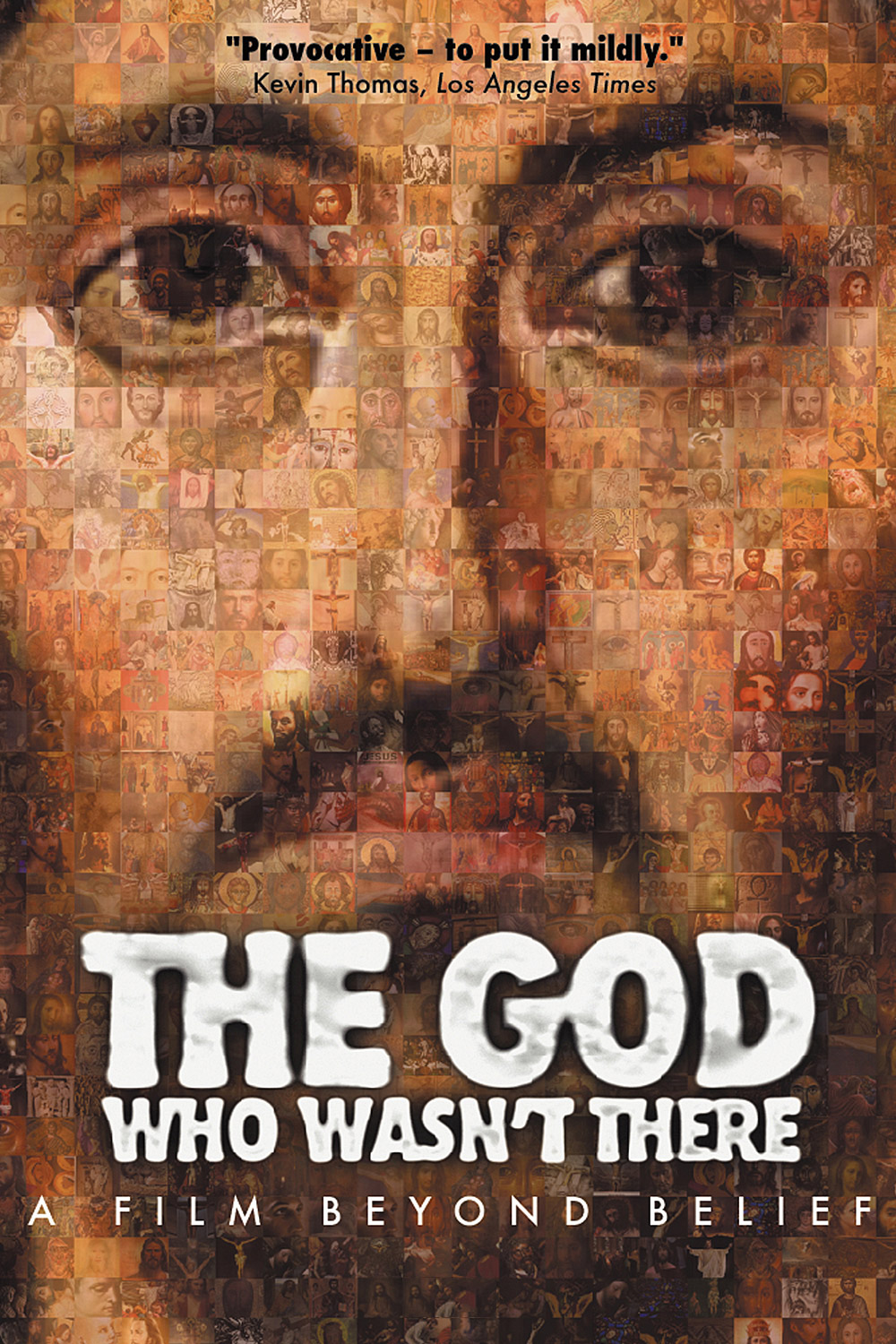
Today’s cinema adventure: The God Who Wasn’t There, a 2005 documentary by Brian Flemming, which examines fundamentalist Christian beliefs in contrast against the historical facts around the origin of the religion and explores the impact of such beliefs in a modern social and political environment. Controversial by its very nature, the film makes no pretense of objectivity, presenting its case with a heavy tone of bemused irony and using duplicitous confrontational tactics to elicit responses from interviewees, and ultimately representing the filmmaker’s personal attempt to repudiate, once and for all, his own past as a fundamentalist Christian and take a stand against the supposed moral authority that dominated his former life. More in the nature of propaganda than documentary, it’s a film that nevertheless succeeds in making its point with verifiable and persuasive facts, and, perhaps more importantly, does so in a highly entertaining manner.

The man behind the camera (and occasionally in front of it) is no stranger to controversy over his work; his previous film, Nothing So Strange, sparked outrage over its depiction of a fictitious assassination of Bill Gates, presented in “mockumentary” style. This time around, he fueled the fires already swirling about his film with various marketing and publicity ploys, including an internet contest offering free DVDs of the movie for the first 1001 people to submit a video in which they blaspheme themselves by denying the existence of the Holy Spirit. Needless to say, the filmmaker exhibits a fondness for deliberate incitement that finds its way into The God Who Wasn’t There.

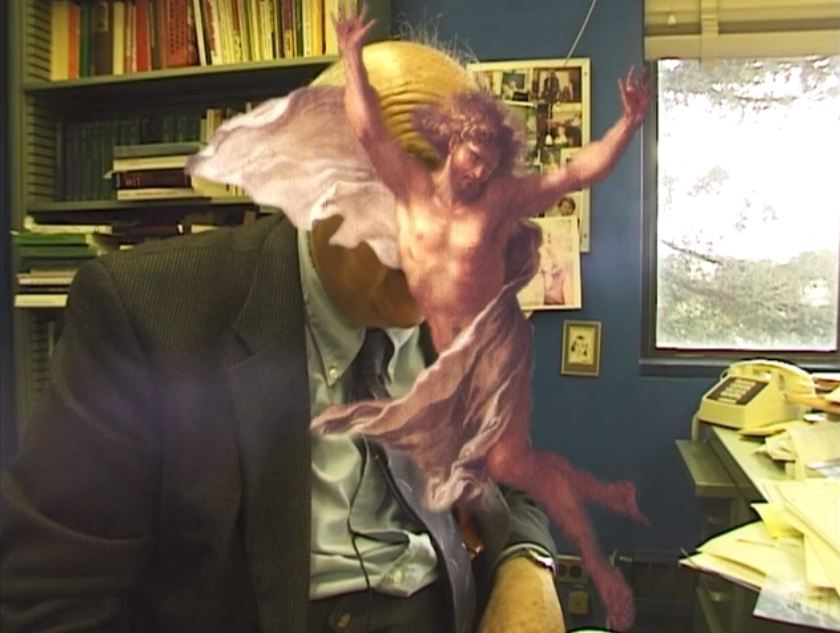
Flemming structures his film into two distinct parts. In the first half, he looks at the difference between the commonly held ideas surrounding the early days of the Christian faith and the factual information in the historical record, making the case that the commonly accepted story of Jesus is a myth, deliberately created by the founders of the church and understood as such by both them and their early followers; he goes so far as to suggest that Jesus never existed as a real person, and that literal interpretation of his life story as presented in the Bible and the surrounding traditions is in direct opposition not only to historical evidence, but even to the writings of early Christians such as the apostle Paul. In the second part of the film, he explores the effect of fundamentalist beliefs in modern society, including the idea of “The Rapture,” and culminates with a visit to the principal of the private Christian elementary school he attended as a child, examining the doctrine that the one unforgiveable sin is to disbelieve the existence of the Holy Spirit- and drawing his conclusion that the greatest blasphemy of all, in the eyes of the Christian church, is to think.

Despite its title, Flemming’s film does not directly address the existence or non-existence of God, per se; his purpose is a temporal one, namely to expose the fallacies and contradictions at the core of modern Christianity and illustrate how a belief in these outdated and misinterpreted ideas affects life in a contemporary world- not just life for the believers, but for everyone else in a society largely influenced by their prejudices and moral agendas. To say that his premise is contentious is an understatement; but it’s certainly nothing new. The ideas he presents in his analysis of the supposed life of Jesus and its basis in literal historical fact are familiar to anyone who has ever examined the faith from the perspective of comparative mythology, and there are literally hundreds, if not thousands, of books devoted to the subject- indeed, the authors of some of these books are among the experts Flemming interviews in his movie. As for the portrayal of fundamentalist Christians and their relationship to the larger culture, the basic conflict between religious dogma and reasonable political policy has been a subject of debate ever since the dawn of the Age of Reason- a fact clearly reflected by the long-standing democratic doctrine mandating the separation of church and state. The God Who Wasn’t There is not a groundbreaking source of new information or world-changing ideas; rather, it is a presentation of well-documented, oft-repeated facts, heavily flavored with flippant cynicism born of the necessity for addressing the issue yet again in a modern, supposedly enlightened world.

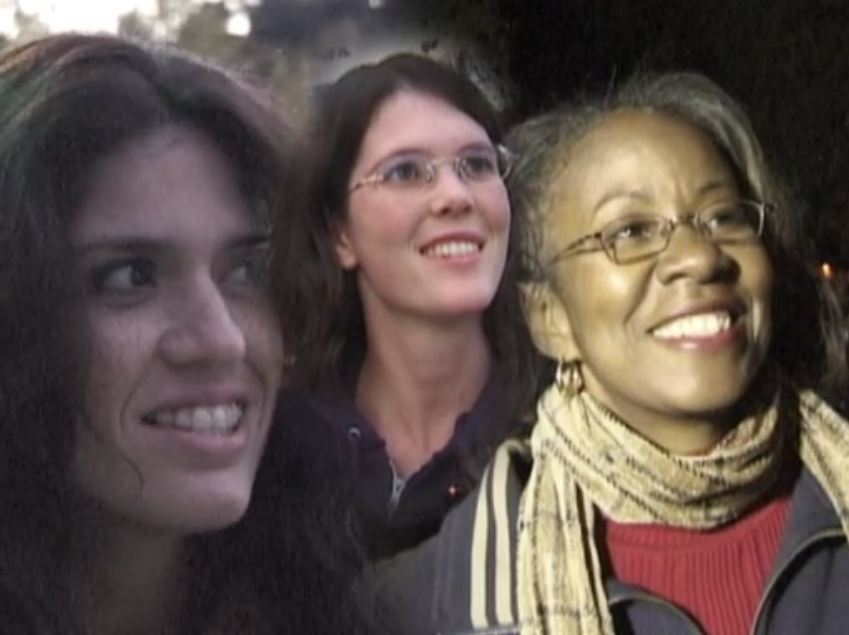
It is, in fact, this snarky tone that makes Flemming’s movie enjoyable. In illustrating his points, he finds amusing and pointed ways to emphasize the enormous gap between contemporary reason and the antiquated notions of fundamentalist religious beliefs. From his opening narration detailing the centuries-long dispute between science and faith regarding the revolution of the earth around the sun (or vice-versa, as the church would have kept it), to his heavy utilization of excerpts from The Passion Play (an early, stodgy French silent about the life of Jesus) and The Living Bible (a creaky “educational” film from the 1950s), he makes it clear that- in his estimation, anyway- the fiercely held tenets of Christianity are seriously out-of-step with the intellectual standards demanded by life in the present day; and through his use of interviews with hardcore believers in the faith, he underscores his observation that the majority of modern fundamentalists are not only misinformed and ignorant of the true history of their religion, they are in fact defiantly uninterested in learning anything about it. Their alliance to faith is so deeply ingrained, they exhibit skepticism and mistrust towards empirical knowledge rather than entertain any ideas which might lead them to question their beliefs. It would be easy to accuse Flemming of painting Christians as uneducated and delusional, were it not that some of the experts he brings to the discussion profess their own belief in a more enlightened interpretation of the faith- though it’s also worth noting that, in one sequence, the filmmaker points out that the idea of “moderate” Christianity, taken from the standpoint of strict adherence to Biblical teachings, is in fact not Christianity at all.

The God Who Wasn’t There features a number of sequences that are both entertaining and alarming, but one in particular stands out. Roughly midway through the film’s short running time, serving as a sort of segue from the mythological analysis into the more direct examination of the modern church, Flemming looks at the connection between Christianity and the earlier, blood-sacrificing religions that marked the culture in which it sprang up. There are obvious correlations in these ancient mythologies to the Christian idea of a man being brutally, ritualistically murdered in order to redeem the sins of everyone else; but Flemming points out how this obsession with bloodshed seems to persist within Christian consciousness even today, centuries beyond these primitive, paganistic origins. To illustrate this, he looks at the popularity of Mel Gibson’s 2004 film, The Passion of the Christ, by far the most financially successful movie ever made about Jesus; using clips from the film, edited together for maximum effect, he focuses attention on the excessive amount of highly explicit blood and gore used by Gibson, creating a scene-by-scene gore analysis showing that only a small percentage of the running time is actually blood-free, and pointing out that such an overwhelming use of graphic violence is the result of a calculated, deliberate effort on the part of the director- and one which, clearly, paid off, tapping sufficiently into something deep within the Christian community that made them come to see his movie in droves. Gibson, it’s worth mentioning, tried unsuccessfully to bring legal action against Flemming. Apparently, the free publicity for his movie was not enough to make him comfortable with the implication that his pious epic was motivated by exploitative greed.

It probably goes without saying that Flemming’s movie is designed to provoke controversy and stimulate discussion about its subject matter. It is also no surprise that the issues it deals with are so emotionally volatile; the challenge of maintaining religious faith in the face of ever-increasing scientific knowledge has never been easy, and it grows more difficult every day in our world of stem-cell research and Higgs-Boson particles. The fact is, however, that The God Who Wasn’t There, like the numerous other contemporary films which challenge dogmatic religious beliefs, is not likely to be seen by many of the viewers at which it is optimistically aimed; and even if it were, those for whom fundamental belief is a cornerstone of daily life are not prone to being swayed by any amount of factual information, an observation made abundantly clear by Flemming in the film itself. As a result, his movie can be characterized as the proverbial “preaching to the choir,” in the sense that most of his audience will already be sympathetic, if not pre-acquainted, with the concepts he presents. Nevertheless, it’s a fun presentation to sit through, if you’re comfortable with using intellect in the realm of spirituality- his use of graphics in illustrating his research is eye-catchingly flashy and clever, and his musical accompaniment (executed by himself, under the pseudonym “DJ Madson”) is appropriately hip and contemporary, at least by 2005 standards. It’s also possible that there is an audience, situated in the middle-ground of this question, who may benefit from Flemming’s work here; those who are on the brink, indoctrinated by years in a church-centric environment who nevertheless have questions and doubts- in short, people who are like he once was, himself. For them, watching The God Who Wasn’t There might be an eye-opening, life-altering experience, one which has the potential to make a difference in the way they see the world and, by extension, the way they affect it. After all, the social and political issues examined here have grown even more pertinent over the seven years since the movie was made; the conflict between fundamentalist thinking and social progressivism has never been more pronounced- or more imperative- in recent memory.  I, for one, hope there are those who are drawn to Flemming’s movie by curiosity and find that it helps them choose, finally, to come over the fence on which they have been sitting for so long.

http://www.imdb.com/title/tt0455507/

Parting Glances (1986)

Today’s cinema adventure: Parting Glances, the 1986 first (and only) feature by writer/director Bill Sherwood, hailed as a landmark in the history of gay cinema and also notable for featuring actor Steve Buscemi in his first major film role.  Made on a shoestring budget in 1984 and finally released two years later, it was chosen as the first movie to be restored by the Outfest Legacy Project in 2007, and it still stands today as one of the most refreshingly authentic representations of gay life yet to be seen on the American screen.

Shot entirely on location in New York, the film follows a young upwardly mobile couple, Michael and Robert, through the events of a 24-hour period; Robert is preparing to leave for a two-year work assignment in Africa, while Michael, facing the prospect of being left alone, ponders the uncertainty of their future together- as well as the inevitable demise of his AIDS-infected ex-boyfriend, Nick, with whom he still shares a deep bond.  As the couple attend a dinner party with Robert’s boss and then a farewell gathering with their friends, the movie gives us a cross-sectional slice-of-gay-life view of mid-eighties New York, using the various interactions and activities of its characters to explore not only the relationships at its center, but also the concerns and issues that affect them as a community and as individuals.

One of the primary reasons for the importance of Parting Glances, of course, is the window it provides into the days when the AIDS epidemic was at its height; it was a time when being diagnosed with the disease was, in essence, a death sentence, and the gay community was being ravaged.  This humble little film was one of the first to deal with this issue, and certainly the first to treat it with candor rather than with alarmist sensationalism.  Though only one of the characters is afflicted by the virus, it is clear through the conversations and situations we are privy to throughout that it’s a situation that deeply affects them all; it hovers around the edges of their lives like the ominous Don Giovanni-inspired specter that appears to Nick in a few key scenes, a factor in everything they do, say, or plan.  Despite its omnipresence, however, the subject of AIDS does not receive the kind of dour and mournful treatment one might expect, particularly from a film made in the midst of its darkest hold on the hearts and minds of the gay community; nor is it handled with the precious, maudlin sentimentality of so many of the movies that came after.  On the contrary, though its weight and seriousness are never in question, Parting Glances takes a disarmingly light-hearted approach to the disease: Nick does not play the morose and tragic victim; his ultimate decline and fall are a given, but, for now at least, he is still relatively healthy, and his brash,  vibrant personality is the heart of the movie.  He faces his fate with staunch acceptance, yes, but also with a hearty helping of gallows humor and nothing-to-lose directness.  The dire eventuality of his situation is implicit, and this film feels no need to hammer the audience with it; its focus, rather, is on the present moment, and the opportunity it affords for taking stock, seizing the day, and perhaps most importantly, tending the needs of the heart.

Though AIDS looms heavily over Parting Glances, it is by no means the only subject with which the film concerns itself.  The central storyline, after all, deals with the relationship of Michael and Robert, and its future- or its lack of one- is not contingent on a life-threatening disease; rather, it hinges on their own respective ambivalence, their fear of commitment, and their ability to be emotionally available to each other.  In short, the obstacles in their joint path, though they may be somewhat obscured or confused by the comparatively minor attendant factors of same-sex unions, are the same ones faced by any couple, gay or straight; the film does an admirable job of underlining this universality, placing the pair in juxtaposition with other couples, straight and not-so-straight, throughout its proceedings, and while it makes no judgments regarding the validity or moral superiority of any of these relationships, the dynamic between our two protagonists seems to stack up at least as favorably, more or less, as any of the others.  Michael’s relationship with Nick is also a key factor here- their easy chemistry and bantering rapport contrast sharply with the often strident interactions of Michael and Robert, opening up questions about compatibility and the line between romance and friendship- particularly among same-sex partners.  There are plenty of non-romantic relationships on display here, too: Michael and several other characters connect closely with Joan, the “hag” who hosts the going-away party and serves as a sort of combination best gal-pal and den mother; there’s also Robert’s boss and his wife, who bond with Robert and Michael, respectively; Robert’s former high school girlfriend, now married but still a confidante; and a number of other friends and acquaintances who interact with the couple and each other throughout the course of the film.  All of these exchanges offer insight into the social tapestry of this insular community, and key us into the pulse of this specific time and place, as well as revealing the repetition of timeless patterns and themes within the sphere of human connectivity, gay, straight, or anywhere in between.

It might seem like there’s a lot going on in Parting Glances, and of course, there is; but despite its busy agenda, it never feels as if it were packed too full, nor does any of it seem forced.  Thanks to Sherwood’s witty, flowing screenplay, all the major issues and themes work their way unobtrusively into the dialogue, weaving through the conversations naturalistically and convincingly instead of being introduced as didactic rhetoric; these are real people discussing their lives, not mouthpieces presenting a case, and as a result, the movie feels like a stimulating party instead of a public debate.  This organic quality is enhanced all the more by Sherwood’s engaging cast, who are clearly having a wonderful time as they present us with a wide variety of familiar “types” (as opposed to stereotypes) within the gay and gay-friendly community.  As Michael and Robert, respectively, are Richard Ganoung and John Bolger; both are attractive and likable, but they are not a cookie-cutter couple- each has their own distinctive persona, and they both clash with and complement each other in a highly realistic and believable manner.  Kathy Kinney plays Joan, providing a grounded, female presence with a character that rises above potential cliché; she is both insightful and incorrigible, and she conveys- subtly, and without self-pity- the resignation of a life possibly lived vicariously through her friends.  Also memorable is Adam Nathan, as a self-assured young “twinkie” who sets his sights on Michael; ready to claim the world from an elder generation that is not willing, quite yet, to give it up to him, he succeeds in being endearing instead of insufferable, and his scene with Nick on the stairs outside the party is a highlight of the film.  The standout performance, though, comes from Buscemi, who does a remarkable job of playing Nick; the character is doomed but delightful, a combination which could easily seem glib and artificial in the hands of a lesser actor, but he pulls it off superbly, making it clear that his sardonic wit and his edgy personality are part and parcel of who he is- not an affectation in response to his status as a member of the walking dead- and that underneath them there is a large and generous heart.  His desire to leave behind a legacy for his friends goes beyond the material items in his last will, semi-substantial though they may be (he is, it seems, a minor rock-and-roll star); he actively means to make a difference in their lives, and Buscemi’s work allows us to see the genuine love at the source of these efforts.  Lest we think his Nick is too good to be true, though, he still manages to get across, in little ways, here and there, that he is not altogether okay with what is happening to him, despite his brave face; but this never gets in the way of the positive energy he exudes throughout.  It’s a performance that should have made Buscemi a star, much sooner, and would have, no doubt- if the movie had been more widely seen.

There are numerous other enjoyable qualities here, not the least of which is the way the film captures the look and feel of mid-eighties New York; this is no surprise, of course, considering that is when and where it was filmed, but some credit is still deserved by the production designer (John Loggia), the art directors (Daniel Haughey and Mark Sweeney), and the set decorator (Anne Mitchell) for deciding what should go into the series of well-appointed homes and apartments that provide the setting, as well as to cinematographer Jacek Laskus for deciding how to film it, with special kudos to all involved for making it look so polished despite the bargain-basement budget.  Also contributing to its evocation of time and place are the soundtrack choices, a combination of songs by Bronski Beat and original, very posh-sounding piano music by Mike Nolan, with some operatic selections thrown in, by way of Nick’s LP player, for good measure.

It seems somehow wrong to say that a movie made at the height of the AIDS crisis, featuring AIDS as a major subject and set among the gay community, is entertaining and fun; but that’s exactly what Parting Glances is.  Though it is unquestionably dramatic in its overall scope and intention, it makes sure even the heaviest matter is carried along by an effervescent current, and precisely because it doesn’t continually remind us of how poignant and moving it should be, it ends up being extremely poignant and extremely moving- particularly, I might add, for those who have lost friends like Nick in the long battle with AIDS.  As its title suggests, this is a movie about saying goodbye, not just to the dead, but to the living as well- the continuation of Michael and Robert’s relationship is by no means a sure thing at the end, after all; but bittersweet as it may be, it is also a film about moving forward.  The script clips along, the actors and the camera are constantly in motion, and the entire flow carries us through to the end, leaving us with a tangible momentum.  People come and go, things change, but the world keeps moving, and maybe part of what Parting Glances suggests is that our only real way of leaving something of ourselves in the mix is to make sure our lives touch those of the people who surround us.  In this day and age, it’s possible to watch Parting Glances and entertain the hope that Nick will be one of those lucky survivors who managed to hang on to life until medical science caught up enough with the disease to at least stave off death, and that he, like so many millions today, could still be out there thriving as an HIV-positive man.  If so, he would be luckier than the film’s creator, who passed away from the disease in 1990, without making another film and without surviving to see the way this one was embraced and revered by his own community, as well as by the larger cinematic world.  His movie stays with us, however, and through it, he continues to touch lives today.  So perhaps, truly, he was a very lucky man indeed.

http://www.imdb.com/title/tt0091725/

Crash (1996)


Today’s cinema adventure: Crash, David Cronenberg’s highly controversial and disturbing feature about a group of car crash survivors and the obsessive sexual fetishism they develop around their experience. Based on the equally controversial novel by J.G. Ballard, it was banned from public screening in its country of origin (Canada) as well as in many other countries, and released in both an R- and NC-17-rated form in the U.S. Despite widespread protest and outrage over its combination of graphic sexual and violent content, it was widely acclaimed by critics for its bold depiction of an uncomfortable and unorthodox subject matter, as well as for the cinematic prowess of its director in bringing his twisted vision to the screen.

The plot, such as it is, focuses on James, a sexually adventurous film producer whose marriage to the beautiful Catherine is spiced up by the reports they bring back to each other of their mutual infidelities. After a traumatic automobile accident requiring a lengthy hospital rehabilitation, he becomes involved with a community of other survivors that has gathered around Vaughan, a charismatic and hyper-sexual figure who encourages- and participates in- the merging of their sexual impulses with their fixation on the crash experience; James draws Catherine into the circle to join him, and with the others they explore ever-riskier fantasies in the pursuit of their dark passions. Though there is a structural arc to the story, which involves Vaughan’s role as sexual mentor and the gradual transference of his obsessions to James and Catherine, the narrative takes a back seat, if you’ll pardon the expression, to Cronenberg’s perverse fantasia of sexual deviancy.

From the very first scene, in which we see Catherine pressing her exposed breasts against the fuselage of an airplane during a clandestine encounter in an airport hangar, Cronenberg sets up his motif, a juxtaposition of soft flesh and hard metal which strives to make the viewer’s experience as close as possible to a tactile one; as the film progresses, it moves through its brief interstitial scenes- ostensibly necessary for the advancement of the plot, but in actuality merely required for establishing the next sexual scenario- into one graphic encounter after another, each one pushing us further past our comfortable boundaries and deeper into an unfamiliar realm of extreme sexual fetishism. Taboos fall away one by one as we witness erotic acts between various combinations of genders, performed in private and in public, involving sexual and non-sexual body parts, and almost always in connection with cars. This saturation of sexual imagery is not gratuitous: Cronenberg’s aim is to turn us on, certainly; but by mingling blatant eroticism with the adrenaline rush of recklessly driven vehicles, the carnage of roadside disasters, and a heavy dose of the body horror he so frequently returns to in his films, he triggers our sexual response alongside our conflicting reactions of fear and repulsion- alerting us to the possible dark corners in our own libidos and making us paraphiles by association. It’s an effect that makes Crash a highly unique cinematic experience, a sexual horror film which completely removes the distancing elements between our shock and our arousal- the subject he shows us is the object of both.

Of course, this experiment in dysfunctional autoeroticism is not for the squeamish; even those comfortable with explicit sexual content may find themselves turning away from the accompanying depictions of twisted metal and disfigured body parts, and most especially the frequent merging of the two. Those who are able to brave it out, however, might find themselves in awe of the way Cronenberg uses his skill to manipulate their wiring, like some sort of mad psychosexual scientist, to elicit responses ordinarily deemed inappropriate in the face of such stimuli. At the very least, the film begets a grudging admiration for its director’s ability to exploit the basic similarity between the primal reactions to sex and horror, and to use it in a visceral exploration of themes usually handled in the realm of intellect- the role of social conditioning in defining “normal” sexuality, the aphrodisiac effects of dangerous or forbidden behavior, and the age-old psychological connection between sex and death.

In bringing Ballard’s novel to the screen, Cronenberg (who also wrote the screenplay) updates it from its original 1970s setting and transposes the action from London to Toronto, but the underlying feeling of participating in something you shouldn’t remains the same, as does the tantalizing use of the author’s last name for the leading character, though Ballard denied any autobiographical connections (which didn’t stop eyebrows being raised when he was seriously injured in a car accident shortly after the book’s publication). To add another coincidental wrinkle, the character shares his first name with the actor portraying him, James Spader. Cronenberg’s shrewd casting adds another layer to the motif of contrasting textures, with outwardly cool, aloof performers- Spader and Deborah Kara Unger (as his wife)- colliding with the hot, rough, seething energy of Elias Koteas as Vaughan. The sparks are palpable; Koteas exudes raw, musky sensuality in every scene, making it clear how this underground sexual prophet attracts his furtive, broken followers. As a fellow survivor of the same crash, whose affair with James is the first step on his journey into dangerous obsession, Holly Hunter gives us a straight-laced, almost asexual surface that belies the ravenous carnal appetite underneath; and Rosanna Arquette, as another of Vaughan’s acolytes, is the ultimate embodiment of the film’s grotesque fantasy, a mangled sexpot encased in a set of rigid metal braces, beautiful and terrifying as some sort of steampunk sex robot- the perfect object of paraphiliac desire.

Rounding out the total package is the moody cinematography by Peter Suschitzky, which somehow gives a glossy, candy-shell shine to the dark and shadowy atmosphere of the film’s environment; and the background score, by longtime Cronenberg colleague Howard Shore, which underlines the director’s dominant concerns with a piercing, metallic guitar sound that manages to be both dissonant and harmonious.

Crash is one of those films that falls definitively into the category of cinema as art; there are doubtless many viewers who would disagree, citing its subject matter as unworthy or its deliberately titillating sexual content as exploitative. It’s a film that challenges us, that makes us uncomfortable by forcing us to cross boundaries we accept as sacred, and the first response to such material is often to dismiss it as trash. However, just like controversial works in other media- such as “Piss Christ” or “The Human Printing Press,” or the writings of the Marquis de Sade- there is a powerful voice behind this movie, one with a purpose and a need to express something about the human experience that can enlighten us despite our defensive reaction to its form. That said, it should be duly noted that Crash is not meant as entertainment, at least not for the casual movie-goer; though it is loaded with sex scenes and car chases, they are not in the nature of the ones which normally make for box office appeal. I can’t say that I enjoyed this movie- I’ve had a much better time watching other Cronenberg films, disturbing though they usually are- and I’m not even sure I can say it enriched me, in any way. I can, however, say that it forced itself into my consciousness and made itself a permanent part of my psyche, for better or for worse, and that in itself is enough for me to recommend it highly, at least to those adventurous cinemaphiles who are willing to be disturbed, or even outraged. It’s not safe cinema, but then, as the denizens of the secret world portrayed in Crash would tell you, there are sometimes more important things than being safe.

http://www.imdb.com/title/tt0115964/

Crash (1996)

;

Today’s cinema adventure: Crash, David Cronenberg’s highly controversial and disturbing feature about a group of car crash survivors and the obsessive sexual fetishism they develop around their experience. Based on the equally controversial novel by J.G. Ballard, it was banned from public screening in its country of origin (Canada) as well as in many other countries, and released in both an R- and NC-17-rated form in the U.S. Despite widespread protest and outrage over its combination of graphic sexual and violent content, it was widely acclaimed by critics for its bold depiction of an uncomfortable and unorthodox subject matter, as well as for the cinematic prowess of its director in bringing his twisted vision to the screen.

The plot, such as it is, focuses on James, a sexually adventurous film producer whose marriage to the beautiful Catherine is spiced up by the reports they bring back to each other of their mutual infidelities. After a traumatic automobile accident requiring a lengthy hospital rehabilitation, he becomes involved with a community of other survivors that has gathered around Vaughan, a charismatic and hyper-sexual figure who encourages- and participates in- the merging of their sexual impulses with their fixation on the crash experience; James draws Catherine into the circle to join him, and with the others they explore ever-riskier fantasies in the pursuit of their dark passions. Though there is a structural arc to the story, which involves Vaughan’s role as sexual mentor and the gradual transference of his obsessions to James and Catherine, the narrative takes a back seat, if you’ll pardon the expression, to Cronenberg’s perverse fantasia of sexual deviancy.

From the very first scene, in which we see Catherine pressing her exposed breasts against the fuselage of an airplane during a clandestine encounter in an airport hangar, Cronenberg sets up his motif, a juxtaposition of soft flesh and hard metal which strives to make the viewer’s experience as close as possible to a tactile one; as the film progresses, it moves through its brief interstitial scenes- ostensibly necessary for the advancement of the plot, but in actuality merely required for establishing the next sexual scenario- into one graphic encounter after another, each one pushing us further past our comfortable boundaries and deeper into an unfamiliar realm of extreme sexual fetishism. Taboos fall away one by one as we witness erotic acts between various combinations of genders, performed in private and in public, involving sexual and non-sexual body parts, and almost always in connection with cars. This saturation of sexual imagery is not gratuitous: Cronenberg’s aim is to turn us on, certainly; but by mingling blatant eroticism with the adrenaline rush of recklessly driven vehicles, the carnage of roadside disasters, and a heavy dose of the body horror he so frequently returns to in his films, he triggers our sexual response alongside our conflicting reactions of fear and repulsion- alerting us to the possible dark corners in our own libidos and making us paraphiles by association. It’s an effect that makes Crash a highly unique cinematic experience, a sexual horror film which completely removes the distancing elements between our shock and our arousal- the subject he shows us is the object of both.

Of course, this experiment in dysfunctional autoeroticism is not for the squeamish; even those comfortable with explicit sexual content may find themselves turning away from the accompanying depictions of twisted metal and disfigured body parts, and most especially the frequent merging of the two. Those who are able to brave it out, however, might find themselves in awe of the way Cronenberg uses his skill to manipulate their wiring, like some sort of mad psychosexual scientist, to elicit responses ordinarily deemed inappropriate in the face of such stimuli. At the very least, the film begets a grudging admiration for its director’s ability to exploit the basic similarity between the primal reactions to sex and horror, and to use it in a visceral exploration of themes usually handled in the realm of intellect- the role of social conditioning in defining “normal” sexuality, the aphrodisiac effects of dangerous or forbidden behavior, and the age-old psychological connection between sex and death.

In bringing Ballard’s novel to the screen, Cronenberg (who also wrote the screenplay) updates it from its original 1970s setting and transposes the action from London to Toronto, but the underlying feeling of participating in something you shouldn’t remains the same, as does the tantalizing use of the author’s last name for the leading character, though Ballard denied any autobiographical connections (which didn’t stop eyebrows being raised when he was seriously injured in a car accident shortly after the book’s publication). To add another coincidental wrinkle, the character shares his first name with the actor portraying him, James Spader. Cronenberg’s shrewd casting adds another layer to the motif of contrasting textures, with outwardly cool, aloof performers- Spader and Deborah Kara Unger (as his wife)- colliding with the hot, rough, seething energy of Elias Koteas as Vaughan. The sparks are palpable; Koteas exudes raw, musky sensuality in every scene, making it clear how this underground sexual prophet attracts his furtive, broken followers. As a fellow survivor of the same crash, whose affair with James is the first step on his journey into dangerous obsession, Holly Hunter gives us a straight-laced, almost asexual surface that belies the ravenous carnal appetite underneath; and Rosanna Arquette, as another of Vaughan’s acolytes, is the ultimate embodiment of the film’s grotesque fantasy, a mangled sexpot encased in a set of rigid metal braces, beautiful and terrifying as some sort of steampunk sex robot- the perfect object of paraphiliac desire.

Rounding out the total package is the moody cinematography by Peter Suschitzky, which somehow gives a glossy, candy-shell shine to the dark and shadowy atmosphere of the film’s environment; and the background score, by longtime Cronenberg colleague Howard Shore, which underlines the director’s dominant concerns with a piercing, metallic guitar sound that manages to be both dissonant and harmonious.

Crash is one of those films that falls definitively into the category of cinema as art; there are doubtless many viewers who would disagree, citing its subject matter as unworthy or its deliberately titillating sexual content as exploitative. It’s a film that challenges us, that makes us uncomfortable by forcing us to cross boundaries we accept as sacred, and the first response to such material is often to dismiss it as trash. However, just like controversial works in other media- such as “Piss Christ” or “The Human Printing Press,” or the writings of the Marquis de Sade- there is a powerful voice behind this movie, one with a purpose and a need to express something about the human experience that can enlighten us despite our defensive reaction to its form. That said, it should be duly noted that Crash is not meant as entertainment, at least not for the casual movie-goer; though it is loaded with sex scenes and car chases, they are not in the nature of the ones which normally make for box office appeal. I can’t say that I enjoyed this movie- I’ve had a much better time watching other Cronenberg films, disturbing though they usually are- and I’m not even sure I can say it enriched me, in any way. I can, however, say that it forced itself into my consciousness and made itself a permanent part of my psyche, for better or for worse, and that in itself is enough for me to recommend it highly, at least to those adventurous cinemaphiles who are willing to be disturbed, or even outraged. It’s not safe cinema, but then, as the denizens of the secret world portrayed in Crash would tell you, there are sometimes more important things than being safe.

http://www.imdb.com/title/tt0115964/


&nbsp

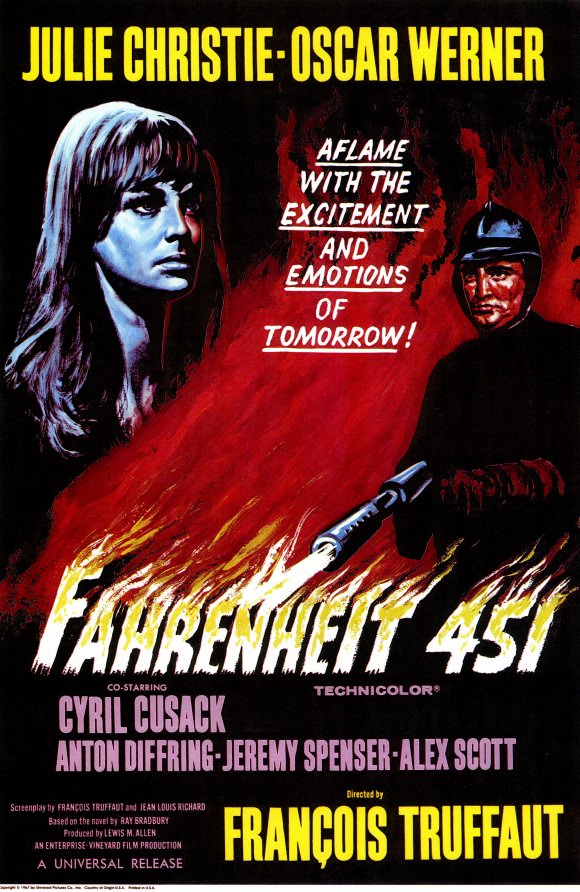
Fahrenheit 451 (1966)

Today’s cinema adventure: Fahrenheit 451, François Truffaut’s 1966 film adaptation of Ray Bradbury’s classic dystopian novel, and the great French director’s first- and only- English-language film.  Set in a non-specified (but not-too-distant) future society, where firemen no longer put out fires but start them- in order to burn books, which have been outlawed- it tells the story of one such officer, Montag, whose curiosity leads him to start reading in secret, resulting in his gradual dissociation from wife, job, and culture.  Though it was misunderstood by the critics and the public upon release, meeting with lukewarm reaction and largely being dismissed as an interesting failure, it has gained in reputation and respect over the years and is now regarded as a minor classic- and certainly as a seminal influence on the development of the sci-fi genre.

The choice of Bradbury’s story as source material for Truffaut was an odd one, considering the director’s previous work.  As one of the founders of the French New Wave movement, he had won much critical and scholarly renown with genre-defying films that broke from traditional ideas of cinematic structure and conventional storytelling, tackling social themes in a peripheral way but focusing more intently on the dynamics of human relationships.  His decision to helm a science fiction story- not only a specific genre but one which he had specifically stated was uninteresting to him, before he read Bradbury’s novel- was surprising in itself, to say nothing of it being a film that required adherence to a specifically structured plot and dealt directly with social and political issues.  Odd choice or not, he felt strongly enough about it to spend several years acquiring financing.  In addition, this would be his first film in English- a language he himself did not speak well- and his first in color.  Clearly, there were a lot of expectations awaiting Fahrenheit 451 when it finally arrived onscreen in November of 1966.

Despite its seeming opposition to Truffaut’s usual milieu, the scenario contains numerous elements, such as self-destructive obsession and the dehumanizing effects of authority, which echo some of the director’s recurring themes.  It’s no surprise, then, that his treatment of Bradbury’s novel brings these features to the forefront; he drives the plot   mainly through his portrayal of the cold and robotic firemen and the protagonist’s slow unraveling through his growing passion for the books he is supposed to destroy.  In addition, the two worlds between which Montag is torn are represented by a woman from each one (both played, in fact, by the same actress, Julie Christie), suggesting the triangular relationships which often figure prominently in Truffaut’s films.  It’s also not surprising that many of the original’s overtly sci-fi trappings have been removed in this version; the technology in use here mostly consists of familiar, contemporary stuff revamped with a futuristic design- indeed, many of the everyday devices shown in the film look specifically antique.  When we do see elements that indicate a more advanced technological world, such as the anti-gravity packs used by the airborne squad hunting Montag near the end, they seem jarringly out-of-place.

It is this seeming gap between artist and material that likely created much of the critical dissatisfaction that met with Fahrenheit 451 at the time.  Truffaut’s sensibilities as a filmmaker were geared toward capturing the immediate, reflected in a style that seemed- indeed, often was- improvised on the spot, designed to bring attention to the ineffable perfection of the moment that was happening right now.  For him to tackle a story of the future, then, created a conflict between his personal style and the needs of the material, and there were many viewers who felt that the director failed to reconcile these differences.  This, however, seems to fall under the category of judging a film for what it isn’t, rather than for what it is, which, as I believe I have pointed out before, might be missing the point.  After all, Truffaut’s success was built upon his notion that film should not be bound by expectations and convention, so it seems fitting that his contribution to science fiction cinema should be a film that is markedly different in tone and form to the accepted standards previously set for the genre.  The world he depicts is not so much a distant, future community as it is an exaggerated representation of our own- an inherent conceit (indeed, the entire point) of the whole sub-genre of dystopian fiction, and one which Truffaut emphasizes through his visualization of the novel.  Though we are given a few stylized nods to forward-thinking design- the elevated train which provides public transport, the oddly boat-like fire truck- the majority of the setting looks very much like the then-present day surroundings familiar to contemporary audiences.  Most of the buildings have the elegant, mid-century-modern look that was so popular at the time (and indeed, remains so today), as do the clothes and the décor; contrasted with that self-consciously chic style are the obviously old-fashioned homes and trappings of the counter-cultural characters, whose refusal to embrace the modern trend could arguably be seen as a dead giveaway to their subversive tendencies.  The primary means with which Truffaut emphasizes the difference in this social setting to that of our own is by his exaggeration, sometimes satirical and sometimes horrifying, of the more alarming similarities; the unending banalities that mark every interaction (even between husband and wife), the desire for popularity and personal advancement which seems to be the only real concern for most of the inhabitants, and the intrusive presence of the wall-screens through which the unspecified powers-that-be both control and placate the masses.  The latter is particularly prominent, and- along with the telling opening credits, which are read by voice-over rather than seen in printed form, over a montage of TV antennas- underlines the dominant premise of both the book and the film- not the censorship of literature and free thinking by a draconian government, but the erosion of knowledge and wisdom through the superficiality of a popular culture dictated by an ever-shrinking attention span and an ever-growing desire to shut out the unpleasant realities of life.  It is public mandate that has created the disturbing environment of Fahrenheit 451, not the forced domination of a powerful overlord; the citizens of the future are reaping the fruits of their own intellectual and emotional laziness.

Though re-evaluation has led to a much greater appreciation of the film than was present in its initial critical assessment, there are still a few flaws that cannot be completely ignored.  Truffaut was disappointed in the dialogue, which he felt was stilted and pedantic; though he himself had written the screenplay with Jean-Louis Richard, his own lack of proficiency in English limited his ability to create the kind of witty, stimulating exchanges he wished to include- though from a more objective standpoint the marked lack of character in the language of the film creates a strong impression of the puppet-like artificiality of the people that inhabit it.  More unfortunate, really, is the performance of Oskar Werner as Montag; having previously worked with Truffaut in Jules and Jim, the Austrian actor was a last-minute replacement in the role (when Terence Stamp dropped out over fears he would be upstaged by the aforementioned double-casting of Julie Christie), and had substantial disagreement with the director over the way the character should be played.  Truffaut wanted Montag’s humanity to be apparent, Werner felt that he should be stoic and mechanical; the resulting conflict brought an end to the friendship the two men had previously enjoyed, and Werner’s dissatisfaction and refusal to co-operate even led to deliberate sabotage- for example, cutting his hair before filming the final scenes in order to create continuity errors.  His final performance is, as he wanted, detached and largely unemotional- when his passions begin to emerge as a result of his forbidden interests, they seem to surface more as arrogant anger than as deeper awareness- and as a result, it is hard to care about him as more than a vehicle for audience perspective on the story.  As for Ms. Christie, although her twin performances were derided by some critics at the time as being different only in her hairstyle, her work here is highly effective; the similarities between the two women she plays, Montag’s outsider friend and his vapid wife, only serve to enhance the differences that result from their respective interests in the substantial and the trivial.

Truffaut’s vision of Bradbury’s work is realized by a superbly distinctive construction of its physical environment.  The production design by Syd Cain incorporates the contrast between then-contemporary ideas of futuristic styling and a taste for the comfort of familiarity presumably held by the unimaginative residents of this future, unnamed city.  Likewise, Tony Walton’s costume design opposes the gay and cheery hues and smart styles of everyday life against the ominous black fascism of the firemen’s uniforms and the earthy traditional feel of the clothing worn by the “book people.”  The vibrant cinematography, by Nicholas Roeg (whose later work as a director in his own right would sometimes suggest influences from this film), captures it all in a dazzling color palette that reflects the height of mid-sixties fashion.  As for the soundtrack, Bernard Herrmann- the master composer responsible for some of the iconic scores heard in films by Alfred Hitchcock, who was Truffaut’s favorite director- provides a haunting musical accompaniment in his own unmistakable vein, creating an influence, as he always did, that contributes immeasurably to the final overall effect of the movie.

Ultimately, though Fahrenheit 451 has become an acknowledged milestone in the direction of science fiction on screen, and it is now viewed as a little gem of its era, it does fall short in comparison to other works by its auteur director.  Nevertheless, even a weak film by François Truffaut is a work of art, with much to offer and much to appreciate.  It is something of a curiosity in his canon, an out-of-character project undertaken in an alien environment- his limited English made filming in London an isolated and unpleasant experience for him.  It’s worth noting that, despite substantial changes made to his original plot, author Bradbury publicly stated many times that he was pleased with the film, and even that some of the changes (specifically the choice to allow Clarisse, the intellectual schoolteacher who sparks Montag’s curiosity about the books he burns, to survive to the end of the story) were pleasant improvements.  In the final analysis, perhaps, what makes Truffaut’s adaptation work is the thing which drew him to the story in the first place: the director was a lover of books and literature, a fact which is evident in the way he portrays them onscreen.  The weathered and dog-eared volumes seen throughout the film evoke substance and endurance, and the lingering detail in which he depicts their burning emphasizes not so much their destruction as their beauty and their eternal appeal; and the climactic scene in which the exiled literati walk around reciting their memorized books, surrounded by a delicately beautiful snowfall, packs an unexpectedly powerful emotional punch- despite the cold inaccessibility of Werner’s performance as our would-be hero- resulting from this worshipful, loving appreciation of the printed word.  It is a worthy message Truffaut presents here, and one which seems even more urgent as our modern society- in which crucial information is provided in easily digestible factoids by thousands of broadcasted feeds, and bookstores are increasingly difficult to find- grows more and more to resemble the one portrayed here.  That he was successful in translating that message to the screen is made powerfully apparent by the fact that, after watching Fahrenheit 451, I had a sudden and overwhelming urge to go and read a book.

http://www.imdb.com/title/tt0060390/

C.R.A.Z.Y. (2005)

Today’s cinema adventure: C.R.A.Z.Y., a 2005 French-Canadian feature by director Jean-Marc Valée about the experiences of  a young man wrestling with his sexual identity as he grows up in a large, conservative, male-dominated Montreal family through the sixties and seventies.  The screenplay, based on the real experiences of François Boublay (who co-wrote with Valée), took 10 years to complete, but the end result was one of Canada’s most successful films of all time, becoming a box office hit and sweeping the Genie awards (the Canadian equivalent of the Oscars, for those who don’t know) with 11 wins out of 13 nominations.

Beginning with his birth on Christmas Day, 1960, the film follows the memories of Zac Beaulieu, whose family consists of three older brothers and (eventually) one younger; their father, Gervais, is a loving but authoritarian working class man with traditional ideas of masculinity, and their mother, Laurianne, a doting but submissive woman with deeply-held Catholic beliefs.  Over the course of twenty years, Zac endures the burden of being “different” in the midst of this painfully average, sometimes dysfunctional clan.  First he is branded as a “special” child with a gift for healing; then, as he grows older, he must face the ever-growing challenge of coming to terms with his homosexuality, an unthinkable and insurmountable obstacle to harmony with his family- and in particular, to his relationship with his beloved father.

With Zac’s journey to maturity and self-acceptance at its core, C.R.A.Z.Y. takes its audience on an inside tour of middle-class family life in suburbia; not only do we experience the painful struggle of a young gay man trying to first deny, then repress his sexuality in an un-accepting home environment, but also the other all-too-common scenario of drug addiction, as Zac’s older brother battles an escalating habit that is discouraged but enabled by parents without the knowledge or skills to make a difference.  Lest it seem, however, that the film presents only a bleak and dour perspective, rest assured that the conflicts and tragedies are woven delicately into a total picture that includes a great deal of quirky humor, as well as portraying the many small joys and transcendent moments that bind a family together- and the private experiences, indelibly printed in memory, that give meaning to an individual life.  In the end, though we see Zac and his family embroiled in much turmoil throughout- and mostly with each other- Valée’s film is about love, and its power to redeem and unite, no matter what seemingly irreconcilable differences may exist or how many mistakes have been made between us.

One of the key elements that contributes to the film’s effectiveness (and it is very effective) is the way it captures the third-quarter-20th-Century setting, giving it a particular significance for viewers who, like its lead character, grew up in this era.  Part of the way it does this, of course, is through its superb scenic and costume design; there is an authenticity to the choices that has to do with capturing the everyday look of the era, rather than attempting to give us a flashy, definitive period style.  It is however, the use of music that conjures the period most noticeably, all the more so because it plays a key role in the plot.  Music provides a common bond between father and son, and is an important outlet for both characters.  Highly specific choices are featured prominently throughout: for instance, father Gervais has a fondness for singing along with “Emmenez-moi,” by Charles Aznavour, mirrored later by Zac’s impassioned bedroom performance of David Bowie’s “Space Oddity;” and in one of Zac’s flights of imaginative fantasy, he has a vision of his epiphanic levitation in the church to the strains of the Rolling Stones’ “Sympathy for the Devil.”  The heavy use of the above artists, along with Pink Floyd, Patsy Cline and others, led to the somewhat staggering fact that more than half the film’s budget went to the acquisition of rights for these songs, and director Valée took a cut in his own salary in order to ensure their inclusion.

The excellence of C.R.A.Z.Y. is the result of top-notch work from everyone involved, and it’s an example of a film that is so dependent on the seamless combination of its elements that it seems unfair to single out individuals for specific praise.  Nevertheless, a few standout cast contributions deserve mention.  Most obvious, of course, is the performance of Marc-André Grondin as Zac; whether he is willfully disregarding his father’s behavioral strictures, furtively eyeing his cousin’s teen-dream boyfriend, determinedly trudging through a blizzard as penance for his sinful thoughts, or finding an outlet for his stifled passions through his love of music, he lets us inside and allows us to feel like participants in his story.  The performers who leave the deepest impression, however, are Michel Côté and Danielle Proulx, completely authentic as his father and mother; they inhabit this pair without judgment or caricature, showing us their many flaws but also the good intentions and endearing qualities that make them lovable.  Côté in particular gives an unforgettable portrait of a man who is at once larger than life and touchingly human; volatile, masculine, and charismatic, he commands the screen and makes it very clear why this relationship is so important to Zac.

C.R.A.Z.Y. is not a film that invites in-depth analysis of its underlying themes and archetypal symbols, though these things are present; rather, it is a heartfelt, sometimes painful slice-of-life movie filled with bittersweet nostalgia, ironic hindsight, disarming levity, achingly familiar moments of commonality, flashes of revelatory observation, and a cumulative emotional resonance that subtly builds to an unexpectedly powerful climax.  It accomplishes a rare feat for this type of movie, allowing us to be drawn so completely into this family that we truly feel a part of it.  This is partly due to the way Valée and Boublay show us the kind of mundane everyday details that become shared touchstones through repetition and associated memories, and their effort to invest each member of the family with as much individual life as possible, even the brothers whose smaller roles in the proceedings leave them more or less in the background; the final effect is that these characters seem like real people in our lives, people that we know intimately, and this serves to deepen our connection to them and give their experiences the weight of shared universal memory.  Perhaps most importantly, the movie possesses a sincerity which derives largely from the genuine love it has for all of its characters- even as it reveals their maddening imperfections and their often inadequate skills at coping and communication.  This quality alone makes it superb, far-and-away superior to so many similar cinematic memory-plays that start promisingly and then devolve into just another manipulative tear-jerker before the final scenes; but what makes it a truly remarkable film is the primary perspective it takes in its exploration of the trials and tribulations of family life.  With Zac as our window into the Beaulieu clan, our sympathies are naturally transferred to him, and we are therefore led to identify with his personal conflict, which is, of course, the central focus of the film.  His gradual progression- an anguished process of fear, denial, self-loathing, and self-deception, built around his emerging homosexuality-  is thereby made relevant to audiences without firsthand understanding of his experience, a sadly familiar one to millions of gay and lesbian people the world over. It’s a heartbreakingly complete and specific portrayal: Zac’s fear of humiliation and rejection from his family, his desperate bargaining through prayer to have his “curse” removed, his rejection of faith and rebellion against normalcy even as he continues to hide his true nature; all these and more are important facets of the movie’s dominant subject matter, and though it’s all so common as to border on cliché, it’s a social phenomenon that has been long obscured by stigma.  By investing us in Zac from the beginning of his life, the movie opens it up to be shared- and experienced, at least through extension- by all.  I may be wrong, but I can, unfortunately, think of no American film that even comes close to making the reality of growing up gay so painfully accessible to a wider audience; I invite your corrective examples, because if there are such films, I very much want to see them.

http://www.imdb.com/title/tt0401085/

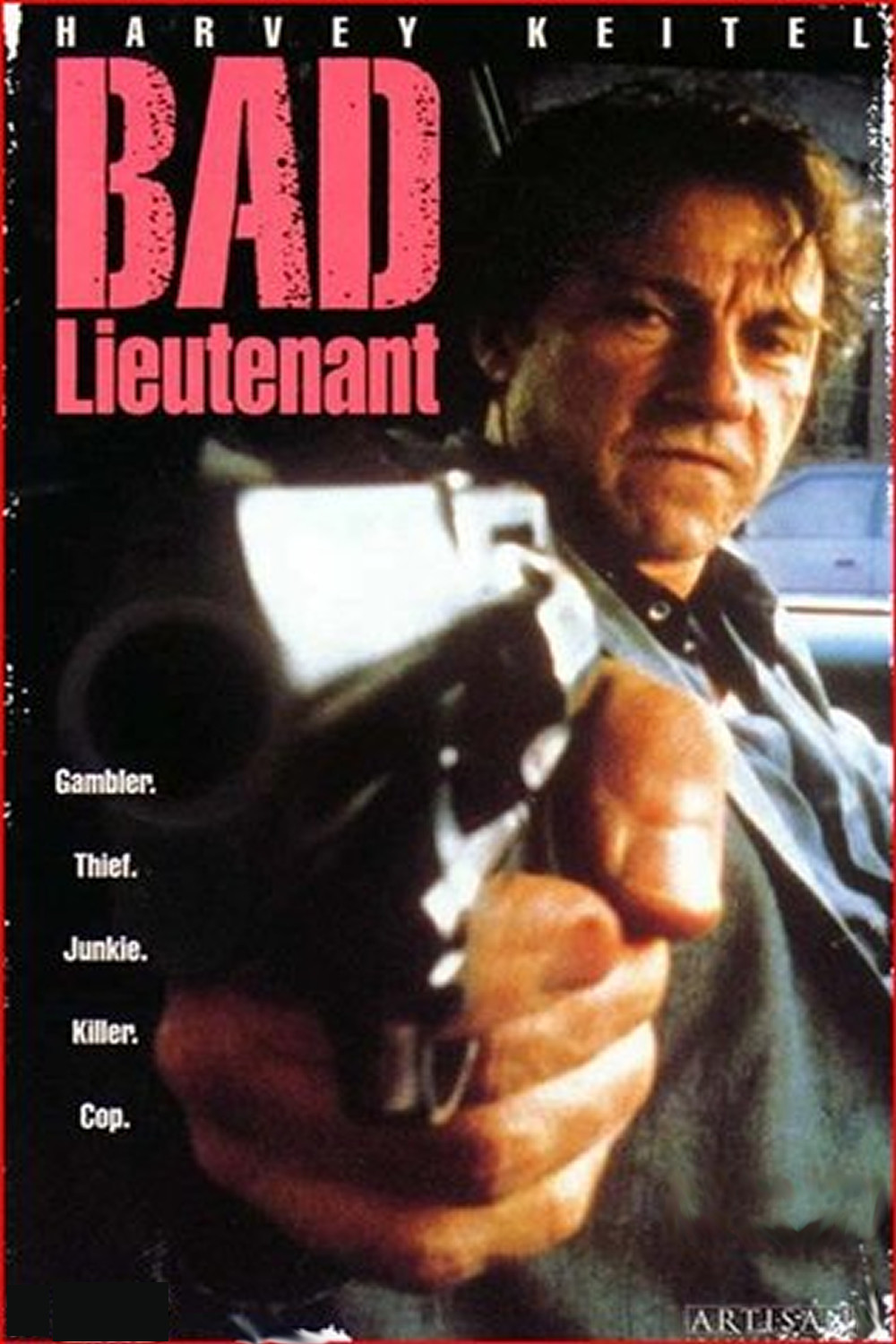
Bad Lieutenant (1992)

Today’s cinema adventure: Bad Lieutenant, Abel Ferrara’s 1992 feature starring Harvey Keitel as a corrupt, alcohol-and-drug-abusing New York policeman whose life begins to implode as he investigates the rape of a nun.  Controversial for its graphic and frequent depiction of drug use, as well as for its gritty realism and its subject matter, it found an appreciative cult audience and helped to reinvigorate its star’s career.  Following the title character through a period of several days, it gives us a portrait of a man spiraling out of control; caught up in an arrogant game of deceit in which he abuses his power to serve his own appetites for sex, drugs, and domination, he begins to crack when his gambling on the World Series places him in an ever-escalating debt and threatens to bring his reign of excess crashing down.

Director Ferrara began his filmmaking career with violent exploitation thrillers like The Driller Killer and Ms. 45; and this movie bears a strong resemblance in tone to the grainy, visceral films of that genre.  However, though Bad Lieutenant feels as if it is going to explode with violence throughout, it has a minimum of bloodshed, onscreen at least; rather, the pregnant expectation of horrors to come is generated by its central character’s tense, broiling emotional state, a palpable force which is the true focus of Ferrara’s concerns.  The lurid world surrounding his troubled protagonist- a world of crime scenes, crack-heads, and prostitutes, contrasted with family-oriented domestic strongholds (littered with the iconography of Catholicism) and the sacred austerity of the church- serves merely as a backdrop for the one-man passion play being enacted here; the true plot has little to do with either the details of his investigation or the escalation of his self-destructive behavior, except insofar as these things affect his progression towards personal catharsis.  For despite Ferrara’s cinéma vérité approach, in which he captures the seedy New York underworld and explores the blurring of the lines between the good guys and bad guys that inhabit it, Bad Lieutenant is a film about Catholic guilt and redemption.  By paralleling the story of this man’s personal unraveling with his investigation into the defilement perpetrated against the church and the nun who represents it, the movie provides a symbolic connection to his own defiling of the sanctity of a society he has sworn to protect and his betrayal of the cultural values he has been trusted to uphold.  It’s a theme common to many films exploring criminal activity within insular communities: the conflict between deeply ingrained religious ethics and violent antisocial behavior is repeatedly seen in the work of filmmakers with roots in such cultures; indeed, it is a particular hallmark of Martin Scorsese, with whose work Bad Lieutenant shares many elements (not the least of which is the presence of Keitel)- a fact which no doubt contributed to the great director’s championing of it as one of the ten best movies of the nineties.

Of course, it would be a drastic mistake to characterize Bad Lieutenant as a religious movie; instead, it is more in the vein of a social docu-drama, an examination of the peculiarly dissociated psychology necessary for the reconciliation between two such opposing behavioral mandates.  Existing in a shadowy sub-culture where acts of violence and oppression are requirements for success and status, the spiritual strictures against such transgressions must be sublimated to allow for the needs of worldly survival; in the case of our nameless police lieutenant, this process is achieved through a mountain of hedonistic distractions, but eventually, faced with a summons to pay the debts he owes in both worlds, his guilt comes roaring to the surface despite a titanic struggle to maintain his denial.  This painful interior war is made crystal clear in Keitel’s remarkable performance; the actor delivers an intensely raw portrayal, stripping himself naked for the camera (both literally and figuratively) with a bold honesty that is almost unbearable to watch.  He is alternately hateful and pitiable, an embodiment of hubris living in the lonely isolation of a fiercely defended bubble, and when he lets the walls come down it is as intense and terrifying as any sensationalistic bloodbath- perhaps, in fact, in an age when audiences are desensitized to the excessive depiction of violence on the screen, such a harsh revelation of human frailty is even more disturbing.

The unflinching truthfulness of Keitel’s performance, which Ferrara wisely uses as the meat and bones of his film, is complemented by the director’s aforementioned documentary style; working from a screenplay by actress Zoe Lund (who appears in a small but significant role)- to which his own name is also credited, along with Paul Calderon and Victor Argo (both of whom also appear)- he seems to have relied on improvisation for much of the final dialogue, which adds to the realistic, in-the-moment feel, further enhanced by his minimal use of such standard storytelling techniques as cutaways and close-ups (though this latter conceit sometimes has the consequence of obscuring key plot details).  To complete the effect, cinematographer Ken Keisch utilizes mostly natural lighting and a stationary camera, and the action takes place in authentic New York locations; the result is a film as free of artifice as is likely possible for a work of fiction, though Ferrara does allow himself the luxury of the occasional artfully-composed shot or blatantly symbolic embellishment.

Before summing up my reactions to Bad Lieutenant, it is probably important for me to add a disclaimer: Catholic guilt is not a subject that interests me greatly.  Though undoubtedly relevant to a great many viewers and widely applicable to a larger audience by virtue of association to the larger theme of balancing ethical and practical concerns of living, it’s a subject that, for me, seems a bit exclusionary (in that it implies a special burden for a certain segment of the population) and sometimes even smacks of self-pity and hypocrisy.  That said, I can certainly appreciate the validity in an artist’s expression of their insight and observations through their work, particularly regarding a deeply personal issue connected to their cultural background and their experiences within it; I can appreciate it even more when it is handled with the degree of technical and artistic proficiency shown by Ferrara with this film.  There is no question that this is a deeply felt, superbly crafted piece of filmmaking, and even if that were not the case, Harvey Keitel’s performance alone would be more than enough to recommend it.  As excellent as it is, though, and as unique in its specificity of perspective, I can’t help feeling left strangely cold by Bad Lieutenant.  It may be that, in the end, Keitel’s character is so irredeemably unlikeable that his last ditch efforts at spiritual atonement feel like a sham, a gambler’s desperate scramble to hedge his bets- though perhaps that is part of the point.  It may also be that the whole thing feels too familiar, like a litany that has been repeated so many times it has lost its meaning- but then again, perhaps that is part of the point, too.  Perhaps this matter of disobedient Catholic bad boys is a lesson that must be repeated, endlessly and in as many ways as possible, until the world is at last ready to move beyond the bargaining mentality that allows the rationalization of atrocious acts by presuming future forgiveness through atonement; but now I’ve moved out of the realm of cinematic criticism and into that of social commentary.  At any rate, I suspect many viewers, like myself, may have difficulty finding a connection to the dreadful cycle of spiritual realignment portrayed in Bad Lieutenant; the rest will no doubt find it a powerful and meaningful experience.  Either way, it’s an impressive piece of moviemaking- and the performance at its center is certainly as fine an example of screen acting as you will ever see.

http://www.imdb.com/title/tt0103759/


Death Race 2000 (1975)

Today’s cinema adventure: Death Race 2000, the 1975 fantasy-adventure exploitation film, produced by B-movie king Roger Corman and directed by Paul Bartel, about a gladiatorial motor race taking place in a futuristic America ruled by a totalitarian government. Marked by its clearly low budget and campy sensibilities, it was (of course) lambasted by critics upon release- but has since become a bona fide cult classic, spawning numerous spin-offs in other media, countless imitators, and a big-budget Hollywood remake.

Wanting to capitalize on the publicity surrounding the then-upcoming film Rollerball, Corman found suitable source material in a short story, by sometime colleague Ib Melchior (who has a fascinating history in his own right, which you can read about here), called The Racer. Adapted into a screenplay by Robert Thom, then rewritten by Charles Griffith at the insistence of director Bartel, it visualizes a not-too-distant future in which America has been devastated by economic collapse and is under the control of an Orwellian regime (headed by a smarmy figure known simply as “Mr. President”), possessing the combined authority of church, state and media, and dedicated to a policy of “minority privilege.” Sponsored by the government is a yearly cross-country race in which contestants- paired with “navigators” who are apparently also designated sex partners- not only vie to be first across the finish line, but are awarded points for killing hapless pedestrians. Televised and spun for mass consumption, this ritualistic slaughter is further complicated by the interference of a group of rebels bent on sabotaging the proceedings and kidnapping the star driver, a mythic figure known as Frankenstein, whose survival of previous races has left him half-man/half-machine- or at least, according to his P.R.

Corman had always targeted the youth audience with his trend-savvy drive-in fodder, and by the 1970s had become associated with the counter-culture movement; Death Race 2000 struck just the right blend of anti-establishment sentiment and testosterone-fueled fantasy for his purposes. Using mostly re-bodied Volkswagens to stand-in for the souped-up fantasy roadsters driven by the race contestants, filmed on public roadways without permits, and starring David Carradine for box office insurance, the film was shot for a budget of $300,000 and ended up earning $5 million- critical derision notwithstanding.

The disapproval of 1975 critics was perhaps easy to understand. Death Race 2000 is a prime example of quickie low-budget movie making designed to attract a young and unsophisticated audience by titillating them with gratuitous violence and nudity. However, though that audience of pot-smoking drop-outs (and wannabe drop-outs) may have responded to these elements- which the movie certainly delivered- they also responded to something the establishment critics didn’t seem to notice: wrapped up in its lurid, ridiculous premise and its cheap, exploitational thrills is a core of smart social satire and subversive anarchy that captured the zeitgeist of these disillusioned flower-children; the darkly zany vision of the future presented here was clearly an over-the-top parody of the present-day world they lived in, from which the only real possibility of escape was to destroy the system from within- and this, of course, is exactly the scenario of Death Race 2000. While the movie’s well-intentioned revolutionaries are largely ineffectual in their war against the established order, and its media-hypnotized masses are willing lambs to the slaughter, its darkly wisecracking anti-hero- a trusted tool of the government and the best player in their monstrous game- is the only one who has the power to bring an end to their reign of deceit and oppression. It’s anti-authoritarian wish-fulfillment fantasy at its most unapologetic, and the sentiment that drives it is arguably even stronger today than it was then.

Despite this heavy-sounding sociopolitical subtext, the primary reason for watching Death Race 2000 is the same today as it was 37 years ago: it’s a hoot. Director Bartel brings his brand of dry whackiness to the table here, making the most of the story’s frequently ludicrous conceits with tongue-in-cheek self-parody; we don’t have to take the movie seriously because he reminds us throughout that it doesn’t take itself that way, allowing us to shut down our brains and just enjoy the absurdities onscreen. As for all that gratuitous nudity and violence, it certainly is gratuitous- and gleefully so; the movie revels in its tawdriness, delivering glossy, seventies-flavored sex and gore as often as possible without any attempt to justify it. The bloody parts, in particular, are highlighted with great delight, and they are somehow all the more satisfying for being so clearly fake; indeed, most of the carnage borders on slapstick comedy, and the truly graphic stuff is so fleeting you can miss it if you blink- because if it lasted any longer the bargain-basement trickery being employed would be even more obvious than it is already. It’s just more of the ridiculousness that gives the movie its deliberately mindless appeal; and it probably goes without saying that, by today’s standards, what we see in Death Race 2000 is pretty tame. At any rate, what 1975 critics found objectionable seems today like a pretty good recommendation for the film.

The acting here is more or less what you might expect- which means, actually, that it’s pretty good, all things considered. Each performer brings exactly what is required to their character, and in many cases adds a substantial portion of their own personality to it as well, fleshing out these formulaic ciphers and giving them a life over-and-above their roles in this twisted Wacky Racers-style scenario. Some of the faces are familiar, such as future Love Boat-and-U.S.-Congressional lacky Fred Grandy and former Warhol “superstar” Mary Woronov, the latter in particular being one of the film’s highlights with her surprisingly multi-faceted performance as one of the race’s contestants- although, in truth, Woronov’s presence in such films is always a delight, due to her ability to bring so much of her smart, sexy and sweet self into the mix, so her performance here is not that surprising, after all. For many, the biggest surprise will be the presence of Sylvester Stallone as Frankenstein’s chief rival in the race, a swaggering braggart in a gangster persona who takes everything way too seriously; Stallone, who was doubtless working on the screenplay for Rocky even as he filmed this, shows the charisma and ability that would soon make him a star, even though it’s hard to tell, sometimes, if his effectiveness here is due to his actual work or to the foreshadowing of his future screen persona. As for the movie’s star, David Carradine, he was fresh from his success on TV’s Kung Fu, and he was anxious to shed the image he had gained from it (though Corman had initially wanted anti-establishment icon Peter Fonda for the role); he gives a performance that, in another context, would probably have gained him a lot of critical acclaim, investing his brooding, bitter, bad-ass character with the depth, intelligence and humor necessary to make him not only interesting, but likeable- and, importantly, though perhaps incidentally, creates a persona that adds weight to the underlying elements that give Death Race 2000 its unexpected substance.

As for the film’s technical aspects, it manages to find a fairly coherent visual style despite its low budget, injecting its fruity satirical elements into the design in such a way that the cheapness actually seems to enhance the final effect. The costumes are a blend of cock-eyed futuristic imagining and modern-day tackiness, though its worth noting the striking resemblance between Frankenstein’s intimidating black outfit with the iconic design for Darth Vader, who would first appear on the screen a good two years later. The scenic elements are handled with a similar hybrid approach. The tinselly, cartoonish trappings of the futuristic setting are grafted onto the obviously contemporary surroundings, making its satirical connection to the present more obvious; the garish, cartoonish designs for the cars smacks of adolescent male automotive fantasy, and the fact that these re-purposed vehicles actually seem to perform is impressive in itself- in reality they were usually filmed rolling downhill after being pushed into motion, and the cameras were sped up to make it look like they were moving faster than they really were. The more elaborate effects- such as the single matte painting used to create the future New York skyline- are laughably shoddy, which of course only adds to the overall appeal, as do such obvious earmarks of the grade-Z budget as the undisguised exit door in Frankenstein’s “hotel suite” and the amateurish graphics of the various signage used throughout.

Death Race 2000 was remade a few years back, boosted with big Hollywood money but no doubt targeted at this generation’s version of the same audience. I confess I haven’t seen it; but I must say I find it difficult to believe that an A-list production would have quite the same effect as the original. Watching Corman and Bartel’s film gives the impression that you are somehow participating in an underground revolution, poking fun at “The Man” under his oblivious nose. With real money and studio backing, it seems to me such a film would have a different kind of phoniness to it, one far more insidious and subtle than the cardboard backdrops and obvious stage blood of the original- but that’s a review I haven’t written yet, though perhaps one day I will. In the meantime, I can heartily endorse the low-rent thrills of this cult-classic gem from the past; though the future it foresees is a little behind schedule, it still may come- but if it does, at least we can say we were warned.

http://www.imdb.com/title/tt0072856/\

Cold Comfort Farm (1995)

Today’s cinema adventure: Cold Comfort Farm, the 1995 screen adaptation of Stella Gibbons’ popular 1932 novel parodying the English literary tradition of melodramatic rural fiction.  Directed by Oscar-winning director John Schlesinger (Midnight Cowboy) and produced by BBC television for broadcast in the UK, it was later released theatrically in America, adding the prestige of modest box office success to the critical acclaim it had already received.  The novel from which it was derived poked fun at the conventions used by such authors as D.H. Lawrence and the Bronte sisters, in which life in the English countryside was depicted as a grim and gothic affair, with characters in the grip of long-festering guilt or otherwise self-defeating psychological dysfunctions, usually in connection with some shameful or dishonorable act committed generations before.  The plot of Cold Comfort Farm turns this formula on its ear, as a cheerfully modern young woman comes to live on her relatives’ country estate and sets about applying common sense and psychology to the long-standing status quo that keeps them mired in old-fashioned and unnecessary gloom.

Kate Beckinsale stars as Flora, the heroine, bringing a smart, no-nonsense charm to the character and making us easily believe in her ability to brush aside decades-old stagnation as if it were the cobwebs in a doorway.  Surrounding her as the eccentric Doom-Starkadder clan are a host of veteran British thespians, all clearly relishing the chance to sink their teeth into these deliciously ludicrous roles.  Eileen Atkins is hilariously dour as Aunt Judith, fatalistic, terminally depressed and possessed of a somewhat unhealthy obsession for her libidinous son, Seth; and as the latter, Rufus Sewell strikes the perfect satirical balance to make his vainglorious, womanizing character likable instead of insufferable.  Ian McKellen enjoys an uncharacteristically rough-edged turn as Uncle Amos, an amateur preacher, sporting a ridiculous mash-up of a rural accent as he gleefully spews his fire-and-brimstone sermon from the pulpit.  Sheila Burrell is delightfully domineering as Aunt Ada Doom, the reclusive and tight-fisted matriarch of Cold Comfort Farm, ruling her family with brittle authority as the continually reminds them that she “saw something nasty in the woodshed.”  Rounding out the household are fine performances from Freddie Jones, Miriam Margolyes, and Ivan Kaye, among others; and in non-family roles, there is standout work from Stephen Fry as a pretentiously progressive writer enamored of Flora, and the always-magnificent Joanna Lumley as an impeccable London widow who serves as her friend and mentor.

The screenplay by Malcolm Bradbury captures the goofy sense of fun intended by author Gibbons, sending up the melodramatic conceits of this popular sub-genre of British literature with a smart, optimistic viewpoint and a healthy dose of subtly hilarious wordplay; there are some truly memorable lines (my favorite comes from Amos as he preaches before his quivering congregation: “There’ll be no butter in Hell!”) and the plotting, though ultimately just as unconvincingly tidy as the overwrought romances  being parodied, weaves cleverly enough through its pleasant course that we don’t really mind its unbelievability.  There is also plenty of authentic English scenery- idyllic woodlands and meadows, rustic villages and farmlands, elegantly-appointed estates and salons- to provide eye candy along the way, and director Schlesinger keeps things visually stimulating by keeping his camera moving and using a wide variety of angles and perspectives- as well, of course, as keeping us continually focused on the real meat of the matter, superb actors portraying delightful characters.

Cold Comfort Farm is not a deep movie, nor does it yield a lot of stimulating conversation regarding its themes or its technique, at least not in most circles.  It does, however, yield a lot of fun; it’s smart and literate enough to satisfy those seeking intellectual diversion, yet completely accessible for the viewer with no connection to the English Lit crowd, and it provides plenty of hearty laughs for both kinds of audiences (as well as the rest of us who probably fall somewhere in between).  After all, outrageous behavior is outrageous behavior, whether or not you have read any of Thomas Hardy’s books, and in Cold Comfort Farm, there is no shortage of it.

http://www.imdb.com/title/tt0112701/

Casablanca (1942)

Today’s cinema adventure: Casablanca, the 1942 classic starring Humphrey Bogart and Ingrid Bergman as a pair of former lovers who are reunited amidst the turmoil and intrigue of the title city during the early years of World War II.  Frequently classified as film noir, this iconic gem is really more of a romance, though it shares many features- the cynical tone, the shadowy lighting, the focus on corruption and betrayal-  with the then-still-developing noir genre; but classification aside, the fact remains that Casablanca is one of the handful of films that can be indisputably called an iconic classic, an example of Hollywood’s golden era at its finest, and one of those cultural touchstones that never seems to lose relevance, despite the passage of years and the changing attitudes of society.  The reasons why are intangible; examining its elements individually, there seems no reason why it should have more power than any other relatively well-made pot-boiler of its time, and its production history was famously messy, with continual changes and second-guessing by its writers and producers that should logically have resulted in a complete muddle.  Instead it was, well, Casablanca.  It’s an example of one of those fortuitous combinations of people and circumstance that can only be ascribed to fate.

Though it may not be possible to fully explain the mystique of Casablanca, it is certainly easy to understand its initial success within a historical context.  It depicts a place where justice and decorum are merely a façade, creating the illusion of a level field in the deadly game of manipulation being played underneath; where sentiment and desperation are weaknesses to be exploited in the pursuit of shameless self-interest; and where law and diplomacy exist only to serve the powerful in the enforcement of their will.   In this cutthroat arena, Rick- a worldly-wise American expatriate- is the champion player, a representative of the “lost generation” who has transformed his disillusionment into a badge of honor, and who thrives in the niche he has carved for himself because he maintains a strict policy of isolationism- as he puts it, “I stick my neck out for nobody.”  It’s a strategy that works- at least until a romantic shadow from his past re-enters his life and forces him to choose between his self-protective shroud of indifference and a chance to use his position in the service of a greater good.  It was a perfect metaphor for an America that was hesitant about entering WWII after becoming jaded by the long and painful hardship of the Great Depression, and to make the allegory crystal clear, the story is populated by an assortment of international characters in various states of uneasy alliance with an ever-more-insistent Nazi presence.

Of course, if Casablanca were only notable for its heavy-handed political parallels, it would never have stood the test of time and would be remembered only as a piece of pro-war propaganda.  It is so much more than that.  The backdrop of then-timely politics serves as a stage upon which a timeless and universal drama is played, in which a man, burned and haunted by the disappointment of his past, rediscovers his humanity; and the cornerstone which allows him to do so is also the primary reason for Casablanca‘s enduring popularity- the iconic romance at the heart of the action.  Rick and Ilsa are without question one of the most famous pairs of star-crossed lovers in the history of film, perhaps even more so than Rhett and Scarlett.  Their story tugs at the heart of anyone who has loved and lost- which means, of course, everyone- and the connection is all the stronger for those who have had the experience of losing it due to the intervention of larger forces beyond their control.  Seeing this tender couple, played so perfectly and with such exquisite chemistry by Humphrey Bogart and Ingrid Bergman, find their opportunity to be together in the middle of the momentous events swirling around them is both bittersweet and cathartic, and their famous, final exchange on the foggy nighttime runway is surely one of the most simultaneously heartbreaking and uplifting scenes in the history of cinema.

The romance may be the centerpiece of Casablanca, but Rick and Ilsa are fully realized characters on their own, too.  Bogart, though he had been active for years as a second-string movie thug and had recently made a promising splash in The Maltese Falcon, here established once and for all the screen persona which made him one of Hollywood’s most durable stars.  His Rick is the ultimate smooth operator, classy but rough-edged, sophisticated but down-to-earth, confidant but unassuming; one look and you know he is not only the toughest and most dangerous guy in the room, he’s probably also the smartest.  To complete the picture, his wisecracking irony and his stoic demeanor do nothing to hide the noble and sensitive heart that beats inside him; it is clear from his very first moments onscreen that he is a man of honor, kindness, and charity, no matter how enmeshed he may seem in the dirty politics of Casablanca, and when he is revealed as a romantic and a champion of the underdog, it comes not as a surprise but rather as a triumphant confirmation of what we already know.  It’s a role that seems tailor-made for Bogart, in retrospect, and it is virtually impossible to see how anybody else could have pulled it off.  Ingrid Bergman’s Ilsa, though not as defining a role for her as Rick was for Bogie, is nevertheless one of her most memorable creations; she is, of course, beautiful, but she also radiates sadness, nobility, compassion, and sophistication; at the same time, she wears her own shade of the resigned, hard-edged irony that colors Rick’s persona, and watching it melt away as their rekindled love transforms her into a passionate woman is one of the key elements of Casablanca.  Besides all that, she also deserves a lot of respect for being able to credibly deliver some of the most ridiculously corny lines ever written for an actress.

Of course, Rick and Ilsa are not the only memorable characters on the scene: the entire cast, comprised of several of the era’s most familiar stock players (many of whom were real refugees from the Nazi Reich), turns in superb and memorable performances, far too many to mention here.  It would be an unforgivable oversight, however, not to make special note of Claude Rains, as the charmingly corrupt police prefect, Renault, whose friendly rivalry and good-natured banter with Rick provides a grounding counterpoint to the love story, and whose heart of gold ultimately breaks through his cynical armor.  Also iconic are the delicious turns by film noir staples Peter Lorre and Sydney Greenstreet; the former as Ugarte, an unlucky black marketeer who seeks assistance and refuge at Rick’s nightclub (though he knows Rick “despises” him), and the latter as Signor Ferari, a bold-facedly opportunistic rival club owner with whom Rick has a grudgingly mutual respect.  Dooley Wilson projects loyalty, patience and heart as Rick’s trusted piano player- and his warm rendition of the signature song, Herman Hupfield’s ”As Time Goes By,” is one of the most memorable aspects of the film.  Conrad Veidt serves as the primary villain of the piece, an arrogant and bullying Nazi colonel whose deference to the local status quo is abandoned whenever it stands in the way of his absolute authority; a remarkably subtle and nuanced performance in a caricature of a role, delivered by one of Germany’s greatest actors, who, sadly, passed away soon afterward. Finally Paul Henreid manages the seemingly impossible task of making the character of Victor Laszlo- the underground resistance leader seeking escape from the Nazis through Casablanca, and Ilsa’s secret husband- not only believable in his too-good-to-be-true nobility but likable in spite of his position as the man standing between the film’s beloved romantic leads.

The many other delights of Casablanca are obvious in every frame.  Most noticeable is its rich visual design, beautifully captured by Arthur Edeson’s lush black-and-white cinematography, which features a synthesis of exotic and stylish elements into a mythic landscape that contrasts modern utilitarianism with decorative antiquity, a continual and elaborate play of shadows, and fantasized notions of its mythic locale.  The Casablanca of this film bears little resemblance to the real-life city which shares its name; it is pure Hollywood fantasy, designed to evoke the danger and intrigue associated with it in our imaginations.  Rick’s café, a place where Western elegance is imposed upon the Moorish sensibilities of its architecture, provides the central base for the film- it feels familiar without being quite safe, an oasis in the harsh (but still irresistibly romanticized), foreign atmosphere which makes up the rest of the city.  It’s a triumph of artistic design, influenced by Hollywood glamour and German Expressionism, and executed by Art Director Carl Jules Weyl and Set Decorator George James Hopkins.  The costumes by Orry-Kelly similarly provide a distillation of the early forties visual milieu, giving us timeless styles flavored with fantasized exotica; in particular, the powerful simplicity of Bogart’s white-jacketed evening wear, which became an instant classic, still represents the epitome of elegance in male fashion.  The musical score, by the legendary Max Steiner, is perhaps his definitive work, with its interpolation of familiar European anthems and the romantic melody of “As Time Goes By” into his own highly flamboyant and evocative compositions, and goes a long way toward setting the heightened tone which has burned Casablanca into the collective consciousness of subsequent generations.

All this excellent artistry is in the service of the film’s now-revered screenplay, by brothers Julius and Philip Epstein and Howard Koch, based on an obscure play, called Everybody Goes to Rick’s, by Murray Burnett and Joan Alison.  It is now well-known that constant rewrites kept the actor and crew uncertain throughout production, with Bergman, for instance, never knowing during filming who she was supposed to be in love with, and nobody certain of how the film would end.  This no doubt contributed to the cast’s loathing for the project at the time, and their belief that they were almost certainly making a horrible dog of a movie; fortunately, they were wrong.  Loaded with now-familiar classic lines, marked by excessively melodramatic dialogue which nevertheless wins us over by its sheer audacity and the committed, straight-faced delivery of the cast, it’s a screenplay that transforms its time-specific scenario into a tale of eternal significance, an exciting and emotionally resonant portrayal of love and idealism blossoming in a hostile environment.  The full power of these themes, however, might still have been lost or obscured without the contribution of Michael Curtiz, a versatile workman of a director who is often overlooked by cinema scholars despite an impressive and prolific body of work; with the skill of a master he weaves all the disparate threads together into a cohesive package, which revels in its intricately embellished atmosphere and its lush moods even as it drives its intrigue-laden plot at a steadily building pace towards its immensely satisfying conclusion.

Casablanca is full of memorable scenes: the capture of Ugarte, the arrival of Ilsa at Rick’s and the flashback to their romance in Paris, the cafe patrons drowning out the singing Nazis with a rousing chorus of “La Marsellaise.”  Indeed, more than almost any other film, it seems a progression of one remarkable moment after another; but, finally, it is the ending that sticks with us.  Rick and Ilsa’s farewell on the runway hits us in a place that the artificial thrills of the plot cannot, and it feels so right that it is impossible to believe that any other ending was ever considered.  Then, right on its heels, there is the not-so-surprising defection of Captain Renault from the dark side, just in time to walk off into the foggy night with Rick for “the beginning of a beautiful friendship.”  The emotional wallop is potent; and maybe the reason it hits us so hard has to do with the choice that affects us all, at one point or another, to serve our own needs or to sacrifice ourselves for the sake of others.  In a world full of suspicion, greed, and deliberate cruelty- or even just a world where nobody wants to look like a sucker- it’s a tough choice to make, and maybe Casablanca affects us so deeply because it lets us believe in the notion of “doing the right thing” even when everyone else is afraid to.  In a way, it’s a bridge between the noble sentimentality of a world long gone- if, indeed, it ever existed- and the hard-edged realism of the modern era.  We are still human, after all, even in an inhuman world, and (as the song so aptly expresses it) “the fundamental things apply, as time goes by.”

http://www.imdb.com/title/tt0034583/