C.R.A.Z.Y. (2005)

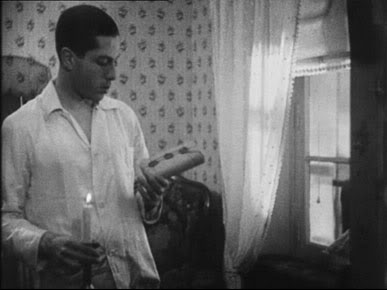
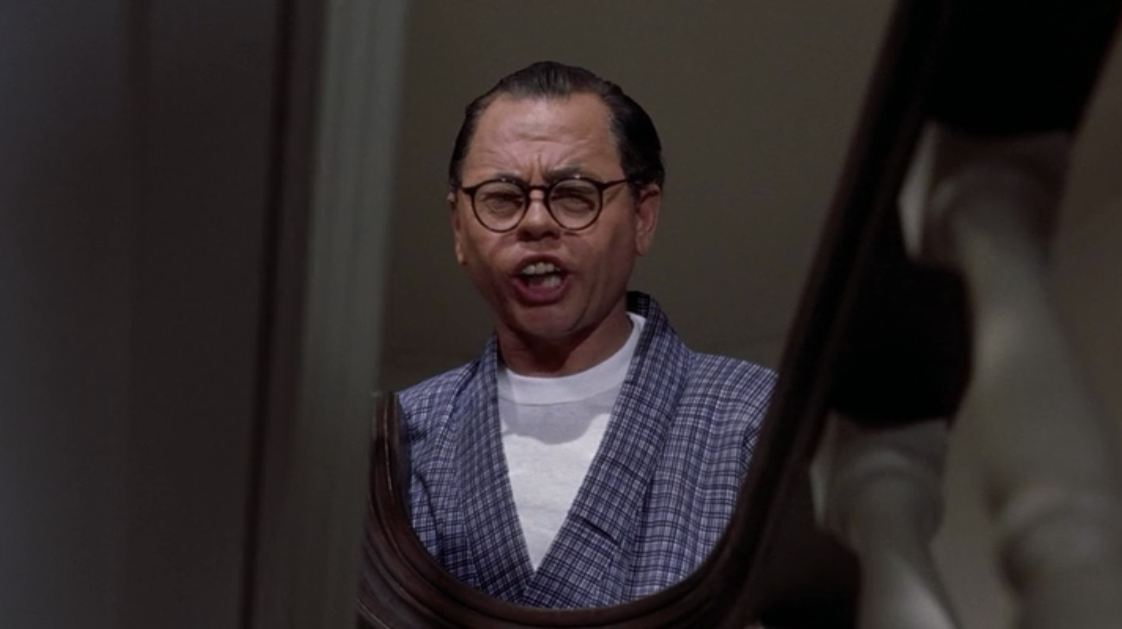
Today’s cinema adventure: C.R.A.Z.Y., a 2005 French-Canadian feature by director Jean-Marc Valée about the experiences of  a young man wrestling with his sexual identity as he grows up in a large, conservative, male-dominated Montreal family through the sixties and seventies.  The screenplay, based on the real experiences of François Boublay (who co-wrote with Valée), took 10 years to complete, but the end result was one of Canada’s most successful films of all time, becoming a box office hit and sweeping the Genie awards (the Canadian equivalent of the Oscars, for those who don’t know) with 11 wins out of 13 nominations.

Beginning with his birth on Christmas Day, 1960, the film follows the memories of Zac Beaulieu, whose family consists of three older brothers and (eventually) one younger; their father, Gervais, is a loving but authoritarian working class man with traditional ideas of masculinity, and their mother, Laurianne, a doting but submissive woman with deeply-held Catholic beliefs.  Over the course of twenty years, Zac endures the burden of being “different” in the midst of this painfully average, sometimes dysfunctional clan.  First he is branded as a “special” child with a gift for healing; then, as he grows older, he must face the ever-growing challenge of coming to terms with his homosexuality, an unthinkable and insurmountable obstacle to harmony with his family- and in particular, to his relationship with his beloved father.

With Zac’s journey to maturity and self-acceptance at its core, C.R.A.Z.Y. takes its audience on an inside tour of middle-class family life in suburbia; not only do we experience the painful struggle of a young gay man trying to first deny, then repress his sexuality in an un-accepting home environment, but also the other all-too-common scenario of drug addiction, as Zac’s older brother battles an escalating habit that is discouraged but enabled by parents without the knowledge or skills to make a difference.  Lest it seem, however, that the film presents only a bleak and dour perspective, rest assured that the conflicts and tragedies are woven delicately into a total picture that includes a great deal of quirky humor, as well as portraying the many small joys and transcendent moments that bind a family together- and the private experiences, indelibly printed in memory, that give meaning to an individual life.  In the end, though we see Zac and his family embroiled in much turmoil throughout- and mostly with each other- Valée’s film is about love, and its power to redeem and unite, no matter what seemingly irreconcilable differences may exist or how many mistakes have been made between us.

One of the key elements that contributes to the film’s effectiveness (and it is very effective) is the way it captures the third-quarter-20th-Century setting, giving it a particular significance for viewers who, like its lead character, grew up in this era.  Part of the way it does this, of course, is through its superb scenic and costume design; there is an authenticity to the choices that has to do with capturing the everyday look of the era, rather than attempting to give us a flashy, definitive period style.  It is however, the use of music that conjures the period most noticeably, all the more so because it plays a key role in the plot.  Music provides a common bond between father and son, and is an important outlet for both characters.  Highly specific choices are featured prominently throughout: for instance, father Gervais has a fondness for singing along with “Emmenez-moi,” by Charles Aznavour, mirrored later by Zac’s impassioned bedroom performance of David Bowie’s “Space Oddity;” and in one of Zac’s flights of imaginative fantasy, he has a vision of his epiphanic levitation in the church to the strains of the Rolling Stones’ “Sympathy for the Devil.”  The heavy use of the above artists, along with Pink Floyd, Patsy Cline and others, led to the somewhat staggering fact that more than half the film’s budget went to the acquisition of rights for these songs, and director Valée took a cut in his own salary in order to ensure their inclusion.

The excellence of C.R.A.Z.Y. is the result of top-notch work from everyone involved, and it’s an example of a film that is so dependent on the seamless combination of its elements that it seems unfair to single out individuals for specific praise.  Nevertheless, a few standout cast contributions deserve mention.  Most obvious, of course, is the performance of Marc-André Grondin as Zac; whether he is willfully disregarding his father’s behavioral strictures, furtively eyeing his cousin’s teen-dream boyfriend, determinedly trudging through a blizzard as penance for his sinful thoughts, or finding an outlet for his stifled passions through his love of music, he lets us inside and allows us to feel like participants in his story.  The performers who leave the deepest impression, however, are Michel Côté and Danielle Proulx, completely authentic as his father and mother; they inhabit this pair without judgment or caricature, showing us their many flaws but also the good intentions and endearing qualities that make them lovable.  Côté in particular gives an unforgettable portrait of a man who is at once larger than life and touchingly human; volatile, masculine, and charismatic, he commands the screen and makes it very clear why this relationship is so important to Zac.

C.R.A.Z.Y. is not a film that invites in-depth analysis of its underlying themes and archetypal symbols, though these things are present; rather, it is a heartfelt, sometimes painful slice-of-life movie filled with bittersweet nostalgia, ironic hindsight, disarming levity, achingly familiar moments of commonality, flashes of revelatory observation, and a cumulative emotional resonance that subtly builds to an unexpectedly powerful climax.  It accomplishes a rare feat for this type of movie, allowing us to be drawn so completely into this family that we truly feel a part of it.  This is partly due to the way Valée and Boublay show us the kind of mundane everyday details that become shared touchstones through repetition and associated memories, and their effort to invest each member of the family with as much individual life as possible, even the brothers whose smaller roles in the proceedings leave them more or less in the background; the final effect is that these characters seem like real people in our lives, people that we know intimately, and this serves to deepen our connection to them and give their experiences the weight of shared universal memory.  Perhaps most importantly, the movie possesses a sincerity which derives largely from the genuine love it has for all of its characters- even as it reveals their maddening imperfections and their often inadequate skills at coping and communication.  This quality alone makes it superb, far-and-away superior to so many similar cinematic memory-plays that start promisingly and then devolve into just another manipulative tear-jerker before the final scenes; but what makes it a truly remarkable film is the primary perspective it takes in its exploration of the trials and tribulations of family life.  With Zac as our window into the Beaulieu clan, our sympathies are naturally transferred to him, and we are therefore led to identify with his personal conflict, which is, of course, the central focus of the film.  His gradual progression- an anguished process of fear, denial, self-loathing, and self-deception, built around his emerging homosexuality-  is thereby made relevant to audiences without firsthand understanding of his experience, a sadly familiar one to millions of gay and lesbian people the world over. It’s a heartbreakingly complete and specific portrayal: Zac’s fear of humiliation and rejection from his family, his desperate bargaining through prayer to have his “curse” removed, his rejection of faith and rebellion against normalcy even as he continues to hide his true nature; all these and more are important facets of the movie’s dominant subject matter, and though it’s all so common as to border on cliché, it’s a social phenomenon that has been long obscured by stigma.  By investing us in Zac from the beginning of his life, the movie opens it up to be shared- and experienced, at least through extension- by all.  I may be wrong, but I can, unfortunately, think of no American film that even comes close to making the reality of growing up gay so painfully accessible to a wider audience; I invite your corrective examples, because if there are such films, I very much want to see them.

http://www.imdb.com/title/tt0401085/

Bad Lieutenant (1992)

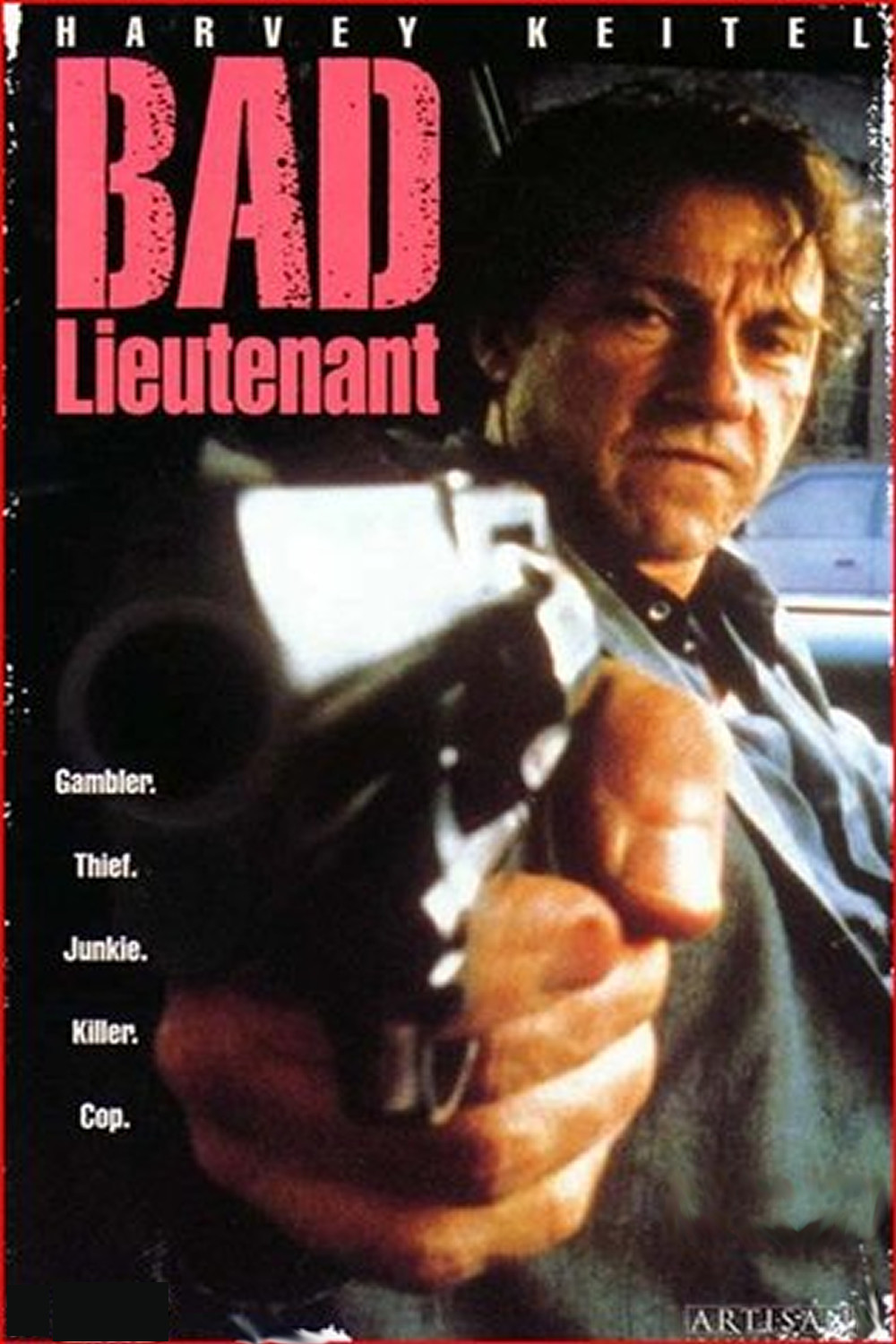
Today’s cinema adventure: Bad Lieutenant, Abel Ferrara’s 1992 feature starring Harvey Keitel as a corrupt, alcohol-and-drug-abusing New York policeman whose life begins to implode as he investigates the rape of a nun.  Controversial for its graphic and frequent depiction of drug use, as well as for its gritty realism and its subject matter, it found an appreciative cult audience and helped to reinvigorate its star’s career.  Following the title character through a period of several days, it gives us a portrait of a man spiraling out of control; caught up in an arrogant game of deceit in which he abuses his power to serve his own appetites for sex, drugs, and domination, he begins to crack when his gambling on the World Series places him in an ever-escalating debt and threatens to bring his reign of excess crashing down.

Director Ferrara began his filmmaking career with violent exploitation thrillers like The Driller Killer and Ms. 45; and this movie bears a strong resemblance in tone to the grainy, visceral films of that genre.  However, though Bad Lieutenant feels as if it is going to explode with violence throughout, it has a minimum of bloodshed, onscreen at least; rather, the pregnant expectation of horrors to come is generated by its central character’s tense, broiling emotional state, a palpable force which is the true focus of Ferrara’s concerns.  The lurid world surrounding his troubled protagonist- a world of crime scenes, crack-heads, and prostitutes, contrasted with family-oriented domestic strongholds (littered with the iconography of Catholicism) and the sacred austerity of the church- serves merely as a backdrop for the one-man passion play being enacted here; the true plot has little to do with either the details of his investigation or the escalation of his self-destructive behavior, except insofar as these things affect his progression towards personal catharsis.  For despite Ferrara’s cinéma vérité approach, in which he captures the seedy New York underworld and explores the blurring of the lines between the good guys and bad guys that inhabit it, Bad Lieutenant is a film about Catholic guilt and redemption.  By paralleling the story of this man’s personal unraveling with his investigation into the defilement perpetrated against the church and the nun who represents it, the movie provides a symbolic connection to his own defiling of the sanctity of a society he has sworn to protect and his betrayal of the cultural values he has been trusted to uphold.  It’s a theme common to many films exploring criminal activity within insular communities: the conflict between deeply ingrained religious ethics and violent antisocial behavior is repeatedly seen in the work of filmmakers with roots in such cultures; indeed, it is a particular hallmark of Martin Scorsese, with whose work Bad Lieutenant shares many elements (not the least of which is the presence of Keitel)- a fact which no doubt contributed to the great director’s championing of it as one of the ten best movies of the nineties.

Of course, it would be a drastic mistake to characterize Bad Lieutenant as a religious movie; instead, it is more in the vein of a social docu-drama, an examination of the peculiarly dissociated psychology necessary for the reconciliation between two such opposing behavioral mandates.  Existing in a shadowy sub-culture where acts of violence and oppression are requirements for success and status, the spiritual strictures against such transgressions must be sublimated to allow for the needs of worldly survival; in the case of our nameless police lieutenant, this process is achieved through a mountain of hedonistic distractions, but eventually, faced with a summons to pay the debts he owes in both worlds, his guilt comes roaring to the surface despite a titanic struggle to maintain his denial.  This painful interior war is made crystal clear in Keitel’s remarkable performance; the actor delivers an intensely raw portrayal, stripping himself naked for the camera (both literally and figuratively) with a bold honesty that is almost unbearable to watch.  He is alternately hateful and pitiable, an embodiment of hubris living in the lonely isolation of a fiercely defended bubble, and when he lets the walls come down it is as intense and terrifying as any sensationalistic bloodbath- perhaps, in fact, in an age when audiences are desensitized to the excessive depiction of violence on the screen, such a harsh revelation of human frailty is even more disturbing.

The unflinching truthfulness of Keitel’s performance, which Ferrara wisely uses as the meat and bones of his film, is complemented by the director’s aforementioned documentary style; working from a screenplay by actress Zoe Lund (who appears in a small but significant role)- to which his own name is also credited, along with Paul Calderon and Victor Argo (both of whom also appear)- he seems to have relied on improvisation for much of the final dialogue, which adds to the realistic, in-the-moment feel, further enhanced by his minimal use of such standard storytelling techniques as cutaways and close-ups (though this latter conceit sometimes has the consequence of obscuring key plot details).  To complete the effect, cinematographer Ken Keisch utilizes mostly natural lighting and a stationary camera, and the action takes place in authentic New York locations; the result is a film as free of artifice as is likely possible for a work of fiction, though Ferrara does allow himself the luxury of the occasional artfully-composed shot or blatantly symbolic embellishment.

Before summing up my reactions to Bad Lieutenant, it is probably important for me to add a disclaimer: Catholic guilt is not a subject that interests me greatly.  Though undoubtedly relevant to a great many viewers and widely applicable to a larger audience by virtue of association to the larger theme of balancing ethical and practical concerns of living, it’s a subject that, for me, seems a bit exclusionary (in that it implies a special burden for a certain segment of the population) and sometimes even smacks of self-pity and hypocrisy.  That said, I can certainly appreciate the validity in an artist’s expression of their insight and observations through their work, particularly regarding a deeply personal issue connected to their cultural background and their experiences within it; I can appreciate it even more when it is handled with the degree of technical and artistic proficiency shown by Ferrara with this film.  There is no question that this is a deeply felt, superbly crafted piece of filmmaking, and even if that were not the case, Harvey Keitel’s performance alone would be more than enough to recommend it.  As excellent as it is, though, and as unique in its specificity of perspective, I can’t help feeling left strangely cold by Bad Lieutenant.  It may be that, in the end, Keitel’s character is so irredeemably unlikeable that his last ditch efforts at spiritual atonement feel like a sham, a gambler’s desperate scramble to hedge his bets- though perhaps that is part of the point.  It may also be that the whole thing feels too familiar, like a litany that has been repeated so many times it has lost its meaning- but then again, perhaps that is part of the point, too.  Perhaps this matter of disobedient Catholic bad boys is a lesson that must be repeated, endlessly and in as many ways as possible, until the world is at last ready to move beyond the bargaining mentality that allows the rationalization of atrocious acts by presuming future forgiveness through atonement; but now I’ve moved out of the realm of cinematic criticism and into that of social commentary.  At any rate, I suspect many viewers, like myself, may have difficulty finding a connection to the dreadful cycle of spiritual realignment portrayed in Bad Lieutenant; the rest will no doubt find it a powerful and meaningful experience.  Either way, it’s an impressive piece of moviemaking- and the performance at its center is certainly as fine an example of screen acting as you will ever see.

http://www.imdb.com/title/tt0103759/

 

Death Race 2000 (1975)

Today’s cinema adventure: Death Race 2000, the 1975 fantasy-adventure exploitation film, produced by B-movie king Roger Corman and directed by Paul Bartel, about a gladiatorial motor race taking place in a futuristic America ruled by a totalitarian government. Marked by its clearly low budget and campy sensibilities, it was (of course) lambasted by critics upon release- but has since become a bona fide cult classic, spawning numerous spin-offs in other media, countless imitators, and a big-budget Hollywood remake.

Wanting to capitalize on the publicity surrounding the then-upcoming film Rollerball, Corman found suitable source material in a short story, by sometime colleague Ib Melchior (who has a fascinating history in his own right, which you can read about here), called The Racer. Adapted into a screenplay by Robert Thom, then rewritten by Charles Griffith at the insistence of director Bartel, it visualizes a not-too-distant future in which America has been devastated by economic collapse and is under the control of an Orwellian regime (headed by a smarmy figure known simply as “Mr. President”), possessing the combined authority of church, state and media, and dedicated to a policy of “minority privilege.” Sponsored by the government is a yearly cross-country race in which contestants- paired with “navigators” who are apparently also designated sex partners- not only vie to be first across the finish line, but are awarded points for killing hapless pedestrians. Televised and spun for mass consumption, this ritualistic slaughter is further complicated by the interference of a group of rebels bent on sabotaging the proceedings and kidnapping the star driver, a mythic figure known as Frankenstein, whose survival of previous races has left him half-man/half-machine- or at least, according to his P.R.

Corman had always targeted the youth audience with his trend-savvy drive-in fodder, and by the 1970s had become associated with the counter-culture movement; Death Race 2000 struck just the right blend of anti-establishment sentiment and testosterone-fueled fantasy for his purposes. Using mostly re-bodied Volkswagens to stand-in for the souped-up fantasy roadsters driven by the race contestants, filmed on public roadways without permits, and starring David Carradine for box office insurance, the film was shot for a budget of $300,000 and ended up earning $5 million- critical derision notwithstanding.

The disapproval of 1975 critics was perhaps easy to understand. Death Race 2000 is a prime example of quickie low-budget movie making designed to attract a young and unsophisticated audience by titillating them with gratuitous violence and nudity. However, though that audience of pot-smoking drop-outs (and wannabe drop-outs) may have responded to these elements- which the movie certainly delivered- they also responded to something the establishment critics didn’t seem to notice: wrapped up in its lurid, ridiculous premise and its cheap, exploitational thrills is a core of smart social satire and subversive anarchy that captured the zeitgeist of these disillusioned flower-children; the darkly zany vision of the future presented here was clearly an over-the-top parody of the present-day world they lived in, from which the only real possibility of escape was to destroy the system from within- and this, of course, is exactly the scenario of Death Race 2000. While the movie’s well-intentioned revolutionaries are largely ineffectual in their war against the established order, and its media-hypnotized masses are willing lambs to the slaughter, its darkly wisecracking anti-hero- a trusted tool of the government and the best player in their monstrous game- is the only one who has the power to bring an end to their reign of deceit and oppression. It’s anti-authoritarian wish-fulfillment fantasy at its most unapologetic, and the sentiment that drives it is arguably even stronger today than it was then.

Despite this heavy-sounding sociopolitical subtext, the primary reason for watching Death Race 2000 is the same today as it was 37 years ago: it’s a hoot. Director Bartel brings his brand of dry whackiness to the table here, making the most of the story’s frequently ludicrous conceits with tongue-in-cheek self-parody; we don’t have to take the movie seriously because he reminds us throughout that it doesn’t take itself that way, allowing us to shut down our brains and just enjoy the absurdities onscreen. As for all that gratuitous nudity and violence, it certainly is gratuitous- and gleefully so; the movie revels in its tawdriness, delivering glossy, seventies-flavored sex and gore as often as possible without any attempt to justify it. The bloody parts, in particular, are highlighted with great delight, and they are somehow all the more satisfying for being so clearly fake; indeed, most of the carnage borders on slapstick comedy, and the truly graphic stuff is so fleeting you can miss it if you blink- because if it lasted any longer the bargain-basement trickery being employed would be even more obvious than it is already. It’s just more of the ridiculousness that gives the movie its deliberately mindless appeal; and it probably goes without saying that, by today’s standards, what we see in Death Race 2000 is pretty tame. At any rate, what 1975 critics found objectionable seems today like a pretty good recommendation for the film.

The acting here is more or less what you might expect- which means, actually, that it’s pretty good, all things considered. Each performer brings exactly what is required to their character, and in many cases adds a substantial portion of their own personality to it as well, fleshing out these formulaic ciphers and giving them a life over-and-above their roles in this twisted Wacky Racers-style scenario. Some of the faces are familiar, such as future Love Boat-and-U.S.-Congressional lacky Fred Grandy and former Warhol “superstar” Mary Woronov, the latter in particular being one of the film’s highlights with her surprisingly multi-faceted performance as one of the race’s contestants- although, in truth, Woronov’s presence in such films is always a delight, due to her ability to bring so much of her smart, sexy and sweet self into the mix, so her performance here is not that surprising, after all. For many, the biggest surprise will be the presence of Sylvester Stallone as Frankenstein’s chief rival in the race, a swaggering braggart in a gangster persona who takes everything way too seriously; Stallone, who was doubtless working on the screenplay for Rocky even as he filmed this, shows the charisma and ability that would soon make him a star, even though it’s hard to tell, sometimes, if his effectiveness here is due to his actual work or to the foreshadowing of his future screen persona. As for the movie’s star, David Carradine, he was fresh from his success on TV’s Kung Fu, and he was anxious to shed the image he had gained from it (though Corman had initially wanted anti-establishment icon Peter Fonda for the role); he gives a performance that, in another context, would probably have gained him a lot of critical acclaim, investing his brooding, bitter, bad-ass character with the depth, intelligence and humor necessary to make him not only interesting, but likeable- and, importantly, though perhaps incidentally, creates a persona that adds weight to the underlying elements that give Death Race 2000 its unexpected substance.

As for the film’s technical aspects, it manages to find a fairly coherent visual style despite its low budget, injecting its fruity satirical elements into the design in such a way that the cheapness actually seems to enhance the final effect. The costumes are a blend of cock-eyed futuristic imagining and modern-day tackiness, though its worth noting the striking resemblance between Frankenstein’s intimidating black outfit with the iconic design for Darth Vader, who would first appear on the screen a good two years later. The scenic elements are handled with a similar hybrid approach. The tinselly, cartoonish trappings of the futuristic setting are grafted onto the obviously contemporary surroundings, making its satirical connection to the present more obvious; the garish, cartoonish designs for the cars smacks of adolescent male automotive fantasy, and the fact that these re-purposed vehicles actually seem to perform is impressive in itself- in reality they were usually filmed rolling downhill after being pushed into motion, and the cameras were sped up to make it look like they were moving faster than they really were. The more elaborate effects- such as the single matte painting used to create the future New York skyline- are laughably shoddy, which of course only adds to the overall appeal, as do such obvious earmarks of the grade-Z budget as the undisguised exit door in Frankenstein’s “hotel suite” and the amateurish graphics of the various signage used throughout.

Death Race 2000 was remade a few years back, boosted with big Hollywood money but no doubt targeted at this generation’s version of the same audience. I confess I haven’t seen it; but I must say I find it difficult to believe that an A-list production would have quite the same effect as the original. Watching Corman and Bartel’s film gives the impression that you are somehow participating in an underground revolution, poking fun at “The Man” under his oblivious nose. With real money and studio backing, it seems to me such a film would have a different kind of phoniness to it, one far more insidious and subtle than the cardboard backdrops and obvious stage blood of the original- but that’s a review I haven’t written yet, though perhaps one day I will. In the meantime, I can heartily endorse the low-rent thrills of this cult-classic gem from the past; though the future it foresees is a little behind schedule, it still may come- but if it does, at least we can say we were warned.

http://www.imdb.com/title/tt0072856/\

Cold Comfort Farm (1995)

Today’s cinema adventure: Cold Comfort Farm, the 1995 screen adaptation of Stella Gibbons’ popular 1932 novel parodying the English literary tradition of melodramatic rural fiction.  Directed by Oscar-winning director John Schlesinger (Midnight Cowboy) and produced by BBC television for broadcast in the UK, it was later released theatrically in America, adding the prestige of modest box office success to the critical acclaim it had already received.  The novel from which it was derived poked fun at the conventions used by such authors as D.H. Lawrence and the Bronte sisters, in which life in the English countryside was depicted as a grim and gothic affair, with characters in the grip of long-festering guilt or otherwise self-defeating psychological dysfunctions, usually in connection with some shameful or dishonorable act committed generations before.  The plot of Cold Comfort Farm turns this formula on its ear, as a cheerfully modern young woman comes to live on her relatives’ country estate and sets about applying common sense and psychology to the long-standing status quo that keeps them mired in old-fashioned and unnecessary gloom.

Kate Beckinsale stars as Flora, the heroine, bringing a smart, no-nonsense charm to the character and making us easily believe in her ability to brush aside decades-old stagnation as if it were the cobwebs in a doorway.  Surrounding her as the eccentric Doom-Starkadder clan are a host of veteran British thespians, all clearly relishing the chance to sink their teeth into these deliciously ludicrous roles.  Eileen Atkins is hilariously dour as Aunt Judith, fatalistic, terminally depressed and possessed of a somewhat unhealthy obsession for her libidinous son, Seth; and as the latter, Rufus Sewell strikes the perfect satirical balance to make his vainglorious, womanizing character likable instead of insufferable.  Ian McKellen enjoys an uncharacteristically rough-edged turn as Uncle Amos, an amateur preacher, sporting a ridiculous mash-up of a rural accent as he gleefully spews his fire-and-brimstone sermon from the pulpit.  Sheila Burrell is delightfully domineering as Aunt Ada Doom, the reclusive and tight-fisted matriarch of Cold Comfort Farm, ruling her family with brittle authority as the continually reminds them that she “saw something nasty in the woodshed.”  Rounding out the household are fine performances from Freddie Jones, Miriam Margolyes, and Ivan Kaye, among others; and in non-family roles, there is standout work from Stephen Fry as a pretentiously progressive writer enamored of Flora, and the always-magnificent Joanna Lumley as an impeccable London widow who serves as her friend and mentor.

The screenplay by Malcolm Bradbury captures the goofy sense of fun intended by author Gibbons, sending up the melodramatic conceits of this popular sub-genre of British literature with a smart, optimistic viewpoint and a healthy dose of subtly hilarious wordplay; there are some truly memorable lines (my favorite comes from Amos as he preaches before his quivering congregation: “There’ll be no butter in Hell!”) and the plotting, though ultimately just as unconvincingly tidy as the overwrought romances  being parodied, weaves cleverly enough through its pleasant course that we don’t really mind its unbelievability.  There is also plenty of authentic English scenery- idyllic woodlands and meadows, rustic villages and farmlands, elegantly-appointed estates and salons- to provide eye candy along the way, and director Schlesinger keeps things visually stimulating by keeping his camera moving and using a wide variety of angles and perspectives- as well, of course, as keeping us continually focused on the real meat of the matter, superb actors portraying delightful characters.

Cold Comfort Farm is not a deep movie, nor does it yield a lot of stimulating conversation regarding its themes or its technique, at least not in most circles.  It does, however, yield a lot of fun; it’s smart and literate enough to satisfy those seeking intellectual diversion, yet completely accessible for the viewer with no connection to the English Lit crowd, and it provides plenty of hearty laughs for both kinds of audiences (as well as the rest of us who probably fall somewhere in between).  After all, outrageous behavior is outrageous behavior, whether or not you have read any of Thomas Hardy’s books, and in Cold Comfort Farm, there is no shortage of it.

http://www.imdb.com/title/tt0112701/

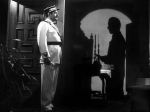
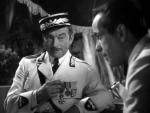
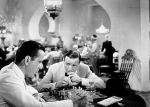
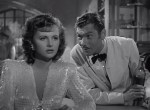
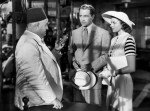
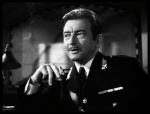
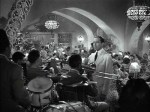
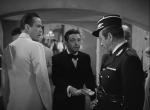
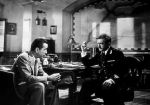
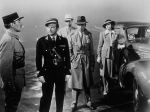
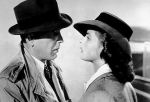
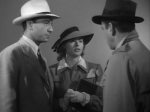
Casablanca (1942)

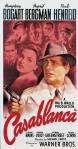
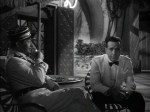
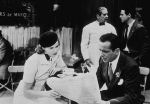
Today’s cinema adventure: Casablanca, the 1942 classic starring Humphrey Bogart and Ingrid Bergman as a pair of former lovers who are reunited amidst the turmoil and intrigue of the title city during the early years of World War II.  Frequently classified as film noir, this iconic gem is really more of a romance, though it shares many features- the cynical tone, the shadowy lighting, the focus on corruption and betrayal-  with the then-still-developing noir genre; but classification aside, the fact remains that Casablanca is one of the handful of films that can be indisputably called an iconic classic, an example of Hollywood’s golden era at its finest, and one of those cultural touchstones that never seems to lose relevance, despite the passage of years and the changing attitudes of society.  The reasons why are intangible; examining its elements individually, there seems no reason why it should have more power than any other relatively well-made pot-boiler of its time, and its production history was famously messy, with continual changes and second-guessing by its writers and producers that should logically have resulted in a complete muddle.  Instead it was, well, Casablanca.  It’s an example of one of those fortuitous combinations of people and circumstance that can only be ascribed to fate.

Though it may not be possible to fully explain the mystique of Casablanca, it is certainly easy to understand its initial success within a historical context.  It depicts a place where justice and decorum are merely a façade, creating the illusion of a level field in the deadly game of manipulation being played underneath; where sentiment and desperation are weaknesses to be exploited in the pursuit of shameless self-interest; and where law and diplomacy exist only to serve the powerful in the enforcement of their will.   In this cutthroat arena, Rick- a worldly-wise American expatriate- is the champion player, a representative of the “lost generation” who has transformed his disillusionment into a badge of honor, and who thrives in the niche he has carved for himself because he maintains a strict policy of isolationism- as he puts it, “I stick my neck out for nobody.”  It’s a strategy that works- at least until a romantic shadow from his past re-enters his life and forces him to choose between his self-protective shroud of indifference and a chance to use his position in the service of a greater good.  It was a perfect metaphor for an America that was hesitant about entering WWII after becoming jaded by the long and painful hardship of the Great Depression, and to make the allegory crystal clear, the story is populated by an assortment of international characters in various states of uneasy alliance with an ever-more-insistent Nazi presence.

Of course, if Casablanca were only notable for its heavy-handed political parallels, it would never have stood the test of time and would be remembered only as a piece of pro-war propaganda.  It is so much more than that.  The backdrop of then-timely politics serves as a stage upon which a timeless and universal drama is played, in which a man, burned and haunted by the disappointment of his past, rediscovers his humanity; and the cornerstone which allows him to do so is also the primary reason for Casablanca‘s enduring popularity- the iconic romance at the heart of the action.  Rick and Ilsa are without question one of the most famous pairs of star-crossed lovers in the history of film, perhaps even more so than Rhett and Scarlett.  Their story tugs at the heart of anyone who has loved and lost- which means, of course, everyone- and the connection is all the stronger for those who have had the experience of losing it due to the intervention of larger forces beyond their control.  Seeing this tender couple, played so perfectly and with such exquisite chemistry by Humphrey Bogart and Ingrid Bergman, find their opportunity to be together in the middle of the momentous events swirling around them is both bittersweet and cathartic, and their famous, final exchange on the foggy nighttime runway is surely one of the most simultaneously heartbreaking and uplifting scenes in the history of cinema.

The romance may be the centerpiece of Casablanca, but Rick and Ilsa are fully realized characters on their own, too.  Bogart, though he had been active for years as a second-string movie thug and had recently made a promising splash in The Maltese Falcon, here established once and for all the screen persona which made him one of Hollywood’s most durable stars.  His Rick is the ultimate smooth operator, classy but rough-edged, sophisticated but down-to-earth, confidant but unassuming; one look and you know he is not only the toughest and most dangerous guy in the room, he’s probably also the smartest.  To complete the picture, his wisecracking irony and his stoic demeanor do nothing to hide the noble and sensitive heart that beats inside him; it is clear from his very first moments onscreen that he is a man of honor, kindness, and charity, no matter how enmeshed he may seem in the dirty politics of Casablanca, and when he is revealed as a romantic and a champion of the underdog, it comes not as a surprise but rather as a triumphant confirmation of what we already know.  It’s a role that seems tailor-made for Bogart, in retrospect, and it is virtually impossible to see how anybody else could have pulled it off.  Ingrid Bergman’s Ilsa, though not as defining a role for her as Rick was for Bogie, is nevertheless one of her most memorable creations; she is, of course, beautiful, but she also radiates sadness, nobility, compassion, and sophistication; at the same time, she wears her own shade of the resigned, hard-edged irony that colors Rick’s persona, and watching it melt away as their rekindled love transforms her into a passionate woman is one of the key elements of Casablanca.  Besides all that, she also deserves a lot of respect for being able to credibly deliver some of the most ridiculously corny lines ever written for an actress.

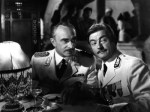
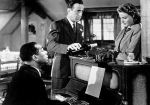
Of course, Rick and Ilsa are not the only memorable characters on the scene: the entire cast, comprised of several of the era’s most familiar stock players (many of whom were real refugees from the Nazi Reich), turns in superb and memorable performances, far too many to mention here.  It would be an unforgivable oversight, however, not to make special note of Claude Rains, as the charmingly corrupt police prefect, Renault, whose friendly rivalry and good-natured banter with Rick provides a grounding counterpoint to the love story, and whose heart of gold ultimately breaks through his cynical armor.  Also iconic are the delicious turns by film noir staples Peter Lorre and Sydney Greenstreet; the former as Ugarte, an unlucky black marketeer who seeks assistance and refuge at Rick’s nightclub (though he knows Rick “despises” him), and the latter as Signor Ferari, a bold-facedly opportunistic rival club owner with whom Rick has a grudgingly mutual respect.  Dooley Wilson projects loyalty, patience and heart as Rick’s trusted piano player- and his warm rendition of the signature song, Herman Hupfield’s ”As Time Goes By,” is one of the most memorable aspects of the film.  Conrad Veidt serves as the primary villain of the piece, an arrogant and bullying Nazi colonel whose deference to the local status quo is abandoned whenever it stands in the way of his absolute authority; a remarkably subtle and nuanced performance in a caricature of a role, delivered by one of Germany’s greatest actors, who, sadly, passed away soon afterward. Finally Paul Henreid manages the seemingly impossible task of making the character of Victor Laszlo- the underground resistance leader seeking escape from the Nazis through Casablanca, and Ilsa’s secret husband- not only believable in his too-good-to-be-true nobility but likable in spite of his position as the man standing between the film’s beloved romantic leads.

The many other delights of Casablanca are obvious in every frame.  Most noticeable is its rich visual design, beautifully captured by Arthur Edeson’s lush black-and-white cinematography, which features a synthesis of exotic and stylish elements into a mythic landscape that contrasts modern utilitarianism with decorative antiquity, a continual and elaborate play of shadows, and fantasized notions of its mythic locale.  The Casablanca of this film bears little resemblance to the real-life city which shares its name; it is pure Hollywood fantasy, designed to evoke the danger and intrigue associated with it in our imaginations.  Rick’s café, a place where Western elegance is imposed upon the Moorish sensibilities of its architecture, provides the central base for the film- it feels familiar without being quite safe, an oasis in the harsh (but still irresistibly romanticized), foreign atmosphere which makes up the rest of the city.  It’s a triumph of artistic design, influenced by Hollywood glamour and German Expressionism, and executed by Art Director Carl Jules Weyl and Set Decorator George James Hopkins.  The costumes by Orry-Kelly similarly provide a distillation of the early forties visual milieu, giving us timeless styles flavored with fantasized exotica; in particular, the powerful simplicity of Bogart’s white-jacketed evening wear, which became an instant classic, still represents the epitome of elegance in male fashion.  The musical score, by the legendary Max Steiner, is perhaps his definitive work, with its interpolation of familiar European anthems and the romantic melody of “As Time Goes By” into his own highly flamboyant and evocative compositions, and goes a long way toward setting the heightened tone which has burned Casablanca into the collective consciousness of subsequent generations.

All this excellent artistry is in the service of the film’s now-revered screenplay, by brothers Julius and Philip Epstein and Howard Koch, based on an obscure play, called Everybody Goes to Rick’s, by Murray Burnett and Joan Alison.  It is now well-known that constant rewrites kept the actor and crew uncertain throughout production, with Bergman, for instance, never knowing during filming who she was supposed to be in love with, and nobody certain of how the film would end.  This no doubt contributed to the cast’s loathing for the project at the time, and their belief that they were almost certainly making a horrible dog of a movie; fortunately, they were wrong.  Loaded with now-familiar classic lines, marked by excessively melodramatic dialogue which nevertheless wins us over by its sheer audacity and the committed, straight-faced delivery of the cast, it’s a screenplay that transforms its time-specific scenario into a tale of eternal significance, an exciting and emotionally resonant portrayal of love and idealism blossoming in a hostile environment.  The full power of these themes, however, might still have been lost or obscured without the contribution of Michael Curtiz, a versatile workman of a director who is often overlooked by cinema scholars despite an impressive and prolific body of work; with the skill of a master he weaves all the disparate threads together into a cohesive package, which revels in its intricately embellished atmosphere and its lush moods even as it drives its intrigue-laden plot at a steadily building pace towards its immensely satisfying conclusion.

Casablanca is full of memorable scenes: the capture of Ugarte, the arrival of Ilsa at Rick’s and the flashback to their romance in Paris, the cafe patrons drowning out the singing Nazis with a rousing chorus of “La Marsellaise.”  Indeed, more than almost any other film, it seems a progression of one remarkable moment after another; but, finally, it is the ending that sticks with us.  Rick and Ilsa’s farewell on the runway hits us in a place that the artificial thrills of the plot cannot, and it feels so right that it is impossible to believe that any other ending was ever considered.  Then, right on its heels, there is the not-so-surprising defection of Captain Renault from the dark side, just in time to walk off into the foggy night with Rick for “the beginning of a beautiful friendship.”  The emotional wallop is potent; and maybe the reason it hits us so hard has to do with the choice that affects us all, at one point or another, to serve our own needs or to sacrifice ourselves for the sake of others.  In a world full of suspicion, greed, and deliberate cruelty- or even just a world where nobody wants to look like a sucker- it’s a tough choice to make, and maybe Casablanca affects us so deeply because it lets us believe in the notion of “doing the right thing” even when everyone else is afraid to.  In a way, it’s a bridge between the noble sentimentality of a world long gone- if, indeed, it ever existed- and the hard-edged realism of the modern era.  We are still human, after all, even in an inhuman world, and (as the song so aptly expresses it) “the fundamental things apply, as time goes by.”

http://www.imdb.com/title/tt0034583/

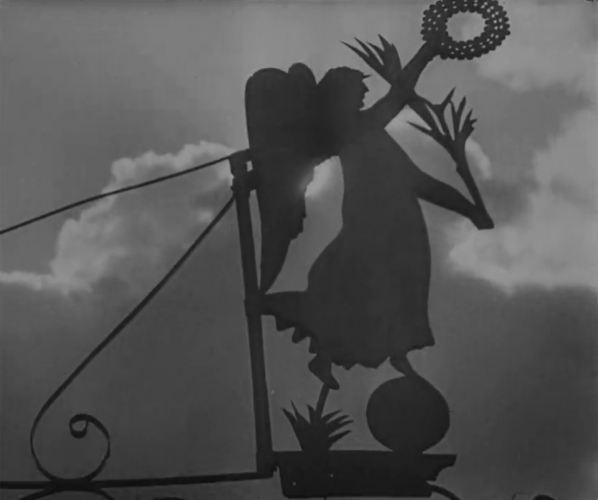
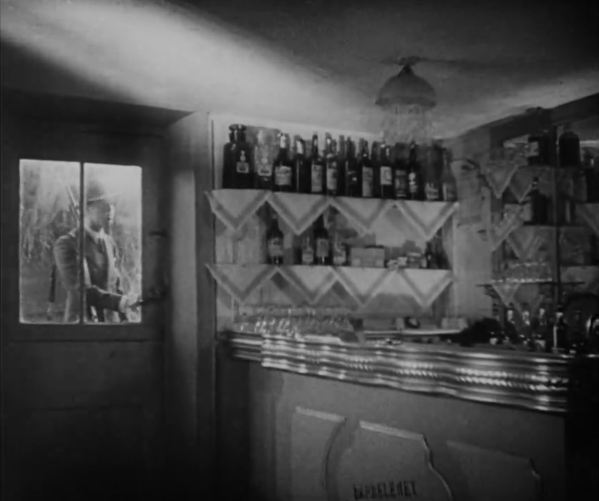
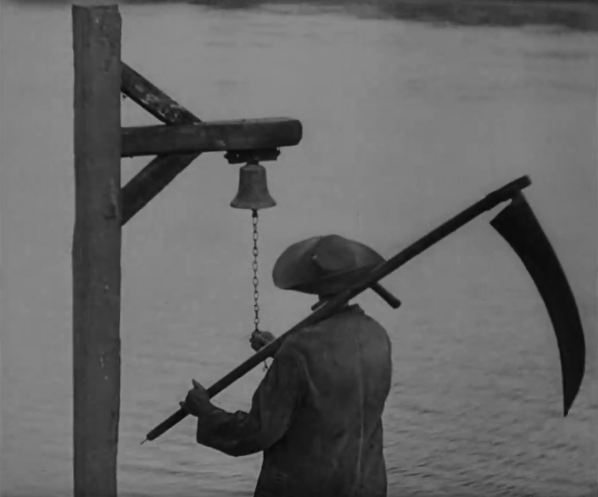
Vampyr (1932)

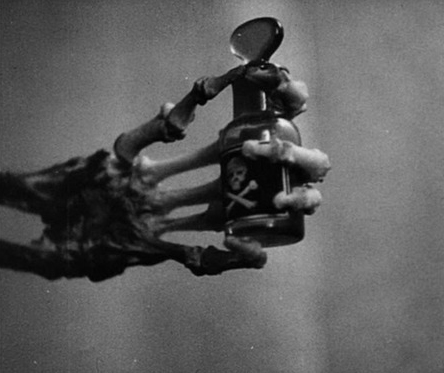
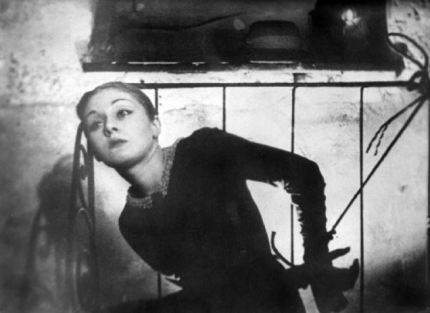
Today’s cinema adventure: Vampyr, a 1932 French/German horror film directed by Carl Theodor Dreyer, about a young man, obsessed with the occult, whose wanderings lead him into the dark troubles of a remote countryside manor, where the owner’s mysteriously ill daughter may be in the grip of horrifying powers from beyond the grave. Dreyer’s first film using sound, it was also his first effort following The Passion of Joan of Arc, a feature which, despite enthusiastic acclaim from critics, had been a box office disaster. With no studio willing to take a chance on the basis of his artistic promise alone, Dreyer found private financing from Nicolas de Brunholz, a young Baron who was a fixture of the Parisian social scene, known for his extravagant parties and his patronage of the arts, who would later become a prominent fashion editor for such magazines as Harper’s Bazaar and Vogue (and a mentor for designers Bill Blass and Calvin Klein, among others). De Brunholz’s condition for backing Dreyer’s film was that he would be its star; under the pseudonym of “Julian West,” assumed to assuage his prominent family’s disapproval of his acting ambitions, he portrays the wispy focal character of Allan Grey, and though his acting abilities were decidedly limited (and wisely un-stretched by Dreyer’s demands), his tall, slender frame and his handsome, elegant appearance set a distinctive tone at the center of the movie, aptly suggesting a strong spirit that has perhaps found himself over his head in a situation beyond his grasp.

Nevertheless, despite the support and participation of one of Europe’s most prominent society figures and the attendant buzz which surrounded it, Vampyr proved to be a worse flop than Joan of Arc, booed at its debut screening and, this time, even derided by the critics, who found it slow-moving, incoherent, and/or laughable; for many years it was widely considered Dreyer’s worst film, falling into such neglect that all but a few damaged original prints were lost. Indeed, produced to capitalize on the popularity of such American horror films as Dracula and Frankenstein (though it was initially conceived before these films had been released), it had such a marked difference in tone and style that it is easy to see why it perplexed and disappointed movie-goers of the time. The film’s failure contributed to Dreyer’s declining financial and emotional stability, which led to a nervous breakdown and kept him from making another film for another 11 years. It was only after his subsequent career and the retrospective appreciation of a later generation that reassessment granted it a status more deserved by its innovative and unique contribution to the horror genre and to cinema in general.

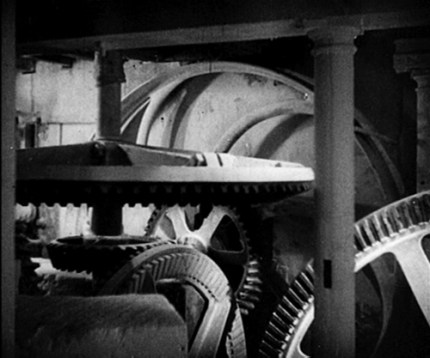
Ironically, many of the elements which made Vampyr such a flop are the reasons it is considered such so significant today. On a superficial level, it is one of the first horror films to feature a female vampire (and an elderly one at that) as its main antagonist, having been partly based on the short story Carmilla, by L. Sheridan La Fanu, a popular 19th-century fiction known for its decidedly lesbian overtones- some of which carry over into the film. It was also one of the first times the obvious sexual implications of the vampire myth were explored more overtly; though there is no explicit reference or depiction of sex, the metaphoric connection is clear, particularly in the decidedly romantic manner in which the young heroine is seen being victimized by her attacker. The film is also notable for its re-imagination of the standard, Dracula-based formula seen in most vampire movies; although it features most of the key archetypes inherent to the story, many of the familiar stock characters are absent or significantly changed, and the locations, though suitably grim and antiquated, are not the gothic staples of our expectation- the village is an idyllic, sun-scaped riverside town, devoid of torch-waving mobs, and in place of a foreboding castle for the vampire’s lair, we are given a decrepit flour mill.

More important, however, is Vampyr‘s visual and thematic style, and the underpinnings of its influences from dominant artistic movements of the time. Dreyer’s artistic sensibilities, while distinctly his own, were clearly influenced by his involvement with the French art scene, resulting here in a movie reminiscent of works by his more directly avant-garde contemporaries such as Luis Buñuel and Jean Cocteau. His stated intention with Vampyr was to take the art of cinema in a new direction, using a vehicle which lent itself to imaginative treatment by nature of its supernatural content; in realizing this goal, he blended his own passion for realism (enhanced by his use of natural lighting and authentic location photography) with the heightened theatricality and Freudian overtones of Expressionism, the seemingly nonsensical and dreamlike imagery of Surrealism, and the piecemeal construction of Impressionism. The resultant film glows with an ethereal beauty, combining a variety of cinematographic techniques (exquisitely executed by Rudolph Maté) that range from the sharply defined to the gauzy and murky; the narrative is deliberately cloudy and illogical, filled with non-sequiturs and credibility gaps, creating the feeling of a dream or even a delusion, an effect bolstered by camera trickery that gives us such jarring elements as shadows moving independently (or in compete absence) of their owners, and otherwise commonplace actions occurring in reverse; deeply symbolic or arcane iconography is everywhere, and the screen is filled with a rich and varied texture of design- mostly the result of decor and objects inherent to the actual shooting locations; and finally, the overall effect of Vampyr is created by a cumulative process in which the broad and vivid strokes of its seemingly disjointed progression combine to form a complete picture that is unified and harmonious- if somewhat unsettling.

Adding to the hallucinatory feel of Vampyr is its primitive use of sound. The European film community was behind the curve with the new technology of talking pictures, and the location shooting of Dreyer’s movie only exacerbated the difficulties, as did his plan to shoot the film in three separate languages- French, German, and English, though the existing print was restored from surviving copies of the former two versions and there is no evidence that the latter was ever completed. The problems were surmounted by a screenplay (co-written with Dreyer by Christen Jul) containing a minimum of dialogue, mostly cryptic exchanges that were overdubbed in a studio after the fact by actors other than the ones onscreen; however, the inclusion of aural elements was an integral part of Dreyer’s technique here, and he utilizes a wide variety of eerie effects, not only to underscore the action (along with an elaborate and effective score by Wolfgang Zeller- a pioneering inclusion for early sound films, which were mostly devoid of musical accompaniment), but also to aid in telling the story, with several key scenes relying heavily on soundscapes to convey important events that are taking place off-camera.

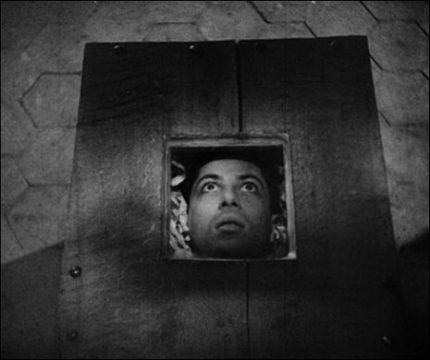
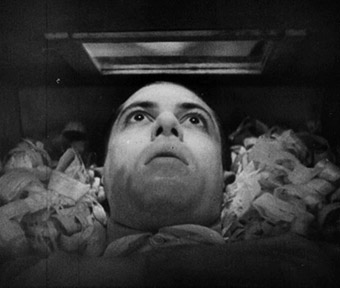
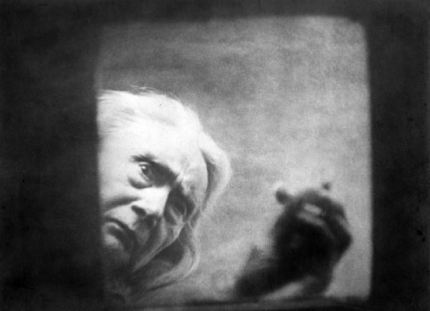
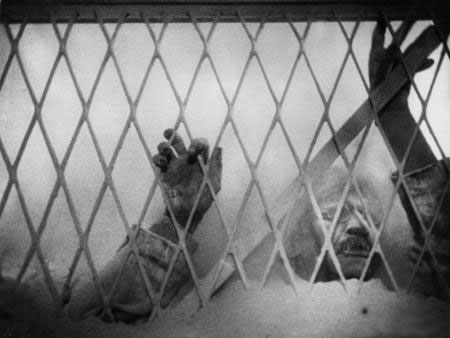
However, even with full appreciation for the skill and artistry with which it was made, watching Vampyr is hardly a thrilling experience; with its emphasis on atmosphere and its artistic conceits, it fails to concern itself with such usual priorities as pacing or continuity, and in spite of the macabre crisis it depicts it is largely lacking in suspense or action, contenting itself instead to create a series of elegiac encapsulations of mood and concept. As it approaches its ending, however, Vampyr suddenly shifts gear and delivers a pair of sequences that transform it from an intellectual exercise into a genuine horror movie. First is an extended set piece in which its protagonist has a premonition of himself lying wide-eyed in a windowed coffin, being prepared for and carried off to burial. Through the use of first-person perspective, Dreyer creates a highly uncomfortable, claustrophobic identification of the audience with the corpse, forcing us to imagine our own death and experience the ominous finality of these moments, as well as conjuring the universal fear of being buried alive. Continuing to capitalize on the latter, we are shortly afterward given a scene in which one of the characters, trapped at the bottom of a storage shaft and surrounded by the cold sterility and inhumanity of ominous industrial machinery, is slowly submerged in a cascade of sifted flour until his desperate cries for help are silenced by death. These sections of the film distill its underlying theme into a direct and palpable form; for Vampyr, at its core, is ultimately a meditation on the inescapable reality of death, the fear of which, as Dreyer rightly understood, is at the base of all our obsessive fascination with the dark mythology of our folklore and fiction. When we cringe at the imagined threat of the undead monsters or unspeakable diseases that haunt our shared nightmares, we are really responding to the shadow of our own mortality; and though an iron spike through the heart may end the vampire’s reign of terror, and an emergence from fog into a sunlit clearing may temporarily provide the comfortable reassurance that all will now be well, we know that staving off these supernatural horrors can only delay the inevitable fate which awaits us all. The power of Vampyr derives from its recognition of that fact; and though much of the film expresses the concept of death through motifs and moods that impress us without involving or exciting us, it blindsides us in its penultimate scenes with these visceral evocations of our most primal fear, rendering hollow its obligatory happy ending and leaving us with an indelible sense of the bleak hopelessness summed up in the familiar words inscribed on the lid of our hero’s hallucinatory coffin: “From dust are you made and to dust you shall return.” It’s an uncomfortable reminder, and one which Vampyr provides more vividly than the vast majority of gruesome splatter-fests that represent the horror film genre of today.

http://www.imdb.com/9/title/tt002364

Blowup (1966)

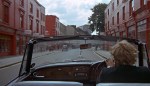
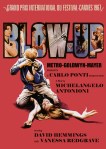
Today’s cinema adventure: Blowup, the 1966 feature by Italian director Michelangelo Antonioni; an existential mystery set against the backdrop of “Swinging London’s” hip fashion-and-art scene. Concerning a successful young photographer who begins to suspect he has inadvertently captured images of someone being murdered in a park, the film is really an exploration of alienation and desensitization in a culture obsessed with image and surface, as well as a meditation on the deceptive nature of perception and the uncertain boundary between illusion and reality. Setting up his theme from the very first scene, in which a truckload of exuberant mimes careens into a London plaza, Antonioni proceeds to perpetrate a cinematic sleight-of-hand by luring our focus onto the ostensible subject- a callous youth, played by unlikely leading man David Hemmings, and the intrigue into which he stumbles- while using the surrounding environment to convey the real purpose of the movie. As surely as the significance of his leading character’s photos lies in the grainy, uncertain corners of their background, the real mystery of Antonioni’s film reveals itself through examination of the peripheral details of its central plot.

The action of Blowup takes place in a world full of vapid fashion models and disaffected posers, communicating in brief, distracted ambiguities and seemingly trying to appear as disinterested as possible at all times. It’s a place dominated by a game in which style is substance, and the master of this game is the photographer, Thomas. As a creator of image, he is at the center of the “in” crowd, and he flaunts the power granted him by his status; surly, entitled, smugly insolent, he treats everyone as an object or as a means to an end, striding confidently through his day and seeking relief for his terminal ennui from momentary whims- whether buying a propeller from an antique shop, having a naked romp with a pair of underage would-be models, or clamoring for a scrap of a rocker’s smashed guitar at a concert- and then becoming disenchanted as soon as he achieves his fleeting gratification. He is a reflection of the culture of desire and acquisition that surrounds him, completely disconnected from others and encased in a self-absorbed bubble of over-saturated perception; and when reality asserts itself in the form of his unwitting involvement in the enigmatic experience at the park, he is completely unprepared and ill-equipped for the situation, failing to control it with his usual tactics and unable or unwilling to communicate it to any of the emotionally distant friends or vaguely hostile strangers he encounters.

It would be easy to slide into a complex morass of analysis in discussing Blowup. It is a deceptively simple film that opens up into an unending progression of dovetailed themes and implications upon even the most superficial examination. Suffice to say that in his portrayal of this ultra-specific time and place, Antonioni captures timeless issues that affect the society of popular culture and commerce no matter what the details of their outer trappings; and in Thomas’ obsessive quest to determine the truth about what he has seen, enlarging his photos until they become as abstract as a Rorschach ink blot, he illustrates the impossibility of objective certainty and suggests that the difference between truth and illusion exists only within our highly suggestible perceptions. Ultimately, all that can definitively be said about Blowup is that it is about a man who, for a short time, at least, pays attention to something.

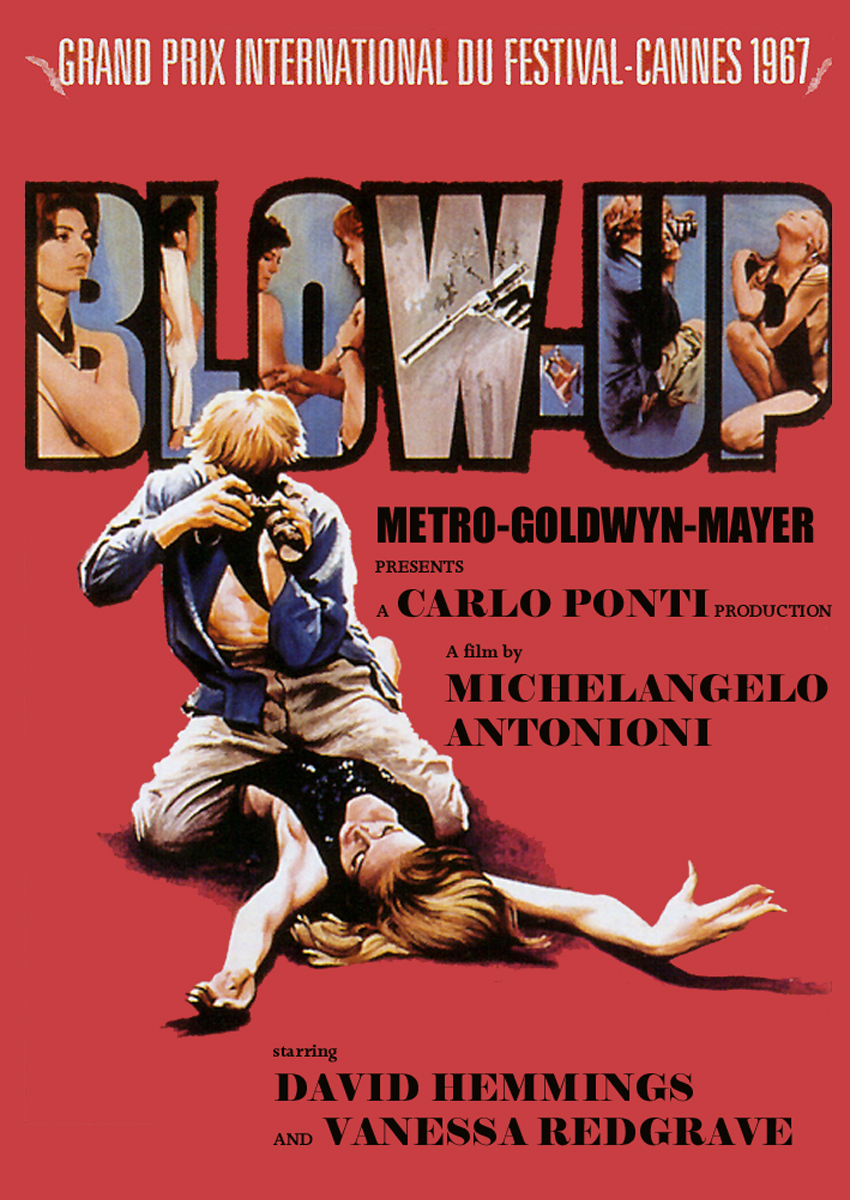
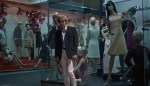
More to the purpose, here, is a discussion of the artistry involved in bringing all these heady concepts to the screen. Director Antonioni, already renowned for his work in Italian cinema with films like L’Avventura and La notte, enlisted the help of noted playwright Edward Bond in writing the dialogue for this, his first film in English. The resultant wordplay is a brilliant reflection of the themes explored within the screenplay (which Antonioni co-wrote with Tonino Guerra); the characters speak in terse banalities, expressing half-truths and absurdities which stand in contrast to their actions and fail to convey their true intentions- almost everything they say represents a pose, an image they wish to present, and when they must try to convey something more direct or meaningful, more often than not they collapse into an inarticulate and incomplete breakdown of communication. Yet every exchange reinforces the film’s central ideas, from the first line (one of the mimes telling a bystander, “Give me your money- do it!”) to the inscrutable response of top model Verushka when asked if she is supposed to be in Paris (“I am in Paris”). The actors contributions serve as varied brushstrokes on Antonioni’s canvas, creating the necessary blend of textures which completes the picture. Vanessa Redgrave is the mysterious woman whose secret dalliance in the park may or may not have more sinister implications; tall, bird-like, and awkwardly elegant, she superbly conveys a desperation which continually threatens to crack the mandatory veneer of cool disinterest, and gives us a character whose determination and intelligence are plainly evident (though Thomas, her circumstantial antagonist, can only see the vulnerability of her surface) and she suggests a connection to the machinations of a larger world that exists outside the insulated niche in which the film is set- one in which things actually matter. In smaller but no less important roles are Sarah Miles and John Castle, as Thomas’ married friends; standing in for the masses whose interests are captured by those who put on the show, she shows us (with minimal dialogue) the timidity and guilty fascination of someone drawn to the shallow flash represented by Thomas over the weightier substance of her painter husband; and he embodies an obtuse, intellectual aloofness that makes him simultaneously attractive and repellant. The aforementioned Verushka makes an unforgettable impression (as herself) in the iconic scene in which she is photographed by Thomas, writhing on the floor as he straddles her in a highly sexualized encounter which underlines the replacement of actual experience with the artificiality of image. As Thomas, our photographer “hero,” the previously unknown Hemmings became a major star and a symbol of the mid-sixties “mod” lifestyle; his performance, while necessarily limited in range by the scope of his character, is perfect for its purpose within Antonioni’s vision. Though Thomas is arrogant, unpleasant and shallow, Hemmings somehow manages to make him likeable in spite of these qualities, showing us the giddy and rambunctious child beneath his ultra-cool mask in the moments when he is alone, and allowing us to be comfortable when we are forced by Antonioni’s focus to identify with him.

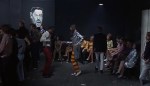
The star of Blowup, though, is the cinematic auteur behind the camera. The film is almost certainly Antonioni’s masterpiece, a vibrant, stimulating work of art that delivers brilliantly both on the surface and on a deeper intellectual level; the entire film leaves the impression of a stunning visual experience, yet though it is filled with indelible images created by the director’s masterful eye for composition (and captured by cinematographer Carlo di Palma), the grand picture we are left with is a synthesis of all we have seen- an intangible and non-existent zephyr. Much of the film’s powerful cumulative effect comes from Antonioni’s use of contrasts- between speeds, colors, textures, people- and his knack for portraying mundane, everyday occurrences in a manner and context that makes them seem hallucinatory and surreal. His use of sound is also important; in particular, the haunting sound of the wind in the trees during the all-important park sequences suggests the vastness and the irresistible force of the ultimate reality which surrounds all the meaningless illusion with which his film’s denizens are preoccupied. His musical choices play a big part, too: the jazzy score by Herbie Hancock captures the hurky-jerky energy of the fast-paced culture in which he has immersed us, and an underlying zeitgeist is evoked by the raw and angrily frustrated sound of The Yardbirds as they play for a seemingly unimpressed crowd of club-goers in their now-famous cameo scene.

Watching Blowup today, it’s easy to see why it has been lauded as an influential classic and been the subject of so much homage and emulation. It captures a perfect snapshot of the fleeting era in which it is set, yet at the same time presents us with a timeless metaphor for our existence in a world of never-ending sensory stimulation. Though the technological methods depicted as central to the story are dated in today’s digital age- in which high-resolution photographic manipulation is instantly available in the palm of everyone’s hand- the basic theme of seeking validation for our perceptual experience is not. Furthermore, it is impossible not to observe the parallels between the pop-obsessed society depicted in the film and that which exists today: in his personification of the mod dilettante at the center of Blowup, Hemmings could just as easily be portraying (if you’ll pardon the expression) the archetypal hipster douche-bag of our contemporary world; and the crowd that surrounds him, the clubs and parties he goes to, and the interests he pursues could all be found on any Saturday-night excursion into the hip-and-happening world of our current youth culture. It’s a movie that became, no doubt with intentional irony, the “next big thing” perpetually sought by the crowd it both portrayed and appealed to; thanks to the far-reaching vision of its director, it was more than that, and it has deservedly become a cornerstone not only of cinema, but in the collective consciousness of our modern world.

http://www.imdb.com/title/tt0060176/

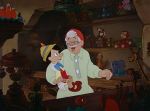
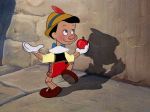
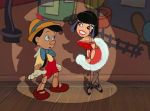
Pinocchio (1940)

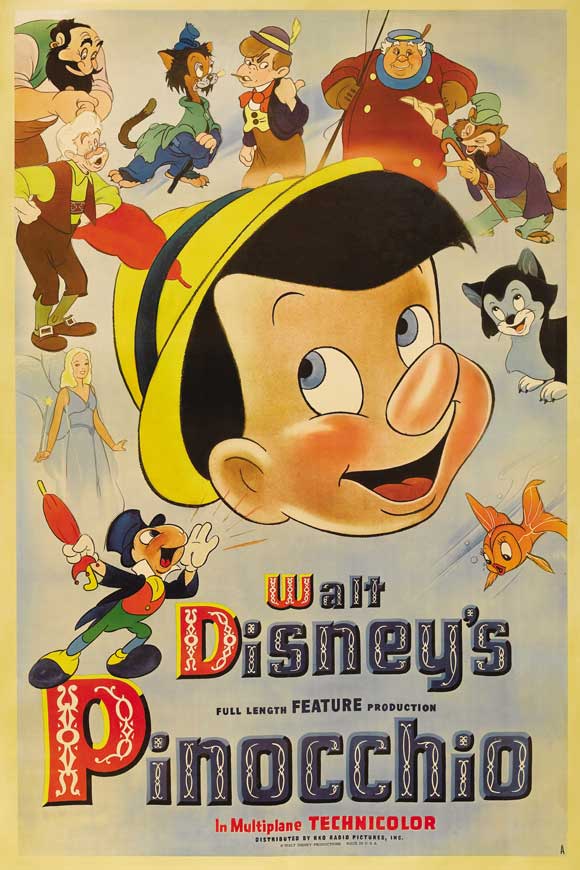
Today’s cinema adventure: Pinocchio, Walt Disney’s 1940 animated feature, based on the classic children’s story by Carlo Collodi, about a puppet bestowed life in answer to a kindly woodcarver’s wish for a son.  As the follow-up to Disney’s first foray into feature-length animation, Snow White and the Seven Dwarfs, it represented an enormous leap forward in the development of the art form, with the animators taking huge strides to overcome the difficulties they encountered- and correct the mistakes they had made- with their first effort,  resulting in a visually stunning masterpiece which has, in many ways, never been surpassed.  In particular, Pinocchio represents a watershed moment in the advancement of effects animation (as opposed to the character animation at which Disney’s artists were already adept), with its extensive depiction of such elements as fire, smoke, magic, and especially water, creating a dazzling and fully realized environment in which this metaphorical fairy tale can be played out.  Additionally, thanks to the use of live action footage and articulated models (maquettes) as a reference for the animators, the film incorporates a level of realism which enhances its ability to engage and transport its audience, as well as featuring inventive angles and perspectives which would directly influence the advancement of cinematic technique in live-action filmmaking.  Finally, Disney’s development of the multi-plane camera, which allowed the combination and separate manipulation of different layers of imagery within a single shot, yielded an illusion of depth which prefigured the use of 3-D technology, and helped to narrow the gap between live-action and animated filmmaking- a gap which grows ever smaller to this day.

Of course, it could go without saying that Pinocchio, as with all of the Disney features released during the initial Renaissance of the studio, has become a classic, revered as an iconic milestone in the genre of animation and beloved by generations of audiences as a cornerstone of family entertainment; indeed, critical appraisal of the film has been almost universally positive from the moment of its release, though the outbreak of WWII prevented it from becoming financially successful until it was reissued several years later.  However, though its status as a pinnacle of animated art has never been questioned, there have been numerous dissensions over the years regarding its content.  Much of the criticism revolves around the divergences Disney made from the source material in order to make a more marketable film: Pinocchio was transformed from a sarcastic, mischievous hooligan into an inexperienced, innocent naïf who is only led into trouble through his good-hearted gullibility, and his design was softened to resemble less the pointy-nosed, spindly marionette of the book than the real boy he will eventually become; the cricket, a minor character in the original story, was developed into a central figure and anthropomorphized to the point that, in the words of his supervising animator, Ward Kimball, “the only thing that makes him a cricket is because we call him one;” and a number of bizarre and/or gruesome incidents and characters were either removed or revised in order to present the story more as a heart-warming fable than as a cautionary tale.  The objections to this sanitization of Collodi’s novel stand alongside countless protests surrounding the studio’s similar treatment of other classic sources, fueling the long-standing criticism of the studio for “Disney-fying” its material- producing films that subvert the original intention of the authors and sugar-coat their messages for the sake of appealing to the broadest possible audience.

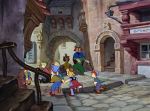
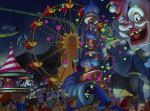
Thankfully, it is not my role to determine the validity of either of this viewpoints here; though it seems to me they are criticisms based on opinions of what the film should be, rather than reactions to what it actually is.  Pinocchio is, first and foremost, exactly what it was intended to be: a visually stunning and highly entertaining work of art.  Whatever social or literary obligations the Disney artists might have disregarded, they succeeded beyond reasonable expectation in their goal to create a finished project that holds up to every standard of excellence- not only does Pinocchio exhibit a still-breathtaking mastery of technical skill, it features an intricate, meticulously executed artistic design that is evident in every frame.  From the dozens of whimsical clockwork devices on display in Geppetto’s humble cottage, to the rustic Italian Alpine village in which the story is set, to the garish and foreboding over-stimulation of Pleasure Island, to the wonders of the undersea world where the climactic segment takes place; the entire film vibrates with a life and personality that can only result from the passion and enthusiasm of its creators.  Even more remarkable is that all this dazzling work is never gratuitously applied, but is wholly dedicated in service to the story: the quantity and humor of Geppetto’s constructions speak volumes about his character, the lurid excess of Pleasure Island clues us into the menace lurking behind its surface, the painstakingly immersive depiction of the ocean environment transports us there with Pinocchio- every tiny detail serves a purpose, and instead of overwhelming us and reminding us of the artificiality of our experience, the richness and variety on display here draws us in and gives us the feeling that the world of Pinocchio is just as real as any place we have seen in our own lives- and perhaps even more so.

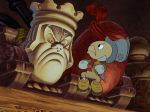
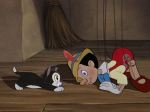
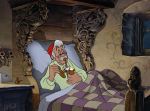
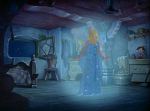
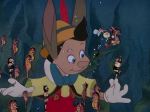
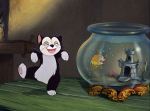
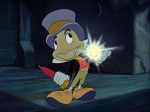
Of course, no matter how fully-realized this spectacular world may be, it must be populated if the story is to be told.  The characters in Pinocchio– even the minor ones- are as richly developed as the elements which surround them, designed and animated to such specific perfection that the breadth of their characterization is visible in every frame they inhabit: Jiminy Cricket, with his instantly likable blend of gentility and earthiness; Honest John the Fox, the picture of tawdry pretension and avaricious hunger, and his mute sidekick Gideon the Cat, a sort of skeevy Harpo Marx; Stromboli, a menacingly immense combination of flamboyance, volatility and mean-spirited cruelty; Lampwick, the ultimate hoodlum, cocky and uncouth, yet ultimately pitiable as he suffers the direst fate of any character in the film; even Monstro the whale, aptly personifying the unstoppable, chaotic wrath of the universe; and, of course, Geppetto, lovably dotty and infinitely kind, with his pets, Figaro and Cleo, the lovable kitten and goldfish pair that provide gentle comic relief with their yin-and-yang interplay as they respond to the various events taking place around them.  As for the star of the show, Pinocchio is crafted as the epitome of innocent boyhood; his sweet nature and his excitement for the brave new world before him are his defining characteristics, and he is in a constant state of action, exploring possibilities, embracing experiences, and honestly seeking to please- even when he lies to the Blue Fairy, we get the sense he is doing it as much to save her from disappointment as to save himself from trouble.  As a result, he comes off as a plucky and enthusiastic young hero, instead of the cloying and disingenuous brat he could so easily have become if his creators had chosen to make him deliberately cute or precocious.

The personalities of all these now-iconic characters are a completed by a collection of carefully-chosen voices.  Pinocchio was the beginning of a long Disney tradition (now standard for animated productions but at the time unprecedented) of utilizing seasoned and recognizable talent to provide the vocal contributions to their films, featuring Cliff Edwards (as the cricket, a then-popular singer well-known for his work on Broadway and early talkies), Walter Catlett (as the charlatan fox, another Broadway actor familiar to audiences at the time for a string of high-profile character roles in films like A Tale of Two Cities and Bringing Up Baby), Christian Rub (a distinctive and much-loved radio and film performer who not only gave Geppetto his voice but was used as a physical model for the character as well), Evelyn Venable (a popular screen ingénue renowned for her beauty, austere but warm as the Blue Fairy), and Dickie Moore (as Pinocchio, a seasoned child actor with several high-profile live-action roles under his belt).  All of these, as well the other, lesser-known voices, fit their parts to perfection, as definitively as any live-action cast embodies their characters.  It is impossible to imagine any other voices coming from the figures onscreen in Pinocchio– which is yet another testament to the gifted artists who brought them to life, incorporating the nuances of the already-recorded dialogue into their final rendering of the film, an effect that is perhaps not too unlike that of a motion-capture suit of today transforming an actor’s personality into an animated form.

As if all this sublime artistry were not enough, there is still the perfection of the musical score.  Music plays an important part in every Disney classic, and it has never been better than in Pinocchio; the background score by Paul J. Smith is an indispensable part of the film’s character, as are the songs of Ned Washington and Leigh Harline, which are interwoven seamlessly to it throughout.  Though all of these songs are well-known by generations of children who have grown up with them, one in particular (“When You Wish Upon a Star”) has become not only the signature tune of the Disney empire but an anthem for optimists the world over; as crooned by Edwards over the film’s opening credits, it sets a tone of wistful longing and lets us know that in the end, though there will be much adversity to be faced, everything will come out right.

It’s hard not to gush about Pinocchio: by way of disclaimer I have to admit that it was my favorite Disney movie as I was growing up, with its metaphor of “becoming a real boy” providing me with much food for thought on my way through childhood and adolescence.  Despite this personal bias, I feel completely justified in my enthusiastic assessment of this film.  It is still, over 70 years later, consistently listed as one of the top ten animated films of all time, and it has provided immeasurable influence not only on the art of cinema, but throughout popular culture in general.  It is widely considered the pinnacle of achievement by the studio that created it (no small feat, considering their impressive track record) and it set a high standard for so-called “family films,” providing stimulating entertainment at all levels of maturity rather than just presenting formulaic pablum designed to occupy juvenile minds for 90 minutes- an egregious cheat still perpetrated by far too many so-called artists who churn out such sub-par, straight-to-DVD fodder.  Though today’s high-tech animators can render remarkable imagery that looks far more realistic than anything in it, Pinocchio can hardly be called crude or primitive- it is a work of pure art, exquisitely produced using techniques which have fallen out of fashion in an era that seems only impressed by the newest innovations in a rapidly accelerating parade of obsolescence.  Thankfully, it hasn’t gone anywhere: it is still out there, in home video cabinets the world over, captivating yet another generation of young minds and reconnecting parents to their own childhood, and thanks to painstaking restoration and the ready availability of high-resolution formats, it looks as good as new- perhaps even better (see, I do like technological advancement).

As for those who complain that the movie is not an authentic representation of Collodi’s novel, I think it is only right to point out that several other screen versions have been made of Pinocchio, many of them striving to remain much closer to the source material.  Without exception, they have all bombed, both critically and financially.  Perhaps the latest incarnation, currently in production and starring Harry Potter’s Daniel Radcliffe, can break that unfortunate cycle; but until it, or yet another attempt, succeeds, the Disney version will continue to reign supreme.

http://www.imdb.com/title/tt0032910/

Drive (2011)

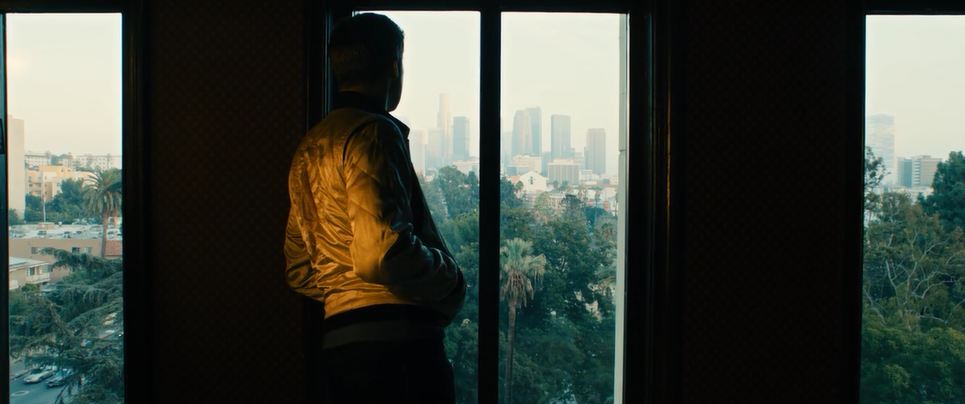
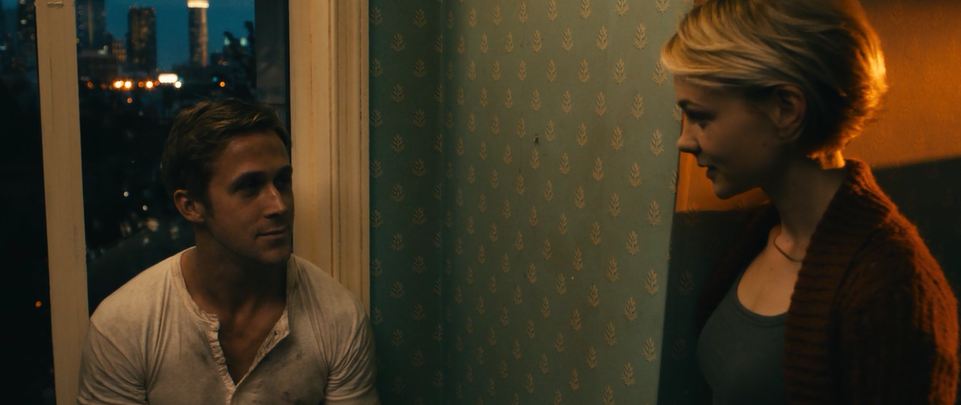
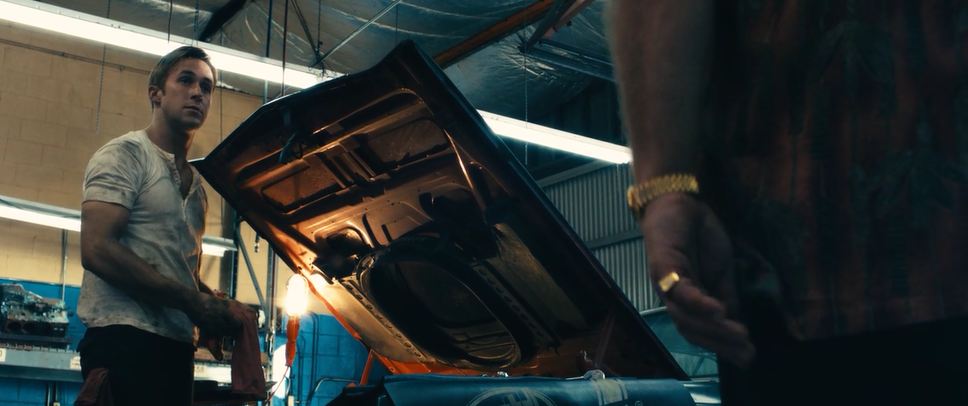
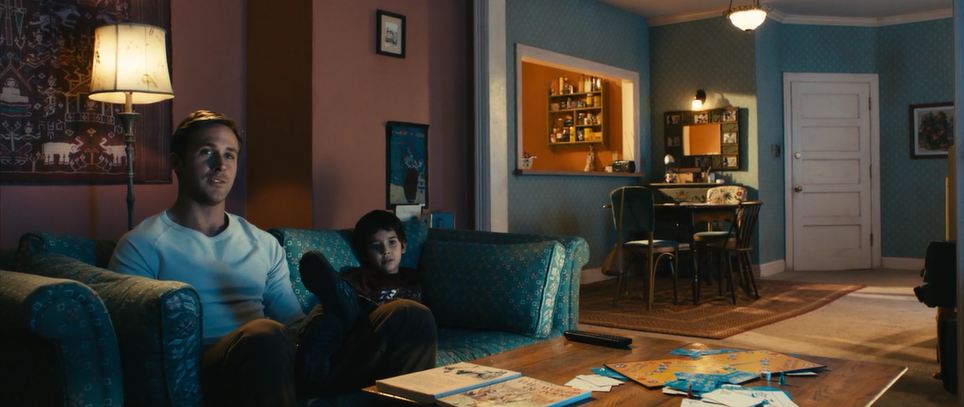
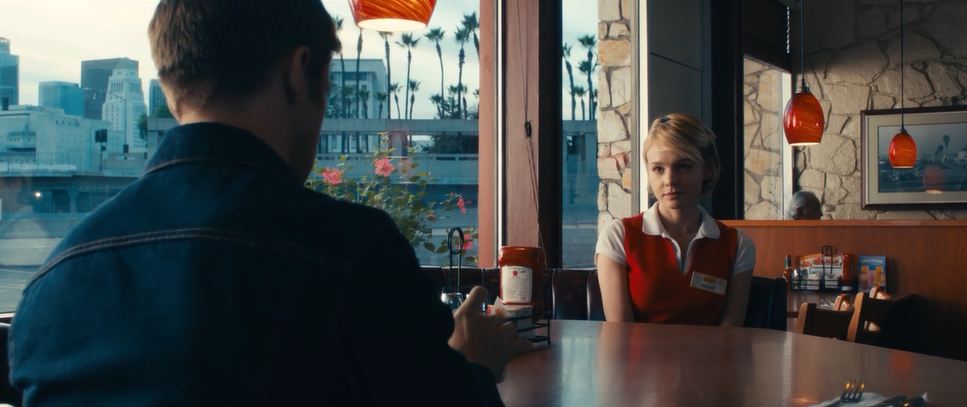
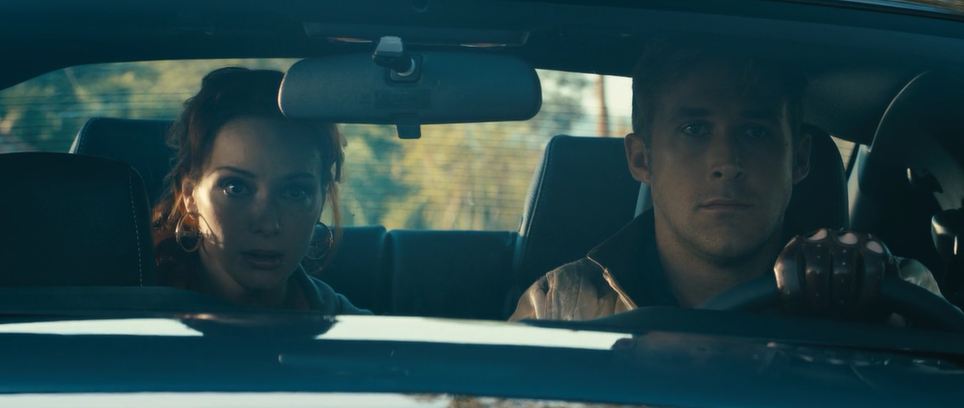
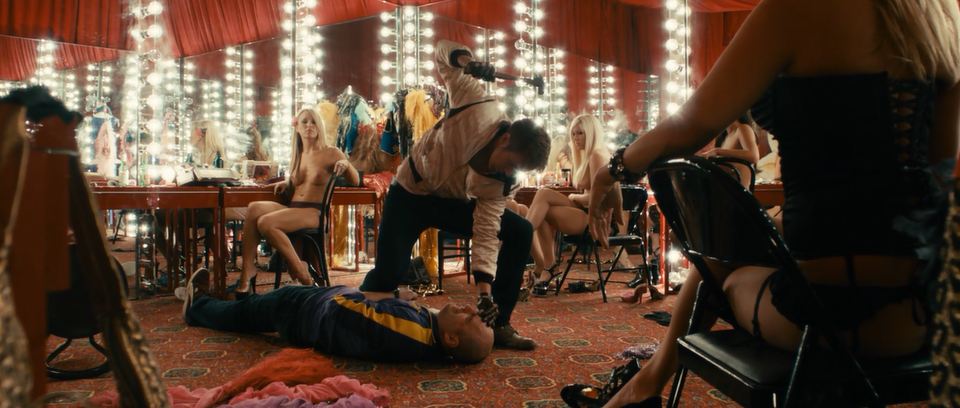
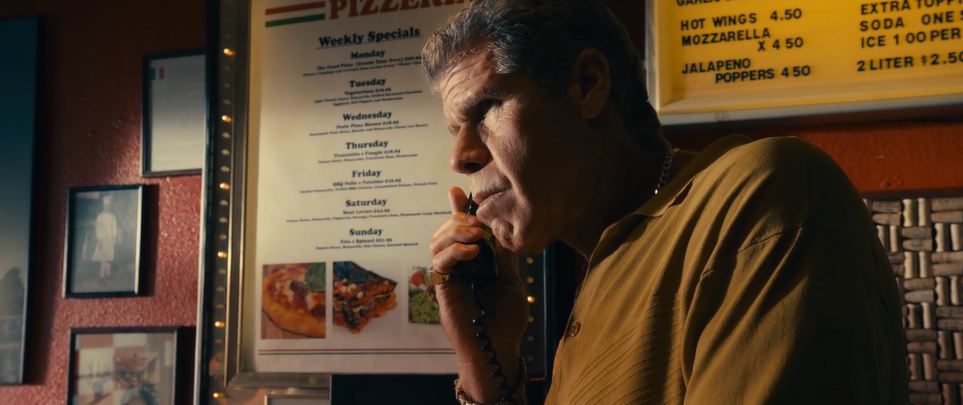
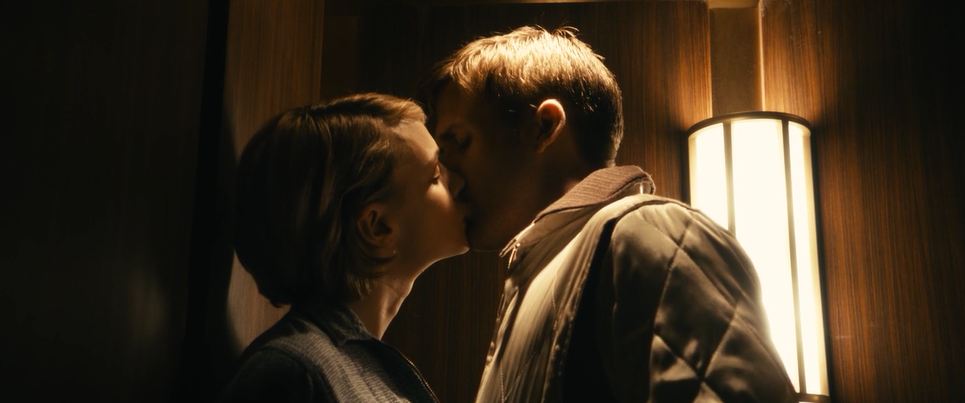
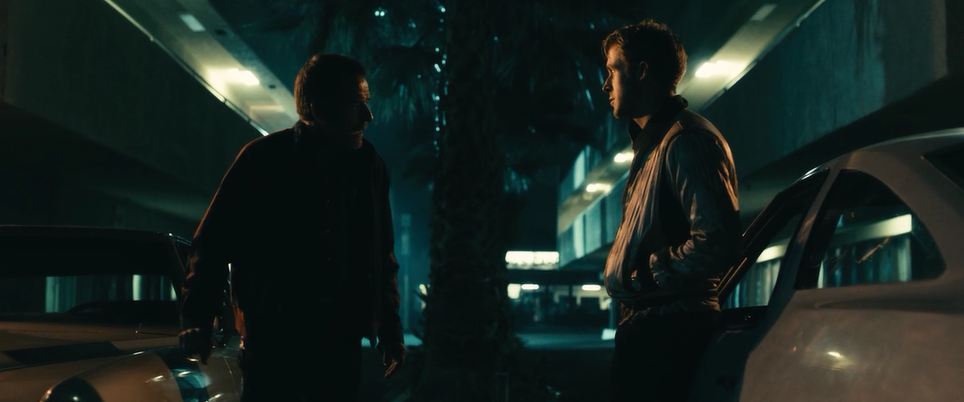
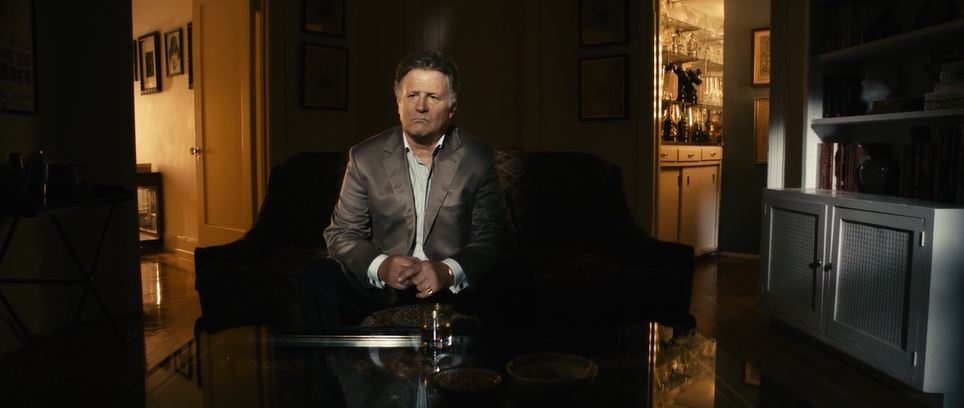
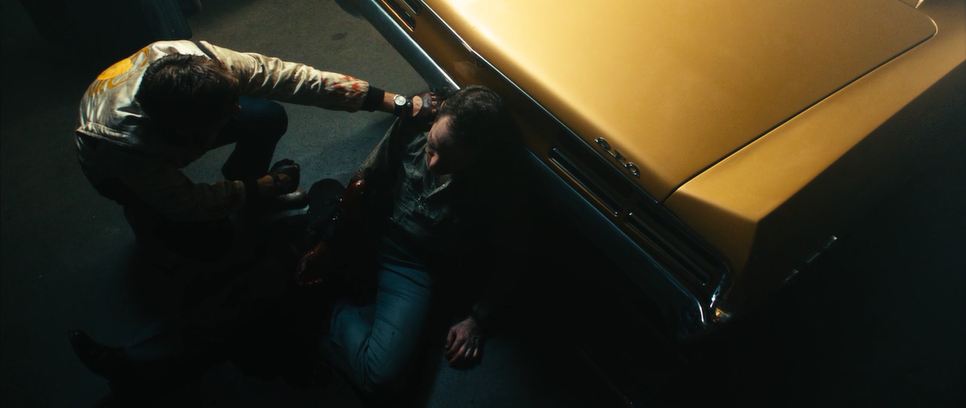
Today’s cinema adventure: Drive, the slick 2011 crime thriller starring Ryan Gosling as a Hollywood stunt driver and mechanic who moonlights as a wheelman for high-dollar robberies; a highly marketable package featuring a lot of action and a little romance, which garnered much praise for its visual style- a glossy mix of 1980s-flavored grittiness and edgy contemporary flash- and drew controversy for its bursts of brutal violence.  Essentially a post-modern film noir, set in a seemingly lawless Los Angeles populated and controlled by ruthless criminals, it seethes with an atmosphere of cynical amorality in which life is cheap and trust is for suckers and fools; and yet for all its hip, hard-edged posing, this movie is, at its core, pure Hollywood fantasy of a decidedly old-school nature.  In essence, in fact, it’s a modernized, urban reworking of Shane, the revered and iconic western classic from 1953.  All the plot elements are there: a loner with a mysterious past befriends a struggling family and becomes their protector against the machinations of a powerful gang of thugs, eventually taking justice into his own hands and embarking on a one-man crusade to eliminate the threat once and for all.  Though the details have been modernized and reconfigured a bit, the structural blueprint is the same, from the dominant themes of family and justice vs. power and greed to the fact that its tarnished hero doesn’t carry a gun.

If noting this obvious parallel to a cinematic touchstone sounds like a negative criticism, it isn’t: many good films are built upon a framework borrowed from great films that came before, and although its plot line is clearly second-hand, Drive certainly re-interprets the story on its own terms.  Part of the credit lies with Hossein Amini’s terse screenplay (adapted from a book by James Sallis), which cleverly updates the details of the plot and its characters while retaining the essence of its central conflicts.  The foremost contributor to the success of this re-invention of cinematic myth, however, is director Nicholas Winding Refn, a Danish-born filmmaker whose lack of native familiarity with the distinctly American setting and milieu has allowed him to approach the material with the empirical eye of an observer.  One of the consequences of his outsider’s viewpoint is the superb use of the L.A. locale, so often taken for granted by resident directors; he takes full advantage of it, not so much in his depiction of specific landmarks, but in the way he captures the character of it, particularly the Echo Park district where much of the action takes place.  He also brings a detached objectivity that somehow adds to the emotional resonance of the story, helping it to feel freshly-minted despite the echoes of its heritage that bounce through every scene.  With the help of cinematographer Newton Thomas Sigel, he fully utilizes his locations to create an impressive visual coherence, infusing the squalid city streets with a slick, art-house sheen that echoes the feel of genre icons like Thief and To Live and Die in L.A. while still asserting Drive’s independence and modernity with its own up-to-the-minute, slo-mo/hi-res personality.  This effect is enhanced by the dreamlike electronic score by Cliff Martinez, which also facilitates the deliberate build-and-release of tension that pushes the film towards its inevitable conclusion.

On the business end of the camera is an attractive cast comprised of talented up-and-comers, seasoned veterans, and a strategically familiar collection of supporting players.  In the latter category are a trio of high-profile TV transplants: Christina Hendricks (compelling and memorable in a bad girl role that allows her to show a markedly different side than the one we see on Mad Men, but ultimately wasted in what amounts to little more than a cameo), Bryan Cranston (in a kinder, gentler variation of his Breaking Bad persona as Gosling’s employer and surrogate father figure), and Sons of Anarchy’s Ron Perlman (lending his star power and his imposing presence to a part that could otherwise be played by any tough-guy actor).  As the little family whose plight provides the catalyst for the film’s action are Oscar Isaacs (playing admirably against expectation as the ex-convict father striving to break free of his shady past, and nicely fleshing out a character which is ultimately little more than a plot device), young Kaden Leos (projecting a muted wisdom beyond his years and showing considerable onscreen chemistry with Gosling in their scenes together, which goes a long way towards providing the heart of the film), and English actress Carey Mulligan.  Mulligan has perhaps the most difficult role here, in which she is required to maintain a quiet, attractive nobility while navigating a complex subtext of resignation, repressed attraction and nagging fear.  She manages it well, inhabiting all those facets and bringing intelligence, sweetness, and dignity to the part (making it seem, perhaps, much more fully realized than it actually is), as well as creating her own chemistry with co-star Gosling; their scenes together are nearly wordless, for the most part, yet the pair infuses the silence with volumes of unspoken feeling, and when they finally kiss, the cumulative passion of their previous interactions is sufficiently powerful to warrant the highly cinematic approach with which director Refn chooses to showcase it.

Which, of course, brings us to our star: Gosling’s character (never named, but listed in the credits merely as “Driver”), like his cowboy counterpart in Shane, is rough-edged and dangerous, despite his All-American good looks and his quiet demeanor.  Yet, street-savvy thug or not, he is also possessed of a resolutely ethical core which drives him from within just as deliberately as he himself drives his own restored 1973 Malibu.  In order to successfully embody this urban paladin, Gosling must convincingly seem both too hard to be good and too good to be true- and he must do so with an amount of dialogue that can be described as sparing, at best.  He pulls it off brilliantly, managing to be believable on both ends of this extreme spectrum with a likeably stoic performance that is (appropriately enough) reminiscent of Steve McQueen at his anti-heroic best.  It’s a hypnotic performance, and watching the young actor confidently stand in the center of this film, it’s easy to see why he is one of the hottest leading men of the new Hollywood generation.

As good as Gosling is, though, the standout performance in Drive comes from a surprising source: Albert Brooks, known for his comedic work both as an actor and filmmaker, here plays against type as a ruthless gangster.  It’s a shrewd bit of casting, and Brooks takes full advantage of it, undercutting the cold-bloodedness of the character with his familiar, likeably nebbish persona; the result is a contrast between charm and menace that makes him easily one of the most chilling big-screen bad guys in recent memory.  Despite the impressive work of director Refn and the stellar turns of the other leading players, his performance is perhaps the one element of Drive which elevates it from the level of a well-made potboiler to that of a potential Hollywood classic.

As to that, only time will tell.  Drive has a dazzling quality that keeps you mesmerized while its subliminal elements do their work; fooled by the flashy surface, we fail to recognize that we are being shrewdly manipulated by the familiar undercurrents that pull our sympathies and shape our expectations.  As a result, we are more inclined to suspend our disbelief in the blatantly romantic premise at the core of the movie, a premise summed up in its tagline, “Some heroes are real;” or at least, in theory we should be.  Some viewers, however, may not be taken in by the smoke and mirrors, and may find they are unwilling to buy into a plot that, though appropriate for a larger-than-life epic of frontier justice and heroic gunslingers, seems decidedly unconvincing for a gritty tale of corruption and betrayal in the seedy urban underworld.  It should also be noted that, in spite of its family-friendly roots, this movie contains some very graphic and disturbing violence- in particular, an elevator scene (from which the aforementioned controversy resulted) that had to be edited into a toned-down version, and which is still shockingly gruesome- so more squeamish viewers should stand warned that they might want to stay away.  However, for most filmgoers- particularly those with an admiration for the nuts and bolts of the art- Drive will likely provide a rich experience, perhaps even more so for those savvy viewers who can recognize the archetypal formula from which it is derived.  Though its plot may hold few surprises (at least for anyone who has seen Shane), and though it may, in the final analysis, be unconvincing, there is still a fascination in seeing the ways in which Refn and his crew have molded it into its new form, and the attendant implications that arise from its transposition in setting, such as the differences (and similarities) in the portrayal of masculine and feminine roles, the metaphoric associations of our obsessive American car culture, and the difficulties of defining ethical behavior in a world complicated by conflicting moral standards.   Unacknowledged remake though it may be, it is nevertheless an inventive and original piece of filmmaking, and even if we already know where its taking us, it makes getting there an exhilarating ride.

http://www.imdb.com/title/tt0780504/

Breakfast at Tiffany’s (1961)

Today’s cinema adventure: Breakfast at Tiffany’s, the much-beloved 1961 romantic comedy classic widely regarded as the ultimate vehicle for its star, Audrey Hepburn. Adapted from Truman Capote’s semi-autobiographical novella of the same name, it is the story of the relationship between Holly Golightly, an unconventional “free spirit,” and a young writer who becomes her neighbor; drawn by her zest for life, he grows closer to her, discovering along the way that her true nature may not be as carefree as it seems. George Axelrod’s screenplay updates the action to the then-present day from the 1940s setting of Capote’s original story, and makes other significant changes to give it a more cinematic flow as well as to make it more palatable for audiences of the time. Most notably, it removes several potentially controversial elements, such as Holly’s unwed pregnancy and the homosexuality of the writer (unnamed in the novella), the latter adjustment also allowing the transformation of the central relationship from a friendship to a romance- a decision undoubtedly motivated by a goal to help the film become a popular hit- a goal which, needless to say, ultimately proved successful.

Despite the changes, Breakfast at Tiffany’s remains surprisingly racy for its era- both central characters are openly depicted as prostitutes, more or less- and the plot remains somewhat uneventful, on the surface at least, focusing more on the unfolding of character than action. However, director Blake Edwards guides it well, wisely allowing the effervescent charm of his leading lady to captivate the audience, and supporting her by never letting his camera stray too far away from her for very long; he prevents the apartment-house setting from becoming monotonous with frequent expansions into other, well-chosen locations (taking full advantage of New York’s local color, as captured by cinematographer Franz Planer), as well as with a fluid camera continually finding new perspectives from which to view the action, and the occasional diversion into a suitably zany situation. He coordinates all the pieces- particularly Henry Mancini’s Oscar-winning score- with care, to make the entire package seem a bubbly, delightful romp, in spite of the bittersweet sense of melancholy that underlies much of it; this surfaces in moments that feel poignant rather than heavy, and in the end, though the film’s resolution may be its most un-Capote-esque characteristic, we are left all the happier for having had our heart-strings tugged, just a little.

There are many things about Breakfast at Tiffany’s that have become iconic: the opening sequence of Holly eating pastry outside the window of the eponymous store, the little black Givenchy dress she wears (possibly the most well-known and influential piece of women’s clothing of the 20th century), her sunglasses and impossibly long cigarette holder, the irresistibly charming marmalade cat, and of course, Mancini and Johnny Mercer’s Oscar-winning song, “Moon River,” wistfully performed by Hepburn as she sits on the fire escape with a guitar; but by far the most iconic element of the film is Hepburn’s performance itself. As Holly- a role she reportedly found challenging due to her own natural shyness, in direct opposition of the character’s extroverted, impetuous and gleefully shocking behavior- she embodies the kooky, waifish image she came to represent, exuding intelligence, sweetness, exuberance, and, above all, elegance; and in the service of the character, she captures both the genuine delight she takes in her existence and a sense of the nagging fear and sadness that pursue her. She is, in the words of one character, a “real phony,” and one who is never, for a moment, unlikeable, even in her most selfish and spiteful moments- you somehow know that, before much time passes, her natural goodness will come shining back to the surface and all will be well. Capote wrote Holly Golightly with Marilyn Monroe in mind, but it’s hard to imagine anyone except Hepburn in the part; her work here established the persona for which she would be best remembered and set the tone for the characters she would play for the next decade. In short, it was one of those rare matches of actor and role that seem almost to be the result of divine intervention.

Breakfast at Tiffany’s is not a one-woman show, however, no matter how much it may sometimes feel like it: there are other actors here that deserve some credit for making it such a special film. Most obviously, of course, is George Peppard, giving perhaps his most memorable big-screen performance, as the smitten writer; he makes a good match for Hepburn, establishing an easy chemistry with her and making their too-good-to-be-true romance seem believable, as well as showing us his growth (thanks to Holly’s influence) from disillusioned self-loathing to determined self-confidence. As the wealthy married woman who “keeps” him, Patricia Neal gives us a necessary contrast to Hepburn, with a jaded frankness that feels far phonier than Holly’s good-natured pretension; and, in a turn that revitalized his career and led directly to his success on television’s The Beverly Hillbillies, Buddy Ebsen gives us a tender portrayal of Holly’s abandoned backwoods husband, who comes to the big city trying to reclaim the darling girl for whom he still carries a torch.

There is, of course, one ugly, distasteful flavor in this otherwise delicious confection. Any discussion of Breakfast at Tiffany’s, sadly, must include mention of the notorious presence of Hollywood veteran Mickey Rooney as Mr. Yunioshi, Holly’s long-suffering Japanese neighbor. The casting of a Caucasian actor in an Asian role, unfortunate as it may seem, was fairly standard practice at the time this film was made, and is not, in itself, so unforgivable; however, the clownish, offensively stereotyped performance given by Rooney, the result of director Edwards’ choice to make the character a source of wacky comedy relief, is so outrageously over-the-top that it was immediately branded inappropriate and racist even at the time of the movie’s release. Not helping matters is the ridiculous “yellowface” makeup worn by Rooney- including a cartoonish set of prosthetic buck teeth- that seems completely out of place in a film which is otherwise grounded in a fairly realistic- if romanticized- sensibility. For their part, all those involved in the decision to present the character in this manner- including Rooney, who insists he was playing it as directed- have apologized repeatedly and expressed their regret for making such an ill-considered choice; but, nevertheless, it remains as a nadir in Hollywood’s difficult history of racial insensitivity, and as a black mark on a film that is otherwise worthy of being considered a true gem.

Setting aside Mr. Yunioshi, there are other, less-disturbing quibbles which might be made about Breakfast at Tiffany’s, primarily by those who feel, perhaps rightly, that the re-invention of Capote’s narrative as a love story undermines its original intention as a slice-of-life remembrance in the vein of Christopher Isherwood’s Berlin Stories, not to mention converting it from a candid observation of human nature into a starry-eyed, feel-good Hollywood romance; but there’s enough of Capote’s worldly view in its screen incarnation to make sure that, in spite of its sweetness, it’s never syrupy, and his creative force is certainly preserved in the fullness of Holly Golightly, his own favorite of all his characters. It’s a testament to the power of his talent that we love her so much, and it is because we love her that we wish for her happiness. Let’s face it: there is something in us all that wants to believe in a dream-factory fantasy which permits two such flawed, potentially tragic people to come together and escape the tawdry reality of their world. By permitting Holly Golightly to finally make the jump, and allow herself to belong to another person (and a cat), the film version gives us hope and makes us strive for the happy ending in our own lives. After all, on some level, we are all “real phonies,” and it’s good to see one of our own find happiness.

http://www.imdb.com/title/tt0054698/