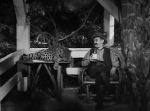
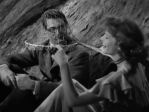
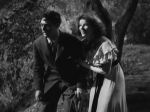
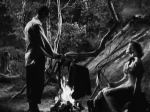
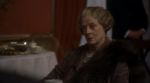
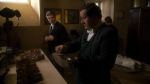
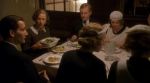
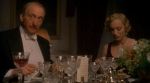
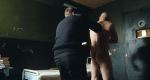
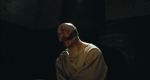
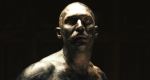
Gods and Monsters (1998)

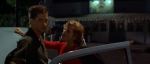
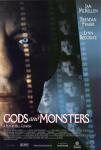
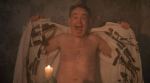
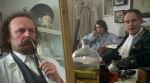
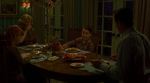
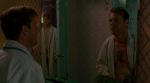
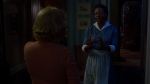
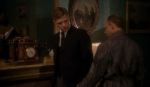
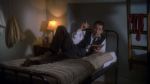
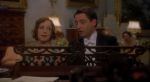
Today’s cinema adventure: Gods and Monsters, the 1998 drama by Bill Condon about the final days of legendary film director James Whale- the man responsible for, among other things, the iconic 1931 Frankenstein and its 1935 sequel, Bride of Frankenstein. Based on a novel, Father of Frankenstein by Christopher Bram, it offers a speculative scenario about the events surrounding Whale’s mysterious death in his own swimming pool at 67, years after his retirement from Hollywood, and enjoyed much critical acclaim- particularly for the performances of Ian McKellen and Lynn Redgrave, and for Condon’s Oscar-winning adapted screenplay- as well as achieving a relatively impressive amount of popular success (for an independently-produced, non-blockbuster feature, that is) due to the appeal of its subject matter for fans of the classic horror genre, its exploration of one of Old Hollywood’s most notorious and enduring mysteries, and- undoubtedly- the presence of then-heartthrob Brendan Fraser in the co-starring role.

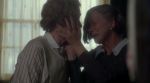
Whale’s 1957 drowning took place a decade after his departure from active filmmaking, a choice taken after studio interference made it increasingly difficult for him to realize his edgy and slyly subversive vision in his work; though he maintained his Hollywood residence and was still well-known by his friends and former colleagues in the industry, his name had slipped into obscurity within the larger public consciousness. After a series of strokes left him weakened both physically and mentally, plagued by excruciating, near-constant headaches and prone to blackouts and periods of disorientation, he became a near recluse in his home; Gods and Monsters uses this period as a springboard into its narrative, blending fact with fiction to present an imagined reconstruction of the director’s last few weeks.  Isolated in his Hollywood home, Whale fills his time drawing and painting, tended by his German housekeeper, Hanna, who is fiercely devoted to her employer despite her vehement- and vocal- disapproval of his open homosexuality. Bored, fighting depression, and haunted by memories of his youth and his Hollywood heyday, his interest is piqued by the arrival of a new gardener- Clayton Boone, a young, virile and handsome ex-marine. Though Clayton is reluctant at first, he is persuaded by Whale to sit for him, posing for sketches and reminiscing about the director’s past experiences; despite the derision of his blue collar friends and his own homophobic insecurities, he is drawn into an uneasy friendship, partly by his employer’s former fame and glory, but also increasingly by the connection that develops between them. Whale’s condition, however, continues to deteriorate, and his new relationship with Clayton triggers more and more painful memories- of his poverty-stricken childhood, of the tragic loss of his first love in the trenches of WWI, and of his former days as a filmmaker; in his torment, he attempts to manipulate the young man into providing relief for his suffering- but the results of this scheme take a different form than either of them might foresee.

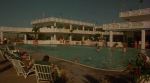
Bram’s novel- and therefore, Condon’s screenplay- takes several flights of fancy from the real story surrounding Whale’s demise, most significantly in the creation of Clayton, an entirely fictitious character (though he may have parallels with a chauffeur brought back by Whale from one of his trips to Europe, several years before the events depicted here). In real life, when the director’s body was found floating in his swimming pool, a suicide note was also found; it was, however, kept undisclosed by Whale’s longtime partner, producer David Lewis, until shortly before his own death 30 years later. Whale’s grieving lover made this decision out of respect, wishing to avoid the scandal and stigma that so often accompanies celebrity suicide- especially in the 1950s- but the absence of a note fueled years of whispered speculation about what had really happened.  Although the drowning had been ruled a suicide, rumors of foul play continued to emerge until the revelation of the note put an end, at last, to the mystery. By the time of Bram’s novel, the truth had long been out, but enough unanswered questions remained to warrant ongoing interest in this morbid Hollywood legend, and the fabricated (but plausible) relationship between Whale and Clayton provided a means of reconciling the facts of the case with the kind of salacious gossip which grew around it.

Condon’s movie, however, is no mere piece of sensationalistic pseudo-biographical fluff; though he takes a rather straightforward approach to telling his story, he infuses it along the way with subtle but thought-provoking explorations of larger themes and social issues- attitudes towards class and sexuality, the long-term damage of war on those who fight in it, and the isolation that results from striving to be extraordinary in an ordinary world.  Layered into the mix are also some observational parallels between Whale’s life and his most famous creations, with his own isolation and status as an outcast reflecting that of the misbegotten monster of Frankenstein as well as the famous Dr. Pretorius of Bride, and his relationship with Clayton echoing both Pretorius and Dr. Frankenstein himself.  All these and more provide fodder for Condon’s character-driven psychodrama, and though it comes in the guise of a Hollywood tell-all, Gods and Monsters cleverly rides a deeper undercurrent, emerging through dialogue and the well-placed interpolation of Whale’s brief-but-vivid flashbacks, which we scarcely even notice until its cumulative power hits us in the bittersweet final scenes. It’s the kind of unassuming filmmaking that is often overlooked, but it makes the difference between a genuinely affecting movie and just another pretentious, self-important “prestige picture.”

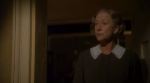
These thematic conceits may be an important factor in Gods and Monsters, but it’s a film that works splendidly on the more immediate level of storytelling as well; it’s not big on action- the plot reveals itself more through the development of the characters and their relationships than through events- but it nevertheless captivates us and keeps us engaged as it unfolds what is ultimately a sweetly sad portrait of an unorthodox and unlikely relationship between two misfits, and the unexpected gifts it bestows upon them both. One of the primary reasons it sustains our interest, of course, is the work of its fine cast, led by the brilliant Ian McKellen as Whale. Long one of the foremost thespians on the English- and, sometimes, New York- stage, at the time of Gods and Monsters he had yet to achieve the international screen stardom that would come with his portrayal of Gandalf in Peter Jackson’s Lord of the Rings trilogy, but his performance here deservedly garnered him universal acclaim and numerous award nominations; his own natural elegance and charm, as well as his wickedly sly sensibilities, blend into the persona of the troubled director and infuse him with the air of a genteel and lovably eccentric (if somehow vaguely dangerous) man of depth and humor, but he also captures the inner turmoil and confusion that allows this stately veneer to transform suddenly into ugliness and rage.  Providing a rougher, more youthful energy is Brendan Fraser, who also brings his natural personality to the role of Clayton, making it clear from early on that his brutish facade conceals a more sensitive nature than he wishes to reveal. The chemistry he displays with McKellen is palpable and infectious- the two actors became close offscreen, as well- and if his acting skills are not quite the equal of his co-star’s (few can lay claim to that level of ability), he more than makes up for it in heart, and together they are well up to the task of carrying the film.  Rounding out the principal trio is Lynn Redgrave, another English veteran, as the hard-working and hard-edged Hanna, who accomplishes the remarkable feat of embodying what amounts to an over-the-top caricature- an earthier, more modern version, perhaps, of Una O’Connor’s shrilly opinionated housekeeper in Bride of Frankenstein– while still finding the deep humanity that makes her a compelling and viable participant in the story rather than simple comic relief.  Spouting admonishments in a harsh German accent, her expressive face oozes unconcealed disapproval all along the way, but she exudes compassion behind every grotesque grimace; it was, sadly, to be one of her final screen appearances, but for many it was her crowning performance, and it provides a necessary grounding force to the drama.

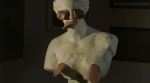
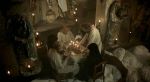
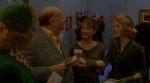
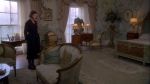
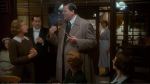
For those seeking an exposé of Old Hollywood’s dirty secrets or an extensive recreation of its environment, Gods and Monsters is likely to be a disappointment; most of its action takes place within the confines of Whale’s timelessly elegant household, and though the costume and scenic designers have done a fine job of appointing it with the appropriate trappings of the period, these elements take a back seat to the emotional and psychological landscape that is Condon’s main focus.  Even so, there is a short but meticulously realized flashback to the set of Bride of Frankenstein, in which we see Whale in his creative prime, staging the iconic scene of the female monster’s unmasking; and late in the film there is an extended excursion to a garden party honoring the visiting Princess Margaret, hosted by Whale’s fellow gay filmmaker, George Cukor.  In this sequence we are given a brief-but-potent glimpse at the politics of gay Hollywood, where the famously open Whale is treated with wary discomfort by his former colleagues- who, while not exactly closeted, are careful to maintain the semblance of proprietary conformism- and the once respected director is only of interest as a curiosity of the past, posing with his former “monsters” for photos of an uncomfortable and unwanted reunion.  It is at once a nostalgic look at a bygone era and a pointed reminder of Hollywood’s shallow and eternal fickleness.

For obvious reasons, Gods and Monsters has a strong appeal for gay audiences, centered as it is on one of classic cinema’s most well-known homosexual figures; but while Whale’s sexuality is decidedly germane to the plot, and plays a major part in the psychic makeup of his character and the journey he takes, it is not, ultimately, the main concern of Condon’s film.  Rather, like the period accoutrements which establish the movie’s backdrop of time and place, the issue serves as a factor to inform and color the proceedings, which are finally about the universal human need for connection- to the past, to the future, to other human beings, and to one’s own true self.  In a world which relentlessly strives to define us according to the lingering standards of a rigid status quo, those who are different- and we are all different, at heart- face the isolation and shame that comes with the stigma of not fitting in; in this way, at least, Gods and Monsters has much in common with Whale’s aforementioned cinematic masterpieces, which derived much of their power from the outcast monster’s search for acceptance and companionship.  As Condon attempts to make clear, however, Whale is no monster, no matter how much he feels like one, and neither is Clayton; rather, they are misunderstood, great-hearted men, trapped by the conditions of their lives into a cage from which they yearn to be released.  Through their strange communion, they each find the strength they need to free themselves- not from each other, but from within.  It’s a surprisingly spiritual message for a film about an unrepentantly irreligious and iconoclastic artist, but it is the kind of humanistic spirituality that springs from real life experience rather than the esoteric dogma of religious orthodoxy, and it gives the movie an all-encompassing appeal and makes it an accessible, moving experience for any audience- gay or straight, believer or atheist, intellectual or Average Joe.

It’s impossible to say whether James Whale himself would be pleased with Gods and Monsters; though it makes no effort (beypnd a few deliberately constructed fantasy and dream sequences) to emulate his own directorial style- which was full of expressionistic light and shadow, dramatic angles and editing, and a rapid, restlessly fluid camera- it does share his macabre wit and dark sense of irony, and its sympathy most definitely lies- as did his- with those outside the norm, for whom the inhabitants of the everyday world appear hypocritical and cruel.  However, just as Condon’s movie is not really about Hollywood, sexuality, or the 1950s, it is not about James Whale the artist, either; though it uses him as its central character, and uses thematic ties to his work to help tell its story, it could be about any one of us, facing the end alone and desperate for a kindred spirit to help make sense of the fears, the regrets, the doubts and the sorrows that make up the history of our lives.  It doesn’t sound very cheerful, but it offers up some food for thought and reminds us all of the importance of making contact- and thanks to Bill Condon and his magnificent cast, it’s also a lot more fun than you might think.

http://www.imdb.com/title/tt0120684/

Lunacy/Sileni (2005)

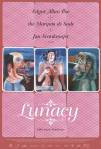
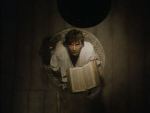
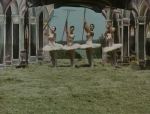
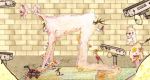
Today’s cinema adventure: Lunacy (Šílení), a darkly comic 2005 horror film by celebrated Czech filmmaker Jan Švankmajer; based on two short stories by Edgar Allan Poe and drawing inspiration from the writing and philosophies of the Marquis de Sade, its an odd, quirky and disturbing foray into the horror genre by a director known for his odd, quirky and disturbing movies, featuring his trademark mixture of macabre puppetry and animation as well as his usual surrealist influences.  Like most of Švankmajer’s work, it initially received little attention outside of Europe (and the few remaining “art house” theaters), but it has since found an audience, alongside the rest of his canon, among the ranks of his loyal international cult following.

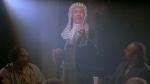
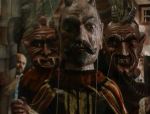
Though it begins, ostensibly, in a present day-setting, the story is quickly drawn anachronistically into the 18th Century, as its protagonist, Jean, is befriended by a wealthy and mysterious marquis (in full period garb) who travels by horse-drawn coach and is attended by a mute servant.  Jean is plagued by recurring nightmares in which two leering goons accost him in his sleep and attempt to forcibly restrain him with a straight jacket; after one such dream causes him to destroy his hotel room in a somnambulant struggle, the marquis comes to his aid by paying for the damages, and then invites the young man to travel with him to his home.  Jean soon discovers, however, that his new benefactor possesses a cruel streak; during his stay he is subjected to cruel pranks- including a bizarre and secretive nocturnal interment- and surreptitiously witnesses a blasphemous ritual in which God and morality are denounced and a young woman in chains is beaten and raped.  Eventually, he accompanies his host to a local asylum, where he is persuaded to remain as a voluntary patient in order to receive treatment for his nighttime disturbances.  His agreement to this arrangement, however, is in reality spurred by the presence there of the girl abused in the black mass, whom he fears to be trapped within the sinister machinations of the marquis and his friend who runs the institution.  Vowing to rescue her and expose the sadistic purposes of her captors, he sets about discovering the hidden truth of the hospital- a place where the inmates and staff are virtually indistinguishable, where chaos and debauchery seem to rampage unchecked, and where a dark secret lies hidden behind the walls, waiting to be set free.

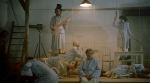
Švankmajer (who provides a spoken introduction to the film in which he plainly states its purpose and emphatically proclaims it not to be “a work of art”) draws the  inspiration for his narrative from Poe’s stories, The System of Doctor Tarr and Professor Fether and The Premature Burial, but the underlying thematic premise is derived from the views espoused by the notorious Marquis de Sade- upon whom the film’s primary antagonist is clearly based.  The argument of both the real and fictional marquis- that man is a product of nature, cruel and carnal by design, and that notions of God and morality are false constructs based in fear and designed to impose control over the weak and foolish- is the central idea which fuels the story, alongside the added intellectual exploration of two opposing methods to governing the insane: absolute control and absolute freedom.  As to the latter, the director states unequivocally in his prologue that the state of the modern world is a combination of the worst aspects of each of these methods, but- apart from this rather glib assessment- his film offers no real support for this theory beyond the extrapolations that can be made from the allegorical elements of the scenario.  Regarding man’s bestiality, however, Švankmajer gives us plenty of meat- literally.  Providing a sort of running commentary to the action are short segments, produced with the filmmaker’s familiar stop-motion techniques, featuring slabs of raw meat animated into performing various activities reminiscent of basic instinctual behavior- such as eating, fighting, and sexual intercourse-  continually reinforcing the idea of humanity as mere senseless flesh driven by primal impulses.  These vignettes, intercut with the main action, also serve to give Lunacy much of its “creep” factor, though as always in Švankmajer’s films, there is good amount of tongue-in-cheek humor that makes us grin even as we cringe.  On a less abstract level, within the narrative proper, the idea of man’s natural urge towards sex and cruelty is illustrated repeatedly in scenes best left for the viewer to discover for himself, with Jean and his enigmatic damsel-in-distress as the only representatives of sanity- as equated to decency, that is.  However, in keeping with the film’s source material, not to mention its creator’s penchant for surrealism, it is never exactly clear that our assumptions are true, and the question of what constitutes sanity- or decency, for that matter- is one which Lunacy leaves unanswered, choosing rather to provide cynical observation on the basic state of humanity.

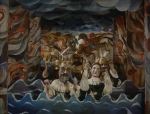
Švankmajer has built his unique reputation with decades of imaginative filmmaking, blending live action with animation in ways that are at once deceptively simple and devilishly clever.  Influenced by an early career in puppet theatre, he has brought his traditional stagecraft sensibilities into his cinematic language, establishing himself as a genuine auteur with his shorts and feature films that incorporate not only the aforementioned stop-motion techniques, but claymation, a mixture of realistic and stylized scenery as well as puppets and live actors (and sometimes live actors dressed as puppets), and a generally theatrical style possessed of unmistakably ancient roots that stretch back to the Commedia dell’Arte and beyond.  Lunacy, however, like many of his recent works, utilizes a greater proportion of more-or-less straightforward live action footage; indeed, apart from the previously described meat-in-motion sequences, it contains relatively little of Švankmajer’s familiar visual trickery.  This is not to say the movie is short on the director’s usual delight in showmanship; throughout the story are numerous sequences that clearly draw from his love for the stage- the black mass, viewed from the perspective of an unseen audience (Jean peering through a window), is blatantly theatrical, and a tableau vivant of Delacroix’s La Liberté guidant le peuple is later staged by the marquis at the asylum, a nod to the historical de Sade’s direction of plays featuring other inmates when he was at Charenton asylum- as well as to Marat/Sade, the famous avant-garde dramatization of those real-life “productions.”  In addition, the trappings of theatre are scattered throughout the film- costumes, wigs, false facial hair- and the marquis’ entire persona seems to be a sort of performance, as if he is always centerstage in the theatre of his own life.  All of this plays into Švankmajer’s eternal fascination with illusion and the tricks of perception that allow us to be deceived by our own minds, which in turn fits neatly into the Poe-inspired horror scenario, hinging as it does on this very idea; further, the subject matter gives Lunacy‘s theatricality the specific flavor of true Grand Guignol, a style named for the 19th Century Parisian theatre that popularized the staging of horror spectacles, steeped in gore and blasphemy, known for inducing a kind of sexual response to their sensationalistic thrills- which is, of course, highly appropriate in a piece so infused with the spirit of De Sade.

Lunacy is not, of course, a play, and though it borrows much from the theatrical milieu, it also revels in its cinematic nature.  Švankmajer’s understanding of his medium is absolute; he directs with the confidence- even the cockiness- of someone like Hitchcock or Kubrick, delighting in his offbeat style and audaciously presenting his subversive ideas with imagery that is as indelible as it is absurd.  That Lunacy is a self-proclaimed horror film makes little difference in the director’s approach; the choices and tactics he employs are no more horrific than those in any given Švankmajer film, and indeed, he shows considerable restraint here, leaving many things to the imagination that might, with a different director behind the camera, be exploited for their full shock potential.  Providing shock has never been of interest to Švankmajer; rather, he prefers to unsettle us, to disturb the comfort of our psyches by inundating it with the illogical and the impossible, simulating the peculiar flow of a dreamlike consciousness where the contradictory makes perfect sense and the ordinary seems unnatural and menacing.  He creates a hallucinatory landscape in which the demons of our imagination appear before our eyes in all their unexpected familiarity, and because he is so good at doing so, the things he doesn’t show us are all the more potent.

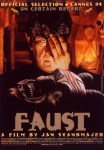
Lunacy, like all of Švankmajer’s films, is ultimately beyond the realm of standard criticism; it exists as a thing unto itself, and to this whimsically macabre visionary’s loyal legion of acolytes, it is one more perfect creation in a body of work that, thankfully, continues to grow.  That said, however, watching his effort at a bona fide horror film (though truthfully, in my view, all of his work could be classed as such) is something of a disappointment.  Given the genre into which he has ventured, one might expect a hitherto unseen level of grotesquery, if not in outright terror and gore, at least in the ferociousness of his approach; but although the film contains several highly effective set pieces (the aforementioned black mass- with its mixture of the arcane, the blasphemous, and the erotic- pushes a lot of buttons for those uncomfortable with such improprieties, and the entire premature burial sequence is a mini-masterpiece of evoking chills with atmospheric story-telling) and it maintains a palpable sense of dread and impending doom throughout, it seems strangely subdued- particularly given its influences from Poe and de Sade, neither of whom could be called masters of restraint. It’s true that the film is meant to be comedic as well, albeit in the darkest sense; but again, this can be said of most of Śvankmajer’s work.  Furthermore, his narrative- despite the anachronisms, non-sequiturs, and other occasionally jarring surrealist ornamentation- is uncharacteristically straightforward, linear, and grounded in a relatively concrete reality (with the exception of the ongoing interpolation of animated meat, that is).  Taken on the whole, Lunacy is less engaging than his Faust, and less disturbing than his Lewis Carroll adaptation, Alice, both of which push the limits of our preconceived boundaries with more enthusiasm and, consequently, linger in our memories far more pervasively.

Comparisons with his other work aside, Švankmajer’s horror film is still an impressively imaginative piece of work, capturing in its unorthodox framework both the delirious psychic instability that makes Poe’s stories feel like a fever dream and the perverse thrill that lies at the heart of de Sade’s nihilistic hedonism.  It’s not terrifying- though parts of it may cause faint hearts to beat faster- and its eventual conclusion is predictable for anyone who even a passing familiarity with the conceits of horror fiction; nevertheless, it succeeds better, both on an intellectual and a deeply primal level, than most of the formulaic, shock-oriented thrillers churned out by the mainstream film industry in its pursuit of teenage dollars.  Of course, its bizarre stylization may prevent many casual audiences from finding it appealing; Švankmajer’s movies are not for every taste, certainly, though in truth, Lunacy may be more accessible than much of his more directly avant-garde work.  As for those with more eclectic tastes, those who are already indoctrinated into the peculiar joys of this Czech master may find, as I did, that Lunacy fails to generate the same deliciously mind-twisting effects as some of his other projects- though doubtless there will be those, with whom it strikes a particular chord, who will quickly adopt it as a new favorite; those adventurous cinema enthusiasts who have yet to see a Švankmajer film, however, are likely to find it a pleasant introduction to a strange and darkly wondrous world unlike anything they have seen before.  It’s as good an introduction as any, and if it leaves you wanting more, you can take comfort in the fact that a five-decade body of work exists, awaiting your discovery.

http://www.imdb.com/title/tt0407236/

Far From Heaven (2002)

Today’s cinema adventure: Far From Heaven, the 2002 drama by writer/director Todd Haynes, which revisits the high-gloss style of late-1950s Hollywood melodramas in order to tell a story of social prejudice and dirty secrets surrounding an ideal, picture-perfect family in mid-century suburbia.  Acclaimed by critics and nominated for scores of awards, it represented Haynes’ breakthrough as a top-level filmmaker and brought him his greatest commercial success to date.  Particularly notable for its visual style- including radiant cinematography and meticulously realized period details- and the performance of Julianne Moore in the central role of a housewife whose ideal life begins to crumble around her, it is also considered an important breakthrough in the acceptance of independently produced films in the mainstream industry and something of a milestone in the continuing struggle to include gay and lesbian subject matter in movies aimed at a wider audience.

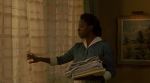
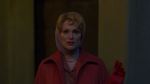
Set in the suburbs of Connecticut in 1956, Far From Heaven tells the story of Cathy Whitaker, a model housewife and mother in a seemingly perfect upper middle-class home.  Her marriage to Frank, a successful sales executive, is happy and fulfilling, and she is a prominent member of the town’s well-to-do women’s social circle.  She enjoys a blissfully elegant existence in her fashionable home, tended by Sybil, a black maid whom she treats- more or less- as an equal; the only aspect of her life that is less-than-ideal is the fact that Frank’s long hours at the office increasingly keep him away from home well into the night, but she is understanding and supportive of his efforts to keep his family well-provided-for.  One evening when he is again stuck at work, Cathy decides to surprise her husband by bringing him a dinner plate from home; when she arrives, however, it is she who receives the biggest surprise, for she discovers Frank locked in a passionate kiss with another man.  Later, at home, her deeply mortified husband haltingly admits to her that he has had “problems” in the past but until recently has believed himself to be over them.  He agrees to see a psychiatrist and undertake therapy to “cure” him of his homosexual impulses.  Nevertheless, as time passes, his refusal to discuss his ongoing treatment and his increasing emotional absence from their relationship- as well as his noticeably heavy drinking- begin to take their toll on their marriage; meanwhile, she finds an unexpected connection with her new gardener, Raymond, an educated black widower struggling to raise a daughter on his own.  As their friendship develops, however, Cathy’s society friends begin to take notice, and she finds herself being shunned for crossing the line between races- an unacceptable social taboo which results in the ostracism of Raymond within his own community, as well.  Facing condemnation from her former friends, no longer sure of her marriage, and growing to recognize the previously unthinkable truth about the nature of her feelings for Raymond, Cathy finds herself isolated and increasingly disillusioned by the hollow facade of her so-called perfect life, but in order to preserve her family she must make the difficult choice between following her own heart or conforming to social expectations.

Haynes, known for his highly stylized approach to filmmaking, wrote Far From Heaven as both a tribute to and a reinvention of the lavish domestic melodramas of the late 1950s, popular films which often featured controversial social issues as complications in their stories of idyllic middle-American life.  In keeping with this, his screenplay features the kind of artificial-sounding, slightly over-the-top dialogue found in these slick documents of mid-century morality; but he has updated the subject matter, throwing the spotlight onto the kind of issues that- though deeply pertinent in that age of prosperous conformism- were too hot to handle for film studios still bound by a decency code that prohibited depictions of anything outside the accepted social “norm.”  Consequently, Haynes has made a sort of “what if?” scenario come to life with Far From Heaven; he has painstakingly crafted a film that recreates the look and feel of those he is emulating, but which directly addresses the pertinent issues which could only be hinted at during the era in which they were made.  In other words, he has made the movie that many filmmakers of the time doubtless wished they could have made, but were simply unable.  Mining most specifically from the work of Douglas Sirk, whose big-screen soap operas, particularly All That Heaven Allows and Imitation of Life, provide the inspiration and the model for Far From Heaven, he peels off the layers of coded euphemism and sugar-coated insulation to reveal the ugly specter of prejudice at the heart of this pretty-picture existence.  In the suburban diorama he presents, the real emotional landscape beneath the pristine and well-ordered surface is made visible; he gives us a world where deviation from the accepted mold is a source of deep shame and scandal, where a “real man” believes that having sexual feelings for his own gender must be a psychological disorder, and where a woman’s friendship with her black maid is seen as admirably progressive but socializing in public with a black man is an affront to decency.

Haynes’ direction is impeccable; he lovingly conjures the form and substance of his chosen genre with absolute accuracy, and yet infuses the whole with his own particular style, subtly edgy and highly contemporary.  There is an eye towards the use of symbolism- Frank’s job is selling advertising and his company’s own marketing features a portrait of himself and his wife in the comfort of their ideal modern home, underscoring the theme of presenting an artificial image for public consumption, and there is a frequent presence of mirrors and other sources of reflection or visual duplication- but these elements are present mostly to support a more direct communication of his themes, revealed through his dialogue and his storytelling.  The outward form of his film adheres to the cinematic language of the movies by which it was inspired- the familiar standards of visual composition, leisurely tracking shots, slow cross-fades or blackouts between scenes, tilted camera angles to indicate that the world is slipping out of balance- without the use of more modernistic techniques such as rapid cutting or varying film speeds; one of Haynes’ most prominent traits as a filmmaker is his gift as a stylistic mimic, and he uses it to great advantage here.  His deep understanding of the milieu in which he is working permits him to utilize its techniques in the service of his personal vision- an expression of the painful longings buried within this bygone era, and a reminder that, sanitized nostalgia aside, the simpler times so fondly remembered in the popular imagination were rife with hypocrisy, ignorance, fear, and heartbreaking dysfunction.  More importantly, by presenting so clearly the outdated mores of the past, Haynes shows us not only how far we’ve come, but also- somewhat discomfortingly- how far we have yet to go.  In observing the attitudes toward race and sexuality variously represented by the characters in the film, we are forced to examine our own relationship with these questions; we are not so far removed from a time when gay bars were hidden establishments behind an unmarked door in an alley or when interracial couples were not free to appear in public together, and the mistrust and prejudice surrounding such matters are still a nagging blot in the heart of our cultural identity.  Though our own world may be a little closer than the one shown here, it is still, for too many of us, “far from heaven.”

The conceit of making a neo-Sirk melodrama, in less ambitious hands, might have resulted in a pale shadow of the original luster undeniably present in those earlier films, but Haynes takes it very seriously, and he takes it all the way; Far From Heaven is built like a piece of retro-fitted classic architecture, incorporating modern advancements into a structure made from the original raw materials and designs.  The film was shot using with contemporary camera equipment, but utilizing the same lens filters and incandescent lighting that would have been employed in the 1950s, allowing cinematographer Edward Lachman to provide a luminous authenticity that perfectly captures the look of the period.  Haynes also worked extensively with his designers to develop a color palette that matched the flavor of the era, infusing the sets and props with a rainbow of pastels and deep hues that likewise encapsulates the sensibilities of the time; most noticeable, perhaps, are the costumes of Sandy Powell, whose stunning designs incorporate not only the colors and lines of ’50s fashion, but the fabrics and textures as well, giving Far From Heaven a sense of realism that is often missing from such period films, which all too often look like an affected caricature of their era rather than a genuine expression of contemporaneous tastes.  To complete the illusion, Haynes went so far as to enlist the great film composer Elmer Bernstein, whose music graced many of the most well-remembered movies of the actual period, to write the score; his lush orchestral accompaniment lends an unmistakable air of authenticity to the proceedings, as well as voicing the passion, the yearning, and the menace inherent in the story.  It was to be Bernstein’s final work- he passed away shortly after completing it- but it stands as one of his finest.

Just as he takes the outward form of his project seriously, Haynes is careful to maintain its inner integrity; here again, he differentiates Far From Heaven from the countless other movies derived from mid-century sensibility by choosing to treat it without the irony that so often pervades contemporary takes on the period.  It is true that the film’s imagery often includes signage or other items which offer subtle commentary on the action or subtext, but this is irony in a different, more literary sense, an artistic device used extensively by directors dating back to the earliest days of cinema and thoroughly in keeping with the style of the actual works the filmmaker emulates.  To avoid inserting contemporary attitudes and judgments into the piece- particularly considering the use of stylized, melodramatic language in the movie’s dialogue- requires a delicacy and skill in the way it is handled by its players, an almost theatrical need to affect a heightened artifice without being disingenuous; one of the greatest blessings of Far From Heaven is that it has a superb cast that is more than equal to that challenge.  It almost goes without saying that the film’s star, the always-glorious Julianne Moore, gives a sublime performance as Cathy, offering up an utterly captivating journey from precious naïveté to worldly disillusionment; her embodiment of Donna Reed perfection is utterly sincere, and yet she gives us a glimmer of the more complex soul that emerges throughout the narrative, as she gradually pares away the layers of socially conditioned conformity to reveal the mature, fully aware woman she has become by the bittersweet final scene.  A more surprising and revelatory performance, however, comes from Dennis Quaid, as husband Frank; always a solid and dependable presence, the actor here breaks from all expectations- while simultaneously using them to great effect- with his portrait of a gay man trapped into the respectably straight, cookie-cutter existence dictated by convention; his exaggeratedly gregarious joviality rings no more false than that of any of his colleagues or cohorts- their world, after all, is a place where a show of male emotion is a sign of weakness and crippling imperfection- but when he is alone, his torment and shame are palpable, seething from within and racking his entire being.  His struggle is all the more painful to watch because his role in the story is that of the unfaithful husband, failing in his duty to home and family because of what his society deems a moral failing, and we as an audience are conditioned to disapprove of his behavior and his choices; Quaid plays it with absolute integrity, forcing us to confront our own preconceived notions by showing us the ugliness of his anger and resentment- but also making it clear that they arise from the conflict between his true nature and his protective mask.  Because he resists the temptation to soften his portrayal by playing for our sympathy, the unfolding emotional wreckage rings completely true, eliciting audience empathy far more than any forced Hollywood sentimentality could manage to do; his scene with Moore following the revelation of his secret shame- a choked, mutually humiliating exchange of faltering half-sentences and defensive body language- is one of the most devastating depictions of a breaking relationship in recent screen memory, and the understanding each actor has for their character in these moments allows us to feel the pain of both throughout the rest of the movie.

Though Far From Heaven ultimately belongs to its two stars, the remainder of the cast is equally superb.  Dennis Haysbert as Raymond brings a refreshingly genuine aura of class to his portrayal of a confident, kind, and sophisticated gentleman, determined to live as he deserves despite the social dictates that surround the color of his skin- though thanks to his later role as the television spokesman for Allstate, it’s sometimes hard to watch him without thinking of insurance.  Patricia Clarkson, as Cathy’s best friend and confidante Eleanor, tackles the delicate and thankless task of providing a sympathetic foil for Moore while having, ultimately, to represent the well-meaning but narrow-minded hypocrisy that permeated the time; she acquits herself admirably, making her character understandable, if not quite sympathetic.  Viola Davis, in an early role as Sybil, Cathy’s maid, has little to do beyond adding her quietly dignified presence to the proceedings, but she does so with grace and charisma, managing to make a strong and eminently likable impression with a minimum of spoken lines.  Finally, mention should be made of James Rebhorn, as the psychiatrist from whom Frank seeks “conversion” therapy, who has a memorable turn in his single scene; also resisting the urge to play a stereotype he presents the good doctor as friendly, kind and professional, a sympathetic- if inscrutable- figure who offers at least the suggestion of a more progressive attitude towards alternative sexuality.

Far From Heaven was a critical darling upon its release, and garnered more than 100 nominations for film awards worldwide, including 4 Oscars.  With its reverent use of classic filmmaking style and technique, it’s easy to see why critics and film scholars would find it so rewarding, and much of the praise and commentary it has generated has been centered on this aspect of the movie; but for those less interested in cinematic heritage than with entertainment value, does it provide a worthwhile time investment on its own merits?  The answer is a resounding yes; Haynes use of the classic mise-en-scène is geared entirely towards making an intelligent, modern film with a compelling, thought-provoking story, and the work of its cast and crew is never anything less than top-notch.  Whether or not you have knowledge or experience of the Sirk-ian ’50s tearjerkers from which it is derived, it is a beautiful film to look at, and even those who normally disdain weepy melodrama will find its approach to be restrained and dignified, devoid of the hokey manipulation that so often mars such stories.  Perhaps its greatest importance lies, however, in the snapshot it gives of a time and place in our not-too-distant past, when a dominant culture was freely allowed to discriminate and disenfranchise those who cannot conform to its carefully-guarded status quo; it’s a reminder of the human cost of hate and ignorance, and a warning to those who take for granted the social advancements of the past half-century- as well as an indictment against the all-too-many in today’s world who still cling to the outdated views of the not-so-golden past.  On a less profound level, it is also a gift for the legion of social “outsiders” who, like its director, grew up loving the movies to which it pays homage, and longed for one that spoke directly to the concerns pertinent in their own lives; Far From Heaven is that movie, and thanks to Todd Haynes, it is everything we could have hoped it would be.

http://www.imdb.com/title/tt0297884/

Vertigo (1958)

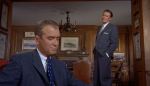
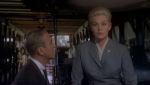
Today’s cinema adventure: Alfred Hitchcock’s Vertigo, the 1958 psychological mystery that recently replaced Orson Welles’ Citizen Kane in the #1 spot on Sight and Sound Magazine’s influential once-a-decade list of the best films ever made. Initially considered a disappointing entry to the Hitchcock canon, at the time of its release it received mixed reviews and barely broke even at the box office- an exception to the usual popularity and success enjoyed by the director’s films. Though Hitchcock himself cited it as one of his personal favorites among his films, it remained largely ignored by his admirers, even during the major reevaluation of his work by a new generation of critics that recognized the director as a true cinematic artist instead of merely a maker of popular entertainment. However, when it was withdrawn from circulation in the 1970s (along with four other titles for which Hitchcock had bought back the rights, intending them as an asset to be passed to his daughter upon his death), its reputation soared, and when it once again became available in 1983 it enjoyed a highly successful theatrical re-release and sweeping critical acclaim. In ensuing years, it has been cited by many as Hitchcock’s masterpiece (a view clearly held by the critics who vote in the Sight and Sound poll); but dissenting voices have argued that it is a flawed, over-rated, self-conscious exercise in pure technique, lacking the director’s usual polished storytelling and sense of humor. In view of this controversy (renewed and exacerbated by its recent promotion to the coveted #1 spot) I couldn’t resist the opportunity to chime in with my assessment- particularly given my own fascination with and appreciation for the work of Hitchcock, surely one of the single most important and influential filmmakers in history, whose innovations and techniques helped to shape the cinematic art form and continue to do so today.

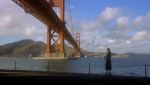
Vertigo, prominently and famously set in San Francisco, is the story of John “Scottie” Ferguson, a former police detective who has opted for an early retirement after his crippling fear of heights led to the death of a fellow officer during a rooftop pursuit. As he struggles to overcome the trauma- and his resultant guilt and depression- with the help of his best friend (and one-time fiancée), “Midge” Wood, he is approached by a former acquaintance, one Gavin Elster, to undertake a private investigation; Elster fears that his wife’s erratic behavior and mysterious wanderings are signs of a growing mental instability which may jeopardize her safety, and after some persuasion, Ferguson agrees to take the case. He follows the coldly beautiful Madeleine Elster on her seemingly aimless, trancelike meanderings around the city, gradually discovering that she has become obsessed with her great-grandmother, Carlotta Valdes, who descended into madness and suicide after being abandoned by her wealthy lover; the fascination becomes more ominous when he learns from Elster that Madeleine is unaware of her own relation to the late Carlotta- or of anything about her- which has led him to suspect she has become possessed by the tragic woman’s restless spirit. Refusing to believe in ghosts (and developing his own obsessions), Ferguson continues to tail Madeleine, until, on one of her endless daily excursions, she abruptly jumps into San Francisco Bay. Forced to come to her rescue, he becomes personally involved with her; determined to help her discover the real cause of her strange psychological condition, he begins to accompany the troubled beauty on her obsessive expeditions, and the two develop a powerful attraction that quickly blossoms into an affair.  Now deeply enmeshed in a mystery- one which has taken on a new urgency with his feelings for Madeleine- Ferguson struggles to uncover the sinister cause of her strange compulsions, even as the diabolical secret of her connection to Carlotta threatens to bring on a tragedy that will once again shatter his own life.

The screenplay for Vertigo is based on D’Entre les morts, a novel by French authors Pierre Boileau and Thomas Narcejac, whose previous work, Celle qui n’était plus, had been unsuccessfully pursued by Hitchcock before being filmed by director Henri-Georges Clouzot as his masterpiece, Les Diaboliques. Though not written directly by Hitchcock, the script was prepared, as with most of the director’s films, under his strict and meticulous guidelines; an early version by playwright Maxwell Anderson was rejected outright, and a second draft by Alec Coppel was completely rewritten by Samuel Taylor- who worked exclusively from the director’s detailed synopsis to create the screenplay which was eventually used.  The resulting scenario, not surprisingly, is rife with classic Hitchcockian elements; most prominent, of course, is the focus on an icy blonde woman who irresistibly lures the hero into a web of illusion and deceit. Vertigo may be Hitchcock’s most personal statement on film in the sense that he uses the slow unwinding of its plot to explore in depth the themes which run throughout his other works. The simultaneous adulation and mistrust of women, the cynical view of romance, the Freudian emphasis on sexuality (the sexual subtext throughout is palpable, at times shockingly overt for a film produced at the time), the psychological connection between sex and death, and- perhaps most importantly- the obsessive fascination with image and illusion and the manipulation of these things to obscure the truth; all these are present, and magnified from their usual level of underlying texture to become the main concern of the film.  In “Scottie” Ferguson’s desperate attempt to fix his broken psyche by rescuing another tormented soul, he becomes fixated on Madeleine Elster as an object of desire; his sexual attraction merges with his efforts to conquer his fears and she comes to represent for him a return to wholeness- to attain her would be to repair his damaged life. However, his perception of her is flawed, partly by deliberate obfuscation, yes, but also by his own self-delusion, and his insistence on making her into his own fantasy threatens to drag him into the very madness from which he believes he is saving her- and also to blind him to the woman she really is.  It’s a dark journey, even for Hitchcock, and offers a grim counterpoint to the idealized love affairs that were so popularly portrayed in many of the glossy and sentimental romantic melodramas of the same era.

This decidedly bleak depiction of love may be one of the keys to why Vertigo failed to capture Hitchcock’s loyal followers upon its first release. His most popular formula was always a blend of romance, humor, and suspense, tinged with darkness, perhaps- even the director’s most likable characters were possessed of a few unpleasant quirks, and his villains were often more sympathetic (or at least more charming) than his heroes- but ultimately reinforcing the traditional Hollywood message that love conquers all, in the end. Vertigo was a marked departure from this tradition, even going so far as to use the audience’s expectations to lure them into the psychological trap its creator had planned,  The film’s first scene- after the expository opening in which we see the tragic rooftop incident that ends its protagonist’s police career and establishes the necessary premise of his paralyzing acrophobia- lulls us into the comfort of familiar Hitchcock territory with the playfully flirtatious banter between Ferguson and his erstwhile girlfriend Midge as he lounges in her apartment; our hero seems down-to-earth, well-adjusted and pleasant, and the tone is decidedly light- indeed, almost jarringly light, considering the gruesome events we have just witnessed.  In true Hitchcock fashion, the scene takes a foreboding turn toward the end, revealing the truth that all is not as well as it seems; but unlike most of his previous work, the ensuing drama never brings us back to the light.  Instead, the mystery into which we are pulled- part ghost story, part psychodrama- takes us deeper and deeper into uncomfortable territory, as we witness Ferguson’s spiral into desperation and obsession; as the film progresses, his banter with Midge becomes increasingly tense and forced as their unreconciled relationship falls apart, and his determination to conquer his inner demons seems more and more like denial. Though the plot is ostensibly centered on solving the mystery of Madeleine Elster, we are really watching the slow and inevitable disintegration of a man who refuses to face the truth about himself- and is therefore incapable of seeing the truth of the situation into which he has been drawn. Hitchcock’s well-known device of the “MacGuffin” (a supposedly important object or situation in the plot that is ultimately irrelevant to the film’s true purpose) is here taken to perhaps its extreme; the entire plot is in fact only a vehicle for the director to delve into the dark corners of the flawed human psyche.

That the mystery story is unimportant is made clear by the fact that Hitchcock solves it for us two-thirds of the way through- another reason for contemporaneous dissatisfaction with the movie; herein, however, lies the brilliance of the piece, for it is in the final section that the true, disturbing power of Vertigo emerges. It is difficult to discuss these scenes without giving away key story points for those yet to see the film, but suffice to say that Hitchcock uses the situation he has craftily set up in order to present an unsettling pageant of dysfunction between two people, each pursuing a fantasy (one of the past, one of the future) and deluding themselves about the true nature of their relationship, marked by psychological abuse, unhealthy fetishization, emotional isolation, and denial of the underlying issues that fuel this twisted romance.  It’s brutal to watch; we know it cannot possibly end well, and that it probably shouldn’t, but because Hitchcock is a master of transferring sympathies we desperately hope- along with these emotionally crippled characters- that it will.

From a technical filmmaking standpoint, there can be no argument against the greatness of Vertigo.  Hitchcock was at the peak of his powers here, with the means at his disposal to accomplish his vision to its utmost perfection. He tells his tale visually, with the eye for angles and composition that made him justly renowned, a fluid camera that pulls our eye subtly but unwaveringly to what he wants us to see, and an uncanny skill for timing and editing that manipulates our emotions irresistibly. He incorporates numerous subliminal means to underscore his true intentions; there is an omnipresent motif of spiraling patterns- not only in the story and in the visual design, but also in the magnificently lush, iconic score by favorite collaborator Bernard Herrmann- that continually reinforces his dominant theme of obsession, a state of mind in which endless repetition and revolution around a central focal point are the key characteristics; a heavy use of reflections to emphasize the interplay between illusion and reality (particularly with regard to identity, another important theme which is further supported by the fact that virtually all of the key characters are called by a different name from their given one); and, of course, the favorite technique of using point-of-view shots to help us identify with the characters onscreen- and, more to the point, to make us into voyeurs.

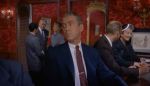
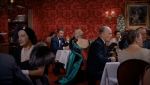
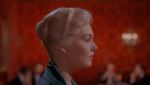
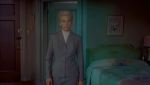
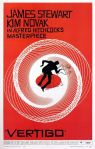
Always one to strive for full coordination of all elements towards a cohesive whole, Hitchcock’s vision extends through the work of his collaborators, never more clearly than in Vertigo.  To begin with, the legendary graphic artist Saul Bass, who also designed the movie’s classic advertising imagery, contributes a sharp and stylish opening credits sequence, establishing the spiraling motif that permeates the film.  Then there is the aforementioned score by Herrmann, a masterpiece of jangled nerves, relentless tension, melancholy longing, and spectacular release; echoing the strains of Wagner’s Tristan und Isolde– another tale of doomed romance- but possessed of the composer’s own unmistakable aural style and distinctively struck in the modernist sound of the mid-20th Century, it is one of the most recognizable pieces of film music ever written- and one of the most effective.  The cinematography of Robert Burks is a masterpiece of late ’50s gloss, capturing not just the mood and atmosphere of the era but of San Francisco- indeed, the extensive location footage provides a dazzling view of the famous local scenery, such that Vertigo could serve as a travelogue for the city; in addition, his exploitation of various qualities of light, from the shimmering haze of a sunny churchyard to the murky gloom of a redwood forest, creates an almost dreamlike immediacy to the images on the screen.  Perhaps most noticeably, there is the stunning use of color throughout the film, painstakingly created by Burks, art directors Henry Bumstead and Hal Pereira, set decorators Sam Comer and Frank McKelvy, and costume designer Edith Head; thanks to their work (and Hitchcock’s meticulous guidance), Vertigo is possibly the most striking example of symbolic color coordination on film- from the dramatic contrast between Madeleine’s blue wrap and the red wallpaper in Ernie’s restaurant, to the jarring dissonance of her blond hair and her classic gray suit, to the surreal neon blue that bathes her apartment at night, the film delivers a magnificently lush palette of bold and subtle hues that elicit primal responses from beginning to end.  This effect is all the more powerful since a 1996 digital restoration (one of the first to be undertaken) returned the movie to its original, pristine condition after years of neglect had left it faded and almost monochromatic.  Having seen both an old print and the restored version, I can tell you it’s like watching a completely different movie, and it makes the greatest imaginable difference in the film’s overall power. Of course, any discussion of Vertigo would be incomplete without a mention of its special effects work, which includes the superb matte effects used to create several important sequences (most notably the bell tower at the mission where both of the film’s climaxes take place), the much-imitated nightmare sequence designed by John Ferren, and the famous “Vertigo Zoom,” used here for the first of countless times, in which a disorienting effect is achieved by simultaneously zooming in on a focal point and pulling back the camera.

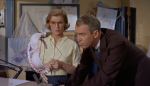
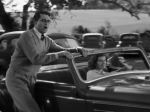
Besides all these invaluable contributions, Vertigo benefits from the work of its cast.  Hitchcock, in later interviews, attempted to explain his film’s relative failure by attributing it to the disparity in age between his leading player, James Stewart, and the 26-year-younger Kim Novak, as well as unfairly- and inaccurately- claiming that Stewart had passed his prime and his popularity had waned (the actor actually enjoyed several more years of considerable box office success following his work in Vertigo); it’s true that Stewart may have been a factor in the public’s disappointing reaction to the film, but if so, it had to do with the fact that his character here is a far cry from the light, easy-going persona with which he was associated.  His previous work with Hitchcock had often pushed the boundaries of his gee-whiz image, as had numerous other of his later roles, but with John “Scottie” Ferguson, Stewart’s lovable personality was turned inside out; the good-natured, lackadaisical charm serves as a mask for a morose, deeply troubled psyche, full of self-loathing and capable of great cruelty.  Despite the fact that the actor’s many loyal fans had difficulty accepting him as such a flawed individual, in retrospect it is clear that Vertigo represents one of his finest onscreen achievements; he embraces Ferguson’s bitter darkness whole-heartedly, without attempting to soften it by resorting to sentimentality.  Playing on his own image, he offers a disturbing portrait of a man whose decency and humanity are eroded by depression and obsession, and his haunting performance is the driving strength of the movie- it’s impossible to imagine another actor in the role.  His co-star, Kim Novak, was not Hitchcock’s first choice for the complicated part of Madeleine- he had initially cast the young Vera Miles, who appeared in his previous film, The Wrong Man, but delays in the shooting schedule led to her having to drop out due to pregnancy- but, again, its now hard to picture anyone but Novak as the cool, mysterious, and ethereal focus of the hero’s- and the film’s- compulsive attention.  The director also later criticized Novak’s work, saying that, in retrospect, he felt she was miscast; and others have complained that she frequently seems uncomfortable, stilted and artificial.  Given the nature of her role, however (and once more I am limited by a desire not to provide any “spoilers” for those who haven’t seen the movie), these qualities seem completely apt.  Madeleine, like Ferguson, is hiding her true nature; and Novak ultimately lets us see that underlying her artifice is a sadness and vulnerability that make her heartbreakingly compelling as a tragic heroine.  She is particularly effective in the film’s final third, allowing her warmth- and her real desperation- to come through.

The supporting cast is led by Barbara Bel Geddes, as Midge, Ferguson’s gal-pal, who- though seemingly more solid and straightforward than the two leads- hides her own not-so-secret feelings for her former flame with an act of sly sophistication and smartly casual cynicism; she provides much-needed comic relief, but her own obsession- which leads to serious errors in judgment- is unveiled throughout, tempering the humor with an increasingly uncomfortable sense of emotional panic.  In addition, she represents Ferguson’s last link to the larger world outside of his fixations, and when she exits the film, with the literal slamming of a door and a slow, sad walk down a bleak and empty corridor, her absence is significantly felt; thanks to Bel Geddes’ understated, textured performance, Midge becomes one of the most memorable personifications of the glasses-wearing, “unwanted” woman so frequently found in Hitchcock’s work.  Tom Helmore, as Elster, seems the sad, impotent milquetoast in his few scenes (a characterization which ultimately adds yet another layer to the mysterious plot), and the rest of the cast- which includes some familiar character actors (Henry Jones, Raymond Bailey, Lee Patrick, Ellen Corby, Konstantin Shayne) along with several unknowns- essay their deceptively small roles with just the right amount of appropriate attitude to further Hitchcock’s subtle psychological manipulation.

It should be obvious by now that I have a lot to say about Vertigo; this is no surprise, because almost everyone who sees it- critic, scholar, or movie fan- has a lot to say about this strange and beautiful film.  It has been suggested that one of the reasons it enjoys such adulation from cinema literati is, in fact, that there is so much to say about it- it is unquestionably a work of art, visually stunning and laden with layers upon layers of symbolism, subtext, and psychology.  Watching Vertigo is strongly reminiscent of viewing a painting in motion, not only because of the richness of its visuals but because of the seemingly endless amount of detail on the screen, each piece of which bears some significance to the film’s overall meaning- or rather, meanings, because like all great art, it opens itself to a multitude of interpretations.  From this standpoint, it certainly qualifies, as much as any of the other contenders, for the honor of being named as the best film of all time.  However, many less-admiring critics have pointed out that, on the more immediate level of pure entertainment, Vertigo fails to accomplish its purpose; the intricate plot is confusing, hampered by a lack of real action, bogged down by clumsy exposition, and hampered by long, uneventful sequences (such as the interminable scenes of Ferguson following Madeleine through the city in his car) that slow the pace to a crawl.  In addition, the story contains details that not only prove to be ultimately irrelevant but, indeed, make no sense; and once the mystery is solved, the central conceit on which the film’s final developments depend is so far-fetched as to pre-empt the willing suspension of disbelief required to make it work.  From my own memory of seeing Vertigo for the first time, I can freely say that all these points affected my reaction to it; die-hard Hitchcock fan as I was (and am), I could not help but be disappointed.  Yet there was a fascination for me here which I could not explain- a nagging feeling that there was something I had missed.  It was years later before I came back to it, but when I did- free from the need to follow a story I already knew- I discovered that to see Vertigo once is not to see it at all.  Dozens of viewings later, I am still discovering it.

Consider this fair warning, then- for the casual viewer, the charms of this much-hyped classic may prove to be invisible.  For those who choose to venture a second look, however, Vertigo begins to unfold itself and display its hidden majesty.  Like the beautiful woman at its center, it is not what it seems- beneath its cold and problematic exterior lies a rich and complex trove of treasures that yields new wonders upon each return visit.  You may not agree with the assessment of Sight and Sound that it is the greatest movie ever made- I can’t say that I do, either- but you would be hard-pressed to find another film which packs so much into such a deceptively simple package.  It is doubtful that Hitchcock- master though he was- consciously intended to create the myriad resonant details which arise throughout his arguable masterpiece; he second-guessed himself frequently during its making, and, indeed, wanted to make changes that were prevented by studio demands- perhaps a rare instance in which such interference resulted in a better movie.  The endless analysis to which this, like all Hitchcock films, has been subjected, would no doubt baffle and amuse a director who, after all, was just trying to make a good movie; nevertheless, as with all great art, the content of the canvas may yield more than even its creator can suspect.  Vertigo reveals much about the depths from which it came, perhaps more than its director could even recognize; it is, in this way, the quintessential Hitchcock film, in which virtually all of the filmmaker’s perennial obsessions were given full expression.  Other of his works may be more entertaining, more frightening, more believable, and more polished- but this one is undoubtedly the most personal, and as such, it is the key to Hitchcock’s universe, in all its darkly beautiful glory.

http://www.imdb.com/title/tt0052357/
 

Lawrence of Arabia (1962)


Today’s cinema adventure: Lawrence of Arabia, the 1962 epic about the controversial military hero who led a successful rebellion by the Arabs as part of the British campaign against their Turkish occupiers during WWI. It’s a film that won 7 Academy Awards, made a star of Peter O’Toole, and is widely proclaimed as the masterwork of its director, David Lean. It’s also my favorite movie. Indeed, my love for it is so deeply rooted that it would be laughable for me to attempt anything like an objective review. However, it would also be unthinkable for me to have a blog dedicated to my passion for movies and not to write about my all-time favorite film; so today’s cinema adventure will be a list of the five reasons why Lawrence of Arabia is the greatest movie ever made. Forgive me in advance: I may gush.

1. The cinematography. The process of making Lawrence of Arabia took place over a grueling three-year period on location in Jordan, Morocco, and Spain. The conditions were punishing, with the cast and crew enduring the extremity of the elements for a longer period than was taken by the historical events depicted in the film. Nevertheless, cinematographer Freddie Young, using the massive and unwieldy cameras required for the film’s 70mm CinemaScope presentation, was able to capture the beauty and majesty of the desert setting to an extent unequalled before or since. The full character of the land is here to see: from the intricate rivulets of blowing sand that make the pristine dunes into a tapestry of constantly changing patterns, to the vast scope of a landscape that seemingly transforms an army of mounted warriors to the size and significance of ants, to the myriad of colors and textures that exist within the deceptively monotonous veneer. By transferring all these subtle details to the screen, Young successfully allows the desert to serve as far more than the mere backdrop it might have been in a lesser film; it plays a full-fledged role in the drama, with the constant assertion of its presence and its ever-shifting mood exerting a continual influence on the actions and the fate of the characters. In a way, Lawrence of Arabia could be characterized as a love story between its eponymous hero and the desert itself; thanks to Freddie Young, the chemistry between them is palpable.

2. The music. French composer Maurice Jarre was not the first choice for the task of creating musical accompaniment for Lean’s epic; he was virtually unknown at the time and was only approached when William Walton (elder statesman of British film composers) and Malcolm Arnold (who had worked with Lean on the highly successful Bridge on the River Kwai) were unavailable. To say he rose to the challenge is an understatement. His sweeping symphonic score is haunting and multi-faceted, from the magisterial strains of the now-familiar main theme to the rousing military marches interpolated throughout, providing the perfect complement to the enigmatic figure at the center of the story and the diverse, turbulent situation that surrounds him. Jarre’s accomplishment was made even more remarkable by the fact that he was only given two weeks to write the entire score; he also reportedly took over leading the orchestra for most of the recording sessions when credited conductor Adrian Boult was unable to coordinate his timing with the cues required by the film’s editing. It was not only the beginning of a long and prolific career as a prominent film composer, but also of a continuing work relationship with Lean that lasted for the rest of the director’s life.

3. The screenplay. Producer Sam Spiegel talked Lawrence’s younger brother into selling him the rights to Seven Pillars of Wisdom, Lawrence’s own published memoir, to use as the basis for the film. A screenplay was written by Michael Wilson that centered on the political and military aspects of the story, but Lean was unhappy with that focus. Playwright Robert Bolt was brought in to rewrite the script instead as an examination of Lawrence himself. The result is a layered and intelligent portrait of one of the century’s most controversial heroes, presenting him as a contradictory figure- an egotist plagued by self-doubt, torn between loyalty to his country and love for the Arab cause, uncomfortable with his own people, haunted by his ignoble origins, and determined to write his own destiny. Bold for its time, the script overtly implies his homosexuality, depicts his torture and presumptive rape at the hands of a sadistic Turkish commander, portrays his sadomasochistic tendencies and includes his eager participation in the bloody massacre of a retreating enemy column. Yet despite this in-depth treatment, and though he is described variously by other characters throughout as everything from a “monster” to a “genius,” he remains as much a mystery at the end as he is at the beginning- and the film’s most urgent question, as voiced to Lawrence across the Suez Canal by a stranger in black near the end of its first act, remains unanswered- “Who are you?” Don’t assume, however, that this microscopic attention to its central character means that Lawrence of Arabia avoids the other subjects that factor into his story; not content to take a simple us-against-them perspective about war, the film presents a shrewdly cynical picture of the complicated agendas being shaped by both the British and their Arabian allies-of-convenience, offering insight on a historical period that laid the foundation for a complex and volatile Middle Eastern political arena that still exists today. Its treatment of the realities of warfare reveals the horror and tragedy that lie beneath the illusion of excitement and glory. Within its sweeping scope, it explores the larger theme of destiny vs. self-determination, not with lofty philosophical discourse, but through the course of events that arise in its story- calling into question whether history is shaped by men whose actions determine it, or whether the men are in fact shaped by the events which determine their actions, indeed whether they ultimately have any more significance or influence than pawns on a cosmic chessboard. In short, Lawrence of Arabia is an epic of the largest stature, encompassing important ideas, momentous events and literally thousands of people- but it is also the intimate, personal story of a single man and his journey of self-discovery. Thanks to the brilliantly literate and insightful work of Mr. Bolt, it works on both levels.

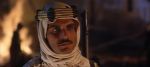
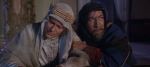
4. The performances. For the leading role, Lean’s first choice was Albert Finney, then a relatively unknown actor, and producer Spiegel wanted Marlon Brando. Both declined, and another unknown actor was eventually chosen- Peter O’Toole. It was the perfect match of actor and role. O’Toole completely owns Lawrence, commanding the screen with his flamboyant charisma and his piercing intensity. He conveys all the complexities discussed above without softening any of it for the sake of audience sympathy, and yet by virtue of his sheer honesty and commitment, his deliciously ironic humor, and- perhaps most of all- his underlying humanity, he makes this maddening, difficult, arrogant man into someone we can admire, pity, identify with, and yes, even like. He is surrounded by a superb all-star cast of international actors, all delivering some of the best performances of their careers. Alec Guinness, one of Lean’s favorite collaborators, plays Prince Feisal, leader of the Arab rebel forces and heir presumptive to their throne, who transitions from warrior to diplomat over the course of the film, and shows us the qualities of both in each. Every word he utters is laden with significance and layered with multiple meanings, and not one of them seems contrived or forced. Anthony Quinn embodies a lion of the desert as Auda abu Tayi, a shrewd and ferocious chieftain who initially allies himself with Lawrence’s rebel army primarily for personal profit, but whose loyalty and support are unwavering. He, too, captures the multiple facets of a potentially despicable character and makes them beautiful, turning Auda into both a lovable rogue and a force to be reckoned with. Omar Sharif, also then an unknown, at least outside of his native Egypt, is magnetic as Sherif Ali, another tribal leader, who clashes with Lawrence early on only to become his trusted comrade and closest friend- and perhaps more. Sleekly handsome, his intelligence and sensitivity make Ali an ideal counterpoint to the earthiness of Auda, and the chemistry he displays with O’Toole is tangible, clearly establishing the subtext that makes their characters’ relationship feel unmistakably like the film’s romantic subplot. Jack Hawkins is deceptively straightforward as General Allenby, the chief commander of British forces in the Arabian campaign, making his bemused, stiff-upper-lip demeanor an effective mask for the calculated, strategic thinking with which he manipulates Lawrence- as well as a shield against the uncomfortable moral implications of his Machiavellian tactics. Veteran character actor Claude Rains delivers one of the film’s most delightful and memorable performances as Mr. Dryden, a composite figure designed to represent the diplomatic forces at work behind the scenes and to serve as a sort of mentor to the younger Lawrence; oozing with mischievous charm, he wears the obvious duplicity of his role in the proceedings like a comfortable shroud, providing contrast with Allenby, and giving the impression of an expert puppet-master proudly enjoying his handiwork. As Col. Brighton, the liaison between the British military authority and the Arab forces, Anthony Quayle gives us the stolid presence of a career soldier, honorable, loyal, brave and more than a little dull- though not unintelligent; he makes an excellent foil for Lawrence’s dazzling shine, and provides a necessary and refreshing flavor of the ordinary. Arthur Kennedy brings a distinctively American perspective to the tale as Jackson Bentley, a cynical Chicago news reporter who documents Lawrence’s campaigns and makes him an international hero- and also serves as a kind of Greek chorus, providing a more objective viewpoint to the action and giving voice to the outrage evoked by the perspective of an outsider. Jose Ferrer makes a brief but unforgettable contribution as the sadistic Turkish Bey who interrogates and tortures Lawrence, exuding an oily, jaded dissipation as he gradually makes it clear that his intentions are not military but sexual in nature; somehow, even this dark character elicits a glimmer of sympathetic humanity as Ferrer embodies him with the full weight of his circumstance, making us feel the frustration and dehumanizing detachment that arise from his duties and his isolation. I could continue down the list of actors, all the way to the extras who provide stunning impressions in their few seconds of screen time, but you get the idea.

5. The direction. By the time he made Lawrence of Arabia, David Lean was already respected for both his technical skill and his aesthetic vision, but this film would elevate him to the ranks of a genuine master, eventually to be held in the same esteem as auteurs like Hitchcock, Fellini and Kurosawa. It’s easy to understand why. Lean constructs his film with a keen instinct for visual storytelling, establishing complicated situations, relationships, and thematic elements, packing an entire scene’s worth of exposition into a single, elegantly composed shot. He makes every location an integral part of the action, whether it is the powerful, ever-changing desert landscape, the interior of a tent swaying uneasily in the breeze, or the austere and museum-like halls of the military headquarters. His command of the imagery is not just limited to artful composition; with the abilities derived from working as an editor throughout his early film career (a role which he continued to personally undertake when he moved into the director’s chair), he meticulously pieces together all of his remarkable footage to create this epic true-life adventure in a way that conveys all the subtleties of both the global and personal levels of the story even when he is painting in broad strokes, and never feels slow for a second, despite the film’s notorious running time of nearly 4 hours. It’s no wonder, then, that Lawrence of Arabia has provided an inspirational blueprint for directors ranging from Stephen Spielberg to David Lynch; Lean’s perfectionism is obvious in every frame, and with it he crafts a movie of dazzling complexity out of simple, economical building blocks put together in just the right way. It’s a textbook example of great filmmaking, and even if Lawrence had been Lean’s only great film (which it certainly was not) it would be enough to ensure his place on the short list of the greatest directors of the 20th Century.

It’s only fair to point out that the movie has had its detractors over the years. Lawrence’s brother deeply regretted selling the rights to the story after seeing the film, protesting that the man portrayed in Lean’s vision bore no resemblance to the one he knew in life (though others who knew Lawrence said the film’s depiction was accurate, if somewhat exaggerated); in addition, the family of chieftain Auda abu Tayi pursued legal action against Columbia Studios over the movie’s representation of him as driven by a desire for personal gain, and the family of General Allenby also lodged formal complaints. Newsman Lowell Thomas (whose coverage of Lawrence and his desert campaign were responsible for making him and his exploits famous) called the movie “pretentious and false,” disparaging its accuracy, and many historians have taken exception to its mixture of fact and fiction; real people are mixed together with fictional composites, events are chronologically rearranged for dramatic purposes, some important occurrences are omitted entirely while complete fabrications are given pivotal significance, and some of the true politics surrounding this important chapter in world history have been significantly altered in order to facilitate Lean’s storytelling agenda. These criticisms are all undeniably valid, from a certain perspective- after all, a movie which purports to offer a true presentation of historical facts would do well to stick to those facts with a minimum of artistic license. However, Lawrence of Arabia is not such a movie. It’s not a documentary, nor is it really even a biographical drama; it is a work of fiction, based on a true story, yes, but not merely a regurgitation of documented information. Lean and screenwriter Bolt are more interested in exploring the personal and political facets of human experience than in offering a retrospective of facts, and they follow in the footsteps of many other artists- Shakespeare among them- by altering the historical truth in order to get at the more intangible truths inside it. It may not offer up a fair portrait of its hero- or any of its other characters, real or imagined, and it may not be a reliable document of what really happened on the Arabian Peninsula in 1917-18, but it is a compelling study of human strength and frailty, an insightful commentary on political and social interaction, and a gripping saga of high adventure in an exotic time and place. Criticizing it for being inaccurate is the equivalent of criticizing a painting for not being a photograph.

Of course, there are those who dislike Lawrence of Arabia for reasons other than its historical inaccuracies. Those too young to remember when movies were shown with an intermission may quail at its length- even theater owners of its time protested, prompting the unfortunate cutting of several scenes, only some of which have since been able to be restored. Others have criticized it as male-centric, citing its lack of feminine presence (no women have speaking roles, and indeed, few females appear onscreen at all); and many have protested, variously, its perceived negative portrayal of native Arabs and its use of western actors in most of the major Arab roles- even Omar Sharif, an Egyptian, was an objectionable choice in many parts of the Middle East. Some have called the film “shallow” (an unbelievable criticism, in my view) or “Imperialist” (equally ludicrous), and still others have simply dismissed it as the outdated product of a bygone era. To these opinions, I can only say that everyone is entitled to their personal tastes, though for those who see the film as having an anti-Arab bias I would have to point out that its portrayal of westerners is hardly complementary, either. For those of us who love Lawrence of Arabia, however, its heartening to know we are in good company- its a film that consistently places in the top ten of most lists of the greatest movies of all time, and the contributions of almost all of its participants is widely considered among the finest work in their respective careers.

If you are among those who have yet to see Lawrence of Arabia, there couldn’t be a better time than now. In honor of the film’s 50th anniversary, a painstaking digital restoration has been prepared, returning it to a level of beauty that reportedly even surpasses its pristine, original magnificence. This new version has been screened at several major film festivals and will enjoy a one-day-only theatrical release today (October 4, 2012). If you are lucky enough to be able to get to one of these big-screen presentations, I guarantee you will enjoy an unforgettable cinematic experience. If you can’t make it, though, take heart; it will be released on BluRay for home viewing soon (its already available in the UK), and given the film’s enduring popularity and reputation, you can be assured it will make frequent returns to the big screen- where it was truly meant to be seen and where its full power reveals itself in ways unimaginable in your living room, no matter how sophisticated your equipment may be- for many years to come. If you are anything like me (and if you are reading this, odds are good that you probably are) you will jump at the chance to see it this way, whenever possible. If nothing else, it will remind you that movies, which all too often serve as mere distractions for us in this era of easy access and rapid downloads, are at their best when they are an event- and there are few films more deserving to be treated as an event than Lawrence of Arabia.

http://www.imdb.com/title/tt0056172/


Lawrence of Arabia 50th Anniversary Event: Digitally Restored

For its 50th Anniversary, David Lean’s Oscar-wining masterpiece has been restored to better than its original glory and is being screened for one day only at theaters across the U.S.  This stunningly beautiful movie can only be fully appreciated on the big screen, so if you are free this Thursday (Oct. 4, 2012) and you are reasonably close to one of the locations, I strongly advise you to jump on this rare opportunity to see it the way it was meant to be seen.  You can get tickets at the website below!  Maybe I’ll see you there!

Lawrence of Arabia 50th Anniversary Event: Digitally Restored.

Bringing Up Baby (1938)

Today’s cinema adventure: Bringing Up Baby, the 1938 classic by director Howard Hawks, teaming Katharine Hepburn and Cary Grant as a pair of misfits who become entangled with each other in a complicated adventure involving (among other things) a tame leopard, a rambunctious terrier, a priceless dinosaur bone, several cases of mistaken identity, and a million dollars.  Despite good reviews and popularity with audiences in more sophisticated urban markets, it was a major box office flop upon its first release, leading to both its director and its female star being released from their contracts with RKO Pictures, the studio that produced it- indeed, Hepburn, who had headlined a string of financially disappointing movies, was labeled “box office poison” following this failure, and had to return to the Broadway stage in order to restore her reputation and her clout.  Nevertheless, a generation later, the film was rediscovered through the new medium of television, and has subsequently taken its place as one of the greats, a definitive example of the “screwball comedy” sub-genre, one of the finest vehicles to feature either of its iconic stars, and an influential piece of filmmaking that has inspired countless imitations and homages over the years.

The plot, based on a short story by Hagar Wilde (who also co-authored the screenplay with Dudley Nichols), focuses on one David Huxley, a paleontologist who, on the eve of his wedding to no-nonsense colleague, Miss Swallow, is sent to secure a million dollar donation to the Manhattan museum for which they both work.   It seems an open-and-shut deal- all that is required is a meeting with the donor’s attorney, upon whose approval the money will be bestowed; but David’s appointments with the lawyer are repeatedly interrupted by Susan Vance, a dizzy young society woman who seems to turn up everywhere he goes- and whose precocious antics involve him in enough confusion and mishap to blow his chances at obtaining the money.  As it happens, though, Susan turns out to be the niece of the museum’s would-be benefactor- a wealthy widow named Mrs. Random- and she promises David (with whom she has become smitten) she will persuade her aunt to donate to the museum anyway.  She enlists his help, against his will and his better judgment, to accompany him to her aunt’s country estate in order to deliver a pet leopard (named Baby) that has been sent as a gift from her big-game-hunter-brother; once they arrive, more confusion erupts, starting with Susan’s false introduction of David as a mentally unstable friend of her brother’s, and complications continue to arise- including the theft of David’s precious brontosaurus clavicle by Mrs. Random’s dog, a mix-up between Baby and an escaped (and mean-tempered) leopard from a traveling circus, and the interference of a crotchety local constable.  Through it all, David struggles to resolve the situation and make it back to the city in time for his wedding, but it becomes clear that Susan is doing everything she can to delay him and keep him by her side.

A description of the plot, in print, seems ridiculously far-fetched and convoluted; that, however, is what gives Bringing Up Baby its zany appeal on film.  The entire movie is a whirlwind of unlikely circumstances and coincidental relationships, bound together by a premise that is as flimsy as one of the diaphanous costumes that Hepburn sports onscreen.  This is the nature of the screwball comedy; we take for granted that the scenario will be ridiculous, and as long as it yields the kind of laughs we expect, we don’t mind suspending our disbelief in the absurdity of its situations.  As scenarios go, that of Bringing Up Baby is more ridiculous than most- in fact it borders on the surreal, but we accept it without batting an eye, because it also delivers more laughs than almost any other film of its era- or any other, for that matter.  It certainly helps that director Hawks drives the proceedings at a breakneck pace, scarcely giving us time to think about the credibility gaps or even to register the fast-and-furious jokes until they have already passed us by.

Much of the hilarity, however, arises from the chemistry of the two stars, perfectly matched and clearly relishing their roles; their comic banter arises so effortlessly as to belie the artificiality of the dialogue- indeed, the two performers ad-libbed some of the film’s best jokes- and they so completely inhabit their roles as to make us easily forget the many other personas they adopted on the screen over their long individual careers.  Grant in particular made a breakthrough here; his previous career had been mostly comprised of more-or-less dramatic (and none-too-weighty) leading man roles, and though he had previously appeared in The Awful Truth– another screwball classic in which he demonstrated his particular flair for comedy- nothing had prepared audiences for his work here.  Playing gleefully against type, the impossibly handsome Grant pulls off the role of the timid, nervous and befuddled bookworm without ever letting us doubt his awkward ineptitude; at the same time, he rattles off his barbed dialogue with the timing and wit of a master, making it clear that he is up to the challenge of sharing the screen with the formidable Hepburn.

As for The Great Kate, it’s hard to see her performance here and understand why she should be deemed a liability by studio executives; her sharp, patrician bearing is brilliantly undercut with a little-girlish softness that makes her instantly lovable no matter how maddeningly daffy she gets.  Careening from haughty and indignant to doe-eyed and tender and back again through all stops in between, her portrayal of Susan drives the film and gives it a heart; and even when her behavior is at its most inane, her glittering intelligence always shines through, giving this upper-crust oddball an edge that leaves no doubt of her absolute control over the entire madcap situation.  She never overwhelms her co-star, however; the two make a magnificent team, one that is immediately recognizable as perfect for each other (a conceit on which, of course, the entire movie depends), and the obvious real-life affection between them translates into an onscreen chemistry that has rarely been matched and makes this pairing one of the most iconic co-starring turns in cinematic memory.

Perfect as they may seem in their roles, both of the stars initially had trouble with the project.  Grant feared being unable to project the necessary intellectual quality of a career scientist, and was only able to relax into the the character when director Hawks told him to base his performance on the persona of silent screen comedian Harold Lloyd; Hepburn was stymied by the over-the-top zaniness of Susan, and struggled with finding the right approach until Hawks asked veteran character actor Walter Catlett, who was playing a minor role, to coach her in the art of playing outrageous comedy- he taught her the effectiveness of underplaying and naturalistic delivery (as opposed to the more deliberately comedic style she was attempting), and she was so grateful for the help that she insisted his part- the town constable with whom she tangles in the film’s climactic scene- be expanded to give her a chance to work with him more extensively.  Their initial reticence allayed, both the film’s stars settled into the rhythm of their characters and created the sparkling joint accomplishment that makes Bringing Up Baby so delightful to this day.  Their enjoyment of each other is clear to see, and infectious; they had so much fun working together on this film that shooting went over schedule (and over budget) due to their difficulty in completing their scenes without laughing.  Though doubtless this was a thorn in the side of RKO executives who were already anxious over the project, the fun translates to the screen.

Apart from the obvious joys of Hepburn and Grant’s interplay and their attractiveness both individually and as a couple, there is a more subtle aspect to their dynamic that lends a unique flavor to the goofball romance at the center of Bringing Up Baby.  Grant, though decidedly masculine in his energy and personality, plays the passive, pursued role in this relationship, while Hepburn is clearly the active aggressor.  It seems a minor twist, but by reversing the traditional gender roles of courtship in such a way, Baby sets itself apart from most of the romantic comedies that came before it.  It would be wrong to credit the film for being the first work of fiction to do this- after all, Shakespeare wrote several plays in which this inversion was explored- but Hollywood has always been known for reinforcing stereotypes, and by swapping these accepted standards of masculine and feminine behavior Bringing Up Baby became a milestone in the depiction of gender identity on the big screen.

This in itself is enough to have given the movie a special significance for GLBT audiences; but there is another point of interest here for cinema historians which also gives the movie its “gay appeal.”  In one memorable scene, Cary Grant, dressed in a frilly and feminine house robe (having had his clothes stolen by Hepburn whilst showering), is forced to meet the returning aunt- a formidable dowager- at her own front door.  The understandably flustered woman, confused by the presence of a strange man in her house, presses him impatiently with questions, and most adamantly (for some reason, though it seems the least alarming aspect of the situation) she wants to know why he is wearing those clothes; the badgered Grant, already pushed to the limit of his patience by Hepburn’s continued hijacking of his formerly sedate life, leaps in the air and shouts, “Because I just went gay, all of a sudden!”  This line, ad-libbed by Grant on the set, may be the very first instance in mainstream fiction that the word “gay” was used to denote homosexuality, though within the underground gay community it had been used as a code word since at least the 1920s.  It may not have been intentional (though frankly, it’s unlikely that a group of Hollywood sophisticates such as these would be unaware of the double meaning- particularly Grant, whose famous long-term relationship with “roommate” Randolph Scott is still the subject of much debate among his many fans), but whether it was or it wasn’t, this bold double-entendre provides one of the biggest laughs in the film, and is yet another reason why Bringing Up Baby has been accorded landmark status.

Historical footnotes aside, there are plenty of reasons to watch this little gem of late-Depression escapism today.  Not only are Hepburn and Grant a rare treat to watch, they are supported by a fine cast of character players that bring to life the assortment of other lunatics surrounding the film’s dotty protagonists.  In addition to the aforementioned Walter Catlett, whose comically cagey turn as the rural lawman provides Hepburn with a magnificent foil late in the film, there’s Charlie Ruggles (as a mild-mannered and easily flustered hunter who turns up as a guest to Mrs. Random’s estate), Barry Fitzgerald (as a heavy-drinking Irish gardener, a bit of now-inappropriate ethnic profiling that nevertheless seems innocent of malice and manages to still be funny today), perennial screen waiter Fritz Feld (here cast as a smugly pompous psychiatrist whose path keeps crossing with Hepburn’s, adding to the already-convoluted tangle of misunderstandings), and the redoubtable May Robson (as the somewhat battle-axish Mrs. Random).

More vital than any of these notables, however, are the non-human members of the supporting cast, and they too deserve mention.  Nissa, the leopard, a veteran of numerous B-movie jungle adventures, plays the dual role of both Baby and the dangerous circus escapee; the other four-legged star, in the role of the mischievous bone-thief, George, was Skippy, a terrier whose fame as “Asta” in the popular Thin Man movies made him nearly as big a draw as the human headliners, and his appearance here is highly memorable, exhibiting the exuberant canine personality that made him a natural and ensured his place as one of the immortal screen animals.

On top of the performances, Bringing Up Baby offers a fine look at late-thirties fashion and design through its sets (a sumptuous blend of Art Deco and neo-classical influences alongside the elegantly rustic charms of the Random estate, overseen by the legendary Art Director, Van Nest Polglase) and its costumes (most particularly the various range of outfits worn by Hepburn, with which designer Howard Greer manages to add some sly satirical commentary on the frivolity of fashion into the movie’s comedic recipe).  In addition, tech aficionados may find some interest in the early special effects- quite sophisticated for the time- with which the actors are sometimes made to appear with the leopard in close proximity (especially Grant, who wouldn’t go near the creature- though the fearless Hepburn directly interacted with it and can even be seen petting it in a few scenes); in several of the split screen sequences, a moving center line was required, creating a complex challenge for the technicians of the day.  They rose to it admirably; the seams are virtually invisible to all but the most attentive observers.

Bringing Up Baby, it may be clear by now, is a seminal movie for me; I have fond memories of watching it on TV with my parents, all of us laughing out loud together, and through the years I have seen it countless times- I can practically recite the dialogue along with the actors, and yet a viewing will still have me giggling uncontrollably throughout, as well as discovering nuances and subtleties that I had never noticed before.  No doubt there are many others out there with a similar relationship to this film; it was, after all, one of the first movies selected for preservation by the Library of Congress, and it has been consistently named on lists of the 100 best or funniest movies of all time.  For most, it is the movie that comes immediately to mind when the term “screwball comedy” is mentioned, and for good reason- it’s about as screwball a comedy as you can get without veering into the realm of the Looney Tunes.  For those who have yet to discover its sublime wackiness, I will give away no more than I already have; and for those who feel their modern tastes are too sophisticated for a 75-year-old comedy to provide much amusement, I can only challenge anyone to sit through Bringing Up Baby without cracking at least a smile.  After all, it has been called more than once a movie ahead of its time- which may, better than anything, explain why a film that temporarily sank the careers of both its director and its leading lady (though not, tellingly, that of the resilient Cary Grant) went on to become one of their most enduring and beloved creations.

http://m.imdb.com/title/tt0029947/

Faust (1994)

Today’s cinema adventure: Faust, the 1994 feature by celebrated Czech filmmaker Jan Švankmajer, a surrealist take on the classic German legend in which a scholar trades his soul to the Devil in exchange for worldly knowledge and experience.  Set in modern day Prague and incorporating the director’s trademark blend of live action with stop-motion animation, claymation and puppetry, as well as his disturbingly textural use of sound, it represents the culmination of Švankmajer’s long fascination with the tale and stands- along with his other highly distinctive work- as a major influence on more well-known directors such as David Lynch, Tim Burton, and Terry Gilliam.

Presenting its own loose adaptation of the familiar morality fable, Švankmajer’s film borrows elements (and, occasionally, entire scenes) from previous versions by the likes of Christopher Marlowe and Goethe, as well as from the early folk stories of its origin, more or less faithfully following the traditional structure of the narrative; but thanks to the director’s surrealist sensibilities, it recasts the tale in the form of a nightmarish hallucination centered around a nondescript middle-aged everyman who stands in for the mythic scholar.  When this hapless protagonist is handed a flyer in the street, upon which is printed only a simple map of the city with a location marked in red, his curiosity- coupled with some unusual occurrences in his apartment- leads him to a mysterious, ruined theatre; there, after donning costume and makeup, he begins to read from a charred and tattered script, setting in motion a hallucinatory cycle in which he enacts the role of Faust.  Assisted- and manipulated- by an assortment of other “actors,” human and otherwise, his own identity merges with that of the character he plays, and it becomes clear that his own fate is being determined by the scripted events of the ancient drama in which he has become enmeshed- in which he strikes a bargain with Mephistopheles, an agent of the Devil, to instruct him in the secrets of the universe and guide him through the pleasures of earthly life for a period of 24 years, after which he will surrender his soul to be damned into Hell for all eternity.

A dark and moralistic story like this one, born of the same dour Germanic heritage that yielded the Grimm fairy tales and other such cautionary parables, could easily be translated to the screen laden with the ponderously heavy trappings of deep tradition and humorless Puritanism; likewise, given the fact that this legend has provided the inspiration for countless adaptations and re-inventions (from Shakespeare’s Macbeth to Brian DePalma’s The Phantom of the Paradise), the familiarity of its basic plot and its themes make it challenging, to say the least, for any artist attempting a new version to find a fresh approach that might prevent predictability and redundancy from undermining the proceedings- and the audience’s interest in the outcome.  In Švankmajer’s hands, however, the entire well-known saga is transformed into an audaciously non-traditional package of surprises, each one as delightful as it is disturbing, appropriately dark in tone but laced throughout with macabre, tongue-in-cheek humor, and loaded with the peculiar blend of the cinematic and the theatrical that gives this director a reputation for visual magic that is unlike the work of any other.  A self-proclaimed surrealist, Švankmajer creates a movie that captures the peculiar flow of nonsensical logic one follows in a dream, making the experience of watching Faust feel thoroughly like a visit to the realm of the unconscious; he tells the story clearly and succinctly, but he does it through a deeply symbolic progression of seeming non-sequiturs, building a mass of perplexing puzzle pieces that fall seamlessly into place as the narrative resolves itself.  By transposing the story deeply into a hallucinogenic reality in which rules of plausibility and common sense no longer apply, the director not only allows himself free use of arcane and metaphoric artistic conceits, he manages to frame his oft-told tale in such a way that every development seems completely new and unexpected, giving us the opportunity to discover its hidden meanings and significant themes by discovering them from an unfamiliar perspective.

That perspective, shrewdly, moves the Faust story out of the medieval past and into a milieu more relevant to a modern audience; Švankmajer doesn’t exactly update his drama, but rather rehearses it within a contemporary framework.  Our protagonist is established from the outset as a decidedly present-day figure, emerging amidst a crowd of commuters from a subway station- just another anonymous drone.  He is drawn into the web that will seal his fate by a pair of men passing out flyers on a street corner, a sight so mundane in our modern world we scarcely take notice; this, of course, sets up a recurring theme for Švankmajer, that of the mystical contained within the ordinary, a motif that manifests itself throughout the film and tempts us, like Faust, with the promise of secret wonders hiding just beneath the bland surface of our everyday lives.  In our demystified era of utilitarian buildings and dehumanized masses, we long for the thrill of the unknown, a glimpse of something mysterious behind the mask of our predictable, well-ordered existence; such a revelation, however, is as unsettling as it is exhilarating, a source of terror as much as enlightenment, and therein lies the essence of Faust.  To obtain the key to this secret world, we must be willing to sacrifice our very selves, to give up everything that defines us- our souls, if you will; for to be privy to the secret workings of the universe is to be torn irrevocably from our humanity, confronted with an absolute power that renders our previous understanding meaningless and dissolves our identity by shattering the precepts upon which we build our relationship with the world.  In a modern age full of the smug assumptions and easy explanations derived from centuries of scientific exploration, the idea of an unseen order to things is perhaps even more terrifying than it was to our superstitious forefathers, whose imaginations conjured the tale of Faust to warn against delving too deeply into the hidden mysteries of life.  They feared the cost of knowledge and worldly experience was the loss of the soul, but we who have embraced these things may be more frightened by the possibility that they were right.  Švankmajer’s Faust, then, is about the rediscovery of the soul by modern man, and the disturbing notion that he has already sacrificed it.

That Švankmajer conveys all this in his movie is remarkable; but convey it he does, in a manner which gives testimony to his skills as an artist and a visual storyteller.  How he does it, exactly, is beyond the power of words to describe, and at any rate is best left to be experienced firsthand. Suffice to say that, in order to bring our modern sensibility into the mystical world of his story, he takes us into the last remaining stronghold of magic, the realm of the theater.  By trapping his protagonist into a re-enactment of an ancient text, not only does he provide the obvious metaphor of man’s fate being dictated by his repetition of the patterns of the past, he opens the door for his own use of all the tricks of the trade in the service of creating his goofy nightmare.  Puppets, both life-sized and miniature, stand in for other characters- and occasionally, for Faust, too- and interchange with live actors; painted backdrops appear in naturalistic settings, and vice-versa, patently theatrical objects and occurrences manifest in the real world, and events move freely back-and-forth between the containment of the theater and the expanse of nature, underscoring Švankmajer’s dissolution of the boundary between reality and illusion; dialogue is recited, arias are sung, ballet dancers perform, and an audience observes the proceedings, though most of Faust’s key scenes take place “backstage,” at least ostensibly.  Of course, the director’s familiar techniques of stop-motion animation are directly drawn from this theatrical background, and fit in seamlessly here- particularly effective is his claymation rendition of Mephistopheles, growing from a ball of clay into a vaguely humorous demonic face that then transmutes into a mirror image of Faust’s own appearance, giving us, once again, the mystical inside the familiar.  Throughout the film, Švankmajer utilizes all these devices to draw us along on this metaphysical journey, using his surrealist tactics to provide cryptic images that simultaneously amuse and appall us- an egg baked inside a loaf of bread, a baby transforming into a skull, a severed leg wrapped in plastic, a puppet demon sexually assaulting a puppet angel, and countless other blasphemous delights- and, in the end, achieve their cumulative goal of revealing the film’s underlying mystery.  It’s worth mentioning, too, that Švankmajer also indulges his usual fascination with food, offering us numerous important scenes that revolve around eating; he also provides his trademark, hallucinatory soundscape, a collection of rustling, scratching, rattling noises that crosses the sensory boundaries to make us feel the surfaces we hear- and creeps us out, in the bargain.  The entire film, ultimately, has this effect- it’s something akin to visiting a haunted house at Halloween, in which we want to feel our skin crawl and our hair stand on end, but we want to giggle with glee over the pure silliness of it all.

Jan Švankmajer is something of a national treasure in his native Czechoslovakia, and rightly so.  His visionary work, at once quirky and powerful, represents the kind of purely artistic sensibility that is rarely found in modern cinema; with the personal spirit of a true auteur, he makes certain his films are distinctly his own, and whether or not audiences respond is not his concern.  Though much of his work has been rarely seen in the U.S., thanks to Cold War restrictions and prejudices that impaired his ability to distribute it on this side of the Iron Curtain (and, sometimes, even to produce it at all), he has gained a steady and growing following among fans of animation, surrealism, and cinema in general.  His decidedly adult adaptation of Alice in Wonderland (simply titled Alice) is partly responsible for breaking him through into Western culture, but many of his other films- including this one- have been championed by critics and other filmmakers alike, and the ready availability of the digital age has now made it possible for almost anyone to partake of the disturbing delights he offers.  Since Faust, like all of his films, is virtually impossible to describe- even stills fail to capture it, since Švankmajer’s visual sense is so connected to motion and juxtaposition of images- I strongly recommend a viewing.  I can praise it all I want, but, ultimately, it’s a movie that speaks far more eloquently for itself.

http://www.imdb.com/title/tt0109781/

Gosford Park (2001)

Today’s cinema adventure: Gosford Park, the 2001 period mystery-comedy directed by Robert Altman and featuring an all-star ensemble cast in a screenplay by future Downton Abbey writer Julian Fellowes.  Set on an English country estate in the early 1930s, it uses the familiar premise of an Agatha-Christie-style whodunnit as a pretense to explore the complex social structure and interrelationships among the wealthy landed gentry and the servant class that runs their households, exposing the busy undercurrent of secrets and scandals that flows beneath the genteel and proper surface of upper class British society.  One of Altman’s most successful films, it was popular at the box office as well as with most critics, and it received a number of awards and nominations, including an Oscar for Fellowes’ screenplay, Best Film at the BAFTAs and Best Ensemble Cast (the rough equivalent of Best Picture) from the SAG Awards.

The film takes its title from the name of the estate on which it is set, owned by Sir William McCordle, where a number of guests gather for a weekend hunting party.  Most are relatives or family associates- Lady McCordle’s sisters and their husbands, daughter Isobel’s suitor, a dowager cousin- but among their midst are also a few strangers, including a Hollywood producer named Weissman and noted film star Ivor Novello.  This elite crowd, however, constitutes a minority of the population here in Gosford Park; the household is crowded with an army of servants, bustling around the clock to serve their masters, and their number is increased by the influx of personal valets and maids who attend the estate’s guests.  As the weekend progresses, rigorous adherence to decorum and tradition dominates the outward appearance of this gathering and its festivities, despite the myriad personal agendas, hidden relationships, false pretenses, secret histories, private resentments, and unseen tragedies that exist behind the scenes.  These underlying dramas are unexpectedly brought to the surface when a murder takes place, prompting the intrusion of the local police inspector whose investigation lays bare many of the dirty little secrets on both sides of the class divide- as well as some which cross that inflexible boundary.  The solution to the mystery, masked beneath layers of assumption, convention, and privilege, may be a simple crime of passion or a calculated act motivated by financial gain- or it may ultimately hinge on the conflict between an unjust social system and the most basic impulses of humanity.

Director Altman was known for his explorations of different subcultures (the military in M*A*S*H, the country music community in Nashville, the Hollywood film industry in The Player), using an interwoven tapestry of characters and events to offer social observation and commentary through the prism of these microcosmic settings; by the time of Gosford Park, his reputation was such that he had no trouble securing the impressive collection of collaborators necessary to bring to life this meticulous recreation of Edwardian country life between the wars.  Screenwriter Fellowes, an actor who had (at the time) never previously authored a screenplay, was approached by the director due to his extensive knowledge of the complex workings of the domestic management of the era and the culture of the serving class upon which it all depended; he wrote a script, and served as the film’s technical advisor as well, allowing him to rewrite and hone portions of his work on the set.  As with most of Altman’s films, some of the dialogue was also improvised during filming, particularly in the scenes involving a large group of actors, lending an authenticity to the sound of the conversations and contributing to the overall feel that we, the audience, are eavesdropping upon the characters’ private lives; even so, under Fellowes’ guidance, the entire, sprawling saga is united with a cohesive singularity of purpose and consistency of style, providing the master director a solid structure upon which to build his own vision.

Altman’s signature format, in which a focused perspective is imposed upon an almost documentary approach to the narrative, at first might seem a bit ill-suited to a costume piece like Gosford Park; we are conditioned by experience to expect a more theatrical presentation in films such as this.  However, the Altman treatment works brilliantly here, particularly given the director’s purpose; like all of his films, Gosford Park is less concerned with plot (though the story is intricately woven and ultimately, very compelling) than it is with its characters and its observations of human behavior.  Like a fly on the wall, we are privy to the public and private interactions of the denizens of this estate and their guests, but these exchanges seem part of a bigger landscape, as if they were individual trees or a babbling brook in a painting of a countryside; in other words, the concerns of the characters are details which contribute to the more significant whole, a complete portrait of a way of life.  The details of a nobleman’s financial schemes or backstairs dalliances are granted no more importance than the polishing of the silver for dinner service; indeed, the mundane details of this rarefied lifestyle are far more interesting to Altman than the various worldly concerns of the characters, and, thanks to his careful choices in focus, he makes them so for us, too.

In keeping with his detached observational technique, the director similarly places emphasis on the intricacies of his characters’ behavior and personalities.  Each individual is seen in relation to the others, illuminating their social roles and the subtleties of the relationships between the various subdivisions, even within the two primary groups.  Money, status, seniority, tradition, convention- all these and more play a part in determining the “pecking order,” and the rules of this rigid structure far outweigh any considerations based on emotion or concern for humanity; there is no tolerance for those who forget or disguise their rightful place in the order of things, and the public display of passion, particularly when it crosses the sacred class boundaries by which the entire cultural system is governed, is a greater transgression of decency and decorum than a discreetly-executed murder.  It is this obsession with maintaining appearances, of keeping all the warts and wrinkles of being human out of sight at all cost, that ultimately emerges as the over-reaching theme of Gosford Park; it is also seen, by microcosmic implication, as the mechanism for the looming downfall of this ponderous, antiquated way of life- for in the deeply buried untidiness of past scandal lies the seed of the consequence which rises from the well-hidden, forgotten depths to strike a blow against the entrenched injustice of the entire system.  In this way, despite its almost reverent depiction of an ultra-conservative world in which even the most downtrodden are contemptuous of change, Gosford Park manages to echo the anti-establishment sentiment usually associated with Altman’s work.

Such socio-political conclusions are left, however, to be drawn (or not) by the viewer; Altman adopts an objective eye, almost like a field researcher doing an anthropological study.  He records the events of the weekend with a slowly moving camera, lingering here or there to pick up an interesting detail or reveal a fact which might not be apparent to the passing eye, and trusting Fellowes’ words to carry the narrative, along with any thematic elements that may be present.  Of course, it falls to the cast to bring life to the script and give the director the behaviors with which to fill his lens; and the collection of superb actors on display in Gosford Park does so magnificently, capturing every subtle nuance of their roles and deftly providing an ocean of subtext without ever disturbing the naturalistic atmosphere that is Altman’s milieu.  Most of these players are experienced in theatre, which serves them well as Altman allows his focus to move freely amongst the characters the way the eye travels around the stage at a live performance; as they conduct their conversations, steal their glances at each other, clear the table, pour the sherry, and all the other living activities on display at a dinner party, the audience may or may not be watching- they must be “on” at all times, regardless.  They speak realistically, often overlapping dialogue and talking simultaneously, as Altman shrewdly hovers just long enough to permit us to hear the crucial bits; and in the smaller scenes, depicting the private moments spent alone or in pairs, though the emphasis is often on what is seen and what is left unsaid rather than what is spoken, the vital information is communicated, nevertheless, through the minutest of gestures and expressions.  It’s an impressive collection of performances, one of the finest examples of true ensemble screen acting in recent memory.

This incomparable cast includes a mix of actors, from the legendary to the unknown, all of whom deliver exemplary performances; a few stand out, deserving special nods, not so much because they are superior but because their roles give them the chance to shine individually. Most noticeable, perhaps, is the always delicious Maggie Smith as a snobbish and acid-tongued dowager countess (foreshadowing her Emmy-winning role in Fellowes’ wildly successful Downton Abbey series a decade later); Helen Mirren exudes the anonymous perfectionism and the crisp, selfless honor of a lifetime in service, and late in the film releases an unforgettable flood of repressed humanity that drives home everything Gosford Park is about; Michael Gambon, as the misanthropic lord of the manor, and Kristin Scott-Thomas, as his icy and discontented wife, personify the insulated ennui of the inconceivably wealthy-and-powerful upper class; Stephen Fry has a remarkable turn as the police inspector, turning the familiar stock character of this genre on its ear by being dull and sycophantic instead of brilliant and unflappable; Emily Watson gives us a portrait of youth and good nature being bent by servitude towards frustration, bitterness and cynicism, putting a human face on the socially-sanctioned exploitation of the serving class; and relative newcomer Kelly Macdonald is charming and likable as the deceptively naive young ladies’ maid who provides our window of access into the austere and intimidating world of the film.  Also lending the weight of their presence are such thespian luminaries as Alan Bates, Derek Jacobi, Eileen Atkins, and Charles Dance; a newer generation asserts itself through the work of Clive Owen and Jeremy Northam, and representing the American contingent are the stalwart Bob Balaban and the handsome Ryan Phillippe, as the film producer and his valet, respectively, present for the purpose of researching an upcoming movie project and concealing a number of secrets in their own right.

The three-way combination of director, screenwriter, and cast is supported by a top-notch assembly of technical and visual elements; filmed on location at several authentic English country houses and a painstakingly constructed soundstage set at Shepperton Studios, the atmosphere of Gosford Park is so completely realized that we are wholly transported to this bygone place and time.  The sumptuous production design executed under the supervision of the director’s son, Stephen Altman, and the dazzling array of costumes, designed by Jenny Beavan, all captured by the rich cinematography of Andrew Dunn- these contributions help to make the movie a total immersion in the period it portrays.  Completing the effect is the wistfully nostalgic score by Patrick Doyle, evoking the sadness of a dying age, and rounded out by the inclusion of several songs by the real-life Ivor Novello, performed exquisitely by actor Northam, both on camera and off.

With the popularity of the aforementioned Downton Abbey, many will no doubt be drawn to this previous work by its author; it should be noted that, though the intricacies of English country life are depicted with the same painstaking accuracy as in Gosford Park, the tone here is much different than in the hit series.  Altman’s style and purpose are far removed from the tone of fond admiration which pervades Downton, and his characters are less likely to incur our affections and loyalties than those to be found on Lord Grantham’s estate.  As with all of the director’s work, Gosford Park is not for every taste- the cool detachment, the oddly stylized naturalism, the oblique and almost passive-aggressive social criticism, the ironic and oh-so-dry humor, and- perhaps most of all- the constantly roving focus that makes it difficult to anchor one’s emotional perspective in the story; these are all common obstacles for many viewers who dislike Robert Altman films, and they are certainly present here.  Conversely, fans of the director’s work may be turned off by the movie’s cloistered atmosphere, a far cry from the more free-wheeling, overtly colorful setting of his usual, decidedly American subjects.  Nevertheless, Gosford Park is one of Altman’s most accessible pictures, appealing to a wide range of audiences that might not otherwise be appreciative of his sometimes obtuse approach.  In some ways his most atypical project, and in others a quintessentially Altman creation, it cannot be termed his masterpiece, by any means, but it must be ranked highly in his canon as one of his most successful films in terms of overall accomplishment of its intended goals.  Taken independently from Altman’s other work, it certainly stands as a prime example of what can happen when style, content, and execution come together so coherently that the end result is as polished and nearly perfect as a film can be.  For my part, Gosford Park is the kind of movie that makes me remember why I love movies; even if it’s not your cup of tea (to use an apt expression), it’s worth a look just to see what happens when genuine cinematic teamwork makes all the pieces fit as neatly as a good butler’s tuxedo.

http://www.imdb.com/title/tt0280707/

Bronson (2008)

Today’s cinema adventure: Bronson, the 2008 biopic about England’s most notorious prison inmate, Michael Peterson (who changed his name to Charles Bronson during his brief career as a boxer), whose reputation for violence and trouble-making has led to his having spent the majority of his adult life behind bars- and most of that in solitary confinement.  Directed by Nicholas Winding Refn and starring Tom Hardy in the title role, the film takes Peterson’s real-life story and presents it in a highly stylized, theatrical manner, focusing on fictionalized vignettes and incorporating some real-life footage to depict some of the most infamous incidents from his long history.  Rather than a straightforward biography, the movie is more a meditation on the enigmatic nature that causes such antisocial behavior, ultimately leaving its subject’s motivations a mystery and offering no concrete explanation for the impulse towards violence.

Bronson frames its story with a narrative conceit in which Peterson presents his own story, to an unseen but appreciative audience, on a bare stage; in various stages of theatrical make-up, and with a considerable amount of flourish, he gleefully relates his life story, beginning with his childhood as the son of typical middle-class parents in the London suburb of Luton.  Intercutting portrayals of real events with his “performance” in the theater, the film proceeds to relate the general outline of his life.  We see his early marriage to a co-worker who witnesses his first crime (the theft of money from a cash drawer in their shop), his subsequent arrest and incarceration for the armed robbery of a post office, and the continual extension of his 7-year sentence due to his repeated assaults on his guards and fellow inmates.  When frequent transfers to different facilities throughout the penal system fail to curb his violent tendencies, he is declared insane and moved to a mental institution, where despite heavy sedation he nevertheless attempts to murder another patient.  Further transfers lead to further incidents, so he is declared sane and set free.  His return to the outside world is short-lived, however.  After a short career as a fighter in the illegal sport of bare-knuckle boxing (for which, at the suggestion of his promoter, he adopts his new name), a jewelry store robbery lands him back in prison after only 69 days, where he promptly resumes his  escalating cycle of violence, despite showing an interest- and some talent- in art, leading to an ongoing campaign of riots, beatings, and  hostage-taking that continues not only up to the making of the film, but to this day.

The challenge for a filmmaker trying to tell this story is to find a way to avoid making it seem repetitive; Peterson’s life is one brutal fight after another, almost all of which happen in prison cells.  In the screenplay for Bronson, co-written by director Refn with Brock Norman Brock, an elegant solution is found with the bold and decidedly stylized narrative device in which the film’s subject presents his own vision of his life in the “theater of the mind.”  Besides providing a unique means of breaking up the action and offering pithy commentary, this technique creates an almost Brechtian detachment in which, constantly alienated from the story by the obvious artificiality of this conceit, we are encouraged to examine Peterson’s tale with our intellect instead of our emotions; yet, at the same time, by allowing the darkly charismatic criminal to speak for himself, Refn and Brock also make it possible for us to make a connection with him that would be impossible in a more standard approach to his tale.  He is permitted to be polished and eloquent in the spotlight of his fantasy, a stark contrast to the brutish, inarticulate beast we see in the scenes of his real life, and the self-satisfied irony of his performance persona confronts us with a defiantly mocking challenge to our attempts to find reason or logic behind his ferocious nature.  In short, the interstitial theatrics convert the proceedings from a straightforward- if stylish- biographical drama to a somewhat surreal cinematic exploration of the violent mind and its disquieting opposition to the standards of civilized normalcy we take for granted.

Despite this artistic spin, Bronson still struggles with the issue of redundancy; the film’s more concrete depiction of events returns, by necessity, to scenes of its anti-hero beating his handlers to a pulp, making it feel like something of a one-note symphony.  Director Refn, however, a Danish-born wunderkind whose later film, Drive, has firmly established him as an auteur on the rise, manages to find a number of creative stylistic tweaks which prevents the movie from seeming like it is stuck in a loop.  Even when we are not within the clearly marked boundaries of the theatrical framing device, Refn maintains a dreamlike sensibility that keeps us unsure of where we stand in the continuum of reality and illusion; he creates a visually arresting and mentally stimulating atmosphere through his use of bold primary colors, odd lenses and camera angles, and an absurdist perspective in his approach to the mundane aspects of the institutionalized settings.  He varies the environment as much as possible, choosing a number of distinctively different backdrops for Peterson’s myriad brawls and acts of terror (particularly memorable is the re-purposed ballroom that serves as a Fellini-esque purgatory for the scenes in the mental institution) and utilizing a surprisingly diverse assortment of jail cells and common rooms- which has the added effect of underscoring just how many times responsibility for “England’s most violent prisoner” is passed from one facility to another.  Most importantly- and more to Refn’s purpose- the ever-changing backdrops and the hallucinatory sense of heightened reality yield a disorientation that keeps us from anchoring ourselves as we experience Peterson’s journey and, ultimately, reminds us that everything we see here is filtered through the skewed perspective of his mind.

In the center, standing in for the larger-than-life figure himself, is Tom Hardy, making a substantial breakthrough in a career which has since led him to participation in blockbusters such as Inception and The Dark Knight Rises.  Given his powerful, commanding performance, it’s no surprise that he has become one of the industry’s most promising stars; his vision of Peterson- with whom he met in person before filming began- is an impressive creation, full of raw, animalistic power (his massive, rock-solid physique contributes greatly in this department) and yet with the spark of considerable native intelligence that makes it impossible to explain away his brutal tendencies as the product of ignorance.  This is a man who knows exactly what he is doing- his violence is a conscious choice, even a calling, and Hardy makes it clear how much pride he takes in it.  What makes his portrayal most effective, perhaps, and in precise tune with Refn’s approach, is the humor he brings to it; ironic, dark and unsettling humor, but effective in helping us into the mind of this flamboyant character.  We may not understand what we find there, but in Hardy’s performance at least, we are captivated by it.  The rest of the performances- small roles, for the most part, reflecting the peripheral nature of others in Peterson’s personal universe- are effective as well, though no one gets much opportunity to shine, save for Matt King as the convict’s fey and seedy former-prison-acquaintance-turned-boxing-promoter and Juliet Oldfield as the young call girl with whom he has a dalliance during his brief taste of freedom.  It’s not meant to be an ensemble piece, however; Bronson is, for all intents and purposes, a one-man show for Hardy, who certainly proves himself up to the challenge.

With such a strong performance to recommend it, showcased in a stylish and visually exciting vehicle by its exceptionally talented director, Bronson succeeds in providing an engaging look at its notorious subject, albeit a highly fictionalized one- numerous facts are significantly altered and others are omitted or made up entirely to suit the purpose of Refn’s vision, which is more along the lines of an expressionist horror film.  The director casts his real-life subject as a sort of monster, though the story is seen from his point of view; Peterson is depicted as a force of chaos, a willful representative of the uncontrollable nature that lurks behind our civilized veneer, and much in the way that Godzilla represented the nuclear demons that lurked in the post-war Japanese zeitgeist, so does this destructive beast stem from our own uneasiness about the wild, untamed impulses surging beneath the surface of our blandly dehumanized society.  Though we struggle to understand the deeper motivations for Peterson’s deranged behavior, he himself offers the simple explanation that he wants to be famous; and in a world where fame and celebrity are the only way to rise above the dull existence of the common throng, it is discomfortingly reasonable to assume that this may, in fact, be the truth.  If he is a monster, he is a monster we have created, and the irony which permeates Hardy’s performance and the film itself aptly underlines this.

Thought-provoking and compelling though this thematic perspective may be, Bronson never really shakes us up in the way other films with a similar take on society have done.  Refn crafts his movie carefully, giving it a distinctive flavor of its own while evoking the memory of such iconic works as Kubrick’s A Clockwork Orange and Lindsay Anderson’s If…, but despite- or perhaps because of- the clear calculation of his vision, in the end the film feels more like an exercise in style than an expression of truth.  Still, that style has considerable appeal, and Bronson, while it may not be gripping, is never boring to watch.  This in itself would earn the film a recommendation, but when Hardy’s deeply committed tour-de-force performance is added into the mix, it’s an irresistible combination.  It may not be a great film, but it offers an exciting early glimpse at the prodigious talent of its two driving forces; both Refn and Hardy are still relatively new in the game, but they seem poised on the brink of long and significant careers, and based on the potential they reveal here, it’s easy to see why.

It should be mentioned that Bronson features a considerable amount of full-frontal nudity, all of it provided by Tom Hardy, thanks to the title character’s penchant for stripping down and covering his body with “war paint” before a brawl.  Depending on your viewpoint regarding such content- and your feelings about Mr. Hardy- this could provide further incentive to schedule a viewing, ASAP.

http://www.imdb.com/title/tt1172570/