Prick Up Your Ears (1987)

Prick Up Your Ears (poster)


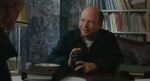
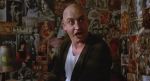
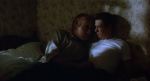
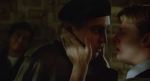
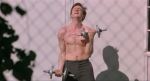
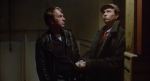
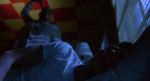
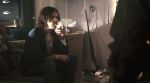
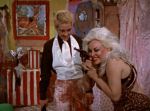
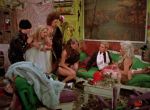
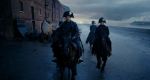
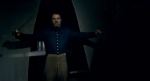
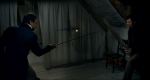
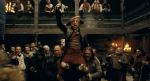
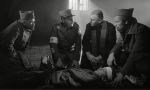
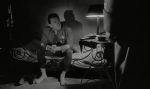
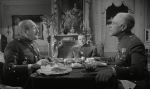
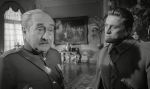
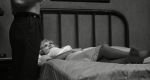
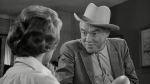
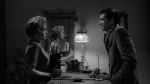
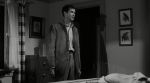
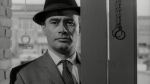
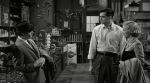
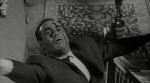
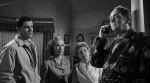
Today’s cinema adventure: Prick Up Your Ears, the 1987 feature by director Stephen Frears about the short life and brilliant career of English playwright Joe Orton, whose rise to success in the theatrical scene of mid-sixties London was cut short by his brutal murder at the hands of his long-term partner, Kenneth Halliwell.  Based on the biography of the same name by John Lahr, the film approaches Orton’s life with a macabre sense of humor much like that found in his plays, and features superb performances by Gary Oldman and Alfred Molina (as Orton and Halliwell, respectively); it was greeted by enthusiastic reviews by critics upon its release, though its popular appeal was, naturally, somewhat limited by its subject matter- particularly outside of Britain, where Orton’s name is less familiar.  Nevertheless, it achieved relative box office success due to the wave of interest in British imports during the eighties, and, along with the previous year’s Sid and Nancy, helped to secure Oldman’s place as one of the most promising- and sought-after- young actors of the decade.

The screenplay of Prick Up Your Ears– penned by Alan Bennett, another renowned playwright whose own career dates back to the same era as Orton- is expanded from the book upon which it is based by the inclusion of author Lahr as a character, using his research and writing of the acclaimed biography- particularly through his interviews with Orton’s agent and close friend, Margaret Ramsay- as a means of framing the story.  This device allows for a non-linear exploration of Orton’s life, centered around the notorious murder-suicide which brought it to an end, that reveals key moments of the playwright’s history as it makes a more in-depth examination of his relationship with Halliwell.  In this manner we are given a narrative which chronicles Joe’s life from his working class youth in Leicester, where he pursues an interest in drama despite the intentions of his parents to educate him for a career as an office worker.  He manages to earn a scholarship to the Royal Academy of Dramatic Arts in London, where he meets and becomes involved with Halliwell, an older student attending the school through a small inheritance.  The two take a flat together, and begin an unsuccessful, decade-long attempt to collaborate as writers; Joe also indulges in an almost daily habit of anonymous sexual encounters in public places- mostly men’s restrooms- and writes about them in his diary.  The two are eventually arrested (for defacing library books) and serve short jail terms, during which Joe writes- on his own- a play that he submits to BBC Radio; it is accepted and produced, marking the beginning of his rise to fame- and also of the deterioration of his relationship with the jealous, insecure Halliwell.  As Joe becomes the toast of the London theatrical world, with smash hit plays and an offer to write a screenplay for The Beatles, Ken becomes increasingly morose and frustrated at being kept out of the spotlight, even after the couple spends a lengthy vacation in Morocco; finally, no longer able to face a life lived in the shadow of another’s success, Ken kills Joe as he sleeps, beating him savagely to death with a pall peen hammer, then takes an overdose of pills to follow his lover into death.

As a rule, I generally find film biographies to be somewhat unsatisfying; though, at their best, they can be a showcase for tour-de-force acting, superb direction and magnificent scenic and costume design, at their core they often suffer from an impossible desire to somehow encapsulate a person’s entire life and essence into a two-or-so-hour time frame, or to interpret their motivations and actions in a way that casts them in a particular light.  In truth, of course, even the strictest documentary cannot avoid inserting a subjective viewpoint, but biopics, at their most banal, make a deliberate effort to deify- or vilify, in some cases- their subjects, resorting to the manipulative tactics of melodrama and completely ignoring or altering facts in order to tell a more “satisfying” story.  The most artistically successful examples of this genre are those that use their subject as a means to communicate ideas about universal experience, or simply to entertain us with a little-known story from our past that may, hopefully, encourage us to learn more on our own.   Prick Up Your Ears does both.

Frears’ movie is blessed with the participation of numerous talented individuals with a clear affection for- and familiarity with- Joe Orton and his work, and they have here taken pains to create a picture of this influential and iconoclastic figure that presents his life in a manner that is, if not 100% factually accurate, at least true to his own vision of the world in which he lived.  Much of this is made possible by the use of his diaries as a source of information, both for the original published biography and for the screenplay; through this remarkable document, which has since been published in its own right, we are granted unprecedented access to Orton’s most private thoughts and experiences- most obviously his frequent and adventurous sexual escapades, recorded with particular pride and relish- and allowed to see the author’s own perspective on himself and his life.  Of course, that perspective- dark, cynical and full of deliciously salacious humor- comes as no surprise to those familiar with Orton’s plays, brilliant farces which skewered traditional theatrical forms while undermining and exposing the hypocrisies of social convention and the ugliness hidden behind the all-important facade of so-called “decency.”  Bennett writes the story of Joe and Ken as if it were itself penned by Orton, peppering the dialogue with lines that seem as if they were lifted directly from his writing and presenting the people that surround the two central figures as if they were characters in one of his plays.  This approach makes for a truly Ortonesque experience of Orton himself, but it also has the shrewdly observed added effect of showing how the playwright drew inspiration from the people and circumstances of his real life; seeing the world as Joe himself saw it makes it clear that his particular genius came simply from transcribing what he saw around him into his work.  The farcical absurdities of his real-life experience fed his writing, and the fact that they are here no less believable for their absurdity suggests that very little exaggeration was required to translate them to the stage.

Joe’s perspective is not, however, the only one brought into play in Bennett’s and Frears’ vision of his life.  The film is also, of course, heavily informed by Lahr’s biography, which casts a more detached and empirical eye on the playwright- in particular on his relationship with Halliwell- and allows us to see him in a more humanistic light, perhaps, than that toward which he might have been inclined.  This does not mean, however, that Prick Up Your Ears takes any kind of moral stance on Joe- or Ken, for that matter- in its depiction.  On the contrary, the movie takes pains to portray the pair as they were, without imposing judgment, and allows us to draw our own conclusions; though their end was undeniably tragic, and a good deal of the film can be seen as an examination of the factors that led up to it, there was more to Joe and Ken’s connection than their horrific final destiny, and Frears and Bennett make sure we see as many other facets as possible of their lives together.  Finally, in exploring their relationship, and the changing dynamics created by collaboration, success, fame, and failure, the movie also explores the way these factors are reflected in John Lahr’s marriage, and by extension, suggests certain observations about the nature- and the pitfalls- of mixing creative endeavor with romantic attachment.

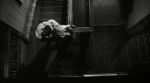
Of course, for most people who have even heard of Joe Orton- outside of theatrical and literary circles, of course, and often even there- the lurid and scandalous circumstances of his death are far better-known than his work.  Frears and Bennett make certain that their audience knows, right from the start, that this event is the central focus of the film, a sort of epicenter from which everything else radiates.  The movie opens with a glimpse into the final, terrible moments, followed by the discovery of the bodies and the subsequent invasion of the bloody scene by the authorities.  We are, however, given only a peek, so that for the rest of the movie, we are left to hope for the kind of graphic, gruesome detail we want to see- and we do want to see it, as Joe himself would likely understand better than anyone.  Indeed, it is this gory revelation that the director uses as bait, like a carrot dangling before us as we make the journey through Joe’s life and times, motivating us to stay with the story so that we can get that nasty payoff at the end; and Frears gives it to us, alright, in a harrowingly real depiction of the brutal murder and its aftermath that is likely to affect even the most hardened viewer and leave nightmarish, lingering visions for some time afterwards.  Yet even this dose of cold, hard realism in the midst of the film’s wacky theatricality is in keeping with its dedication to the flavor and spirit of Orton’s work; his writing, for all its juxtaposed sophistication and irrepressible rude-boy naughtiness, carried at its center an acute awareness of the ugliness of human experience, an ignoble convocation of bodily functions- sexual, scatological, and otherwise- which makes ludicrous all attempts to dignify it with pretense or affectation, and is made all the uglier by the mean-spirited cruelty with which we treat each other.  Orton’s brutal death at the hands of his lover- the ultimate bodily function as a result of the ultimate cruelty- serves as a reminder of the nihilistic truth of which he was a champion.

The darkness that underlies all the glib merriment, though, is only a part of the Orton mystique; though he was bent on exposing the inherent nastiness of the human condition, he also derived a great deal of fun from it.  He was a literary rebel, using his wit as a weapon against the stifling social conventions that made him feel like an outsider; he was a master marksman, and his wicked skills gave voice to a new generation that despised the stodginess of their moribund culture as much as he did.  More to the point, though, he had fun doing it; Joe Orton was all about having fun, an obvious fact to which his hedonistic lifestyle plainly attested, and the glee he felt in skewering the pompous and the conventional was almost certainly his main (if not only) reason for doing it.  That glee comes across in his writing, and is readily shared by audiences who see his plays, which are still frequently performed today.  It also comes across in Prick Up Your Ears.

Aside from Bennett’s screenplay, the movie benefits greatly from Frears’ steady, assured direction.  Noted for his skill in handling stories about socially isolated people adapting to new circumstances, a theme which runs through most of his films from My Beautiful Laundrette to The Queen, he shares with Orton an origin in Leicester, a fact which no doubt helped to solidify his understanding of and connection to the material here, and has a long collaborative history with Bennett.  He crafts his film with a perfect balance of the cinematic and the theatrical, creating a blend of gritty realism and heightened style enhanced by flourishes from both media; he also exhibits a showman’s knack for storytelling, managing to form a cohesive and unified narrative which engages our interest and remains easy to follow throughout its non-linear structure.  He is aided by meticulous production design which smartly re-creates the atmosphere of London in the swinging sixties, contrasting it with the mundane and utilitarian environment of working-class Leicester, as well as with various institutional settings and scenes of the seedy sexual underworld that arise within Joe’s checkered story.

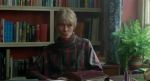
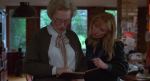
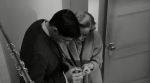
Most importantly, though, Frears’ film is blessed with the magnificent performances of its two stars.  Oldman and Molina are electrifying, offering layered, chameleonic portraits of the cheeky, good-natured rude boy and his arch, affected lover that reveal the traits, both positive and negative, in both without sentimentality or comment.  Oldman truly seems to channel his subject, not only bearing a strong physical resemblance to “the most perfectly-developed playwright of his day” but capturing the particular seductive swagger that is evident in photos and the few films that survive of Orton; it’s not mere mimicry, however, for he also infuses the doomed writer with a palpable humanity that allows us to truly involve ourselves with him emotionally, and understand why even those who thought him shocking and indecent found him irresistible and endearing, nonetheless..  The more difficult task, though, is Molina’s; he gives us Halliwell in all his insufferable pomposity, and takes us through his deterioration without varnish, and yet he, too, finds the human element here that makes poor Ken as much a tragic figure as Joe- a man of intelligence, wit, and emotional generosity, clearly affected by psychological issues that might have been more readily understood and addressed in our modern day, but which, at the time, were subject to as much stigma and shame as his homosexuality.  Molina gives a heartbreaking performance, and it is largely thanks to him that Prick Up Your Ears succeeds in capturing the full ironic scope of the Orton-Halliwell saga.  In the third principal role, that of legendary theatrical agent Margaret “Peggy” Ramsay, Vanessa Redgrave is, as always, superb; her glittering charm and sophistication light the screen, but she also gives us a clear view of the character’s opportunistic and manipulative aspects- she, like Joe, is “getting away with it,” but that doesn’t make her any less likeable, in the end.  Redgrave’s presence also adds an important pedigree that links the film directly to the world it portrays; she is, of course, a member of one of Britain’s great acting dynasties, and was deeply immersed in the London theatrical scene during the era in which Orton was active.  This connection is, perhaps, immaterial in terms of practical application to the execution of the film, but it does contribute a sort of authenticity to the proceedings that does seem, to me at least, to have an effect, however intangible, on its sense of validity.  Wallace Shawn (another renowned playwright) uses his familiar nerdy intellectual persona to good effect as biographer Lahr, Frances Barber has a touching turn as Orton’s sister, Leonie, and Janet Dale provides a memorable illustration of classic Ortonesque caricature as Joe and Ken’s doting landlady.  In smaller, cameo-style roles, familiar English character actors such as Julie Walters, Richard Wilson, and Margaret Tyzack bring their considerable talents into the mix, contributing much to the overall perfection of tone and style that makes Prick Up Your Ears such a delightful marriage of film and theater influences.

It’s pretty obvious, by now, that Prick Up Your Ears is a highly recommended cinema adventure, as far as I am concerned.  The fact that I am personally a great admirer of Joe Orton is really not a factor in my enthusiasm for the film, except in the sense that my expectations of any work dealing with him are stringently high, making Frears’ movie all the more impressive to me for its worthiness to the subject matter.  I am confident that this smart, stylish and accessible piece will be an enjoyable experience for almost any mature viewer, whether they are fans of Orton or have never heard of him; even if you have no interest whatsoever in theatrical history, British or otherwise, Prick Up Your Ears offers up a fascinating story that is no less entertaining for being true.  That said, it should be mentioned that it is a film in which homosexuality plays an integral part, and it does include extensive, if not graphic, depictions of gay sexual behavior; if such matter is uncomfortable for you, for whatever reason, then consider yourself warned.  This subject brings up an important point concerning Prick Up Your Ears, and indeed about Orton himself; though the playwright was not overtly involved in any form of struggle for gay rights- his death took place two years before the Stonewall riots in New York, after all- and though the film does not address or take any sort of stance on the issue, the subject is inseparably woven into the fabric of this story.  As gay men living in a society that criminalized and ostracized their kind, Orton and Halliwell lived their lives as disenfranchised outcasts, forced to suppress their true nature in order to avoid persecution and even imprisonment; though it was the older Halliwell who helped Joe to accept and embrace his sexuality, it was the younger man who would go on to live an audaciously open life in the face of societal disapproval, and despite his efforts to bring Ken along, he was unable to overcome the obstacles of shame and insecurity that would eventually result in the tragic conclusion of their love story.  Each man took a different direction in reconciling his sexual identity with cultural expectation, and though this was clearly not the only factor in the murderous frenzy that took their lives, it is beyond question that it played a substantial part.  In this way, though on the surface it seems only a parenthetical circumstance that defines the two central characters, homosexuality- or to be more specific, the rejection of homosexuality by so-called “normal” society- is the issue at the core of Prick Up Your Ears.  Those with a more militant bent might wish that Bennett and Frears had taken a more direct assault on the social injustice that marked the cultural landscape of Orton and Halliwell’s England; but the story, like Joe’s plays- and Joe himself- speaks for itself.  Joe Orton chose not only to be open about who he was, but to flaunt it; he simply was, and the strength of that assertion was sufficient to make him an icon.  Prick Up Your Ears is a celebration of that bold spirit, and it tells Joe’s story in a voice very much like his own; that makes it not only a testament to the lasting mark he made  in his short life, but also a bloody good time.

http://www.imdb.com/title/tt0093776/?licb=0.2046471543502929
 

Winter’s Bone (2010)

Winter's Bone (poster)

Today’s cinema adventure: Winter’s Bone, the 2010 thriller by director Debra Granik, based on the novel by Daniel Woodrell about a teenaged backwoods girl who goes searching for her missing father within the meth-entangled and dangerous web of her extended family. Gritty, realistic, and haunting, it received almost universal critical acclaim but failed to generate much box office success, perhaps due not only to its bleak subject matter but also to its lack of well-known actors; nevertheless, the performance of its young leading player, Jennifer Lawrence, catapulted her to stardom, leading to important roles in two of 2012’s biggest movies- the blockbuster adaptation of The Hunger Games, which turned her into a household name for most of the under-twenty set, and the runaway sleeper hit, Silver Linings Playbook, which may well snag her the Oscar that eluded her here.

Set in a poverty-stricken rural community within the Missouri Ozarks, Granik’s movie (which she co-wrote with Anne Rosellini) explores the dark realities of life within an insular world of strict and deeply-ingrained ethical traditions, where the interrelated and secretive residents keep to themselves and form a tight protective ring against outsiders. In the midst of this isolated world, Ree Dolly, a seventeen-year-old who dreams of escaping into military service, is effectively the head of a household in which she cares not only for a mentally unstable mother but two younger siblings; her absentee father, Jessup, like many of the local men, is deeply involved in methamphetamines- or “crank,” as they refer to the drug- and is currently on bail, awaiting a court appearance for violating his parole. The town sheriff shows up at her doorstep- catching the immediate interest of the curious neighbors and initiating the lighting-fast chain of gossip that keeps the community informed about everything that happens within its confines- and warns her that Jessup has, in fact, used their house and property as collateral in his bail bond, and if he fails to appear in court, Ree and her family will lose their home. Though Ree, with the fierce and defiant family loyalty she has been raised to maintain, insists that her father will show up, she resolves to go looking for him; she meets, however, with immediate resistance from her closest relatives- particularly her father’s brother, Teardrop, who warns her to keep her nose out of a situation that is more complicated and dangerous than she knows. Not to be deterred, the strong-willed Ree continues to ask questions among the friends and family that make up her extended circle, and eventually follows her father’s trail to a more distant relation, Thump Milton- a terrifying figure who presides over the region’s illegal drug trade. Though he refuses to see her, she persists in her efforts to confront him, even after she begins to deduce that Jessup is already dead; the result of her efforts is a vicious beating from Thump’s ferocious wife, Merab, who then- along with the rest of his family- takes the girl captive. She is unexpectedly rescued by her Uncle Teardrop, who shows up and assumes responsibility for her, swearing she will keep her mouth shut or he will answer for it himself. He tells her that her father is in fact dead, killed by someone in Thump’s gang when they learned he was giving information to the sheriff in order to protect his own family, but that he doesn’t want to know who the killer was because he will then be required by family loyalty to seek vengeance. For Ree’s purposes, however, the important factor now becomes finding Jessup’s body, for if she can prove he was dead before his court date, his bond will no longer be forfeit and she can save her family’s home. Her cause seems hopeless, even when Teardrop agrees to help her despite his oath, putting his own safety at risk; but with eviction imminent, the deeply-rooted code of family honor begins to work its powerful influence, and help emerges from a surprising source. Even so, Ree must still endure a number of horrific tests to her mettle before her family’s security can be restored.

In adapting Woodrell’s novel for the screen, Gravik and Rosellini have focused tighter attention on Ree, removing details about the surrounding characters and their lives and making the teenage protagonist our sole access into the isolated society in which she lives; this allows us, like her, to discover the truth as she delves deeper into the mysteries concealed there. This world seems, at first glance, familiar enough, and straightforward in the sense that it conforms to our expectations and assumptions about the lifestyle of the people that inhabit it- at least, on the surface. So, too, does Ree believe she knows the score; she has been raised in this harsh, savage environment, and she is all-too-well-acquainted with the inflexible morality, the angry and abusive men, the suffering of their women, and the hard-scrabble existence that might better be described as survival than as life. However hardened and wise-beyond-her-years she may be, though, there are unseen depths to be plumbed here that she cannot yet fathom, and we are to accompany her on the grueling voyage of discovery she must undertake. It’s a rite of passage for her, by which, for better or worse, she becomes a fully-initiated member of her “tribe,” and by which, as witnesses, we are forced to set aside our own deeply-rooted preconceptions and see the ancient and universal patterns that tie these strange, seemingly alien people to the same core of humanity that unites us all.

To be sure, it’s a hard pill to swallow; for most of us, presumably, the world of Winter’s Bone seems a horrible, dehumanizing place, populated with people who, locked into a rigid and insulated Old Testament mentality that stretches back for generations and precludes any idea of progressive or compassionate thinking, strike us as just plain mean to the core. The men are brutal and arrogant in their assumption of male privilege, the women bitter and hostile in their endless drudgery, and the notion of equality is a moot point; the roles are proscribed by a tradition as unbendable as the unwritten laws about keeping out of each other’s business. Even deeper than the unquestioning acceptance of socially-sanctioned dysfunction, however, is the mandate against betrayal of blood; family trumps everything, and it is this imperative that fuels the conflict here, placing Ree and all of her relatives- both near and distant, ally and antagonist- in a complex moral dilemma that throws the entire social order of the community out of balance.

It is here where Winter’s Bone connects, perhaps unexpectedly, with the primal archetypes of classical mythology; both book and movie have been compared to the Greek story- as told by Sophocles in the final installment of his Oedipus cycle- of Antigone, in which the title character demands the honorable burial of her brothers’ bodies after her uncle, the king, has declared them traitors and forbidden it. Antigone decides for herself that her uncle’s decree is unjust, immoral, and contrary to the law of the gods; the kingdom suffers in turmoil and the king’s family is torn apart by the conflict, until Antigone takes it upon herself to defy the law, burying the bodies and suffering her uncle’s wrath in consequence of her actions. In Sophocles’ version, she eventually hangs herself while imprisoned, and the king is subsequently punished by the gods, suffering the loss of his own son and wife, for his hubris; in other variations of the tale, however, Antigone is saved by the intervention of the gods, and the natural order of the kingdom is restored. In Winter’s Bone, Ree enacts this same drama, standing against the injustice done to her family despite the danger of retribution from the male-dominated power structure presided over by Thump and his clan; alone among the women of her community, she has no man to rule over her, having inherited- by her father’s abdication- the role of provider and protector, and this in itself is an affront to the ordained status quo; but like Antigone, Ree transcends the social order by virtue of special circumstance, and invokes a power greater than the worldly dominion of Thump and his “kingdom,” the timeless and sacred bond of family. It is this bond that ultimately dictates the outcome of Winter’s Bone, exerting its influence through an irresistible sense of duty and honor, and overriding the unnatural dictate against compassion which has been imposed by an egocentric tyrant.

You might think that a comparative analysis between classical Greek literature and a tale about modern-day hillbilly speed freaks is a case of reading too much into a few coincidental parallels, but Winter’s Bone contains a number of clues that this connection is intended, not the least of which is a climactic journey by boat which evokes a passage to the underworld across the River Styx- a common element of many Greek myths; and should the references to pagan mythology fail to appeal to you, the plot is also rich with suggestions of Old Testament stories about strong and righteous women like Ruth or Judith, who step outside their traditional feminine roles to perform acts of bravery and heroism under dispensation by God Himself. These ancient underpinnings share a strong proto-feminist sentiment, which fits Winter’s Bone, despite its modern-day setting, by virtue of the rarefied environment in which it takes place; the characters live in a social vacuum, created by a combination of economic hardship, mistrust of outsiders, and fundamentalist beliefs, which has left the core of their cultural identity unchanged for countless generations, and though they may be surrounded with the weathered trappings of the modern world- motor vehicles, power tools, and guns (lots of guns, everywhere)- they exist only on its fringes, observing customs established by ancestors beyond their memory. In this context, Ree’s assumption of a moral authority in the search for her father, a self-appointed elevation above the accepted station of her gender, is a serious transgression against the social contract of her people, and the shock waves it creates are momentous enough to rock her entire community.

All these lofty themes and classical allusions add a great deal of resonance and weight to Winter’s Bone, but they are not its whole purpose; layered over the structure of its drama is a portrait of life as it is today for a very real segment of the population. The deplorable poverty of this Ozark community- and thousands like it- fosters an atmosphere of desperation, an attitude of disenfranchised resentment, a dog-eat-dog survival code, and an eye-for-an-eye sense of justice. It’s a place where drugs offer both an easy escape from the day-to-day ordeal of living and an opportunity, for enterprising individuals, to rise above the crushing economic hardship which surrounds them; the cost of turning to this social scourge, of course, is that it turns the community upon itself and forces an even greater isolation from the outside world- a phenomenon seen time and again in poor areas from the rural south to the inner-city streets of the biggest urban centers of the world. In her movie, Gravik uses a documentarian’s approach, creating an in-the-moment authenticity to the action through improvised dialogue, hand-held camera work, and the casting of most of the extras and supporting players from real residents within the Missouri shooting locations. Her scenes play out against a backdrop of ramshackle buildings, cluttered rooms, overgrown yards, and remote woodlands, all saturated in the muted, icy tones of Michael McDonough’s cinematography and capturing the stark character of the region during the inhospitable season of the film’s title. In creating such a tangible sense of place, the director reinforces our feeling of being participants in the drama, making it harder for us to judge these people by our own sensibilities, however much more enlightened we may feel ourselves to be. Even so, the ease with which this society can be used to transpose a story reflecting the moral values of a millennia-old civilization is, in itself, a devastating piece of social commentary.

Winter’s Bone has another level, of course, a more visceral and immediate experience than the intellectual stimulation provided by its reworking of classical myth and its contemporary social observation; it is, on its surface layer, a noir-ish thriller, in which the typical urban landscape is substituted for a bible-belt backwoods setting and the hard-boiled private eye is recast as a hard-edged teenage girl.  It is here that Granik’s movie solidifies itself as superb filmmaking, keeping us riveted with its taut suspense and its constant aura of dread; it’s a testament to the director’s faith in her material that she permits the story to work on its own, eschewing showy cinematic technique or overt depictions of violence and horror. Nothing particularly horrible happens onscreen in Winter’s Bone, with a couple of notable exceptions, but there is a constant expectation that, at any moment, something could go terribly wrong; the air is pregnant with danger, even when we are unsure from whence it comes. When violence does occur, it happens in sudden bursts, catching us unaware and giving it the uncomfortable edge of realism- an approach which only reinforces our constant, nagging fear. As Ree goes deeper into the web of deceit and treachery that hides the answers she seeks, the interwoven relationships and the complexities of the situation become progressively convoluted, making the plot as opaque- and the morality as ambiguous- as in any novel by Raymond Chandler, and despite the pastoral backdrop, the drama is no less gritty. In the end, though resolution is achieved, many questions remain unanswered; in the best noir tradition, the mystery being explored here is really the human experience, and accordingly, the solution can never be complete. The real question of Winter’s Bone is not who did what to whom nor even why they did it, but how to make sense of it and give it meaning.

In all this analytical discussion, it might be easy to neglect giving credit to the cast for their substantial contributions. First and foremost, of course, is young Jennifer Lawrence’s star-making turn as Ree, a remarkable achievement for an actress of any age, in which she forgoes the temptation to sentimentalize and instead gives us an honest portrait of a steely, no-nonsense product of her environment, and yet still manages to let us see the little girl underneath an exterior forced to grow up too fast. John Hawkes is riveting as Uncle Teardrop, another double-edged figure, capturing his volatility and menace and then peeling back the layers to show us the sensitivity and compassion he is forced to repress and the sadness of a man resigned to his station and his fate. Dale Dickey is unforgettable as Merab, perhaps the movie’s most enigmatic character, the sphinx-like guardian at the gate who personifies the adamantine epitome of female power in this backwoods culture- and offers, perhaps, a glimpse of Ree’s future. Sheryl Lee (Laura Palmer of Twin Peaks fame) has a touching cameo as Jessup’s former mistress, tracked down in her home by the determined Ree, and Garret Dillahunt is effective as the sheriff, whose tough-guy front fails to mask his absolute- and justifiable- fear of the people under his jurisdiction. The rest of the cast- many of them non-professional, as mentioned above- add an authentic flavor to the proceedings with their simple, glamourless portrayals; particular mention should go to Marideth Sisco, who makes a powerful appearance as a singer in a living-room bluegrass ensemble as well as contributing her haunting vocals to a handful of other traditional songs prominently featured on the soundtrack.

So, you may ask, is it worth watching? The answer, from my perspective at least, is a definite and resounding yes. Winter’s Bone is a deceptively simple, well-crafted movie that keeps you thinking for days after viewing it, and it’s virtually impossible to find a flaw in its execution, short of nitpicking about divergences from the novel or matters of personal taste. It is not, however, an easy movie to digest, let alone categorize. It presents a harsh and unpleasant vision of a world most of us would prefer not to see, and offers little hope or solace for those who like their slices of life tempered by a Hollywood ending; it will doubtless be equally unfulfilling for viewers who feel the need to walk away with a clear-cut moral stance about what they have just seen. On the surface, it might seem easy to determine the right and the wrong of the various characters’ positions in the events depicted here, but Gravik’s film, like its source novel, will not allow us to make so pat a judgment; though much of what we see may shock us or offend our sensibilities- particularly in regard to the treatment of women and the role of drugs in this community- it is soon becomes difficult to separate our feelings into comfortable black and white categories. Ree is sympathetic, but she her full indoctrination into the ways of her people is never in question- she mistrusts and disrespects the laws and authority of the outside world as much as any of the others, and she makes it clear both by word and deed that she is cut from the same cloth as the rest of her sizable clan; though she fantasizes about escape, she embraces her as a Dolly woman, and there is little doubt that after the final frames, despite the rebellious crusade she has just completed, she will carry on the unbroken tradition of this world, taking her place as a staunch and redoubtable member of the community and teaching the siblings under her charge to respect and preserve its ways. Likewise, Teardrop seems at first to personify everything that is wrong here, unapologetically snorting speed, waving his gun around the kitchen table, and physically dominating “his” women- but as the story progresses we are forced to acknowledge not only his nobility and his kindness, but his own status as a victim of the very behavioral code he represents. He is forced to be a brute, just as surely as the women are required to be subservient. Finally, though the world of Winter’s Bone seems unrelentingly bleak and inhospitable, throughout the film is a thread of the universal redemption that is offered by the shared experience of family; keepsakes, memories, and old photo albums surface throughout the story, and when we see Ree with the little brother and sister that have become, in effect, her children, the dire circumstances that surround them seem distant and unimportant. In the end, it is this sense of the importance of family that comes through, giving us a feeling, however vague, that no matter how much the world may conspire to drag us down, the eternal bond of blood still endures to give us purpose and at least a glimmer of hope that our struggles are not in vain. The title, Winter’s Bone, as explained by the book’s author, is a reference to the idea of a “bone” as a small token, or gift; the coldest season, in this sense, offers up a consolation, for those who work hard enough to find it.  In the story itself, the title is evoked by several circumstances- the most literal will be grimly obvious when it arises- but is, perhaps, finally most pertinent in the way that the tale offers up, out of its difficult and dismaying mix of complications, the clear recognition of family as the center of human existence. It may not be much, but it’s something.

http://www.imdb.com/title/tt1399683/

The Long, Long Trailer (1954)

The Long, Long Trailer (poster)

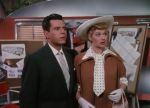
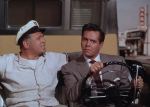
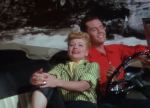
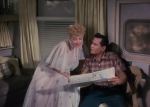
Today’s cinema adventure: The Long, Long Trailer, the 1954 big-screen showcase for the talents of America’s then-favorite TV couple, Lucille Ball and Desi Arnaz, directed by Vincente Minnelli and casting the two stars as a pair of newlyweds on a cross-country honeymoon in a super-sized luxury trailer home.  Designed as a vehicle for the tried-and-true antics that fueled the duo’s highly popular comedy series, I Love Lucy, it was considered a risky project by its production studio, MGM, who were skeptical that audiences would pay to see Ball and Arnaz in a movie theater when they could watch the pair, for free, in the comfort of their own living room; Arnaz reportedly made a $25,000 bet with the studio heads that the film would out-gross their highest-earning comedy to date (1950’s Father of the Bride).  Moviegoers responded well to the opportunity to see the couple’s wacky hi-jinks against the expanded backdrop of location-filmed American scenery, turning the film into one of the year’s biggest hits and winning the bet for the confident Arnaz.  Though the movie is ultimately a side note in the success story of these two American entertainment icons, it nevertheless has remained popular among their fans and offers a rare opportunity to see their beloved matrimonial shtick transported out of the studio-bound confines of their classic television show.

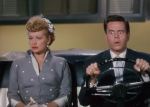
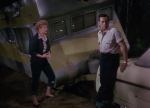
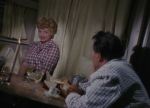
Based on a 1951 novel by Clinton Twiss, the screenplay (by Albert Hackett and Frances Goodrich) tailors its plot for the needs of the Ball/Arnaz team’s familiar joint persona.  Framed as a flashback, it tells the story of “Nicky” and “Tacy” (noticeably only a few letters off from “Ricky” and “Lucy”); he is a civil engineer whose job requires his travel to various projects around the country, and she, seeking a way to keep them from being separated during the early days of their marriage, hits upon the idea that they should purchase a travel trailer in which they can set up housekeeping wherever his work takes them.  Though he is skeptical, she convinces him with the notion that a trailer will cost them far less than a house and allow them to save more money for their future.  With their new, enormous, top-of-the-line trailer (plus the new, more powerful car they have had to buy in order to tow it), the couple sets out on their honeymoon- a leisurely road trip across the Sierra Nevadas to Nicky’s next job assignment.  Things start out pleasantly enough, though their trailer park wedding night doesn’t go exactly as planned; but as the trip goes on, the mishaps begin to pile up and take their toll on the relationship.  A rainstorm leads to a night spent stuck in a mudbank, Tacy’s attempts at directing Nicky’s steering results in major damage to her aunt and uncle’s house, and her effort to cook dinner in the moving trailer ends in disaster.  The final straw comes when her growing collections of preserved fruit and souvenir rocks become so heavy that the trailer is dangerously overweight, placing the newlyweds in serious danger as they attempt to drive up a steep and winding mountain road- a trip which, even if they manage to survive, may well mean the end of their marriage.

The Long, Long Trailer is hardly the kind of film that warrants an in-depth analysis, though if one wanted to use it as a springboard for discussion about sociological and cultural characteristics of post-war American life, it would likely provide plenty of fodder.  Indeed, watching it today, it seems like a perfect snapshot, glossy and idealized, of the particular mindset of mid-fifties middle class America, personified by a young (well, young-ish) couple on the road to a shining new tomorrow, blessed with a new affluence, possessed of a can-do attitude, and excited about the endless possibilities that wait to be explored right here at home.  Of course, the entire premise of the comedy hinges on the fact that this romanticized fantasy is not quite in tune with reality- the adventure of building a new world on the domestic front is fraught with unforeseen difficulties and offers its own challenges to the character and spirit of those who undertake it.  All of which sounds deeper than it needs to sound, for in The Long, Long Trailer, social commentary is as heavy and unnecessary a burden as Tacy’s rock collection.

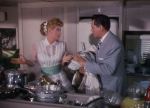
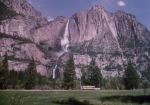
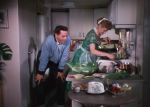
What this movie is about, nostalgic retrospect aside, is laughs; the American-Dream-on-wheels premise is entirely geared towards providing a mine of zany situations for the then-reigning royal couple of comedy to exploit.  Though the names are different (barely), the characters are, in essence, the same as their TV roles; Desi is the modestly successful, good-natured-but-hot-tempered immigrant husband (here, inexplicably, not Cuban but Italian), and Lucy is the well-intentioned manipulative housewife whose hair-brained schemes inevitably lead to hilarious complications.  The movie depends entirely on their comfortable chemistry together, their combative-but-affectionate dynamic, and Lucy’s consummate skill as a comedienne.  It is this last element that carries the film, of course; though they made a great team, and although he certainly holds his own during his moments in the spotlight, Desi was always the foil for Lucy’s comedic persona, a relationship upon which their act was utterly dependent.  The biggest laughs in the film come when she unleashes her flair for physical comedy- the classic sequence in which she tries to prepare a meal in the trailer while it is on the road is the movie’s highlight- but these moments work so well because she sets us up for them; she makes Tacy (which is short, by the way, for Anastasia- I know, it’s a stretch, but go with it) as endearing to us as to the hapless Nicky, and thanks to her rubber-faced expressions, we feel like co-conspirators with her, because we can read every thought and plan even as she hatches it herself.  It’s comedy genius, and to over-analyze it is pointless- it works because it works.  Lucy and Desi knew their audience, and they knew what that audience wanted; they weren’t about to take the chance of messing with a successful formula, especially when that formula was at the height of its popularity.  There is even a musical number, though not the kind of elaborate, slapstick-laced showstopper often featured on I Love Lucy, but simply a pleasant little duet performed as an interlude while the stars are driving into Yosemite National Park.  To be sure, the stakes feel a little higher in The Long, Long Trailer than they do on the TV series; there, no matter how big the disaster that results from Lucy’s schemes, we know it will never really threaten the blissful marriage at the center of the show, but here there is at least a more palpable illusion that they could end up apart- though, of course, on an intellectual level, we know that’s not very likely.  After all, this is a comedy, and even if it pokes a little bit of situational fun at the perfect domestic dream of the mid-fifties, it also embraces and reinforces that ideal; you can be sure, by the final frames, Ricky and Lucy… I mean, Nicky and Tacy will be locked once more in a tender and loving embrace.

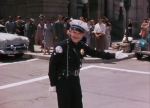
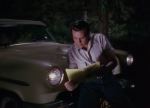
Although The Long, Long Trailer is mostly an on-the-road installment of the Lucy-and-Desi Show, this is not its only appeal.  There are a few interesting cameos from other familiar personalities of the era; Marjorie Main of Ma and Pa Kettle fame makes an appearance, as does an uncredited Howard McNear (better known as “Floyd the Barber”) and a prominently-billed Keenan Wynn (who has less than 30 seconds of screen-time- and no scripted lines- as a traffic cop).  Vincente Minnelli, one of Hollywood’s seasoned veterans at turning out crowd-pleasers, wisely keeps the main focus on his stars, but frames them in a gorgeous visual environment; fans of mid-century roadside Americana will adore this film, which sometimes looks like a travelogue produced by the U.S. Tourism Bureau and sometimes a montage of picture-postcards, interlaced with stylish tableaux of glamorous settings that look like vintage magazine ads, brought to life.  Minnelli (and his stars) were smart enough to utilize the advantages of the big screen, giving audiences a scope they couldn’t get from I Love Lucy, so there is an extensive use of breathtaking location footage, most notably in the aforementioned Yosemite scenes, but also in the hair-raising climax when the couple drives their trailer up the mountain (Mt. Whitney, to be exact).  The realism of this latter sequence aids considerably in its effectiveness, and captures the universal anxiety shared by anyone who has ever attempted to navigate one of the winding, narrow roads that lace the mountainous regions of America- or, for that, matter, the world.  The road trip experience, naturally, must include a good deal of focus on the vehicles used, especially the title “character” (for it is, truly, a character in the plot), which is a beautiful, canary yellow, 36-foot 1953 “New Moon.”  Those who care about such things will doubtless be delighted by the extensive depiction of this remarkable piece of mid-century design, in all its improbable luxury, as they will also be by the car which tows it, an equally beautiful 1953 Mercury Monterey convertible.  Of course, the costumes also add to the movie’s nostalgic appeal, with both Lucy’s and Desi’s outfits representing the epitome of mid-fifties fashion- not high–fashion, mind you, but modest, popular, middle-class clothes that conjure images from the countless grainy home movies taken by couples and families during the era.  In essence, The Long, Long Trailer is a love letter to its time, a nostalgic walk down memory lane for those old enough to remember it first-hand and a wide-open window through which younger viewers can catch a glimpse of an America before affordable plane travel and utilitarian super-highways made the delights of the road trip into a thing of the past.

It’s somewhat tempting, today, to watch The Long, Long Trailer with a sense of irony.  The feeling of gee-whiz wonder and self-discovery that permeated the cultural psyche of the fifties has long since fallen under the wheels of progress, transformed by the turbulent decade which followed into a quaint and kitschy joke; it’s almost impossible to believe in the naïveté we see displayed here, and the knowledge that Lucy and Desi, like so many of the “perfect” couples of the Eisenhower era, would later end their real-life marriage in an acrimonious divorce casts a somewhat cynical pall over the proceedings, and makes the inevitable happy ending seem like just another carefully packaged lie- which, of course, it was.  The whole of the movie is sentimentalized dream-factory nonsense, but that’s not a negative criticism in this case; it was never meant to be anything else, and it’s easy to forget, from a modern perspective, that the audiences of the day were no more fooled by the pretty-picture images of society presented by their popular entertainment than we are by those we are fed today.  Indeed, much of Lucy and Desi’s appeal for their many fans came because they (or at least, their characters) were a couple whose efforts to fit into a cultural ideal never seemed to go quite as planned; at the end of every misadventure, no matter what affectations they may have tried on or pie-in-the-sky dream they may have chased, what was left was simply them as they were, imperfect perhaps, but together- and that was all that mattered.  Though they themselves were icons of their era, forever associated with the now-archaic ideals and attitudes it held dear, their message transcended it; they were champions of love and companionship, acting out the universal experience of living together despite difficulties and differences- not an easy task in any era- and making us laugh at our own relationships by reflecting them back to us in exaggerated form.  To put it more simply, The Long, Long Trailer might seem like a movie we can watch with an aloof detachment, making arch commentary or snarky observations based in our modern-day sophistication- but it’s not.  It doesn’t take long to forget our superior stance and get caught up in the somehow endearing ridiculousness of Nicky and Tacy’s great experiment, and we end up laughing exactly as we were intended to laugh by the film’s creators- not with the hip, contemporary irony we may have expected.  Don’t mistake me here; I’m not saying that The Long, Long Trailer is anyone’s idea of great cinema, and I’m fairly certain that nobody involved in it thought of it that way, either.  It is, however, a fine example of slick Hollywood entertainment, designed to exploit the popularity of its stars and the mood of the time, and the fact that it still works as more than a mere curiosity piece is a testament to the considerable talent behind it.  Lucy and Desi made their true mark in television; their pioneering work there changed the medium forever, in countless ways, and their big screen projects were really little more than a footnote in their legend.  Even so, The Long, Long Trailer is a charming and worthwhile way to spend 90 minutes, and even the most jaded viewers are likely to be won over by it.  Of course, you might not be able to keep from wondering exactly when Fred and Ethel are going to show up, or when Nicky is going to break out the conga drums, but even if those things never materialize, you won’t miss them- at least not too much.

http://www.imdb.com/title/tt0047191/

Brave (2012)

Brave (poster)

Today’s cinema adventure: Brave, the 2012 animated feature from the Disney/Pixar powerhouse, directed by Mark Andrews and Brenda Chapman, and based on Chapman’s original story about a medieval Scottish princess who, unhappy with her proscribed role as a courtly lady, resorts to magic in order to “change her fate.”  Intended as the Pixar Studios first foray into the realm of fairy tales, it features a highly contemporary viewpoint on traditional gender roles and offers a heroine who takes action to determine her own destiny, as well as reinforcing the importance of maintaining family bonds and assuming responsibility for one’s actions.  It also features a lush, technically dazzling visual style, geared towards its original 3D theatrical presentation, and an array of stellar voice talent.  Not as successful as many of the studio’s previous efforts, it nevertheless has garnered much praise and received several award nominations as best animated film of the year.

The plot concerns Merida, daughter of Fergus, the King of Dunbroch, a fierce warrior known as “the Bear King,” who carries the scars of his many battles and sports a wooden leg as a reminder of his encounter with Mor’du, a giant and seemingly demonic bear who haunts the surrounding forest.  Though the princess is a tomboy and a free spirit, encouraged by her doting father in her enthusiasm for adventurous pursuits (such as horseback riding, swordplay, and archery), her mother, Queen Elinor, maintains a tight control over her, preparing her daily with lessons in the more feminine activities that will someday be required of her as a great lady- elocution, music, embroidery, and the duties involved in the charge of a royal household.  Merida is displeased with the prospect of such a sequestered future, a fact which continually puts her at odds with her mother; their conflict comes to a head when the king’s three most prominent lords bring their sons to Dunbroch for a competition of skill to determine which of them will get the hand of the young princess.  Merida, refusing to bow to tradition, takes the field and defeats all three contestants, declaring herself the winner and claiming the right to be her own consort; Elinor, furious, reprimands her severely, causing the girl to run angrily into the woods.  There, she follows a trail of will-o-the-wisps to a hidden cottage inhabited by an old witch.  At first the crone insists she is merely a wood carver, but when Merida offers a priceless royal pendant as payment, she agrees to help the princess with a spell that will “change” her mother.  Returning to the castle with an enchanted cake, Merida presents it to Elinor as a peace offering; when the queen takes a bite, however, its effects are not quite what her daughter had anticipated.  The spell transforms Elinor into a large black bear- placing her in mortal danger from Fergus, whose previous experience with Mor’du has made him an avowed bear-killer.  Merida, horrified that her scheme has led to such a turn, must now serve as her mother’s protector as they go in search of a way to reverse the spell before its effects become permanent; their quest leads them to Mor’du’s hidden lair, where they discover secrets that link the monstrous bear’s fate with their own.  During their adventure, mother and daughter gain new appreciation for each other’s strengths and reforge the emotional bond that was broken between them- but they still must race against time- and the pursuit of the ferocious Mor’du- to break the witch’s spell before Elinor slips away forever, trapped in the body and mind of a bear.

Aimed at entertaining young audiences and stimulating their imagination as well as fostering healthy ideas about identity and self-esteem, Brave is unmistakably the product of the titans at Pixar, who have proven time and again their particular genius for producing works of cinematic art that also meet the needs of the popular marketplace; in addition, it marks the studio’s most technically advanced and visually complex effort to date, made with a completely re-written animation program (the first upgrade of the studio’s software in 25 years) and released not only in 3D but with Dolby’s new Atmos sound format.  It’s unquestionably a stunning treat for eyes and ears of any age, possessing a level of sensory realism previously unseen in animated filmmaking, yet still maintaining the whimsical and stylized design touches that mark it as a cartoon fantasy.  As always, the Pixar team has used their expensive toy box to create a truly polished and exceptional visual gem, rich with the kind of subtleties that elevate their work above and beyond that of more pedestrian artists whose attention to detail rarely reaches past the requirements of the plot.

Another aspect of the movie that meets Pixar’s usual high standards is the exceptional voice casting; utilizing a fine group of talented and prominent actors, but without the “stunt casting” of big stars solely for the sake of having their name in the credits, the characters of Brave are given as much dimension in their vocal personalities as the graphic artists and animator a have given them in their physical presence.  Merida is voiced by the charming and vivacious Kelli Macdonald, known for her work in such diverse fare as the films Trainspotting, Gosford Park, and No Country for Old Men, as well as for her role in the critically acclaimed HBO series, Boardwalk Empire.  Elinor gets her voice from the redoubtable Emma Thompson (another familiar screen veteran known for everything from her Shakespearean roles opposite former husband Kenneth Branagh and her Oscar-winning turn in Howard’s End to her more recent family-friendly success as Nanny McPhee), who bestows the maternal queen with warmth, wit, and intelligence; we sorely feel her absence when the character is magicked into a non-verbal bear.  King Fergus is played by Billy Connolly, perhaps Hollywood’s most quintessential Scot since Sean Connery, and Julie Walters lends her inimitable blend of dottiness and wisdom to the all-too-brief role of the witch.  Rounding out the main cast are Robbie Coltrane, Kevin McKidd, and Craig Ferguson, as the trio of comical lords who bring their equally comical sons to vie for Merida’s hand.  As a side note, no less than four of these cast members- Macdonald, Thompson, Walters, and Coltrane- are alumni of the Harry Potter franchise, perhaps insuring a bit of extra box office appeal for a sizable segment of devoted young audience members and representing, on second thought, a little bit of “stunt casting,” after all.

Still, in spite of all the stellar work that is obvious onscreen and on the soundtrack, ensuring that Brave measures up to the high standard of professional excellence that is the hallmark of Pixar, it is a movie that doesn’t quite manage to pull off the studio’s usual magic.  As conceived by Brenda Chapman, it is a new story in the familiar vein of traditional fairy tales, but with a completely original plot and a decidedly different focus; instead of offering the archetypal princess, whose happy ending is usually dependent on the love of a handsome prince, she built her fantasy adventure around a strong-willed, independent girl whose ambition is simply to win the freedom to be herself.  Rather than reinforcing old stereotypes, the tale of Merida presents a new kind of role model for young girls, one that encourages individuality and self-determination, while still embracing the importance of family relationships.  Along the way, key issues of communication and responsibility are explored, as well as the notion of learning from the stories and legends of the past; indeed, Brave includes a fairly lengthy checklist of subjects on its agenda, all of which are geared towards the conceit of reinventing the old-fashioned fairy tale format as a vehicle for teaching a modern lesson about self-empowerment and progressive thinking.  While there is an undeniably laudable sentiment behind an effort to create an appealing fable which promotes contemporary values instead of reiterating centuries-old moral imperatives, one can’t help feeling that the whole thing seems more than a little forced.

Chapman, who had developed the project from the beginning, was initially named the film’s sole director- the first woman to be hold this position on a Pixar film- but was replaced by Mark Andrews halfway through production due to “creative differences.”. Whenever two or more visions clash in the creation of an artwork, either the conflict yields a hybrid solution that somehow transcends the original ideas, or- more often- a compromise that fails to live up to the potential of either; though Chapman’s contributions to the screenplay remained, as well as enough of her influence to warrant a co-directing credit on the final cut, and she has stated that her original intent comes through clearly in the film, one can’t help but wonder what Brave would have been like if she had been allowed to finish it as she planned.  In her original conception, for instance, the story would have taken place in the harsh highland winter, with a stark backdrop of snow for most of the film; such a bleak setting might have gone a long way towards providing, at least psychologically, a more authentic feeling of life in the Middle Ages for a young non-conformist.

It’s pointless, however, to speculate on what the movie might have been like, and in any case, the true flaw here lies in a screenplay- authored by both directors alongside Steve Purcell and Irene Mecchi- which takes pains to present as softened, politically correct a portrait of medieval life as possible.  Not only are we given a highly contemporized version of family dynamics and an incomplete picture of the ironclad mandate to maintain social tradition, we are presented with a sanitized picture of the realities of the era; battle and warfare are just another comical aspect of the rambunctious male personality, with little hint of their horrific consequences, and the standard archetypal figures of myth and legend are repurposed through the prism of modern perspective.  There are no villains here- the stern parents are merely a little old-fashioned and need only a magical nudge to come around to a more permissive attitude, and even the witch is, more or less, a benevolent old soul.  The closest thing to an evil character is Mor’du, the demonic bear who is more an agent of dumb, blind chaos than an adversarial personality, and even he, ultimately, proves merely to be a misunderstood and unfortunate victim of circumstance- even if it is a circumstance of his own misguided creation.  More disappointing than this lack of a clear antagonist, though, is the story’s deflection of its central conflict into a cute-and-cuddly adventure quest in which mother and daughter work through their differences during their joint effort to solve a secondary problem. Of course, it’s all metaphor, but even so, it contains the suggestion that, once the women have things worked out between themselves, the opinions of the king or his lords will be of little consequence- a decidedly feminist undercurrent, when you think about it, which also has the somewhat dubious implication that it was the women themselves who perpetuated the social assignation of gender roles and the menfolk just went along with it.

Though arguments about believability or historical accuracy might seem inherently ridiculous when discussing a fantasy about magic cakes and ursine transmogrification, the setting for Brave makes the very premise of its story highly unlikely, at best.  Though history offers proof that there were, from time to time, remarkable women who defied cultural custom and strictures to become powerful and exceptional figures, the atmosphere and attitude here does little to suggest even a softened version of the harsh reality that would await such a girl at the inception of her dream to be different.  Today’s world deems an inclination to follow a different path to be an acceptable “lifestyle choice,” but in the 12th-or-so Century world that provides the background for Brave, the consequences for such a display of social heresy would be dire, indeed- as someone like, say, Joan of Arc would certainly testify.  To be sure, a story instilling modern ideas of tolerance and diversity is certainly possible in such a period tale as this, but when the magnitude of the cultural obstacles to be faced is diminished to the point of irrelevance, reducing the conflict to a simple disagreement between parent and child, the promotion of noble ideals comes at a high cost.  Teaching positive values to a future generation is a worthy undertaking, but reinventing history in order to do so is something akin to throwing out the baby with the bathwater.

Perhaps I’m being over-analytical.  I don’t mean to suggest that a movie aimed at family audiences should feature pestilence, rapes and beheadings.  Brave is not, after all, Game of Thrones, nor does it try to be; but it did seem to me, in watching this painfully correct girl-power fable, that in its effort to emphasize positive, nurturing attitudes it might be guilty of inadvertently perpetuating some not-so-positive ones.  This is the danger, for me, of presenting historical inaccuracies- and I’m not talking about using artistic license to fictionalize real events or mistakenly using the wrong heraldry to decorate a particular king’s armor, but the deliberate imposition of anachronistic attitudes and perspectives onto a place and time where they simply did not exist.  Even in a children’s story; to sanitize the past for modern consumption is a dangerous luxury, for in removing the unpleasant parts we risk creating a false sense of who we are today, and worse, we lessen awareness of those whose struggles got us this far- the real-life role models who might provide inspiration for those who must continue to work towards making a better world for future generations.  At the very least, such well-intentioned bowdlerization of our history creates complacency about our present, but at the worst it can foster a sense of entitlement and a lack of preparedness for the future- for as the saying goes, those who are ignorant of history are doomed to repeat it.

All that said, Brave is by no means a bad movie.  As discussed above, it is gorgeous to look at and its story is executed with the utmost professionalism and talent; and though the plot as a whole may fail to be as compelling as one might wish, the movie is filled with delightful set pieces (such as the archery tournament) and characterizations (Merida’s brothers, a trio of troublemaking toddlers whose antics prove an invaluable aid to the princess’ endeavors on more than one occasion) which make for a highly enjoyable 90 minutes.  There is no reason kids would not have a good time with this outing, particularly those who hunger for the kind of fairy tale magic associated with Pixar’s production partner, the venerable Disney Studios itself.  This, as noted, is the first time Pixar has tackled a Disney-style fantasy, their other films having all been modern-day stories; perhaps the reason, in fact, that Brave falls a bit short of the mark is that it is, ultimately, better suited to the Disney treatment than to Pixar’s.  The studio’s sensibilities, smart, hip, and irreverent, seem mismatched to this period tale; indeed, Disney’s Tangled, a recent attempt to bring their own traditions of classic princess fantasy into Pixar territory with computer animation and a contemporary mindset, was a more appealing package than this one is.  Both Disney and Pixar at their best, whether together or separately, make films that entertain young and old audiences alike; a family can truly enjoy the experience together.  With Brave, while the young folk may be delighted, their parents might be checking their watches a little more frequently than with previous Pixar films; they might well wonder what has happened to the disarming imagination of Toy Story, the transcendent surrealism of Up, or the masterful visual storytelling of the sublime Wall-E, surely one of the best examples of animated cinema- or any kind of cinema, for that matter- to be released within the last quarter-century.  Given Pixar’s remarkable creativity and impressive track record, I wouldn’t be too worried- the magic will almost certainly be back.  In the meantime, mediocre Pixar is still light years better than most any other “family-oriented” fodder being thrust into the marketplace to vie for your kids’ attention and the contents of your wallet.

http://www.imdb.com/title/tt1217209/

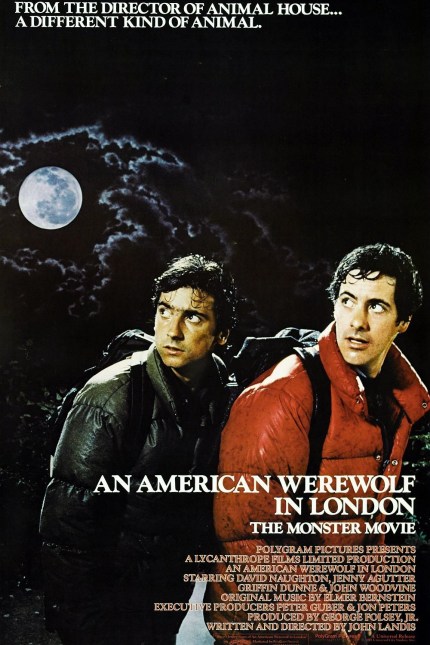
An American Werewolf in London (1981)

An American Werewolf in London (poster)

Today’s cinema adventure: An American Werewolf in London, the 1981 comedy-horror film by John Landis, about a young American who survives an attack by a mysterious assailant while backpacking through England, only to find that he has become cursed to transform into a monster by the light of the full moon.  A quirky mix of madcap humor and gruesome horror, it was a fairly respectable hit upon its release, despite mixed reviews, and has since become something of a cult classic.  It was particularly notable for its then-groundbreaking make-up effects, which garnered their creator, Rick Baker, the first-ever Academy Award in the new category created to honor such work.

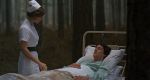
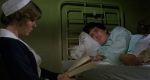
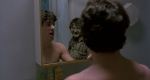
The movie opens on the moors of Northern England, where two young American friends, David and Jack, are on the first leg of a European hiking tour.  Arriving at nightfall in a remote village, they decide to stop off at the town pub in order to get some rest and sustenance.  The locals view them with suspicion, and when Jack asks about a strange 5-pointed star carved into the wall, they become downright hostile; the two young men decide to leave, and though they are warned to stick to the roads they soon become lost on the moor.  Things get much worse when they realize they are being stalked by a mysterious animal; when they try to run, it abruptly attacks them, savagely killing Jack and mauling David before the villagers arrive and shoot the beast dead as the young traveler loses consciousness.  He wakes up some days later, in a London hospital, where he has been sent by the locals to recover from his injuries.  The physician, Dr. Hirsch, and the attending nurse, the lovely Alex, are kind and sympathetic, but their young patient is troubled by the villagers’ official report that he and Jack were attacked by an escaped lunatic and not a ferocious animal.  Though the police put little stock in his traumatized memories, Dr. Hirsch decides to do a little further investigation on his own; meanwhile, David strikes up a relationship with Nurse Alex, moving in with her upon his release from the hospital.  Their romance is blissfully therapeutic, despite the young man’s troubling, violent nightmares; but harder to ignore are the visits from the increasingly decomposed ghost of his unfortunate friend Jack, who claims that they were actually attacked by a werewolf, and that David is now a werewolf himself.  Worse yet, Jack and all the other victims of the monster’s bloodthirsty rage are doomed to wander the earth until their killer’s bloodline has been severed- meaning that David, as the last surviving carrier of the curse, must die before the next full moon can transform him into a ravenous beast and lead to more senseless slaughter.  Though David is skeptical of the warnings, Hirsch is sufficiently convinced by a visit to the moors that his former patient may be a danger to himself and others, and he joins forces with Alex in an attempt to protect the young man from the darkness- whether supernatural or psychological- that threatens to take control of his destiny.

As written by Landis, who was inspired over a decade earlier when he witnessed a group of Central Europeans performing a ritual to prevent a deceased fellow villager rising from his grave, this grim and familiar tale is laced with the kind of hip, contemporary humor that marked the youth-oriented films of the period; arch, ironic, tongue-in-cheek, and self-referential, the comedy is a major ingredient in the mix, but Landis stops short of letting it undermine the gravity of his horror story.  It seems an odd juxtaposition, and many critics were at a loss to reconcile the seeming opposition of the movie’s two aspects; nevertheless, the apparent cross purposes complement each other in a way that makes for a unique and highly entertaining ride.  In addition, the two cultural sensibilities reflected in the film’s title are brought into the equation through the film’s overall style; the flip jocularity of the American mindset is superimposed against a background of traditional English influences that resembles a blend of Hammer horror and the Carry On series, with a slight dash of Monty Python thrown in for good measure.  The resulting subtextual implication in which the youthful, callow naïveté of the distinctly American personality is thrust into the Old World subtlety of European experience, suggests a story that is ultimately, perhaps, about the dangers of being overconfident in a world that is deeper and more complex than we know.

That’s not to propose that Landis’ purpose here involves any kind of socio-political statement; the “babe in the woods” undercurrent, extrapolations about cultural identity aside, serves mainly as a foundation for the uneasy sense of foreboding that pervades the film from its opening frames, when the hazy atmosphere of the isolated moors seems pregnant with ominous possibility and fills us with the dread of something unknown, lurking just beyond the hills or, perhaps, hiding in plain sight.  Confronted from the start with this landscape that is at once familiar and alien, we immediately bond with the two fresh-faced adventurers who, a few moments later, arrive on the scene- in a truck full of sheep, like proverbial lambs to the slaughter (to reinforce this idea, the pub through which they will soon begin their descent into horror is called “The Slaughtered Lamb”).  We are charmed by their banter, comfortable in their camaraderie, and touched by their friendship; we share their bemused outsiders’ perspective because we, too, are outsiders here, a commonality that helps us identify with them, but because they are so endearing, we also genuinely like them.  It is this factor, cannily accomplished by Landis in his script, that makes us cringe at a deeper level when they become victims of the inevitable carnage; and with this foundation laid, as the film follows the subsequent adventures of David, despite the cheeky comic tone maintained throughout, we can never quite escape or ignore the soul-sickening undercurrent of sadness which pursues us to the end.

Landis is able to pull off this delicate balance largely because he seems unconcerned with pre-conceived limitations of genre; as the director of the wildly popular Animal House and The Blues Brothers, he was the undisputed master of the kind of irreverent and iconoclastic humor that is on display in American Werewolf, and he confidently delivers the same lampooning style in his approach.  There is a definite anti-establishment flavor here that is cut from the same cloth as those earlier films, manifested in a continual opposition between stodgy decorum and free-spirited permissiveness.  The guarded discretion of the villagers regarding their town’s dark secret, the by-the-book attitude of the bumbling policemen assigned to de-brief David, and the stiff-upper-lip dispassion of Dr. Hirsch and even Nurse Alex as they become more deeply involved with their patient; all these are contrasted with the repeated disregard for rules of behavior displayed by the young Americans.  Jack and David challenge local custom with their questions in the pub, and later on, David flies against procedural form with passionate protests regarding the truth about his attacker on the moors, and he skirts propriety by crossing professional boundaries to initiate a relationship with his nurse; it is a similar lack of concern for the rules that allows Landis to blur the lines between comedy and horror with such disarming audacity.  In a way, it is as if he is attacking repressive authority on multiple fronts; not only does he sideswipe convention and cliche with satirical absurdity, and disturb order and decorum with gruesome violence, he also flaunts conservative standards of decency with a high level of sexual frankness and pointedly gratuitous nudity.

An American Werewolf in London uses all these ingredients, ultimately, in the service of providing entertaining thrills for the youth audience at which it was targeted.  The hip, comedic tone and the willful exploitation of sex and violence create an appealingly loose, edgy atmosphere, but it is the narrative itself that keeps us hooked, and Landis the director handles it skillfully.  The leisurely opening sequence is a small masterpiece in itself, and could stand on its own as a fine short film; the jocularity of the protagonists is slowly overtaken by the undercurrent of menace in a textbook example of building tension through visual storytelling.  As the tale progresses, we are subjected to alternating moments of hilarity and terror, often spiking one with the other, keeping us off balance at a visceral level while Landis fills the screen with artfully arranged variety of culturally telling details, from the recurring ironic presence of a Mickey Mouse figurine to the ludicrous porno send-up being shown at the cinema where David has his final meeting with Jack.  Along the way he continues to build on our emotional connection to David (as well as to Alex and, to a lesser extent, Dr. Hirsch, who become his allies) and offers up numerous stylish set pieces- a handful of nightmare sequences, a zany romp at the London Zoo, a gripping predator-and-prey chase in a “tube” terminal, an erotically-charged love scene between David and Alex in the shower- until he reaches the climax, an over-the-top blow-out of carnage and confusion in Piccadilly Circus that plays like a deadly slapstick farce.  Up until this point, his recipe works; the excesses of the finale somehow push the limits of plausibility to the breaking point, and the callousness with which he treats the deaths of all these innocent bystanders feels a little too mean-spirited to be excused under the license of black comedy.  The final tragic confrontation which closes the film, a forgone conclusion since the very first frame, is also, undeniably, a bit of a letdown, and the promising potential for emotional payoff remains unrealized; it’s as if Landis, who has expertly managed to pad out what is essentially a familiar and simple scenario with clever distractions, has reached the bottom of his bag of tricks and decided to end his movie by hurriedly delivering the expected ending with as little fuss as possible.  Despite this anticlimax, however, Landis’ has invested enough into his main characters, on a deeper level than the snarky disaffection of the movie’s surface, to leave us in a state of satisfied melancholy as the end credits roll, and though we may have wished for an worthier ending for his clever mash-up, it must be admitted that his effort to present an oft-told tale in a fresh and surprising package has been, on the whole, a success.

A good deal of that success deserves to be credited to the charm of Landis’ leading players; in particular, of course, the considerable appeal of his star, David Naughton, whose earlier career as a pitchman for Dr. Pepper had made him a familiar face for most audiences, contributes significantly.  Attractive, affable, sincere, and possessed of a devilishly sly but somehow wholesome quality that makes him both sexy and endearing, his personality is well-suited to the demands of both the lightweight and dramatic aspects of American Werewolf, and watching him here makes us regret that, for whatever reason, he failed to become the rising star that his talent seemed to promise.  Matching him well is the beautiful Jenny Agutter, another familiar face (Logan’s Run¸ Equus) who never quite achieved full stardom, at least in the U.S., as Alex; she carries the same, sweet-but-sexy aura as her leading man, with an added layer of maturity and intelligence that makes her far more interesting than the standard damsel-in-distress usually found in monster movies.  John Woodvine is witty and refreshingly likable in his role as the benevolent older authority figure, Dr. Hirsch, and the assortment of recognizable English actors that constitute the cadre at the “Slaughtered Lamb” do a fine job of infusing life and dimension into the stock “superstitious villagers” characters that they represent.  The standout performance, though, comes from Griffin Dunne, as the doomed Jack; his lovably nebbish, self-deprecating nerd persona provides a perfect complement to Naughton’s all-American boy, and the chemistry they share is tangible- a factor that helps to add resonance to later developments when the deceased Jack returns to haunt his best friend.  Dunne manages, in those scenes, to bring the likable humanity of his character to the forefront despite the progressively hideous make-up he wears, undercutting the body horror of his walking-dead image with wit, pathos, and personality.

On the subject of the make-up, the aforementioned Rick Baker- whose prolific work in this field has always helped to redefine and push the limits of the craft- leads the pack in terms of kudos for Landis’ technical crew.  Not only do his remarkably detailed and gruesome prosthetic creations make for an utterly convincing conversion of Dunne into a grisly walking corpse, his work with Naughton’s transformation sequence, in which the handsome actor becomes the fearsome title creature, is a ground-breaking display of wizardry; a far cry from the old stop-motion effects used to morph Lon Chaney, Jr. in the classic Universal Wolf Man and its sequels, it is a truly hair-raising (literally and figuratively) pre-CG spectacle that reminds us all that movie magic did not begin with the computer age.  Also noteworthy is the cinematography by Robert Paynter, capturing the character and mood of the numerous English locations, from the desolate moors to the garish lights of Piccadilly, with a richness that gives weight to the proceedings; again, it’s a reminder of a now-bygone time, before the distinctive visual quality created by photography on actual film was supplanted by the high-definition digital imaging that dominates cinema today.  Finally, Landis gives his film a soundtrack that is comprised partly of effectively unsettling original scoring by veteran composer Elmer Bernstein, and partly of a rather tongue-in-cheek selection of various popular recordings linked together by the subject of the moon, with several varied renditions of the standard, “Blue Moon,” Creedence Clearwater Revival’s “Bad Moon Rising,” and Van Morrison’s “Moondance,” each figuring prominently in highly memorable sequences.

An American Werewolf in London is another one of those films that figured prominently in my own younger years; I have fond memories of seeing it, multiple times, on the big screen, and there was a time when I could quote virtually every line of dialogue.  In the ensuing years I assumed that my youthful enthusiasm, coupled with a fondness for monster movies and all things English, had probably paid a large part in my enjoyment of a film which, really, was little more than pulp cinema.  Upon my recent viewing, I was pleasantly surprised to discover that, in fact, Landis’ odd little film holds up extremely well, and, in fact, boasts many nuances- some of which are explored above- that I had not previously recognized.  It’s really a tight, stylish, and yes, classy movie; though it deliberately strives for the lurid, sensational atmosphere of both Hollywood exploitation cinema and British “penny dreadfuls,” and it offers up a considerable amount of nudity, sex and violence (the gory, nightmarish kind so gleefully proffered by the blood-spattered horror films produced in England throughout the ‘60s and ‘70s), it nevertheless maintains an elegant, restrained sensibility, suggesting far more than it shows and allowing the audience’s imagination to fill in a lot of the blanks.  Landis, for all his excess, does himself credit in his handling of the werewolf and its reign of terror, giving us only brief glimpses of the beast itself and using cinematic artistry- sound, camera perspective, editing- to build the suspense and fear; of course, we would feel cheated if he didn’t also deliver some good old blood-and-guts, and he gives us just enough of those to make us happy (if that’s the right word), but its also to his credit that we walk away feeling as if we’ve seen much more of a bloodbath than we actually have.  In the end, though, American Werewolf is most truly memorable for its unique hybrid personality, which lets us laugh, cringe, and cry a good deal more than we might expect.  It’s a smart, sexy, and surprisingly affecting film that has aged well, which is more than can be said for many of the more lauded-at-the-time works from the period.  Though it may not, at the time, have been as highly esteemed as Landis’ previous hits (mentioned above), and though, for many, his most important and lasting creation will always remain his video for Michael Jackson’s “Thriller,” An American Werewolf in London  may well, in truth, be his best work as a filmmaker; at the least, it’s a definite crowd-pleaser, guaranteed to evoke a grin and a grimace from even the most hardcore horror buff.

http://www.imdb.com/title/tt0082010/

Desperate Living (1977)

Desperate Living (poster)

Today’s cinema adventure: Desperate Living, the 1977 feature by underground filmmaking icon John Waters, featuring an assortment of his “Dreamland” players in the tale of a deranged suburban housewife who is exiled with her maid to a shantytown full of social rejects.  Financed, as all of Waters’ early projects were, on a shoestring budget, it generated notoriety through the outrage it sparked among the lesbian community for its treatment of same-sex female relationships, but it failed to catch on with the public to the extent of his previous hits, Pink Flamingos and Female Trouble, probably due in part to the absence of his signature star, Divine (who was unavailable to appear because of his commitment to a theatrical project in New York) but also because the “midnight movie” fad which had provided the perfect venue for the earlier films had largely subsided by the time of its release.  Nevertheless, it has taken its place as a cult classic alongside the director’s other works of the period, with which it shares an outrageous, anarchic sensibility and a deliberate intention to provide shock value through its depiction of socially taboo behavior.

The plot follows the misadventures of Peggy Gravel, a housewife from an affluent Baltimore suburb, who has recently returned home- perhaps prematurely- from a stint in a mental hospital.  Paranoid, delusional, and disgusted by virtually everything, she harangues those around her with wild and hysterical rants, accusing the neighborhood children of trying to kill her and reproving her husband for his ineffectualness.  When he attempts to calm her by administering her medication, she assaults him, calling for aid from her maid, Grizelda, an obese black woman whom Mr. Gravel has recently caught stealing from the household, and who now, believing she is protecting Peggy, smothers him to death by sitting on his face.  When the two realize they have committed murder, they go on the run together, attempting to drive out of town in Peggy’s car, but they are stopped by a policeman; instead of arresting them, however, he demands their underpants and some kisses for his cross-dressing, auto-erotic pleasure.  In exchange, he offers to let them escape to Mortville, a sort of hobo jungle on the outskirts of town where the criminal dregs of local society can find safe haven among their own degenerate kind.  The two women make the journey, and find themselves in a derelict town built mostly of cardboard and garbage; after trading a lottery ticket for a guest house owned by hard-edged lesbian Mole McHenry and her girlfriend, Muffy St. Jacques (“the most beautiful woman in Mortville”), they learn that the community is ruled by Queen Carlotta, a sadistic and self-serving tyrant who takes pleasure in degrading her subjects and dispensing draconian punishment to any who dare to displease her or disobey her absolute commands.  As the unlikely comrades settle into Mortville life, they begin their own lesbian affair, despite Peggy’s revulsion; meanwhile, Queen Carlotta’s egalitarian daughter,  Princess Coo-Coo, has fallen in love with the trash collector, and renounces her privileged life to elope with him.  The angry Carlotta has him killed, and when Coo-Coo flees with his body, she seeks refuge in the home of Peggy and Grizelda.  Peggy immediately alerts Carlotta’s goons, and Grizelda, attempting to protect the Princess, is killed in the ensuing struggle when she causes the house to collapse on herself.  Peggy, however, is rewarded for her loyalty to the Queen by being appointed as the replacement for the now-imprisoned Coo-Coo, and as her first duty she sets into motion the royal plan to infect the entire town with rabies, starting with Coo-Coo herself.  Back outside the “palace,” the lottery ticket Mole accepted as rent has proven to be a winner, so she uses the prize money to buy a bargain basement sex change for herself, thinking it will please Muffy, who has been goading her with fantasies about men.  Instead, it repulses her, causing her to admit that she loves Mole just the way she is; the sewn-on penis is severed and thrown to the neighborhood dog, and with their bond renewed, the couple leads the Mortvillians in a revolt against Peggy and the Queen, at last exacting vengeance for the brutality of their regime.

If this narrative sounds a bit convoluted, it’s no surprise; Desperate Living constitutes Waters’ attempt at an epic fairy tale, with multiple characters in interwoven subplots, and part of his particular milieu– at least in these earlier films- is a disregard for logical coherence in narrative structure.  Waters’ story lines are usually threads intended to link together his depraved set pieces, and a great deal of the fun comes from the fact that they are generally irrelevant to the real purpose of the movie, which is mainly to delight and disgust his viewers, preferably at the same time.  The downside to this approach, from a certain point-of-view, is that many of his movies have a tendency to “peter out” rather than build to a climax, with the final resolution often being little more than a means to tie up the loose ends; but Waters, always the iconoclast, has never concerned himself with following rules, and such an aesthetic consideration is as immaterial to his agenda as laws and social mores are to his characters.

This latter point is not strictly true, actually.  Waters’ films are usually populated by people who are greatly concerned with codes of conduct, albeit warped or inverted ones.  Here, for instance, Peggy is motivated by a fanatical devotion to her own brand of decency and decorum, a world view in which she, as a member of the social elite, is the natural recipient of preferential treatment and should be immune from the disgusting unpleasantries of the world; it happens that, for her, those unpleasantries include any form of natural impulse or show of sentimentality or affection.  She hates nature, is repelled by her husband’s touch, and would rather be raped by the kinky policeman than submit to his kiss; yet she is willing to ally herself with an oppressor and give up her own life in service of the ideal of autocratic privilege.  Similarly, the avowed man-hater, Mole, is prepared to transform herself into the very object of her own loathing in order to satisfy the needs of the woman she loves, not just because of her desire to please her lover, but because she is dedicated to her role as protector and provider.  The irony of both characters, of course, is that they personify the things they themselves despise; the victim becomes the victimizer and the militant feminist embodies the negative masculine stereotype she has rejected in others.  In similar ways, the other denizens of Desperate Living enact this paradoxical principle, or else they perform the meaningless reactionary pantomime of the social bystander, chasing their own self-serving needs and pleasures, deluding themselves with rationalizations and platitudes, and expressing outrage when they are met with opposition; Waters shows us a world of degenerates, overseen by other degenerates, and the only unacceptable transgression is the assumption of authority.  Of course, one could open up a discussion about the layers of social satire, political allegory, psychological commentary, or mythological inversion that can be seen within this low-rent fantasy melodrama; or perhaps we might speculate about the filmmaker’s intentions regarding such things as alienation of the audience, subversion of societal values and norms, or the use of cinema as an expression of counter-cultural concerns.  In the long run, however, Waters’ interest in such matters is clearly parenthetical, at best, and his work here- as with all of his films, particularly the “Trash Trilogy” consisting of this and the two previous efforts- has more to do with his creation of a signature mise-en-scène which can best be described as “transgressive camp.”  Even more than that, perhaps, it has to do with sharing his warped sensibilities through the medium he loves.

That Desperate Living is an expression of the filmmaker’s own imagination is certain; as the producer, writer, director and cameraman, he makes sure what shows up on the screen is pure Waters.  The histrionic dialogue, the over-saturation of de-glamorized nudity and sex, the exploration of fetish behavior and insular communities, the skewering of respectable society, the fixation on repellent imagery and ideas; these are trademark elements in his films, and they are all present here in spades.  Desperate Living features copious full-frontal nudity (both male and female), the sexualization of children, a baby in a refrigerator, the human consumption of vermin, sodomy with a firearm, cannibalism, and penile amputation, to name just a few of its dubious delights, and in typical Waters fashion, they are de-sensationalized to the point of banality- which is why they amuse us rather than outrage us.  This, of course, is precisely the point, if there must be a point; Waters shows us that the only thing more ridiculous than human behavior is to be offended by it.

Indulging in this pageant of absurd excess is a cast mostly comprised of the director’s regulars, a troupe of stalwart non-actors upon whose services he has relied upon from his earliest days.  Leading the pack is the incomparable Mink Stole, a fixture in Waters’ films who is here given her most prominent role as Peggy, sinking her teeth with relish into the character as she alternates between hysterical wailing and some of the most ferocious bitchery you will ever see.  She is perhaps (apart from the late Divine) the most proficient purveyor of the curiously bad-but-somehow-great acting that defines the style of the filmmakers’ canon, and Desperate Living offers probably the best showcase of her unique talents.  Accompanying her on the adventure is Jean Hill, a greeting-card model turned actress whose jubilant sass makes her a fitting complement to Stole’s venomous ice queen, and the two exude an undeniable chemistry as they act out their perverted fantasia on Imitation of Life.  Waters newcomer Liz Renay (a notorious burlesque queen, former gun moll, and convicted perjurer, whose scandalous autobiography prompted the director to pursue her for his film) brings a surprising freshness of personality- not to mention her sizable breasts, unfettered onscreen for a good deal of the film- as Muffy, and Susan Lowe as the pugnacious Mole, normally one of the director’s bit players, manages to hold her own admirably in the role originally intended for Divine.  Also notable is Mary Vivian Pearce as the goofily likable Coo-Coo, and “Turkey Joe” in his deliciously trashy cameo as the cross-dressing cop.  The standout performance, though, comes from the sublime Edith Massey, the snaggle-toothed ex-waitress who became a sort of muse for John Waters and a cult icon to boot, as Queen Carlotta.  With her inimitably amateurish delivery, her indescribable physical presence, and her inescapable authenticity, she makes this grotesque character into a mesmerizing spectacle; gleefully punishing her groveling subjects, turning her leather-boy lackeys into sexual objects with whom she engages in lewd- and graphic- excesses, or sweetly bestowing gifts on a pigeon like the skid row vision of a Disney Princess and her animal friends, she is the indisputable highlight of Desperate Living.  The lady had charisma, there’s no denying it.

In spite of the fact that the cast is entirely on target, however, the absence of Waters’ supreme diva, Divine, is keenly felt in Desperate Living.  There is a void, somehow, in the center of the movie, that none of the other personalities can fill.  This is not to say that any of them are lacking in commitment or ability- at least, the kind of ability required of them here- but that some intangible quality is missing that none of them are quite able to provide; it’s possible that this is due to the lack of a strong character to provide central focus in the story, for Desperate Living, in truth, is all over the map- but then so are most of Waters’ films, a fact which audiences easily overlook with Divine’s electric presence as an anchor.  It’s hard, though, to place the blame wholly on this gap for the fact that the movie doesn’t quite work- for, unfortunately, it doesn’t.  Though it is a veritable treasure trove of deliciously quotable lines and ripe with the kind of unforgettable lunatic imagery that keeps us engaged in any given individual moment of the film, it never really grabs us with the unexpected visceral urgency of some of his other works; all the pieces are there, but the whole package leaves us decidedly unsatisfied.  It may be due to the attempted scope of the story, or the fact that the fantasy is so far removed from real experience that it loses the sliver of plausibility which gives the director’s preposterously lurid tales their outrageous edge, but for whatever reason, Desperate Living loses steam soon after it takes us to Mortville, a fact that is particularly disappointing in face of the fact that the film’s first ten minutes are pure, vintage Waters, containing some of the most inspired expressions of his wicked genius he ever managed to create, and setting the bar at a high level which the rest of the movie is then, sadly, unable to match.

Still, for Waters’ many fans, this kind of critical quibbling makes no difference to their enjoyment of its many riches, and for those who are exploring this alternative auteur for the first time, the fact that Desperate Living is not as complete a package as the masterful Female Trouble doesn’t make it any less essential an experience.  There was a certain magic at work in these heady, early years of the Dreamland crew, and it is just as evident in this movie- with its guerilla-filmmaking feel, its grainy 16mm photography, its elaborately shoddy sets built from found objects and refuse, its celebration of filth, and its mockery of traditional cinematic forms- as in any of the others.  What makes it so… well… refreshing (for want of a better word) is that, as always, Waters’ subversive trash is not merely intellectual posturing, nor is it exploitation, for it is clear that all of his participants are equally complicit in his effort to inundate us with perversity; John Waters is a subversive filth-monger because he finds it fun, and because it is an expression of self rather than a calculated pose, he makes it irresistibly fun for the rest of us.  Of course if you are someone who has, as Peggy Gravel puts it, “never found the antics of deviants to be one bit amusing,” you are best to leave this one alone, as well as the rest of Waters’ canon; although his work, for all its over-the-top shock value and subversive topsy-turvy morality, is ultimately as good-natured and sweetly innocent as, say, two naked children playing doctor, for somebody whose sense of humor is not well-tuned to this kind of trashy treat, it’s about as appetizing as a fried rat on a plate.

http://www.imdb.com/title/tt0075936/

Les Miserables (2012)

Les Miserables (poster)

Today’s cinema adventure: Les Misérables, the 2012 film adaptation of the hit stage musical by Alain Boublil and Claude-Michel Schönberg, based in turn on the classic 1862 Victor Hugo novel of the same name.  Affectionately referred to as “Les Miz” by many of its legion of fans, the show had one of the longest runs in both London and Broadway history, as well as hundreds of international and touring productions, and continues to be a major draw in theaters around the world to this day; needless to say, the blockbuster film version, in development (off-and-on) for nearly 25 years, had a sizable built-in audience awaiting its debut on Christmas Day.  Directed by Tom Hooper, who was at the helm of 2010’s Oscar-winner, The King’s Speech, and produced with heavy involvement from the show’s original creators, including producer Cameron Mackintosh, it has opened to mostly positive reviews, already scored multiple nominations and wins among the various year-end film awards, and been greeted -if the crowded audience I saw it with was any clear indication- with wildly enthusiastic response from the public.

Adapted for the screen by William Nicholson, the floridly romantic score by Boublil and Schönberg (with English lyrics translated by Herbert Kretzmer) makes it to the screen remarkably intact, a rarity in Hollywood transpositions of stage musicals, with very few passages removed and a minimum of strategic re-ordering; consequently, as with the original production, almost the entire story is told through singing, with only a smattering of spoken dialogue.  The epic tale begins, as does the novel, in 1815 France, a country that has reverted to despotic monarchy only a few short years after its bloody revolution deposed the reigning aristocracy.  We are introduced to two men: Jean Valjean, a hardened convict who is being paroled after spending 19 years on a chain gang for stealing a loaf of bread to feed his starving family; and Javert, the strict and stalwart policeman who oversees their labor.  Upon Valjean’s release, his status as a paroled felon prevents him from finding work or shelter, and the cruelty and humiliation he suffers reinforce his hatred and mistrust of humanity, until an act of kindness by an elderly bishop inspires him to transform his life and dedicate himself to God.  He knows he cannot live under the draconian terms of his parole, however, and so he tears up his papers, vowing to begin a new life.  The story then shifts 8 years into the future, when Valjean has established himself under a new identity as a successful factory owner and is now the mayor of Montreuil-sur-Mer, a small seaport city.  One of his workers, a young woman named Fantine, is dismissed by the foreman when it is discovered that she is an unwed mother; with no job, she is unable to send support for her child- a little girl named Cosette who is in the care of a tavern-keeper and his wife in a nearby town- and she soon discovers her only avenue is to join the ranks of the town’s prostitutes.  Meanwhile, Valjean is made uneasy by the arrival of the town’s new police inspector- none other than Javert himself, whose suspicions are aroused by the mayor’s familiar appearance.  When Fantine, now gravely ill, is arrested in an altercation with an abusive “customer,” Valjean intervenes, and promises his dying former employee that he will take care of the child she leaves behind; but when he learns that another man has been mistaken for him and arrested in his name, he knows he cannot secure his own freedom at the expense of an innocent soul.  He reveals his identity to the court, then evades Javert in order to rescue little Cosette from her cruel guardians and flee with her to Paris, where he disappears into yet another life- this time as a loving and protective father.  Another 9 years go by; Valjean and the now-grown Cosette live in comfortable but secluded anonymity, and Javert now patrols the streets of Paris, where poverty and social injustice have bred a new generation of revolutionaries- a band of students under the leadership of the charismatic Enjolras.  One of their number, Marius, becomes smitten with Cosette when they see each other in the street; but their budding romance is interrupted by fate, as her former foster parents, the scheming Thénardiers (now also living in Paris, with their real daughter, Eponine), have recognized Valjean, prompting the longtime fugitive to plan an escape to England with his beloved ward.  On the eve of their departure, the student rebellion begins, throwing Paris into turmoil and bringing the destinies of the characters together for a climactic confrontation that will determine all of their fates forever.
In the original stage version of the musical, numerous liberties were taken with Hugo’s original novel, in the interest of simplifying the complex narrative and restructuring it for the needs of theatrical presentation; even so, through clever staging and production design, the epic sweep of the original was captured and maintained in a way that helped to redefine and reassert the musical theater art form for a new generation.  In re-expanding the story from the confines of the stage to the endless possibilities of the cinematic format, screenwriter Nicholson and director Hooper have returned to the source material for inspiration in filling in the background details, which successfully fleshes out the saga with the epic stature it deserves, but they have faithfully maintained the plot structure of Boublil and Schönberg’s version.  Part of this may be because of the involvement of Mackintosh, whose insistence on keeping the integrity of the show has been a factor throughout its history, and also because any significant changes would doubtless awaken the wrath of the musical’s sizable army of devoted followers, thereby alienating the lion’s share of their target audience.  Whatever the reason behind it, the decision to present the musical largely as written has resulted, perhaps ironically, in a brave and groundbreaking piece of filmmaking; since the decline of the film musical as a viable box office draw in the late 1960s, and particularly since the undeniably brilliant screen version of Cabaret directed by Bob Fosse in 1972, Hollywood has had a fear of allowing the conceits of the genre to be manifested onscreen.  To put it simply, the idea of characters breaking out into song and dance in order to express themselves fell from fashion with the rise of a jaded generation raised on contemporary realism; the “hokiness” of musicals was rejected by an audience that associated it with the values of their parents’ era, and filmmakers have since been reluctant to put them on the big screen without justifying the song-and-dance elements by the use of some stylized approach- usually separating them from the narrative by treating them as fantasy or by presenting them as staged performances within the world of the film.  There have been few movie musicals over the course of the last two or three decades, and with few exceptions they have largely been lackluster efforts which have failed to score with either critics or audiences.  In recent years, however, the popularity of the Broadway musical has undergone a sort of revival in the popular imagination, and the comparative success of such stage-to-film transitions as Hairspray and Sweeney Todd: The Demon Barber of Fleet Street has given tentative indication that audience acceptance for such fare is growing in movie houses, as well.  With Les Misérables, Hollywood takes the bold step of returning to the traditional approach, at last permitting the musical score to be performed, without qualification or apology, as the primary medium through which the story is told.  Unlike Hairspray, with its kitshy camp sensibilty, or Sweeney Todd, with its dark, cartoonish stylization, Les Misérables is grounded in a gritty period realism, and yet its characters express not only their inner monologues through song, they converse, confront and comfort each other through it as well.  In today’s cinema, such a basic, play-as-written approach to such material seems a novel concept, and it is precisely for this reason that it breaks free of its theatrical roots and comes to life as pure cinema.

To be sure, it takes a little adjusting for audiences unused to the genre, and even for those familiar with it.  The spectacular opening sequence, in which scores of rough-edged prisoners drag the enormous wrecked hull of a sunken ship while they sing of the cruelty and hopelessness of their existence, thrusts us immediately into the film’s operatic milieu, without fanfare or warning; it’s a jarring, alien experience, at first, but the utter conviction with which it is performed and presented soon carry us into acceptance, and by the time the story comes to its final fruition 150-odd minutes later the cumulative power of the score rewards us with an emotional catharsis rarely achieved by standard, non-musical methods.  That is, it rewards those who are able to surrender to it; there are undeniably viewers who simply don’t like musicals, and no amount of discussion about the aesthetics or traditions of the genre is likely to persuade them to open their minds to Les Misérables.  Make no mistake, this is a hardcore musical, and anyone who has trouble suspending their disbelief in a world where thieves, prostitutes and soldiers sing in unison would be well-advised to steer clear.  At the risk of seeming confrontational, I might also say they would be well-advised not to try and spoil it for the rest of us.

Of course, there are also those who, as die-hard fans of the musical, will be coming into the theater with their own high standards and expectations about the piece; “Les Miz” aficionados generally have their favorite recordings of the show, with every vocal and instrumental nuance memorized by heart, or perhaps envision a “dream cast” in which their favorite performers from the various productions might somehow be united into one perfect rendition if the show.  These viewers are likely to be disappointed in what they see (and hear) here, as, indeed, they would be bound to be with any version of the piece short of the one they have in their imagination.  In fact, it’s probably fair to say that anyone who is a stickler for “legit” singing will probably have difficulty accepting the vocal performances in Les Misérables; though its cast is composed primarily of actors who are trained and experienced singers, the film’s highly unusual approach to capturing their vocals has yielded a different sound than might be anticipated.  In order to focus on the immediacy and spontaneity of the scenes- particularly since virtually the entire film is sung- the decision was made to forego the usual technique of pre-recording all the songs and lip-syncing to a playback on the set during filming.  Instead, the actors sang everything live on camera, with a piano providing accompaniment through concealed earpieces and the full orchestral underscore being added in post-production.  The result of this approach is a raw, improvisational quality- decidedly different from the meticulously phrased, measured delivery found on most musical theater recordings- that gives the songs an unpredictable, electric vitality; it is not the first time such a tactic has been employed, but it is certainly the most extensive use of it to date, and though it may not satisfy the ears of purists, it creates a hitherto unseen level of honesty in the performances, with each actor given the opportunity to fully express emotional reality in the moment without being hindered by a forced layer of artificiality.  This is not to say that the vocals are in any way inadequate- on the contrary, the cast of Les Misérables is more than capable of the meeting the demands of the material- but rather that they do not adhere to expectations; there is understatement where there is usually bombast and vice versa, and tempos are stretched or tightened according to interpretive need (all dictated, incidentally, by the actors themselves), giving the familiar score a freshness and an urgency that would have been impossible had the performers merely attempted to recreate the sound of those who have gone before.

To execute these performances, Hooper has assembled an ensemble of prestigious actors that, though they may not constitute a typical “Les Miz dream cast,” certainly lay claim to their iconic roles and bring them to life with a clear and infectious relish.  Heading this gallery of versatile “A-listers” is Hugh Jackman as Valjean, finally given the chance to bring to the screen the skills that made him a star on the musical stage before his days as an action-adventure star.  Those who know him only as Wolverine may well be surprised by his magnificent performance here; his renditions of Valjean’s signature songs display his prodigious musical talent and his clear, soaring tenor voice while bringing a depth and emotional immediacy that make them completely his own, and he charts this archetypal character’s journey from hardened thug to selfless benefactor with a brave and powerful range, finding surprising nuances of strength and vulnerability that continually remind us of his humanity.  As Javert, Russell Crowe is perhaps less noticeably effective, due to his stoic, seemingly emotionless presence as this ultimate champion of the letter of the law; his singing is metered and free of all but the sparsest of ornamentation, and he avoids playing into potentially passionate moments with the rigorous restraint of an ascetic.  For some, this approach to the character may seem like a missed opportunity, but in fact it is a remarkably honest interpretation, faithful to Hugo’s original portrayal, of a character whose life is devoted to a code which permits no room for personal choice; Javert does his duty, nothing more, and Crowe is to be commended for resisting the temptation to add showy flourishes.  Anne Hathaway, as the tragic Fantine, delivers the film’s standout performance, a heartbreaking portrait of a young woman driven to desperation by the cruel oppression of her time, and her stunning performance of the musical’s best-known song, “I Dreamed a Dream,” is destined to go down in cinema history as one of those great, unforgettable scenes that shows up in montages paying tribute to classic moments from the movies.  As the Thénardiers, Sacha Baron Cohen and Helena Bonham Carter provide double-edged comic relief in roles that could probably be described as the “Sacha Baron Cohen and Helena Bonham Carter” characters- which may sound like a bit of a dig, but in fact it is a testament to their skill at portraying these kinds of audaciously unpleasant types.  They seem absolutely right as this pair of opportunistic reprobates, and it is hard to imagine anyone else playing them.  As Marius, the immensely gifted Eddie Redmayne truly shines, taking this crucial character and making him a likable, genuine young man with a passionate soul, and not just another handsome romantic juvenile; his own belief in his “love at first sight” is so sincere, we are swept up in it easily- and not just because we accept the convention as a necessary part of the story-, and later in the film, his rendition of “Empty Chairs at Empty Tables, a mournful elegy to his fallen companions and an expression of his own post-traumatic-shock demons, is riveting and heart-rendingly real.  As Cosette, Amanda Seyfried is likewise believably dimensional, rising above the level of mere ingénue, and though her character gives her less chance to stand out, she invests it with so much charm and life that it seems she has a much bigger role than she really does.  Samantha Barks, one of the two principal cast members to have previously played their role onstage, gives a sweet and sad performance as Eponine, capturing the simultaneous joy and despair of her own signature number, “On My Own,” without the affectation that its heart-tugging mixture of despair and joy might inspire in a lesser performer.  Broadway actor Aaron Tveit makes a compelling Enjolras, brandishing a powerfully eloquent singing voice and a piercing intensity that perfectly embodies the enigmatic young revolutionary and makes him utterly convincing as a figure that might inspire other young men to follow him to their deaths; young Daniel Huttlestone (the other “Les Miz” stage veteran) easily wins our affections as the scrappy Gavroche, giving us just enough of the “precocious urchin” persona to make him familiar without adding the sentimentality that would turn him into a cliche; similarly, Isabelle Allen plays the young Cosette without cloying cuteness, delivering her song, “Castle on a Cloud,” with endearing honesty and refreshing simplicity.  Indeed, every member of the cast, from the cadre of student rebels to the gaggle of gossipy factory women, does stellar work and provides a memorable contribution to the whole, making Les Misérables feel like a true ensemble effort. Lastly, in a fitting touch that adds a certain intangible resonance to the proceedings, Colm Wilkinson, the Irish folk-singer-turned-actor who became an international star when he originated the role of Valjean in both the London and Broadway productions, makes a cameo appearance, giving an all-too-brief, transcendent performance as the Bishop of Digne, whose act of kindness sets Valjean on the path to redemption.  It’s also worth a mention that many of the film’s extras and “chorus” members are also alumni of stage productions of the show, including original Eponine Frances Ruffelle, who plays a fairly sizable role as a prostitute.  Their involvement is a testament to the powerful spell of the show, which engenders a lasting bond and loyalty among those who have participated in it and consider themselves all to be part of a family- a family which has every reason to be proud of its newest members, who have joined their ranks through this film.

With such a collection of fine performances on display, it is only right that the film should deliver an equally impressive production to showcase them; thanks to the efforts of Tom Hooper and his creative staff, it does better than that.  Les Misérables goes beyond the perfunctory spectacle provided by its painstaking recreation of 19th Century France and endeavors to re-invent the classic film musical in terms of contemporary cinematic approach.  Hooper does not rely on traditional methods of capturing the show for the screen, but utilizes the language of modern filmmaking to bring the experience into the 21st Century, complete with CG enhancements, rapid editing, and extensive use of steadi-cam photography.  To be sure, there are times when the constant visual motion of the film threatens to overwhelm, and one can’t help but feel that certain moments- particularly in the numerous “arias,” mostly shot in tight close-up to capture the intimacy of the experience- might have been better served with the occasional use of a wider angle lens; certainly, in some of the bigger musical sequences, for example the musical montage, “One Day More,” a more expansive perspective feels needed in order to give full reign to the magnitude of the forces in play.  There is a trade-off to be made here, though; after all, film is an entirely different medium than theater, and it is fitting that a movie should provide an experience impossible to receive from a stage performance.  There is little point to constructing a motion picture that endeavors only to recreate what has already been seen on stage, beyond preserving it for archival purposes, though this is precisely the approach that has been taken with many stage-to-screen transfers; the best cinematic transpositions of theatrical pieces come when a director re-imagines the material without attempting to make the camera lens a mere substitute for a proscenium arch.  Hooper has made his epic with this clearly in mind, and his eye for exploring the visual possibilities of the art form, from the repeated use of overhead perspective to the vastness of the crowded streets of Paris to the closer-than-close revelation of every subtle shift of expression in the performers’ faces.  In particular, he exploits the advantage of realism in the depiction of the crushing conditions of 19th Century poverty, an important factor of the story that can, on stage, only be suggested (or worse, glossed over), as well the contrasting Empire-era opulence of the salons and gardens of the wealthy. Set against the impressive splendor of the production design by Eve Stewart, clothed in the sumptuous authenticity of Paco Delgado’s costumes, and captured with the larger-than-life digital graininess of Danny Cohen’s pseudo-cinema-verité photography, Les Misérables meets and exceeds any reasonable standard for visual style, and- from a technical standpoint, at least, regardless of how picky audiences may respond to the interpretation of the content- provides a total movie-going experience worthy of its beloved source material.

Once again, it seems, I am in the position of having to make full disclosure of the fact that I am, in fact, a fan.  Though I have personally had an ambivalent relationship with the musical theater genre (as opposed to outright film musicals, of which I am an unrepentant enthusiast), Les Misérables is a piece which captured me from the very first time I heard it, and I have seen several stage productions over the years (including the original Broadway run);though its pop-opera format might seem, for some, to cheapen the translucent sincerity of Hugo’s masterful novel, its message of humanism and social awareness shines through in a way that never fails to leave me deeply moved and inspired.  Though this long-awaited film version is not, nor could it ever have been, a perfect rendition, and though I will admit to finding myself overly critical of details and choices throughout as I watched it (on opening day, of course), in the final analysis I have only praise to give it.  The deciding factor for me lies in the simple fact that, at the end, not only was I personally affected by the emotional upheaval to which it carried me- despite my every-lyric-by-heart familiarity with the show- but my companion, a skeptical died-in-the-wool disparager of musicals, was also moved to a prodigious outpouring of tears, as was, indeed, every member of the packed audience.  Make no mistake about it, Les Misérables is a tear-jerker of the highest order, and the enormity of its scope only serves to intensify its effectiveness as such.  If such fare is normally unappealing to you, or if you are one of those aforementioned musical non-lovers, you might want to skip this one, no matter how many awards it may end up getting.  You might want to, but my advice is: don’t.  Go and see it.  Give it a chance.  Like my companion, you may find yourself unexpectedly opened up and transported to a new level of appreciation for the possibilities of the genre.  It’s not a guarantee, but Les Misérables has the power to affect such a softening of the heart, and this movie largely succeeds in capturing the qualities that give it that power.  Those qualities, ultimately, rest in the soul of the story, and not in its spectacle; Les Misérables is not about revolution, nor romance, nor social injustice, nor even the desire for a better life- an oft-repeated theme within its narrative, and one from which it admittedly derives a great deal of its humanistic appeal.  It’s about the redemption which comes from the simple Christian ethic of self-sacrifice, of caring more for another than for oneself; this principal is embodied in the story of Jean Valjean, which remains the central focus throughout the interwoven subplots and ultimately yields the final epiphany towards which the entire saga builds.  When it comes, the catharsis which results from our sharing of it is powerful and cleansing, and no matter what quibbles you may or may not have about this or that detail of the film’s interpretation of the musical, they seem inconsequential in the face of that experience.  In that sense, Les Misérables completely succeeds in its purpose, and at the end of the day (if you’ll pardon the expression) you can’t expect more than that.

http://www.imdb.com/title/tt1707386/

Paths of Glory (1957)

Paths of Glory (poster)

Today’s cinema adventure: Paths of Glory, the 1957 World War I drama by Stanley Kubrick, an early example of the filmmaker’s much-lauded mastery of the cinematic medium starring Kirk Douglas as a French colonel who finds himself caught in the middle when the personal and political motivations of his superiors force him to order his men on an impossible mission.  Based on a 1935 novel by Humphrey Cobb that was itself inspired by a true-life incident, it was a project spearheaded by Kubrick- who had read the book as a youth- when the critical success of his low-budget film, The Killing, got him hired to develop projects for MGM production head Dore Schary.  Though Schary rejected Paths of Glory for its lack of commercial appeal, he was eventually fired from the studio, freeing Kubrick and his producer, James Harris, to shop it elsewhere, and they managed to salvage their film by gaining the interest of actor Douglas, whose enthusiasm and guaranteed participation allowed them to find backing at United Artists.  With its harsh anti-war sentiments, its cynical take on military politics, and its bleak ending, nobody anticipated it would be a box office hit; it did, however, fare better than expected, despite heavy controversy in the European market- it was withheld from release in France for several years due to diplomatic protests, and it was heavily edited in other countries.  More importantly, in the long term, it earned massive critical acclaim for its director, thrusting him further along on his own “path of glory” towards his future status as one of the all-time great auteurs in the history of cinema.

Paths of Glory is set at the French western front in 1916, where the soldiers endure the hellish conditions of trench warfare while their executive superiors reside in the luxurious nearby palace that has been temporarily transformed into military headquarters.  It is in the comfort of the latter location that General Mireau, who oversees a division near the key German position known as “the Anthill,” is visited by his superior, General Broulard, a member of the French General Staff.  Broulard has come to propose an attempt by Mireau’s men to take the heavily fortified German stronghold, a mission which, if successful, could win favorable response for the French war effort in the press and the political arena- and presumably advance the careers of the military commanders involved.  At first, Mireau is adamant in his refusal of the commission, citing the impossibility of the task and the devastating casualties that would be inflicted on his soldiers; when Broulard brings up the possibility of an upcoming promotion, however, which might be adversely affected by his choice, the ambitious subordinate quickly changes his mind, and agrees to order his troops to make the attack.  Mireau makes a visit to the trenches, a hellish war zone under a continuous blanket of shelling and gunfire, where he takes the time to exchange a few military platitudes with the already demoralized men- and deliver a strict dressing down to one shell-shocked soldier whom he accuses of being a coward- before delivering his orders to the division’s commander, Colonel Dax.  Dax, a dedicated soldier and a capable leader, is likewise skeptical of their chances for success, deeming the attack a suicide mission, but when the general threatens to relieve him of his command, he reluctantly agrees to lead his men in the attempt- though he knows the cost in human life will be high.  The next morning, the assault on “the Anthill” commences, with Dax personally leading the men through a horrific barrage of shells and machine gun fire; the effort proves futile, with most of the first wave killed or wounded without gaining much ground towards the goal, and the second wave refusing to join the attack.  A desperate Mireau, watching the battle from behind the lines, attempts to order his artillery commander to fire on the reluctant men; the officer refuses to comply without written orders, further enraging the general.  Meanwhile, despite Dax’s attempts to rally the men, the onslaught of German resistance proves too much and the surviving troops fall back, putting an end to the mission.  Mireau is furious, accusing his men of cowardice and mutiny; he demands punishment for the failure of the mission, and orders that each of the three company commanders choose a man to be court-martialed and executed for treason, as an example to the rest.  Colonel Dax is appalled, and volunteers to defend the three soldiers in the proceedings against them; a skilled lawyer in civilian life, he is frustrated in his efforts by the court’s disregard for the men’s legal rights and its refusal to hear any mitigating evidence on their behalf.  Despite Dax’s vehement objections and impassioned pleas, the men are found  guilty and sentenced to die by firing squad.  Dax makes a last ditch effort to save the doomed soldiers, bringing evidence to General Broulard about Mireau’s thwarted attempt to fire on his own army; nevertheless, the execution proceeds as scheduled, and afterwards, when he orders an investigation into Mireau’s actions, Broulard offers Dax the disgraced general’s command, believing that he has been angling for the job all along.  The disgusted Dax refuses the promotion, admonishing the wily Broulard for his manipulative role in the whole tragic affair.  Leaving the headquarters, he overhears the soldiers singing along with a young German girl in a pub, and resolves to let them enjoy their brief respite for a short while longer before ordering them, as he must, back to the nightmare of the trenches.

The film’s taut and eloquent screenplay was credited to Kubrick and Calder Willingham, along with noted “pulp” fiction author Jim Thompson; in reality, most of the script was written by the latter two men, though the director took equal credit for his supervisory contributions- a sign of his frequently- noted desire for complete control of his films.  Needless to say, perhaps, the stridently anti-establishment sentiment of the story, combined with its indictment of power and patriotism as a mask for self-promotion and exploitation, generated much controversy in the political environment of the mid-1950s Eisenhower era; despite its setting within the French military, Paths of Glory was decried as un-American and doubtless seen as an example of Communist influence in the Hollywood film industry by the remaining proponents of McCarthyism.  Indeed, actor Douglas was vilified in the press during the production of the film for his involvement in such a project, though he remained unwavering in his dedication to it.  He was not alone in his confidence, either.  Though Kubrick himself had planned, for box office purposes, to compromise the story by changing its ending to a happy one, he was persuaded to keep to the novel’s original, bitter conclusion; when the studio balked at the depressing finale of the script and demanded the proposed happy ending instead, producer Harris resubmitted the original version without changes under the somewhat cynical assumption that nobody would bother to re-read it. He was right, and after the film’s completion the studio execs were so impressed with the final product that they agreed to release it without alteration.  The relative lack of significant opposition for Paths of Glory might have been a sign of the times- after all, another film with a strong anti-war message, David Lean’s The Bridge on the River Kwai, was one of the year’s big hits, even winning multiple Academy Awards, including Best Picture- and despite its relatively humble box office showing, it certainly made an impact on viewers, paving the way for a coming decade in which movies would take critical attitudes towards the accepted establishment to a new level.

Whether or not Paths of Glory captured the public, it quickly became a darling of the reviewers.  Praise for the film was almost universal, with critics expressing particular admiration for its unvarnished portrayal of the realities of warfare and its stark black-and-white cinematography.  Decades later, it is easy to look at Kubrick’s work here and recognize his familiar style, developed to mastery even at this early stage in his career.  The lauded cinematography (executed by George Krause) bears the hallmark of the director’s fondness for natural lighting, capturing the harsh glare of the uncovered bulbs in the trenches, the cold and hazy sunlight of the battlefield, and the heavy diffusion of the enormous palace interior with a palpable aura of tangibility; the relentless but deliberate mobility of the camera, including the classic and influential reverse tracking shot of Colonel Dax moving through the trenches on the morning of the fateful attack, prefigures future use of the same techniques in such films as 2001: A Space Odyssey and The Shining, to name but two notable examples; the thematic motif of a story in which human endeavor is destined to fail because of inherent flaws in the character of its participants, and the shrewdly observational approach to revealing these flaws through the cool detachment of the empirical camera, is classic Kubrick, a thread which weaves its way through every film in the director’s canon; the unmistakable framing and shot composition, the triangulated relationships, the photographer’s fascination with capturing the human face in its myriad expressions of emotion- all these things and more are present in Paths of Glory, bearing witness to the concrete vision this then-youthful genius had already created for himself.  Already established, as well, was his penchant for demanding absolute control and his sometimes excruciating perfectionism.  His insistence on getting every frame of the movie exactly as he wished resulted in numerous confrontations and difficulties on the set, including a notorious incident in which, after 17 takes of a scene with Adolphe Menjou, the veteran actor exploded with rage and frustration at the director and ferociously derided the younger man’s inexperience at working with performers, in front of the full cast and crew of the film; after patiently allowing Menjou to expend his fury, Kubrick quietly called for another take.  It was but a foreshadowing of the kind of troublesome relations with collaborators for which he would be known throughout his career, but his exacting methods resulted, undeniably, in a legacy of masterpieces that continue to influence and inspire filmmakers- and dazzle audiences- to this day.

Though Kubrick deservedly takes the lion’s share of credit for the excellence of Paths of Glory, note must be taken of the fine contributions of the others involved.  To begin with, as noted, the screenplay is a well-crafted, tight piece of cinematic storytelling, peeling away expectation and cliché to reveal the unscrupulous, the cowardly, the vindictive, and the opportunistic qualities of its characters in an unrelenting portrait of war and its tendency to bring out the worst of human behavior.  Justice and compassion are thrown aside in favor of maintaining the status quo, ostensibly deep loyalties and ethics are forsaken at the first hint of personal consequence, and humanity is disregarded in the face of the ego-driven politics of the established social order.  The disparity between classes and ranks allows the free reign of corruption at all levels, and any trace of nobility or true honor is presumed to be just another pose adopted for the sake of gaining leverage in the quest for personal advancement.  Kubrick’s level of involvement in the writing of the screenplay is uncertain to me, but the majority of actual text was composed by Willingham and Thomas, both of whom would work with the director again despite his having downplayed their contributions here; these men have since justly earned proper recognition for this and many other projects, and each of them left the clear imprint of their particular style on Paths of Glory, helping to define its distinctive flavor of gritty humanism and undeniably playing an immeasurable part in making it the instant classic it became.

The cast, too, deserves a nod of appreciation, and not just for enduring their director’s tyrannical methods or the grueling conditions of the film shoot.  Kirk Douglas, who was then a top star, fresh from his acclaimed performance as Vincent Van Gogh in Lust for Life, helped Kubrick on his road to greatness with his support for this project (he would later be instrumental in getting the filmmaker hired to replace Anthony Mann as the director of Spartacus, a movie which would further cement his reputation and his status as a power player in the industry, and though the two would ultimately fall out during the making of this latter epic, Douglas has remained staunch in his admiration for Kubrick’s abilities as an artist).  The actor may have suffered some backlash for his involvement, but it was well worth it in terms of his long-term reputation; his performance as Colonel Dax is widely considered one of his finest pieces of work, a passionate, intelligent, and utterly convincing portrait of a decent man in the midst of madness, and he not only gives us a hero with whom we can place our sympathies, he serves as a much-needed reminder that even in a nest of vipers, men of quality can still exist.  As for Adolphe Menjou, outbursts on the set notwithstanding, he gives the performance of his long career as General Broulard, hiding his ruthless Machiavellian machinations behind the smiling pleasantries of good manners in a way that makes it clear how much he enjoys being the master of the game; he is the film’s true villain, untouchable in his power and utterly without scruples, the picture of self-serving bureaucracy and elitist entitlement.  George Macready is equally loathsome as Mireau, another species of political opportunist, whose greedy ambition makes him an easy target for the manipulations of men like Broulard, and whose thirst for power- probably stoked by decades of forced subservience- allows him to rationalize the most appalling decisions in pursuit of his personal glory, but also makes him prone to grievous errors in judgment which will ultimately prove to be his downfall; Macready, sporting a facial scar as a constant reminder that he has undoubtedly earned his position (and that he is, in fact, a product of the military system in which he has likely spent his entire adult life), is every inch the blustery martinet, but there is something about the desperation of his manner that makes us almost- but not quite- feel sorry for him.  Also memorable is Wayne Morris, as a drunken lieutenant who abuses his position to eliminate a subordinate that threatens his security (and his conscience); as the three condemned men, Ralph Meeker, Joseph Turkel, and Timothy Carey offer compelling examples of differing attitudes in the face of death, each of them representing aspects of humanity that defy easy judgment; Richard Anderson (later a familiar face of ‘70s television as Oscar Goldman, the handler of both The Six Million Dollar Man and The Bionic Woman) is quietly superb as Mireau’s assistant, an officiously sycophantic administrator who relishes his opportunity to shine as the prosecutor in the court-martial of the accused mutineers, but who gives us, in his final scenes, more than a hint that the moral implications of his actions may be a heavier burden to bear than he had anticipated; and Susanne Christian (who would soon after become Mrs. Stanley Kubrick, a role which she would fill for the rest of the director’s life) is lovely and heartbreaking as the German singer, presumably a prisoner in the French-occupied town surrounding the military headquarters, who captures the hearts and souls of her unruly audience as she is forced to entertain them in the pub during the film’s final scene.

Paths of Glory is one of those flawless pieces of filmmaking that reminds us of just how good the medium of cinema can be.  It is- and has been from almost the moment of its release- a textbook example of great film technique, and its deeply compelling story makes it a riveting experience even for those with little interest in the technical side of the art form.  Director Steven Spielberg is one of many who has claimed it as a favorite film, and its plotline and themes have been borrowed or provided inspiration for countless other works over the years, from an episode of The Young Indiana Jones Chronicles to a song by Faith No More.  Its status as a true masterpiece is so unquestionable that it tends, sometimes, to be forgotten in discussions of great filmmaking simply because it is such an obvious example.  In truth, though Kubrick’s later, more high-profile works have often been the subject of disagreement and controversy among scholars and critics, this early gem is almost always regarded with reverence by even the director’s most vehement detractors.  If you’ve never seen it, what are you waiting for?  It’s one of only a few films that I can confidently recommend, without qualification, to anyone; whether you are an avid movie buff or a casual entertainment seeker, you are bound to find yourself enthralled by this powerful little movie, and even those with a short attention span can rest assured that, at a fast-moving 88 minutes, it will have no trouble keeping their interest.  It’s a timeless classic, as powerful and riveting today as it was over a half-century ago, proving the words uttered by its star, Kirk Douglas, barely a decade after its release, to have been absolutely prophetic: “There’s a picture that will always be good, years from now. I don’t have to wait 50 years to know that; I know it now.”  You were right, Kirk.  I know it, too.

http://www.imdb.com/title/tt0050825/

The Hobbit: An Unexpected Journey (2012)

The Hobbit - An Unexpected Journey (poster)


Today’s cinema adventure: The Hobbit: An Unexpected Journey, Peter Jackson’s long-anticipated return to the works of celebrated fantasy author J.R.R. Tolkien, whose three-part saga, The Lord of the Rings, provided the basis for the director’s phenomenally successful and critically-acclaimed trilogy of the same name.  Adapted- and expanded- from Tolkien’s earlier novel, The Hobbit, it constitutes the first part of a second trilogy which serves as a sort of prequel to The Lord of the Rings, telling of the young Bilbo Baggins’ adventures when he joins the quest of a band of Dwarves to reclaim their homeland from an ancient dragon who has taken it as his own- an expedition which sets into motion several events that will have great consequence in the later story.  Sure to be a major success on the basis of fan interest alone, it has met so far with somewhat mixed response- mostly due to Jackson’s decision to supplement the relatively short novel with additional material that connects it to the later events portrayed in The Lord of the Rings– and facilitates the splitting of its narrative into three separate films.  Reaction has also been divided about his choice to shoot the film at 48 frames per second (twice as fast as the standard rate), resulting in an ultra-high resolution image which gives his movie an almost hyper-real look, particularly when coupled with the 3D and IMAX formats in which it has been widely released.  Nevertheless, the majority of critics and audiences have been enthusiastic in their welcome for this adaptation of the much-beloved tale, and it undoubtedly marks the beginning of another triumphant achievement for Jackson and his creative collaborators.

The Hobbit, published over a decade earlier than The Lord of the Rings, was written by Tolkien as a stand-alone book, though its narrative was part of the much longer and intricately detailed story of Middle-earth that he had been developing since his youth.  The book was a success- so much so that it achieved classic status, eventually allowing Tolkien to publish the iconic trilogy of novels which turned him- and the mythical world he created, along with its inhabitants- into a cultural icon.  In an appendix at the end of The Lord of the Rings, the author provides a detailed timeline of the entire history of Middle-earth, with particular emphasis on the events leading up to the War of the Rings, which is specifically chronicled within the trilogy.  The beginnings of this great conflict coincide with the timeline of The Hobbit, through which Tolkien provided glimpses of his larger saga within the peripheral details of the central plot.  An Unexpected Journey, as mentioned, incorporates this material into its adaptation of The Hobbit proper, placing the story into the larger context of the complete epic tale.  The film begins in precisely the same time and place as the previous trilogy, at the home of Bilbo Baggins, an aged hobbit (or “halfling”) who has begun to write the history of his personal adventures, many years before, in the far-flung corners of Middle-earth.  We are transported back, as he remembers his youth, to a day 60 years prior, when Gandalf, a wandering wizard once acquainted with his family, arrives at his door to invite him on an adventure.  Bilbo, accustomed (as most of his people are) to the predictable comfort and security of his home in the Shire, declines; Gandalf, however, is not dissuaded so easily, and later that night the young hobbit is surprised to be playing host to a company of Dwarves who arrive unexpectedly, claiming to have been summoned to his home- by the wizard, who explains that he has offered Bilbo’s services as a “burglar” to assist the Dwarves in a quest to regain their ancient home under the distant Lonely Mountain, where a powerful dragon named Smaug, many years before, laid waste to their kingdom, Erebor, and claimed their vast wealth as his own private treasure trove.  Bilbo, horrified, again declines to join the expedition, protesting that he not only has no experience as a burglar but that he would, in fact, be useless on any such quest- an assessment with which the Dwarves are inclined to agree, particularly their leader, Thorin Oakenshield, heir to the throne of the kingdom under the mountain and a proven and powerful warrior.  Nevertheless, the shrewd wizard eventually persuades Bilbo, who has long suppressed a childhood yearning for adventure, to accept the job, and the hobbit joins his new comrades as they begin their long journey.  As they make their way, they encounter obstacles and enemies the likes of which the fledgling adventurer has never seen, including hungry trolls, greedy goblins, and bloodthirsty orcs- foul, mutated creatures who seem bent on pursuing them, and whose ferocious chieftain seeks a personal vendetta against Thorin.  Meanwhile, it becomes apparent that Gandalf has a larger agenda as he accompanies the fellowship; in his secret role as one of the White Council, an alliance of wizards and elves that serve as protectors of Middle-earth, he has begun to sense the growing influence of a dark and ancient presence returning to the land- a fear which he shares with his fellow guardians when the company arrives for a brief respite at the Elven capitol of Rivendell.  However, the answers he seeks remain yet hidden in the shadows, and the fate of the Dwarvish quest demands his more immediate attention.  Eventually, the band’s travels bring them within sight of their destination- but not before Bilbo manages his first successful “burglary” by stealing away the most “precious” possession of a treacherous subterranean creature named Gollum, beginning a greater adventure that will eventually decide the fate of Middle-earth itself.

The Hobbit, as written by Tolkien, was aimed at younger readers; though not exactly a children’s book, it is considerably lighter in tone than the epic trilogy which followed, with a less austere literary style and a higher level of whimsy to soften the heaviness of the story’s darker elements.  Even so, the heart of its story lies in the fabric of this remarkable writer’s meticulously plotted history of Middle-earth, a complex and lifelong undertaking inspired by his desire to create a definitively English mythology and informed by his passion for philology.  This imaginary chronicle, produced over the course of decades, provided a depth of background for his writings that lends an unprecedented level of authenticity to the fantasy world in which they are set, complete with vivid geographical detail, cultural and linguistic traditions for all of the various races which populate it, and a fully developed cosmology.  This fullness is one of the qualities which helped to make both The Hobbit and The Lord of the Rings into cultural phenomena, and legions of fans have hungrily devoured every scrap of the copious background material from which it arises, through its later publication in books like The Silmarillion, by Tolkien himself, and the collected volumes of history assembled by his son.  It is with these kinds of fans in mind that Peter Jackson- along with his partner, Fran Walsh, and their longtime collaborator, Philippa Boyens- decided to expand the narrative of The Hobbit with the inclusion of story elements that provide background and foundation for the later events depicted in The Lord of the Rings.  Operating from the conceit that Bilbo’s adventures, as related in the novel itself, are only a part of the whole story, the screenplay, by the three aforementioned collaborators (along with Guillermo del Toro, who was originally slated to direct), weaves the story of the Dwarves’ quest into the larger story arc that links The Hobbit to its more ambitious successor; the introduction of the great ring of power, pilfered by Bilbo in the subterranean lair of the pathetic Gollum (the only episode in the novel that bears significant continuity into the later books), is here seen within the context of other circumstances revealed by Tolkien only in his extraneous writings.  Thus, An Unexpected Journey is not simply an adaptation of The Hobbit, but an ambitious effort to create a more complete vision of Tolkien’s mythic realm, fleshing out the depiction of “behind the scenes” activity- such as the meeting of the White Council and the discoveries of Radagast the Brown- in order to tell more of the complete saga as the author composed it in his own imagination.

Of course, it goes without saying the Jackson and his co-writers are themselves the kind of fans at which they have aimed their own movie; it’s clear from the outset that An Unexpected Journey is as much a labor of love as The Lord of the Rings, and even more of a dream project in the sense that the creators have the opportunity for bringing to light many of the things that have, until now, remained tantalizingly hidden between the lines.   The inclusion of these “extra” scenes, of course, begs the question of how faithful Jackson et al‘s vision can be to Tolkien’s intent when the author himself chose not to include them in the book.  The answer is, I think, very faithful indeed.  An Unexpected Journey contains very little that doesn’t come directly from Tolkien, except for the kind of embellishment of detail that is necessary when realizing a written work into cinematic form; the author wrote descriptions of all the so-called “extra” scenes, and though they were omitted from The Hobbit because they were irrelevant to the book’s self-contained purpose, they were nevertheless part of his complete vision.  Jackson and crew have given us a chance to see that vision come to life, and they have done it with relish.

There is actually very little I can say about The Hobbit: An Unexpected Journey, at least in terms of standard critical commentary.  There are those who have a passion for this kind of fantasy adventure story, and there are others who have an equally passionate dislike.  No argument is likely to persuade one side or the other to change their view, and those two camps are going to either love this movie, or hate it, regardless of what anyone says; but for those many viewers in between, some guidance may be offered.  Casual fans of Tolkien’s books, who may not be well-versed in the surrounding lore, may find themselves confused by the inclusion of characters and concerns from the later trilogy, and might also feel that these elements muddle the focus of the main narrative, which centers wholly on Bilbo and his transformation from humble homebody to seasoned adventurer.  Likewise, those who have only come to the world of Middle-earth through exposure to Jackson’s earlier films might find themselves feeling a sense of all-too-familiarity over things we’ve seen before, or may not get the point of spending time on a plot line for which we have already seen the eventual outcome; this, of course, is always the pitfall of  “prequels,” and it is one which many viewers might feel is particularly needless here, when the source material does not itself contain these elements.  It is important to remember, however, that An Unexpected Journey is the first installment of a trilogy, and much of its content is meant as a set-up to the events which are to follow; though one may quibble about the necessity for padding out an already rich and complex storyline, or question the motivation for turning a single novel (which is, incidentally, shorter in itself than any of the three volumes of The Lord of the Rings) into multiple sure-fire hit movies, Jackson’s vision is an ambitious one.  He is bent on building as complete an embodiment of Tolkien’s mythos as possible, one which draws not only on the content of the novels as published but on the supplementary material with which the author infused them.  To put it another way, he is thinking “outside the box” in order to capture the total experience of the author’s epic saga in a cinematic form that both elaborates on its details and remains true in spirit to his ultimate intent and purpose.  As with any artistic translation of a pre-existing work- particularly when the original artist is no longer around to consult- there is a necessity for personal interpretation; but Jackson and his team, who are die-hard fans of the first degree, are certainly as qualified to interpret with as much validity as anyone, and with their proven mastery of the kind of breathtaking visual storytelling required, they are obviously more than up to the task.

The level of perfection and coherence to which Jackson aspires is evidenced by the painstaking efforts he has made to connect his new trilogy to the previous one with as much unity as possible.  Settings which are shared by both are duplicated in detail, and returning characters are portrayed by the same actors (with the semi-exception of Bilbo, whose younger incarnation is now represented by Martin Freeman- though original actor Ian Holm reprises his appearance as the older version of the title character).  In addition, the visual style of the original film series is maintained through the richly detailed design work, inspired by the decades of illustrative art connected to Tolkien’s books- in particular those of Alan Lee and John Howe, who served as visual consultants on this film (and its future follow-ups) as they did on the original Jackson trilogy; needless to say, the high-tech magic used to bring life to the various denizens of Middle-earth and their exploits is once again a marvel of imagination merged with state-of-the-art wizardry, and the creation of props, costumes and make-up which convincingly capture the cultural character of the land and its population is once again executed with astute perfectionism.  An Unexpected Journey is cut so distinctly from the same cloth as its spectacular predecessors that it is clear the filmmaker intends, when all is said and done, for this new trilogy to be seamlessly bound to The Lord of the Rings as a single, unified whole.

Further enhancing this continuity is the welcome return of Howard Shore’s magisterial musical scoring, an indispensable element of The Lord of the Rings, which manages the remarkable feat of incorporating here the themes and motifs created for the previous trilogy while weaving them into the new material composed specifically for The Hobbit.  It’s the same technique which gave each of the three original films their own distinctive sound yet tied them all together, as well as adding a valuable aural component to the storytelling, and once again it serves its purpose well; the soundtrack has that rare quality of seeming instantly familiar, like music you have somehow known all your life without ever having heard it before, much in the same way that the story feels like an ancient memory of some long-forgotten dream.  Tolkien’s books touch the realm of archetypes, and, like Jackson, Shore has the skill to enhance this deep unconscious connection in a powerful and irresistible way.

In the same vein are the performances; though this kind of acting is rarely acknowledged when awards are handed out every year, the ability to convey humanity and make emotional connection while playing in a necessarily heightened style is a delicate gift, and Jackson has once more populated his epic with performers who are up to the job.  Returnees Ian McKellen (whose magnificent Gandalf has been one of the highlights of the series from the beginning, and is a particular delight this time around), Hugo Weaving, Cate Blanchett, and the venerable Christopher Lee (whose personal expertise on the Tolkien canon has been of vital importance to Jackson’s project offscreen, as well)- as well as the aforementioned Holm and Elijah Wood (in a brief cameo)- are all seasoned purveyors of this craft, by now, and have become the quintessential embodiment of their characters; it is a pleasure to see them, however brief their involvement.  The new cast members, however, are every bit their equal in terms of capturing the necessary flavor; Jackson’s month-long pre-filming regime of combat and horseback training, designed with the dual purpose of establishing a tight-knit camaraderie among the players, no doubt contributed to the chemistry that is evident onscreen, and his ensemble provides a superbly symbiotic assortment of performances which are each destined to become as iconic as those from The Lord of the Rings.  Of particular note are Richard Armitage- whose brooding intensity gives Thorin Oakenshield a powerful charisma which complements his role as the destined ruler of the Dwarves- and Sylvester McCoy- whose memorable turn fleshes out Radagast the Brown, a peripheral character that has always been a subject of fan curiosity through importance of his role in the saga and the brief-but-vivid descriptions he received in Tolkien’s work.  Mention must be made as well of Andy Serkis, whose mesmerizing performance as Gollum- achieved through motion capture technology but executed live on set with his co-stars and derived entirely from his real expressions and physicality- was one of the most acclaimed elements of The Lord of the Rings and comes close to stealing the entire movie in his single scene here.  Finally, Martin Freeman is the perfect Bilbo Baggins; down-to-earth, likable, comical, and yet endowed with a great and generous spirit that shines through from early on, it is no wonder that he was Jackson’s first and only real choice for the role- the production schedule was completely rearranged to fit the actor’s availability- and his understated, everyman charm (rightly, since it’s Bilbo’s story) provides the heart and soul to the film.

There are so many wonders on display in An Unexpected Journey, and to list them all would be pointless; far better to let you discover them for yourself.  On that subject, the issue of presentation becomes an important factor.  Jackson’s audacious decision to shoot his film in the double-rate format of 48 fps. has generated much debate- and quite a few complaints from viewers who find the resulting depth and clarity to be disorienting and distracting- particularly when combined with the seemingly obligatory 3D and IMAX formats, as well as a tendency to make the various and extensive special effects trickery appear, well, obviously fake.  In answer to this, I can only say it’s entirely a matter of personal taste; I myself have seen the film twice now, once in the full-blown mega-tech format and once in the plain old 2D standard version.  I was mesmerized both times, and I had no complaints- though I will say that my second viewing, free from the “ooh-aah” factor which accompanied my first time through, allowed me to focus more attention on the content of the story itself without the bedazzlement of total sensory experience.  The content is, of course, what ultimately matters more than the gimmickry of its presentation, and it must be noted that eventually, when the film is viewed as it will later be, without the trappings of big screen showmanship on millions of smaller home screens around the world, it will be that content upon which viewers will base their judgment of the film.  In the meantime, those with a low threshold for technical bells and whistles might do well to skip the deluxe experience and visit your humble neighborhood theater; the tickets will be cheaper, and you will be able to focus on the essence of the film without the distraction of feeling more completely immersed in an imaginary world than you want to be.

The Hobbit: An Unexpected Journey is, ultimately, a film for fans.  That doesn’t make for a limited appeal, in this case; Jackson’s Lord of the Rings trilogy was one of the most popular and acclaimed film franchises of all time, and the devotion that it engenders in its fans rivals that of such other cultural phenomena as Star Wars and Harry Potter.  There will be many, of course, who will adopt a dilettante attitude towards the new trilogy, perhaps for no other reason than to separate themselves from the crowd, just as there have been critics who seemingly were poised and ready to attack the film before it was even released.  There are probably audiences who will feel that this new film is really just “more of the same,” and admittedly there are a few elements that seem like repetition of things we’ve already seen- though of course these moments are faithful to the source material, and to change or excise them would be untrue to Tolkien’s story.  No doubt the majority of fans, however, will be thrilled at the chance to return to Jackson’s rendition of Middle-earth, and will eagerly anticipate the remaining entries over the course of the next two years.  I must, in the interest of full disclosure, admit than I am definitely in this last category; it would be hard for me to have found fault with An Unexpected Journey, short of a total botch job by its director, which was never very likely- though not it’s certainly not unheard of for a trusted filmmaker to drop the ball when remounting a beloved franchise (dare I mention George Lucas’ The Phantom Menace?).  The truth is that expectation has so much to do with the enjoyment of a cinematic experience that it is sometimes impossible to have an objective reaction, particularly with a highly anticipated film such as this one.  To be sure, what it delivers might not match the expectations of many- but in reading some of the harsher reviews that have so far been published of An Unexpected Journey, I find it hard to believe they are talking about the same film I saw.  Perhaps it comes down to the “what-have-you-done-for-me-lately?” attitude that seems to pervade popular culture today, which results in a loss of interest for that which was once popular and a snarky skepticism about any attempt to revive a former glory.  Whatever the reason, there are many who would disparage Jackson for returning to familiar territory instead of taking a new direction; but exciting filmmaking does not always have to break new ground, nor does the desire to revisit a successful formula indicate a lack of creativity.  It is obvious that this New Zealander considers the definitive transfer of Tolkien’s work to the screen to be his life’s work, at least for now, and I, for one, couldn’t be more delighted.

http://www.imdb.com/title/tt0903624/


Psycho (1960)

Psycho (poster)

Today’s cinema adventure: Psycho, Alfred Hitchcock’s classic 1960 shocker about a series of gruesome murders at an out-of-the-way roadside motel.  Based on Robert Bloch’s novel of the same name, which was in turn inspired by the real-life case of Ed Gein, a deranged Wisconsin farmer who stole numerous bodies from a local cemetery and murdered several women while living with the corpse of his long-deceased mother, it was heavily deplored by most- but not all- critics at the time.  Thanks, however, to Hitchcock’s sensationalistic marketing strategies and his popularity as the host of the then-current TV anthology series, Alfred Hitchcock Presents, it was an enormous box office success; it played an important role in changing the film industry’s outdated standards for “acceptable” subject matter and spawned scores of imitators, paving the way for the “slasher” sub-genre of horror films and wielding immeasurable influence over generations of subsequent filmmakers.  Its critical reputation quickly grew, and it is now almost universally recognized as one of the greatest movies of all time, or certainly, at least, one of the most important.

Psycho is one of those films that is so widely known as to be ingrained in the cultural consciousness; it is hard to imagine that anyone in 2012, whether they have actually seen it or not, would be unfamiliar with the once-notorious plot twist that prompted Hitchcock to implore movie audiences not to reveal the ending after they had seen it.  However, on the assumption that there are such people out there who might be reading this, I offer fair warning that beyond this point you will encounter “spoilers,” and you might want to stop here.  Psycho begins in Phoenix, Arizona, with a lunchtime tryst in a cheap hotel between Marion, a secretary, and Sam, her divorced lover from out of town, who cannot afford to marry her because of his crippling alimony payments.  Later, at the real estate office where she works, Marion’s boss entrusts her with $40,000 in cash, instructing her to take it to the bank on her way home; seeing a chance to put an end to the dead-end arrangement of her love life, she instead packs a bag and takes the money to start a new life with Sam, heading down the highway towards Fairvale, the small California town in which he lives.  When a blinding rainstorm makes driving unsafe, she stops for the night at an isolated motel off the main highway, operated by an awkward but sweet young man, Norman, who lives with his elderly mother in a Victorian house on the hill behind the office.  Norman is warm and polite, inviting his weary guest to join him at the house for a light dinner; but after Marion overhears a heated argument between her host and his mother, who angrily refuses to let him bring a female guest into her home, he instead brings a plate of sandwiches to the motel, and the two of them share a meal in the office parlor.  During their conversation, Norman tells Marion that his mother is mentally disturbed and prone to fits of anger, but that he feels obliged to care for her, though it means sacrificing his own freedom, because “a boy’s best friend is his mother.”  When Marion returns to her room, she decides to take a relaxing shower before going to bed- only to have it brutally cut short when the dark figure of Norman’s mother creeps into the room and stabs her to death with a butcher knife.  Upon discovering his mother’s savagery, Norman decides to do the dutiful thing and clean up the mess, disposing of the body and all evidence of Marion’s ill-fated visit- including the stolen cash, still wrapped in a newspaper- in a nearby swamp.  A few days later, in nearby Fairvale, Sam is visited in his hardware store by Lila, Marion’s sister, who has come in hopes that she will find her missing sibling there; they are quickly joined by a private investigator named Arbogast, hired by Marion’s boss to retrieve the stolen money without involving the authorities.  When it becomes clear that Sam is as ignorant as they are to Marion’s whereabouts, Arbogast begins to canvas the area looking for signs of the missing girl’s presence; eventually he arrives at Norman’s motel, where he quickly deduces the young man is hiding something.  After sharing his suspicions in a phone call to Sam and Lila, he sneaks into the house in search of Norman’s mother, thinking to get more information from her, and quickly becomes the next victim in the deranged woman’s bloody rampage.  With Arbogast’s disappearance, Sam and Lila decide to take the investigation into their own hands, and head to the motel to seek answers- but neither is prepared for the dark secrets they will uncover before they can solve the mystery of Marion’s disappearance.

As detailed in the current film, Hitchcock, Psycho was a major departure for the legendary director, a small-budget, black-and-white, sordid and sensationalistic shock piece that no studio wanted to touch.  Even with his prestigious reputation and his popular status as a television star in his own right, Hitchcock had to finance the film himself in order to make it.  It was a risky venture, to say the least, but one which paid off for him in a very big way; the film broke box office records, becoming the highest-grossing release of his career and making him a millionaire.  Its success forced critics to re-evaluate it- those who had been initially dismissive of it as a tastelessly lurid, low-budget shocker, beneath the usual standards of the “master of suspense,” soon praised it enthusiastically and included it on their “best of the year” lists, and it was ultimately nominated for numerous awards (including four Oscars).  In the end, Psycho rewarded its director with the late-life revitalization of an already extraordinary career, made him an even greater power player than he had been before, shattered industry taboos against depictions of sexual and violent content, and won him a new generation of fans- and all at a cost of less than a million dollars.

It was no accident of fate, either; the canny Hitchcock understood exactly what he was doing, and he exerted his meticulous craftsmanship on every aspect of the production in order to achieve the kind of visceral, ground-breaking effect he knew would electrify audiences seeking a new kind of thrill.  To this end, he had chosen his source material for its deeply unsettling subject matter, as well as for its deliberate and merciless manipulation of readers’ sympathies. To keep the budget down, he chose to shoot in black-and-white, using mostly the personnel from his TV series; a few trusted collaborators, however, were also hired, such as graphic artist Saul Bass, editor George Tomasini, and composer Bernard Herrmann, whose previous contributions to his film work had proven invaluable.  He cast the roles with familiar and experienced actors, but avoided using big stars, both to keep salaries down and to prevent personality from overshadowing the story; and- after rejecting an initial screenplay by James Cavanaugh, who had written several scripts for his TV series- he hired screenwriter Joseph Stefano (who had only one previous writing credit, but possessed extensive personal experience as a patient in psychotherapy) to adapt Bloch’s book for the screen.

Stefano’s screenplay remains fairly faithful to the novel in its plot, though a few changes were made to accommodate the requirements of the cinematic medium; most significantly, the central character of Norman Bates was transformed from an overweight, middle-aged alcoholic to a youthful, squeaky-clean boy-next-door.  This was Hitchcock’s direct input, designed to make the character more readily sympathetic to the audience; his likability was crucial for the director’s purpose, which involved tricking the audience- and here’s the big spoiler, for those who care- into identifying with a psychotic murderer.  Indeed, the narrative of Psycho is one piece of trickery after another, enhanced by Hitchcock’s casting of his biggest star, Janet Leigh, as a character who is killed off a third of the way through the movie, and his other biggest star, Anthony Perkins, as someone who not only covers up her death but ultimately turns out to be her killer.  The crucial plot twist- that Norman’s mother is in fact her stolen, mummified corpse and that he himself suffers from a split personality in which he commits the murders while assuming her identity- is kept hidden by shrouding the mother figure in mystery, keeping her offscreen except in shadow, silhouette, or oblique camera angles, and hearing her conversations with Norman from off-camera- which has the added effect of making the audience feel like an eavesdropper.  This is another important element of Psycho, the sense that we are clandestine observers of some forbidden ritual, and it of course constitutes the biggest trick of all- Hitchcock turns us into voyeurs, getting our cheap thrills by peeking through windows, listening at doors, and sneaking into private rooms.  It’s a now-familiar tactic, used extensively by filmmakers wishing to enhance our connection to their subjects and to subvert our affectations of propriety, and Hitchcock was certainly not the first to use it; but in Psycho, he brought it out of the art house, where European and avant-garde directors had been experimenting with it, and into the popular cinema, thrusting mass audiences into a wholly subjective experience and smashing through the “fourth wall” of the camera by making it into a substitute for the eye itself.  We are subtly drawn into this personalized experience from the very beginning of the film, when the camera slowly zooms from a panoramic view of the Phoenix skyline through the window of a darkened hotel room to spy on Sam and Marion as they finish their midday liaison; throughout the rest of the movie we are kept in the action with the heavy use of point-of-view shots, scenes filmed through doors, windows, phone booths, and even a peep hole, and the theme of clandestine observation is layered in by the characters themselves, who overhear, watch, question, and spy on the actions of others throughout the film.

This voyeuristic approach was nothing new for Hitchcock, but rather the culmination of a motif with which he had long been fascinated; throughout his career he had developed techniques for enhancing the audience’s identification with the lens, emulating the natural movement of the human gaze with his camera, using the same point-of-view perspectives and many of the other tricks which would become the dominant mise-en-scène of Psycho.  Likewise, many other of his favorite thematic elements are contained within the narrative- doubtless one of the reasons he was attracted to the material.  Many of Hitchcock’s films feature problematic relationships with domineering parents (sometimes played for laughs, but always containing a decidedly dark undercurrent); his heroes are frequently flawed, even seriously broken, and often unsympathetic, while his villains are usually charming and likable; law enforcement figures are mostly ineffectual or downright incompetent, and “polite” or “normal” society is generally seen to be a hypocritical veneer for hiding any number of unsavory character traits; and, of course,  there is the ever-present icy blond, a beacon of inaccessible beauty, repressed sexuality, and, usually, possessed of a compromised virtue which must be regained.  All of these are deeply embedded in the fabric of Psycho– there are even two icy blonds- and used relentlessly to undermine the audience’s ingrained expectations.  The heroine is a thief, but her victim is a fatuous boor, and her motives are understandable, if misguided; her sister is prudish and severe, while her boyfriend is morose and belligerent; the police are condescending and dismissive, the private eye pushy and sardonic; Norman, however, is shy, kind and endearing, even if his hobby of stuffing birds is a little weird, and he is, of course, the epitome of the dutiful son.  In any standard narrative, it would be clear where our sympathies should lie, but here everything is turned upside down; we root for Marion, and when she is suddenly and cruelly taken from us, we easily transfer our affections to her killer.  We make this willing shift partly because we do not yet know he is guilty, it’s true, but Hitchcock has built his trap so craftily that we would likely take the leap even if we did.  By the end of the film, the director has successfully made us emotional accomplices to both grand larceny and murder, and with his final shot of Marion’s car being pulled from the mud, a lifeless shell representing all that is left of her naive hope for a happy future, he rubs our faces in it.

There is another layer to all this subversive irony, though, beyond just a trickster’s impulse to make us feel dirty.  Our willingness to empathize with first a thief, then a killer, is grounded in what we think we see, what we want to believe, and what we have been trained to expect.  There are plenty of warnings- all the information we need to see the truth is plainly given as we go along, and yet we choose to bestow our sympathy based on romantic illusion.  We want the pretty, decent Marion to be able to “buy off unhappiness,” and we assume the boyish, mild-mannered Norman to be the innocent victim of his mother’s cruelty- from which we hope he can somehow break free without repercussions for his role in covering up her crimes.  This emotional manipulation is achieved by Hitchcock’s mastery of image; he carefully arranges what we see and hear in order to place us in conflict with ourselves, torn between our direct instinctive reactions and our intellectual assessment.  It’s a master con, made possible because of our tendency to mistake image for reality, but we buy into it willingly even as Hitchcock tauntingly tips us off all the way through.  Just as he gives us indications throughout that could easily lead us to recognize the truth about Norman and his mother, he inundates us with reminders about the relationship between image and reality; virtually every scene features mirrors or windows which allow us to see both the characters and their reflections, and most of the plot’s complications arise as a result of decisions based on faulty perception of the surface.  Marion is able to steal the cash because she seems trustworthy, she trusts Norman because he seems harmless, and everyone believes in his mother’s existence because she seems to be in the house.  Even the town sheriff, upon learning about the supposed involvement of a woman he knows to have been dead for years, is uninterested in investigating further because he forms an explanation that satisfies his assumptions.  In the end, Psycho is not about solving mysteries or exposing the pathology of a homicidal personality; it is an examination of- and a warning against- the dangers of living in a fantasy derived from what we want to believe.  We, as the audience, arrange the images to tell the story we expect to see, and when we are brutally reminded by Marion’s ignoble exit from the scenario that all is not what it seems, we fall right back into the clutches of illusion by transferring our sympathies to Norman.  In the climactic revelation, the sight of Norman, shrieking maniacally in his cheap wig and dress as Sam wrestles him into submission and his desperate illusions fall away along with the last vestige of his sanity, we cannot even comfort ourselves that we had no way to see it coming.  It may be a shock, but when we re-examine what has gone before, it is not really a surprise.  We let ourselves be deluded every step of the way, allowing our preconceived judgments color our perceptions; or to put it another way, to paraphrase a key subject from the parlor discussion between Marion and Norman, we have stepped into our own private trap.  This is the true heart of the film- the self-created cage of perception that traps us each and defines the way we see the world.  The image we embrace becomes identified as our reality, but as Hitchcock loves to remind us- and nowhere more vividly than in Psycho– this is an illusion, and one which can lead to the direst of consequences.

With so many volumes having been written about Psycho, it was not my intent to add much to it; clearly, however, I have been caught up in the spell of this much-discussed classic.  Something about this movie begs to be analyzed, explored, and revisited time and again.  There is so much here to stimulate, to intrigue, to perplex.  One can watch the film simply to revel in Hitchcock’s pure technical mastery: the aforementioned ways in which he invites us to participate in his own voyeurism; his ability to build tension with his deliberate pacing and editing, utilizing long, leisurely scenes interrupted by sharp, violent shocks that echo the stabbing of the knife; his use of visual means to keep us off-balance and on edge, such as dramatic camera angles, uncomfortably extreme close-ups, overhead shots, and other signature Hitchcock touches; and of course there is the justly famous shower scene, a 45-second collage of spliced film that terrorized the entire culture in 1960 and still inspires a particular kind of fear today.  You could also focus on Bernard Herrmann’s iconic musical score, a haunting and nerve-jangling composition for strings that Hitchcock himself credited for being 33% responsible for the film’s effectiveness and has been consistently placed at or near the top on lists of the greatest film soundtracks ever written; during the opening credits, you can marvel at the way the music is complemented by the title sequence created by the great Saul Bass, a no-less-iconic jumble of broken, intersecting lines that suggest the jagged turmoil of a disturbed mind as they spell out the pertinent names and assignments of the movie’s participants.

Of course, you can also reap the rewards of Psycho if you dedicate a viewing entirely to an appreciation of the performances.  Anthony Perkins’ work here is as fine an example of screen acting as you are ever likely to see, a masterpiece of understatement with subtle nuances revealing themselves upon every repeat viewing.  It was a role that matched him perfectly, allowing an intertwining of personal experience and fictional subtext that gives Norman a rare level of authenticity and makes him as heartbreaking as he is disturbing; though the character permanently defined his career and resulted in years of typecasting, it provided the young actor with a chance to leave a legacy the likes of which few others can claim.  Often overlooked, but no less definitive, is Janet Leigh’s outstanding work as Marion Crane; offering us an utterly convincing portrait of an everyday working girl, smart and clearly independent, but hiding a desperate longing to find the happier life of which she dreams, she wins us over immediately- and not only because of the obvious sex appeal of the opening scene, in which she helped to break down the so-called “decency code” by appearing in only a bra and a slip- and makes us keenly feel along with her the frustration of her mundane life, the irresistible thrill of her impromptu escape, and the mounting distress and paranoia that comes as she begins to recognize the consequences of her choice.  She is powerfully likable, which makes it doubly cruel when she is abruptly taken from us; this was Hitchcock’s goal, of course, carefully orchestrated by expanding Marion’s story from the brief episode it comprises in the original novel and by casting his most widely-known star in the role.  Leigh was his first choice, and she eagerly agreed to the project without even reading the script or discussing her salary; she was rewarded for her enthusiasm with an Oscar nomination, and, like her co-star, she created an unforgettable piece of cinema history, a rich and layered performance that is so good precisely because it contains no overt histrionics with which to call attention to itself.  The rest of the cast, though their roles are not as complex in dimension, are equally memorable- despite the fact that the director was vocal in his dissatisfaction with John Gavin (whom he referred to as “the stiff”) and that he was, by all reports, punishing Vera Miles for her abandonment of his earlier Vertigo (she became pregnant and bowed out before filming began, forcing Hitchcock to replace her with Kim Novak) by making her character here as unappealing as possible.  As Sam and Lila, respectively, both performers actually provide exactly the right qualities to their roles, making it impossible to imagine the film any other way; and, rounding out the main cast as Arbogast, Martin Balsam is likewise a perfect fit, giving us a canny portrait of a no-nonsense professional whose blunt and rumpled exterior belie the crafty shrewdness underneath.

There is so much to write about Psycho; I could go on with discussions of the layered themes and the techniques used by Hitchcock to explore them, or the brilliance of the stark black-and-white photography and its visual symphony of light and shadow, the contrast between the unglamorous, utilitarian settings and the austere design of the now-famous Edward-Hopper-inspired house that glowers down over the motel- the list is inexhaustible.  Similarly, I could write volumes about the history surrounding the film.  The battles with the censors over such things as the raciness of the opening hotel room scene, the use of the word “transvestite,” and the inclusion of a toilet (never before shown in an American film); the painstaking creation of the shower scene, which took a week to film, and generated obvious controversy upon release as well as much future argument about factors like whether it was Leigh or a body double that was used in the majority of its shots or the extent of involvement by Saul Bass, who drew the storyboards for the sequence but later claimed to have directed it in its entirety; the depth of contribution by Hitchcock’s wife and creative partner, Alma Reville, who- as she had on every film of her husband’s career- collaborated on every aspect of the movie from pre-production to final editing; all these things and more are legendary chapters in the story of Psycho, and you can (and should) read about them in so many other places that it is unnecessary to take any more time with them here.

The most pressing issue regarding Psycho, perhaps, for the “typical” modern viewer, who may have little scholarly interest in the film as a piece of cinematic art history and probably doesn’t care about the virtually unfathomable influence it has had upon every horror film that came after it, is simply whether or not it is still holds up.  Does this seminal, deceptively simple thriller live up to its reputation for inducing terror and inspiring nightmares for weeks after seeing it?  The answer, honestly, is probably not.  By today’s standards, even the most squeamish viewer is unlikely to find any of the film’s once-controversial violence hard to take; the gore factor is minimal, even in the famous shower scene with its chocolate-syrup blood, and, with a mere two killings taking place onscreen, the body count is decidedly low.  Taking this into account, along with the fact that it is virtually impossible to go into the movie without knowing its twist ending (or at least being familiar enough with its many imitators that it becomes easy to spot from very early on), Psycho is unlikely to generate many shocks with jaded modern audiences, and indeed is more apt to produce laughter- a development, incidentally, that would likely have pleased Hitchcock, who always claimed that the film was meant to be a very dark comedy.  Still, even if it has lost its power to scare us outright, it nevertheless casts an eerie and unsettling spell; even with its now-tame level of splatter, the shower scene is a deeply disturbing psychological jolt which plays on our most primal fears and reminds us of our innate vulnerability in the most common and universal of activities, and there is an undeniable creepiness that pervades the scenario, compounding as it progresses so that the Bates Motel and its adjoining house become more ominous and sinister in the bright light of day than in the earlier scenes at night.  Furthermore, instead of a neat and positive happy ending, Hitchcock leaves us with the mocking reminder that the world’s evil can be temporarily vanquished, but it will still remain, hidden in the most innocent-seeming of places, awaiting its opportunity to catch us unprepared; the final sequence of Norman, sitting alone in his cell as we hear “mother’s” voice in his mind, undermines any sense of safe, comfortable normalcy that might have been re-established by the previous explanatory denouement in which the smugly self-satisfied forensic psychiatrist unfolds his pat diagnosis of the murderer’s tormented psyche, and the final aforementioned shot of Marion’s car being pulled from the mud reminds us of the ugly reality of her senseless death- defying any attempt that might be made to assign it a meaning or purpose.  There is no comfort here, only tragedy and a chaos so deeply imbedded it can never be excised.  The power of these observations is as tangible today as it was five decades ago, whether or not Psycho frightens on a direct level, and any viewer seeking more than a cheap, visceral thrill will soon be drawn into the movie’s seductive web of delusion and consequence.  In short, Psycho may be better approached by the modern viewer as a psycho-drama, without expectations of blood-chilling fright and nausea-inducing carnage; indeed, it can be viewed, as its director did, as a comedic exploration of the fantasies in which we wrap ourselves and the mishaps in which they might result, though admittedly this requires a particularly morbid sense of humor.  In truth, of course, Psycho was never really meant to be a horror film, though it may have horrified; as in all of Hitchcock’s work, the real purpose is hidden behind the “McGuffin,” his term for the seemingly vital element around which his plots appear to revolve but which is actually a ruse through which his true concerns can be explored.  The McGuffin here is the mystery itself- ultimately the theft, the murders, and the psychotic delusions of the central character are all merely smoke and mirrors for Hitchcock’s master plan, in which he pulls the rug right out from underneath us and leaves us grasping for support that is no longer there.  Though he dresses Psycho in the trappings of the horror genre, its real riches lie beneath that exploitative exterior, and are ultimately more profoundly upsetting than any cheap momentary shock tactics could ever be.  On this level, from which it has always, truly, derived its greatness, Psycho is as fresh and relevant as the day it was released, and remains a must-see requirement for anyone who considers themselves even a casual film fan.  Personally, I first saw it at the age of ten, alone in my second-story bedroom on a tiny black-and-white TV screen.  It didn’t scare me, much, even at that tender age, but it certainly made a deep impression, and it most likely provided the single film experience that started me on my lifetime cinema adventure.  I’ve since seen it an uncountable number of times, and each time I never fail to be drawn in and to discover something new to consider.  If you are lucky, Psycho will hook you the way it hooked me; at the very least, it will make you think twice about leaving the bathroom door unlocked the next time you shower in a motel.

http://www.imdb.com/title/tt0054215/