If any of you cinema freaks are in the Los Angeles area or will be between now and June 30, 2013, you owe it to yourself to visit the Los Angeles County Museum of Art (LACMA), where an exhibition celebrating the work of director Stanley Kubrick is currently on display. An elaborate collection of artifacts from and related to the legendary filmmaker’s magnificent movie projects is on hand, including iconic props and costumes, shooting scripts, production photos, letters and documents, news clippings, and models, as well as work from Kubrick’s early career as a staff photographer for “Look” Magazine. Of course, there are also numerous video screens featuring memorable clips from the films themselves, concept art, analysis of musical choices, and more. A die-hard movie buff could spend hours perusing the wealth of material here, but even the casual fan will find plenty to induce the chill that comes from standing in the presence of greatness. Tickets are $20, which includes full access to the rest of the museum’s impressive collection of treasures- including, until February 10, an exhibition celebrating the work of late-Renaissance bad-boy Caravaggio and his influence over the artists of the following generation. It’s a great outing for a day of culture, cinematic and otherwise- I should know because I went yesterday. Below is a link to buy tickets and a candid shot of yours truly with one of the prehistoric ape-men from 2001: A Space Odyssey, just to prove I was there!
Category Archives: Uncategorized
BearCity (2010)
Today’s cinema adventure: BearCity, a 2010 romantic comedy about a young man whose secret attraction for big, hairy, masculine men leads him into the insular gay subculture of “bears.” Directed by Douglas Langway, and co-written by Langway and Lawrence Ferber, it attempts to graft the familiar Hollywood-style romance formula onto an exploration of the tight-knit bear community, exposing and poking fun at stereotypes along the way, in order to both appeal to a largely underrepresented sector of the population and to present a sort of primer for those unfamiliar with this rarified scene. Though it has met with a somewhat mixed response from critics and some members of the gay community, it has been sufficiently popular and successful to warrant a sequel, BearCity 2: The Proposal, which is currently being screened at GLBT film festivals across the U.S. and Canada.
Taking its inspiration from the popular TV and movie series, Sex and the City, Langway’s fluffy tale of love and lust in New York centers on Tyler, a 21-year-old “twink” (for those unfamiliar with the term, look it up on Urban Dictionary or ask a gay friend) and aspiring actor who is open and comfortable about his sexuality- but less so about his preferred taste in men. Drawn to older, bigger, hairier guys who don’t fit the “typical” gay mold of attractiveness, he keeps his proclivities a secret from his roommate and his friends; when a potential online hookup lures him to a nightclub for bears, he falls in with a group of hirsute friends who welcome him with open arms, and he begins the process of “coming out of the second closet.” He finds new roommates, gets a job at a bear-friendly coffee bar, and develops a new crush- on Roger, a handsome older “daddy” type who is one of the best-known and popular members of the bear community. The attraction seems to be mutual, but Roger’s sensitivity to the customs and expectations of the micro-culture that surrounds the pair repeatedly thwarts Tyler’s attempts to make a connection. Meanwhile, Tyler’s other new comrades face a variety of issues in their own love lives: his new roommates, Fred and Brent, struggle with the question of remaining monogamous or opening up their relationship to add some spice; and another couple, Michael and Carlos, are pushed apart by Michael’s decision to have weight-reduction surgery. In the midst of all the complications, romantic and otherwise, the whole gang gears up for “BearCity,” a big weekend party which brings the whole community together to celebrate in their own bearish way.
Like most ensemble “rom-coms,” BearCity has a plot tailor-made for the inclusion of one episodic misadventure after another, with which to gently spoof- and reinforce- the familiar foibles and pitfalls inherent in the quest for love. Normally, such a film’s agenda is limited to pleasing its audience with a lot of laughter, a few tears, and, usually, a couple of big “awww” moments leading up to a satisfying conclusion in which love conquers all; this would also be true of BearCity, except clearly, given the community on which it focuses, there is an additional goal. By setting the action amidst gay culture- and a subdivision of gay culture, at that- the film hopes to bridge social gaps and reveal the basic truth that the affairs of the heart, though they may take different forms on the outside, are the same for everyone, regardless of race, creed, culture, or sexuality. It’s not the first film to carry this message, not even the first to deal with that curious subspecies known as “bears;” but what is refreshing about it is that it eschews pretensions of a political or moral agenda and simply concentrates on telling its characters’ stories, devoid of higher messages. Equality is assumed, not defended, and sexual tastes- while they may be subject to lampooning- are accepted without moral judgment. As a result, the movie gets to turn its full attention to the universal concerns which its characters, like everyone else, must address in their various attempts to find- and keep- love.
Even so, BearCity also seems to be very aware that it serves as a sort of travelogue to the uninitiated viewer for whom the world of gay bears is completely unfamiliar; as a result, it takes pains to include a broad view of the community’s peculiarities- including its sexual adventurousness and promiscuity, heavy focus on alcohol and drugs, and a pervading shallowness that seems, more and more, to characterize the popular image of gay life in general. This tapestry of cultural detail provides more than just a backdrop for the proceedings, as the guys’ stories hinge on some of these issues- particularly the ones surrounding sexual mores- and their outcomes are dependent on a coming-to-terms with the particular obstacles they present. In addition, the behavioral observations to be found here have the unfortunate potential for perpetuating stereotypes- though not necessarily the old-fashioned, limp-wristed kind- which continue to create social prejudice against the gay community; despite the fact that the characters, for the most part, are explored to a much deeper level, the surface characteristics they display- however honestly- could be seen as clichéd variations on the familiar theme of “wacky gay neighbor” mannerism. Once again, however, the film is ultimately unconcerned with such factors- the opinions of outsiders are of little consequence to these bears, and in fact one of the film’s most significant themes- one which could even be called an underlying tenet of “bear philosophy,” perhaps- is the importance of being comfortable in who and what you are, without regard to the expectations and standards of others. In BearCity, the only way to find happiness is to be yourself, not who you think you are supposed to be; if that’s not a universal message, I don’t know what is.
Unfortunately, though BearCity succeeds in presenting an authentic portrait of the social atmosphere and lifestyle that characterizes its subjects, it is somewhat less successful in its attempt to craft a smart and compelling romantic comedy. The central love story between Tyler and Roger is sweet enough, if that’s the right word, on the surface; but the pair seem mismatched in a way that goes beyond the obvious differences in age, bearing, and outlook. We want to see them united by the end, but that has more to do with the conditioned response of wishing for a happy ending than it does with any sense that these two are made for each other; their attraction seems little more than just that, an impulse based on surface qualities rather than an instinctive bond between kindred spirits. As for the comedy element, much of the overt humor comes in the form of dialogue which seems far too calculated, as if Langway and Ferber were determined to insert all the standard jokes related to each subject matter they touch upon; the “clever” banter is laced with variations on standard one-liners known universally throughout the gay community, and even if they are less familiar to a straight audience, they still feel forced and deliberate, and as a result, much of the comedy falls flat. Perhaps the intention was to cultivate a further sense of universality, by showing a group of gay guys making the same jokes every other group of gay guys makes, but it has the effect of undermining the freshness which otherwise permeates the film.
BearCity works far better when it leaves behind the larger social scene and brings us into the intimate reality of its characters. In the one-on-one scenes we are given a much more honest and engaging look at the real lives of gay men, and this is where the movie’s more substantial charm becomes apparent. In the subplots surrounding Tyler and Roger’s tentative courtship, we find people who are actively dealing with the real, down-to-earth complications of building a lasting relationship, not the airy fantasy of a first crush. Fred and Brent’s grappling over the question of staying monogamous rings much truer than the moon-eyed wooing of the central couple in an empty bowling alley, and the emotional rift that threatens to rip apart the tender love between Michael and Carlos seems far more important than concerns over what Tyler should wear to BearCity in order to get Roger’s attention. Furthermore, because it grows honestly from the characters and their situations, the comedy that comes in these scenes is much more believable- and therefore funnier- than the predictable humor in the rest of the film. In particular, the comedy of errors that arises when Fred and Brent attempt a three-way play session in the shower is a comic highlight, underscoring the fact that BearCity is at its best when it embraces the opportunity to be different than the mainstream formula comedies it tries to emulate.
The actors, for the most part, are likable and believable enough, although at times the stilted quality of some of their dialogue trips up each and every one of them. Joe Conti is sincere and competent as Tyler, making him a suitable protagonist, albeit less interesting than some of his co-stars. Likewise Gerald McCullouch, as Roger, manages to convey an underlying integrity that keeps him sympathetic and allows us to see his appeal, despite the less savory aspects of his character. Both players are attractive, particularly McCullouch- who, it should be said possesses only marginal qualities that could be described as “bearish,” prompting suspicions that the film’s creators were hedging their bets in trying to appeal to a broader audience. In keeping with the fact that the supporting roles are by far more interesting than the star-crossed lovers in the spotlight, Brian Keane and Stephen Guarino (Fred and Brent) and Gregory Gunter and James Martino (Michael and Carlos) provide much more solid performances, investing their characters with a wider range and deeper authenticity, and generally making us wish they all had more screen time. Alex Di Dio is infectiously charming as Simon, Tyler’s spritely former roommate who later becomes involved as a confidante and advisor in the efforts to win Roger’s affections, and Sebastian LaCause has a nice turn as a Spanish party-bear who threatens to come between the film’s would-be lovers.
As for Langway’s efforts as a director, his work can be described as serviceable, at best. For the most part, he adheres to the familiar conventions of lightweight formula comedy, with little in the way of showy camerawork or flashy editing and not much stylization beyond the occasional obligatory montage. Not that anything more is required here, and truthfully a more self-consciously arty approach would most likely make BearCity insufferably pretentious. Nevertheless, at times the movie has a vaguely amateurish feel, as if Langway (both as director and screenwriter) were trying too hard to fit every ingredient into the soup pot. In addition, the elements which border on stereotypical would perhaps have seemed less so with a more delicate, thoughtful approach behind the camera, though it’s hard to level a criticism over something that might have been. In the same vein, it’s difficult to criticize his soundtrack choices, although one might have wished for a bit more imagination and variety in the selection than what we are given- a bland collection of disco-lite club music which may capture the feel of the community but seems disconnected from the action on the screen. Nevertheless, insofar as he gives us a genuine and clearly affectionate depiction of the world he showcases in his film, Langway’s work is, more-or-less, successful.
BearCity is a movie that carries a social importance heavier than its actual content; by showcasing the life of a culture rarely represented on screen (unless as a source of humor, as in John Waters’ A Dirty Shame), it represents a bold effort to cross the boundaries of social convention and promote true understanding and equality, even though such an issue is outside the scope of its plot. Perhaps even more significant is its revelation of prejudices and social gaps that exist within the gay community itself; the bear movement has largely developed as a reaction against the ostracization of men who fall outside the accepted standards of male beauty celebrated by the “mainstream” of gay society, and the movie makes it clear that there is still a lack of understanding and acceptance between these two factions of the culture. This factor, too, is beyond BearCity’s intentional purpose, except at an observational level, though it does play a role in the plot insofar as it provides the inner conflict that initially catapults its protagonist into a strange new world and provides the motivation for Roger’s reluctance to become involved with someone from outside the community. With so much riding on its shoulders, it is admirable that BearCity does not fall into the trap of taking itself too seriously and playing into its own importance; it would be even more admirable if it were a better film. Still, in its best moments it offers surprising depth and disarming honesty, and acquaints us with memorable characters who remain with us after the credits roll; and even in its worst moments, it is harmless and likable, a charming bit of wish-fulfillment fantasy that satisfies the universal need to believe in the power of true love, no matter what your preferences are with regard to gender- or body hair.
http://www.imdb.com/title/tt1426320/
Batman Begins (2005)
Today’s cinema adventure: Batman Begins, the 2005 action fantasy feature with which director Christopher Nolan initiated his vision of the classic comic-book hero, embodied by actor Christian Bale, re-envisioning the character and his world in a darker, more realistic vein that influenced a number of other subsequent franchise re-boots and brought a new level of depth and sophistication to the genre. Focusing on Batman’s origins, Nolan traces the story of billionaire Bruce Wayne from childhood, when he witnesses the senseless murder of his parents by a mugger, through his recruitment and training by a mysterious organization called the League of Shadows, to his eventual return to Gotham City and his efforts to fight its rampant crime and corruption using both the skills he has learned and the high-tech gadgetry made available to him by the limitless financial resources he has inherited. As he faces a host of opponents, he must also confront the enemies inside himself, learning to conquer his own guilt, anger, and fear in order to emerge as the symbolic hero he is driven to become.
It’s a familiar premise, by now, and one which has fueled a variety of interpretations since it was first invented by DC Comics artist Bob Kane in 1939; originally presented with a serious tone, by the 1960s cultural “sophistication” had become such that the character had deteriorated to the level of a campy and outright comedic TV series- a classic in its own way, to be sure, but a far cry from the darker complexity suggested by the original comic books themselves and loyally embraced by generations of their fans. Though the character was later reclaimed from this goofy image by such now-renowned graphic novelists as Frank Miller and Alan Moore, his incarnations on the big screen maintained a decidedly cartoon-like sensibility. When Nolan was approached to resuscitate the franchise on film, he decided to take an approach more in step with the traditions of the comic books themselves. With co-writer David S. Goyer, he fashioned an adult-oriented screenplay, centering more on the exploration of the character himself than on his far-fetched exploits- and making those exploits seem less far-fetched by infusing them with a hearty dose of realism. The standard conceits of the story are built from the ground up, explained with a fresh perspective that makes them seem plausible; everything from the hero’s dual identity and theatrical tactics to the “Bat-cave” and “Bat-mobile” (which are never referred to as such) are presented as logical and necessary extensions of his self-creation, formed from the building blocks of his unique personal situation and the psychological forces which drive him, instead of being taken as rote. It’s an imaginative approach that breathes life into the given clichés of the material, making the well-known mythology of the character feel fresh and contemporary. In addition, by paying more than just perfunctory attention to the dominant themes of the Batman mythos- the importance of a father figure, the thin line between hero and villain, the relationship between fear and power, the purifying role of ethical behavior in a corrupt and chaotic world- Nolan and Goyer manage to give their film at least as much weight as most mainstream films aimed at a mature audience- and more than many.
All of which is not to say that Nolan’s vision of Batman is in any way light on action. On the contrary, he fills his film with exciting set pieces made all the more satisfying by the care he has taken in laying a solid foundation; the various technological tools are more impressive for having been de-mystified, and the personal drama woven into the action raises the stakes and solidifies our investment in the outcome. Furthermore, the action is structured into the story in such a way that the narrative is never put on hold; instead of digressing into extended displays of flashy spectacle, the plot advances through these sequences, making certain that there isn’t an extraneous or gratuitous moment in the film’s 140 minutes.
Much of the success of Batman Begins obviously hinges on its cast. Nolan, drawing inspiration from classic seventies-era blockbusters like Superman, peppers his movie with an all-star list of gifted players, designed not just to lend credibility to the project but to provide the depth and complexity necessary for his conception. It is not just the central figure that is subject to the director’s humanizing treatment; the entire array of familiar characters is infused with the kind of detail that raises them from the level of stock cardboard cutouts to three-dimensional beings with a life of their own. Clearly, the writing plays a major part in this process, but the performances are a crucial factor, and the actors rise to the challenge admirably. Heading the list is beloved veteran Michael Caine, whose portrayal of trusted manservant Alfred Pennyworth transforms the character from a mere source of comic relief to a powerful force to be reckoned with; thanks to Caine’s justly renowned skills, this aged gentleman’s gentleman is also a man’s man, wise and compassionate, brave and capable, serving both as a much-needed surrogate father and an indispensable ally to the troubled billionaire playboy in his charge- but grounded firmly in a reality that prevents him from ever seeming too good to be true. As the future Police Commissioner, Jim Gordon, Gary Oldman matches Caine’s understated style in the creation of a sympathetic, powerful character, far from the pompously oblivious buffoon so often seen in previous versions; representing the traditional values of honesty, humility and family, he is an Everyman who becomes an unlikely hero, a worthy and equal partner in Batman’s fight against the forces of evil. Liam Neeson is dangerously cool as Ducard, the mysterious figure who first becomes Bruce Wayne’s mentor and then his adversary in the fight for justice; Morgan Freeman provides his usual air of approachable dignity and intelligence as Lucius Fox, the techno-genius behind Batman’s bag of tricks; and Cillian Murphy brings an eerie, off-kilter edge to the proceedings as a corrupt psychiatrist with a dual identity of his own. Rounding things out are Tom Wilkinson, memorable as an arrogant mob boss who finds himself a pawn in a game more powerful than his own, and Katie Holmes, earnest and likable as Wayne’s childhood friend and potential love interest.
It is Christian Bale, however, that must make or break the film with his interpretation of its iconic central character; and make it he does, going well beyond the usual troubled hero persona associated with the role and giving us a layered, remarkably specific and deeply personalized incarnation. He fully inhabits Bruce Wayne, giving us a clear window into the young billionaire’s psyche and charting his psychological journey as he grows from an angry, vengeful youth to a passionate champion of justice; we believe in his commitment to the ideal because he allows us to see where it comes from, and because he invests so much of himself in Wayne’s emotional landscape he makes it possible for us to identify with him- a rarity in screen portrayals of this character, which usually make him an aloof, distant figure, hard to fathom and harder to relate to. In addition, Bale plays Batman as a clear extension of Wayne, a heightened version of his real self rather than a differentiated personality; indeed, in this version, it is the persona of the shallow playboy that seems artificial, a sham perpetrated half-heartedly by a young man for whom worldly extravagances hold no appeal and whose true nature chafes at being confined in so trivial a role- all of which, of course, serves to make us like him even more. The only unsatisfying element of Bale’s work here is his lack of chemistry with Holmes; their relationship exhibits little of the spark that might give it meaning beyond its obligatory presence in the plot, so that when the would-be emotional payoff finally comes it feels like an afterthought. Nevertheless, it’s a minor quibble in an otherwise wholly engaging performance.
This impressive line-up of A-listers inhabits a superbly realized vision of Gotham City, created by Nolan in collaboration with production designer Nathan Crowley, which draws heavily on visual influences from Ridley Scott’s classic, Blade Runner, incorporating the use of informed imagination in its depiction of the cityscape; featuring layered architectural styles that reflect the changing tastes of its long history and the mix of elegance and squalor that marks any major real-life metropolis, it’s a place that goes a long way towards establishing the realistic base from which Nolan draws his story. Contrasting this claustrophobic urban atmosphere are the stately expanse of Wayne Manor and the breathtaking Himalayan landscape of the early scenes, all beautifully photographed by cinematographer Wally Phister, giving Batman Begins a distinctive look and feel that lingers in the mind’s eye. It’s worth mentioning that Nolan chose to create the environment of his film largely through old-fashioned filmmaking techniques, using extensive footage of actual locations, soundstage mockups, and miniatures, and relying only minimally on computer graphic effects (mostly for animation of the elevated train sequences and construction of scenery using a composite of different locations layered together). The action sequences were likewise completed with live action stunt work instead of computer-generated trickery, making the slick perfection of the film’s effects somehow even more dazzling.
The force that brings everything together, of course, is Nolan’s powerful and decisive direction. He landed this project fresh on the heels of his surprise indie hit, Memento, and instead of choosing to helm yet another predictably generic franchise-based blockbuster, he decided to make the film his own, bringing into the mix such now-familiar trademark elements as his inventive, intricate plotting, his exploration of thought-provoking psychological and metaphysical themes, and his noir-influenced use of dark, morally ambiguous characters and situations- all of which fit the Batman milieu like a glove. Aided by a moody, atmospheric score (jointly composed by Hans Zimmer and Thomas Newton Howard, who resist using the theme-driven formats typically found in films of this genre), he keeps the story driving forward with his heavy use of fast-paced editing and his intercutting of parallel threads, seamlessly interweaving themes and character development as he goes. Keeping the momentum is key to Nolan’s purpose here: the film, after all, is called Batman Begins for a reason; though it has a completeness and a distinctive energy of its own, it is in fact a prologue, the first chapter of a saga that is meant to continue through a full cycle of films. The director shrewdly provides sufficient thrills and closure to allow his film to stand on its own, but one can’t help feeling that he is holding back the use of his full arsenal to leave us wanting more. As Batman Begins rolls to its conclusion, the final scenes feel more like a pause than a full stop, and the sequel-minded hints dropped within the final minutes only serve to feed an anticipation that Nolan has already been building from the very first frames.
As to that sequel, it will hardly be a spoiler for me to say that it was to become the single most successful movie of all time (at least until it was recently deposed by another comic-book film, The Avengers) and that its financial triumph was equally matched by its critical reception; but I’ll touch more on that subject later this week, in anticipation of the imminent release of the final installment of Nolan’s Batman trilogy. My purpose here is to revisit the first of these remarkable, genre-defying films, which, though it falls somewhat short in comparison with at least one of its future companion pieces, gives more than a sufficient hint of the audacious brilliance that is to come. Batman Begins is polished and powerful, a movie that treats its source material with the respect and maturity it deserves and, at long last, frees the “comic-book movie” from the assumed stigma of being second-rate schlock, opening it to the possibility of being considered as worthy and important as any “serious” genre. It’s the first movie in which a so-called superhero (though technically, of course, this particular hero possesses no super powers) is presented in a manner realistic enough to be believable, and even if its fantasy elements are strong enough to ultimately keep it from breaking completely free of its genre, it sets the stage for its creators to accomplish that landmark feat with their next effort. All these considerations aside, however, it’s more than enough to say that Batman Begins is a pulse-quickening piece of entertainment, fully deserving of its own considerable success and worthy to stand alongside the best this increasingly popular genre has to offer.
http://www.imdb.com/title/tt0372784/

The Many Faces of Peter O’Toole
Today we take a rest stop on our cinema adventure to pay tribute to the magnificent Peter O’Toole, who announced his retirement this week after over fifty years as an actor. One of the true greats, and one of the last of a generation of working-class English actors who changed everything about the British stage and screen, he became an international star with Lawrence of Arabia and has been an icon ever since, elevating even the most pedestrian of his movies with his presence. Just shy of his 80th birthday, he has declared it’s time to “chuck in the sponge.” You have to respect a man who knows when it’s time to quit, even when he will be sorely missed. His legacy is enviable, and even though everyone likes to talk about the fact that he has the worst Oscar record of any actor so far (8 nominations, no wins), he has made more classic and unforgettable films than almost any winner I can think of. Enjoy your rest, Pete. You’ve earned it.
Click on the tribute collage above and see how many of his movies you can name. Just for fun!
All That Jazz (1979)
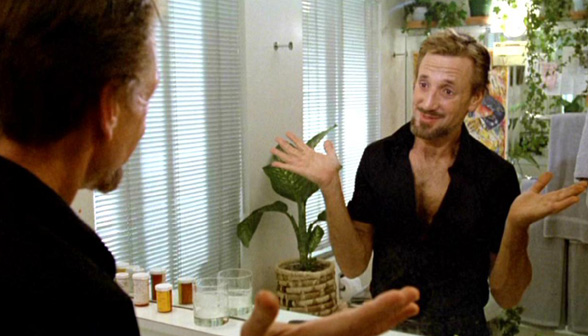
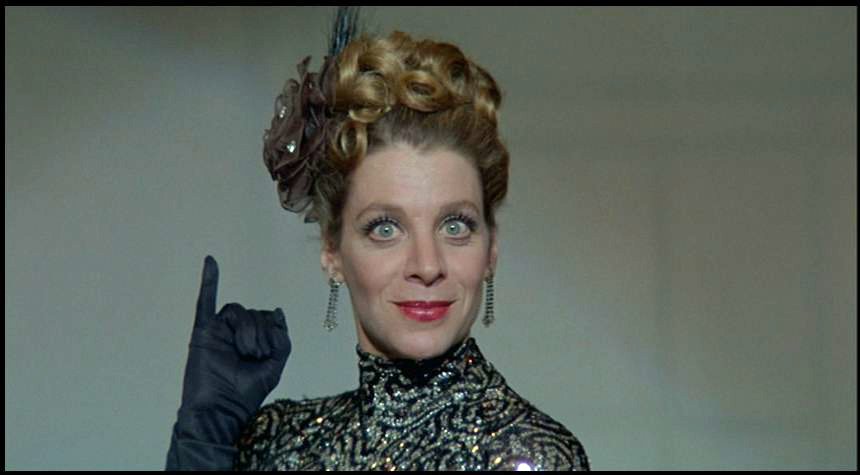
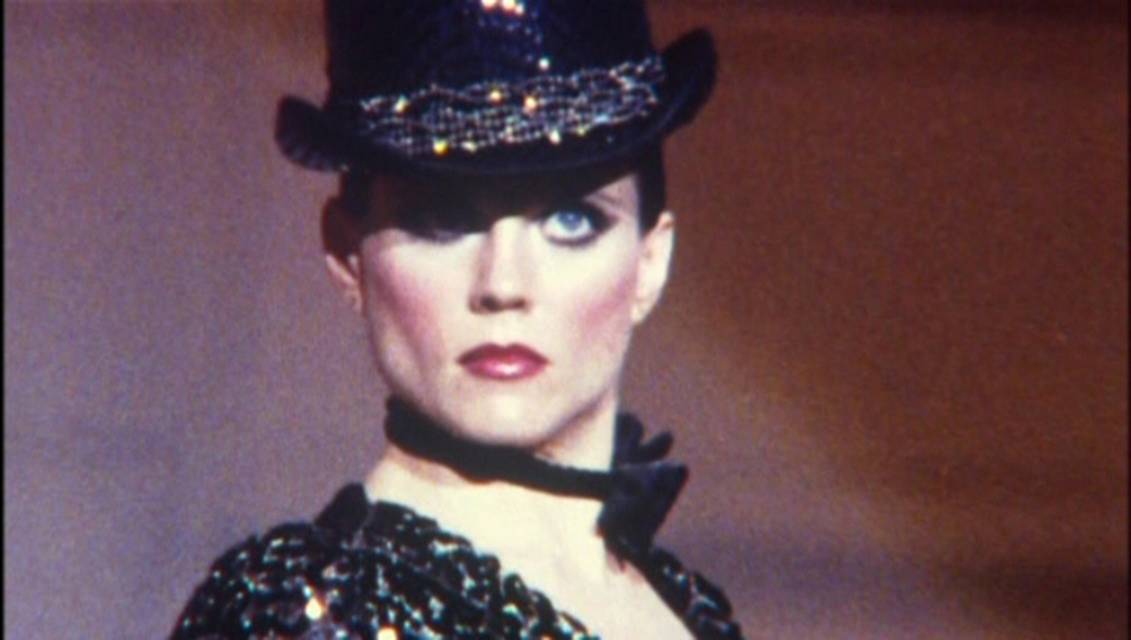
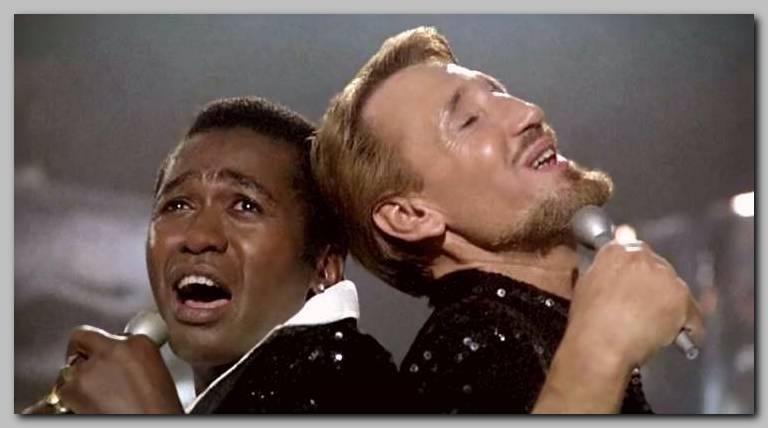
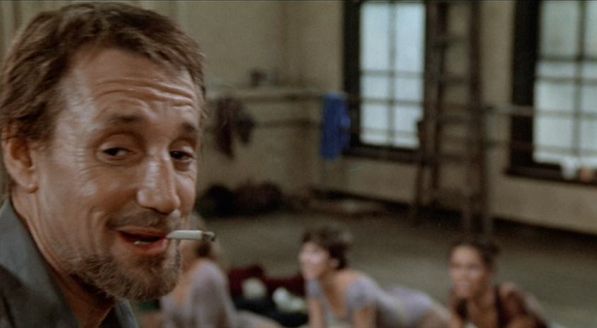
Today’s cinema adventure: All That Jazz, the 1979 feature by Bob Fosse which reinvents the “backstage musical” as a fantasia on death and show business. Framed as a portrait of Joe Gideon, a workaholic director/choreographer whose self-destructive habits sabotage his life and his relationships, the film is in reality a thinly-veiled autobiographical exploration of Fosse himself, documenting his failures as a husband, father and lover, depicting his excessive use of cigarettes, drugs and alcohol, exposing his serial womanizing, and revealing his obsessive dedication to his work as both an escape from and a response to the downward spiral of his personal life. More importantly, it is a vehicle for the legendary director- with the help of co-screenwriter Robert Alan Arthur- to deliver his cynical observations about the entertainment business and its people, and a stylized allegory of his long flirtation with death- personified here by a mysterious, angelic woman in white, with whom Gideon carries on a hallucinatory fantasy dialogue, interpolated with the scenes of his life in the “real” world. Laced with gallows humor, it’s a film which gets most of its mileage from contrasts- between the slick veneer and the seedy underbelly of the world it presents, the syrupy platitudes and the cold-hearted motives of the people who inhabit it, and the self-loathing and the self-aggrandizement that characterize its central figure- and by extension, the director himself. Standing in for Fosse onscreen is Roy Scheider, whose performance as Gideon was derived from first-hand observations on the set, and provides a highly truthful and sympathetic representation of a man, weary from a lifetime of literally and figuratively “putting on the show,” who is so jaded and hollow that he is unable- and unwilling- to distinguish truth from illusion. The ethereally beautiful Jessica Lange provides a chilling blend of seduction and sincerity to her embodiment of the angel of death, lending real emotional weight to the prospect of a final embrace; and the remainder of the cast- which includes some of Fosse’s own paramours as some of Gideon’s, as well as a sizeable collection of real-life Broadway performers portraying various denizens of the show biz circus that surrounds his life- do a superb job of capturing the authenticity of Fosse’s world. Of course, the real star of this mix of cold reality and Fellini-esque fantasy is Fosse himself- for as elaborate as the film’s dramatic structure may be, it serves primarily as a framework for numerous displays of his legendary gifts as a choreographer, captured by the first-class cinematography of Guiseppe Rotunno and performed by practitioners well-versed in his distinctive style by years of first-hand experience. These range from the breathtaking and justly famous audition montage which opens the film, to the erotically-charged airline number with which Gideon shocks and dazzles his producers, to the macabre hospital hallucination sequence featuring Busby Berkely-style feather dancers, to the culminating jazz/rock fantasy that serves as a grand finale for both the film and its protagonist’s life. Whatever unique insights may be offered by Fosse’s look at his own psyche, the foremost value of All That Jazz comes from these dance sequences which offer perhaps the quintessential representation of his iconic style on film. For many viewers, the highly theatrical, stylized conceit upon which the film hinges may seem too heavy-handedly symbolic, but it must be remembered that Fosse is not attempting to present a universal picture of humanity and death, merely his own personal take derived from a lifetime of channeling reality into fantasy; and if the self-observations he presents ultimately seem, despite their seemingly brutal honesty, to be just one more level of show-biz B.S., his perspective on himself acts as a microcosmic illumination of the dangers and demons of the creative personality, and as a warning to avoid the pitfalls which he so whole-heartedly embraced.
Welcome to My Cinema Adventure!
I’ve been writing movie reviews ever since I was old enough to use a typewriter (yes, they had those back then). I’ve done a lot of things in my life, and worn a lot of hats, but the one thing that has never changed is my love of movies- and my love of telling people what I think of them. So that’s what this is about: a chance for me to share that love with the world, or at least that part of it that is willing to check in here and see what I’ve got to say. Here you will find my take on a wide variety of movies, from classics to modern big-screen blockbusters. I don’t play favorites or focus on a particular genre. Anything on film is fair game. I welcome your feedback and I hope this is the beginning of a beautiful blog-ship.