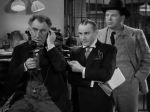
Dark Shadows (2012)

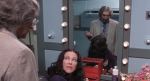
Today’s cinema adventure: Dark Shadows, the 2012 big screen adaptation of the classic 1960s supernatural soap opera of the same name, directed by Tim Burton and starring a gallery of players comprised of both frequent collaborators (most notably, of course, Johnny Depp) and high-profile new faces.  Taking its basic premise and most of its characters from the original series- a low-budget affair, created by Dan Curtis, with an enormous cult following which thrives to this day- Burton’s film capitalizes and expands on its camp value, and uses it as a vehicle with which to blend his own trademark sense of macabre humor into a nostalgic revisitation of the early ’70s era in which it is set and a tribute to the gothic horror cinema with which he grew up.  Long-awaited and much-anticipated, its box-office take was respectable despite the impact felt from direct competition with The Avengers, but it met with disappointed reactions from critics and audiences alike, despite its high production values and the popularity of its director and his quirky leading man.

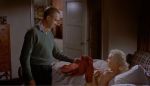
Though using the television original as a source for its basic scenario, the screenplay (penned by Seth Grahame-Smith from a story developed with John August) veers from the details of its episodic plot in favor of a more-or-less self-contained storyline, making several significant changes in the process.  The film begins with a prologue in which the background is laid for the ensuing events; in 1760, the wealthy Collins family emigrates to America, expanding their commercial fishing empire to the coast of Maine and building a majestic estate surrounded by a thriving seaport town- named Collinsport in their honor.  However, the family’s young scion, Barnabas, runs afoul of a household servant, Angelique, by spurning her after a brief dalliance; secretly a witch, the jilted girl avenges herself by cursing the Collins family, killing Barnabas’ parents, bewitching his fiancée to suicide, and transforming him into a vampire.  She then exposes him to the town as a monster and persuades them to bury him alive, dooming him to endure a solitary eternity with the memory of his loss.  The story then flashes forward to 1972; the town of Collinsport still thrives, now sustained by a rival fishing empire founded by none other than Angelique, who has used witchcraft to sustain her own immortality.  The Collins estate still stands, inhabited by the family’s last dysfunctional descendants: Elizabeth Stoddard, the stern but determined matriarch; her sullen teen-aged daughter, Carolyn; her ne’er-do-well widower brother Roger Collins; and his troubled young son, David, who insists he can see and talk to the ghost of his recently-drowned mother.  Rounding out the household are two heavy-drinking outsiders- the boy’s live-in psychiatrist, Dr. Julia Hoffman, and caretaker Willie Loomis- as well as a newly-hired nanny, Victoria Winters, who has a secret past.  These last remnants of the once great Collins brood are surprised by the sudden arrival of Barnabas, inadvertently freed from his two-century imprisonment by the excavations of a construction crew. Despite his monstrous nature, he is still devoted to his beloved family, and vows to help them rebuild their collapsed fortunes and restore the Collins name to its former glory.  In order to succeed, however, he must once again confront the vindictive and powerful Angelique, who still carries a torch for him after all these years, not to mention helping his descendants work through their various dysfunctions while keeping the secret of his vampiric identity and continually trying to come to grips with life in the 20th Century.  To complicate his task further, he finds himself drawn to the lovely Victoria, who stirs in him the memories of his long-lost love.

It might seem, all things considered, that Dark Shadows would be a perfect match for the unique sensibilities of Tim Burton; the director has built an empire of sorts on his peculiar brand of gothic-flavored pop cinema, drawing heavily on influences from past masters of horror while infusing these macabre elements with a distinctively contemporary flair for irony and dark humor.  His visual style mixes the grotesque with the endearing and the arcane with the hip in a way that has become instantaneously recognizable as his own, and his recurring motifs (the focus on abused, disenfranchised characters and their efforts to redress the wrongs they have endured, as well as their need to find emotional connection and the innate humanity often hidden by their outward appearance or outcast status) weave their way through his body of work in a way that further marks him as a true auteur.  He has a way of using his horrific subject matter to express basic and universal emotional values, transforming that which at first seems disturbing into something almost sweet; he has created a niche for himself as a cinematic champion for the social outsider, making movies that invert the formulas of traditional romance and adventure and carry the decidedly life-affirming message that freaks are people too.  With such a background, Burton would appear the perfect candidate for bringing the campy chills of Dark Shadows to life for a new generation, and infusing it with an added layer or two of contemporary perspective in the process.  Unfortunately, the rich potential inherent in this match-up goes largely unfulfilled.

Perhaps the key element in the popularity of Dark Shadows in its original incarnation was its unflinching determination to take itself seriously despite the obviously ridiculous underpinnings of its premise, the banal soap-opera dialogue that often sounded like it was written over the course of a ten-minute coffee break, and the low-budget constraints on its efforts at gothic ambiance; it was never high art, but rather a guilty pleasure.  With Burton’s blockbuster approach, these charms have been subverted: the stone walls of this Collinswood never shake when a door is slammed; and instead of bold-facing its way through discussions of ancient supernatural forces with a deliberate lack of irony, the film treats the entire scenario as fodder for self-aware tomfoolery.  It’s understandable, even wise, that Burton and his team would take this approach; to recreate the intangible air of somber goofiness that marked the original series would likely be impossible by deliberate effort, particularly in the more sophisticated cultural environment of 2012.  The problem is that somehow, despite the impressively crafted visuals and the considerable talent of its star-powered cast, Burton’s film seems sillier and, well, much more pointless than it should.  Though some effort was made to recreate the soapy format, at least in the dialogue-driven scenes, and in spite of the obvious reverence in which Burton et al. hold their source material, this effort to bring Barnabas Collins and his broken clan into the flashy present feels bogged down by an inability to mesh the heavily comic reinterpretation into a compelling story; the thematic elements on which the plot is based seem all-too-familiar (especially for Burton) and the key story developments seem perfunctory, as though the script were put together strictly by formula- which, of course, it probably was.  In the absence of any real weight in the narrative, all that remains are character development- sadly botched by the script’s cartoonish approach, which gives us caricatures drawn with broad strokes (despite the solid work of the actors) and leaves us confounded by their actions, which seem motivated by the needs of the plot rather than based on any semblance of inner logic- and the heavy reliance on comedy, mostly derived from the juxtaposition of an 18th-Century dandy into 1970s culture, as well as the nostalgic kitsch that comes from the recreation of this 40-year-bygone era.  Dark Shadows is full of jokes, but since the majority of them are centered on Barnabas’ culture shock and inability to adapt his mindset to the modern world, it feels like the same one, endlessly repeated.  This is not to say there are no laughs here- at times the magic formula does work- but they are few and farther between as the film moves towards its predictably spectacular finale.  Similarly, the gothic creepiness which is so integral a part of the world of Dark Shadows– both here and in its former life- is layered on with all the expected excess and Burton-esque flair, but no matter how many visual nods are thrown in the direction of the Hammer horror classics, the whole atmosphere more closely resembles the tongue-in-cheek faux-spookiness of Disney’s Haunted Mansion.  In other words, a contemporary reboot of this franchise could have been either funnier or scarier than the original, or better yet, both; but this film is neither.  To the director’s credit, although much of the film falls flat, it never seems to be disingenuous; though screenwriter Grahame-Smith’s efforts may lack sincerity, Burton’s translation of them to the screen does not.  Unfortunately, his good intentions are not enough to make Dark Shadows into the movie it deserves to be.

That said, it should be observed that there is plenty of exemplary work on display here.  Even the critics who were harshest with Dark Shadows were lavish in their praise for its visual style, drenched with Burton’s usual synthesis of Grand-Guignol-goth and candy-coated pop art.  He has gotten so good at creating this kind of pseudo-horrific spectacle that it no longer thrills or delights us with quite the morbid wonder evoked by Beetlejuice or Sleepy Hollow, despite the added polish that has come with an increased budget and the advancement of CG technology.  Indeed, one almost takes it for granted in Dark Shadows, which is a mistake the savvy viewer should avoid; the intricate and imaginative design and execution of the Collinses world is the one unqualified delight of the film, and the recreation of the early ’70s setting which is woven into the gothic visual tapestry adds an extra layer of flavor- and one which manages to be heavily definitive without resorting to over-the-top parody.  Aiding in this sense of heightened authenticity is the saturated cinematography by Bruno Delbonnel, who based his work, to great advantage, on the look of actual films of the era.

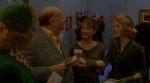
As for the cast, it has already been mentioned that they do exemplary work, despite the weakness of the material.  There are standouts among them: Michelle Pfeiffer, who comes closest to recreating the style of the original series as Elizabeth, underplaying her melodramatic dialogue like the pro that she is; Chloë Grace Moretz, a young actress with a remarkably mature talent that appears to be propelling her into the status of bona fuse stardom, as the snarlingly rebellious Carolyn; and Jackie Earle Haley, as Willie the Caretaker, whose unfazed, deadpan persona adds a much-needed earthiness to the proceedings.  The others are less memorable, even the beautiful Eva Green (as the venomous Angelique), simply because their roles require little of them beyond the one-dimensional functions they are assigned by the screenplay, but to their credit, none of them come off badly for it.  There are a few interesting cameos, as well; iconic horror star Christopher Lee makes another Burton appearance as a salty old sea dog; seminal shock-rocker Alice Cooper plays himself, hired to perform at an elegant ball thrown by Barnabas and looking agelessly like his own four-decade-old persona; and as guests at the same ball, original Dark Shadows cast members Lara Parker, David Selby, Kathryn Leigh Scott and Jonathan Frid- the original Barnabas, who would, sadly, pass away shortly before the film’s release- pay a fleeting visit, being greeted at the door by a beaming Johnny Depp.

And what of Mr. Depp himself?  This charismatic screen chameleon has acquitted himself admirably in no less than 8 films with Burton, indeed becoming virtually the face of the director’s work, as much a part of his milieu as the sinister subject matter; in these appearances, as with most of his other work, he has displayed a gift for making the offbeat quirks of his characters into utterly convincing extensions of his natural personality, using imagination, intelligence and honesty to give these oft-cartoonish figures an unmistakable ring of truth.  Popularity notwithstanding, he is a vastly underrated actor, capable of remarkable range, who augments and enhances virtually any film in which he participates.  His performance as Barnabas Collins, though it certainly lives up to his usual standards, is a bit of a letdown.  It’s not that he is any less committed than usual- indeed, he exhibits a clear relish for the part, no doubt a result of his long-standing wish to play it- but that, once more, the script falls short of the mark.  Though Depp infuses his over-the-top mugging with his customary connection to truth, allowing us to believe in this unlikely character as more than a cipher in an extended skit and even making him likable enough to care about his ultimate fate, his Barnabas is ultimately a hollow spectacle, an exercise in comic acting that lacks a solid core; he plays the character to a tee, but in the end, thanks to the formulaic writing, he has made no inner journey.  He, like all the other characters, has simply reacted to each plot development without growth or change, which makes our wish for his ultimate success more of a reflex in response to the conventions of the narrative than a result of any real connection to the character.  It might be argued that this is the nature of true melodrama, which concerns itself with outward events rather than inner truth, and is therefore apropos for a film that is, after all, based on a soap opera; nevertheless, it hardly allows for a truly engaging experience, resulting instead in an entertaining but noticeably shallow diversion that seems to drag on interminably despite a relatively short running time.  Depp’s performance, as the centerpiece of the film, is just the clearest representation of the singular flaw that prevents Dark Shadows from ever truly drawing us in: a lack of any real purpose to propel it forward, making it feel, in the end, like an overlong pageant instead of an engaging story.

I wanted to like Dark Shadows.  I wanted to very badly, and I had high hopes for it because Tim Burton is, for my money, a truly great filmmaker; his work has an audaciously subversive glee that makes even his most commercial projects feel edgy, and even if many of his biggest films are ultimately less than the sum of their parts, he has an impressive track record that will surely leave him, in the final analysis, standing firmly in the pantheon of cinematic masters.  That said, his very best work seems to occur when he veers away from his most characteristic material, in films such as Pee-Wee’s Big Adventure, Ed Wood, Big Fish, and Sweeney Todd, the Demon Barber of Fleet Street, flavored with his particular style but ultimately informed by another sensibility and governed by a different set of rules.  Dark Shadows, though it was originally spawned by another mind than his own, is nevertheless a quintessentially Tim Burton film, and bears his own unmistakable stamp.  It’s not a bad movie, by any means; it’s at least moderately entertaining, though unlikely to elicit any strong reactions of either fear or laughter, and it is certainly good-natured enough to be forgiven for not quite living up to its potential.  What is troublesome about Dark Shadows is that it could have been great- should have been, even- but it was defeated before a single frame was captured on film.  No matter how talented its director, how masterful the designers and artists who bring it to the screen, or how brilliant its players, a movie with a mediocre script will never be better than a mediocre movie.  This is, of course, a problem as old as movies themselves- countless would-be classics have been sunk by incompetent writing- but it is particularly upsetting when artists of this caliber fall prey to the trap.  Both Burton and Depp pursued this project, and it was a labor of love for them from beginning to end- how then, could it go so wrong?  Perhaps it was, after all, their affection for the material that tripped them up, blinding them to the faults of their film with false confidence in the notion that such a seemingly natural match of artists with their material could not help but succeed.  Whatever the reason, it was an artistic miscalculation, for Dark Shadows is probably the pair’s most easily forgettable joint effort, and Burton’s least effective film since his abysmal remake of The Planet of the Apes.  From a financial standpoint, however, despite its less-than-hoped-for success at the box office, the sure-fire formula still netted both men- and the studio- a considerable amount of money, leading to the most disturbing suspicion of all- that Hollywood greed overrode artistic aspiration, as it so often does in the film industry, denying us all the joys of the Dark Shadows movie that might have been.

http://www.imdb.com/title/tt1077368/

A Mighty Wind (2003)


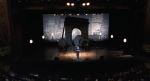
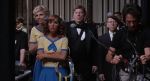
Today’s cinema adventure: A Mighty Wind, the 2003 “mockumentary” feature by master-of-the-genre Christopher Guest, following the efforts to reunite several legendary folk-music acts for an impromptu concert paying tribute to their recently deceased producer.  With several characters developed from an earlier appearance on Saturday Night Live and songs penned mostly by the principal cast (along with Annette O’Toole, wife of frequent Guest collaborator Michael McKean, and C.J. Vanston, the film’s music director- who also appears), it received mostly positive response from critics and moderate success with the public, though it failed to achieve the popularity of Guest’s previous effort, Best In Show– possibly because of its focus on a less universal interest (folk singers are not as much of a draw as fanatical dog owner, apparently) and its more serio-comic tone.  Nevertheless, it has achieved a substantial cult following, alongside Guest-and-company’s other films, and together with these has exerted a visible influence in the creation of a whole new pseudo-documentary style for popular entertainment- particularly on television where successful shows such as Modern Family can be clearly seen as an outgrowth of this genre.

The script for A Mighty Wind, as with all Guest’s movies in this style, was generated through improvisation by its stellar cast, which is comprised almost entirely of veterans from the director’s stock company of players.  When pioneering folk-music impresario and producer Irving Steinbloom passes away, his three children- spearheaded by the fastidious and über-cautious Jonathan- organize a televised memorial concert to be performed at New York’s famous Town Hall; featured will be three of their father’s most famous and beloved acts, two of which have been long-disbanded.  The New Main Street Singers are the latest incarnation of a “supergroup” which once dominated the folk scene, now touring the County Fair circuit and headed by husband-and-wife team Terry and Laurie Bohner, with a sizable lineup which includes the minimal participation of only one original founding member; The Folkmen, an acoustic trio comprised of the relatively good-natured Mark Shubb, Alan Barrows, and Jerry Palter, are enthusiastic about the challenge of returning to the stage to and pleased to be performing together after decades apart; the most eagerly anticipated reunion, however, is that of Mitch and Mickey, a ballad-crooning duo whose starry-eyed connection fueled a successful career in which they captured the idealistic imagination of a generation of fans- and which collapsed along with their romance, leaving Mitch a burnt-out, drug-addled  has-been and Mickey the discontented middle-aged housewife of a medical catheter salesman.  As the date of the concert approaches, the various participants offer a behind-the-music look at their personal and professional lives, revealing both the expected clichés of the musical genre and a few not-so-typical surprises- including adult film careers, bizarre cult affiliations, and gender-identity issues- along the way; but the most pressing concern is whether or not Mitch and Mickey can overcome their long-unresolved passions and resentments to recapture the former magic of their collaboration- and indeed, whether they will make it to the stage at all.

The first and foremost objective of A Mighty Wind, of course, is to amuse; beginning with his involvement in Rob Reiner’s This Is Spinal Tap– the grand-daddy of all “mockumentaries,” and a classic that maintains an enormous fan following to this day- Guest has mined comedy gold by sending up the foibles of odd little social niches- small-town community theater in Waiting for Guffman, competition dog breeders in Best in Show– with shrewdly observational explorations of their rarified worlds.  A Mighty Wind is cut from the same cloth as his earlier efforts, and it mercilessly attacks its target with just as much relish.  The folk music movement of the early sixties was marked not only by the militant political activism of Phil Ochs or the oblique poetry of Bob Dylan, but by the squeaky-clean warblings of such groups as The Kingston Trio and The New Christy Minstrels; in its portraits of the three fictional acts upon which it focuses, A Mighty Wind draws inspiration from all these sources for its parody, but it takes particular glee in its depiction of the extremely white-bread, middle-class sensibility that marks the genre.  These are not the visionary firebrands we might expect from a group of folkies dating back to the pre-hippie days, though there are traces of Dylan and his ilk to be found in the character of Mitch; rather, they are an assortment of more-or-less middle-of-the-road types who seem oblivious not only to the gap between their personalities and the music they perform, but to any of the irony that can be derived from it.  Aside from the New Main Street Singers, who deliberately present an almost sickeningly wholesome image in spite of their bizarre habits and shady histories, these people are more or less exactly what they appear to be, unsophisticated and bland.  They are unquestionably talented- in order for the premise to work, they have to be talented- but their music comes more, perhaps, from imitation than imagination, the pleasant-but-hollow product of a privileged generation trying to emulate the hard-won brilliance of musical pioneers who came before them.  A great deal of the movie’s comic genius can possibly be better experienced listening to the soundtrack album, since the keen musical parodies crafted by the cast beg for our full attention in order to be properly appreciated; even so, in true “mockumentary” fashion, a lot of mileage is gained through “archive footage” of the groups performing in their heyday, along with wickedly satirical photographic depictions of various events, costumes and album covers from the era, most of which evoke memories of real-life personalities and their work.

A Mighty Wind, however, does not depend solely on the easy laughs derived from poking fun of bygone trends in music and pop culture; it also finds a wealth of humor in the well-developed, fully-drawn characters created by its superb collection of comedic performers.  With each outing, Guest’s growing gang of cohorts, comedy legends all, managed even greater dimension in the creation of their characters, making whichever group of off-kilter average folk they happen to be skewering seem more and more fully realized and authentic.  By this time around, the troupe had reached the point of tipping the scales beyond simply lampooning their subjects, resulting in a genuine emotional connection that sometimes brings the story- almost- into the realm of serious character drama.  To be sure, the satirical edge is never absent, but there are moments when heartfelt sentiment emerges with enough strength to transcend the comedic style and unexpectedly strike a more resonant chord.  For the most part, this is reserved for the segments of the film that revolve around Mitch and Mickey, who seem to embody the lost spirit of the sixties, a feeling of youth and unlimited possibility that was soon to be buried and replaced by the worldly cynicism born of disappointment and failure; in the tentative efforts of this broken duo to bridge the gulf between past and present, A Mighty Wind expresses a yearning for lost idealism that cannot help but affect us at a deeper level than the snarky humor that otherwise dominates it.

Whether or not this is a negative criticism depends upon your point of view.  For many fans of Guest’s trademark formula, the crossover into pathos may be too much, an attempt to take the characters as seriously as they take themselves- and, of course, the key connecting theme of all these films, and the source of most of their comedy, is the fact that its characters take themselves far too seriously, investing their storm-in-a-teacup concerns with world-shaking significance and underscoring their own foolishness at every step.  For me, however, the underlying factor which makes these comedies funny- as opposed to hip and snarky- is the humanity with which Guest and his players treat their buffoonish creations.  In their efforts to puff themselves up, these champions of mediocrity enact our own desire to make a mark in the world, to rise above the mundane and often unfulfilling drudgery of an unremarkable life.  By laughing at them, we can laugh at our own occasional pomposity; but because they are also, in the end, so recognizably human in the insecurities and uncertainties that inevitably show through their facades, we can forgive them their self-aggrandizement and, by extension, forgive ourselves for ours, as well.  A Mighty Wind takes this equation one step further; by giving us an assortment of throwbacks to an earlier era, one at once more naive and more promising than our jaded present day, it sets up a sort of reflection on our entire cultural identity, with all its irony-laced sophistication, and its collective longing to believe in itself again- even if it’s just for a moment.

I don’t want to make it sound, however, like A Mighty Wind is one of those feel-good comedies that wins our attention with laughs and then degenerates into pseudo-heartfelt preciousness.  Guest and his compatriots ensure that they never even come close to that boundary, simply by virtue of their entirely honest approach to the characters.  There are no scenes of forced emotional climax; the epiphanies take place between the lines, without comment, and become part of the landscape on which further developments are built.  Nor does the film present some false fable of life-changing redemption, comic or otherwise.  The final scenes make it clear that whatever may have happened during the adventure of the concert, these people will continue to lead a life on the fringes, still seeking- though perhaps with renewed vigor- to grab another moment in the sun by whatever means necessary, no matter how ridiculous; and we love them all the more for their determination to go on trying, even though we may giggle at the absurdity of their attempts or feel a bit embarrassed for them over the indignities to which they stoop in their quest.  Still, whereas in previous outings we only shake our heads and dismiss these further shenanigans with bemusement, in A Mighty Wind, thanks to the genuinely sympathetic insight we have gained into at least some of these loony losers, there is a pang of wistful regret added to the mix that creates a distinctive sense of melancholy.  It’s not a bad thing, in my view, for even if the movie lacks the outright hilarity of Guffman or Best in Show, it stays with us in a way those previous gems do not, and the stronger emotional connection it makes leaves us feeling all the more satisfied.

Whether or not you respond to the way Guest’s film strives for more legitimacy through its forays into tenderness, it is undeniable that the work of the ensemble has here reached a new level of brilliance.  Each character, no matter how small, is invested with a sense of complete life, contributing indispensably to the overall picture presented by the film.  The front lines are manned by the performers taking on the personae of the musicians.  Michael McKean, Harry Shearer and Guest himself are The Folksmen, giving the workmanlike trio an unrelenting aura of positivity that may occasionally be strained but is never forced, making them a sort of flip side to their trio of heavy metal rockers in Spinal Tap; foremost amongst the New Main Street Singers are John Michael Higgins and Jane Lynch as the headlining Bohners, who give the pair a comically unsettling aura of sexual ambiguity and deep dysfunction under their slick-and-shiny patina of professional cuteness, with Parker Posey adding her own touch as a former-delinquent-turned-group-member who exudes the vacuous zealotry of a brainwashed teenage cultist; and giving the film its heart- while still providing mordant commentary through their keenly-observed  performances- are the incomparable Eugene Levy and Catherine O’Hara, as Mitch and Mickey, respectively.  These latter two take their improv-built characters to a depth and fullness that rivals those in any conventional screenplay, layering them with a kind of subtext and dimension that makes us forget these are not real people on the screen. Levy brilliantly exudes the aura of the intense, visionary and antisocial poet, seething with all the charisma that entails, until he opens his mouth to reveal his true nature as an inarticulate, fatuous burnout whose emotional and social maturity seems to have ceased developing circa 1965.  It is O’Hara, though, who steals the show with her remarkable portrayal of Mickey, the sensible and pragmatic housewife who finds the dreams of her youth- and her passions for the love of her life- are reawakened by the chance to relive her gone-but-not-forgotten glory days.  She alone, of all these misfits, defies ridicule; she is foolish, yes, and caught up in an illusion as much as any of the others, but she is also eminently likable in her blend of down-to-earth simplicity and mature sophistication, and we find ourselves hoping alongside her that the promise of her past can at last come triumphantly to fruition.  It’s a forgone conclusion that it won’t, at least not in any lasting way, but O’Hara’s complete and sincere commitment to the role allows us to fool ourselves just as willingly as Mickey does, and her inevitable disillusionment is ultimately perhaps more heartbreaking for us than it is for her.  It’s a transcendent piece of acting, by any standards, and together with her old SCTV cohort Levy, she makes A Mighty Wind as poignant a portrait of unrequited longing as any “legitimate” Hollywood romance.

Other fine performances come from stalwarts such as Bob Balaban (as the anal-retentive Jonathan Steinbloom, who along with Michael Hitchcock as a Town Hall event coordinator provides the movie’s biggest laugh-out-loud moment), Fred Willard (as a leering and embarrassingly tacky  sitcom-has-been-turned-agent), Ed Begley, Jr. (as a public television executive of Jewish/Scandinavian descent), and the scene-stealing Jennifer Coolidge (sporting a ridiculously unplaceable accent as possibly the stupidest P.R. agent in history).  Making the cast’s contribution even more impressive, of course, is the fact that those impersonating the musicians not only wrote the movie’s musical selections, but also played and sang them, in some cases teaching themselves the necessary instruments.  The result, as noted above, is a collection of songs that are not only wickedly hilarious but are as infectious and memorable as the ones they so cleverly mock; indeed, Mitch and Mickey’s signature hit (which plays a key role in the story) is so authentic that it stands on its own, without irony, and received a nomination for Best Song at the Academy Awards; and the film’s title tune (with its brilliant lyric, “A mighty wind is blowin’ […] it’s blowin’ peace and freedom, it’s blowin’ you and me”) was actually awarded a Grammy for Best Song Composed for a Movie.

In this prodigious display of talent, its easy to overlook the contributions of the film’s director.  Guest- in addition to his subtly hilarious turn as the vaguely dim-witted, Garfunkel-haired, fuddy-duddiest third of The Folksmen-  humbly provides his skills as a guiding hand; much of his genius rests in his willingness to turn his collaborators loose in front of the camera and let them work their magic, but his ability to piece together a finished result cannot be underestimated.  He shapes a coherent, intelligent, touching and hilarious narrative out of what must have been hundreds of hours of footage, and A Mighty Wind is a testament to his patience and dedication as much as his sense of humor and his talent- both behind and in front of the camera.

As with all of Guest’s films, appreciation for A Mighty Wind is dependent on a number of factors.  A taste for satire is required, as is a fondness for dry humor and an enjoyment for both “high” and “low” comedy; it certainly helps to have at least a passing knowledge of whichever insular world on which he has chosen to turn his focus.  Those without exposure to the history or conventions of folk music may find little amusement in A Mighty Wind, just as those who have never seen a small town theatre production may not “get” Waiting for Guffman.  For those “in the know,” both films are funny; but whereas Guffman (and Best in Show, for that matter) has a tendency towards an almost mean-spirited ruthlessness in its approach, this time around, the Guest Gang seems to have mellowed; not that they have lost their edge, but perhaps they have softened it.  There is a fondness for the people of A Mighty Wind that seeps into us as we watch, bonding us to them in a way we could never achieve with, say, Corky St. Clair of Guffman; these characters become a part of us, and seem as real to us- perhaps more so, in fact- as the true-life musicians that inspired them.  Furthermore, because the film’s humor- and its pathos- is based more in its characters than on its subject matter, A Mighty Wind might just be, despite the relative obscurity of the milieu in which it dwells, the most accessible of these movies.  At any rate, it certainly touches on a more universal nerve than any of the others, and does so in a way that is both touching and faintly unsettling, like a wistful reminder of a mark we once made for ourselves as a culture- and a remonstration for having fallen so far short of it.

http://www.imdb.com/title/tt0310281/


Far From Heaven (2002)

Today’s cinema adventure: Far From Heaven, the 2002 drama by writer/director Todd Haynes, which revisits the high-gloss style of late-1950s Hollywood melodramas in order to tell a story of social prejudice and dirty secrets surrounding an ideal, picture-perfect family in mid-century suburbia.  Acclaimed by critics and nominated for scores of awards, it represented Haynes’ breakthrough as a top-level filmmaker and brought him his greatest commercial success to date.  Particularly notable for its visual style- including radiant cinematography and meticulously realized period details- and the performance of Julianne Moore in the central role of a housewife whose ideal life begins to crumble around her, it is also considered an important breakthrough in the acceptance of independently produced films in the mainstream industry and something of a milestone in the continuing struggle to include gay and lesbian subject matter in movies aimed at a wider audience.

Set in the suburbs of Connecticut in 1956, Far From Heaven tells the story of Cathy Whitaker, a model housewife and mother in a seemingly perfect upper middle-class home.  Her marriage to Frank, a successful sales executive, is happy and fulfilling, and she is a prominent member of the town’s well-to-do women’s social circle.  She enjoys a blissfully elegant existence in her fashionable home, tended by Sybil, a black maid whom she treats- more or less- as an equal; the only aspect of her life that is less-than-ideal is the fact that Frank’s long hours at the office increasingly keep him away from home well into the night, but she is understanding and supportive of his efforts to keep his family well-provided-for.  One evening when he is again stuck at work, Cathy decides to surprise her husband by bringing him a dinner plate from home; when she arrives, however, it is she who receives the biggest surprise, for she discovers Frank locked in a passionate kiss with another man.  Later, at home, her deeply mortified husband haltingly admits to her that he has had “problems” in the past but until recently has believed himself to be over them.  He agrees to see a psychiatrist and undertake therapy to “cure” him of his homosexual impulses.  Nevertheless, as time passes, his refusal to discuss his ongoing treatment and his increasing emotional absence from their relationship- as well as his noticeably heavy drinking- begin to take their toll on their marriage; meanwhile, she finds an unexpected connection with her new gardener, Raymond, an educated black widower struggling to raise a daughter on his own.  As their friendship develops, however, Cathy’s society friends begin to take notice, and she finds herself being shunned for crossing the line between races- an unacceptable social taboo which results in the ostracism of Raymond within his own community, as well.  Facing condemnation from her former friends, no longer sure of her marriage, and growing to recognize the previously unthinkable truth about the nature of her feelings for Raymond, Cathy finds herself isolated and increasingly disillusioned by the hollow facade of her so-called perfect life, but in order to preserve her family she must make the difficult choice between following her own heart or conforming to social expectations.

Haynes, known for his highly stylized approach to filmmaking, wrote Far From Heaven as both a tribute to and a reinvention of the lavish domestic melodramas of the late 1950s, popular films which often featured controversial social issues as complications in their stories of idyllic middle-American life.  In keeping with this, his screenplay features the kind of artificial-sounding, slightly over-the-top dialogue found in these slick documents of mid-century morality; but he has updated the subject matter, throwing the spotlight onto the kind of issues that- though deeply pertinent in that age of prosperous conformism- were too hot to handle for film studios still bound by a decency code that prohibited depictions of anything outside the accepted social “norm.”  Consequently, Haynes has made a sort of “what if?” scenario come to life with Far From Heaven; he has painstakingly crafted a film that recreates the look and feel of those he is emulating, but which directly addresses the pertinent issues which could only be hinted at during the era in which they were made.  In other words, he has made the movie that many filmmakers of the time doubtless wished they could have made, but were simply unable.  Mining most specifically from the work of Douglas Sirk, whose big-screen soap operas, particularly All That Heaven Allows and Imitation of Life, provide the inspiration and the model for Far From Heaven, he peels off the layers of coded euphemism and sugar-coated insulation to reveal the ugly specter of prejudice at the heart of this pretty-picture existence.  In the suburban diorama he presents, the real emotional landscape beneath the pristine and well-ordered surface is made visible; he gives us a world where deviation from the accepted mold is a source of deep shame and scandal, where a “real man” believes that having sexual feelings for his own gender must be a psychological disorder, and where a woman’s friendship with her black maid is seen as admirably progressive but socializing in public with a black man is an affront to decency.

Haynes’ direction is impeccable; he lovingly conjures the form and substance of his chosen genre with absolute accuracy, and yet infuses the whole with his own particular style, subtly edgy and highly contemporary.  There is an eye towards the use of symbolism- Frank’s job is selling advertising and his company’s own marketing features a portrait of himself and his wife in the comfort of their ideal modern home, underscoring the theme of presenting an artificial image for public consumption, and there is a frequent presence of mirrors and other sources of reflection or visual duplication- but these elements are present mostly to support a more direct communication of his themes, revealed through his dialogue and his storytelling.  The outward form of his film adheres to the cinematic language of the movies by which it was inspired- the familiar standards of visual composition, leisurely tracking shots, slow cross-fades or blackouts between scenes, tilted camera angles to indicate that the world is slipping out of balance- without the use of more modernistic techniques such as rapid cutting or varying film speeds; one of Haynes’ most prominent traits as a filmmaker is his gift as a stylistic mimic, and he uses it to great advantage here.  His deep understanding of the milieu in which he is working permits him to utilize its techniques in the service of his personal vision- an expression of the painful longings buried within this bygone era, and a reminder that, sanitized nostalgia aside, the simpler times so fondly remembered in the popular imagination were rife with hypocrisy, ignorance, fear, and heartbreaking dysfunction.  More importantly, by presenting so clearly the outdated mores of the past, Haynes shows us not only how far we’ve come, but also- somewhat discomfortingly- how far we have yet to go.  In observing the attitudes toward race and sexuality variously represented by the characters in the film, we are forced to examine our own relationship with these questions; we are not so far removed from a time when gay bars were hidden establishments behind an unmarked door in an alley or when interracial couples were not free to appear in public together, and the mistrust and prejudice surrounding such matters are still a nagging blot in the heart of our cultural identity.  Though our own world may be a little closer than the one shown here, it is still, for too many of us, “far from heaven.”

The conceit of making a neo-Sirk melodrama, in less ambitious hands, might have resulted in a pale shadow of the original luster undeniably present in those earlier films, but Haynes takes it very seriously, and he takes it all the way; Far From Heaven is built like a piece of retro-fitted classic architecture, incorporating modern advancements into a structure made from the original raw materials and designs.  The film was shot using with contemporary camera equipment, but utilizing the same lens filters and incandescent lighting that would have been employed in the 1950s, allowing cinematographer Edward Lachman to provide a luminous authenticity that perfectly captures the look of the period.  Haynes also worked extensively with his designers to develop a color palette that matched the flavor of the era, infusing the sets and props with a rainbow of pastels and deep hues that likewise encapsulates the sensibilities of the time; most noticeable, perhaps, are the costumes of Sandy Powell, whose stunning designs incorporate not only the colors and lines of ’50s fashion, but the fabrics and textures as well, giving Far From Heaven a sense of realism that is often missing from such period films, which all too often look like an affected caricature of their era rather than a genuine expression of contemporaneous tastes.  To complete the illusion, Haynes went so far as to enlist the great film composer Elmer Bernstein, whose music graced many of the most well-remembered movies of the actual period, to write the score; his lush orchestral accompaniment lends an unmistakable air of authenticity to the proceedings, as well as voicing the passion, the yearning, and the menace inherent in the story.  It was to be Bernstein’s final work- he passed away shortly after completing it- but it stands as one of his finest.

Just as he takes the outward form of his project seriously, Haynes is careful to maintain its inner integrity; here again, he differentiates Far From Heaven from the countless other movies derived from mid-century sensibility by choosing to treat it without the irony that so often pervades contemporary takes on the period.  It is true that the film’s imagery often includes signage or other items which offer subtle commentary on the action or subtext, but this is irony in a different, more literary sense, an artistic device used extensively by directors dating back to the earliest days of cinema and thoroughly in keeping with the style of the actual works the filmmaker emulates.  To avoid inserting contemporary attitudes and judgments into the piece- particularly considering the use of stylized, melodramatic language in the movie’s dialogue- requires a delicacy and skill in the way it is handled by its players, an almost theatrical need to affect a heightened artifice without being disingenuous; one of the greatest blessings of Far From Heaven is that it has a superb cast that is more than equal to that challenge.  It almost goes without saying that the film’s star, the always-glorious Julianne Moore, gives a sublime performance as Cathy, offering up an utterly captivating journey from precious naïveté to worldly disillusionment; her embodiment of Donna Reed perfection is utterly sincere, and yet she gives us a glimmer of the more complex soul that emerges throughout the narrative, as she gradually pares away the layers of socially conditioned conformity to reveal the mature, fully aware woman she has become by the bittersweet final scene.  A more surprising and revelatory performance, however, comes from Dennis Quaid, as husband Frank; always a solid and dependable presence, the actor here breaks from all expectations- while simultaneously using them to great effect- with his portrait of a gay man trapped into the respectably straight, cookie-cutter existence dictated by convention; his exaggeratedly gregarious joviality rings no more false than that of any of his colleagues or cohorts- their world, after all, is a place where a show of male emotion is a sign of weakness and crippling imperfection- but when he is alone, his torment and shame are palpable, seething from within and racking his entire being.  His struggle is all the more painful to watch because his role in the story is that of the unfaithful husband, failing in his duty to home and family because of what his society deems a moral failing, and we as an audience are conditioned to disapprove of his behavior and his choices; Quaid plays it with absolute integrity, forcing us to confront our own preconceived notions by showing us the ugliness of his anger and resentment- but also making it clear that they arise from the conflict between his true nature and his protective mask.  Because he resists the temptation to soften his portrayal by playing for our sympathy, the unfolding emotional wreckage rings completely true, eliciting audience empathy far more than any forced Hollywood sentimentality could manage to do; his scene with Moore following the revelation of his secret shame- a choked, mutually humiliating exchange of faltering half-sentences and defensive body language- is one of the most devastating depictions of a breaking relationship in recent screen memory, and the understanding each actor has for their character in these moments allows us to feel the pain of both throughout the rest of the movie.

Though Far From Heaven ultimately belongs to its two stars, the remainder of the cast is equally superb.  Dennis Haysbert as Raymond brings a refreshingly genuine aura of class to his portrayal of a confident, kind, and sophisticated gentleman, determined to live as he deserves despite the social dictates that surround the color of his skin- though thanks to his later role as the television spokesman for Allstate, it’s sometimes hard to watch him without thinking of insurance.  Patricia Clarkson, as Cathy’s best friend and confidante Eleanor, tackles the delicate and thankless task of providing a sympathetic foil for Moore while having, ultimately, to represent the well-meaning but narrow-minded hypocrisy that permeated the time; she acquits herself admirably, making her character understandable, if not quite sympathetic.  Viola Davis, in an early role as Sybil, Cathy’s maid, has little to do beyond adding her quietly dignified presence to the proceedings, but she does so with grace and charisma, managing to make a strong and eminently likable impression with a minimum of spoken lines.  Finally, mention should be made of James Rebhorn, as the psychiatrist from whom Frank seeks “conversion” therapy, who has a memorable turn in his single scene; also resisting the urge to play a stereotype he presents the good doctor as friendly, kind and professional, a sympathetic- if inscrutable- figure who offers at least the suggestion of a more progressive attitude towards alternative sexuality.

Far From Heaven was a critical darling upon its release, and garnered more than 100 nominations for film awards worldwide, including 4 Oscars.  With its reverent use of classic filmmaking style and technique, it’s easy to see why critics and film scholars would find it so rewarding, and much of the praise and commentary it has generated has been centered on this aspect of the movie; but for those less interested in cinematic heritage than with entertainment value, does it provide a worthwhile time investment on its own merits?  The answer is a resounding yes; Haynes use of the classic mise-en-scène is geared entirely towards making an intelligent, modern film with a compelling, thought-provoking story, and the work of its cast and crew is never anything less than top-notch.  Whether or not you have knowledge or experience of the Sirk-ian ’50s tearjerkers from which it is derived, it is a beautiful film to look at, and even those who normally disdain weepy melodrama will find its approach to be restrained and dignified, devoid of the hokey manipulation that so often mars such stories.  Perhaps its greatest importance lies, however, in the snapshot it gives of a time and place in our not-too-distant past, when a dominant culture was freely allowed to discriminate and disenfranchise those who cannot conform to its carefully-guarded status quo; it’s a reminder of the human cost of hate and ignorance, and a warning to those who take for granted the social advancements of the past half-century- as well as an indictment against the all-too-many in today’s world who still cling to the outdated views of the not-so-golden past.  On a less profound level, it is also a gift for the legion of social “outsiders” who, like its director, grew up loving the movies to which it pays homage, and longed for one that spoke directly to the concerns pertinent in their own lives; Far From Heaven is that movie, and thanks to Todd Haynes, it is everything we could have hoped it would be.

http://www.imdb.com/title/tt0297884/

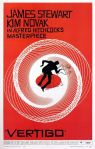
Vertigo (1958)

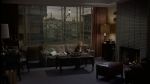
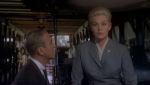
Today’s cinema adventure: Alfred Hitchcock’s Vertigo, the 1958 psychological mystery that recently replaced Orson Welles’ Citizen Kane in the #1 spot on Sight and Sound Magazine’s influential once-a-decade list of the best films ever made. Initially considered a disappointing entry to the Hitchcock canon, at the time of its release it received mixed reviews and barely broke even at the box office- an exception to the usual popularity and success enjoyed by the director’s films. Though Hitchcock himself cited it as one of his personal favorites among his films, it remained largely ignored by his admirers, even during the major reevaluation of his work by a new generation of critics that recognized the director as a true cinematic artist instead of merely a maker of popular entertainment. However, when it was withdrawn from circulation in the 1970s (along with four other titles for which Hitchcock had bought back the rights, intending them as an asset to be passed to his daughter upon his death), its reputation soared, and when it once again became available in 1983 it enjoyed a highly successful theatrical re-release and sweeping critical acclaim. In ensuing years, it has been cited by many as Hitchcock’s masterpiece (a view clearly held by the critics who vote in the Sight and Sound poll); but dissenting voices have argued that it is a flawed, over-rated, self-conscious exercise in pure technique, lacking the director’s usual polished storytelling and sense of humor. In view of this controversy (renewed and exacerbated by its recent promotion to the coveted #1 spot) I couldn’t resist the opportunity to chime in with my assessment- particularly given my own fascination with and appreciation for the work of Hitchcock, surely one of the single most important and influential filmmakers in history, whose innovations and techniques helped to shape the cinematic art form and continue to do so today.

Vertigo, prominently and famously set in San Francisco, is the story of John “Scottie” Ferguson, a former police detective who has opted for an early retirement after his crippling fear of heights led to the death of a fellow officer during a rooftop pursuit. As he struggles to overcome the trauma- and his resultant guilt and depression- with the help of his best friend (and one-time fiancée), “Midge” Wood, he is approached by a former acquaintance, one Gavin Elster, to undertake a private investigation; Elster fears that his wife’s erratic behavior and mysterious wanderings are signs of a growing mental instability which may jeopardize her safety, and after some persuasion, Ferguson agrees to take the case. He follows the coldly beautiful Madeleine Elster on her seemingly aimless, trancelike meanderings around the city, gradually discovering that she has become obsessed with her great-grandmother, Carlotta Valdes, who descended into madness and suicide after being abandoned by her wealthy lover; the fascination becomes more ominous when he learns from Elster that Madeleine is unaware of her own relation to the late Carlotta- or of anything about her- which has led him to suspect she has become possessed by the tragic woman’s restless spirit. Refusing to believe in ghosts (and developing his own obsessions), Ferguson continues to tail Madeleine, until, on one of her endless daily excursions, she abruptly jumps into San Francisco Bay. Forced to come to her rescue, he becomes personally involved with her; determined to help her discover the real cause of her strange psychological condition, he begins to accompany the troubled beauty on her obsessive expeditions, and the two develop a powerful attraction that quickly blossoms into an affair.  Now deeply enmeshed in a mystery- one which has taken on a new urgency with his feelings for Madeleine- Ferguson struggles to uncover the sinister cause of her strange compulsions, even as the diabolical secret of her connection to Carlotta threatens to bring on a tragedy that will once again shatter his own life.

The screenplay for Vertigo is based on D’Entre les morts, a novel by French authors Pierre Boileau and Thomas Narcejac, whose previous work, Celle qui n’était plus, had been unsuccessfully pursued by Hitchcock before being filmed by director Henri-Georges Clouzot as his masterpiece, Les Diaboliques. Though not written directly by Hitchcock, the script was prepared, as with most of the director’s films, under his strict and meticulous guidelines; an early version by playwright Maxwell Anderson was rejected outright, and a second draft by Alec Coppel was completely rewritten by Samuel Taylor- who worked exclusively from the director’s detailed synopsis to create the screenplay which was eventually used.  The resulting scenario, not surprisingly, is rife with classic Hitchcockian elements; most prominent, of course, is the focus on an icy blonde woman who irresistibly lures the hero into a web of illusion and deceit. Vertigo may be Hitchcock’s most personal statement on film in the sense that he uses the slow unwinding of its plot to explore in depth the themes which run throughout his other works. The simultaneous adulation and mistrust of women, the cynical view of romance, the Freudian emphasis on sexuality (the sexual subtext throughout is palpable, at times shockingly overt for a film produced at the time), the psychological connection between sex and death, and- perhaps most importantly- the obsessive fascination with image and illusion and the manipulation of these things to obscure the truth; all these are present, and magnified from their usual level of underlying texture to become the main concern of the film.  In “Scottie” Ferguson’s desperate attempt to fix his broken psyche by rescuing another tormented soul, he becomes fixated on Madeleine Elster as an object of desire; his sexual attraction merges with his efforts to conquer his fears and she comes to represent for him a return to wholeness- to attain her would be to repair his damaged life. However, his perception of her is flawed, partly by deliberate obfuscation, yes, but also by his own self-delusion, and his insistence on making her into his own fantasy threatens to drag him into the very madness from which he believes he is saving her- and also to blind him to the woman she really is.  It’s a dark journey, even for Hitchcock, and offers a grim counterpoint to the idealized love affairs that were so popularly portrayed in many of the glossy and sentimental romantic melodramas of the same era.

This decidedly bleak depiction of love may be one of the keys to why Vertigo failed to capture Hitchcock’s loyal followers upon its first release. His most popular formula was always a blend of romance, humor, and suspense, tinged with darkness, perhaps- even the director’s most likable characters were possessed of a few unpleasant quirks, and his villains were often more sympathetic (or at least more charming) than his heroes- but ultimately reinforcing the traditional Hollywood message that love conquers all, in the end. Vertigo was a marked departure from this tradition, even going so far as to use the audience’s expectations to lure them into the psychological trap its creator had planned,  The film’s first scene- after the expository opening in which we see the tragic rooftop incident that ends its protagonist’s police career and establishes the necessary premise of his paralyzing acrophobia- lulls us into the comfort of familiar Hitchcock territory with the playfully flirtatious banter between Ferguson and his erstwhile girlfriend Midge as he lounges in her apartment; our hero seems down-to-earth, well-adjusted and pleasant, and the tone is decidedly light- indeed, almost jarringly light, considering the gruesome events we have just witnessed.  In true Hitchcock fashion, the scene takes a foreboding turn toward the end, revealing the truth that all is not as well as it seems; but unlike most of his previous work, the ensuing drama never brings us back to the light.  Instead, the mystery into which we are pulled- part ghost story, part psychodrama- takes us deeper and deeper into uncomfortable territory, as we witness Ferguson’s spiral into desperation and obsession; as the film progresses, his banter with Midge becomes increasingly tense and forced as their unreconciled relationship falls apart, and his determination to conquer his inner demons seems more and more like denial. Though the plot is ostensibly centered on solving the mystery of Madeleine Elster, we are really watching the slow and inevitable disintegration of a man who refuses to face the truth about himself- and is therefore incapable of seeing the truth of the situation into which he has been drawn. Hitchcock’s well-known device of the “MacGuffin” (a supposedly important object or situation in the plot that is ultimately irrelevant to the film’s true purpose) is here taken to perhaps its extreme; the entire plot is in fact only a vehicle for the director to delve into the dark corners of the flawed human psyche.

That the mystery story is unimportant is made clear by the fact that Hitchcock solves it for us two-thirds of the way through- another reason for contemporaneous dissatisfaction with the movie; herein, however, lies the brilliance of the piece, for it is in the final section that the true, disturbing power of Vertigo emerges. It is difficult to discuss these scenes without giving away key story points for those yet to see the film, but suffice to say that Hitchcock uses the situation he has craftily set up in order to present an unsettling pageant of dysfunction between two people, each pursuing a fantasy (one of the past, one of the future) and deluding themselves about the true nature of their relationship, marked by psychological abuse, unhealthy fetishization, emotional isolation, and denial of the underlying issues that fuel this twisted romance.  It’s brutal to watch; we know it cannot possibly end well, and that it probably shouldn’t, but because Hitchcock is a master of transferring sympathies we desperately hope- along with these emotionally crippled characters- that it will.

From a technical filmmaking standpoint, there can be no argument against the greatness of Vertigo.  Hitchcock was at the peak of his powers here, with the means at his disposal to accomplish his vision to its utmost perfection. He tells his tale visually, with the eye for angles and composition that made him justly renowned, a fluid camera that pulls our eye subtly but unwaveringly to what he wants us to see, and an uncanny skill for timing and editing that manipulates our emotions irresistibly. He incorporates numerous subliminal means to underscore his true intentions; there is an omnipresent motif of spiraling patterns- not only in the story and in the visual design, but also in the magnificently lush, iconic score by favorite collaborator Bernard Herrmann- that continually reinforces his dominant theme of obsession, a state of mind in which endless repetition and revolution around a central focal point are the key characteristics; a heavy use of reflections to emphasize the interplay between illusion and reality (particularly with regard to identity, another important theme which is further supported by the fact that virtually all of the key characters are called by a different name from their given one); and, of course, the favorite technique of using point-of-view shots to help us identify with the characters onscreen- and, more to the point, to make us into voyeurs.

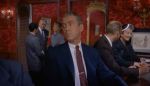
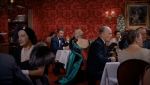
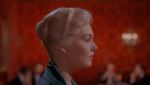
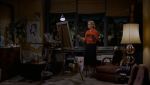
Always one to strive for full coordination of all elements towards a cohesive whole, Hitchcock’s vision extends through the work of his collaborators, never more clearly than in Vertigo.  To begin with, the legendary graphic artist Saul Bass, who also designed the movie’s classic advertising imagery, contributes a sharp and stylish opening credits sequence, establishing the spiraling motif that permeates the film.  Then there is the aforementioned score by Herrmann, a masterpiece of jangled nerves, relentless tension, melancholy longing, and spectacular release; echoing the strains of Wagner’s Tristan und Isolde– another tale of doomed romance- but possessed of the composer’s own unmistakable aural style and distinctively struck in the modernist sound of the mid-20th Century, it is one of the most recognizable pieces of film music ever written- and one of the most effective.  The cinematography of Robert Burks is a masterpiece of late ’50s gloss, capturing not just the mood and atmosphere of the era but of San Francisco- indeed, the extensive location footage provides a dazzling view of the famous local scenery, such that Vertigo could serve as a travelogue for the city; in addition, his exploitation of various qualities of light, from the shimmering haze of a sunny churchyard to the murky gloom of a redwood forest, creates an almost dreamlike immediacy to the images on the screen.  Perhaps most noticeably, there is the stunning use of color throughout the film, painstakingly created by Burks, art directors Henry Bumstead and Hal Pereira, set decorators Sam Comer and Frank McKelvy, and costume designer Edith Head; thanks to their work (and Hitchcock’s meticulous guidance), Vertigo is possibly the most striking example of symbolic color coordination on film- from the dramatic contrast between Madeleine’s blue wrap and the red wallpaper in Ernie’s restaurant, to the jarring dissonance of her blond hair and her classic gray suit, to the surreal neon blue that bathes her apartment at night, the film delivers a magnificently lush palette of bold and subtle hues that elicit primal responses from beginning to end.  This effect is all the more powerful since a 1996 digital restoration (one of the first to be undertaken) returned the movie to its original, pristine condition after years of neglect had left it faded and almost monochromatic.  Having seen both an old print and the restored version, I can tell you it’s like watching a completely different movie, and it makes the greatest imaginable difference in the film’s overall power. Of course, any discussion of Vertigo would be incomplete without a mention of its special effects work, which includes the superb matte effects used to create several important sequences (most notably the bell tower at the mission where both of the film’s climaxes take place), the much-imitated nightmare sequence designed by John Ferren, and the famous “Vertigo Zoom,” used here for the first of countless times, in which a disorienting effect is achieved by simultaneously zooming in on a focal point and pulling back the camera.

Besides all these invaluable contributions, Vertigo benefits from the work of its cast.  Hitchcock, in later interviews, attempted to explain his film’s relative failure by attributing it to the disparity in age between his leading player, James Stewart, and the 26-year-younger Kim Novak, as well as unfairly- and inaccurately- claiming that Stewart had passed his prime and his popularity had waned (the actor actually enjoyed several more years of considerable box office success following his work in Vertigo); it’s true that Stewart may have been a factor in the public’s disappointing reaction to the film, but if so, it had to do with the fact that his character here is a far cry from the light, easy-going persona with which he was associated.  His previous work with Hitchcock had often pushed the boundaries of his gee-whiz image, as had numerous other of his later roles, but with John “Scottie” Ferguson, Stewart’s lovable personality was turned inside out; the good-natured, lackadaisical charm serves as a mask for a morose, deeply troubled psyche, full of self-loathing and capable of great cruelty.  Despite the fact that the actor’s many loyal fans had difficulty accepting him as such a flawed individual, in retrospect it is clear that Vertigo represents one of his finest onscreen achievements; he embraces Ferguson’s bitter darkness whole-heartedly, without attempting to soften it by resorting to sentimentality.  Playing on his own image, he offers a disturbing portrait of a man whose decency and humanity are eroded by depression and obsession, and his haunting performance is the driving strength of the movie- it’s impossible to imagine another actor in the role.  His co-star, Kim Novak, was not Hitchcock’s first choice for the complicated part of Madeleine- he had initially cast the young Vera Miles, who appeared in his previous film, The Wrong Man, but delays in the shooting schedule led to her having to drop out due to pregnancy- but, again, its now hard to picture anyone but Novak as the cool, mysterious, and ethereal focus of the hero’s- and the film’s- compulsive attention.  The director also later criticized Novak’s work, saying that, in retrospect, he felt she was miscast; and others have complained that she frequently seems uncomfortable, stilted and artificial.  Given the nature of her role, however (and once more I am limited by a desire not to provide any “spoilers” for those who haven’t seen the movie), these qualities seem completely apt.  Madeleine, like Ferguson, is hiding her true nature; and Novak ultimately lets us see that underlying her artifice is a sadness and vulnerability that make her heartbreakingly compelling as a tragic heroine.  She is particularly effective in the film’s final third, allowing her warmth- and her real desperation- to come through.

The supporting cast is led by Barbara Bel Geddes, as Midge, Ferguson’s gal-pal, who- though seemingly more solid and straightforward than the two leads- hides her own not-so-secret feelings for her former flame with an act of sly sophistication and smartly casual cynicism; she provides much-needed comic relief, but her own obsession- which leads to serious errors in judgment- is unveiled throughout, tempering the humor with an increasingly uncomfortable sense of emotional panic.  In addition, she represents Ferguson’s last link to the larger world outside of his fixations, and when she exits the film, with the literal slamming of a door and a slow, sad walk down a bleak and empty corridor, her absence is significantly felt; thanks to Bel Geddes’ understated, textured performance, Midge becomes one of the most memorable personifications of the glasses-wearing, “unwanted” woman so frequently found in Hitchcock’s work.  Tom Helmore, as Elster, seems the sad, impotent milquetoast in his few scenes (a characterization which ultimately adds yet another layer to the mysterious plot), and the rest of the cast- which includes some familiar character actors (Henry Jones, Raymond Bailey, Lee Patrick, Ellen Corby, Konstantin Shayne) along with several unknowns- essay their deceptively small roles with just the right amount of appropriate attitude to further Hitchcock’s subtle psychological manipulation.

It should be obvious by now that I have a lot to say about Vertigo; this is no surprise, because almost everyone who sees it- critic, scholar, or movie fan- has a lot to say about this strange and beautiful film.  It has been suggested that one of the reasons it enjoys such adulation from cinema literati is, in fact, that there is so much to say about it- it is unquestionably a work of art, visually stunning and laden with layers upon layers of symbolism, subtext, and psychology.  Watching Vertigo is strongly reminiscent of viewing a painting in motion, not only because of the richness of its visuals but because of the seemingly endless amount of detail on the screen, each piece of which bears some significance to the film’s overall meaning- or rather, meanings, because like all great art, it opens itself to a multitude of interpretations.  From this standpoint, it certainly qualifies, as much as any of the other contenders, for the honor of being named as the best film of all time.  However, many less-admiring critics have pointed out that, on the more immediate level of pure entertainment, Vertigo fails to accomplish its purpose; the intricate plot is confusing, hampered by a lack of real action, bogged down by clumsy exposition, and hampered by long, uneventful sequences (such as the interminable scenes of Ferguson following Madeleine through the city in his car) that slow the pace to a crawl.  In addition, the story contains details that not only prove to be ultimately irrelevant but, indeed, make no sense; and once the mystery is solved, the central conceit on which the film’s final developments depend is so far-fetched as to pre-empt the willing suspension of disbelief required to make it work.  From my own memory of seeing Vertigo for the first time, I can freely say that all these points affected my reaction to it; die-hard Hitchcock fan as I was (and am), I could not help but be disappointed.  Yet there was a fascination for me here which I could not explain- a nagging feeling that there was something I had missed.  It was years later before I came back to it, but when I did- free from the need to follow a story I already knew- I discovered that to see Vertigo once is not to see it at all.  Dozens of viewings later, I am still discovering it.

Consider this fair warning, then- for the casual viewer, the charms of this much-hyped classic may prove to be invisible.  For those who choose to venture a second look, however, Vertigo begins to unfold itself and display its hidden majesty.  Like the beautiful woman at its center, it is not what it seems- beneath its cold and problematic exterior lies a rich and complex trove of treasures that yields new wonders upon each return visit.  You may not agree with the assessment of Sight and Sound that it is the greatest movie ever made- I can’t say that I do, either- but you would be hard-pressed to find another film which packs so much into such a deceptively simple package.  It is doubtful that Hitchcock- master though he was- consciously intended to create the myriad resonant details which arise throughout his arguable masterpiece; he second-guessed himself frequently during its making, and, indeed, wanted to make changes that were prevented by studio demands- perhaps a rare instance in which such interference resulted in a better movie.  The endless analysis to which this, like all Hitchcock films, has been subjected, would no doubt baffle and amuse a director who, after all, was just trying to make a good movie; nevertheless, as with all great art, the content of the canvas may yield more than even its creator can suspect.  Vertigo reveals much about the depths from which it came, perhaps more than its director could even recognize; it is, in this way, the quintessential Hitchcock film, in which virtually all of the filmmaker’s perennial obsessions were given full expression.  Other of his works may be more entertaining, more frightening, more believable, and more polished- but this one is undoubtedly the most personal, and as such, it is the key to Hitchcock’s universe, in all its darkly beautiful glory.

http://www.imdb.com/title/tt0052357/


Bringing Up Baby (1938)

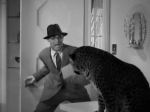
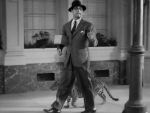
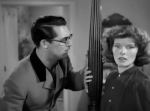
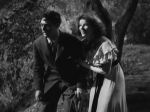
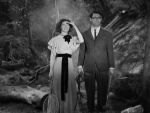
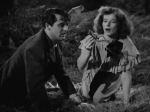
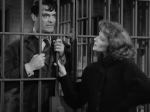
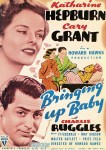
Today’s cinema adventure: Bringing Up Baby, the 1938 classic by director Howard Hawks, teaming Katharine Hepburn and Cary Grant as a pair of misfits who become entangled with each other in a complicated adventure involving (among other things) a tame leopard, a rambunctious terrier, a priceless dinosaur bone, several cases of mistaken identity, and a million dollars.  Despite good reviews and popularity with audiences in more sophisticated urban markets, it was a major box office flop upon its first release, leading to both its director and its female star being released from their contracts with RKO Pictures, the studio that produced it- indeed, Hepburn, who had headlined a string of financially disappointing movies, was labeled “box office poison” following this failure, and had to return to the Broadway stage in order to restore her reputation and her clout.  Nevertheless, a generation later, the film was rediscovered through the new medium of television, and has subsequently taken its place as one of the greats, a definitive example of the “screwball comedy” sub-genre, one of the finest vehicles to feature either of its iconic stars, and an influential piece of filmmaking that has inspired countless imitations and homages over the years.

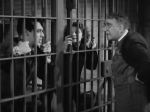
The plot, based on a short story by Hagar Wilde (who also co-authored the screenplay with Dudley Nichols), focuses on one David Huxley, a paleontologist who, on the eve of his wedding to no-nonsense colleague, Miss Swallow, is sent to secure a million dollar donation to the Manhattan museum for which they both work.   It seems an open-and-shut deal- all that is required is a meeting with the donor’s attorney, upon whose approval the money will be bestowed; but David’s appointments with the lawyer are repeatedly interrupted by Susan Vance, a dizzy young society woman who seems to turn up everywhere he goes- and whose precocious antics involve him in enough confusion and mishap to blow his chances at obtaining the money.  As it happens, though, Susan turns out to be the niece of the museum’s would-be benefactor- a wealthy widow named Mrs. Random- and she promises David (with whom she has become smitten) she will persuade her aunt to donate to the museum anyway.  She enlists his help, against his will and his better judgment, to accompany him to her aunt’s country estate in order to deliver a pet leopard (named Baby) that has been sent as a gift from her big-game-hunter-brother; once they arrive, more confusion erupts, starting with Susan’s false introduction of David as a mentally unstable friend of her brother’s, and complications continue to arise- including the theft of David’s precious brontosaurus clavicle by Mrs. Random’s dog, a mix-up between Baby and an escaped (and mean-tempered) leopard from a traveling circus, and the interference of a crotchety local constable.  Through it all, David struggles to resolve the situation and make it back to the city in time for his wedding, but it becomes clear that Susan is doing everything she can to delay him and keep him by her side.

A description of the plot, in print, seems ridiculously far-fetched and convoluted; that, however, is what gives Bringing Up Baby its zany appeal on film.  The entire movie is a whirlwind of unlikely circumstances and coincidental relationships, bound together by a premise that is as flimsy as one of the diaphanous costumes that Hepburn sports onscreen.  This is the nature of the screwball comedy; we take for granted that the scenario will be ridiculous, and as long as it yields the kind of laughs we expect, we don’t mind suspending our disbelief in the absurdity of its situations.  As scenarios go, that of Bringing Up Baby is more ridiculous than most- in fact it borders on the surreal, but we accept it without batting an eye, because it also delivers more laughs than almost any other film of its era- or any other, for that matter.  It certainly helps that director Hawks drives the proceedings at a breakneck pace, scarcely giving us time to think about the credibility gaps or even to register the fast-and-furious jokes until they have already passed us by.

Much of the hilarity, however, arises from the chemistry of the two stars, perfectly matched and clearly relishing their roles; their comic banter arises so effortlessly as to belie the artificiality of the dialogue- indeed, the two performers ad-libbed some of the film’s best jokes- and they so completely inhabit their roles as to make us easily forget the many other personas they adopted on the screen over their long individual careers.  Grant in particular made a breakthrough here; his previous career had been mostly comprised of more-or-less dramatic (and none-too-weighty) leading man roles, and though he had previously appeared in The Awful Truth– another screwball classic in which he demonstrated his particular flair for comedy- nothing had prepared audiences for his work here.  Playing gleefully against type, the impossibly handsome Grant pulls off the role of the timid, nervous and befuddled bookworm without ever letting us doubt his awkward ineptitude; at the same time, he rattles off his barbed dialogue with the timing and wit of a master, making it clear that he is up to the challenge of sharing the screen with the formidable Hepburn.

As for The Great Kate, it’s hard to see her performance here and understand why she should be deemed a liability by studio executives; her sharp, patrician bearing is brilliantly undercut with a little-girlish softness that makes her instantly lovable no matter how maddeningly daffy she gets.  Careening from haughty and indignant to doe-eyed and tender and back again through all stops in between, her portrayal of Susan drives the film and gives it a heart; and even when her behavior is at its most inane, her glittering intelligence always shines through, giving this upper-crust oddball an edge that leaves no doubt of her absolute control over the entire madcap situation.  She never overwhelms her co-star, however; the two make a magnificent team, one that is immediately recognizable as perfect for each other (a conceit on which, of course, the entire movie depends), and the obvious real-life affection between them translates into an onscreen chemistry that has rarely been matched and makes this pairing one of the most iconic co-starring turns in cinematic memory.

Perfect as they may seem in their roles, both of the stars initially had trouble with the project.  Grant feared being unable to project the necessary intellectual quality of a career scientist, and was only able to relax into the the character when director Hawks told him to base his performance on the persona of silent screen comedian Harold Lloyd; Hepburn was stymied by the over-the-top zaniness of Susan, and struggled with finding the right approach until Hawks asked veteran character actor Walter Catlett, who was playing a minor role, to coach her in the art of playing outrageous comedy- he taught her the effectiveness of underplaying and naturalistic delivery (as opposed to the more deliberately comedic style she was attempting), and she was so grateful for the help that she insisted his part- the town constable with whom she tangles in the film’s climactic scene- be expanded to give her a chance to work with him more extensively.  Their initial reticence allayed, both the film’s stars settled into the rhythm of their characters and created the sparkling joint accomplishment that makes Bringing Up Baby so delightful to this day.  Their enjoyment of each other is clear to see, and infectious; they had so much fun working together on this film that shooting went over schedule (and over budget) due to their difficulty in completing their scenes without laughing.  Though doubtless this was a thorn in the side of RKO executives who were already anxious over the project, the fun translates to the screen.

Apart from the obvious joys of Hepburn and Grant’s interplay and their attractiveness both individually and as a couple, there is a more subtle aspect to their dynamic that lends a unique flavor to the goofball romance at the center of Bringing Up Baby.  Grant, though decidedly masculine in his energy and personality, plays the passive, pursued role in this relationship, while Hepburn is clearly the active aggressor.  It seems a minor twist, but by reversing the traditional gender roles of courtship in such a way, Baby sets itself apart from most of the romantic comedies that came before it.  It would be wrong to credit the film for being the first work of fiction to do this- after all, Shakespeare wrote several plays in which this inversion was explored- but Hollywood has always been known for reinforcing stereotypes, and by swapping these accepted standards of masculine and feminine behavior Bringing Up Baby became a milestone in the depiction of gender identity on the big screen.

This in itself is enough to have given the movie a special significance for GLBT audiences; but there is another point of interest here for cinema historians which also gives the movie its “gay appeal.”  In one memorable scene, Cary Grant, dressed in a frilly and feminine house robe (having had his clothes stolen by Hepburn whilst showering), is forced to meet the returning aunt- a formidable dowager- at her own front door.  The understandably flustered woman, confused by the presence of a strange man in her house, presses him impatiently with questions, and most adamantly (for some reason, though it seems the least alarming aspect of the situation) she wants to know why he is wearing those clothes; the badgered Grant, already pushed to the limit of his patience by Hepburn’s continued hijacking of his formerly sedate life, leaps in the air and shouts, “Because I just went gay, all of a sudden!”  This line, ad-libbed by Grant on the set, may be the very first instance in mainstream fiction that the word “gay” was used to denote homosexuality, though within the underground gay community it had been used as a code word since at least the 1920s.  It may not have been intentional (though frankly, it’s unlikely that a group of Hollywood sophisticates such as these would be unaware of the double meaning- particularly Grant, whose famous long-term relationship with “roommate” Randolph Scott is still the subject of much debate among his many fans), but whether it was or it wasn’t, this bold double-entendre provides one of the biggest laughs in the film, and is yet another reason why Bringing Up Baby has been accorded landmark status.

Historical footnotes aside, there are plenty of reasons to watch this little gem of late-Depression escapism today.  Not only are Hepburn and Grant a rare treat to watch, they are supported by a fine cast of character players that bring to life the assortment of other lunatics surrounding the film’s dotty protagonists.  In addition to the aforementioned Walter Catlett, whose comically cagey turn as the rural lawman provides Hepburn with a magnificent foil late in the film, there’s Charlie Ruggles (as a mild-mannered and easily flustered hunter who turns up as a guest to Mrs. Random’s estate), Barry Fitzgerald (as a heavy-drinking Irish gardener, a bit of now-inappropriate ethnic profiling that nevertheless seems innocent of malice and manages to still be funny today), perennial screen waiter Fritz Feld (here cast as a smugly pompous psychiatrist whose path keeps crossing with Hepburn’s, adding to the already-convoluted tangle of misunderstandings), and the redoubtable May Robson (as the somewhat battle-axish Mrs. Random).

More vital than any of these notables, however, are the non-human members of the supporting cast, and they too deserve mention.  Nissa, the leopard, a veteran of numerous B-movie jungle adventures, plays the dual role of both Baby and the dangerous circus escapee; the other four-legged star, in the role of the mischievous bone-thief, George, was Skippy, a terrier whose fame as “Asta” in the popular Thin Man movies made him nearly as big a draw as the human headliners, and his appearance here is highly memorable, exhibiting the exuberant canine personality that made him a natural and ensured his place as one of the immortal screen animals.

On top of the performances, Bringing Up Baby offers a fine look at late-thirties fashion and design through its sets (a sumptuous blend of Art Deco and neo-classical influences alongside the elegantly rustic charms of the Random estate, overseen by the legendary Art Director, Van Nest Polglase) and its costumes (most particularly the various range of outfits worn by Hepburn, with which designer Howard Greer manages to add some sly satirical commentary on the frivolity of fashion into the movie’s comedic recipe).  In addition, tech aficionados may find some interest in the early special effects- quite sophisticated for the time- with which the actors are sometimes made to appear with the leopard in close proximity (especially Grant, who wouldn’t go near the creature- though the fearless Hepburn directly interacted with it and can even be seen petting it in a few scenes); in several of the split screen sequences, a moving center line was required, creating a complex challenge for the technicians of the day.  They rose to it admirably; the seams are virtually invisible to all but the most attentive observers.

Bringing Up Baby, it may be clear by now, is a seminal movie for me; I have fond memories of watching it on TV with my parents, all of us laughing out loud together, and through the years I have seen it countless times- I can practically recite the dialogue along with the actors, and yet a viewing will still have me giggling uncontrollably throughout, as well as discovering nuances and subtleties that I had never noticed before.  No doubt there are many others out there with a similar relationship to this film; it was, after all, one of the first movies selected for preservation by the Library of Congress, and it has been consistently named on lists of the 100 best or funniest movies of all time.  For most, it is the movie that comes immediately to mind when the term “screwball comedy” is mentioned, and for good reason- it’s about as screwball a comedy as you can get without veering into the realm of the Looney Tunes.  For those who have yet to discover its sublime wackiness, I will give away no more than I already have; and for those who feel their modern tastes are too sophisticated for a 75-year-old comedy to provide much amusement, I can only challenge anyone to sit through Bringing Up Baby without cracking at least a smile.  After all, it has been called more than once a movie ahead of its time- which may, better than anything, explain why a film that temporarily sank the careers of both its director and its leading lady (though not, tellingly, that of the resilient Cary Grant) went on to become one of their most enduring and beloved creations.

http://m.imdb.com/title/tt0029947/

BearCity (2010)

Today’s cinema adventure: BearCity, a 2010 romantic comedy about a young man whose secret attraction for big, hairy, masculine men leads him into the insular gay subculture of “bears.” Directed by Douglas Langway, and co-written by Langway and Lawrence Ferber, it attempts to graft the familiar Hollywood-style romance formula onto an exploration of the tight-knit bear community, exposing and poking fun at stereotypes along the way, in order to both appeal to a largely underrepresented sector of the population and to present a sort of primer for those unfamiliar with this rarified scene. Though it has met with a somewhat mixed response from critics and some members of the gay community, it has been sufficiently popular and successful to warrant a sequel, BearCity 2: The Proposal, which is currently being screened at GLBT film festivals across the U.S. and Canada.

Taking its inspiration from the popular TV and movie series, Sex and the City, Langway’s fluffy tale of love and lust in New York centers on Tyler, a 21-year-old “twink” (for those unfamiliar with the term, look it up on Urban Dictionary or ask a gay friend) and aspiring actor who is open and comfortable about his sexuality- but less so about his preferred taste in men. Drawn to older, bigger, hairier guys who don’t fit the “typical” gay mold of attractiveness, he keeps his proclivities a secret from his roommate and his friends; when a potential online hookup lures him to a nightclub for bears, he falls in with a group of hirsute friends who welcome him with open arms, and he begins the process of “coming out of the second closet.” He finds new roommates, gets a job at a bear-friendly coffee bar, and develops a new crush- on Roger, a handsome older “daddy” type who is one of the best-known and popular members of the bear community. The attraction seems to be mutual, but Roger’s sensitivity to the customs and expectations of the micro-culture that surrounds the pair repeatedly thwarts Tyler’s attempts to make a connection. Meanwhile, Tyler’s other new comrades face a variety of issues in their own love lives: his new roommates, Fred and Brent, struggle with the question of remaining monogamous or opening up their relationship to add some spice; and another couple, Michael and Carlos, are pushed apart by Michael’s decision to have weight-reduction surgery. In the midst of all the complications, romantic and otherwise, the whole gang gears up for “BearCity,” a big weekend party which brings the whole community together to celebrate in their own bearish way.

Like most ensemble “rom-coms,” BearCity has a plot tailor-made for the inclusion of one episodic misadventure after another, with which to gently spoof- and reinforce- the familiar foibles and pitfalls inherent in the quest for love. Normally, such a film’s agenda is limited to pleasing its audience with a lot of laughter, a few tears, and, usually, a couple of big “awww” moments leading up to a satisfying conclusion in which love conquers all; this would also be true of BearCity, except clearly, given the community on which it focuses, there is an additional goal. By setting the action amidst gay culture- and a subdivision of gay culture, at that- the film hopes to bridge social gaps and reveal the basic truth that the affairs of the heart, though they may take different forms on the outside, are the same for everyone, regardless of race, creed, culture, or sexuality. It’s not the first film to carry this message, not even the first to deal with that curious subspecies known as “bears;” but what is refreshing about it is that it eschews pretensions of a political or moral agenda and simply concentrates on telling its characters’ stories, devoid of higher messages. Equality is assumed, not defended, and sexual tastes- while they may be subject to lampooning- are accepted without moral judgment. As a result, the movie gets to turn its full attention to the universal concerns which its characters, like everyone else, must address in their various attempts to find- and keep- love.

Even so, BearCity also seems to be very aware that it serves as a sort of travelogue to the uninitiated viewer for whom the world of gay bears is completely unfamiliar; as a result, it takes pains to include a broad view of the community’s peculiarities- including its sexual adventurousness and promiscuity, heavy focus on alcohol and drugs, and a pervading shallowness that seems, more and more, to characterize the popular image of gay life in general. This tapestry of cultural detail provides more than just a backdrop for the proceedings, as the guys’ stories hinge on some of these issues- particularly the ones surrounding sexual mores- and their outcomes are dependent on a coming-to-terms with the particular obstacles they present. In addition, the behavioral observations to be found here have the unfortunate potential for perpetuating stereotypes- though not necessarily the old-fashioned, limp-wristed kind- which continue to create social prejudice against the gay community; despite the fact that the characters, for the most part, are explored to a much deeper level, the surface characteristics they display- however honestly- could be seen as clichéd variations on the familiar theme of “wacky gay neighbor” mannerism. Once again, however, the film is ultimately unconcerned with such factors- the opinions of outsiders are of little consequence to these bears, and in fact one of the film’s most significant themes- one which could even be called an underlying tenet of “bear philosophy,” perhaps- is the importance of being comfortable in who and what you are, without regard to the expectations and standards of others. In BearCity, the only way to find happiness is to be yourself, not who you think you are supposed to be; if that’s not a universal message, I don’t know what is.

Unfortunately, though BearCity succeeds in presenting an authentic portrait of the social atmosphere and lifestyle that characterizes its subjects, it is somewhat less successful in its attempt to craft a smart and compelling romantic comedy. The central love story between Tyler and Roger is sweet enough, if that’s the right word, on the surface; but the pair seem mismatched in a way that goes beyond the obvious differences in age, bearing, and outlook. We want to see them united by the end, but that has more to do with the conditioned response of wishing for a happy ending than it does with any sense that these two are made for each other; their attraction seems little more than just that, an impulse based on surface qualities rather than an instinctive bond between kindred spirits. As for the comedy element, much of the overt humor comes in the form of dialogue which seems far too calculated, as if Langway and Ferber were determined to insert all the standard jokes related to each subject matter they touch upon; the “clever” banter is laced with variations on standard one-liners known universally throughout the gay community, and even if they are less familiar to a straight audience, they still feel forced and deliberate, and as a result, much of the comedy falls flat. Perhaps the intention was to cultivate a further sense of universality, by showing a group of gay guys making the same jokes every other group of gay guys makes, but it has the effect of undermining the freshness which otherwise permeates the film.

BearCity works far better when it leaves behind the larger social scene and brings us into the intimate reality of its characters. In the one-on-one scenes we are given a much more honest and engaging look at the real lives of gay men, and this is where the movie’s more substantial charm becomes apparent. In the subplots surrounding Tyler and Roger’s tentative courtship, we find people who are actively dealing with the real, down-to-earth complications of building a lasting relationship, not the airy fantasy of a first crush. Fred and Brent’s grappling over the question of staying monogamous rings much truer than the moon-eyed wooing of the central couple in an empty bowling alley, and the emotional rift that threatens to rip apart the tender love between Michael and Carlos seems far more important than concerns over what Tyler should wear to BearCity in order to get Roger’s attention. Furthermore, because it grows honestly from the characters and their situations, the comedy that comes in these scenes is much more believable- and therefore funnier- than the predictable humor in the rest of the film. In particular, the comedy of errors that arises when Fred and Brent attempt a three-way play session in the shower is a comic highlight, underscoring the fact that BearCity is at its best when it embraces the opportunity to be different than the mainstream formula comedies it tries to emulate.

The actors, for the most part, are likable and believable enough, although at times the stilted quality of some of their dialogue trips up each and every one of them. Joe Conti is sincere and competent as Tyler, making him a suitable protagonist, albeit less interesting than some of his co-stars. Likewise Gerald McCullouch, as Roger, manages to convey an underlying integrity that keeps him sympathetic and allows us to see his appeal, despite the less savory aspects of his character. Both players are attractive, particularly McCullouch- who, it should be said possesses only marginal qualities that could be described as “bearish,” prompting suspicions that the film’s creators were hedging their bets in trying to appeal to a broader audience. In keeping with the fact that the supporting roles are by far more interesting than the star-crossed lovers in the spotlight, Brian Keane and Stephen Guarino (Fred and Brent) and Gregory Gunter and James Martino (Michael and Carlos) provide much more solid performances, investing their characters with a wider range and deeper authenticity, and generally making us wish they all had more screen time. Alex Di Dio is infectiously charming as Simon, Tyler’s spritely former roommate who later becomes involved as a confidante and advisor in the efforts to win Roger’s affections, and Sebastian LaCause has a nice turn as a Spanish party-bear who threatens to come between the film’s would-be lovers.

As for Langway’s efforts as a director, his work can be described as serviceable, at best. For the most part, he adheres to the familiar conventions of lightweight formula comedy, with little in the way of showy camerawork or flashy editing and not much stylization beyond the occasional obligatory montage. Not that anything more is required here, and truthfully a more self-consciously arty approach would most likely make BearCity insufferably pretentious. Nevertheless, at times the movie has a vaguely amateurish feel, as if Langway (both as director and screenwriter) were trying too hard to fit every ingredient into the soup pot. In addition, the elements which border on stereotypical would perhaps have seemed less so with a more delicate, thoughtful approach behind the camera, though it’s hard to level a criticism over something that might have been. In the same vein, it’s difficult to criticize his soundtrack choices, although one might have wished for a bit more imagination and variety in the selection than what we are given- a bland collection of disco-lite club music which may capture the feel of the community but seems disconnected from the action on the screen.  Nevertheless, insofar as he gives us a genuine and clearly affectionate depiction of the world he showcases in his film, Langway’s work is, more-or-less, successful.

BearCity is a movie that carries a social importance heavier than its actual content; by showcasing the life of a culture rarely represented on screen (unless as a source of humor, as in John Waters’ A Dirty Shame), it represents a bold effort to cross the boundaries of social convention and promote true understanding and equality, even though such an issue is outside the scope of its plot. Perhaps even more significant is its revelation of prejudices and social gaps that exist within the gay community itself; the bear movement has largely developed as a reaction against the ostracization of men who fall outside the accepted standards of male beauty celebrated by the “mainstream” of gay society, and the movie makes it clear that there is still a lack of understanding and acceptance between these two factions of the culture. This factor, too, is beyond BearCity’s intentional purpose, except at an observational level, though it does play a role in the plot insofar as it provides the inner conflict that initially catapults its protagonist into a strange new world and provides the motivation for Roger’s reluctance to become involved with someone from outside the community. With so much riding on its shoulders, it is admirable that BearCity does not fall into the trap of taking itself too seriously and playing into its own importance; it would be even more admirable if it were a better film. Still, in its best moments it offers surprising depth and disarming honesty, and acquaints us with memorable characters who remain with us after the credits roll; and even in its worst moments, it is harmless and likable, a charming bit of wish-fulfillment fantasy that satisfies the universal need to believe in the power of true love, no matter what your preferences are with regard to gender- or body hair.

http://www.imdb.com/title/tt1426320/

The World of Henry Orient (1964)

Today’s cinema adventure: The World of Henry Orient, a 1964 comedy directed by George Roy Hill, featuring Peter Sellers as the title character, a concert pianist whose libidinous exploits are complicated by the obsessive adulation of a pair of adolescent schoolgirls.  Based on a novel by Nora Johnson, daughter of Hollywood writer/director Nunnally Johnson (with whom she also co-wrote the screenplay for the film), it places greater emphasis on the coming-of-age story of Orient’s juvenile stalkers than it does on the misadventures of the loutish lothario himself.  It was successful with both audiences and critics, its popularity no doubt bolstered by the presence of its star, who was at the time entering the height of his career, and it was later turned into a Broadway musical, Henry, Sweet Henry, which enjoyed considerably less success.

Set in Manhattan, the film follows the experiences of Val and Marian, two students at an exclusive girls’ school who develop a close friendship; both are outsiders at school, and share an imaginative flair for fantasy and make-believe, which leads to their indulgence in precocious adventures together.  On one such outing, they stumble upon a clandestine rendezvous in Central Park between Orient and his nervous, married, would-be mistress, interrupting their tentative tryst and foiling the pianist’s amorous intentions.  Later, when the girls attend his concert with Marian’s family, they recognize him from their encounter at the park, and Val develops a crush; so the pair begin to follow him, watching his apartment and making a scrapbook about their obsession- as well as a fanciful diary documenting Val’s hypothetical romance with him.  When Val’s jet-setting parents return for a holiday visit, her strict and austere mother finds the secret volume, a discovery which leads to uncomfortable complications not only for the girls, but for the unwilling object of their affections, as well.

Though The World of Henry Orient was a fairly successful film at the time of its release, it has faded somewhat from cultural memory.  Part of the reason for this may be that much of its draw in early 1964 arose from the presence of three up-and-coming names in its credits- Peter Sellers, Angela Lansbury, and director George Roy Hill- each of whose subsequent work would soon eclipse the importance of this quaint little movie.  Another factor, no doubt, was the changing social landscape of the years shortly to follow its debut, in which stories about the wholesome innocence of childhood, no matter how well-made they may have been, seemed somehow to be less relevant and important than those addressing the “larger” issues that were suddenly confronting young people as they came of age during the upheaval of the late sixties.  Ironically, one of the key factors in the film’s initial popularity was likely the fact that, in its good-natured and sweet depiction of teen-agers, it represented something of a backlash against a decade of teen dramas in which modern American youth culture was depicted as a dangerous and depraved environment full of delinquents, drugs, and rock-and-roll; the two young ladies at the center of this film were a refreshing change of pace, and their problems were, in truth, more representative of those faced by the average teen in daily life.  Sandwiched between two eras of rapid cultural evolution, The World of Henry Orient enjoyed its moment in the sun while the world took a moment to catch its breath.

Whatever the reasons for its success or for its relative disappearance, Hill’s sweet-but-sophisticated little movie definitely holds up to contemporary viewings.  It’s worth noting that the title character’s name- a play on the name of renowned celebrity pianist Oscar Levant, whose surname means “Orient” in French and upon whom the character was loosely based- does result in some minor cultural discomfort surrounding Asian stereotypes; in deference to their idol’s unusual moniker, his two young stalkers adopt faux-Japanese code names and indulge in playful rituals which parody Eastern traditions, such as kowtowing to their collection of Henry-themed “relics” and sporting conical straw “coolie” hats as they stake out the pianist’s apartment building.  Aside from this, however, which can be written off as nothing more than playful, non-malicious fancy, the film’s gentle depiction of the transition from childhood into adolescence has a timeless feel, despite its distinctive, now-nostalgic mid-century Manhattan setting; much of this is due to Johnson and Johnson’s screenplay, which manages, through its focus on the universal concerns of young girls (and adults, for that matter) rather than on time-and-place-specific hotbed issues, to avoid any topicality that might have made the story seem dated today.  It also helps that the girls portrayed here are atypical teens, from a social standpoint; Marian comes from a “broken” home, living with her mother and another divorced woman (a situation with overtones which must have been provocative, even in 1964), while Val is the “problem” child of wealthy, distant parents who leave her in the care of hired guardians.  Coupled with the fact that neither girl is among the “in” crowd at school, and are therefore not surrounded by a gang of Hollywood-style adolescents following the latest fads and speaking in the teen-speak jargon of the day, this means that The World of Henry Orient is mercifully free of the kind of mass-media clichés that would make its appeal more ironic than sincere; this is not a picture postcard of idealized nuclear families getting mixed up in occasional kooky hi-jinks, but a story of real, not-so-average people going through genuine life experiences.  This is not to say there is a lack of goofy comedy; that is mainly provided by the over-the-top exploits of the title character, as portrayed by comic chameleon Sellers.  His Henry Orient is a ridiculously shallow, pompous charlatan: affecting the pose of a continental sophisticate as he slips back and forth between a generic, vaguely European accent and a crass Brooklyn-ese; falling over himself in his efforts to lure vulnerable, attached women to worship at the shrine of his ego; indulging in pretentious theatrical antics as he shamelessly fakes his way through an avant-garde piano concerto; and generally revealing himself to be a self-serving buffoon whose real personality is a far cry from the romanticized vision held by his two juvenile followers.  In addition to being funny, of course, this serves to illustrate the contrast between the girls’ rose-colored view of reality and the sometimes sordid truths of the adult world into which they are about to crash.  It’s a revelation that unfolds as the story progresses; as the movie’s focus expands to include the troubled relationship of Val’s parents, we are given more and more evidence of the gap between image and authenticity, and the all-too-frequent failure of adults to live up to the expectations of their roles.

In addition to the aforementioned performance by Sellers- who is, as always, a wonder to watch as he melds psychology and physicality together to completely become his character- there is the work of Angela Lansbury, whose icy turn as Val’s deceitful and hypocritical mother provides another sharp example of the gap between ideal and reality in the adult world, as well as reminding us that, before her success in Broadway’s Mame and her long tenure as television’s Jessica Fletcher re-invented her as a warm and lovable matron, this fine actress was one of the screen’s foremost bitches.  The hollowness of her worldly sophistication and her barely-concealed disinterest in her daughter’s life (until it affects her own image, of course) help to expose the character’s own desperate need for attention and validation, which, though it doesn’t exactly make her sympathetic, certainly paints a clear picture of who she really is, at the core.  Contrasting her unpleasant phoniness are Phyllis Thaxter and Bibi Osterwald, who embody good-natured warmth and unconditional love as Marian’s mother and her live-in, fellow-divorcee companion, making the point that an unorthodox family unit can be far healthier than a traditional one; as well as Tom Bosley, as Val’s father, who foreshadows his later success on Happy Days with his stolid performance as a man finally ready to assume the responsibilities of parenthood, even if it is a little late in the game.  Rounding out the adult cast is the always-delightful Paula Prentiss, as Orient’s skittish would-be lover, who manages to be likable and sympathetic despite the fact that her role is a caricature of upper-middle class shallowness and gullibility; she manages to hold her own opposite Sellers, matching his manic zaniness like a seasoned pro- no small accomplishment, to be sure.  The key performances here, however, are the children’s; Merrie Spaeth (as Marian) and Tippy Walker (as Val) fully live up to the demands placed upon them by their central roles in the proceedings.  Full of youthful giddiness, smart without being precocious, and capable of the honesty required to show us the full emotional journey of these two remarkable young women, they also provide a perfect complement to each other with their distinct and separate personalities- the more grounded Spaeth anchors the duo, while Walker gives us the edgier dynamic of Val.  Neither actress went on to an adult career in cinema- Spaeth became a noted political and public relations consultant, Walker opened an art gallery- but their work in this single film ensured them a secure hold on movie immortality.

As for the director, George Roy Hill does a superb job of juggling the perspectives of the various worlds within The World of Henry Orient.  He captures the irrepressible vivacity of youth with then-edgy techniques such as wildly tilted camera angles and montages utilizing both slow-motion and high-speed photography; he manages some grade-A comedic set pieces around his charismatic star, particularly the extended concert sequence in which the hammy Orient ad-libs his way through a performance at Carnegie Hall while frustrating his conductor and fellow musicians with his ego-maniacal shenanigans; and he uses the Manhattan scenery, lovingly photographed by Boris Kaufman and Arthur J. Ornitz, to full advantage, allowing the change of its character through the seasons to reflect the progression of his two heroines through their rite of passage.  Adding to the bittersweet, nostalgic delight is his confident reliance on the score by Elmer Bernstein, which evokes the carefree ease of childhood, the sweeping majesty of the city, and the emotional longing at the core of the story.

The World of Henry Orient is a difficult movie to criticize; though the themes it tackles are hardly momentous, there is an authentic quality to it that is impossible to dislike, which no doubt arises from the fact that Johnson’s novel was autobiographical, based on her own experiences growing up at a New York girls’ school.  Parenthetically speaking, the fact that she co-wrote the screenplay with her father is very telling, considering the turn of events which brings emotional closure to the story.  The unpretentiousness of the movie has made it one of those certifiable classics that is usually forgotten in discussions of great cinematic art, but is beloved by almost anyone who has seen it in its frequent appearances on the late-night movie broadcasts of the seventies and eighties; there is a comfort in its gentle portrayal of youthful fantasy meeting seedy reality, considerable appeal in the fact that it manages to be sweet without ever becoming cloyingly so, and an additional bonus provided by farcical tour-de-force performance of its star, surely one of the screen’s great masters of comedic acting.  When all is said and done, The World of Henry Orient is a film I can heartily recommend with more confidence than any number of “greater” cinematic achievements; it may not be a masterpiece, but it is one of the most likable little movies I can think of.

http://www.imdb.com/title/tt0058756/

Art School Confidential (2006)


Today’s cinema adventure: Art School Confidential, the 2006 film by Terry Zwigoff based on Daniel Clowes’ underground comic of the same name.  The second collaboration between Zwigoff and Clowes, it follows the efforts of an art college freshman to win the love of his dream girl by becoming a successful artist.  It shares many of the themes of their first joint effort, Ghost World, as well as its bleak world view and cynical take on humanity, and features an impressive array of talent in supporting roles.

The plot follows Jerome, a young man whose interest in art has more to do with his libido than his desire for self-expression.  Believing that success in the art world will allow him a limitless amount of female companionship; he enrolls as an art major in an urban college, where he has high hopes that his talent will quickly be acknowledged.  Instead, he finds himself just one of many frustrated hopefuls in a depressingly grim environment where the only topic more discussed than the uselessness of an art degree is the string of unsolved murders taking place near the campus.  Surrounded by peers who are self-absorbed, pretentious boors, and professors who are self-important, disaffected failures, more interested in their own stalled art careers than in nurturing the abilities of the students under their charge, he gradually realizes that success is more about playing the game than about talent.  To make matters worse, he is completely turned off by the dysfunctional girls in his dating pool, and he begins to despair that his fantasies of being a playboy artist will be crushed by the cold reality of adult life.  Things begin to look up when he meets a beautiful model who shows an interest in him, but after she is swayed by a handsome fellow student- whose work has gained more recognition than his own- his desperation drives him to concoct a deceitful plan which will put him on the fast track to success and win back the attention of his newfound dream girl.

On the surface, Art School Confidential feels like one of those eighties-era coming-of-age comedies directed by John Hughes, in which a geeky teen loser learns that being yourself is more important than being popular and ends up winning the boy or girl of their dreams by the final scene.  That description is not far off, but in this screenplay, penned by Clowes himself to ensure faithfulness to his own misanthropic vision, the formula is turned on its ear.  Jerome doesn’t want to be accepted as he is, he wants to be worshipped; and far from finding empowerment and self-actualization, he learns that being himself brings only further isolation and obscurity, and that if he wants his dreams to come true he will have to find a way to stoop lower than everyone else.  His story is shot through with the kind of social satire that hits uncomfortably close to home, threatening to undermine any preconceived ideas we might have about the underlying goodness of humanity; if there was ever any there, Clowes makes it clear that it has been thoroughly snuffed out by the degraded, ego-driven culture he shows us.  Like our protagonist, we look around desperately for kindred spirits, but the cast of characters offers us little solace; Jerome’s fellow students are a collection of affected misfits and pompous twits, and the adults are more or less an older- and more disillusioned- generation of the same breed.  Virtually every person in the film is motivated by their vanity, and everyone else around them is merely an object to be used in their quest for self-fulfillment.  This is true even of those few characters that seem sympathetic- including Jerome, who turns out to be more of an anti-hero than we surmise.  With such a disheartening perspective on the denizens of the art world- and, by extension, the rest of the human race- it’s hard to find any of the comedy very funny, at least in a laugh-out-loud way.  The film’s humor is dark, dry, and derisive; it is also arch and vaguely judgmental, casting a reproving eye on the professional and personal pursuits of all its characters and concluding that the bulk of human endeavor amounts to a desperate cry for attention.

For his part, director Zwigoff makes every effort to keep things light, at least visually.  He capitalizes on the movie’s teen-angst heritage with nods to the genre’s cliches, such as “getting-it-done” montages and character-based visual gags, and directs his actors with a clear focus on presenting its familiar types.  He obviously relishes the exploration of his quirky characters’ personalities, but he emphasizes the details of the plot enough to keep it moving effectively.  It’s also obvious that he shares Clowes’ ironic sensibilities, and he is careful not to undermine Art School Confidential by softening its snarky edge with sentimentality- although, with the help of his A-list cast of adult actors, he does manage to imply a more mature counter-perspective that includes at least a little mitigation of the seemingly soulless and shallow priorities exhibited by the inhabitants of his film’s inhospitably selfish universe.

For their part, the actors do their best to keep things real, without relying solely on the surface qualities of their stereotypical characters; overall, the cast manages to infuse a level of humanizing depth to the proceedings that keeps the movie from being an unrelentingly pessimistic existential polemic.  Despite their best efforts at honest playing- or perhaps, in many cases, because of it- there are few likable characters in Art School Confidential; the single most pleasant personality is exhibited by Joel Moore, as Jerome’s friend Bardo, whose portrayal of a proudly self-acknowledged failure is refreshingly free of barely-concealed self-promotional subtext- appropriately making this gregarious loser a comfortable island in a sea of  chilly attitudes.  Max Minghella is deceptively appealing as Jerome, until his quest for recognition turns him into a self-pitying cry-baby; and Sophia Myles, likewise, fools us into liking his would-be soulmate, Audrey. The good stuff, however, comes from the heavy-hitting support team of accomplished grown-ups; John Malkovich, Anjelica Huston, Jim Broadbent, and Steve Buscemi all bring their skills to the table as they portray various representatives of the older-but-not-necessarily-wiser set, and the film leaps several notches up in quality when they are on the screen- which, sadly, is never for very long.

Art School Confidential is meant, of course, to be a comedic exposé of the pretentious, stagnated world of academic art, a subject ripe for vigorous satire.  The problem is that the humor seems to come from a rather mean-spirited place; Clowes and Zwigoff take a decidedly uncharitable view of almost every affectation and foible displayed by their characters, and at times their approach feels more like bullying ridicule than good-natured ribbing.  Their critical stance is certainly a valid one, but one can’t help feeling that the harsh perspective is a little too one-sided; after all, it’s easy to point fingers at the hypocrisy and artificiality we see around us, but it is perhaps more interesting to explore what lies underneath that surface.  Coming of age involves an awakening, a realization that the world is full of phonies and disappointments; but it also involves advancing past this stage to a more mature viewpoint, one with which we can discern the more subtle forces at work around us.  Art School Confidential strikes an attitude of smug contempt for its subject which smacks of sophomoric thinking, a pose which is ultimately no different than any of those assumed by the various characters it mercilessly skewers throughout.  It misses its mark not because of the darkness of its tone or its candid observations about the weakness of mankind- many fine films share these qualities, such as the work of director Todd Solondz, whose movies Happiness and Welcome to the Dollhouse are about as pessimistic as you can get but still engage and stimulate us with their depth and their humanity.  Rather, it fails because it lacks a certain maturity; instead of piercing insight, it offers blunt criticism, and in the end it leaves us knowing little and caring less about the inner workings of the world it portrays.  It’s a shame, because Art School Confidential has a lot of potential- both Zwigoff and Clowes are exceptionally talented, and one can’t help but feel that somehow, something was lost in the translation from page to screen.  There are times when the movie almost feels like it’s going to take off, and comedic moments that feel like they are about to make us laugh; but these are short-lived, and by the time we reach its somewhat predictable and not-very-satisfying climax, we have long since lost interest.  Fans of Clowes’ ironic-outsider flavor may find the movie easier to take than the rest of us, but those interested in discovering his work might be better-advised to go to the source rather than starting with this weak adaptation.  Still, the pairing of the author/artist and his filmmaking partner in crime seems a match made in heaven, and together they have managed to craft a very good film – but it’s called Ghost World, and the disappointment of Art School Confidential is probably all the more  bitter because they proved once before that they could get it right.


http://www.imdb.com/title/tt0364955/


The Stunt Man (1980)

Today’s cinema adventure: The Stunt Man, the 1980 feature by director Richard Rush about a runaway fugitive who stumbles into the middle of a film shoot and finds cover working as a stunt man, only to realize that the movie’s megalomaniacal director may be planning to kill him for the sake of filming the ultimate stunt.  A difficult film to place within a genre, it was shot in 1978 and ended up shelved for two years by a studio that didn’t know how to advertise it; when it finally hit the screen it was only given a limited release, and it was largely overlooked by the public.  Nevertheless, it garnered considerable praise from critics and managed to earn several Academy Award nominations, including one for its star- and its main appeal, then and now- Peter O’Toole, whose performance represented something of a comeback in his storied career.

Adapted by Rush and Lawrence B. Marcus from a novel by Paul Brodeur, The Stunt Man follows a young Vietnam War veteran who is running from the law, having committed an unspecified crime after returning from his tour of duty.  With officers in hot pursuit, he runs into the middle of a film shoot, inadvertently disrupting a dangerous automobile stunt in which the driver is accidentally killed.  With a sudden new opening for a replacement and only a few days to finish his ambitious anti-war epic, the movie’s director, Eli Cross, takes the young outlaw under his wing, offering him a safe haven and a new identity- in exchange for completing the aborted stunt himself.  As he prepares for the big moment, learning the tricks of the trade and attempting to bond with the gregarious crew of movie-making gypsies that have taken him into their fold, he begins to suspect the flamboyant and mercurial Cross, who is obsessed with realism, of plotting to orchestrate his death in order to capture it on film.  Things are further complicated when he finds himself in a blossoming romance with the film’s leading lady, heightening his dilemma over whether to flee back into a permanent life on the run or stay and risk his own untimely demise.

If the premise seems a bit gimmicky, it is; The Stunt Man offers a highly improbable premise, riddled with plot holes and unlikely conceits.  This, however, is part of the sense of wicked fun that permeates the movie.  Rush and Marcus never take the pseudo-thriller plot too seriously; although they give an appropriate amount of weight to the psychological conflicts of its hero, they make certain that the overall tone is decidedly comic, flavored with cynical irony and self-satire, and they derive a great deal of nudging humor from the tricks they work on their audience.  Within its far-fetched scenario, The Stunt Man plays with our expectations and our preconceived assumptions in order to keep us off balance, establishing its young protagonist as our access point into its smoke-and-mirrors world and ensuring that we, like him, are constantly betrayed by appearances; this is, after all, a movie about making movies, and in keeping with its subject, nothing is what it seems.  At every turn, we are presented with illusions- many of them clearly established as such- and then find ourselves surprised when the truth behind them is revealed.  The film shrewdly manipulates our willing suspension of disbelief, understanding that we want to buy into its various cons, and exploiting our natural inclination to believe what we see.   Rush spends most of his movie exploring examples of the conflict between truth and illusion, from the oft-repeated assertion that King Kong was only 3′ 6″ to the extended sequence of WWI carnage enacted in front of a throng of horrified spectators at the beach, making for a highly amusing display of magic in which the tricks being performed mirror the tricks being played on us by the magician behind the camera.

Of course, this idea of illusion vs. reality, which fits so perfectly into the metaphoric possibilities of a self-reflexive movie about movies, is nothing new; it has been highlighted in works ranging from Fellini’s 8 1/2 to Ben Stiller’s Tropic Thunder, providing fodder for low comedy to high tragedy and everything in between.  The Stunt Man, however, ties it to another theme, perhaps more immediately relevant to the lives of everyday civilians not lucky enough to be working in the film industry- namely, the difficulty of trust in a culture full of deliberate lies and manipulation.  Our hapless hero, ironically dubbed “Lucky” by his newfound protector (or, perhaps, persecutor), is full of paranoia and mistrust, the result of buying into a much bigger and more insidious con game than any cinematic sleight-of-hand perpetrated by Eli Cross and his crew; he has been cheated by a system that sent him to war on the promise of making him a hero and now treats him as a pariah, and had his hopes for a happy future shattered by faithless friends and lovers.  When the nature of his crime is revealed, we discover it was an act of anger and frustration over the raw deal into which he has been suckered- like so many of his generation.  Is it any wonder, then, that when he is offered a new lease on life by a representative of the dream factory, a man who blatantly and unabashedly manipulates truth and illusion in order to achieve his ends, he is wary of being suckered once again?  This is the central conflict of The Stunt Man; in a world devoted to illusion and deceit, where pretty lies often disguise ugly truths and trust is only a lure by which the foolish are led like lambs to the slaughter, the only hope of self-preservation is to doubt everything and everyone around you.  As Eli Cross puts it, late in the film, “Paranoia is a social disease; it’s got by screwing your fellow man.”  Whether he offers a cure or euthanasia is the primary question of The Stunt Man, and I wouldn’t dream of answering it here.  Suffice to say that the course of treatment has a few twists and turns.

Rush guides his film with bravura flair, capitalizing on his rare opportunity to both celebrate and send up the conventions of movie-making.  Infusing it with a certain tongue-in-cheek aura of self-awareness, he nevertheless dives headlong into the numerous opportunities for old-fashioned movie spectacle, with the added layer of showing us the spectacle behind the spectacle; he gives us a delight akin to seeing a magician reveal his secrets, only to discover the revelation itself is part of the trick.  He also takes advantage of the film-within-a-film milieu to capture a sense of bygone Hollywood glamour in the midst of the nuts-and-bolts candor of the contemporary setting, aided considerably by the extensive use of the historic Coronado del Rey Hotel, which serves as a location for much of the film; and though his film is primarily focused on psychological concerns, he fills it with action, not just within the framework of the “meta-movie” but expanding it outward into the surrounding real environment of the film as well.  The result is a movie that takes its time to get to its point but maintains the feeling of a brisk pace, enhanced by all the inherent details of its film-shoot backdrop, and keeps us engaged in its game of interchanging fact and fiction right up to the final playful moment.

The Stunt Man benefits from Mario Tosi’s cinematography, with its exploration of various qualities of light, both natural and staged; and the rousing score by Dominic Frontiere conjures the circus atmosphere of the movie-making world with a bravado that matches that of its director (the one onscreen, that is), and even includes a haunting vocal tune, “Bits and Pieces,” co-written by veteran songsmith Norman Gimbel and performed by the iconic Dusty Springfield.  As for the cast, a fine ensemble of likeable faces clearly enjoys itself with the material.  The titlular hero is played by Steve Railsback (whose careeer was mostly defined by his portrayal of Charles Manson in the TV film of Helter Skelter), who lets us see the vulnerable little boy inside even as he pulls off the hard-edged toughness he uses as a protective mask, and conveys the impression of a young man walking around in a state of prolonged shell-shock- which, of course, is not far from the truth.  The beautiful Barbara Hershey is highly effective as the leading lady (of both the film and the film within it), marvelously embodying the multi-layered quality of an utterly contemporary woman; she is sensual, independent, confident and full of a zest for her life and her work, but she also reveals the insecure little girl underneath the worldly actress- and, most importantly, she manages to find the balance between candor and mystery that keeps us from really knowing the sincerity of her feelings for “Lucky.”  Alex Rocco is memorable as an exasperated local lawman, as are  Allen Goorwitz, Chuck Bail, Adam Roarke, and Sharon Farrell as various members of the film’s cast and crew; but, without question, The Stunt Man belongs to its star, Peter O’Toole.

As Eli Cross, O’Toole’s famously over-the-top persona finds its perfect match; zooming around in his helicopter, descending from the heavens on his crane, and constantly enfolding his underlings with the enormity of his personality, he gives us the ultimate egotistical film director.  He is vain, dictatorial, demanding, pretentious, manipulative, and arrogant; yet he is also generous, gregarious, compassionate, and clearly more aware than anyone else of his own ridiculousness.  Cross plays himself with gusto, and O’Toole plays Cross with just as much of it; the legendary actor has said he based his performance on David Lean, the famously godlike director who helmed, of course, Lawrence of Arabia.  This may account for the unmistakable air of authenticity that underlies his work here, for despite his fully appropriate chewing of the scenery, every moment of his performance is infused with an absolute honesty and a fully recognizable humanity.  O’Toole’s Eli Cross is exactly the kind of larger-than-life man who is both worshiped and feared by those beneath him- and considering his God-or-the-Devil role in the proceedings of The Stunt Man, it’s a quality that fits to a tee, and makes the entire film work like gangbusters.

The Stunt Man is one of those odd little films that time forgot; a staple in the early days of cable TV, many have seen it- and liked it- and yet it has slipped into relative obscurity, no doubt due to its effervescent qualities that are likely to disguise its deeper matter for audiences who aren’t paying close attention.  For myself, I have noticed that when it comes up in conversation with someone, almost invariably the other person’s eyes light up- “Oh yeah, that’s a great movie!  I haven’t thought about that one in years!”  I’m happy to say that it holds up well, perhaps seeming even better now, though clearly the behind-the-screen technology it shows us is a bit dated in some ways.  The high-spirited camaraderie it depicts among its film-making “family” is timeless, however, and so are the themes it so cagily explores.  After all, today’s world is as full of phonies and liars as ever, and it is perhaps more difficult than ever to let our defenses down, for fear of being taken in and played for a fool- or worse.  The Stunt Man, in its quaint little tale of Machiavellian plotting in an insular world, provides an apt metaphor for the difficulties of overcoming paranoia in our own.

 http://www.imdb.com/title/tt0081568/

Excalibur (1981)

Today’s cinema adventure: Excalibur, John Boorman’s 1981 filmic retelling of the mythic life of King Arthur, rendered against a lush backdrop of Irish locations and featuring a host of future stars before they became familiar faces.  It was a moderate hit at the box office, despite the mixed reviews of critics who praised its visual style but expressed bewilderment over its handling of the Arthurian legends; subsequent reviewers have gained an appreciation for its unique style, however, and not only has it grown in popularity among fans of the fantasy genre (over which it has exerted considerable influence), it is considered by many literary scholars and mythological experts to be the most faithful and definitive screen representation of its subject to date.

Boorman had wanted to make an Arthurian film since before his success with the thriller Deliverance in 1972, albeit focusing more specifically on Arthur’s mentor, Merlin; he presented his ideas to United Artists, who instead offered him the job of making a film version of J.R.R. Tolkein’s The Lord of the Rings.  Agreeing to the challenge, he collaborated with Rospo Pallenberg on a screenplay for a three-hour adaptation of the classic, as well as creating extensive preliminary designs for the film.  The studio, however, passed on it, having decided the project was too costly. Boorman attempted to sell other studios on the film, but to no avail; however, he was able to secure sufficient interest from backers to revive his Merlin idea. With Pallenberg as co-writer once more, he fashioned the screenplay for Excalibur, and eventually incorporated many of the design concepts from the aborted Rings project to bring his Arthurian vision to life.  Drawing mostly from Thomas Malory’s epic 16th-Century romance, Le Morte d’Arthur, with some elements added from other early versions of the tale- as well as a few original twists of their own- their script is a stripped-down narrative of the archaic British legend, focusing on the key themes of its mythology- the transition from the brutality of the Dark Ages to a more enlightened time of justice and chivalry, the passing of old pagan beliefs with the rise of the Christian faith, the connection between the well-being of the land and its king, and the legend’s parallels with the Christ story.

The film chronicles the Arthurian tale from before its hero’s birth, depicting the rise and fall of his father, Uther, who, with the help of the mysterious necromancer, Merlin, unites the divided land and becomes its king, only to be defeated and overthrown as a result of his selfishness and lust; the sword of power, Excalibur, is driven into a stone, able to be removed only by his rightful successor, and Merlin spirits away his only child to be humbly and anonymously raised in secret.  When the boy grows to maturity, his destiny unfolds; he draws the sword from the stone, becoming the unlikely king, and is tutored in the ways of rulership by Merlin, who has reappeared to continue his shepherding of mankind into a more enlightened future.  In time, Arthur re-unites and brings peace to the land, establishing justice and a code of chivalry, and creating a fellowship of champions to represent these ideals- the Knights of the Round Table; along the way he wins the love of Guenevere, who becomes his queen, and Lancelot, who becomes his best friend and greatest knight- but therein lies the seed of doom for the utopia he has built, for their eventual betrayal of their king will tear the land apart, leaving it vulnerable to the dark ambitions of the sorceress Morgana, Arthur’s jealous half-sister.  The saga ultimately leads to the redemption of Arthur’s dream, through the quest for the Holy Grail, and his final battle with the forces of his bastard son, Mordred, and reaches its bittersweet conclusion with the heroic king’s final mystic voyage to the Isle of Avalon, where he will wait until the world is ready once more to welcome his vision of peace.

This epic tale has found expression in countless works of fiction throughout the centuries, but a comparatively small number of films have dealt with it, and even fewer have attempted to tackle the story in its entirety.  It’s easy to understand why: though it is full of possibilities for adventure, romance, and drama, it is highly esoteric at its core, rich with symbolic content that makes a literal screen depiction somewhat problematic.  To be sure, there are many possible approaches to the material which can bypass these elements; but when stripped of deeper meaning, the stories seem, well, pretty cheesy.  Boorman, however, takes the opposite approach with Excalibur– far from downplaying or obscuring the archetypal connections of the myth, he places his focus squarely on them.  The pageant of the story’s familiar events moves by quickly, depicted with indelible imagery and loaded with the kind of clanging medieval action that we expect from such a movie, but infused throughout with a deliberate awareness of its thematic essence; each episode plays like a ritual, enacted for the purpose of illuminating the spiritual and psychological experience it represents.  The “Dark Ages” in which the story takes place are clearly not based in a factual period, but are rather a manifestation of the collective unconscious, a dream-world in which the artistic imagination is unfettered by concerns of historical accuracy or temporal logic.  Boorman’s vision incorporates both the realistic and the fantastical, blending authenticity of detail with wild stylization in his depiction of costumes and armor, weaponry and technology, architecture, and even geography.  All these factors are represented by a mix of designs that spans some 500-odd years of period style, a deliberately anachronistic conceit intended to remind us that we are witness to an idealize fantasy and not a recreation of a specific era.  He further elaborates this meta-reality by enhancing it with his trademark emphasis on the primal power of nature, as well as with an extensive use of back-lighting and reflected colors to evoke a surreal, other-worldly aura; and as he moves the narrative towards its climax, he progressively blurs the line between reality and dreams, so that by the end, the two have become one and the same.

Although Boorman’s film is designed to elucidate the inner mechanics of its source material, his intention is not to provide an academic experience; his purpose goes far beyond a desire to illustrate the coded significance of a classic myth for an audience already familiar with its meaning.  Instead, Excalibur is an attempt to translate this antiquated story for modern consumption, to stimulate a kind of communion in which contemporary viewers can share the revelations within and experience them as relevant to their own lives.  To this end, the director uses all his cinematic skills to convey the universally understandable human element of the tale even as he unmasks the hidden principles underpinning it; he removes all but the most important episodes of the epic saga, distilling it into a document of the emotional arc experienced by the characters as they progress through its momentous events.  Consequently, the film creates a delicate balance between its larger-than-life atmosphere and the intimacy with which its key figures are portrayed.  It’s a disconcerting effect, to be sure- Arthur and his comrades converse in an odd combination of lofty speech and familiar banality, seeming at once to be both elevated and de-mystified versions of the archetypes they personify, and the visual interpretation of the tale evokes both the romanticized pageantry of an illuminated manuscript and the garish gore of a Hammer horror movie.  Doubtless this odd approach, which makes for a film that seems reverent and iconoclastic at the same time, accounts for the initial confusion of critics who saw Boorman’s film as a stylistic mess; but on a visceral level, it works exactly as the director intended, allowing audiences to access the story on both a metaphoric and a personal level.  In some ways, Boorman’s film is reminiscent of the work of Kurosawa and other masters of the Japanese cinema, presenting his epic of a mythic realm with a stunning visual approach that captures both the timelessness of its powerful symbolism and the immediacy of its underlying human story with equal power. For some, it may be disconcerting to see this legendary tale- perhaps the most seminal story in modern western culture- being presented in the milieu of a Samurai film, and the jarring contrasts inherent in the movie’s dual purpose may strike certain viewers as vaguely ridiculous, as if there had been a sudden invasion by members of the Monty Python troupe; but for those who can get themselves in tune with Boorman’s somewhat unorthodox vibe here, his vision yields remarkable riches.

Excalibur’s visual realization of the Arthurian world is, of course, the film’s most universally acclaimed feature. Boorman has drawn inspiration from the classic chivalric paintings of the Romantic era, as well as from his obvious passion for technical accuracy in his depiction of medieval warfare; the result is another level of contrast which infuses his movie with both ethereal beauty and barbaric cruelty. The striking and imaginative costumes merge prehistoric, pagan, courtly and even space-age styles for a highly distinctive and fantastical look, while the settings are a splendid mix of the highly theatrical and the naturalistic. Much of the film was shot on location at various real-life castles and ruins, and for the interior scenes, elaborate soundstage sets were built, using highly theatrical designs, as well as mirrors and matte paintings to create an even more expansive feel. The extensive forest scenery, most of which was located within a mile of Boorman’s home in Ireland, is all genuine; lush and verdant, it has a preternatural beauty that goes a long way towards making “the Land” into a viable character in the film. Extensive rain during production helped keep the locations vibrant, and the natural magic of the setting was enhanced by being back-lit with green to bring even more color into the scene. As captured by the Oscar-nominated cinematography by Alex Thompson, the entire package is a breathtakingly gorgeous feast for the eyes, full of unforgettable imagery.

As for Boorman’s cast, it was comprised by mostly unknown or little known actors- at least, they were at the time. Liam Neeson, Patrick Stewart, Gabriel Byrne, and Ciarán Hinds all made early appearances is supporting roles, and each of them stands out in their few minutes (or less) onscreen.  The beautiful Cherie Lunghi brings a disarming contemporary charm to Guenevere, making this complex feminine icon into a believable, understandable human being- no small feat, considering the multitude of differing feminine attributes she must represent in the story.  Nicholas Clay is stiff but sincere (and supremely handsome) as Lancelot, embodying the character’s soon-to-be-tarnished moral purity and suitably conveying the strength- if not the depth- of his passion for both his lover and his friend.  In the crucial role of Arthur is Nigel Terry, whose most prominent big screen performance prior to this was as one of the scheming princes of The Lion in Winter over a decade before; he has an Everyman simplicity that makes him an ideal stand-in for this common man’s king, bringing candor and humility to the role while also rising to the task of conveying the hero’s substantial nobility and determination, and though at times his delivery borders on being a bit awkward, the honesty of his performance shines through his expressive eyes throughout, accomplishing one of the film’s primary purposes by making this towering mythological figure touchingly and accessibly human.

The center ring in Excalibur, however, is occupied by two electrifying performers who, although they technically play supporting roles, are definitely the star attraction.  Helen Mirren, already a renowned stage actress, with a few notable roles onscreen, was nevertheless mostly unknown to film audiences in 1981; but as Morgana- the duplicitous sorceress who engages in a duel of wits and a battle of wills with the powerful Merlin as she plots to usurp her half-brother’s kingdom through witchcraft, incest, and deceit- she took a major step forward in becoming a recognizable force to be reckoned with.  She gives a deliciously theatrical performance, brimming with raw sexuality, barely concealed contempt, and an almost child-like transparency, and if at times she seems over-the-top, she is positively subtle in comparison to her co-star.  That position is occupied by Nicol Williamson, at the time the film’s biggest star, with whom Mirren exhibits a palpable antipathy; the pair had developed a strained relationship while starring together in a stage production of Macbeth and were not on speaking terms, but each accepted their roles without knowing the other had been cast- and the resultant fireworks give their screen time together an intensity that would be impossible to fake.  As electric as they are together, though, it’s still Williamson’s show.  As Merlin, he is magnificently outrageous; sporting a chrome skull-cap that makes him look as much like Ming the Merciless as the archetypal wizard he portrays, he chews the scenery with gusto, careening madly between blatant comedy and deadly serious intensity, declaiming his dialogue with a clipped, eccentric panache that helps to burn his numerous memorable lines instantaneously into the brain.  Off-kilter and alien, he seems like the product of another reality- which of course, he is- but underneath his potentially off-putting manic demeanor he is so endearing, so compassionate, so loving, that we cannot help but like him.  Somehow, he makes Merlin the most human character in the film; and though Boorman’s original plan to center his Arthurian epic on this mystical personage evolved into a more all-encompassing view of the tale, Williamson makes certain that he is still the most distinctive and memorable figure onscreen.

There are so many things I could go on about in this discussion of Excalibur: the battle choreography, the willingness to explore such esoterica as the concept of the Holy Grail, the brilliant and stirring use of classical music by Wagner and Orff alongside the original score of Trevor Jones.  Ultimately though, these things are best discovered through a viewing of this odd and underappreciated classic, not by reading about them here.  It’s probably clear by now that Excalibur is one of my personal favorites; this admission, however, should not stand as a disclaimer against my personal bias, but rather as a testimony to the greatness of the film.  Quibbling about stylistic issues is perfectly understandable, but in the long run, if you take Excalibur on its own terms, you cannot help but find that it is moving, exciting, funny, sad, and spectacular, and that not only does it stick in your brain for a long time afterwards, it holds up well and reveals new surprises on repeated viewings. That’s a pretty powerful recommendation in itself, but if you need more incentive, consider this: the story of Arthur and his knights is one of the most important influences there is on our culture.  Many of the underlying tenets of our modern world view are derived from it, the kind of concepts we take so completely for granted that we don’t even think about questioning their validity or where they came from; yet a majority of contemporary people have merely a passing knowledge of this landmark tale, derived from such popular culture manifestations as Disney’s The Sword in the Stone or the musical Camelot, which may have certain charms in their own right but do little towards encapsulating the majestic scope of their original source.  John Boorman has given us a worthy rendition of the story here, preserving the integrity of its core significance while setting it in a form which allows it to live for an audience of today.  at could be wrong with taking a glimpse at this shared cultural dream of our past, perhaps to gain a little understanding of where we have come from, and why we have made the journey?  After all, a myth is like a road map, allowing us enrich our lives today with the knowledge gained by those who came before us.  It can only be beneficial to revisit Arthur and his once-and-future kingdom of Camelot, especially in a form as vital and exhilarating as this film; there are lessons worth remembering here, and in the words of the king’s wise and trusted teacher, “it is the doom of men that they forget.”

http://www.imdb.com/title/tt0082348/