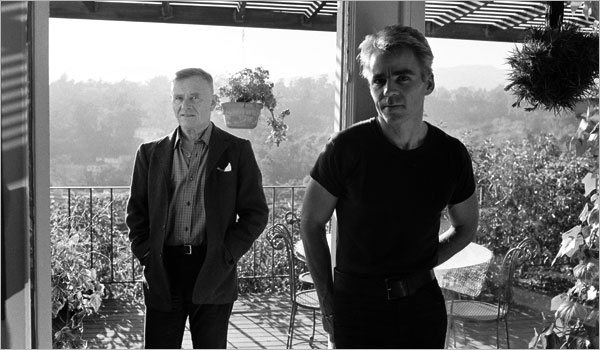
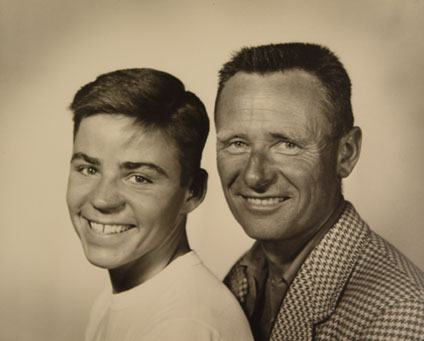
Today’s cinema adventure: Chris and Don: A Love Story, a 2007 documentary detailing the 34-year relationship between acclaimed writer Christopher Isherwood and his life partner, artist Don Bachardy. Practicing documentary filmmaking at its finest, directors Tina Mascara and Guido Santi piece together the remarkable shared life of the couple while also presenting a portrait of each man individually, utilizing footage and narration from surviving partner Bachardy, excerpts from Isherwood’s diaries (read, appropriately enough, by Michael York, who portrayed the author’s alter-ego in the film version of the musical Cabaret, based on Isherwood’s Berlin Stories), interviews with various friends and archivists, and copious home movies and photographs of the couple’s life together. The relationship, which began when the 48-year old British expatriate author met the 18-year old Los Angeles boy on a beach in Santa Monica and defied the odds- and the cynical expectations of the pair’s acquaintances- to endure until Isherwood’s death in 1986, is presented with a restraint and an objective journalistic detachment which preserves the dignity of its subject matter and results in a cumulative emotional wallop, leaving the viewer moved and uplifted by the triumph of an unlikely love. Documentary purists may quibble over the occasional use of re-enactments to depict key moments in the relationship (presented only in brief, out-of-focus snippets without dialogue) and animations derived from Isherwood’s fanciful sketches from his correspondence to his partner, but these touches do nothing to alter or affect the facts presented. Though the film depicts the lives of a gay couple, it is suitable for all audiences; and anyone who watches it is bound to be, as I was, filled with admiration for two people who disregarded social prejudices from every direction and inspired by their success at building a love to last a lifetime.
Category Archives: Gay & Lesbian
Dog Day Afternoon (1975)
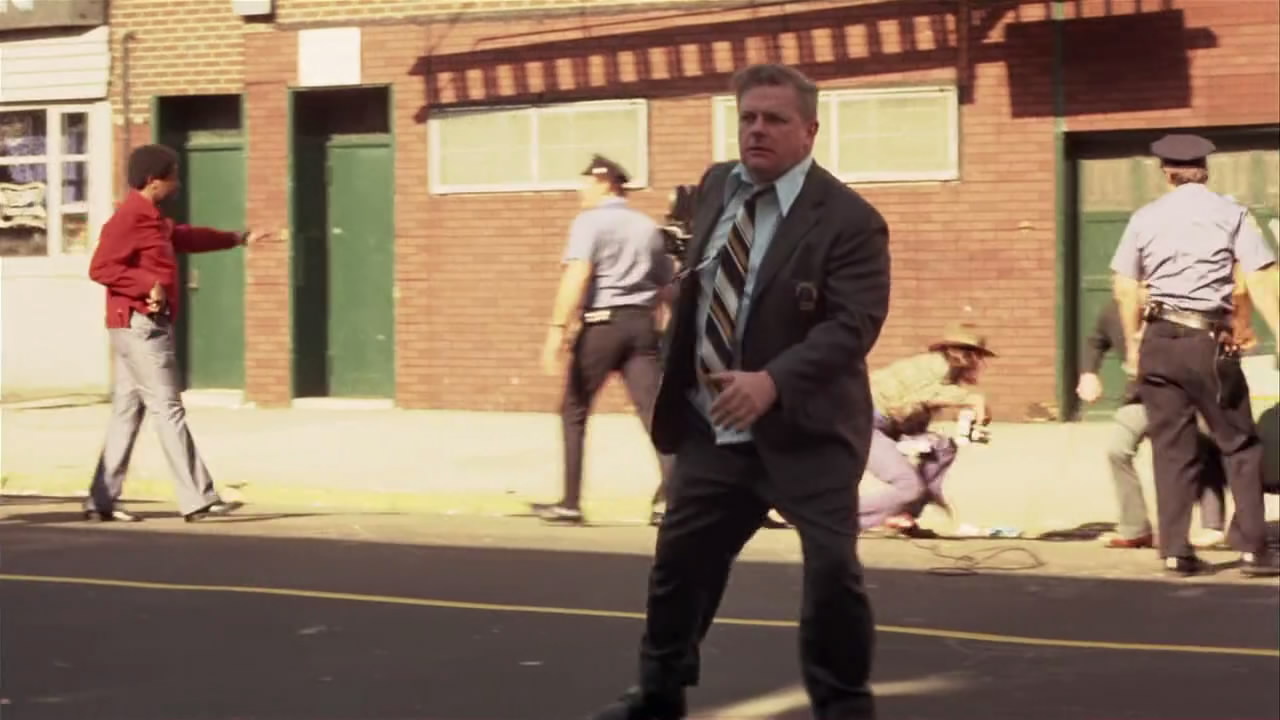
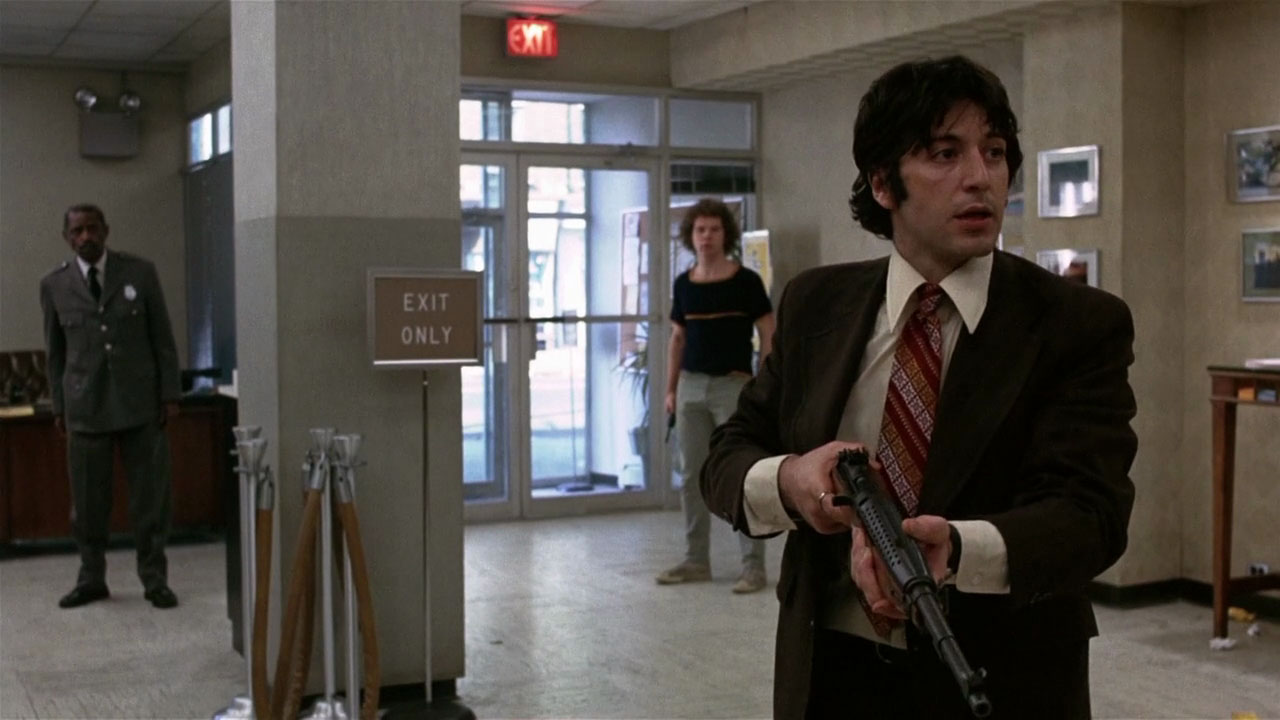
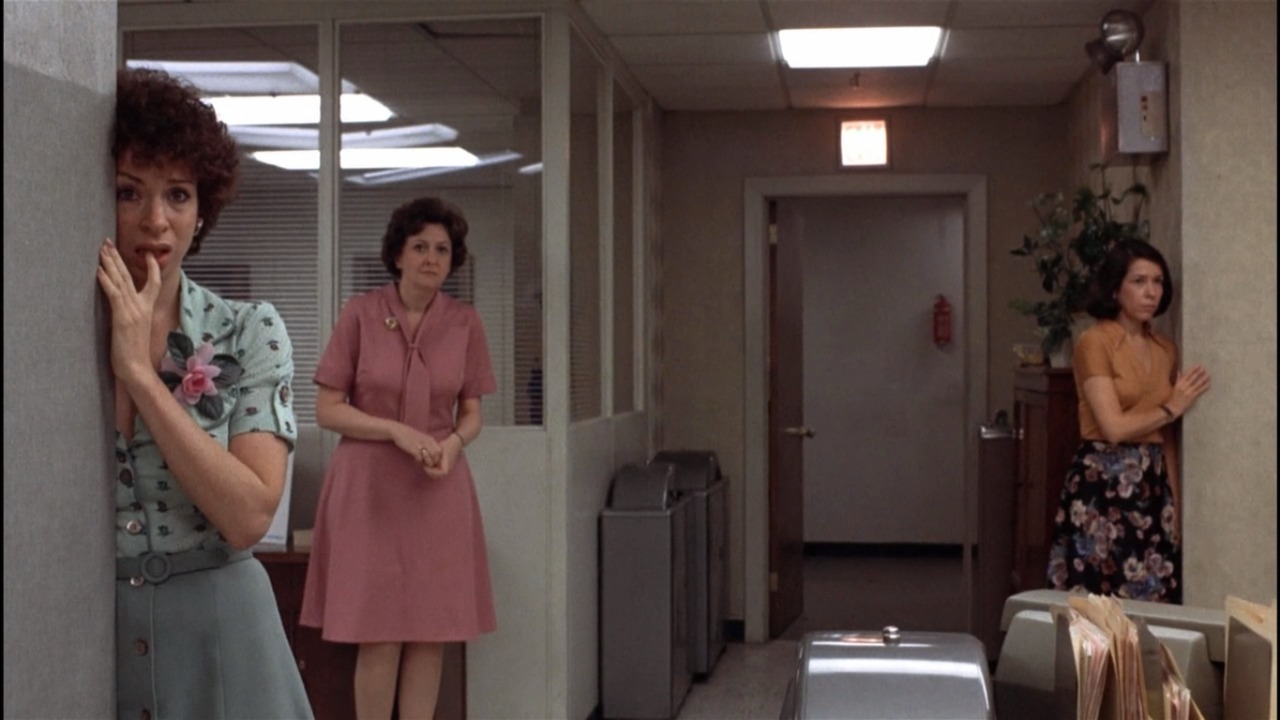
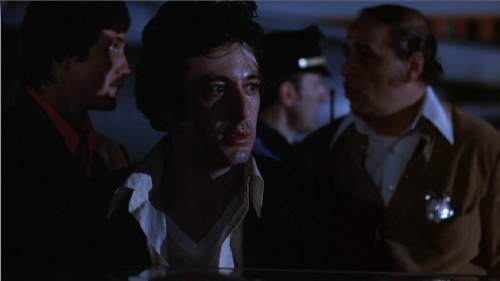
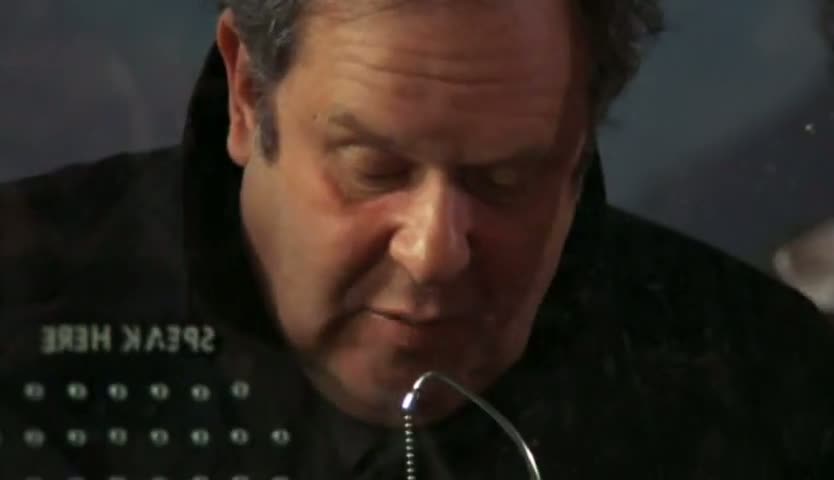
Today’s cinema adventure: Dog Day Afternoon, the 1975 Sidney Lumet feature about a real-life bank heist gone wrong, in which a troubled Vietnam war veteran attempts to obtain the money needed for his gay lover’s sex change surgery and ends up at the center of a hostage situation that turns into a media circus. A prime example of seventies “New Hollywood” cinema, this gripping gem achieved much popularity due to its anti-establishment undertones and the performance of Al Pacino, who was at the height of his rising stardom. Director Lumet, also at the peak of his career, steadily drives the brilliant Frank Pierson screenplay by allowing the story to unfold through the characters, resulting in a slow-but-steady paced film that remains emotionally grounded as it moves through the escalating complications of the plot, building tension by keeping us invested as it moves towards its inexorable conclusion; in addition, by focusing on the immediacy of the human element, Lumet succeeds in creating a microcosmic fable with complex political and social overtones woven into its fabric without ever letting these larger themes overwhelm the immediacy and intimacy of its simple story. The power of the film as a whole is seamlessly connected to the magnificence of Pacino’s embodiment of the likable loser at its center; his sharply honest portrayal allows us to instantly connect with the core of his character as he wavers between gullibility and cynicism, despair and determination, kindness and cruelty- seemingly the entire contrasting myriad of human emotion. It’s hard not to be on his side, no matter how ill-advised his actions may be; we share his giddy thrill when he stirs the crowd with his chants of “Attica!,” and we feel the crushing pressure as he tries to negotiate an acceptable way out of the no-win situation he is in- both in the bank and in his life. Backing him up is a quietly brilliant cast of supporting players, from John Cazale as his slow-witted accomplice and Charles Durning as the police negotiator trying to diffuse the situation, to the ensemble of bank-employees-turned-hostages who convincingly bond with their unwilling captor. Special praise, however, should go to Chris Sarandon, as Pacino’s gender-swapping lover, who delivers his two scenes with a sensitivity and a dignity that provide the bittersweet heart upon which the entire plot hinges. It is worth mentioning, in fact, that the homosexual elements of the film are handled with objectivity and a marked lack of stereotyping- a fact made all the more remarkable by the era in which it was made, which helps to make it stand as strong today as it did upon its first release nearly forty years ago. (As a side note, it is interesting to know that the film’s real-life inspiration, John Wojtowicz, used his proceeds from the sale of his story to finally fund his lover’s sex change; so in a roundabout way, his scheme ended up being successful after all). All in all, Dog Day Afternoon is one of those classics that define an era, a representative work from a time when American cinema blended realism with art to create a kind of visual poetry, a document testifying to the character of our culture and capturing the essence of our concerns. Not only that, it is a reminder of a time when Hollywood gave us stories that grew out of the people in them instead of relying on gimmicky, formulaic plots with the people grafted in- and though I’m not one to bemoan the passing of the “good old days,” it’s certain that today filmmaking establishment would be completely unable- or at least unwilling- to create a film with the kind of simple, non-CG-powered thrills provided here. Of course, you don’t need all these justifications for checking it out. The only reason you need is the best reason of all: it’s a damn good movie.
The Ritz (1976)
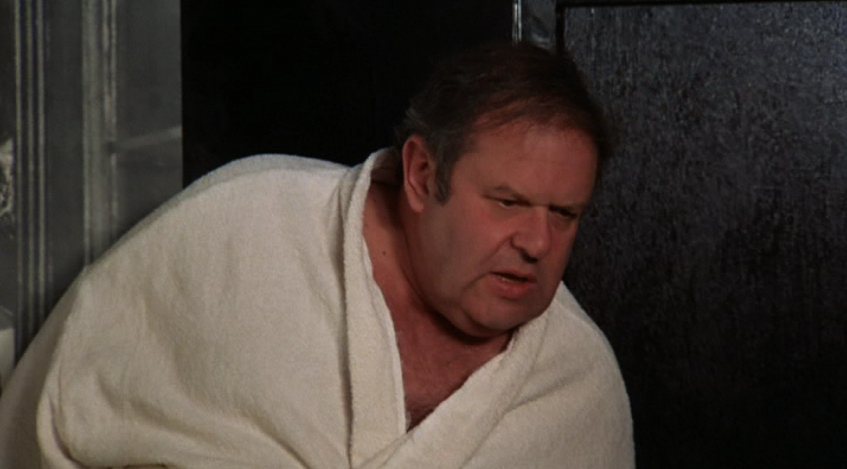
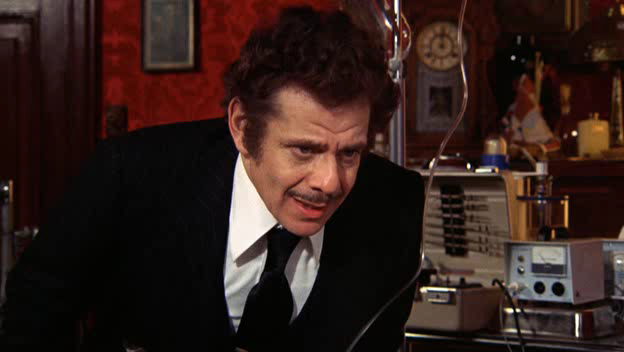
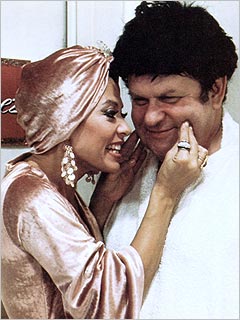
Today’s cinema adventure: The Ritz, the 1976 screen version of Terence McNally’s daring-for-its-day stage farce about a straight Midwestern businessman who hides out from his homicidal brother-in-law by checking into a gay Manhattan bathhouse. Directed by the legendary Richard Lester (known for a fast-paced, edgy style that made The Beatles A Hard Day’s Night into an instant classic) with a screenplay by the playwright himself, the film has aged into something of a curiosity of its time- a glimpse at bathhouse culture during the heady pre-AIDS era of the sexual revolution. McNally (who has become something of a gay poet laureate) made the brilliant move of taking the formula of a classic farce and placing it into what was at the time (and, sadly, to an extent, still is) a socially taboo setting; the result was a risqué piece of popular entertainment which brought underground gay culture into the spotlight and ostensibly took a small step towards making homosexual subject matter more acceptable for mainstream audiences. Unfortunately, by virtue of the requirements of the farcical genre, the characters (both gay and straight) are one-dimensional stereotypes which seem tired and offensive today, and the comedy has been rendered considerably less amusing by years of over-exposure to TV sit-coms in constant rotation. The highlight of the film is undoubtedly Rita Moreno, reprising her Tony-winning Broadway performance as Googie Gomez, a fiery Bathhouse Betty who gets caught up in the intrigue and (fortunately for the audience) performs a deliciously over-the-top lounge act for the boys; also of note are her Broadway co-stars, Jack Weston (as the hapless refugee), Jerry Stiller and future Oscar-winner F. Murray Abraham (as a flaming, self-appointed tour guide who manages to be likeable despite the heaping load of gay clichés he is required to carry), and an amusing turn by a young Treat Williams as a naïve (and squeaky-voiced) private detective. The rest of the cast fill their roles sufficiently well, Lester’s direction is sure-handed, and the look and feel of the seedy setting are captured quite authentically- but in 2012, the edge which once made it all so delightful has become painfully dull. The bottom line: as a piece of social and theatrical history, The Ritz is definitely important enough to warrant a viewing; but if you are just looking for some laughs and entertainment, you might want to skip it- or, better yet, fast forward to Rita’s scenes and just watch those.