BearCity (2010)

Today’s cinema adventure: BearCity, a 2010 romantic comedy about a young man whose secret attraction for big, hairy, masculine men leads him into the insular gay subculture of “bears.” Directed by Douglas Langway, and co-written by Langway and Lawrence Ferber, it attempts to graft the familiar Hollywood-style romance formula onto an exploration of the tight-knit bear community, exposing and poking fun at stereotypes along the way, in order to both appeal to a largely underrepresented sector of the population and to present a sort of primer for those unfamiliar with this rarified scene. Though it has met with a somewhat mixed response from critics and some members of the gay community, it has been sufficiently popular and successful to warrant a sequel, BearCity 2: The Proposal, which is currently being screened at GLBT film festivals across the U.S. and Canada.

Taking its inspiration from the popular TV and movie series, Sex and the City, Langway’s fluffy tale of love and lust in New York centers on Tyler, a 21-year-old “twink” (for those unfamiliar with the term, look it up on Urban Dictionary or ask a gay friend) and aspiring actor who is open and comfortable about his sexuality- but less so about his preferred taste in men. Drawn to older, bigger, hairier guys who don’t fit the “typical” gay mold of attractiveness, he keeps his proclivities a secret from his roommate and his friends; when a potential online hookup lures him to a nightclub for bears, he falls in with a group of hirsute friends who welcome him with open arms, and he begins the process of “coming out of the second closet.” He finds new roommates, gets a job at a bear-friendly coffee bar, and develops a new crush- on Roger, a handsome older “daddy” type who is one of the best-known and popular members of the bear community. The attraction seems to be mutual, but Roger’s sensitivity to the customs and expectations of the micro-culture that surrounds the pair repeatedly thwarts Tyler’s attempts to make a connection. Meanwhile, Tyler’s other new comrades face a variety of issues in their own love lives: his new roommates, Fred and Brent, struggle with the question of remaining monogamous or opening up their relationship to add some spice; and another couple, Michael and Carlos, are pushed apart by Michael’s decision to have weight-reduction surgery. In the midst of all the complications, romantic and otherwise, the whole gang gears up for “BearCity,” a big weekend party which brings the whole community together to celebrate in their own bearish way.

Like most ensemble “rom-coms,” BearCity has a plot tailor-made for the inclusion of one episodic misadventure after another, with which to gently spoof- and reinforce- the familiar foibles and pitfalls inherent in the quest for love. Normally, such a film’s agenda is limited to pleasing its audience with a lot of laughter, a few tears, and, usually, a couple of big “awww” moments leading up to a satisfying conclusion in which love conquers all; this would also be true of BearCity, except clearly, given the community on which it focuses, there is an additional goal. By setting the action amidst gay culture- and a subdivision of gay culture, at that- the film hopes to bridge social gaps and reveal the basic truth that the affairs of the heart, though they may take different forms on the outside, are the same for everyone, regardless of race, creed, culture, or sexuality. It’s not the first film to carry this message, not even the first to deal with that curious subspecies known as “bears;” but what is refreshing about it is that it eschews pretensions of a political or moral agenda and simply concentrates on telling its characters’ stories, devoid of higher messages. Equality is assumed, not defended, and sexual tastes- while they may be subject to lampooning- are accepted without moral judgment. As a result, the movie gets to turn its full attention to the universal concerns which its characters, like everyone else, must address in their various attempts to find- and keep- love.

Even so, BearCity also seems to be very aware that it serves as a sort of travelogue to the uninitiated viewer for whom the world of gay bears is completely unfamiliar; as a result, it takes pains to include a broad view of the community’s peculiarities- including its sexual adventurousness and promiscuity, heavy focus on alcohol and drugs, and a pervading shallowness that seems, more and more, to characterize the popular image of gay life in general. This tapestry of cultural detail provides more than just a backdrop for the proceedings, as the guys’ stories hinge on some of these issues- particularly the ones surrounding sexual mores- and their outcomes are dependent on a coming-to-terms with the particular obstacles they present. In addition, the behavioral observations to be found here have the unfortunate potential for perpetuating stereotypes- though not necessarily the old-fashioned, limp-wristed kind- which continue to create social prejudice against the gay community; despite the fact that the characters, for the most part, are explored to a much deeper level, the surface characteristics they display- however honestly- could be seen as clichéd variations on the familiar theme of “wacky gay neighbor” mannerism. Once again, however, the film is ultimately unconcerned with such factors- the opinions of outsiders are of little consequence to these bears, and in fact one of the film’s most significant themes- one which could even be called an underlying tenet of “bear philosophy,” perhaps- is the importance of being comfortable in who and what you are, without regard to the expectations and standards of others. In BearCity, the only way to find happiness is to be yourself, not who you think you are supposed to be; if that’s not a universal message, I don’t know what is.

Unfortunately, though BearCity succeeds in presenting an authentic portrait of the social atmosphere and lifestyle that characterizes its subjects, it is somewhat less successful in its attempt to craft a smart and compelling romantic comedy. The central love story between Tyler and Roger is sweet enough, if that’s the right word, on the surface; but the pair seem mismatched in a way that goes beyond the obvious differences in age, bearing, and outlook. We want to see them united by the end, but that has more to do with the conditioned response of wishing for a happy ending than it does with any sense that these two are made for each other; their attraction seems little more than just that, an impulse based on surface qualities rather than an instinctive bond between kindred spirits. As for the comedy element, much of the overt humor comes in the form of dialogue which seems far too calculated, as if Langway and Ferber were determined to insert all the standard jokes related to each subject matter they touch upon; the “clever” banter is laced with variations on standard one-liners known universally throughout the gay community, and even if they are less familiar to a straight audience, they still feel forced and deliberate, and as a result, much of the comedy falls flat. Perhaps the intention was to cultivate a further sense of universality, by showing a group of gay guys making the same jokes every other group of gay guys makes, but it has the effect of undermining the freshness which otherwise permeates the film.

BearCity works far better when it leaves behind the larger social scene and brings us into the intimate reality of its characters. In the one-on-one scenes we are given a much more honest and engaging look at the real lives of gay men, and this is where the movie’s more substantial charm becomes apparent. In the subplots surrounding Tyler and Roger’s tentative courtship, we find people who are actively dealing with the real, down-to-earth complications of building a lasting relationship, not the airy fantasy of a first crush. Fred and Brent’s grappling over the question of staying monogamous rings much truer than the moon-eyed wooing of the central couple in an empty bowling alley, and the emotional rift that threatens to rip apart the tender love between Michael and Carlos seems far more important than concerns over what Tyler should wear to BearCity in order to get Roger’s attention. Furthermore, because it grows honestly from the characters and their situations, the comedy that comes in these scenes is much more believable- and therefore funnier- than the predictable humor in the rest of the film. In particular, the comedy of errors that arises when Fred and Brent attempt a three-way play session in the shower is a comic highlight, underscoring the fact that BearCity is at its best when it embraces the opportunity to be different than the mainstream formula comedies it tries to emulate.

The actors, for the most part, are likable and believable enough, although at times the stilted quality of some of their dialogue trips up each and every one of them. Joe Conti is sincere and competent as Tyler, making him a suitable protagonist, albeit less interesting than some of his co-stars. Likewise Gerald McCullouch, as Roger, manages to convey an underlying integrity that keeps him sympathetic and allows us to see his appeal, despite the less savory aspects of his character. Both players are attractive, particularly McCullouch- who, it should be said possesses only marginal qualities that could be described as “bearish,” prompting suspicions that the film’s creators were hedging their bets in trying to appeal to a broader audience. In keeping with the fact that the supporting roles are by far more interesting than the star-crossed lovers in the spotlight, Brian Keane and Stephen Guarino (Fred and Brent) and Gregory Gunter and James Martino (Michael and Carlos) provide much more solid performances, investing their characters with a wider range and deeper authenticity, and generally making us wish they all had more screen time. Alex Di Dio is infectiously charming as Simon, Tyler’s spritely former roommate who later becomes involved as a confidante and advisor in the efforts to win Roger’s affections, and Sebastian LaCause has a nice turn as a Spanish party-bear who threatens to come between the film’s would-be lovers.

As for Langway’s efforts as a director, his work can be described as serviceable, at best. For the most part, he adheres to the familiar conventions of lightweight formula comedy, with little in the way of showy camerawork or flashy editing and not much stylization beyond the occasional obligatory montage. Not that anything more is required here, and truthfully a more self-consciously arty approach would most likely make BearCity insufferably pretentious. Nevertheless, at times the movie has a vaguely amateurish feel, as if Langway (both as director and screenwriter) were trying too hard to fit every ingredient into the soup pot. In addition, the elements which border on stereotypical would perhaps have seemed less so with a more delicate, thoughtful approach behind the camera, though it’s hard to level a criticism over something that might have been. In the same vein, it’s difficult to criticize his soundtrack choices, although one might have wished for a bit more imagination and variety in the selection than what we are given- a bland collection of disco-lite club music which may capture the feel of the community but seems disconnected from the action on the screen.  Nevertheless, insofar as he gives us a genuine and clearly affectionate depiction of the world he showcases in his film, Langway’s work is, more-or-less, successful.

BearCity is a movie that carries a social importance heavier than its actual content; by showcasing the life of a culture rarely represented on screen (unless as a source of humor, as in John Waters’ A Dirty Shame), it represents a bold effort to cross the boundaries of social convention and promote true understanding and equality, even though such an issue is outside the scope of its plot. Perhaps even more significant is its revelation of prejudices and social gaps that exist within the gay community itself; the bear movement has largely developed as a reaction against the ostracization of men who fall outside the accepted standards of male beauty celebrated by the “mainstream” of gay society, and the movie makes it clear that there is still a lack of understanding and acceptance between these two factions of the culture. This factor, too, is beyond BearCity’s intentional purpose, except at an observational level, though it does play a role in the plot insofar as it provides the inner conflict that initially catapults its protagonist into a strange new world and provides the motivation for Roger’s reluctance to become involved with someone from outside the community. With so much riding on its shoulders, it is admirable that BearCity does not fall into the trap of taking itself too seriously and playing into its own importance; it would be even more admirable if it were a better film. Still, in its best moments it offers surprising depth and disarming honesty, and acquaints us with memorable characters who remain with us after the credits roll; and even in its worst moments, it is harmless and likable, a charming bit of wish-fulfillment fantasy that satisfies the universal need to believe in the power of true love, no matter what your preferences are with regard to gender- or body hair.

http://www.imdb.com/title/tt1426320/

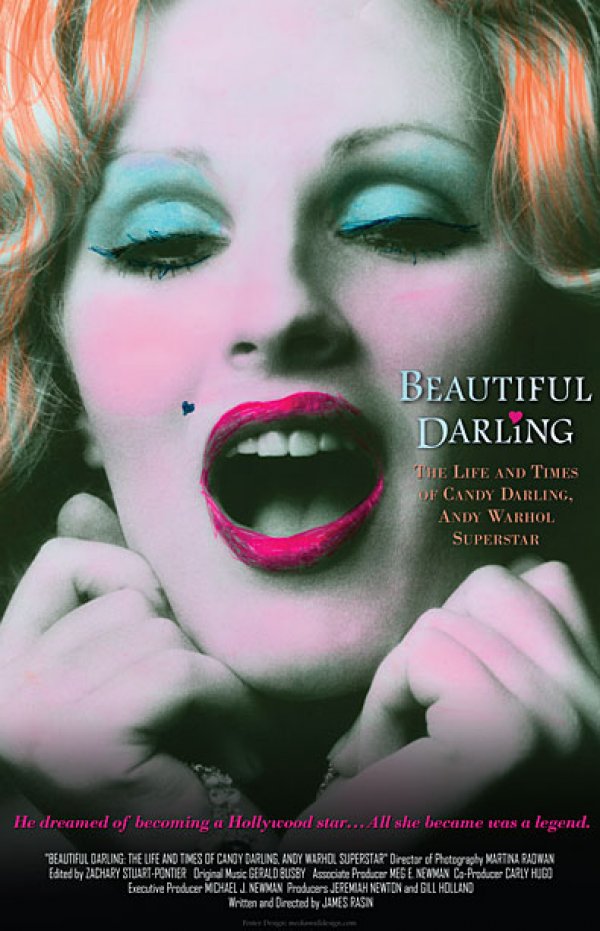
Beautiful Darling (2010)

Today’s cinema adventure: Beautiful Darling, a 2010 documentary feature focusing on the life of pioneering transgendered actress and Warhol “superstar” Candy Darling, co-produced by her longtime friend and roommate, Jeremiah Newton, and featuring archival and newly-conducted interviews with numerous of her famous and not-so-famous contemporaries and colleagues.  First premiered at the Berlin International Film Festival in 2010, it has since been shown at dozens of similar events around the world, as well receiving special screenings at several prestigious art galleries and enjoying extended commercial runs in major metropolitan cities across the U.S.

Written and directed by James Rasin, the film frames its examination of Darling- who began life in Queens as James Lawrence Slattery- through Newton, whose close relationship with the pop subculture icon gives him unique insight into her personality and her story.  As he prepares to have her cremated remains buried- along with those of his own mother- nearly 40 years after her death, he reminisces about her and shares his extensive taped interviews with such figures as Tennessee Williams, Valerie Solanas, Jackie Curtis, and Darling’s own estranged mother, conducted at the time of her passing in an effort both to come to terms with his grief and to create an archive documenting her personal history and relationships.  Combining this material with contemporary interview footage of former friends and associates (Paul Morrissey, Fran Lebowitz, Holly Woodlawn, Julie Newmar, Bob Colacello, Gerard Malanga, and many others) and excerpts from Darling’s personal diary (read by actress Chloë Sevigny), as well as a wealth of photos, both personal and professional, and film clips from her storied career, Beautiful Darling constructs a portrait of its subject as a brave and determined individual who pursued a personal dream against the societal norms and expectations of the era and became a counterculture icon and alternative role model as a result.  It also goes past the campy, glitzy surface of her persona and attempts to show us the very real person behind it, allowing us to feel a connection to her as a human being and bringing home the bittersweet story of a person whose hard-won success was marginalized and yielded little in terms of personal reward, and whose premature death from cancer at the age of 29 prevented her from living to see the gradual change that has led to greater acceptance of transgendered individuals and might have brought her greater recognition within the mainstream.

Rasin’s reverence for his subject is clear, as is the adoration of her former companion, Newton, as he lovingly shares his memories and the personal effects he has cherished from their time together; all the rest offer their individual perspectives on Darling, some more charitable than others, but mostly with fond appreciation and affection.  Of course, a multitude of interpretations and attitudes emerge regarding her motives, her character, her sexuality, her talent- but these stand out in contrast to the private voice of Darling herself, which reveals a smart, savvy, self-aware person, fully aware of her role in the circus that surrounded her and- most poignantly- increasingly worn out and disillusioned from the continual struggle to embody the glamorous movie star fantasy she had committed her life to making into a reality.  The ultimate impossibility of achieving that goal only to serves to make her considerable accomplishments all the more triumphant, and her refusal to give it up- even as she lay on her deathbed posing for a final glamour photo- inspires us and moves us with unexpected emotional resonance.

There are moments throughout Beautiful Darling that touch us with an immediate sense of humanity- the numerous clips of Candy in performance reveal the spark that elevated her above the level of just another drag act, the juxtaposition of early childhood photos with the various reminiscences from her mother and other figures from her former life as a boy give us a glimpse of her monumental struggle to find her identity, and Newton’s tender concern surrounding the arrangements for her impending burial allow us to share his sense of closure over his belated final farewell to his friend.  It is the power of these elements that make the film a superb documentary; there are few revelations here regarding the historical events of her life or her associations, though there may be some surprises for those viewers unfamiliar with her career.  The usual dominant themes, recurring in any examination of the time and place in which Candy enjoyed her heyday, are present here (the extreme, drug-saturated party atmosphere, the callous fickleness of Andy Warhol, the peculiar blend of degrading squalor and ostentatious glamor), and the archival footage and photos give us a titillating glimpse of the legendary settings in which pop-culture history was made (Warhol’s Factory, the back room at Max’s Kansas City, the streets of Greenwich Village); but what sticks with us, when the film is done, is the sense of Candy as a person, a bridging of the gap between her extreme and unique experience and our own, probably more mundane lives.  We are left with a feeling of respect for her bravery, and empathy for her deep longing to simply be herself; it’s a struggle with which we can all relate- gay or straight, male or female, conservative or liberal- and one which ultimately defines our lives, whether we decide to participate in it or not.

It is this universality that makes Beautiful Darling a powerful film, though it also succeeds in entertaining and informing us, and offers us the opportunity to become familiar with its charming and beautiful subject.  By appealing to that part in all of us that identifies with Candy’s inner yearning, Rasin’s movie challenges us to confront not only our own issues of identity, but our assumptions and prejudices about sexuality and gender as well.  Though this is not overtly a film about the evolution cultural attitudes towards transgendered individuals, it gives us dark hints about the very real danger a person like Candy Darling faced in mid-20th-Century America, and invites us to compare our contemporary level of tolerance with that of her day.  Certainly there has been progress, but Beautiful Darling begs the question: how far have we really come in our acceptance?  We have yet to see a mainstream media star who is transgendered, Divine and RuPaul (cross-dressers both- not transsexuals) notwithstanding.  Perhaps that day will come, eventually, and when it does, Candy Darling will finally take her place as the true pioneer that she was.

http://www.imdb.com/title/tt0960730/

Parting Glances (1986)

Today’s cinema adventure: Parting Glances, the 1986 first (and only) feature by writer/director Bill Sherwood, hailed as a landmark in the history of gay cinema and also notable for featuring actor Steve Buscemi in his first major film role.  Made on a shoestring budget in 1984 and finally released two years later, it was chosen as the first movie to be restored by the Outfest Legacy Project in 2007, and it still stands today as one of the most refreshingly authentic representations of gay life yet to be seen on the American screen.

Shot entirely on location in New York, the film follows a young upwardly mobile couple, Michael and Robert, through the events of a 24-hour period; Robert is preparing to leave for a two-year work assignment in Africa, while Michael, facing the prospect of being left alone, ponders the uncertainty of their future together- as well as the inevitable demise of his AIDS-infected ex-boyfriend, Nick, with whom he still shares a deep bond.  As the couple attend a dinner party with Robert’s boss and then a farewell gathering with their friends, the movie gives us a cross-sectional slice-of-gay-life view of mid-eighties New York, using the various interactions and activities of its characters to explore not only the relationships at its center, but also the concerns and issues that affect them as a community and as individuals.

One of the primary reasons for the importance of Parting Glances, of course, is the window it provides into the days when the AIDS epidemic was at its height; it was a time when being diagnosed with the disease was, in essence, a death sentence, and the gay community was being ravaged.  This humble little film was one of the first to deal with this issue, and certainly the first to treat it with candor rather than with alarmist sensationalism.  Though only one of the characters is afflicted by the virus, it is clear through the conversations and situations we are privy to throughout that it’s a situation that deeply affects them all; it hovers around the edges of their lives like the ominous Don Giovanni-inspired specter that appears to Nick in a few key scenes, a factor in everything they do, say, or plan.  Despite its omnipresence, however, the subject of AIDS does not receive the kind of dour and mournful treatment one might expect, particularly from a film made in the midst of its darkest hold on the hearts and minds of the gay community; nor is it handled with the precious, maudlin sentimentality of so many of the movies that came after.  On the contrary, though its weight and seriousness are never in question, Parting Glances takes a disarmingly light-hearted approach to the disease: Nick does not play the morose and tragic victim; his ultimate decline and fall are a given, but, for now at least, he is still relatively healthy, and his brash,  vibrant personality is the heart of the movie.  He faces his fate with staunch acceptance, yes, but also with a hearty helping of gallows humor and nothing-to-lose directness.  The dire eventuality of his situation is implicit, and this film feels no need to hammer the audience with it; its focus, rather, is on the present moment, and the opportunity it affords for taking stock, seizing the day, and perhaps most importantly, tending the needs of the heart.

Though AIDS looms heavily over Parting Glances, it is by no means the only subject with which the film concerns itself.  The central storyline, after all, deals with the relationship of Michael and Robert, and its future- or its lack of one- is not contingent on a life-threatening disease; rather, it hinges on their own respective ambivalence, their fear of commitment, and their ability to be emotionally available to each other.  In short, the obstacles in their joint path, though they may be somewhat obscured or confused by the comparatively minor attendant factors of same-sex unions, are the same ones faced by any couple, gay or straight; the film does an admirable job of underlining this universality, placing the pair in juxtaposition with other couples, straight and not-so-straight, throughout its proceedings, and while it makes no judgments regarding the validity or moral superiority of any of these relationships, the dynamic between our two protagonists seems to stack up at least as favorably, more or less, as any of the others.  Michael’s relationship with Nick is also a key factor here- their easy chemistry and bantering rapport contrast sharply with the often strident interactions of Michael and Robert, opening up questions about compatibility and the line between romance and friendship- particularly among same-sex partners.  There are plenty of non-romantic relationships on display here, too: Michael and several other characters connect closely with Joan, the “hag” who hosts the going-away party and serves as a sort of combination best gal-pal and den mother; there’s also Robert’s boss and his wife, who bond with Robert and Michael, respectively; Robert’s former high school girlfriend, now married but still a confidante; and a number of other friends and acquaintances who interact with the couple and each other throughout the course of the film.  All of these exchanges offer insight into the social tapestry of this insular community, and key us into the pulse of this specific time and place, as well as revealing the repetition of timeless patterns and themes within the sphere of human connectivity, gay, straight, or anywhere in between.

It might seem like there’s a lot going on in Parting Glances, and of course, there is; but despite its busy agenda, it never feels as if it were packed too full, nor does any of it seem forced.  Thanks to Sherwood’s witty, flowing screenplay, all the major issues and themes work their way unobtrusively into the dialogue, weaving through the conversations naturalistically and convincingly instead of being introduced as didactic rhetoric; these are real people discussing their lives, not mouthpieces presenting a case, and as a result, the movie feels like a stimulating party instead of a public debate.  This organic quality is enhanced all the more by Sherwood’s engaging cast, who are clearly having a wonderful time as they present us with a wide variety of familiar “types” (as opposed to stereotypes) within the gay and gay-friendly community.  As Michael and Robert, respectively, are Richard Ganoung and John Bolger; both are attractive and likable, but they are not a cookie-cutter couple- each has their own distinctive persona, and they both clash with and complement each other in a highly realistic and believable manner.  Kathy Kinney plays Joan, providing a grounded, female presence with a character that rises above potential cliché; she is both insightful and incorrigible, and she conveys- subtly, and without self-pity- the resignation of a life possibly lived vicariously through her friends.  Also memorable is Adam Nathan, as a self-assured young “twinkie” who sets his sights on Michael; ready to claim the world from an elder generation that is not willing, quite yet, to give it up to him, he succeeds in being endearing instead of insufferable, and his scene with Nick on the stairs outside the party is a highlight of the film.  The standout performance, though, comes from Buscemi, who does a remarkable job of playing Nick; the character is doomed but delightful, a combination which could easily seem glib and artificial in the hands of a lesser actor, but he pulls it off superbly, making it clear that his sardonic wit and his edgy personality are part and parcel of who he is- not an affectation in response to his status as a member of the walking dead- and that underneath them there is a large and generous heart.  His desire to leave behind a legacy for his friends goes beyond the material items in his last will, semi-substantial though they may be (he is, it seems, a minor rock-and-roll star); he actively means to make a difference in their lives, and Buscemi’s work allows us to see the genuine love at the source of these efforts.  Lest we think his Nick is too good to be true, though, he still manages to get across, in little ways, here and there, that he is not altogether okay with what is happening to him, despite his brave face; but this never gets in the way of the positive energy he exudes throughout.  It’s a performance that should have made Buscemi a star, much sooner, and would have, no doubt- if the movie had been more widely seen.

There are numerous other enjoyable qualities here, not the least of which is the way the film captures the look and feel of mid-eighties New York; this is no surprise, of course, considering that is when and where it was filmed, but some credit is still deserved by the production designer (John Loggia), the art directors (Daniel Haughey and Mark Sweeney), and the set decorator (Anne Mitchell) for deciding what should go into the series of well-appointed homes and apartments that provide the setting, as well as to cinematographer Jacek Laskus for deciding how to film it, with special kudos to all involved for making it look so polished despite the bargain-basement budget.  Also contributing to its evocation of time and place are the soundtrack choices, a combination of songs by Bronski Beat and original, very posh-sounding piano music by Mike Nolan, with some operatic selections thrown in, by way of Nick’s LP player, for good measure.

It seems somehow wrong to say that a movie made at the height of the AIDS crisis, featuring AIDS as a major subject and set among the gay community, is entertaining and fun; but that’s exactly what Parting Glances is.  Though it is unquestionably dramatic in its overall scope and intention, it makes sure even the heaviest matter is carried along by an effervescent current, and precisely because it doesn’t continually remind us of how poignant and moving it should be, it ends up being extremely poignant and extremely moving- particularly, I might add, for those who have lost friends like Nick in the long battle with AIDS.  As its title suggests, this is a movie about saying goodbye, not just to the dead, but to the living as well- the continuation of Michael and Robert’s relationship is by no means a sure thing at the end, after all; but bittersweet as it may be, it is also a film about moving forward.  The script clips along, the actors and the camera are constantly in motion, and the entire flow carries us through to the end, leaving us with a tangible momentum.  People come and go, things change, but the world keeps moving, and maybe part of what Parting Glances suggests is that our only real way of leaving something of ourselves in the mix is to make sure our lives touch those of the people who surround us.  In this day and age, it’s possible to watch Parting Glances and entertain the hope that Nick will be one of those lucky survivors who managed to hang on to life until medical science caught up enough with the disease to at least stave off death, and that he, like so many millions today, could still be out there thriving as an HIV-positive man.  If so, he would be luckier than the film’s creator, who passed away from the disease in 1990, without making another film and without surviving to see the way this one was embraced and revered by his own community, as well as by the larger cinematic world.  His movie stays with us, however, and through it, he continues to touch lives today.  So perhaps, truly, he was a very lucky man indeed.

http://www.imdb.com/title/tt0091725/

C.R.A.Z.Y. (2005)

Today’s cinema adventure: C.R.A.Z.Y., a 2005 French-Canadian feature by director Jean-Marc Valée about the experiences of  a young man wrestling with his sexual identity as he grows up in a large, conservative, male-dominated Montreal family through the sixties and seventies.  The screenplay, based on the real experiences of François Boublay (who co-wrote with Valée), took 10 years to complete, but the end result was one of Canada’s most successful films of all time, becoming a box office hit and sweeping the Genie awards (the Canadian equivalent of the Oscars, for those who don’t know) with 11 wins out of 13 nominations.

Beginning with his birth on Christmas Day, 1960, the film follows the memories of Zac Beaulieu, whose family consists of three older brothers and (eventually) one younger; their father, Gervais, is a loving but authoritarian working class man with traditional ideas of masculinity, and their mother, Laurianne, a doting but submissive woman with deeply-held Catholic beliefs.  Over the course of twenty years, Zac endures the burden of being “different” in the midst of this painfully average, sometimes dysfunctional clan.  First he is branded as a “special” child with a gift for healing; then, as he grows older, he must face the ever-growing challenge of coming to terms with his homosexuality, an unthinkable and insurmountable obstacle to harmony with his family- and in particular, to his relationship with his beloved father.

With Zac’s journey to maturity and self-acceptance at its core, C.R.A.Z.Y. takes its audience on an inside tour of middle-class family life in suburbia; not only do we experience the painful struggle of a young gay man trying to first deny, then repress his sexuality in an un-accepting home environment, but also the other all-too-common scenario of drug addiction, as Zac’s older brother battles an escalating habit that is discouraged but enabled by parents without the knowledge or skills to make a difference.  Lest it seem, however, that the film presents only a bleak and dour perspective, rest assured that the conflicts and tragedies are woven delicately into a total picture that includes a great deal of quirky humor, as well as portraying the many small joys and transcendent moments that bind a family together- and the private experiences, indelibly printed in memory, that give meaning to an individual life.  In the end, though we see Zac and his family embroiled in much turmoil throughout- and mostly with each other- Valée’s film is about love, and its power to redeem and unite, no matter what seemingly irreconcilable differences may exist or how many mistakes have been made between us.

One of the key elements that contributes to the film’s effectiveness (and it is very effective) is the way it captures the third-quarter-20th-Century setting, giving it a particular significance for viewers who, like its lead character, grew up in this era.  Part of the way it does this, of course, is through its superb scenic and costume design; there is an authenticity to the choices that has to do with capturing the everyday look of the era, rather than attempting to give us a flashy, definitive period style.  It is however, the use of music that conjures the period most noticeably, all the more so because it plays a key role in the plot.  Music provides a common bond between father and son, and is an important outlet for both characters.  Highly specific choices are featured prominently throughout: for instance, father Gervais has a fondness for singing along with “Emmenez-moi,” by Charles Aznavour, mirrored later by Zac’s impassioned bedroom performance of David Bowie’s “Space Oddity;” and in one of Zac’s flights of imaginative fantasy, he has a vision of his epiphanic levitation in the church to the strains of the Rolling Stones’ “Sympathy for the Devil.”  The heavy use of the above artists, along with Pink Floyd, Patsy Cline and others, led to the somewhat staggering fact that more than half the film’s budget went to the acquisition of rights for these songs, and director Valée took a cut in his own salary in order to ensure their inclusion.

The excellence of C.R.A.Z.Y. is the result of top-notch work from everyone involved, and it’s an example of a film that is so dependent on the seamless combination of its elements that it seems unfair to single out individuals for specific praise.  Nevertheless, a few standout cast contributions deserve mention.  Most obvious, of course, is the performance of Marc-André Grondin as Zac; whether he is willfully disregarding his father’s behavioral strictures, furtively eyeing his cousin’s teen-dream boyfriend, determinedly trudging through a blizzard as penance for his sinful thoughts, or finding an outlet for his stifled passions through his love of music, he lets us inside and allows us to feel like participants in his story.  The performers who leave the deepest impression, however, are Michel Côté and Danielle Proulx, completely authentic as his father and mother; they inhabit this pair without judgment or caricature, showing us their many flaws but also the good intentions and endearing qualities that make them lovable.  Côté in particular gives an unforgettable portrait of a man who is at once larger than life and touchingly human; volatile, masculine, and charismatic, he commands the screen and makes it very clear why this relationship is so important to Zac.

C.R.A.Z.Y. is not a film that invites in-depth analysis of its underlying themes and archetypal symbols, though these things are present; rather, it is a heartfelt, sometimes painful slice-of-life movie filled with bittersweet nostalgia, ironic hindsight, disarming levity, achingly familiar moments of commonality, flashes of revelatory observation, and a cumulative emotional resonance that subtly builds to an unexpectedly powerful climax.  It accomplishes a rare feat for this type of movie, allowing us to be drawn so completely into this family that we truly feel a part of it.  This is partly due to the way Valée and Boublay show us the kind of mundane everyday details that become shared touchstones through repetition and associated memories, and their effort to invest each member of the family with as much individual life as possible, even the brothers whose smaller roles in the proceedings leave them more or less in the background; the final effect is that these characters seem like real people in our lives, people that we know intimately, and this serves to deepen our connection to them and give their experiences the weight of shared universal memory.  Perhaps most importantly, the movie possesses a sincerity which derives largely from the genuine love it has for all of its characters- even as it reveals their maddening imperfections and their often inadequate skills at coping and communication.  This quality alone makes it superb, far-and-away superior to so many similar cinematic memory-plays that start promisingly and then devolve into just another manipulative tear-jerker before the final scenes; but what makes it a truly remarkable film is the primary perspective it takes in its exploration of the trials and tribulations of family life.  With Zac as our window into the Beaulieu clan, our sympathies are naturally transferred to him, and we are therefore led to identify with his personal conflict, which is, of course, the central focus of the film.  His gradual progression- an anguished process of fear, denial, self-loathing, and self-deception, built around his emerging homosexuality-  is thereby made relevant to audiences without firsthand understanding of his experience, a sadly familiar one to millions of gay and lesbian people the world over. It’s a heartbreakingly complete and specific portrayal: Zac’s fear of humiliation and rejection from his family, his desperate bargaining through prayer to have his “curse” removed, his rejection of faith and rebellion against normalcy even as he continues to hide his true nature; all these and more are important facets of the movie’s dominant subject matter, and though it’s all so common as to border on cliché, it’s a social phenomenon that has been long obscured by stigma.  By investing us in Zac from the beginning of his life, the movie opens it up to be shared- and experienced, at least through extension- by all.  I may be wrong, but I can, unfortunately, think of no American film that even comes close to making the reality of growing up gay so painfully accessible to a wider audience; I invite your corrective examples, because if there are such films, I very much want to see them.

http://www.imdb.com/title/tt0401085/

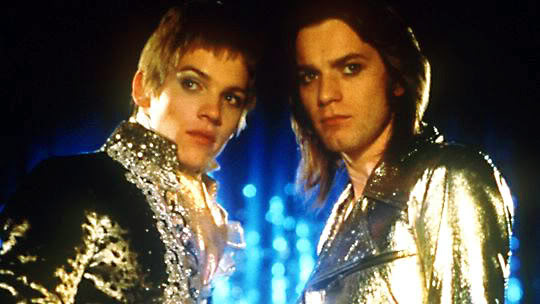
Velvet Goldmine (1998)

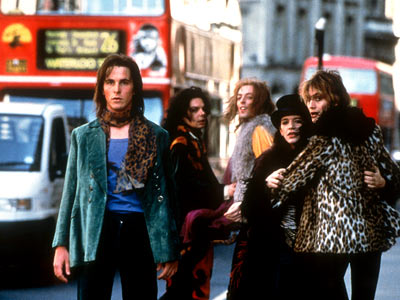
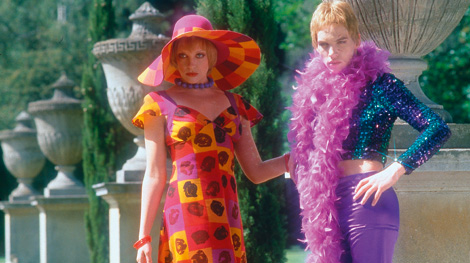
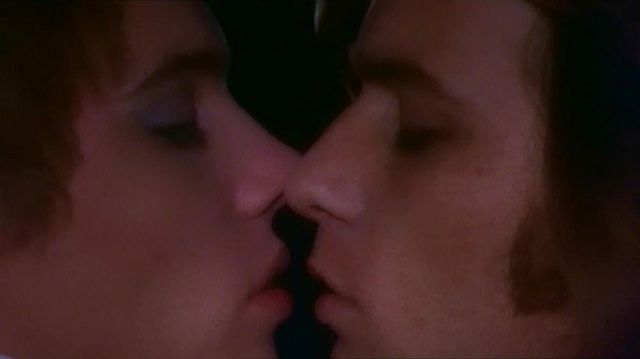
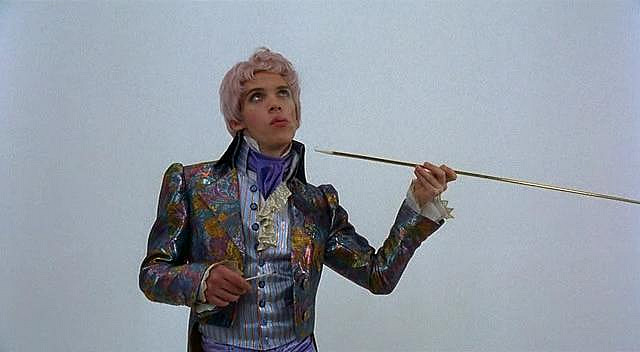
Today’s cinema adventure: Velvet Goldmine, Todd Haynes’ 1998 glam-rock fantasia with sexy, charismatic performances by Jonathan Rhys-Meyers, Ewan McGregor, and Christian Bale, a film that has gained a loyal and substantial cult following despite the poor reception it received upon its initial release. Boldly structured in the mold of Citizen Kane, it follows the attempts of a journalist to piece together the decade-old mystery surrounding a glam-rock superstar who unsuccessfully faked his own assassination before fading into obscurity. Interweaving scenes of the writer’s quest with flashbacks depicting the rise and fall of his enigmatic subject, Haynes’ film plays fast-and-loose (deliberately) with facts and fictionalizes significant real-life figures as it pays tribute to- and laments the fading of- the musical and cultural mini-era on which its focus lies. To this purpose, the film’s designers have crafted a dazzlingly surreal and authentic recreation of the English rock-and-roll scene in the early seventies, reconstructing the peculiar mix of tinsel, trash, and haute couture that defined the look of the period, as well as the darker, grittier eighties of the film’s parallel narrative. In particular, Sandy Powell’s superb costume designs succeed in capturing both the outrageous fashion of the rock-and-roll glitterati and the more subdued flavors worn by their less-glamorous followers and fans. The sparkling package is wrapped in the vivid cinematography of Maryse Alberti, which evokes the authentic photography of the day so completely there are times you swear you are looking at archival footage.

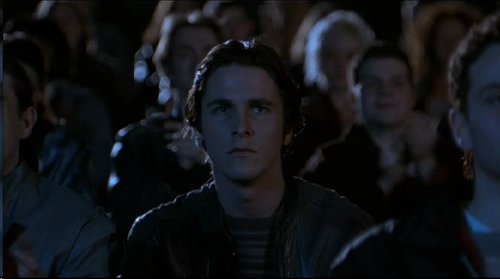
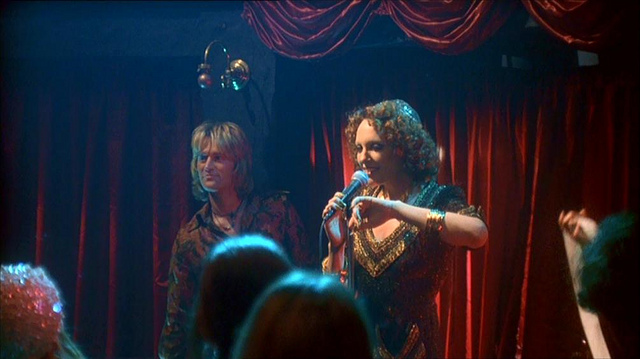
Inhabiting this time capsule world are several superb performers, each in the early stages of their highly successful respective careers. In the key role of Brian Slade is Jonathan Rhys-Meyers, who effectively embodies the ultimate glam rocker, channeling the spirit of David Bowie (on whom the character is heavily based, along with, to a smaller degree, Marc Bolan) and yet investing the performance with his own energy as well- cheeky yet vulnerable, jaded yet naïve, sexually charged yet romantic, he manifests the image of the androgynous bad boy while letting us see into the complex personality beneath it. He is matched by Ewan McGregor (as Slade’s collaborator and lover, Curt Wild- inspired in equal measure by Iggy Pop and Lou Reed), who likewise presents a convincing portrait of an archetypal glam figure- but a distinctly different one, rougher-edged yet ultimately, perhaps, deeper. The two performances complement each other like a dovetail joint, and both men are at their most impressive- and mesmerizing- when they are called upon to perform in the numerous musical sequences, pulling off the full rock star act with exuberant bravado and absolute confidence. In a less showy role- but no less superb- is Christian Bale, playing the journalist and former fan who is haunted by memories of his youthful involvement in the glam culture and of his personal connections to both the iconic stars in the history he is tracing; always a deeply compelling actor, Bale is effective throughout, but he is at his best as the rosy-cheeked youth of the flashbacks, riding the extremes of his adolescent emotions as he tentatively explores his own developing sexual and ideological identity and comes of age in a heady time of seemingly limitless possibilities. Toni Collette is both deliciously tawdry and surprisingly grounded as Slade’s wife Mandy, impressively evolving with the character in an arc that takes her from hippie muse to jaded has-been; and Eddie Izzard is appropriately loathsome as the oily manager who shepherds Slade into the world of rock-and-roll excess.

Despite the considerable strengths described above, however, Velvet Goldmine is not an unqualified success. Haynes is a gifted director, justly acclaimed for his ability to translate complex and esoteric themes into a compelling screen experience, but often criticized for failing to create a cohesive whole; his films often seem more interested in conjuring elemental forces than in using them to work toward a specific purpose. Of course, such a technique allows the audience to form their own personal conclusions; it’s an impressionistic style of filmmaking, and like other impressionistic art forms, it’s not to everyone’s taste. With this effort, his passion for the period and the attitudes it represented is very clear, and he succeeds admirably in approximating the glam milieu and bringing it to the screen. However, the formula he chooses to do so creates some problematic issues: the investigative drama which drives the plot seems a brilliant device for exploring this seminal period in contemporary pop culture, allowing him to explore the what made it such an appealing time for those who embraced its spirit and why its memory and influence linger today; however, the brooding, mournful tone of the mystery- as well as the deeply personal importance placed on discovering the answers by the film’s protagonist- suggest a weighty significance at the core of the nostalgic proceedings that somehow feels misplaced. To be sure, Haynes is presenting a document of a time in which a generation overflowed with the excitement of changing attitudes and the promise of freer personal expression, a time which was to morph all too soon into a glitzy, self-centered era in which shallow, self-destructive excess would take a heavy toll; the collective loss of innocence resulting from this social odyssey certainly spawned the kind of emotional wounds reflected by the characters in Velvet Goldmine, and the healing power of reconnecting with these cultural roots, of rediscovering the spirit that generated the whole process in the first place, is clearly a major part of the film’s intended effect. In these terms, Brian Slade provides the perfect metaphor: hungry for the freedom to be himself, whoever that may turn out to be, he soars into a fantasy world made real- only to eventually succumb to the lure of nihilistic hedonism, transforming his existence into an unsustainable nightmare from which he must eventually choose to escape or die. However, Slade is not an Everyman, not even a glorified one like Charles Foster Kane, and his experiences, though they may resemble a magnified version of those shared by many who participated in the glam sub-culture and the disco era which followed, ultimately seem more the consequence of individual character makeup than a reflection of some greater social phenomenon. More germane to the group experience, perhaps, is Bale’s journalist, burned by the broken promise of his youth and seeking a way to come to terms with the deep longings left unfulfilled; but the plot on which his redemption hinges, the conceit of uncovering the secrets of a former pop icon’s decline and fall, ultimately feels forced. After all, there is no mystery to be solved- the story to be told is so common as to be predictable- and in the end, there are no real answers to be found there, only an implausible plot twist and a phantom wound that will never stop itching. To make a resolution even less palpable, Haynes’ screenplay (from a story written by himself and James Lyons) wraps the plot about a man exploring an enigma in another, larger enigma: invoking the spirits of Oscar Wilde and Jean Genet, he introduces a mysterious, possibly extra-terrestrial gem which secretly links the characters and their histories to a long procession of pop superstars, suggesting that the cycle of fame is some sort of mystical cosmic reflex which affects our social evolution, and even hinting at the deliberate manipulation of our pop culture by an unseen and arcane outside force. Another apt metaphor, and an interesting proposition- one which seems borrowed from the handbook of glam-era theatricality as represented by such flights of fancy as Bowie’s Ziggy Stardust persona, a source of much inspiration to the events portrayed in the film- but in this case, perhaps, a needless complication in an already over-complicated mix.

Speaking of Ziggy Stardust, it seems necessary to also remark that the heavy fictionalization of the figures represented- which amounts to the creation of a sort of alternate glam universe- has been a point of considerable controversy surrounding Velvet Goldmine. Taking well-known real-life icons and re-inventing them for dramatic purposes is an acceptable tactic that goes back, no doubt, to the very beginning of story-telling; however, Haynes has here blended real events so completely into the soup that the result could be very confusing to those unfamiliar with the true history of those involved. Though Brian Slade is not David Bowie, he certainly feels like it; indeed, Bowie himself, initially involved in the project, pulled his support and the rights to use his songs after discovering that the script incorporated elements from unauthorized biographies by his former wife and others. To make matters even more confusing, mixed in with the original musical selections composed for the film are older songs by such glam-era artists as Roxy Music, T. Rex, and the New York Dolls, among others, performed by the fictional singers as if they were themselves the originators. Though I’m not one to quibble about adherence to historical accuracy- after all, my favorite movie is Lawrence of Arabia, and my love for Shakespeare is in no way affected by his fondness for rewriting history to suit his needs- in this case it seems appropriate to suggest that, before making any assumptions based on the recognizability of the figures on display in Velvet Goldmine, it would be wise to do some research and decipher who these characters really are (or, rather, really aren’t).

Nevertheless, Haynes’ film provides many pleasures: the aforementioned musical sequences, mounted with a gaudy theatrical flair that captures the glitter-rock essence to a tee, are the film’s best scenes, nostalgic yet freshly minted; and there are moments throughout that reach through the layers of conceit to grab at your heart-strings, electrifying touchstones that instantly transport you to the memory of some shared, universal experience- the yearning, impossible ache of a teen-aged Bale staring at homoerotic photos of his idols; the sharp humiliation of Collette’s Mandy Slade as she confronts her husband in the midst of his dehumanized, drugs-and-sex-saturated oblivion; the explosive, adrenaline-fueled vitality of McGregor’s first stage performance as Wild (in which, incidentally, he strips naked for his adoring audience). All in all, the exponential popularity of Velvet Goldmine is not surprising, nor is it undeserved: though it may leave us unsatisfied on some nameless level, and though it sometimes feels as though it takes itself far too seriously, its youthful exuberance and its visual perfection go a long way towards making up for its shortcomings; and even if it ultimately leads us to prefer and embrace the real-world history which it distorts for its desired effect, it seems fitting and desirable to find satisfaction in that which is real rather than in a glittery fantasy- and that, come to think of it, is perhaps the true message of Velvet Goldmine.


http://www.imdb.com/title/tt0120879/

Eyes Wide Open/Einayim Petukhoth (2009)

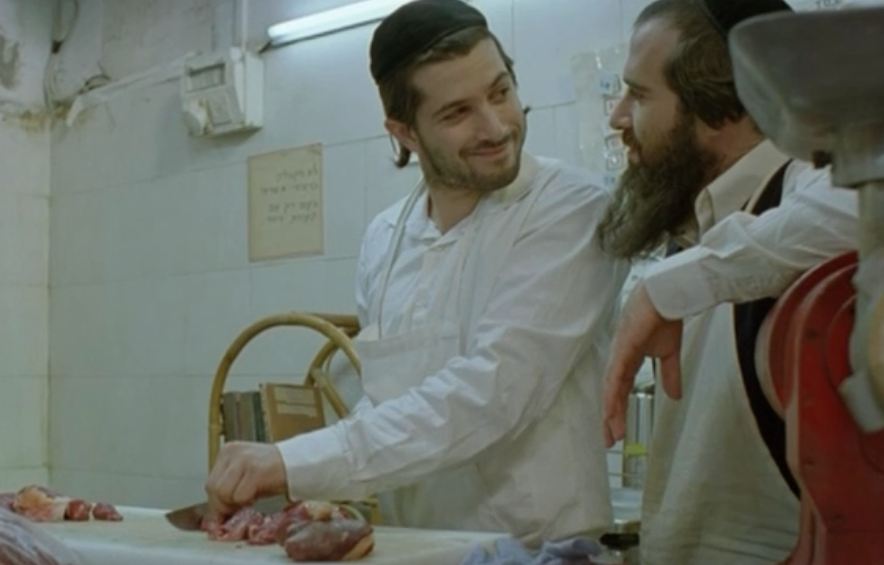
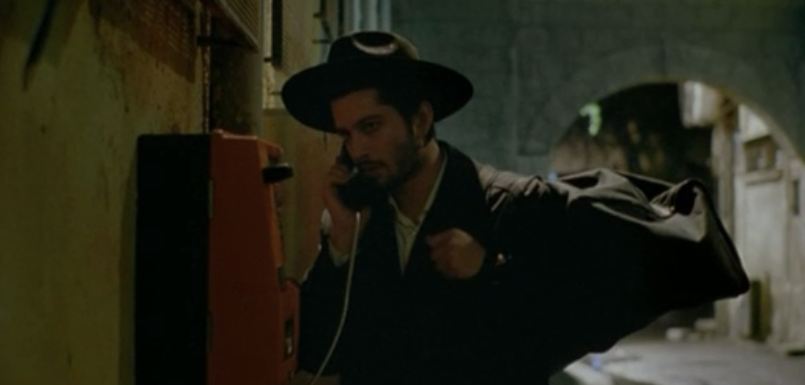
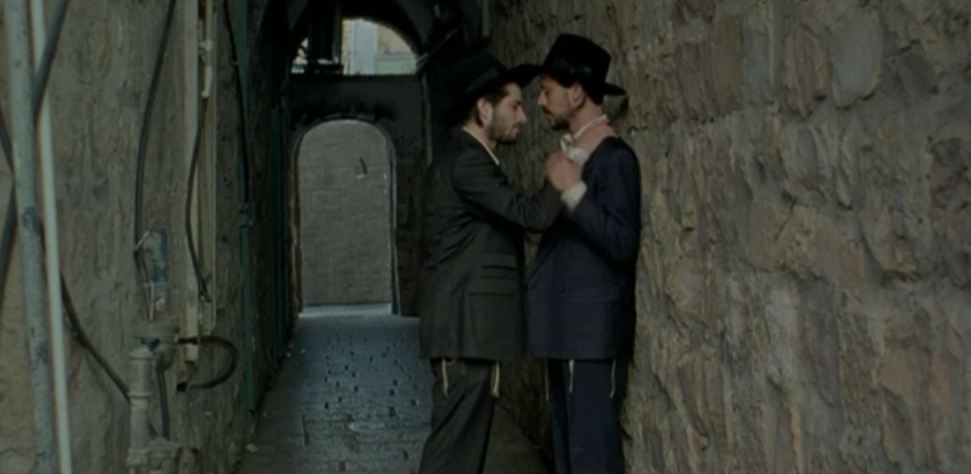
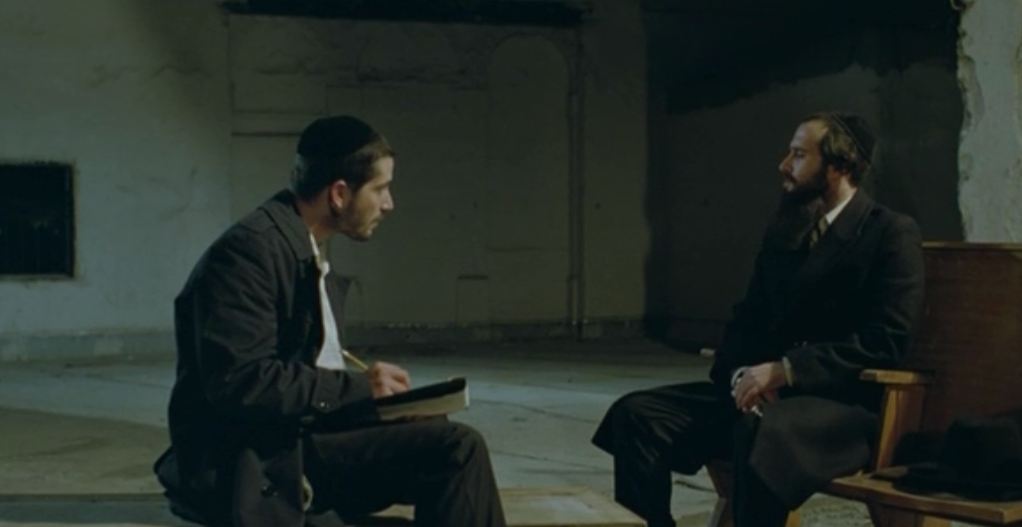
Today’s cinema adventure: Eyes Wide Open, a 2009 Hebrew-language film by first-time director Haim Tabakman depicting the spiritual and social conflict sparked by a blossoming homosexual relationship within a deeply Orthodox neighborhood of Jerusalem. One of the growing number of gay-and-lesbian-themed films to come out of Israel in recent years, it is the story of Aaron, a dedicated husband and father who inherits his father’s butcher shop; when he takes on a young homeless student as an apprentice, a forbidden attraction develops between them, eventually growing into an affair that tests his faith and threatens to cost him not only his beloved family but his place as a well-liked and respected member of the community as well. A film that treads on potentially dangerous, controversial ground, it handles its subject matter with respect for both the valued traditions of the Orthodox Jewish Church and the importance of fulfilling the needs of the heart; the screenplay by Merav Doster carefully constructs its narrative around the delicate issue at its center, choosing to offer up a chronicle of a man’s personal crisis of faith rather than an indictment of attitudes, and to focus on the honest examination of emotional experience instead of on the promotion of a particular agenda, treating its characters with sympathy regardless of which position they hold in the moral tug-of-war being staged. The result is thought-provoking without being inflammatory, moving without being manipulative, and reverent without being precious- a fine example of the kind of slice-of-life drama that achieves its goals simply by presenting its tale in a straightforward manner and allowing the viewer to make up their own mind about the issues raised within.

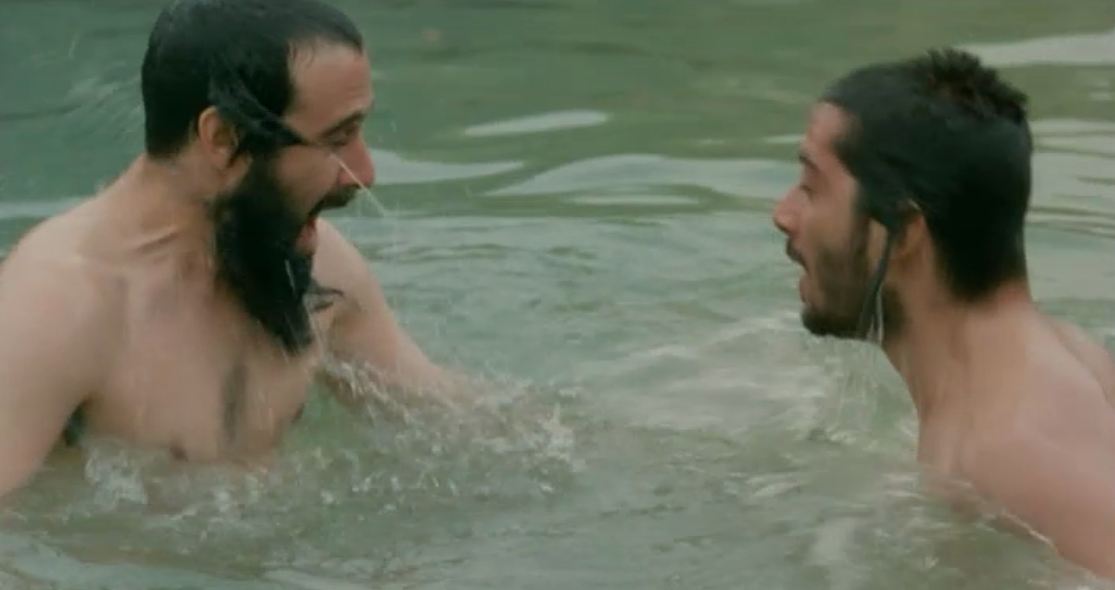
Despite the weighty social and spiritual matters being explored here, Eyes Wide Open is by no means an entirely solemn film. It manages to find many ways to lighten its tone, from the ironic and observational humor inherent in its situation to the more abstract metaphorical connections drawn from the large amount of meat its two main characters must handle throughout; and lest we forget it in all this talk of moral dilemmas and social obligations, this is first and foremost a romance- and a steamy one, at that. The passion between these two men is carefully crafted, building steadily from their first glimpse of each other, smoldering insistently as they grow closer and becoming stronger with each averted opportunity, until it finally explodes in a fervent love scene that is as joyful as it is erotic- and it is extremely erotic, despite (or perhaps because of) the fact that it is not visually explicit. The power of their connection does not end there, however, because the bond is not merely a sexual one; their emotional connection is built just as carefully, and it is this deeper feeling that makes their relationship so engaging and places the stakes so high. For in the end, it is the love they have for each other that turns Aaron’s life inside out, not the mere physical attraction that has brought them together; and it is the convincing portrayal of that love that keeps us invested, sharing with this illicit couple in their happiness and their heartbreak. The credit for this, of course, must go to the two actors who play them, Zoharr Strauss and Ran Danker, neither of whom, as far as I know, are gay offscreen- not that it matters. Both men are charismatic and instantly likable, and they each convey the depth and range of their roles with clarity. In particular, Strauss (who plays Aaron) does a superb job of allowing his inner landscape to show through a necessarily stoic exterior; his is the more complex role, requiring him to wrestle with a much wider range of conflicts than his younger counterpart, and he meets the challenge admirably. Which is not to say that Danker (an impossibly handsome young actor) is overshadowed or outdone; his Ezri is a portrait of a man who is resigned to the necessity of hiding his true nature, but is not ashamed of it- as he reveals in his intimate moments with Strauss when the veneer slides away and his passion and sensitivity shine through. Also delivering fine performances are Tinkerbell as Aaron’s patient wife, struggling with her growing suspicions and doing her best to fight, in her own small way, for her husband’s love; and Tzahi Grad as Aaron’s rabbi and friend, whose loyalty is stretched to its limit as he tries to maintain his support.

Director Tabakman wisely chooses to place the burden of telling the story on his actors, largely using stationary, long takes that permit an uninterrupted flow within the scenes; but he nevertheless brings his visual sense to the film with a keen eye for composing his frames, and he utilizes his Jerusalem setting- beautifully photographed by Axel Schneppat- to underscore the movie’s central conflict with the visual clash between the city’s ancient architecture and its contemporary, urban feel. His greatest accomplishment with Eyes Wide Open, however, is undoubtedly the way he allows it to deliver its full, cumulative effect without trying to tip the scales one way or the other. The scrupulous fairness with which he handles his subject is, in terms of artistic integrity, his greatest strength.

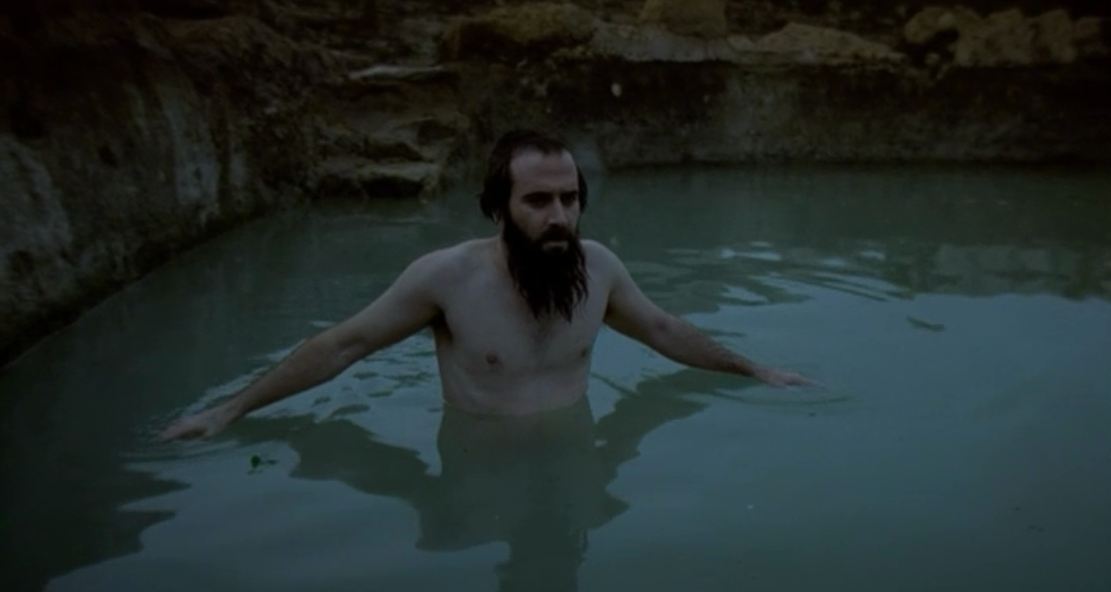
That fairness, however, also opens up the film to its greatest criticism. By refusing to overtly choose a side in this struggle between traditional religious doctrine and contemporary respect for individual freedom, the film risks interpretation as an anti-gay polemic. Certainly its treatment of homosexuality itself is beyond reproach, but so too is its sensitivity to the ancient mores of the Orthodox Hebrew culture; it is far too heavy and complicated a conflict to deserve glib or easy treatment, but those with a more progressive bent might wish for a stronger stance on the side of tolerance and equality. Personally, it is hard for me to characterize a film as anti-gay when it creates such sympathy for its homosexual characters and works so hard to generate hope from the audience for them to be together; and by virtue of exploring the conflict- which is clearly universal, for the setting could just as easily be in a heavily Christian or Muslim community- the film opens up the kind of thinking and discussion which can ultimately lead to positive change, whether socially or personally. Eyes Wide Open, however, is not a fantasy: in the end, Aaron must make a choice between holding on to the beliefs upon which he has built his life or abandoning everything he has ever known for the sake of his own happiness. The choice will not be a surprise to anyone who has paid attention to the struggle of this noble, upright man; and though one might wish that choice were a different one, how many of us would truly have the courage to make it? Still, in the film’s final moments, when Aaron is submerging himself in the waters of a cleansing spring he had once visited with Ezri, and he doesn’t come back up before the camera cuts to black, we cannot help but wonder how long he can hold his breath.

http://www.imdb.com/title/tt1424327/

An Englishman in New York (2009)

;

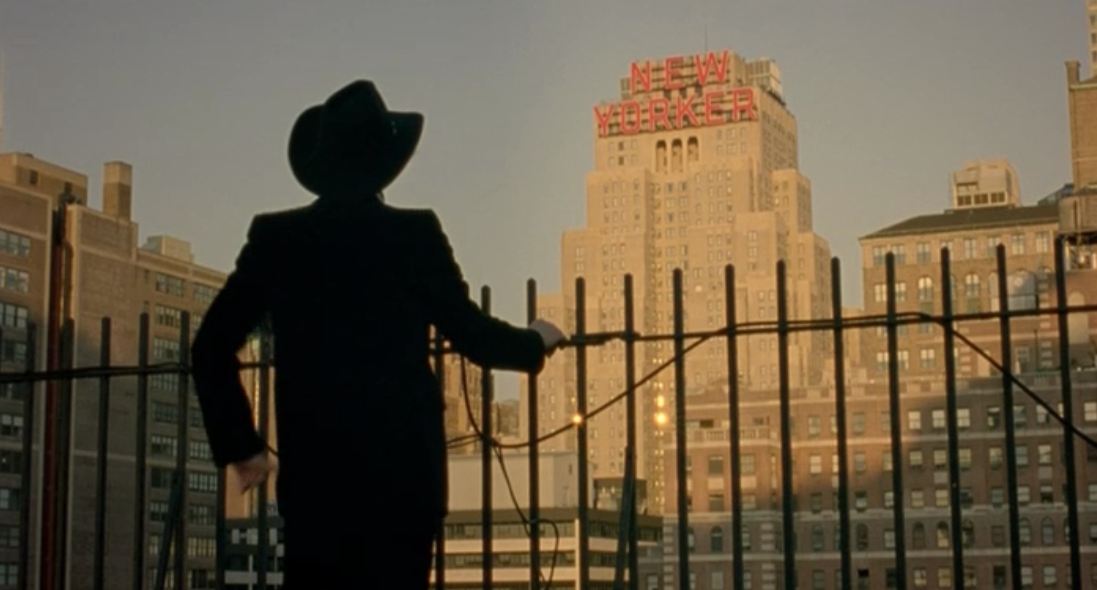
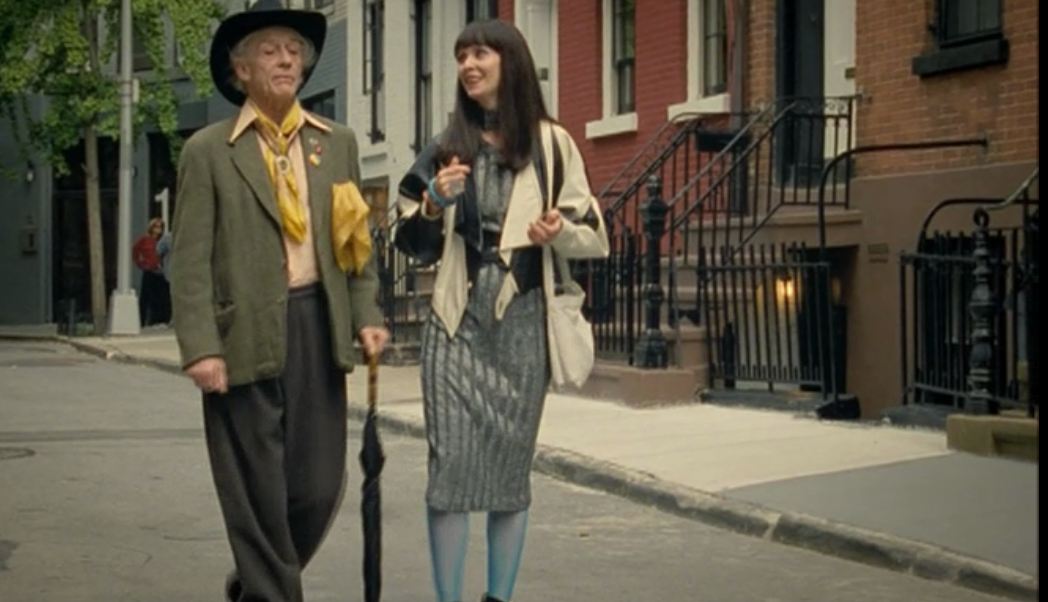
Today’s cinema adventure: An Englishman in New York, the 2009 British telefilm which marked the return of John Hurt to the role of noted real-life author/performer/raconteur/gay icon Quentin Crisp. A follow-up to the acclaimed1975 telefilm based on Crisp’s landmark memoir, The Naked Civil Servant, which made Hurt into a star and won him a BAFTA for Best Actor, this modest biopic covers the later years of the famous eccentric’s life, when he became a celebrated resident of Manhattan and a polarizing figure in the continuing struggle for gay rights. While Hurt maintains his customary brilliance in revisiting and expanding his legendary performance, this outing lacks the strong, central drive of the original film, which had the benefit of focusing on Crisp’s early struggle and triumph in asserting his homosexuality and his individuality in the repressive England of early 20th century. Part of the reason is likely that the first outing was built upon the solid ground of Crisp’s superb book, which portrayed his early life and experiences as a personal journey culminating in his courtroom victory blow against the antiquated morality laws which kept most English homosexuals fearfully cringing in the closet; but here, writer Brian Fillis attempts to encapsulate the remarkable life which followed those events into a 90 minute whirlwind, consolidating characters and contriving scenes in order to address key issues and events. To be sure, he has a cohesive purpose- the main focus here is Crisp’s fiercely guarded individuality, which put him at odds with the ongoing gay rights movement and often made him the object of exclusion within his own community (particularly after an infamous remark that AIDS was “a fad”)- and he does an admirable job of creating a portrait of a man who is forced into continuing growth in spite of himself; but the end result is considerably less satisfying than Civil Servant and leaves us wondering about many of the blank spots in between. Nevertheless, there are many reasons to admire this belated sequel, not the least of which is the rich background of late-century New York scenery lending an authentic documentary feel to the proceedings. By far, however, the greatest joy here is the magnificent performance of John Hurt, who once again captures to perfection the physical and vocal character of this legendary figure while simultaneously conveying the depth of emotion and experience which lies beneath that flamboyant exterior; in Hurt’s hands, the affectations of dress and manner become (as they were in real life) an expression of Crisp’s true self rather than a costume proclaiming his refusal to conform. Nevertheless, in spite of the more obvious success of his characterization, it is in the more intimate moments when Hurt’s brilliance as an actor really shines through- his weathered face and soulful eyes wordlessly express volumes, whether he is confronting the thoughtless prejudice of younger gay men or his own mortality. Supporting him are an array of established character actors- Dennis O’Hare, Swoosie Kurtz, Cynthia Nixon- who are never quite allowed to rise above the constraints of the condensed format, although Jonathan Tucker has some nice moments as artist Patrick Angus, whose work was championed into success by Crisp. Overall, though its hard to call An Englishman in New York a worthy successor to the still-lauded Civil Servant, it offers many rewards in its own right; and though it may ultimately contain less insight into Quentin Crisp than the Sting-penned song from which it takes its title, it is still a fitting and necessary epilogue to the story of a man who changed the world by refusing to change himself.

;

http://www.imdb.com/title/tt0997057/

;

Beginners (2011)

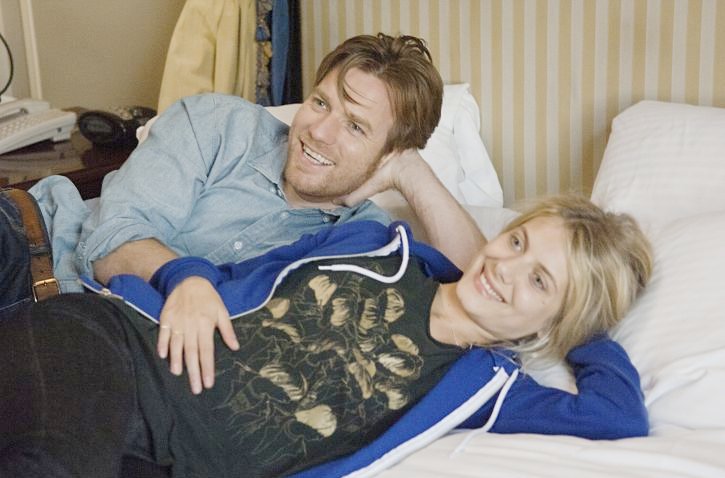
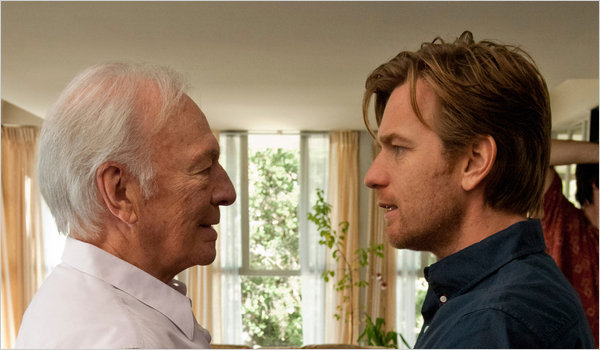
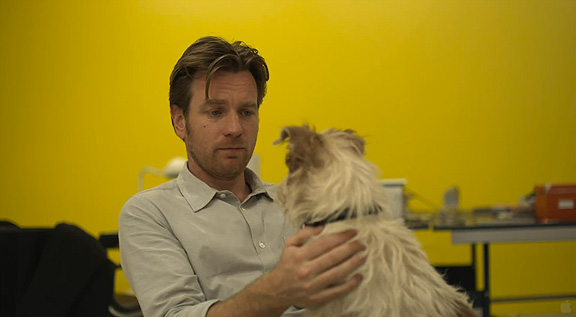
Today’s cinema adventure: Beginners, the 2011 romantic comedy/drama which garnered nearly universal critical acclaim and won multiple accolades and awards (including an Oscar) for supporting actor Christopher Plummer.  Heavily interweaving his narrative with flashbacks, filmmaker Mike Mills documents the efforts of Oliver, an L.A. graphic artist, to reconcile the memories of his childhood (and his grief over the recent death of his father) as he takes the tentative first steps towards a relationship with a young French actress.  Laced with clever, quirky humor, defying stereotypes and expectations at every turn, the film not only engages us with its charming story and likable characters but invites us to ponder the experiences of our own lives and our collective history, and how they provide us with the knowledge we need to grow and the foundation upon which to build a future beyond them.  Mills’ direction (from his own semi-autobiographical screenplay) is superb, moving the film freely between past and present, using its protagonist’s art to provide commentary and draw connections, and offering a wealth of “snapshot moments” which convey volumes about the characters and their lives without the need for extensive dialogue or exposition.  The filmmaker’s efforts would be pointless, however, if not for the superb cast, headed by the ever-lovable Ewan McGregor, giving a heart-breaking performance that manages to convey his character’s deep sadness without ever making him into a downer.  Melanie Laurent is equally effective as his new love interest- who is coping with parental issues of her own- and she, too, succeeds in maintaining both an attractive charm and a melancholy core.  But the most outstanding player here is Plummer, portraying Oliver’s father, a 75-year old man who comes out as gay following his wife’s death and embraces a new life, lived to the fullest, even as he faces his own terminal cancer.  This veteran actor is magnificent to watch as he captures the full spectrum of humanity, from the child-like glee he finds in exploring a world of which he has always dreamed to the dignity he maintains as he succumbs to the humiliation of his disease.  Fully deserving of all the accolades, it’s a performance that provides the strongest- but by no means the only- reason to see the film.  Los Angeles locals will also enjoy the Silverlake settings, lovingly captured by cinematographer Kasper Tuxen, which help to set the tone of Beginners– hip and quirky, but possessed with a keen awareness and respect for the past.  Mills’ film isn’t perfect: some would quibble that it borders on being overly precious, or that the characters’ troubles seem based on self-centered over-thinking and an arrested emotional development resulting from their insulated lifestyle.  However, this is a film about moving forward, about setting aside the emotional baggage of an imperfect past- while still honoring it- and finding the courage to face the challenges of an uncertain future.  In short, it’s a film about change, and therefore a film about fear- the kind of deeply personal fear which can make us all feel like children, no matter our age or background, and therefore cause our thinking and our behavior to seem immature from an outside standpoint.  Maturity comes with taking the leap towards something new, despite these deeply conditioned anxieties, and that is what each of the three principal characters in Beginners must do.  Frankly, I think it’s remarkable that a film addressing such a real and primal fear, and pervaded by such a tone of  bittersweet melancholy, can leave us feeling so charmed- perhaps that’s due to the fact that, above all, Beginners is a film about love, and given their emotional handicaps, if these people can make it work (and whether or not they can is by no means certain), then the rest of us can live in hope that we can, too.

http://www.imdb.com/title/tt1532503/

Sebastiane (1976) [Warning: some images may be NSFW]

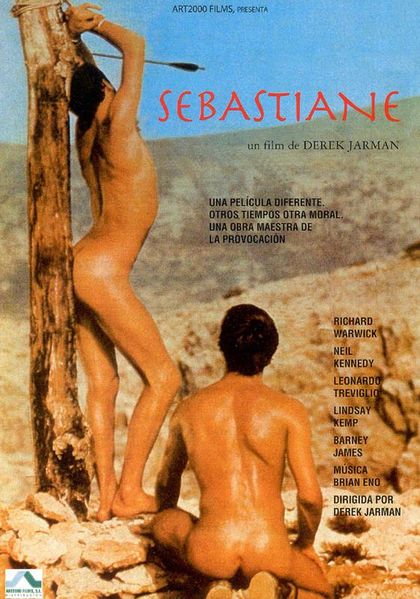
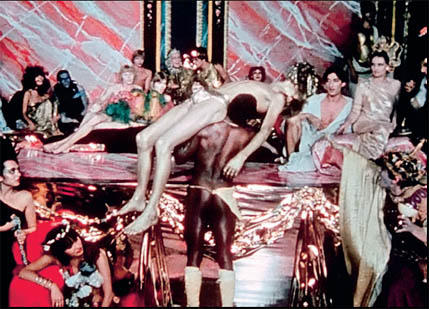
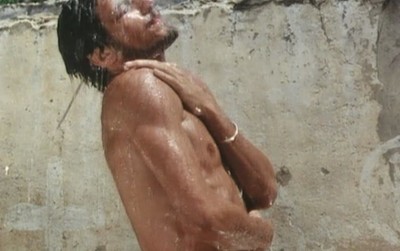
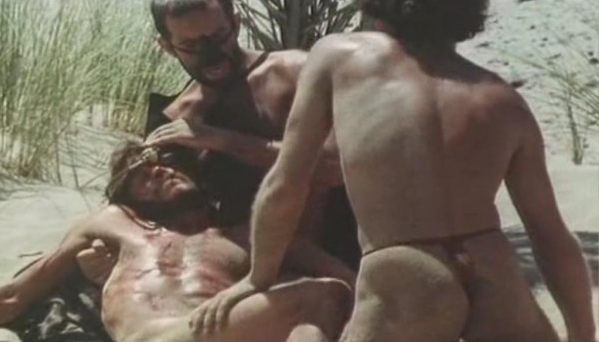
Today’s cinema adventure: Derek Jarman’s 1976 debut feature, Sebastiane, a fictionalized vision of the martyrdom of St. Sebastian, presented less as a meditation on spiritual themes than as a homoerotic fantasy in which the soldier Sebastianus, after falling from favor with the Roman Emperor Diocletian, is exiled to a remote oupost in the wilderness, where his refusal to yield to his commanding officer’s obsessive lust eventually leads to his ritual execution by arrows.  A work that is historically significant not only for being the first film produced in authentic Latin (and as such, the first British-made movie to be shown in England with subtitles), but- more importantly- for the prologue featuring an erotic dance by legendary glam-era performance artist Lindsay Kemp and his Troupe, and its inclusion of an early score by electronic music pioneer Brian Eno, Sebastiane was never anybody’s idea of a mainstream film, not even its creator’s.  Like most of Jarman’s films, it’s not big on story, but despite its shoestring budget, it is lovingly and beautifully shot, each frame artfully crafted so that the final result resembles a Renaissance painting in motion. The extensive nudity (all male, of course) was explained by Jarman as being because they “couldn’t afford costumes” (sure, Derek, sure… we believe you), and needless to say the film was highly controversial at the time of release; but although many viewers may fixate on what often seems like gratuitous nudity and sexual content, Jarman is not merely concerned with exploiting or even celebrating the male form; he has much to say about the issue of homosexual shame.  On the surface, the film would seem to comply with the traditional Catholic assertion that homosexual behavior is a sin to be forsworn, and that Sebastianus’ fate is to be sacrificed to that ideal, destroyed by unrepentant sinners for his refusal to debase himself- a decidedly conflicting message, when one considers the fact that the film is heavily laden with imagery clearly intended to elicit homosexual fantasies.  Certainly these themes of religiously-fueled guilt are in play within Sebastiane, and Jarman undoubtedly wrapped some of his own spiritual struggles into his film; but like most art, the true nature of the themes expressed lies beneath the obvious details.  Sebastianus’ rejection is of the flesh itself, regardless of sexual orientation: it is his devotion to a life of the spirit that makes him an outcast and a martyr, and it is the jealousy and pride of those who fail to understand him that leads to his death; in the end, sexuality is irrelevant here, and Jarman’s true indictment is against the base and brutal tendencies of stereotypical masculinity, the hypocrisy of judgement and violence against those who do not conform to the status quo, and the arrogance of those who choose to subvert their own spirituality to their egotistical desires and insecurities.  In short, the film is more about homophobia than homosexuality, and its abundance of homoerotic imagery is as much to incite as to excite.  Of course, that same imagery is sufficient to ensure that the majority of religious bigots will never see this film, so in a way, Sebastiane is a prime example of an artist “preaching to the choir;” and, truthfully, the copious amount of it ultimately displaces Jarman’s higher purpose, so that his inaugural cinematic excursion ends up being more stimulating on a decidedly lower level.  My own reaction: it’s a very pretty movie to look at, and probably one of the most erotic ones I have seen (much more so than porn, actually); but at times I couldn’t help being reminded of those soft-core late-night “Skinemax” flicks I would sometimes catch my Dad watching at 3 in the morning… slow motion photography of someone taking a shower, with the frame cropped in just the right place to keep it from being obscene, that sort of thing, except instead of beautiful women, here it was beautiful men.  I can’t say I had any complaints, but I was ready for it to be over about 30 minutes before it actually was.  It might have helped if the actors (Leonardo Treviglio as Sebastianus, supported by Barney James, Neil Kennedy, and Richard Warwick, among others- none of whom had significant careers afterward) had delivered performances that were as beautiful as their bodies… but I guess we can’t have everything.

http://www.imdb.com/title/tt0075177/

Six Degrees of Separation (1993)

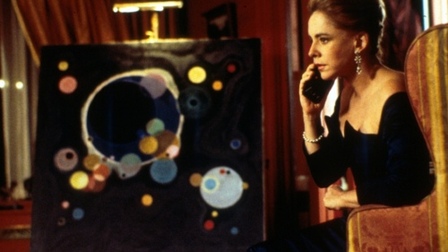
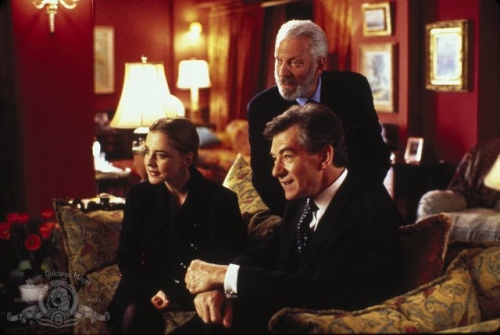
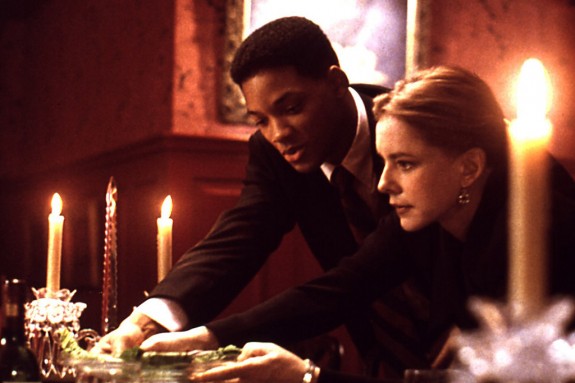
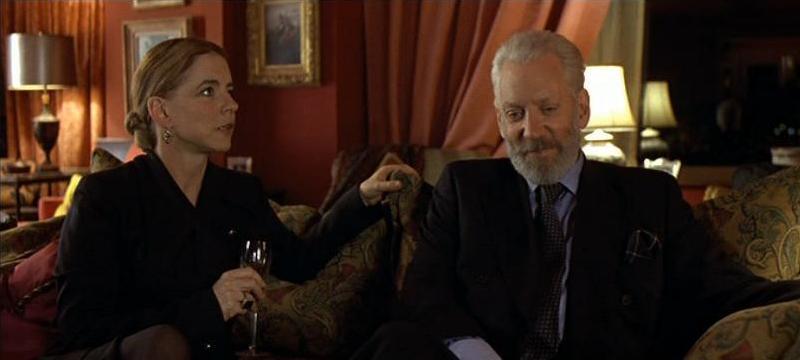
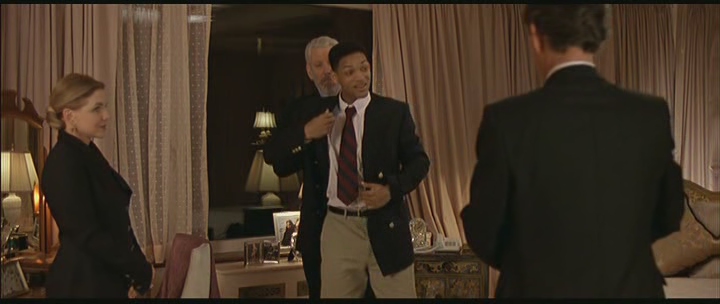
Today’s cinema adventure: Six Degrees of Separation, the 1993 adaptation of John Guare’s Pulitzer-nominated play of the same name, starring Stockard Channing, Donald Sutherland and Will Smith, with a screenplay by the playwright himself. Through the tale of a well-to-do Manhattan couple whose lives are infiltrated by a mysterious and charismatic young con artist, Guare uses his gift for language to explore how our connections to other people weave us into a tapestry of shared experience and lead us to new perspectives on our lives and ourselves, and to subtly reveal how the parallels between us transcend the illusory differences of class, race, sexuality and culture and expose the sometimes uncomfortable truths which unite us all; however, in the translation from stage to film, the complex, literate and emotionally resonant dialogue sometimes borders on sounding awkward and stilted, the central premise comes across as contrived and unconvincing, and the powerful revelations of the play seem almost artificial and trite. The fault lies with director Fred Schepisi, who- instead of utilizing the potential of the cinematic medium to enhance and illuminate the play- has taken the rather pedestrian approach of grafting it into a straightforward narrative, expanding the action into a variety of real-world settings which only serve to distance us from the characters and undermine the cumulative power of the unfolding story. The endless progression of upper-crust social gatherings and well-appointed locations continually remind us that we are watching a movie about the problems of spoiled rich people, instead of providing us with the class-dissolving intimacy of a more abstract theatrical experience; and as a result, instead of an emotional catharsis, we are given an intellectual exercise. Nevertheless, the power of Guare’s original work shines through (albeit in diluted form) thanks to the talented ensemble cast, which clearly relishes the opportunity to speak his words and embody his characters, and if the movie is ultimately a bit disappointing, they at least ensure that it is never boring. Sutherland is, as always, interesting to watch, and Channing does possibly her best screen work here- she earned a well- deserved Oscar nomination for her performance; Ian McKellen shines as wealthy dinner guest who is also taken in by the young hustler, as do Heather Graham and Eric Thal as a younger, less affluent couple whose experience with him yields considerably more tragic results.  In the key role of the enigmatic stranger, Will Smith copiously displays the charm that made him a star; but my favorite performance comes from Anthony Michael Hall, whose brief appearance as a key character steals the show and makes us keenly regret his relative disappearance from the film industry.  As a side note, from the standpoint of social history, Six Degrees represents a minor landmark in the acceptance of gay-themed subject matter in mainstream cinema with its inclusion of the con man’s homosexual trysts, which may generate interest for some viewers; for everyone else, however, it’s a film that is worth the time investment, for the sake of the performances and the opportunity to experience Guare’s script- just manage your expectations, or you may end up feeling you are the one who’s been conned.

http://www.imdb.com/title/tt0108149/