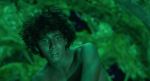
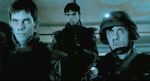
John Carter (2012)

John Carter (poster)

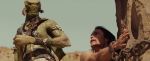
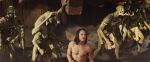
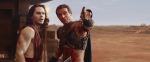
Today’s cinema adventure: John Carter, the 2012 sci-fi/action blockbuster based on the first book of Edgar Rice Burroughs’ seminal series of adventures about a former Civil War soldier who is mysteriously transported to Mars (known as “Barsoom” by its inhabitants), where he becomes a hero in the planet’s struggle against domination by an immortal race of super-beings. A lavish production from Disney Studios, it marks the first “live action” feature to be helmed by Andrew Stanton, the acclaimed director responsible for Pixar’s Finding Nemo and WALL-E, although the extensive use of CG technology blurs that definition somewhat; the studio’s certainty that the project was a sure-fire hit is evidenced by the fact that they spent a whopping $250 million dollars to make it. Unfortunately, with such a price tag, the film was required to gross near-record sums in order to simply break even; thanks to a lukewarm critical response and even less enthusiastic audience reception, it instead became one of the most notorious box office flops of all time, leading to recriminations and resignations within the studio and a massive financial loss on the quarterly report. It’s a shame, really, that the movie has now become known as a notorious bomb- an assessment that is not entirely accurate, for overseas returns were substantially better than in the U.S., and home video release ensures that, in the long term at least, it will ultimately recoup its losses and turn a decent profit- because John Carter is not at all a bad film, for what it is, and will likely prove, in time, to gain an appreciative following.

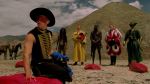
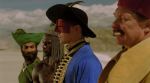
Adapted by Stanton, Mark Andrews, and Michael Chabon from Burroughs’ novel, A Princess of Mars, John Carter concerns a struggle for power between two Martian city-states- Helium, a peace-loving capitol of science, art, and learning, and Zodanga, the “walking city,” a warlike and totalitarian kingdom bent on absolute rule of the planet. The battle has raged for generations, but now, with the aid of a powerful new weapon that has been bestowed upon their leader, the ruthless Seb Than, by a mysterious alien race, the tide is turning in favor of the Zodangans. Meanwhile, on the planet Earth (where it is the late 19th Century), a former Confederate officer named John Carter searches for his fortune in the frontier of the American West; while fleeing an Apache war party, he inadvertently discovers a legendary cave of gold, in which mysterious carvings and glyphs seem to come from an ancient and forgotten civilization- and where an altercation with a mysterious robed figure results in Carter’s sudden and seemingly inexplicable transport to a vast, unfamiliar plain located (as he will later discover) on Mars. After adjusting to the effects of the differing gravity- which, due to his Earth-born bone density, gives him superhuman strength and the ability to leap hundreds of yards in single bound- he soon finds himself captured by a tribe of four-armed, green-skinned humanoids, called Tharks, led by a chieftain named Tars Tarkas. This is only the beginning of his adventure, however, as his fate brings him into the heart of the conflict over the destiny of the Red Planet, in which he must help the Princess of Helium to discover the source of Seb Than’s mysterious new power before she is forced to marry the Zodangan warlord and doom her people to eternal domination.

There’s not much point in offering a more detailed synopsis of John Carter’s convoluted plot than the one above; like the novel from which it is derived, it is a piece of melodramatic pulp fiction in which the story is merely an excuse for the action, romance and imaginative fantasy that keeps an audience coming back for more. Burroughs’ novel was originally published in serialized form of course, in All-Story magazine, beginning in 1912. It was by no means the first episodic science fiction story, but the way it combined elements of other popular genres- sword-and-sorcery adventure, westerns, romance- was a unique and ultimately influential feature that makes A Princess of Mars the direct forerunner of Flash Gordon, Buck Rogers, Star Trek, and Star Wars, to name only an obvious few. This particular sub-genre, known as “planetary romance,” has proven more enduringly successful than science fiction proper (in its strictest sense, that is), and continues to inventively manifest itself through, among other things, the vast wealth of comic book literature (and its related media) that has developed into an increasingly massive force in the entertainment industry. In other words, for anyone out there who is a fan of The Avengers, it all started here. With this in mind, it is only fitting that the saga of Burroughs’ planet-hopping hero should be given, at long last, the kind of lavish, top-shelf Hollywood treatment that has been afforded to so many of its offspring, and though many critics complained of the film’s sprawling, sometimes incoherent storyline and questioned its emphasis on action and spectacle over character and logic, these things are in fact part of the essence of this particular style of fiction; Burroughs was out to thrill his readers with imaginative and impossible scenes of otherworldly escapism, not to stimulate their higher cognitive functions. More accurately, perhaps, he was out to make money by doing it, and the fact that he succeeded- to the point of building an empire that pre-dated Walt Disney, Gene Roddenberry, or George Lucas by decades- is a fact made clear simply by looking up the origin history of Tarzana, California.

The world of a hundred years ago, however, was obviously a different one than we live in today; decades of technological advances- including probes and landing craft on Mars that have yet to discover the existence of mobile cities or multi-limbed green giants- have made us much less naive about the notion of interplanetary adventure, at least this close to home. Part of the commercial failure of John Carter must be ascribed to this; the premise of Burroughs’ story, though always far-fetched, of course, seems particularly dated in the 21st Century, with its swashbuckling warriors and princesses in distress evoking memories of our own antiquated fictional heritage rather than visions of otherworldly experience. Though such elements are present in more contemporary sagas like Star Wars, they are easier to swallow by virtue of a distance in time and place- not to mention a heightened sense of metaphor- which is carefully established from the outset. Not so with John Carter, which takes place in a recognizable part of our own history and asks us to believe in a conceit that feels old-fashioned and far too familiar to be taken seriously.

However, its familiarity is not due to its being derivative or formulaic, in the usual sense; rather, it results from the fact that a century of imitators has made Burroughs’ original seem old hat. Even those who have never read (or even heard of) A Princess of Mars and its sequels will know exactly what to expect in the story of John Carter, because they’ve seen it all before; and though the reason is that this, in fact, is the original blueprint for all those space-adventure-clichés, it makes little practical difference for those who are looking for something new and exciting to occupy two hours’ worth of their attention. This is, in essence, little removed from the cheesy space-opera serials of the ’30s, except by the feature-length format and the gargantuan budget which allows for breathtakingly realistic special effects instead of miniature spacecraft on wires; it is pure escapist nonsense, boy’s adventure at its most rambunctious, designed to stir excitement and elicit fantasies- and, hopefully, to sell the next installment. Except, thanks to the perceived failure of the undertaking, there is not likely to be a next installment.

As I said before, however, John Carter is not a bad movie; though it suffers somewhat from the need to pack too much story into a commercially viable running time, thereby eliminating the opportunity for anything more than perfunctory character development, and lacks the kind of mythological scope that gives such emotional resonance to the Star Wars films, it is nevertheless an obvious labor of love. Corny as it is, it has an infectiously earnest sensibility that makes it hard to dislike- at least, for those approaching it with reasonable expectations. It strikes well the difficult balance in tone that keeps it from becoming too campy- like the painful 1980 adaptation of Flash Gordon, with which it shares numerous parallels- without taking itself too seriously. That’s the key to enjoying John Carter; remembering that it was never intended to be the kind of “important” sci-fi epic that has now become the standard of the genre, with serious undertones of sociopolitical allegory or philosophical subtext, allows us to simply surrender to its lightweight melodrama without faulting it for not being something it was never intended to be. This is not brainy, Asimovian science fiction designed to stimulate the intellect, but pure, testosterone-driven wish-fulfillment at its most adolescent.

Indeed, there is a lot to enjoy in this unapologetically overblown spectacle, once you accept it as it is. Burroughs’ Martian civilization is given the kind of intricately detailed, fully realized treatment that only big studio money can buy. The cities, with their spacious, retro-futuristic architecture, full of bridges and balustrades, palatial throne rooms, and majestic plazas, are executed with imaginative grandeur; the various alien technology, from great, bird-like airships to pseudo-scientifically-powered cosmic map rooms, as well as all the creatures- besides the Tarks, there are giant fanged apes, massive dinosaurian beasts that serve as mounts, and an oddly lovable amphibian-esque dog that becomes Carter’s loyal pet and protector- are brought to life by state-of-the art screen wizardry in a slick style that combines the iconic illustrative work of artists like Frank Frazetta with a modern-flavored Steampunk sensibility, resulting in a visual design that reimagines the classic Victorian milieu of the original with a firmly contemporary twist. These elements are imposed upon location settings in Utah- where, in fact, the author created his saga over a century ago- which are used to great effect in creating the arid, desolate Martian landscape, with its harsh deserts and monumental geography, making for an utterly convincing otherworldly environment. Of course, it’s no surprise that the film would be visually stunning, given the monumental budget and the participation of Disney’s all-star design and technical staff; as always with such effects-heavy blockbusters, the real test of quality lies in the less showy creative aspects of direction, writing, and acting.

As for the first of these, Andrew Stanton is a proven master of visual storytelling, and he uses his skills here to forge a clear path through the oft-confusing details of the plot, setting up early the crucial points and maintaining a strong through-line as he takes us through the meandering, episodic developments that make up the narrative. He keeps the pace quick with rapid edits and a roving camera, and composes his shots succinctly to convey a maximum of information without lengthy exposition. This is particularly helpful in keeping the audience on track, given the multiple storylines in play here- which brings us to the second foundational element of the film, its screenplay. It has already been mentioned that the novel’s sprawling narrative has been compressed too tightly into the relatively short running time of John Carter; the story might have been better served by being split over two movies, as has become the trend, for better or worse, with other big fantasy epics in recent years. Given the probable demise of this would-be franchise, it’s fortunate that Stanton and his co-writers did not choose that path, but if any one thing could have made John Carter a more satisfying film, it would have been the chance to invest more time in getting to know its characters. Pulpy as the material may be, a more in-depth exploration of the people that inhabit it- both human and non-human- might have gone a long way towards winning the emotional involvement of the audience in its action. Instead, we are presented with short, lightning-quick character sketches that give us the pertinent information about what makes each one tick, and then we’re off and running, knowing everything we need to know about them in order to understand their place- and easily predict their actions- in the story, long before it reaches its climax. As a result, the entire saga often feels as if it were a mere pageant, populated by one-dimensional ciphers who are mainly present to model the costumes and lend scale to the sets; since the story’s heart necessarily lies in its human element, such streamlined writing places a substantial burden on the director and cast to fill in the blanks and provide a greater depth of characterization than is apparent in the dialogue. Stanton, whose previous directorial outings have featured casts of animated characters (each of which are brought to life not only by actors, but a whole team of artists skilled in adding layers of nuance to every movement and expression), may have been at a loss here; his ensemble of performers seem to have been left to their own devices in filling out the inner lives of their roles.

Which leads us to that third crucial pillar of good filmmaking, the acting. The cast of John Carter is, if nothing else, a marvelous-looking bunch; Taylor Kitsch, in the title role, spends most of the film without his shirt, displaying the kind of chiseled body that was presumably much rarer in the 19th Century than it is today- after all, this was a time before the advent of personal trainers and nutritional supplements. Likewise, his co-star, the beautiful Lynn Collins, is costumed in a manner which strategically showcases her considerable physical assets, and most of the other human cast is similarly dressed- or rather, undressed- throughout. Not that there’s anything wrong with that; sex appeal is a big part of what makes these kinds of epic adventures so exciting to their target audience- the young teenager in all of us. In order to elevate these larger-than-life characters above the level of mere pin-ups, however, there must be something under the pretty exterior that will keep us interested, and though both the film’s stars make a noticeable and admirable effort, neither manages to give us much beyond the immediate requirements of any given moment. Their performances are all surface, convincing but never compelling, and though they carry themselves suitably enough for the stature of their roles, there is a decidedly contemporary flavor to their personae; they seem more like a pair of fitness models at a photo shoot than a hardened soldier and an enlightened princess. In the supporting roles, James Purefoy shows some charisma and character as a loyal second-tier hero and would-be sidekick to Carter, but his role is far too brief for him to make more than a fleeting impression; the gifted Ciarán Hinds, as the Princess’ father, is utterly wasted, as is Breaking Bad star Bryan Cranston as a cavalry officer who inadvertently becomes Carter’s companion for the discovery of the cave in which his destiny lies; and the film’s primary villains, Mark Strong and Dominic West, are saddled with two of the least interesting characters in the film- the former disaffected and aloof, the latter merely a mindless brute- and are therefore unable to make either into the kind of formidable antagonist needed in such a swashbuckling tale as this. Perhaps not surprisingly, the most engaging and memorable performances come from the actors lending their voices and movements (through motion capture technology) to the principal Thark characters (Willem Dafoe, Samantha Morton, and Thomas Hayden Church), who provide us with a hero, heroine, and villain, respectively, that we can truly care about. This may be because of the higher caliber of their acting (Dafoe, as Tars Tarkas, reportedly accepted the role because he relished the challenge of giving a performance dressed in pajamas while walking on stilts, and, arguably the film’s most prestigious star, he brings no dishonor to his reputation here), but it is surely not just coincidence that these roles are essentially animated characters- the kind with which director Stanton is clearly more within his comfort zone.

It’s interesting to know that John Carter probably holds the record for the longest development period in cinema history. It was 1931 when Bob Clampett- later to become known for his genius work with Warner Brothers’ Looney Tunes series- approached Edgar Rice Burroughs to purchase the rights to A Princess of Mars and the rest of the Barsoom novels; he planned to make an animated adaptation, knowing that a live action version would be impossible at the time, and he did manage to produce several reels of test footage before the studio (MGM) pulled the plug with fears that stories of an Earthman’s exploits on Mars would be too ridiculous for most American audiences. There were later efforts to produce a screen version throughout the next 80 years, but various creative conflicts and financial concerns sank the project, each time. Finally, when Disney considered the title (for the second time, having intended to produce it in the 1980s as a vehicle for Tom Cruise), Stanton- a fan of the books since childhood- fought hard to get it approved, with himself as the creative force behind it. Based on his previous track record, Disney okayed it- a decision they likely came to regret. By all reports, Stanton’s inexperience with live action production proved an obstacle which may have inflated the film’s already-massive budget, and his rejection of studio ideas about marketing and publicity might very well have been the deciding factor in making John Carter one of the biggest flops in Disney’s long history. There is a theory- which I more or less agree with- that the most significant reason for the movie’s failure was the decision to change the title (already altered from the book’s original name) from John Carter of Mars to John Carter. Stanton said he preferred this because the movie was an “origin story” that told how the character became John Carter of Mars, and studio executives reportedly changed it due to a study which showed that films with the word “Mars” had all suffered some degree of financial failure- including their own Mars Needs Moms. Whatever the reason, and whoever was responsible, it was ultimately this change, coupled with the vague and unexciting marketing campaign that accompanied the movie’s first release, that sealed the doom of Stanton’s lifelong dream project; though earlier generations may have needed no reminders about who John Carter was, in today’s market, where many have never even heard of his creator, Edgar Rice Burroughs, let along the hero himself, it was vital to give audiences more of a clue about what the film was about. Without such a clue, they stayed home and saved their money for the then-upcoming release of The Avengers.

It’s unfortunate that in writing about John Carter, I have to focus so much attention on its supposed financial failure (again, it was not really a flop, just not the mega-hit the studio had hoped for), but sadly, it is a significant part of the public’s perception about the movie, and it must be addressed; as years go by, its box-office receipts will become less and less important to commentators, and perhaps it can be discussed on the basis of quality alone. I hope so. Despite my quibbles about the script and the acting, I enjoyed John Carter, rather more than I had expected. Indeed, I tried very hard not to like it; but by about the halfway point I gave in to its goofy, old-fashioned charms, and by the end I was- dare I say it- glad the movie had been made. It deserved to be made. After a hundred years in which filmmakers have “pillaged” Burroughs’ stories for their own derivative efforts (the reason cited by director Robert Zemeckis when he turned down this project, specifically in reference to George Lucas and Star Wars), it’s fitting that the granddaddy of all those swashbuckling outer space fantasies should at last get the Hollywood treatment that has long avoided it. Fanatical followers of the novels (and they still are legion, even a hundred years later) may wish it had done better justice to the original, and many other audiences may wish it had made more of an effort to contemporize or sophisticate the material, but there are many, too, who will enjoy it just the way it is. Indeed, there are many who already have enjoyed it, myself included, and the seemingly passionate dislike the movie has generated from some (and some who have not even seen it, I might add) makes me once again question the value of judging a piece of art on the basis of personal expectation rather than on its actual merits; if we are too busy complaining about a movie’s not being what we want it to be, how can we enjoy it for what it actually is? Of course, there is also an unavoidable debate about the wisdom of spending enough to feed a small country for a decade on an inflated piece of escapist fluff like this one, but that is a question of ethical economics better left for discussion in another forum; in the long run, the fact that John Carter of Barsoom is at last represented in cinematic form, whether or not he is all he could have been, is a good thing, and though I have yet to discover if the movie proves more rewarding on multiple viewings (which I suspect it will), I am certainly looking forward to doing so.

http://www.imdb.com/title/tt0401729/?licb=0.42602754768506235

Brave (2012)

Brave (poster)

Today’s cinema adventure: Brave, the 2012 animated feature from the Disney/Pixar powerhouse, directed by Mark Andrews and Brenda Chapman, and based on Chapman’s original story about a medieval Scottish princess who, unhappy with her proscribed role as a courtly lady, resorts to magic in order to “change her fate.”  Intended as the Pixar Studios first foray into the realm of fairy tales, it features a highly contemporary viewpoint on traditional gender roles and offers a heroine who takes action to determine her own destiny, as well as reinforcing the importance of maintaining family bonds and assuming responsibility for one’s actions.  It also features a lush, technically dazzling visual style, geared towards its original 3D theatrical presentation, and an array of stellar voice talent.  Not as successful as many of the studio’s previous efforts, it nevertheless has garnered much praise and received several award nominations as best animated film of the year.

The plot concerns Merida, daughter of Fergus, the King of Dunbroch, a fierce warrior known as “the Bear King,” who carries the scars of his many battles and sports a wooden leg as a reminder of his encounter with Mor’du, a giant and seemingly demonic bear who haunts the surrounding forest.  Though the princess is a tomboy and a free spirit, encouraged by her doting father in her enthusiasm for adventurous pursuits (such as horseback riding, swordplay, and archery), her mother, Queen Elinor, maintains a tight control over her, preparing her daily with lessons in the more feminine activities that will someday be required of her as a great lady- elocution, music, embroidery, and the duties involved in the charge of a royal household.  Merida is displeased with the prospect of such a sequestered future, a fact which continually puts her at odds with her mother; their conflict comes to a head when the king’s three most prominent lords bring their sons to Dunbroch for a competition of skill to determine which of them will get the hand of the young princess.  Merida, refusing to bow to tradition, takes the field and defeats all three contestants, declaring herself the winner and claiming the right to be her own consort; Elinor, furious, reprimands her severely, causing the girl to run angrily into the woods.  There, she follows a trail of will-o-the-wisps to a hidden cottage inhabited by an old witch.  At first the crone insists she is merely a wood carver, but when Merida offers a priceless royal pendant as payment, she agrees to help the princess with a spell that will “change” her mother.  Returning to the castle with an enchanted cake, Merida presents it to Elinor as a peace offering; when the queen takes a bite, however, its effects are not quite what her daughter had anticipated.  The spell transforms Elinor into a large black bear- placing her in mortal danger from Fergus, whose previous experience with Mor’du has made him an avowed bear-killer.  Merida, horrified that her scheme has led to such a turn, must now serve as her mother’s protector as they go in search of a way to reverse the spell before its effects become permanent; their quest leads them to Mor’du’s hidden lair, where they discover secrets that link the monstrous bear’s fate with their own.  During their adventure, mother and daughter gain new appreciation for each other’s strengths and reforge the emotional bond that was broken between them- but they still must race against time- and the pursuit of the ferocious Mor’du- to break the witch’s spell before Elinor slips away forever, trapped in the body and mind of a bear.

Aimed at entertaining young audiences and stimulating their imagination as well as fostering healthy ideas about identity and self-esteem, Brave is unmistakably the product of the titans at Pixar, who have proven time and again their particular genius for producing works of cinematic art that also meet the needs of the popular marketplace; in addition, it marks the studio’s most technically advanced and visually complex effort to date, made with a completely re-written animation program (the first upgrade of the studio’s software in 25 years) and released not only in 3D but with Dolby’s new Atmos sound format.  It’s unquestionably a stunning treat for eyes and ears of any age, possessing a level of sensory realism previously unseen in animated filmmaking, yet still maintaining the whimsical and stylized design touches that mark it as a cartoon fantasy.  As always, the Pixar team has used their expensive toy box to create a truly polished and exceptional visual gem, rich with the kind of subtleties that elevate their work above and beyond that of more pedestrian artists whose attention to detail rarely reaches past the requirements of the plot.

Another aspect of the movie that meets Pixar’s usual high standards is the exceptional voice casting; utilizing a fine group of talented and prominent actors, but without the “stunt casting” of big stars solely for the sake of having their name in the credits, the characters of Brave are given as much dimension in their vocal personalities as the graphic artists and animator a have given them in their physical presence.  Merida is voiced by the charming and vivacious Kelli Macdonald, known for her work in such diverse fare as the films Trainspotting, Gosford Park, and No Country for Old Men, as well as for her role in the critically acclaimed HBO series, Boardwalk Empire.  Elinor gets her voice from the redoubtable Emma Thompson (another familiar screen veteran known for everything from her Shakespearean roles opposite former husband Kenneth Branagh and her Oscar-winning turn in Howard’s End to her more recent family-friendly success as Nanny McPhee), who bestows the maternal queen with warmth, wit, and intelligence; we sorely feel her absence when the character is magicked into a non-verbal bear.  King Fergus is played by Billy Connolly, perhaps Hollywood’s most quintessential Scot since Sean Connery, and Julie Walters lends her inimitable blend of dottiness and wisdom to the all-too-brief role of the witch.  Rounding out the main cast are Robbie Coltrane, Kevin McKidd, and Craig Ferguson, as the trio of comical lords who bring their equally comical sons to vie for Merida’s hand.  As a side note, no less than four of these cast members- Macdonald, Thompson, Walters, and Coltrane- are alumni of the Harry Potter franchise, perhaps insuring a bit of extra box office appeal for a sizable segment of devoted young audience members and representing, on second thought, a little bit of “stunt casting,” after all.

Still, in spite of all the stellar work that is obvious onscreen and on the soundtrack, ensuring that Brave measures up to the high standard of professional excellence that is the hallmark of Pixar, it is a movie that doesn’t quite manage to pull off the studio’s usual magic.  As conceived by Brenda Chapman, it is a new story in the familiar vein of traditional fairy tales, but with a completely original plot and a decidedly different focus; instead of offering the archetypal princess, whose happy ending is usually dependent on the love of a handsome prince, she built her fantasy adventure around a strong-willed, independent girl whose ambition is simply to win the freedom to be herself.  Rather than reinforcing old stereotypes, the tale of Merida presents a new kind of role model for young girls, one that encourages individuality and self-determination, while still embracing the importance of family relationships.  Along the way, key issues of communication and responsibility are explored, as well as the notion of learning from the stories and legends of the past; indeed, Brave includes a fairly lengthy checklist of subjects on its agenda, all of which are geared towards the conceit of reinventing the old-fashioned fairy tale format as a vehicle for teaching a modern lesson about self-empowerment and progressive thinking.  While there is an undeniably laudable sentiment behind an effort to create an appealing fable which promotes contemporary values instead of reiterating centuries-old moral imperatives, one can’t help feeling that the whole thing seems more than a little forced.

Chapman, who had developed the project from the beginning, was initially named the film’s sole director- the first woman to be hold this position on a Pixar film- but was replaced by Mark Andrews halfway through production due to “creative differences.”. Whenever two or more visions clash in the creation of an artwork, either the conflict yields a hybrid solution that somehow transcends the original ideas, or- more often- a compromise that fails to live up to the potential of either; though Chapman’s contributions to the screenplay remained, as well as enough of her influence to warrant a co-directing credit on the final cut, and she has stated that her original intent comes through clearly in the film, one can’t help but wonder what Brave would have been like if she had been allowed to finish it as she planned.  In her original conception, for instance, the story would have taken place in the harsh highland winter, with a stark backdrop of snow for most of the film; such a bleak setting might have gone a long way towards providing, at least psychologically, a more authentic feeling of life in the Middle Ages for a young non-conformist.

It’s pointless, however, to speculate on what the movie might have been like, and in any case, the true flaw here lies in a screenplay- authored by both directors alongside Steve Purcell and Irene Mecchi- which takes pains to present as softened, politically correct a portrait of medieval life as possible.  Not only are we given a highly contemporized version of family dynamics and an incomplete picture of the ironclad mandate to maintain social tradition, we are presented with a sanitized picture of the realities of the era; battle and warfare are just another comical aspect of the rambunctious male personality, with little hint of their horrific consequences, and the standard archetypal figures of myth and legend are repurposed through the prism of modern perspective.  There are no villains here- the stern parents are merely a little old-fashioned and need only a magical nudge to come around to a more permissive attitude, and even the witch is, more or less, a benevolent old soul.  The closest thing to an evil character is Mor’du, the demonic bear who is more an agent of dumb, blind chaos than an adversarial personality, and even he, ultimately, proves merely to be a misunderstood and unfortunate victim of circumstance- even if it is a circumstance of his own misguided creation.  More disappointing than this lack of a clear antagonist, though, is the story’s deflection of its central conflict into a cute-and-cuddly adventure quest in which mother and daughter work through their differences during their joint effort to solve a secondary problem. Of course, it’s all metaphor, but even so, it contains the suggestion that, once the women have things worked out between themselves, the opinions of the king or his lords will be of little consequence- a decidedly feminist undercurrent, when you think about it, which also has the somewhat dubious implication that it was the women themselves who perpetuated the social assignation of gender roles and the menfolk just went along with it.

Though arguments about believability or historical accuracy might seem inherently ridiculous when discussing a fantasy about magic cakes and ursine transmogrification, the setting for Brave makes the very premise of its story highly unlikely, at best.  Though history offers proof that there were, from time to time, remarkable women who defied cultural custom and strictures to become powerful and exceptional figures, the atmosphere and attitude here does little to suggest even a softened version of the harsh reality that would await such a girl at the inception of her dream to be different.  Today’s world deems an inclination to follow a different path to be an acceptable “lifestyle choice,” but in the 12th-or-so Century world that provides the background for Brave, the consequences for such a display of social heresy would be dire, indeed- as someone like, say, Joan of Arc would certainly testify.  To be sure, a story instilling modern ideas of tolerance and diversity is certainly possible in such a period tale as this, but when the magnitude of the cultural obstacles to be faced is diminished to the point of irrelevance, reducing the conflict to a simple disagreement between parent and child, the promotion of noble ideals comes at a high cost.  Teaching positive values to a future generation is a worthy undertaking, but reinventing history in order to do so is something akin to throwing out the baby with the bathwater.

Perhaps I’m being over-analytical.  I don’t mean to suggest that a movie aimed at family audiences should feature pestilence, rapes and beheadings.  Brave is not, after all, Game of Thrones, nor does it try to be; but it did seem to me, in watching this painfully correct girl-power fable, that in its effort to emphasize positive, nurturing attitudes it might be guilty of inadvertently perpetuating some not-so-positive ones.  This is the danger, for me, of presenting historical inaccuracies- and I’m not talking about using artistic license to fictionalize real events or mistakenly using the wrong heraldry to decorate a particular king’s armor, but the deliberate imposition of anachronistic attitudes and perspectives onto a place and time where they simply did not exist.  Even in a children’s story; to sanitize the past for modern consumption is a dangerous luxury, for in removing the unpleasant parts we risk creating a false sense of who we are today, and worse, we lessen awareness of those whose struggles got us this far- the real-life role models who might provide inspiration for those who must continue to work towards making a better world for future generations.  At the very least, such well-intentioned bowdlerization of our history creates complacency about our present, but at the worst it can foster a sense of entitlement and a lack of preparedness for the future- for as the saying goes, those who are ignorant of history are doomed to repeat it.

All that said, Brave is by no means a bad movie.  As discussed above, it is gorgeous to look at and its story is executed with the utmost professionalism and talent; and though the plot as a whole may fail to be as compelling as one might wish, the movie is filled with delightful set pieces (such as the archery tournament) and characterizations (Merida’s brothers, a trio of troublemaking toddlers whose antics prove an invaluable aid to the princess’ endeavors on more than one occasion) which make for a highly enjoyable 90 minutes.  There is no reason kids would not have a good time with this outing, particularly those who hunger for the kind of fairy tale magic associated with Pixar’s production partner, the venerable Disney Studios itself.  This, as noted, is the first time Pixar has tackled a Disney-style fantasy, their other films having all been modern-day stories; perhaps the reason, in fact, that Brave falls a bit short of the mark is that it is, ultimately, better suited to the Disney treatment than to Pixar’s.  The studio’s sensibilities, smart, hip, and irreverent, seem mismatched to this period tale; indeed, Disney’s Tangled, a recent attempt to bring their own traditions of classic princess fantasy into Pixar territory with computer animation and a contemporary mindset, was a more appealing package than this one is.  Both Disney and Pixar at their best, whether together or separately, make films that entertain young and old audiences alike; a family can truly enjoy the experience together.  With Brave, while the young folk may be delighted, their parents might be checking their watches a little more frequently than with previous Pixar films; they might well wonder what has happened to the disarming imagination of Toy Story, the transcendent surrealism of Up, or the masterful visual storytelling of the sublime Wall-E, surely one of the best examples of animated cinema- or any kind of cinema, for that matter- to be released within the last quarter-century.  Given Pixar’s remarkable creativity and impressive track record, I wouldn’t be too worried- the magic will almost certainly be back.  In the meantime, mediocre Pixar is still light years better than most any other “family-oriented” fodder being thrust into the marketplace to vie for your kids’ attention and the contents of your wallet.

http://www.imdb.com/title/tt1217209/

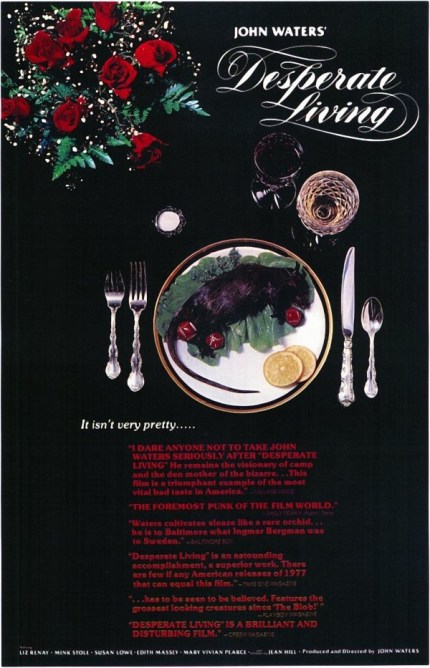
Desperate Living (1977)

Desperate Living (poster)

Today’s cinema adventure: Desperate Living, the 1977 feature by underground filmmaking icon John Waters, featuring an assortment of his “Dreamland” players in the tale of a deranged suburban housewife who is exiled with her maid to a shantytown full of social rejects.  Financed, as all of Waters’ early projects were, on a shoestring budget, it generated notoriety through the outrage it sparked among the lesbian community for its treatment of same-sex female relationships, but it failed to catch on with the public to the extent of his previous hits, Pink Flamingos and Female Trouble, probably due in part to the absence of his signature star, Divine (who was unavailable to appear because of his commitment to a theatrical project in New York) but also because the “midnight movie” fad which had provided the perfect venue for the earlier films had largely subsided by the time of its release.  Nevertheless, it has taken its place as a cult classic alongside the director’s other works of the period, with which it shares an outrageous, anarchic sensibility and a deliberate intention to provide shock value through its depiction of socially taboo behavior.

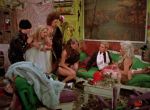
The plot follows the misadventures of Peggy Gravel, a housewife from an affluent Baltimore suburb, who has recently returned home- perhaps prematurely- from a stint in a mental hospital.  Paranoid, delusional, and disgusted by virtually everything, she harangues those around her with wild and hysterical rants, accusing the neighborhood children of trying to kill her and reproving her husband for his ineffectualness.  When he attempts to calm her by administering her medication, she assaults him, calling for aid from her maid, Grizelda, an obese black woman whom Mr. Gravel has recently caught stealing from the household, and who now, believing she is protecting Peggy, smothers him to death by sitting on his face.  When the two realize they have committed murder, they go on the run together, attempting to drive out of town in Peggy’s car, but they are stopped by a policeman; instead of arresting them, however, he demands their underpants and some kisses for his cross-dressing, auto-erotic pleasure.  In exchange, he offers to let them escape to Mortville, a sort of hobo jungle on the outskirts of town where the criminal dregs of local society can find safe haven among their own degenerate kind.  The two women make the journey, and find themselves in a derelict town built mostly of cardboard and garbage; after trading a lottery ticket for a guest house owned by hard-edged lesbian Mole McHenry and her girlfriend, Muffy St. Jacques (“the most beautiful woman in Mortville”), they learn that the community is ruled by Queen Carlotta, a sadistic and self-serving tyrant who takes pleasure in degrading her subjects and dispensing draconian punishment to any who dare to displease her or disobey her absolute commands.  As the unlikely comrades settle into Mortville life, they begin their own lesbian affair, despite Peggy’s revulsion; meanwhile, Queen Carlotta’s egalitarian daughter,  Princess Coo-Coo, has fallen in love with the trash collector, and renounces her privileged life to elope with him.  The angry Carlotta has him killed, and when Coo-Coo flees with his body, she seeks refuge in the home of Peggy and Grizelda.  Peggy immediately alerts Carlotta’s goons, and Grizelda, attempting to protect the Princess, is killed in the ensuing struggle when she causes the house to collapse on herself.  Peggy, however, is rewarded for her loyalty to the Queen by being appointed as the replacement for the now-imprisoned Coo-Coo, and as her first duty she sets into motion the royal plan to infect the entire town with rabies, starting with Coo-Coo herself.  Back outside the “palace,” the lottery ticket Mole accepted as rent has proven to be a winner, so she uses the prize money to buy a bargain basement sex change for herself, thinking it will please Muffy, who has been goading her with fantasies about men.  Instead, it repulses her, causing her to admit that she loves Mole just the way she is; the sewn-on penis is severed and thrown to the neighborhood dog, and with their bond renewed, the couple leads the Mortvillians in a revolt against Peggy and the Queen, at last exacting vengeance for the brutality of their regime.

If this narrative sounds a bit convoluted, it’s no surprise; Desperate Living constitutes Waters’ attempt at an epic fairy tale, with multiple characters in interwoven subplots, and part of his particular milieu– at least in these earlier films- is a disregard for logical coherence in narrative structure.  Waters’ story lines are usually threads intended to link together his depraved set pieces, and a great deal of the fun comes from the fact that they are generally irrelevant to the real purpose of the movie, which is mainly to delight and disgust his viewers, preferably at the same time.  The downside to this approach, from a certain point-of-view, is that many of his movies have a tendency to “peter out” rather than build to a climax, with the final resolution often being little more than a means to tie up the loose ends; but Waters, always the iconoclast, has never concerned himself with following rules, and such an aesthetic consideration is as immaterial to his agenda as laws and social mores are to his characters.

This latter point is not strictly true, actually.  Waters’ films are usually populated by people who are greatly concerned with codes of conduct, albeit warped or inverted ones.  Here, for instance, Peggy is motivated by a fanatical devotion to her own brand of decency and decorum, a world view in which she, as a member of the social elite, is the natural recipient of preferential treatment and should be immune from the disgusting unpleasantries of the world; it happens that, for her, those unpleasantries include any form of natural impulse or show of sentimentality or affection.  She hates nature, is repelled by her husband’s touch, and would rather be raped by the kinky policeman than submit to his kiss; yet she is willing to ally herself with an oppressor and give up her own life in service of the ideal of autocratic privilege.  Similarly, the avowed man-hater, Mole, is prepared to transform herself into the very object of her own loathing in order to satisfy the needs of the woman she loves, not just because of her desire to please her lover, but because she is dedicated to her role as protector and provider.  The irony of both characters, of course, is that they personify the things they themselves despise; the victim becomes the victimizer and the militant feminist embodies the negative masculine stereotype she has rejected in others.  In similar ways, the other denizens of Desperate Living enact this paradoxical principle, or else they perform the meaningless reactionary pantomime of the social bystander, chasing their own self-serving needs and pleasures, deluding themselves with rationalizations and platitudes, and expressing outrage when they are met with opposition; Waters shows us a world of degenerates, overseen by other degenerates, and the only unacceptable transgression is the assumption of authority.  Of course, one could open up a discussion about the layers of social satire, political allegory, psychological commentary, or mythological inversion that can be seen within this low-rent fantasy melodrama; or perhaps we might speculate about the filmmaker’s intentions regarding such things as alienation of the audience, subversion of societal values and norms, or the use of cinema as an expression of counter-cultural concerns.  In the long run, however, Waters’ interest in such matters is clearly parenthetical, at best, and his work here- as with all of his films, particularly the “Trash Trilogy” consisting of this and the two previous efforts- has more to do with his creation of a signature mise-en-scène which can best be described as “transgressive camp.”  Even more than that, perhaps, it has to do with sharing his warped sensibilities through the medium he loves.

That Desperate Living is an expression of the filmmaker’s own imagination is certain; as the producer, writer, director and cameraman, he makes sure what shows up on the screen is pure Waters.  The histrionic dialogue, the over-saturation of de-glamorized nudity and sex, the exploration of fetish behavior and insular communities, the skewering of respectable society, the fixation on repellent imagery and ideas; these are trademark elements in his films, and they are all present here in spades.  Desperate Living features copious full-frontal nudity (both male and female), the sexualization of children, a baby in a refrigerator, the human consumption of vermin, sodomy with a firearm, cannibalism, and penile amputation, to name just a few of its dubious delights, and in typical Waters fashion, they are de-sensationalized to the point of banality- which is why they amuse us rather than outrage us.  This, of course, is precisely the point, if there must be a point; Waters shows us that the only thing more ridiculous than human behavior is to be offended by it.

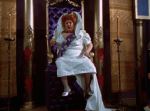
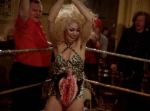
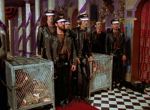
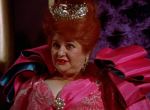
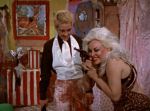
Indulging in this pageant of absurd excess is a cast mostly comprised of the director’s regulars, a troupe of stalwart non-actors upon whose services he has relied upon from his earliest days.  Leading the pack is the incomparable Mink Stole, a fixture in Waters’ films who is here given her most prominent role as Peggy, sinking her teeth with relish into the character as she alternates between hysterical wailing and some of the most ferocious bitchery you will ever see.  She is perhaps (apart from the late Divine) the most proficient purveyor of the curiously bad-but-somehow-great acting that defines the style of the filmmakers’ canon, and Desperate Living offers probably the best showcase of her unique talents.  Accompanying her on the adventure is Jean Hill, a greeting-card model turned actress whose jubilant sass makes her a fitting complement to Stole’s venomous ice queen, and the two exude an undeniable chemistry as they act out their perverted fantasia on Imitation of Life.  Waters newcomer Liz Renay (a notorious burlesque queen, former gun moll, and convicted perjurer, whose scandalous autobiography prompted the director to pursue her for his film) brings a surprising freshness of personality- not to mention her sizable breasts, unfettered onscreen for a good deal of the film- as Muffy, and Susan Lowe as the pugnacious Mole, normally one of the director’s bit players, manages to hold her own admirably in the role originally intended for Divine.  Also notable is Mary Vivian Pearce as the goofily likable Coo-Coo, and “Turkey Joe” in his deliciously trashy cameo as the cross-dressing cop.  The standout performance, though, comes from the sublime Edith Massey, the snaggle-toothed ex-waitress who became a sort of muse for John Waters and a cult icon to boot, as Queen Carlotta.  With her inimitably amateurish delivery, her indescribable physical presence, and her inescapable authenticity, she makes this grotesque character into a mesmerizing spectacle; gleefully punishing her groveling subjects, turning her leather-boy lackeys into sexual objects with whom she engages in lewd- and graphic- excesses, or sweetly bestowing gifts on a pigeon like the skid row vision of a Disney Princess and her animal friends, she is the indisputable highlight of Desperate Living.  The lady had charisma, there’s no denying it.

In spite of the fact that the cast is entirely on target, however, the absence of Waters’ supreme diva, Divine, is keenly felt in Desperate Living.  There is a void, somehow, in the center of the movie, that none of the other personalities can fill.  This is not to say that any of them are lacking in commitment or ability- at least, the kind of ability required of them here- but that some intangible quality is missing that none of them are quite able to provide; it’s possible that this is due to the lack of a strong character to provide central focus in the story, for Desperate Living, in truth, is all over the map- but then so are most of Waters’ films, a fact which audiences easily overlook with Divine’s electric presence as an anchor.  It’s hard, though, to place the blame wholly on this gap for the fact that the movie doesn’t quite work- for, unfortunately, it doesn’t.  Though it is a veritable treasure trove of deliciously quotable lines and ripe with the kind of unforgettable lunatic imagery that keeps us engaged in any given individual moment of the film, it never really grabs us with the unexpected visceral urgency of some of his other works; all the pieces are there, but the whole package leaves us decidedly unsatisfied.  It may be due to the attempted scope of the story, or the fact that the fantasy is so far removed from real experience that it loses the sliver of plausibility which gives the director’s preposterously lurid tales their outrageous edge, but for whatever reason, Desperate Living loses steam soon after it takes us to Mortville, a fact that is particularly disappointing in face of the fact that the film’s first ten minutes are pure, vintage Waters, containing some of the most inspired expressions of his wicked genius he ever managed to create, and setting the bar at a high level which the rest of the movie is then, sadly, unable to match.

Still, for Waters’ many fans, this kind of critical quibbling makes no difference to their enjoyment of its many riches, and for those who are exploring this alternative auteur for the first time, the fact that Desperate Living is not as complete a package as the masterful Female Trouble doesn’t make it any less essential an experience.  There was a certain magic at work in these heady, early years of the Dreamland crew, and it is just as evident in this movie- with its guerilla-filmmaking feel, its grainy 16mm photography, its elaborately shoddy sets built from found objects and refuse, its celebration of filth, and its mockery of traditional cinematic forms- as in any of the others.  What makes it so… well… refreshing (for want of a better word) is that, as always, Waters’ subversive trash is not merely intellectual posturing, nor is it exploitation, for it is clear that all of his participants are equally complicit in his effort to inundate us with perversity; John Waters is a subversive filth-monger because he finds it fun, and because it is an expression of self rather than a calculated pose, he makes it irresistibly fun for the rest of us.  Of course if you are someone who has, as Peggy Gravel puts it, “never found the antics of deviants to be one bit amusing,” you are best to leave this one alone, as well as the rest of Waters’ canon; although his work, for all its over-the-top shock value and subversive topsy-turvy morality, is ultimately as good-natured and sweetly innocent as, say, two naked children playing doctor, for somebody whose sense of humor is not well-tuned to this kind of trashy treat, it’s about as appetizing as a fried rat on a plate.

http://www.imdb.com/title/tt0075936/

The Hobbit: An Unexpected Journey (2012)

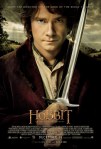
The Hobbit - An Unexpected Journey (poster)


Today’s cinema adventure: The Hobbit: An Unexpected Journey, Peter Jackson’s long-anticipated return to the works of celebrated fantasy author J.R.R. Tolkien, whose three-part saga, The Lord of the Rings, provided the basis for the director’s phenomenally successful and critically-acclaimed trilogy of the same name.  Adapted- and expanded- from Tolkien’s earlier novel, The Hobbit, it constitutes the first part of a second trilogy which serves as a sort of prequel to The Lord of the Rings, telling of the young Bilbo Baggins’ adventures when he joins the quest of a band of Dwarves to reclaim their homeland from an ancient dragon who has taken it as his own- an expedition which sets into motion several events that will have great consequence in the later story.  Sure to be a major success on the basis of fan interest alone, it has met so far with somewhat mixed response- mostly due to Jackson’s decision to supplement the relatively short novel with additional material that connects it to the later events portrayed in The Lord of the Rings– and facilitates the splitting of its narrative into three separate films.  Reaction has also been divided about his choice to shoot the film at 48 frames per second (twice as fast as the standard rate), resulting in an ultra-high resolution image which gives his movie an almost hyper-real look, particularly when coupled with the 3D and IMAX formats in which it has been widely released.  Nevertheless, the majority of critics and audiences have been enthusiastic in their welcome for this adaptation of the much-beloved tale, and it undoubtedly marks the beginning of another triumphant achievement for Jackson and his creative collaborators.

The Hobbit, published over a decade earlier than The Lord of the Rings, was written by Tolkien as a stand-alone book, though its narrative was part of the much longer and intricately detailed story of Middle-earth that he had been developing since his youth.  The book was a success- so much so that it achieved classic status, eventually allowing Tolkien to publish the iconic trilogy of novels which turned him- and the mythical world he created, along with its inhabitants- into a cultural icon.  In an appendix at the end of The Lord of the Rings, the author provides a detailed timeline of the entire history of Middle-earth, with particular emphasis on the events leading up to the War of the Rings, which is specifically chronicled within the trilogy.  The beginnings of this great conflict coincide with the timeline of The Hobbit, through which Tolkien provided glimpses of his larger saga within the peripheral details of the central plot.  An Unexpected Journey, as mentioned, incorporates this material into its adaptation of The Hobbit proper, placing the story into the larger context of the complete epic tale.  The film begins in precisely the same time and place as the previous trilogy, at the home of Bilbo Baggins, an aged hobbit (or “halfling”) who has begun to write the history of his personal adventures, many years before, in the far-flung corners of Middle-earth.  We are transported back, as he remembers his youth, to a day 60 years prior, when Gandalf, a wandering wizard once acquainted with his family, arrives at his door to invite him on an adventure.  Bilbo, accustomed (as most of his people are) to the predictable comfort and security of his home in the Shire, declines; Gandalf, however, is not dissuaded so easily, and later that night the young hobbit is surprised to be playing host to a company of Dwarves who arrive unexpectedly, claiming to have been summoned to his home- by the wizard, who explains that he has offered Bilbo’s services as a “burglar” to assist the Dwarves in a quest to regain their ancient home under the distant Lonely Mountain, where a powerful dragon named Smaug, many years before, laid waste to their kingdom, Erebor, and claimed their vast wealth as his own private treasure trove.  Bilbo, horrified, again declines to join the expedition, protesting that he not only has no experience as a burglar but that he would, in fact, be useless on any such quest- an assessment with which the Dwarves are inclined to agree, particularly their leader, Thorin Oakenshield, heir to the throne of the kingdom under the mountain and a proven and powerful warrior.  Nevertheless, the shrewd wizard eventually persuades Bilbo, who has long suppressed a childhood yearning for adventure, to accept the job, and the hobbit joins his new comrades as they begin their long journey.  As they make their way, they encounter obstacles and enemies the likes of which the fledgling adventurer has never seen, including hungry trolls, greedy goblins, and bloodthirsty orcs- foul, mutated creatures who seem bent on pursuing them, and whose ferocious chieftain seeks a personal vendetta against Thorin.  Meanwhile, it becomes apparent that Gandalf has a larger agenda as he accompanies the fellowship; in his secret role as one of the White Council, an alliance of wizards and elves that serve as protectors of Middle-earth, he has begun to sense the growing influence of a dark and ancient presence returning to the land- a fear which he shares with his fellow guardians when the company arrives for a brief respite at the Elven capitol of Rivendell.  However, the answers he seeks remain yet hidden in the shadows, and the fate of the Dwarvish quest demands his more immediate attention.  Eventually, the band’s travels bring them within sight of their destination- but not before Bilbo manages his first successful “burglary” by stealing away the most “precious” possession of a treacherous subterranean creature named Gollum, beginning a greater adventure that will eventually decide the fate of Middle-earth itself.

The Hobbit, as written by Tolkien, was aimed at younger readers; though not exactly a children’s book, it is considerably lighter in tone than the epic trilogy which followed, with a less austere literary style and a higher level of whimsy to soften the heaviness of the story’s darker elements.  Even so, the heart of its story lies in the fabric of this remarkable writer’s meticulously plotted history of Middle-earth, a complex and lifelong undertaking inspired by his desire to create a definitively English mythology and informed by his passion for philology.  This imaginary chronicle, produced over the course of decades, provided a depth of background for his writings that lends an unprecedented level of authenticity to the fantasy world in which they are set, complete with vivid geographical detail, cultural and linguistic traditions for all of the various races which populate it, and a fully developed cosmology.  This fullness is one of the qualities which helped to make both The Hobbit and The Lord of the Rings into cultural phenomena, and legions of fans have hungrily devoured every scrap of the copious background material from which it arises, through its later publication in books like The Silmarillion, by Tolkien himself, and the collected volumes of history assembled by his son.  It is with these kinds of fans in mind that Peter Jackson- along with his partner, Fran Walsh, and their longtime collaborator, Philippa Boyens- decided to expand the narrative of The Hobbit with the inclusion of story elements that provide background and foundation for the later events depicted in The Lord of the Rings.  Operating from the conceit that Bilbo’s adventures, as related in the novel itself, are only a part of the whole story, the screenplay, by the three aforementioned collaborators (along with Guillermo del Toro, who was originally slated to direct), weaves the story of the Dwarves’ quest into the larger story arc that links The Hobbit to its more ambitious successor; the introduction of the great ring of power, pilfered by Bilbo in the subterranean lair of the pathetic Gollum (the only episode in the novel that bears significant continuity into the later books), is here seen within the context of other circumstances revealed by Tolkien only in his extraneous writings.  Thus, An Unexpected Journey is not simply an adaptation of The Hobbit, but an ambitious effort to create a more complete vision of Tolkien’s mythic realm, fleshing out the depiction of “behind the scenes” activity- such as the meeting of the White Council and the discoveries of Radagast the Brown- in order to tell more of the complete saga as the author composed it in his own imagination.

Of course, it goes without saying the Jackson and his co-writers are themselves the kind of fans at which they have aimed their own movie; it’s clear from the outset that An Unexpected Journey is as much a labor of love as The Lord of the Rings, and even more of a dream project in the sense that the creators have the opportunity for bringing to light many of the things that have, until now, remained tantalizingly hidden between the lines.   The inclusion of these “extra” scenes, of course, begs the question of how faithful Jackson et al‘s vision can be to Tolkien’s intent when the author himself chose not to include them in the book.  The answer is, I think, very faithful indeed.  An Unexpected Journey contains very little that doesn’t come directly from Tolkien, except for the kind of embellishment of detail that is necessary when realizing a written work into cinematic form; the author wrote descriptions of all the so-called “extra” scenes, and though they were omitted from The Hobbit because they were irrelevant to the book’s self-contained purpose, they were nevertheless part of his complete vision.  Jackson and crew have given us a chance to see that vision come to life, and they have done it with relish.

There is actually very little I can say about The Hobbit: An Unexpected Journey, at least in terms of standard critical commentary.  There are those who have a passion for this kind of fantasy adventure story, and there are others who have an equally passionate dislike.  No argument is likely to persuade one side or the other to change their view, and those two camps are going to either love this movie, or hate it, regardless of what anyone says; but for those many viewers in between, some guidance may be offered.  Casual fans of Tolkien’s books, who may not be well-versed in the surrounding lore, may find themselves confused by the inclusion of characters and concerns from the later trilogy, and might also feel that these elements muddle the focus of the main narrative, which centers wholly on Bilbo and his transformation from humble homebody to seasoned adventurer.  Likewise, those who have only come to the world of Middle-earth through exposure to Jackson’s earlier films might find themselves feeling a sense of all-too-familiarity over things we’ve seen before, or may not get the point of spending time on a plot line for which we have already seen the eventual outcome; this, of course, is always the pitfall of  “prequels,” and it is one which many viewers might feel is particularly needless here, when the source material does not itself contain these elements.  It is important to remember, however, that An Unexpected Journey is the first installment of a trilogy, and much of its content is meant as a set-up to the events which are to follow; though one may quibble about the necessity for padding out an already rich and complex storyline, or question the motivation for turning a single novel (which is, incidentally, shorter in itself than any of the three volumes of The Lord of the Rings) into multiple sure-fire hit movies, Jackson’s vision is an ambitious one.  He is bent on building as complete an embodiment of Tolkien’s mythos as possible, one which draws not only on the content of the novels as published but on the supplementary material with which the author infused them.  To put it another way, he is thinking “outside the box” in order to capture the total experience of the author’s epic saga in a cinematic form that both elaborates on its details and remains true in spirit to his ultimate intent and purpose.  As with any artistic translation of a pre-existing work- particularly when the original artist is no longer around to consult- there is a necessity for personal interpretation; but Jackson and his team, who are die-hard fans of the first degree, are certainly as qualified to interpret with as much validity as anyone, and with their proven mastery of the kind of breathtaking visual storytelling required, they are obviously more than up to the task.

The level of perfection and coherence to which Jackson aspires is evidenced by the painstaking efforts he has made to connect his new trilogy to the previous one with as much unity as possible.  Settings which are shared by both are duplicated in detail, and returning characters are portrayed by the same actors (with the semi-exception of Bilbo, whose younger incarnation is now represented by Martin Freeman- though original actor Ian Holm reprises his appearance as the older version of the title character).  In addition, the visual style of the original film series is maintained through the richly detailed design work, inspired by the decades of illustrative art connected to Tolkien’s books- in particular those of Alan Lee and John Howe, who served as visual consultants on this film (and its future follow-ups) as they did on the original Jackson trilogy; needless to say, the high-tech magic used to bring life to the various denizens of Middle-earth and their exploits is once again a marvel of imagination merged with state-of-the-art wizardry, and the creation of props, costumes and make-up which convincingly capture the cultural character of the land and its population is once again executed with astute perfectionism.  An Unexpected Journey is cut so distinctly from the same cloth as its spectacular predecessors that it is clear the filmmaker intends, when all is said and done, for this new trilogy to be seamlessly bound to The Lord of the Rings as a single, unified whole.

Further enhancing this continuity is the welcome return of Howard Shore’s magisterial musical scoring, an indispensable element of The Lord of the Rings, which manages the remarkable feat of incorporating here the themes and motifs created for the previous trilogy while weaving them into the new material composed specifically for The Hobbit.  It’s the same technique which gave each of the three original films their own distinctive sound yet tied them all together, as well as adding a valuable aural component to the storytelling, and once again it serves its purpose well; the soundtrack has that rare quality of seeming instantly familiar, like music you have somehow known all your life without ever having heard it before, much in the same way that the story feels like an ancient memory of some long-forgotten dream.  Tolkien’s books touch the realm of archetypes, and, like Jackson, Shore has the skill to enhance this deep unconscious connection in a powerful and irresistible way.

In the same vein are the performances; though this kind of acting is rarely acknowledged when awards are handed out every year, the ability to convey humanity and make emotional connection while playing in a necessarily heightened style is a delicate gift, and Jackson has once more populated his epic with performers who are up to the job.  Returnees Ian McKellen (whose magnificent Gandalf has been one of the highlights of the series from the beginning, and is a particular delight this time around), Hugo Weaving, Cate Blanchett, and the venerable Christopher Lee (whose personal expertise on the Tolkien canon has been of vital importance to Jackson’s project offscreen, as well)- as well as the aforementioned Holm and Elijah Wood (in a brief cameo)- are all seasoned purveyors of this craft, by now, and have become the quintessential embodiment of their characters; it is a pleasure to see them, however brief their involvement.  The new cast members, however, are every bit their equal in terms of capturing the necessary flavor; Jackson’s month-long pre-filming regime of combat and horseback training, designed with the dual purpose of establishing a tight-knit camaraderie among the players, no doubt contributed to the chemistry that is evident onscreen, and his ensemble provides a superbly symbiotic assortment of performances which are each destined to become as iconic as those from The Lord of the Rings.  Of particular note are Richard Armitage- whose brooding intensity gives Thorin Oakenshield a powerful charisma which complements his role as the destined ruler of the Dwarves- and Sylvester McCoy- whose memorable turn fleshes out Radagast the Brown, a peripheral character that has always been a subject of fan curiosity through importance of his role in the saga and the brief-but-vivid descriptions he received in Tolkien’s work.  Mention must be made as well of Andy Serkis, whose mesmerizing performance as Gollum- achieved through motion capture technology but executed live on set with his co-stars and derived entirely from his real expressions and physicality- was one of the most acclaimed elements of The Lord of the Rings and comes close to stealing the entire movie in his single scene here.  Finally, Martin Freeman is the perfect Bilbo Baggins; down-to-earth, likable, comical, and yet endowed with a great and generous spirit that shines through from early on, it is no wonder that he was Jackson’s first and only real choice for the role- the production schedule was completely rearranged to fit the actor’s availability- and his understated, everyman charm (rightly, since it’s Bilbo’s story) provides the heart and soul to the film.

There are so many wonders on display in An Unexpected Journey, and to list them all would be pointless; far better to let you discover them for yourself.  On that subject, the issue of presentation becomes an important factor.  Jackson’s audacious decision to shoot his film in the double-rate format of 48 fps. has generated much debate- and quite a few complaints from viewers who find the resulting depth and clarity to be disorienting and distracting- particularly when combined with the seemingly obligatory 3D and IMAX formats, as well as a tendency to make the various and extensive special effects trickery appear, well, obviously fake.  In answer to this, I can only say it’s entirely a matter of personal taste; I myself have seen the film twice now, once in the full-blown mega-tech format and once in the plain old 2D standard version.  I was mesmerized both times, and I had no complaints- though I will say that my second viewing, free from the “ooh-aah” factor which accompanied my first time through, allowed me to focus more attention on the content of the story itself without the bedazzlement of total sensory experience.  The content is, of course, what ultimately matters more than the gimmickry of its presentation, and it must be noted that eventually, when the film is viewed as it will later be, without the trappings of big screen showmanship on millions of smaller home screens around the world, it will be that content upon which viewers will base their judgment of the film.  In the meantime, those with a low threshold for technical bells and whistles might do well to skip the deluxe experience and visit your humble neighborhood theater; the tickets will be cheaper, and you will be able to focus on the essence of the film without the distraction of feeling more completely immersed in an imaginary world than you want to be.

The Hobbit: An Unexpected Journey is, ultimately, a film for fans.  That doesn’t make for a limited appeal, in this case; Jackson’s Lord of the Rings trilogy was one of the most popular and acclaimed film franchises of all time, and the devotion that it engenders in its fans rivals that of such other cultural phenomena as Star Wars and Harry Potter.  There will be many, of course, who will adopt a dilettante attitude towards the new trilogy, perhaps for no other reason than to separate themselves from the crowd, just as there have been critics who seemingly were poised and ready to attack the film before it was even released.  There are probably audiences who will feel that this new film is really just “more of the same,” and admittedly there are a few elements that seem like repetition of things we’ve already seen- though of course these moments are faithful to the source material, and to change or excise them would be untrue to Tolkien’s story.  No doubt the majority of fans, however, will be thrilled at the chance to return to Jackson’s rendition of Middle-earth, and will eagerly anticipate the remaining entries over the course of the next two years.  I must, in the interest of full disclosure, admit than I am definitely in this last category; it would be hard for me to have found fault with An Unexpected Journey, short of a total botch job by its director, which was never very likely- though not it’s certainly not unheard of for a trusted filmmaker to drop the ball when remounting a beloved franchise (dare I mention George Lucas’ The Phantom Menace?).  The truth is that expectation has so much to do with the enjoyment of a cinematic experience that it is sometimes impossible to have an objective reaction, particularly with a highly anticipated film such as this one.  To be sure, what it delivers might not match the expectations of many- but in reading some of the harsher reviews that have so far been published of An Unexpected Journey, I find it hard to believe they are talking about the same film I saw.  Perhaps it comes down to the “what-have-you-done-for-me-lately?” attitude that seems to pervade popular culture today, which results in a loss of interest for that which was once popular and a snarky skepticism about any attempt to revive a former glory.  Whatever the reason, there are many who would disparage Jackson for returning to familiar territory instead of taking a new direction; but exciting filmmaking does not always have to break new ground, nor does the desire to revisit a successful formula indicate a lack of creativity.  It is obvious that this New Zealander considers the definitive transfer of Tolkien’s work to the screen to be his life’s work, at least for now, and I, for one, couldn’t be more delighted.

http://www.imdb.com/title/tt0903624/


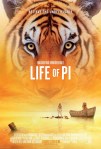
Life of Pi (2012)

Life of Pi (poster)

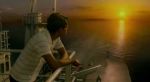
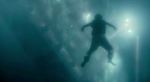
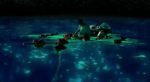
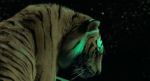
Today’s cinema adventure: Life of Pi, the 2012 film adaptation of Yann Martel’s popular novel of the same name, relating the tale of a boy who, stranded by shipwreck in the middle of the Pacific, must survive alone in a lifeboat with a ferocious Bengal tiger.  In development for several years, it was assigned to a number of directors before finally being offered to acclaimed filmmaker Ang Lee; under his guidance, the challenging material was shaped into a 3D blockbuster, utilizing extensive CG effects to realize the logistically daunting circumstances of its plot.  Long anticipated by fans of the book, many of whom undoubtedly regarded it unlikely that an adequate film could be made from the delicate source material, it has thus far been greeted with overwhelmingly positive response by both critics and audiences, who have marveled at its visual beauty and technical wizardry, as well as expressing admiration for its handling of the novel’s important metaphysical themes.

Adapted more or less faithfully from Martel’s original by screenwriter David Magee, the film begins in Canada, with an interview between an unnamed writer and the possible subject for his new book- Piscine “Pi” Patel, a teacher from India who, as a teenager, survived the sinking of a trans-Pacific freighter and spent nearly a year adrift in a lifeboat before reaching safety on the shores of Mexico.  Pi proceeds to tell his tale, first detailing his childhood in Pondicherry, India, as the younger son of a zookeeper and his wife.  Exposed at an early age to not only his native Hindu religion, but also Christianity and Islam, he becomes devout in all three- though his family, particularly his father, tries to encourage him to take a more practical, scientific approach to life.  Eventually, as Pi approaches adulthood, the family decides to start a new life in America; father arranges passage on a freighter, upon which they can also transport the zoo animals.  Halfway through the journey, however, Pi awakens in the middle of the night to discover the ship is sinking; forced into a lifeboat by the frantic crew, he soon finds himself the only human survivor, stranded thousands of miles from land- but not quite alone.  Under the canopy of the lifeboat lurks an enormous tiger, the last remaining member of his father’s menagerie.  In order to survive his ordeal at sea, Pi must establish a precarious relationship with the huge carnivore, simultaneously his only companion and his greatest threat, while also learning to procure the fresh water and food they will both need in order to survive.  The experiences and adventures they share form a strange bond between boy and beast, and Pi’s journey becomes a rite of passage in which he must come to terms with his place in the universe and define his relationship with the absolute.

Life of Pi is one of those movies that is exceptionally difficult to write about in any meaningful way; even a description of the plot is impossible to accomplish without either giving away key story elements or making the whole thing sound like an implausibly far-fetched boy’s adventure yarn.  The film’s advertising campaign makes it clear, however, that it is a movie meant to inspire a sense of wonder, so it’s no spoiler to reveal that director Lee approaches the novel’s scenario with an eye towards capturing the mystical experience of it; and rightly so: like Hemingway’s The Old Man and the Sea, from which it clearly bears a direct lineage, Martel’s novel is as much a metaphor as a narrative, offering a portrait of inner transformation through its description of outward events.  It is precisely this quality that makes the notion of transposing it to film so questionable, since translating the esoteric into a visual milieu can be problematic, to put it mildly, particularly when the outward circumstances of the story are not only limited by its setting but also extraordinarily difficult to capture on film by conventional means- the 1957 film version of Hemingway’s tale, well-acted as it may have been by Spencer Tracy, is proof enough of that.  Fortunately, Life of Pi benefits immeasurably from the technological advances in filmmaking that have allowed the convincing depiction of almost anything imaginable; even more importantly, it benefits from the supervision of a truly gifted film artist who understands the importance of using all these high-tech enhancements to serve his material, rather than the other way around.

Ang Lee is an exceptional filmmaker, one who has proven time and again his particular gift for approaching Western subject matter with the perspective of his Asian background.  With films like The Ice Storm and Brokeback Mountain, he has explored distinctively American subjects and settings with the cool and sensitive eye of a shrewd outsider, distilling humanity at its essence from the conflict between the cultural and personal mores of his characters; with Life of Pi, he is given the opportunity to merge these differing viewpoints in a story which draws from the elements of both.  In Martel’s novel- and fortunately, in Magee’s screenplay- the literal, narrative-based traditions of the West are blended with the symbolic, inscrutable mysticism of the East, creating a story which satisfies the needs of both; it is simultaneously a tall tale and an object for meditation, an invitation to participate in both a rousing adventure and a spiritual journey, and a celebration of both the outward and inward beauties of the universe.  With a keen understanding of this material, Lee once more coaxes the innermost revelations from his meticulously crafted arrangement of surface details, resulting in a remarkable film that combines his characteristic observational lyricism with the kind of shimmering magic that elevated his Crouching Tiger, Hidden Dragon from a straightforward martial arts genre picture to an unforgettable cinematic experience.

Unlike Crouching Tiger, however, Life of Pi is not exactly a fantasy picture; but Lee shoots it as if it were, giving even its most mundane settings a feeling of being larger than life.  He gives us a world where everything seems to shine with an inner glow, possessed of a deeper nature just beneath its surface, and in all his settings- the streets of Pondicherry with their fusion of European and Indian influence, the lush wonderland of the zoo, the cavernous, animal-filled cargo hold of the freighter, the exotic jungle of the mysterious floating island Pi discovers late in the film, and of course the alternately idyllic-and-punishing timelessness of existence in the isolated void of the ocean- everything we see has the a priori familiarity of an archetype, a deeply-embedded subconscious memory of a place we’ve never been.  This is accomplished by the surreal visual atmosphere the director achieves with the help of his artistic and technical team (particularly through the golden-hued palette captured by cinematographer Claudio Miranda and the hauntingly ethereal score by Mychael Danna), but also by a sublime artistic sense that allows him to put all the pieces together with just the right balance of dream-like ephemera and visceral tangibility.

It needs also to be observed that Ang Lee chose to make Life of Pi as a 3D movie, and though I’m not a fan of the current trend towards putting almost everything into this unnecessarily costly and often gratuitous format, his film demonstrates- like Martin Scorsese’s Hugo– what can be done with it in the hands of a truly gifted filmmaker.  Lee uses the extra depth to enhance and expand our experiences in the world of his film, particularly in regard to suggesting the overlay of different perspectives and realities that is of such great importance to the thematic core of the story.  Indeed, though Life of Pi can most certainly be enjoyed and appreciated in the conventional format, I might even venture to say that, at least in terms of artistic relevance to the material, it is the greatest use to date of three-dimensional technology; if at all possible, its a film that definitely warrants the extra effort and expense of an outing to your nearest 3D-equipped multiplex.

Besides the 3D effects, as mentioned before, there are many other technical aids that contribute to Life of Pi; it is safe to say the film would be impossible without them, for though most of the story’s circumstances could likely be provided by standard, pre-digital-age camera trickery, there is at least one crucial element that could probably never be realized without the help of the advanced computer wizardry on display here.  I refer, of course, to the tiger- who has a name I will not reveal here, since I am loath to spoil even the smallest of the movie’s many delights.  The relationship between Pi and this formidable creature is the crux of the entire film; through it comes the majority of the boy’s revelatory experience, his attempts to establish a connection to the awesome and terrifying power of the universe and come to terms with his own true nature.  The beast must seem as fully alive, perhaps even more so, as his human co-star, and it is a testament to the artistry of Lee and his CG technicians that this condition is met beyond any reasonable expectation. Remarkably, the tiger’s presence is almost entirely created digitally- the only live footage comes when he is swimming, and it is virtually impossible to tell the difference.  Pi’s feline companion exudes a palpable reality and a distinct personality, making him arguably the most impressive of the film’s triumphs.

The tiger’s utterly convincing presence is by no means the only triumph of Life of Pi, though, and while the beast is a display of special effects at their most dazzling level, it never overwhelms or upstages the rest of the film.  Rather, the tiger plays its role alongside the flesh-and-blood human cast members so seamlessly that the film’s advertising tag line, “Believe the Unbelievable,” seems entirely apt.  As for the humans, they form a superb ensemble of players, embodying their roles so perfectly as not to call attention to themselves as actors at all.  As so frequently happens in a film of this magnitude, the performers are so much a part of the cohesive whole that they tend to go unnoticed, but nevertheless they deserve praise for their fine work.  In particular, Bollywood actress Tabu and Anil Hussain make an impression as Pi’s mother and father, respectively, as does the lovely Shravanthi Sainath as a girl with whom the young hero enjoys a brief romance before he begins his fateful journey.  As the adult Pi, Irrfan Khan (another Bollywood stalwart) is serene and approachable, yet perhaps, somehow haunted- he makes us want to hear the tale of the journey that shaped him into this enigmatic figure.  As the writer to whom he tells it, Rafe Spall is appropriately likable (suitably enough for a character whose role is to stand in for the audience), but also offers a faint aura of desperation, suggesting that underlying his practical interest in Pi’s narrative as inspiration for his work is the deeper need of a spiritual seeker.  As an interesting side note, Spall was cast only after actor Tobey Maguire had already completed filming his own performance in the role; Lee decided Maguire was too recognizable and his presence would call undue attention to what was essentially, though important, a minor role, and reshot all of his scenes with Spall instead.  Interestingly, iconic French star Gérard Depardieu makes an appearance in another small- but ultimately significant- role as a chef aboard the freighter, making one wonder if his scenes might have been reshot for the film’s French release.

Clearly, though, the most crucial performance must come from the young actor playing 16-year old Pi, whose experiences- both exterior and interior- provide the main body of the film.  Making his screen debut in the role, first-time actor Suraj Sharma rises admirably to the occasion.  Chosen by Lee out of 3000 candidates, he actually attended the audition as an escort to his younger brother, but the director was taken by his appearance and asked him to try for the part; though he went through several rounds of readings, he was eventually chosen to star in the film, but before filming began he underwent extensive training- not only in acting, but in yoga and meditation practices as well as ocean survival.  The resulting performance is as magnificent a film debut as any young actor could hope to deliver, requiring Sharma to portray a profound range of emotional and psychological transformations, and he does so with utter conviction- and charisma on top of that.  He takes us every step of the way through Pi’s journey, without faltering for a moment.  It is a superb piece of film acting, and proves that this young man fully deserves a long and active future in front of the cameras, should he choose to continue on that path.

Though I haven’t said it yet, in so many words, it should be obvious be now that I think Life of Pi is a pretty great movie.  I should accompany that endorsement with the disclaimer that I am a huge fan of the book and also of Ang Lee; but even considering any personal bias, I feel pretty confident in my assessment of the film as one of the best films of 2012.  No doubt there are those who might be skeptical, particularly those unfamiliar with the original book who might suspect it of bring some sort of gooey boy-and-his-tiger adventure.  Rest assured, it is not.  Life of Pi is the story of man’s quest to form a relationship to the mysteries of existence, to reconcile the delicate balance between life and death, and to find within himself the strength and determination to keep going in the face of the uncertain and unknowable.  Like its protagonist, it draws influences from the three religious traditions mentioned above, as well as from a healthy dose of existentialism; it uses its story to explore not only themes of personal development, but of the nature of perception and reality itself.  Some viewers may feel that Pi’s tale is too preposterous to be believable, and to be sure, it strains plausibility increasingly as it progresses; to that, I can only say that this is in itself a part of the film’s unusual power, and that in the end, the story’s very unlikeliness is in fact a key factor to its purpose. Ultimately, Life of Pi asks a great many questions about existence, questions that each of us must face in our own lives, but it doesn’t answer any of them; instead, it challenges us to find our own answers, leaving us puzzled and pondering, stimulated and shaken- but most of all, amazed and- just maybe- a little bit more enlightened.

Before offering a whole-hearted recommendation for Life of Pi, I must also caution that, in spite of the presence of zoo animals and its adventurous overtones, this is not a typical “family” movie; not only does it deal with the sophisticated, “heavy” themes discussed above, it also contains much that could be very upsetting to young children- indeed, even to most adults.  Lee does not shy away from showing us the universe in its most chaotic, destructive, and unmerciful aspect, and though the movie contains a considerable amount of humor and counters its more terrifying content by also capturing the world in its most blissful and sublime beauty, his purpose is not to offer a comforting, sentimentalized vision of a reality in which, despite the scary parts, everything will always turn out alright.  That said, there is nothing inappropriate for young people in Life of Pi, and with guidance and participation from parents, it is probably a much finer choice for family viewing than the majority of safe and formulaic pabulum churned out around the holiday season; I would recommend it heartily above such “tweener” crowd-pleasers as the latest Twilight installment.  As for the rest of the film-going public, I can think of no qualification to offer with my encouragement to see this movie; it is one of those rare examples of mainstream moviemaking that successfully achieves the status of great art, and I have little doubt it will become a classic.  Thus far, Life of Pi has performed respectably at the box office, though it has been predictably overshadowed in a season that also offers impressive revisitations of James Bond and Abe Lincoln in addition, of course, to Twilight’s doe-eyed teenage vampires; let’s hope that it manages to hold its own long enough to ensure an opportunity for all fans of great cinema to experience it in its full glory on the big screen.  If you miss that chance, though, it will still be worth your while to pick it up as soon as it becomes available for home release- and buy, don’t rent.  This one’s a keeper.

http://www.imdb.com/title/tt0454876/

Cinderella (1950)

Today’s cinema adventure: Cinderella, Walt Disney’s 1950 animated adaptation of the classic folk tale immortalized by 17th-Century author Charles Perrault, a simple tale about a young orphaned girl, forced to work as a menial servant by her vain stepmother and stepsisters, who is granted a wish to attend a royal ball where her sweet nature and her beauty win her the heart of a handsome prince.  The first fully animated feature produced by the Disney Studio after World War II, it was something of a gamble, an expensive undertaking which would have likely resulted in bankruptcy had it failed to attract an audience; it did not fail, however, instead becoming an overwhelming success which provided the financial base for the expansion of the Disney company during the 1950s, paving the way not only for more features, but for the establishment of their television division and the beginnings of their theme park empire.  It remains one of their most enduring titles, commonly ranking near the top on lists of the greatest animated films of all time and continuing to enchant viewers of all ages as it inspires new generations of would-be princesses to believe in their dreams.

The basic plot of Cinderella dates back to ancient times, and can be found in folklore from a wide range of cultures and eras.  One version even found its way into Shakespeare’s King Lear, albeit with a tragic twist, through the story of the mythic Princess Cordelia, who not only marries her dream prince but defeats her cruel and ambitious sisters with his army; another dark variation on the tale can be found in the stories of the Brothers Grimm, who included such details as the stepsisters cutting off portions of their feet and their being blinded by attacking birds.  The most familiar version today, however, arises from Perrault’s story, which added the iconic elements now indelibly associated with it, including the fairy godmother and the magic pumpkin coach; Disney’s artistic team used this as their source, eliminating some of the darker aspects and placing a heavy emphasis on the peripheral adventures of the heroine’s animal allies, which are played for child-pleasing comic effect.  Indeed, the main events of the plot comprise relatively little screen time, and the story is largely told through the behind-the-scenes perspective of the mice, whose machinations are largely responsible for Cinderella’s eventual triumph.  The film opens with a narrated prologue in which the tale’s background is set; Cinderella is the daughter of a widowed aristocrat who takes a second wife with two daughters of her own, hoping to provide his child with a motherly influence, but upon his premature demise this new stepmother becomes a domineering tyrant, forcing Cinderella to live the life of a servant while doting on her own vain and mean-spirited girls.  Despite her lowly existence, Cinderella grows into a lovely and sweet-natured young woman, befriending the animals of the household, including the mice and birds, and treating them all with kindness- even her stepmother’s spoiled and vindictive cat, appropriately named Lucifer.  One day, an proclamation arrives from the palace that all eligible young ladies in the kingdom are invited to a royal ball in honor of the Prince, whom the King hopes will choose a bride from among them; Cinderella hopes to attend along with her stepsisters, but their scheming and jealous mother burdens the girl with extra chores in order to prevent her having the time to prepare a suitable dress.  Her loyal animal friends manage to make a lovely gown from the cast-off scraps of the stepsisters’ wardrobes, but when the elated Cinderella rushes to join her family as they prepare to depart, the two selfish girls accuse her of theft, and rip the borrowed items from her dress, leaving her in tatters as they head off to the palace.  Her tears of despair quickly disappear, however, when a kindly old woman materializes, proclaiming that she is Cinderella’s fairy godmother; she promptly transforms a pumpkin into an elegant coach and the girl’s torn dress into a sumptuous gown, and sends her off to the ball- admonishing her, however, that she must return before midnight, when the spell will be broken and all her magical accoutrements will return to their original, non-enchanted form.  At the palace, the young Prince is bored and unimpressed by the procession of bachelorettes vying for his hand- that is, until the late arrival of a mysterious beauty, to whom he is immediately drawn.  They waltz together and wander the palace grounds- until the clock begins to strike midnight, when she hastily flees, leaving behind no clue to her identity except a single glass slipper, lost on the palace steps in her hurry to escape before the final chime can break the spell and reveal her lowly state.  Determined to find the mystery girl who has won his son’s heart, the King declares that the slipper will be tried on the foot of every maiden in the kingdom until a match is found, but Cinderella’s destiny may still be jeopardized by the efforts of her malicious stepmother, who is bent on seizing this last chance to secure a royal marriage for one of her own unpleasant children.  With time running out, it will be up to the heroine’s animal friends to come to the rescue and ensure that her “happily ever after” dreams will at last come true.

As with all of Disney’s early productions, the screenwriting and directing duties on Cinderella were handled by multiple individuals, working in concert under the tight supervision of Walt himself and in close collaboration with the chief animators.  It is a testament to the strength of Disney’s vision that these films emerged as cohesive works of art, blending the styles and influences of their various contributors together into a unified whole.  At the time of Cinderella, the studio had spent several years languishing under the budgetary constraints of wartime, when their output had been limited to the obligatory shorts- still popular, but eclipsed by the success of Warner Brothers’ edgier Looney Toons and Merrie Melodies cartoons- and omnibus features which packaged several of them together or mixed short animated segments with live action footage.  Though the great features of the pre-war era had earned them much acclaim and a formidable reputation, only the first of them- Snow White and the Seven Dwarfs–  had been a bona fide hit, and full-length animation was too risky to warrant the considerable expense required for its production during the wartime economy; even so, the studio had honed its skills during these lean years, particularly in its recognition of the importance of music as a means to generate interest- and additional income- for their films.  Disney’s return to the field of feature-length animation was therefore bolstered by a deliberate effort to create songs which could not only add to the movie’s appeal, but which could become an asset in their own right, and Walt enlisted three established popular songwriters- Mack David, Jerry Livingston, and Al Hoffman- to compose tunes which could also be marketed on their own through the studio’s music division (the song rights for the previous films had been sold to other music publishers).  Even with this hedging of its bets, Disney was taking a major risk with Cinderella, releasing a family-oriented fairy tale into a market dominated by the grittier, world-weary cynicism and social commentary that had grown prevalent in post-war American films; but, whether by instinct, luck, or savvy foresight, Walt’s return to the medium which made him famous came at precisely the right time, heralding a revival of optimism and a growing taste for glossy fantasy that would mark the new and prosperous decade.

Watching Cinderella today, it’s remarkable to see the seeds of Eisenhower-era sensibility so clearly visible in its framework.  The “American Dream” is here encapsulated by the movie’s story of success earned by hard work and a positive attitude, and its focus on the feminine perspective emphasizes the role of women in that objectified way of life- namely, to strive for fulfillment through the ultimate life accomplishment of marriage to a successful man.  Cinderella, after all, is trained from the outset to be a devoted wife, with a deep attachment to her father and years of experience tending to every household chore; and her fitness as a mother is plainly seen in her nurturing relationship with her animal friends- particularly the two foremost mice, Jaq and Gus, who are more or less characterized as children in animal form.  Of course, the importance of beauty is also stressed, most strongly in the significance of Cinderella’s ball attire, with both the simple-but-charming dress constructed by the animals and the sumptuously dazzling gown into which it is magically transformed being afforded considerable weight in the film’s plotline.  Throughout the movie, even in the animal subplots, traditional gender roles are subtly reinforced, and the principal male characters- the human ones, anyway- are firmly established as the natural beneficiaries of masculine privilege, a status heightened by their identification as royalty in the hierarchy of the story.  On top of all these social foreshadowings, the visual design of the film is replete with precursors to 1950s fashion, from the rich color palette, to the lines of the clothing, to the predominance of old-fashioned Euro-elegance in the settings and decor.  As a final touch, the lush and dreamy music, at once catchy and soothing, fits directly into the mold of the popular songs that would dominate the sound of the coming decade- until the advent of Elvis and his rock-and-rolling ilk, that is.  In short, Cinderella, in the clarity of hindsight, looks very much like a blueprint for life in the ’50s, and one which may have had more influence on the shape of that decade than its creators had ever envisioned.

Aside from these signposts of its place in the timeline of cultural history, Cinderella also offers a look at the state of its art form at the time.  Despite Warner’s’ dominance in the realm of popular cartoons, Disney was still the undisputed master of the genre; nobody else could do the things they were doing, and their drive to continually advance the art was still strong, perhaps even more so after years of being held back by the war.  Even so, the creative juices flowing through Cinderella seem flavored less by the hunger of young visionaries than by the confidence of mature artists; there is an obvious delight in their work here, a feeling of seasoned professionalism taking enjoyment in showing off a hard-earned mastery.  There is also a softening in tone, a gentleness which marks a shift from the more heightened drama of such films as Pinocchio and Bambi to an easier-going sensibility more in keeping with the middle-of-the-road values the studio would come to represent over the coming decades.  This is not to say that Cinderella is devoid of drama or suspense; on the contrary, it takes full advantage of its creators’ cinematic skills in order to increase the tension in a story which is, to be quite frank, lacking in the type of high-stakes conflict found in the studio’s earlier classics- extreme perspectives, rapid editing, heavy use of light and shadow, and all the other tricks of the trade with which these animated filmmakers not only enhanced their storytelling, but which were imitated by live-action directors and thereby bore significant influence on the future development of cinema in general.  Even so, it is undeniable that Cinderella is more calculated, for want of a better word, in the sense that it makes a deliberate effort to evoke reactions to its narrative, rather than allowing its form to be a direct expression of the needs of the story itself.  This is, perhaps, an intangible distinction, and one which arises more from the nature of the story being told than a change in the attitudes of the artists, but it is a noticeable factor in the ongoing development of the Disney animation machine, and one which would later result in what many critics would characterize as a decline in the immediacy and relevance of their work.

None of those later criticisms apply, however, to Cinderella; it’s a fresh and heartfelt piece of entertainment, and whatever subliminal social agenda might be read into it by progressive modern thinkers, it transcends such retro-fitted concerns with its imaginative approach to a timeless story.  Sweet without being sugar-coated, funny without undermining its deeper themes, and stylish without being shallow, it is a fine representative of Disney at its magical best.  It goes without saying that the animation is stunningly executed; in their quest to infuse the film with a high level of reality, the animators turned once more to their technique of utilizing live action footage as a guide, filming a heavy percentage of the movie with real costumed actors and models in order to give themselves a reference from which to capture the illusion of real movement and expression.  This was not accomplished through rotoscoping- the actual frame-by-frame tracing of live footage- but by free-hand drawing to recreate the filmed sequences, a painstaking process, but one which affords a considerable amount of leeway for artistic interpretation.  In this way, the Disney artists seamlessly blend the realistic style of their human characters with the more overtly cartoonish animals, bridging the two worlds with the intermediate characterization of such comic figures as the King and the Stepsisters.  It’s a fully realized world, enhanced further by the magnificent work of the background artists and the conceptual designers.  I am not one to belittle the advances in technology which have given us the remarkable computer-generated wonders seen in today’s movie houses, but when confronted with the sheer beauty of a film like Cinderella, made all the more dazzling by the intangible influence of the direct human touch, it is difficult not to lament the all-but-lost art of hand-drawn animation.

The visual artistry here, as usual with a Disney production of this nature, is in the service of a story that, for all its simplicity and kid-friendly humor, strikes deep chords in the hands of these gifted artists.  Though contemporary audiences may quibble about the story’s pre-feminist underpinnings, Cinderella‘s message is not simply a reinforcement of the traditional belief that a woman’s place is in the home with a man to take care of her; rather, the emphasis is placed on the theme of believing in yourself and having faith in your dreams.  Likewise, though outward appearance is clearly a factor in the fantasy being portrayed- Cinderella must be lovely, after all, and the Prince must be handsome, just as the stepsisters cannot be anything but homely- it is not these surface qualities that are central to the plot; it is Cinderella’s kindness and good nature that make her deserving not only of our sympathies, but of the fierce loyalty of her animal friends and the help of her fairy godmother, and it is the selfishness and jealous vanity of her two stepsisters that make them truly ugly.  Disney knew what he was doing, too; Walt himself made cuts to the screenplay in order to remove episodes that implied less attractive qualities in his heroine, and great care was taken to ensure that her happy ending hinged not on her pretty face, but on the positive effects of her inner beauty.  Finally, the brightness of the slick romantic fantasy is countered by the palpably dismal atmosphere surrounding Cinderella’s family life; despite the extensive humor provided by the mice and the comic exaggeration of the stepsisters’ unpleasant personalities, the film makes clear the grim reality of its heroine’s existence, making the best of a miserable situation in which she is treated, essentially, as a slave and a prisoner, and victimized by the severe psychological abuse of her menacing stepmother- whose cold and calculated cruelty is no less horrific for the certainty that she will, in the end, fail to prevent her ward from finding happiness.

As previously observed, Cinderella is the result of extensive collaboration, and there is little point in reciting a list of names here; the names of the directors, writers, supervising animators and designers, all of whom deserve praise for their work, can easily be found on any number of other websites.  A few individuals, however, deserve to be singled out for their particularly notable contributions.  Perhaps most significant of these is Mary Blair, credited as “color stylist,” whose concept art featured a distinct array of primary hues but went beyond the creation of a color palette to infuse the entire film with her own subtly whimsical-but-elegant visual style; her work on this and subsequent Disney projects- including the creation of Disneyland- helped to define and influence the familiar “look” of much of the studio’s output throughout the next two decades.  Also important is the voice work done by a talented cast of Disney stalwarts, particularly Ilene Woods (as Cinderella)- who landed the role after friends recorded her singing voice and sent the tape to Disney without her knowing, and who ended up also modeling the character in the live action reference footage, a duty she would later repeat for other Disney heroines- and Eleanor Audley (as the Stepmother), whose chillingly austere vocal talents would be used again in another iconic villain role- the evil Maleficent in Sleeping Beauty– and in Disneyland’s “Haunted Mansion” attraction.  Lastly, the aforementioned trio of songsmiths provide one of Disney’s most memorable and popular scores, which includes at least two songs that would become signature tunes for the studio (“A Dream is a Wish Your Heart Makes” and the Oscar-nominated nonsense tune, “Bibbidi-Bobbidi-Boo”), and which yielded a number of successful recordings by popular singers of the era.

I must confess that though I am, perhaps obviously, an unrepentant fan of Disney movies (at least, of their canon of classic animated features), Cinderella has never been a particular favorite of mine.  Perhaps it is that my own taste runs towards the darker, more dramatic flavor of the studios original array of classics, or that the “princess” theme doesn’t have a strong appeal for me.  Even so, I am quick to acknowledge the superb artistry behind it; every frame is rich with the kind of imaginative detail that infuses the movie with a life of its own and separates a Disney film from the pedestrian efforts of lesser producers.  It contains many of the studio’s most beloved and iconic sequences, such as the architectural construction of Cinderella’s would-be party dress by the determined crew of mice and birds, the architectural construction of the fairy godmother’s magical creation of the coach and gown, the lovely scene in which a scrubbing Cinderella sings harmonies with herself while reflected in floating soap bubbles, and the ethereal beauty of her rendezvous with Prince Charming (who is, incidentally, never referred to by that name- nor any other, for that matter).  The character animation is superb, bringing to life one of Disney’s most disturbing villains in the Stepmother- a completely human monster who is more terrifying than many of the supernatural antagonists created for the studio’s other films- as well as the delightfully engaging mice, Jaq and Gus, and their nemesis, Lucifer the cat, whose ongoing conflict provides much of the film’s real action as well as its comedy.  Lucifer, in particular, is a marvelous creation, with an instantly recognizable feline personality and just the right balance of menace and silliness to make him both a tangible threat and a buffoonish foil for the antics of his rodent quarries.  All in all, there is a lot to love about Cinderella, a radiant and charming piece of filmmaking with its heart in the right place, no matter what accusations may be leveled by modern-day social critics; even if, in the end, I can’t say it places as highly on my personal “best of animation” list as it does on so many others, I still recommend it heartily, without reservation, as a fine example of Disney artistry in its prime.  In the end, or course, my opinion- or that of any other critic- is irrelevant; Cinderella is a classic, destined to remain with us for a long time to come.  After all, it has appealed to generations of children- and quite a few grown-ups- as strongly as it did upon its first release, over a half-century ago, and all those little princesses certainly couldn’t be wrong.

http://www.imdb.com/title/tt0042332/?licb=0.9790095793792765
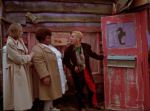
Dark Shadows (2012)

Today’s cinema adventure: Dark Shadows, the 2012 big screen adaptation of the classic 1960s supernatural soap opera of the same name, directed by Tim Burton and starring a gallery of players comprised of both frequent collaborators (most notably, of course, Johnny Depp) and high-profile new faces.  Taking its basic premise and most of its characters from the original series- a low-budget affair, created by Dan Curtis, with an enormous cult following which thrives to this day- Burton’s film capitalizes and expands on its camp value, and uses it as a vehicle with which to blend his own trademark sense of macabre humor into a nostalgic revisitation of the early ’70s era in which it is set and a tribute to the gothic horror cinema with which he grew up.  Long-awaited and much-anticipated, its box-office take was respectable despite the impact felt from direct competition with The Avengers, but it met with disappointed reactions from critics and audiences alike, despite its high production values and the popularity of its director and his quirky leading man.

Though using the television original as a source for its basic scenario, the screenplay (penned by Seth Grahame-Smith from a story developed with John August) veers from the details of its episodic plot in favor of a more-or-less self-contained storyline, making several significant changes in the process.  The film begins with a prologue in which the background is laid for the ensuing events; in 1760, the wealthy Collins family emigrates to America, expanding their commercial fishing empire to the coast of Maine and building a majestic estate surrounded by a thriving seaport town- named Collinsport in their honor.  However, the family’s young scion, Barnabas, runs afoul of a household servant, Angelique, by spurning her after a brief dalliance; secretly a witch, the jilted girl avenges herself by cursing the Collins family, killing Barnabas’ parents, bewitching his fiancée to suicide, and transforming him into a vampire.  She then exposes him to the town as a monster and persuades them to bury him alive, dooming him to endure a solitary eternity with the memory of his loss.  The story then flashes forward to 1972; the town of Collinsport still thrives, now sustained by a rival fishing empire founded by none other than Angelique, who has used witchcraft to sustain her own immortality.  The Collins estate still stands, inhabited by the family’s last dysfunctional descendants: Elizabeth Stoddard, the stern but determined matriarch; her sullen teen-aged daughter, Carolyn; her ne’er-do-well widower brother Roger Collins; and his troubled young son, David, who insists he can see and talk to the ghost of his recently-drowned mother.  Rounding out the household are two heavy-drinking outsiders- the boy’s live-in psychiatrist, Dr. Julia Hoffman, and caretaker Willie Loomis- as well as a newly-hired nanny, Victoria Winters, who has a secret past.  These last remnants of the once great Collins brood are surprised by the sudden arrival of Barnabas, inadvertently freed from his two-century imprisonment by the excavations of a construction crew. Despite his monstrous nature, he is still devoted to his beloved family, and vows to help them rebuild their collapsed fortunes and restore the Collins name to its former glory.  In order to succeed, however, he must once again confront the vindictive and powerful Angelique, who still carries a torch for him after all these years, not to mention helping his descendants work through their various dysfunctions while keeping the secret of his vampiric identity and continually trying to come to grips with life in the 20th Century.  To complicate his task further, he finds himself drawn to the lovely Victoria, who stirs in him the memories of his long-lost love.

It might seem, all things considered, that Dark Shadows would be a perfect match for the unique sensibilities of Tim Burton; the director has built an empire of sorts on his peculiar brand of gothic-flavored pop cinema, drawing heavily on influences from past masters of horror while infusing these macabre elements with a distinctively contemporary flair for irony and dark humor.  His visual style mixes the grotesque with the endearing and the arcane with the hip in a way that has become instantaneously recognizable as his own, and his recurring motifs (the focus on abused, disenfranchised characters and their efforts to redress the wrongs they have endured, as well as their need to find emotional connection and the innate humanity often hidden by their outward appearance or outcast status) weave their way through his body of work in a way that further marks him as a true auteur.  He has a way of using his horrific subject matter to express basic and universal emotional values, transforming that which at first seems disturbing into something almost sweet; he has created a niche for himself as a cinematic champion for the social outsider, making movies that invert the formulas of traditional romance and adventure and carry the decidedly life-affirming message that freaks are people too.  With such a background, Burton would appear the perfect candidate for bringing the campy chills of Dark Shadows to life for a new generation, and infusing it with an added layer or two of contemporary perspective in the process.  Unfortunately, the rich potential inherent in this match-up goes largely unfulfilled.

Perhaps the key element in the popularity of Dark Shadows in its original incarnation was its unflinching determination to take itself seriously despite the obviously ridiculous underpinnings of its premise, the banal soap-opera dialogue that often sounded like it was written over the course of a ten-minute coffee break, and the low-budget constraints on its efforts at gothic ambiance; it was never high art, but rather a guilty pleasure.  With Burton’s blockbuster approach, these charms have been subverted: the stone walls of this Collinswood never shake when a door is slammed; and instead of bold-facing its way through discussions of ancient supernatural forces with a deliberate lack of irony, the film treats the entire scenario as fodder for self-aware tomfoolery.  It’s understandable, even wise, that Burton and his team would take this approach; to recreate the intangible air of somber goofiness that marked the original series would likely be impossible by deliberate effort, particularly in the more sophisticated cultural environment of 2012.  The problem is that somehow, despite the impressively crafted visuals and the considerable talent of its star-powered cast, Burton’s film seems sillier and, well, much more pointless than it should.  Though some effort was made to recreate the soapy format, at least in the dialogue-driven scenes, and in spite of the obvious reverence in which Burton et al. hold their source material, this effort to bring Barnabas Collins and his broken clan into the flashy present feels bogged down by an inability to mesh the heavily comic reinterpretation into a compelling story; the thematic elements on which the plot is based seem all-too-familiar (especially for Burton) and the key story developments seem perfunctory, as though the script were put together strictly by formula- which, of course, it probably was.  In the absence of any real weight in the narrative, all that remains are character development- sadly botched by the script’s cartoonish approach, which gives us caricatures drawn with broad strokes (despite the solid work of the actors) and leaves us confounded by their actions, which seem motivated by the needs of the plot rather than based on any semblance of inner logic- and the heavy reliance on comedy, mostly derived from the juxtaposition of an 18th-Century dandy into 1970s culture, as well as the nostalgic kitsch that comes from the recreation of this 40-year-bygone era.  Dark Shadows is full of jokes, but since the majority of them are centered on Barnabas’ culture shock and inability to adapt his mindset to the modern world, it feels like the same one, endlessly repeated.  This is not to say there are no laughs here- at times the magic formula does work- but they are few and farther between as the film moves towards its predictably spectacular finale.  Similarly, the gothic creepiness which is so integral a part of the world of Dark Shadows– both here and in its former life- is layered on with all the expected excess and Burton-esque flair, but no matter how many visual nods are thrown in the direction of the Hammer horror classics, the whole atmosphere more closely resembles the tongue-in-cheek faux-spookiness of Disney’s Haunted Mansion.  In other words, a contemporary reboot of this franchise could have been either funnier or scarier than the original, or better yet, both; but this film is neither.  To the director’s credit, although much of the film falls flat, it never seems to be disingenuous; though screenwriter Grahame-Smith’s efforts may lack sincerity, Burton’s translation of them to the screen does not.  Unfortunately, his good intentions are not enough to make Dark Shadows into the movie it deserves to be.

That said, it should be observed that there is plenty of exemplary work on display here.  Even the critics who were harshest with Dark Shadows were lavish in their praise for its visual style, drenched with Burton’s usual synthesis of Grand-Guignol-goth and candy-coated pop art.  He has gotten so good at creating this kind of pseudo-horrific spectacle that it no longer thrills or delights us with quite the morbid wonder evoked by Beetlejuice or Sleepy Hollow, despite the added polish that has come with an increased budget and the advancement of CG technology.  Indeed, one almost takes it for granted in Dark Shadows, which is a mistake the savvy viewer should avoid; the intricate and imaginative design and execution of the Collinses world is the one unqualified delight of the film, and the recreation of the early ’70s setting which is woven into the gothic visual tapestry adds an extra layer of flavor- and one which manages to be heavily definitive without resorting to over-the-top parody.  Aiding in this sense of heightened authenticity is the saturated cinematography by Bruno Delbonnel, who based his work, to great advantage, on the look of actual films of the era.

As for the cast, it has already been mentioned that they do exemplary work, despite the weakness of the material.  There are standouts among them: Michelle Pfeiffer, who comes closest to recreating the style of the original series as Elizabeth, underplaying her melodramatic dialogue like the pro that she is; Chloë Grace Moretz, a young actress with a remarkably mature talent that appears to be propelling her into the status of bona fuse stardom, as the snarlingly rebellious Carolyn; and Jackie Earle Haley, as Willie the Caretaker, whose unfazed, deadpan persona adds a much-needed earthiness to the proceedings.  The others are less memorable, even the beautiful Eva Green (as the venomous Angelique), simply because their roles require little of them beyond the one-dimensional functions they are assigned by the screenplay, but to their credit, none of them come off badly for it.  There are a few interesting cameos, as well; iconic horror star Christopher Lee makes another Burton appearance as a salty old sea dog; seminal shock-rocker Alice Cooper plays himself, hired to perform at an elegant ball thrown by Barnabas and looking agelessly like his own four-decade-old persona; and as guests at the same ball, original Dark Shadows cast members Lara Parker, David Selby, Kathryn Leigh Scott and Jonathan Frid- the original Barnabas, who would, sadly, pass away shortly before the film’s release- pay a fleeting visit, being greeted at the door by a beaming Johnny Depp.

And what of Mr. Depp himself?  This charismatic screen chameleon has acquitted himself admirably in no less than 8 films with Burton, indeed becoming virtually the face of the director’s work, as much a part of his milieu as the sinister subject matter; in these appearances, as with most of his other work, he has displayed a gift for making the offbeat quirks of his characters into utterly convincing extensions of his natural personality, using imagination, intelligence and honesty to give these oft-cartoonish figures an unmistakable ring of truth.  Popularity notwithstanding, he is a vastly underrated actor, capable of remarkable range, who augments and enhances virtually any film in which he participates.  His performance as Barnabas Collins, though it certainly lives up to his usual standards, is a bit of a letdown.  It’s not that he is any less committed than usual- indeed, he exhibits a clear relish for the part, no doubt a result of his long-standing wish to play it- but that, once more, the script falls short of the mark.  Though Depp infuses his over-the-top mugging with his customary connection to truth, allowing us to believe in this unlikely character as more than a cipher in an extended skit and even making him likable enough to care about his ultimate fate, his Barnabas is ultimately a hollow spectacle, an exercise in comic acting that lacks a solid core; he plays the character to a tee, but in the end, thanks to the formulaic writing, he has made no inner journey.  He, like all the other characters, has simply reacted to each plot development without growth or change, which makes our wish for his ultimate success more of a reflex in response to the conventions of the narrative than a result of any real connection to the character.  It might be argued that this is the nature of true melodrama, which concerns itself with outward events rather than inner truth, and is therefore apropos for a film that is, after all, based on a soap opera; nevertheless, it hardly allows for a truly engaging experience, resulting instead in an entertaining but noticeably shallow diversion that seems to drag on interminably despite a relatively short running time.  Depp’s performance, as the centerpiece of the film, is just the clearest representation of the singular flaw that prevents Dark Shadows from ever truly drawing us in: a lack of any real purpose to propel it forward, making it feel, in the end, like an overlong pageant instead of an engaging story.

I wanted to like Dark Shadows.  I wanted to very badly, and I had high hopes for it because Tim Burton is, for my money, a truly great filmmaker; his work has an audaciously subversive glee that makes even his most commercial projects feel edgy, and even if many of his biggest films are ultimately less than the sum of their parts, he has an impressive track record that will surely leave him, in the final analysis, standing firmly in the pantheon of cinematic masters.  That said, his very best work seems to occur when he veers away from his most characteristic material, in films such as Pee-Wee’s Big Adventure, Ed Wood, Big Fish, and Sweeney Todd, the Demon Barber of Fleet Street, flavored with his particular style but ultimately informed by another sensibility and governed by a different set of rules.  Dark Shadows, though it was originally spawned by another mind than his own, is nevertheless a quintessentially Tim Burton film, and bears his own unmistakable stamp.  It’s not a bad movie, by any means; it’s at least moderately entertaining, though unlikely to elicit any strong reactions of either fear or laughter, and it is certainly good-natured enough to be forgiven for not quite living up to its potential.  What is troublesome about Dark Shadows is that it could have been great- should have been, even- but it was defeated before a single frame was captured on film.  No matter how talented its director, how masterful the designers and artists who bring it to the screen, or how brilliant its players, a movie with a mediocre script will never be better than a mediocre movie.  This is, of course, a problem as old as movies themselves- countless would-be classics have been sunk by incompetent writing- but it is particularly upsetting when artists of this caliber fall prey to the trap.  Both Burton and Depp pursued this project, and it was a labor of love for them from beginning to end- how then, could it go so wrong?  Perhaps it was, after all, their affection for the material that tripped them up, blinding them to the faults of their film with false confidence in the notion that such a seemingly natural match of artists with their material could not help but succeed.  Whatever the reason, it was an artistic miscalculation, for Dark Shadows is probably the pair’s most easily forgettable joint effort, and Burton’s least effective film since his abysmal remake of The Planet of the Apes.  From a financial standpoint, however, despite its less-than-hoped-for success at the box office, the sure-fire formula still netted both men- and the studio- a considerable amount of money, leading to the most disturbing suspicion of all- that Hollywood greed overrode artistic aspiration, as it so often does in the film industry, denying us all the joys of the Dark Shadows movie that might have been.

http://www.imdb.com/title/tt1077368/

Faust (1994)

Today’s cinema adventure: Faust, the 1994 feature by celebrated Czech filmmaker Jan Švankmajer, a surrealist take on the classic German legend in which a scholar trades his soul to the Devil in exchange for worldly knowledge and experience.  Set in modern day Prague and incorporating the director’s trademark blend of live action with stop-motion animation, claymation and puppetry, as well as his disturbingly textural use of sound, it represents the culmination of Švankmajer’s long fascination with the tale and stands- along with his other highly distinctive work- as a major influence on more well-known directors such as David Lynch, Tim Burton, and Terry Gilliam.

Presenting its own loose adaptation of the familiar morality fable, Švankmajer’s film borrows elements (and, occasionally, entire scenes) from previous versions by the likes of Christopher Marlowe and Goethe, as well as from the early folk stories of its origin, more or less faithfully following the traditional structure of the narrative; but thanks to the director’s surrealist sensibilities, it recasts the tale in the form of a nightmarish hallucination centered around a nondescript middle-aged everyman who stands in for the mythic scholar.  When this hapless protagonist is handed a flyer in the street, upon which is printed only a simple map of the city with a location marked in red, his curiosity- coupled with some unusual occurrences in his apartment- leads him to a mysterious, ruined theatre; there, after donning costume and makeup, he begins to read from a charred and tattered script, setting in motion a hallucinatory cycle in which he enacts the role of Faust.  Assisted- and manipulated- by an assortment of other “actors,” human and otherwise, his own identity merges with that of the character he plays, and it becomes clear that his own fate is being determined by the scripted events of the ancient drama in which he has become enmeshed- in which he strikes a bargain with Mephistopheles, an agent of the Devil, to instruct him in the secrets of the universe and guide him through the pleasures of earthly life for a period of 24 years, after which he will surrender his soul to be damned into Hell for all eternity.

A dark and moralistic story like this one, born of the same dour Germanic heritage that yielded the Grimm fairy tales and other such cautionary parables, could easily be translated to the screen laden with the ponderously heavy trappings of deep tradition and humorless Puritanism; likewise, given the fact that this legend has provided the inspiration for countless adaptations and re-inventions (from Shakespeare’s Macbeth to Brian DePalma’s The Phantom of the Paradise), the familiarity of its basic plot and its themes make it challenging, to say the least, for any artist attempting a new version to find a fresh approach that might prevent predictability and redundancy from undermining the proceedings- and the audience’s interest in the outcome.  In Švankmajer’s hands, however, the entire well-known saga is transformed into an audaciously non-traditional package of surprises, each one as delightful as it is disturbing, appropriately dark in tone but laced throughout with macabre, tongue-in-cheek humor, and loaded with the peculiar blend of the cinematic and the theatrical that gives this director a reputation for visual magic that is unlike the work of any other.  A self-proclaimed surrealist, Švankmajer creates a movie that captures the peculiar flow of nonsensical logic one follows in a dream, making the experience of watching Faust feel thoroughly like a visit to the realm of the unconscious; he tells the story clearly and succinctly, but he does it through a deeply symbolic progression of seeming non-sequiturs, building a mass of perplexing puzzle pieces that fall seamlessly into place as the narrative resolves itself.  By transposing the story deeply into a hallucinogenic reality in which rules of plausibility and common sense no longer apply, the director not only allows himself free use of arcane and metaphoric artistic conceits, he manages to frame his oft-told tale in such a way that every development seems completely new and unexpected, giving us the opportunity to discover its hidden meanings and significant themes by discovering them from an unfamiliar perspective.

That perspective, shrewdly, moves the Faust story out of the medieval past and into a milieu more relevant to a modern audience; Švankmajer doesn’t exactly update his drama, but rather rehearses it within a contemporary framework.  Our protagonist is established from the outset as a decidedly present-day figure, emerging amidst a crowd of commuters from a subway station- just another anonymous drone.  He is drawn into the web that will seal his fate by a pair of men passing out flyers on a street corner, a sight so mundane in our modern world we scarcely take notice; this, of course, sets up a recurring theme for Švankmajer, that of the mystical contained within the ordinary, a motif that manifests itself throughout the film and tempts us, like Faust, with the promise of secret wonders hiding just beneath the bland surface of our everyday lives.  In our demystified era of utilitarian buildings and dehumanized masses, we long for the thrill of the unknown, a glimpse of something mysterious behind the mask of our predictable, well-ordered existence; such a revelation, however, is as unsettling as it is exhilarating, a source of terror as much as enlightenment, and therein lies the essence of Faust.  To obtain the key to this secret world, we must be willing to sacrifice our very selves, to give up everything that defines us- our souls, if you will; for to be privy to the secret workings of the universe is to be torn irrevocably from our humanity, confronted with an absolute power that renders our previous understanding meaningless and dissolves our identity by shattering the precepts upon which we build our relationship with the world.  In a modern age full of the smug assumptions and easy explanations derived from centuries of scientific exploration, the idea of an unseen order to things is perhaps even more terrifying than it was to our superstitious forefathers, whose imaginations conjured the tale of Faust to warn against delving too deeply into the hidden mysteries of life.  They feared the cost of knowledge and worldly experience was the loss of the soul, but we who have embraced these things may be more frightened by the possibility that they were right.  Švankmajer’s Faust, then, is about the rediscovery of the soul by modern man, and the disturbing notion that he has already sacrificed it.

That Švankmajer conveys all this in his movie is remarkable; but convey it he does, in a manner which gives testimony to his skills as an artist and a visual storyteller.  How he does it, exactly, is beyond the power of words to describe, and at any rate is best left to be experienced firsthand. Suffice to say that, in order to bring our modern sensibility into the mystical world of his story, he takes us into the last remaining stronghold of magic, the realm of the theater.  By trapping his protagonist into a re-enactment of an ancient text, not only does he provide the obvious metaphor of man’s fate being dictated by his repetition of the patterns of the past, he opens the door for his own use of all the tricks of the trade in the service of creating his goofy nightmare.  Puppets, both life-sized and miniature, stand in for other characters- and occasionally, for Faust, too- and interchange with live actors; painted backdrops appear in naturalistic settings, and vice-versa, patently theatrical objects and occurrences manifest in the real world, and events move freely back-and-forth between the containment of the theater and the expanse of nature, underscoring Švankmajer’s dissolution of the boundary between reality and illusion; dialogue is recited, arias are sung, ballet dancers perform, and an audience observes the proceedings, though most of Faust’s key scenes take place “backstage,” at least ostensibly.  Of course, the director’s familiar techniques of stop-motion animation are directly drawn from this theatrical background, and fit in seamlessly here- particularly effective is his claymation rendition of Mephistopheles, growing from a ball of clay into a vaguely humorous demonic face that then transmutes into a mirror image of Faust’s own appearance, giving us, once again, the mystical inside the familiar.  Throughout the film, Švankmajer utilizes all these devices to draw us along on this metaphysical journey, using his surrealist tactics to provide cryptic images that simultaneously amuse and appall us- an egg baked inside a loaf of bread, a baby transforming into a skull, a severed leg wrapped in plastic, a puppet demon sexually assaulting a puppet angel, and countless other blasphemous delights- and, in the end, achieve their cumulative goal of revealing the film’s underlying mystery.  It’s worth mentioning, too, that Švankmajer also indulges his usual fascination with food, offering us numerous important scenes that revolve around eating; he also provides his trademark, hallucinatory soundscape, a collection of rustling, scratching, rattling noises that crosses the sensory boundaries to make us feel the surfaces we hear- and creeps us out, in the bargain.  The entire film, ultimately, has this effect- it’s something akin to visiting a haunted house at Halloween, in which we want to feel our skin crawl and our hair stand on end, but we want to giggle with glee over the pure silliness of it all.

Jan Švankmajer is something of a national treasure in his native Czechoslovakia, and rightly so.  His visionary work, at once quirky and powerful, represents the kind of purely artistic sensibility that is rarely found in modern cinema; with the personal spirit of a true auteur, he makes certain his films are distinctly his own, and whether or not audiences respond is not his concern.  Though much of his work has been rarely seen in the U.S., thanks to Cold War restrictions and prejudices that impaired his ability to distribute it on this side of the Iron Curtain (and, sometimes, even to produce it at all), he has gained a steady and growing following among fans of animation, surrealism, and cinema in general.  His decidedly adult adaptation of Alice in Wonderland (simply titled Alice) is partly responsible for breaking him through into Western culture, but many of his other films- including this one- have been championed by critics and other filmmakers alike, and the ready availability of the digital age has now made it possible for almost anyone to partake of the disturbing delights he offers.  Since Faust, like all of his films, is virtually impossible to describe- even stills fail to capture it, since Švankmajer’s visual sense is so connected to motion and juxtaposition of images- I strongly recommend a viewing.  I can praise it all I want, but, ultimately, it’s a movie that speaks far more eloquently for itself.

http://www.imdb.com/title/tt0109781/

The Fall (2006)


Today’s cinema adventure: The Fall, a 2006 film, directed by Tarsem Singh, about a suicidal young man who unfolds an elaborate adventure tale for a little immigrant girl as they recover from injuries in a 1920s-era Los Angeles hospital.  Filmed over the course of four years at locations throughout the world, it was a deeply personal labor of love for its director, largely financed at his own expense.  It was initially released only on the film festival circuit, but, championed by filmmakers Spike Jonez and David Fincher, it was given widespread distribution in 2008, receiving widely mixed reviews; some critics found it a visually interesting bore while others placed it on their best-of-the-year lists, but the consensus was, by and large, mostly favorable, and the film was a moderate box office success.

Based on a 1981 Bulgarian film entitled Yo Ho Ho, The Fall interweaves its main narrative with epic scenes of sweeping fantasy described in the story told by its broken adult protagonist, Roy, a novice movie stunt man whose spine has been damaged in a fall during his first film shoot.  Deeply depressed, he has lost the will to live, but his morose state of mind has less to do with his injury than with the loss of the woman he loves to the movie star for whom he was doubling.  Recovering in the same hospital is Alexandria, a precocious Romanian child whose arm was broken in a fall while picking oranges with her immigrant family; curious and imaginative; she has taken to wandering the corridors and grounds, becoming a favorite among the other patients and the staff, who treat her as something of a mascot.  When she befriends Roy, he begins to entertain her with a fabulous tale of adventure and revenge, in which a masked bandit and his heroic comrades seek revenge against an evil prince for the wrongs he has done them; it becomes clear that his story is shaped as he goes by his own real-life situation, and that his ulterior motive is to use the continuing saga as a means to coerce his young companion into stealing morphine from the hospital’s dispensary in order to facilitate his intended suicide.  As the events of both stories unfold, little Alexandria exerts her own influence, inserting herself into the fantasy and affecting its outcome even as she begins to work her way into Roy’s broken heart.  Eventually, the imaginary epic becomes a vehicle for her desperate efforts to keep Roy’s hope alive- as well as her own.

Tarsem’s screenplay, co-authored with Dan Gilroy and Nico Soultanakis, is geared towards revealing the triangulated relationship between reality, imagination, and the unconscious mind; but it is the relationship between its two protagonists that dominates the film, despite the resplendent spectacle of the fantasy sequences in which their shared psychodrama plays out.  This is not a negative criticism; on the contrary, the surreal, stream-of-consciousness yarn woven by the convalescent pair is meant to serve as illumination for the real-life process of their psychic healing, not the other way around, and it is a testament of the director’s dedication to his vision that The Fall does not make the fatal error of overwhelming its humanity by emphasizing the adventure plot over the drama which is the true center of the film.  That said, one can’t help wishing at times that a bit more effort had been made to forge a stronger coherence into the fantastical subplot, which is as all-over-the-map in its storyline as it is in its pan-geographical setting; but part of the film’s conceit is that the story morphs to suit the changing emotional needs of Roy and Alexandria, replicating the spontaneity and whimsy of a game of make believe, and though it may cause some frustration in viewers attuned to logical, linear storytelling, its structural malleability is in keeping with the larger purpose at hand.

The changing dynamics of this fantasy narrative yield numerous interesting subtleties.  We see, for example, that its visual manifestation is shaped by little Alexandria through the discrepancies between what Roy describes and what we see, reflecting her different cultural understanding- the bandits and Indians with which he fills his tale are depicted through the lens of her Eastern European, Ottoman-influenced imagination rather than the Hollywood-Western milieu he clearly intends; and the characters populating the adventure are portrayed by those surrounding the little girl in her real life (nurses, orderlies, visitors to the hospital), reflecting her associations and assumptions about them and what they represent for her.  Such clever and thoughtful touches do much to establish the elaborate meta-drama as a stage for the interaction of the two characters’ unconscious minds, as well as providing the source for a considerable amount of humor and even some subtle social commentary.

On a more obvious level, of course, it is these remarkable fantasy sequences that give The Fall its most distinctive quality- the breathtaking visual opulence that is made all the more astonishing by the knowledge that no special effects or computer enhancements were used.  Exotic, spectacular locations across the globe were used to create a surreal world of wonder; we are transported to Moorish palaces, ancient ruins, sparkling reefs, lush forests, otherworldly desertscapes, and monumental structures both well-known and unfamiliar, all beautifully photographed and magnificently showcased by Tarsem and cinematographer Colin Watkinson.  The characters are bedecked in the lavish costumes of Eiko Ishioka, which conjure a timelessly mythic quality made somehow more magical by their authenticity and their exquisite detail; and the larger-than-life majesty of these segments is undercut throughout with a playful spirit that keeps them fun and relieves the comparatively somber mood of the hospital environment in which the rest of the film is set.

Despite its inherent goofiness and its rambling inconsistency, the tale of the Blue Bandit manages to build an emotional weight as it reaches its climax; and though its characters’ fates are rendered irrelevant by the knowledge that they are wholly imaginary, they are nevertheless granted significance because we have come to care about the pair of storytellers who have created them.  It is in those less-rousing hospital scenes that the movie makes the emotional connection necessary to fuel both plots.  It succeeds in doing so largely because of the remarkable chemistry between its two leading players, Lee Pace and Catinca Untaru.  Tarsem cleverly sculpted this crucial element by shooting their segments in sequence, allowing the relationship between the two actors to develop naturally and taking care to keep the intrusiveness of his camera at a minimum- several scenes were filmed through a hole in the curtain surrounding the bed in which Pace’s character is confined, in order to preserve the feeling of intimacy- as well as allowing young Untaru (along with most of the crew) to continue in her initial belief that Pace was actually paraplegic.  In addition, much of their dialogue was unscripted, permitting the girl to use her natural expression; this not only results in a truly genuine performance from the little star, capturing her infectious real-life personality onscreen, but actually bore influence on the film’s scenario, with the director adapting certain elements of the story in response to spontaneous developments that took place in front of the camera.  This organic, delicate approach certainly paid off: the result is one of the most endearing, believable child performances ever put on film, and a magical, touching onscreen relationship that informs everything else that happens in The Fall.  Due credit goes to Pace, as well, who gives us a heart-rending portrayal of a young man crippled by morbid despair even as he manages to hold up his end of the connection with his juvenile co-star, not to mention the considerable task of embodying the fanciful hero of his fabricated saga.

Though the two central performers play an enormous part in making The Fall appealing, the real star is director Tarsem.  Having established himself as a talented film craftsman in the field of commercials and music videos (including the multi-award-winning video for REM’s “Losing My Religion”), he made his feature debut with the stylish 2000 thriller, The Cell, which was sufficiently successful to gain him the clout- and the finances- to make this highly personal film.  Choosing to pay for the bulk of it himself in order to forgo the necessity for compromising his vision to meet the demands of backers, the end result of his dedication is a visually stunning piece of filmmaking, laden with magnificent scenery, brilliantly composed frames, a dazzling array of color and light, and threaded through with an obvious reverence for the cinematic medium itself; continually incorporating elements of optical illusion and perceptual trickery (with numerous clear nods to the art of Salvador Dalì), he reminds us of the illusory nature of existence and celebrates the simple magic with which our lives can be enriched- not just on the big screen, but within our own imaginations.  He also proves that his ability is more than merely technical with his savvy handling of the actors and his wise approach of allowing their own artistry to make its contribution to his film, infusing it with an vibrant honesty that makes it much more than so many of the hollow, soulless spectacles foisted upon us in our neighborhood multiplexes today.

The most pertinent question, of course, is the same with The Fall as it is with any other move: is it sufficiently engaging to sustain interest for its two-hour running time?  Many critics- and other viewers- did not think so; doubtless those who were bored were expecting a comfortably predictable adventure fantasy, along the lines of The Princess Bride, with enough artsy quirkiness thrown in to appeal to the highbrow set.  If so, it is no wonder they were disappointed.  Tarsem’s film defies expectation, choosing instead to tell its own, bittersweet little story in a highly unorthodox style; it is a movie about the heart, the mind, and the imagination, and its characters are not the catch-phrase-spouting adventurers that populate standard blockbuster fare, nor is its action the main focus of attention.  Indeed, the movie’s formula is almost an inversion of the norm, with the action and adventure sublimated to serving the needs of the characters’ psychological journeys rather than vice-versa.  Such a switch doesn’t make for heart-pounding, adrenaline pumping excitement, and any viewer looking for such thrills is better off looking elsewhere; but if you’re looking for a rare and unique, highly affecting, thought-provoking experience that shines with the sheer joy of filmmaking as an art- as opposed to a cash cow- then you can’t ask for better than The Fall.

http://www.imdb.com/title/tt0460791/


Daybreakers (2009)


Today’s cinema adventure: Daybreakers, a 2009 sci-fi/horror/action mash-up about a dystopian near-future in which an epidemic has turned most of the world’s population into vampires, and the remaining humans are farmed for their blood.  Written and directed by Michael and Peter Spierig, it is elevated above the usual standard of B-grade schlock by the presence of an unusually distinguished cast, and features a slick and well-executed visual style enhanced by special creature effects from New Zealand’s Weta Workshop.  It was met with fairly positive critical response upon its initial release, but despite the presumably heightened appeal of its combined fantasy genres, its box office performance was somewhat disappointing, owing largely to its competition with the blockbusters Avatar and Sherlock Holmes.

Set in 2019, Daybreakers depicts a world not unlike our own, a place where high-tech convenience and corporate domination rule the day; the fact that most of its inhabitants are vampires makes little difference- modern technology ensures the uninterrupted flow of culture by providing protection from sunlight, and industrial farming procedures provide the required supply of human blood, while the military takes care of hunting down and capturing the few remaining mortal survivors.  The rewards of embracing vampirism- immortality, superhuman strength, enhanced senses- seemingly outweigh any troubling moral concerns, at least for most, and the only real problem is the dwindling supply of blood- an ongoing issue which has reached the level of an international crisis as the non-vampiric representatives of the human race have reached near-extinction.  While corporate experts race to find a synthetic substitution, rationing and poverty have begun to take their toll by causing the malnourished to “subside,” morphing them into primal, instinct-driven monsters who terrorize and feed on their own kind.  In the midst of this dire state of affairs, Edward- a blood expert whose ethical beliefs lead him to sympathize with humans- becomes involved with a group of mortal fugitives that have found a cure for vampirism, and he joins them in their quest to save humanity.  The powers that be, however, have no interest in a cure, so Edward and his new companions must fight to stay alive until they can find a way to spread their miraculous discovery and reclaim the future of the human race.

The premise is undeniably intriguing, though it clearly requires some serious suspension of disbelief for viewers beyond the age of, say, 14.  The metaphorical possibilities are provocative; Daybreakers could be viewed as an allegory for corporate greed and its ruthless bleeding of the underclasses, or as an indictment of humanity for its merciless over-exploitation of natural resources, or simply as a parable about the conflict between the dark and light sides of human nature.  Implicit as these ideas may be in the scenario, however, the Brothers Spierig have included little, if any, subtextual emphasis on anything beyond the necessary psychological conflicts of the story, such as the desire of a corporate chief executive to bring his resistant daughter into the vampiric fold or the struggle for reconciliation between Edward and his military brother, who converted him unwillingly to his undead state.  There are unavoidable parallels, too, between the vampiric “subsiders” and the homeless population of our own world- viewed as undesirables, they are feared and persecuted, a reminder of the larger social problem of which they are a symptom and of the potential fate which threatens the entire civilization.  Here too, the film’s creators have chosen to leave the obvious comparisons in the background, instead treating this element as just another complication in their plot.

With all this possible social commentary inherent in the material, one might expect the filmmakers to find creative ways to explore it within the framework of the narrative, particularly since their screenplay was an original work, unencumbered by the need to adhere to an existing storyline; but throughout their movie, opportunities for such resonance are ignored, and the script contents itself with a reliance on melodramatic confrontation and goofy one-liners, setting up its conflicts sufficiently to allow for dramatic tension and to provide the justification for its climactic bloodbath, but leaving larger and more significant questions unasked and unanswered.  In essence, the Spierigs have made an extended chase movie, spiced up with the trappings of a sci-fi/horror fantasy, and everything else within it exists merely to serve its crowd-pleasing purpose.

This is not to say that Daybreakers is without redeeming quality; indeed, its lack of pretension might be its saving grace, keeping it from becoming one of those preachy, self-important epics that gives lip service to a politically-correct stance while asking us to believe in a patently absurd premise (such as the movie that buried this one at the box office, the obscenely successful Avatar).  The Spierigs keep it simple, confining their socio-political observation to the world of the film, and incorporating only as much of it as is needed to set the stage for their story.  Unfortunately, that story is not a particularly compelling one- the protagonist is something of a wimp, and the developments which lead to the film’s resolution are even more far-fetched than its premise- but it manages to be entertaining enough; and because Daybreakers does not take itself too seriously, we can allow ourselves to enjoy the gratuitous violence and gore that we ultimately expect from any vampire movie.  There is quite a lot of it, actually, increasing in frequency and intensity as the plot progresses, until it culminates in a climax dripping with cathartic carnage.  On this level, at least, Daybreakers does not disappoint.

Besides the guilty pleasure of bodies being exploded, incinerated, beheaded and otherwise torn to bits- justifiable because they are, mostly, vampires, after all- there are some other features worth attention in Daybreakers.  Most noticeable, perhaps, is its cool, slick visualization of a not-too-distant future marked by a sterile, streamlined elegance in architecture and interior design, and rendered in a muted palette of steely grays and icy blues by cinematographer Ben Nott.  The vampiric mutants, debased by their malnutrition into anthropomorphic creatures (which look decidedly similar to the notorious “Bat Boy” of tabloid fame), are effectively creepy and pathetic at the same time, and well-executed by their aforementioned creators at Weta.  As for the acting, well, clearly nobody expects Oscar-caliber performances from a movie like Daybreakers, but that said, the presence of a particularly high-grade trio of actors in the key roles- Ethan Hawke, Willem Dafoe and Sam Neill- helps to elevate it from the level of a run-of-the-mill formula thriller to something at least a little more engaging.  Dafoe in particular deserves credit, in his role as a former-vampire-turned-human savior, for being able to utter some truly ridiculous dialogue with enough conviction to make it seem believable; and there is a nicely subdued and grounded performance from the less-familiar Claudia Karvan as the mortal female refugee who brings Hawke (as Edward) into the cause and becomes a possible love interest.  It’s also notable that she takes an active and heroic role in the proceedings instead of being presented as the typical passive woman usually seen in such male-centric adventures- though she does, ultimately, have to be rescued, it’s also true that Hawke’s character does too, and more than once, at that.

Daybreakers makes an attractive package, with its skillful technical and visual elements providing considerable distraction, and the work of its competent players ensuring that we can stay involved in its plot; but that plot is all-too-familiar despite the painfully clever conceits in which it is framed, and though it manages to grow on you as it goes, in the end it offers nothing more than a mildly interesting 90-minutes-plus of entertaining fluff.  The rich potential of its scenario seems to beg for further development, but goes unexplored, creating half-formed thoughts and ideas about its implications that are quickly left in the wake of its action agenda; the result, though not exactly a bad movie, is not exactly a good one, either.  Rather, it’s just another gimmicky thriller that capitalizes on the surging craze for vampires, and though it’s a well-made and fairly likable one, the sense of missed opportunity makes it very disappointing, indeed.


http://www.imdb.com/title/tt0433362/