Daybreakers (2009)


Today’s cinema adventure: Daybreakers, a 2009 sci-fi/horror/action mash-up about a dystopian near-future in which an epidemic has turned most of the world’s population into vampires, and the remaining humans are farmed for their blood.  Written and directed by Michael and Peter Spierig, it is elevated above the usual standard of B-grade schlock by the presence of an unusually distinguished cast, and features a slick and well-executed visual style enhanced by special creature effects from New Zealand’s Weta Workshop.  It was met with fairly positive critical response upon its initial release, but despite the presumably heightened appeal of its combined fantasy genres, its box office performance was somewhat disappointing, owing largely to its competition with the blockbusters Avatar and Sherlock Holmes.

Set in 2019, Daybreakers depicts a world not unlike our own, a place where high-tech convenience and corporate domination rule the day; the fact that most of its inhabitants are vampires makes little difference- modern technology ensures the uninterrupted flow of culture by providing protection from sunlight, and industrial farming procedures provide the required supply of human blood, while the military takes care of hunting down and capturing the few remaining mortal survivors.  The rewards of embracing vampirism- immortality, superhuman strength, enhanced senses- seemingly outweigh any troubling moral concerns, at least for most, and the only real problem is the dwindling supply of blood- an ongoing issue which has reached the level of an international crisis as the non-vampiric representatives of the human race have reached near-extinction.  While corporate experts race to find a synthetic substitution, rationing and poverty have begun to take their toll by causing the malnourished to “subside,” morphing them into primal, instinct-driven monsters who terrorize and feed on their own kind.  In the midst of this dire state of affairs, Edward- a blood expert whose ethical beliefs lead him to sympathize with humans- becomes involved with a group of mortal fugitives that have found a cure for vampirism, and he joins them in their quest to save humanity.  The powers that be, however, have no interest in a cure, so Edward and his new companions must fight to stay alive until they can find a way to spread their miraculous discovery and reclaim the future of the human race.

The premise is undeniably intriguing, though it clearly requires some serious suspension of disbelief for viewers beyond the age of, say, 14.  The metaphorical possibilities are provocative; Daybreakers could be viewed as an allegory for corporate greed and its ruthless bleeding of the underclasses, or as an indictment of humanity for its merciless over-exploitation of natural resources, or simply as a parable about the conflict between the dark and light sides of human nature.  Implicit as these ideas may be in the scenario, however, the Brothers Spierig have included little, if any, subtextual emphasis on anything beyond the necessary psychological conflicts of the story, such as the desire of a corporate chief executive to bring his resistant daughter into the vampiric fold or the struggle for reconciliation between Edward and his military brother, who converted him unwillingly to his undead state.  There are unavoidable parallels, too, between the vampiric “subsiders” and the homeless population of our own world- viewed as undesirables, they are feared and persecuted, a reminder of the larger social problem of which they are a symptom and of the potential fate which threatens the entire civilization.  Here too, the film’s creators have chosen to leave the obvious comparisons in the background, instead treating this element as just another complication in their plot.

With all this possible social commentary inherent in the material, one might expect the filmmakers to find creative ways to explore it within the framework of the narrative, particularly since their screenplay was an original work, unencumbered by the need to adhere to an existing storyline; but throughout their movie, opportunities for such resonance are ignored, and the script contents itself with a reliance on melodramatic confrontation and goofy one-liners, setting up its conflicts sufficiently to allow for dramatic tension and to provide the justification for its climactic bloodbath, but leaving larger and more significant questions unasked and unanswered.  In essence, the Spierigs have made an extended chase movie, spiced up with the trappings of a sci-fi/horror fantasy, and everything else within it exists merely to serve its crowd-pleasing purpose.

This is not to say that Daybreakers is without redeeming quality; indeed, its lack of pretension might be its saving grace, keeping it from becoming one of those preachy, self-important epics that gives lip service to a politically-correct stance while asking us to believe in a patently absurd premise (such as the movie that buried this one at the box office, the obscenely successful Avatar).  The Spierigs keep it simple, confining their socio-political observation to the world of the film, and incorporating only as much of it as is needed to set the stage for their story.  Unfortunately, that story is not a particularly compelling one- the protagonist is something of a wimp, and the developments which lead to the film’s resolution are even more far-fetched than its premise- but it manages to be entertaining enough; and because Daybreakers does not take itself too seriously, we can allow ourselves to enjoy the gratuitous violence and gore that we ultimately expect from any vampire movie.  There is quite a lot of it, actually, increasing in frequency and intensity as the plot progresses, until it culminates in a climax dripping with cathartic carnage.  On this level, at least, Daybreakers does not disappoint.

Besides the guilty pleasure of bodies being exploded, incinerated, beheaded and otherwise torn to bits- justifiable because they are, mostly, vampires, after all- there are some other features worth attention in Daybreakers.  Most noticeable, perhaps, is its cool, slick visualization of a not-too-distant future marked by a sterile, streamlined elegance in architecture and interior design, and rendered in a muted palette of steely grays and icy blues by cinematographer Ben Nott.  The vampiric mutants, debased by their malnutrition into anthropomorphic creatures (which look decidedly similar to the notorious “Bat Boy” of tabloid fame), are effectively creepy and pathetic at the same time, and well-executed by their aforementioned creators at Weta.  As for the acting, well, clearly nobody expects Oscar-caliber performances from a movie like Daybreakers, but that said, the presence of a particularly high-grade trio of actors in the key roles- Ethan Hawke, Willem Dafoe and Sam Neill- helps to elevate it from the level of a run-of-the-mill formula thriller to something at least a little more engaging.  Dafoe in particular deserves credit, in his role as a former-vampire-turned-human savior, for being able to utter some truly ridiculous dialogue with enough conviction to make it seem believable; and there is a nicely subdued and grounded performance from the less-familiar Claudia Karvan as the mortal female refugee who brings Hawke (as Edward) into the cause and becomes a possible love interest.  It’s also notable that she takes an active and heroic role in the proceedings instead of being presented as the typical passive woman usually seen in such male-centric adventures- though she does, ultimately, have to be rescued, it’s also true that Hawke’s character does too, and more than once, at that.

Daybreakers makes an attractive package, with its skillful technical and visual elements providing considerable distraction, and the work of its competent players ensuring that we can stay involved in its plot; but that plot is all-too-familiar despite the painfully clever conceits in which it is framed, and though it manages to grow on you as it goes, in the end it offers nothing more than a mildly interesting 90-minutes-plus of entertaining fluff.  The rich potential of its scenario seems to beg for further development, but goes unexplored, creating half-formed thoughts and ideas about its implications that are quickly left in the wake of its action agenda; the result, though not exactly a bad movie, is not exactly a good one, either.  Rather, it’s just another gimmicky thriller that capitalizes on the surging craze for vampires, and though it’s a well-made and fairly likable one, the sense of missed opportunity makes it very disappointing, indeed.


http://www.imdb.com/title/tt0433362/


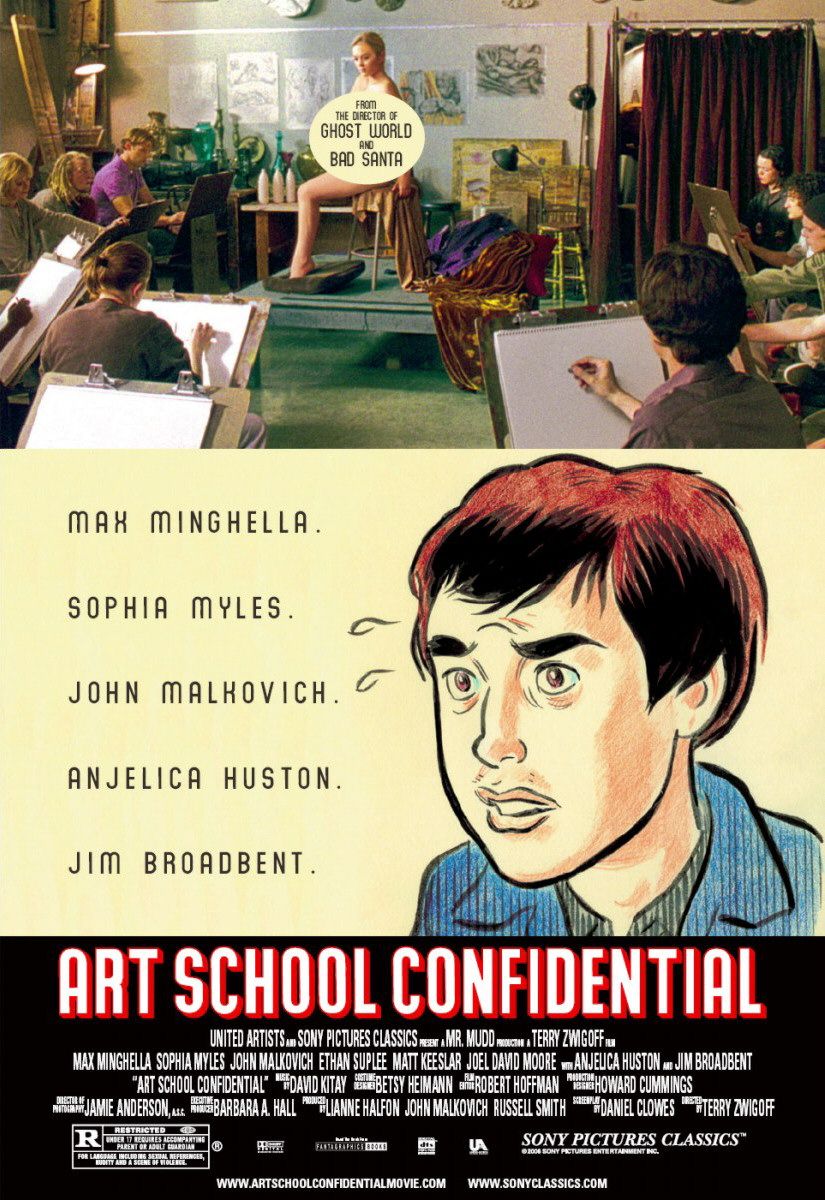
Art School Confidential (2006)


Today’s cinema adventure: Art School Confidential, the 2006 film by Terry Zwigoff based on Daniel Clowes’ underground comic of the same name.  The second collaboration between Zwigoff and Clowes, it follows the efforts of an art college freshman to win the love of his dream girl by becoming a successful artist.  It shares many of the themes of their first joint effort, Ghost World, as well as its bleak world view and cynical take on humanity, and features an impressive array of talent in supporting roles.

The plot follows Jerome, a young man whose interest in art has more to do with his libido than his desire for self-expression.  Believing that success in the art world will allow him a limitless amount of female companionship; he enrolls as an art major in an urban college, where he has high hopes that his talent will quickly be acknowledged.  Instead, he finds himself just one of many frustrated hopefuls in a depressingly grim environment where the only topic more discussed than the uselessness of an art degree is the string of unsolved murders taking place near the campus.  Surrounded by peers who are self-absorbed, pretentious boors, and professors who are self-important, disaffected failures, more interested in their own stalled art careers than in nurturing the abilities of the students under their charge, he gradually realizes that success is more about playing the game than about talent.  To make matters worse, he is completely turned off by the dysfunctional girls in his dating pool, and he begins to despair that his fantasies of being a playboy artist will be crushed by the cold reality of adult life.  Things begin to look up when he meets a beautiful model who shows an interest in him, but after she is swayed by a handsome fellow student- whose work has gained more recognition than his own- his desperation drives him to concoct a deceitful plan which will put him on the fast track to success and win back the attention of his newfound dream girl.

On the surface, Art School Confidential feels like one of those eighties-era coming-of-age comedies directed by John Hughes, in which a geeky teen loser learns that being yourself is more important than being popular and ends up winning the boy or girl of their dreams by the final scene.  That description is not far off, but in this screenplay, penned by Clowes himself to ensure faithfulness to his own misanthropic vision, the formula is turned on its ear.  Jerome doesn’t want to be accepted as he is, he wants to be worshipped; and far from finding empowerment and self-actualization, he learns that being himself brings only further isolation and obscurity, and that if he wants his dreams to come true he will have to find a way to stoop lower than everyone else.  His story is shot through with the kind of social satire that hits uncomfortably close to home, threatening to undermine any preconceived ideas we might have about the underlying goodness of humanity; if there was ever any there, Clowes makes it clear that it has been thoroughly snuffed out by the degraded, ego-driven culture he shows us.  Like our protagonist, we look around desperately for kindred spirits, but the cast of characters offers us little solace; Jerome’s fellow students are a collection of affected misfits and pompous twits, and the adults are more or less an older- and more disillusioned- generation of the same breed.  Virtually every person in the film is motivated by their vanity, and everyone else around them is merely an object to be used in their quest for self-fulfillment.  This is true even of those few characters that seem sympathetic- including Jerome, who turns out to be more of an anti-hero than we surmise.  With such a disheartening perspective on the denizens of the art world- and, by extension, the rest of the human race- it’s hard to find any of the comedy very funny, at least in a laugh-out-loud way.  The film’s humor is dark, dry, and derisive; it is also arch and vaguely judgmental, casting a reproving eye on the professional and personal pursuits of all its characters and concluding that the bulk of human endeavor amounts to a desperate cry for attention.

For his part, director Zwigoff makes every effort to keep things light, at least visually.  He capitalizes on the movie’s teen-angst heritage with nods to the genre’s cliches, such as “getting-it-done” montages and character-based visual gags, and directs his actors with a clear focus on presenting its familiar types.  He obviously relishes the exploration of his quirky characters’ personalities, but he emphasizes the details of the plot enough to keep it moving effectively.  It’s also obvious that he shares Clowes’ ironic sensibilities, and he is careful not to undermine Art School Confidential by softening its snarky edge with sentimentality- although, with the help of his A-list cast of adult actors, he does manage to imply a more mature counter-perspective that includes at least a little mitigation of the seemingly soulless and shallow priorities exhibited by the inhabitants of his film’s inhospitably selfish universe.

For their part, the actors do their best to keep things real, without relying solely on the surface qualities of their stereotypical characters; overall, the cast manages to infuse a level of humanizing depth to the proceedings that keeps the movie from being an unrelentingly pessimistic existential polemic.  Despite their best efforts at honest playing- or perhaps, in many cases, because of it- there are few likable characters in Art School Confidential; the single most pleasant personality is exhibited by Joel Moore, as Jerome’s friend Bardo, whose portrayal of a proudly self-acknowledged failure is refreshingly free of barely-concealed self-promotional subtext- appropriately making this gregarious loser a comfortable island in a sea of  chilly attitudes.  Max Minghella is deceptively appealing as Jerome, until his quest for recognition turns him into a self-pitying cry-baby; and Sophia Myles, likewise, fools us into liking his would-be soulmate, Audrey. The good stuff, however, comes from the heavy-hitting support team of accomplished grown-ups; John Malkovich, Anjelica Huston, Jim Broadbent, and Steve Buscemi all bring their skills to the table as they portray various representatives of the older-but-not-necessarily-wiser set, and the film leaps several notches up in quality when they are on the screen- which, sadly, is never for very long.

Art School Confidential is meant, of course, to be a comedic exposé of the pretentious, stagnated world of academic art, a subject ripe for vigorous satire.  The problem is that the humor seems to come from a rather mean-spirited place; Clowes and Zwigoff take a decidedly uncharitable view of almost every affectation and foible displayed by their characters, and at times their approach feels more like bullying ridicule than good-natured ribbing.  Their critical stance is certainly a valid one, but one can’t help feeling that the harsh perspective is a little too one-sided; after all, it’s easy to point fingers at the hypocrisy and artificiality we see around us, but it is perhaps more interesting to explore what lies underneath that surface.  Coming of age involves an awakening, a realization that the world is full of phonies and disappointments; but it also involves advancing past this stage to a more mature viewpoint, one with which we can discern the more subtle forces at work around us.  Art School Confidential strikes an attitude of smug contempt for its subject which smacks of sophomoric thinking, a pose which is ultimately no different than any of those assumed by the various characters it mercilessly skewers throughout.  It misses its mark not because of the darkness of its tone or its candid observations about the weakness of mankind- many fine films share these qualities, such as the work of director Todd Solondz, whose movies Happiness and Welcome to the Dollhouse are about as pessimistic as you can get but still engage and stimulate us with their depth and their humanity.  Rather, it fails because it lacks a certain maturity; instead of piercing insight, it offers blunt criticism, and in the end it leaves us knowing little and caring less about the inner workings of the world it portrays.  It’s a shame, because Art School Confidential has a lot of potential- both Zwigoff and Clowes are exceptionally talented, and one can’t help but feel that somehow, something was lost in the translation from page to screen.  There are times when the movie almost feels like it’s going to take off, and comedic moments that feel like they are about to make us laugh; but these are short-lived, and by the time we reach its somewhat predictable and not-very-satisfying climax, we have long since lost interest.  Fans of Clowes’ ironic-outsider flavor may find the movie easier to take than the rest of us, but those interested in discovering his work might be better-advised to go to the source rather than starting with this weak adaptation.  Still, the pairing of the author/artist and his filmmaking partner in crime seems a match made in heaven, and together they have managed to craft a very good film – but it’s called Ghost World, and the disappointment of Art School Confidential is probably all the more  bitter because they proved once before that they could get it right.


http://www.imdb.com/title/tt0364955/



From Hell (2001)


Today’s cinema adventure: From Hell, the 2001 screen adaptation of Alan Moore and Eddie Campbell’s award-winning serialized graphic novel exploring the real-life Jack the Ripper case through a fictionalized story about its investigation, starring Johnny Depp as the Scotland Yard Inspector in charge of the case.  As directed by Allen and Albert Hughes, it condenses the 500-plus page original to fit a running time of less than two hours, omitting much of the book’s rich, immersive material in the process, effectively transforming the piece from an informed- if dark- historical fantasia into a pop-art horror movie with pseudo-sociopolitical overtones.  Nevertheless, taken on its own merits, it’s a stylish and intelligent thriller, offering a fairly accurate (though highly speculative and sensationalistic) depiction of perhaps the most infamous true crime story of all time, as well as an excursion into the dark underbelly of Victorian London.

Adapted into screenplay form by Terry Hayes and Rafael Yglesias, From Hell blends fact and fiction as it unfolds its narrative, set mostly in London’s seedy Whitechapel District in the fall of 1888.  It’s a miserable, economically depressed slum, populated by rough laborers, criminals, and prostitutes- the latter of who are being savagely killed in a series of increasingly macabre and horrific murders.  In charge of the investigation is Frederick Abberline, an opium-addicted police inspector with a gift for psychic visions; his prescient insights into the case bring him to suspect an even darker and more insidious motive to the crimes than is suggested by their brutality, as well as leading to his personal involvement with one of the Ripper’s potential victims.  As he gets closer to the truth, he finds himself enmeshed in a dangerous web of secret intrigue, racing against time and facing powerful opposition in a desperate effort to prevent the monstrous killer from claiming more lives- including his own.  The plot unfolds against a backdrop of late 19th-Century English society, offering a bleak and politically-charged vision of a world in which disrupting the illusion of propriety is a greater crime than murder; the privileged elite exist outside and above the law, orchestrating and manipulating events from behind closed doors while the impoverished masses endure an unthinkably cruel and desperate existence with little hope of escape or betterment, and even those sympathetic to their plight are powerless to help them.

Moore and Campbell engaged in painstaking research in the creation of their graphic novel, meticulously incorporating the facts of the Jack the Ripper case into their multi-layered fictional retelling.  That effort is reflected in the film, though in a somewhat diluted form; on the page, the historical facts are presented side by side with the story, making for an immersive experience in which the reader can participate in the process of speculative myth-making, whereas for obvious reasons this cannot be duplicated onscreen without disrupting the visual (and emotional) flow.  In addition, the panoramic view of Victorian society offered by the original has been necessarily stripped down; though the filmmakers have clearly made an effort to provide as much of this background as possible, their running time dictates the removal of all but the most cogent information.  An unfortunate side effect of this streamlining is that key plot points, which might have been better masked in a more comprehensive script, become painfully obvious, making the film highly predictable to savvy viewers, particularly those familiar to the true events of the Ripper case.  It can be argued, however, that the film’s purpose is not to puzzle us with its mystery- which is well-known as an unsolved and probably unsolvable case- but to offer a social commentary by using its plot and its setting to parallel our modern world.

To this end, the Hughes Brothers sculpt their film to highlight the disparity between the upper strata of the Victorian population and the impoverished lower classes amongst whom the Ripper’s crimes take place.  The wealthy are isolated, arrogant, and dismissive of the concerns of the less fortunate, while the poor, in their struggle to survive, are greedy, opportunistic, and cruel.  It’s not a pretty picture of mankind, and there are few examples of middle class decency on display- only Abberline and his Shakespeare-quoting sergeant represent a compassionate view towards humanity, and even they are characterized by a mistrustful cynicism which reflects their exposure to the harsh realities of the age.  The nobility and their bureaucratic allies are portrayed as smug, self-appointed guardians of a status quo that favors their continuing prosperity, and many of them seem possessed of a sadistic streak, exhibiting an unmistakable delight in their infliction of suffering and the exercise of their power over the weak.  Each and every member of the ruling class is portrayed as contemptuous of the poor, even those who seem, on the surface, to be more enlightened, and the underprivileged commoners beneath them are shown to have suppressed any noble sentiments in favor of self-preservational hostility and practical amorality.  Providing illumination on this ugly portrait of mankind at its worst, the directors give us an unvarnished look at the wretched conditions of existence to which these masses are subject- the filth, the corruption, the continual struggle for inadequate food and shelter- and the opposing luxury with which their economic superiors surround themselves.

From a visual standpoint, the Hughes Brothers make their objective clear from their opening shot, which pans down slowly from an austere London skyline at dusk, offering glimpses of the various strata of society through their lighted windows until it reaches the dark and squalid streets of Whitechapel, where an assortment of dehumanizing activities are plainly on view.  The pair also take pains to recreate the dramatic visual atmosphere of the comic book format, reconstructing the composition of panels from the original and utilizing a color palette which conjures memories of the lurid English horror classics from the fifties and sixties- many of which share a similar setting and were clearly inspired by the lingering cultural memory of the Ripper’s reign of terror.  However, although these iconic forbears were noted for reveling in an almost gleeful depiction of blood and gore, From Hell is relatively short on explicit violence, though there are certainly enough glimpses of horrific acts and their aftermath to create the impression of having witnessed a bloodbath.  Similarly, despite its title (a reference to a letter sent by the real-life Ripper to taunt the police), the film is not a supernatural fright fest, though there is a not-so-subtle implication of a dark, possibly otherworldly force at work behind the killings; this is no tale of demons at large, wreaking havoc on a weak but innocent humanity, but an indictment of mankind at its basest and the depths to which it will sink in order to preserve its own selfish desires.  Ultimately, From Hell aims to derive its real horror from the implications of its clearly-stated premise- that the gruesome career of Jack the Ripper is but a prelude to the larger scale horrors that await in the coming century, the tip of an iceberg formed by the clandestine machinations of the world’s tightly-knit power elite.

This darkly cynical sociopolitical viewpoint is familiar to anyone familiar with Alan Moore, whose somewhat radical sensibilities are plainly displayed in such other of his works as Watchmen and V for Vendetta, as well as his contributions to the Batman series.  While his leanings certainly come across in this screen adaptation, however, their effectiveness is certainly limited by its narrower focus.  Where the published work is overwhelmingly centered on his postulated notion of the killings as a symptom of a far-reaching social imbalance, supported by an interwoven tapestry of peripheral events which underline and reinforce his theme, the screen version fails to bring home the significance of this element, treating it more as a necessary conceit of the plot than as the main purpose towards which that plot is geared.  Though the writers and directors have clearly understood their task, and made considerable effort to stress the relevance of Moore’s allegorical subtext in their realization of his piece, they are ultimately defeated by the need to provide a Hollywood-style, story-driven thriller; the cold-hearted patrician gentry and the need-driven proletarian rabble are present, but the broad strokes with which they are painted render them clichéd, stock figures of the Grand-Guignol horror genre from which the film takes its cue, and the numerous scenes of social injustice and economic inequality come off as obligatory, the kind of standard fare usually found in dramas set in this period- and often presented with more conviction than we see here.  Coupled with the aforementioned predictability of the plot, the familiarity of these elements help to make From Hell feel like something we’ve seen before.

Though the film doesn’t quite live up to its potential, the actors acquit themselves admirably.  Johnny Depp is shrewdly cast as Abberline, who in real life was described by his colleagues as a highly capable officer with the demeanor of a mild-mannered bank clerk, though here he is portrayed as a decidedly more unorthodox figure, somewhat dissolute and highly unorthodox in his methods; Depp provides a perfect access point for a modern viewer, bringing a highly contemporary persona into the proceedings and providing his customary intelligence and commitment to the role, and if he sometimes seems to be sleepwalking through the film, this adds an appropriate layer of detachment to a character who is, after all, a drug addict and a visionary.  Heather Graham also brings a modern feel to her performance, though in this case it feels a bit less appropriate- she plays a prostitute who lives on the streets, and her level of intelligence and sensitivity seems a bit anachronistic; this is true of the portrayal of all the streetwalkers in the film, but in Graham’s case, given the conceit of her highly fictionalized role, it’s an acceptable disparity, and she succeeds in being likable and sympathetic in the midst of a cast of unpleasant characters.  The two stars, however, are ultimately less memorable than the host of fine British character actors who fill the supporting roles.  Particularly noteworthy are veteran character actor Ian Holm as gentleman doctor who assists Abberline in the case by providing his medical knowledge, and who may in fact possess more information than he is willing to share; and the always delightful Robbie Coltrane as the gruff but good-natured sergeant who serves as Abberline’s loyal assistant and friend.  The remainder of the cast get little chance to flesh out their characters, most of which come off as little more than ciphers in service of the story, but for the most part, they perform their tasks with a relish which goes a long way towards making the world of the movie seem believable, if not particularly compelling.

Despite the fact that it falls short of its considerable potential, From Hell is not a bad movie; it succeeds on a number of levels, not the least of which is providing a fairly gripping two hours of suspenseful- if unsurprising- entertainment.  It takes an oft-seen scenario and presents it in a form that both pays homage to the style of its former, more traditional incarnations and refreshes it with a modern and distinctive flavor of its own.  If it fails to capture the full power and ambitious scope of its source material, that is perhaps no surprise; Moore and Campbell’s creation is a complex work of art that is inherently best served by the medium in which it was first presented, and it is doubtful that any film could capture it faithfully without falling short on some level.  Nevertheless, it is a brave attempt, and if nothing else, it certainly provides inspiration for viewers to seek out the graphic novel and experience its brilliance for themselves.  Beyond that, it is a well-made, if ultimately ordinary, thriller, blessed with a talented cast and an impressive visual style; and for those who have an interest in Jack the Ripper and the world in which he existed, it’s a must-see, and as long as you don’t expect to learn anything new about the case (and you don’t mind seeing a long-disproved theory being put forward once again), you’ll probably find it a worthy rendering of this legendary chapter in the annals of human brutality.

http://www.imdb.com/title/tt0120681/

The Phantom of the Opera (1925)

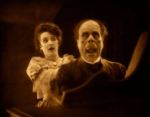
Today’s cinema adventure: The Phantom of the Opera, the 1925 silent horror film featuring the legendary Lon Chaney in his most famous and recognizable role; it was a troubled production, but it ultimately proved so successful that it sparked a two-decade reign by its studio, Universal, as the premiere source of horror on the big screen. Critics at the time were lukewarm in their overall response to the film, though most were impressed by its production values and visual style, but they bestowed unanimous acclaim upon the element which was- and remains- its greatest appeal: the electrifying performance of Chaney as the title character, and the still-terrifying makeup he designed to transform himself into a ghoulish human monster.

Based on the 1909 novel by French author Gaston Leroux, the film’s plot differs somewhat in its details from the one familiar to fans of the now-better-known stage musical based on the same source, but the general premise remains the same. The prestigious Paris Opera is haunted by a mysterious shadowy figure known only as “The Phantom,” who is, in reality, a grotesquely disfigured musical genius that dwells in a secret lair deep within the catacombs beneath the opera house. Becoming enamored of Christine, the understudy to the Opera’s temperamental prima donna, he coaches her singing from behind the walls of her dressing room, and begins to send threatening letters to the Opera’s owners demanding they allow her to replace their star onstage; when they refuse to cooperate, he sabotages a performance, crashing the grand chandelier into the audience, and then kidnaps his protégé, prompting a desperate rescue attempt by her lover, Raoul, and sparking a manhunt to capture the fiend and put an end to his reign of terror, once and for all.

This highly melodramatic plot has since been fleshed out by a numerous variety of interpretations, from the gothic horror approach of Hammer Studios to the campy glam-fantasy of Brian DePalma’s seventies cult classic, The Phantom of the Paradise; but this original screen version remains, nearly 90 years later, the most iconic. Though many in today’s world have never seen the film, it would be hard to find someone unfamiliar with the horrific countenance of Lon Chaney’s Phantom; his pale, grinning, skull-like features are still among the most recognizable in horror cinema, turning up in various forms of media throughout our popular culture- even on a postage stamp- and continuing to inspire artists and actors today in their efforts to terrify. Without question, unless you are a serious film scholar- or a hardcore completionist- Chaney is the only real reason for a modern viewer to see The Phantom of the Opera; his makeup alone is worth the time investment, an impressive creation of face paint and wire which caused him excruciating pain during filming. His appearance- the most faithful depiction of the character to date, as described in the novel- is so gruesome that audiences of the day reportedly leaped from their seats in terror, and some weaker spirits even fainted from the shock- though doubtless some of these incidents were embellished by the studio for publicity purposes. However, Chaney’s magnificently deformed visage is only part of his draw here; the reason he was one of Hollywood’s biggest stars was that he had an uncanny gift for making such monstrous characters profoundly human, finding their hearts and rendering them with a rare poignancy that ultimately made them far more sympathetic than the stiffly artificial performers that surrounded them. His work is a revelation for anyone whose conception of silent film acting is limited to the stilted, melodramatic style represented by most of his contemporaries; his gift shines through the antiquated techniques of the form, reminding us of the effectiveness of pantomime as practiced by a true master. He communicates volumes of complex emotion with his body language and tells whole stories with the subtlest of gestures. He presents such a clear portrait of the pain and sadness lurking beneath the phantom’s furious persona that we cannot help but be on his side, for all the mayhem he causes; he conveys the depth of this man’s tragic experience- the isolation, the ridicule, the self-loathing- that has led him to hide himself away from the eyes of the world, and he makes us hope alongside him that the beauty of his musical gift will be enough to make Christine see past his physical ugliness and fall in love with the tender soul it conceals. We know that it won’t work, of course, which only serves to heighten our pity for this miserable outcast, dangerously mad though he may be.

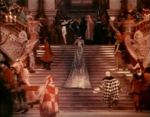
Thanks to the success of Chaney’s previous blockbuster for Universal, The Hunchback of Notre Dame, the studio knew they had a major asset; consequently they spared no expense in the preparation of this follow-up, building lavish sets of enormous scale upon which to play out the drama. The production design (headed by the uncredited Ben Carré) centers on a complete vision of the Paris Opera House, giving us its opulent interiors, its magnificent façade and spectacular rooftop, and the elaborate sets and costumes for its onstage production of Faust (which, appropriately enough, figures prominently in the plot), including a backstage view full of looming and ominous props and set pieces. As for its dark underbelly, the Phantom’s sinister hideaway is a splendidly imaginative mix of gothic gloom and regal refinement, with dark labyrinthine passageways that include such improbable elements as a horse and an underground lake, leading to residential chambers resplendent with elegant décor and devilish mechanisms. Adding to the visual bedazzlement, the film utilizes a the technique of monochromatic tinting to create moods and to differentiate settings- a fairly common method of the era, and a far cry from the drab look most modern viewers associate with the silent cinema, due to the decades in which only faded black-and-white prints of these films were available. Thanks to modern restoration, we are treated not only to the recreation of this effect, which greatly enhances the visual experience of the film, but also to the full glory of the two-tone color process used for the film’s centerpiece, a grand masked ball sequence in which the Phantom appears amongst the revelers costumed as the Red Death.

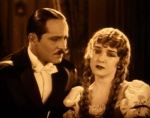
Apart from the scenery, though, when Chaney is absent from the screen we are left, for the most part, with little to hold our interest. Though it’s important to remember that the overwrought posing practiced by most of the other actors was the accepted technique of the day, and that the performers here were well-known, popular, and respected stars at the time, modern audiences are still likely to feel alienated rather than endeared by the likes of such primitive thespians as Mary Philbin and Norman Kerry, who portray Christine and Raoul, particularly when contrasted with the raw, timeless power of the film’s star. It’s not that they give bad performances- by the standard of the day, they were more than competent- but that they seem vaguely silly to us now, holdovers from the pulpy melodrama theatre which dominated American entertainment before the movies took over our collective imagination. Still, if one can get past the stylistic gap created by the intervening decades of changing fashion, it’s possible to see the talent on display here. There are some nice moments from Philbin, who was a lovely young woman, to be sure, exuding a sweetness and sincerity that seems particularly noticeable when she shares the screen with Chaney; and some of the supporting players provide memorable contributions, such as early Broadway star Snitz Edwards as a decidedly fey and cowardly stagehand who provides comic relief, and the uncredited Bernard Siegel as the Opera company’s resident “expert” on the Phantom. Kerry’s Raoul gets the worst deal, despite his then-much-heralded matinee-idol looks; his character is a stock, one-dimensional bore, and though he does give every effort to make some real feeling come through, his performance comes off as wooden and unimaginative, and the character seems almost dull-witted at times, making us root all the more for the Phantom in his efforts to win Christine away from him. Far more interesting is Arthur Edmund Carewe, who portrays Ledoux, a police detective secretly investigating the case of the mysterious opera ghost, who emerges just in time to become an ally in the quest to save Christine; despite the fact that the character was completely rewritten during the process of creating the intertitles- having originally been a Persian former associate of the Phantom now on his trail- and his scenes were filmed with a completely different backstory in mind, he still comes off better than Raoul, decisive, determined and brave. Barring her acceptance of the Phantom’s love, it would be better for Christine to fall for this hero, instead of the boring, moon-eyed stiff with whom she ends up.

The subject of Ledoux and his rewritten backstory brings up a major point in the discussion of The Phantom of the Opera- its tumultuous production history. Universal originally hired Rupert Julian, a prestigious director of stylish romances, to helm the project, but the shooting process was marred by his difficult relations with the cast and crew. Nevertheless, he succeeded in providing a final cut, more faithful to the novel’s plotline, including the mysterious Persian and keeping the original ending, in which the Phantom allows Christine and Raoul to leave together and remains in his underground hideout to die of a broken heart; unfortunately, the unfavorable reaction of preview audiences prompted the studio to embark on major rewriting and reshooting, without Julian (though his name was- and still is- retained as the credited director), which involved the creation of several subplots, new characters, more comic relief, and a different ending in which the Phantom is chased down by an angry mob and savagely murdered. Unfortunately, this version also bombed in previews, so the desperate studio scrapped most of it (though they retained the new, more “exciting” finale) and attempted to salvage the project by re-editing and rewriting the original cut (this is when the Persian became a Parisian police inspector). This time, it clicked, and the film was a huge hit- though, as mentioned, the critics found it somewhat mediocre, save for Chaney- and became a cash cow for Universal; in fact, it was so popular that upon the advent of sound a few years later, the studio shot new sequences (including more extensive scenes of the opera) and added a dubbed soundtrack featuring members of the original cast, except for Chaney (who was by then under contract with MGM). This version was also a success, but it has proven problematic for the film’s subsequent history; over the years, thanks to the negligence of the studio in preserving its original negatives, the only remaining prints of The Phantom of the Opera are a widely varying mish-mash of combinations from its different incarnations, making it virtually impossible to reconstruct its original form. As a result, the version now widely available contains material from both the final release cut of 1925 and the 1930 pseudo-talkie edition; sadly, there are sections which only survived in badly deteriorated form, making the contemporary version frustratingly patchy in its overall visual coherence. There are other inconsistencies, too, such as the use of a different actress as Carlotta (the opera’s prima donna) in the later version, a problem explained by changing the character’s former incarnation into “Carlotta’s Mother” for her retained scenes in the Opera managers’ office and billing the second actress (who appears only in the Faust performance scenes) as the actual “Carlotta.”

Despite all this, however, the current restored edition of The Phantom of the Opera preserves a valuable piece of cinematic history, and provides the interested viewer with a chance to experience the original screen version of this oft-filmed tale in a condition as close as possible to its initial, pristine form. Some of it is eye-opening, such as the important role of color in telling its story, a factor that was lost for many years; some of it, of course, comes up short of the expectation created by the film’s reputation, revealing the shortcomings observed by critics of the day, such as a somewhat shallow focus on spectacle and sensationalism at the expense of the deeper subtext inherent in its ultimately tragic tale, and the inclusion of certain bizarre, melodramatic elements designed merely to elicit audience response without consideration for their logic within the larger scope of the narrative. That said, it would be foolish not to take advantage of the opportunity to see this venerable classic, a film which has generated so much influence and so many imitators over the years that it has entered the realm of legend. Though the film itself may not live up to its legendary status, the performance at its center certainly does; in fact, seeing it today, Lon Chaney’s Phantom seems perhaps even greater than it did in 1925, as fresh and immediate as if it were filmed yesterday, despite the elevated style. This is a testament to his powerful gift, with which he was able to reach across the decades, even 80 years after his death, to touch our world with his understanding of the human soul.

http://www.imdb.com/title/tt0016220/

The Dark Knight Rises (2012)

Today’s cinema adventure: The Dark Knight Rises, the final installment of Christopher Nolan’s Batman trilogy, which once again uses a realistic and politically charged approach in bringing the DC Comics hero to life, and puts him into a decisive battle which will determine the very fate of Gotham City.  Continuing in the dark and violent vein that characterized The Dark Knight, Nolan creates an apocalyptic finale for his exploration of the Batman universe, one designed to provoke and challenge even as it entertains; in the process he continues to develop the characters and relationships introduced in the previous chapters, as well as offering up new twists on other familiar figures making their appearances here for the first time.

In this new chapter (with the screenplay written again by Nolan and his brother, Jonathan, based on a story developed by Batman Begins co-writer David S. Goyer), eight years have passed since the “murder” of D.A. Harvey Dent, whose supposed martyrdom in the fight against crime (a fabrication created to cover up the ignoble circumstances of his death) has resulted in legislation that has all but eliminated the criminal underworld of Gotham City.  During the intervening years, billionaire Bruce Wayne has become a mysterious recluse and his financial empire has fallen into disarray, while his alter-ego, Batman, has disappeared, having become a wanted fugitive after taking the blame for Dent’s death.  The city has grown soft and complacent, and economic imbalance has led to a new kind of cynicism in its population; but its greatest threat is building beneath its streets, as Bane, a powerful urban warlord with a mysterious past and a cataclysmic agenda, prepares to enact a master plan designed to plunge it into hellish torment as a prelude to its final annihilation.  Drawn from his seclusion, Wayne must resurrect his Batman persona in order to combat the new danger; but, like the city he protects, his long stagnation has weakened him and created new conflicts within, leaving him vulnerable to defeat by this titanic enemy.  In order to triumph, he must not only regain his former strength and his faith in himself, he must also place his trust in allies- some old and reliable, some new and untested- and be prepared to face the ultimate sacrifice.

Picking up the thematic threads left hanging at the end of The Dark Knight, the Nolans show us that the uneasy compromise of image over truth has provided a temporary victory in the battle against chaos- but the consequences of the choice have taken their toll on our champions of justice, and the complacency of peace has led to its own form of disorder.  A widening gap between wealth and poverty breeds anger among the citizens, while the prosperous civic authorities seem too interested in self-congratulation and self-promotion to pay attention to the signs of danger approaching from without and within; but nevertheless, despite this uncomfortably topical political situation, when disaster strikes it is the result of a long-forgotten threat which has been festering unnoticed all along.  Bane and his plot represent the shadows of the past, deferred but not defeated, a pattern of destruction that has risen repeatedly throughout history; Gotham’s blissfully false sense of security and its unheeded civil unrest have merely provided a smokescreen for the incursion.  The only chance for averting the impending doom lies in facing the truth, taking responsibility, and working together for a common good which outweighs all considerations of ideology or principle.  Contrary to the commentary of some who have seen The Dark Knight Rises as a conservative polemic against the “Occupy” movement (due to the fact that Bane disguises his takeover of Gotham and subsequent reign of terror as a “people’s revolution”), the film in fact hinges, like its predecessor, on the idea that blind pursuit of self-interest is the real root of the problem, and that it is only through a desire to help each other that we can reclaim the power to conquer the enemies that threaten all of us together; the arrogance of the wealthy and the anger of the poor are both used by Bane as the instruments of his rise to dominion, and his defeat can only be brought about by the protagonists’ willingness to sacrifice everything they hold dear for the sake of others.  It’s also worth taking note of another factor which contributes significantly to the threat to Gotham’s future- the seeking of revenge for old wrongs, and worse yet, revenge against an entire population for the actions of a single man.  This is a powerful reminder of a principle very much at work in the world today, and one which has perpetuated the cycle of bloodshed from the most ancient of times.  Further than that, the film suggests through the telling parallels it draws that by ignoring the lessons of the past we are doomed to re-enact a historical cycle that has brought down one civilization after another; in other words, if we don’t learn from history, we can only become history.  To paraphrase an echo from the film which began the trilogy, we fall in order to learn how to get back up; but once we are on our feet again, we must always remember how we fell in the first place- after all, as more than one important character realizes before the end of The Dark Knight Rises, a fresh start is no good at all if you’re not willing to change the way you do things.

Once more, in writing about Nolan’s Batman cycle, I find myself reveling in the complexities of its themes and making new realizations as I ponder how to express them here.  In the end, however, these films- each one of them, in their own distinctive way- speak for themselves.  With his final chapter, this gifted director has once again created a movie which stands firmly on its own merits, building an epic structure on its own individual themes, while maintaining and bringing to fruition the elements of the entire trilogy.  He does it in his characteristically detailed style, full of arresting visuals, fluid camera work, spectacular action sequences, and intimate moments of unexpected emotional power.  He gives full deference to the importance of character while simultaneously driving the complex plot at full speed, juggles themes within themes while devoting every moment of screen time to the progression of the story, and manages a sweeping social and political allegory in the midst of an explosive action fantasy.  There may be those who quibble about his motives, or who take exception to his re-interpretation of the iconic characters and conceits of the Batman premise, but such concerns are, quite frankly, moot in the scope of what he has accomplished here.  The Dark Knight Rises is the final proof, if more were needed, that Christopher Nolan has done what no other director has done before him: transcended the “comic book” genre to create an intelligent, mature and wholly sophisticated series of films that is worthy to stand with the great socially significant films of our time- more worthy, in fact, than most of the self-consciously highbrow self-styled “art” films that Hollywood tries to pass off around awards season.  For this (though he is not likely to win any of those awards himself- the stigma against this kind of fantasy content still seems too strong for that), he deserves all the accolades he has received so far, as well as the satisfaction of his phenomenal box office success.

Part of Nolan’s success with all of these films, of course, lies in the work of the people he has chosen to work with him, and the names in the credits that roll at the end of this one show more or less the same list of usual suspects.  Once again, the design team is headed by Nathan Crowley (this time co-credited with Kevin Kavanaugh as production designers), and once again they have provided us with new and exciting gadgets to go with the old favorites, as well as giving Gotham yet another new look- it’s still a spectacular city, but somehow not so new and shiny, a little worn down and lived-in, and with a dirtier, more East-Coast-urban feel to it.  The locations, as always, have something to do with this, with recognizable landmarks from New York, Pittsburgh, and Los Angeles underlining the sense that this is truly meant to be a microcosmic world representing an entire culture; but the look of its skyline, clearly created with some impressive digital cutting-and-pasting, conveys the feeling of a place with a soul all its own.  Wally Pfister’s cinematography continues with the gritty-but-slick style of The Dark Knight while also echoing the sepia-infused tone of Batman Begins, a highly appropriate approach for a film that draws its life from both; he complements the worn-down look of the city with a style that evokes bleakness, particularly in the visually striking scenes of Gotham in winter which come late in the film.  Hans Zimmer, working solo this time, gives us another driving score, incorporating more vocal instrumentation than usual but still, for the most part, focusing on mood and subliminal effect than overtly recognizable melodic sounds.  In short, The Dark Knight Rises gives us more of the same outstanding, exemplary work that made the first two entries in this trilogy so effective.

The same holds true of its cast, comprised again of heavy-hitters; most of them are, of course, returnees to already-established roles, and without exception they live up to their previous work, bringing new flavors to their continued development of these familiar characters and closure to the arcs they began in the first film.  Christian Bale once again proves what a brilliant actor he is with his portrayal of Bruce Wayne; he gives us a new vision of this billionaire vigilante, grown physically and psychologically dissolute through his self-imposed isolation, but seemingly marked more by a sense of disorientation than by underlying bitterness over the events that have led to it.  He also gives his character, which has always fitted him like a tailor-made glove, a deeply personal feeling of emotional connection, building on the previous revelations of his psyche to create a complete picture of this man and the needs that drive him- showing us, ultimately, the good heart that lies beneath the darkness of his sometimes-morally-questionable actions.  We have never questioned it, of course, but he has- and his final evolution into a complete hero, with a clarity of purpose and a full understanding of his motivations, shines through in a way that makes him both admirable and infinitely likable.  It’s the first time I can honestly say I loved an onscreen “super” hero because of who he showed me he was and not because he was, well, a hero.  Michael Caine, as Alfred, has been quietly superb all along, lending his calm, assured dignity to the proceedings and serving as the key grounding influence for Bale’s Batman- but in this entry, he gets the chance to remind us all of why he has been one of the hardest-working actors in the business for fifty years.  His scenes are fewer, this time around, but they stick with you, and the dimension he has given this usually-perfunctory character pays off with some key moments that give the entire series its deepest emotional resonance, proving once more that it is the depth and honesty underlying these films that have elevated them to the level of higher art.  Gary Oldman shines once more as now-Commissioner Gordon, wearied by the chafing of his conscience over his part in the Dent cover-up, and bored by eight years of peacetime- but dedicated as always to his mission to protect Gotham and revived by the chance to jump into action once more.  Morgan Freeman’s Lucius Fox is also wearier, but with characteristically subdued optimism he gives us a refreshing energy that reminds us it is possible to gracefully endure the changing of fortune without losing one’s belief in the future.  There are a few other returning faces, but many of them are likely to be surprises so I won’t go into them here; suffice it to say that they, along with the rest of the cast, provide uniformly superb contributions.

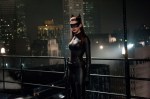
As for the new blood, obviously there are a few that deserve mention.  Topping that list is Anne Hathaway, portraying Selina Kyle, an audacious cat burgler whose gear and manner make it clear that she represents another iconic Batman personality- though the name “Catwoman” is never used.  She nails the character, with just the right blend of saucy seductiveness and dangerous unpredictability, matching Bale’s Bruce Wayne in a way that no previous female character has done- a significant point, and one which highlights the importance of her key role in the film, as well as the timing of her appearance in his life.  It would be improper to give anything away, but it’s safe to say that she- and Nolan- bring a number of surprises to the table in their re-interpretation of this feisty, feline female.  Tom Hardy, the English heartthrob who gained 30 lbs. to portray the hulking Bane, provides an awe-inspiring physical presence and clearly conveys the disarming intelligence of his character- the trilogy’s closest thing to a “super-villain.”  He manages to give the character depth and even a degree of sympathy with his performance- not just through his voice, but in his physicality and, most importantly, with his eyes, which are left visible by the cruelly sadomasochistic mask he wears in all but one key scene of the film.  Marion Cotillard brings an elegant nobility to the proceedings as Miranda Tate, a wealthy board member of Wayne Enterprises whose dedication to an environmentally-friendly project plays an important role in the developments of the plot, and leads to a relationship with Wayne that becomes closer than he expects.  Finally, Joseph Gordon-Levitt portrays John Blake, an earnest young policeman whose personal belief in Batman leads him to deduce Wayne’s true identity and helps provide the impetus for him to return to the fight against evil; it’s a character that could very easily be too-good-to-be-true, but thanks to Gordon-Levitt he is more than believable, a welcome addition to the collection of loosely-affiliated heroes that aid Batman in his quest for law and order.  A number of other actors make their first- and, presumably, last- appearance in Nolan’s vision of the Batman legend, including Matthew Modine as Gordon’s ambivalent second-in-command, and Willam Devane as the President of the United States; as with the old-timers, the new cast does a universally stellar job.

The Dark Knight Rises, though already one of the most successful movies of all time, has generated a great deal of controversy over its supposed political leanings, one way or the other, and for a violent tone which has sadly been thrown into stark relief by tragic real-life events.  There is no denying the important influence of movies over our real-world culture, and unquestionably, an artist has a responsibility to consider this in deciding the nature of the content they wish to present.  It must be remembered, however, that Nolan’s film is, first and foremost, an action/adventure-fantasy.  Though it may be laden with recognizably current political and social issues, and though it explores questions of morality and social responsibility, these things are ultimately merely the background for a story that depicts a realistic, contemporary world- a tale in which the ongoing conflicts of society are exploited by an outside evil who is an enemy to all sides.  Likewise, by its very nature, it’s a movie filled with the kind of disturbing images of mayhem and tragedy that have been blamed by many for the casual attitude towards violence in our collective contemporary psyche; but Batman is a modern myth, and like all myth it deals in symbolism drawn from everyday experience in order to convey its true purpose.  For all its scenes of brutal combat, exploding football stadiums, and collapsing bridges, The Dark Knight Rises carries a positive message that emphasizes the importance of compassion and the value of human life; it’s a principle repeated throughout the movie, and the intense battle action is a metaphor for the difficulty of the struggle required to preserve these things.  Those who see only the overt content of this film, or indeed of any film, are likely to get the opposite meaning of the one intended; and whichever side they represent in the ongoing debate, they, like the citizens of Gotham who ignore the real menace while they seek to place blame for their troubles and justify it with sweeping generalizations, would do well to look deeper than the surface- as would those who glorify the violence they see there without recognizing the consequences it is shown to breed.  After all, cinema, like all art, holds up a mirror to society, and what we see in it depends on how closely we are willing to look at ourselves.  In the world of The Dark Knight Rises, the ability to candidly face the reality of our problems is our only hope for saving our way of life from destruction; I strongly suspect that this is also a reflection of real life, and that unless we heed the warning that is implicit in Nolan’s film, we may find that out all too soon.

http://www.imdb.com/title/tt1345836/

The Dark Knight (2008)

Today’s cinema adventure: The Dark Knight, Christopher Nolan’s massively successful 2008 sequel to his earlier Batman Begins, tracking the continuing progress of DC Comics’ iconic hero in his quest to free Gotham City from the grip of rampant crime and corruption and pitting him against a new breed of criminal- the costumed madman known only as the Joker.  Continuing his re-imagination of the comic-book premise as a crime drama grounded in realism, the director takes it even further this time around, creating a gritty, violent vision of urban warfare in which the line between right and wrong becomes blurred in a larger struggle between order and chaos.  The formula obviously struck a nerve; the film broke box office records and earned the kind of massive critical accolades usually reserved for more “serious” fare.

Working from a story developed by Batman Begins co-writer David S. Goyer, Nolan this time fashions a screenplay with his brother, Jonathan, in which billionaire Bruce Wayne, working in unofficial partnership with Police Lt. Gordon, has made headway in the campaign to weaken the control of organized crime over Gotham City.  With the rise of the city’s idealistic new D.A., Harvey Dent, he sees a chance to hand over his role as the city’s protector and at last embrace the comforts of a normal life; but a new threat arises in the form of the Joker, a disfigured psychopath in clownish makeup, who begins an escalating campaign of terror.  To combat this new adversary, Wayne and Gordon join forces with Dent, and the trio works in secret alliance to put a stop to his deadly game before Gotham deteriorates into a state of total anarchy.  The Nolans use their plot as a means to explore a wide variety of inter-connected themes, making the scope of The Dark Knight much wider and its moral landscape more ambiguous than its predecessor’s, and as a result they transform what is essentially a fantasy adventure into a complex parable about the ethical dilemmas of preserving order in the modern world.  Throughout the film, the intricately plotted storyline is threaded with dialogue and situations that clearly evoke the complicated morality of post-9/11 society; the age-old cops-and-robbers scenario has been co-opted by a battle between ideologies, in which those who would protect society come dangerously close to becoming an even greater threat to it themselves.  Indeed, the antagonist’s master plan is to subvert the established order by turning it against itself, exploiting the contradictions in its own rules and ethics to create an environment of fear and chaos in which he can, in the words of one character, “watch the world burn.”  In the course of the action, we are given a remarkably detailed portrait of Gotham City- which serves as a microcosm of American civilization- which includes a look at its politicians, its media figures, its businessmen, its criminals, its public servants, and its average citizens; the effect of the city’s peril on its population is presented as a mirror to our own society, and the drama enacted by the key figures of the story reflects our efforts to reconcile the moral conflicts inherent in dealing with our own terrorized world.  As the story moves relentlessly towards its climax, it raises questions about the implications of working outside the law for a greater good, the manipulation of public perception for political purposes, the ambiguous role of invasive technology in preserving communal security, the potential corruptibility of human nature, and the danger of becoming your enemy when you fight against him on his own terms.  Most significantly, it examines the role of choice in the struggle to define humanity; whether our actions are dictated by chance and motivated by self-interest, or whether we are ultimately responsible for the decisions we make, for good or for ill.

If it sounds like heavy, existential themes dominate The Dark Knight, that’s because they do; but that doesn’t mean it’s a film that favors philosophical debate over a good story.  Rather, the story is the debate.  Nolan uses his epic themes to propel the action, leading us through the conditional parameters until the core issue is revealed at the heart of his plot.  Batman and his allies, the self-sacrificing champions of order and justice, are pitted against the Joker, a self-serving personification of chaos and amorality.  At every step of the game, the Joker challenges his opponents’ dedication and their beliefs, forcing them into no-win situations in which they have no choice but to act against their own principles; convinced of their hypocrisy and their fallibility, and confident that he can- and will- break their spirit, he manipulates the scenario not only to prove his point, but to inflict torment for his own gratification.  It is this, perhaps, that Nolan suggests as the ultimate definition of evil- the pure selfishness that satisfies its own desires at the expense of others- and it is this basic quality that the Joker wishes to expose as the true nature of mankind.  Whether or not he is right is certainly not resolved by the end of the movie- after all, there is still another chapter to come- but Nolan’s skill at cinematic storytelling ensures that the arguments on both sides are illustrated with a sense of urgency and an emphasis on action.

In fact, the action is virtually non-stop.  Even when The Dark Knight concerns itself with quiet, more intimate matters, Nolan’s directorial choices give it a driving, restless feel- continuing the sense of momentum that he initiated in Batman Begins.  His camera is almost never still, with slow zooms and pans in almost every shot, and he pieces things together with quick edits, giving us just enough of an image to establish what we’re seeing and then sharply moving on.  He crams so much into the film this way that there are whole subplots which can go unnoticed without repeat viewings, and it allows him to provide an expansive view of the life of Gotham City into his 2 1/2 hour running time.  He confidently moves his tale through its escalating developments with a speed that keeps the viewer on edge, establishing key points without belaboring them, relying on the completeness of his screenplay- and the intelligence of his audience- to ensure clarity.  Likewise, he depends on the writing and the skill of his gifted actors to convey the important nuances of his characters that make the film so compelling, though he certainly takes the time to explore the dynamics of their relationships onscreen, rightly understanding the importance of this aspect in the overall scope of his vision.

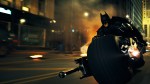
Of course, however, as in any movie about a titanic struggle of heroes and villains, the primary focus is on thrilling action, and Nolan certainly delivers this in spades.  Continuing in the vein of Batman Begins, he chooses to construct his movie with a minimum of computer trickery, instead utilizing live action stunt work filmed in actual locations or on elaborate soundstage sets.  He fills his film with gripping set pieces, from the opening bank heist sequence- which rivals anything in the best of Hollywood’s caper films- to the climactic confused free-for-all in which Batman must fight a SWAT team to protect the Joker’s hapless hostages who have been disguised as his henchmen; in between are a breathtaking depiction of a nighttime kidnapping from Hong Kong’s tallest building and the movie’s action centerpiece- an extended urban roadway chase in which Batman rides his souped-up cycle to defend a police convoy from a semi-truck containing the heavily-armed Joker and his men.  Adding to the excitement is the fact that Nolan chose to shoot these sequences- as well as some of the smaller-scale scenes- in an IMAX format, although the effect of this is somewhat diminished by viewing on a small screen.

In service of his visual spectacle, Nolan’s production team provides an impressive display of their talents; most significantly, perhaps, cinematographer Wally Pfister, who gives the film a style that is simultaneously slick and grimy, and appropriately creates a significantly darker look than that of the earlier film.  The production designers, headed once more by Nathan Crowley, have revamped the technological aspects of Batman’s world- a redesigned, lightweight suit that makes the hero more agile, as well as the dazzlingly well-realized, aforementioned “batpod” that he rides into battle with his demented adversary, stand out as distinct advancements over the gadgetry in the previous chapter- and Gotham’s cityscape has been completely overhauled.  Gone is the deco-flavored mix of nostalgic and futuristic elements that marked the city of Batman Begins; here we find an utterly contemporary metropolis of steel, plastic and glass, a world-class capitol of industry and commerce with shining citadels and utilitarian infrastructure that is more directly representative of the typical modern urban environment of America.  Its familiarity adds another layer to the realism that is Nolan’s goal, and with this backdrop against which to play out his epic drama, the more implausible elements of the comic-book scenario are somehow more believable.  The score, once again the product of collaboration between Hans Zimmer and James Newton Howard, echoes the mood-oriented style of Batman Begins, but with even more of an emphasis on driving the pace with an undercurrent of rippling and restless rhythms, suggesting the chaos that threatens to envelop Gotham City.

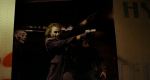
Nolan’s modern re-invention of the Batman mythology, however, is most clearly and successfully exemplified by the one element of The Dark Knight that has- justifiably- received the most attention: the performance of Heath Ledger as the Joker.  The young actor delivers a stunning portrait of this well-known character, accomplishing the seemingly impossible feat of giving us something completely unexpected and unlike any interpretation we have seen before.  His psychotic clown is a million miles away from the fruity camp of Cesar Romero’s goofy TV persona, and totally unlike Jack Nicholson’s self-parodying turn in Tim Burton’s Batman film of two decades before.  Ledger makes the character a frightening, dangerous madman, clearly deranged but chillingly sharp and lucid; we are given no background for him, aside from the conflicting stories he tells himself within the film, but we can plainly see that whatever traumatic occurrence has led to the development of his deeply disturbed personality, it has left him utterly and completely devoid of humanity.  His makes it plain that his Joker lives for the thrill of the moment, taking great pleasure in pain- including his own, greeting each blow from his caped opponent with a rush of giddy adrenaline-laced delight.  His voice, his physicality, the coldness of his eyes, all combine to create an unforgettable portrait of menace, and for the first time in the history of comic-based films, he has given us an utterly believable super-villain.  The one completely human moment he exhibits comes late in the film, a reaction of genuine surprise over an unforeseen development which throws a wrench in the works of his master plan- it’s a subtle but dazzling moment which instantly casts into stark relief the sheer brilliance of everything we have seen from him before that.  Ledger’s tragic death before the film’s release may have contributed to the publicity surrounding his work here, but had he lived the performance would still have stood as a triumph, and was fully deserving of the multitude of awards and accolades it received posthumously for him.

This is not to take credit away from any of his co-stars.  Every member of Nolan’s cast gives a stellar effort, starting with Christian Bale, whose Batman is leaner and more haggard than in his previous appearance in the role, reflecting the maturity and the effects of the stress that have shaped him in the intervening years since Batman Begins.  He gives the character a wearier edge, exuding more confidence but also more contempt for his criminal prey; even his Bruce Wayne seems a little worn down from all the partying with supermodels and prima ballerinas his public image requires him to do.  Underneath it all, though, he clearly shows us the power of his dedication to the job he has appointed himself, and his refusal to yield to the Joker’s efforts to bring him down to a baser level is utterly convincing- particularly in light of the self-doubt he shows us in response to his costly failures- giving us the glimmer of hope we can cling to through the film’s dark finale.  Returning as his trusted servant and co-conspirator, Alfred, is the magnificent Michael Caine, who continues to provide a grounding center of wisdom and genuine class, and whose chemistry with Bale offers the film’s strongest example of deep, close human connection.  Maggie Gyllenhall replaces the absent Katie Holmes as Rachel, Bruce’s childhood friend and would-be sweetheart for whom he still carries a torch, and though it is somewhat jarring to see a different actress in the role, she provides a fine performance, making the character a strong, independent, and empowered woman, an equal partner in the battle against crime, rather than just another helpless female in need of rescue.  Gary Oldman and Morgan Freeman continue to expand on their own brands of quiet heroism as Lt. Gordon and Lucius Fox, respectively; and, though his work was eclipsed by Ledger’s dazzling performance, Aaron Eckhart is equally superb, in his way, as Dent- who is both the film’s secondary hero and secondary villain, transforming from the dedicated “White Knight” whose unflinching integrity gives the city hope to the vengeful and deformed “Two-Face,” driven to madness by personal loss- and providing the perfect symbol for corrupt politics with his half-handsome, half-grotesque features.

The Dark Knight has been subject to much discussion and debate regarding its political messages; some have viewed it as an endorsement of hawkish, right-wing tactics in the war against terrorism, while some have declared it as an indictment of the dangers inherent in using such methods.  Like most art- certainly most good art- it is ultimately a blank slate, a mirror in which the viewer sees their own perspectives reflected back; it seems to me that Nolan presents his subject matter without political agenda, exploring the thematic issues that arise out of the situation, but making no judgments, preferring to allow the viewer to draw their own conclusions.  What interests Nolan much more, perhaps, is the issue of basic human nature; and though his vision has the dark and cynical trappings of the noir style that has been a clear influence on his work, and though many have seen the film as a story of evil overwhelming good, at its heart is the message that, though some may waver or even fall, there is a desire inside us to do the right thing; as long as there are men who hold onto the standard of decency and set an example- even an illusory one- there is hope for us yet to conquer the forces of darkness that threaten our world, both from within and without.  That is an idea the filmmaker will explore further in the third (and supposedly final) installment of his Batman cycle; but, at least as this one rolls to an end, we can still believe in a champion that represents the best in us all, and as far as I’m concerned, that’s a pretty optimistic note for such a “dark” movie to end on.

http://www.imdb.com/title/tt0468569/

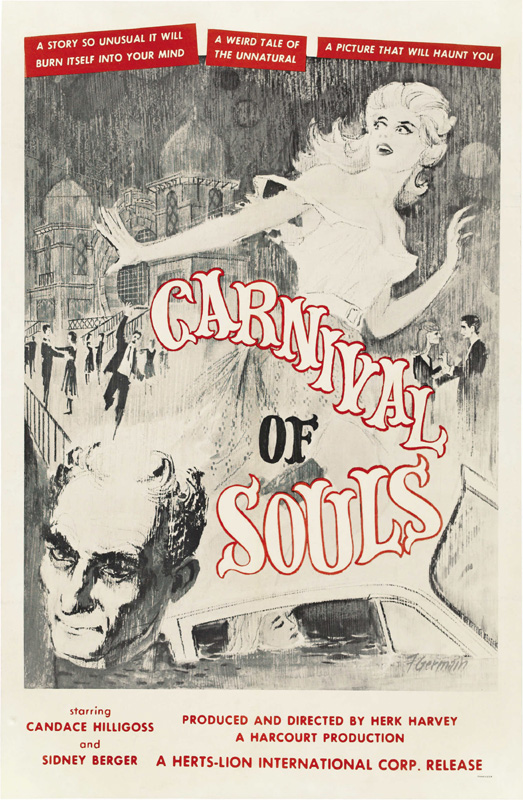
Carnival of Souls (1962)

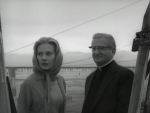
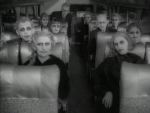
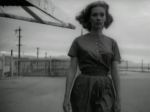
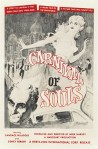
Today’s cinema adventure: Carnival of Souls, a 1962 low-budget horror film that was more or less ignored on its release, but which has gone on to become a highly influential cult classic.  Directed by Herk Harvey, a prolific lifelong creator of educational and industrial films who never made another theatrical feature, it was shot on location in Lawrence, Kansas and Salt Lake City, Utah, using a 16mm camera and reportedly with a budget of around $30,000- a cost which today would probably not even cover the price of the car that goes off a bridge in the first reel.  Needless to say, it’s a film that relies solely on atmosphere and cinematic storytelling to provide its scares, and the fact that it does so very well is no doubt responsible for its importance in the history of the modern horror genre.

Despite its humble origins, the film’s screenplay, written by John Clifford from Harvey’s original story, is surprisingly sophisticated in its layering of thematic elements and even in the believability of its dialogue- considering the nature of its subject matter, that is.  The plot concerns Mary Henry, a young woman who works as church organist though she has no particular interest in religious sentiment.  A week before she is to begin employment in a new town, she becomes the only survivor of a car accident in which two of her friends are drowned.  Determined to go on with her life, she makes the trip to start her job as planned, but she soon finds herself being stalked by a mysterious specter- who cannot be seen by anyone else- and inexplicably drawn to an abandoned carnival pavilion on the shores of a local lake.  Her strangely cold and detached behavior, coupled with her increasing hysteria and delusional episodes, begin to alienate her new friends and associates, and she finds she must confront the mysteries that haunt her in order to escape them.  The story contains little action, per se; it mainly follows Mary as she attempts to start her new life.  Nevertheless, the tension builds steadily throughout, shrouded in a dreamlike surreality and accompanied by a tangible sense of foreboding.

Much of the film’s unsettling mood has to do with the locations.  Director Harvey supposedly got the idea for his movie while driving past the abandoned Saltair Pavilion on the Great Salt Lake in Utah.  Though most of the rest of the movie was shot in Lawrence, where he was based, he paid the Salt Lake City Chamber of Commerce $50 for one week of filming at the ruined location; it was a good investment, because the scenes in this eerie, decrepit monument to cheap thrills long past can stand with some of the creepiest images ever put on film.  It’s a marvelous symbolic element- a giant, decaying fun palace in the middle of a desolate wasteland, a haunted shell evoking the futility of the good times it once housed in the face of the eternal emptiness that surrounds it.  To put it another way, it’s an apt reminder that, in the midst of life, we are in death, making it a perfect metaphor for the uneasy thematic core of the film.

The majority of Carnival of Souls, however, takes place in the kind of quiet, small town setting that can so easily serve to conjure thoughts of malicious forces lurking beneath the mundane familiarity of its surface- particularly when captured in the stark black-and-white palette of Maurice Prather’s cheap-but-effective cinematography.  Sunlit parks or dark nighttime highways, a crowded nightclub or an empty church, a bus depot or a department store- no place feels quite right or completely safe.  Even before the car accident in the opening scene, the lonely country roads seem threatening, and from the moment Mary emerges, dripping, from the watery scene of the crash, we spend the rest of the film waiting for the drop of another proverbial shoe.

It would not be fair, though, to place all the credit for this oppressive creepiness on the happenstance of starkly-photographed scenery.  The film’s humble director was clearly a man with a vision, evidenced by the fact that he worked, without salary and with money he raised himself, to make Carnival of Souls in three weeks with a crew of five- including himself.  Though there is definitely a clunkiness in his cinematic style, this has more to do with the limitations of his budget than with his understanding of the craft or his talent; the abrupt edits and the sloppy continuity are at least partly the consequence of a tight shooting schedule and insufficient funds.  There is ample proof, throughout the film, of Harvey’s ability as a director; he frames his shots with an eye for arresting composition, and his instinct for pacing belies his lack of experience with narrative fiction.  There are numerous moments when his use of clever camera trickery parallels that of directors like Hitchcock- whose work he no doubt studied- and the overall sense of inexorable menace, though enhanced by the settings and the visual style, is ultimately achieved by his cinematic rhythm- leisurely takes punctuated by short, sharp shocks at just the right moment- and his choices of what to show us and when to show it.  To top it all off is his choice of musical accompaniment- an otherworldly organ score composed by Gene Moore, a natural extension of the heroine’s occupational duties which provides the perfect aura of fruity gothic gloom to the proceedings.

As for the actors, most of the roles are handled by local Lawrence “talent,” unprofessional actors acquainted with Harvey through his industrial work; admittedly, there are some embarrassing performances on display throughout the film, though Sidney Berger deserves a mention for his unexpectedly complex work as a loutish boarding-house neighbor who tries to woo the oddly disaffected heroine.  A nod must also go to director Harvey himself, who makes a personal appearance onscreen as the ghoulish figure who plagues Mary, sporting pale makeup and leering malevolently- which may sound easy, but requires a certain finesse to pull off effectively, which he certainly does.  Obviously, though, his movie hinges on the leading actress, and he shrewdly spent his casting budget there, hiring an unknown but highly-trained and experienced performer named Candace Hilligoss; strikingly beautiful and fully committed to her role, she carries the weight of the picture on her capable shoulders, convincingly playing a variety of far-fetched conceits and walking a thin line between ethereal detachment and frightened vulnerability.  It would be overstating the case to say that she gives a great performance, but it’s a good one- certainly much better than the vast majority of would-be starlet turns in this sort of sub-B-grade horror movie.

That, of course, is exactly what Carnival of Souls is, despite the considerable praise it may have garnered over the 50 years since its inauspicious debut.  It’s unquestionably the kind of lowbrow drive-in fodder that was churned out ad infinitum during its era- it’s just that Harvey’s enthusiasm and dedication make it several cuts above most of the others.  To be sure, there is a level of artistry here that is hard to define; it’s not quite accurate to call the director a talented amateur, and the film’s stylistic strength is not accidental- he definitely knew what he was doing.  Even so, the power of this strange little film may lie beyond the full scope of his intentions or abilities, and is perhaps rooted in the notion that lies at its heart, the one which ultimately provides its twist ending- predictable as it may be, in this day and age.  Beneath its bogey-man thrills, it conjures a profound despair, perhaps the result of touching on some deep, unnamable dread, leaving a disturbing feeling that lingers long past its final frames.  It is this quality, more than the diamond-in-the-rough technical prowess of its director, which has placed Carnival of Souls so highly in the esteem of modern horror enthusiasts and provided dark inspiration for later, greater filmmakers like George Romero, David Lynch, and Quentin Tarantino.

It probably goes without saying that by today’s standards, the fright factor of this film is very low; and by any standards, its production quality is ridiculously shoddy.  The average modern viewer will probably find it laughable, the kind of movie that has gained its popularity from falling into the so-bad-it’s-good category.  Certainly, a screening with a bunch of quick-witted friends would probably yield some pretty snarky zingers, and that’s a good enough reason to recommend it; but while you’re laughing, make sure you take a close enough look to admire the weird beauty that emanates from Carnival of Souls.  However jaded you may be, there is something there that demands attention and commands respect.

 http://www.imdb.com/title/tt0055830/

Batman Begins (2005)

Today’s cinema adventure: Batman Begins, the 2005 action fantasy feature with which director Christopher Nolan initiated his vision of the classic comic-book hero, embodied by actor Christian Bale, re-envisioning the character and his world in a darker, more realistic vein that influenced a number of other subsequent franchise re-boots and brought a new level of depth and sophistication to the genre.  Focusing on Batman’s origins, Nolan traces the story of billionaire Bruce Wayne from childhood, when he witnesses the senseless murder of his parents by a mugger, through his recruitment and training by a mysterious organization called the League of Shadows, to his eventual return to Gotham City and his efforts to fight its rampant crime and corruption using both the skills he has learned and the high-tech gadgetry made available to him by the limitless financial resources he has inherited.  As he faces a host of opponents, he must also confront the enemies inside himself, learning to conquer his own guilt, anger, and fear in order to emerge as the symbolic hero he is driven to become.

It’s a familiar premise, by now, and one which has fueled a variety of interpretations since it was first invented by DC Comics artist Bob Kane in 1939; originally presented with a serious tone,  by the 1960s cultural “sophistication” had become such that the character had deteriorated to the level of a campy and outright comedic TV series- a classic in its own way, to be sure, but a far cry from the darker complexity suggested by the original comic books themselves and loyally embraced by generations of their fans.  Though the character was later reclaimed from this goofy image by such now-renowned graphic novelists as Frank Miller and Alan Moore, his incarnations on the big screen maintained a decidedly cartoon-like sensibility.  When Nolan was approached to resuscitate the franchise on film, he decided to take an approach more in step with the traditions of the comic books themselves.  With co-writer David S. Goyer, he fashioned an adult-oriented screenplay, centering more on the exploration of the character himself than on his far-fetched exploits- and making those exploits seem less far-fetched by infusing them with a hearty dose of realism.  The standard conceits of the story are built from the ground up, explained with a fresh perspective that makes them seem plausible; everything from the hero’s dual identity and theatrical tactics to the “Bat-cave” and “Bat-mobile” (which are never referred to as such) are presented as logical and necessary extensions of his self-creation, formed from the building blocks of his unique personal situation and the psychological forces which drive him, instead of being taken as rote.  It’s an imaginative approach that breathes life into the given clichés of the material, making the well-known mythology of the character feel fresh and contemporary.  In addition, by paying more than just perfunctory attention to the dominant themes of the Batman mythos- the importance of a father figure, the thin line between hero and villain, the relationship between fear and power, the purifying role of ethical behavior in a corrupt and chaotic world- Nolan and Goyer manage to give their film at least as much weight as most mainstream films aimed at a mature audience- and more than many.

All of which is not to say that Nolan’s vision of Batman is in any way light on action.  On the contrary, he fills his film with exciting set pieces made all the more satisfying by the care he has taken in laying a solid foundation; the various technological tools are more impressive for having been de-mystified, and the personal drama woven into the action raises the stakes and solidifies our investment in the outcome.  Furthermore, the action is structured into the story in such a way that the narrative is never put on hold; instead of digressing into extended displays of flashy spectacle, the plot advances through these sequences, making certain that there isn’t an extraneous or gratuitous moment in the film’s 140 minutes.

Much of the success of Batman Begins obviously hinges on its cast.  Nolan, drawing inspiration from classic seventies-era blockbusters like Superman, peppers his movie with an all-star list of gifted players, designed not just to lend credibility to the project but to provide the depth and complexity necessary for his conception.  It is not just the central figure that is subject to the director’s humanizing treatment; the entire array of familiar characters is infused with the kind of detail that raises them from the level of stock cardboard cutouts to three-dimensional beings with a life of their own.  Clearly, the writing plays a major part in this process, but the performances are a crucial factor, and the actors rise to the challenge admirably.  Heading the list is beloved veteran Michael Caine, whose portrayal of trusted manservant Alfred Pennyworth transforms the character from a mere source of comic relief to a powerful force to be reckoned with; thanks to Caine’s justly renowned skills, this aged gentleman’s gentleman is also a man’s man, wise and compassionate, brave and capable, serving both as a much-needed surrogate father and an indispensable ally to the troubled billionaire playboy in his charge- but grounded firmly in a reality that prevents him from ever seeming too good to be true.  As the future Police Commissioner, Jim Gordon, Gary Oldman matches Caine’s understated style in the creation of a sympathetic, powerful character, far from the pompously oblivious buffoon so often seen in previous versions; representing the traditional values of honesty, humility and family, he is an Everyman who becomes an unlikely hero, a worthy and equal partner in Batman’s fight against the forces of evil.  Liam Neeson is dangerously cool as Ducard, the mysterious figure who first becomes Bruce Wayne’s mentor and then his adversary in the fight for justice; Morgan Freeman provides his usual air of approachable dignity and intelligence as Lucius Fox, the techno-genius behind Batman’s bag of tricks; and Cillian Murphy brings an eerie, off-kilter edge to the proceedings as a corrupt psychiatrist with a dual identity of his own.  Rounding things out are Tom Wilkinson, memorable as an arrogant mob boss who finds himself a pawn in a game more powerful than his own, and Katie Holmes, earnest and likable as Wayne’s childhood friend and potential love interest.

It is Christian Bale, however, that must make or break the film with his interpretation of its iconic central character; and make it he does, going well beyond the usual troubled hero persona associated with the role and giving us a layered, remarkably specific and deeply personalized incarnation.  He fully inhabits Bruce Wayne, giving us a clear window into the young billionaire’s psyche and charting his psychological journey as he grows from an angry, vengeful youth to a passionate champion of justice; we believe in his commitment to the ideal because he allows us to see where it comes from, and because he invests so much of himself in Wayne’s emotional landscape he makes it possible for us  to identify with him- a rarity in screen portrayals of this character, which usually make him an aloof, distant figure, hard to fathom and harder to relate to.   In addition, Bale plays Batman as a clear extension of Wayne, a heightened version of his real self rather than a differentiated personality; indeed, in this version, it is the persona of the shallow playboy that seems artificial, a sham perpetrated half-heartedly by a young man for whom worldly extravagances hold no appeal and whose true nature chafes at being confined in so trivial a role- all of which, of course, serves to make us like him even more.  The only unsatisfying element of Bale’s work here is his lack of chemistry with Holmes; their relationship exhibits little of the spark that might give it meaning beyond its obligatory presence in the plot, so that when the would-be emotional payoff finally comes it feels like an afterthought.  Nevertheless, it’s a minor quibble in an otherwise wholly engaging performance.

This impressive line-up of A-listers inhabits a superbly realized vision of Gotham City, created by Nolan in collaboration with production designer Nathan Crowley, which draws heavily on visual influences from Ridley Scott’s classic, Blade Runner, incorporating the use of informed imagination in its depiction of the cityscape; featuring layered architectural styles that reflect the changing tastes of its long history and the mix of elegance and squalor that marks any major real-life metropolis, it’s a place that goes a long way towards establishing the realistic base from which Nolan draws his story.  Contrasting this claustrophobic urban atmosphere are the stately expanse of Wayne Manor and the breathtaking Himalayan landscape of the early scenes, all beautifully photographed by cinematographer Wally Phister, giving Batman Begins a distinctive look and feel that lingers in the mind’s eye.  It’s worth mentioning that Nolan chose to create the environment of his film largely through old-fashioned filmmaking techniques, using extensive footage of actual locations, soundstage mockups, and miniatures, and relying only minimally on computer graphic effects (mostly for animation of the elevated train sequences and construction of scenery using a composite of different locations layered together).  The action sequences were likewise completed with live action stunt work instead of computer-generated trickery, making the slick perfection of the film’s effects somehow even more dazzling.

The force that brings everything together, of course, is Nolan’s powerful and decisive direction.  He landed this project fresh on the heels of his surprise indie hit, Memento, and instead of choosing to helm yet another predictably generic franchise-based blockbuster, he decided to make the film his own, bringing into the mix such now-familiar trademark elements as his inventive, intricate plotting, his exploration of thought-provoking psychological and metaphysical themes, and his noir-influenced use of dark, morally ambiguous characters and situations- all of which fit the Batman milieu like a glove.  Aided by a moody, atmospheric score (jointly composed by Hans Zimmer and Thomas Newton Howard, who resist using the theme-driven formats typically found in films of this genre), he keeps the story driving forward with his heavy use of fast-paced editing and his intercutting of parallel threads, seamlessly interweaving themes and character development as he goes.  Keeping the momentum is key to Nolan’s purpose here: the film, after all, is called Batman Begins for a reason; though it has a completeness and a distinctive energy of its own, it is in fact a prologue, the first chapter of a saga that is meant to continue through a full cycle of films.  The director shrewdly provides sufficient thrills and closure to allow his film to stand on its own, but one can’t help feeling that he is holding back the use of his full arsenal to leave us wanting more.  As Batman Begins rolls to its conclusion, the final scenes feel more like a pause than a full stop, and the sequel-minded hints dropped within the final minutes only serve to feed an anticipation that Nolan has already been building from the very first frames.

As to that sequel, it will hardly be a spoiler for me to say that it was to become the single most successful movie of all time (at least until it was recently deposed by another comic-book film, The Avengers) and that its financial triumph was equally matched by its critical reception; but I’ll touch more on that subject later this week, in anticipation of the imminent release of the final installment of Nolan’s Batman trilogy.  My purpose here is to revisit the first of these remarkable, genre-defying films, which, though it falls somewhat short in comparison with at least one of its future companion pieces, gives more than a sufficient hint of the audacious brilliance that is to come.  Batman Begins is polished and powerful, a movie that treats its source material with the respect and maturity it deserves and, at long last, frees the “comic-book movie” from the assumed stigma of being second-rate schlock, opening it to the possibility of being considered as worthy and important as any “serious” genre.  It’s the first movie in which a so-called superhero (though technically, of course, this particular hero possesses no super powers) is presented in a manner realistic enough to be believable, and even if its fantasy elements are strong enough to ultimately keep it from breaking completely free of its genre, it sets the stage for its creators to accomplish that landmark feat with their next effort.  All these considerations aside, however, it’s more than enough to say that Batman Begins is a pulse-quickening piece of entertainment, fully deserving of its own considerable success and worthy to stand alongside the best this increasingly popular genre has to offer.

http://www.imdb.com/title/tt0372784/

Abraham Lincoln: Vampire Hunter (2012)

Today’s cinema adventure: Abraham Lincoln: Vampire Hunter, the 2012 feature based on the bestselling historical fantasy/horror novel by Seth Grahame-Smith, casting the already-heroic 16th American president in the even more heroic role of a secret slayer of the undead.  Directed by Timur Bekmambetov and adapted by the novelist himself, it’s a movie that hinges on a bold juxtaposition of historical fact and supernatural adventure, with a flashy visual style and an emphasis on bloodshed and action.  The plot follows Lincoln from his childhood, when his mother is ostensibly poisoned by his father’s former employer; upon reaching manhood, he seeks to avenge her murder, only to discover that her killer is in fact an undead monster.  Narrowly escaping death himself, he is rescued by a mysterious stranger, who reveals to him the secret existence of vampires living in the midst of human society and offers to teach him the skills he needs to become a warrior in the ongoing battle against them.  He becomes a master hunter, and his discovery of an insidious connection between vampires and slavery fuels his parallel political career, culminating in his presidency and providing underlying motivation for the Civil War.

With such a blatantly ridiculous premise, one might expect a substantial amount of tongue-in-cheek self-mockery, coupled with a sense of goofy fun for its own sake.  These elements are definitely present, but Abraham Lincoln: Vampire Hunter takes a decidedly serious tone in its approach to this genre-mashing mixture of history and hokum; Lincoln’s secret calling is no parenthetical side job, but is integrally woven into the events that shape both his private and public lives, as well as into the fabric of some of our nation’s still-most-painful memories.  It would be unforgivably glib of the film’s creators to make these connections without investing an appropriate amount of weight in the proceedings; accordingly, Lincoln’s dedication to vampire-killing stems from deeply personal motivation, rooted in the monsters’ victimization of his family, and their thirst for blood is linked directly to the most contentious and shameful issue ever to face the United States.  Of course, tying these various personal and national tragedies to a narrative about inhuman, bloodsucking parasites may have rich metaphoric possibilities- which, unfortunately, remain largely unexplored beyond the obvious implications of the situation- but it doesn’t do much for fueling the kind of escapist melodrama promised by the audaciously wacky concept.

Most of the critical unkindness towards this film has revolved around its insistence on anchoring its bloodlust-fulfillment fantasy in a sense of earnest importance, as if its purpose were to present a legitimate portrait of Honest Abe and his far-sighted principles.  Indeed, the world of Abraham Lincoln: Vampire Hunter is a place where lofty ethical considerations seem moot, a given condition of the larger political order, perhaps, but out of place with the more immediate conflicts of our hero’s secret occupation.  The situation cries out for the kind of unapologetic amorality found in a down-and-dirty exploitation film, contrasting Lincoln’s public face as a wise and compassionate leader with his role as a one-man boundary between the forces of darkness and the unknowing society he is sworn to protect.  The very title of this movie suggests a no-nonsense, merciless killing machine, and that is not only what we expect to see, it’s what we want.  Instead, we are given an idealized version of the real man, and a slice of his personal drama thrown in to boot- for which, presumably, we could easily wait until next year’s highly anticipated Spielberg biopic.

All of these problematic reservations can be attributed to the screenplay, written by Grahame-Smith with an eye towards keeping the emotional stakes high enough to keep viewers connected to the characters in the midst of all the slaughter.  By giving the plot a sense of purposeful noblilty and including a substantial dose of Lincoln’s private life as a lover, friend, husband, and father, the author hoped, presumably, to avoid turning the whole affair into a garish cartoon.  The effort is commendable, as is the attempt to maintain at least a tenuous connection to historical accuracy (with a few notable exceptions), in the use of names and relationships, actual events and chronology, etc., even if the details are rearranged considerably.  However well-intentioned he may have been, and however well these factors may have worked in his novel, the writer may have miscalculated; though normally I am adamantly in favor of the thoughtful, character-driven approach to storytelling for the screen, in this case I believe the film as a whole would have benefited from a lighter, less self-consciously sincere touch- and more scenes of Mr. President wielding his silver-edged axe.  The very notion which drives the plot demands a film which doesn’t take itself too seriously, and thanks to its script, this one often does.

I have always, however, been an advocate of taking a movie on its own terms, and with that in mind, Abraham Lincoln: Vampire Hunter is by no means a failure.  Though the weighty trappings of pseudo-biographical drama make for some slow going from time to time, when the movie does release the giddy adolescent joyride at its core, it takes off like a silver cannonball.  Director Bekmambetov delivers the same kind of flashy, multi-speed, computer-assisted action that helped to make his previous film, Wanted, a hit, transporting us decisively into the realm of superhuman feats, where we can at last get a taste of the thrills inherent in the idea of our chief executive moonlighting as a bad-ass monster-killer.  There are a number of these electrifying set pieces scattered throughout the film- a chase across the backs of a stampeding herd of horses, a gruesome monsters’ ball in a decrepit plantation, a climactic fight on the rooftop of a moving train- all saturated with grisly, blood-spattered, and deliciously satisfying violence.  It is in these segments that the movie really comes to life, and, like a true showman, Bekmambetov always leaves us wanting more; though everything in between often feels like filler, the payoff we receive from this kind of exciting screen action is almost worth the patience it takes to get there.

Bekmambetov ‘s slick modern style brings a contemporary edge to the movie that contrasts sharply with its period setting- which is firmly established with authenticity in the clothes and the physical surroundings, and further complemented by the effect of using muted, faux-sepia tones in the cinematography (possibly the film’s finest asset, accomplished by the legendary Caleb Deschanel).  This color palette has the odd benefit of seeming both old-fashioned and yet somehow very high-tech, a double-edged description that could be used to sum up the overall production design (by François Auduoy); the look and feel of the film, heavily reliant on computer graphics, creates a heightened reality, reminiscent of the dramatic visual style of a comic book.  Though this stylized environment adds a layer of artificiality to the proceedings, it also reinforces the supernatural atmosphere necessary to sustain the film’s absurd conceit.

The actors are more than adequate for the task at hand, with Dominic Cooper and Rufus Sewell standing out in the showiest of the supporting roles- Lincoln’s mentor and the vampires’ supreme leader, respectively.  Obviously, though, it’s the title character who must shoulder the heaviest burden here, and young Benjamin Walker’s shoulders are broad enough to do it.  He does a fine job of walking the thin line between Lincoln the man, Lincoln the statesman and Lincoln the terminator, and, on top of that, is convincing playing the great man from youth to weathered middle age.  He even bears a resemblance to Lincoln, though he is considerably more handsome- a requisite Hollywood touch.

There is something about Abraham Lincoln: Vampire Hunter that draws me in.  Maybe I’m just a sucker for this kind of preposterous “what if?” speculation, or maybe I’m just a big kid at heart, but from the very moment I heard about this movie, I was excited to see it.  Though in the end it was not quite the kind of adrenaline-pumping silliness I was hoping for, I can’t say I was disappointed, either.  Sure, I would have liked a little more of the gory action that worked and a little less of the pedestrian costume drama that didn’t; but there is plenty in this movie to tickle my juvenile fancy and keep me interested throughout its running time.  Even if that weren’t the case, the final scene contains an amusing twist that left me fairly delighted as the end credits rolled- and if I can walk out of the theater with a smile on my face, I think that’s a good enough reason to recommend a film.  So consider it recommended, but with the following qualification: it’s a stupid movie, but perhaps not stupid enough.  If you can get past that, you’ll have a great time.

http://www.imdb.com/title/tt1611224/

Crash (1996)


Today’s cinema adventure: Crash, David Cronenberg’s highly controversial and disturbing feature about a group of car crash survivors and the obsessive sexual fetishism they develop around their experience. Based on the equally controversial novel by J.G. Ballard, it was banned from public screening in its country of origin (Canada) as well as in many other countries, and released in both an R- and NC-17-rated form in the U.S. Despite widespread protest and outrage over its combination of graphic sexual and violent content, it was widely acclaimed by critics for its bold depiction of an uncomfortable and unorthodox subject matter, as well as for the cinematic prowess of its director in bringing his twisted vision to the screen.

The plot, such as it is, focuses on James, a sexually adventurous film producer whose marriage to the beautiful Catherine is spiced up by the reports they bring back to each other of their mutual infidelities. After a traumatic automobile accident requiring a lengthy hospital rehabilitation, he becomes involved with a community of other survivors that has gathered around Vaughan, a charismatic and hyper-sexual figure who encourages- and participates in- the merging of their sexual impulses with their fixation on the crash experience; James draws Catherine into the circle to join him, and with the others they explore ever-riskier fantasies in the pursuit of their dark passions. Though there is a structural arc to the story, which involves Vaughan’s role as sexual mentor and the gradual transference of his obsessions to James and Catherine, the narrative takes a back seat, if you’ll pardon the expression, to Cronenberg’s perverse fantasia of sexual deviancy.

From the very first scene, in which we see Catherine pressing her exposed breasts against the fuselage of an airplane during a clandestine encounter in an airport hangar, Cronenberg sets up his motif, a juxtaposition of soft flesh and hard metal which strives to make the viewer’s experience as close as possible to a tactile one; as the film progresses, it moves through its brief interstitial scenes- ostensibly necessary for the advancement of the plot, but in actuality merely required for establishing the next sexual scenario- into one graphic encounter after another, each one pushing us further past our comfortable boundaries and deeper into an unfamiliar realm of extreme sexual fetishism. Taboos fall away one by one as we witness erotic acts between various combinations of genders, performed in private and in public, involving sexual and non-sexual body parts, and almost always in connection with cars. This saturation of sexual imagery is not gratuitous: Cronenberg’s aim is to turn us on, certainly; but by mingling blatant eroticism with the adrenaline rush of recklessly driven vehicles, the carnage of roadside disasters, and a heavy dose of the body horror he so frequently returns to in his films, he triggers our sexual response alongside our conflicting reactions of fear and repulsion- alerting us to the possible dark corners in our own libidos and making us paraphiles by association. It’s an effect that makes Crash a highly unique cinematic experience, a sexual horror film which completely removes the distancing elements between our shock and our arousal- the subject he shows us is the object of both.

Of course, this experiment in dysfunctional autoeroticism is not for the squeamish; even those comfortable with explicit sexual content may find themselves turning away from the accompanying depictions of twisted metal and disfigured body parts, and most especially the frequent merging of the two. Those who are able to brave it out, however, might find themselves in awe of the way Cronenberg uses his skill to manipulate their wiring, like some sort of mad psychosexual scientist, to elicit responses ordinarily deemed inappropriate in the face of such stimuli. At the very least, the film begets a grudging admiration for its director’s ability to exploit the basic similarity between the primal reactions to sex and horror, and to use it in a visceral exploration of themes usually handled in the realm of intellect- the role of social conditioning in defining “normal” sexuality, the aphrodisiac effects of dangerous or forbidden behavior, and the age-old psychological connection between sex and death.

In bringing Ballard’s novel to the screen, Cronenberg (who also wrote the screenplay) updates it from its original 1970s setting and transposes the action from London to Toronto, but the underlying feeling of participating in something you shouldn’t remains the same, as does the tantalizing use of the author’s last name for the leading character, though Ballard denied any autobiographical connections (which didn’t stop eyebrows being raised when he was seriously injured in a car accident shortly after the book’s publication). To add another coincidental wrinkle, the character shares his first name with the actor portraying him, James Spader. Cronenberg’s shrewd casting adds another layer to the motif of contrasting textures, with outwardly cool, aloof performers- Spader and Deborah Kara Unger (as his wife)- colliding with the hot, rough, seething energy of Elias Koteas as Vaughan. The sparks are palpable; Koteas exudes raw, musky sensuality in every scene, making it clear how this underground sexual prophet attracts his furtive, broken followers. As a fellow survivor of the same crash, whose affair with James is the first step on his journey into dangerous obsession, Holly Hunter gives us a straight-laced, almost asexual surface that belies the ravenous carnal appetite underneath; and Rosanna Arquette, as another of Vaughan’s acolytes, is the ultimate embodiment of the film’s grotesque fantasy, a mangled sexpot encased in a set of rigid metal braces, beautiful and terrifying as some sort of steampunk sex robot- the perfect object of paraphiliac desire.

Rounding out the total package is the moody cinematography by Peter Suschitzky, which somehow gives a glossy, candy-shell shine to the dark and shadowy atmosphere of the film’s environment; and the background score, by longtime Cronenberg colleague Howard Shore, which underlines the director’s dominant concerns with a piercing, metallic guitar sound that manages to be both dissonant and harmonious.

Crash is one of those films that falls definitively into the category of cinema as art; there are doubtless many viewers who would disagree, citing its subject matter as unworthy or its deliberately titillating sexual content as exploitative. It’s a film that challenges us, that makes us uncomfortable by forcing us to cross boundaries we accept as sacred, and the first response to such material is often to dismiss it as trash. However, just like controversial works in other media- such as “Piss Christ” or “The Human Printing Press,” or the writings of the Marquis de Sade- there is a powerful voice behind this movie, one with a purpose and a need to express something about the human experience that can enlighten us despite our defensive reaction to its form. That said, it should be duly noted that Crash is not meant as entertainment, at least not for the casual movie-goer; though it is loaded with sex scenes and car chases, they are not in the nature of the ones which normally make for box office appeal. I can’t say that I enjoyed this movie- I’ve had a much better time watching other Cronenberg films, disturbing though they usually are- and I’m not even sure I can say it enriched me, in any way. I can, however, say that it forced itself into my consciousness and made itself a permanent part of my psyche, for better or for worse, and that in itself is enough for me to recommend it highly, at least to those adventurous cinemaphiles who are willing to be disturbed, or even outraged. It’s not safe cinema, but then, as the denizens of the secret world portrayed in Crash would tell you, there are sometimes more important things than being safe.

http://www.imdb.com/title/tt0115964/