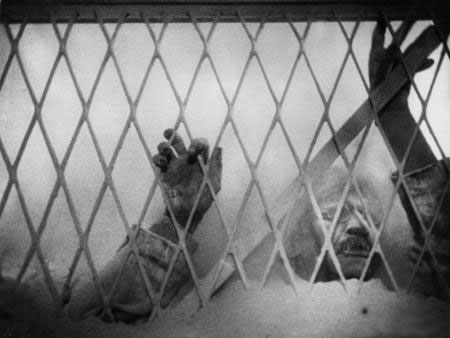
The Life Aquatic with Steve Zissou (2004)

Today’s cinema adventure: The Life Aquatic with Steve Zissou, Wes Anderson’s 2004 feature about a legendary oceanographer and his misadventurous quest for the giant “jaguar shark” that ate his partner.  Featuring a full array of Anderson’s trademark elements- and a cast which includes several members of his usual company of actors- it met with a mixed and bewildered response from critics, which probably played a large part in its failure at the box office, but received praise for the performance of its star, Bill Murray, and managed to earn a number of award nominations despite the lukewarm reception.  Though Anderson’s former writing partner, Owen Wilson, appears in a major role, this film marked the director’s first screenplay collaboration with fellow indie-filmmaker Noah Baumbach, a pairing which would later continue with the much more successful animated feature, Fantastic Mr. Fox.

Drawing its obvious inspiration from the real-life career of famed marine adventurer and inventor Jacques Cousteau, the plot concerns itself with the personal and professional tribulations of the title character as he embarks upon a mission to exact revenge on the possibly non-existent fish that killed his long-time colleague.  His long career, once marked by the popularity and success of the documentary films he produced of his exploits, has fallen into decline, while his personal life is in similar disarray with the onset of a mid-life crisis and the collapse of his marriage.  When his expedition is joined by a young man who is possibly his son, rivalries are sparked among the crew and Zissou finds himself struggling with his own fear of emotional connection, as things become increasingly complicated by the presence of a pregnant reporter, an incursion of marauding pirates, and the interference of a rival oceanographer.  As Team Zissou journeys the seas in search of their elusive quarry, their leader must work out his personal issues as he scrambles to prevent the failure of the mission, which may be his last chance to save his faltering reputation.  True to Anderson’s form, the insular scenario provides a metaphoric framework for the emotional and psychological landscape of his characters, and as they negotiate the conflicts and obstacles of the plot, they are really working to resolve their own dysfunctional relationships with the world and themselves; and, as always, he draws on collective pop cultural memory to provide a distinctively quirky backdrop for his deadpan psychodrama.

In this case, that backdrop is designed to specifically evoke the juvenile imagination of the late-mid-century generation he represents, a world resembling a sort of mash-up between The Undersea World of Jacques Cousteau and Jonny Quest; Zissou and his crew are not merely sea-going scientists and filmmakers, they serve as a sort of merry band of adventurers, facing intrigue and danger as they catalogue specimens, navigate unprotected waters, and weather the fickle opinions of the scientific community, film critics and their financial backers.  The sea life they encounter on their voyage is as fanciful and implausible as the names of the exotic places to which they travel, emphasizing even more the deliberate ridiculousness of the premise, and giving the whole film the air of a made-up adventure game played in the back yard after a Saturday morning cartoon marathon.  This pre-adolescent sensibility serves Anderson’s purpose in a two-fold way, suggesting thematic ideas that figure prominently in his tale.  It allows him to offer up a tongue-in-cheek exploration of the gap between the brave promise of the nuclear age and its failure to reach fruition in the reality of modern adult life.  Team Zissou’s adventurous voyage is a far cry from the optimistic visions portrayed in the treasured boyhood TV fantasies from which he has derived his inspiration; their highly-trained dolphin scouts are uncooperative and useless, they are saddled by their backers with a “bond company stooge,” and their space-age gadgetry has become broken-down equipment.  Though it’s a running source of humor throughout the movie, this pageant of ironic de-mystification carries a decided tone of sadness and disillusionment that undercuts the comical posturing and lends an unexpected poignancy to the proceedings; and appropriately so, for it informs the other major theme of the movie. The Life Aquatic is a film about boys who won’t- or can’t- grow up, a phenomenon which seems to center on issues of fatherhood; Zissou’s ambivalent feelings towards his own father figure are merely hinted at, but his failure to resolve them are evident in his self-indulgent life of adventure, in which he continually pursues the elusive, whether it be a mythic sea monster or an unattainable woman, while he proudly and flagrantly disregards authority- but simultaneously seeks approval from the establishment it represents.  His stunted emotional development is challenged by the arrival of another man-child, seeking his own validation from a father he never knew- a role Zissou is ill-prepared and unsuited for, but finds himself longing to fill.  Through their shared journey on and under the sea- with all its richly symbolic implications- they undergo a shared rite of passage to manhood, and in their belated transition to maturity they find the potential to transform their world of compromised hope and sold-out ideals back into the enlightened future promised by the bright dreams of the past.  Meanwhile, of course, the film’s few women wait, not always patiently, while the boys play at their adventure, hoping that the consequences of the game are not too dire, serving as mothers or lovers, or more accurately, both.

In presenting his male-centric delayed-coming-of-age tale, director Anderson utilizes all his now-familiar tricks of the trade: his meticulously tidy shot composition, his primary color palette (with an emphasis, this time, on yellow and blue), his visual influences drawn from a retro-hip nostalgic sensibility, his unapologetic use of obvious symbolism drawn from his own personal mythology, and, of course, his heavy use of vintage pop and folk music- here given a new twist by the inclusion of several Brazilian acoustic renditions of classic David Bowie tunes, most of them performed live onscreen by cast member Seu Jorge, adding to the film’s oddball blend of the exotic and the familiar.  Another Anderson trademark, his affinity for montage and whimsical graphic illustration for setting up key points, is here given a particularly spectacular expression through the use of a life-sized cross-section set to represent Zissou’s boat (named the Belafonte in yet another nod to Cousteau, whose own ship was famously called Calypso); this enormous visual aid allows the director to indulge his obsession for the methodical establishment of his characters’ world and the arrangement of their thematic place in the story.  For those scenes which take place off the boat, he chooses a variety of Mediterranean locations (beautifully captured by cinematographer Robert Yeoman) that evoke the flavor of the classic French and Italian cinema that has helped to shape his personal filmic style, but which also create a visual impression of old-time glamour and sophistication that- in many cases- has grown weathered and gone to seed.

Anderson’s ensemble, for the most part, is made up of the actors he had in mind when he and Baumbach wrote the screenplay, a fortunate- and uncommon- occurrence which bears testimony to the director’s popularity with his cast and crew.  Most important, of course, is the central presence of the aforementioned Murray, whose dry demeanor embodies and defines the movie’s overall tone; always a surprisingly rich and subtle player, he uses his familiar screen persona to portray Zissou as a man who is good-natured, well-intentioned, and generous of spirit- but also infuriatingly self-absorbed and remote.  These qualities are not static, however, and much of the joy that can be derived from The Life Aquatic comes from watching this perennially underappreciated actor navigate the complex changes undergone by the title character, embracing the demands of the moment with the refreshing gung-ho gusto that has always made him so likable, no matter how smarmy or pompous his role may require him to be.  It’s a good thing for the movie that he has the ability to remain endearing, for Steve Zissou could easily have come across as a fatuous, manipulative phony; thanks to Murray’s self-deprecatingly buffoonish personality, we can see the charisma that underlies the character’s less pleasant qualities and believe that he is a man who inspires the loyalty and admiration of his misfit crew.

As for the unlikely assortment of oddballs that comprise that crew- as well as the sundry other characters that populate The Life Aquatic– they are brought to varying degrees of life by a mix of familiar and not-so-familiar faces.  The most prominent is Wilson, who portrays the young newcomer who may or may not be Zissou’s son; with his earnest, gee-whiz manner and his genteel southern drawl, he provides both a contrast and a foil for the more flamboyant Murray, and suggests a child-like naïveté that reinforces the movie’s boyish-fantasy theme- though at times he comes off as too good to be true, or worse, seems simple-minded rather than simple.  Anjelica Huston and Cate Blanchett, as Zissou’s estranged wife and the ambivalent journalist, respectively, are effective in their roles but are ultimately a bit wasted in the long run; Jeff Goldblum brings his usual oily eccentricity to the role of Zissou’s shamelessly self-congratulatory rival, Michael Gambon offers well-mannered class as a mask for the hidden shadiness of Zissou’s producer, and Bud Cort (of Harold and Maude, a film that clearly ranks high in the Wes Anderson pantheon of influences) gives a disarmingly human turn as the “bond company stooge.”  As for Zissou’s crew members and interns, most of them are established as distinct “types” to flesh out the background, but unfortunately most of them remain there throughout the film without making much of an individual impression; the exceptions are the previously-mentioned Jorge, whose musical interludes are a frequent (and welcome) distraction, and Willem Dafoe, who plays Klaus, the German first mate whose petulant jealousy is aroused by the favoritism his beloved captain bestows on interloper Wilson.  His emotionalism stands out from the rest of the crew, who seem nonplused and disaffected by even the most dramatic developments, but occasionally the performance feels a bit gimmicky, as if the actor were essaying a role in a comedy sketch instead of a major character in a serious feature film.  This, in fact, sums up the most problematic element of The Life Aquatic; like all of Anderson’s work, many of the film’s situational conceits are pointedly absurd, and much of the dialogue is self-consciously glib, underplayed with a heightened detachment that gives the whole piece a somewhat artificial feel.  Most of the time, it’s a technique that works, but there are times in the film when it gives the impression we are being put-on, creating a disingenuous air that threatens to undermine the sincerity of Anderson’s ultimate message.  However, it is not the fault of Dafoe, or any of the other talented players, all of whom deliver on-the-money performances that are true to the style, that it sometimes feels like we are watching an elaborate and extended skit; rather, it is a sense that Anderson, in this particular outing, may have laid it on just a little too thick.

That said, however, I should be quick to point out that The Life Aquatic with Steve Zissou, though it may not be his best work, is a definitively Wes Anderson project, and as such, is full of more than enough delights to compensate for the occasional stylistic miscalculation.  Indeed, it has become apparent over his relatively short career that this young filmmaker is a true auteur, a visionary director with an distinct and powerful style which can, perhaps, be easily imitated or parodied but never quite duplicated; his growing body of work exhibits a rare wealth of imagination, coupled with a desire to explore his own foibles onscreen- foibles he happens to share with most of his generation, and that find a unique form of expression through his cinematic voice.  Coming at the mid-point of his career so far, and on the heels of his much-lauded The Royal Tennenbaums, The Life Aquatic with Steve Zissou perhaps represents a crystallization of his milieu, a vehicle with which he defined his personal style in the most assertive form to date.  If it sometimes seems a little too much, maybe that’s appropriate; after all, Anderson’s films are not meant to be realism- they portray a world of archetypal dream mythology, re-invented with a hipster-ish vocabulary, perhaps, but no less profound for the twist.  No matter that it sometimes feels like play-acting; indeed, in a film about boys who would rather go adventuring than grow up, that might even be the point.

http://www.imdb.com/title/tt0362270/

The Dark Knight Rises (2012)

Today’s cinema adventure: The Dark Knight Rises, the final installment of Christopher Nolan’s Batman trilogy, which once again uses a realistic and politically charged approach in bringing the DC Comics hero to life, and puts him into a decisive battle which will determine the very fate of Gotham City.  Continuing in the dark and violent vein that characterized The Dark Knight, Nolan creates an apocalyptic finale for his exploration of the Batman universe, one designed to provoke and challenge even as it entertains; in the process he continues to develop the characters and relationships introduced in the previous chapters, as well as offering up new twists on other familiar figures making their appearances here for the first time.

In this new chapter (with the screenplay written again by Nolan and his brother, Jonathan, based on a story developed by Batman Begins co-writer David S. Goyer), eight years have passed since the “murder” of D.A. Harvey Dent, whose supposed martyrdom in the fight against crime (a fabrication created to cover up the ignoble circumstances of his death) has resulted in legislation that has all but eliminated the criminal underworld of Gotham City.  During the intervening years, billionaire Bruce Wayne has become a mysterious recluse and his financial empire has fallen into disarray, while his alter-ego, Batman, has disappeared, having become a wanted fugitive after taking the blame for Dent’s death.  The city has grown soft and complacent, and economic imbalance has led to a new kind of cynicism in its population; but its greatest threat is building beneath its streets, as Bane, a powerful urban warlord with a mysterious past and a cataclysmic agenda, prepares to enact a master plan designed to plunge it into hellish torment as a prelude to its final annihilation.  Drawn from his seclusion, Wayne must resurrect his Batman persona in order to combat the new danger; but, like the city he protects, his long stagnation has weakened him and created new conflicts within, leaving him vulnerable to defeat by this titanic enemy.  In order to triumph, he must not only regain his former strength and his faith in himself, he must also place his trust in allies- some old and reliable, some new and untested- and be prepared to face the ultimate sacrifice.

Picking up the thematic threads left hanging at the end of The Dark Knight, the Nolans show us that the uneasy compromise of image over truth has provided a temporary victory in the battle against chaos- but the consequences of the choice have taken their toll on our champions of justice, and the complacency of peace has led to its own form of disorder.  A widening gap between wealth and poverty breeds anger among the citizens, while the prosperous civic authorities seem too interested in self-congratulation and self-promotion to pay attention to the signs of danger approaching from without and within; but nevertheless, despite this uncomfortably topical political situation, when disaster strikes it is the result of a long-forgotten threat which has been festering unnoticed all along.  Bane and his plot represent the shadows of the past, deferred but not defeated, a pattern of destruction that has risen repeatedly throughout history; Gotham’s blissfully false sense of security and its unheeded civil unrest have merely provided a smokescreen for the incursion.  The only chance for averting the impending doom lies in facing the truth, taking responsibility, and working together for a common good which outweighs all considerations of ideology or principle.  Contrary to the commentary of some who have seen The Dark Knight Rises as a conservative polemic against the “Occupy” movement (due to the fact that Bane disguises his takeover of Gotham and subsequent reign of terror as a “people’s revolution”), the film in fact hinges, like its predecessor, on the idea that blind pursuit of self-interest is the real root of the problem, and that it is only through a desire to help each other that we can reclaim the power to conquer the enemies that threaten all of us together; the arrogance of the wealthy and the anger of the poor are both used by Bane as the instruments of his rise to dominion, and his defeat can only be brought about by the protagonists’ willingness to sacrifice everything they hold dear for the sake of others.  It’s also worth taking note of another factor which contributes significantly to the threat to Gotham’s future- the seeking of revenge for old wrongs, and worse yet, revenge against an entire population for the actions of a single man.  This is a powerful reminder of a principle very much at work in the world today, and one which has perpetuated the cycle of bloodshed from the most ancient of times.  Further than that, the film suggests through the telling parallels it draws that by ignoring the lessons of the past we are doomed to re-enact a historical cycle that has brought down one civilization after another; in other words, if we don’t learn from history, we can only become history.  To paraphrase an echo from the film which began the trilogy, we fall in order to learn how to get back up; but once we are on our feet again, we must always remember how we fell in the first place- after all, as more than one important character realizes before the end of The Dark Knight Rises, a fresh start is no good at all if you’re not willing to change the way you do things.

Once more, in writing about Nolan’s Batman cycle, I find myself reveling in the complexities of its themes and making new realizations as I ponder how to express them here.  In the end, however, these films- each one of them, in their own distinctive way- speak for themselves.  With his final chapter, this gifted director has once again created a movie which stands firmly on its own merits, building an epic structure on its own individual themes, while maintaining and bringing to fruition the elements of the entire trilogy.  He does it in his characteristically detailed style, full of arresting visuals, fluid camera work, spectacular action sequences, and intimate moments of unexpected emotional power.  He gives full deference to the importance of character while simultaneously driving the complex plot at full speed, juggles themes within themes while devoting every moment of screen time to the progression of the story, and manages a sweeping social and political allegory in the midst of an explosive action fantasy.  There may be those who quibble about his motives, or who take exception to his re-interpretation of the iconic characters and conceits of the Batman premise, but such concerns are, quite frankly, moot in the scope of what he has accomplished here.  The Dark Knight Rises is the final proof, if more were needed, that Christopher Nolan has done what no other director has done before him: transcended the “comic book” genre to create an intelligent, mature and wholly sophisticated series of films that is worthy to stand with the great socially significant films of our time- more worthy, in fact, than most of the self-consciously highbrow self-styled “art” films that Hollywood tries to pass off around awards season.  For this (though he is not likely to win any of those awards himself- the stigma against this kind of fantasy content still seems too strong for that), he deserves all the accolades he has received so far, as well as the satisfaction of his phenomenal box office success.

Part of Nolan’s success with all of these films, of course, lies in the work of the people he has chosen to work with him, and the names in the credits that roll at the end of this one show more or less the same list of usual suspects.  Once again, the design team is headed by Nathan Crowley (this time co-credited with Kevin Kavanaugh as production designers), and once again they have provided us with new and exciting gadgets to go with the old favorites, as well as giving Gotham yet another new look- it’s still a spectacular city, but somehow not so new and shiny, a little worn down and lived-in, and with a dirtier, more East-Coast-urban feel to it.  The locations, as always, have something to do with this, with recognizable landmarks from New York, Pittsburgh, and Los Angeles underlining the sense that this is truly meant to be a microcosmic world representing an entire culture; but the look of its skyline, clearly created with some impressive digital cutting-and-pasting, conveys the feeling of a place with a soul all its own.  Wally Pfister’s cinematography continues with the gritty-but-slick style of The Dark Knight while also echoing the sepia-infused tone of Batman Begins, a highly appropriate approach for a film that draws its life from both; he complements the worn-down look of the city with a style that evokes bleakness, particularly in the visually striking scenes of Gotham in winter which come late in the film.  Hans Zimmer, working solo this time, gives us another driving score, incorporating more vocal instrumentation than usual but still, for the most part, focusing on mood and subliminal effect than overtly recognizable melodic sounds.  In short, The Dark Knight Rises gives us more of the same outstanding, exemplary work that made the first two entries in this trilogy so effective.

The same holds true of its cast, comprised again of heavy-hitters; most of them are, of course, returnees to already-established roles, and without exception they live up to their previous work, bringing new flavors to their continued development of these familiar characters and closure to the arcs they began in the first film.  Christian Bale once again proves what a brilliant actor he is with his portrayal of Bruce Wayne; he gives us a new vision of this billionaire vigilante, grown physically and psychologically dissolute through his self-imposed isolation, but seemingly marked more by a sense of disorientation than by underlying bitterness over the events that have led to it.  He also gives his character, which has always fitted him like a tailor-made glove, a deeply personal feeling of emotional connection, building on the previous revelations of his psyche to create a complete picture of this man and the needs that drive him- showing us, ultimately, the good heart that lies beneath the darkness of his sometimes-morally-questionable actions.  We have never questioned it, of course, but he has- and his final evolution into a complete hero, with a clarity of purpose and a full understanding of his motivations, shines through in a way that makes him both admirable and infinitely likable.  It’s the first time I can honestly say I loved an onscreen “super” hero because of who he showed me he was and not because he was, well, a hero.  Michael Caine, as Alfred, has been quietly superb all along, lending his calm, assured dignity to the proceedings and serving as the key grounding influence for Bale’s Batman- but in this entry, he gets the chance to remind us all of why he has been one of the hardest-working actors in the business for fifty years.  His scenes are fewer, this time around, but they stick with you, and the dimension he has given this usually-perfunctory character pays off with some key moments that give the entire series its deepest emotional resonance, proving once more that it is the depth and honesty underlying these films that have elevated them to the level of higher art.  Gary Oldman shines once more as now-Commissioner Gordon, wearied by the chafing of his conscience over his part in the Dent cover-up, and bored by eight years of peacetime- but dedicated as always to his mission to protect Gotham and revived by the chance to jump into action once more.  Morgan Freeman’s Lucius Fox is also wearier, but with characteristically subdued optimism he gives us a refreshing energy that reminds us it is possible to gracefully endure the changing of fortune without losing one’s belief in the future.  There are a few other returning faces, but many of them are likely to be surprises so I won’t go into them here; suffice it to say that they, along with the rest of the cast, provide uniformly superb contributions.

As for the new blood, obviously there are a few that deserve mention.  Topping that list is Anne Hathaway, portraying Selina Kyle, an audacious cat burgler whose gear and manner make it clear that she represents another iconic Batman personality- though the name “Catwoman” is never used.  She nails the character, with just the right blend of saucy seductiveness and dangerous unpredictability, matching Bale’s Bruce Wayne in a way that no previous female character has done- a significant point, and one which highlights the importance of her key role in the film, as well as the timing of her appearance in his life.  It would be improper to give anything away, but it’s safe to say that she- and Nolan- bring a number of surprises to the table in their re-interpretation of this feisty, feline female.  Tom Hardy, the English heartthrob who gained 30 lbs. to portray the hulking Bane, provides an awe-inspiring physical presence and clearly conveys the disarming intelligence of his character- the trilogy’s closest thing to a “super-villain.”  He manages to give the character depth and even a degree of sympathy with his performance- not just through his voice, but in his physicality and, most importantly, with his eyes, which are left visible by the cruelly sadomasochistic mask he wears in all but one key scene of the film.  Marion Cotillard brings an elegant nobility to the proceedings as Miranda Tate, a wealthy board member of Wayne Enterprises whose dedication to an environmentally-friendly project plays an important role in the developments of the plot, and leads to a relationship with Wayne that becomes closer than he expects.  Finally, Joseph Gordon-Levitt portrays John Blake, an earnest young policeman whose personal belief in Batman leads him to deduce Wayne’s true identity and helps provide the impetus for him to return to the fight against evil; it’s a character that could very easily be too-good-to-be-true, but thanks to Gordon-Levitt he is more than believable, a welcome addition to the collection of loosely-affiliated heroes that aid Batman in his quest for law and order.  A number of other actors make their first- and, presumably, last- appearance in Nolan’s vision of the Batman legend, including Matthew Modine as Gordon’s ambivalent second-in-command, and Willam Devane as the President of the United States; as with the old-timers, the new cast does a universally stellar job.

The Dark Knight Rises, though already one of the most successful movies of all time, has generated a great deal of controversy over its supposed political leanings, one way or the other, and for a violent tone which has sadly been thrown into stark relief by tragic real-life events.  There is no denying the important influence of movies over our real-world culture, and unquestionably, an artist has a responsibility to consider this in deciding the nature of the content they wish to present.  It must be remembered, however, that Nolan’s film is, first and foremost, an action/adventure-fantasy.  Though it may be laden with recognizably current political and social issues, and though it explores questions of morality and social responsibility, these things are ultimately merely the background for a story that depicts a realistic, contemporary world- a tale in which the ongoing conflicts of society are exploited by an outside evil who is an enemy to all sides.  Likewise, by its very nature, it’s a movie filled with the kind of disturbing images of mayhem and tragedy that have been blamed by many for the casual attitude towards violence in our collective contemporary psyche; but Batman is a modern myth, and like all myth it deals in symbolism drawn from everyday experience in order to convey its true purpose.  For all its scenes of brutal combat, exploding football stadiums, and collapsing bridges, The Dark Knight Rises carries a positive message that emphasizes the importance of compassion and the value of human life; it’s a principle repeated throughout the movie, and the intense battle action is a metaphor for the difficulty of the struggle required to preserve these things.  Those who see only the overt content of this film, or indeed of any film, are likely to get the opposite meaning of the one intended; and whichever side they represent in the ongoing debate, they, like the citizens of Gotham who ignore the real menace while they seek to place blame for their troubles and justify it with sweeping generalizations, would do well to look deeper than the surface- as would those who glorify the violence they see there without recognizing the consequences it is shown to breed.  After all, cinema, like all art, holds up a mirror to society, and what we see in it depends on how closely we are willing to look at ourselves.  In the world of The Dark Knight Rises, the ability to candidly face the reality of our problems is our only hope for saving our way of life from destruction; I strongly suspect that this is also a reflection of real life, and that unless we heed the warning that is implicit in Nolan’s film, we may find that out all too soon.

http://www.imdb.com/title/tt1345836/

The Dark Knight (2008)

Today’s cinema adventure: The Dark Knight, Christopher Nolan’s massively successful 2008 sequel to his earlier Batman Begins, tracking the continuing progress of DC Comics’ iconic hero in his quest to free Gotham City from the grip of rampant crime and corruption and pitting him against a new breed of criminal- the costumed madman known only as the Joker.  Continuing his re-imagination of the comic-book premise as a crime drama grounded in realism, the director takes it even further this time around, creating a gritty, violent vision of urban warfare in which the line between right and wrong becomes blurred in a larger struggle between order and chaos.  The formula obviously struck a nerve; the film broke box office records and earned the kind of massive critical accolades usually reserved for more “serious” fare.

Working from a story developed by Batman Begins co-writer David S. Goyer, Nolan this time fashions a screenplay with his brother, Jonathan, in which billionaire Bruce Wayne, working in unofficial partnership with Police Lt. Gordon, has made headway in the campaign to weaken the control of organized crime over Gotham City.  With the rise of the city’s idealistic new D.A., Harvey Dent, he sees a chance to hand over his role as the city’s protector and at last embrace the comforts of a normal life; but a new threat arises in the form of the Joker, a disfigured psychopath in clownish makeup, who begins an escalating campaign of terror.  To combat this new adversary, Wayne and Gordon join forces with Dent, and the trio works in secret alliance to put a stop to his deadly game before Gotham deteriorates into a state of total anarchy.  The Nolans use their plot as a means to explore a wide variety of inter-connected themes, making the scope of The Dark Knight much wider and its moral landscape more ambiguous than its predecessor’s, and as a result they transform what is essentially a fantasy adventure into a complex parable about the ethical dilemmas of preserving order in the modern world.  Throughout the film, the intricately plotted storyline is threaded with dialogue and situations that clearly evoke the complicated morality of post-9/11 society; the age-old cops-and-robbers scenario has been co-opted by a battle between ideologies, in which those who would protect society come dangerously close to becoming an even greater threat to it themselves.  Indeed, the antagonist’s master plan is to subvert the established order by turning it against itself, exploiting the contradictions in its own rules and ethics to create an environment of fear and chaos in which he can, in the words of one character, “watch the world burn.”  In the course of the action, we are given a remarkably detailed portrait of Gotham City- which serves as a microcosm of American civilization- which includes a look at its politicians, its media figures, its businessmen, its criminals, its public servants, and its average citizens; the effect of the city’s peril on its population is presented as a mirror to our own society, and the drama enacted by the key figures of the story reflects our efforts to reconcile the moral conflicts inherent in dealing with our own terrorized world.  As the story moves relentlessly towards its climax, it raises questions about the implications of working outside the law for a greater good, the manipulation of public perception for political purposes, the ambiguous role of invasive technology in preserving communal security, the potential corruptibility of human nature, and the danger of becoming your enemy when you fight against him on his own terms.  Most significantly, it examines the role of choice in the struggle to define humanity; whether our actions are dictated by chance and motivated by self-interest, or whether we are ultimately responsible for the decisions we make, for good or for ill.

If it sounds like heavy, existential themes dominate The Dark Knight, that’s because they do; but that doesn’t mean it’s a film that favors philosophical debate over a good story.  Rather, the story is the debate.  Nolan uses his epic themes to propel the action, leading us through the conditional parameters until the core issue is revealed at the heart of his plot.  Batman and his allies, the self-sacrificing champions of order and justice, are pitted against the Joker, a self-serving personification of chaos and amorality.  At every step of the game, the Joker challenges his opponents’ dedication and their beliefs, forcing them into no-win situations in which they have no choice but to act against their own principles; convinced of their hypocrisy and their fallibility, and confident that he can- and will- break their spirit, he manipulates the scenario not only to prove his point, but to inflict torment for his own gratification.  It is this, perhaps, that Nolan suggests as the ultimate definition of evil- the pure selfishness that satisfies its own desires at the expense of others- and it is this basic quality that the Joker wishes to expose as the true nature of mankind.  Whether or not he is right is certainly not resolved by the end of the movie- after all, there is still another chapter to come- but Nolan’s skill at cinematic storytelling ensures that the arguments on both sides are illustrated with a sense of urgency and an emphasis on action.

In fact, the action is virtually non-stop.  Even when The Dark Knight concerns itself with quiet, more intimate matters, Nolan’s directorial choices give it a driving, restless feel- continuing the sense of momentum that he initiated in Batman Begins.  His camera is almost never still, with slow zooms and pans in almost every shot, and he pieces things together with quick edits, giving us just enough of an image to establish what we’re seeing and then sharply moving on.  He crams so much into the film this way that there are whole subplots which can go unnoticed without repeat viewings, and it allows him to provide an expansive view of the life of Gotham City into his 2 1/2 hour running time.  He confidently moves his tale through its escalating developments with a speed that keeps the viewer on edge, establishing key points without belaboring them, relying on the completeness of his screenplay- and the intelligence of his audience- to ensure clarity.  Likewise, he depends on the writing and the skill of his gifted actors to convey the important nuances of his characters that make the film so compelling, though he certainly takes the time to explore the dynamics of their relationships onscreen, rightly understanding the importance of this aspect in the overall scope of his vision.

Of course, however, as in any movie about a titanic struggle of heroes and villains, the primary focus is on thrilling action, and Nolan certainly delivers this in spades.  Continuing in the vein of Batman Begins, he chooses to construct his movie with a minimum of computer trickery, instead utilizing live action stunt work filmed in actual locations or on elaborate soundstage sets.  He fills his film with gripping set pieces, from the opening bank heist sequence- which rivals anything in the best of Hollywood’s caper films- to the climactic confused free-for-all in which Batman must fight a SWAT team to protect the Joker’s hapless hostages who have been disguised as his henchmen; in between are a breathtaking depiction of a nighttime kidnapping from Hong Kong’s tallest building and the movie’s action centerpiece- an extended urban roadway chase in which Batman rides his souped-up cycle to defend a police convoy from a semi-truck containing the heavily-armed Joker and his men.  Adding to the excitement is the fact that Nolan chose to shoot these sequences- as well as some of the smaller-scale scenes- in an IMAX format, although the effect of this is somewhat diminished by viewing on a small screen.

In service of his visual spectacle, Nolan’s production team provides an impressive display of their talents; most significantly, perhaps, cinematographer Wally Pfister, who gives the film a style that is simultaneously slick and grimy, and appropriately creates a significantly darker look than that of the earlier film.  The production designers, headed once more by Nathan Crowley, have revamped the technological aspects of Batman’s world- a redesigned, lightweight suit that makes the hero more agile, as well as the dazzlingly well-realized, aforementioned “batpod” that he rides into battle with his demented adversary, stand out as distinct advancements over the gadgetry in the previous chapter- and Gotham’s cityscape has been completely overhauled.  Gone is the deco-flavored mix of nostalgic and futuristic elements that marked the city of Batman Begins; here we find an utterly contemporary metropolis of steel, plastic and glass, a world-class capitol of industry and commerce with shining citadels and utilitarian infrastructure that is more directly representative of the typical modern urban environment of America.  Its familiarity adds another layer to the realism that is Nolan’s goal, and with this backdrop against which to play out his epic drama, the more implausible elements of the comic-book scenario are somehow more believable.  The score, once again the product of collaboration between Hans Zimmer and James Newton Howard, echoes the mood-oriented style of Batman Begins, but with even more of an emphasis on driving the pace with an undercurrent of rippling and restless rhythms, suggesting the chaos that threatens to envelop Gotham City.

Nolan’s modern re-invention of the Batman mythology, however, is most clearly and successfully exemplified by the one element of The Dark Knight that has- justifiably- received the most attention: the performance of Heath Ledger as the Joker.  The young actor delivers a stunning portrait of this well-known character, accomplishing the seemingly impossible feat of giving us something completely unexpected and unlike any interpretation we have seen before.  His psychotic clown is a million miles away from the fruity camp of Cesar Romero’s goofy TV persona, and totally unlike Jack Nicholson’s self-parodying turn in Tim Burton’s Batman film of two decades before.  Ledger makes the character a frightening, dangerous madman, clearly deranged but chillingly sharp and lucid; we are given no background for him, aside from the conflicting stories he tells himself within the film, but we can plainly see that whatever traumatic occurrence has led to the development of his deeply disturbed personality, it has left him utterly and completely devoid of humanity.  His makes it plain that his Joker lives for the thrill of the moment, taking great pleasure in pain- including his own, greeting each blow from his caped opponent with a rush of giddy adrenaline-laced delight.  His voice, his physicality, the coldness of his eyes, all combine to create an unforgettable portrait of menace, and for the first time in the history of comic-based films, he has given us an utterly believable super-villain.  The one completely human moment he exhibits comes late in the film, a reaction of genuine surprise over an unforeseen development which throws a wrench in the works of his master plan- it’s a subtle but dazzling moment which instantly casts into stark relief the sheer brilliance of everything we have seen from him before that.  Ledger’s tragic death before the film’s release may have contributed to the publicity surrounding his work here, but had he lived the performance would still have stood as a triumph, and was fully deserving of the multitude of awards and accolades it received posthumously for him.

This is not to take credit away from any of his co-stars.  Every member of Nolan’s cast gives a stellar effort, starting with Christian Bale, whose Batman is leaner and more haggard than in his previous appearance in the role, reflecting the maturity and the effects of the stress that have shaped him in the intervening years since Batman Begins.  He gives the character a wearier edge, exuding more confidence but also more contempt for his criminal prey; even his Bruce Wayne seems a little worn down from all the partying with supermodels and prima ballerinas his public image requires him to do.  Underneath it all, though, he clearly shows us the power of his dedication to the job he has appointed himself, and his refusal to yield to the Joker’s efforts to bring him down to a baser level is utterly convincing- particularly in light of the self-doubt he shows us in response to his costly failures- giving us the glimmer of hope we can cling to through the film’s dark finale.  Returning as his trusted servant and co-conspirator, Alfred, is the magnificent Michael Caine, who continues to provide a grounding center of wisdom and genuine class, and whose chemistry with Bale offers the film’s strongest example of deep, close human connection.  Maggie Gyllenhall replaces the absent Katie Holmes as Rachel, Bruce’s childhood friend and would-be sweetheart for whom he still carries a torch, and though it is somewhat jarring to see a different actress in the role, she provides a fine performance, making the character a strong, independent, and empowered woman, an equal partner in the battle against crime, rather than just another helpless female in need of rescue.  Gary Oldman and Morgan Freeman continue to expand on their own brands of quiet heroism as Lt. Gordon and Lucius Fox, respectively; and, though his work was eclipsed by Ledger’s dazzling performance, Aaron Eckhart is equally superb, in his way, as Dent- who is both the film’s secondary hero and secondary villain, transforming from the dedicated “White Knight” whose unflinching integrity gives the city hope to the vengeful and deformed “Two-Face,” driven to madness by personal loss- and providing the perfect symbol for corrupt politics with his half-handsome, half-grotesque features.

The Dark Knight has been subject to much discussion and debate regarding its political messages; some have viewed it as an endorsement of hawkish, right-wing tactics in the war against terrorism, while some have declared it as an indictment of the dangers inherent in using such methods.  Like most art- certainly most good art- it is ultimately a blank slate, a mirror in which the viewer sees their own perspectives reflected back; it seems to me that Nolan presents his subject matter without political agenda, exploring the thematic issues that arise out of the situation, but making no judgments, preferring to allow the viewer to draw their own conclusions.  What interests Nolan much more, perhaps, is the issue of basic human nature; and though his vision has the dark and cynical trappings of the noir style that has been a clear influence on his work, and though many have seen the film as a story of evil overwhelming good, at its heart is the message that, though some may waver or even fall, there is a desire inside us to do the right thing; as long as there are men who hold onto the standard of decency and set an example- even an illusory one- there is hope for us yet to conquer the forces of darkness that threaten our world, both from within and without.  That is an idea the filmmaker will explore further in the third (and supposedly final) installment of his Batman cycle; but, at least as this one rolls to an end, we can still believe in a champion that represents the best in us all, and as far as I’m concerned, that’s a pretty optimistic note for such a “dark” movie to end on.

http://www.imdb.com/title/tt0468569/

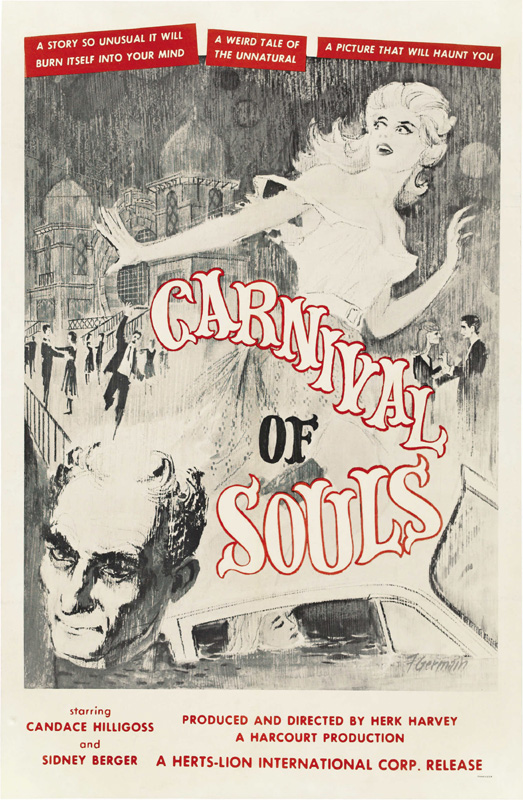
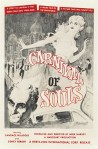
Carnival of Souls (1962)

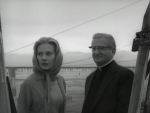
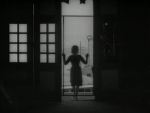
Today’s cinema adventure: Carnival of Souls, a 1962 low-budget horror film that was more or less ignored on its release, but which has gone on to become a highly influential cult classic.  Directed by Herk Harvey, a prolific lifelong creator of educational and industrial films who never made another theatrical feature, it was shot on location in Lawrence, Kansas and Salt Lake City, Utah, using a 16mm camera and reportedly with a budget of around $30,000- a cost which today would probably not even cover the price of the car that goes off a bridge in the first reel.  Needless to say, it’s a film that relies solely on atmosphere and cinematic storytelling to provide its scares, and the fact that it does so very well is no doubt responsible for its importance in the history of the modern horror genre.

Despite its humble origins, the film’s screenplay, written by John Clifford from Harvey’s original story, is surprisingly sophisticated in its layering of thematic elements and even in the believability of its dialogue- considering the nature of its subject matter, that is.  The plot concerns Mary Henry, a young woman who works as church organist though she has no particular interest in religious sentiment.  A week before she is to begin employment in a new town, she becomes the only survivor of a car accident in which two of her friends are drowned.  Determined to go on with her life, she makes the trip to start her job as planned, but she soon finds herself being stalked by a mysterious specter- who cannot be seen by anyone else- and inexplicably drawn to an abandoned carnival pavilion on the shores of a local lake.  Her strangely cold and detached behavior, coupled with her increasing hysteria and delusional episodes, begin to alienate her new friends and associates, and she finds she must confront the mysteries that haunt her in order to escape them.  The story contains little action, per se; it mainly follows Mary as she attempts to start her new life.  Nevertheless, the tension builds steadily throughout, shrouded in a dreamlike surreality and accompanied by a tangible sense of foreboding.

Much of the film’s unsettling mood has to do with the locations.  Director Harvey supposedly got the idea for his movie while driving past the abandoned Saltair Pavilion on the Great Salt Lake in Utah.  Though most of the rest of the movie was shot in Lawrence, where he was based, he paid the Salt Lake City Chamber of Commerce $50 for one week of filming at the ruined location; it was a good investment, because the scenes in this eerie, decrepit monument to cheap thrills long past can stand with some of the creepiest images ever put on film.  It’s a marvelous symbolic element- a giant, decaying fun palace in the middle of a desolate wasteland, a haunted shell evoking the futility of the good times it once housed in the face of the eternal emptiness that surrounds it.  To put it another way, it’s an apt reminder that, in the midst of life, we are in death, making it a perfect metaphor for the uneasy thematic core of the film.

The majority of Carnival of Souls, however, takes place in the kind of quiet, small town setting that can so easily serve to conjure thoughts of malicious forces lurking beneath the mundane familiarity of its surface- particularly when captured in the stark black-and-white palette of Maurice Prather’s cheap-but-effective cinematography.  Sunlit parks or dark nighttime highways, a crowded nightclub or an empty church, a bus depot or a department store- no place feels quite right or completely safe.  Even before the car accident in the opening scene, the lonely country roads seem threatening, and from the moment Mary emerges, dripping, from the watery scene of the crash, we spend the rest of the film waiting for the drop of another proverbial shoe.

It would not be fair, though, to place all the credit for this oppressive creepiness on the happenstance of starkly-photographed scenery.  The film’s humble director was clearly a man with a vision, evidenced by the fact that he worked, without salary and with money he raised himself, to make Carnival of Souls in three weeks with a crew of five- including himself.  Though there is definitely a clunkiness in his cinematic style, this has more to do with the limitations of his budget than with his understanding of the craft or his talent; the abrupt edits and the sloppy continuity are at least partly the consequence of a tight shooting schedule and insufficient funds.  There is ample proof, throughout the film, of Harvey’s ability as a director; he frames his shots with an eye for arresting composition, and his instinct for pacing belies his lack of experience with narrative fiction.  There are numerous moments when his use of clever camera trickery parallels that of directors like Hitchcock- whose work he no doubt studied- and the overall sense of inexorable menace, though enhanced by the settings and the visual style, is ultimately achieved by his cinematic rhythm- leisurely takes punctuated by short, sharp shocks at just the right moment- and his choices of what to show us and when to show it.  To top it all off is his choice of musical accompaniment- an otherworldly organ score composed by Gene Moore, a natural extension of the heroine’s occupational duties which provides the perfect aura of fruity gothic gloom to the proceedings.

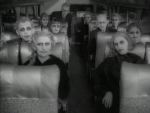
As for the actors, most of the roles are handled by local Lawrence “talent,” unprofessional actors acquainted with Harvey through his industrial work; admittedly, there are some embarrassing performances on display throughout the film, though Sidney Berger deserves a mention for his unexpectedly complex work as a loutish boarding-house neighbor who tries to woo the oddly disaffected heroine.  A nod must also go to director Harvey himself, who makes a personal appearance onscreen as the ghoulish figure who plagues Mary, sporting pale makeup and leering malevolently- which may sound easy, but requires a certain finesse to pull off effectively, which he certainly does.  Obviously, though, his movie hinges on the leading actress, and he shrewdly spent his casting budget there, hiring an unknown but highly-trained and experienced performer named Candace Hilligoss; strikingly beautiful and fully committed to her role, she carries the weight of the picture on her capable shoulders, convincingly playing a variety of far-fetched conceits and walking a thin line between ethereal detachment and frightened vulnerability.  It would be overstating the case to say that she gives a great performance, but it’s a good one- certainly much better than the vast majority of would-be starlet turns in this sort of sub-B-grade horror movie.

That, of course, is exactly what Carnival of Souls is, despite the considerable praise it may have garnered over the 50 years since its inauspicious debut.  It’s unquestionably the kind of lowbrow drive-in fodder that was churned out ad infinitum during its era- it’s just that Harvey’s enthusiasm and dedication make it several cuts above most of the others.  To be sure, there is a level of artistry here that is hard to define; it’s not quite accurate to call the director a talented amateur, and the film’s stylistic strength is not accidental- he definitely knew what he was doing.  Even so, the power of this strange little film may lie beyond the full scope of his intentions or abilities, and is perhaps rooted in the notion that lies at its heart, the one which ultimately provides its twist ending- predictable as it may be, in this day and age.  Beneath its bogey-man thrills, it conjures a profound despair, perhaps the result of touching on some deep, unnamable dread, leaving a disturbing feeling that lingers long past its final frames.  It is this quality, more than the diamond-in-the-rough technical prowess of its director, which has placed Carnival of Souls so highly in the esteem of modern horror enthusiasts and provided dark inspiration for later, greater filmmakers like George Romero, David Lynch, and Quentin Tarantino.

It probably goes without saying that by today’s standards, the fright factor of this film is very low; and by any standards, its production quality is ridiculously shoddy.  The average modern viewer will probably find it laughable, the kind of movie that has gained its popularity from falling into the so-bad-it’s-good category.  Certainly, a screening with a bunch of quick-witted friends would probably yield some pretty snarky zingers, and that’s a good enough reason to recommend it; but while you’re laughing, make sure you take a close enough look to admire the weird beauty that emanates from Carnival of Souls.  However jaded you may be, there is something there that demands attention and commands respect.

 http://www.imdb.com/title/tt0055830/

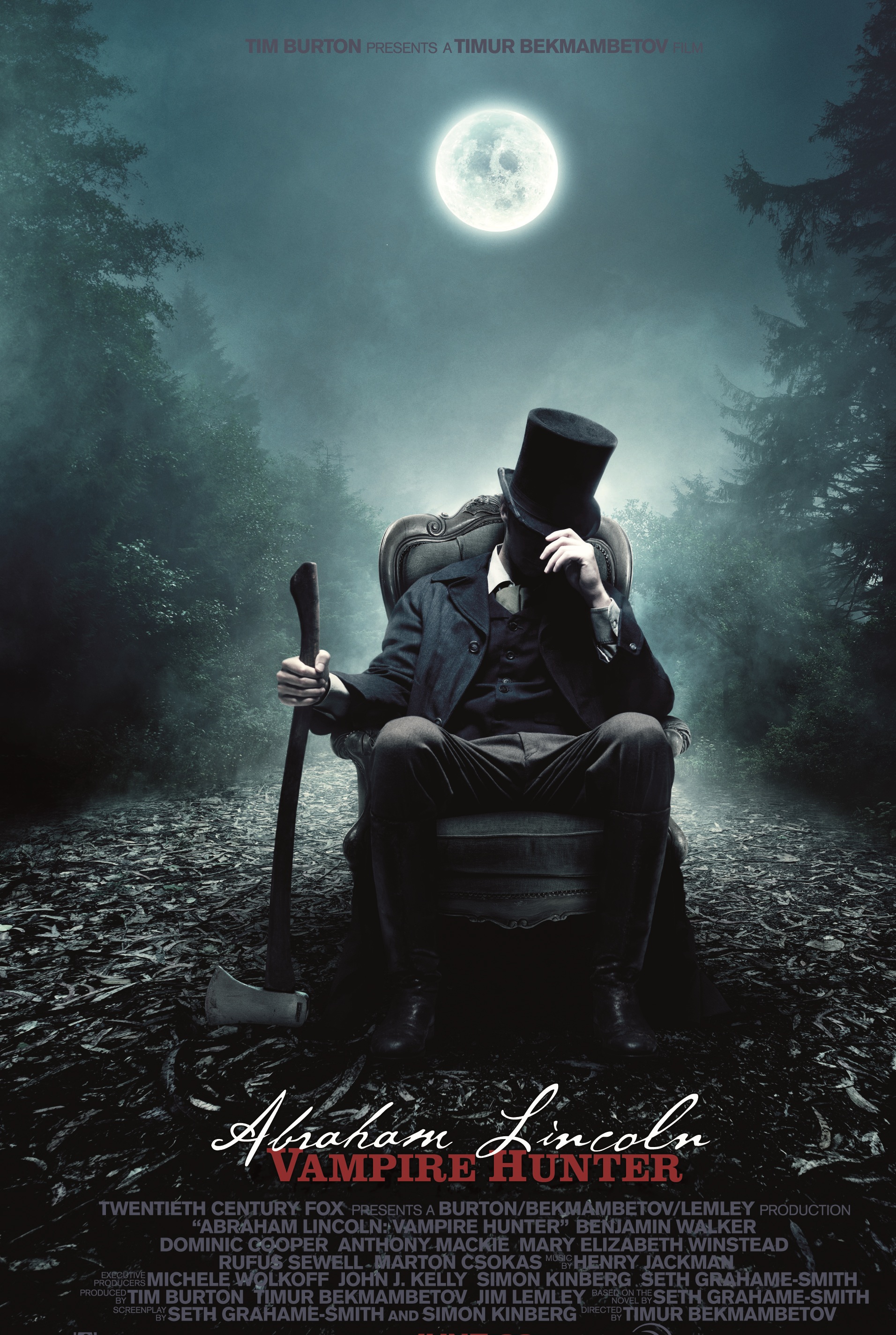
Abraham Lincoln: Vampire Hunter (2012)

Today’s cinema adventure: Abraham Lincoln: Vampire Hunter, the 2012 feature based on the bestselling historical fantasy/horror novel by Seth Grahame-Smith, casting the already-heroic 16th American president in the even more heroic role of a secret slayer of the undead.  Directed by Timur Bekmambetov and adapted by the novelist himself, it’s a movie that hinges on a bold juxtaposition of historical fact and supernatural adventure, with a flashy visual style and an emphasis on bloodshed and action.  The plot follows Lincoln from his childhood, when his mother is ostensibly poisoned by his father’s former employer; upon reaching manhood, he seeks to avenge her murder, only to discover that her killer is in fact an undead monster.  Narrowly escaping death himself, he is rescued by a mysterious stranger, who reveals to him the secret existence of vampires living in the midst of human society and offers to teach him the skills he needs to become a warrior in the ongoing battle against them.  He becomes a master hunter, and his discovery of an insidious connection between vampires and slavery fuels his parallel political career, culminating in his presidency and providing underlying motivation for the Civil War.

With such a blatantly ridiculous premise, one might expect a substantial amount of tongue-in-cheek self-mockery, coupled with a sense of goofy fun for its own sake.  These elements are definitely present, but Abraham Lincoln: Vampire Hunter takes a decidedly serious tone in its approach to this genre-mashing mixture of history and hokum; Lincoln’s secret calling is no parenthetical side job, but is integrally woven into the events that shape both his private and public lives, as well as into the fabric of some of our nation’s still-most-painful memories.  It would be unforgivably glib of the film’s creators to make these connections without investing an appropriate amount of weight in the proceedings; accordingly, Lincoln’s dedication to vampire-killing stems from deeply personal motivation, rooted in the monsters’ victimization of his family, and their thirst for blood is linked directly to the most contentious and shameful issue ever to face the United States.  Of course, tying these various personal and national tragedies to a narrative about inhuman, bloodsucking parasites may have rich metaphoric possibilities- which, unfortunately, remain largely unexplored beyond the obvious implications of the situation- but it doesn’t do much for fueling the kind of escapist melodrama promised by the audaciously wacky concept.

Most of the critical unkindness towards this film has revolved around its insistence on anchoring its bloodlust-fulfillment fantasy in a sense of earnest importance, as if its purpose were to present a legitimate portrait of Honest Abe and his far-sighted principles.  Indeed, the world of Abraham Lincoln: Vampire Hunter is a place where lofty ethical considerations seem moot, a given condition of the larger political order, perhaps, but out of place with the more immediate conflicts of our hero’s secret occupation.  The situation cries out for the kind of unapologetic amorality found in a down-and-dirty exploitation film, contrasting Lincoln’s public face as a wise and compassionate leader with his role as a one-man boundary between the forces of darkness and the unknowing society he is sworn to protect.  The very title of this movie suggests a no-nonsense, merciless killing machine, and that is not only what we expect to see, it’s what we want.  Instead, we are given an idealized version of the real man, and a slice of his personal drama thrown in to boot- for which, presumably, we could easily wait until next year’s highly anticipated Spielberg biopic.

All of these problematic reservations can be attributed to the screenplay, written by Grahame-Smith with an eye towards keeping the emotional stakes high enough to keep viewers connected to the characters in the midst of all the slaughter.  By giving the plot a sense of purposeful noblilty and including a substantial dose of Lincoln’s private life as a lover, friend, husband, and father, the author hoped, presumably, to avoid turning the whole affair into a garish cartoon.  The effort is commendable, as is the attempt to maintain at least a tenuous connection to historical accuracy (with a few notable exceptions), in the use of names and relationships, actual events and chronology, etc., even if the details are rearranged considerably.  However well-intentioned he may have been, and however well these factors may have worked in his novel, the writer may have miscalculated; though normally I am adamantly in favor of the thoughtful, character-driven approach to storytelling for the screen, in this case I believe the film as a whole would have benefited from a lighter, less self-consciously sincere touch- and more scenes of Mr. President wielding his silver-edged axe.  The very notion which drives the plot demands a film which doesn’t take itself too seriously, and thanks to its script, this one often does.

I have always, however, been an advocate of taking a movie on its own terms, and with that in mind, Abraham Lincoln: Vampire Hunter is by no means a failure.  Though the weighty trappings of pseudo-biographical drama make for some slow going from time to time, when the movie does release the giddy adolescent joyride at its core, it takes off like a silver cannonball.  Director Bekmambetov delivers the same kind of flashy, multi-speed, computer-assisted action that helped to make his previous film, Wanted, a hit, transporting us decisively into the realm of superhuman feats, where we can at last get a taste of the thrills inherent in the idea of our chief executive moonlighting as a bad-ass monster-killer.  There are a number of these electrifying set pieces scattered throughout the film- a chase across the backs of a stampeding herd of horses, a gruesome monsters’ ball in a decrepit plantation, a climactic fight on the rooftop of a moving train- all saturated with grisly, blood-spattered, and deliciously satisfying violence.  It is in these segments that the movie really comes to life, and, like a true showman, Bekmambetov always leaves us wanting more; though everything in between often feels like filler, the payoff we receive from this kind of exciting screen action is almost worth the patience it takes to get there.

Bekmambetov ‘s slick modern style brings a contemporary edge to the movie that contrasts sharply with its period setting- which is firmly established with authenticity in the clothes and the physical surroundings, and further complemented by the effect of using muted, faux-sepia tones in the cinematography (possibly the film’s finest asset, accomplished by the legendary Caleb Deschanel).  This color palette has the odd benefit of seeming both old-fashioned and yet somehow very high-tech, a double-edged description that could be used to sum up the overall production design (by François Auduoy); the look and feel of the film, heavily reliant on computer graphics, creates a heightened reality, reminiscent of the dramatic visual style of a comic book.  Though this stylized environment adds a layer of artificiality to the proceedings, it also reinforces the supernatural atmosphere necessary to sustain the film’s absurd conceit.

The actors are more than adequate for the task at hand, with Dominic Cooper and Rufus Sewell standing out in the showiest of the supporting roles- Lincoln’s mentor and the vampires’ supreme leader, respectively.  Obviously, though, it’s the title character who must shoulder the heaviest burden here, and young Benjamin Walker’s shoulders are broad enough to do it.  He does a fine job of walking the thin line between Lincoln the man, Lincoln the statesman and Lincoln the terminator, and, on top of that, is convincing playing the great man from youth to weathered middle age.  He even bears a resemblance to Lincoln, though he is considerably more handsome- a requisite Hollywood touch.

There is something about Abraham Lincoln: Vampire Hunter that draws me in.  Maybe I’m just a sucker for this kind of preposterous “what if?” speculation, or maybe I’m just a big kid at heart, but from the very moment I heard about this movie, I was excited to see it.  Though in the end it was not quite the kind of adrenaline-pumping silliness I was hoping for, I can’t say I was disappointed, either.  Sure, I would have liked a little more of the gory action that worked and a little less of the pedestrian costume drama that didn’t; but there is plenty in this movie to tickle my juvenile fancy and keep me interested throughout its running time.  Even if that weren’t the case, the final scene contains an amusing twist that left me fairly delighted as the end credits rolled- and if I can walk out of the theater with a smile on my face, I think that’s a good enough reason to recommend a film.  So consider it recommended, but with the following qualification: it’s a stupid movie, but perhaps not stupid enough.  If you can get past that, you’ll have a great time.

http://www.imdb.com/title/tt1611224/

Crash (1996)


Today’s cinema adventure: Crash, David Cronenberg’s highly controversial and disturbing feature about a group of car crash survivors and the obsessive sexual fetishism they develop around their experience. Based on the equally controversial novel by J.G. Ballard, it was banned from public screening in its country of origin (Canada) as well as in many other countries, and released in both an R- and NC-17-rated form in the U.S. Despite widespread protest and outrage over its combination of graphic sexual and violent content, it was widely acclaimed by critics for its bold depiction of an uncomfortable and unorthodox subject matter, as well as for the cinematic prowess of its director in bringing his twisted vision to the screen.

The plot, such as it is, focuses on James, a sexually adventurous film producer whose marriage to the beautiful Catherine is spiced up by the reports they bring back to each other of their mutual infidelities. After a traumatic automobile accident requiring a lengthy hospital rehabilitation, he becomes involved with a community of other survivors that has gathered around Vaughan, a charismatic and hyper-sexual figure who encourages- and participates in- the merging of their sexual impulses with their fixation on the crash experience; James draws Catherine into the circle to join him, and with the others they explore ever-riskier fantasies in the pursuit of their dark passions. Though there is a structural arc to the story, which involves Vaughan’s role as sexual mentor and the gradual transference of his obsessions to James and Catherine, the narrative takes a back seat, if you’ll pardon the expression, to Cronenberg’s perverse fantasia of sexual deviancy.

From the very first scene, in which we see Catherine pressing her exposed breasts against the fuselage of an airplane during a clandestine encounter in an airport hangar, Cronenberg sets up his motif, a juxtaposition of soft flesh and hard metal which strives to make the viewer’s experience as close as possible to a tactile one; as the film progresses, it moves through its brief interstitial scenes- ostensibly necessary for the advancement of the plot, but in actuality merely required for establishing the next sexual scenario- into one graphic encounter after another, each one pushing us further past our comfortable boundaries and deeper into an unfamiliar realm of extreme sexual fetishism. Taboos fall away one by one as we witness erotic acts between various combinations of genders, performed in private and in public, involving sexual and non-sexual body parts, and almost always in connection with cars. This saturation of sexual imagery is not gratuitous: Cronenberg’s aim is to turn us on, certainly; but by mingling blatant eroticism with the adrenaline rush of recklessly driven vehicles, the carnage of roadside disasters, and a heavy dose of the body horror he so frequently returns to in his films, he triggers our sexual response alongside our conflicting reactions of fear and repulsion- alerting us to the possible dark corners in our own libidos and making us paraphiles by association. It’s an effect that makes Crash a highly unique cinematic experience, a sexual horror film which completely removes the distancing elements between our shock and our arousal- the subject he shows us is the object of both.

Of course, this experiment in dysfunctional autoeroticism is not for the squeamish; even those comfortable with explicit sexual content may find themselves turning away from the accompanying depictions of twisted metal and disfigured body parts, and most especially the frequent merging of the two. Those who are able to brave it out, however, might find themselves in awe of the way Cronenberg uses his skill to manipulate their wiring, like some sort of mad psychosexual scientist, to elicit responses ordinarily deemed inappropriate in the face of such stimuli. At the very least, the film begets a grudging admiration for its director’s ability to exploit the basic similarity between the primal reactions to sex and horror, and to use it in a visceral exploration of themes usually handled in the realm of intellect- the role of social conditioning in defining “normal” sexuality, the aphrodisiac effects of dangerous or forbidden behavior, and the age-old psychological connection between sex and death.

In bringing Ballard’s novel to the screen, Cronenberg (who also wrote the screenplay) updates it from its original 1970s setting and transposes the action from London to Toronto, but the underlying feeling of participating in something you shouldn’t remains the same, as does the tantalizing use of the author’s last name for the leading character, though Ballard denied any autobiographical connections (which didn’t stop eyebrows being raised when he was seriously injured in a car accident shortly after the book’s publication). To add another coincidental wrinkle, the character shares his first name with the actor portraying him, James Spader. Cronenberg’s shrewd casting adds another layer to the motif of contrasting textures, with outwardly cool, aloof performers- Spader and Deborah Kara Unger (as his wife)- colliding with the hot, rough, seething energy of Elias Koteas as Vaughan. The sparks are palpable; Koteas exudes raw, musky sensuality in every scene, making it clear how this underground sexual prophet attracts his furtive, broken followers. As a fellow survivor of the same crash, whose affair with James is the first step on his journey into dangerous obsession, Holly Hunter gives us a straight-laced, almost asexual surface that belies the ravenous carnal appetite underneath; and Rosanna Arquette, as another of Vaughan’s acolytes, is the ultimate embodiment of the film’s grotesque fantasy, a mangled sexpot encased in a set of rigid metal braces, beautiful and terrifying as some sort of steampunk sex robot- the perfect object of paraphiliac desire.

Rounding out the total package is the moody cinematography by Peter Suschitzky, which somehow gives a glossy, candy-shell shine to the dark and shadowy atmosphere of the film’s environment; and the background score, by longtime Cronenberg colleague Howard Shore, which underlines the director’s dominant concerns with a piercing, metallic guitar sound that manages to be both dissonant and harmonious.

Crash is one of those films that falls definitively into the category of cinema as art; there are doubtless many viewers who would disagree, citing its subject matter as unworthy or its deliberately titillating sexual content as exploitative. It’s a film that challenges us, that makes us uncomfortable by forcing us to cross boundaries we accept as sacred, and the first response to such material is often to dismiss it as trash. However, just like controversial works in other media- such as “Piss Christ” or “The Human Printing Press,” or the writings of the Marquis de Sade- there is a powerful voice behind this movie, one with a purpose and a need to express something about the human experience that can enlighten us despite our defensive reaction to its form. That said, it should be duly noted that Crash is not meant as entertainment, at least not for the casual movie-goer; though it is loaded with sex scenes and car chases, they are not in the nature of the ones which normally make for box office appeal. I can’t say that I enjoyed this movie- I’ve had a much better time watching other Cronenberg films, disturbing though they usually are- and I’m not even sure I can say it enriched me, in any way. I can, however, say that it forced itself into my consciousness and made itself a permanent part of my psyche, for better or for worse, and that in itself is enough for me to recommend it highly, at least to those adventurous cinemaphiles who are willing to be disturbed, or even outraged. It’s not safe cinema, but then, as the denizens of the secret world portrayed in Crash would tell you, there are sometimes more important things than being safe.

http://www.imdb.com/title/tt0115964/

Crash (1996)

;

Today’s cinema adventure: Crash, David Cronenberg’s highly controversial and disturbing feature about a group of car crash survivors and the obsessive sexual fetishism they develop around their experience. Based on the equally controversial novel by J.G. Ballard, it was banned from public screening in its country of origin (Canada) as well as in many other countries, and released in both an R- and NC-17-rated form in the U.S. Despite widespread protest and outrage over its combination of graphic sexual and violent content, it was widely acclaimed by critics for its bold depiction of an uncomfortable and unorthodox subject matter, as well as for the cinematic prowess of its director in bringing his twisted vision to the screen.

The plot, such as it is, focuses on James, a sexually adventurous film producer whose marriage to the beautiful Catherine is spiced up by the reports they bring back to each other of their mutual infidelities. After a traumatic automobile accident requiring a lengthy hospital rehabilitation, he becomes involved with a community of other survivors that has gathered around Vaughan, a charismatic and hyper-sexual figure who encourages- and participates in- the merging of their sexual impulses with their fixation on the crash experience; James draws Catherine into the circle to join him, and with the others they explore ever-riskier fantasies in the pursuit of their dark passions. Though there is a structural arc to the story, which involves Vaughan’s role as sexual mentor and the gradual transference of his obsessions to James and Catherine, the narrative takes a back seat, if you’ll pardon the expression, to Cronenberg’s perverse fantasia of sexual deviancy.

From the very first scene, in which we see Catherine pressing her exposed breasts against the fuselage of an airplane during a clandestine encounter in an airport hangar, Cronenberg sets up his motif, a juxtaposition of soft flesh and hard metal which strives to make the viewer’s experience as close as possible to a tactile one; as the film progresses, it moves through its brief interstitial scenes- ostensibly necessary for the advancement of the plot, but in actuality merely required for establishing the next sexual scenario- into one graphic encounter after another, each one pushing us further past our comfortable boundaries and deeper into an unfamiliar realm of extreme sexual fetishism. Taboos fall away one by one as we witness erotic acts between various combinations of genders, performed in private and in public, involving sexual and non-sexual body parts, and almost always in connection with cars. This saturation of sexual imagery is not gratuitous: Cronenberg’s aim is to turn us on, certainly; but by mingling blatant eroticism with the adrenaline rush of recklessly driven vehicles, the carnage of roadside disasters, and a heavy dose of the body horror he so frequently returns to in his films, he triggers our sexual response alongside our conflicting reactions of fear and repulsion- alerting us to the possible dark corners in our own libidos and making us paraphiles by association. It’s an effect that makes Crash a highly unique cinematic experience, a sexual horror film which completely removes the distancing elements between our shock and our arousal- the subject he shows us is the object of both.

Of course, this experiment in dysfunctional autoeroticism is not for the squeamish; even those comfortable with explicit sexual content may find themselves turning away from the accompanying depictions of twisted metal and disfigured body parts, and most especially the frequent merging of the two. Those who are able to brave it out, however, might find themselves in awe of the way Cronenberg uses his skill to manipulate their wiring, like some sort of mad psychosexual scientist, to elicit responses ordinarily deemed inappropriate in the face of such stimuli. At the very least, the film begets a grudging admiration for its director’s ability to exploit the basic similarity between the primal reactions to sex and horror, and to use it in a visceral exploration of themes usually handled in the realm of intellect- the role of social conditioning in defining “normal” sexuality, the aphrodisiac effects of dangerous or forbidden behavior, and the age-old psychological connection between sex and death.

In bringing Ballard’s novel to the screen, Cronenberg (who also wrote the screenplay) updates it from its original 1970s setting and transposes the action from London to Toronto, but the underlying feeling of participating in something you shouldn’t remains the same, as does the tantalizing use of the author’s last name for the leading character, though Ballard denied any autobiographical connections (which didn’t stop eyebrows being raised when he was seriously injured in a car accident shortly after the book’s publication). To add another coincidental wrinkle, the character shares his first name with the actor portraying him, James Spader. Cronenberg’s shrewd casting adds another layer to the motif of contrasting textures, with outwardly cool, aloof performers- Spader and Deborah Kara Unger (as his wife)- colliding with the hot, rough, seething energy of Elias Koteas as Vaughan. The sparks are palpable; Koteas exudes raw, musky sensuality in every scene, making it clear how this underground sexual prophet attracts his furtive, broken followers. As a fellow survivor of the same crash, whose affair with James is the first step on his journey into dangerous obsession, Holly Hunter gives us a straight-laced, almost asexual surface that belies the ravenous carnal appetite underneath; and Rosanna Arquette, as another of Vaughan’s acolytes, is the ultimate embodiment of the film’s grotesque fantasy, a mangled sexpot encased in a set of rigid metal braces, beautiful and terrifying as some sort of steampunk sex robot- the perfect object of paraphiliac desire.

Rounding out the total package is the moody cinematography by Peter Suschitzky, which somehow gives a glossy, candy-shell shine to the dark and shadowy atmosphere of the film’s environment; and the background score, by longtime Cronenberg colleague Howard Shore, which underlines the director’s dominant concerns with a piercing, metallic guitar sound that manages to be both dissonant and harmonious.

Crash is one of those films that falls definitively into the category of cinema as art; there are doubtless many viewers who would disagree, citing its subject matter as unworthy or its deliberately titillating sexual content as exploitative. It’s a film that challenges us, that makes us uncomfortable by forcing us to cross boundaries we accept as sacred, and the first response to such material is often to dismiss it as trash. However, just like controversial works in other media- such as “Piss Christ” or “The Human Printing Press,” or the writings of the Marquis de Sade- there is a powerful voice behind this movie, one with a purpose and a need to express something about the human experience that can enlighten us despite our defensive reaction to its form. That said, it should be duly noted that Crash is not meant as entertainment, at least not for the casual movie-goer; though it is loaded with sex scenes and car chases, they are not in the nature of the ones which normally make for box office appeal. I can’t say that I enjoyed this movie- I’ve had a much better time watching other Cronenberg films, disturbing though they usually are- and I’m not even sure I can say it enriched me, in any way. I can, however, say that it forced itself into my consciousness and made itself a permanent part of my psyche, for better or for worse, and that in itself is enough for me to recommend it highly, at least to those adventurous cinemaphiles who are willing to be disturbed, or even outraged. It’s not safe cinema, but then, as the denizens of the secret world portrayed in Crash would tell you, there are sometimes more important things than being safe.

http://www.imdb.com/title/tt0115964/


&nbsp

Bad Lieutenant (1992)

Today’s cinema adventure: Bad Lieutenant, Abel Ferrara’s 1992 feature starring Harvey Keitel as a corrupt, alcohol-and-drug-abusing New York policeman whose life begins to implode as he investigates the rape of a nun.  Controversial for its graphic and frequent depiction of drug use, as well as for its gritty realism and its subject matter, it found an appreciative cult audience and helped to reinvigorate its star’s career.  Following the title character through a period of several days, it gives us a portrait of a man spiraling out of control; caught up in an arrogant game of deceit in which he abuses his power to serve his own appetites for sex, drugs, and domination, he begins to crack when his gambling on the World Series places him in an ever-escalating debt and threatens to bring his reign of excess crashing down.

Director Ferrara began his filmmaking career with violent exploitation thrillers like The Driller Killer and Ms. 45; and this movie bears a strong resemblance in tone to the grainy, visceral films of that genre.  However, though Bad Lieutenant feels as if it is going to explode with violence throughout, it has a minimum of bloodshed, onscreen at least; rather, the pregnant expectation of horrors to come is generated by its central character’s tense, broiling emotional state, a palpable force which is the true focus of Ferrara’s concerns.  The lurid world surrounding his troubled protagonist- a world of crime scenes, crack-heads, and prostitutes, contrasted with family-oriented domestic strongholds (littered with the iconography of Catholicism) and the sacred austerity of the church- serves merely as a backdrop for the one-man passion play being enacted here; the true plot has little to do with either the details of his investigation or the escalation of his self-destructive behavior, except insofar as these things affect his progression towards personal catharsis.  For despite Ferrara’s cinéma vérité approach, in which he captures the seedy New York underworld and explores the blurring of the lines between the good guys and bad guys that inhabit it, Bad Lieutenant is a film about Catholic guilt and redemption.  By paralleling the story of this man’s personal unraveling with his investigation into the defilement perpetrated against the church and the nun who represents it, the movie provides a symbolic connection to his own defiling of the sanctity of a society he has sworn to protect and his betrayal of the cultural values he has been trusted to uphold.  It’s a theme common to many films exploring criminal activity within insular communities: the conflict between deeply ingrained religious ethics and violent antisocial behavior is repeatedly seen in the work of filmmakers with roots in such cultures; indeed, it is a particular hallmark of Martin Scorsese, with whose work Bad Lieutenant shares many elements (not the least of which is the presence of Keitel)- a fact which no doubt contributed to the great director’s championing of it as one of the ten best movies of the nineties.

Of course, it would be a drastic mistake to characterize Bad Lieutenant as a religious movie; instead, it is more in the vein of a social docu-drama, an examination of the peculiarly dissociated psychology necessary for the reconciliation between two such opposing behavioral mandates.  Existing in a shadowy sub-culture where acts of violence and oppression are requirements for success and status, the spiritual strictures against such transgressions must be sublimated to allow for the needs of worldly survival; in the case of our nameless police lieutenant, this process is achieved through a mountain of hedonistic distractions, but eventually, faced with a summons to pay the debts he owes in both worlds, his guilt comes roaring to the surface despite a titanic struggle to maintain his denial.  This painful interior war is made crystal clear in Keitel’s remarkable performance; the actor delivers an intensely raw portrayal, stripping himself naked for the camera (both literally and figuratively) with a bold honesty that is almost unbearable to watch.  He is alternately hateful and pitiable, an embodiment of hubris living in the lonely isolation of a fiercely defended bubble, and when he lets the walls come down it is as intense and terrifying as any sensationalistic bloodbath- perhaps, in fact, in an age when audiences are desensitized to the excessive depiction of violence on the screen, such a harsh revelation of human frailty is even more disturbing.

The unflinching truthfulness of Keitel’s performance, which Ferrara wisely uses as the meat and bones of his film, is complemented by the director’s aforementioned documentary style; working from a screenplay by actress Zoe Lund (who appears in a small but significant role)- to which his own name is also credited, along with Paul Calderon and Victor Argo (both of whom also appear)- he seems to have relied on improvisation for much of the final dialogue, which adds to the realistic, in-the-moment feel, further enhanced by his minimal use of such standard storytelling techniques as cutaways and close-ups (though this latter conceit sometimes has the consequence of obscuring key plot details).  To complete the effect, cinematographer Ken Keisch utilizes mostly natural lighting and a stationary camera, and the action takes place in authentic New York locations; the result is a film as free of artifice as is likely possible for a work of fiction, though Ferrara does allow himself the luxury of the occasional artfully-composed shot or blatantly symbolic embellishment.

Before summing up my reactions to Bad Lieutenant, it is probably important for me to add a disclaimer: Catholic guilt is not a subject that interests me greatly.  Though undoubtedly relevant to a great many viewers and widely applicable to a larger audience by virtue of association to the larger theme of balancing ethical and practical concerns of living, it’s a subject that, for me, seems a bit exclusionary (in that it implies a special burden for a certain segment of the population) and sometimes even smacks of self-pity and hypocrisy.  That said, I can certainly appreciate the validity in an artist’s expression of their insight and observations through their work, particularly regarding a deeply personal issue connected to their cultural background and their experiences within it; I can appreciate it even more when it is handled with the degree of technical and artistic proficiency shown by Ferrara with this film.  There is no question that this is a deeply felt, superbly crafted piece of filmmaking, and even if that were not the case, Harvey Keitel’s performance alone would be more than enough to recommend it.  As excellent as it is, though, and as unique in its specificity of perspective, I can’t help feeling left strangely cold by Bad Lieutenant.  It may be that, in the end, Keitel’s character is so irredeemably unlikeable that his last ditch efforts at spiritual atonement feel like a sham, a gambler’s desperate scramble to hedge his bets- though perhaps that is part of the point.  It may also be that the whole thing feels too familiar, like a litany that has been repeated so many times it has lost its meaning- but then again, perhaps that is part of the point, too.  Perhaps this matter of disobedient Catholic bad boys is a lesson that must be repeated, endlessly and in as many ways as possible, until the world is at last ready to move beyond the bargaining mentality that allows the rationalization of atrocious acts by presuming future forgiveness through atonement; but now I’ve moved out of the realm of cinematic criticism and into that of social commentary.  At any rate, I suspect many viewers, like myself, may have difficulty finding a connection to the dreadful cycle of spiritual realignment portrayed in Bad Lieutenant; the rest will no doubt find it a powerful and meaningful experience.  Either way, it’s an impressive piece of moviemaking- and the performance at its center is certainly as fine an example of screen acting as you will ever see.

http://www.imdb.com/title/tt0103759/


Death Race 2000 (1975)

Today’s cinema adventure: Death Race 2000, the 1975 fantasy-adventure exploitation film, produced by B-movie king Roger Corman and directed by Paul Bartel, about a gladiatorial motor race taking place in a futuristic America ruled by a totalitarian government. Marked by its clearly low budget and campy sensibilities, it was (of course) lambasted by critics upon release- but has since become a bona fide cult classic, spawning numerous spin-offs in other media, countless imitators, and a big-budget Hollywood remake.

Wanting to capitalize on the publicity surrounding the then-upcoming film Rollerball, Corman found suitable source material in a short story, by sometime colleague Ib Melchior (who has a fascinating history in his own right, which you can read about here), called The Racer. Adapted into a screenplay by Robert Thom, then rewritten by Charles Griffith at the insistence of director Bartel, it visualizes a not-too-distant future in which America has been devastated by economic collapse and is under the control of an Orwellian regime (headed by a smarmy figure known simply as “Mr. President”), possessing the combined authority of church, state and media, and dedicated to a policy of “minority privilege.” Sponsored by the government is a yearly cross-country race in which contestants- paired with “navigators” who are apparently also designated sex partners- not only vie to be first across the finish line, but are awarded points for killing hapless pedestrians. Televised and spun for mass consumption, this ritualistic slaughter is further complicated by the interference of a group of rebels bent on sabotaging the proceedings and kidnapping the star driver, a mythic figure known as Frankenstein, whose survival of previous races has left him half-man/half-machine- or at least, according to his P.R.

Corman had always targeted the youth audience with his trend-savvy drive-in fodder, and by the 1970s had become associated with the counter-culture movement; Death Race 2000 struck just the right blend of anti-establishment sentiment and testosterone-fueled fantasy for his purposes. Using mostly re-bodied Volkswagens to stand-in for the souped-up fantasy roadsters driven by the race contestants, filmed on public roadways without permits, and starring David Carradine for box office insurance, the film was shot for a budget of $300,000 and ended up earning $5 million- critical derision notwithstanding.

The disapproval of 1975 critics was perhaps easy to understand. Death Race 2000 is a prime example of quickie low-budget movie making designed to attract a young and unsophisticated audience by titillating them with gratuitous violence and nudity. However, though that audience of pot-smoking drop-outs (and wannabe drop-outs) may have responded to these elements- which the movie certainly delivered- they also responded to something the establishment critics didn’t seem to notice: wrapped up in its lurid, ridiculous premise and its cheap, exploitational thrills is a core of smart social satire and subversive anarchy that captured the zeitgeist of these disillusioned flower-children; the darkly zany vision of the future presented here was clearly an over-the-top parody of the present-day world they lived in, from which the only real possibility of escape was to destroy the system from within- and this, of course, is exactly the scenario of Death Race 2000. While the movie’s well-intentioned revolutionaries are largely ineffectual in their war against the established order, and its media-hypnotized masses are willing lambs to the slaughter, its darkly wisecracking anti-hero- a trusted tool of the government and the best player in their monstrous game- is the only one who has the power to bring an end to their reign of deceit and oppression. It’s anti-authoritarian wish-fulfillment fantasy at its most unapologetic, and the sentiment that drives it is arguably even stronger today than it was then.

Despite this heavy-sounding sociopolitical subtext, the primary reason for watching Death Race 2000 is the same today as it was 37 years ago: it’s a hoot. Director Bartel brings his brand of dry whackiness to the table here, making the most of the story’s frequently ludicrous conceits with tongue-in-cheek self-parody; we don’t have to take the movie seriously because he reminds us throughout that it doesn’t take itself that way, allowing us to shut down our brains and just enjoy the absurdities onscreen. As for all that gratuitous nudity and violence, it certainly is gratuitous- and gleefully so; the movie revels in its tawdriness, delivering glossy, seventies-flavored sex and gore as often as possible without any attempt to justify it. The bloody parts, in particular, are highlighted with great delight, and they are somehow all the more satisfying for being so clearly fake; indeed, most of the carnage borders on slapstick comedy, and the truly graphic stuff is so fleeting you can miss it if you blink- because if it lasted any longer the bargain-basement trickery being employed would be even more obvious than it is already. It’s just more of the ridiculousness that gives the movie its deliberately mindless appeal; and it probably goes without saying that, by today’s standards, what we see in Death Race 2000 is pretty tame. At any rate, what 1975 critics found objectionable seems today like a pretty good recommendation for the film.

The acting here is more or less what you might expect- which means, actually, that it’s pretty good, all things considered. Each performer brings exactly what is required to their character, and in many cases adds a substantial portion of their own personality to it as well, fleshing out these formulaic ciphers and giving them a life over-and-above their roles in this twisted Wacky Racers-style scenario. Some of the faces are familiar, such as future Love Boat-and-U.S.-Congressional lacky Fred Grandy and former Warhol “superstar” Mary Woronov, the latter in particular being one of the film’s highlights with her surprisingly multi-faceted performance as one of the race’s contestants- although, in truth, Woronov’s presence in such films is always a delight, due to her ability to bring so much of her smart, sexy and sweet self into the mix, so her performance here is not that surprising, after all. For many, the biggest surprise will be the presence of Sylvester Stallone as Frankenstein’s chief rival in the race, a swaggering braggart in a gangster persona who takes everything way too seriously; Stallone, who was doubtless working on the screenplay for Rocky even as he filmed this, shows the charisma and ability that would soon make him a star, even though it’s hard to tell, sometimes, if his effectiveness here is due to his actual work or to the foreshadowing of his future screen persona. As for the movie’s star, David Carradine, he was fresh from his success on TV’s Kung Fu, and he was anxious to shed the image he had gained from it (though Corman had initially wanted anti-establishment icon Peter Fonda for the role); he gives a performance that, in another context, would probably have gained him a lot of critical acclaim, investing his brooding, bitter, bad-ass character with the depth, intelligence and humor necessary to make him not only interesting, but likeable- and, importantly, though perhaps incidentally, creates a persona that adds weight to the underlying elements that give Death Race 2000 its unexpected substance.

As for the film’s technical aspects, it manages to find a fairly coherent visual style despite its low budget, injecting its fruity satirical elements into the design in such a way that the cheapness actually seems to enhance the final effect. The costumes are a blend of cock-eyed futuristic imagining and modern-day tackiness, though its worth noting the striking resemblance between Frankenstein’s intimidating black outfit with the iconic design for Darth Vader, who would first appear on the screen a good two years later. The scenic elements are handled with a similar hybrid approach. The tinselly, cartoonish trappings of the futuristic setting are grafted onto the obviously contemporary surroundings, making its satirical connection to the present more obvious; the garish, cartoonish designs for the cars smacks of adolescent male automotive fantasy, and the fact that these re-purposed vehicles actually seem to perform is impressive in itself- in reality they were usually filmed rolling downhill after being pushed into motion, and the cameras were sped up to make it look like they were moving faster than they really were. The more elaborate effects- such as the single matte painting used to create the future New York skyline- are laughably shoddy, which of course only adds to the overall appeal, as do such obvious earmarks of the grade-Z budget as the undisguised exit door in Frankenstein’s “hotel suite” and the amateurish graphics of the various signage used throughout.

Death Race 2000 was remade a few years back, boosted with big Hollywood money but no doubt targeted at this generation’s version of the same audience. I confess I haven’t seen it; but I must say I find it difficult to believe that an A-list production would have quite the same effect as the original. Watching Corman and Bartel’s film gives the impression that you are somehow participating in an underground revolution, poking fun at “The Man” under his oblivious nose. With real money and studio backing, it seems to me such a film would have a different kind of phoniness to it, one far more insidious and subtle than the cardboard backdrops and obvious stage blood of the original- but that’s a review I haven’t written yet, though perhaps one day I will. In the meantime, I can heartily endorse the low-rent thrills of this cult-classic gem from the past; though the future it foresees is a little behind schedule, it still may come- but if it does, at least we can say we were warned.

http://www.imdb.com/title/tt0072856/\

Vampyr (1932)

Today’s cinema adventure: Vampyr, a 1932 French/German horror film directed by Carl Theodor Dreyer, about a young man, obsessed with the occult, whose wanderings lead him into the dark troubles of a remote countryside manor, where the owner’s mysteriously ill daughter may be in the grip of horrifying powers from beyond the grave. Dreyer’s first film using sound, it was also his first effort following The Passion of Joan of Arc, a feature which, despite enthusiastic acclaim from critics, had been a box office disaster. With no studio willing to take a chance on the basis of his artistic promise alone, Dreyer found private financing from Nicolas de Brunholz, a young Baron who was a fixture of the Parisian social scene, known for his extravagant parties and his patronage of the arts, who would later become a prominent fashion editor for such magazines as Harper’s Bazaar and Vogue (and a mentor for designers Bill Blass and Calvin Klein, among others). De Brunholz’s condition for backing Dreyer’s film was that he would be its star; under the pseudonym of “Julian West,” assumed to assuage his prominent family’s disapproval of his acting ambitions, he portrays the wispy focal character of Allan Grey, and though his acting abilities were decidedly limited (and wisely un-stretched by Dreyer’s demands), his tall, slender frame and his handsome, elegant appearance set a distinctive tone at the center of the movie, aptly suggesting a strong spirit that has perhaps found himself over his head in a situation beyond his grasp.

Nevertheless, despite the support and participation of one of Europe’s most prominent society figures and the attendant buzz which surrounded it, Vampyr proved to be a worse flop than Joan of Arc, booed at its debut screening and, this time, even derided by the critics, who found it slow-moving, incoherent, and/or laughable; for many years it was widely considered Dreyer’s worst film, falling into such neglect that all but a few damaged original prints were lost. Indeed, produced to capitalize on the popularity of such American horror films as Dracula and Frankenstein (though it was initially conceived before these films had been released), it had such a marked difference in tone and style that it is easy to see why it perplexed and disappointed movie-goers of the time. The film’s failure contributed to Dreyer’s declining financial and emotional stability, which led to a nervous breakdown and kept him from making another film for another 11 years. It was only after his subsequent career and the retrospective appreciation of a later generation that reassessment granted it a status more deserved by its innovative and unique contribution to the horror genre and to cinema in general.

Ironically, many of the elements which made Vampyr such a flop are the reasons it is considered such so significant today. On a superficial level, it is one of the first horror films to feature a female vampire (and an elderly one at that) as its main antagonist, having been partly based on the short story Carmilla, by L. Sheridan La Fanu, a popular 19th-century fiction known for its decidedly lesbian overtones- some of which carry over into the film. It was also one of the first times the obvious sexual implications of the vampire myth were explored more overtly; though there is no explicit reference or depiction of sex, the metaphoric connection is clear, particularly in the decidedly romantic manner in which the young heroine is seen being victimized by her attacker. The film is also notable for its re-imagination of the standard, Dracula-based formula seen in most vampire movies; although it features most of the key archetypes inherent to the story, many of the familiar stock characters are absent or significantly changed, and the locations, though suitably grim and antiquated, are not the gothic staples of our expectation- the village is an idyllic, sun-scaped riverside town, devoid of torch-waving mobs, and in place of a foreboding castle for the vampire’s lair, we are given a decrepit flour mill.

More important, however, is Vampyr‘s visual and thematic style, and the underpinnings of its influences from dominant artistic movements of the time. Dreyer’s artistic sensibilities, while distinctly his own, were clearly influenced by his involvement with the French art scene, resulting here in a movie reminiscent of works by his more directly avant-garde contemporaries such as Luis Buñuel and Jean Cocteau. His stated intention with Vampyr was to take the art of cinema in a new direction, using a vehicle which lent itself to imaginative treatment by nature of its supernatural content; in realizing this goal, he blended his own passion for realism (enhanced by his use of natural lighting and authentic location photography) with the heightened theatricality and Freudian overtones of Expressionism, the seemingly nonsensical and dreamlike imagery of Surrealism, and the piecemeal construction of Impressionism. The resultant film glows with an ethereal beauty, combining a variety of cinematographic techniques (exquisitely executed by Rudolph Maté) that range from the sharply defined to the gauzy and murky; the narrative is deliberately cloudy and illogical, filled with non-sequiturs and credibility gaps, creating the feeling of a dream or even a delusion, an effect bolstered by camera trickery that gives us such jarring elements as shadows moving independently (or in compete absence) of their owners, and otherwise commonplace actions occurring in reverse; deeply symbolic or arcane iconography is everywhere, and the screen is filled with a rich and varied texture of design- mostly the result of decor and objects inherent to the actual shooting locations; and finally, the overall effect of Vampyr is created by a cumulative process in which the broad and vivid strokes of its seemingly disjointed progression combine to form a complete picture that is unified and harmonious- if somewhat unsettling.

Adding to the hallucinatory feel of Vampyr is its primitive use of sound. The European film community was behind the curve with the new technology of talking pictures, and the location shooting of Dreyer’s movie only exacerbated the difficulties, as did his plan to shoot the film in three separate languages- French, German, and English, though the existing print was restored from surviving copies of the former two versions and there is no evidence that the latter was ever completed. The problems were surmounted by a screenplay (co-written with Dreyer by Christen Jul) containing a minimum of dialogue, mostly cryptic exchanges that were overdubbed in a studio after the fact by actors other than the ones onscreen; however, the inclusion of aural elements was an integral part of Dreyer’s technique here, and he utilizes a wide variety of eerie effects, not only to underscore the action (along with an elaborate and effective score by Wolfgang Zeller- a pioneering inclusion for early sound films, which were mostly devoid of musical accompaniment), but also to aid in telling the story, with several key scenes relying heavily on soundscapes to convey important events that are taking place off-camera.

However, even with full appreciation for the skill and artistry with which it was made, watching Vampyr is hardly a thrilling experience; with its emphasis on atmosphere and its artistic conceits, it fails to concern itself with such usual priorities as pacing or continuity, and in spite of the macabre crisis it depicts it is largely lacking in suspense or action, contenting itself instead to create a series of elegiac encapsulations of mood and concept. As it approaches its ending, however, Vampyr suddenly shifts gear and delivers a pair of sequences that transform it from an intellectual exercise into a genuine horror movie. First is an extended set piece in which its protagonist has a premonition of himself lying wide-eyed in a windowed coffin, being prepared for and carried off to burial. Through the use of first-person perspective, Dreyer creates a highly uncomfortable, claustrophobic identification of the audience with the corpse, forcing us to imagine our own death and experience the ominous finality of these moments, as well as conjuring the universal fear of being buried alive. Continuing to capitalize on the latter, we are shortly afterward given a scene in which one of the characters, trapped at the bottom of a storage shaft and surrounded by the cold sterility and inhumanity of ominous industrial machinery, is slowly submerged in a cascade of sifted flour until his desperate cries for help are silenced by death. These sections of the film distill its underlying theme into a direct and palpable form; for Vampyr, at its core, is ultimately a meditation on the inescapable reality of death, the fear of which, as Dreyer rightly understood, is at the base of all our obsessive fascination with the dark mythology of our folklore and fiction. When we cringe at the imagined threat of the undead monsters or unspeakable diseases that haunt our shared nightmares, we are really responding to the shadow of our own mortality; and though an iron spike through the heart may end the vampire’s reign of terror, and an emergence from fog into a sunlit clearing may temporarily provide the comfortable reassurance that all will now be well, we know that staving off these supernatural horrors can only delay the inevitable fate which awaits us all. The power of Vampyr derives from its recognition of that fact; and though much of the film expresses the concept of death through motifs and moods that impress us without involving or exciting us, it blindsides us in its penultimate scenes with these visceral evocations of our most primal fear, rendering hollow its obligatory happy ending and leaving us with an indelible sense of the bleak hopelessness summed up in the familiar words inscribed on the lid of our hero’s hallucinatory coffin: “From dust are you made and to dust you shall return.” It’s an uncomfortable reminder, and one which Vampyr provides more vividly than the vast majority of gruesome splatter-fests that represent the horror film genre of today.

http://www.imdb.com/9/title/tt002364