Santa Sangre (1989)


Today’s cinema adventure: Santa Sangre, the surreal 1989 horror fantasy by director Alejandro Jodorowsky, about a young man, raised in a circus, who is dominated by his puritanical mother and driven by her to exact revenge for the sinful impurity which led to her brutal dismemberment.  Hallucinatory, disturbing, and gruesome, it received only limited release in the U.S. despite its director’s status as a revered avant-garde legend and the enthusiastic reception of critics, but quickly became a cult classic and has since been made widely available for home viewing.  Hailed by many as a masterpiece, it’s a bizarre visual feast, pervaded by a garish carnival atmosphere and a sense of sickly wonder, which offers the guilty thrills of Grand Guignol horror alongside religious, psychosexual, and social themes, providing an unforgettably nightmarish cinematic journey through the arcane and the unspeakable.

The story centers on Fenix, whom we first see as a patient in a mental institution- naked, animalistic, and uncommunicative, but beginning to emerge from his isolated state in response to the gentle coaxing of his doctor.  Through flashbacks, the origins of his traumatized state are revealed; we see his childhood as the son of a circus impresario and his aerialist wife, performing as a juvenile magician and surrounded by the extreme environment and eccentric denizens of their show-business world.  His libidinous father is enamored of his newest act, a tattooed contortionist whose abused deaf-mute daughter, Alma, has become a new companion for Fenix; his mother is also the fanatical leader of a cult dedicated to the memory of a little girl whose arms were cut off by rapists.  When the authorities close and demolish her church, and she catches her husband with his tattooed mistress, it is too much for mother to take- she attempts to punish the philanderer for his faithlessness, resulting in a tragic turn of events that leads to his death and her dismemberment, a tragedy witnessed by their horrified child.  When the film returns to the present, we see the adult Fenix gradually reawakening to his memories, culminating in his escape from the hospital and a reunion with his now-armless mother; together, they form an act in which his arms become hers- an odd symbiosis which carries over into their strange and secretive offstage life.  It gradually becomes apparent that Fenix’ limbs have become subservient to his mother’s will, and he is forced to do her bidding despite his own wishes- even when it means committing murder.  The situation becomes even more complicated with the reappearance of Alma, now grown into a beautiful woman; his feelings for her threaten to disrupt the twisted bond between mother and son, triggering a final battle of wills in which Fenix must attempt to regain control of his destiny and put an end to his mother’s vengeful reign of blood, once and for all.

This scenario may seem convoluted and illogical, but in Jodorowsky’s screenplay, co-written with Roberto Leoni and producer Claudio Argento, it all makes its own kind of sense.  It is clear from the beginning of the film, when we are first introduced to our damaged protagonist (crouching naked in a white room adorned with only a severed tree trunk, which he uses much in the way of a monkey at the zoo) that we are visiting a universe where the rules of common sense and linear thinking do not apply.  It’s a primal place, a realm of deep unconscious impulses and associations, where every occurrence seems symbolic and yet has simultaneous real-world significance.  In short, it is a dream reality, and one marked by the kind of feverish dread and sadness from which we long to awaken.  Into this soul-sick, delirious setting, the film weaves its epic tale of good and evil, complicated by deep-rooted familial bonds, contradictory moral strictures, and the personal needs of heart, body and spirit.  Along the way it mercilessly exploits our expectations and challenges our sensibilities, forcing us to endure depictions of unthinkable cruelty, incomprehensible depravity, and devastating heartbreak, so that when we are confronted with the grisly violence of murder, it seems almost a relief.  Certainly these scenes provide a kind of cathartic release for all the accumulated emotional saturation to which Jodorowsky’s film subjects us; but this does not mean that Santa Sangre condones or glorifies killing.  On the contrary, these periodic bursts of bloodshed only serve to compound the psychic despair that drenches the movie, until it seems that true evil is everywhere and all the good intentions in the world are powerless to stop it.  This, of course, is the ultimate point of Santa Sangre:  it is not enough to bewail and bemoan the workings of evil, or to regret one’s own unwilling or unknowing participation in them; the consequences may be dire, and the effort may be great, but conquering evil means taking responsibility for one’s own actions and exercising one’s free will by refusing to perform its bidding.  In a film so outwardly monstrous, the biggest shock of all may be that it is, ultimately, about the triumph of good over evil.

In support of his overriding theme, Jodorowsky has assembled a film worthy of his legendary surrealist pedigree.  He fills the screen with a progression of remarkable images, drawing heavily on the filmmakers who have influenced him- particularly Federico Fellini- but infused with his own darkly visionary sensibility.  Over the course of Santa Sangre he gives us a dancing dwarf, an elephant funeral, a pimp who gives cocaine to mentally handicapped children, naked whitewashed corpses rising from their graves, dogs and chickens feasting on human blood, a cross-dressing wrestler, and any number of other fascinating, macabre, unsettling sights and sounds; it’s an inundation of the bizarre that is so perversely gripping that looking away is simply not an option.  Jodorowsky is not merely being outrageous for the sake of shock value, however; every element, no matter how bewildering it may seem, has a concise purpose here.  The theatricality of the early scenes reminds us of the traditional view of the circus as a metaphor for life, but its larger-than-life atmosphere carries over into the film’s “real-world” setting- particularly in the nighttime streets of Mexico City, bedecked with the morbidly cartoonish imagery of Dia de los Muertos and populated with a frightening menagerie of revelers- suggests that the absurdity of life itself requires no exaggerated artistic conceit to expose its folly and decadence; the recurrence of quasi-religious iconography underpins an examination of hypocrisy in a moralistic dogma more concerned with punishment than salvation, more fixated on death than life, and more reverent of representation than of reality; and the heavy use of deep psychological themes throughout- symbolic bird imagery, the multilayered opposition of illusion to unadorned reality, the merging of sex and violence, the conflict between paternal and maternal influences- is carefully accumulated towards the director’s ultimate purpose of peeling back such complications to reveal the truth that choice, in the end, is what defines us.

For those who are just looking for a horror movie, Santa Sangre delivers on those terms, as well.  All of Jodorowsky’s avant-garde explorations are woven around a lurid tale of psychosis, murder, and mayhem that could easily have come from a mind like Stephen King’s.  In keeping with the film’s ironic title, much blood is spilled during the course of its story, in celebrations of gleeful gore managed with the flair of a true cinematic master; the macabre humor with which these killings are played out is worthy of Hitchcock- whose work, like Fellini’s, is echoed throughout.  Indeed, despite its serious agenda, Jodorowsky’s movie is laced with comical moments; part of the director’s style is to capitalize on the absurdity of what he shows us, eliciting laughter in the face of the strange and unfamiliar.  In a similar manner, he finds beauty in the grotesque and joy in the sorrowful, giving Santa Sangre an unexpectedly transcendent quality for such a gruesome saga.

Populating Jodorowsky’s epic is an assorted collection of personalities, some professional actors and many, clearly, not so professional.  At least a half-dozen cast members are relatives of the director, including his sons Axel and Adan, who portray Fenix as a young man and child, respectively.  Both deliver performances to do their father proud; as does the fiery Bianca Guerra as Concha, the unforgiving mother.  Also worth mentioning are Guy Stockwell as Fenix’ über-masculine, contradictory father and Thelma Tixou as his gyrating, tattooed mistress; many of the film’s remaining cast fall into the “where-did-he-find-these-people” category, conjuring memories of Tod Browning’s Freaks– another seminal influence for Jodorowsky’s vision- and providing indelibly-stamped images for the memories of any viewer.  The acting, needless to say, is not always stellar amongst these motley supporting players, though many of them do acquit themselves admirably; but even the most stilted and awkward performances contribute to the overall surrealism of the piece, an effect that is further enhanced by the obvious dubbing of some of the dialogue- a factor no doubt made necessary by Jodorowsky’s inexplicable decision to shoot his film in English, despite its Mexican setting and the fact that most of his previous work was produced in Spanish.

Santa Sangre is one of those film experiences that reminds viewers of the dazzling potential of the cinematic medium.  It transports us to a world that we have never seen, or even imagined, and opens pathways to the deepest, most private places of our psyches, making us aware on a level that erases the extraneous differences in our lives and connects us to the shared consciousness that unites us with the rest of humanity.  It manifests its own, utterly unique style while drawing from a sea of visual influences that includes not only the aforementioned filmic inspirations but such diverse sources as Frida Kahlo, the psychedelic counterculture, and the garish camp of lucha libre.  It’s a pity, though hardly a surprise, that this and Jodorowsky’s other films have remained more-or-less obscure; their edgy, unorthodox visual poetry is hardly the stuff of safe, commercial filmmaking, and the director’s long history and reputation as an iconoclastic free spirit has no doubt kept him distant from the profit-driven film industry establishment.  Nevertheless, the French-Chilean auteur maintains a large and loyal cult following throughout the world, and has enjoyed a long and remarkable career of which filmmaking is only a single facet; he is renowned as an artist, a theatrical director, an author, and a creator of comic books, as well as for his extensive work and research in the field of “psychomagic,” which has included a painstaking recreation of the classic Marseilles Tarot deck and the development of several therapeutic practices drawing on ideas from various so-called “occult” fields towards the purpose of psychological healing.  At the time of this writing, he is 83 and still active, at last report working on a film version of his autobiography, with which his stated goal is “to lose money.”  Perhaps the recent re-emergence of Santa Sangre, lovingly restored on DVD and BluRay and widely available on web-based streaming video platforms everywhere, will introduce the dark wonders of his world to a wider segment of the population and help to create a larger audience for his latest project.  At the very least, it may lead viewers to seek out and discover Jodorowsky’s other works, such as El Topo and The Holy Mountain, so that he may, at last, get the recognition he richly deserves as one of the great auteur filmmakers of our time.

http://www.imdb.com/title/tt0098253/

 

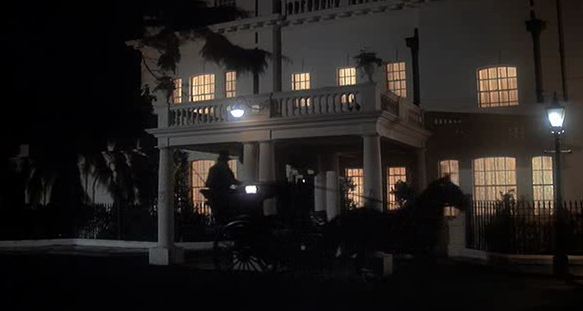
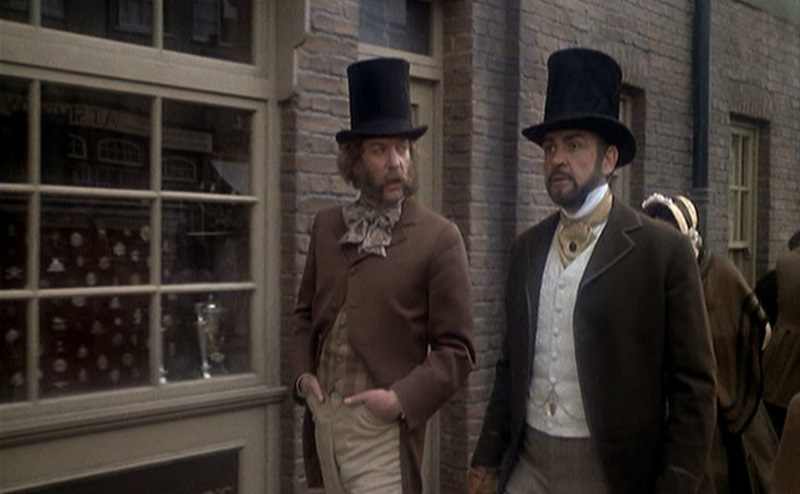
From Hell (2001)


Today’s cinema adventure: From Hell, the 2001 screen adaptation of Alan Moore and Eddie Campbell’s award-winning serialized graphic novel exploring the real-life Jack the Ripper case through a fictionalized story about its investigation, starring Johnny Depp as the Scotland Yard Inspector in charge of the case.  As directed by Allen and Albert Hughes, it condenses the 500-plus page original to fit a running time of less than two hours, omitting much of the book’s rich, immersive material in the process, effectively transforming the piece from an informed- if dark- historical fantasia into a pop-art horror movie with pseudo-sociopolitical overtones.  Nevertheless, taken on its own merits, it’s a stylish and intelligent thriller, offering a fairly accurate (though highly speculative and sensationalistic) depiction of perhaps the most infamous true crime story of all time, as well as an excursion into the dark underbelly of Victorian London.

Adapted into screenplay form by Terry Hayes and Rafael Yglesias, From Hell blends fact and fiction as it unfolds its narrative, set mostly in London’s seedy Whitechapel District in the fall of 1888.  It’s a miserable, economically depressed slum, populated by rough laborers, criminals, and prostitutes- the latter of who are being savagely killed in a series of increasingly macabre and horrific murders.  In charge of the investigation is Frederick Abberline, an opium-addicted police inspector with a gift for psychic visions; his prescient insights into the case bring him to suspect an even darker and more insidious motive to the crimes than is suggested by their brutality, as well as leading to his personal involvement with one of the Ripper’s potential victims.  As he gets closer to the truth, he finds himself enmeshed in a dangerous web of secret intrigue, racing against time and facing powerful opposition in a desperate effort to prevent the monstrous killer from claiming more lives- including his own.  The plot unfolds against a backdrop of late 19th-Century English society, offering a bleak and politically-charged vision of a world in which disrupting the illusion of propriety is a greater crime than murder; the privileged elite exist outside and above the law, orchestrating and manipulating events from behind closed doors while the impoverished masses endure an unthinkably cruel and desperate existence with little hope of escape or betterment, and even those sympathetic to their plight are powerless to help them.

Moore and Campbell engaged in painstaking research in the creation of their graphic novel, meticulously incorporating the facts of the Jack the Ripper case into their multi-layered fictional retelling.  That effort is reflected in the film, though in a somewhat diluted form; on the page, the historical facts are presented side by side with the story, making for an immersive experience in which the reader can participate in the process of speculative myth-making, whereas for obvious reasons this cannot be duplicated onscreen without disrupting the visual (and emotional) flow.  In addition, the panoramic view of Victorian society offered by the original has been necessarily stripped down; though the filmmakers have clearly made an effort to provide as much of this background as possible, their running time dictates the removal of all but the most cogent information.  An unfortunate side effect of this streamlining is that key plot points, which might have been better masked in a more comprehensive script, become painfully obvious, making the film highly predictable to savvy viewers, particularly those familiar to the true events of the Ripper case.  It can be argued, however, that the film’s purpose is not to puzzle us with its mystery- which is well-known as an unsolved and probably unsolvable case- but to offer a social commentary by using its plot and its setting to parallel our modern world.

To this end, the Hughes Brothers sculpt their film to highlight the disparity between the upper strata of the Victorian population and the impoverished lower classes amongst whom the Ripper’s crimes take place.  The wealthy are isolated, arrogant, and dismissive of the concerns of the less fortunate, while the poor, in their struggle to survive, are greedy, opportunistic, and cruel.  It’s not a pretty picture of mankind, and there are few examples of middle class decency on display- only Abberline and his Shakespeare-quoting sergeant represent a compassionate view towards humanity, and even they are characterized by a mistrustful cynicism which reflects their exposure to the harsh realities of the age.  The nobility and their bureaucratic allies are portrayed as smug, self-appointed guardians of a status quo that favors their continuing prosperity, and many of them seem possessed of a sadistic streak, exhibiting an unmistakable delight in their infliction of suffering and the exercise of their power over the weak.  Each and every member of the ruling class is portrayed as contemptuous of the poor, even those who seem, on the surface, to be more enlightened, and the underprivileged commoners beneath them are shown to have suppressed any noble sentiments in favor of self-preservational hostility and practical amorality.  Providing illumination on this ugly portrait of mankind at its worst, the directors give us an unvarnished look at the wretched conditions of existence to which these masses are subject- the filth, the corruption, the continual struggle for inadequate food and shelter- and the opposing luxury with which their economic superiors surround themselves.

From a visual standpoint, the Hughes Brothers make their objective clear from their opening shot, which pans down slowly from an austere London skyline at dusk, offering glimpses of the various strata of society through their lighted windows until it reaches the dark and squalid streets of Whitechapel, where an assortment of dehumanizing activities are plainly on view.  The pair also take pains to recreate the dramatic visual atmosphere of the comic book format, reconstructing the composition of panels from the original and utilizing a color palette which conjures memories of the lurid English horror classics from the fifties and sixties- many of which share a similar setting and were clearly inspired by the lingering cultural memory of the Ripper’s reign of terror.  However, although these iconic forbears were noted for reveling in an almost gleeful depiction of blood and gore, From Hell is relatively short on explicit violence, though there are certainly enough glimpses of horrific acts and their aftermath to create the impression of having witnessed a bloodbath.  Similarly, despite its title (a reference to a letter sent by the real-life Ripper to taunt the police), the film is not a supernatural fright fest, though there is a not-so-subtle implication of a dark, possibly otherworldly force at work behind the killings; this is no tale of demons at large, wreaking havoc on a weak but innocent humanity, but an indictment of mankind at its basest and the depths to which it will sink in order to preserve its own selfish desires.  Ultimately, From Hell aims to derive its real horror from the implications of its clearly-stated premise- that the gruesome career of Jack the Ripper is but a prelude to the larger scale horrors that await in the coming century, the tip of an iceberg formed by the clandestine machinations of the world’s tightly-knit power elite.

This darkly cynical sociopolitical viewpoint is familiar to anyone familiar with Alan Moore, whose somewhat radical sensibilities are plainly displayed in such other of his works as Watchmen and V for Vendetta, as well as his contributions to the Batman series.  While his leanings certainly come across in this screen adaptation, however, their effectiveness is certainly limited by its narrower focus.  Where the published work is overwhelmingly centered on his postulated notion of the killings as a symptom of a far-reaching social imbalance, supported by an interwoven tapestry of peripheral events which underline and reinforce his theme, the screen version fails to bring home the significance of this element, treating it more as a necessary conceit of the plot than as the main purpose towards which that plot is geared.  Though the writers and directors have clearly understood their task, and made considerable effort to stress the relevance of Moore’s allegorical subtext in their realization of his piece, they are ultimately defeated by the need to provide a Hollywood-style, story-driven thriller; the cold-hearted patrician gentry and the need-driven proletarian rabble are present, but the broad strokes with which they are painted render them clichéd, stock figures of the Grand-Guignol horror genre from which the film takes its cue, and the numerous scenes of social injustice and economic inequality come off as obligatory, the kind of standard fare usually found in dramas set in this period- and often presented with more conviction than we see here.  Coupled with the aforementioned predictability of the plot, the familiarity of these elements help to make From Hell feel like something we’ve seen before.

Though the film doesn’t quite live up to its potential, the actors acquit themselves admirably.  Johnny Depp is shrewdly cast as Abberline, who in real life was described by his colleagues as a highly capable officer with the demeanor of a mild-mannered bank clerk, though here he is portrayed as a decidedly more unorthodox figure, somewhat dissolute and highly unorthodox in his methods; Depp provides a perfect access point for a modern viewer, bringing a highly contemporary persona into the proceedings and providing his customary intelligence and commitment to the role, and if he sometimes seems to be sleepwalking through the film, this adds an appropriate layer of detachment to a character who is, after all, a drug addict and a visionary.  Heather Graham also brings a modern feel to her performance, though in this case it feels a bit less appropriate- she plays a prostitute who lives on the streets, and her level of intelligence and sensitivity seems a bit anachronistic; this is true of the portrayal of all the streetwalkers in the film, but in Graham’s case, given the conceit of her highly fictionalized role, it’s an acceptable disparity, and she succeeds in being likable and sympathetic in the midst of a cast of unpleasant characters.  The two stars, however, are ultimately less memorable than the host of fine British character actors who fill the supporting roles.  Particularly noteworthy are veteran character actor Ian Holm as gentleman doctor who assists Abberline in the case by providing his medical knowledge, and who may in fact possess more information than he is willing to share; and the always delightful Robbie Coltrane as the gruff but good-natured sergeant who serves as Abberline’s loyal assistant and friend.  The remainder of the cast get little chance to flesh out their characters, most of which come off as little more than ciphers in service of the story, but for the most part, they perform their tasks with a relish which goes a long way towards making the world of the movie seem believable, if not particularly compelling.

Despite the fact that it falls short of its considerable potential, From Hell is not a bad movie; it succeeds on a number of levels, not the least of which is providing a fairly gripping two hours of suspenseful- if unsurprising- entertainment.  It takes an oft-seen scenario and presents it in a form that both pays homage to the style of its former, more traditional incarnations and refreshes it with a modern and distinctive flavor of its own.  If it fails to capture the full power and ambitious scope of its source material, that is perhaps no surprise; Moore and Campbell’s creation is a complex work of art that is inherently best served by the medium in which it was first presented, and it is doubtful that any film could capture it faithfully without falling short on some level.  Nevertheless, it is a brave attempt, and if nothing else, it certainly provides inspiration for viewers to seek out the graphic novel and experience its brilliance for themselves.  Beyond that, it is a well-made, if ultimately ordinary, thriller, blessed with a talented cast and an impressive visual style; and for those who have an interest in Jack the Ripper and the world in which he existed, it’s a must-see, and as long as you don’t expect to learn anything new about the case (and you don’t mind seeing a long-disproved theory being put forward once again), you’ll probably find it a worthy rendering of this legendary chapter in the annals of human brutality.

http://www.imdb.com/title/tt0120681/

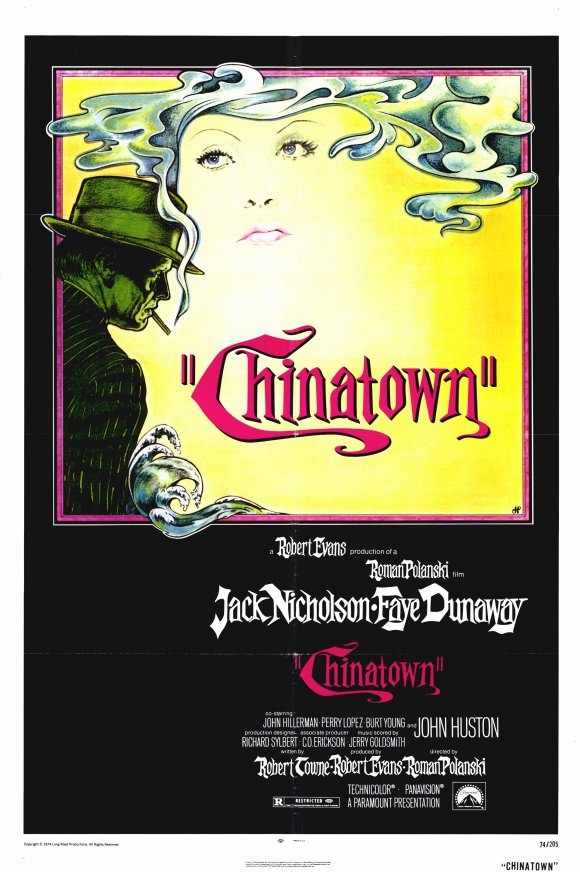
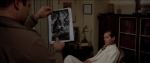
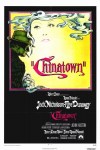
Chinatown (1974)

Today’s cinema adventure: Chinatown, Roman Polanski’s 1974 noir-inspired mystery drama starring Jack Nicholson as thirties-era private detective Jake Gittes and Faye Dunaway as a mysterious widow whose secrets lead him into a complex web of deceit, corruption, and murder. Renowned, among other reasons, for its screenplay by Robert Towne, which has been hailed by many critics and film scholars as the greatest ever written, it became an instant classic on its release and is still widely regarded as one of the very best films of the seventies, and, indeed, of all time.

Towne’s acclaimed script takes inspiration from the circumstances surrounding early Los Angeles’ complicated acquisition of water rights, fictionalizing real-life figures- specifically William Mulholland, who engineered the importation of water from the north by way of the Los Angeles aqueduct- to create a background for the film’s mystery; though the events of Chinatown are entirely fictitious, this historical context provides a connection to reality that infuses the movie with a sense of authenticity and gives it a feeling on relevance beyond its dramatic narrative. Set in the L.A. of the early 1930s, the plot follows Gittes as he works what he thinks is a routine case. Hired by the wife of Hollis Mulwray, chief engineer for the city’s Department of Water and Power, to catch her husband in an extra-marital affair, he soon finds evidence not only of Mulwray’s supposed infidelity, but of mysterious diversions of water taking place under cover of night. When Mulwray turns up suspiciously drowned and Gittes discovers he was hired by an imposter, he decides to pursue the case in order to save his reputation. The trail begins with the real Mrs. Mulwray, who has a secret connection to her late husband’s “other woman,” and ultimately leads him into a game of clandestine politics, real estate fraud, and dark family secrets; with the police and hired thugs on his trail, he must try to find the key to this complex mystery before his time- or his luck- runs out.

On the surface, it sounds like a typical scenario that could be found in any of a hundred hard-boiled detective stories from the thirties or forties, loaded with the clichés and conceits of such fiction; the wisecracking dick, the deceitful femme fatale, the oily politicians, the psychotic gunsels- all of them are present and accounted for in Chinatown. Towne’s script, however, uses the trappings of the genre as a springboard from which to explore a myriad of deeper mysteries, allowing the unfolding story to take us from the larger arena of politics, power, and greed into the more inscrutable realm of the human heart; in the convoluted skein that lies at the center of the mystery, we find that the most intimate longings are ultimately responsible for the most momentous events, and actions with far-reaching consequences are motivated by simple flaws of character or personal dysfunction. As Gittes digs deeper, he uncovers a vein of corruption that runs from the top of the social order to the very root of the family structure, soiling everything it touches in between; it’s not a pretty discovery- the dirty little secrets he uncovers are very dirty indeed, and the glimpse we are offered into the inner workings of politics (both public and personal) among the rich and powerful is one which offers a very bleak picture, indeed, of the way things really are beneath the pretty surface of prosperity.

Woven into the tale is also an exploration of fate, dictated by the hopes and fears which motivate our actions and ultimately cause us to bring about the very results we wish to prevent; it’s a theme encapsulated in the very structure of the film, in which Gittes, who carries the emotional scars of his history as a policeman in L.A.’s Chinatown, vows never to return there, and yet the trail on which he is led by his case brings him right back into its heart for the film’s climax. An ironic twist, and one of many throughout the film; true to its film noir roots, Chinatown is a movie about irony. Gittes is as worldly and cynical as they come, and yet he finds himself betrayed at every turn by his naive assumptions, and his skeptical view of human nature leads him to repeatedly misjudge whether to doubt or trust the people around him. Not that he can be blamed- in Chinatown, nothing is what it seems, and the more you see of what goes on below the surface, the less you can be sure of how to proceed.

The screenplay for Chinatown is so thematically rich that volumes could be written about it; indeed, they have been. Much of the joy of the film, of course, is discovering the countless threads of meaning on your own, a process which continues throughout multiple repeated viewings. This is due to the contribution of its director, Polanski, whose European roots give him an outsider’s perspective on the quintessentially American milieu of the story. Instead of taking for granted the familiar conditions of the noir scenario, he turns everything inside out with his observations on the culture it portrays; his sophisticated take on the characters and their foibles, the machinations of the plot and the hidden truths it reveals, and the illusions inherent in the American psyche. After all, our seemingly savvy protagonist makes his living by tearing away illusions, but in the course of the film he ends up stripping away his own. Polanski carefully transfers our identification to Gittes, who has both the intelligence and integrity to make him an appealing representative for us, revealing information only as it becomes available to him, and making our journey of discovery synonymous with his. As he proceeds, it becomes increasingly apparent that he is trying to expose a secret everyone else already seems to know, and our illusions are shattered right alongside those of our hapless hero. This lends the film a uniquely contemporary viewpoint on the old-fashioned world it presents, and effectively converts the film noir form into a vehicle for modern ideas about the underlying moral structure of our society. Much of this may seem to be the result of Towne’s screenplay, but Polanski wielded considerable influence over the project, making important changes to the material (such as removing a planned voice-over narration and significantly changing the film’s ending) that altered its structure from a more overtly hard-boiled exercise in nostalgia to a subtle, multi-layered deconstruction of the genre. On a more technical level, the director exhibits his mastery of the medium in every frame, resisting the temptation to use cinematic methods associated with noir, relying on the script and the performances to convey those sensibilities, and instead telling the story with his own, decidedly modern, visual techniques; his use of light and shadow, his framing of shots, his incorporation of symbolic elements- all are reminiscent of the classic mode of these films without directly recreating it. He invokes the spirit of the past while constantly, and subtly, reminding us that we are watching a modern film. It’s an approach few filmmakers have successfully managed, though many have attempted it.

With Polanski utilizing his more current filmmaking style, the distinctive period feel which helps Chinatown evoke its air of old-fashioned intrigue is largely provided by its impeccable recreation of vintage Los Angeles, accomplished by the meticulous costumes, sets, and decor, as well as the carefully chosen locations- all captured by the crystalline, golden-hued cinematography of John A. Alonzo, which conjures the sun-drenched aura of the setting as well as giving a sepia-tinted nod to nostalgia. To complete the package, the lush musical score by Jerry Goldsmith adds a definitive, faintly exotic blend of romance and mystery, with magnificently haunting trumpet solos expressing the mournful longing at the heart of the movie; it’s an even more impressive accomplishment because Goldsmith was called in at the last minute to write music for the film when an already-finished score was rejected by producer Robert Evans. The veteran composer had only ten days to complete his work, but the resultant score stands with the many other elements of Chinatown that are held up among the finest ever produced for the screen.

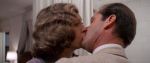
There is a tendency in films by an auteur like Polanski for the cast to be overlooked, regardless of how superb their work may be; not so with Chinatown. Inseparable from the director’s vision is his star; Jack Nicholson’s unmistakable demeanor fits Jake Gittes to perfection, as much a natural extension of his own personality as such characters were for Humphrey Bogart. He embodies the archetypal private eye character while re-inventing it, giving us the expected image of a tough guy with a strategically hidden idealistic core, but adding yet another layer underneath which reflects the more realistic, contemporary viewpoint of the film. His Gittes seems plagued by self-doubt, a fear that he is setting himself up to repeat his past failure as a cop in Chinatown, and perhaps a suspicion that he is more of a sap than he wants to admit; its an endearing and humanizing weakness which undercuts his brashly confident air, a quality that is perhaps the essence of Nicholson’s screen persona, and it makes him the ideal factor for the audience in Polanski’s de-mystification of detective fiction. The burden of carrying the plot may be on Nicholson, but the bulk of its focus is on Faye Dunaway, as that other essential figure of the noir landscape, the femme fatale, and she is more than up to the scrutiny. As Evelyn Mulwray, she, like her co-star, brings a modern sensibility to the role, a character which runs much deeper than the usual dangerous dames in these hard-boiled tales. Dunaway gives us a well-put-together woman, used to the good life, who is haughty but candid, alluring but also intelligent, tender, vulnerable, and deeply scarred- but still full of warmth and far from broken. Though the character, true to the mold, is deceitful and manipulative, Dunaway lets us see that, in a sense, she’s not very good at it; her face betrays her true feelings at every turn, though she is practiced enough to play it off; in this way, like Nicholson, she creates a portrait of a real person trying to live up to an image she’s not quite sure she’s capable of. She is also beautiful- her smooth, alabaster skin and her faintly exotic eyes give her the perfect look to capture this mysterious, seemingly untouchable woman. As for the chemistry she has with her co-star, they make a perfect pair; their inevitable but unlikely coupling seems to come from nowhere, in terms of the script- there has been no flirtation, nor any overt indication of attraction. Yet when it happens, it feels absolutely right, a chance for both of them to let go of their jaded, protective façades and be human beings again, at least for a short time. They make a great pair, and they brilliantly capture the film’s sense of longing as they play out the story of two lonely souls whose union must ultimately be thwarted by fate, becoming one of the screen’s iconic couples in the process. The third brilliant performance, and one which is sometimes forgotten in discussions of Chinatown, comes from legendary director John Huston (a fitting addition to the cast, since his 1941 film, The Maltese Falcon, arguably gave birth to the entire film noir genre), as Noah Cross, Mulwray’s obscenely wealthy business partner, whose genteel courtliness does little to hide the arrogance and sense of entitlement that defines his character; a truly great villain, he dominates every scene he is in, and though he his screen time is relatively brief, he makes such an impression that it feels like he is in much more of the movie than he actually is. The remainder of the cast- including Burt Young as a client who becomes an ally, Perry Lopez as Jake’s former police partner who is now a high-ranking detective and an antagonist in the investigation, Diane Ladd as the phony Mrs. Mulwray, and director Polanski in a cameo as a deadly knife-wielding hoodlum- all bring their own considerable contributions to the table, fleshing out their smaller roles and providing even more texture to the already intricate tapestry of the movie’s multi-layered landscape.

Chinatown is one of those rare movies that seems to be impervious to the changing tastes of time; it captures not only the era of its setting but the savvy, anti-establishment zeitgeist of the “New Hollywood” seventies, yet it seems as fresh and up-to-the-minute today as it did nearly 40 years ago. Part of the reason for this lies in the timeless nature of its themes and its subject matter- the corruptibility of man and the inexorable workings of fate will never cease to be relevant topics, after all- but a great deal of credit goes to the delicate, deceptively simple handling given the film by Roman Polanski, and the self-assured, passionate work of its stars. There are several points of interest surrounding the movie for cinema historians- it was the first film shot in America by Polanski since the tragic murder of his wife, Sharon Tate, at the hands of the Manson “family,” and the last before he fled the country to avoid sentencing for his statutory rape conviction, a still-highly-controversial incident that sharply divides public opinion even today. None of these things matter, though, when watching Chinatown. It’s a movie that has something to offer for every audience, from the serious cinemaphile to the most casual viewer. The word “masterpiece” gets thrown around a lot, and I hesitate to use it, most of the time, at least in writing; but I suspect, in the final analysis of Polanski’s body of work when all is said and done, it is this movie that will stand as his crowning achievement- more accessible than his earlier, more directly artistic efforts, possibly his most universal film in scope and appeal, and less detached than his later, more meditative work. It’s the kind of movie that entices us with its entertaining surface and draws us into its complex, thought-provoking, revelatory world- a world where right and wrong are inextricably woven together and the only way to avoid trouble, in the words of more than one character, is to do “as little as possible.”

http://www.imdb.com/title/tt0071315/

The Dark Knight Rises (2012)

Today’s cinema adventure: The Dark Knight Rises, the final installment of Christopher Nolan’s Batman trilogy, which once again uses a realistic and politically charged approach in bringing the DC Comics hero to life, and puts him into a decisive battle which will determine the very fate of Gotham City.  Continuing in the dark and violent vein that characterized The Dark Knight, Nolan creates an apocalyptic finale for his exploration of the Batman universe, one designed to provoke and challenge even as it entertains; in the process he continues to develop the characters and relationships introduced in the previous chapters, as well as offering up new twists on other familiar figures making their appearances here for the first time.

In this new chapter (with the screenplay written again by Nolan and his brother, Jonathan, based on a story developed by Batman Begins co-writer David S. Goyer), eight years have passed since the “murder” of D.A. Harvey Dent, whose supposed martyrdom in the fight against crime (a fabrication created to cover up the ignoble circumstances of his death) has resulted in legislation that has all but eliminated the criminal underworld of Gotham City.  During the intervening years, billionaire Bruce Wayne has become a mysterious recluse and his financial empire has fallen into disarray, while his alter-ego, Batman, has disappeared, having become a wanted fugitive after taking the blame for Dent’s death.  The city has grown soft and complacent, and economic imbalance has led to a new kind of cynicism in its population; but its greatest threat is building beneath its streets, as Bane, a powerful urban warlord with a mysterious past and a cataclysmic agenda, prepares to enact a master plan designed to plunge it into hellish torment as a prelude to its final annihilation.  Drawn from his seclusion, Wayne must resurrect his Batman persona in order to combat the new danger; but, like the city he protects, his long stagnation has weakened him and created new conflicts within, leaving him vulnerable to defeat by this titanic enemy.  In order to triumph, he must not only regain his former strength and his faith in himself, he must also place his trust in allies- some old and reliable, some new and untested- and be prepared to face the ultimate sacrifice.

Picking up the thematic threads left hanging at the end of The Dark Knight, the Nolans show us that the uneasy compromise of image over truth has provided a temporary victory in the battle against chaos- but the consequences of the choice have taken their toll on our champions of justice, and the complacency of peace has led to its own form of disorder.  A widening gap between wealth and poverty breeds anger among the citizens, while the prosperous civic authorities seem too interested in self-congratulation and self-promotion to pay attention to the signs of danger approaching from without and within; but nevertheless, despite this uncomfortably topical political situation, when disaster strikes it is the result of a long-forgotten threat which has been festering unnoticed all along.  Bane and his plot represent the shadows of the past, deferred but not defeated, a pattern of destruction that has risen repeatedly throughout history; Gotham’s blissfully false sense of security and its unheeded civil unrest have merely provided a smokescreen for the incursion.  The only chance for averting the impending doom lies in facing the truth, taking responsibility, and working together for a common good which outweighs all considerations of ideology or principle.  Contrary to the commentary of some who have seen The Dark Knight Rises as a conservative polemic against the “Occupy” movement (due to the fact that Bane disguises his takeover of Gotham and subsequent reign of terror as a “people’s revolution”), the film in fact hinges, like its predecessor, on the idea that blind pursuit of self-interest is the real root of the problem, and that it is only through a desire to help each other that we can reclaim the power to conquer the enemies that threaten all of us together; the arrogance of the wealthy and the anger of the poor are both used by Bane as the instruments of his rise to dominion, and his defeat can only be brought about by the protagonists’ willingness to sacrifice everything they hold dear for the sake of others.  It’s also worth taking note of another factor which contributes significantly to the threat to Gotham’s future- the seeking of revenge for old wrongs, and worse yet, revenge against an entire population for the actions of a single man.  This is a powerful reminder of a principle very much at work in the world today, and one which has perpetuated the cycle of bloodshed from the most ancient of times.  Further than that, the film suggests through the telling parallels it draws that by ignoring the lessons of the past we are doomed to re-enact a historical cycle that has brought down one civilization after another; in other words, if we don’t learn from history, we can only become history.  To paraphrase an echo from the film which began the trilogy, we fall in order to learn how to get back up; but once we are on our feet again, we must always remember how we fell in the first place- after all, as more than one important character realizes before the end of The Dark Knight Rises, a fresh start is no good at all if you’re not willing to change the way you do things.

Once more, in writing about Nolan’s Batman cycle, I find myself reveling in the complexities of its themes and making new realizations as I ponder how to express them here.  In the end, however, these films- each one of them, in their own distinctive way- speak for themselves.  With his final chapter, this gifted director has once again created a movie which stands firmly on its own merits, building an epic structure on its own individual themes, while maintaining and bringing to fruition the elements of the entire trilogy.  He does it in his characteristically detailed style, full of arresting visuals, fluid camera work, spectacular action sequences, and intimate moments of unexpected emotional power.  He gives full deference to the importance of character while simultaneously driving the complex plot at full speed, juggles themes within themes while devoting every moment of screen time to the progression of the story, and manages a sweeping social and political allegory in the midst of an explosive action fantasy.  There may be those who quibble about his motives, or who take exception to his re-interpretation of the iconic characters and conceits of the Batman premise, but such concerns are, quite frankly, moot in the scope of what he has accomplished here.  The Dark Knight Rises is the final proof, if more were needed, that Christopher Nolan has done what no other director has done before him: transcended the “comic book” genre to create an intelligent, mature and wholly sophisticated series of films that is worthy to stand with the great socially significant films of our time- more worthy, in fact, than most of the self-consciously highbrow self-styled “art” films that Hollywood tries to pass off around awards season.  For this (though he is not likely to win any of those awards himself- the stigma against this kind of fantasy content still seems too strong for that), he deserves all the accolades he has received so far, as well as the satisfaction of his phenomenal box office success.

Part of Nolan’s success with all of these films, of course, lies in the work of the people he has chosen to work with him, and the names in the credits that roll at the end of this one show more or less the same list of usual suspects.  Once again, the design team is headed by Nathan Crowley (this time co-credited with Kevin Kavanaugh as production designers), and once again they have provided us with new and exciting gadgets to go with the old favorites, as well as giving Gotham yet another new look- it’s still a spectacular city, but somehow not so new and shiny, a little worn down and lived-in, and with a dirtier, more East-Coast-urban feel to it.  The locations, as always, have something to do with this, with recognizable landmarks from New York, Pittsburgh, and Los Angeles underlining the sense that this is truly meant to be a microcosmic world representing an entire culture; but the look of its skyline, clearly created with some impressive digital cutting-and-pasting, conveys the feeling of a place with a soul all its own.  Wally Pfister’s cinematography continues with the gritty-but-slick style of The Dark Knight while also echoing the sepia-infused tone of Batman Begins, a highly appropriate approach for a film that draws its life from both; he complements the worn-down look of the city with a style that evokes bleakness, particularly in the visually striking scenes of Gotham in winter which come late in the film.  Hans Zimmer, working solo this time, gives us another driving score, incorporating more vocal instrumentation than usual but still, for the most part, focusing on mood and subliminal effect than overtly recognizable melodic sounds.  In short, The Dark Knight Rises gives us more of the same outstanding, exemplary work that made the first two entries in this trilogy so effective.

The same holds true of its cast, comprised again of heavy-hitters; most of them are, of course, returnees to already-established roles, and without exception they live up to their previous work, bringing new flavors to their continued development of these familiar characters and closure to the arcs they began in the first film.  Christian Bale once again proves what a brilliant actor he is with his portrayal of Bruce Wayne; he gives us a new vision of this billionaire vigilante, grown physically and psychologically dissolute through his self-imposed isolation, but seemingly marked more by a sense of disorientation than by underlying bitterness over the events that have led to it.  He also gives his character, which has always fitted him like a tailor-made glove, a deeply personal feeling of emotional connection, building on the previous revelations of his psyche to create a complete picture of this man and the needs that drive him- showing us, ultimately, the good heart that lies beneath the darkness of his sometimes-morally-questionable actions.  We have never questioned it, of course, but he has- and his final evolution into a complete hero, with a clarity of purpose and a full understanding of his motivations, shines through in a way that makes him both admirable and infinitely likable.  It’s the first time I can honestly say I loved an onscreen “super” hero because of who he showed me he was and not because he was, well, a hero.  Michael Caine, as Alfred, has been quietly superb all along, lending his calm, assured dignity to the proceedings and serving as the key grounding influence for Bale’s Batman- but in this entry, he gets the chance to remind us all of why he has been one of the hardest-working actors in the business for fifty years.  His scenes are fewer, this time around, but they stick with you, and the dimension he has given this usually-perfunctory character pays off with some key moments that give the entire series its deepest emotional resonance, proving once more that it is the depth and honesty underlying these films that have elevated them to the level of higher art.  Gary Oldman shines once more as now-Commissioner Gordon, wearied by the chafing of his conscience over his part in the Dent cover-up, and bored by eight years of peacetime- but dedicated as always to his mission to protect Gotham and revived by the chance to jump into action once more.  Morgan Freeman’s Lucius Fox is also wearier, but with characteristically subdued optimism he gives us a refreshing energy that reminds us it is possible to gracefully endure the changing of fortune without losing one’s belief in the future.  There are a few other returning faces, but many of them are likely to be surprises so I won’t go into them here; suffice it to say that they, along with the rest of the cast, provide uniformly superb contributions.

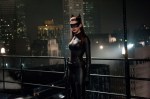
As for the new blood, obviously there are a few that deserve mention.  Topping that list is Anne Hathaway, portraying Selina Kyle, an audacious cat burgler whose gear and manner make it clear that she represents another iconic Batman personality- though the name “Catwoman” is never used.  She nails the character, with just the right blend of saucy seductiveness and dangerous unpredictability, matching Bale’s Bruce Wayne in a way that no previous female character has done- a significant point, and one which highlights the importance of her key role in the film, as well as the timing of her appearance in his life.  It would be improper to give anything away, but it’s safe to say that she- and Nolan- bring a number of surprises to the table in their re-interpretation of this feisty, feline female.  Tom Hardy, the English heartthrob who gained 30 lbs. to portray the hulking Bane, provides an awe-inspiring physical presence and clearly conveys the disarming intelligence of his character- the trilogy’s closest thing to a “super-villain.”  He manages to give the character depth and even a degree of sympathy with his performance- not just through his voice, but in his physicality and, most importantly, with his eyes, which are left visible by the cruelly sadomasochistic mask he wears in all but one key scene of the film.  Marion Cotillard brings an elegant nobility to the proceedings as Miranda Tate, a wealthy board member of Wayne Enterprises whose dedication to an environmentally-friendly project plays an important role in the developments of the plot, and leads to a relationship with Wayne that becomes closer than he expects.  Finally, Joseph Gordon-Levitt portrays John Blake, an earnest young policeman whose personal belief in Batman leads him to deduce Wayne’s true identity and helps provide the impetus for him to return to the fight against evil; it’s a character that could very easily be too-good-to-be-true, but thanks to Gordon-Levitt he is more than believable, a welcome addition to the collection of loosely-affiliated heroes that aid Batman in his quest for law and order.  A number of other actors make their first- and, presumably, last- appearance in Nolan’s vision of the Batman legend, including Matthew Modine as Gordon’s ambivalent second-in-command, and Willam Devane as the President of the United States; as with the old-timers, the new cast does a universally stellar job.

The Dark Knight Rises, though already one of the most successful movies of all time, has generated a great deal of controversy over its supposed political leanings, one way or the other, and for a violent tone which has sadly been thrown into stark relief by tragic real-life events.  There is no denying the important influence of movies over our real-world culture, and unquestionably, an artist has a responsibility to consider this in deciding the nature of the content they wish to present.  It must be remembered, however, that Nolan’s film is, first and foremost, an action/adventure-fantasy.  Though it may be laden with recognizably current political and social issues, and though it explores questions of morality and social responsibility, these things are ultimately merely the background for a story that depicts a realistic, contemporary world- a tale in which the ongoing conflicts of society are exploited by an outside evil who is an enemy to all sides.  Likewise, by its very nature, it’s a movie filled with the kind of disturbing images of mayhem and tragedy that have been blamed by many for the casual attitude towards violence in our collective contemporary psyche; but Batman is a modern myth, and like all myth it deals in symbolism drawn from everyday experience in order to convey its true purpose.  For all its scenes of brutal combat, exploding football stadiums, and collapsing bridges, The Dark Knight Rises carries a positive message that emphasizes the importance of compassion and the value of human life; it’s a principle repeated throughout the movie, and the intense battle action is a metaphor for the difficulty of the struggle required to preserve these things.  Those who see only the overt content of this film, or indeed of any film, are likely to get the opposite meaning of the one intended; and whichever side they represent in the ongoing debate, they, like the citizens of Gotham who ignore the real menace while they seek to place blame for their troubles and justify it with sweeping generalizations, would do well to look deeper than the surface- as would those who glorify the violence they see there without recognizing the consequences it is shown to breed.  After all, cinema, like all art, holds up a mirror to society, and what we see in it depends on how closely we are willing to look at ourselves.  In the world of The Dark Knight Rises, the ability to candidly face the reality of our problems is our only hope for saving our way of life from destruction; I strongly suspect that this is also a reflection of real life, and that unless we heed the warning that is implicit in Nolan’s film, we may find that out all too soon.

http://www.imdb.com/title/tt1345836/

The Dark Knight (2008)

Today’s cinema adventure: The Dark Knight, Christopher Nolan’s massively successful 2008 sequel to his earlier Batman Begins, tracking the continuing progress of DC Comics’ iconic hero in his quest to free Gotham City from the grip of rampant crime and corruption and pitting him against a new breed of criminal- the costumed madman known only as the Joker.  Continuing his re-imagination of the comic-book premise as a crime drama grounded in realism, the director takes it even further this time around, creating a gritty, violent vision of urban warfare in which the line between right and wrong becomes blurred in a larger struggle between order and chaos.  The formula obviously struck a nerve; the film broke box office records and earned the kind of massive critical accolades usually reserved for more “serious” fare.

Working from a story developed by Batman Begins co-writer David S. Goyer, Nolan this time fashions a screenplay with his brother, Jonathan, in which billionaire Bruce Wayne, working in unofficial partnership with Police Lt. Gordon, has made headway in the campaign to weaken the control of organized crime over Gotham City.  With the rise of the city’s idealistic new D.A., Harvey Dent, he sees a chance to hand over his role as the city’s protector and at last embrace the comforts of a normal life; but a new threat arises in the form of the Joker, a disfigured psychopath in clownish makeup, who begins an escalating campaign of terror.  To combat this new adversary, Wayne and Gordon join forces with Dent, and the trio works in secret alliance to put a stop to his deadly game before Gotham deteriorates into a state of total anarchy.  The Nolans use their plot as a means to explore a wide variety of inter-connected themes, making the scope of The Dark Knight much wider and its moral landscape more ambiguous than its predecessor’s, and as a result they transform what is essentially a fantasy adventure into a complex parable about the ethical dilemmas of preserving order in the modern world.  Throughout the film, the intricately plotted storyline is threaded with dialogue and situations that clearly evoke the complicated morality of post-9/11 society; the age-old cops-and-robbers scenario has been co-opted by a battle between ideologies, in which those who would protect society come dangerously close to becoming an even greater threat to it themselves.  Indeed, the antagonist’s master plan is to subvert the established order by turning it against itself, exploiting the contradictions in its own rules and ethics to create an environment of fear and chaos in which he can, in the words of one character, “watch the world burn.”  In the course of the action, we are given a remarkably detailed portrait of Gotham City- which serves as a microcosm of American civilization- which includes a look at its politicians, its media figures, its businessmen, its criminals, its public servants, and its average citizens; the effect of the city’s peril on its population is presented as a mirror to our own society, and the drama enacted by the key figures of the story reflects our efforts to reconcile the moral conflicts inherent in dealing with our own terrorized world.  As the story moves relentlessly towards its climax, it raises questions about the implications of working outside the law for a greater good, the manipulation of public perception for political purposes, the ambiguous role of invasive technology in preserving communal security, the potential corruptibility of human nature, and the danger of becoming your enemy when you fight against him on his own terms.  Most significantly, it examines the role of choice in the struggle to define humanity; whether our actions are dictated by chance and motivated by self-interest, or whether we are ultimately responsible for the decisions we make, for good or for ill.

If it sounds like heavy, existential themes dominate The Dark Knight, that’s because they do; but that doesn’t mean it’s a film that favors philosophical debate over a good story.  Rather, the story is the debate.  Nolan uses his epic themes to propel the action, leading us through the conditional parameters until the core issue is revealed at the heart of his plot.  Batman and his allies, the self-sacrificing champions of order and justice, are pitted against the Joker, a self-serving personification of chaos and amorality.  At every step of the game, the Joker challenges his opponents’ dedication and their beliefs, forcing them into no-win situations in which they have no choice but to act against their own principles; convinced of their hypocrisy and their fallibility, and confident that he can- and will- break their spirit, he manipulates the scenario not only to prove his point, but to inflict torment for his own gratification.  It is this, perhaps, that Nolan suggests as the ultimate definition of evil- the pure selfishness that satisfies its own desires at the expense of others- and it is this basic quality that the Joker wishes to expose as the true nature of mankind.  Whether or not he is right is certainly not resolved by the end of the movie- after all, there is still another chapter to come- but Nolan’s skill at cinematic storytelling ensures that the arguments on both sides are illustrated with a sense of urgency and an emphasis on action.

In fact, the action is virtually non-stop.  Even when The Dark Knight concerns itself with quiet, more intimate matters, Nolan’s directorial choices give it a driving, restless feel- continuing the sense of momentum that he initiated in Batman Begins.  His camera is almost never still, with slow zooms and pans in almost every shot, and he pieces things together with quick edits, giving us just enough of an image to establish what we’re seeing and then sharply moving on.  He crams so much into the film this way that there are whole subplots which can go unnoticed without repeat viewings, and it allows him to provide an expansive view of the life of Gotham City into his 2 1/2 hour running time.  He confidently moves his tale through its escalating developments with a speed that keeps the viewer on edge, establishing key points without belaboring them, relying on the completeness of his screenplay- and the intelligence of his audience- to ensure clarity.  Likewise, he depends on the writing and the skill of his gifted actors to convey the important nuances of his characters that make the film so compelling, though he certainly takes the time to explore the dynamics of their relationships onscreen, rightly understanding the importance of this aspect in the overall scope of his vision.

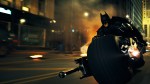
Of course, however, as in any movie about a titanic struggle of heroes and villains, the primary focus is on thrilling action, and Nolan certainly delivers this in spades.  Continuing in the vein of Batman Begins, he chooses to construct his movie with a minimum of computer trickery, instead utilizing live action stunt work filmed in actual locations or on elaborate soundstage sets.  He fills his film with gripping set pieces, from the opening bank heist sequence- which rivals anything in the best of Hollywood’s caper films- to the climactic confused free-for-all in which Batman must fight a SWAT team to protect the Joker’s hapless hostages who have been disguised as his henchmen; in between are a breathtaking depiction of a nighttime kidnapping from Hong Kong’s tallest building and the movie’s action centerpiece- an extended urban roadway chase in which Batman rides his souped-up cycle to defend a police convoy from a semi-truck containing the heavily-armed Joker and his men.  Adding to the excitement is the fact that Nolan chose to shoot these sequences- as well as some of the smaller-scale scenes- in an IMAX format, although the effect of this is somewhat diminished by viewing on a small screen.

In service of his visual spectacle, Nolan’s production team provides an impressive display of their talents; most significantly, perhaps, cinematographer Wally Pfister, who gives the film a style that is simultaneously slick and grimy, and appropriately creates a significantly darker look than that of the earlier film.  The production designers, headed once more by Nathan Crowley, have revamped the technological aspects of Batman’s world- a redesigned, lightweight suit that makes the hero more agile, as well as the dazzlingly well-realized, aforementioned “batpod” that he rides into battle with his demented adversary, stand out as distinct advancements over the gadgetry in the previous chapter- and Gotham’s cityscape has been completely overhauled.  Gone is the deco-flavored mix of nostalgic and futuristic elements that marked the city of Batman Begins; here we find an utterly contemporary metropolis of steel, plastic and glass, a world-class capitol of industry and commerce with shining citadels and utilitarian infrastructure that is more directly representative of the typical modern urban environment of America.  Its familiarity adds another layer to the realism that is Nolan’s goal, and with this backdrop against which to play out his epic drama, the more implausible elements of the comic-book scenario are somehow more believable.  The score, once again the product of collaboration between Hans Zimmer and James Newton Howard, echoes the mood-oriented style of Batman Begins, but with even more of an emphasis on driving the pace with an undercurrent of rippling and restless rhythms, suggesting the chaos that threatens to envelop Gotham City.

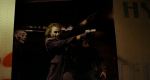
Nolan’s modern re-invention of the Batman mythology, however, is most clearly and successfully exemplified by the one element of The Dark Knight that has- justifiably- received the most attention: the performance of Heath Ledger as the Joker.  The young actor delivers a stunning portrait of this well-known character, accomplishing the seemingly impossible feat of giving us something completely unexpected and unlike any interpretation we have seen before.  His psychotic clown is a million miles away from the fruity camp of Cesar Romero’s goofy TV persona, and totally unlike Jack Nicholson’s self-parodying turn in Tim Burton’s Batman film of two decades before.  Ledger makes the character a frightening, dangerous madman, clearly deranged but chillingly sharp and lucid; we are given no background for him, aside from the conflicting stories he tells himself within the film, but we can plainly see that whatever traumatic occurrence has led to the development of his deeply disturbed personality, it has left him utterly and completely devoid of humanity.  His makes it plain that his Joker lives for the thrill of the moment, taking great pleasure in pain- including his own, greeting each blow from his caped opponent with a rush of giddy adrenaline-laced delight.  His voice, his physicality, the coldness of his eyes, all combine to create an unforgettable portrait of menace, and for the first time in the history of comic-based films, he has given us an utterly believable super-villain.  The one completely human moment he exhibits comes late in the film, a reaction of genuine surprise over an unforeseen development which throws a wrench in the works of his master plan- it’s a subtle but dazzling moment which instantly casts into stark relief the sheer brilliance of everything we have seen from him before that.  Ledger’s tragic death before the film’s release may have contributed to the publicity surrounding his work here, but had he lived the performance would still have stood as a triumph, and was fully deserving of the multitude of awards and accolades it received posthumously for him.

This is not to take credit away from any of his co-stars.  Every member of Nolan’s cast gives a stellar effort, starting with Christian Bale, whose Batman is leaner and more haggard than in his previous appearance in the role, reflecting the maturity and the effects of the stress that have shaped him in the intervening years since Batman Begins.  He gives the character a wearier edge, exuding more confidence but also more contempt for his criminal prey; even his Bruce Wayne seems a little worn down from all the partying with supermodels and prima ballerinas his public image requires him to do.  Underneath it all, though, he clearly shows us the power of his dedication to the job he has appointed himself, and his refusal to yield to the Joker’s efforts to bring him down to a baser level is utterly convincing- particularly in light of the self-doubt he shows us in response to his costly failures- giving us the glimmer of hope we can cling to through the film’s dark finale.  Returning as his trusted servant and co-conspirator, Alfred, is the magnificent Michael Caine, who continues to provide a grounding center of wisdom and genuine class, and whose chemistry with Bale offers the film’s strongest example of deep, close human connection.  Maggie Gyllenhall replaces the absent Katie Holmes as Rachel, Bruce’s childhood friend and would-be sweetheart for whom he still carries a torch, and though it is somewhat jarring to see a different actress in the role, she provides a fine performance, making the character a strong, independent, and empowered woman, an equal partner in the battle against crime, rather than just another helpless female in need of rescue.  Gary Oldman and Morgan Freeman continue to expand on their own brands of quiet heroism as Lt. Gordon and Lucius Fox, respectively; and, though his work was eclipsed by Ledger’s dazzling performance, Aaron Eckhart is equally superb, in his way, as Dent- who is both the film’s secondary hero and secondary villain, transforming from the dedicated “White Knight” whose unflinching integrity gives the city hope to the vengeful and deformed “Two-Face,” driven to madness by personal loss- and providing the perfect symbol for corrupt politics with his half-handsome, half-grotesque features.

The Dark Knight has been subject to much discussion and debate regarding its political messages; some have viewed it as an endorsement of hawkish, right-wing tactics in the war against terrorism, while some have declared it as an indictment of the dangers inherent in using such methods.  Like most art- certainly most good art- it is ultimately a blank slate, a mirror in which the viewer sees their own perspectives reflected back; it seems to me that Nolan presents his subject matter without political agenda, exploring the thematic issues that arise out of the situation, but making no judgments, preferring to allow the viewer to draw their own conclusions.  What interests Nolan much more, perhaps, is the issue of basic human nature; and though his vision has the dark and cynical trappings of the noir style that has been a clear influence on his work, and though many have seen the film as a story of evil overwhelming good, at its heart is the message that, though some may waver or even fall, there is a desire inside us to do the right thing; as long as there are men who hold onto the standard of decency and set an example- even an illusory one- there is hope for us yet to conquer the forces of darkness that threaten our world, both from within and without.  That is an idea the filmmaker will explore further in the third (and supposedly final) installment of his Batman cycle; but, at least as this one rolls to an end, we can still believe in a champion that represents the best in us all, and as far as I’m concerned, that’s a pretty optimistic note for such a “dark” movie to end on.

http://www.imdb.com/title/tt0468569/

Batman Begins (2005)

Today’s cinema adventure: Batman Begins, the 2005 action fantasy feature with which director Christopher Nolan initiated his vision of the classic comic-book hero, embodied by actor Christian Bale, re-envisioning the character and his world in a darker, more realistic vein that influenced a number of other subsequent franchise re-boots and brought a new level of depth and sophistication to the genre.  Focusing on Batman’s origins, Nolan traces the story of billionaire Bruce Wayne from childhood, when he witnesses the senseless murder of his parents by a mugger, through his recruitment and training by a mysterious organization called the League of Shadows, to his eventual return to Gotham City and his efforts to fight its rampant crime and corruption using both the skills he has learned and the high-tech gadgetry made available to him by the limitless financial resources he has inherited.  As he faces a host of opponents, he must also confront the enemies inside himself, learning to conquer his own guilt, anger, and fear in order to emerge as the symbolic hero he is driven to become.

It’s a familiar premise, by now, and one which has fueled a variety of interpretations since it was first invented by DC Comics artist Bob Kane in 1939; originally presented with a serious tone,  by the 1960s cultural “sophistication” had become such that the character had deteriorated to the level of a campy and outright comedic TV series- a classic in its own way, to be sure, but a far cry from the darker complexity suggested by the original comic books themselves and loyally embraced by generations of their fans.  Though the character was later reclaimed from this goofy image by such now-renowned graphic novelists as Frank Miller and Alan Moore, his incarnations on the big screen maintained a decidedly cartoon-like sensibility.  When Nolan was approached to resuscitate the franchise on film, he decided to take an approach more in step with the traditions of the comic books themselves.  With co-writer David S. Goyer, he fashioned an adult-oriented screenplay, centering more on the exploration of the character himself than on his far-fetched exploits- and making those exploits seem less far-fetched by infusing them with a hearty dose of realism.  The standard conceits of the story are built from the ground up, explained with a fresh perspective that makes them seem plausible; everything from the hero’s dual identity and theatrical tactics to the “Bat-cave” and “Bat-mobile” (which are never referred to as such) are presented as logical and necessary extensions of his self-creation, formed from the building blocks of his unique personal situation and the psychological forces which drive him, instead of being taken as rote.  It’s an imaginative approach that breathes life into the given clichés of the material, making the well-known mythology of the character feel fresh and contemporary.  In addition, by paying more than just perfunctory attention to the dominant themes of the Batman mythos- the importance of a father figure, the thin line between hero and villain, the relationship between fear and power, the purifying role of ethical behavior in a corrupt and chaotic world- Nolan and Goyer manage to give their film at least as much weight as most mainstream films aimed at a mature audience- and more than many.

All of which is not to say that Nolan’s vision of Batman is in any way light on action.  On the contrary, he fills his film with exciting set pieces made all the more satisfying by the care he has taken in laying a solid foundation; the various technological tools are more impressive for having been de-mystified, and the personal drama woven into the action raises the stakes and solidifies our investment in the outcome.  Furthermore, the action is structured into the story in such a way that the narrative is never put on hold; instead of digressing into extended displays of flashy spectacle, the plot advances through these sequences, making certain that there isn’t an extraneous or gratuitous moment in the film’s 140 minutes.

Much of the success of Batman Begins obviously hinges on its cast.  Nolan, drawing inspiration from classic seventies-era blockbusters like Superman, peppers his movie with an all-star list of gifted players, designed not just to lend credibility to the project but to provide the depth and complexity necessary for his conception.  It is not just the central figure that is subject to the director’s humanizing treatment; the entire array of familiar characters is infused with the kind of detail that raises them from the level of stock cardboard cutouts to three-dimensional beings with a life of their own.  Clearly, the writing plays a major part in this process, but the performances are a crucial factor, and the actors rise to the challenge admirably.  Heading the list is beloved veteran Michael Caine, whose portrayal of trusted manservant Alfred Pennyworth transforms the character from a mere source of comic relief to a powerful force to be reckoned with; thanks to Caine’s justly renowned skills, this aged gentleman’s gentleman is also a man’s man, wise and compassionate, brave and capable, serving both as a much-needed surrogate father and an indispensable ally to the troubled billionaire playboy in his charge- but grounded firmly in a reality that prevents him from ever seeming too good to be true.  As the future Police Commissioner, Jim Gordon, Gary Oldman matches Caine’s understated style in the creation of a sympathetic, powerful character, far from the pompously oblivious buffoon so often seen in previous versions; representing the traditional values of honesty, humility and family, he is an Everyman who becomes an unlikely hero, a worthy and equal partner in Batman’s fight against the forces of evil.  Liam Neeson is dangerously cool as Ducard, the mysterious figure who first becomes Bruce Wayne’s mentor and then his adversary in the fight for justice; Morgan Freeman provides his usual air of approachable dignity and intelligence as Lucius Fox, the techno-genius behind Batman’s bag of tricks; and Cillian Murphy brings an eerie, off-kilter edge to the proceedings as a corrupt psychiatrist with a dual identity of his own.  Rounding things out are Tom Wilkinson, memorable as an arrogant mob boss who finds himself a pawn in a game more powerful than his own, and Katie Holmes, earnest and likable as Wayne’s childhood friend and potential love interest.

It is Christian Bale, however, that must make or break the film with his interpretation of its iconic central character; and make it he does, going well beyond the usual troubled hero persona associated with the role and giving us a layered, remarkably specific and deeply personalized incarnation.  He fully inhabits Bruce Wayne, giving us a clear window into the young billionaire’s psyche and charting his psychological journey as he grows from an angry, vengeful youth to a passionate champion of justice; we believe in his commitment to the ideal because he allows us to see where it comes from, and because he invests so much of himself in Wayne’s emotional landscape he makes it possible for us  to identify with him- a rarity in screen portrayals of this character, which usually make him an aloof, distant figure, hard to fathom and harder to relate to.   In addition, Bale plays Batman as a clear extension of Wayne, a heightened version of his real self rather than a differentiated personality; indeed, in this version, it is the persona of the shallow playboy that seems artificial, a sham perpetrated half-heartedly by a young man for whom worldly extravagances hold no appeal and whose true nature chafes at being confined in so trivial a role- all of which, of course, serves to make us like him even more.  The only unsatisfying element of Bale’s work here is his lack of chemistry with Holmes; their relationship exhibits little of the spark that might give it meaning beyond its obligatory presence in the plot, so that when the would-be emotional payoff finally comes it feels like an afterthought.  Nevertheless, it’s a minor quibble in an otherwise wholly engaging performance.

This impressive line-up of A-listers inhabits a superbly realized vision of Gotham City, created by Nolan in collaboration with production designer Nathan Crowley, which draws heavily on visual influences from Ridley Scott’s classic, Blade Runner, incorporating the use of informed imagination in its depiction of the cityscape; featuring layered architectural styles that reflect the changing tastes of its long history and the mix of elegance and squalor that marks any major real-life metropolis, it’s a place that goes a long way towards establishing the realistic base from which Nolan draws his story.  Contrasting this claustrophobic urban atmosphere are the stately expanse of Wayne Manor and the breathtaking Himalayan landscape of the early scenes, all beautifully photographed by cinematographer Wally Phister, giving Batman Begins a distinctive look and feel that lingers in the mind’s eye.  It’s worth mentioning that Nolan chose to create the environment of his film largely through old-fashioned filmmaking techniques, using extensive footage of actual locations, soundstage mockups, and miniatures, and relying only minimally on computer graphic effects (mostly for animation of the elevated train sequences and construction of scenery using a composite of different locations layered together).  The action sequences were likewise completed with live action stunt work instead of computer-generated trickery, making the slick perfection of the film’s effects somehow even more dazzling.

The force that brings everything together, of course, is Nolan’s powerful and decisive direction.  He landed this project fresh on the heels of his surprise indie hit, Memento, and instead of choosing to helm yet another predictably generic franchise-based blockbuster, he decided to make the film his own, bringing into the mix such now-familiar trademark elements as his inventive, intricate plotting, his exploration of thought-provoking psychological and metaphysical themes, and his noir-influenced use of dark, morally ambiguous characters and situations- all of which fit the Batman milieu like a glove.  Aided by a moody, atmospheric score (jointly composed by Hans Zimmer and Thomas Newton Howard, who resist using the theme-driven formats typically found in films of this genre), he keeps the story driving forward with his heavy use of fast-paced editing and his intercutting of parallel threads, seamlessly interweaving themes and character development as he goes.  Keeping the momentum is key to Nolan’s purpose here: the film, after all, is called Batman Begins for a reason; though it has a completeness and a distinctive energy of its own, it is in fact a prologue, the first chapter of a saga that is meant to continue through a full cycle of films.  The director shrewdly provides sufficient thrills and closure to allow his film to stand on its own, but one can’t help feeling that he is holding back the use of his full arsenal to leave us wanting more.  As Batman Begins rolls to its conclusion, the final scenes feel more like a pause than a full stop, and the sequel-minded hints dropped within the final minutes only serve to feed an anticipation that Nolan has already been building from the very first frames.

As to that sequel, it will hardly be a spoiler for me to say that it was to become the single most successful movie of all time (at least until it was recently deposed by another comic-book film, The Avengers) and that its financial triumph was equally matched by its critical reception; but I’ll touch more on that subject later this week, in anticipation of the imminent release of the final installment of Nolan’s Batman trilogy.  My purpose here is to revisit the first of these remarkable, genre-defying films, which, though it falls somewhat short in comparison with at least one of its future companion pieces, gives more than a sufficient hint of the audacious brilliance that is to come.  Batman Begins is polished and powerful, a movie that treats its source material with the respect and maturity it deserves and, at long last, frees the “comic-book movie” from the assumed stigma of being second-rate schlock, opening it to the possibility of being considered as worthy and important as any “serious” genre.  It’s the first movie in which a so-called superhero (though technically, of course, this particular hero possesses no super powers) is presented in a manner realistic enough to be believable, and even if its fantasy elements are strong enough to ultimately keep it from breaking completely free of its genre, it sets the stage for its creators to accomplish that landmark feat with their next effort.  All these considerations aside, however, it’s more than enough to say that Batman Begins is a pulse-quickening piece of entertainment, fully deserving of its own considerable success and worthy to stand alongside the best this increasingly popular genre has to offer.

http://www.imdb.com/title/tt0372784/

Bad Lieutenant (1992)

Today’s cinema adventure: Bad Lieutenant, Abel Ferrara’s 1992 feature starring Harvey Keitel as a corrupt, alcohol-and-drug-abusing New York policeman whose life begins to implode as he investigates the rape of a nun.  Controversial for its graphic and frequent depiction of drug use, as well as for its gritty realism and its subject matter, it found an appreciative cult audience and helped to reinvigorate its star’s career.  Following the title character through a period of several days, it gives us a portrait of a man spiraling out of control; caught up in an arrogant game of deceit in which he abuses his power to serve his own appetites for sex, drugs, and domination, he begins to crack when his gambling on the World Series places him in an ever-escalating debt and threatens to bring his reign of excess crashing down.

Director Ferrara began his filmmaking career with violent exploitation thrillers like The Driller Killer and Ms. 45; and this movie bears a strong resemblance in tone to the grainy, visceral films of that genre.  However, though Bad Lieutenant feels as if it is going to explode with violence throughout, it has a minimum of bloodshed, onscreen at least; rather, the pregnant expectation of horrors to come is generated by its central character’s tense, broiling emotional state, a palpable force which is the true focus of Ferrara’s concerns.  The lurid world surrounding his troubled protagonist- a world of crime scenes, crack-heads, and prostitutes, contrasted with family-oriented domestic strongholds (littered with the iconography of Catholicism) and the sacred austerity of the church- serves merely as a backdrop for the one-man passion play being enacted here; the true plot has little to do with either the details of his investigation or the escalation of his self-destructive behavior, except insofar as these things affect his progression towards personal catharsis.  For despite Ferrara’s cinéma vérité approach, in which he captures the seedy New York underworld and explores the blurring of the lines between the good guys and bad guys that inhabit it, Bad Lieutenant is a film about Catholic guilt and redemption.  By paralleling the story of this man’s personal unraveling with his investigation into the defilement perpetrated against the church and the nun who represents it, the movie provides a symbolic connection to his own defiling of the sanctity of a society he has sworn to protect and his betrayal of the cultural values he has been trusted to uphold.  It’s a theme common to many films exploring criminal activity within insular communities: the conflict between deeply ingrained religious ethics and violent antisocial behavior is repeatedly seen in the work of filmmakers with roots in such cultures; indeed, it is a particular hallmark of Martin Scorsese, with whose work Bad Lieutenant shares many elements (not the least of which is the presence of Keitel)- a fact which no doubt contributed to the great director’s championing of it as one of the ten best movies of the nineties.

Of course, it would be a drastic mistake to characterize Bad Lieutenant as a religious movie; instead, it is more in the vein of a social docu-drama, an examination of the peculiarly dissociated psychology necessary for the reconciliation between two such opposing behavioral mandates.  Existing in a shadowy sub-culture where acts of violence and oppression are requirements for success and status, the spiritual strictures against such transgressions must be sublimated to allow for the needs of worldly survival; in the case of our nameless police lieutenant, this process is achieved through a mountain of hedonistic distractions, but eventually, faced with a summons to pay the debts he owes in both worlds, his guilt comes roaring to the surface despite a titanic struggle to maintain his denial.  This painful interior war is made crystal clear in Keitel’s remarkable performance; the actor delivers an intensely raw portrayal, stripping himself naked for the camera (both literally and figuratively) with a bold honesty that is almost unbearable to watch.  He is alternately hateful and pitiable, an embodiment of hubris living in the lonely isolation of a fiercely defended bubble, and when he lets the walls come down it is as intense and terrifying as any sensationalistic bloodbath- perhaps, in fact, in an age when audiences are desensitized to the excessive depiction of violence on the screen, such a harsh revelation of human frailty is even more disturbing.

The unflinching truthfulness of Keitel’s performance, which Ferrara wisely uses as the meat and bones of his film, is complemented by the director’s aforementioned documentary style; working from a screenplay by actress Zoe Lund (who appears in a small but significant role)- to which his own name is also credited, along with Paul Calderon and Victor Argo (both of whom also appear)- he seems to have relied on improvisation for much of the final dialogue, which adds to the realistic, in-the-moment feel, further enhanced by his minimal use of such standard storytelling techniques as cutaways and close-ups (though this latter conceit sometimes has the consequence of obscuring key plot details).  To complete the effect, cinematographer Ken Keisch utilizes mostly natural lighting and a stationary camera, and the action takes place in authentic New York locations; the result is a film as free of artifice as is likely possible for a work of fiction, though Ferrara does allow himself the luxury of the occasional artfully-composed shot or blatantly symbolic embellishment.

Before summing up my reactions to Bad Lieutenant, it is probably important for me to add a disclaimer: Catholic guilt is not a subject that interests me greatly.  Though undoubtedly relevant to a great many viewers and widely applicable to a larger audience by virtue of association to the larger theme of balancing ethical and practical concerns of living, it’s a subject that, for me, seems a bit exclusionary (in that it implies a special burden for a certain segment of the population) and sometimes even smacks of self-pity and hypocrisy.  That said, I can certainly appreciate the validity in an artist’s expression of their insight and observations through their work, particularly regarding a deeply personal issue connected to their cultural background and their experiences within it; I can appreciate it even more when it is handled with the degree of technical and artistic proficiency shown by Ferrara with this film.  There is no question that this is a deeply felt, superbly crafted piece of filmmaking, and even if that were not the case, Harvey Keitel’s performance alone would be more than enough to recommend it.  As excellent as it is, though, and as unique in its specificity of perspective, I can’t help feeling left strangely cold by Bad Lieutenant.  It may be that, in the end, Keitel’s character is so irredeemably unlikeable that his last ditch efforts at spiritual atonement feel like a sham, a gambler’s desperate scramble to hedge his bets- though perhaps that is part of the point.  It may also be that the whole thing feels too familiar, like a litany that has been repeated so many times it has lost its meaning- but then again, perhaps that is part of the point, too.  Perhaps this matter of disobedient Catholic bad boys is a lesson that must be repeated, endlessly and in as many ways as possible, until the world is at last ready to move beyond the bargaining mentality that allows the rationalization of atrocious acts by presuming future forgiveness through atonement; but now I’ve moved out of the realm of cinematic criticism and into that of social commentary.  At any rate, I suspect many viewers, like myself, may have difficulty finding a connection to the dreadful cycle of spiritual realignment portrayed in Bad Lieutenant; the rest will no doubt find it a powerful and meaningful experience.  Either way, it’s an impressive piece of moviemaking- and the performance at its center is certainly as fine an example of screen acting as you will ever see.

http://www.imdb.com/title/tt0103759/


Blowup (1966)

Today’s cinema adventure: Blowup, the 1966 feature by Italian director Michelangelo Antonioni; an existential mystery set against the backdrop of “Swinging London’s” hip fashion-and-art scene. Concerning a successful young photographer who begins to suspect he has inadvertently captured images of someone being murdered in a park, the film is really an exploration of alienation and desensitization in a culture obsessed with image and surface, as well as a meditation on the deceptive nature of perception and the uncertain boundary between illusion and reality. Setting up his theme from the very first scene, in which a truckload of exuberant mimes careens into a London plaza, Antonioni proceeds to perpetrate a cinematic sleight-of-hand by luring our focus onto the ostensible subject- a callous youth, played by unlikely leading man David Hemmings, and the intrigue into which he stumbles- while using the surrounding environment to convey the real purpose of the movie. As surely as the significance of his leading character’s photos lies in the grainy, uncertain corners of their background, the real mystery of Antonioni’s film reveals itself through examination of the peripheral details of its central plot.

The action of Blowup takes place in a world full of vapid fashion models and disaffected posers, communicating in brief, distracted ambiguities and seemingly trying to appear as disinterested as possible at all times. It’s a place dominated by a game in which style is substance, and the master of this game is the photographer, Thomas. As a creator of image, he is at the center of the “in” crowd, and he flaunts the power granted him by his status; surly, entitled, smugly insolent, he treats everyone as an object or as a means to an end, striding confidently through his day and seeking relief for his terminal ennui from momentary whims- whether buying a propeller from an antique shop, having a naked romp with a pair of underage would-be models, or clamoring for a scrap of a rocker’s smashed guitar at a concert- and then becoming disenchanted as soon as he achieves his fleeting gratification. He is a reflection of the culture of desire and acquisition that surrounds him, completely disconnected from others and encased in a self-absorbed bubble of over-saturated perception; and when reality asserts itself in the form of his unwitting involvement in the enigmatic experience at the park, he is completely unprepared and ill-equipped for the situation, failing to control it with his usual tactics and unable or unwilling to communicate it to any of the emotionally distant friends or vaguely hostile strangers he encounters.

It would be easy to slide into a complex morass of analysis in discussing Blowup. It is a deceptively simple film that opens up into an unending progression of dovetailed themes and implications upon even the most superficial examination. Suffice to say that in his portrayal of this ultra-specific time and place, Antonioni captures timeless issues that affect the society of popular culture and commerce no matter what the details of their outer trappings; and in Thomas’ obsessive quest to determine the truth about what he has seen, enlarging his photos until they become as abstract as a Rorschach ink blot, he illustrates the impossibility of objective certainty and suggests that the difference between truth and illusion exists only within our highly suggestible perceptions. Ultimately, all that can definitively be said about Blowup is that it is about a man who, for a short time, at least, pays attention to something.

More to the purpose, here, is a discussion of the artistry involved in bringing all these heady concepts to the screen. Director Antonioni, already renowned for his work in Italian cinema with films like L’Avventura and La notte, enlisted the help of noted playwright Edward Bond in writing the dialogue for this, his first film in English. The resultant wordplay is a brilliant reflection of the themes explored within the screenplay (which Antonioni co-wrote with Tonino Guerra); the characters speak in terse banalities, expressing half-truths and absurdities which stand in contrast to their actions and fail to convey their true intentions- almost everything they say represents a pose, an image they wish to present, and when they must try to convey something more direct or meaningful, more often than not they collapse into an inarticulate and incomplete breakdown of communication. Yet every exchange reinforces the film’s central ideas, from the first line (one of the mimes telling a bystander, “Give me your money- do it!”) to the inscrutable response of top model Verushka when asked if she is supposed to be in Paris (“I am in Paris”). The actors contributions serve as varied brushstrokes on Antonioni’s canvas, creating the necessary blend of textures which completes the picture. Vanessa Redgrave is the mysterious woman whose secret dalliance in the park may or may not have more sinister implications; tall, bird-like, and awkwardly elegant, she superbly conveys a desperation which continually threatens to crack the mandatory veneer of cool disinterest, and gives us a character whose determination and intelligence are plainly evident (though Thomas, her circumstantial antagonist, can only see the vulnerability of her surface) and she suggests a connection to the machinations of a larger world that exists outside the insulated niche in which the film is set- one in which things actually matter. In smaller but no less important roles are Sarah Miles and John Castle, as Thomas’ married friends; standing in for the masses whose interests are captured by those who put on the show, she shows us (with minimal dialogue) the timidity and guilty fascination of someone drawn to the shallow flash represented by Thomas over the weightier substance of her painter husband; and he embodies an obtuse, intellectual aloofness that makes him simultaneously attractive and repellant. The aforementioned Verushka makes an unforgettable impression (as herself) in the iconic scene in which she is photographed by Thomas, writhing on the floor as he straddles her in a highly sexualized encounter which underlines the replacement of actual experience with the artificiality of image. As Thomas, our photographer “hero,” the previously unknown Hemmings became a major star and a symbol of the mid-sixties “mod” lifestyle; his performance, while necessarily limited in range by the scope of his character, is perfect for its purpose within Antonioni’s vision. Though Thomas is arrogant, unpleasant and shallow, Hemmings somehow manages to make him likeable in spite of these qualities, showing us the giddy and rambunctious child beneath his ultra-cool mask in the moments when he is alone, and allowing us to be comfortable when we are forced by Antonioni’s focus to identify with him.

The star of Blowup, though, is the cinematic auteur behind the camera. The film is almost certainly Antonioni’s masterpiece, a vibrant, stimulating work of art that delivers brilliantly both on the surface and on a deeper intellectual level; the entire film leaves the impression of a stunning visual experience, yet though it is filled with indelible images created by the director’s masterful eye for composition (and captured by cinematographer Carlo di Palma), the grand picture we are left with is a synthesis of all we have seen- an intangible and non-existent zephyr. Much of the film’s powerful cumulative effect comes from Antonioni’s use of contrasts- between speeds, colors, textures, people- and his knack for portraying mundane, everyday occurrences in a manner and context that makes them seem hallucinatory and surreal. His use of sound is also important; in particular, the haunting sound of the wind in the trees during the all-important park sequences suggests the vastness and the irresistible force of the ultimate reality which surrounds all the meaningless illusion with which his film’s denizens are preoccupied. His musical choices play a big part, too: the jazzy score by Herbie Hancock captures the hurky-jerky energy of the fast-paced culture in which he has immersed us, and an underlying zeitgeist is evoked by the raw and angrily frustrated sound of The Yardbirds as they play for a seemingly unimpressed crowd of club-goers in their now-famous cameo scene.

Watching Blowup today, it’s easy to see why it has been lauded as an influential classic and been the subject of so much homage and emulation. It captures a perfect snapshot of the fleeting era in which it is set, yet at the same time presents us with a timeless metaphor for our existence in a world of never-ending sensory stimulation. Though the technological methods depicted as central to the story are dated in today’s digital age- in which high-resolution photographic manipulation is instantly available in the palm of everyone’s hand- the basic theme of seeking validation for our perceptual experience is not. Furthermore, it is impossible not to observe the parallels between the pop-obsessed society depicted in the film and that which exists today: in his personification of the mod dilettante at the center of Blowup, Hemmings could just as easily be portraying (if you’ll pardon the expression) the archetypal hipster douche-bag of our contemporary world; and the crowd that surrounds him, the clubs and parties he goes to, and the interests he pursues could all be found on any Saturday-night excursion into the hip-and-happening world of our current youth culture. It’s a movie that became, no doubt with intentional irony, the “next big thing” perpetually sought by the crowd it both portrayed and appealed to; thanks to the far-reaching vision of its director, it was more than that, and it has deservedly become a cornerstone not only of cinema, but in the collective consciousness of our modern world.

http://www.imdb.com/title/tt0060176/

Drive (2011)

Today’s cinema adventure: Drive, the slick 2011 crime thriller starring Ryan Gosling as a Hollywood stunt driver and mechanic who moonlights as a wheelman for high-dollar robberies; a highly marketable package featuring a lot of action and a little romance, which garnered much praise for its visual style- a glossy mix of 1980s-flavored grittiness and edgy contemporary flash- and drew controversy for its bursts of brutal violence.  Essentially a post-modern film noir, set in a seemingly lawless Los Angeles populated and controlled by ruthless criminals, it seethes with an atmosphere of cynical amorality in which life is cheap and trust is for suckers and fools; and yet for all its hip, hard-edged posing, this movie is, at its core, pure Hollywood fantasy of a decidedly old-school nature.  In essence, in fact, it’s a modernized, urban reworking of Shane, the revered and iconic western classic from 1953.  All the plot elements are there: a loner with a mysterious past befriends a struggling family and becomes their protector against the machinations of a powerful gang of thugs, eventually taking justice into his own hands and embarking on a one-man crusade to eliminate the threat once and for all.  Though the details have been modernized and reconfigured a bit, the structural blueprint is the same, from the dominant themes of family and justice vs. power and greed to the fact that its tarnished hero doesn’t carry a gun.

If noting this obvious parallel to a cinematic touchstone sounds like a negative criticism, it isn’t: many good films are built upon a framework borrowed from great films that came before, and although its plot line is clearly second-hand, Drive certainly re-interprets the story on its own terms.  Part of the credit lies with Hossein Amini’s terse screenplay (adapted from a book by James Sallis), which cleverly updates the details of the plot and its characters while retaining the essence of its central conflicts.  The foremost contributor to the success of this re-invention of cinematic myth, however, is director Nicholas Winding Refn, a Danish-born filmmaker whose lack of native familiarity with the distinctly American setting and milieu has allowed him to approach the material with the empirical eye of an observer.  One of the consequences of his outsider’s viewpoint is the superb use of the L.A. locale, so often taken for granted by resident directors; he takes full advantage of it, not so much in his depiction of specific landmarks, but in the way he captures the character of it, particularly the Echo Park district where much of the action takes place.  He also brings a detached objectivity that somehow adds to the emotional resonance of the story, helping it to feel freshly-minted despite the echoes of its heritage that bounce through every scene.  With the help of cinematographer Newton Thomas Sigel, he fully utilizes his locations to create an impressive visual coherence, infusing the squalid city streets with a slick, art-house sheen that echoes the feel of genre icons like Thief and To Live and Die in L.A. while still asserting Drive’s independence and modernity with its own up-to-the-minute, slo-mo/hi-res personality.  This effect is enhanced by the dreamlike electronic score by Cliff Martinez, which also facilitates the deliberate build-and-release of tension that pushes the film towards its inevitable conclusion.

On the business end of the camera is an attractive cast comprised of talented up-and-comers, seasoned veterans, and a strategically familiar collection of supporting players.  In the latter category are a trio of high-profile TV transplants: Christina Hendricks (compelling and memorable in a bad girl role that allows her to show a markedly different side than the one we see on Mad Men, but ultimately wasted in what amounts to little more than a cameo), Bryan Cranston (in a kinder, gentler variation of his Breaking Bad persona as Gosling’s employer and surrogate father figure), and Sons of Anarchy’s Ron Perlman (lending his star power and his imposing presence to a part that could otherwise be played by any tough-guy actor).  As the little family whose plight provides the catalyst for the film’s action are Oscar Isaacs (playing admirably against expectation as the ex-convict father striving to break free of his shady past, and nicely fleshing out a character which is ultimately little more than a plot device), young Kaden Leos (projecting a muted wisdom beyond his years and showing considerable onscreen chemistry with Gosling in their scenes together, which goes a long way towards providing the heart of the film), and English actress Carey Mulligan.  Mulligan has perhaps the most difficult role here, in which she is required to maintain a quiet, attractive nobility while navigating a complex subtext of resignation, repressed attraction and nagging fear.  She manages it well, inhabiting all those facets and bringing intelligence, sweetness, and dignity to the part (making it seem, perhaps, much more fully realized than it actually is), as well as creating her own chemistry with co-star Gosling; their scenes together are nearly wordless, for the most part, yet the pair infuses the silence with volumes of unspoken feeling, and when they finally kiss, the cumulative passion of their previous interactions is sufficiently powerful to warrant the highly cinematic approach with which director Refn chooses to showcase it.

Which, of course, brings us to our star: Gosling’s character (never named, but listed in the credits merely as “Driver”), like his cowboy counterpart in Shane, is rough-edged and dangerous, despite his All-American good looks and his quiet demeanor.  Yet, street-savvy thug or not, he is also possessed of a resolutely ethical core which drives him from within just as deliberately as he himself drives his own restored 1973 Malibu.  In order to successfully embody this urban paladin, Gosling must convincingly seem both too hard to be good and too good to be true- and he must do so with an amount of dialogue that can be described as sparing, at best.  He pulls it off brilliantly, managing to be believable on both ends of this extreme spectrum with a likeably stoic performance that is (appropriately enough) reminiscent of Steve McQueen at his anti-heroic best.  It’s a hypnotic performance, and watching the young actor confidently stand in the center of this film, it’s easy to see why he is one of the hottest leading men of the new Hollywood generation.

As good as Gosling is, though, the standout performance in Drive comes from a surprising source: Albert Brooks, known for his comedic work both as an actor and filmmaker, here plays against type as a ruthless gangster.  It’s a shrewd bit of casting, and Brooks takes full advantage of it, undercutting the cold-bloodedness of the character with his familiar, likeably nebbish persona; the result is a contrast between charm and menace that makes him easily one of the most chilling big-screen bad guys in recent memory.  Despite the impressive work of director Refn and the stellar turns of the other leading players, his performance is perhaps the one element of Drive which elevates it from the level of a well-made potboiler to that of a potential Hollywood classic.

As to that, only time will tell.  Drive has a dazzling quality that keeps you mesmerized while its subliminal elements do their work; fooled by the flashy surface, we fail to recognize that we are being shrewdly manipulated by the familiar undercurrents that pull our sympathies and shape our expectations.  As a result, we are more inclined to suspend our disbelief in the blatantly romantic premise at the core of the movie, a premise summed up in its tagline, “Some heroes are real;” or at least, in theory we should be.  Some viewers, however, may not be taken in by the smoke and mirrors, and may find they are unwilling to buy into a plot that, though appropriate for a larger-than-life epic of frontier justice and heroic gunslingers, seems decidedly unconvincing for a gritty tale of corruption and betrayal in the seedy urban underworld.  It should also be noted that, in spite of its family-friendly roots, this movie contains some very graphic and disturbing violence- in particular, an elevator scene (from which the aforementioned controversy resulted) that had to be edited into a toned-down version, and which is still shockingly gruesome- so more squeamish viewers should stand warned that they might want to stay away.  However, for most filmgoers- particularly those with an admiration for the nuts and bolts of the art- Drive will likely provide a rich experience, perhaps even more so for those savvy viewers who can recognize the archetypal formula from which it is derived.  Though its plot may hold few surprises (at least for anyone who has seen Shane), and though it may, in the final analysis, be unconvincing, there is still a fascination in seeing the ways in which Refn and his crew have molded it into its new form, and the attendant implications that arise from its transposition in setting, such as the differences (and similarities) in the portrayal of masculine and feminine roles, the metaphoric associations of our obsessive American car culture, and the difficulties of defining ethical behavior in a world complicated by conflicting moral standards.   Unacknowledged remake though it may be, it is nevertheless an inventive and original piece of filmmaking, and even if we already know where its taking us, it makes getting there an exhilarating ride.

http://www.imdb.com/title/tt0780504/

The Great Train Robbery (UK Title: The First Great Train Robbery) (1979)

Today’s cinema adventure: The Great Train Robbery, a 1979 period caper comedy directed and written by Michael Crichton, based on his own book, which in turn was based on the real-life 1855 theft of gold bars meant as pay for the English soldiers of the Crimean War- the first robbery ever to take place aboard a moving train.  Painstakingly accurate in period detail, expertly played with just the right blend of devilish humor and edgy thrills, it features sparkling chemistry between its three stars (Sean Connery, Donald Sutherland and Lesley-Anne Down), a clever depiction of the intricate and crafty plot, a rousing score by ace film composer Jerry Goldsmith, and a magnificent climactic sequence featuring Connery (doing his own stunt work) navigating his way across the roof of the train as it speeds through the idyllic English countryside.

Crichton’s original novel, which took the facts of the real-life heist and transformed them into a fictional narrative by using pseudonyms, composite characters, and clever re-imagining of the details, became a best-seller in 1975 and seemed tailor-made from the outset for translation onto the screen, particularly in the wake of such successful genre entries as The Sting and Murder on the Orient Express; and while an author’s helming the adaptation of his own work might seem ill-advised, at best, in this case the choice was right on target.  Crichton was a jack-of-all-trades if ever there was one, and his understanding of the film medium here resulted in a crowd-pleasing piece of cinematic candy that sparkles with contemporary style even as it maintains its commitment to the demands of its Victorian setting.  For, though the historical accuracy of the events depicted may be tenuous, attention to period detail is rigorously observed.  Crichton paints a vivid picture of the Industrial Age, not only with the meticulous detail of the sets and costumes, but with his emphasis on the dehumanizing conditions, the corruption and inequity of the social order, and the contrast between extreme poverty and ostentatious wealth.  Not that The Great Train Robbery is a film devoted to deep meaning or social commentary; these elements are present to fuel a decidedly modern anti-establishment undercurrent and elicit audience sympathy for the roguish trio of anti-heroes, despite their unabashedly selfish motivations and their ruthless tactics, by casting them in the mold of populist outlaws- a sort of Victorian Bonnie and Clyde, plus one.  This perceptual conceit is part of what makes the film so much fun; we can be firmly on the side of these wrongdoers as we watch them execute their audacious scheme, and Crichton ensures our continued interest by doling out the details of that scheme in small pieces- we are given just enough insider information to know what is going on without being deprived of the thrill and surprises that come from seeing it carried out.

It helps that The Great Train Robbery is beautifully photographed by the legendary cinematographer Geoffrey Unsworth- one of the last films to claim that honor, it is dedicated to his memory- and that the aforementioned set and costume designs (by Bert Davey and Anthony Mendleson, respectively, in collaboration with Production Designer Maurice Carter) are sumptuously executed; each of these artists play an indispensable role in realizing the elaborately recreated 19th Century London in which the bulk of the film’s action plays out.  The previously noted Goldsmith score is effective throughout for setting the mood and tone; but when the setting finally opens up, for the climax, into the countryside, his music makes its most magnificent contribution, adding to the giddy feeling of freedom conjured by the wide open locale, and to the breathless excitement of watching as the final stages of the robbery take place- and as Connery makes his death-defying journey along the length of the moving train.  It’s a payoff almost as satisfying as the one enjoyed by the film’s characters.

The Great Train Robbery is not a profound movie, nor a deeply layered one; it is hardly one of those sublime masterpieces which holds up to repeated viewings throughout a lifetime, and yet when I watched it again recently after having not seen it for a number of years (more than I’m willing to admit to), I was thoroughly delighted to find that it was at least as enjoyable as when I saw it as an impressionable lad, sitting in a darkened theatre and wanting to grow up to be Sean Connery.  Often when a movie strives only to entertain, it falls short by trying too hard, or aiming too low, or- worst of all- trying to pretend it has a weightier agenda than it really does: The Great Train Robbery suffers from none of these shortfalls.  It sets out only to deliver a thrilling ride and it succeeds at exactly that- which is more than can be said of most of the overachieving would-be crowd-pleasers being offered up by filmmakers today.  Of course, they don’t have the benefit of Sean Connery…

http://www.imdb.com/title/tt0079240/