Flesh Gordon (1974)

Flesh Gordon (poster)


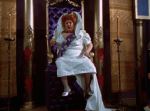
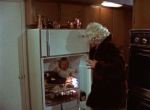
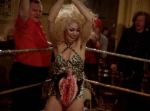
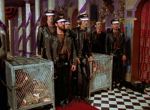
Today’s cinema adventure: Flesh Gordon, a 1974 semi-“porno” feature spoofing the classic sci-fi movie serials of Hollywood’s golden age, directed by Michael Benveniste and Howard Ziehm and starring… well, probably no one you’ve ever heard of.  Rooted in the irreverently hedonistic sensibility of the so-called “sexual revolution” of the seventies, it lampoons the old-fashioned conventions of the original Flash Gordon adventures by sexualizing all of the story elements and adding lots of gratuitous nudity and sex.  Campy, juvenile, and amateurish, it nevertheless has a certain goofy charm that helped to make it a favorite on the midnight movie circuit and something of a cult classic.  It is also notable for its cheap-but-well-executed special effects, which were orchestrated by several future industry legends (most notably specialty make-up pioneer Rick Baker) and were sufficiently impressive to put the film into consideration for an Oscar nomination for Visual Effects- though ultimately the Academy opted to skip the category that year due to a shortage of suitable contenders.

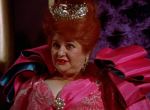
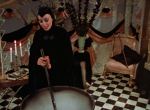
As written by co-director Benveniste, the plot follows the story of the classic Flash Gordon serial so closely that the filmmakers had to include a disclaimer before the credits, expressly stating that the movie was meant as a parody and “homage,” in order to avoid a lawsuit from Universal Pictures, copyright holders of the original.  As the film opens, the titular hero is traveling by plane, summoned by his scientist father to help in the effort to stop a mysterious attack from outer space; the earth, it seems, is being bombarded by a “sex ray,” which causes widespread havoc by causing people to break into spontaneous orgies, and young Flesh is so far immune to its effects.  Unfortunately, the plane is hit mid-flight by a blast from this deadly extra-terrestrial aphrodisiac; its pilots abandon the cockpit in order to join the sexual frenzy in the passengers’ cabin, and the unmanned aircraft begins to plummet from the sky.  Flesh manages to rescue Dale Ardor, a young female passenger with whom he struck up an acquaintance before the ray hit (compelling her to rip off her clothes, of course), and the two parachute to safety on the ground below.  There, they find themselves at the secluded home of Dr. Flexi Jerkoff, an eccentric scientist who has traced the source of the sex ray to the planet Porno, and has built a spaceship- decidedly phallic in design- in which he plans to go there.  Flesh and Dale, naturally, decide to join him, and the three new comrades set out on their journey through space.  It doesn’t take long to arrive- this is super science, after all- and they soon find themselves in the palace of Emperor Wang the Perverted, who plans to dominate the universe through its libido; the deviant despot conscripts Jerkoff into his service, declares Dale as his new bride, and sends Flesh off to be castrated.  However, Amora, the Queen of Magic, has become smitten with the young hero; planning to make him her consort, she abducts him from the palace, with Wang’s men in pursuit.  Though Amora’s vessel is shot down, Flesh escapes intact; Jerkoff, meanwhile, has managed to flee from the palace, as well.  The two adventurers reunite, and, joining forces with Porno’s rightful ruler, Prince Precious, they undertake to rescue Dale, destroy the sex ray, and overthrow the evil Wang once and for all.  To do so, they must defeat a tribe of evil lesbian Amazons, outwit Wang’s spies, and defeat the Great God Porno, a giant satyr-like beast awakened from his long slumber by the evil Emperor himself.

It’s probably unnecessary for me to have provided even such limited detail in the above synopsis; like most so-called adult movies, the plot of Flesh Gordon is really immaterial.  It exists merely to provide a framework for the various titillations and parodies which are, of course, the only reason for the film to exist.  As far as titillation goes, though virtually every scene features some degree of nudity, and there are a number of scenes in which people are seen having sex, the truth is that Flesh Gordon is really pretty tame, even by 1974 standards.  Part of the reason for this is that, although the film originally included numerous scenes of explicit, hardcore sex, both straight and gay, the filming of such material was illegal in Los Angeles at the time it was made (hard as that may be to believe now); to prevent their prosecution for pandering, the filmmakers were forced to surrender all such footage the L.A. vice squad, and Flesh Gordon was released without explicit pornographic content.  This was undoubtedly seen as a setback by its makers, but in the long run it was better for the movie; if it had been full-fledged porn, it would not have been as widely seen- or perhaps, at least, not by the same audiences- and would likely not have achieved the popularity it eventually enjoyed.  In the more “soft-core” form it was forced to take, it managed to become as much a lampoon of “skin flicks” (as they were euphemistically called in those days) as it was of the corny space operas of old.

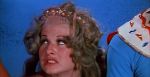
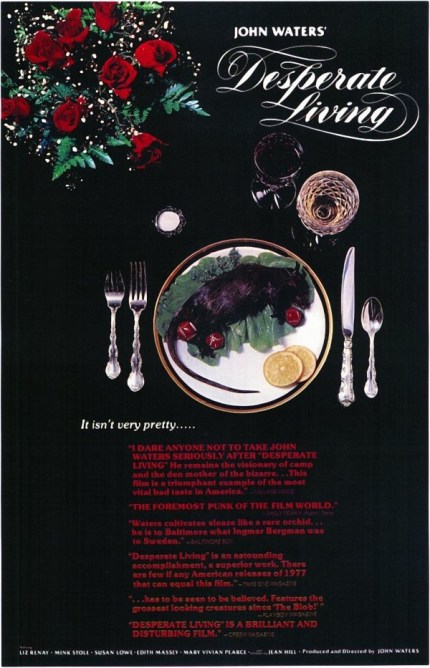
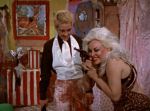
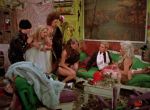
This brings us to the satirical side of the film.  Though Flesh Gordon is loaded with crude sexual innuendo and sophomoric jokes, it somehow manages to be endearingly cute.  Sure, the humor is as juvenile as the nudity and sex are gratuitous, but this in itself is part of the charm.  Benveniste’s script does not pretend to be anything other than a collection of cheap laughs; it is free of the kind of hip, self-aware cleverness that mars so many similar attempts at this kind of send-up.  The comedy is so obvious and so gleefully raunchy, so painfully and ludicrously obvious, and just so plain silly, that it is impossible for any but the most snobbish viewers to be unamused; you roll your eyes and shake your head, but you chuckle as you do so.  One of the main reasons for this is the movie’s underground feel; the cheap sets, the grainy 16 mm look of the photography, and the hopelessly amateur acting, all give the impression of watching some weekend garage-filmmaking project undertaken by naughty teenagers while their parents are out of town.  The two directors clearly have limited knowledge of how to make a movie, with poor staging, sloppy editing, and muddled storytelling that sometimes obscures the intended focus of scenes and prevents us from getting an adequate view of would-be sight gags.  It’s somewhat frustrating, at times, but it has the effect of making much of the movie’s funniest material play like throwaway gags, the kind of parenthetical comic detail that contributes to the underlying wackiness that pervades the piece as a whole.  At times, the film’s raw quality is similar to the early work of John Waters- certainly the sex and nudity has the same glamorless, unattractive sensibility as one finds in Waters’ films from this same era- but with more of an attempt at emulating the polish of mainstream Hollywood.  It’s an attempt that falls far short of the mark, but, of course, that’s part of the joke.

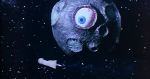
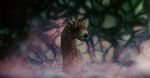
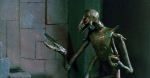
Despite the low budget and the obvious inexperience of its directors, however, Flesh Gordon manages to impress with its special effects.  Certainly, these are not the high-tech visual feats of magic one could expect from an A-list studio production, but cheap though they may be, there is a sense of artistry on display here that lifts the movie above the level of low-grade exploitation cinema.  Under the supervision of Walter R. Cichy (one of the film’s three producers, along with Ziehm and Bill Osco), the designers and artists involved- many of whom, as mentioned, were established or soon-to-be established industry professionals- manage to infuse their bargain-basement work with the kind of imagination and tongue-in-cheek humor that makes the cheapness seem like a choice.  With an obvious nod to the spaceship-on-strings style of classic sci-fi history, the movie delivers deliciously cheesy visual delights to go with its inane dialogue and corny story; shaky walls, cannibalized props and sets, and primitive in-camera trickery create the appropriately campy environment, populated by such ridiculous creatures as “Penisauruses” and the aforementioned Great God Porno (voiced, sans credit, by the then-young-and-unknown Craig T. Nelson) which are brought to life by surprisingly deft stop-motion animation.  In addition, the thrift-store pastiche of costumes and the over-the-top execution of the makeup give the whole thing a Halloween party tackiness that somehow puts the perfect finishing touch on the whole package.

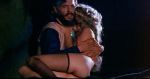
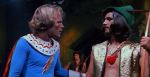
As for the cast, the only name of note is Candy Samples, a former pin-up and porn actress who earlier had worked with Russ Meyer, who makes a cameo as Queen Nelly, the eye-patched (and breast-patched) ruler of the Amazon lesbian tribe.  For the most part, the performances are as banal as one might expect, with Jason Williams and Suzanne Fields, as Flesh and Dale, respectively, barely able to muster the sense of excited urgency that is, pretty much, all that is required of them- well, except for their bodies, of course, both of which are suitably sexy in that pre-personal-trainer (and pre-silicon) early seventies way.  As Dr. Jerkoff, Joseph Hudgens (in his only credited film role) manages to combine likable earnestness with a Vaudevillian sensibility that, for some reason, conjures memories of Groucho Marx, and Lance Larsen exhibits signs of personality as the deposed Prince Precious, a leotard-clad Robin-Hood-like figure, mercifully keeping his mincing to a minimum as he allows the character’s name to do most of the work in conveying his sexual preferences.  The acting highlight, as far as it goes, is the performance of William Dennis Hunt as Emperor Wang, sporting outrageous Fu Manchu makeup as he chews the scenery with appropriate relish, laughing maniacally as he incites his mostly naked subjects to copulate and calling his minions “dildoes.” To be sure, none of these performances are Oscar-worthy, but they work well enough for a film which gets most of its charm from being deliberately bad.  There’s something about bad actors doing their best- even when it’s terrible- that is much less painful than good actors purposely trying to be bad; in this case, it complements the style of the film and, somehow makes it all the more satisfying.

Don’t get me wrong here; though it might seem I’ve raved about Flesh Gordon, it’s hardly some sort of visionary masterpiece.  It’s pure schlock, in fact, and shoddily made schlock, at that.   What makes it entertaining is its sheer unpretentiousness.  Benveniste and Ziehm were simply trying to make a cheap, funny, sexy movie that would appeal to youthful audiences; the vehicle they chose was designed to poke fun at the old-fashioned entertainment of an older generation, and whether by accident or canny exploitation, they managed to ride a wave of nostalgia that was rising in popular culture at the time.  These factors may have helped to give their movie a bit more push than it otherwise deserved, but what made it become a sort of mini-phenomenon was the fact that, for all its ridicule of the serials that inspired it, it exhibits a clear love for that source material.  Despite its effort to reinvent Flash Gordon as a blue movie, Flesh Gordon is undeniably sweet, amusingly naive, and more than a little geeky.  It’s these qualities that make it worth sitting through, not just once but over and over, despite the lousy acting and bad jokes; personally, I would rather watch Flesh Gordon a hundred times than have to watch the abysmal 1980 remake of Flash Gordon even once more.  Though this movie makes fun, it also celebrates the original; in truth, it’s really pretty true in spirit to those old melodramatic space operas, because they, too, were designed to appeal to the lowest common denominator by exploring the public’s sensationalistic urges for action, fantasy and, yes, even sex.  After all, the costumes worn in those 1930s movies were pretty sexy, for their time; by 1974, they might have had to eliminate costumes all together in order to get the same effect, but the principle is still the same.  Obviously, Flesh Gordon is not for die-hard prudes; but you are likely to see racier stuff on late-night cable TV than you will in this movie, so anyone else is encouraged to check it out, at least once.  It’s likely to be one of the more unique cinema adventures you’ve had, and besides, do you really want to miss a movie where the only way to defeat the villain is to use the “pasties of power?”

http://www.imdb.com/title/tt0068595/?ref_=fn_al_tt_1


The Cabin in the Woods (2012)

The Cabin in the Woods (poster)

Today’s cinema adventure: The Cabin in the Woods, the genre-twisting feature, from the team of Joss Whedon and Drew Goddard, that satirizes horror movie conventions within a larger science fiction framework as it tells the tale of five college-age friends who are secretly manipulated by a mysterious high-tech agency during a weekend getaway at a mountain lake.  Filmed in 2009, it was held from release by the bankruptcy of its studio, MGM, which could not afford the cost of marketing and publicity; eventually picked up by Lionsgate Films, it finally hit screens in early 2012, when the long anticipation by Whedon’s many fans turned it into a major box office success.  Lauded by many critics for its clever restructuring and skewering of the “slasher movie” genre, it managed to find its way onto several best-of-2012 lists in addition to becoming one of the year’s biggest financial hits.

The movie begins with the back-and-forth intercutting between scenes of a large-scale government tech lab where final preparations are under way for an elaborate and unspecified project, and a group of five young people getting ready for a trip to a secluded mountain cabin.  The kids- Dana (the sweet and comparatively wholesome “good girl”), Jules (the bleached-blonde sexpot), Curt (Jules’ jock boyfriend), Holden (Curt’s studious friend, brought along as a blind date for Dana), and Marty (the pot-smoking nerd)- set out in an  RV, and, though they have an unsettling encounter with the attendant at a run-down gas station on the road to the cabin, they remain in high spirits, looking forward to a weekend of good times.  Meanwhile, it becomes clear they are being remotely monitored by the technicians in the mysterious lab, who seem to have complete control over their environment.  Upon arrival at their destination, the five friends discover that the cabin- recently purchased by a cousin of Curt’s- is an odd and disconcerting place, adorned with gruesome art, fearsome stuffed animals, and see-through mirrors, and they eventually stumble upon a trap door which leads to a secret basement full of odd and arcane relics.  Among these objects they find a diary, written by the daughter of the cabin’s original owners; as Dana reads it aloud, it reveals a horrific tale of torture, disfigurement, and murder, practiced by the family in the service of their twisted puritanical beliefs, and includes a strange Latin invocation- which she also reads aloud, unwittingly calling the long-deceased clan back from the dead.  Perhaps even more sinister is the fact that all of these events seem to be under the orchestration of the observing lab technicians, who watch with satisfied interest as the murderous zombies slink towards the unsuspecting young people in the cabin.  Needless to say, the weekend getaway is soon to become a terrifying fight for survival, in which the would-be victims will discover that their perilous situation has larger implications more dire than any of them could suspect.

The screenplay for The Cabin in the Woods was co-written by Whedon and Goddard, who worked together on Whedon’s cult-classic TV series, Buffy the Vampire Slayer; though it took them only three days to write, it is undeniably clever.  It’s difficult to discuss it in much detail without giving away too many of its secrets, but it is safe to describe it as a mash-up of Friday the Thirteenth and Night of the Living Dead as conceived by H.P. Lovecraft. This in itself is creative enough, but it’s also apparent that the pair have a definite agenda here, in which they use a sort of meta-drama- self-consciously utilizing all the stock characters and conceits of the slasher film scenario- to explore the deeper psychological origins of the horror genre, linking it both to its ancient roots in the superstitions and religions of ancient cultural memory and to its modern role as a fetishized outlet for the primordial and antisocial urges that still lie at its core.  The story of the five not-so-innocent kids is enfolded into a larger plot that allegorizes the makers of such formulaic horror vehicles themselves, using an elaborate metaphor to satirize their motivations and criticize the growing trend towards “torture porn” within the genre.  The concept is ingenious, audacious and inspired; the writers have constructed a puzzle box of a movie, in which several layers of plot fit neatly inside each other, with each addressing larger and more significant themes, ultimately providing both homage to and an indictment of a genre which celebrates the bloodlust lurking in the core of human nature.  At the same time, they endeavor to create a movie which works simultaneously as a high-concept art piece and a wildly entertaining example of schlock cinema.  With the first goal, they come respectably close; with the second, however, they are much further from the mark.

On a conceptual level, The Cabin in the Woods works well; the underlying conceit, though veiled, is apparent from the beginning, allowing us to appreciate the way it informs the narrative as it gradually emerges to our full understanding.  It’s a good choice, because on the surface level, what we are given is far too ordinary to hold our interest for long.  The movie-in-a-movie storyline, with its hapless young victims being stalked and slaughtered one by one, is so familiar and predictable as to be completely devoid of shock; it’s deliberately derivative, of course, but the unimaginative, by-rote handling of the formula is no less dull for its intentions.  To make matters worse, the dialogue, loaded with obligatory comic banter and snarky “fanboy” in-jokes, is stale and stilted, with a decidedly sophomoric reliance on cliché and self-indulgence; the characters, though an effort is made to give them more personality and depth than the typical stock figures in such fare, still behave like one-dimensional stereotypes, and despite the fact that we are clearly told that their actions are being manipulated by their white-collar puppeteers, again, it makes little difference to our level of emotional investment in them- or rather, our lack of it.  It’s true that. as the movie expands from the killer zombie hillbilly scenario, they (the survivors anyway) are seen to have a little more on the ball than they’ve managed to show so far, but by the time this larger plot has taken over, so much screen time has been squandered on the regurgitation of shallow horror convention that it’s hard to care.  Even though it happens too late in the game, the development of the framing plot, in which we discover the real horrors of the cabin in the woods, is far more original and engaging, though it, too, suffers from the malady of unconvincing dialogue; the film’s final quarter is so much more interesting that it heightens our disappointment over everything that has gone before.  Still, when the movie finally reaches its endgame, fully revealing its devilishly clever dual purpose as a satirical exploration of form and a cynical commentary on human nature, it succeeds in winning us over with its sheer audacity, leaving us with a sort of grudging delight and making us wish that Whedon and Goddard had spent more than three days writing their screenplay.

The movie built on that script is certainly made well enough; directed by Goddard, with Whedon serving as producer (presumably too involved with his myriad other creative endeavors to get behind the camera on this one), it succeeds in emulating the stylistic sensibilities of the teen scream genre it draws from, using time-honored techniques of visual vocabulary to tell its story (with a good bit of sly humor) and expanding to a slicker, more contemporary mode as the focus shifts loose from the constraints of genre formula. There is nothing truly mind-blowing here, in terms of visual style or innovation, just smart utilization of the established tricks of the trade, but Goddard has clearly done his homework, and he pulls it off in a workmanlike fashion. More overtly impressive, from the standpoint of cinematic creativity, is the work of the movie’s designers and technicians, who give us a number of delicious visual treats, particularly in the climactic scenes involving an everything-but-the-kitchen sink catalogue of movie monsters ranging from the familiar (murderous clowns, werewolves, sadistic hell-spawn) to the not-so-familiar (a killer unicorn, a lamprey-faced ballerina, and a decidedly grotesque merman). These sequences were accomplished by an impressive assemblage of the finest effects artists and technicians in the industry, requiring the rental of extra facilities to accommodate the sheer number of workers, and shooting at the huge aerospace building of the British Columbia Institute of Technology, since the available studio space was inadequate for the necessary scale. The unprecedented effort was worth it- this section is by far the most fun and memorable few minutes in the movie, generating more actual laughs and thrills than the entire pick-em-off-one-by-one saga that takes up the first three-quarters of screen time.

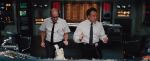
The film’s other production values are solid, as well; the cinematography by Peter Deming, the musical score by David Julyan, the production design by Martin Whist – all these are several cuts above the level of the low-budget exploitation thrillers upon which The Cabin in the Woods depends for inspiration, which is not necessarily a good thing. A little amateurish roughness around the edges might have gone a long way towards bestowing Goddard’s film with more of the authentic grindhouse flavor it sorely needs.  The higher quality is appreciated, however, when it comes to the performances, since bad acting is rarely a plus, and since the film requires a bit more nuance from its players than the typical horror entry.  Though it’s notable that two of the cast members are Chris Hemsworth (as Curt) and Richard Jenkins (who shot their roles here before making it big as Thor and earning an Oscar nomination for The Visitor, respectively), the true stars are Kristen Connolly and Fran Kranz, as Dana and Marty, who are both charming enough, and more importantly project the intelligence and spunk needed to make them into a convincing hero and heroine.  Jenkins and Bradley Whitford are goofily likeable as the pair of elder-generation nerds who serve as team leaders for the mysterious behind-the-scenes project, and Hemsworth, Anna Hutchison, and Jesse Williams, as the remainder of the youthful adventurers, succeed in making their characters more than the mere ciphers they might have been.  Sigourney Weaver, who seems to have made a supplemental career for herself playing self-referential cameos in this kind of satirical sci-fi fare, makes a surprise appearance near the end, but disclosing the nature of her role would be too much of a spoiler; suffice to say that her presence onscreen is welcome and her performance is amusing without being over-the-top.

I suppose I should confess that I have never been particularly fond of the “slasher movie” sub-genre, though most of my generation, which grew up with them, seems to consider them essential touchstones of pop culture experience.  I always thought they were predictable and dull, and rarely frightening; consequently, I am perhaps not the best person to judge the effectiveness of The Cabin in the Woods, either as a legitimate entry or as a parody.  Many viewers have responded much more positively than I to Whedon and Goddard’s Lovecraftian mind-bender, but even I can say that it’s worth a look.  Even though, ultimately, I found it as predictable and unengaging as the films it sends up, it contains many aspects that impressed me, and yes, even entertained me.  For one thing, it has a lot more “heart” than most of these cold-blooded slaughter-fests, reminding us that alongside those savage instincts in our unconscious there are also nobler ones; though, in the end, the film’s “message,” if you can call it that, is cynical and even nihilistic, it leaves you with a more or less positive view of mankind- in the individual, if not in the collective.  It’s also a very smart movie, with canny observations about human behavior on the personal, social, and cultural level, and it weaves these into its formulaic plot in a way that illuminates the stock situations and conventions, revealing the deeper implications of the well-worn narrative structure and helping us to see it as more than mere repetitive drivel.  Finally, I can truly embrace its creators’ avowed purpose of decrying the level to which the horror genre has sunk in our modern era; most horror movies today are mindless spatter films, capitalizing on flavor-of-the-week trends and using sensationalistic formats to earn a quick buck and nothing more.  At best, they are meaningless, and at worst, they are thought pollution, celebrating cruelty and violence for their own sake and reinforcing some very ugly behavioral tendencies in an audience that is typically of a very impressionable age.  The Cabin in the Woods attempts to address this state of affairs by offering an alternative which both satisfies the need for a good scare and stimulates the intellect, as many (though certainly, admittedly, not all) of the so-called “old school” horror films tried to do.  It’s very clever, alright; unfortunately, in the end, it’s too clever for its own good.  Those who are likely to clue into the brainier aspects of the film will probably not respond to the horror, and those who are in it for the cheap thrills will undoubtedly be disinterested in any higher purpose.  Of course, there is a convergent group of viewers- most of them, probably, already fans of Whedon’s nerdy-cool fictional universe- who will find both levels of The Cabin in the Woods right up their alley, and they are the ones for whom this movie is made.  You might not be one of them, but it’s still worth watching; even if it doesn’t quite work (and even if it doesn’t look like it, at first glance), it’s refreshingly intelligent filmmaking.  There’s precious little enough of that out there, so get it where you can.

http://www.imdb.com/title/tt1259521/?ref_=sr_1

WARNING: If you haven’t seen the movie, you should know that looking at the pictures below might be a mistake.  I try not to provide spoilers, but some of these images might give things away that you don’t want to know ahead of time, and once you see something, you can’t unsee it, so view at your own risk.

Prick Up Your Ears (1987)

Prick Up Your Ears (poster)


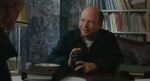
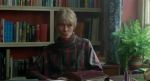
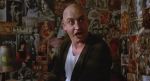
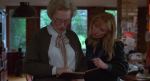
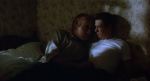
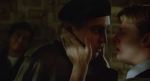
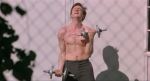
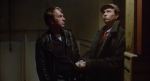
Today’s cinema adventure: Prick Up Your Ears, the 1987 feature by director Stephen Frears about the short life and brilliant career of English playwright Joe Orton, whose rise to success in the theatrical scene of mid-sixties London was cut short by his brutal murder at the hands of his long-term partner, Kenneth Halliwell.  Based on the biography of the same name by John Lahr, the film approaches Orton’s life with a macabre sense of humor much like that found in his plays, and features superb performances by Gary Oldman and Alfred Molina (as Orton and Halliwell, respectively); it was greeted by enthusiastic reviews by critics upon its release, though its popular appeal was, naturally, somewhat limited by its subject matter- particularly outside of Britain, where Orton’s name is less familiar.  Nevertheless, it achieved relative box office success due to the wave of interest in British imports during the eighties, and, along with the previous year’s Sid and Nancy, helped to secure Oldman’s place as one of the most promising- and sought-after- young actors of the decade.

The screenplay of Prick Up Your Ears– penned by Alan Bennett, another renowned playwright whose own career dates back to the same era as Orton- is expanded from the book upon which it is based by the inclusion of author Lahr as a character, using his research and writing of the acclaimed biography- particularly through his interviews with Orton’s agent and close friend, Margaret Ramsay- as a means of framing the story.  This device allows for a non-linear exploration of Orton’s life, centered around the notorious murder-suicide which brought it to an end, that reveals key moments of the playwright’s history as it makes a more in-depth examination of his relationship with Halliwell.  In this manner we are given a narrative which chronicles Joe’s life from his working class youth in Leicester, where he pursues an interest in drama despite the intentions of his parents to educate him for a career as an office worker.  He manages to earn a scholarship to the Royal Academy of Dramatic Arts in London, where he meets and becomes involved with Halliwell, an older student attending the school through a small inheritance.  The two take a flat together, and begin an unsuccessful, decade-long attempt to collaborate as writers; Joe also indulges in an almost daily habit of anonymous sexual encounters in public places- mostly men’s restrooms- and writes about them in his diary.  The two are eventually arrested (for defacing library books) and serve short jail terms, during which Joe writes- on his own- a play that he submits to BBC Radio; it is accepted and produced, marking the beginning of his rise to fame- and also of the deterioration of his relationship with the jealous, insecure Halliwell.  As Joe becomes the toast of the London theatrical world, with smash hit plays and an offer to write a screenplay for The Beatles, Ken becomes increasingly morose and frustrated at being kept out of the spotlight, even after the couple spends a lengthy vacation in Morocco; finally, no longer able to face a life lived in the shadow of another’s success, Ken kills Joe as he sleeps, beating him savagely to death with a pall peen hammer, then takes an overdose of pills to follow his lover into death.

As a rule, I generally find film biographies to be somewhat unsatisfying; though, at their best, they can be a showcase for tour-de-force acting, superb direction and magnificent scenic and costume design, at their core they often suffer from an impossible desire to somehow encapsulate a person’s entire life and essence into a two-or-so-hour time frame, or to interpret their motivations and actions in a way that casts them in a particular light.  In truth, of course, even the strictest documentary cannot avoid inserting a subjective viewpoint, but biopics, at their most banal, make a deliberate effort to deify- or vilify, in some cases- their subjects, resorting to the manipulative tactics of melodrama and completely ignoring or altering facts in order to tell a more “satisfying” story.  The most artistically successful examples of this genre are those that use their subject as a means to communicate ideas about universal experience, or simply to entertain us with a little-known story from our past that may, hopefully, encourage us to learn more on our own.   Prick Up Your Ears does both.

Frears’ movie is blessed with the participation of numerous talented individuals with a clear affection for- and familiarity with- Joe Orton and his work, and they have here taken pains to create a picture of this influential and iconoclastic figure that presents his life in a manner that is, if not 100% factually accurate, at least true to his own vision of the world in which he lived.  Much of this is made possible by the use of his diaries as a source of information, both for the original published biography and for the screenplay; through this remarkable document, which has since been published in its own right, we are granted unprecedented access to Orton’s most private thoughts and experiences- most obviously his frequent and adventurous sexual escapades, recorded with particular pride and relish- and allowed to see the author’s own perspective on himself and his life.  Of course, that perspective- dark, cynical and full of deliciously salacious humor- comes as no surprise to those familiar with Orton’s plays, brilliant farces which skewered traditional theatrical forms while undermining and exposing the hypocrisies of social convention and the ugliness hidden behind the all-important facade of so-called “decency.”  Bennett writes the story of Joe and Ken as if it were itself penned by Orton, peppering the dialogue with lines that seem as if they were lifted directly from his writing and presenting the people that surround the two central figures as if they were characters in one of his plays.  This approach makes for a truly Ortonesque experience of Orton himself, but it also has the shrewdly observed added effect of showing how the playwright drew inspiration from the people and circumstances of his real life; seeing the world as Joe himself saw it makes it clear that his particular genius came simply from transcribing what he saw around him into his work.  The farcical absurdities of his real-life experience fed his writing, and the fact that they are here no less believable for their absurdity suggests that very little exaggeration was required to translate them to the stage.

Joe’s perspective is not, however, the only one brought into play in Bennett’s and Frears’ vision of his life.  The film is also, of course, heavily informed by Lahr’s biography, which casts a more detached and empirical eye on the playwright- in particular on his relationship with Halliwell- and allows us to see him in a more humanistic light, perhaps, than that toward which he might have been inclined.  This does not mean, however, that Prick Up Your Ears takes any kind of moral stance on Joe- or Ken, for that matter- in its depiction.  On the contrary, the movie takes pains to portray the pair as they were, without imposing judgment, and allows us to draw our own conclusions; though their end was undeniably tragic, and a good deal of the film can be seen as an examination of the factors that led up to it, there was more to Joe and Ken’s connection than their horrific final destiny, and Frears and Bennett make sure we see as many other facets as possible of their lives together.  Finally, in exploring their relationship, and the changing dynamics created by collaboration, success, fame, and failure, the movie also explores the way these factors are reflected in John Lahr’s marriage, and by extension, suggests certain observations about the nature- and the pitfalls- of mixing creative endeavor with romantic attachment.

Of course, for most people who have even heard of Joe Orton- outside of theatrical and literary circles, of course, and often even there- the lurid and scandalous circumstances of his death are far better-known than his work.  Frears and Bennett make certain that their audience knows, right from the start, that this event is the central focus of the film, a sort of epicenter from which everything else radiates.  The movie opens with a glimpse into the final, terrible moments, followed by the discovery of the bodies and the subsequent invasion of the bloody scene by the authorities.  We are, however, given only a peek, so that for the rest of the movie, we are left to hope for the kind of graphic, gruesome detail we want to see- and we do want to see it, as Joe himself would likely understand better than anyone.  Indeed, it is this gory revelation that the director uses as bait, like a carrot dangling before us as we make the journey through Joe’s life and times, motivating us to stay with the story so that we can get that nasty payoff at the end; and Frears gives it to us, alright, in a harrowingly real depiction of the brutal murder and its aftermath that is likely to affect even the most hardened viewer and leave nightmarish, lingering visions for some time afterwards.  Yet even this dose of cold, hard realism in the midst of the film’s wacky theatricality is in keeping with its dedication to the flavor and spirit of Orton’s work; his writing, for all its juxtaposed sophistication and irrepressible rude-boy naughtiness, carried at its center an acute awareness of the ugliness of human experience, an ignoble convocation of bodily functions- sexual, scatological, and otherwise- which makes ludicrous all attempts to dignify it with pretense or affectation, and is made all the uglier by the mean-spirited cruelty with which we treat each other.  Orton’s brutal death at the hands of his lover- the ultimate bodily function as a result of the ultimate cruelty- serves as a reminder of the nihilistic truth of which he was a champion.

The darkness that underlies all the glib merriment, though, is only a part of the Orton mystique; though he was bent on exposing the inherent nastiness of the human condition, he also derived a great deal of fun from it.  He was a literary rebel, using his wit as a weapon against the stifling social conventions that made him feel like an outsider; he was a master marksman, and his wicked skills gave voice to a new generation that despised the stodginess of their moribund culture as much as he did.  More to the point, though, he had fun doing it; Joe Orton was all about having fun, an obvious fact to which his hedonistic lifestyle plainly attested, and the glee he felt in skewering the pompous and the conventional was almost certainly his main (if not only) reason for doing it.  That glee comes across in his writing, and is readily shared by audiences who see his plays, which are still frequently performed today.  It also comes across in Prick Up Your Ears.

Aside from Bennett’s screenplay, the movie benefits greatly from Frears’ steady, assured direction.  Noted for his skill in handling stories about socially isolated people adapting to new circumstances, a theme which runs through most of his films from My Beautiful Laundrette to The Queen, he shares with Orton an origin in Leicester, a fact which no doubt helped to solidify his understanding of and connection to the material here, and has a long collaborative history with Bennett.  He crafts his film with a perfect balance of the cinematic and the theatrical, creating a blend of gritty realism and heightened style enhanced by flourishes from both media; he also exhibits a showman’s knack for storytelling, managing to form a cohesive and unified narrative which engages our interest and remains easy to follow throughout its non-linear structure.  He is aided by meticulous production design which smartly re-creates the atmosphere of London in the swinging sixties, contrasting it with the mundane and utilitarian environment of working-class Leicester, as well as with various institutional settings and scenes of the seedy sexual underworld that arise within Joe’s checkered story.

Most importantly, though, Frears’ film is blessed with the magnificent performances of its two stars.  Oldman and Molina are electrifying, offering layered, chameleonic portraits of the cheeky, good-natured rude boy and his arch, affected lover that reveal the traits, both positive and negative, in both without sentimentality or comment.  Oldman truly seems to channel his subject, not only bearing a strong physical resemblance to “the most perfectly-developed playwright of his day” but capturing the particular seductive swagger that is evident in photos and the few films that survive of Orton; it’s not mere mimicry, however, for he also infuses the doomed writer with a palpable humanity that allows us to truly involve ourselves with him emotionally, and understand why even those who thought him shocking and indecent found him irresistible and endearing, nonetheless..  The more difficult task, though, is Molina’s; he gives us Halliwell in all his insufferable pomposity, and takes us through his deterioration without varnish, and yet he, too, finds the human element here that makes poor Ken as much a tragic figure as Joe- a man of intelligence, wit, and emotional generosity, clearly affected by psychological issues that might have been more readily understood and addressed in our modern day, but which, at the time, were subject to as much stigma and shame as his homosexuality.  Molina gives a heartbreaking performance, and it is largely thanks to him that Prick Up Your Ears succeeds in capturing the full ironic scope of the Orton-Halliwell saga.  In the third principal role, that of legendary theatrical agent Margaret “Peggy” Ramsay, Vanessa Redgrave is, as always, superb; her glittering charm and sophistication light the screen, but she also gives us a clear view of the character’s opportunistic and manipulative aspects- she, like Joe, is “getting away with it,” but that doesn’t make her any less likeable, in the end.  Redgrave’s presence also adds an important pedigree that links the film directly to the world it portrays; she is, of course, a member of one of Britain’s great acting dynasties, and was deeply immersed in the London theatrical scene during the era in which Orton was active.  This connection is, perhaps, immaterial in terms of practical application to the execution of the film, but it does contribute a sort of authenticity to the proceedings that does seem, to me at least, to have an effect, however intangible, on its sense of validity.  Wallace Shawn (another renowned playwright) uses his familiar nerdy intellectual persona to good effect as biographer Lahr, Frances Barber has a touching turn as Orton’s sister, Leonie, and Janet Dale provides a memorable illustration of classic Ortonesque caricature as Joe and Ken’s doting landlady.  In smaller, cameo-style roles, familiar English character actors such as Julie Walters, Richard Wilson, and Margaret Tyzack bring their considerable talents into the mix, contributing much to the overall perfection of tone and style that makes Prick Up Your Ears such a delightful marriage of film and theater influences.

It’s pretty obvious, by now, that Prick Up Your Ears is a highly recommended cinema adventure, as far as I am concerned.  The fact that I am personally a great admirer of Joe Orton is really not a factor in my enthusiasm for the film, except in the sense that my expectations of any work dealing with him are stringently high, making Frears’ movie all the more impressive to me for its worthiness to the subject matter.  I am confident that this smart, stylish and accessible piece will be an enjoyable experience for almost any mature viewer, whether they are fans of Orton or have never heard of him; even if you have no interest whatsoever in theatrical history, British or otherwise, Prick Up Your Ears offers up a fascinating story that is no less entertaining for being true.  That said, it should be mentioned that it is a film in which homosexuality plays an integral part, and it does include extensive, if not graphic, depictions of gay sexual behavior; if such matter is uncomfortable for you, for whatever reason, then consider yourself warned.  This subject brings up an important point concerning Prick Up Your Ears, and indeed about Orton himself; though the playwright was not overtly involved in any form of struggle for gay rights- his death took place two years before the Stonewall riots in New York, after all- and though the film does not address or take any sort of stance on the issue, the subject is inseparably woven into the fabric of this story.  As gay men living in a society that criminalized and ostracized their kind, Orton and Halliwell lived their lives as disenfranchised outcasts, forced to suppress their true nature in order to avoid persecution and even imprisonment; though it was the older Halliwell who helped Joe to accept and embrace his sexuality, it was the younger man who would go on to live an audaciously open life in the face of societal disapproval, and despite his efforts to bring Ken along, he was unable to overcome the obstacles of shame and insecurity that would eventually result in the tragic conclusion of their love story.  Each man took a different direction in reconciling his sexual identity with cultural expectation, and though this was clearly not the only factor in the murderous frenzy that took their lives, it is beyond question that it played a substantial part.  In this way, though on the surface it seems only a parenthetical circumstance that defines the two central characters, homosexuality- or to be more specific, the rejection of homosexuality by so-called “normal” society- is the issue at the core of Prick Up Your Ears.  Those with a more militant bent might wish that Bennett and Frears had taken a more direct assault on the social injustice that marked the cultural landscape of Orton and Halliwell’s England; but the story, like Joe’s plays- and Joe himself- speaks for itself.  Joe Orton chose not only to be open about who he was, but to flaunt it; he simply was, and the strength of that assertion was sufficient to make him an icon.  Prick Up Your Ears is a celebration of that bold spirit, and it tells Joe’s story in a voice very much like his own; that makes it not only a testament to the lasting mark he made  in his short life, but also a bloody good time.

http://www.imdb.com/title/tt0093776/?licb=0.2046471543502929


The Long, Long Trailer (1954)

The Long, Long Trailer (poster)

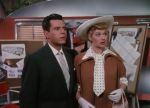
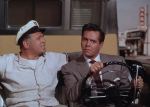
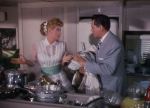
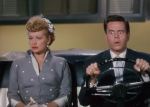
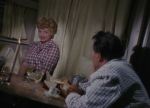
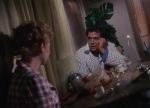
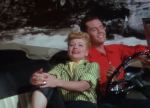
Today’s cinema adventure: The Long, Long Trailer, the 1954 big-screen showcase for the talents of America’s then-favorite TV couple, Lucille Ball and Desi Arnaz, directed by Vincente Minnelli and casting the two stars as a pair of newlyweds on a cross-country honeymoon in a super-sized luxury trailer home.  Designed as a vehicle for the tried-and-true antics that fueled the duo’s highly popular comedy series, I Love Lucy, it was considered a risky project by its production studio, MGM, who were skeptical that audiences would pay to see Ball and Arnaz in a movie theater when they could watch the pair, for free, in the comfort of their own living room; Arnaz reportedly made a $25,000 bet with the studio heads that the film would out-gross their highest-earning comedy to date (1950’s Father of the Bride).  Moviegoers responded well to the opportunity to see the couple’s wacky hi-jinks against the expanded backdrop of location-filmed American scenery, turning the film into one of the year’s biggest hits and winning the bet for the confident Arnaz.  Though the movie is ultimately a side note in the success story of these two American entertainment icons, it nevertheless has remained popular among their fans and offers a rare opportunity to see their beloved matrimonial shtick transported out of the studio-bound confines of their classic television show.

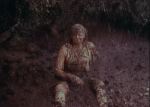
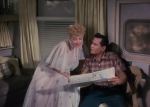
Based on a 1951 novel by Clinton Twiss, the screenplay (by Albert Hackett and Frances Goodrich) tailors its plot for the needs of the Ball/Arnaz team’s familiar joint persona.  Framed as a flashback, it tells the story of “Nicky” and “Tacy” (noticeably only a few letters off from “Ricky” and “Lucy”); he is a civil engineer whose job requires his travel to various projects around the country, and she, seeking a way to keep them from being separated during the early days of their marriage, hits upon the idea that they should purchase a travel trailer in which they can set up housekeeping wherever his work takes them.  Though he is skeptical, she convinces him with the notion that a trailer will cost them far less than a house and allow them to save more money for their future.  With their new, enormous, top-of-the-line trailer (plus the new, more powerful car they have had to buy in order to tow it), the couple sets out on their honeymoon- a leisurely road trip across the Sierra Nevadas to Nicky’s next job assignment.  Things start out pleasantly enough, though their trailer park wedding night doesn’t go exactly as planned; but as the trip goes on, the mishaps begin to pile up and take their toll on the relationship.  A rainstorm leads to a night spent stuck in a mudbank, Tacy’s attempts at directing Nicky’s steering results in major damage to her aunt and uncle’s house, and her effort to cook dinner in the moving trailer ends in disaster.  The final straw comes when her growing collections of preserved fruit and souvenir rocks become so heavy that the trailer is dangerously overweight, placing the newlyweds in serious danger as they attempt to drive up a steep and winding mountain road- a trip which, even if they manage to survive, may well mean the end of their marriage.

The Long, Long Trailer is hardly the kind of film that warrants an in-depth analysis, though if one wanted to use it as a springboard for discussion about sociological and cultural characteristics of post-war American life, it would likely provide plenty of fodder.  Indeed, watching it today, it seems like a perfect snapshot, glossy and idealized, of the particular mindset of mid-fifties middle class America, personified by a young (well, young-ish) couple on the road to a shining new tomorrow, blessed with a new affluence, possessed of a can-do attitude, and excited about the endless possibilities that wait to be explored right here at home.  Of course, the entire premise of the comedy hinges on the fact that this romanticized fantasy is not quite in tune with reality- the adventure of building a new world on the domestic front is fraught with unforeseen difficulties and offers its own challenges to the character and spirit of those who undertake it.  All of which sounds deeper than it needs to sound, for in The Long, Long Trailer, social commentary is as heavy and unnecessary a burden as Tacy’s rock collection.

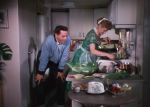
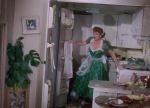
What this movie is about, nostalgic retrospect aside, is laughs; the American-Dream-on-wheels premise is entirely geared towards providing a mine of zany situations for the then-reigning royal couple of comedy to exploit.  Though the names are different (barely), the characters are, in essence, the same as their TV roles; Desi is the modestly successful, good-natured-but-hot-tempered immigrant husband (here, inexplicably, not Cuban but Italian), and Lucy is the well-intentioned manipulative housewife whose hair-brained schemes inevitably lead to hilarious complications.  The movie depends entirely on their comfortable chemistry together, their combative-but-affectionate dynamic, and Lucy’s consummate skill as a comedienne.  It is this last element that carries the film, of course; though they made a great team, and although he certainly holds his own during his moments in the spotlight, Desi was always the foil for Lucy’s comedic persona, a relationship upon which their act was utterly dependent.  The biggest laughs in the film come when she unleashes her flair for physical comedy- the classic sequence in which she tries to prepare a meal in the trailer while it is on the road is the movie’s highlight- but these moments work so well because she sets us up for them; she makes Tacy (which is short, by the way, for Anastasia- I know, it’s a stretch, but go with it) as endearing to us as to the hapless Nicky, and thanks to her rubber-faced expressions, we feel like co-conspirators with her, because we can read every thought and plan even as she hatches it herself.  It’s comedy genius, and to over-analyze it is pointless- it works because it works.  Lucy and Desi knew their audience, and they knew what that audience wanted; they weren’t about to take the chance of messing with a successful formula, especially when that formula was at the height of its popularity.  There is even a musical number, though not the kind of elaborate, slapstick-laced showstopper often featured on I Love Lucy, but simply a pleasant little duet performed as an interlude while the stars are driving into Yosemite National Park.  To be sure, the stakes feel a little higher in The Long, Long Trailer than they do on the TV series; there, no matter how big the disaster that results from Lucy’s schemes, we know it will never really threaten the blissful marriage at the center of the show, but here there is at least a more palpable illusion that they could end up apart- though, of course, on an intellectual level, we know that’s not very likely.  After all, this is a comedy, and even if it pokes a little bit of situational fun at the perfect domestic dream of the mid-fifties, it also embraces and reinforces that ideal; you can be sure, by the final frames, Ricky and Lucy… I mean, Nicky and Tacy will be locked once more in a tender and loving embrace.

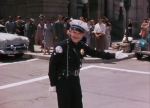
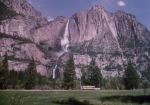
Although The Long, Long Trailer is mostly an on-the-road installment of the Lucy-and-Desi Show, this is not its only appeal.  There are a few interesting cameos from other familiar personalities of the era; Marjorie Main of Ma and Pa Kettle fame makes an appearance, as does an uncredited Howard McNear (better known as “Floyd the Barber”) and a prominently-billed Keenan Wynn (who has less than 30 seconds of screen-time- and no scripted lines- as a traffic cop).  Vincente Minnelli, one of Hollywood’s seasoned veterans at turning out crowd-pleasers, wisely keeps the main focus on his stars, but frames them in a gorgeous visual environment; fans of mid-century roadside Americana will adore this film, which sometimes looks like a travelogue produced by the U.S. Tourism Bureau and sometimes a montage of picture-postcards, interlaced with stylish tableaux of glamorous settings that look like vintage magazine ads, brought to life.  Minnelli (and his stars) were smart enough to utilize the advantages of the big screen, giving audiences a scope they couldn’t get from I Love Lucy, so there is an extensive use of breathtaking location footage, most notably in the aforementioned Yosemite scenes, but also in the hair-raising climax when the couple drives their trailer up the mountain (Mt. Whitney, to be exact).  The realism of this latter sequence aids considerably in its effectiveness, and captures the universal anxiety shared by anyone who has ever attempted to navigate one of the winding, narrow roads that lace the mountainous regions of America- or, for that, matter, the world.  The road trip experience, naturally, must include a good deal of focus on the vehicles used, especially the title “character” (for it is, truly, a character in the plot), which is a beautiful, canary yellow, 36-foot 1953 “New Moon.”  Those who care about such things will doubtless be delighted by the extensive depiction of this remarkable piece of mid-century design, in all its improbable luxury, as they will also be by the car which tows it, an equally beautiful 1953 Mercury Monterey convertible.  Of course, the costumes also add to the movie’s nostalgic appeal, with both Lucy’s and Desi’s outfits representing the epitome of mid-fifties fashion- not high–fashion, mind you, but modest, popular, middle-class clothes that conjure images from the countless grainy home movies taken by couples and families during the era.  In essence, The Long, Long Trailer is a love letter to its time, a nostalgic walk down memory lane for those old enough to remember it first-hand and a wide-open window through which younger viewers can catch a glimpse of an America before affordable plane travel and utilitarian super-highways made the delights of the road trip into a thing of the past.

It’s somewhat tempting, today, to watch The Long, Long Trailer with a sense of irony.  The feeling of gee-whiz wonder and self-discovery that permeated the cultural psyche of the fifties has long since fallen under the wheels of progress, transformed by the turbulent decade which followed into a quaint and kitschy joke; it’s almost impossible to believe in the naïveté we see displayed here, and the knowledge that Lucy and Desi, like so many of the “perfect” couples of the Eisenhower era, would later end their real-life marriage in an acrimonious divorce casts a somewhat cynical pall over the proceedings, and makes the inevitable happy ending seem like just another carefully packaged lie- which, of course, it was.  The whole of the movie is sentimentalized dream-factory nonsense, but that’s not a negative criticism in this case; it was never meant to be anything else, and it’s easy to forget, from a modern perspective, that the audiences of the day were no more fooled by the pretty-picture images of society presented by their popular entertainment than we are by those we are fed today.  Indeed, much of Lucy and Desi’s appeal for their many fans came because they (or at least, their characters) were a couple whose efforts to fit into a cultural ideal never seemed to go quite as planned; at the end of every misadventure, no matter what affectations they may have tried on or pie-in-the-sky dream they may have chased, what was left was simply them as they were, imperfect perhaps, but together- and that was all that mattered.  Though they themselves were icons of their era, forever associated with the now-archaic ideals and attitudes it held dear, their message transcended it; they were champions of love and companionship, acting out the universal experience of living together despite difficulties and differences- not an easy task in any era- and making us laugh at our own relationships by reflecting them back to us in exaggerated form.  To put it more simply, The Long, Long Trailer might seem like a movie we can watch with an aloof detachment, making arch commentary or snarky observations based in our modern-day sophistication- but it’s not.  It doesn’t take long to forget our superior stance and get caught up in the somehow endearing ridiculousness of Nicky and Tacy’s great experiment, and we end up laughing exactly as we were intended to laugh by the film’s creators- not with the hip, contemporary irony we may have expected.  Don’t mistake me here; I’m not saying that The Long, Long Trailer is anyone’s idea of great cinema, and I’m fairly certain that nobody involved in it thought of it that way, either.  It is, however, a fine example of slick Hollywood entertainment, designed to exploit the popularity of its stars and the mood of the time, and the fact that it still works as more than a mere curiosity piece is a testament to the considerable talent behind it.  Lucy and Desi made their true mark in television; their pioneering work there changed the medium forever, in countless ways, and their big screen projects were really little more than a footnote in their legend.  Even so, The Long, Long Trailer is a charming and worthwhile way to spend 90 minutes, and even the most jaded viewers are likely to be won over by it.  Of course, you might not be able to keep from wondering exactly when Fred and Ethel are going to show up, or when Nicky is going to break out the conga drums, but even if those things never materialize, you won’t miss them- at least not too much.

http://www.imdb.com/title/tt0047191/

Brave (2012)

Brave (poster)

Today’s cinema adventure: Brave, the 2012 animated feature from the Disney/Pixar powerhouse, directed by Mark Andrews and Brenda Chapman, and based on Chapman’s original story about a medieval Scottish princess who, unhappy with her proscribed role as a courtly lady, resorts to magic in order to “change her fate.”  Intended as the Pixar Studios first foray into the realm of fairy tales, it features a highly contemporary viewpoint on traditional gender roles and offers a heroine who takes action to determine her own destiny, as well as reinforcing the importance of maintaining family bonds and assuming responsibility for one’s actions.  It also features a lush, technically dazzling visual style, geared towards its original 3D theatrical presentation, and an array of stellar voice talent.  Not as successful as many of the studio’s previous efforts, it nevertheless has garnered much praise and received several award nominations as best animated film of the year.

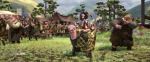
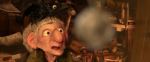
The plot concerns Merida, daughter of Fergus, the King of Dunbroch, a fierce warrior known as “the Bear King,” who carries the scars of his many battles and sports a wooden leg as a reminder of his encounter with Mor’du, a giant and seemingly demonic bear who haunts the surrounding forest.  Though the princess is a tomboy and a free spirit, encouraged by her doting father in her enthusiasm for adventurous pursuits (such as horseback riding, swordplay, and archery), her mother, Queen Elinor, maintains a tight control over her, preparing her daily with lessons in the more feminine activities that will someday be required of her as a great lady- elocution, music, embroidery, and the duties involved in the charge of a royal household.  Merida is displeased with the prospect of such a sequestered future, a fact which continually puts her at odds with her mother; their conflict comes to a head when the king’s three most prominent lords bring their sons to Dunbroch for a competition of skill to determine which of them will get the hand of the young princess.  Merida, refusing to bow to tradition, takes the field and defeats all three contestants, declaring herself the winner and claiming the right to be her own consort; Elinor, furious, reprimands her severely, causing the girl to run angrily into the woods.  There, she follows a trail of will-o-the-wisps to a hidden cottage inhabited by an old witch.  At first the crone insists she is merely a wood carver, but when Merida offers a priceless royal pendant as payment, she agrees to help the princess with a spell that will “change” her mother.  Returning to the castle with an enchanted cake, Merida presents it to Elinor as a peace offering; when the queen takes a bite, however, its effects are not quite what her daughter had anticipated.  The spell transforms Elinor into a large black bear- placing her in mortal danger from Fergus, whose previous experience with Mor’du has made him an avowed bear-killer.  Merida, horrified that her scheme has led to such a turn, must now serve as her mother’s protector as they go in search of a way to reverse the spell before its effects become permanent; their quest leads them to Mor’du’s hidden lair, where they discover secrets that link the monstrous bear’s fate with their own.  During their adventure, mother and daughter gain new appreciation for each other’s strengths and reforge the emotional bond that was broken between them- but they still must race against time- and the pursuit of the ferocious Mor’du- to break the witch’s spell before Elinor slips away forever, trapped in the body and mind of a bear.

Aimed at entertaining young audiences and stimulating their imagination as well as fostering healthy ideas about identity and self-esteem, Brave is unmistakably the product of the titans at Pixar, who have proven time and again their particular genius for producing works of cinematic art that also meet the needs of the popular marketplace; in addition, it marks the studio’s most technically advanced and visually complex effort to date, made with a completely re-written animation program (the first upgrade of the studio’s software in 25 years) and released not only in 3D but with Dolby’s new Atmos sound format.  It’s unquestionably a stunning treat for eyes and ears of any age, possessing a level of sensory realism previously unseen in animated filmmaking, yet still maintaining the whimsical and stylized design touches that mark it as a cartoon fantasy.  As always, the Pixar team has used their expensive toy box to create a truly polished and exceptional visual gem, rich with the kind of subtleties that elevate their work above and beyond that of more pedestrian artists whose attention to detail rarely reaches past the requirements of the plot.

Another aspect of the movie that meets Pixar’s usual high standards is the exceptional voice casting; utilizing a fine group of talented and prominent actors, but without the “stunt casting” of big stars solely for the sake of having their name in the credits, the characters of Brave are given as much dimension in their vocal personalities as the graphic artists and animator a have given them in their physical presence.  Merida is voiced by the charming and vivacious Kelli Macdonald, known for her work in such diverse fare as the films Trainspotting, Gosford Park, and No Country for Old Men, as well as for her role in the critically acclaimed HBO series, Boardwalk Empire.  Elinor gets her voice from the redoubtable Emma Thompson (another familiar screen veteran known for everything from her Shakespearean roles opposite former husband Kenneth Branagh and her Oscar-winning turn in Howard’s End to her more recent family-friendly success as Nanny McPhee), who bestows the maternal queen with warmth, wit, and intelligence; we sorely feel her absence when the character is magicked into a non-verbal bear.  King Fergus is played by Billy Connolly, perhaps Hollywood’s most quintessential Scot since Sean Connery, and Julie Walters lends her inimitable blend of dottiness and wisdom to the all-too-brief role of the witch.  Rounding out the main cast are Robbie Coltrane, Kevin McKidd, and Craig Ferguson, as the trio of comical lords who bring their equally comical sons to vie for Merida’s hand.  As a side note, no less than four of these cast members- Macdonald, Thompson, Walters, and Coltrane- are alumni of the Harry Potter franchise, perhaps insuring a bit of extra box office appeal for a sizable segment of devoted young audience members and representing, on second thought, a little bit of “stunt casting,” after all.

Still, in spite of all the stellar work that is obvious onscreen and on the soundtrack, ensuring that Brave measures up to the high standard of professional excellence that is the hallmark of Pixar, it is a movie that doesn’t quite manage to pull off the studio’s usual magic.  As conceived by Brenda Chapman, it is a new story in the familiar vein of traditional fairy tales, but with a completely original plot and a decidedly different focus; instead of offering the archetypal princess, whose happy ending is usually dependent on the love of a handsome prince, she built her fantasy adventure around a strong-willed, independent girl whose ambition is simply to win the freedom to be herself.  Rather than reinforcing old stereotypes, the tale of Merida presents a new kind of role model for young girls, one that encourages individuality and self-determination, while still embracing the importance of family relationships.  Along the way, key issues of communication and responsibility are explored, as well as the notion of learning from the stories and legends of the past; indeed, Brave includes a fairly lengthy checklist of subjects on its agenda, all of which are geared towards the conceit of reinventing the old-fashioned fairy tale format as a vehicle for teaching a modern lesson about self-empowerment and progressive thinking.  While there is an undeniably laudable sentiment behind an effort to create an appealing fable which promotes contemporary values instead of reiterating centuries-old moral imperatives, one can’t help feeling that the whole thing seems more than a little forced.

Chapman, who had developed the project from the beginning, was initially named the film’s sole director- the first woman to be hold this position on a Pixar film- but was replaced by Mark Andrews halfway through production due to “creative differences.”. Whenever two or more visions clash in the creation of an artwork, either the conflict yields a hybrid solution that somehow transcends the original ideas, or- more often- a compromise that fails to live up to the potential of either; though Chapman’s contributions to the screenplay remained, as well as enough of her influence to warrant a co-directing credit on the final cut, and she has stated that her original intent comes through clearly in the film, one can’t help but wonder what Brave would have been like if she had been allowed to finish it as she planned.  In her original conception, for instance, the story would have taken place in the harsh highland winter, with a stark backdrop of snow for most of the film; such a bleak setting might have gone a long way towards providing, at least psychologically, a more authentic feeling of life in the Middle Ages for a young non-conformist.

It’s pointless, however, to speculate on what the movie might have been like, and in any case, the true flaw here lies in a screenplay- authored by both directors alongside Steve Purcell and Irene Mecchi- which takes pains to present as softened, politically correct a portrait of medieval life as possible.  Not only are we given a highly contemporized version of family dynamics and an incomplete picture of the ironclad mandate to maintain social tradition, we are presented with a sanitized picture of the realities of the era; battle and warfare are just another comical aspect of the rambunctious male personality, with little hint of their horrific consequences, and the standard archetypal figures of myth and legend are repurposed through the prism of modern perspective.  There are no villains here- the stern parents are merely a little old-fashioned and need only a magical nudge to come around to a more permissive attitude, and even the witch is, more or less, a benevolent old soul.  The closest thing to an evil character is Mor’du, the demonic bear who is more an agent of dumb, blind chaos than an adversarial personality, and even he, ultimately, proves merely to be a misunderstood and unfortunate victim of circumstance- even if it is a circumstance of his own misguided creation.  More disappointing than this lack of a clear antagonist, though, is the story’s deflection of its central conflict into a cute-and-cuddly adventure quest in which mother and daughter work through their differences during their joint effort to solve a secondary problem. Of course, it’s all metaphor, but even so, it contains the suggestion that, once the women have things worked out between themselves, the opinions of the king or his lords will be of little consequence- a decidedly feminist undercurrent, when you think about it, which also has the somewhat dubious implication that it was the women themselves who perpetuated the social assignation of gender roles and the menfolk just went along with it.

Though arguments about believability or historical accuracy might seem inherently ridiculous when discussing a fantasy about magic cakes and ursine transmogrification, the setting for Brave makes the very premise of its story highly unlikely, at best.  Though history offers proof that there were, from time to time, remarkable women who defied cultural custom and strictures to become powerful and exceptional figures, the atmosphere and attitude here does little to suggest even a softened version of the harsh reality that would await such a girl at the inception of her dream to be different.  Today’s world deems an inclination to follow a different path to be an acceptable “lifestyle choice,” but in the 12th-or-so Century world that provides the background for Brave, the consequences for such a display of social heresy would be dire, indeed- as someone like, say, Joan of Arc would certainly testify.  To be sure, a story instilling modern ideas of tolerance and diversity is certainly possible in such a period tale as this, but when the magnitude of the cultural obstacles to be faced is diminished to the point of irrelevance, reducing the conflict to a simple disagreement between parent and child, the promotion of noble ideals comes at a high cost.  Teaching positive values to a future generation is a worthy undertaking, but reinventing history in order to do so is something akin to throwing out the baby with the bathwater.

Perhaps I’m being over-analytical.  I don’t mean to suggest that a movie aimed at family audiences should feature pestilence, rapes and beheadings.  Brave is not, after all, Game of Thrones, nor does it try to be; but it did seem to me, in watching this painfully correct girl-power fable, that in its effort to emphasize positive, nurturing attitudes it might be guilty of inadvertently perpetuating some not-so-positive ones.  This is the danger, for me, of presenting historical inaccuracies- and I’m not talking about using artistic license to fictionalize real events or mistakenly using the wrong heraldry to decorate a particular king’s armor, but the deliberate imposition of anachronistic attitudes and perspectives onto a place and time where they simply did not exist.  Even in a children’s story; to sanitize the past for modern consumption is a dangerous luxury, for in removing the unpleasant parts we risk creating a false sense of who we are today, and worse, we lessen awareness of those whose struggles got us this far- the real-life role models who might provide inspiration for those who must continue to work towards making a better world for future generations.  At the very least, such well-intentioned bowdlerization of our history creates complacency about our present, but at the worst it can foster a sense of entitlement and a lack of preparedness for the future- for as the saying goes, those who are ignorant of history are doomed to repeat it.

All that said, Brave is by no means a bad movie.  As discussed above, it is gorgeous to look at and its story is executed with the utmost professionalism and talent; and though the plot as a whole may fail to be as compelling as one might wish, the movie is filled with delightful set pieces (such as the archery tournament) and characterizations (Merida’s brothers, a trio of troublemaking toddlers whose antics prove an invaluable aid to the princess’ endeavors on more than one occasion) which make for a highly enjoyable 90 minutes.  There is no reason kids would not have a good time with this outing, particularly those who hunger for the kind of fairy tale magic associated with Pixar’s production partner, the venerable Disney Studios itself.  This, as noted, is the first time Pixar has tackled a Disney-style fantasy, their other films having all been modern-day stories; perhaps the reason, in fact, that Brave falls a bit short of the mark is that it is, ultimately, better suited to the Disney treatment than to Pixar’s.  The studio’s sensibilities, smart, hip, and irreverent, seem mismatched to this period tale; indeed, Disney’s Tangled, a recent attempt to bring their own traditions of classic princess fantasy into Pixar territory with computer animation and a contemporary mindset, was a more appealing package than this one is.  Both Disney and Pixar at their best, whether together or separately, make films that entertain young and old audiences alike; a family can truly enjoy the experience together.  With Brave, while the young folk may be delighted, their parents might be checking their watches a little more frequently than with previous Pixar films; they might well wonder what has happened to the disarming imagination of Toy Story, the transcendent surrealism of Up, or the masterful visual storytelling of the sublime Wall-E, surely one of the best examples of animated cinema- or any kind of cinema, for that matter- to be released within the last quarter-century.  Given Pixar’s remarkable creativity and impressive track record, I wouldn’t be too worried- the magic will almost certainly be back.  In the meantime, mediocre Pixar is still light years better than most any other “family-oriented” fodder being thrust into the marketplace to vie for your kids’ attention and the contents of your wallet.

http://www.imdb.com/title/tt1217209/

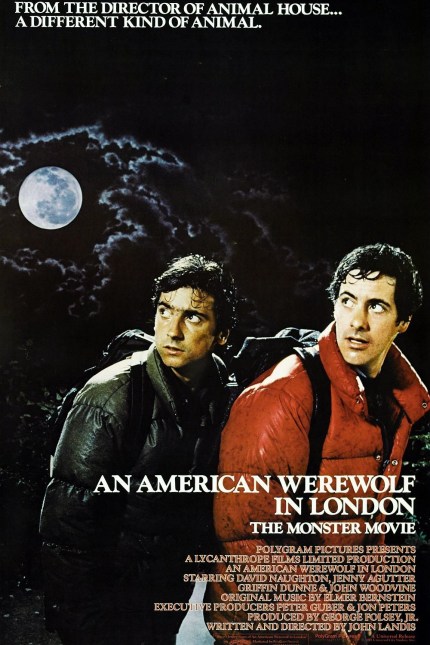
An American Werewolf in London (1981)

An American Werewolf in London (poster)

Today’s cinema adventure: An American Werewolf in London, the 1981 comedy-horror film by John Landis, about a young American who survives an attack by a mysterious assailant while backpacking through England, only to find that he has become cursed to transform into a monster by the light of the full moon.  A quirky mix of madcap humor and gruesome horror, it was a fairly respectable hit upon its release, despite mixed reviews, and has since become something of a cult classic.  It was particularly notable for its then-groundbreaking make-up effects, which garnered their creator, Rick Baker, the first-ever Academy Award in the new category created to honor such work.

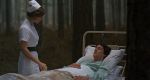
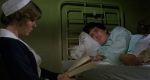
The movie opens on the moors of Northern England, where two young American friends, David and Jack, are on the first leg of a European hiking tour.  Arriving at nightfall in a remote village, they decide to stop off at the town pub in order to get some rest and sustenance.  The locals view them with suspicion, and when Jack asks about a strange 5-pointed star carved into the wall, they become downright hostile; the two young men decide to leave, and though they are warned to stick to the roads they soon become lost on the moor.  Things get much worse when they realize they are being stalked by a mysterious animal; when they try to run, it abruptly attacks them, savagely killing Jack and mauling David before the villagers arrive and shoot the beast dead as the young traveler loses consciousness.  He wakes up some days later, in a London hospital, where he has been sent by the locals to recover from his injuries.  The physician, Dr. Hirsch, and the attending nurse, the lovely Alex, are kind and sympathetic, but their young patient is troubled by the villagers’ official report that he and Jack were attacked by an escaped lunatic and not a ferocious animal.  Though the police put little stock in his traumatized memories, Dr. Hirsch decides to do a little further investigation on his own; meanwhile, David strikes up a relationship with Nurse Alex, moving in with her upon his release from the hospital.  Their romance is blissfully therapeutic, despite the young man’s troubling, violent nightmares; but harder to ignore are the visits from the increasingly decomposed ghost of his unfortunate friend Jack, who claims that they were actually attacked by a werewolf, and that David is now a werewolf himself.  Worse yet, Jack and all the other victims of the monster’s bloodthirsty rage are doomed to wander the earth until their killer’s bloodline has been severed- meaning that David, as the last surviving carrier of the curse, must die before the next full moon can transform him into a ravenous beast and lead to more senseless slaughter.  Though David is skeptical of the warnings, Hirsch is sufficiently convinced by a visit to the moors that his former patient may be a danger to himself and others, and he joins forces with Alex in an attempt to protect the young man from the darkness- whether supernatural or psychological- that threatens to take control of his destiny.

As written by Landis, who was inspired over a decade earlier when he witnessed a group of Central Europeans performing a ritual to prevent a deceased fellow villager rising from his grave, this grim and familiar tale is laced with the kind of hip, contemporary humor that marked the youth-oriented films of the period; arch, ironic, tongue-in-cheek, and self-referential, the comedy is a major ingredient in the mix, but Landis stops short of letting it undermine the gravity of his horror story.  It seems an odd juxtaposition, and many critics were at a loss to reconcile the seeming opposition of the movie’s two aspects; nevertheless, the apparent cross purposes complement each other in a way that makes for a unique and highly entertaining ride.  In addition, the two cultural sensibilities reflected in the film’s title are brought into the equation through the film’s overall style; the flip jocularity of the American mindset is superimposed against a background of traditional English influences that resembles a blend of Hammer horror and the Carry On series, with a slight dash of Monty Python thrown in for good measure.  The resulting subtextual implication in which the youthful, callow naïveté of the distinctly American personality is thrust into the Old World subtlety of European experience, suggests a story that is ultimately, perhaps, about the dangers of being overconfident in a world that is deeper and more complex than we know.

That’s not to propose that Landis’ purpose here involves any kind of socio-political statement; the “babe in the woods” undercurrent, extrapolations about cultural identity aside, serves mainly as a foundation for the uneasy sense of foreboding that pervades the film from its opening frames, when the hazy atmosphere of the isolated moors seems pregnant with ominous possibility and fills us with the dread of something unknown, lurking just beyond the hills or, perhaps, hiding in plain sight.  Confronted from the start with this landscape that is at once familiar and alien, we immediately bond with the two fresh-faced adventurers who, a few moments later, arrive on the scene- in a truck full of sheep, like proverbial lambs to the slaughter (to reinforce this idea, the pub through which they will soon begin their descent into horror is called “The Slaughtered Lamb”).  We are charmed by their banter, comfortable in their camaraderie, and touched by their friendship; we share their bemused outsiders’ perspective because we, too, are outsiders here, a commonality that helps us identify with them, but because they are so endearing, we also genuinely like them.  It is this factor, cannily accomplished by Landis in his script, that makes us cringe at a deeper level when they become victims of the inevitable carnage; and with this foundation laid, as the film follows the subsequent adventures of David, despite the cheeky comic tone maintained throughout, we can never quite escape or ignore the soul-sickening undercurrent of sadness which pursues us to the end.

Landis is able to pull off this delicate balance largely because he seems unconcerned with pre-conceived limitations of genre; as the director of the wildly popular Animal House and The Blues Brothers, he was the undisputed master of the kind of irreverent and iconoclastic humor that is on display in American Werewolf, and he confidently delivers the same lampooning style in his approach.  There is a definite anti-establishment flavor here that is cut from the same cloth as those earlier films, manifested in a continual opposition between stodgy decorum and free-spirited permissiveness.  The guarded discretion of the villagers regarding their town’s dark secret, the by-the-book attitude of the bumbling policemen assigned to de-brief David, and the stiff-upper-lip dispassion of Dr. Hirsch and even Nurse Alex as they become more deeply involved with their patient; all these are contrasted with the repeated disregard for rules of behavior displayed by the young Americans.  Jack and David challenge local custom with their questions in the pub, and later on, David flies against procedural form with passionate protests regarding the truth about his attacker on the moors, and he skirts propriety by crossing professional boundaries to initiate a relationship with his nurse; it is a similar lack of concern for the rules that allows Landis to blur the lines between comedy and horror with such disarming audacity.  In a way, it is as if he is attacking repressive authority on multiple fronts; not only does he sideswipe convention and cliche with satirical absurdity, and disturb order and decorum with gruesome violence, he also flaunts conservative standards of decency with a high level of sexual frankness and pointedly gratuitous nudity.

An American Werewolf in London uses all these ingredients, ultimately, in the service of providing entertaining thrills for the youth audience at which it was targeted.  The hip, comedic tone and the willful exploitation of sex and violence create an appealingly loose, edgy atmosphere, but it is the narrative itself that keeps us hooked, and Landis the director handles it skillfully.  The leisurely opening sequence is a small masterpiece in itself, and could stand on its own as a fine short film; the jocularity of the protagonists is slowly overtaken by the undercurrent of menace in a textbook example of building tension through visual storytelling.  As the tale progresses, we are subjected to alternating moments of hilarity and terror, often spiking one with the other, keeping us off balance at a visceral level while Landis fills the screen with artfully arranged variety of culturally telling details, from the recurring ironic presence of a Mickey Mouse figurine to the ludicrous porno send-up being shown at the cinema where David has his final meeting with Jack.  Along the way he continues to build on our emotional connection to David (as well as to Alex and, to a lesser extent, Dr. Hirsch, who become his allies) and offers up numerous stylish set pieces- a handful of nightmare sequences, a zany romp at the London Zoo, a gripping predator-and-prey chase in a “tube” terminal, an erotically-charged love scene between David and Alex in the shower- until he reaches the climax, an over-the-top blow-out of carnage and confusion in Piccadilly Circus that plays like a deadly slapstick farce.  Up until this point, his recipe works; the excesses of the finale somehow push the limits of plausibility to the breaking point, and the callousness with which he treats the deaths of all these innocent bystanders feels a little too mean-spirited to be excused under the license of black comedy.  The final tragic confrontation which closes the film, a forgone conclusion since the very first frame, is also, undeniably, a bit of a letdown, and the promising potential for emotional payoff remains unrealized; it’s as if Landis, who has expertly managed to pad out what is essentially a familiar and simple scenario with clever distractions, has reached the bottom of his bag of tricks and decided to end his movie by hurriedly delivering the expected ending with as little fuss as possible.  Despite this anticlimax, however, Landis’ has invested enough into his main characters, on a deeper level than the snarky disaffection of the movie’s surface, to leave us in a state of satisfied melancholy as the end credits roll, and though we may have wished for an worthier ending for his clever mash-up, it must be admitted that his effort to present an oft-told tale in a fresh and surprising package has been, on the whole, a success.

A good deal of that success deserves to be credited to the charm of Landis’ leading players; in particular, of course, the considerable appeal of his star, David Naughton, whose earlier career as a pitchman for Dr. Pepper had made him a familiar face for most audiences, contributes significantly.  Attractive, affable, sincere, and possessed of a devilishly sly but somehow wholesome quality that makes him both sexy and endearing, his personality is well-suited to the demands of both the lightweight and dramatic aspects of American Werewolf, and watching him here makes us regret that, for whatever reason, he failed to become the rising star that his talent seemed to promise.  Matching him well is the beautiful Jenny Agutter, another familiar face (Logan’s Run¸ Equus) who never quite achieved full stardom, at least in the U.S., as Alex; she carries the same, sweet-but-sexy aura as her leading man, with an added layer of maturity and intelligence that makes her far more interesting than the standard damsel-in-distress usually found in monster movies.  John Woodvine is witty and refreshingly likable in his role as the benevolent older authority figure, Dr. Hirsch, and the assortment of recognizable English actors that constitute the cadre at the “Slaughtered Lamb” do a fine job of infusing life and dimension into the stock “superstitious villagers” characters that they represent.  The standout performance, though, comes from Griffin Dunne, as the doomed Jack; his lovably nebbish, self-deprecating nerd persona provides a perfect complement to Naughton’s all-American boy, and the chemistry they share is tangible- a factor that helps to add resonance to later developments when the deceased Jack returns to haunt his best friend.  Dunne manages, in those scenes, to bring the likable humanity of his character to the forefront despite the progressively hideous make-up he wears, undercutting the body horror of his walking-dead image with wit, pathos, and personality.

On the subject of the make-up, the aforementioned Rick Baker- whose prolific work in this field has always helped to redefine and push the limits of the craft- leads the pack in terms of kudos for Landis’ technical crew.  Not only do his remarkably detailed and gruesome prosthetic creations make for an utterly convincing conversion of Dunne into a grisly walking corpse, his work with Naughton’s transformation sequence, in which the handsome actor becomes the fearsome title creature, is a ground-breaking display of wizardry; a far cry from the old stop-motion effects used to morph Lon Chaney, Jr. in the classic Universal Wolf Man and its sequels, it is a truly hair-raising (literally and figuratively) pre-CG spectacle that reminds us all that movie magic did not begin with the computer age.  Also noteworthy is the cinematography by Robert Paynter, capturing the character and mood of the numerous English locations, from the desolate moors to the garish lights of Piccadilly, with a richness that gives weight to the proceedings; again, it’s a reminder of a now-bygone time, before the distinctive visual quality created by photography on actual film was supplanted by the high-definition digital imaging that dominates cinema today.  Finally, Landis gives his film a soundtrack that is comprised partly of effectively unsettling original scoring by veteran composer Elmer Bernstein, and partly of a rather tongue-in-cheek selection of various popular recordings linked together by the subject of the moon, with several varied renditions of the standard, “Blue Moon,” Creedence Clearwater Revival’s “Bad Moon Rising,” and Van Morrison’s “Moondance,” each figuring prominently in highly memorable sequences.

An American Werewolf in London is another one of those films that figured prominently in my own younger years; I have fond memories of seeing it, multiple times, on the big screen, and there was a time when I could quote virtually every line of dialogue.  In the ensuing years I assumed that my youthful enthusiasm, coupled with a fondness for monster movies and all things English, had probably paid a large part in my enjoyment of a film which, really, was little more than pulp cinema.  Upon my recent viewing, I was pleasantly surprised to discover that, in fact, Landis’ odd little film holds up extremely well, and, in fact, boasts many nuances- some of which are explored above- that I had not previously recognized.  It’s really a tight, stylish, and yes, classy movie; though it deliberately strives for the lurid, sensational atmosphere of both Hollywood exploitation cinema and British “penny dreadfuls,” and it offers up a considerable amount of nudity, sex and violence (the gory, nightmarish kind so gleefully proffered by the blood-spattered horror films produced in England throughout the ‘60s and ‘70s), it nevertheless maintains an elegant, restrained sensibility, suggesting far more than it shows and allowing the audience’s imagination to fill in a lot of the blanks.  Landis, for all his excess, does himself credit in his handling of the werewolf and its reign of terror, giving us only brief glimpses of the beast itself and using cinematic artistry- sound, camera perspective, editing- to build the suspense and fear; of course, we would feel cheated if he didn’t also deliver some good old blood-and-guts, and he gives us just enough of those to make us happy (if that’s the right word), but its also to his credit that we walk away feeling as if we’ve seen much more of a bloodbath than we actually have.  In the end, though, American Werewolf is most truly memorable for its unique hybrid personality, which lets us laugh, cringe, and cry a good deal more than we might expect.  It’s a smart, sexy, and surprisingly affecting film that has aged well, which is more than can be said for many of the more lauded-at-the-time works from the period.  Though it may not, at the time, have been as highly esteemed as Landis’ previous hits (mentioned above), and though, for many, his most important and lasting creation will always remain his video for Michael Jackson’s “Thriller,” An American Werewolf in London  may well, in truth, be his best work as a filmmaker; at the least, it’s a definite crowd-pleaser, guaranteed to evoke a grin and a grimace from even the most hardcore horror buff.

http://www.imdb.com/title/tt0082010/

Desperate Living (1977)

Desperate Living (poster)

Today’s cinema adventure: Desperate Living, the 1977 feature by underground filmmaking icon John Waters, featuring an assortment of his “Dreamland” players in the tale of a deranged suburban housewife who is exiled with her maid to a shantytown full of social rejects.  Financed, as all of Waters’ early projects were, on a shoestring budget, it generated notoriety through the outrage it sparked among the lesbian community for its treatment of same-sex female relationships, but it failed to catch on with the public to the extent of his previous hits, Pink Flamingos and Female Trouble, probably due in part to the absence of his signature star, Divine (who was unavailable to appear because of his commitment to a theatrical project in New York) but also because the “midnight movie” fad which had provided the perfect venue for the earlier films had largely subsided by the time of its release.  Nevertheless, it has taken its place as a cult classic alongside the director’s other works of the period, with which it shares an outrageous, anarchic sensibility and a deliberate intention to provide shock value through its depiction of socially taboo behavior.

The plot follows the misadventures of Peggy Gravel, a housewife from an affluent Baltimore suburb, who has recently returned home- perhaps prematurely- from a stint in a mental hospital.  Paranoid, delusional, and disgusted by virtually everything, she harangues those around her with wild and hysterical rants, accusing the neighborhood children of trying to kill her and reproving her husband for his ineffectualness.  When he attempts to calm her by administering her medication, she assaults him, calling for aid from her maid, Grizelda, an obese black woman whom Mr. Gravel has recently caught stealing from the household, and who now, believing she is protecting Peggy, smothers him to death by sitting on his face.  When the two realize they have committed murder, they go on the run together, attempting to drive out of town in Peggy’s car, but they are stopped by a policeman; instead of arresting them, however, he demands their underpants and some kisses for his cross-dressing, auto-erotic pleasure.  In exchange, he offers to let them escape to Mortville, a sort of hobo jungle on the outskirts of town where the criminal dregs of local society can find safe haven among their own degenerate kind.  The two women make the journey, and find themselves in a derelict town built mostly of cardboard and garbage; after trading a lottery ticket for a guest house owned by hard-edged lesbian Mole McHenry and her girlfriend, Muffy St. Jacques (“the most beautiful woman in Mortville”), they learn that the community is ruled by Queen Carlotta, a sadistic and self-serving tyrant who takes pleasure in degrading her subjects and dispensing draconian punishment to any who dare to displease her or disobey her absolute commands.  As the unlikely comrades settle into Mortville life, they begin their own lesbian affair, despite Peggy’s revulsion; meanwhile, Queen Carlotta’s egalitarian daughter,  Princess Coo-Coo, has fallen in love with the trash collector, and renounces her privileged life to elope with him.  The angry Carlotta has him killed, and when Coo-Coo flees with his body, she seeks refuge in the home of Peggy and Grizelda.  Peggy immediately alerts Carlotta’s goons, and Grizelda, attempting to protect the Princess, is killed in the ensuing struggle when she causes the house to collapse on herself.  Peggy, however, is rewarded for her loyalty to the Queen by being appointed as the replacement for the now-imprisoned Coo-Coo, and as her first duty she sets into motion the royal plan to infect the entire town with rabies, starting with Coo-Coo herself.  Back outside the “palace,” the lottery ticket Mole accepted as rent has proven to be a winner, so she uses the prize money to buy a bargain basement sex change for herself, thinking it will please Muffy, who has been goading her with fantasies about men.  Instead, it repulses her, causing her to admit that she loves Mole just the way she is; the sewn-on penis is severed and thrown to the neighborhood dog, and with their bond renewed, the couple leads the Mortvillians in a revolt against Peggy and the Queen, at last exacting vengeance for the brutality of their regime.

If this narrative sounds a bit convoluted, it’s no surprise; Desperate Living constitutes Waters’ attempt at an epic fairy tale, with multiple characters in interwoven subplots, and part of his particular milieu– at least in these earlier films- is a disregard for logical coherence in narrative structure.  Waters’ story lines are usually threads intended to link together his depraved set pieces, and a great deal of the fun comes from the fact that they are generally irrelevant to the real purpose of the movie, which is mainly to delight and disgust his viewers, preferably at the same time.  The downside to this approach, from a certain point-of-view, is that many of his movies have a tendency to “peter out” rather than build to a climax, with the final resolution often being little more than a means to tie up the loose ends; but Waters, always the iconoclast, has never concerned himself with following rules, and such an aesthetic consideration is as immaterial to his agenda as laws and social mores are to his characters.

This latter point is not strictly true, actually.  Waters’ films are usually populated by people who are greatly concerned with codes of conduct, albeit warped or inverted ones.  Here, for instance, Peggy is motivated by a fanatical devotion to her own brand of decency and decorum, a world view in which she, as a member of the social elite, is the natural recipient of preferential treatment and should be immune from the disgusting unpleasantries of the world; it happens that, for her, those unpleasantries include any form of natural impulse or show of sentimentality or affection.  She hates nature, is repelled by her husband’s touch, and would rather be raped by the kinky policeman than submit to his kiss; yet she is willing to ally herself with an oppressor and give up her own life in service of the ideal of autocratic privilege.  Similarly, the avowed man-hater, Mole, is prepared to transform herself into the very object of her own loathing in order to satisfy the needs of the woman she loves, not just because of her desire to please her lover, but because she is dedicated to her role as protector and provider.  The irony of both characters, of course, is that they personify the things they themselves despise; the victim becomes the victimizer and the militant feminist embodies the negative masculine stereotype she has rejected in others.  In similar ways, the other denizens of Desperate Living enact this paradoxical principle, or else they perform the meaningless reactionary pantomime of the social bystander, chasing their own self-serving needs and pleasures, deluding themselves with rationalizations and platitudes, and expressing outrage when they are met with opposition; Waters shows us a world of degenerates, overseen by other degenerates, and the only unacceptable transgression is the assumption of authority.  Of course, one could open up a discussion about the layers of social satire, political allegory, psychological commentary, or mythological inversion that can be seen within this low-rent fantasy melodrama; or perhaps we might speculate about the filmmaker’s intentions regarding such things as alienation of the audience, subversion of societal values and norms, or the use of cinema as an expression of counter-cultural concerns.  In the long run, however, Waters’ interest in such matters is clearly parenthetical, at best, and his work here- as with all of his films, particularly the “Trash Trilogy” consisting of this and the two previous efforts- has more to do with his creation of a signature mise-en-scène which can best be described as “transgressive camp.”  Even more than that, perhaps, it has to do with sharing his warped sensibilities through the medium he loves.

That Desperate Living is an expression of the filmmaker’s own imagination is certain; as the producer, writer, director and cameraman, he makes sure what shows up on the screen is pure Waters.  The histrionic dialogue, the over-saturation of de-glamorized nudity and sex, the exploration of fetish behavior and insular communities, the skewering of respectable society, the fixation on repellent imagery and ideas; these are trademark elements in his films, and they are all present here in spades.  Desperate Living features copious full-frontal nudity (both male and female), the sexualization of children, a baby in a refrigerator, the human consumption of vermin, sodomy with a firearm, cannibalism, and penile amputation, to name just a few of its dubious delights, and in typical Waters fashion, they are de-sensationalized to the point of banality- which is why they amuse us rather than outrage us.  This, of course, is precisely the point, if there must be a point; Waters shows us that the only thing more ridiculous than human behavior is to be offended by it.

Indulging in this pageant of absurd excess is a cast mostly comprised of the director’s regulars, a troupe of stalwart non-actors upon whose services he has relied upon from his earliest days.  Leading the pack is the incomparable Mink Stole, a fixture in Waters’ films who is here given her most prominent role as Peggy, sinking her teeth with relish into the character as she alternates between hysterical wailing and some of the most ferocious bitchery you will ever see.  She is perhaps (apart from the late Divine) the most proficient purveyor of the curiously bad-but-somehow-great acting that defines the style of the filmmakers’ canon, and Desperate Living offers probably the best showcase of her unique talents.  Accompanying her on the adventure is Jean Hill, a greeting-card model turned actress whose jubilant sass makes her a fitting complement to Stole’s venomous ice queen, and the two exude an undeniable chemistry as they act out their perverted fantasia on Imitation of Life.  Waters newcomer Liz Renay (a notorious burlesque queen, former gun moll, and convicted perjurer, whose scandalous autobiography prompted the director to pursue her for his film) brings a surprising freshness of personality- not to mention her sizable breasts, unfettered onscreen for a good deal of the film- as Muffy, and Susan Lowe as the pugnacious Mole, normally one of the director’s bit players, manages to hold her own admirably in the role originally intended for Divine.  Also notable is Mary Vivian Pearce as the goofily likable Coo-Coo, and “Turkey Joe” in his deliciously trashy cameo as the cross-dressing cop.  The standout performance, though, comes from the sublime Edith Massey, the snaggle-toothed ex-waitress who became a sort of muse for John Waters and a cult icon to boot, as Queen Carlotta.  With her inimitably amateurish delivery, her indescribable physical presence, and her inescapable authenticity, she makes this grotesque character into a mesmerizing spectacle; gleefully punishing her groveling subjects, turning her leather-boy lackeys into sexual objects with whom she engages in lewd- and graphic- excesses, or sweetly bestowing gifts on a pigeon like the skid row vision of a Disney Princess and her animal friends, she is the indisputable highlight of Desperate Living.  The lady had charisma, there’s no denying it.

In spite of the fact that the cast is entirely on target, however, the absence of Waters’ supreme diva, Divine, is keenly felt in Desperate Living.  There is a void, somehow, in the center of the movie, that none of the other personalities can fill.  This is not to say that any of them are lacking in commitment or ability- at least, the kind of ability required of them here- but that some intangible quality is missing that none of them are quite able to provide; it’s possible that this is due to the lack of a strong character to provide central focus in the story, for Desperate Living, in truth, is all over the map- but then so are most of Waters’ films, a fact which audiences easily overlook with Divine’s electric presence as an anchor.  It’s hard, though, to place the blame wholly on this gap for the fact that the movie doesn’t quite work- for, unfortunately, it doesn’t.  Though it is a veritable treasure trove of deliciously quotable lines and ripe with the kind of unforgettable lunatic imagery that keeps us engaged in any given individual moment of the film, it never really grabs us with the unexpected visceral urgency of some of his other works; all the pieces are there, but the whole package leaves us decidedly unsatisfied.  It may be due to the attempted scope of the story, or the fact that the fantasy is so far removed from real experience that it loses the sliver of plausibility which gives the director’s preposterously lurid tales their outrageous edge, but for whatever reason, Desperate Living loses steam soon after it takes us to Mortville, a fact that is particularly disappointing in face of the fact that the film’s first ten minutes are pure, vintage Waters, containing some of the most inspired expressions of his wicked genius he ever managed to create, and setting the bar at a high level which the rest of the movie is then, sadly, unable to match.

Still, for Waters’ many fans, this kind of critical quibbling makes no difference to their enjoyment of its many riches, and for those who are exploring this alternative auteur for the first time, the fact that Desperate Living is not as complete a package as the masterful Female Trouble doesn’t make it any less essential an experience.  There was a certain magic at work in these heady, early years of the Dreamland crew, and it is just as evident in this movie- with its guerilla-filmmaking feel, its grainy 16mm photography, its elaborately shoddy sets built from found objects and refuse, its celebration of filth, and its mockery of traditional cinematic forms- as in any of the others.  What makes it so… well… refreshing (for want of a better word) is that, as always, Waters’ subversive trash is not merely intellectual posturing, nor is it exploitation, for it is clear that all of his participants are equally complicit in his effort to inundate us with perversity; John Waters is a subversive filth-monger because he finds it fun, and because it is an expression of self rather than a calculated pose, he makes it irresistibly fun for the rest of us.  Of course if you are someone who has, as Peggy Gravel puts it, “never found the antics of deviants to be one bit amusing,” you are best to leave this one alone, as well as the rest of Waters’ canon; although his work, for all its over-the-top shock value and subversive topsy-turvy morality, is ultimately as good-natured and sweetly innocent as, say, two naked children playing doctor, for somebody whose sense of humor is not well-tuned to this kind of trashy treat, it’s about as appetizing as a fried rat on a plate.

http://www.imdb.com/title/tt0075936/

Hitchcock (2012)

Hitchcock (poster)

Today’s cinema adventure: Hitchcock, the 2012 film exploring the relationship between legendary film director Alfred Hitchcock and his wife (and most trusted collaborator) Alma Reville during the process of creating his most famous film- the 1960 horror classic, Psycho.  Directed by Sacha Gervasi, and featuring tour-de-force performances by acclaimed Oscar-winners Anthony Hopkins and Helen Mirren, it was a project long in development and eagerly anticipated, stirring high interest and expectations among film literati over its portrayal of a true cinema icon at work.

Based on Stephen Rebello’s non-fiction book, Alfred Hitchcock and the Making of “Psycho,” a meticulously researched classic long considered a cornerstone in the literature of film studies, the movie’s screenplay, by John J. McLaughlin, takes a less documentary style than its source material, opting instead for a sort of mature Hollywood romance which focuses primarily on the complex dynamics between Hitchcock and his wife.  It opens in 1959 with the premiere of the director’s North by Northwest, a glamorous, wildly popular comic thriller which marked a triumphant return to familiar form after the box office disappointment of darker experiments like The Wrong Man and Vertigo; back at the top of the game, but unsettled by suggestions that he should now, at 60, settle back on his laurels and quit while he’s ahead (and by reviews which unfavorably compare the comfortable safety of his latest hit with the edgy freshness of his earlier work), Hitchcock begins to search for a new project unlike any he had done before.  Rejecting sure-fire hits and the solicitations of his wife to adapt her friend Whitfield Cook’s newest book into a film, he sets his sights instead on a sordid little novel by Robert Bloch, a gruesome tale of madness and murder inspired by the real-life case of 1940s serial killer Ed Gein.  Determined to make a film totally unlike anything he’s done before, he undertakes the project, even mortgaging his house for provide his own financing when his studio will not pay for the production.  Though initially skeptical, his beloved Alma throws herself into the project at his side, as always, providing her uncredited expertise in every aspect of the film- as she has done throughout their 30-plus years of marriage.  The pressures of working on such a risky endeavor, however, begin to take their toll, as Hitchcock’s personal obsessions begin to overwhelm him- his fixation on his icy, unattainable leading ladies in particular- and his overbearing demeanor pushes Alma to the limit of her patience, driving her to seek solace in the task of helping Cook- who may or may not have romantic designs on her, as well- to adapt his novel into a screenplay.  As jealousy on both sides threatens to drive a wedge between the Hitchcocks, both personally and professionally, the making of Psycho suffers from delays, personality conflicts, studio interference, and pressure from the censorship board, making the prospect of failure uncomfortably tangible.  Facing both financial ruin and the loss of his considerable reputation, Hitchcock must overcome his dysfunctional tendencies and restore the good faith of his most indispensable collaborator in order to salvage the film and avert disaster.  More importantly, however, he must suppress his massive ego and humble himself in order to repair the damage it has caused in his marriage and win back the only woman who has ever really mattered in his life.

Rebello’s book was written in 1990, and the exhaustive research the author undertook included access to Hitchcock’s personal notes and every available archival resource, as well as interviews with almost every individual who had worked on Psycho that was still living at the time, including stars Anthony Perkins and Janet Leigh.  The wealth of information he compiled resulted in an intricately detailed portrait of Hitchcock’s creative process, and inevitably yielded considerable insight into the personal factors that informed the director’s work at this particular time in his career.  The book is a scholarly work, albeit an entertaining one as well, which is intended to document the making of a seminal film which would go on to have far-reaching influence on the future of the movie industry and, indeed, on the art of cinema itself; the details and observations of the Hitchcocks’ relationship, while fascinating, are primarily important to show how essential Alma was to her husband’s work and how integral the couple’s teamwork was to the ultimate success of the movie.  McLaughlin’s screenplay reverses this emphasis, shifting the primary focus to the domestic life of this legendary power couple and using the making of Psycho as a means to reflect the personal issues threatening their relationship.  The reason for this may seem obvious; building an engaging story around the nuts-and-bolts construction of a film- or any work of art, for that matter- might easily result in a dry and unemotional narrative, intellectually stimulating, perhaps, but lacking the kind of human connection necessary to appeal to a typical movie-going audience.  Even so, in the process of transforming the documentary book into a fictional narrative, Hitchcock crosses over into the territory of Hollywood fantasy, offering up a sanitized and streamlined version of real-life events in its effort to make its two leading figures into an unlikely pair of romantic protagonists.  This is not necessarily a bad thing; though McLaughlin glosses up the facts with fancy and compresses complicated situations into neat little packages, he gets the gist of it right, and though purists may squirm over some of the more overtly sentimentalized indulgences or take exception to some of the artistic license that simplifies painstaking creative decisions into 30-second vignettes, these conceits serve the larger purpose of revealing the great director’s human side- an aspect he kept closely guarded behind his iconic public persona- and the true extent of his wife’s involvement and influence in his work.

Whether or not you prefer a subtler, more realistic approach to your bio-drama, if you are a fan of Hitchcock in general, or of Psycho in particular, you are sure to find a good deal of enjoyment in the film’s playful exploration of these almost mythic cultural touchstones.  Hitchcock adopts the drily comedic tone so readily associated with the Master of Suspense, particularly in connection to his classic television anthology series- a program that was current during the making of Psycho and which had transformed the already famous director into an instantly recognizable celebrity figure and a household name.  Indeed, the movie even frames its story with segments reminiscent of the ones that bookended every episode of Alfred Hitchcock Presents, in which the rotund host would provide wry commentary on the story being showcased; this conceit also serves to set up another device concocted by McLaughlin, in which Hitchcock engages in an ongoing fantasy dialogue with the aforementioned murderer, Ed Gein- a suitably macabre touch for a movie about an artist whose name is virtuously synonymous with the word.  Hitchcock maintains a close connection to the sensibilities of its central figure, using wit, intelligence, and a heavy dose of irony to tell its story and making sly observations about human nature as it entertains us with the surface details which are ostensibly its focus; and like any real Hitchcock film, it features the “McGuffin.”  For those that don’t know, of course, this is the term coined by the Master to describe a key plot device upon which the characters place great significance, providing an impetus for the story and seeming, on the surface, to be of the utmost importance, but which is, in fact, ultimately irrelevant to the real purpose of the movie.  In Psycho, for example, it takes the form of the $40,000 stolen by the movie’s ill-fated heroine; in Hitchcock, however, the McGuffin is Psycho itself.  It is the making of the movie that is the supposed center of the the plot, but in reality, it merely provides a lens through which is revealed the characters’ psychological and emotional traits, and serves as a catalyst for their personal transformations- the true subject at hand.

Entertaining as it may be, one can’t help feeling that there are a great many missed opportunities in Hitchcock.  To begin with, though the film’s overall ambiance bears a strong connection to Hitchcock’s ouvre, director Gervasi makes only a perfunctory attempt to emulate his visual style.  One longs for the kind of crazy tilted angles, overhead perspectives, stylized dream sequences, and other such dramatic elements that helped Hitch become one of the most influential and distinctive directors in cinema history.  Although I’m not one to criticize a movie for what it isn’t, it seems as if more of an effort could have been made to shape the film in homage to its subject; after all, the deliberate inclusion of the framing device sets us up for a Hitchcockian experience, and by the end of the movie, we are still waiting for it.  In addition, in its attempt to generate suspense (since history tells us that the Hitchcocks were more than successful in their efforts to turn Psycho into a game-changing hit), McLaughlin and Gervasi seem to be implying that Hitchcock himself is in danger of slipping into madness and indulging in a little murder and mayhem of his own- a patently ridiculous notion made even more pointless by the simple fact that no such occurance ever took place.  Their movie might have been better served by taking the time used up by this unnecessary digression to explore other interesting relationships, such as Hitchcock’s collaboration with composer Bernard Herrmann (who is only represented in a single scene depicting the now-famous disagreement over the use of music in Psycho’s notorious shower scene) or the couple’s relationship with daughter Pat, who appeared in a small role in Psycho (and several other of her father’s films) but who is never even mentioned here.

Nevertheless, there is much to enjoy in this reverent portrayal of Hollywood royalty, not the least of which is its sumptuous recreation of mid-century life through its costumes and decor, and its all-too-few-and-too-brief recreations of the filming of Psycho.  When all is said and done, however, what makes Hitchcock a treat to watch, for either the dedicated Hitch-o-phile or the uninitiated novice, are the stunning performances of its two leading players.  As Hitchcock, the great Anthony Hopkins reminds us once more that he is one of the best actors in the business, capturing every nuance of the familiar voice and demeanor with uncanny accuracy; though he is buried beneath layers of makeup, prosthetics, and body padding- all of which physically transform the star into a remarkable facsimile of the iconic director- he conveys a deep and multidimensional portrait of this troubled genius, giving us an impressive display of his ability to capture the inner truth of a character and not just a highly skilled piece of mimicry.  Superb as he is, however, it is co-star Helen Mirren who truly dazzles us, shining through with yet another marvelous portrayal.  As Alma Reville, she is sharp, grounded, warm, strong, loving, and confident, a consummate artist and a woman who needs no validation from the Hollywood circus which surrounds her- as long as she has the acknowledgment of her husband, whom she makes clear from her very first moments onscreen is the object of her undying love.  Simultaneously simple and complex, direct and reserved, ebullient and stoic, and- above all-  radiant, she is the undisputed center of attention in her every scene, and when she delivers the inevitable climactic speech in response to her husband’s paranoia-fueled confrontation, the credibility and good will she has earned throughout turns it into the emotional highlight of the film and keeps us from minding that it is, in essence, a predictably formulaic device to move the story into its final chapter.  She and Hopkins are an utter delight together, captivating us with the sheer effortlessness of two seasoned veterans still very much at the height of their powers, and they constitute far and away the most powerful reason to see this movie.

The rest of the cast also performs admirably, with the lovely Scarlett Johansson, as Janet Leigh, standing out as she negotiates the difficult task of providing the director with his latest “Hitchcock blond” with grace, charm, and genuine sweetness.  Toni Collette is memorable as Hitchcock’s trusted and invaluable personal assistant, Peggy Robertson; James D’Arcy captures the twitchy, nervous persona of troubled boy-next-door actor Anthony Perkins; Kurtwood Smith is appropriately severe and amusingly officious as powerful censorship chieftain Geoffery Shurlock; and Ralph Macchio makes a quirky surprise cameo as screenwriter Joseph Stefano, who wins the job of penning Psycho by revealing the issues that he discusses with his own psychotherapist.

I am, as some of you may have guessed, a passionate fan of Alfred Hitchcock and his work.  Like most others who share my enthusiasm for him, I have been eagerly anticipating the release of this film, though I confess to having felt some trepidation when it was announced that the title was shortened from Alfred Hitchcock and the Making of “Psycho” to simply Hitchcock.  That change says it all; it reveals the shift in focus that turned the project from a dramatization of a historical event into a biopic trying to convey the man’s entire persona in less than two hours- though in truth, a better choice in title might have been The Hitchcocks.  For me, film biographies work best when they approach their subject within a slice-of-life setting, revealing aspects of their character through the examination of a specific, limited episode- Frost/Nixon comes to mind, or last year’s My Week With Marilyn, a film which bears a good deal of similarity to this one.  Hitchcock does take this more narrow approach, to an extent, but within its finite framework it tackles the ambitious agenda of encapsulating the director’s complicated personality- with all its obsessions, foibles, and dysfunctions- into a definitive portrait, a sort of Cliff’s Notes dossier that sums up, explains, and resolves the myriad questions and observations about this enigmatic man and shapes them all with a particular point of view.  It offers us a conflict and a resolution and gives us the obligatory happy ending, and while these things are not altogether untrue- Mr. and Mrs. Hitchcock did indeed remain a deeply devoted couple until his death in 1980, and he did publicly acknowledge her contribution to his work on many occasions- the way they are presented here seems far too pat, too simplistic to be completely believed.  It’s not that anything in the movie is a lie, exactly, but the need to turn their story into a plot with a beginning, middle, and ending somehow makes it feel like one.  Was I disappointed in Hitchcock?  The answer, obviously, is yes.  I do not, however, think it is a bad film; on the contrary, it is exceptionally well-made and phenomenally well-acted, an intelligent and entertaining piece that is more than worthy of its subject.  I recommend it to almost any audience- a knowledge of Hitchcock himself or even of Psycho is not necessary to enjoy the movie’s many pleasures- and I am confident that the upcoming awards season will be ripe with many well-deserved accolades for its stars.  My only caveat is this: Hitchcock is a film about the making of a masterpiece, but it is not a masterpiece itself.   Understand this going in, and you will undoubtedly have a good time- though if you’re anything like me, you may find yourself watching Psycho (for the 217th-or-so time) at home later that evening.

http://www.imdb.com/title/tt0975645/

Cinderella (1950)

Today’s cinema adventure: Cinderella, Walt Disney’s 1950 animated adaptation of the classic folk tale immortalized by 17th-Century author Charles Perrault, a simple tale about a young orphaned girl, forced to work as a menial servant by her vain stepmother and stepsisters, who is granted a wish to attend a royal ball where her sweet nature and her beauty win her the heart of a handsome prince.  The first fully animated feature produced by the Disney Studio after World War II, it was something of a gamble, an expensive undertaking which would have likely resulted in bankruptcy had it failed to attract an audience; it did not fail, however, instead becoming an overwhelming success which provided the financial base for the expansion of the Disney company during the 1950s, paving the way not only for more features, but for the establishment of their television division and the beginnings of their theme park empire.  It remains one of their most enduring titles, commonly ranking near the top on lists of the greatest animated films of all time and continuing to enchant viewers of all ages as it inspires new generations of would-be princesses to believe in their dreams.

The basic plot of Cinderella dates back to ancient times, and can be found in folklore from a wide range of cultures and eras.  One version even found its way into Shakespeare’s King Lear, albeit with a tragic twist, through the story of the mythic Princess Cordelia, who not only marries her dream prince but defeats her cruel and ambitious sisters with his army; another dark variation on the tale can be found in the stories of the Brothers Grimm, who included such details as the stepsisters cutting off portions of their feet and their being blinded by attacking birds.  The most familiar version today, however, arises from Perrault’s story, which added the iconic elements now indelibly associated with it, including the fairy godmother and the magic pumpkin coach; Disney’s artistic team used this as their source, eliminating some of the darker aspects and placing a heavy emphasis on the peripheral adventures of the heroine’s animal allies, which are played for child-pleasing comic effect.  Indeed, the main events of the plot comprise relatively little screen time, and the story is largely told through the behind-the-scenes perspective of the mice, whose machinations are largely responsible for Cinderella’s eventual triumph.  The film opens with a narrated prologue in which the tale’s background is set; Cinderella is the daughter of a widowed aristocrat who takes a second wife with two daughters of her own, hoping to provide his child with a motherly influence, but upon his premature demise this new stepmother becomes a domineering tyrant, forcing Cinderella to live the life of a servant while doting on her own vain and mean-spirited girls.  Despite her lowly existence, Cinderella grows into a lovely and sweet-natured young woman, befriending the animals of the household, including the mice and birds, and treating them all with kindness- even her stepmother’s spoiled and vindictive cat, appropriately named Lucifer.  One day, an proclamation arrives from the palace that all eligible young ladies in the kingdom are invited to a royal ball in honor of the Prince, whom the King hopes will choose a bride from among them; Cinderella hopes to attend along with her stepsisters, but their scheming and jealous mother burdens the girl with extra chores in order to prevent her having the time to prepare a suitable dress.  Her loyal animal friends manage to make a lovely gown from the cast-off scraps of the stepsisters’ wardrobes, but when the elated Cinderella rushes to join her family as they prepare to depart, the two selfish girls accuse her of theft, and rip the borrowed items from her dress, leaving her in tatters as they head off to the palace.  Her tears of despair quickly disappear, however, when a kindly old woman materializes, proclaiming that she is Cinderella’s fairy godmother; she promptly transforms a pumpkin into an elegant coach and the girl’s torn dress into a sumptuous gown, and sends her off to the ball- admonishing her, however, that she must return before midnight, when the spell will be broken and all her magical accoutrements will return to their original, non-enchanted form.  At the palace, the young Prince is bored and unimpressed by the procession of bachelorettes vying for his hand- that is, until the late arrival of a mysterious beauty, to whom he is immediately drawn.  They waltz together and wander the palace grounds- until the clock begins to strike midnight, when she hastily flees, leaving behind no clue to her identity except a single glass slipper, lost on the palace steps in her hurry to escape before the final chime can break the spell and reveal her lowly state.  Determined to find the mystery girl who has won his son’s heart, the King declares that the slipper will be tried on the foot of every maiden in the kingdom until a match is found, but Cinderella’s destiny may still be jeopardized by the efforts of her malicious stepmother, who is bent on seizing this last chance to secure a royal marriage for one of her own unpleasant children.  With time running out, it will be up to the heroine’s animal friends to come to the rescue and ensure that her “happily ever after” dreams will at last come true.

As with all of Disney’s early productions, the screenwriting and directing duties on Cinderella were handled by multiple individuals, working in concert under the tight supervision of Walt himself and in close collaboration with the chief animators.  It is a testament to the strength of Disney’s vision that these films emerged as cohesive works of art, blending the styles and influences of their various contributors together into a unified whole.  At the time of Cinderella, the studio had spent several years languishing under the budgetary constraints of wartime, when their output had been limited to the obligatory shorts- still popular, but eclipsed by the success of Warner Brothers’ edgier Looney Toons and Merrie Melodies cartoons- and omnibus features which packaged several of them together or mixed short animated segments with live action footage.  Though the great features of the pre-war era had earned them much acclaim and a formidable reputation, only the first of them- Snow White and the Seven Dwarfs–  had been a bona fide hit, and full-length animation was too risky to warrant the considerable expense required for its production during the wartime economy; even so, the studio had honed its skills during these lean years, particularly in its recognition of the importance of music as a means to generate interest- and additional income- for their films.  Disney’s return to the field of feature-length animation was therefore bolstered by a deliberate effort to create songs which could not only add to the movie’s appeal, but which could become an asset in their own right, and Walt enlisted three established popular songwriters- Mack David, Jerry Livingston, and Al Hoffman- to compose tunes which could also be marketed on their own through the studio’s music division (the song rights for the previous films had been sold to other music publishers).  Even with this hedging of its bets, Disney was taking a major risk with Cinderella, releasing a family-oriented fairy tale into a market dominated by the grittier, world-weary cynicism and social commentary that had grown prevalent in post-war American films; but, whether by instinct, luck, or savvy foresight, Walt’s return to the medium which made him famous came at precisely the right time, heralding a revival of optimism and a growing taste for glossy fantasy that would mark the new and prosperous decade.

Watching Cinderella today, it’s remarkable to see the seeds of Eisenhower-era sensibility so clearly visible in its framework.  The “American Dream” is here encapsulated by the movie’s story of success earned by hard work and a positive attitude, and its focus on the feminine perspective emphasizes the role of women in that objectified way of life- namely, to strive for fulfillment through the ultimate life accomplishment of marriage to a successful man.  Cinderella, after all, is trained from the outset to be a devoted wife, with a deep attachment to her father and years of experience tending to every household chore; and her fitness as a mother is plainly seen in her nurturing relationship with her animal friends- particularly the two foremost mice, Jaq and Gus, who are more or less characterized as children in animal form.  Of course, the importance of beauty is also stressed, most strongly in the significance of Cinderella’s ball attire, with both the simple-but-charming dress constructed by the animals and the sumptuously dazzling gown into which it is magically transformed being afforded considerable weight in the film’s plotline.  Throughout the movie, even in the animal subplots, traditional gender roles are subtly reinforced, and the principal male characters- the human ones, anyway- are firmly established as the natural beneficiaries of masculine privilege, a status heightened by their identification as royalty in the hierarchy of the story.  On top of all these social foreshadowings, the visual design of the film is replete with precursors to 1950s fashion, from the rich color palette, to the lines of the clothing, to the predominance of old-fashioned Euro-elegance in the settings and decor.  As a final touch, the lush and dreamy music, at once catchy and soothing, fits directly into the mold of the popular songs that would dominate the sound of the coming decade- until the advent of Elvis and his rock-and-rolling ilk, that is.  In short, Cinderella, in the clarity of hindsight, looks very much like a blueprint for life in the ’50s, and one which may have had more influence on the shape of that decade than its creators had ever envisioned.

Aside from these signposts of its place in the timeline of cultural history, Cinderella also offers a look at the state of its art form at the time.  Despite Warner’s’ dominance in the realm of popular cartoons, Disney was still the undisputed master of the genre; nobody else could do the things they were doing, and their drive to continually advance the art was still strong, perhaps even more so after years of being held back by the war.  Even so, the creative juices flowing through Cinderella seem flavored less by the hunger of young visionaries than by the confidence of mature artists; there is an obvious delight in their work here, a feeling of seasoned professionalism taking enjoyment in showing off a hard-earned mastery.  There is also a softening in tone, a gentleness which marks a shift from the more heightened drama of such films as Pinocchio and Bambi to an easier-going sensibility more in keeping with the middle-of-the-road values the studio would come to represent over the coming decades.  This is not to say that Cinderella is devoid of drama or suspense; on the contrary, it takes full advantage of its creators’ cinematic skills in order to increase the tension in a story which is, to be quite frank, lacking in the type of high-stakes conflict found in the studio’s earlier classics- extreme perspectives, rapid editing, heavy use of light and shadow, and all the other tricks of the trade with which these animated filmmakers not only enhanced their storytelling, but which were imitated by live-action directors and thereby bore significant influence on the future development of cinema in general.  Even so, it is undeniable that Cinderella is more calculated, for want of a better word, in the sense that it makes a deliberate effort to evoke reactions to its narrative, rather than allowing its form to be a direct expression of the needs of the story itself.  This is, perhaps, an intangible distinction, and one which arises more from the nature of the story being told than a change in the attitudes of the artists, but it is a noticeable factor in the ongoing development of the Disney animation machine, and one which would later result in what many critics would characterize as a decline in the immediacy and relevance of their work.

None of those later criticisms apply, however, to Cinderella; it’s a fresh and heartfelt piece of entertainment, and whatever subliminal social agenda might be read into it by progressive modern thinkers, it transcends such retro-fitted concerns with its imaginative approach to a timeless story.  Sweet without being sugar-coated, funny without undermining its deeper themes, and stylish without being shallow, it is a fine representative of Disney at its magical best.  It goes without saying that the animation is stunningly executed; in their quest to infuse the film with a high level of reality, the animators turned once more to their technique of utilizing live action footage as a guide, filming a heavy percentage of the movie with real costumed actors and models in order to give themselves a reference from which to capture the illusion of real movement and expression.  This was not accomplished through rotoscoping- the actual frame-by-frame tracing of live footage- but by free-hand drawing to recreate the filmed sequences, a painstaking process, but one which affords a considerable amount of leeway for artistic interpretation.  In this way, the Disney artists seamlessly blend the realistic style of their human characters with the more overtly cartoonish animals, bridging the two worlds with the intermediate characterization of such comic figures as the King and the Stepsisters.  It’s a fully realized world, enhanced further by the magnificent work of the background artists and the conceptual designers.  I am not one to belittle the advances in technology which have given us the remarkable computer-generated wonders seen in today’s movie houses, but when confronted with the sheer beauty of a film like Cinderella, made all the more dazzling by the intangible influence of the direct human touch, it is difficult not to lament the all-but-lost art of hand-drawn animation.

The visual artistry here, as usual with a Disney production of this nature, is in the service of a story that, for all its simplicity and kid-friendly humor, strikes deep chords in the hands of these gifted artists.  Though contemporary audiences may quibble about the story’s pre-feminist underpinnings, Cinderella‘s message is not simply a reinforcement of the traditional belief that a woman’s place is in the home with a man to take care of her; rather, the emphasis is placed on the theme of believing in yourself and having faith in your dreams.  Likewise, though outward appearance is clearly a factor in the fantasy being portrayed- Cinderella must be lovely, after all, and the Prince must be handsome, just as the stepsisters cannot be anything but homely- it is not these surface qualities that are central to the plot; it is Cinderella’s kindness and good nature that make her deserving not only of our sympathies, but of the fierce loyalty of her animal friends and the help of her fairy godmother, and it is the selfishness and jealous vanity of her two stepsisters that make them truly ugly.  Disney knew what he was doing, too; Walt himself made cuts to the screenplay in order to remove episodes that implied less attractive qualities in his heroine, and great care was taken to ensure that her happy ending hinged not on her pretty face, but on the positive effects of her inner beauty.  Finally, the brightness of the slick romantic fantasy is countered by the palpably dismal atmosphere surrounding Cinderella’s family life; despite the extensive humor provided by the mice and the comic exaggeration of the stepsisters’ unpleasant personalities, the film makes clear the grim reality of its heroine’s existence, making the best of a miserable situation in which she is treated, essentially, as a slave and a prisoner, and victimized by the severe psychological abuse of her menacing stepmother- whose cold and calculated cruelty is no less horrific for the certainty that she will, in the end, fail to prevent her ward from finding happiness.

As previously observed, Cinderella is the result of extensive collaboration, and there is little point in reciting a list of names here; the names of the directors, writers, supervising animators and designers, all of whom deserve praise for their work, can easily be found on any number of other websites.  A few individuals, however, deserve to be singled out for their particularly notable contributions.  Perhaps most significant of these is Mary Blair, credited as “color stylist,” whose concept art featured a distinct array of primary hues but went beyond the creation of a color palette to infuse the entire film with her own subtly whimsical-but-elegant visual style; her work on this and subsequent Disney projects- including the creation of Disneyland- helped to define and influence the familiar “look” of much of the studio’s output throughout the next two decades.  Also important is the voice work done by a talented cast of Disney stalwarts, particularly Ilene Woods (as Cinderella)- who landed the role after friends recorded her singing voice and sent the tape to Disney without her knowing, and who ended up also modeling the character in the live action reference footage, a duty she would later repeat for other Disney heroines- and Eleanor Audley (as the Stepmother), whose chillingly austere vocal talents would be used again in another iconic villain role- the evil Maleficent in Sleeping Beauty– and in Disneyland’s “Haunted Mansion” attraction.  Lastly, the aforementioned trio of songsmiths provide one of Disney’s most memorable and popular scores, which includes at least two songs that would become signature tunes for the studio (“A Dream is a Wish Your Heart Makes” and the Oscar-nominated nonsense tune, “Bibbidi-Bobbidi-Boo”), and which yielded a number of successful recordings by popular singers of the era.

I must confess that though I am, perhaps obviously, an unrepentant fan of Disney movies (at least, of their canon of classic animated features), Cinderella has never been a particular favorite of mine.  Perhaps it is that my own taste runs towards the darker, more dramatic flavor of the studios original array of classics, or that the “princess” theme doesn’t have a strong appeal for me.  Even so, I am quick to acknowledge the superb artistry behind it; every frame is rich with the kind of imaginative detail that infuses the movie with a life of its own and separates a Disney film from the pedestrian efforts of lesser producers.  It contains many of the studio’s most beloved and iconic sequences, such as the architectural construction of Cinderella’s would-be party dress by the determined crew of mice and birds, the architectural construction of the fairy godmother’s magical creation of the coach and gown, the lovely scene in which a scrubbing Cinderella sings harmonies with herself while reflected in floating soap bubbles, and the ethereal beauty of her rendezvous with Prince Charming (who is, incidentally, never referred to by that name- nor any other, for that matter).  The character animation is superb, bringing to life one of Disney’s most disturbing villains in the Stepmother- a completely human monster who is more terrifying than many of the supernatural antagonists created for the studio’s other films- as well as the delightfully engaging mice, Jaq and Gus, and their nemesis, Lucifer the cat, whose ongoing conflict provides much of the film’s real action as well as its comedy.  Lucifer, in particular, is a marvelous creation, with an instantly recognizable feline personality and just the right balance of menace and silliness to make him both a tangible threat and a buffoonish foil for the antics of his rodent quarries.  All in all, there is a lot to love about Cinderella, a radiant and charming piece of filmmaking with its heart in the right place, no matter what accusations may be leveled by modern-day social critics; even if, in the end, I can’t say it places as highly on my personal “best of animation” list as it does on so many others, I still recommend it heartily, without reservation, as a fine example of Disney artistry in its prime.  In the end, or course, my opinion- or that of any other critic- is irrelevant; Cinderella is a classic, destined to remain with us for a long time to come.  After all, it has appealed to generations of children- and quite a few grown-ups- as strongly as it did upon its first release, over a half-century ago, and all those little princesses certainly couldn’t be wrong.

http://www.imdb.com/title/tt0042332/?licb=0.9790095793792765

Dark Shadows (2012)

Today’s cinema adventure: Dark Shadows, the 2012 big screen adaptation of the classic 1960s supernatural soap opera of the same name, directed by Tim Burton and starring a gallery of players comprised of both frequent collaborators (most notably, of course, Johnny Depp) and high-profile new faces.  Taking its basic premise and most of its characters from the original series- a low-budget affair, created by Dan Curtis, with an enormous cult following which thrives to this day- Burton’s film capitalizes and expands on its camp value, and uses it as a vehicle with which to blend his own trademark sense of macabre humor into a nostalgic revisitation of the early ’70s era in which it is set and a tribute to the gothic horror cinema with which he grew up.  Long-awaited and much-anticipated, its box-office take was respectable despite the impact felt from direct competition with The Avengers, but it met with disappointed reactions from critics and audiences alike, despite its high production values and the popularity of its director and his quirky leading man.

Though using the television original as a source for its basic scenario, the screenplay (penned by Seth Grahame-Smith from a story developed with John August) veers from the details of its episodic plot in favor of a more-or-less self-contained storyline, making several significant changes in the process.  The film begins with a prologue in which the background is laid for the ensuing events; in 1760, the wealthy Collins family emigrates to America, expanding their commercial fishing empire to the coast of Maine and building a majestic estate surrounded by a thriving seaport town- named Collinsport in their honor.  However, the family’s young scion, Barnabas, runs afoul of a household servant, Angelique, by spurning her after a brief dalliance; secretly a witch, the jilted girl avenges herself by cursing the Collins family, killing Barnabas’ parents, bewitching his fiancée to suicide, and transforming him into a vampire.  She then exposes him to the town as a monster and persuades them to bury him alive, dooming him to endure a solitary eternity with the memory of his loss.  The story then flashes forward to 1972; the town of Collinsport still thrives, now sustained by a rival fishing empire founded by none other than Angelique, who has used witchcraft to sustain her own immortality.  The Collins estate still stands, inhabited by the family’s last dysfunctional descendants: Elizabeth Stoddard, the stern but determined matriarch; her sullen teen-aged daughter, Carolyn; her ne’er-do-well widower brother Roger Collins; and his troubled young son, David, who insists he can see and talk to the ghost of his recently-drowned mother.  Rounding out the household are two heavy-drinking outsiders- the boy’s live-in psychiatrist, Dr. Julia Hoffman, and caretaker Willie Loomis- as well as a newly-hired nanny, Victoria Winters, who has a secret past.  These last remnants of the once great Collins brood are surprised by the sudden arrival of Barnabas, inadvertently freed from his two-century imprisonment by the excavations of a construction crew. Despite his monstrous nature, he is still devoted to his beloved family, and vows to help them rebuild their collapsed fortunes and restore the Collins name to its former glory.  In order to succeed, however, he must once again confront the vindictive and powerful Angelique, who still carries a torch for him after all these years, not to mention helping his descendants work through their various dysfunctions while keeping the secret of his vampiric identity and continually trying to come to grips with life in the 20th Century.  To complicate his task further, he finds himself drawn to the lovely Victoria, who stirs in him the memories of his long-lost love.

It might seem, all things considered, that Dark Shadows would be a perfect match for the unique sensibilities of Tim Burton; the director has built an empire of sorts on his peculiar brand of gothic-flavored pop cinema, drawing heavily on influences from past masters of horror while infusing these macabre elements with a distinctively contemporary flair for irony and dark humor.  His visual style mixes the grotesque with the endearing and the arcane with the hip in a way that has become instantaneously recognizable as his own, and his recurring motifs (the focus on abused, disenfranchised characters and their efforts to redress the wrongs they have endured, as well as their need to find emotional connection and the innate humanity often hidden by their outward appearance or outcast status) weave their way through his body of work in a way that further marks him as a true auteur.  He has a way of using his horrific subject matter to express basic and universal emotional values, transforming that which at first seems disturbing into something almost sweet; he has created a niche for himself as a cinematic champion for the social outsider, making movies that invert the formulas of traditional romance and adventure and carry the decidedly life-affirming message that freaks are people too.  With such a background, Burton would appear the perfect candidate for bringing the campy chills of Dark Shadows to life for a new generation, and infusing it with an added layer or two of contemporary perspective in the process.  Unfortunately, the rich potential inherent in this match-up goes largely unfulfilled.

Perhaps the key element in the popularity of Dark Shadows in its original incarnation was its unflinching determination to take itself seriously despite the obviously ridiculous underpinnings of its premise, the banal soap-opera dialogue that often sounded like it was written over the course of a ten-minute coffee break, and the low-budget constraints on its efforts at gothic ambiance; it was never high art, but rather a guilty pleasure.  With Burton’s blockbuster approach, these charms have been subverted: the stone walls of this Collinswood never shake when a door is slammed; and instead of bold-facing its way through discussions of ancient supernatural forces with a deliberate lack of irony, the film treats the entire scenario as fodder for self-aware tomfoolery.  It’s understandable, even wise, that Burton and his team would take this approach; to recreate the intangible air of somber goofiness that marked the original series would likely be impossible by deliberate effort, particularly in the more sophisticated cultural environment of 2012.  The problem is that somehow, despite the impressively crafted visuals and the considerable talent of its star-powered cast, Burton’s film seems sillier and, well, much more pointless than it should.  Though some effort was made to recreate the soapy format, at least in the dialogue-driven scenes, and in spite of the obvious reverence in which Burton et al. hold their source material, this effort to bring Barnabas Collins and his broken clan into the flashy present feels bogged down by an inability to mesh the heavily comic reinterpretation into a compelling story; the thematic elements on which the plot is based seem all-too-familiar (especially for Burton) and the key story developments seem perfunctory, as though the script were put together strictly by formula- which, of course, it probably was.  In the absence of any real weight in the narrative, all that remains are character development- sadly botched by the script’s cartoonish approach, which gives us caricatures drawn with broad strokes (despite the solid work of the actors) and leaves us confounded by their actions, which seem motivated by the needs of the plot rather than based on any semblance of inner logic- and the heavy reliance on comedy, mostly derived from the juxtaposition of an 18th-Century dandy into 1970s culture, as well as the nostalgic kitsch that comes from the recreation of this 40-year-bygone era.  Dark Shadows is full of jokes, but since the majority of them are centered on Barnabas’ culture shock and inability to adapt his mindset to the modern world, it feels like the same one, endlessly repeated.  This is not to say there are no laughs here- at times the magic formula does work- but they are few and farther between as the film moves towards its predictably spectacular finale.  Similarly, the gothic creepiness which is so integral a part of the world of Dark Shadows– both here and in its former life- is layered on with all the expected excess and Burton-esque flair, but no matter how many visual nods are thrown in the direction of the Hammer horror classics, the whole atmosphere more closely resembles the tongue-in-cheek faux-spookiness of Disney’s Haunted Mansion.  In other words, a contemporary reboot of this franchise could have been either funnier or scarier than the original, or better yet, both; but this film is neither.  To the director’s credit, although much of the film falls flat, it never seems to be disingenuous; though screenwriter Grahame-Smith’s efforts may lack sincerity, Burton’s translation of them to the screen does not.  Unfortunately, his good intentions are not enough to make Dark Shadows into the movie it deserves to be.

That said, it should be observed that there is plenty of exemplary work on display here.  Even the critics who were harshest with Dark Shadows were lavish in their praise for its visual style, drenched with Burton’s usual synthesis of Grand-Guignol-goth and candy-coated pop art.  He has gotten so good at creating this kind of pseudo-horrific spectacle that it no longer thrills or delights us with quite the morbid wonder evoked by Beetlejuice or Sleepy Hollow, despite the added polish that has come with an increased budget and the advancement of CG technology.  Indeed, one almost takes it for granted in Dark Shadows, which is a mistake the savvy viewer should avoid; the intricate and imaginative design and execution of the Collinses world is the one unqualified delight of the film, and the recreation of the early ’70s setting which is woven into the gothic visual tapestry adds an extra layer of flavor- and one which manages to be heavily definitive without resorting to over-the-top parody.  Aiding in this sense of heightened authenticity is the saturated cinematography by Bruno Delbonnel, who based his work, to great advantage, on the look of actual films of the era.

As for the cast, it has already been mentioned that they do exemplary work, despite the weakness of the material.  There are standouts among them: Michelle Pfeiffer, who comes closest to recreating the style of the original series as Elizabeth, underplaying her melodramatic dialogue like the pro that she is; Chloë Grace Moretz, a young actress with a remarkably mature talent that appears to be propelling her into the status of bona fuse stardom, as the snarlingly rebellious Carolyn; and Jackie Earle Haley, as Willie the Caretaker, whose unfazed, deadpan persona adds a much-needed earthiness to the proceedings.  The others are less memorable, even the beautiful Eva Green (as the venomous Angelique), simply because their roles require little of them beyond the one-dimensional functions they are assigned by the screenplay, but to their credit, none of them come off badly for it.  There are a few interesting cameos, as well; iconic horror star Christopher Lee makes another Burton appearance as a salty old sea dog; seminal shock-rocker Alice Cooper plays himself, hired to perform at an elegant ball thrown by Barnabas and looking agelessly like his own four-decade-old persona; and as guests at the same ball, original Dark Shadows cast members Lara Parker, David Selby, Kathryn Leigh Scott and Jonathan Frid- the original Barnabas, who would, sadly, pass away shortly before the film’s release- pay a fleeting visit, being greeted at the door by a beaming Johnny Depp.

And what of Mr. Depp himself?  This charismatic screen chameleon has acquitted himself admirably in no less than 8 films with Burton, indeed becoming virtually the face of the director’s work, as much a part of his milieu as the sinister subject matter; in these appearances, as with most of his other work, he has displayed a gift for making the offbeat quirks of his characters into utterly convincing extensions of his natural personality, using imagination, intelligence and honesty to give these oft-cartoonish figures an unmistakable ring of truth.  Popularity notwithstanding, he is a vastly underrated actor, capable of remarkable range, who augments and enhances virtually any film in which he participates.  His performance as Barnabas Collins, though it certainly lives up to his usual standards, is a bit of a letdown.  It’s not that he is any less committed than usual- indeed, he exhibits a clear relish for the part, no doubt a result of his long-standing wish to play it- but that, once more, the script falls short of the mark.  Though Depp infuses his over-the-top mugging with his customary connection to truth, allowing us to believe in this unlikely character as more than a cipher in an extended skit and even making him likable enough to care about his ultimate fate, his Barnabas is ultimately a hollow spectacle, an exercise in comic acting that lacks a solid core; he plays the character to a tee, but in the end, thanks to the formulaic writing, he has made no inner journey.  He, like all the other characters, has simply reacted to each plot development without growth or change, which makes our wish for his ultimate success more of a reflex in response to the conventions of the narrative than a result of any real connection to the character.  It might be argued that this is the nature of true melodrama, which concerns itself with outward events rather than inner truth, and is therefore apropos for a film that is, after all, based on a soap opera; nevertheless, it hardly allows for a truly engaging experience, resulting instead in an entertaining but noticeably shallow diversion that seems to drag on interminably despite a relatively short running time.  Depp’s performance, as the centerpiece of the film, is just the clearest representation of the singular flaw that prevents Dark Shadows from ever truly drawing us in: a lack of any real purpose to propel it forward, making it feel, in the end, like an overlong pageant instead of an engaging story.

I wanted to like Dark Shadows.  I wanted to very badly, and I had high hopes for it because Tim Burton is, for my money, a truly great filmmaker; his work has an audaciously subversive glee that makes even his most commercial projects feel edgy, and even if many of his biggest films are ultimately less than the sum of their parts, he has an impressive track record that will surely leave him, in the final analysis, standing firmly in the pantheon of cinematic masters.  That said, his very best work seems to occur when he veers away from his most characteristic material, in films such as Pee-Wee’s Big Adventure, Ed Wood, Big Fish, and Sweeney Todd, the Demon Barber of Fleet Street, flavored with his particular style but ultimately informed by another sensibility and governed by a different set of rules.  Dark Shadows, though it was originally spawned by another mind than his own, is nevertheless a quintessentially Tim Burton film, and bears his own unmistakable stamp.  It’s not a bad movie, by any means; it’s at least moderately entertaining, though unlikely to elicit any strong reactions of either fear or laughter, and it is certainly good-natured enough to be forgiven for not quite living up to its potential.  What is troublesome about Dark Shadows is that it could have been great- should have been, even- but it was defeated before a single frame was captured on film.  No matter how talented its director, how masterful the designers and artists who bring it to the screen, or how brilliant its players, a movie with a mediocre script will never be better than a mediocre movie.  This is, of course, a problem as old as movies themselves- countless would-be classics have been sunk by incompetent writing- but it is particularly upsetting when artists of this caliber fall prey to the trap.  Both Burton and Depp pursued this project, and it was a labor of love for them from beginning to end- how then, could it go so wrong?  Perhaps it was, after all, their affection for the material that tripped them up, blinding them to the faults of their film with false confidence in the notion that such a seemingly natural match of artists with their material could not help but succeed.  Whatever the reason, it was an artistic miscalculation, for Dark Shadows is probably the pair’s most easily forgettable joint effort, and Burton’s least effective film since his abysmal remake of The Planet of the Apes.  From a financial standpoint, however, despite its less-than-hoped-for success at the box office, the sure-fire formula still netted both men- and the studio- a considerable amount of money, leading to the most disturbing suspicion of all- that Hollywood greed overrode artistic aspiration, as it so often does in the film industry, denying us all the joys of the Dark Shadows movie that might have been.

http://www.imdb.com/title/tt1077368/