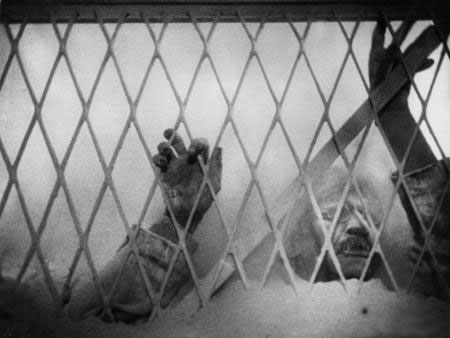
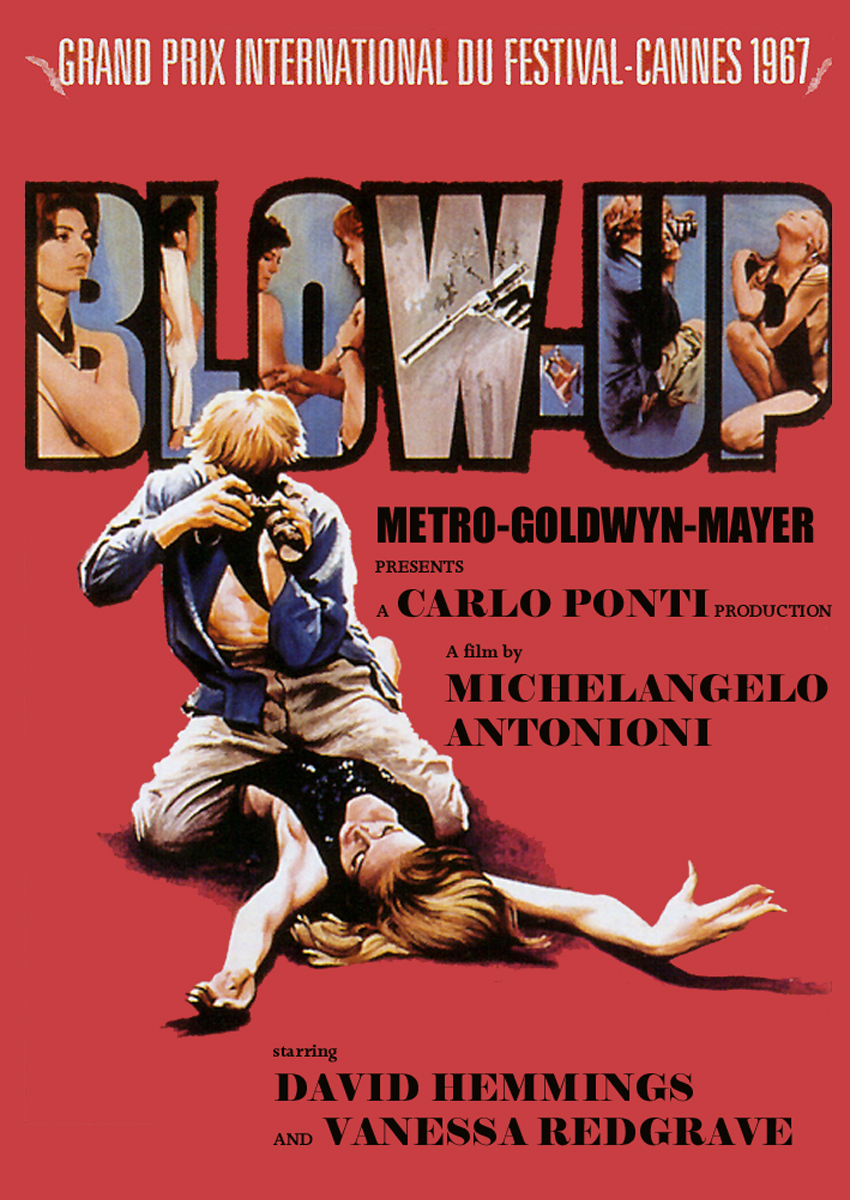
Sing Street (2016)

SingStreet

Today’s Cinema Adventure originally appeared in

The Pride L.A.


Movie musicals are a rarity these days.  Every so often a Broadway blockbuster will find its way to the big screen, but an original musical, with a new script and songs, comes along about as often as a light traffic day on the 405.  The last one of any significance came nearly a decade ago in the form of Once, a bittersweet, tuneful romance from Irish writer-director John Carney that went on to be adapted into a Broadway show in its own right.  Now Carney has returned to the genre with a new effort, the semi-autobiographical Sing Street.

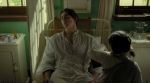
Set in Dublin of the mid-eighties, it focuses on Connor (Ferdia Walsh-Peelo), a teenager whose middle-class family has fallen on hard times.  No longer able to afford his private education, they send him to a public boys’ school where discipline is strict, teachers are indifferent, and bullies rule the schoolyard.  It’s a bleak environment, but he finds a ray of light in the form of  Ruphina (Lucy Boynton), an aloof girl who frequently stands on a stoop across the street.  To impress her, he tells her he is in a rock band; her interest is piqued, and Connor starts recruiting schoolmates to make the lie a reality.  What starts as an attempt to get a girlfriend soon develops into a journey of self-discovery- and, just maybe, a way out of the dead-end life for which he seems destined.

Sing Street, on the surface, seems like an implausible mix.  Carney, evoking the gritty social realism that British cinema has been mastering since the “kitchen sink” dramas of the early sixties, places his story in an economically depressed urban landscape and populates it with characters who have more or less given up hope of anything better, yet he uses this grim setting as the backdrop for an escapist flight of rock-and-roll fancy which seems straight out of the Hollywood dream factory.  It shouldn’t work- but it does.

It’s just this odd juxtaposition of moods, in fact, that gives his film its magic.  Carney tempers the desperation with humor and grounds the giddiness with melancholy.  He treats his characters with compassion- even when they serve as antagonists to our hero- and never allows the fantasy to lose its connection to the underlying reality.  As for the romance (deftly played by the two young co-stars), instead of adolescent wish-fulfillment we are reminded, to paraphrase a line from the film, that to be in love is to be happy and sad at the same time.  It’s this delicate balance of “happy/sad” that permeates Sing Street, and serves as the lynch pin that helps it maintain its own delicate balance, right up to the sublimely satisfying ending.

The cast -mostly comprised of unknowns- brings an infectious energy to the mix, performing with the kind of authenticity that makes you forget they are acting.  Although the charismatic Walsh-Peelo definitely deserves singular praise for largely carrying the movie, he is equally matched by the lovely Boyle, and all of their young co-stars perform at the same level.  Special mention should also go to Jack Reynor as Brendan, Connor’s older brother and unlikely mentor; he gives a heartbreakingly endearing performance which, in many ways, provides the emotional center of the movie.

Finally, there’s the music.  Composed by Carney (with Gary Clarke and Adam Levine), a series of period-flavored songs brilliantly charts each new development in the fictional band’s style (as they progress though various phases of eighties pop), as well as Connor’s growing maturity.  They work as integral parts of the story, but they also stand on their own merits- catchy, heartfelt, and imaginative, they make the band’s onscreen success all the more believable.  These original tunes are the heart and soul of Sing Street, but a number of familiar eighties hits are sprinkled throughout as well, just for good measure.

It’s worth noting that the generation which lived through the era depicted will find that Carney’s film strikes a particularly resonant chord.  The clothes, the hairstyles, the videos- all are skillfully and lovingly recreated here, and it gives the movie a decidedly nostalgic flavor.  That doesn’t mean it won’t also feel fresh enough for younger audiences.  Ultimately, what makes Sing Street so appealing is that, at its core, it’s about the promise of the future- no matter how hopeless the present may seem.  That’s certainly a message that has a place in the world today, and it might just make even the most cynical of movie-goers walk out of the theater with a little more lightness in their step.

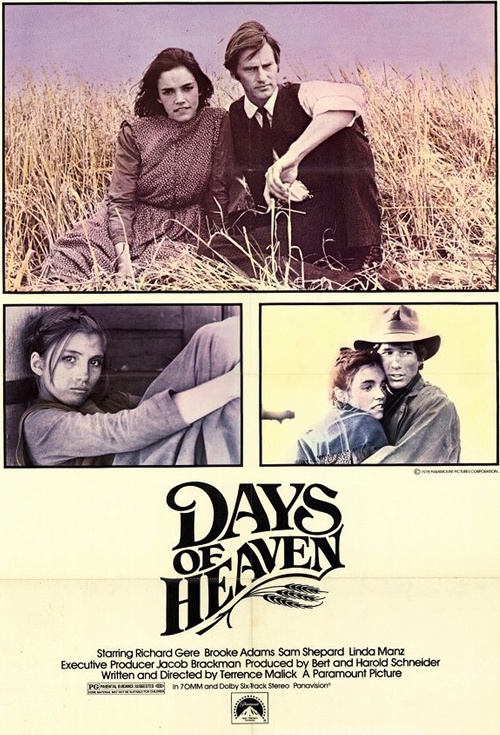
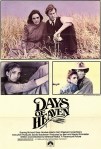
Days of Heaven (1978)

Days of Heaven (poster)

Today’s cinema adventure: Days of Heaven, the 1978 second feature by director Terrence Malick, featuring a young Richard Gere alongside Brooke Adams and actor/playwright Sam Shepard in an elegiac tale of two migrant workers who scheme to con a dying farmer out of his fortune on the early-20th-century Texas panhandle.  Universally lauded for its visual beauty, it was nevertheless snubbed at the time of its release by critics who found it shallow and unengaging; in the years since, however, it has come to be recognized as one of the best films of the seventies, perhaps partly due to a two-decade hiatus taken by its director following its completion, during which time a sense of nostalgic retrospect- coupled with wide exposure on art-house cinema screens, cable TV, and home video- prompted a re-evaluation of its merits.

Set in 1916, Days of Heaven unfolds mostly through its visuals and the overdubbed commentary of Linda, the younger sister of its lead male character.  The movie opens in Chicago, where Bill, a short-tempered steel mill laborer, accidentally kills his foreman in an on-the-job fight.  Fleeing the scene, the young man collects his sister and his girlfriend, Abby, and the trio jumps a train with dozens of other poor laborers seeking opportunities in the wide-open spaces of the American Midwest.  Their journey takes them to the expansive plains of the Texas panhandle, where they find work as harvesters alongside other migrants on a large wheat plantation owned by a shy and sickly young farmer.  To avoid talk among the other workers, the unmarried young couple pose as brother and sister, and for awhile the little makeshift family finds a sort of idyllic peace in their simple existence here, despite the grueling and dangerous work required of them, and despite a growing interest in Abby from the lonely young farmer.  When Bill accidentally overhears a conversation in which a visiting doctor informs the farmer that an unspecified illness leaves him only a few months to live, the ambitious and opportunistic young laborer begins to concoct a scheme by which he and his companions might trick the dying man into leaving them his considerable fortune.  He encourages Abby to accept the farmer’s advances; she does so, reluctantly at first, but gradually warms to him as their relationship progresses.  All goes according to plan- the farmer marries Abby, and moves her into his house along with her supposed siblings- but as time passes and his health remains stable, the delicate balance of this romantic triangle grows ever more precarious.  With Abby’s feelings becoming more and more conflicted, and the suspicions of the farmer’s trusted foreman threatening to expose the plot, Bill’s jealousy and impatience grow, and he begins to contemplate other means of removing their gullible benefactor from the picture.

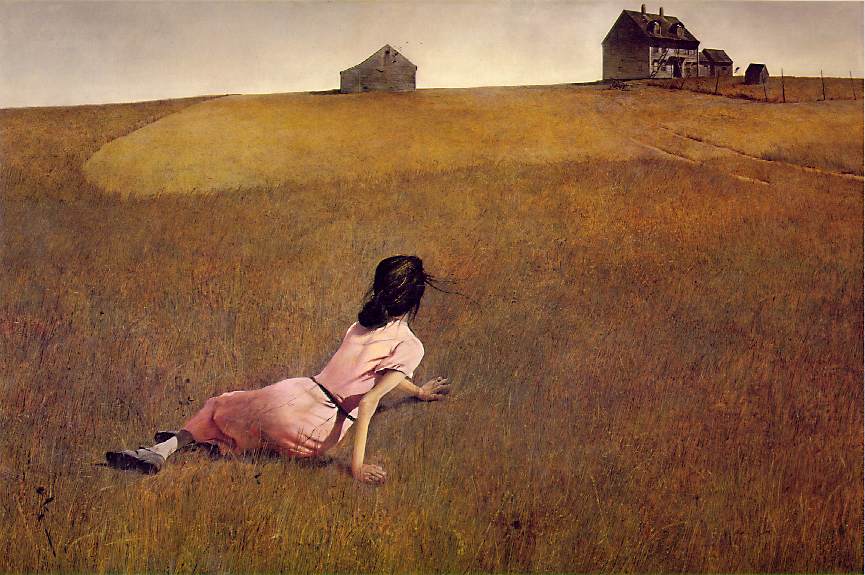
Director Malick, who earned a degree in philosophy before turning to filmmaking, had made an impressive debut with Badlands, a 1973 drama starring Martin Sheen and Sissy Spacek as a young couple on a crime spree; produced independently, it garnered such acclaim at the New York Film Festival that Warner Brothers bought the distribution rights for three times the amount it cost to make.  For his follow-up project, Malick teamed with producer Bert Schneider, who negotiated a deal with Paramount Studios in which he and the director would be given complete artistic control over the project; the studio paid for the film, with Schneider agreeing to cover any amount spent beyond the allotted budget.  Malick, meanwhile, developed his vision for Days of Heaven with acclaimed Spanish-born cinematographer Nestor Almendros, drawing inspiration from paintings by Andrew Wyeth (specifically “Christina’s World”) and Edward Hopper (“The House by the Railroad,” an iconic image upon which the farm house in the film was based) and planning a narrative presented more through imagery than dialogue.   Filming took place in Alberta, Canada, despite the Texas setting, and thanks to Malick’s and Almendros’ wish to shoot mostly during the so-called “magic hours” (the 20-or-so minutes around sunrise and sunset) in order to capitalize on the special quality of light present at these times, it was a painstakingly slow and frustrating process for the actors and crew.  Things were made worse by Malick’s unorthodox shooting schedule, in which he would frequently diverge from the loosely organized daily plan according to his own whims and changing ideas; this caused expensive delays, as did the director’s choice partway through production to jettison his scripted dialogue and allow the actors to craft the story through guided improvisation.  In the end, the project went severely over budget- Schneider had to mortgage his house in order to live up to his deal with the studio- and took so long to complete that key participants (including Almendros) had to leave in order to fulfill other commitments.  To further exacerbate matters, Malick then took two full years to piece together the movie from the miles of footage he had shot; a full year after filming wrapped, he had to call his actors to Los Angeles in order to shoot assorted pick-up shots, famously including close-ups of Sam Shepard taken under a freeway overpass and an underwater take of Richard Gere’s submerging face captured in a large aquarium in Sissy Spacek’s living room.  When Days of Heaven was finally finished and released, the lavish praise it received for its visuals was undermined by the mixed critical reactions to its content, and though it turned a small profit at the box office, it was widely considered a financial failure.

Nevertheless, all the painstaking work undertaken by its director, maddening as his process may have been to his colleagues and his studio, resulted in a film of breathtaking beauty, and though its simple story is seen as if through a prism, detached from the reality of its circumstances and affecting our emotions only obliquely as we take in the wonder of the pretty pageant displayed before us, it nevertheless has a cumulative power that strikes deeply resonant chords within us.  It’s not a deep tale, and its inescapable conclusion is obvious to us even as its premise develops, but that is part of the movie’s haunting charm.  Our intellect is not the target, but rather our senses, and through them that deeper level of understanding where we can appreciate the profound beauty of sadness.  For sadness is the overpowering emotion in Days of Heaven, creeping around the edges of every scene, even those full of joy; it comes from the implicit knowledge that everything is temporary, that the world is in a constant state of change- a theme underlined by the importance of the seasons in the life of the farm, the ominous juxtaposition of industrial age machinery in the pastoral life of its workers, the certainty that the security of regular wages will come to an end with the harvest, and the specter of death that haunts the doomed farmer.  It is exuded in Linda’s narration, filled with wistful nostalgia and philosophical observation rather than direct reminiscence, and it is inherent in the entire situation presented by the film’s central plot- a timeless and oft-repeated saga of the heart being subjugated for worldly gain, of people yearning and struggling for a life better than the one they know, in which brief happiness is attained and lost by all involved.  Days of Heaven, ultimately, is a meditation on the transience of all worldly things, almost biblical in its message; indeed, the title itself is a scriptural reference, and biblical connections are conjured by a number of elements, not the least of which is a plague of locusts that settles on the farm during the film’s climax.  It is not, however, a preachy polemic warning us of the wages of sin, but rather an invitation to embrace life in all its pleasure and its pain, to appreciate the good moments as they come and weather the bad ones with the knowledge that they, too, shall pass; most of all, it is an evocation of things past, a commentary on the repetitive and universal patterns of human behavior, and a chance to mourn our own losses and celebrate our own memories.

Malick’s success at realizing his vision- laborious and, perhaps, badly organized as it was- cannot be denied, nor can credit be denied him for making a film of such unique and delicate beauty; it would be wrong, however, to ignore the tremendous contribution of cinematographer Nestor Almendros on the artistic success of Days of Heaven.  He worked extensively with Malick from the beginning of the process, having been chosen by the director for his earlier efforts (particularly The Wild Child, a 1970 effort by French master François Truffaut, with whom Almendros had a long-standing professional relationship); the two men were much in tune with each other’s sensibilities, and Almendros was impressed by Malick’s knowledge and understanding of cinematography, both technically and aesthetically.  Their collaboration and the loosely-structured, improvisational process they used in creating the all-important look of the film may have led to dissatisfaction and frustration among the rest of the crew (there were claims that the two men “didn’t know what they were doing”), but it resulted in a truly stunning visual experience that still ranks as one of the most gorgeous films ever shot.  Malick’s vision works because of the power of the imagery which Almendros helped him to realize, deliberately drawn from the painters which first inspired the film- not only the aforementioned Wyeth and Hopper, but Johannes Vermeer and other old masters, whose distinctive visual style is referenced throughout in the play of light and shadow- and the techniques of silent filmmaking, with its penchant for the ethereal qualities of natural lighting and its reliance on the importance of wordless storytelling; indeed, these infusions are a perfect fit with the period and setting of Days of Heaven, enhancing its sense of time and place trapped in a bottle, and giving it a magical, shimmering quality that pervades even its earthy and most brutal moments.  The achievement is more remarkable because not only was Almendros, as a foreign national, not allowed to operate the camera himself (due to union regulations), he was also beginning to lose his eyesight at the time, and had to prepare the shots in advance with the cameraman by taking polaroids of the set-ups and studying them through his glasses. It is important to note, in the interest of giving full credit where it is due, that another legendary cinematographer, Haskell Wexler, was brought in to complete the shooting process when Almendros had to leave; the two worked together for a week ahead of time, and Wexler made every effort to duplicate the style that his predecessor had set for the film.  Unfortunately, though over half the footage in the completed movie was shot by Wexler (according to his own letter to critic Roger Ebert), he received credit only for “Additional Photography,” rendering him ineligible to share the Academy Award ultimately received for the cinematography in Days of Heaven.  This oversight resulted in some degree of controversy within the industry, but it has been widely acknowledged by all involved parties that both men played an important role in bringing Malick’s opus to the screen, and the work that they did stands among the best in either of their careers.

Andrew Wyeth's "Christina's World," the painting that primarily inspired Malick to make "Days of Heaven."

Andrew Wyeth’s “Christina’s World,” the painting that primarily inspired Malick to make Days of Heaven

Edward Hopper's "House by the Railroad," another important visual influence on Days of Heaven

Edward Hopper’s “House by the Railroad,” another important visual influence on Days of Heaven

The magic of Days of Heaven is also bolstered immeasurably by Ennio Morricone’s ethereal score, borrowing from Camille Saint-Saëns’ “The Aquarium” (from Carnival of the Animals), which is played over the film’s main tiles, and carrying its mood and motifs into the original music he provides for the narrative.  The remarkably authentic period atmosphere is made possible largely through the costumes designed by Patricia Norris, which she made with old fabric and used clothing items, giving everything a faded look of well-worn realism; also important here are the authentic period vehicles- everything from early automobiles to monolithic farm equipment to a bi-plane carrying a troupe of traveling entertainers- and, most prominently, the farm house, designed and constructed by Jack Fisk, which dominates the landscape of the film, both physically and psychologically, built from plywood and fully dressed with period detail inside and out.  This latter piece was used to film both exterior and interior scenes (a rare occurrence; standard practice, especially at the time, would be to shoot the interiors on a set in a soundstage) and leaves a lingering impression on the memory well after the film has faded to its final close.  It is, in its way, as iconic a structure as the house from Hitchcock’s Psycho (also based, coincidentally, on a painting by Hopper), and gives Days of Heaven a concrete center, a simple, serviceable image rich with multiple layers of symbolic meaning.  Finally, the cast cannot be overlooked.  Though Malick sought to evoke memories of the silent era, there is no bombastic posturing here, no emotional histrionics; instead, his players complement his elegantly simple plot with performances of equal simplicity, avoiding bravura displays and offering instead a low-key naturalism which implies volumes through its very restraint- likely a result of the improvisational nature of Malick’s shooting process.  All four principals give unforgettable performances; Brooke Adams provides a heartbreaking balance of pragmatism and romance as Abby, Linda Manz is hard-shelled but touching as the worldly-wise-before-her-time Linda, Sam Shepard mixes melancholy and earnestness into an appealing package as the unnamed farmer, and Richard Gere uses his almost impossible physical beauty as a powerful tool both to express a genuinely good nature and to mask the darkness brooding inside it in his portrait of the charismatic Bill.  Mention should also go to Robert Wilke, the craggy-faced character actor who manages to touch us deeply in his brief screen time as the farmer’s loyal foreman and surrogate father figure.

Terrence Malick, after Days of Heaven, spent twenty years as a virtual recluse from the movie industry, finally returning in 1998 with The Thin Red Line, a WWII drama which sharply divided critics who found it either a masterpiece or a pretentious sham.  The same response, by and large, has been generated by his subsequent films.  For many, myself included, the jury remains out on whether he is in fact a genius or a charlatan; but regardless of any assessment of his later work, Days of Heaven– especially taken in combination with his earlier Badlands- is more than enough to ensure his status as a true cinematic master.  The way it uses imagery to convey its story, as well as its underlying subtext and the thematic elements which drive it, is a rare and remarkable achievement in utilizing the full power of cinema as a visual medium, and the magnificent beauty of that imagery is still unsurpassed over thirty years later.  Those seeking a passionate romance, with all the typical heart-tugging excesses of standard Hollywood fare, are likely to find it a cold and distant experience, like watching fish behind the glass of an aquarium- a comparison that is, upon reflection, more apt (and less critical) than it might seem.  Malick’s triangulated tale of tragic love is more compassionate for being less sentimental, more deeply moving in its preoccupation with the surface than any number of films that strive to explore the inner experiences of its characters; though it has all the makings of a melodrama, it is a tale without heroes, heroines, or villains, and its characters all contain elements of each, making it impossible to take sides or to judge their actions.  Through the director’s well-considered lens he shows us life, plain and simple, using his art as a means to reveal beauty rather than to manipulate emotion.  As a result, though we may feel somewhat removed from the events and characters, they have the unmistakable ring of truth, and our reactions to them are as honest as they come; for this reason, I count Days of Heaven as one of my personal favorite films, and despite my ambivalent feelings towards its director, consider him one of the greatest filmmakers of his time.  I don’t like to make hyperbolic proclamations like that, so coming from me, you can consider it a pretty strong recommendation.

http://www.imdb.com/title/tt0077405/?ref_=sr_1


Lunacy/Sileni (2005)

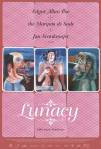
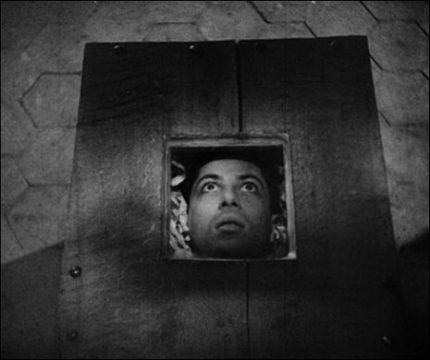
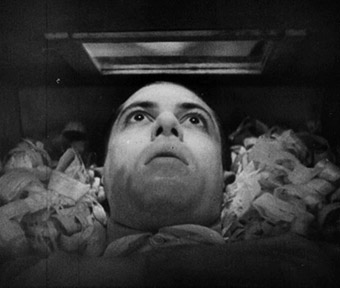
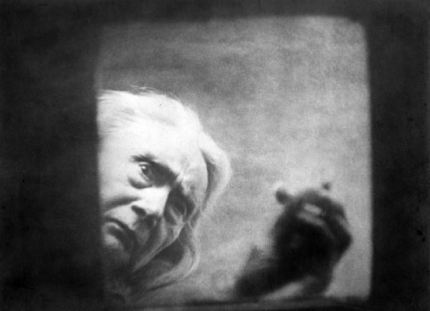
Today’s cinema adventure: Lunacy (Šílení), a darkly comic 2005 horror film by celebrated Czech filmmaker Jan Švankmajer; based on two short stories by Edgar Allan Poe and drawing inspiration from the writing and philosophies of the Marquis de Sade, its an odd, quirky and disturbing foray into the horror genre by a director known for his odd, quirky and disturbing movies, featuring his trademark mixture of macabre puppetry and animation as well as his usual surrealist influences.  Like most of Švankmajer’s work, it initially received little attention outside of Europe (and the few remaining “art house” theaters), but it has since found an audience, alongside the rest of his canon, among the ranks of his loyal international cult following.

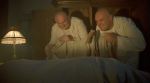
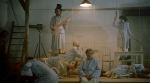
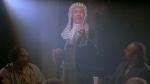
Though it begins, ostensibly, in a present day-setting, the story is quickly drawn anachronistically into the 18th Century, as its protagonist, Jean, is befriended by a wealthy and mysterious marquis (in full period garb) who travels by horse-drawn coach and is attended by a mute servant.  Jean is plagued by recurring nightmares in which two leering goons accost him in his sleep and attempt to forcibly restrain him with a straight jacket; after one such dream causes him to destroy his hotel room in a somnambulant struggle, the marquis comes to his aid by paying for the damages, and then invites the young man to travel with him to his home.  Jean soon discovers, however, that his new benefactor possesses a cruel streak; during his stay he is subjected to cruel pranks- including a bizarre and secretive nocturnal interment- and surreptitiously witnesses a blasphemous ritual in which God and morality are denounced and a young woman in chains is beaten and raped.  Eventually, he accompanies his host to a local asylum, where he is persuaded to remain as a voluntary patient in order to receive treatment for his nighttime disturbances.  His agreement to this arrangement, however, is in reality spurred by the presence there of the girl abused in the black mass, whom he fears to be trapped within the sinister machinations of the marquis and his friend who runs the institution.  Vowing to rescue her and expose the sadistic purposes of her captors, he sets about discovering the hidden truth of the hospital- a place where the inmates and staff are virtually indistinguishable, where chaos and debauchery seem to rampage unchecked, and where a dark secret lies hidden behind the walls, waiting to be set free.

Švankmajer (who provides a spoken introduction to the film in which he plainly states its purpose and emphatically proclaims it not to be “a work of art”) draws the  inspiration for his narrative from Poe’s stories, The System of Doctor Tarr and Professor Fether and The Premature Burial, but the underlying thematic premise is derived from the views espoused by the notorious Marquis de Sade- upon whom the film’s primary antagonist is clearly based.  The argument of both the real and fictional marquis- that man is a product of nature, cruel and carnal by design, and that notions of God and morality are false constructs based in fear and designed to impose control over the weak and foolish- is the central idea which fuels the story, alongside the added intellectual exploration of two opposing methods to governing the insane: absolute control and absolute freedom.  As to the latter, the director states unequivocally in his prologue that the state of the modern world is a combination of the worst aspects of each of these methods, but- apart from this rather glib assessment- his film offers no real support for this theory beyond the extrapolations that can be made from the allegorical elements of the scenario.  Regarding man’s bestiality, however, Švankmajer gives us plenty of meat- literally.  Providing a sort of running commentary to the action are short segments, produced with the filmmaker’s familiar stop-motion techniques, featuring slabs of raw meat animated into performing various activities reminiscent of basic instinctual behavior- such as eating, fighting, and sexual intercourse-  continually reinforcing the idea of humanity as mere senseless flesh driven by primal impulses.  These vignettes, intercut with the main action, also serve to give Lunacy much of its “creep” factor, though as always in Švankmajer’s films, there is good amount of tongue-in-cheek humor that makes us grin even as we cringe.  On a less abstract level, within the narrative proper, the idea of man’s natural urge towards sex and cruelty is illustrated repeatedly in scenes best left for the viewer to discover for himself, with Jean and his enigmatic damsel-in-distress as the only representatives of sanity- as equated to decency, that is.  However, in keeping with the film’s source material, not to mention its creator’s penchant for surrealism, it is never exactly clear that our assumptions are true, and the question of what constitutes sanity- or decency, for that matter- is one which Lunacy leaves unanswered, choosing rather to provide cynical observation on the basic state of humanity.

Švankmajer has built his unique reputation with decades of imaginative filmmaking, blending live action with animation in ways that are at once deceptively simple and devilishly clever.  Influenced by an early career in puppet theatre, he has brought his traditional stagecraft sensibilities into his cinematic language, establishing himself as a genuine auteur with his shorts and feature films that incorporate not only the aforementioned stop-motion techniques, but claymation, a mixture of realistic and stylized scenery as well as puppets and live actors (and sometimes live actors dressed as puppets), and a generally theatrical style possessed of unmistakably ancient roots that stretch back to the Commedia dell’Arte and beyond.  Lunacy, however, like many of his recent works, utilizes a greater proportion of more-or-less straightforward live action footage; indeed, apart from the previously described meat-in-motion sequences, it contains relatively little of Švankmajer’s familiar visual trickery.  This is not to say the movie is short on the director’s usual delight in showmanship; throughout the story are numerous sequences that clearly draw from his love for the stage- the black mass, viewed from the perspective of an unseen audience (Jean peering through a window), is blatantly theatrical, and a tableau vivant of Delacroix’s La Liberté guidant le peuple is later staged by the marquis at the asylum, a nod to the historical de Sade’s direction of plays featuring other inmates when he was at Charenton asylum- as well as to Marat/Sade, the famous avant-garde dramatization of those real-life “productions.”  In addition, the trappings of theatre are scattered throughout the film- costumes, wigs, false facial hair- and the marquis’ entire persona seems to be a sort of performance, as if he is always centerstage in the theatre of his own life.  All of this plays into Švankmajer’s eternal fascination with illusion and the tricks of perception that allow us to be deceived by our own minds, which in turn fits neatly into the Poe-inspired horror scenario, hinging as it does on this very idea; further, the subject matter gives Lunacy‘s theatricality the specific flavor of true Grand Guignol, a style named for the 19th Century Parisian theatre that popularized the staging of horror spectacles, steeped in gore and blasphemy, known for inducing a kind of sexual response to their sensationalistic thrills- which is, of course, highly appropriate in a piece so infused with the spirit of De Sade.

Lunacy is not, of course, a play, and though it borrows much from the theatrical milieu, it also revels in its cinematic nature.  Švankmajer’s understanding of his medium is absolute; he directs with the confidence- even the cockiness- of someone like Hitchcock or Kubrick, delighting in his offbeat style and audaciously presenting his subversive ideas with imagery that is as indelible as it is absurd.  That Lunacy is a self-proclaimed horror film makes little difference in the director’s approach; the choices and tactics he employs are no more horrific than those in any given Švankmajer film, and indeed, he shows considerable restraint here, leaving many things to the imagination that might, with a different director behind the camera, be exploited for their full shock potential.  Providing shock has never been of interest to Švankmajer; rather, he prefers to unsettle us, to disturb the comfort of our psyches by inundating it with the illogical and the impossible, simulating the peculiar flow of a dreamlike consciousness where the contradictory makes perfect sense and the ordinary seems unnatural and menacing.  He creates a hallucinatory landscape in which the demons of our imagination appear before our eyes in all their unexpected familiarity, and because he is so good at doing so, the things he doesn’t show us are all the more potent.

Lunacy, like all of Švankmajer’s films, is ultimately beyond the realm of standard criticism; it exists as a thing unto itself, and to this whimsically macabre visionary’s loyal legion of acolytes, it is one more perfect creation in a body of work that, thankfully, continues to grow.  That said, however, watching his effort at a bona fide horror film (though truthfully, in my view, all of his work could be classed as such) is something of a disappointment.  Given the genre into which he has ventured, one might expect a hitherto unseen level of grotesquery, if not in outright terror and gore, at least in the ferociousness of his approach; but although the film contains several highly effective set pieces (the aforementioned black mass- with its mixture of the arcane, the blasphemous, and the erotic- pushes a lot of buttons for those uncomfortable with such improprieties, and the entire premature burial sequence is a mini-masterpiece of evoking chills with atmospheric story-telling) and it maintains a palpable sense of dread and impending doom throughout, it seems strangely subdued- particularly given its influences from Poe and de Sade, neither of whom could be called masters of restraint. It’s true that the film is meant to be comedic as well, albeit in the darkest sense; but again, this can be said of most of Śvankmajer’s work.  Furthermore, his narrative- despite the anachronisms, non-sequiturs, and other occasionally jarring surrealist ornamentation- is uncharacteristically straightforward, linear, and grounded in a relatively concrete reality (with the exception of the ongoing interpolation of animated meat, that is).  Taken on the whole, Lunacy is less engaging than his Faust, and less disturbing than his Lewis Carroll adaptation, Alice, both of which push the limits of our preconceived boundaries with more enthusiasm and, consequently, linger in our memories far more pervasively.

Comparisons with his other work aside, Švankmajer’s horror film is still an impressively imaginative piece of work, capturing in its unorthodox framework both the delirious psychic instability that makes Poe’s stories feel like a fever dream and the perverse thrill that lies at the heart of de Sade’s nihilistic hedonism.  It’s not terrifying- though parts of it may cause faint hearts to beat faster- and its eventual conclusion is predictable for anyone who even a passing familiarity with the conceits of horror fiction; nevertheless, it succeeds better, both on an intellectual and a deeply primal level, than most of the formulaic, shock-oriented thrillers churned out by the mainstream film industry in its pursuit of teenage dollars.  Of course, its bizarre stylization may prevent many casual audiences from finding it appealing; Švankmajer’s movies are not for every taste, certainly, though in truth, Lunacy may be more accessible than much of his more directly avant-garde work.  As for those with more eclectic tastes, those who are already indoctrinated into the peculiar joys of this Czech master may find, as I did, that Lunacy fails to generate the same deliciously mind-twisting effects as some of his other projects- though doubtless there will be those, with whom it strikes a particular chord, who will quickly adopt it as a new favorite; those adventurous cinema enthusiasts who have yet to see a Švankmajer film, however, are likely to find it a pleasant introduction to a strange and darkly wondrous world unlike anything they have seen before.  It’s as good an introduction as any, and if it leaves you wanting more, you can take comfort in the fact that a five-decade body of work exists, awaiting your discovery.

http://www.imdb.com/title/tt0407236/

Faust (1994)

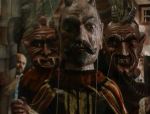
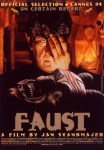
Today’s cinema adventure: Faust, the 1994 feature by celebrated Czech filmmaker Jan Švankmajer, a surrealist take on the classic German legend in which a scholar trades his soul to the Devil in exchange for worldly knowledge and experience.  Set in modern day Prague and incorporating the director’s trademark blend of live action with stop-motion animation, claymation and puppetry, as well as his disturbingly textural use of sound, it represents the culmination of Švankmajer’s long fascination with the tale and stands- along with his other highly distinctive work- as a major influence on more well-known directors such as David Lynch, Tim Burton, and Terry Gilliam.

Presenting its own loose adaptation of the familiar morality fable, Švankmajer’s film borrows elements (and, occasionally, entire scenes) from previous versions by the likes of Christopher Marlowe and Goethe, as well as from the early folk stories of its origin, more or less faithfully following the traditional structure of the narrative; but thanks to the director’s surrealist sensibilities, it recasts the tale in the form of a nightmarish hallucination centered around a nondescript middle-aged everyman who stands in for the mythic scholar.  When this hapless protagonist is handed a flyer in the street, upon which is printed only a simple map of the city with a location marked in red, his curiosity- coupled with some unusual occurrences in his apartment- leads him to a mysterious, ruined theatre; there, after donning costume and makeup, he begins to read from a charred and tattered script, setting in motion a hallucinatory cycle in which he enacts the role of Faust.  Assisted- and manipulated- by an assortment of other “actors,” human and otherwise, his own identity merges with that of the character he plays, and it becomes clear that his own fate is being determined by the scripted events of the ancient drama in which he has become enmeshed- in which he strikes a bargain with Mephistopheles, an agent of the Devil, to instruct him in the secrets of the universe and guide him through the pleasures of earthly life for a period of 24 years, after which he will surrender his soul to be damned into Hell for all eternity.

A dark and moralistic story like this one, born of the same dour Germanic heritage that yielded the Grimm fairy tales and other such cautionary parables, could easily be translated to the screen laden with the ponderously heavy trappings of deep tradition and humorless Puritanism; likewise, given the fact that this legend has provided the inspiration for countless adaptations and re-inventions (from Shakespeare’s Macbeth to Brian DePalma’s The Phantom of the Paradise), the familiarity of its basic plot and its themes make it challenging, to say the least, for any artist attempting a new version to find a fresh approach that might prevent predictability and redundancy from undermining the proceedings- and the audience’s interest in the outcome.  In Švankmajer’s hands, however, the entire well-known saga is transformed into an audaciously non-traditional package of surprises, each one as delightful as it is disturbing, appropriately dark in tone but laced throughout with macabre, tongue-in-cheek humor, and loaded with the peculiar blend of the cinematic and the theatrical that gives this director a reputation for visual magic that is unlike the work of any other.  A self-proclaimed surrealist, Švankmajer creates a movie that captures the peculiar flow of nonsensical logic one follows in a dream, making the experience of watching Faust feel thoroughly like a visit to the realm of the unconscious; he tells the story clearly and succinctly, but he does it through a deeply symbolic progression of seeming non-sequiturs, building a mass of perplexing puzzle pieces that fall seamlessly into place as the narrative resolves itself.  By transposing the story deeply into a hallucinogenic reality in which rules of plausibility and common sense no longer apply, the director not only allows himself free use of arcane and metaphoric artistic conceits, he manages to frame his oft-told tale in such a way that every development seems completely new and unexpected, giving us the opportunity to discover its hidden meanings and significant themes by discovering them from an unfamiliar perspective.

That perspective, shrewdly, moves the Faust story out of the medieval past and into a milieu more relevant to a modern audience; Švankmajer doesn’t exactly update his drama, but rather rehearses it within a contemporary framework.  Our protagonist is established from the outset as a decidedly present-day figure, emerging amidst a crowd of commuters from a subway station- just another anonymous drone.  He is drawn into the web that will seal his fate by a pair of men passing out flyers on a street corner, a sight so mundane in our modern world we scarcely take notice; this, of course, sets up a recurring theme for Švankmajer, that of the mystical contained within the ordinary, a motif that manifests itself throughout the film and tempts us, like Faust, with the promise of secret wonders hiding just beneath the bland surface of our everyday lives.  In our demystified era of utilitarian buildings and dehumanized masses, we long for the thrill of the unknown, a glimpse of something mysterious behind the mask of our predictable, well-ordered existence; such a revelation, however, is as unsettling as it is exhilarating, a source of terror as much as enlightenment, and therein lies the essence of Faust.  To obtain the key to this secret world, we must be willing to sacrifice our very selves, to give up everything that defines us- our souls, if you will; for to be privy to the secret workings of the universe is to be torn irrevocably from our humanity, confronted with an absolute power that renders our previous understanding meaningless and dissolves our identity by shattering the precepts upon which we build our relationship with the world.  In a modern age full of the smug assumptions and easy explanations derived from centuries of scientific exploration, the idea of an unseen order to things is perhaps even more terrifying than it was to our superstitious forefathers, whose imaginations conjured the tale of Faust to warn against delving too deeply into the hidden mysteries of life.  They feared the cost of knowledge and worldly experience was the loss of the soul, but we who have embraced these things may be more frightened by the possibility that they were right.  Švankmajer’s Faust, then, is about the rediscovery of the soul by modern man, and the disturbing notion that he has already sacrificed it.

That Švankmajer conveys all this in his movie is remarkable; but convey it he does, in a manner which gives testimony to his skills as an artist and a visual storyteller.  How he does it, exactly, is beyond the power of words to describe, and at any rate is best left to be experienced firsthand. Suffice to say that, in order to bring our modern sensibility into the mystical world of his story, he takes us into the last remaining stronghold of magic, the realm of the theater.  By trapping his protagonist into a re-enactment of an ancient text, not only does he provide the obvious metaphor of man’s fate being dictated by his repetition of the patterns of the past, he opens the door for his own use of all the tricks of the trade in the service of creating his goofy nightmare.  Puppets, both life-sized and miniature, stand in for other characters- and occasionally, for Faust, too- and interchange with live actors; painted backdrops appear in naturalistic settings, and vice-versa, patently theatrical objects and occurrences manifest in the real world, and events move freely back-and-forth between the containment of the theater and the expanse of nature, underscoring Švankmajer’s dissolution of the boundary between reality and illusion; dialogue is recited, arias are sung, ballet dancers perform, and an audience observes the proceedings, though most of Faust’s key scenes take place “backstage,” at least ostensibly.  Of course, the director’s familiar techniques of stop-motion animation are directly drawn from this theatrical background, and fit in seamlessly here- particularly effective is his claymation rendition of Mephistopheles, growing from a ball of clay into a vaguely humorous demonic face that then transmutes into a mirror image of Faust’s own appearance, giving us, once again, the mystical inside the familiar.  Throughout the film, Švankmajer utilizes all these devices to draw us along on this metaphysical journey, using his surrealist tactics to provide cryptic images that simultaneously amuse and appall us- an egg baked inside a loaf of bread, a baby transforming into a skull, a severed leg wrapped in plastic, a puppet demon sexually assaulting a puppet angel, and countless other blasphemous delights- and, in the end, achieve their cumulative goal of revealing the film’s underlying mystery.  It’s worth mentioning, too, that Švankmajer also indulges his usual fascination with food, offering us numerous important scenes that revolve around eating; he also provides his trademark, hallucinatory soundscape, a collection of rustling, scratching, rattling noises that crosses the sensory boundaries to make us feel the surfaces we hear- and creeps us out, in the bargain.  The entire film, ultimately, has this effect- it’s something akin to visiting a haunted house at Halloween, in which we want to feel our skin crawl and our hair stand on end, but we want to giggle with glee over the pure silliness of it all.

Jan Švankmajer is something of a national treasure in his native Czechoslovakia, and rightly so.  His visionary work, at once quirky and powerful, represents the kind of purely artistic sensibility that is rarely found in modern cinema; with the personal spirit of a true auteur, he makes certain his films are distinctly his own, and whether or not audiences respond is not his concern.  Though much of his work has been rarely seen in the U.S., thanks to Cold War restrictions and prejudices that impaired his ability to distribute it on this side of the Iron Curtain (and, sometimes, even to produce it at all), he has gained a steady and growing following among fans of animation, surrealism, and cinema in general.  His decidedly adult adaptation of Alice in Wonderland (simply titled Alice) is partly responsible for breaking him through into Western culture, but many of his other films- including this one- have been championed by critics and other filmmakers alike, and the ready availability of the digital age has now made it possible for almost anyone to partake of the disturbing delights he offers.  Since Faust, like all of his films, is virtually impossible to describe- even stills fail to capture it, since Švankmajer’s visual sense is so connected to motion and juxtaposition of images- I strongly recommend a viewing.  I can praise it all I want, but, ultimately, it’s a movie that speaks far more eloquently for itself.

http://www.imdb.com/title/tt0109781/

Women in Revolt (1971)

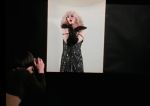
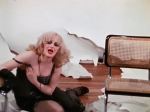
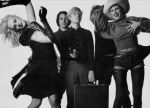
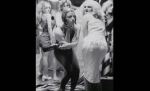
Today’s cinema adventure: Women in Revolt, the 1971 Andy Warhol-produced film satirizing the Women’s Liberation Movement and starring a trio of transgendered “superstars.” Notably, it was the last film to be produced by Warhol on which he actually stood behind the camera, though it was directed by longtime associate Paul Morrissey; it enjoyed more attention and mainstream notoriety than many of the infamous artist’s earlier films, largely on the basis of its controversial approach to the subject matter, drawing the wrath of feminists who felt it was a slap in the face to have their cause savagely lampooned and to be represented onscreen by “female impersonators” instead of biological women.

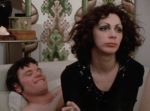
The plot, such as it is, revolves around three women who become involved in the Women’s Lib movement for their own reasons: Jackie is a militant intellectual schoolteacher who believes men are inferior to women and should be relegated to their naturally subservient place in society; her friend Holly is a model who hates being treated as a sex object, although she herself has a ravenous libido; and Candy is a society heiress who longs to break free of the stiflingly traditional role she is expected by her family to play, wishing instead to build a career for herself as a glamorous movie star. When Jackie and Holly decide to form their own protest group- called Politically Involved Girls, or “P.I.G.” for short- they hit upon the idea of enlisting Candy, hoping to capitalize on her high-profile society position to generate publicity for their cause, and more importantly, to gain access to the financial support of her family and the wealthy circle in which they move. A series of misadventures follows in which each of the three activists are revealed to be more motivated by self-interest than by real passion for their cause. Jackie, despite being a self-proclaimed lesbian, spends the organization’s money on a bodybuilding male hustler and becomes the unwed mother of his baby; Holly succumbs to her penchant for drinking and sex, becoming a derelict living in the street; and Candy abandons her friends, her family, and the movement to realize her dream of stardom.

The scenario for Women in Revolt– it would be inaccurate to call it a script- is not so much a storyline as it is an excuse for extended on-camera improvisation and trashy bad behavior. This, of course, is the real purpose here, far more than any deliberate social or political commentary. Still, it’s easy to see why genuine feminists would find Morrissey’s movie insulting and offensive; their arguments are put into the mouths of enfants terribles whose grotesquely exaggerated behavior and plainly self-absorbed motives render them meaningless and laughable. Given Morrissey’s right-wing political bent, it’s possible, if not probable, that this was at least part of his intention here; but in truth, the whole affair is so patently ridiculous that it is impossible to take seriously. The political satire is merely a vehicle in which the film’s three stars can indulge in their individual excesses, gleefully breaking taboos and acting out with histrionic abandon. Much of the dialogue is devoted to the kind of verbal bitch-slapping that has fueled drag shows for decades, and for the most part, whoever shares the screen with each of the three central characters is merely there to provide a foil- and the occasional straight line- for their onslaught of caustic camp.

Though this formula, admittedly, provides numerous amusing moments throughout the film, it is also the main downfall of Women in Revolt. The pervading atmosphere of uncontrolled, undisciplined expression hardly makes for concise, coherent filmmaking; the improvisational approach works for fleeting moments, but those are islands in a sea of self-indulgent chatter- often spoken simultaneously, in a seeming battle for dominance, rendering much of its content incomprehensible and more than a little grating. This, of course, is inherent in improv, which is why it is most effective when used as a basis for developing more polished material or edited into a cohesive form by a savvy director; it also helps when the performers have been given clear guidance and, ideally, have received some formal training. In the absence of these elements, the end result usually ends up looking and feeling like a free-for-all, reminiscent of rambunctious children play-acting in a schoolyard game of make believe- which can be effective in short doses, but is perhaps not the best way to sustain the length of an entire feature film. It creates, in fact, the sense that we are watching a movie made by amateurs, and such is the case here; the low budget production values, the clumsy lighting, the choppy editing, and the generally insipid nature of most of the dramatic conceits all contribute to this feeling. As a result, instead of being provocative or outrageous, the proceedings quickly become simply tiresome, with a juvenile sensibility that makes the archness of the film’s tone come off more like shallow snarkiness. In addition, despite a considerable amount of gratuitous nudity- mostly male- and sexual content, the handling of these scenes strips them of eroticism; indeed, sex as portrayed here is a repugnant, degrading act, devoid of charm or subtlety, and thoroughly shocking for reasons that have nothing to do with morality or social acceptability. Like everything else in the world as seen by Warhol, Morrissey and company, it’s just another boring convention to be disdained and ridiculed.

These criticisms, valid though they may be, might be immaterial if one considers that film for Warhol- originally, anyway- was just another decorative medium, a way to produce ever-changing pop art images to be projected on a wall at a party, perhaps- a means to provide atmosphere in the background of a real-life “happening.” The rules of good cinema do not apply when a film is more of a statement in itself than a legitimate exploration of the art form. However, by the time of Women in Revolt, the enigmatic Warhol had stepped away from participation in his film productions, handing over the reigns to Morrissey, who had taken things in a more (or, arguably, less) ambitious direction, focusing on a narrative-driven, mainstream approach. It would be a mistake to classify these later Warhol movies as art for art’s sake, as they clearly aspire towards providing a more medium-specific experience; therefore, it seems fair to say that by any reasonable cinematic standards, Women in Revolt is a terrible film. One might argue that the film eschews traditionally accepted style and polish as a rejection of conventional cultural values, but pretensions of artistic purpose are no excuse for sloppy movie-making, and even if one generously classifies Morrissey’s style as cinema verité, it’s hard to think of a less professional, more careless example of cinematic hack-work. What makes this film so appallingly bad is not its nasty attitude or its banality, but the fact that it is, in the end, a poorly executed, badly assembled mess- and despite the fact that Warhol himself operated the camera for several botched scenes (at the insistence of star Jackie Curtis, who refused to perform without his participation), the fault for this lies solely at the feet of its director. Morrissey’s apparent lack of skill in the creation of his product may have been intentional, a deliberate effort to make a statement about the subjectivity of artistic values or to prove the point that arbitrary notions of bad or good are irrelevant to an audience simply seeking to be distracted; but his work here smacks of fraud, the attempts of a would-be artist to discount the importance of techniques he hasn’t the patience or understanding to master. Whereas Warhol’s genius was in simply setting up the camera and letting it capture what it would, the same approach is Morrissey’s crutch. In other words, Women in Revolt seems the work of a lazy director who wants glory without having to work too hard.

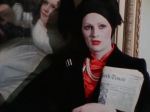
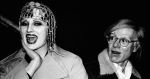
Despite this harsh assessment of Morrissey and his work, Women in Revolt is not devoid of value. For better or for worse, in fact, it is probably a more significant film today than it was when it was originally released, due largely to the window it provides into the miliieu of the Warhol factory and- more importantly- the all-too-rare opportunity it gives us to see the work of its three leading players: Jackie Curtis, Candy Darling, and Holly Woodlawn. Each of them were members of Warhol’s famous coterie at the “Factory,” known for their work in previous of his films, and as such were popular- and notorious- fixtures of New York’s avant-garde arts scene. Curtis, unlike his two co-stars, was a female impersonator, who appeared both as a man and a woman in his work, and was successful independently of his projects with Warhol; he was an actor and playwright whose edgy, campy plays were a fixture of New York’s experimental theatre scene, as well as a singer and poet whose work garnered considerable praise and attention from critics of the era. His screen persona- abrasive, outspoken, sarcastic, and sporting a frizzy red wig with glittery make-up- provides many of the best one-liners in Women in Revolt, and whenever he is on the screen he is in absolute command. This is not always to the benefit of the film; many of the shrillest and most confused scenes are the result of Curtis’ aggressive improvisation, in which other performers are drowned out and cut off at every turn in favor of his unscripted outbursts. Nevertheless, it’s a smart performance, giving a glimpse at the potential for brilliance which might have been more fully realized with a little rehearsal and direction. Likewise, Candy Darling, a true transgendered performer, who had worked extensively with Curtis in his plays as well as in previous Warhol outings, reveals the ethereal, double-edged sincerity that allows her, somehow, to rise relatively unscathed above the messy chaos of Women in Revolt; she contrasts Curtis’ brash bullying with her own form of dominance, the cool superiority of a sophisticated and intelligent woman with nothing to prove. She is elegant and truly beautiful, and Women in Revolt is at its best- and most watchable- when she is onscreen, working her magic with the curious blend of earnestness and irony that made her one of the most charismatic of the “superstars.” Rounding out the trio is Woodlawn, also a true transgender, whose fiery Puerto Rican energy bursts from the screen, representing the raw energy of the body (as opposed to that of the mind and spirit, personified by Curtis and Darling, respectively) as she gropes and gyrates her way through the film. Truly sinking her teeth into her role as a nymphomaniac who hates men, she gives a manic, conflicted performance which displays a remarkable gift for comedy and hints- as does the work of her co-stars- at a considerable talent, making us wish all the more for a surer hand behind the camera. The fact that all three of these stars are so obviously gifted is yet another indictment against Morrissey’s infuriating mediocrity as a director; their work continually gives us glimmers of what Women in Revolt might have been. Still, they provide plenty of reasons to sit through the movie- though it requires considerable patience and might be best accomplished in short installments- and even manage to create several moments which could be called classic. Besides these three heavyweights, the film offers brief appearances by other counter-cultural icons of the era, including Penny Arcade and Betty Blue, and Brigid Berlin in a wordless cameo as a decidedly butch bar owner.

The fact that Women in Revolt is an atrocious movie, oddly enough, does not alter the fact that it is a classic, of sorts. Clearly, there are many stalwart supporters of Warhol and his crew that would defend the film staunchly and embrace its many flaws proudly, claiming them as victories in a cultural war and viewing them as medals of honor. There is certainly a weird power to this curiosity of its time, and despite its lack of real ambition it manages to offer up some interesting observations about the power struggle between the sexes- particularly through its reversal of roles in which liberated women treat their men with the same disrespect and contempt they deplore when they are the recipients, and the use of sex as both a bargaining tool and a means of gaining power. It can be argued that the movie was a success in terms of what it set out to accomplish. Warhol neither knew nor cared about the aesthetics of film; he wanted only to present his branded material for the sake of building his cult-of-personality-based empire, and notions of good or bad were of little interest to him. With this in mind, Women in Revolt is exactly what he wanted it to be- a source of controversy and buzz, and another brick in the continually growing monument to his so-called genius. Indeed, given his particular, nose-thumbing stance at conventional society, it is probably preferable that it should be bad; the exaltation of the banal was a major part of what he was all about, after all. Therefore, I find myself in the curious position (which Warhol would have loved) of recommending a movie that I found to be abysmal. I would stress, however, that my endorsement is based not on any sort of respect for the artists behind the scenes, but on my admiration for the ones on the screen. It is beyond tragic that these three were given the treatment they were- exploited by Warhol for their “freak” appeal, they were given just enough cultivation to reveal the brilliance of their underlying talent, then abandoned because the impresario had lost interest. Perhaps the real reason for his fickleness can be surmised by viewing Women in Revolt; it is the talent of Curtis, Darling, and Woodlawn that redeems the experience, and without them it would truly be unwatchable.  Could it be that Warhol feared they might outshine him on their own merits, and take away some of the credit for their own success? It’s a question, sadly, that must be asked, but can never be answered. Darling would pass away of cancer within two years of the film’s release, and Curtis would die of a heroin overdose a decade later; Woodlawn returned to her native Puerto Rico and worked as a busboy until, years later, a resurgence of interest in her former persona allowed her to return to the limelight. Women in Revolt, wretched as it is, is a snapshot of a moment in time, when all three were poised on the brink of success, and maybe, just maybe, could have broken through the barriers of social prejudice to achieve mainstream success. It was not to be, but they paved the way for future generations who continue the struggle for transgender acceptance. That in itself makes this movie worthy of respect- not for the posers behind the camera, but for the real people in front of it.

http://www.imdb.com/title/tt0129631/

The Fall (2006)


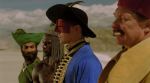
Today’s cinema adventure: The Fall, a 2006 film, directed by Tarsem Singh, about a suicidal young man who unfolds an elaborate adventure tale for a little immigrant girl as they recover from injuries in a 1920s-era Los Angeles hospital.  Filmed over the course of four years at locations throughout the world, it was a deeply personal labor of love for its director, largely financed at his own expense.  It was initially released only on the film festival circuit, but, championed by filmmakers Spike Jonez and David Fincher, it was given widespread distribution in 2008, receiving widely mixed reviews; some critics found it a visually interesting bore while others placed it on their best-of-the-year lists, but the consensus was, by and large, mostly favorable, and the film was a moderate box office success.

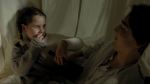
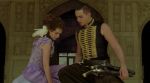
Based on a 1981 Bulgarian film entitled Yo Ho Ho, The Fall interweaves its main narrative with epic scenes of sweeping fantasy described in the story told by its broken adult protagonist, Roy, a novice movie stunt man whose spine has been damaged in a fall during his first film shoot.  Deeply depressed, he has lost the will to live, but his morose state of mind has less to do with his injury than with the loss of the woman he loves to the movie star for whom he was doubling.  Recovering in the same hospital is Alexandria, a precocious Romanian child whose arm was broken in a fall while picking oranges with her immigrant family; curious and imaginative; she has taken to wandering the corridors and grounds, becoming a favorite among the other patients and the staff, who treat her as something of a mascot.  When she befriends Roy, he begins to entertain her with a fabulous tale of adventure and revenge, in which a masked bandit and his heroic comrades seek revenge against an evil prince for the wrongs he has done them; it becomes clear that his story is shaped as he goes by his own real-life situation, and that his ulterior motive is to use the continuing saga as a means to coerce his young companion into stealing morphine from the hospital’s dispensary in order to facilitate his intended suicide.  As the events of both stories unfold, little Alexandria exerts her own influence, inserting herself into the fantasy and affecting its outcome even as she begins to work her way into Roy’s broken heart.  Eventually, the imaginary epic becomes a vehicle for her desperate efforts to keep Roy’s hope alive- as well as her own.

Tarsem’s screenplay, co-authored with Dan Gilroy and Nico Soultanakis, is geared towards revealing the triangulated relationship between reality, imagination, and the unconscious mind; but it is the relationship between its two protagonists that dominates the film, despite the resplendent spectacle of the fantasy sequences in which their shared psychodrama plays out.  This is not a negative criticism; on the contrary, the surreal, stream-of-consciousness yarn woven by the convalescent pair is meant to serve as illumination for the real-life process of their psychic healing, not the other way around, and it is a testament of the director’s dedication to his vision that The Fall does not make the fatal error of overwhelming its humanity by emphasizing the adventure plot over the drama which is the true center of the film.  That said, one can’t help wishing at times that a bit more effort had been made to forge a stronger coherence into the fantastical subplot, which is as all-over-the-map in its storyline as it is in its pan-geographical setting; but part of the film’s conceit is that the story morphs to suit the changing emotional needs of Roy and Alexandria, replicating the spontaneity and whimsy of a game of make believe, and though it may cause some frustration in viewers attuned to logical, linear storytelling, its structural malleability is in keeping with the larger purpose at hand.

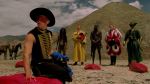
The changing dynamics of this fantasy narrative yield numerous interesting subtleties.  We see, for example, that its visual manifestation is shaped by little Alexandria through the discrepancies between what Roy describes and what we see, reflecting her different cultural understanding- the bandits and Indians with which he fills his tale are depicted through the lens of her Eastern European, Ottoman-influenced imagination rather than the Hollywood-Western milieu he clearly intends; and the characters populating the adventure are portrayed by those surrounding the little girl in her real life (nurses, orderlies, visitors to the hospital), reflecting her associations and assumptions about them and what they represent for her.  Such clever and thoughtful touches do much to establish the elaborate meta-drama as a stage for the interaction of the two characters’ unconscious minds, as well as providing the source for a considerable amount of humor and even some subtle social commentary.

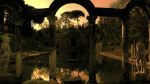
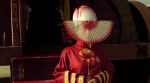
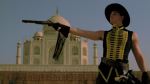
On a more obvious level, of course, it is these remarkable fantasy sequences that give The Fall its most distinctive quality- the breathtaking visual opulence that is made all the more astonishing by the knowledge that no special effects or computer enhancements were used.  Exotic, spectacular locations across the globe were used to create a surreal world of wonder; we are transported to Moorish palaces, ancient ruins, sparkling reefs, lush forests, otherworldly desertscapes, and monumental structures both well-known and unfamiliar, all beautifully photographed and magnificently showcased by Tarsem and cinematographer Colin Watkinson.  The characters are bedecked in the lavish costumes of Eiko Ishioka, which conjure a timelessly mythic quality made somehow more magical by their authenticity and their exquisite detail; and the larger-than-life majesty of these segments is undercut throughout with a playful spirit that keeps them fun and relieves the comparatively somber mood of the hospital environment in which the rest of the film is set.

Despite its inherent goofiness and its rambling inconsistency, the tale of the Blue Bandit manages to build an emotional weight as it reaches its climax; and though its characters’ fates are rendered irrelevant by the knowledge that they are wholly imaginary, they are nevertheless granted significance because we have come to care about the pair of storytellers who have created them.  It is in those less-rousing hospital scenes that the movie makes the emotional connection necessary to fuel both plots.  It succeeds in doing so largely because of the remarkable chemistry between its two leading players, Lee Pace and Catinca Untaru.  Tarsem cleverly sculpted this crucial element by shooting their segments in sequence, allowing the relationship between the two actors to develop naturally and taking care to keep the intrusiveness of his camera at a minimum- several scenes were filmed through a hole in the curtain surrounding the bed in which Pace’s character is confined, in order to preserve the feeling of intimacy- as well as allowing young Untaru (along with most of the crew) to continue in her initial belief that Pace was actually paraplegic.  In addition, much of their dialogue was unscripted, permitting the girl to use her natural expression; this not only results in a truly genuine performance from the little star, capturing her infectious real-life personality onscreen, but actually bore influence on the film’s scenario, with the director adapting certain elements of the story in response to spontaneous developments that took place in front of the camera.  This organic, delicate approach certainly paid off: the result is one of the most endearing, believable child performances ever put on film, and a magical, touching onscreen relationship that informs everything else that happens in The Fall.  Due credit goes to Pace, as well, who gives us a heart-rending portrayal of a young man crippled by morbid despair even as he manages to hold up his end of the connection with his juvenile co-star, not to mention the considerable task of embodying the fanciful hero of his fabricated saga.

Though the two central performers play an enormous part in making The Fall appealing, the real star is director Tarsem.  Having established himself as a talented film craftsman in the field of commercials and music videos (including the multi-award-winning video for REM’s “Losing My Religion”), he made his feature debut with the stylish 2000 thriller, The Cell, which was sufficiently successful to gain him the clout- and the finances- to make this highly personal film.  Choosing to pay for the bulk of it himself in order to forgo the necessity for compromising his vision to meet the demands of backers, the end result of his dedication is a visually stunning piece of filmmaking, laden with magnificent scenery, brilliantly composed frames, a dazzling array of color and light, and threaded through with an obvious reverence for the cinematic medium itself; continually incorporating elements of optical illusion and perceptual trickery (with numerous clear nods to the art of Salvador Dalì), he reminds us of the illusory nature of existence and celebrates the simple magic with which our lives can be enriched- not just on the big screen, but within our own imaginations.  He also proves that his ability is more than merely technical with his savvy handling of the actors and his wise approach of allowing their own artistry to make its contribution to his film, infusing it with an vibrant honesty that makes it much more than so many of the hollow, soulless spectacles foisted upon us in our neighborhood multiplexes today.

The most pertinent question, of course, is the same with The Fall as it is with any other move: is it sufficiently engaging to sustain interest for its two-hour running time?  Many critics- and other viewers- did not think so; doubtless those who were bored were expecting a comfortably predictable adventure fantasy, along the lines of The Princess Bride, with enough artsy quirkiness thrown in to appeal to the highbrow set.  If so, it is no wonder they were disappointed.  Tarsem’s film defies expectation, choosing instead to tell its own, bittersweet little story in a highly unorthodox style; it is a movie about the heart, the mind, and the imagination, and its characters are not the catch-phrase-spouting adventurers that populate standard blockbuster fare, nor is its action the main focus of attention.  Indeed, the movie’s formula is almost an inversion of the norm, with the action and adventure sublimated to serving the needs of the characters’ psychological journeys rather than vice-versa.  Such a switch doesn’t make for heart-pounding, adrenaline pumping excitement, and any viewer looking for such thrills is better off looking elsewhere; but if you’re looking for a rare and unique, highly affecting, thought-provoking experience that shines with the sheer joy of filmmaking as an art- as opposed to a cash cow- then you can’t ask for better than The Fall.

http://www.imdb.com/title/tt0460791/


Beautiful Darling (2010)

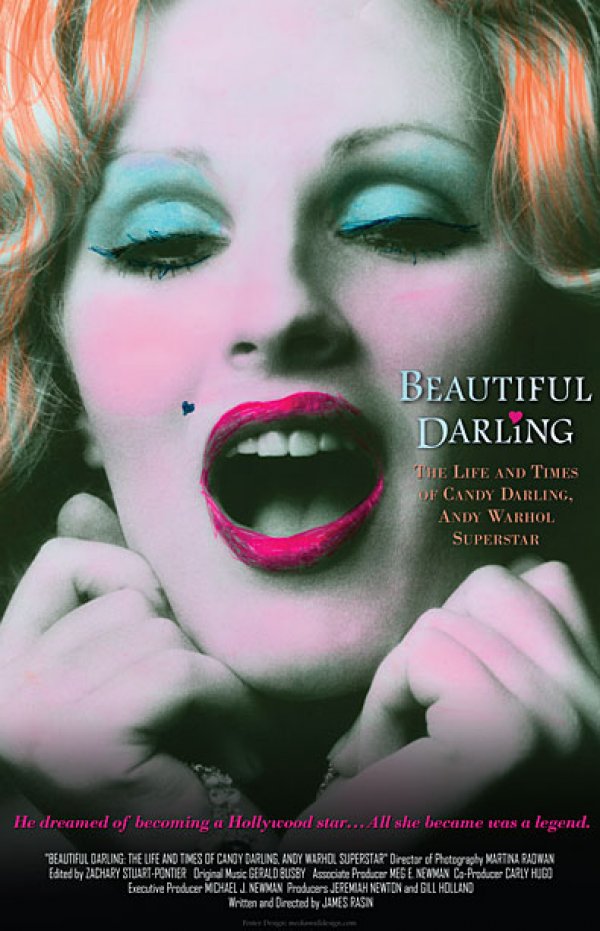
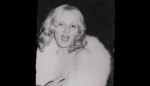
Today’s cinema adventure: Beautiful Darling, a 2010 documentary feature focusing on the life of pioneering transgendered actress and Warhol “superstar” Candy Darling, co-produced by her longtime friend and roommate, Jeremiah Newton, and featuring archival and newly-conducted interviews with numerous of her famous and not-so-famous contemporaries and colleagues.  First premiered at the Berlin International Film Festival in 2010, it has since been shown at dozens of similar events around the world, as well receiving special screenings at several prestigious art galleries and enjoying extended commercial runs in major metropolitan cities across the U.S.

Written and directed by James Rasin, the film frames its examination of Darling- who began life in Queens as James Lawrence Slattery- through Newton, whose close relationship with the pop subculture icon gives him unique insight into her personality and her story.  As he prepares to have her cremated remains buried- along with those of his own mother- nearly 40 years after her death, he reminisces about her and shares his extensive taped interviews with such figures as Tennessee Williams, Valerie Solanas, Jackie Curtis, and Darling’s own estranged mother, conducted at the time of her passing in an effort both to come to terms with his grief and to create an archive documenting her personal history and relationships.  Combining this material with contemporary interview footage of former friends and associates (Paul Morrissey, Fran Lebowitz, Holly Woodlawn, Julie Newmar, Bob Colacello, Gerard Malanga, and many others) and excerpts from Darling’s personal diary (read by actress Chloë Sevigny), as well as a wealth of photos, both personal and professional, and film clips from her storied career, Beautiful Darling constructs a portrait of its subject as a brave and determined individual who pursued a personal dream against the societal norms and expectations of the era and became a counterculture icon and alternative role model as a result.  It also goes past the campy, glitzy surface of her persona and attempts to show us the very real person behind it, allowing us to feel a connection to her as a human being and bringing home the bittersweet story of a person whose hard-won success was marginalized and yielded little in terms of personal reward, and whose premature death from cancer at the age of 29 prevented her from living to see the gradual change that has led to greater acceptance of transgendered individuals and might have brought her greater recognition within the mainstream.

Rasin’s reverence for his subject is clear, as is the adoration of her former companion, Newton, as he lovingly shares his memories and the personal effects he has cherished from their time together; all the rest offer their individual perspectives on Darling, some more charitable than others, but mostly with fond appreciation and affection.  Of course, a multitude of interpretations and attitudes emerge regarding her motives, her character, her sexuality, her talent- but these stand out in contrast to the private voice of Darling herself, which reveals a smart, savvy, self-aware person, fully aware of her role in the circus that surrounded her and- most poignantly- increasingly worn out and disillusioned from the continual struggle to embody the glamorous movie star fantasy she had committed her life to making into a reality.  The ultimate impossibility of achieving that goal only to serves to make her considerable accomplishments all the more triumphant, and her refusal to give it up- even as she lay on her deathbed posing for a final glamour photo- inspires us and moves us with unexpected emotional resonance.

There are moments throughout Beautiful Darling that touch us with an immediate sense of humanity- the numerous clips of Candy in performance reveal the spark that elevated her above the level of just another drag act, the juxtaposition of early childhood photos with the various reminiscences from her mother and other figures from her former life as a boy give us a glimpse of her monumental struggle to find her identity, and Newton’s tender concern surrounding the arrangements for her impending burial allow us to share his sense of closure over his belated final farewell to his friend.  It is the power of these elements that make the film a superb documentary; there are few revelations here regarding the historical events of her life or her associations, though there may be some surprises for those viewers unfamiliar with her career.  The usual dominant themes, recurring in any examination of the time and place in which Candy enjoyed her heyday, are present here (the extreme, drug-saturated party atmosphere, the callous fickleness of Andy Warhol, the peculiar blend of degrading squalor and ostentatious glamor), and the archival footage and photos give us a titillating glimpse of the legendary settings in which pop-culture history was made (Warhol’s Factory, the back room at Max’s Kansas City, the streets of Greenwich Village); but what sticks with us, when the film is done, is the sense of Candy as a person, a bridging of the gap between her extreme and unique experience and our own, probably more mundane lives.  We are left with a feeling of respect for her bravery, and empathy for her deep longing to simply be herself; it’s a struggle with which we can all relate- gay or straight, male or female, conservative or liberal- and one which ultimately defines our lives, whether we decide to participate in it or not.

It is this universality that makes Beautiful Darling a powerful film, though it also succeeds in entertaining and informing us, and offers us the opportunity to become familiar with its charming and beautiful subject.  By appealing to that part in all of us that identifies with Candy’s inner yearning, Rasin’s movie challenges us to confront not only our own issues of identity, but our assumptions and prejudices about sexuality and gender as well.  Though this is not overtly a film about the evolution cultural attitudes towards transgendered individuals, it gives us dark hints about the very real danger a person like Candy Darling faced in mid-20th-Century America, and invites us to compare our contemporary level of tolerance with that of her day.  Certainly there has been progress, but Beautiful Darling begs the question: how far have we really come in our acceptance?  We have yet to see a mainstream media star who is transgendered, Divine and RuPaul (cross-dressers both- not transsexuals) notwithstanding.  Perhaps that day will come, eventually, and when it does, Candy Darling will finally take her place as the true pioneer that she was.

http://www.imdb.com/title/tt0960730/

Art School Confidential (2006)


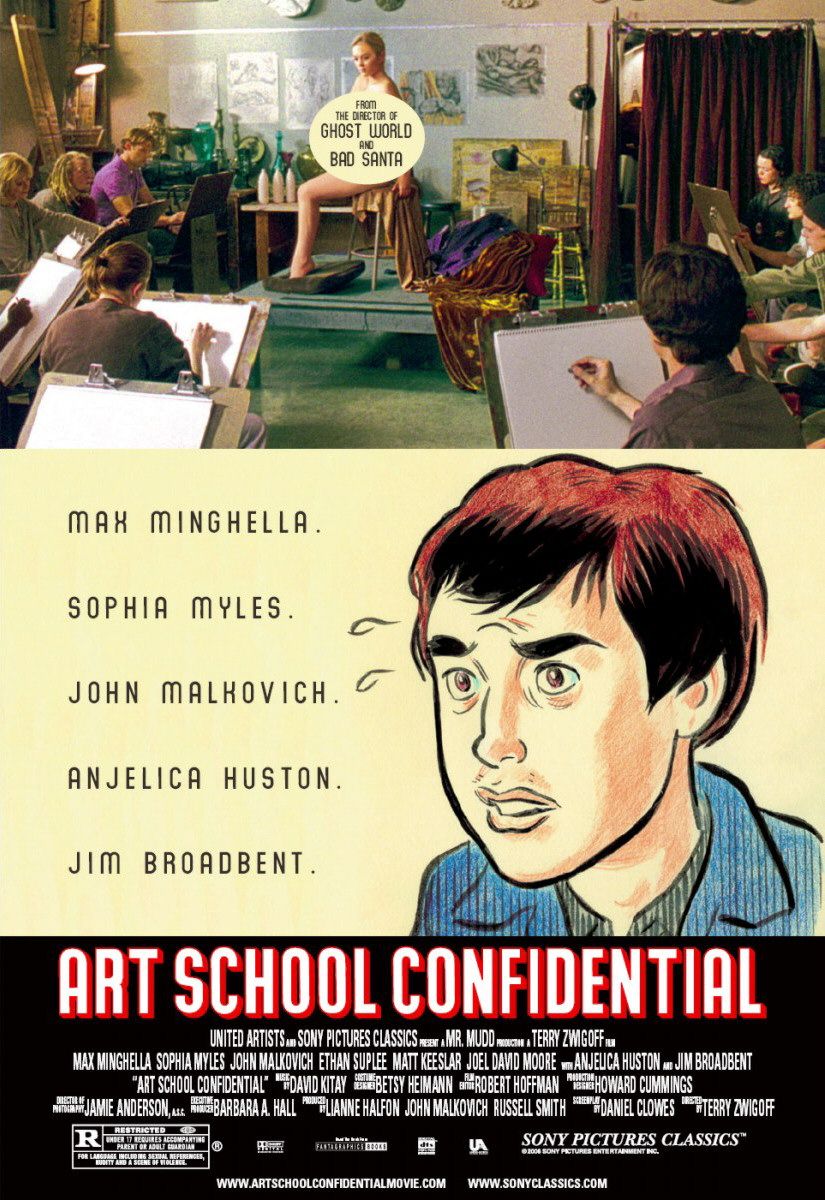
Today’s cinema adventure: Art School Confidential, the 2006 film by Terry Zwigoff based on Daniel Clowes’ underground comic of the same name.  The second collaboration between Zwigoff and Clowes, it follows the efforts of an art college freshman to win the love of his dream girl by becoming a successful artist.  It shares many of the themes of their first joint effort, Ghost World, as well as its bleak world view and cynical take on humanity, and features an impressive array of talent in supporting roles.

The plot follows Jerome, a young man whose interest in art has more to do with his libido than his desire for self-expression.  Believing that success in the art world will allow him a limitless amount of female companionship; he enrolls as an art major in an urban college, where he has high hopes that his talent will quickly be acknowledged.  Instead, he finds himself just one of many frustrated hopefuls in a depressingly grim environment where the only topic more discussed than the uselessness of an art degree is the string of unsolved murders taking place near the campus.  Surrounded by peers who are self-absorbed, pretentious boors, and professors who are self-important, disaffected failures, more interested in their own stalled art careers than in nurturing the abilities of the students under their charge, he gradually realizes that success is more about playing the game than about talent.  To make matters worse, he is completely turned off by the dysfunctional girls in his dating pool, and he begins to despair that his fantasies of being a playboy artist will be crushed by the cold reality of adult life.  Things begin to look up when he meets a beautiful model who shows an interest in him, but after she is swayed by a handsome fellow student- whose work has gained more recognition than his own- his desperation drives him to concoct a deceitful plan which will put him on the fast track to success and win back the attention of his newfound dream girl.

On the surface, Art School Confidential feels like one of those eighties-era coming-of-age comedies directed by John Hughes, in which a geeky teen loser learns that being yourself is more important than being popular and ends up winning the boy or girl of their dreams by the final scene.  That description is not far off, but in this screenplay, penned by Clowes himself to ensure faithfulness to his own misanthropic vision, the formula is turned on its ear.  Jerome doesn’t want to be accepted as he is, he wants to be worshipped; and far from finding empowerment and self-actualization, he learns that being himself brings only further isolation and obscurity, and that if he wants his dreams to come true he will have to find a way to stoop lower than everyone else.  His story is shot through with the kind of social satire that hits uncomfortably close to home, threatening to undermine any preconceived ideas we might have about the underlying goodness of humanity; if there was ever any there, Clowes makes it clear that it has been thoroughly snuffed out by the degraded, ego-driven culture he shows us.  Like our protagonist, we look around desperately for kindred spirits, but the cast of characters offers us little solace; Jerome’s fellow students are a collection of affected misfits and pompous twits, and the adults are more or less an older- and more disillusioned- generation of the same breed.  Virtually every person in the film is motivated by their vanity, and everyone else around them is merely an object to be used in their quest for self-fulfillment.  This is true even of those few characters that seem sympathetic- including Jerome, who turns out to be more of an anti-hero than we surmise.  With such a disheartening perspective on the denizens of the art world- and, by extension, the rest of the human race- it’s hard to find any of the comedy very funny, at least in a laugh-out-loud way.  The film’s humor is dark, dry, and derisive; it is also arch and vaguely judgmental, casting a reproving eye on the professional and personal pursuits of all its characters and concluding that the bulk of human endeavor amounts to a desperate cry for attention.

For his part, director Zwigoff makes every effort to keep things light, at least visually.  He capitalizes on the movie’s teen-angst heritage with nods to the genre’s cliches, such as “getting-it-done” montages and character-based visual gags, and directs his actors with a clear focus on presenting its familiar types.  He obviously relishes the exploration of his quirky characters’ personalities, but he emphasizes the details of the plot enough to keep it moving effectively.  It’s also obvious that he shares Clowes’ ironic sensibilities, and he is careful not to undermine Art School Confidential by softening its snarky edge with sentimentality- although, with the help of his A-list cast of adult actors, he does manage to imply a more mature counter-perspective that includes at least a little mitigation of the seemingly soulless and shallow priorities exhibited by the inhabitants of his film’s inhospitably selfish universe.

For their part, the actors do their best to keep things real, without relying solely on the surface qualities of their stereotypical characters; overall, the cast manages to infuse a level of humanizing depth to the proceedings that keeps the movie from being an unrelentingly pessimistic existential polemic.  Despite their best efforts at honest playing- or perhaps, in many cases, because of it- there are few likable characters in Art School Confidential; the single most pleasant personality is exhibited by Joel Moore, as Jerome’s friend Bardo, whose portrayal of a proudly self-acknowledged failure is refreshingly free of barely-concealed self-promotional subtext- appropriately making this gregarious loser a comfortable island in a sea of  chilly attitudes.  Max Minghella is deceptively appealing as Jerome, until his quest for recognition turns him into a self-pitying cry-baby; and Sophia Myles, likewise, fools us into liking his would-be soulmate, Audrey. The good stuff, however, comes from the heavy-hitting support team of accomplished grown-ups; John Malkovich, Anjelica Huston, Jim Broadbent, and Steve Buscemi all bring their skills to the table as they portray various representatives of the older-but-not-necessarily-wiser set, and the film leaps several notches up in quality when they are on the screen- which, sadly, is never for very long.

Art School Confidential is meant, of course, to be a comedic exposé of the pretentious, stagnated world of academic art, a subject ripe for vigorous satire.  The problem is that the humor seems to come from a rather mean-spirited place; Clowes and Zwigoff take a decidedly uncharitable view of almost every affectation and foible displayed by their characters, and at times their approach feels more like bullying ridicule than good-natured ribbing.  Their critical stance is certainly a valid one, but one can’t help feeling that the harsh perspective is a little too one-sided; after all, it’s easy to point fingers at the hypocrisy and artificiality we see around us, but it is perhaps more interesting to explore what lies underneath that surface.  Coming of age involves an awakening, a realization that the world is full of phonies and disappointments; but it also involves advancing past this stage to a more mature viewpoint, one with which we can discern the more subtle forces at work around us.  Art School Confidential strikes an attitude of smug contempt for its subject which smacks of sophomoric thinking, a pose which is ultimately no different than any of those assumed by the various characters it mercilessly skewers throughout.  It misses its mark not because of the darkness of its tone or its candid observations about the weakness of mankind- many fine films share these qualities, such as the work of director Todd Solondz, whose movies Happiness and Welcome to the Dollhouse are about as pessimistic as you can get but still engage and stimulate us with their depth and their humanity.  Rather, it fails because it lacks a certain maturity; instead of piercing insight, it offers blunt criticism, and in the end it leaves us knowing little and caring less about the inner workings of the world it portrays.  It’s a shame, because Art School Confidential has a lot of potential- both Zwigoff and Clowes are exceptionally talented, and one can’t help but feel that somehow, something was lost in the translation from page to screen.  There are times when the movie almost feels like it’s going to take off, and comedic moments that feel like they are about to make us laugh; but these are short-lived, and by the time we reach its somewhat predictable and not-very-satisfying climax, we have long since lost interest.  Fans of Clowes’ ironic-outsider flavor may find the movie easier to take than the rest of us, but those interested in discovering his work might be better-advised to go to the source rather than starting with this weak adaptation.  Still, the pairing of the author/artist and his filmmaking partner in crime seems a match made in heaven, and together they have managed to craft a very good film – but it’s called Ghost World, and the disappointment of Art School Confidential is probably all the more  bitter because they proved once before that they could get it right.


http://www.imdb.com/title/tt0364955/


Vampyr (1932)

Today’s cinema adventure: Vampyr, a 1932 French/German horror film directed by Carl Theodor Dreyer, about a young man, obsessed with the occult, whose wanderings lead him into the dark troubles of a remote countryside manor, where the owner’s mysteriously ill daughter may be in the grip of horrifying powers from beyond the grave. Dreyer’s first film using sound, it was also his first effort following The Passion of Joan of Arc, a feature which, despite enthusiastic acclaim from critics, had been a box office disaster. With no studio willing to take a chance on the basis of his artistic promise alone, Dreyer found private financing from Nicolas de Brunholz, a young Baron who was a fixture of the Parisian social scene, known for his extravagant parties and his patronage of the arts, who would later become a prominent fashion editor for such magazines as Harper’s Bazaar and Vogue (and a mentor for designers Bill Blass and Calvin Klein, among others). De Brunholz’s condition for backing Dreyer’s film was that he would be its star; under the pseudonym of “Julian West,” assumed to assuage his prominent family’s disapproval of his acting ambitions, he portrays the wispy focal character of Allan Grey, and though his acting abilities were decidedly limited (and wisely un-stretched by Dreyer’s demands), his tall, slender frame and his handsome, elegant appearance set a distinctive tone at the center of the movie, aptly suggesting a strong spirit that has perhaps found himself over his head in a situation beyond his grasp.

Nevertheless, despite the support and participation of one of Europe’s most prominent society figures and the attendant buzz which surrounded it, Vampyr proved to be a worse flop than Joan of Arc, booed at its debut screening and, this time, even derided by the critics, who found it slow-moving, incoherent, and/or laughable; for many years it was widely considered Dreyer’s worst film, falling into such neglect that all but a few damaged original prints were lost. Indeed, produced to capitalize on the popularity of such American horror films as Dracula and Frankenstein (though it was initially conceived before these films had been released), it had such a marked difference in tone and style that it is easy to see why it perplexed and disappointed movie-goers of the time. The film’s failure contributed to Dreyer’s declining financial and emotional stability, which led to a nervous breakdown and kept him from making another film for another 11 years. It was only after his subsequent career and the retrospective appreciation of a later generation that reassessment granted it a status more deserved by its innovative and unique contribution to the horror genre and to cinema in general.

Ironically, many of the elements which made Vampyr such a flop are the reasons it is considered such so significant today. On a superficial level, it is one of the first horror films to feature a female vampire (and an elderly one at that) as its main antagonist, having been partly based on the short story Carmilla, by L. Sheridan La Fanu, a popular 19th-century fiction known for its decidedly lesbian overtones- some of which carry over into the film. It was also one of the first times the obvious sexual implications of the vampire myth were explored more overtly; though there is no explicit reference or depiction of sex, the metaphoric connection is clear, particularly in the decidedly romantic manner in which the young heroine is seen being victimized by her attacker. The film is also notable for its re-imagination of the standard, Dracula-based formula seen in most vampire movies; although it features most of the key archetypes inherent to the story, many of the familiar stock characters are absent or significantly changed, and the locations, though suitably grim and antiquated, are not the gothic staples of our expectation- the village is an idyllic, sun-scaped riverside town, devoid of torch-waving mobs, and in place of a foreboding castle for the vampire’s lair, we are given a decrepit flour mill.

More important, however, is Vampyr‘s visual and thematic style, and the underpinnings of its influences from dominant artistic movements of the time. Dreyer’s artistic sensibilities, while distinctly his own, were clearly influenced by his involvement with the French art scene, resulting here in a movie reminiscent of works by his more directly avant-garde contemporaries such as Luis Buñuel and Jean Cocteau. His stated intention with Vampyr was to take the art of cinema in a new direction, using a vehicle which lent itself to imaginative treatment by nature of its supernatural content; in realizing this goal, he blended his own passion for realism (enhanced by his use of natural lighting and authentic location photography) with the heightened theatricality and Freudian overtones of Expressionism, the seemingly nonsensical and dreamlike imagery of Surrealism, and the piecemeal construction of Impressionism. The resultant film glows with an ethereal beauty, combining a variety of cinematographic techniques (exquisitely executed by Rudolph Maté) that range from the sharply defined to the gauzy and murky; the narrative is deliberately cloudy and illogical, filled with non-sequiturs and credibility gaps, creating the feeling of a dream or even a delusion, an effect bolstered by camera trickery that gives us such jarring elements as shadows moving independently (or in compete absence) of their owners, and otherwise commonplace actions occurring in reverse; deeply symbolic or arcane iconography is everywhere, and the screen is filled with a rich and varied texture of design- mostly the result of decor and objects inherent to the actual shooting locations; and finally, the overall effect of Vampyr is created by a cumulative process in which the broad and vivid strokes of its seemingly disjointed progression combine to form a complete picture that is unified and harmonious- if somewhat unsettling.

Adding to the hallucinatory feel of Vampyr is its primitive use of sound. The European film community was behind the curve with the new technology of talking pictures, and the location shooting of Dreyer’s movie only exacerbated the difficulties, as did his plan to shoot the film in three separate languages- French, German, and English, though the existing print was restored from surviving copies of the former two versions and there is no evidence that the latter was ever completed. The problems were surmounted by a screenplay (co-written with Dreyer by Christen Jul) containing a minimum of dialogue, mostly cryptic exchanges that were overdubbed in a studio after the fact by actors other than the ones onscreen; however, the inclusion of aural elements was an integral part of Dreyer’s technique here, and he utilizes a wide variety of eerie effects, not only to underscore the action (along with an elaborate and effective score by Wolfgang Zeller- a pioneering inclusion for early sound films, which were mostly devoid of musical accompaniment), but also to aid in telling the story, with several key scenes relying heavily on soundscapes to convey important events that are taking place off-camera.

However, even with full appreciation for the skill and artistry with which it was made, watching Vampyr is hardly a thrilling experience; with its emphasis on atmosphere and its artistic conceits, it fails to concern itself with such usual priorities as pacing or continuity, and in spite of the macabre crisis it depicts it is largely lacking in suspense or action, contenting itself instead to create a series of elegiac encapsulations of mood and concept. As it approaches its ending, however, Vampyr suddenly shifts gear and delivers a pair of sequences that transform it from an intellectual exercise into a genuine horror movie. First is an extended set piece in which its protagonist has a premonition of himself lying wide-eyed in a windowed coffin, being prepared for and carried off to burial. Through the use of first-person perspective, Dreyer creates a highly uncomfortable, claustrophobic identification of the audience with the corpse, forcing us to imagine our own death and experience the ominous finality of these moments, as well as conjuring the universal fear of being buried alive. Continuing to capitalize on the latter, we are shortly afterward given a scene in which one of the characters, trapped at the bottom of a storage shaft and surrounded by the cold sterility and inhumanity of ominous industrial machinery, is slowly submerged in a cascade of sifted flour until his desperate cries for help are silenced by death. These sections of the film distill its underlying theme into a direct and palpable form; for Vampyr, at its core, is ultimately a meditation on the inescapable reality of death, the fear of which, as Dreyer rightly understood, is at the base of all our obsessive fascination with the dark mythology of our folklore and fiction. When we cringe at the imagined threat of the undead monsters or unspeakable diseases that haunt our shared nightmares, we are really responding to the shadow of our own mortality; and though an iron spike through the heart may end the vampire’s reign of terror, and an emergence from fog into a sunlit clearing may temporarily provide the comfortable reassurance that all will now be well, we know that staving off these supernatural horrors can only delay the inevitable fate which awaits us all. The power of Vampyr derives from its recognition of that fact; and though much of the film expresses the concept of death through motifs and moods that impress us without involving or exciting us, it blindsides us in its penultimate scenes with these visceral evocations of our most primal fear, rendering hollow its obligatory happy ending and leaving us with an indelible sense of the bleak hopelessness summed up in the familiar words inscribed on the lid of our hero’s hallucinatory coffin: “From dust are you made and to dust you shall return.” It’s an uncomfortable reminder, and one which Vampyr provides more vividly than the vast majority of gruesome splatter-fests that represent the horror film genre of today.

http://www.imdb.com/9/title/tt002364

Blowup (1966)

Today’s cinema adventure: Blowup, the 1966 feature by Italian director Michelangelo Antonioni; an existential mystery set against the backdrop of “Swinging London’s” hip fashion-and-art scene. Concerning a successful young photographer who begins to suspect he has inadvertently captured images of someone being murdered in a park, the film is really an exploration of alienation and desensitization in a culture obsessed with image and surface, as well as a meditation on the deceptive nature of perception and the uncertain boundary between illusion and reality. Setting up his theme from the very first scene, in which a truckload of exuberant mimes careens into a London plaza, Antonioni proceeds to perpetrate a cinematic sleight-of-hand by luring our focus onto the ostensible subject- a callous youth, played by unlikely leading man David Hemmings, and the intrigue into which he stumbles- while using the surrounding environment to convey the real purpose of the movie. As surely as the significance of his leading character’s photos lies in the grainy, uncertain corners of their background, the real mystery of Antonioni’s film reveals itself through examination of the peripheral details of its central plot.

The action of Blowup takes place in a world full of vapid fashion models and disaffected posers, communicating in brief, distracted ambiguities and seemingly trying to appear as disinterested as possible at all times. It’s a place dominated by a game in which style is substance, and the master of this game is the photographer, Thomas. As a creator of image, he is at the center of the “in” crowd, and he flaunts the power granted him by his status; surly, entitled, smugly insolent, he treats everyone as an object or as a means to an end, striding confidently through his day and seeking relief for his terminal ennui from momentary whims- whether buying a propeller from an antique shop, having a naked romp with a pair of underage would-be models, or clamoring for a scrap of a rocker’s smashed guitar at a concert- and then becoming disenchanted as soon as he achieves his fleeting gratification. He is a reflection of the culture of desire and acquisition that surrounds him, completely disconnected from others and encased in a self-absorbed bubble of over-saturated perception; and when reality asserts itself in the form of his unwitting involvement in the enigmatic experience at the park, he is completely unprepared and ill-equipped for the situation, failing to control it with his usual tactics and unable or unwilling to communicate it to any of the emotionally distant friends or vaguely hostile strangers he encounters.

It would be easy to slide into a complex morass of analysis in discussing Blowup. It is a deceptively simple film that opens up into an unending progression of dovetailed themes and implications upon even the most superficial examination. Suffice to say that in his portrayal of this ultra-specific time and place, Antonioni captures timeless issues that affect the society of popular culture and commerce no matter what the details of their outer trappings; and in Thomas’ obsessive quest to determine the truth about what he has seen, enlarging his photos until they become as abstract as a Rorschach ink blot, he illustrates the impossibility of objective certainty and suggests that the difference between truth and illusion exists only within our highly suggestible perceptions. Ultimately, all that can definitively be said about Blowup is that it is about a man who, for a short time, at least, pays attention to something.

More to the purpose, here, is a discussion of the artistry involved in bringing all these heady concepts to the screen. Director Antonioni, already renowned for his work in Italian cinema with films like L’Avventura and La notte, enlisted the help of noted playwright Edward Bond in writing the dialogue for this, his first film in English. The resultant wordplay is a brilliant reflection of the themes explored within the screenplay (which Antonioni co-wrote with Tonino Guerra); the characters speak in terse banalities, expressing half-truths and absurdities which stand in contrast to their actions and fail to convey their true intentions- almost everything they say represents a pose, an image they wish to present, and when they must try to convey something more direct or meaningful, more often than not they collapse into an inarticulate and incomplete breakdown of communication. Yet every exchange reinforces the film’s central ideas, from the first line (one of the mimes telling a bystander, “Give me your money- do it!”) to the inscrutable response of top model Verushka when asked if she is supposed to be in Paris (“I am in Paris”). The actors contributions serve as varied brushstrokes on Antonioni’s canvas, creating the necessary blend of textures which completes the picture. Vanessa Redgrave is the mysterious woman whose secret dalliance in the park may or may not have more sinister implications; tall, bird-like, and awkwardly elegant, she superbly conveys a desperation which continually threatens to crack the mandatory veneer of cool disinterest, and gives us a character whose determination and intelligence are plainly evident (though Thomas, her circumstantial antagonist, can only see the vulnerability of her surface) and she suggests a connection to the machinations of a larger world that exists outside the insulated niche in which the film is set- one in which things actually matter. In smaller but no less important roles are Sarah Miles and John Castle, as Thomas’ married friends; standing in for the masses whose interests are captured by those who put on the show, she shows us (with minimal dialogue) the timidity and guilty fascination of someone drawn to the shallow flash represented by Thomas over the weightier substance of her painter husband; and he embodies an obtuse, intellectual aloofness that makes him simultaneously attractive and repellant. The aforementioned Verushka makes an unforgettable impression (as herself) in the iconic scene in which she is photographed by Thomas, writhing on the floor as he straddles her in a highly sexualized encounter which underlines the replacement of actual experience with the artificiality of image. As Thomas, our photographer “hero,” the previously unknown Hemmings became a major star and a symbol of the mid-sixties “mod” lifestyle; his performance, while necessarily limited in range by the scope of his character, is perfect for its purpose within Antonioni’s vision. Though Thomas is arrogant, unpleasant and shallow, Hemmings somehow manages to make him likeable in spite of these qualities, showing us the giddy and rambunctious child beneath his ultra-cool mask in the moments when he is alone, and allowing us to be comfortable when we are forced by Antonioni’s focus to identify with him.

The star of Blowup, though, is the cinematic auteur behind the camera. The film is almost certainly Antonioni’s masterpiece, a vibrant, stimulating work of art that delivers brilliantly both on the surface and on a deeper intellectual level; the entire film leaves the impression of a stunning visual experience, yet though it is filled with indelible images created by the director’s masterful eye for composition (and captured by cinematographer Carlo di Palma), the grand picture we are left with is a synthesis of all we have seen- an intangible and non-existent zephyr. Much of the film’s powerful cumulative effect comes from Antonioni’s use of contrasts- between speeds, colors, textures, people- and his knack for portraying mundane, everyday occurrences in a manner and context that makes them seem hallucinatory and surreal. His use of sound is also important; in particular, the haunting sound of the wind in the trees during the all-important park sequences suggests the vastness and the irresistible force of the ultimate reality which surrounds all the meaningless illusion with which his film’s denizens are preoccupied. His musical choices play a big part, too: the jazzy score by Herbie Hancock captures the hurky-jerky energy of the fast-paced culture in which he has immersed us, and an underlying zeitgeist is evoked by the raw and angrily frustrated sound of The Yardbirds as they play for a seemingly unimpressed crowd of club-goers in their now-famous cameo scene.

Watching Blowup today, it’s easy to see why it has been lauded as an influential classic and been the subject of so much homage and emulation. It captures a perfect snapshot of the fleeting era in which it is set, yet at the same time presents us with a timeless metaphor for our existence in a world of never-ending sensory stimulation. Though the technological methods depicted as central to the story are dated in today’s digital age- in which high-resolution photographic manipulation is instantly available in the palm of everyone’s hand- the basic theme of seeking validation for our perceptual experience is not. Furthermore, it is impossible not to observe the parallels between the pop-obsessed society depicted in the film and that which exists today: in his personification of the mod dilettante at the center of Blowup, Hemmings could just as easily be portraying (if you’ll pardon the expression) the archetypal hipster douche-bag of our contemporary world; and the crowd that surrounds him, the clubs and parties he goes to, and the interests he pursues could all be found on any Saturday-night excursion into the hip-and-happening world of our current youth culture. It’s a movie that became, no doubt with intentional irony, the “next big thing” perpetually sought by the crowd it both portrayed and appealed to; thanks to the far-reaching vision of its director, it was more than that, and it has deservedly become a cornerstone not only of cinema, but in the collective consciousness of our modern world.

http://www.imdb.com/title/tt0060176/