Batman Begins (2005)

Today’s cinema adventure: Batman Begins, the 2005 action fantasy feature with which director Christopher Nolan initiated his vision of the classic comic-book hero, embodied by actor Christian Bale, re-envisioning the character and his world in a darker, more realistic vein that influenced a number of other subsequent franchise re-boots and brought a new level of depth and sophistication to the genre.  Focusing on Batman’s origins, Nolan traces the story of billionaire Bruce Wayne from childhood, when he witnesses the senseless murder of his parents by a mugger, through his recruitment and training by a mysterious organization called the League of Shadows, to his eventual return to Gotham City and his efforts to fight its rampant crime and corruption using both the skills he has learned and the high-tech gadgetry made available to him by the limitless financial resources he has inherited.  As he faces a host of opponents, he must also confront the enemies inside himself, learning to conquer his own guilt, anger, and fear in order to emerge as the symbolic hero he is driven to become.

It’s a familiar premise, by now, and one which has fueled a variety of interpretations since it was first invented by DC Comics artist Bob Kane in 1939; originally presented with a serious tone,  by the 1960s cultural “sophistication” had become such that the character had deteriorated to the level of a campy and outright comedic TV series- a classic in its own way, to be sure, but a far cry from the darker complexity suggested by the original comic books themselves and loyally embraced by generations of their fans.  Though the character was later reclaimed from this goofy image by such now-renowned graphic novelists as Frank Miller and Alan Moore, his incarnations on the big screen maintained a decidedly cartoon-like sensibility.  When Nolan was approached to resuscitate the franchise on film, he decided to take an approach more in step with the traditions of the comic books themselves.  With co-writer David S. Goyer, he fashioned an adult-oriented screenplay, centering more on the exploration of the character himself than on his far-fetched exploits- and making those exploits seem less far-fetched by infusing them with a hearty dose of realism.  The standard conceits of the story are built from the ground up, explained with a fresh perspective that makes them seem plausible; everything from the hero’s dual identity and theatrical tactics to the “Bat-cave” and “Bat-mobile” (which are never referred to as such) are presented as logical and necessary extensions of his self-creation, formed from the building blocks of his unique personal situation and the psychological forces which drive him, instead of being taken as rote.  It’s an imaginative approach that breathes life into the given clichés of the material, making the well-known mythology of the character feel fresh and contemporary.  In addition, by paying more than just perfunctory attention to the dominant themes of the Batman mythos- the importance of a father figure, the thin line between hero and villain, the relationship between fear and power, the purifying role of ethical behavior in a corrupt and chaotic world- Nolan and Goyer manage to give their film at least as much weight as most mainstream films aimed at a mature audience- and more than many.

All of which is not to say that Nolan’s vision of Batman is in any way light on action.  On the contrary, he fills his film with exciting set pieces made all the more satisfying by the care he has taken in laying a solid foundation; the various technological tools are more impressive for having been de-mystified, and the personal drama woven into the action raises the stakes and solidifies our investment in the outcome.  Furthermore, the action is structured into the story in such a way that the narrative is never put on hold; instead of digressing into extended displays of flashy spectacle, the plot advances through these sequences, making certain that there isn’t an extraneous or gratuitous moment in the film’s 140 minutes.

Much of the success of Batman Begins obviously hinges on its cast.  Nolan, drawing inspiration from classic seventies-era blockbusters like Superman, peppers his movie with an all-star list of gifted players, designed not just to lend credibility to the project but to provide the depth and complexity necessary for his conception.  It is not just the central figure that is subject to the director’s humanizing treatment; the entire array of familiar characters is infused with the kind of detail that raises them from the level of stock cardboard cutouts to three-dimensional beings with a life of their own.  Clearly, the writing plays a major part in this process, but the performances are a crucial factor, and the actors rise to the challenge admirably.  Heading the list is beloved veteran Michael Caine, whose portrayal of trusted manservant Alfred Pennyworth transforms the character from a mere source of comic relief to a powerful force to be reckoned with; thanks to Caine’s justly renowned skills, this aged gentleman’s gentleman is also a man’s man, wise and compassionate, brave and capable, serving both as a much-needed surrogate father and an indispensable ally to the troubled billionaire playboy in his charge- but grounded firmly in a reality that prevents him from ever seeming too good to be true.  As the future Police Commissioner, Jim Gordon, Gary Oldman matches Caine’s understated style in the creation of a sympathetic, powerful character, far from the pompously oblivious buffoon so often seen in previous versions; representing the traditional values of honesty, humility and family, he is an Everyman who becomes an unlikely hero, a worthy and equal partner in Batman’s fight against the forces of evil.  Liam Neeson is dangerously cool as Ducard, the mysterious figure who first becomes Bruce Wayne’s mentor and then his adversary in the fight for justice; Morgan Freeman provides his usual air of approachable dignity and intelligence as Lucius Fox, the techno-genius behind Batman’s bag of tricks; and Cillian Murphy brings an eerie, off-kilter edge to the proceedings as a corrupt psychiatrist with a dual identity of his own.  Rounding things out are Tom Wilkinson, memorable as an arrogant mob boss who finds himself a pawn in a game more powerful than his own, and Katie Holmes, earnest and likable as Wayne’s childhood friend and potential love interest.

It is Christian Bale, however, that must make or break the film with his interpretation of its iconic central character; and make it he does, going well beyond the usual troubled hero persona associated with the role and giving us a layered, remarkably specific and deeply personalized incarnation.  He fully inhabits Bruce Wayne, giving us a clear window into the young billionaire’s psyche and charting his psychological journey as he grows from an angry, vengeful youth to a passionate champion of justice; we believe in his commitment to the ideal because he allows us to see where it comes from, and because he invests so much of himself in Wayne’s emotional landscape he makes it possible for us  to identify with him- a rarity in screen portrayals of this character, which usually make him an aloof, distant figure, hard to fathom and harder to relate to.   In addition, Bale plays Batman as a clear extension of Wayne, a heightened version of his real self rather than a differentiated personality; indeed, in this version, it is the persona of the shallow playboy that seems artificial, a sham perpetrated half-heartedly by a young man for whom worldly extravagances hold no appeal and whose true nature chafes at being confined in so trivial a role- all of which, of course, serves to make us like him even more.  The only unsatisfying element of Bale’s work here is his lack of chemistry with Holmes; their relationship exhibits little of the spark that might give it meaning beyond its obligatory presence in the plot, so that when the would-be emotional payoff finally comes it feels like an afterthought.  Nevertheless, it’s a minor quibble in an otherwise wholly engaging performance.

This impressive line-up of A-listers inhabits a superbly realized vision of Gotham City, created by Nolan in collaboration with production designer Nathan Crowley, which draws heavily on visual influences from Ridley Scott’s classic, Blade Runner, incorporating the use of informed imagination in its depiction of the cityscape; featuring layered architectural styles that reflect the changing tastes of its long history and the mix of elegance and squalor that marks any major real-life metropolis, it’s a place that goes a long way towards establishing the realistic base from which Nolan draws his story.  Contrasting this claustrophobic urban atmosphere are the stately expanse of Wayne Manor and the breathtaking Himalayan landscape of the early scenes, all beautifully photographed by cinematographer Wally Phister, giving Batman Begins a distinctive look and feel that lingers in the mind’s eye.  It’s worth mentioning that Nolan chose to create the environment of his film largely through old-fashioned filmmaking techniques, using extensive footage of actual locations, soundstage mockups, and miniatures, and relying only minimally on computer graphic effects (mostly for animation of the elevated train sequences and construction of scenery using a composite of different locations layered together).  The action sequences were likewise completed with live action stunt work instead of computer-generated trickery, making the slick perfection of the film’s effects somehow even more dazzling.

The force that brings everything together, of course, is Nolan’s powerful and decisive direction.  He landed this project fresh on the heels of his surprise indie hit, Memento, and instead of choosing to helm yet another predictably generic franchise-based blockbuster, he decided to make the film his own, bringing into the mix such now-familiar trademark elements as his inventive, intricate plotting, his exploration of thought-provoking psychological and metaphysical themes, and his noir-influenced use of dark, morally ambiguous characters and situations- all of which fit the Batman milieu like a glove.  Aided by a moody, atmospheric score (jointly composed by Hans Zimmer and Thomas Newton Howard, who resist using the theme-driven formats typically found in films of this genre), he keeps the story driving forward with his heavy use of fast-paced editing and his intercutting of parallel threads, seamlessly interweaving themes and character development as he goes.  Keeping the momentum is key to Nolan’s purpose here: the film, after all, is called Batman Begins for a reason; though it has a completeness and a distinctive energy of its own, it is in fact a prologue, the first chapter of a saga that is meant to continue through a full cycle of films.  The director shrewdly provides sufficient thrills and closure to allow his film to stand on its own, but one can’t help feeling that he is holding back the use of his full arsenal to leave us wanting more.  As Batman Begins rolls to its conclusion, the final scenes feel more like a pause than a full stop, and the sequel-minded hints dropped within the final minutes only serve to feed an anticipation that Nolan has already been building from the very first frames.

As to that sequel, it will hardly be a spoiler for me to say that it was to become the single most successful movie of all time (at least until it was recently deposed by another comic-book film, The Avengers) and that its financial triumph was equally matched by its critical reception; but I’ll touch more on that subject later this week, in anticipation of the imminent release of the final installment of Nolan’s Batman trilogy.  My purpose here is to revisit the first of these remarkable, genre-defying films, which, though it falls somewhat short in comparison with at least one of its future companion pieces, gives more than a sufficient hint of the audacious brilliance that is to come.  Batman Begins is polished and powerful, a movie that treats its source material with the respect and maturity it deserves and, at long last, frees the “comic-book movie” from the assumed stigma of being second-rate schlock, opening it to the possibility of being considered as worthy and important as any “serious” genre.  It’s the first movie in which a so-called superhero (though technically, of course, this particular hero possesses no super powers) is presented in a manner realistic enough to be believable, and even if its fantasy elements are strong enough to ultimately keep it from breaking completely free of its genre, it sets the stage for its creators to accomplish that landmark feat with their next effort.  All these considerations aside, however, it’s more than enough to say that Batman Begins is a pulse-quickening piece of entertainment, fully deserving of its own considerable success and worthy to stand alongside the best this increasingly popular genre has to offer.

http://www.imdb.com/title/tt0372784/

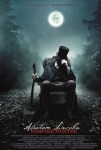
Abraham Lincoln: Vampire Hunter (2012)

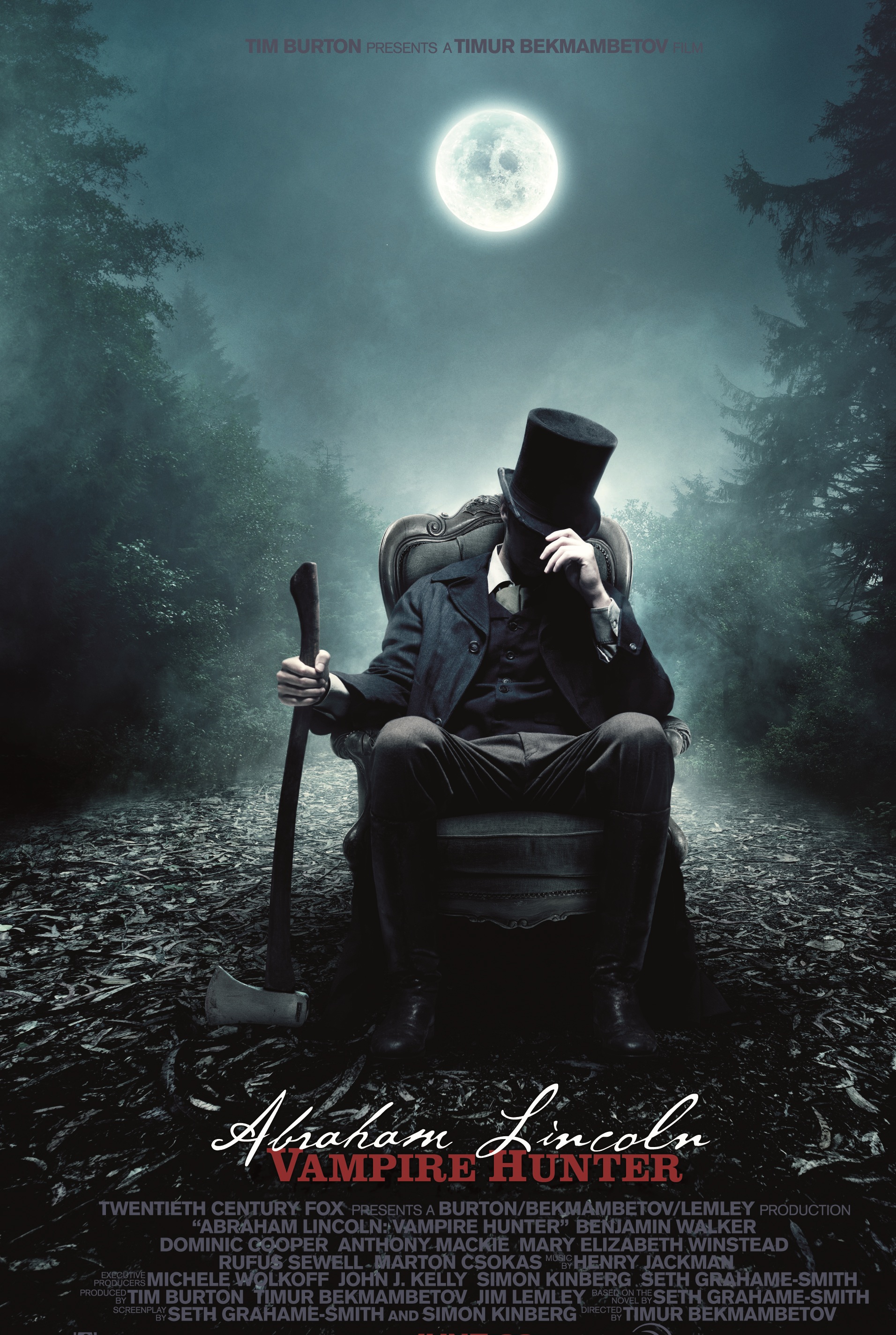
Today’s cinema adventure: Abraham Lincoln: Vampire Hunter, the 2012 feature based on the bestselling historical fantasy/horror novel by Seth Grahame-Smith, casting the already-heroic 16th American president in the even more heroic role of a secret slayer of the undead.  Directed by Timur Bekmambetov and adapted by the novelist himself, it’s a movie that hinges on a bold juxtaposition of historical fact and supernatural adventure, with a flashy visual style and an emphasis on bloodshed and action.  The plot follows Lincoln from his childhood, when his mother is ostensibly poisoned by his father’s former employer; upon reaching manhood, he seeks to avenge her murder, only to discover that her killer is in fact an undead monster.  Narrowly escaping death himself, he is rescued by a mysterious stranger, who reveals to him the secret existence of vampires living in the midst of human society and offers to teach him the skills he needs to become a warrior in the ongoing battle against them.  He becomes a master hunter, and his discovery of an insidious connection between vampires and slavery fuels his parallel political career, culminating in his presidency and providing underlying motivation for the Civil War.

With such a blatantly ridiculous premise, one might expect a substantial amount of tongue-in-cheek self-mockery, coupled with a sense of goofy fun for its own sake.  These elements are definitely present, but Abraham Lincoln: Vampire Hunter takes a decidedly serious tone in its approach to this genre-mashing mixture of history and hokum; Lincoln’s secret calling is no parenthetical side job, but is integrally woven into the events that shape both his private and public lives, as well as into the fabric of some of our nation’s still-most-painful memories.  It would be unforgivably glib of the film’s creators to make these connections without investing an appropriate amount of weight in the proceedings; accordingly, Lincoln’s dedication to vampire-killing stems from deeply personal motivation, rooted in the monsters’ victimization of his family, and their thirst for blood is linked directly to the most contentious and shameful issue ever to face the United States.  Of course, tying these various personal and national tragedies to a narrative about inhuman, bloodsucking parasites may have rich metaphoric possibilities- which, unfortunately, remain largely unexplored beyond the obvious implications of the situation- but it doesn’t do much for fueling the kind of escapist melodrama promised by the audaciously wacky concept.

Most of the critical unkindness towards this film has revolved around its insistence on anchoring its bloodlust-fulfillment fantasy in a sense of earnest importance, as if its purpose were to present a legitimate portrait of Honest Abe and his far-sighted principles.  Indeed, the world of Abraham Lincoln: Vampire Hunter is a place where lofty ethical considerations seem moot, a given condition of the larger political order, perhaps, but out of place with the more immediate conflicts of our hero’s secret occupation.  The situation cries out for the kind of unapologetic amorality found in a down-and-dirty exploitation film, contrasting Lincoln’s public face as a wise and compassionate leader with his role as a one-man boundary between the forces of darkness and the unknowing society he is sworn to protect.  The very title of this movie suggests a no-nonsense, merciless killing machine, and that is not only what we expect to see, it’s what we want.  Instead, we are given an idealized version of the real man, and a slice of his personal drama thrown in to boot- for which, presumably, we could easily wait until next year’s highly anticipated Spielberg biopic.

All of these problematic reservations can be attributed to the screenplay, written by Grahame-Smith with an eye towards keeping the emotional stakes high enough to keep viewers connected to the characters in the midst of all the slaughter.  By giving the plot a sense of purposeful noblilty and including a substantial dose of Lincoln’s private life as a lover, friend, husband, and father, the author hoped, presumably, to avoid turning the whole affair into a garish cartoon.  The effort is commendable, as is the attempt to maintain at least a tenuous connection to historical accuracy (with a few notable exceptions), in the use of names and relationships, actual events and chronology, etc., even if the details are rearranged considerably.  However well-intentioned he may have been, and however well these factors may have worked in his novel, the writer may have miscalculated; though normally I am adamantly in favor of the thoughtful, character-driven approach to storytelling for the screen, in this case I believe the film as a whole would have benefited from a lighter, less self-consciously sincere touch- and more scenes of Mr. President wielding his silver-edged axe.  The very notion which drives the plot demands a film which doesn’t take itself too seriously, and thanks to its script, this one often does.

I have always, however, been an advocate of taking a movie on its own terms, and with that in mind, Abraham Lincoln: Vampire Hunter is by no means a failure.  Though the weighty trappings of pseudo-biographical drama make for some slow going from time to time, when the movie does release the giddy adolescent joyride at its core, it takes off like a silver cannonball.  Director Bekmambetov delivers the same kind of flashy, multi-speed, computer-assisted action that helped to make his previous film, Wanted, a hit, transporting us decisively into the realm of superhuman feats, where we can at last get a taste of the thrills inherent in the idea of our chief executive moonlighting as a bad-ass monster-killer.  There are a number of these electrifying set pieces scattered throughout the film- a chase across the backs of a stampeding herd of horses, a gruesome monsters’ ball in a decrepit plantation, a climactic fight on the rooftop of a moving train- all saturated with grisly, blood-spattered, and deliciously satisfying violence.  It is in these segments that the movie really comes to life, and, like a true showman, Bekmambetov always leaves us wanting more; though everything in between often feels like filler, the payoff we receive from this kind of exciting screen action is almost worth the patience it takes to get there.

Bekmambetov ‘s slick modern style brings a contemporary edge to the movie that contrasts sharply with its period setting- which is firmly established with authenticity in the clothes and the physical surroundings, and further complemented by the effect of using muted, faux-sepia tones in the cinematography (possibly the film’s finest asset, accomplished by the legendary Caleb Deschanel).  This color palette has the odd benefit of seeming both old-fashioned and yet somehow very high-tech, a double-edged description that could be used to sum up the overall production design (by François Auduoy); the look and feel of the film, heavily reliant on computer graphics, creates a heightened reality, reminiscent of the dramatic visual style of a comic book.  Though this stylized environment adds a layer of artificiality to the proceedings, it also reinforces the supernatural atmosphere necessary to sustain the film’s absurd conceit.

The actors are more than adequate for the task at hand, with Dominic Cooper and Rufus Sewell standing out in the showiest of the supporting roles- Lincoln’s mentor and the vampires’ supreme leader, respectively.  Obviously, though, it’s the title character who must shoulder the heaviest burden here, and young Benjamin Walker’s shoulders are broad enough to do it.  He does a fine job of walking the thin line between Lincoln the man, Lincoln the statesman and Lincoln the terminator, and, on top of that, is convincing playing the great man from youth to weathered middle age.  He even bears a resemblance to Lincoln, though he is considerably more handsome- a requisite Hollywood touch.

There is something about Abraham Lincoln: Vampire Hunter that draws me in.  Maybe I’m just a sucker for this kind of preposterous “what if?” speculation, or maybe I’m just a big kid at heart, but from the very moment I heard about this movie, I was excited to see it.  Though in the end it was not quite the kind of adrenaline-pumping silliness I was hoping for, I can’t say I was disappointed, either.  Sure, I would have liked a little more of the gory action that worked and a little less of the pedestrian costume drama that didn’t; but there is plenty in this movie to tickle my juvenile fancy and keep me interested throughout its running time.  Even if that weren’t the case, the final scene contains an amusing twist that left me fairly delighted as the end credits rolled- and if I can walk out of the theater with a smile on my face, I think that’s a good enough reason to recommend a film.  So consider it recommended, but with the following qualification: it’s a stupid movie, but perhaps not stupid enough.  If you can get past that, you’ll have a great time.

http://www.imdb.com/title/tt1611224/
Death Race 2000 (1975)

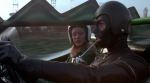
Today’s cinema adventure: Death Race 2000, the 1975 fantasy-adventure exploitation film, produced by B-movie king Roger Corman and directed by Paul Bartel, about a gladiatorial motor race taking place in a futuristic America ruled by a totalitarian government. Marked by its clearly low budget and campy sensibilities, it was (of course) lambasted by critics upon release- but has since become a bona fide cult classic, spawning numerous spin-offs in other media, countless imitators, and a big-budget Hollywood remake.

Wanting to capitalize on the publicity surrounding the then-upcoming film Rollerball, Corman found suitable source material in a short story, by sometime colleague Ib Melchior (who has a fascinating history in his own right, which you can read about here), called The Racer. Adapted into a screenplay by Robert Thom, then rewritten by Charles Griffith at the insistence of director Bartel, it visualizes a not-too-distant future in which America has been devastated by economic collapse and is under the control of an Orwellian regime (headed by a smarmy figure known simply as “Mr. President”), possessing the combined authority of church, state and media, and dedicated to a policy of “minority privilege.” Sponsored by the government is a yearly cross-country race in which contestants- paired with “navigators” who are apparently also designated sex partners- not only vie to be first across the finish line, but are awarded points for killing hapless pedestrians. Televised and spun for mass consumption, this ritualistic slaughter is further complicated by the interference of a group of rebels bent on sabotaging the proceedings and kidnapping the star driver, a mythic figure known as Frankenstein, whose survival of previous races has left him half-man/half-machine- or at least, according to his P.R.

Corman had always targeted the youth audience with his trend-savvy drive-in fodder, and by the 1970s had become associated with the counter-culture movement; Death Race 2000 struck just the right blend of anti-establishment sentiment and testosterone-fueled fantasy for his purposes. Using mostly re-bodied Volkswagens to stand-in for the souped-up fantasy roadsters driven by the race contestants, filmed on public roadways without permits, and starring David Carradine for box office insurance, the film was shot for a budget of $300,000 and ended up earning $5 million- critical derision notwithstanding.

The disapproval of 1975 critics was perhaps easy to understand. Death Race 2000 is a prime example of quickie low-budget movie making designed to attract a young and unsophisticated audience by titillating them with gratuitous violence and nudity. However, though that audience of pot-smoking drop-outs (and wannabe drop-outs) may have responded to these elements- which the movie certainly delivered- they also responded to something the establishment critics didn’t seem to notice: wrapped up in its lurid, ridiculous premise and its cheap, exploitational thrills is a core of smart social satire and subversive anarchy that captured the zeitgeist of these disillusioned flower-children; the darkly zany vision of the future presented here was clearly an over-the-top parody of the present-day world they lived in, from which the only real possibility of escape was to destroy the system from within- and this, of course, is exactly the scenario of Death Race 2000. While the movie’s well-intentioned revolutionaries are largely ineffectual in their war against the established order, and its media-hypnotized masses are willing lambs to the slaughter, its darkly wisecracking anti-hero- a trusted tool of the government and the best player in their monstrous game- is the only one who has the power to bring an end to their reign of deceit and oppression. It’s anti-authoritarian wish-fulfillment fantasy at its most unapologetic, and the sentiment that drives it is arguably even stronger today than it was then.

Despite this heavy-sounding sociopolitical subtext, the primary reason for watching Death Race 2000 is the same today as it was 37 years ago: it’s a hoot. Director Bartel brings his brand of dry whackiness to the table here, making the most of the story’s frequently ludicrous conceits with tongue-in-cheek self-parody; we don’t have to take the movie seriously because he reminds us throughout that it doesn’t take itself that way, allowing us to shut down our brains and just enjoy the absurdities onscreen. As for all that gratuitous nudity and violence, it certainly is gratuitous- and gleefully so; the movie revels in its tawdriness, delivering glossy, seventies-flavored sex and gore as often as possible without any attempt to justify it. The bloody parts, in particular, are highlighted with great delight, and they are somehow all the more satisfying for being so clearly fake; indeed, most of the carnage borders on slapstick comedy, and the truly graphic stuff is so fleeting you can miss it if you blink- because if it lasted any longer the bargain-basement trickery being employed would be even more obvious than it is already. It’s just more of the ridiculousness that gives the movie its deliberately mindless appeal; and it probably goes without saying that, by today’s standards, what we see in Death Race 2000 is pretty tame. At any rate, what 1975 critics found objectionable seems today like a pretty good recommendation for the film.

The acting here is more or less what you might expect- which means, actually, that it’s pretty good, all things considered. Each performer brings exactly what is required to their character, and in many cases adds a substantial portion of their own personality to it as well, fleshing out these formulaic ciphers and giving them a life over-and-above their roles in this twisted Wacky Racers-style scenario. Some of the faces are familiar, such as future Love Boat-and-U.S.-Congressional lacky Fred Grandy and former Warhol “superstar” Mary Woronov, the latter in particular being one of the film’s highlights with her surprisingly multi-faceted performance as one of the race’s contestants- although, in truth, Woronov’s presence in such films is always a delight, due to her ability to bring so much of her smart, sexy and sweet self into the mix, so her performance here is not that surprising, after all. For many, the biggest surprise will be the presence of Sylvester Stallone as Frankenstein’s chief rival in the race, a swaggering braggart in a gangster persona who takes everything way too seriously; Stallone, who was doubtless working on the screenplay for Rocky even as he filmed this, shows the charisma and ability that would soon make him a star, even though it’s hard to tell, sometimes, if his effectiveness here is due to his actual work or to the foreshadowing of his future screen persona. As for the movie’s star, David Carradine, he was fresh from his success on TV’s Kung Fu, and he was anxious to shed the image he had gained from it (though Corman had initially wanted anti-establishment icon Peter Fonda for the role); he gives a performance that, in another context, would probably have gained him a lot of critical acclaim, investing his brooding, bitter, bad-ass character with the depth, intelligence and humor necessary to make him not only interesting, but likeable- and, importantly, though perhaps incidentally, creates a persona that adds weight to the underlying elements that give Death Race 2000 its unexpected substance.

As for the film’s technical aspects, it manages to find a fairly coherent visual style despite its low budget, injecting its fruity satirical elements into the design in such a way that the cheapness actually seems to enhance the final effect. The costumes are a blend of cock-eyed futuristic imagining and modern-day tackiness, though its worth noting the striking resemblance between Frankenstein’s intimidating black outfit with the iconic design for Darth Vader, who would first appear on the screen a good two years later. The scenic elements are handled with a similar hybrid approach. The tinselly, cartoonish trappings of the futuristic setting are grafted onto the obviously contemporary surroundings, making its satirical connection to the present more obvious; the garish, cartoonish designs for the cars smacks of adolescent male automotive fantasy, and the fact that these re-purposed vehicles actually seem to perform is impressive in itself- in reality they were usually filmed rolling downhill after being pushed into motion, and the cameras were sped up to make it look like they were moving faster than they really were. The more elaborate effects- such as the single matte painting used to create the future New York skyline- are laughably shoddy, which of course only adds to the overall appeal, as do such obvious earmarks of the grade-Z budget as the undisguised exit door in Frankenstein’s “hotel suite” and the amateurish graphics of the various signage used throughout.

Death Race 2000 was remade a few years back, boosted with big Hollywood money but no doubt targeted at this generation’s version of the same audience. I confess I haven’t seen it; but I must say I find it difficult to believe that an A-list production would have quite the same effect as the original. Watching Corman and Bartel’s film gives the impression that you are somehow participating in an underground revolution, poking fun at “The Man” under his oblivious nose. With real money and studio backing, it seems to me such a film would have a different kind of phoniness to it, one far more insidious and subtle than the cardboard backdrops and obvious stage blood of the original- but that’s a review I haven’t written yet, though perhaps one day I will. In the meantime, I can heartily endorse the low-rent thrills of this cult-classic gem from the past; though the future it foresees is a little behind schedule, it still may come- but if it does, at least we can say we were warned.

http://www.imdb.com/title/tt0072856/\

Drive (2011)

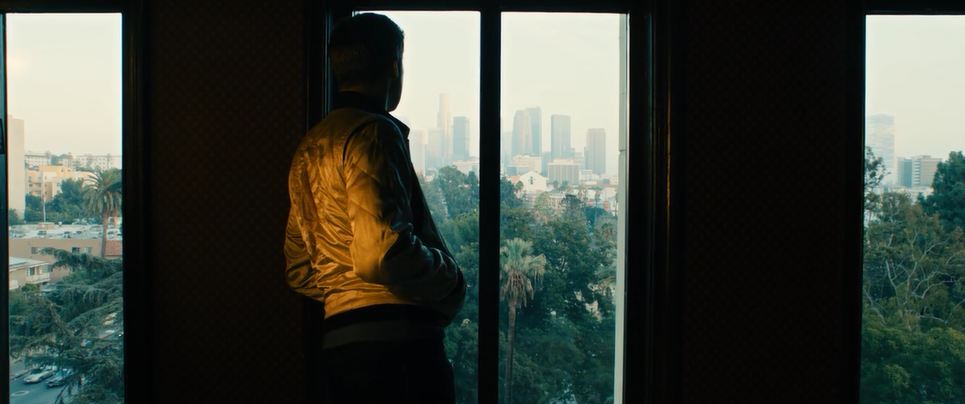
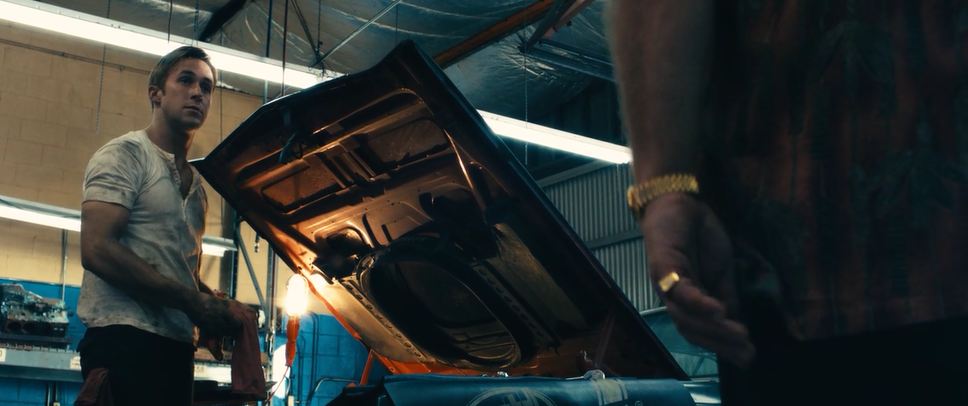
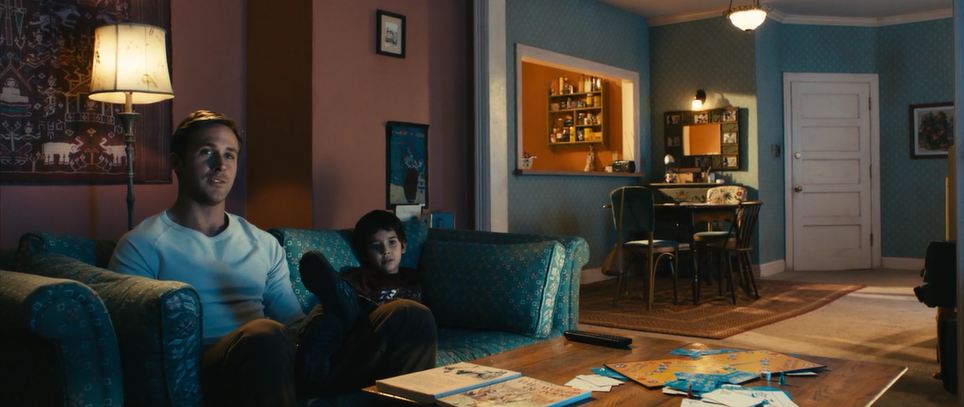
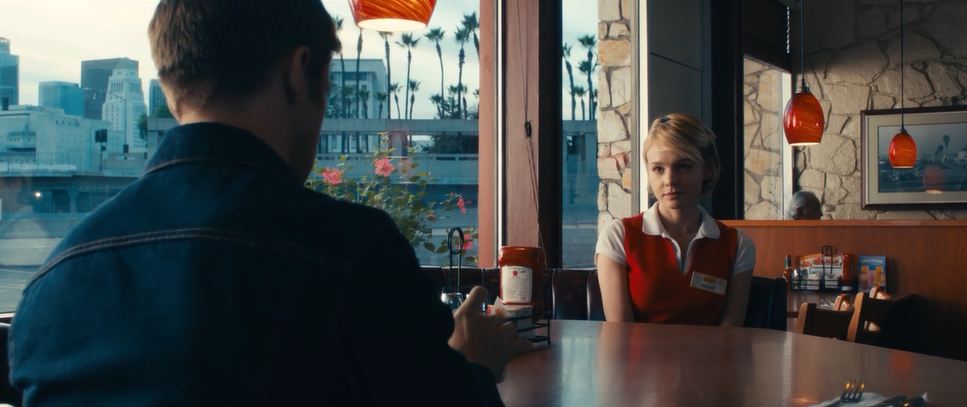
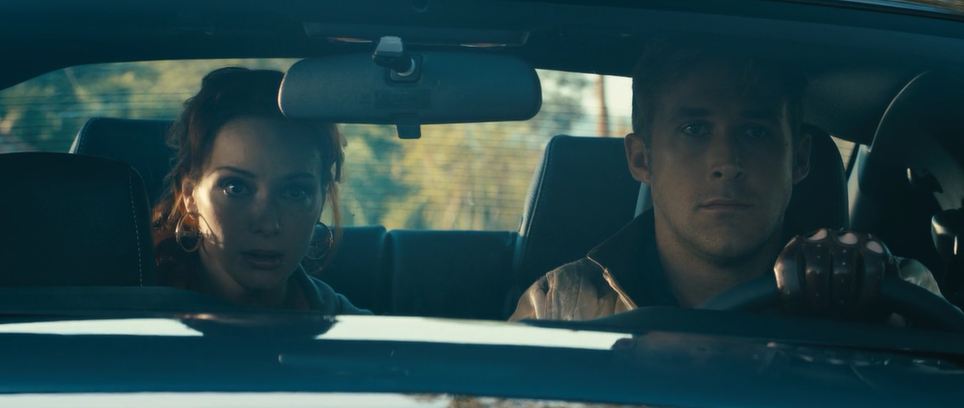
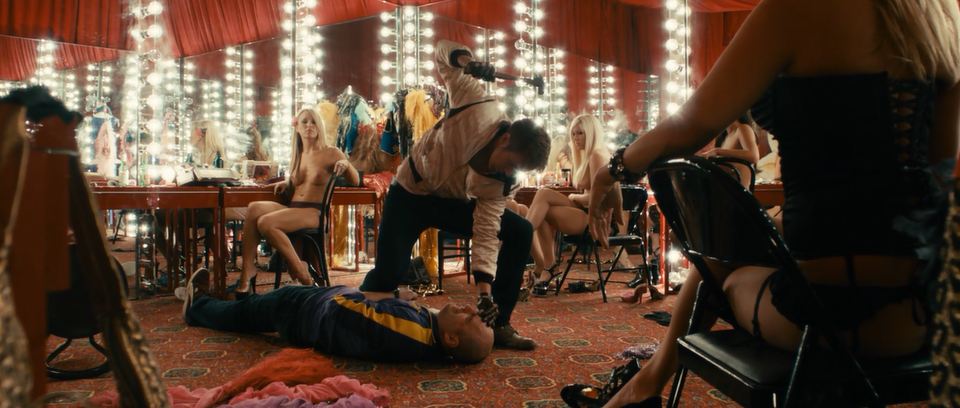
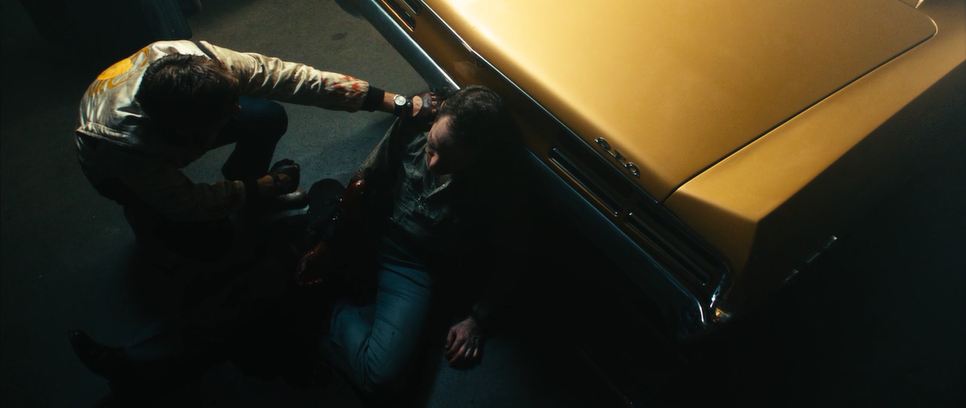
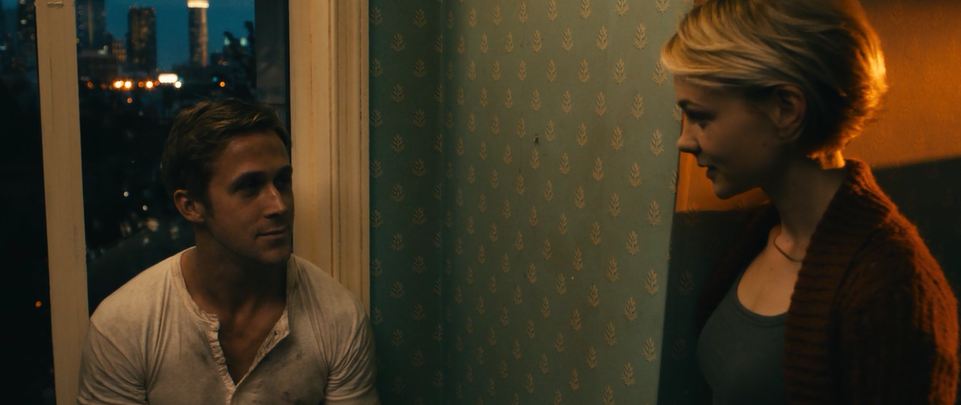
Today’s cinema adventure: Drive, the slick 2011 crime thriller starring Ryan Gosling as a Hollywood stunt driver and mechanic who moonlights as a wheelman for high-dollar robberies; a highly marketable package featuring a lot of action and a little romance, which garnered much praise for its visual style- a glossy mix of 1980s-flavored grittiness and edgy contemporary flash- and drew controversy for its bursts of brutal violence.  Essentially a post-modern film noir, set in a seemingly lawless Los Angeles populated and controlled by ruthless criminals, it seethes with an atmosphere of cynical amorality in which life is cheap and trust is for suckers and fools; and yet for all its hip, hard-edged posing, this movie is, at its core, pure Hollywood fantasy of a decidedly old-school nature.  In essence, in fact, it’s a modernized, urban reworking of Shane, the revered and iconic western classic from 1953.  All the plot elements are there: a loner with a mysterious past befriends a struggling family and becomes their protector against the machinations of a powerful gang of thugs, eventually taking justice into his own hands and embarking on a one-man crusade to eliminate the threat once and for all.  Though the details have been modernized and reconfigured a bit, the structural blueprint is the same, from the dominant themes of family and justice vs. power and greed to the fact that its tarnished hero doesn’t carry a gun.

If noting this obvious parallel to a cinematic touchstone sounds like a negative criticism, it isn’t: many good films are built upon a framework borrowed from great films that came before, and although its plot line is clearly second-hand, Drive certainly re-interprets the story on its own terms.  Part of the credit lies with Hossein Amini’s terse screenplay (adapted from a book by James Sallis), which cleverly updates the details of the plot and its characters while retaining the essence of its central conflicts.  The foremost contributor to the success of this re-invention of cinematic myth, however, is director Nicholas Winding Refn, a Danish-born filmmaker whose lack of native familiarity with the distinctly American setting and milieu has allowed him to approach the material with the empirical eye of an observer.  One of the consequences of his outsider’s viewpoint is the superb use of the L.A. locale, so often taken for granted by resident directors; he takes full advantage of it, not so much in his depiction of specific landmarks, but in the way he captures the character of it, particularly the Echo Park district where much of the action takes place.  He also brings a detached objectivity that somehow adds to the emotional resonance of the story, helping it to feel freshly-minted despite the echoes of its heritage that bounce through every scene.  With the help of cinematographer Newton Thomas Sigel, he fully utilizes his locations to create an impressive visual coherence, infusing the squalid city streets with a slick, art-house sheen that echoes the feel of genre icons like Thief and To Live and Die in L.A. while still asserting Drive’s independence and modernity with its own up-to-the-minute, slo-mo/hi-res personality.  This effect is enhanced by the dreamlike electronic score by Cliff Martinez, which also facilitates the deliberate build-and-release of tension that pushes the film towards its inevitable conclusion.

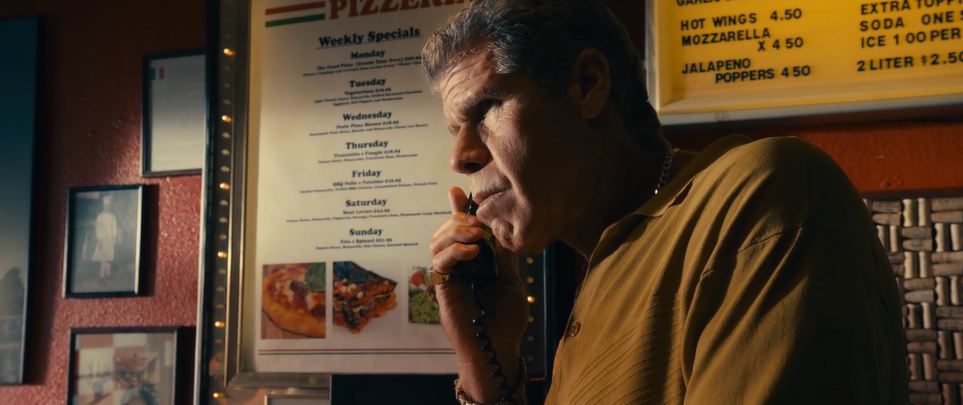
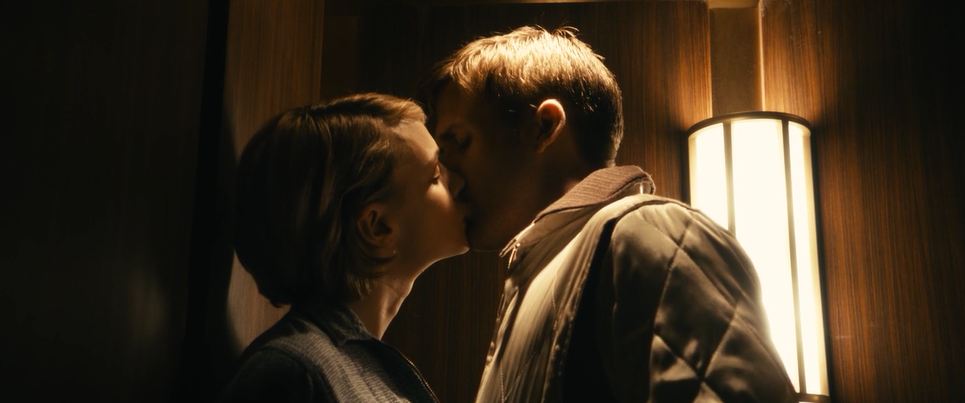
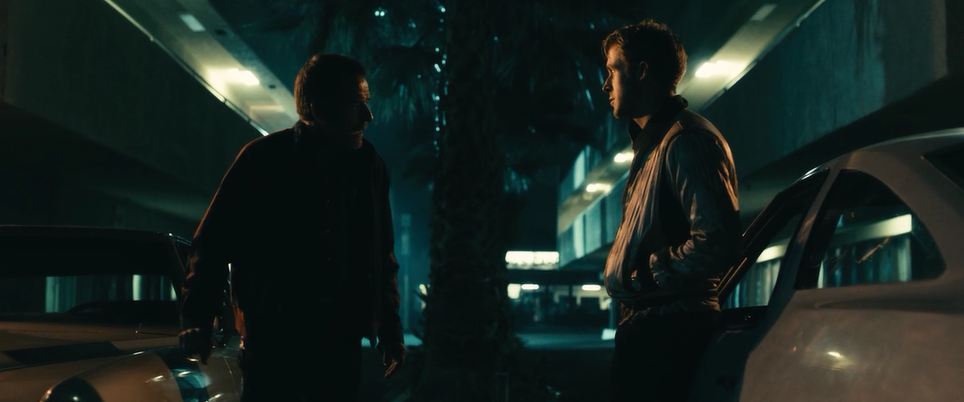
On the business end of the camera is an attractive cast comprised of talented up-and-comers, seasoned veterans, and a strategically familiar collection of supporting players.  In the latter category are a trio of high-profile TV transplants: Christina Hendricks (compelling and memorable in a bad girl role that allows her to show a markedly different side than the one we see on Mad Men, but ultimately wasted in what amounts to little more than a cameo), Bryan Cranston (in a kinder, gentler variation of his Breaking Bad persona as Gosling’s employer and surrogate father figure), and Sons of Anarchy’s Ron Perlman (lending his star power and his imposing presence to a part that could otherwise be played by any tough-guy actor).  As the little family whose plight provides the catalyst for the film’s action are Oscar Isaacs (playing admirably against expectation as the ex-convict father striving to break free of his shady past, and nicely fleshing out a character which is ultimately little more than a plot device), young Kaden Leos (projecting a muted wisdom beyond his years and showing considerable onscreen chemistry with Gosling in their scenes together, which goes a long way towards providing the heart of the film), and English actress Carey Mulligan.  Mulligan has perhaps the most difficult role here, in which she is required to maintain a quiet, attractive nobility while navigating a complex subtext of resignation, repressed attraction and nagging fear.  She manages it well, inhabiting all those facets and bringing intelligence, sweetness, and dignity to the part (making it seem, perhaps, much more fully realized than it actually is), as well as creating her own chemistry with co-star Gosling; their scenes together are nearly wordless, for the most part, yet the pair infuses the silence with volumes of unspoken feeling, and when they finally kiss, the cumulative passion of their previous interactions is sufficiently powerful to warrant the highly cinematic approach with which director Refn chooses to showcase it.

Which, of course, brings us to our star: Gosling’s character (never named, but listed in the credits merely as “Driver”), like his cowboy counterpart in Shane, is rough-edged and dangerous, despite his All-American good looks and his quiet demeanor.  Yet, street-savvy thug or not, he is also possessed of a resolutely ethical core which drives him from within just as deliberately as he himself drives his own restored 1973 Malibu.  In order to successfully embody this urban paladin, Gosling must convincingly seem both too hard to be good and too good to be true- and he must do so with an amount of dialogue that can be described as sparing, at best.  He pulls it off brilliantly, managing to be believable on both ends of this extreme spectrum with a likeably stoic performance that is (appropriately enough) reminiscent of Steve McQueen at his anti-heroic best.  It’s a hypnotic performance, and watching the young actor confidently stand in the center of this film, it’s easy to see why he is one of the hottest leading men of the new Hollywood generation.

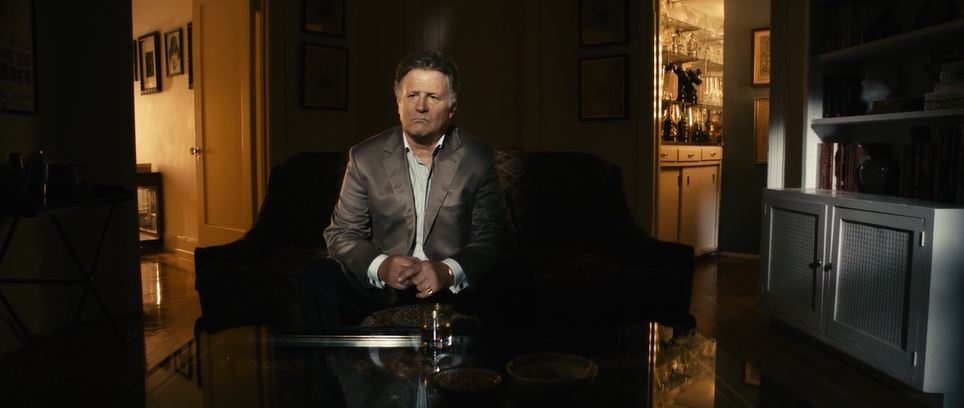
As good as Gosling is, though, the standout performance in Drive comes from a surprising source: Albert Brooks, known for his comedic work both as an actor and filmmaker, here plays against type as a ruthless gangster.  It’s a shrewd bit of casting, and Brooks takes full advantage of it, undercutting the cold-bloodedness of the character with his familiar, likeably nebbish persona; the result is a contrast between charm and menace that makes him easily one of the most chilling big-screen bad guys in recent memory.  Despite the impressive work of director Refn and the stellar turns of the other leading players, his performance is perhaps the one element of Drive which elevates it from the level of a well-made potboiler to that of a potential Hollywood classic.

As to that, only time will tell.  Drive has a dazzling quality that keeps you mesmerized while its subliminal elements do their work; fooled by the flashy surface, we fail to recognize that we are being shrewdly manipulated by the familiar undercurrents that pull our sympathies and shape our expectations.  As a result, we are more inclined to suspend our disbelief in the blatantly romantic premise at the core of the movie, a premise summed up in its tagline, “Some heroes are real;” or at least, in theory we should be.  Some viewers, however, may not be taken in by the smoke and mirrors, and may find they are unwilling to buy into a plot that, though appropriate for a larger-than-life epic of frontier justice and heroic gunslingers, seems decidedly unconvincing for a gritty tale of corruption and betrayal in the seedy urban underworld.  It should also be noted that, in spite of its family-friendly roots, this movie contains some very graphic and disturbing violence- in particular, an elevator scene (from which the aforementioned controversy resulted) that had to be edited into a toned-down version, and which is still shockingly gruesome- so more squeamish viewers should stand warned that they might want to stay away.  However, for most filmgoers- particularly those with an admiration for the nuts and bolts of the art- Drive will likely provide a rich experience, perhaps even more so for those savvy viewers who can recognize the archetypal formula from which it is derived.  Though its plot may hold few surprises (at least for anyone who has seen Shane), and though it may, in the final analysis, be unconvincing, there is still a fascination in seeing the ways in which Refn and his crew have molded it into its new form, and the attendant implications that arise from its transposition in setting, such as the differences (and similarities) in the portrayal of masculine and feminine roles, the metaphoric associations of our obsessive American car culture, and the difficulties of defining ethical behavior in a world complicated by conflicting moral standards.   Unacknowledged remake though it may be, it is nevertheless an inventive and original piece of filmmaking, and even if we already know where its taking us, it makes getting there an exhilarating ride.

http://www.imdb.com/title/tt0780504/
Snow White and the Huntsman (2012)

;

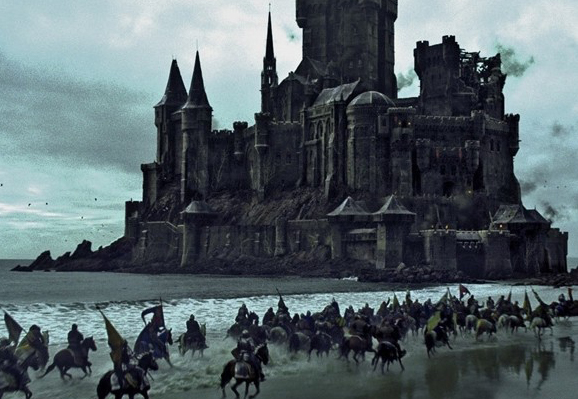
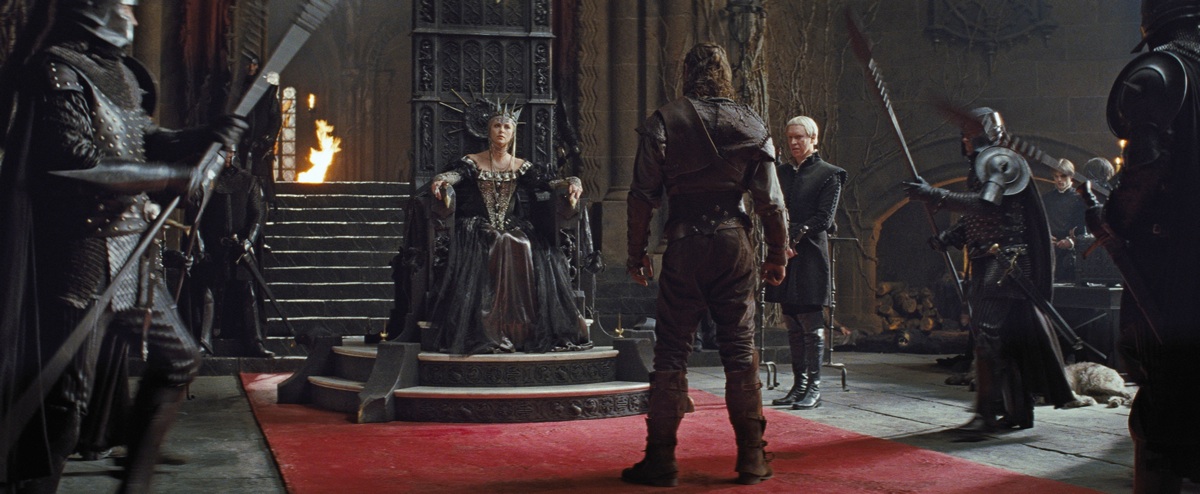
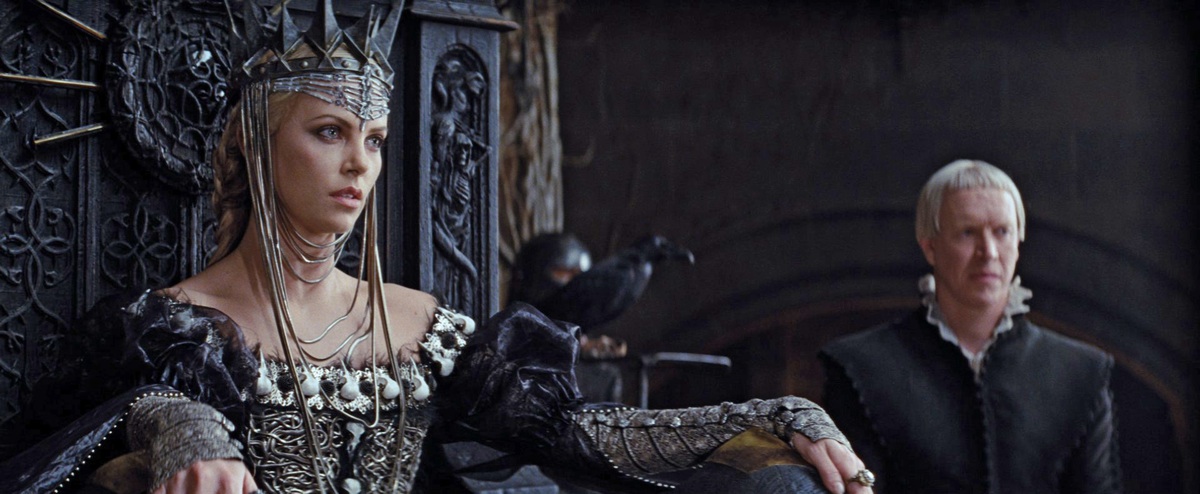
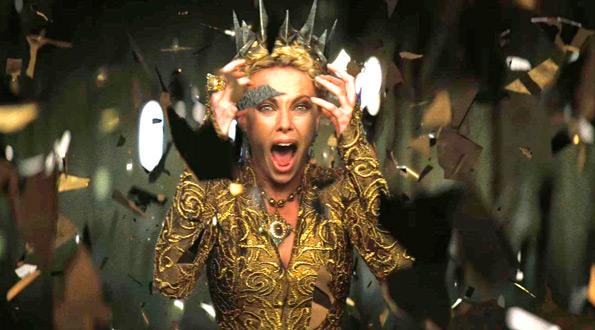
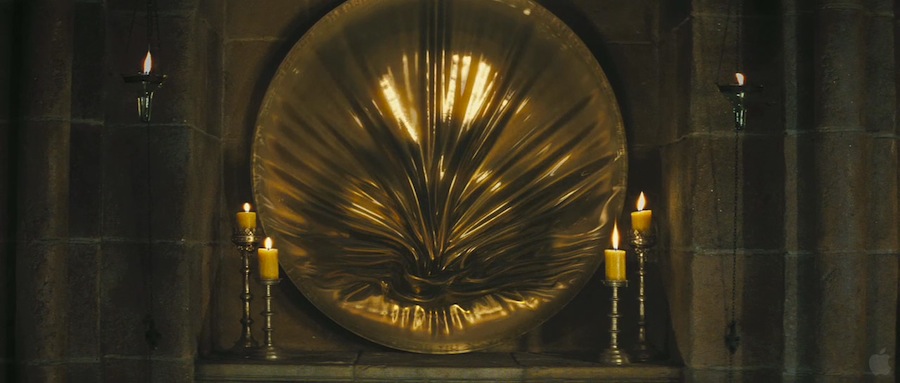
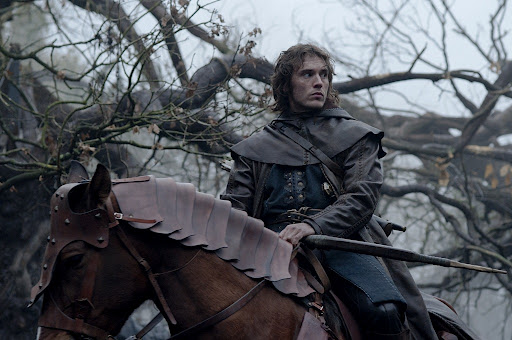
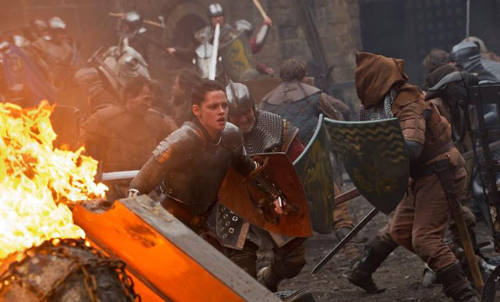
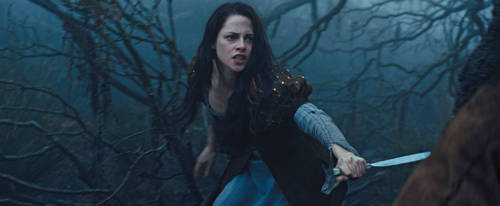
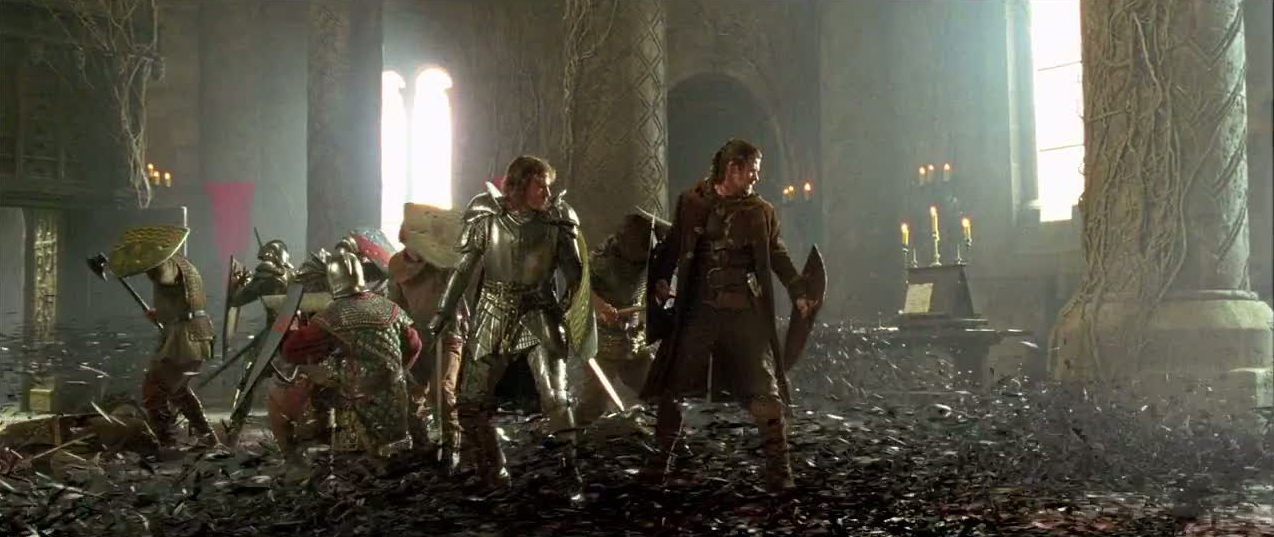
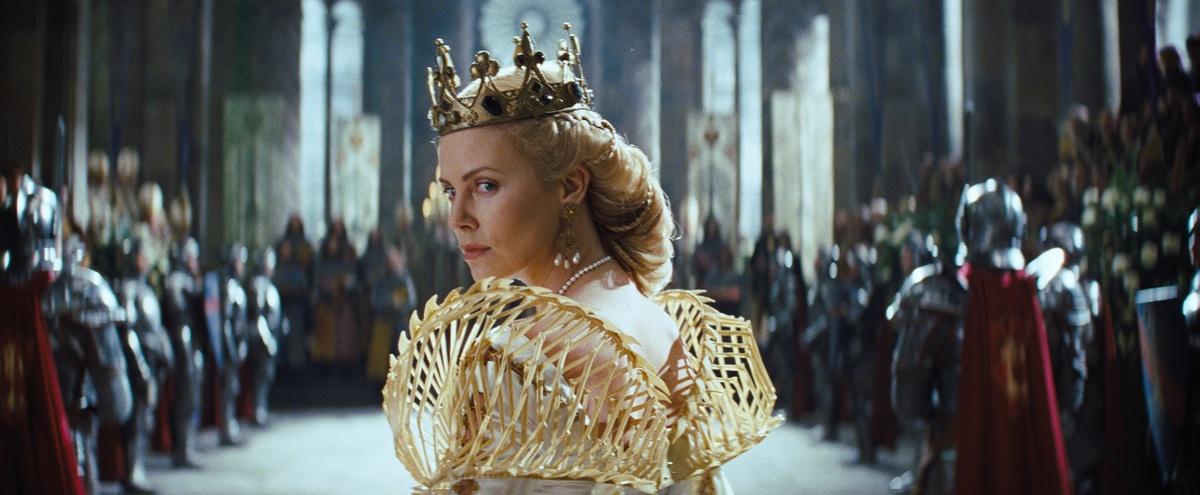
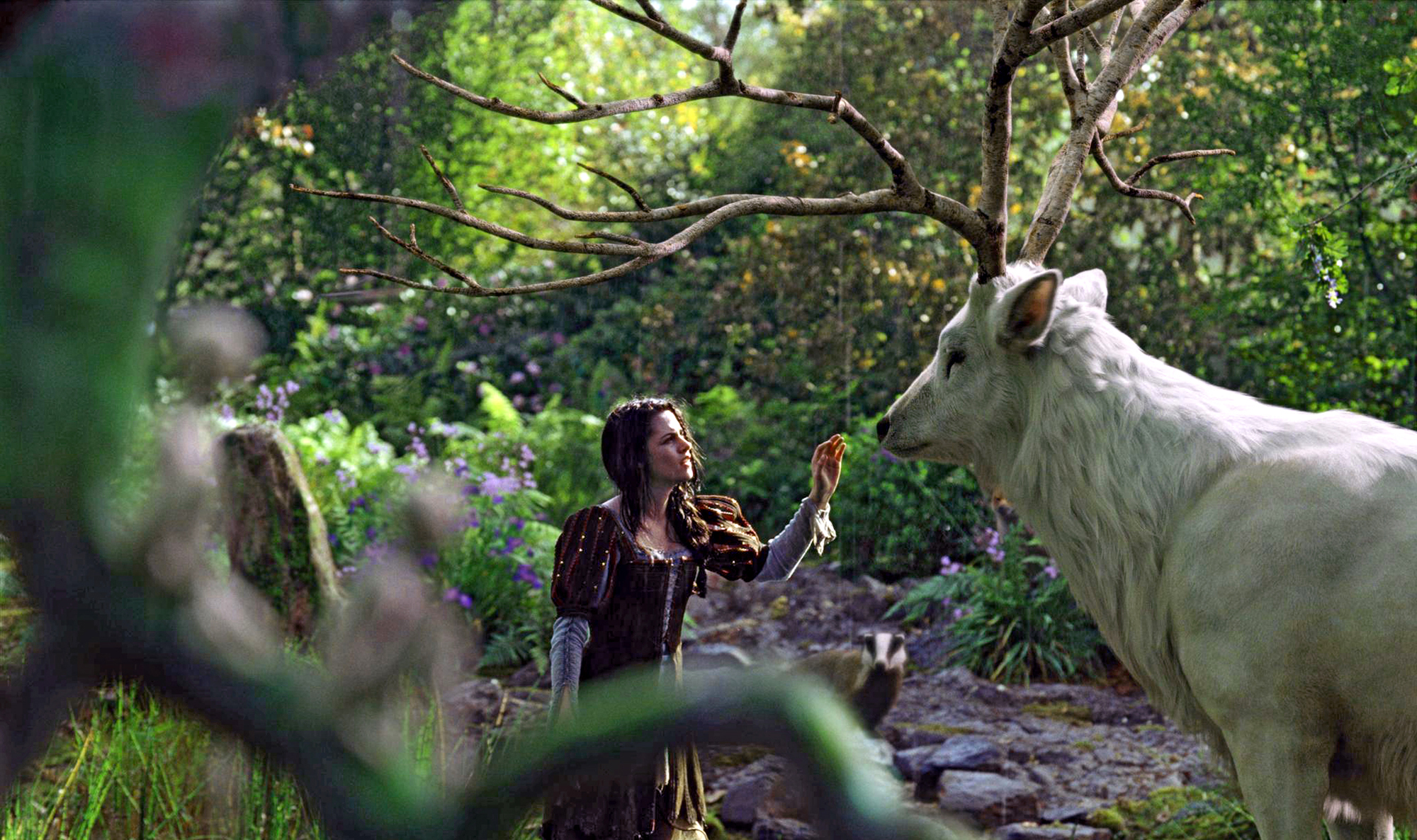
Today’s cinema adventure: Snow White and the Huntsman, a visually arresting 2012 feature that reinvents the classic fairy tale as a sword-and-sorcery fantasy with a message of female empowerment. In this version of the familiar story, the Queen is in fact a powerful sorceress who preserves her youth and beauty by draining the energy of young women, and the princess, foretold to be her undoing, is her prisoner; when Snow White escapes, the Queen sends a drunken wastrel to recapture her, but he instead becomes her protector and mentor, helping her to find the heroic force she needs to fulfill her destiny. The story is filled with great ideas, grafting elements of a medieval Arthurian-style quest saga into the Grimm Brothers’ original tale (with a dash of Shakespeare’s Macbeth), shedding insight on the origin and cause of the Queen’s wickedness and turning Snow White from a passive victim who must be validated and saved by a man (or seven) into a self-determining warrior princess who has the power to not only solve her own problems, but step into the traditionally male role of leader and bring the entire kingdom into harmony. Aiding considerably in the realization of these thematic twists is a stunning visual style that draws cinematic influence from Kurosawa and John Boorman’s Excalibur, coupled with a highly imaginative production design (under the supervision of Dominic Watkins) incorporating visual elements from the courtly romantic paintings of such artists as John Waterhouse and overflowing with the creative use of bird imagery. elemental contrasts, and the mystification of nature; of particular note are the costumes created by Colleen Atwood, especially for the Queen, and the magical CG artistry that brings life to the various fantastical settings and creatures- including the dwarfs, who are recognizable, full-scale actors rendered onto the necessarily diminutive bodies, a process that yields remarkable results but which also drew heavy protest and criticism for denying work to actual little people.

It would be nice to say that all this impressive conceptual and technical artistry was the basis for a great final product; but Snow White and the Huntsman, though passable enough as a lightweight summer diversion, fails to generate the kind of excitement and stimulation promised by its ambitious conceit. Director Rupert Sanders does a superb job of combining his various inspirations into a visual style (with the help of cinematographer Greig Frasier), but it seems hollow, lacking in the resonance and meaning required to elevate it beyond the level of a good imitation. The screenplay (by Evan Daugherty, John Lee Hancock, and Hossein Amini) fails to fully explore the possibilities suggested by the ingenious mash-up of sources at the base of their story, instead relying on familiar clichés and giving lip-service to the mythological principles inherent in the material, referencing the symbolic touchstones with all the conviction of marking off items on a checklist; the end result feels like a concept without a real direction, a meandering trip through a hodgepodge of mixed-up fantasy formulas that only pulls itself together into a resolution when it has run out of set-pieces. Likewise disappointing is the musical score by James Newton Howard, serviceable and predictable, providing the standard symphonic accompaniment heard in uncountable fantasy-adventure epics instead of taking advantage of the possibility to try something unorthodox. The acting isn’t horrible, though accents slip and mumbling abounds, but it isn’t really great, either: Charlize Theron, once again cast as a frosty bitch, manages to make us see the underlying pain of the Wicked Queen (which feels as perfunctory and inadequate as the rest of the unrealized story elements), but in the end she delivers a scenery-chewing performance that is, after all, just as over-the-top as we expect it to be; Kristen Stewart succeeds with the sweetness and vulnerability of Snow White, but somehow lacks the kind of strength to make a convincing transition into a force of destiny; Chris Hemsworth, as the roguish bad-boy who serves as secondary hero, comes off the worst, delivering a stilted, lumpish performance as a character that should provide the heart of the film. The rest of the cast all serve their purpose without surprise, providing us with the comfort of familiar stock characters instead of taking advantage of the chance to turn them inside out- a whole slew of missed opportunities in a film already over-filled with them.

That pretty much sums up the problems with Snow White and the Huntsman: despite offering a fresh perspective on its material, it’s a film which squanders its potential, offering new ideas and suggesting thought-provoking implications but delivering, in the end, just the same old Lord of the Rings-flavored conventions that make it so easy to dismiss the fantasy genre as fluff. Don’t get me wrong: I love Lord of the Rings; it’s an incredible piece of work that elevates fantasy to the level of deep, archetypal myth- but it’s already been done, and personally, the only other movie I want to see that feels just like it is the long-awaited version of The Hobbit which finds its way into theatres later this year. With Snow White and the Huntsman, I wanted something crisp and delicious, the exciting taste of a new hybrid flavor; but all this movie provides is yet another poisoned apple.

http://www.imdb.com/title/tt1735898/

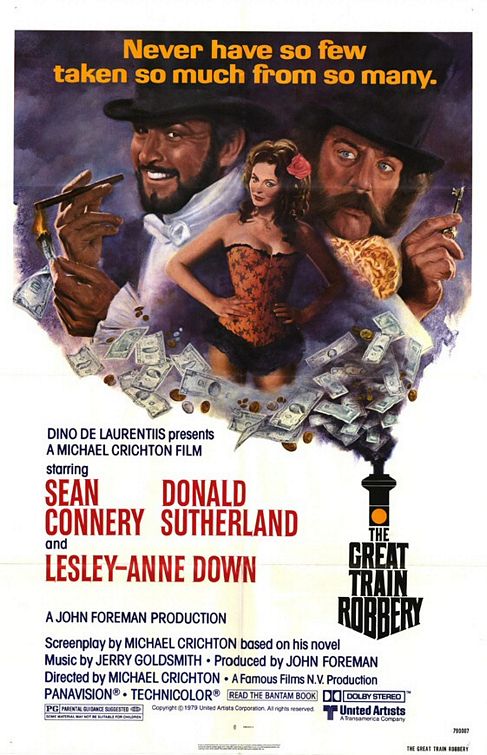
The Great Train Robbery (UK Title: The First Great Train Robbery) (1979)

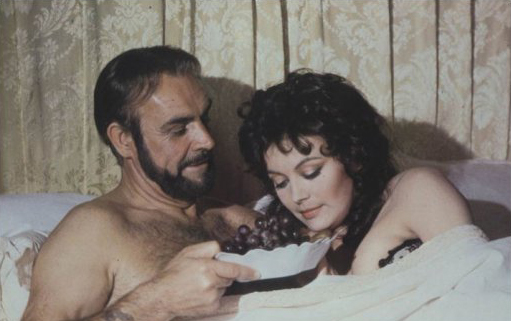
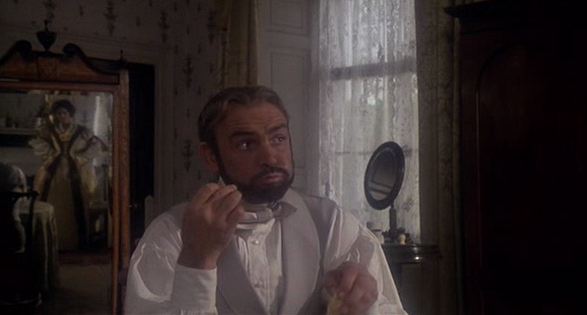
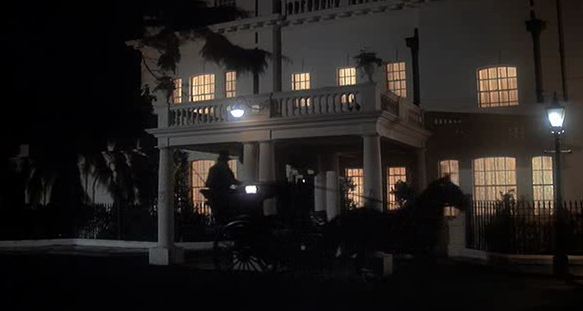
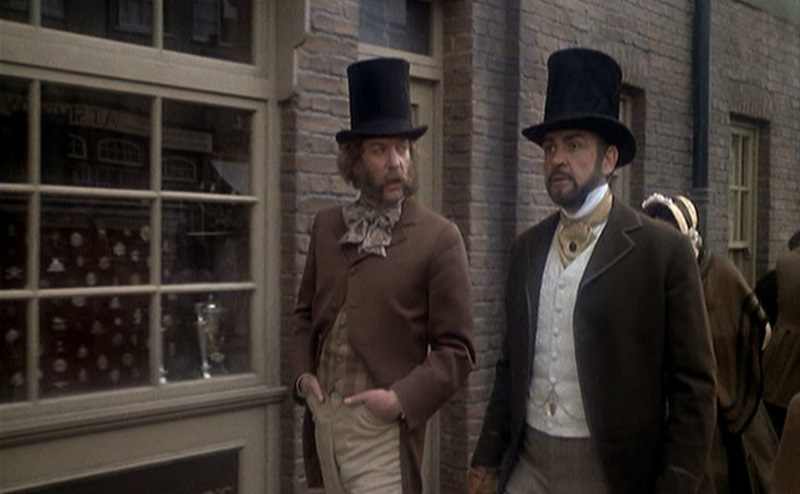
Today’s cinema adventure: The Great Train Robbery, a 1979 period caper comedy directed and written by Michael Crichton, based on his own book, which in turn was based on the real-life 1855 theft of gold bars meant as pay for the English soldiers of the Crimean War- the first robbery ever to take place aboard a moving train.  Painstakingly accurate in period detail, expertly played with just the right blend of devilish humor and edgy thrills, it features sparkling chemistry between its three stars (Sean Connery, Donald Sutherland and Lesley-Anne Down), a clever depiction of the intricate and crafty plot, a rousing score by ace film composer Jerry Goldsmith, and a magnificent climactic sequence featuring Connery (doing his own stunt work) navigating his way across the roof of the train as it speeds through the idyllic English countryside.

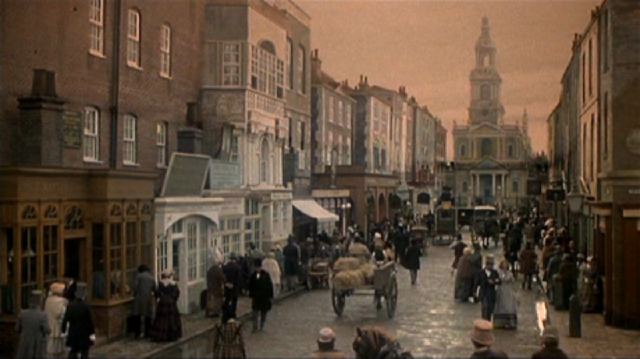
Crichton’s original novel, which took the facts of the real-life heist and transformed them into a fictional narrative by using pseudonyms, composite characters, and clever re-imagining of the details, became a best-seller in 1975 and seemed tailor-made from the outset for translation onto the screen, particularly in the wake of such successful genre entries as The Sting and Murder on the Orient Express; and while an author’s helming the adaptation of his own work might seem ill-advised, at best, in this case the choice was right on target.  Crichton was a jack-of-all-trades if ever there was one, and his understanding of the film medium here resulted in a crowd-pleasing piece of cinematic candy that sparkles with contemporary style even as it maintains its commitment to the demands of its Victorian setting.  For, though the historical accuracy of the events depicted may be tenuous, attention to period detail is rigorously observed.  Crichton paints a vivid picture of the Industrial Age, not only with the meticulous detail of the sets and costumes, but with his emphasis on the dehumanizing conditions, the corruption and inequity of the social order, and the contrast between extreme poverty and ostentatious wealth.  Not that The Great Train Robbery is a film devoted to deep meaning or social commentary; these elements are present to fuel a decidedly modern anti-establishment undercurrent and elicit audience sympathy for the roguish trio of anti-heroes, despite their unabashedly selfish motivations and their ruthless tactics, by casting them in the mold of populist outlaws- a sort of Victorian Bonnie and Clyde, plus one.  This perceptual conceit is part of what makes the film so much fun; we can be firmly on the side of these wrongdoers as we watch them execute their audacious scheme, and Crichton ensures our continued interest by doling out the details of that scheme in small pieces- we are given just enough insider information to know what is going on without being deprived of the thrill and surprises that come from seeing it carried out.

It helps that The Great Train Robbery is beautifully photographed by the legendary cinematographer Geoffrey Unsworth- one of the last films to claim that honor, it is dedicated to his memory- and that the aforementioned set and costume designs (by Bert Davey and Anthony Mendleson, respectively, in collaboration with Production Designer Maurice Carter) are sumptuously executed; each of these artists play an indispensable role in realizing the elaborately recreated 19th Century London in which the bulk of the film’s action plays out.  The previously noted Goldsmith score is effective throughout for setting the mood and tone; but when the setting finally opens up, for the climax, into the countryside, his music makes its most magnificent contribution, adding to the giddy feeling of freedom conjured by the wide open locale, and to the breathless excitement of watching as the final stages of the robbery take place- and as Connery makes his death-defying journey along the length of the moving train.  It’s a payoff almost as satisfying as the one enjoyed by the film’s characters.

The Great Train Robbery is not a profound movie, nor a deeply layered one; it is hardly one of those sublime masterpieces which holds up to repeated viewings throughout a lifetime, and yet when I watched it again recently after having not seen it for a number of years (more than I’m willing to admit to), I was thoroughly delighted to find that it was at least as enjoyable as when I saw it as an impressionable lad, sitting in a darkened theatre and wanting to grow up to be Sean Connery.  Often when a movie strives only to entertain, it falls short by trying too hard, or aiming too low, or- worst of all- trying to pretend it has a weightier agenda than it really does: The Great Train Robbery suffers from none of these shortfalls.  It sets out only to deliver a thrilling ride and it succeeds at exactly that- which is more than can be said of most of the overachieving would-be crowd-pleasers being offered up by filmmakers today.  Of course, they don’t have the benefit of Sean Connery…

http://www.imdb.com/title/tt0079240/

Death Proof (2007)

Image

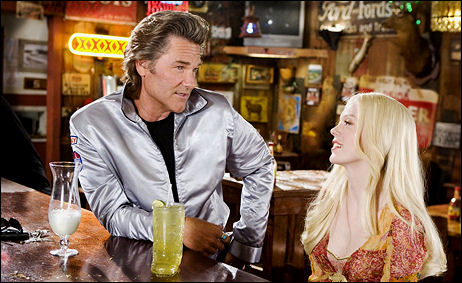
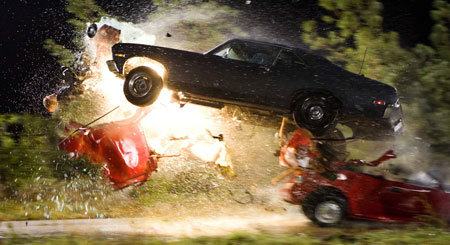
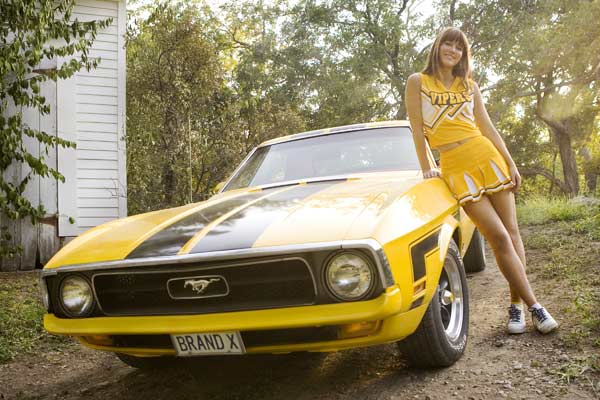
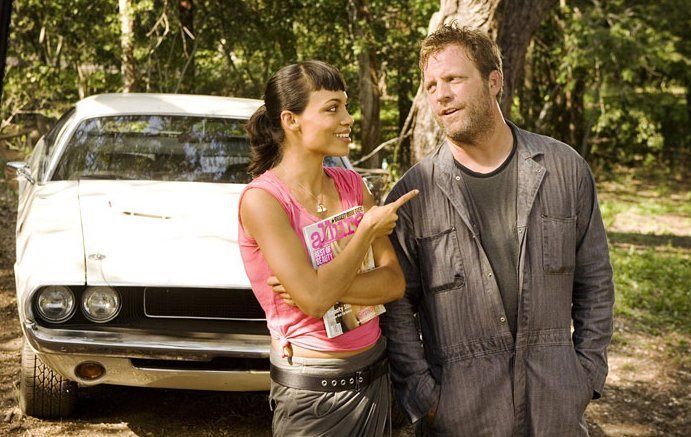
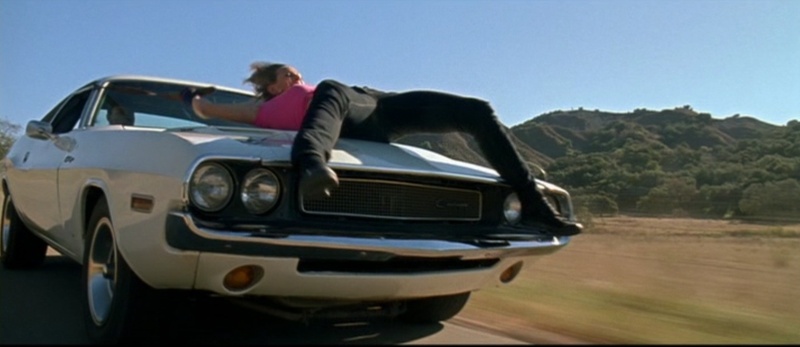
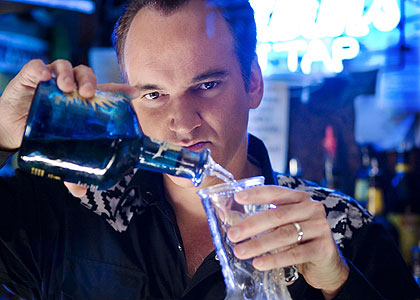
Today’s cinema adventure: Death Proof, writer/director Quentin Tarantino’s 2007 homage to the cheap exploitation movies of the sixties and seventies, originally released as half of the Grindhouse double feature (paired with Richard Rodriguez’ Planet Terror). With his trademark style on full display, Tarantino sets out to emulate- and surpass- the violent and titillating “anti-classics” he clearly loves with this tale of a psychopathic ex-stunt driver who stalks and kills young women in his souped-up, “death-proofed” muscle car. Though Kurt Russell delivers a delightful performance in the central role, and the director’s impressive visual style is as dazzling as ever, the film is ultimately sabotaged by several factors. First of all, with its conceit of recreating the genre which inspired it, Death Proof severely impairs its own ability to engage the viewer in its proceedings: the deliberately grainy cinematography, scratched film and bad splicing constantly serve as a reminder that it’s all just an elaborate gimmick; the inherently shallow formula prevents the far-fetched and sensationalistic plotline from ever becoming believable or compelling; and the characters, for all the self-consciously clever dialogue Tarantino puts in their mouths, are doomed to remain one-dimensional ciphers who exist merely to enact the filmmaker’s cars-sex-drugs-and-rock-n-roll fantasy. All these criticisms, of course, could easily serve as a description of any of the B-movies upon which Tarantino’s opus is based; and it would be correct to point out that what really matters in those films (and in this one) is the nail-biting, balls-to-the-wall action and the gratuitous violence for which everything else simply provides a framework. But where the original films managed, at their visceral best, to thrill and delight, transcending their shoddiness with their lack of pretense and their unapologetic devotion to providing guilty pleasure, Tarantino’s would-be tribute fails to achieve any of these ends. To be sure, his talent is clearly visible here: but that’s part of the problem, for where the drive-in fodder he emulates was often so bad it was good, here we have an obviously good filmmaker deliberately trying to be bad, and succeeding in just being, well, bad; and though the action sequences- two of them, to be exact- are unquestionably well-done, in order to get to them (thanks to Tarantino’s self-indulgent insistence on maintaining his own signature tension-building style) we have to sit through interminable stretches of hip, foul-mouthed dialogue, which may be meant to invest us in the characters but instead results in repeated glancing at our watches. Seriously, there was never this much talking in Death Race 2000. Don’t get me wrong- I’m not criticizing Tarantino for embracing and championing the grindhouse genre. After all, these humble movies are touchstones for a generation and have had a major influence on contemporary cinema; and in his best work (such as the Kill Bill movies and Inglorious Basterds), the director has masterfully drawn inspiration from them while incorporating their elements into his larger personal vision. With Death Proof, however, he has only succeeded in making a pale shadow of the original works, which, like a replica of some crude masterpiece of outsider art, seems pointless and unnecessary.

http://www.imdb.com/title/tt1028528/

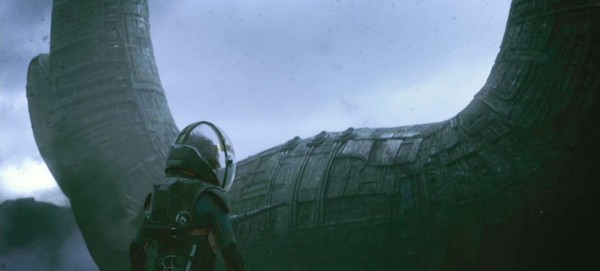
Prometheus (2012)

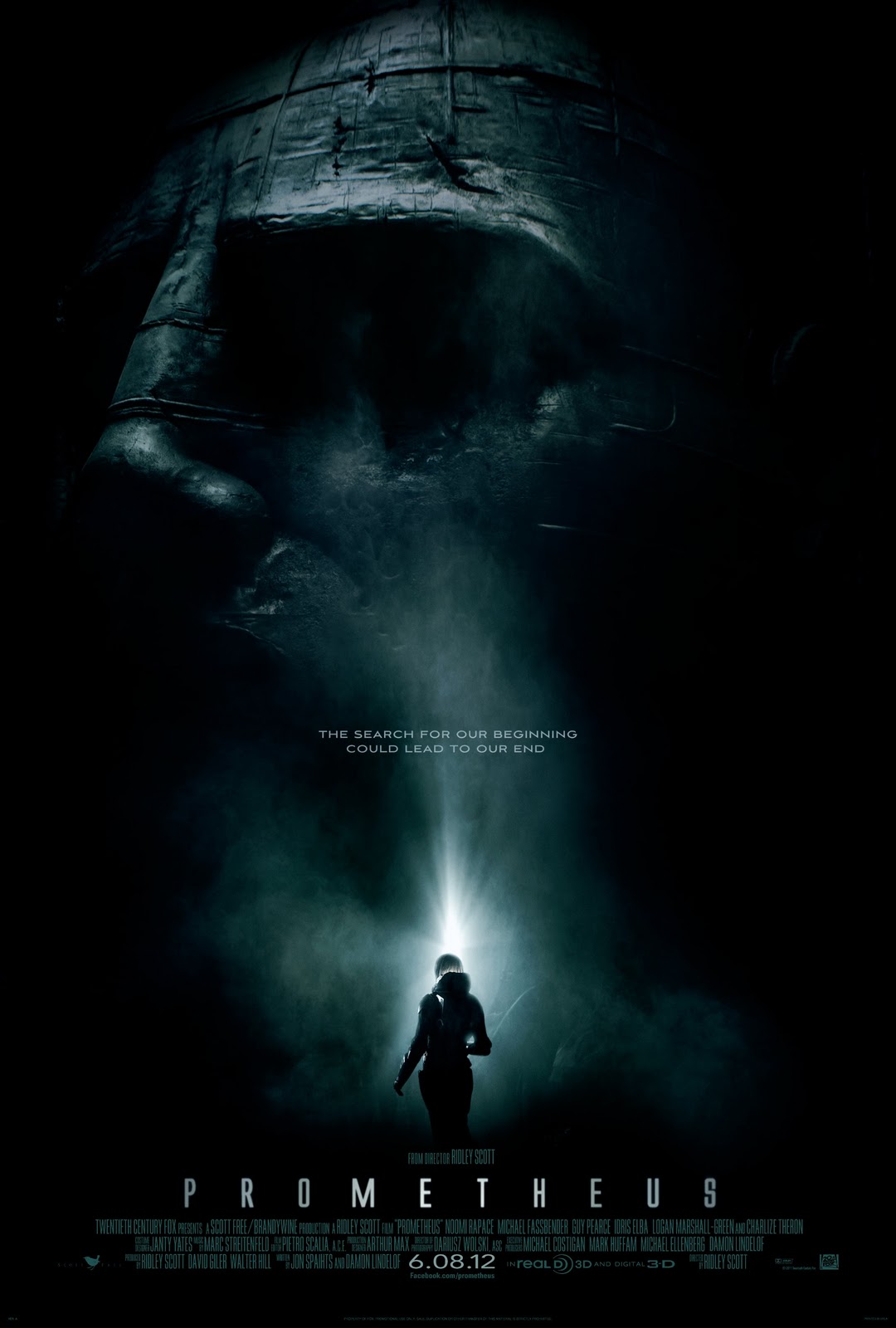
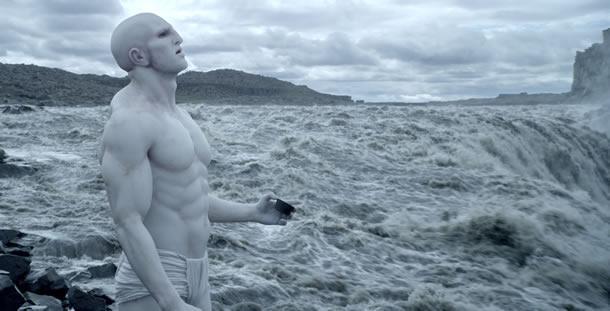
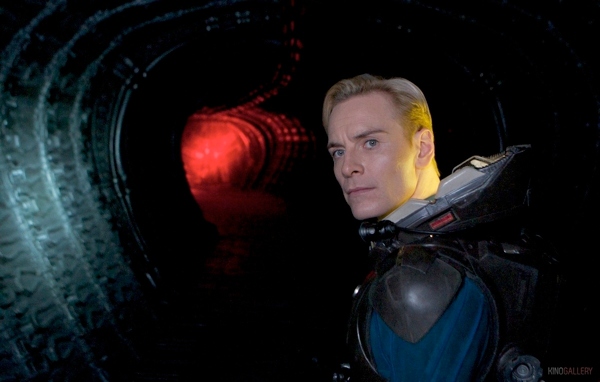
Today’s cinema adventure: Prometheus, the 2012 sci-fi thriller that marks the return of director Ridley Scott both to the genre and to the film franchise that made his name. A prequel of sorts to his 1979 classic, Alien, it follows the fate of a late-twenty-first-century space expedition which journeys to a distant planet in search of answers to the secret of human origin, revealing (partially) the background of the terrifying race of creatures that inhabited the earlier film and its sequels- but also establishing its own internal mythology, with a plot and a purpose completely independent of its predecessor, and tackling deeper, far-reaching philosophical themes along the way. Indeed, director Scott makes it clear from the very first frames that he has greater ambitions than just making a straightforward science fiction adventure: the opening shot is a direct copy of the one used by Kubrick in 2001: A Space Odyssey– in fact, the entire credits sequence is reminiscent of an important scene from 2001, and throughout Prometheus there are countless echoes- some huge, some tiny- from that venerable masterpiece. This is appropriate enough, given that Scott’s film shares many of the central themes from Kubrick’s landmark opus, such as man’s continuing quest for knowledge and his uneasy relationship with the technology he has created to aid him in that quest; indeed, the central plot (the discovery of artifacts from earth’s ancient past leads to a space mission and a confrontation with the mysteries of our creation) is essentially the same in both films. Scott, however, working from the screenplay by John Spaihts and Lost co-creator Damon Lindelof, offers his own interpretation of these ideas; his is a much darker vision of our species and its place in the universe, and one which reflects the change in our collective consciousness in the 45 years since Kubrick made his film. In place of Kubrick’s somewhat ironic vision of a future shaped by nuclear age optimism and practicality, we are given a universe more closely resembling the one seen in Scott’s earlier visits to this genre: a place in which human flaws such as ego, greed, hostility, mistrust and duplicity run rampant; and where these qualities not only threaten to undermine the greater purpose but are seen to be shared by the very creative forces that shaped us. Not that Scott gives us a universe without hope- far from it. In Prometheus, hope is arguably the central issue, and holding onto it in the face of bleak nihilism can be seen as the one saving grace of our species- coupled with undying curiosity and armed with the knowledge of what has come before, it can keep us going even when there seems no purpose for doing so. In a way, Prometheus offers us an even more inspiring conclusion than 2001, suggesting that the secret of man’s creation and continuing renewal lies within ourselves, alongside the very seeds of our own destruction- no matter what our origins may be, we are self-determining creatures and not just pawns observing a cosmic waltz in which we may be a mere side effect.

All this conjuring of the spirit of 2001 may be justified by the needs of Scott’s intellectual premise, but it also serves as a means to pay homage to his cinematic influences; the visual and thematic reflections of Kubrick’s film are just the most obvious of his tributes to the works of those who have shaped his own vision, from the overt use of Lawrence of Arabia as an inspiration for one of the central characters to the more subtle nods in the direction of such diverse movies as Citizen Kane and Forbidden Planet. With such a pedigree, it would be nice to say that Prometheus is a worthy successor to the masterworks tagged within it; but despite its lofty goals, it is a film which suffers from the all-too-common malady of formula. The cinematic building blocks so reverently placed by Scott seem to promise a work of intelligence and depth- which, for the most part, he has given us- but as the plot unfolds towards its predictably cataclysmic conclusion, his movie falls into the familiar repetition of patterns we have seen ad infinitum: the characters’ fates can be foreseen from their virtues or flaws in the same way we can tell that the bad girls are going to get offed in a slasher film, pivotal plot elements are introduced with so many red flags we can instantly see where they will lead, and, of course, anyone familiar with the original Alien and its sequels will know from the outset where the story is headed, reducing the entire experience to a detached exercise in answering questions left over from the previous franchise entries. In addition, the level of tension, so expertly built and maintained by Scott in his original film, is here allowed to rise and fall so often and with so little payoff, that by the end we are not so much excited as we are mildly curious to see how things will finally play out. Furthermore, the insistence on maintaining a rigid connection to the concrete realism dictated by its cookie-cutter storyline prohibits the director from diverging from his linear plot into the absract flights of fancy that made 2001 such a groundbreaking work and prevents him from taking his cosmic themes into an esoteric realm where they can be more fully explored.

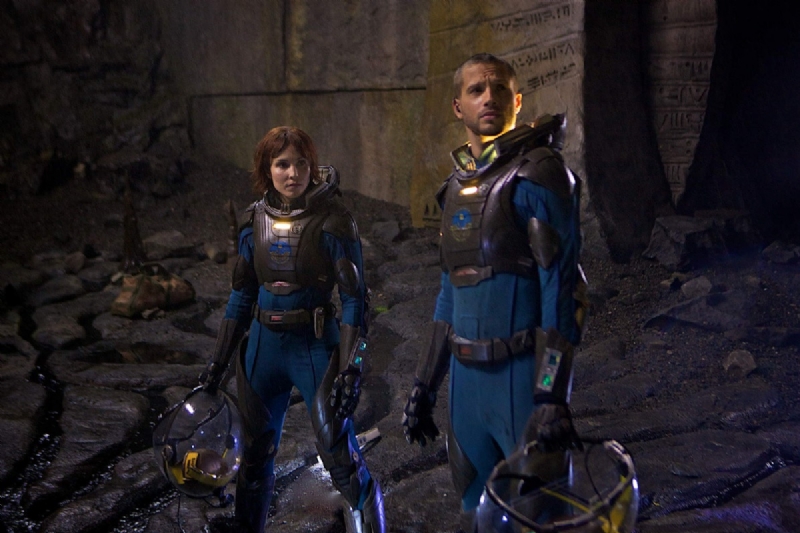
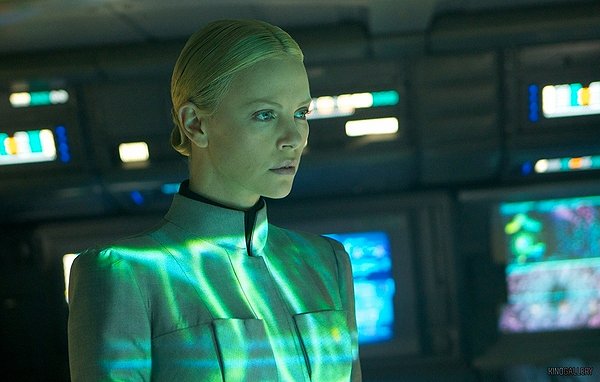
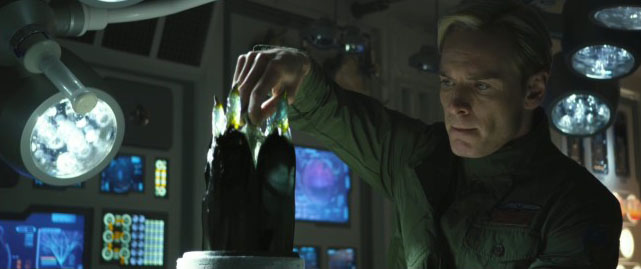
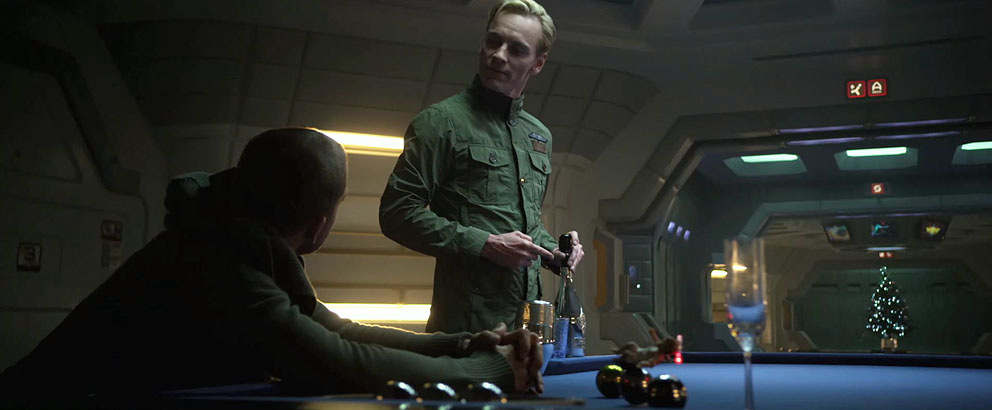
Don’t get me wrong: by any standards, Prometheus is a well-above-average film, an ambitious labor of love by a director of considerable talent; considering that its development and production history reads like an indictment of all that is wrong with the Hollywood process today, the fact that it offers so much substance along with its profit-minded formulaic plot is a miracle in itself. Scott has always been a director with remarkable gifts, particularly in visual terms, and this film certainly lives up to his reputation; it combines the immediacy of Alien with the elegiac reflection of Blade Runner; and, like both those examples, creates a stunning, immersive world for us to experience. Superbly photographed in 3-D by Dariusz Wolski, Prometheus presents a brilliant blend of its own shrewdly futuristic design and the H.R. Giger-inspired bio-technical look of the original Alien; and, to draw another comparison with 2001, it sets a new standard for special effects, with a look and a feel derived from dedication to the artistic purpose of the whole, not merely from a desire to dazzle us. This accomplishment is achieved, under the supervision of production designer Arthur Max, by a seamless blend of CG, traditional camera trickery, and live action footage, and it yields countless examples of big screen imagery which are surely destined to become iconic. All this technical wizardry is not wasted, notwithstanding the quibbles which mar the film’s narrative: Scott rises to the occasion throughout, creating moments of breathtaking beauty and visceral terror- in fact, the film’s most effective scenes (particularly a medically-themed sequence near the climax) are those which resurrect the creepy, primal body-horror around which the original was based and the fear of which is never far from our minds from the moment the exploration team lands. Aiding him in his struggle to rise above his mundane material is a fine cast which includes superb work from Charlize Theron (proving once again that she is Hollywood’s reigning ice queen), Idris Elba and Guy Pearce; standing out above the rest is the hypnotic Michael Fassbender, who provides further evidence of his substantial talent as the film’s most memorable and enigmatic character; and in the central role, Noomi Rapace makes a convincing transition from idealistic scientist to determined survivor, stirring favorable comparative memories of the franchise’s original heroine, Sigourney Weaver. The one sour performance comes from Logan Marshall-Green, whose hot-shot demeanor and club-rat looks make him not only unconvincing as a world-class scientist but also unlikable as a hero and poorly matched with Rapace’s much more sympathetic personality.

Prometheus has been anticipated as one of the year’s biggest film events, with much hype and secrecy surrounding its content and high expectations for both critical and commercial success. With all that pressure, it is not surprising that it has met, so far, with mixed reaction: hardcore fans of the genre have expressed disappointment with its emphasis on esoteric elements instead of on providing concrete answers to the mysteries it presents- many of which are left unrevealed, begging the development of a sequel despite the insistence of its makers that it is meant to be a stand-alone project- and serious-minded filmgoers have complained (as I did) of the reliance on cliché and formula in a plot which keeps it from fully realizing its higher goals. In the long term, who can really say where it will stand in the estimation of future cinemaphiles? What is certain now is that audiences seem to love it or hate it, which for me has always been the surest sign of artistic success. Summing up my own opinion, I would have to say that I loved it- with reservations. I can’t guarantee that you will share that view, but I can tell you that it’s worth a trip to your local theater to find out for yourself. You may not be satisfied, but you will almost certainly be stimulated and provoked, and isn’t that what art- and cinema in particular- is all about?

http://www.imdb.com/title/tt1446714/

;

Thor (2011) & Captain America: The First Avenger (2011)

ImageImage

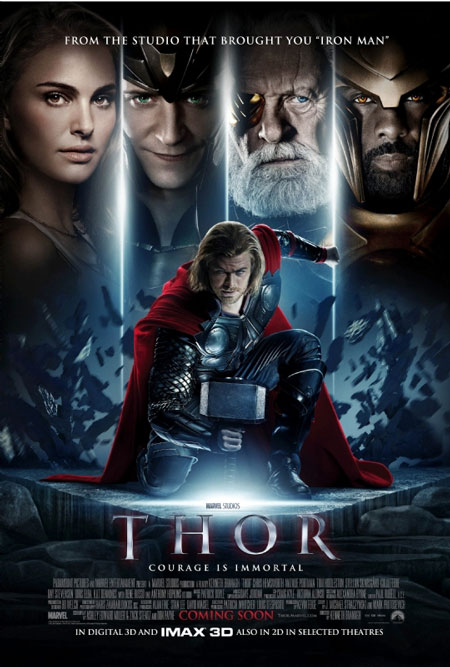
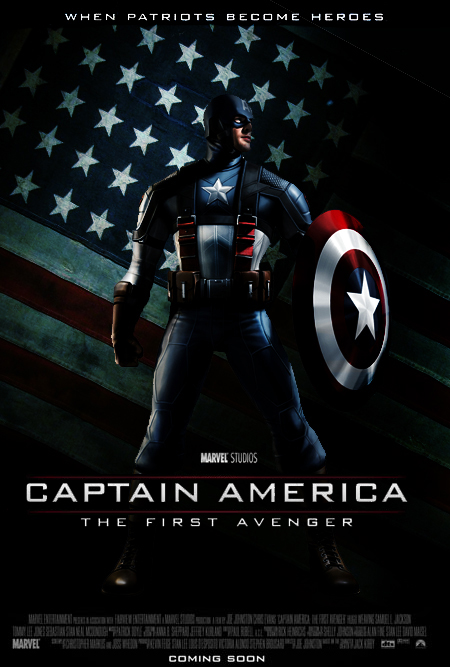
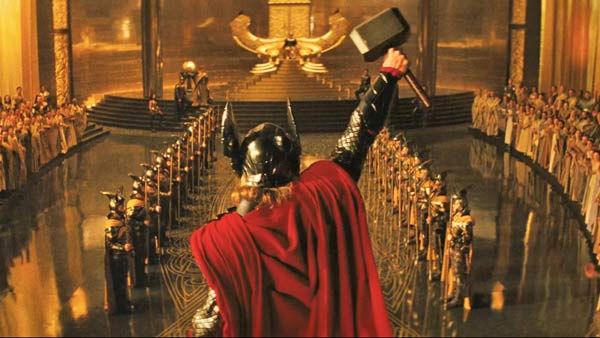
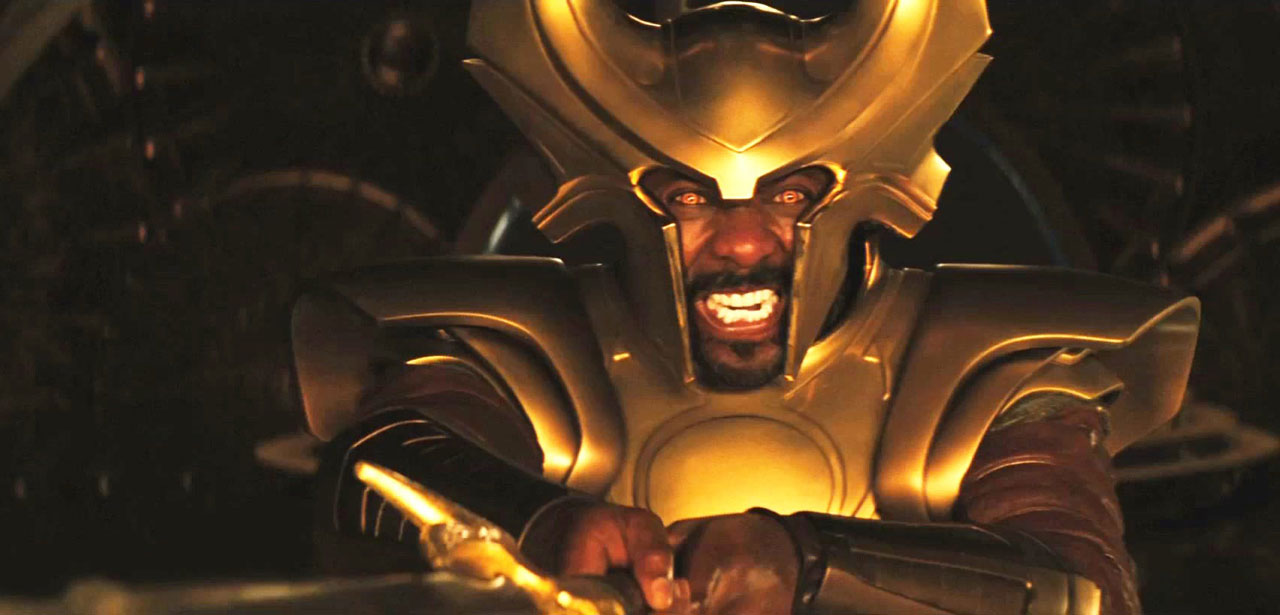
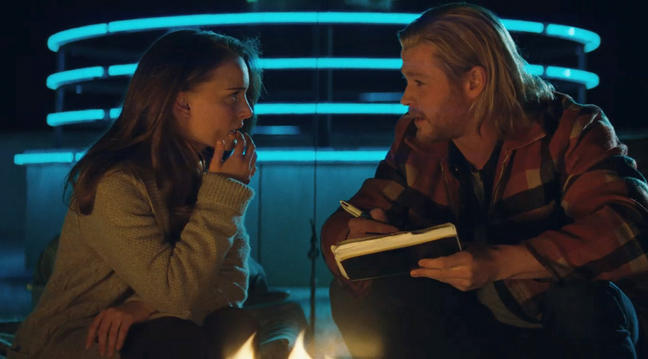
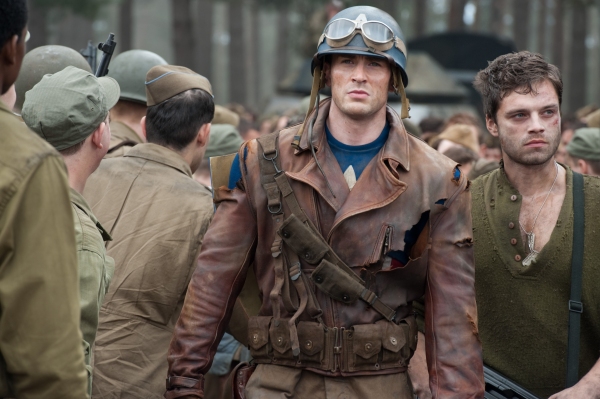
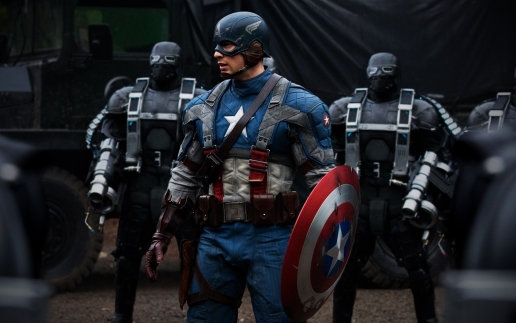
Today’s cinema adventure is a double feature: Thor and Captain America: The First Avenger, the two 2011 entries from Marvel that introduced audiences to seminal figures in the then-upcoming Avengers blockbuster, further establishing the groundwork begun in the successful Iron Man franchise and setting up key elements of the story arc which unites all the films.   In the first of the pair, Thor, heir to the throne of Asgard, is exiled by his angry father to the distant planet earth, precipitating a rebellion in his home world which threatens to wreak destructive havoc in both places; in the second, set during the second world war, scrawny weakling Steve Rogers is transformed by a secret government experiment into a super soldier who leads the battle against an insidious threat rising from within the ranks of the Nazi Reich.  The two films bookend each other nicely, thematically speaking: both feature heroes who rise to greatness, one by breaking through his own arrogance to find humility; and the other by holding on to his pure-hearted nature after being bestowed with super-human powers.  Both scenarios are familiar variations of the “Hero’s Journey” myth, and as such fit snugly into the comic book milieu from which the characters and their stories are drawn; and though the production teams for each film are, for the most part, comprised of different artists, under the guidance of Marvel and its mastermind, Stan Lee, both maintain a strong visual and thematic connection to the printed form of the source material.  Indeed, thanks to the heavy use of CG effects in creating the worlds of these films- which at times almost erases the line between animated and live action filmmaking- they seem like gigantic, moving comic books; the only thing missing is the presence of bubbles for the dialogue and thoughts of the characters.  This, of course, is precisely what the creators of these spectacles have intended; and on that level, they have succeeded in spades.  However, it is that candy-coated quality that handicaps both of these films, as well: in making the impossible come to life in such a clearly artificial setting, they distance us from the characters and the story, keeping us constantly reminded that what we are seeing has no real weight or consequence in our lives and preventing an emotional connection much in the way that Brechtian theatre-of-alienation tactics were designed to do; unfortunately, the purpose of that presentational technique was to provide a detachment that would allow an intellectual connection instead, and here, there is so little food for thought that the effect (for those not dazzled into submission by the visual trickery) is closer to boredom.  Between the two films, Thor fares somewhat better: though marginally more far-fetched in its content, the mythological connection provided by its use of Norse gods and goddesses as an integral part of the plot allows us, somehow, to more comfortably suspend our disbelief and buy into its premise of our world being caught up in a conflict of all-powerful titans.  Indeed, the storytelling aspect is strong enough- almost- to avoid being overwhelmed by the computer-rendered spectacle surrounding it, largely thanks to the direction of one-time Shakespearean golden-boy Kenneth Branagh, whose extensive experience with classical narratives makes him well-suited to the mythic themes in play.  Not so sure-handed at the helm is Joe Johnston, whose Captain America starts out well enough as it chronicles the eager young hero’s transformation, but then seems to move aimlessly through its progression of set pieces, content to rely on action and mood to keep us interested until it reaches the last one; rather than the unfolding of an archetypal tale, this second film feels instead like a piece of nostalgic fluff, a cliché-ridden WWII adventure souped-up with wish-fulfillment fantasy, trying painfully hard to avoid irony in its handling of the gee-whiz jingoism of its subject matter by masking it in nostalgia (mainly provided by the bathing of every scene in a golden-hued light in order to remind us that we are watching a story set in the 1940s).  This lack of real direction is exacerbated by the hollowness of the characters: whereas in Thor, the screenwriters (Ashley Miller, Zack Stentz, Don Payne) invest time and attention to the development the characters and their relationships, in Captain America the scribes (Christopher Markus, Stephen McFeely) have relied on the familiarity of the stock types that populate their film, establishing identity with glib one-liners and giving mere lip service to the bonds and rivalries that determine their loyalties; in both, the players are little more to us than obligatory ciphers required to fulfill a formula, but at least in Thor, they have real personality.  The cast lists of both movies are dotted with ringers: such heavy hitters as Anthony Hopkins, Stellan Skarsgârd and Natalie Portman (Thor) and Tommy Lee Jones, Stanley Tucci and Hugo Weaving (Captain America) all add prestige and interest to the proceedings, and manage- with varying degrees of success- to elevate the material to a level that at least gives the illusion of substance.  As for the titular heroes, Chris Hemsworth as Thor does an adequate job of enacting his transformation from entitled blowhard to compassionate champion, and Chris Evans as the Captain manages to capture the right blend of sincerity and aloofness; but, perhaps partly due to the inherent limitations of the characters, both actors ultimately comes off as little more than eye candy (not that this is a bad thing- part of the traditional appeal of this kind of escapist entertainment is the beefcake factor).  The production of both movies, as mentioned before, is breathtaking, presenting us with glossy, hyper-real visions of the Marvel Universe; united by cohesive production design (Bo Welch for Thor, Rick Heinrichs for Captain America), they continually wow us with movie magic that reminds us of how far we’ve come from the days of actors hanging on wires in front of projected skyscapes.  The musical scores, provided by Patrick Doyle (director Branagh’s long-time collaborator) on Thor and Alan Silvestri on Captain America, are appropriately stirring.  In fact, every technical aspect of both films is top-notch, Grade-A, best-of-Hollywood stuff; but ultimately, though Thor has its strengths, they both come up short in the long run, big on style and spectacle, but lacking in the kind of genuine depth that can make movies of this genre into a more meaningful experience.  There is certainly entertainment value here, but even that seems strangely lacking; both pieces feel more like prologues (which they are) than stand-on-their-own experiences, setting the stage for things to come and somehow failing to provide the satisfaction of real closure.  Of course, this is the nature of comic books- each segment ends in a cliff-hanger, ensuring that the reader will rush out to buy the next edition as soon as it is available.  Thankfully, in this case the next edition is The Avengers, which succeeds where these two predecessors have not- but that’s another review.

Thor http://www.imdb.com/title/tt0800369/
Captain America: The First Avenger http://www.imdb.com/title/tt0458339/

ImageImageImageImageImageImageImageImageImage

—————————————————————-

ImageImageImageImageImageImageImageImageImageImage

The Avengers (2012)

Image

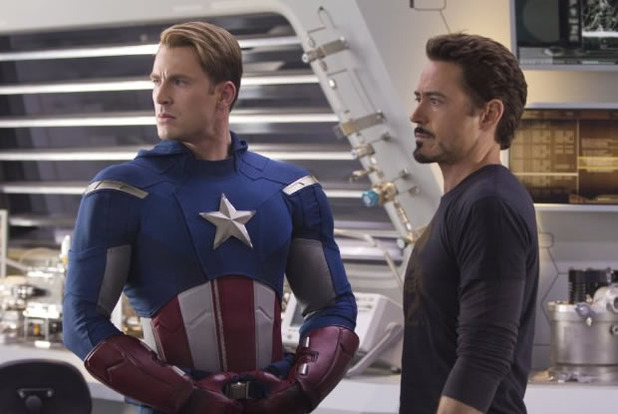
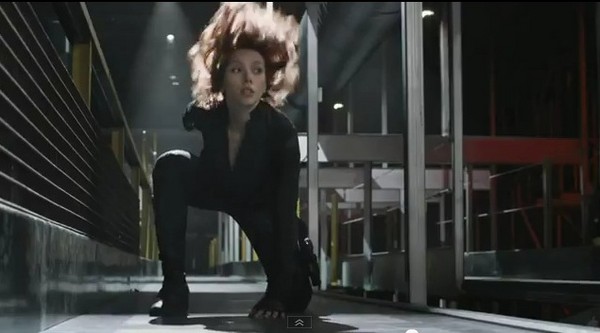
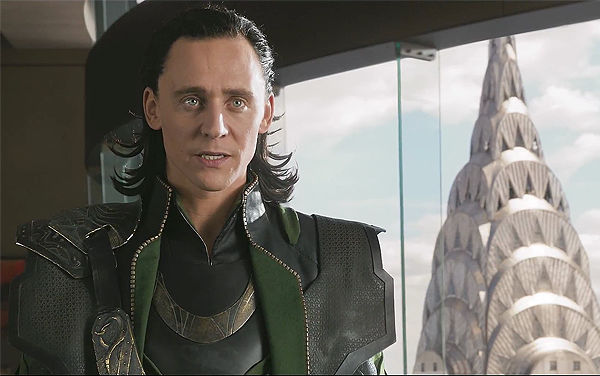
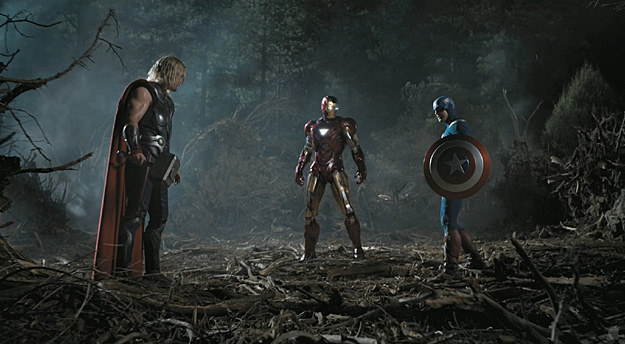
Today’s cinema adventure: The Avengers, the long-awaited 2012 action/fantasy feature from director Joss Whedon which unleashes the combined force of most of Marvel’s top superhero characters and has ensured, with its record-smashing box office returns, that the flourishing “comic book” genre is here to stay- at least for now.  The plot, of course, could have been lifted from any Cold-War-era sci-fi potboiler: when a god-like being from another world brings an army to conquer the earth, a secretive government organization assembles a band of disparate heroes to head off the invasion, forcing them to set aside their own differences- and face their own weaknesses- in order to unite against the common foe.  The details get a bit confusing, unless you are intricately familiar with the plot threads that have been unwinding through the various associated franchises leading up to this blockbuster, or unless you can follow the lightning-fast pseudo-technical jargon with which the various conceits are established; but none of that matters, because unlike many inferior attempts at making this sort of hyper-driven action spectacle, “The Avengers” hinges not on its ridiculous storyline- nor even on the mind-blowing, state-of-the-art special effects, though admittedly those provide a considerable amount of the fun- but on the characters which inhabit it.  The legion of “fan boys” at which this movie is targeted can rejoice that, after decades of clueless studio hacks trying to capitalize on the popularity of comic books without understanding or respecting the material, at long last the genre is in the hands of artists who have grown up with a reverence for it; gone are the days of bland, leotard-clad goofballs with no charisma spewing cheesy platitudes.  Here we are treated to a collection of heroes that we can truly believe in because we can relate to them: full of doubts, anger, trust issues and guilty consciences, they are nevertheless driven by hope to perform the duties thrust upon them; and there is never any question that they have the ability to face whatever the other-worldly would-be conquerors can throw at them, as long as they can overcome the obstacles they generate within their own flawed psyches.  By capturing this element, Whedon (who also wrote the screenplay, from a story by himself and Zak Penn) has captured the key to what makes these far-fetched, over-the-top stories so compelling: they are, in fact, mythology that has been re-invented in a form that appeals to a modern generation.  We see our own psycho-dramas acted out in symbolic form by these idealized versions of ourselves, and through their victories we see the possibility of our own.  To be sure, of course, it’s not the kind of doom-and-gloom mythology that takes us through the dark night of the soul, and it would be completely wrong to think that The Avengers aims at any emotional or spiritual resonance beyond an adolescent level; but still, no matter how many millions of dollars were spent on the CG eye candy, it would have all just been visual noise without that important, cathartic element.  The Avengers seeks to entertain, not to enlighten, but it’s a testament to the talent of its creative forces that it manages to do both.  Whedon has levied his success as a creator of niche-targeted cult entertainment into status as a mainstream artist to be reckoned with, and he directs with a sure hand and a clear vision, striking a perfect balance between action and intimacy and keeping the whole thing roaring along at a breathless pace that makes the two-hour-plus running time feel half as long.  He has considerable help from crack film composer Alan Silvestri, cinematographer Seamus McGarvey, and an army of designers and special effects artists under production designer James Chinlund; and, of course, the work of his cast is exemplary, with the always-delightful Robert Downey, Jr., Mark Ruffalo, and Scarlett Johansson standing out in particular.  Special mention must be made for the driving force behind it all: comic book legend Stan Lee (one of the Executive Producers of this and all the Marvel films, which are of course his babies), who has brought his remarkable work from the printed page to the big screen (in magnificent 3-D, no less) with meticulous attention to getting it right and a vision that invites comparison to, dare I say it, Walt Disney himself.  Before I am accused of gushing, I should point out that there are quibbles to be made here- the villain, Loki, is not exactly an imposing threat, for all his superhuman powers, and there are numerous points in the film when the perfunctory conflicts between the protagonists threaten to derail the driving pace- and I can’t say that The Avengers and the other films with which it forms a sort of super-franchise (pardon the pun) transcend the comic book genre, as Christopher Nolan’s rebooted Batman cycle has done.  Nevertheless, in a time when rising ticket prices make it less and less appealing to go to the theater rather than just wait a few weeks for the DVD/BluRay release, it’s a film that delivers what it promises and more; and that’s a feat at least as heroic as any of those accomplished by the superteam of its title.

http://www.imdb.com/title/tt0848228/

ImageImageImageImageImageImageImageImageImageImageImage