John Carter (2012)

John Carter (poster)

Today’s cinema adventure: John Carter, the 2012 sci-fi/action blockbuster based on the first book of Edgar Rice Burroughs’ seminal series of adventures about a former Civil War soldier who is mysteriously transported to Mars (known as “Barsoom” by its inhabitants), where he becomes a hero in the planet’s struggle against domination by an immortal race of super-beings. A lavish production from Disney Studios, it marks the first “live action” feature to be helmed by Andrew Stanton, the acclaimed director responsible for Pixar’s Finding Nemo and WALL-E, although the extensive use of CG technology blurs that definition somewhat; the studio’s certainty that the project was a sure-fire hit is evidenced by the fact that they spent a whopping $250 million dollars to make it. Unfortunately, with such a price tag, the film was required to gross near-record sums in order to simply break even; thanks to a lukewarm critical response and even less enthusiastic audience reception, it instead became one of the most notorious box office flops of all time, leading to recriminations and resignations within the studio and a massive financial loss on the quarterly report. It’s a shame, really, that the movie has now become known as a notorious bomb- an assessment that is not entirely accurate, for overseas returns were substantially better than in the U.S., and home video release ensures that, in the long term at least, it will ultimately recoup its losses and turn a decent profit- because John Carter is not at all a bad film, for what it is, and will likely prove, in time, to gain an appreciative following.

Adapted by Stanton, Mark Andrews, and Michael Chabon from Burroughs’ novel, A Princess of Mars, John Carter concerns a struggle for power between two Martian city-states- Helium, a peace-loving capitol of science, art, and learning, and Zodanga, the “walking city,” a warlike and totalitarian kingdom bent on absolute rule of the planet. The battle has raged for generations, but now, with the aid of a powerful new weapon that has been bestowed upon their leader, the ruthless Seb Than, by a mysterious alien race, the tide is turning in favor of the Zodangans. Meanwhile, on the planet Earth (where it is the late 19th Century), a former Confederate officer named John Carter searches for his fortune in the frontier of the American West; while fleeing an Apache war party, he inadvertently discovers a legendary cave of gold, in which mysterious carvings and glyphs seem to come from an ancient and forgotten civilization- and where an altercation with a mysterious robed figure results in Carter’s sudden and seemingly inexplicable transport to a vast, unfamiliar plain located (as he will later discover) on Mars. After adjusting to the effects of the differing gravity- which, due to his Earth-born bone density, gives him superhuman strength and the ability to leap hundreds of yards in single bound- he soon finds himself captured by a tribe of four-armed, green-skinned humanoids, called Tharks, led by a chieftain named Tars Tarkas. This is only the beginning of his adventure, however, as his fate brings him into the heart of the conflict over the destiny of the Red Planet, in which he must help the Princess of Helium to discover the source of Seb Than’s mysterious new power before she is forced to marry the Zodangan warlord and doom her people to eternal domination.

There’s not much point in offering a more detailed synopsis of John Carter’s convoluted plot than the one above; like the novel from which it is derived, it is a piece of melodramatic pulp fiction in which the story is merely an excuse for the action, romance and imaginative fantasy that keeps an audience coming back for more. Burroughs’ novel was originally published in serialized form of course, in All-Story magazine, beginning in 1912. It was by no means the first episodic science fiction story, but the way it combined elements of other popular genres- sword-and-sorcery adventure, westerns, romance- was a unique and ultimately influential feature that makes A Princess of Mars the direct forerunner of Flash Gordon, Buck Rogers, Star Trek, and Star Wars, to name only an obvious few. This particular sub-genre, known as “planetary romance,” has proven more enduringly successful than science fiction proper (in its strictest sense, that is), and continues to inventively manifest itself through, among other things, the vast wealth of comic book literature (and its related media) that has developed into an increasingly massive force in the entertainment industry. In other words, for anyone out there who is a fan of The Avengers, it all started here. With this in mind, it is only fitting that the saga of Burroughs’ planet-hopping hero should be given, at long last, the kind of lavish, top-shelf Hollywood treatment that has been afforded to so many of its offspring, and though many critics complained of the film’s sprawling, sometimes incoherent storyline and questioned its emphasis on action and spectacle over character and logic, these things are in fact part of the essence of this particular style of fiction; Burroughs was out to thrill his readers with imaginative and impossible scenes of otherworldly escapism, not to stimulate their higher cognitive functions. More accurately, perhaps, he was out to make money by doing it, and the fact that he succeeded- to the point of building an empire that pre-dated Walt Disney, Gene Roddenberry, or George Lucas by decades- is a fact made clear simply by looking up the origin history of Tarzana, California.

The world of a hundred years ago, however, was obviously a different one than we live in today; decades of technological advances- including probes and landing craft on Mars that have yet to discover the existence of mobile cities or multi-limbed green giants- have made us much less naive about the notion of interplanetary adventure, at least this close to home. Part of the commercial failure of John Carter must be ascribed to this; the premise of Burroughs’ story, though always far-fetched, of course, seems particularly dated in the 21st Century, with its swashbuckling warriors and princesses in distress evoking memories of our own antiquated fictional heritage rather than visions of otherworldly experience. Though such elements are present in more contemporary sagas like Star Wars, they are easier to swallow by virtue of a distance in time and place- not to mention a heightened sense of metaphor- which is carefully established from the outset. Not so with John Carter, which takes place in a recognizable part of our own history and asks us to believe in a conceit that feels old-fashioned and far too familiar to be taken seriously.

However, its familiarity is not due to its being derivative or formulaic, in the usual sense; rather, it results from the fact that a century of imitators has made Burroughs’ original seem old hat. Even those who have never read (or even heard of) A Princess of Mars and its sequels will know exactly what to expect in the story of John Carter, because they’ve seen it all before; and though the reason is that this, in fact, is the original blueprint for all those space-adventure-clichés, it makes little practical difference for those who are looking for something new and exciting to occupy two hours’ worth of their attention. This is, in essence, little removed from the cheesy space-opera serials of the ’30s, except by the feature-length format and the gargantuan budget which allows for breathtakingly realistic special effects instead of miniature spacecraft on wires; it is pure escapist nonsense, boy’s adventure at its most rambunctious, designed to stir excitement and elicit fantasies- and, hopefully, to sell the next installment. Except, thanks to the perceived failure of the undertaking, there is not likely to be a next installment.

As I said before, however, John Carter is not a bad movie; though it suffers somewhat from the need to pack too much story into a commercially viable running time, thereby eliminating the opportunity for anything more than perfunctory character development, and lacks the kind of mythological scope that gives such emotional resonance to the Star Wars films, it is nevertheless an obvious labor of love. Corny as it is, it has an infectiously earnest sensibility that makes it hard to dislike- at least, for those approaching it with reasonable expectations. It strikes well the difficult balance in tone that keeps it from becoming too campy- like the painful 1980 adaptation of Flash Gordon, with which it shares numerous parallels- without taking itself too seriously. That’s the key to enjoying John Carter; remembering that it was never intended to be the kind of “important” sci-fi epic that has now become the standard of the genre, with serious undertones of sociopolitical allegory or philosophical subtext, allows us to simply surrender to its lightweight melodrama without faulting it for not being something it was never intended to be. This is not brainy, Asimovian science fiction designed to stimulate the intellect, but pure, testosterone-driven wish-fulfillment at its most adolescent.

Indeed, there is a lot to enjoy in this unapologetically overblown spectacle, once you accept it as it is. Burroughs’ Martian civilization is given the kind of intricately detailed, fully realized treatment that only big studio money can buy. The cities, with their spacious, retro-futuristic architecture, full of bridges and balustrades, palatial throne rooms, and majestic plazas, are executed with imaginative grandeur; the various alien technology, from great, bird-like airships to pseudo-scientifically-powered cosmic map rooms, as well as all the creatures- besides the Tarks, there are giant fanged apes, massive dinosaurian beasts that serve as mounts, and an oddly lovable amphibian-esque dog that becomes Carter’s loyal pet and protector- are brought to life by state-of-the art screen wizardry in a slick style that combines the iconic illustrative work of artists like Frank Frazetta with a modern-flavored Steampunk sensibility, resulting in a visual design that reimagines the classic Victorian milieu of the original with a firmly contemporary twist. These elements are imposed upon location settings in Utah- where, in fact, the author created his saga over a century ago- which are used to great effect in creating the arid, desolate Martian landscape, with its harsh deserts and monumental geography, making for an utterly convincing otherworldly environment. Of course, it’s no surprise that the film would be visually stunning, given the monumental budget and the participation of Disney’s all-star design and technical staff; as always with such effects-heavy blockbusters, the real test of quality lies in the less showy creative aspects of direction, writing, and acting.

As for the first of these, Andrew Stanton is a proven master of visual storytelling, and he uses his skills here to forge a clear path through the oft-confusing details of the plot, setting up early the crucial points and maintaining a strong through-line as he takes us through the meandering, episodic developments that make up the narrative. He keeps the pace quick with rapid edits and a roving camera, and composes his shots succinctly to convey a maximum of information without lengthy exposition. This is particularly helpful in keeping the audience on track, given the multiple storylines in play here- which brings us to the second foundational element of the film, its screenplay. It has already been mentioned that the novel’s sprawling narrative has been compressed too tightly into the relatively short running time of John Carter; the story might have been better served by being split over two movies, as has become the trend, for better or worse, with other big fantasy epics in recent years. Given the probable demise of this would-be franchise, it’s fortunate that Stanton and his co-writers did not choose that path, but if any one thing could have made John Carter a more satisfying film, it would have been the chance to invest more time in getting to know its characters. Pulpy as the material may be, a more in-depth exploration of the people that inhabit it- both human and non-human- might have gone a long way towards winning the emotional involvement of the audience in its action. Instead, we are presented with short, lightning-quick character sketches that give us the pertinent information about what makes each one tick, and then we’re off and running, knowing everything we need to know about them in order to understand their place- and easily predict their actions- in the story, long before it reaches its climax. As a result, the entire saga often feels as if it were a mere pageant, populated by one-dimensional ciphers who are mainly present to model the costumes and lend scale to the sets; since the story’s heart necessarily lies in its human element, such streamlined writing places a substantial burden on the director and cast to fill in the blanks and provide a greater depth of characterization than is apparent in the dialogue. Stanton, whose previous directorial outings have featured casts of animated characters (each of which are brought to life not only by actors, but a whole team of artists skilled in adding layers of nuance to every movement and expression), may have been at a loss here; his ensemble of performers seem to have been left to their own devices in filling out the inner lives of their roles.

Which leads us to that third crucial pillar of good filmmaking, the acting. The cast of John Carter is, if nothing else, a marvelous-looking bunch; Taylor Kitsch, in the title role, spends most of the film without his shirt, displaying the kind of chiseled body that was presumably much rarer in the 19th Century than it is today- after all, this was a time before the advent of personal trainers and nutritional supplements. Likewise, his co-star, the beautiful Lynn Collins, is costumed in a manner which strategically showcases her considerable physical assets, and most of the other human cast is similarly dressed- or rather, undressed- throughout. Not that there’s anything wrong with that; sex appeal is a big part of what makes these kinds of epic adventures so exciting to their target audience- the young teenager in all of us. In order to elevate these larger-than-life characters above the level of mere pin-ups, however, there must be something under the pretty exterior that will keep us interested, and though both the film’s stars make a noticeable and admirable effort, neither manages to give us much beyond the immediate requirements of any given moment. Their performances are all surface, convincing but never compelling, and though they carry themselves suitably enough for the stature of their roles, there is a decidedly contemporary flavor to their personae; they seem more like a pair of fitness models at a photo shoot than a hardened soldier and an enlightened princess. In the supporting roles, James Purefoy shows some charisma and character as a loyal second-tier hero and would-be sidekick to Carter, but his role is far too brief for him to make more than a fleeting impression; the gifted Ciarán Hinds, as the Princess’ father, is utterly wasted, as is Breaking Bad star Bryan Cranston as a cavalry officer who inadvertently becomes Carter’s companion for the discovery of the cave in which his destiny lies; and the film’s primary villains, Mark Strong and Dominic West, are saddled with two of the least interesting characters in the film- the former disaffected and aloof, the latter merely a mindless brute- and are therefore unable to make either into the kind of formidable antagonist needed in such a swashbuckling tale as this. Perhaps not surprisingly, the most engaging and memorable performances come from the actors lending their voices and movements (through motion capture technology) to the principal Thark characters (Willem Dafoe, Samantha Morton, and Thomas Hayden Church), who provide us with a hero, heroine, and villain, respectively, that we can truly care about. This may be because of the higher caliber of their acting (Dafoe, as Tars Tarkas, reportedly accepted the role because he relished the challenge of giving a performance dressed in pajamas while walking on stilts, and, arguably the film’s most prestigious star, he brings no dishonor to his reputation here), but it is surely not just coincidence that these roles are essentially animated characters- the kind with which director Stanton is clearly more within his comfort zone.

It’s interesting to know that John Carter probably holds the record for the longest development period in cinema history. It was 1931 when Bob Clampett- later to become known for his genius work with Warner Brothers’ Looney Tunes series- approached Edgar Rice Burroughs to purchase the rights to A Princess of Mars and the rest of the Barsoom novels; he planned to make an animated adaptation, knowing that a live action version would be impossible at the time, and he did manage to produce several reels of test footage before the studio (MGM) pulled the plug with fears that stories of an Earthman’s exploits on Mars would be too ridiculous for most American audiences. There were later efforts to produce a screen version throughout the next 80 years, but various creative conflicts and financial concerns sank the project, each time. Finally, when Disney considered the title (for the second time, having intended to produce it in the 1980s as a vehicle for Tom Cruise), Stanton- a fan of the books since childhood- fought hard to get it approved, with himself as the creative force behind it. Based on his previous track record, Disney okayed it- a decision they likely came to regret. By all reports, Stanton’s inexperience with live action production proved an obstacle which may have inflated the film’s already-massive budget, and his rejection of studio ideas about marketing and publicity might very well have been the deciding factor in making John Carter one of the biggest flops in Disney’s long history. There is a theory- which I more or less agree with- that the most significant reason for the movie’s failure was the decision to change the title (already altered from the book’s original name) from John Carter of Mars to John Carter. Stanton said he preferred this because the movie was an “origin story” that told how the character became John Carter of Mars, and studio executives reportedly changed it due to a study which showed that films with the word “Mars” had all suffered some degree of financial failure- including their own Mars Needs Moms. Whatever the reason, and whoever was responsible, it was ultimately this change, coupled with the vague and unexciting marketing campaign that accompanied the movie’s first release, that sealed the doom of Stanton’s lifelong dream project; though earlier generations may have needed no reminders about who John Carter was, in today’s market, where many have never even heard of his creator, Edgar Rice Burroughs, let along the hero himself, it was vital to give audiences more of a clue about what the film was about. Without such a clue, they stayed home and saved their money for the then-upcoming release of The Avengers.

It’s unfortunate that in writing about John Carter, I have to focus so much attention on its supposed financial failure (again, it was not really a flop, just not the mega-hit the studio had hoped for), but sadly, it is a significant part of the public’s perception about the movie, and it must be addressed; as years go by, its box-office receipts will become less and less important to commentators, and perhaps it can be discussed on the basis of quality alone. I hope so. Despite my quibbles about the script and the acting, I enjoyed John Carter, rather more than I had expected. Indeed, I tried very hard not to like it; but by about the halfway point I gave in to its goofy, old-fashioned charms, and by the end I was- dare I say it- glad the movie had been made. It deserved to be made. After a hundred years in which filmmakers have “pillaged” Burroughs’ stories for their own derivative efforts (the reason cited by director Robert Zemeckis when he turned down this project, specifically in reference to George Lucas and Star Wars), it’s fitting that the granddaddy of all those swashbuckling outer space fantasies should at last get the Hollywood treatment that has long avoided it. Fanatical followers of the novels (and they still are legion, even a hundred years later) may wish it had done better justice to the original, and many other audiences may wish it had made more of an effort to contemporize or sophisticate the material, but there are many, too, who will enjoy it just the way it is. Indeed, there are many who already have enjoyed it, myself included, and the seemingly passionate dislike the movie has generated from some (and some who have not even seen it, I might add) makes me once again question the value of judging a piece of art on the basis of personal expectation rather than on its actual merits; if we are too busy complaining about a movie’s not being what we want it to be, how can we enjoy it for what it actually is? Of course, there is also an unavoidable debate about the wisdom of spending enough to feed a small country for a decade on an inflated piece of escapist fluff like this one, but that is a question of ethical economics better left for discussion in another forum; in the long run, the fact that John Carter of Barsoom is at last represented in cinematic form, whether or not he is all he could have been, is a good thing, and though I have yet to discover if the movie proves more rewarding on multiple viewings (which I suspect it will), I am certainly looking forward to doing so.

http://www.imdb.com/title/tt0401729/?licb=0.42602754768506235

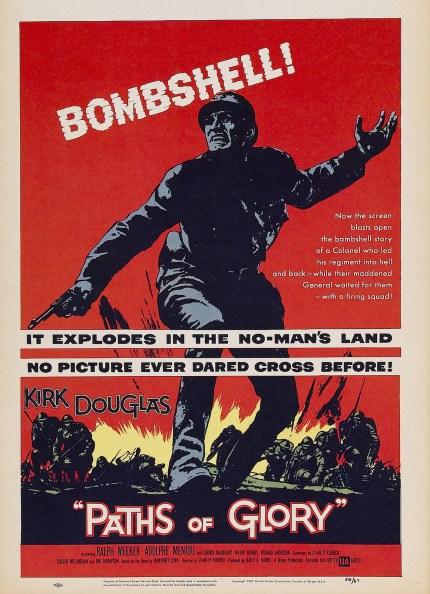
Paths of Glory (1957)

Paths of Glory (poster)

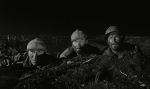
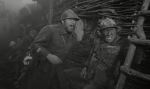
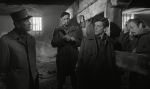
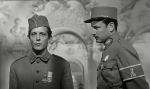
Today’s cinema adventure: Paths of Glory, the 1957 World War I drama by Stanley Kubrick, an early example of the filmmaker’s much-lauded mastery of the cinematic medium starring Kirk Douglas as a French colonel who finds himself caught in the middle when the personal and political motivations of his superiors force him to order his men on an impossible mission.  Based on a 1935 novel by Humphrey Cobb that was itself inspired by a true-life incident, it was a project spearheaded by Kubrick- who had read the book as a youth- when the critical success of his low-budget film, The Killing, got him hired to develop projects for MGM production head Dore Schary.  Though Schary rejected Paths of Glory for its lack of commercial appeal, he was eventually fired from the studio, freeing Kubrick and his producer, James Harris, to shop it elsewhere, and they managed to salvage their film by gaining the interest of actor Douglas, whose enthusiasm and guaranteed participation allowed them to find backing at United Artists.  With its harsh anti-war sentiments, its cynical take on military politics, and its bleak ending, nobody anticipated it would be a box office hit; it did, however, fare better than expected, despite heavy controversy in the European market- it was withheld from release in France for several years due to diplomatic protests, and it was heavily edited in other countries.  More importantly, in the long term, it earned massive critical acclaim for its director, thrusting him further along on his own “path of glory” towards his future status as one of the all-time great auteurs in the history of cinema.

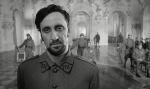
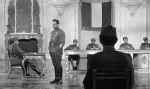
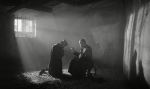
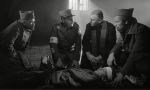
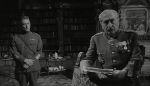
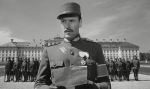
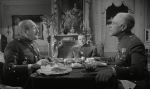
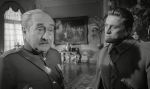
Paths of Glory is set at the French western front in 1916, where the soldiers endure the hellish conditions of trench warfare while their executive superiors reside in the luxurious nearby palace that has been temporarily transformed into military headquarters.  It is in the comfort of the latter location that General Mireau, who oversees a division near the key German position known as “the Anthill,” is visited by his superior, General Broulard, a member of the French General Staff.  Broulard has come to propose an attempt by Mireau’s men to take the heavily fortified German stronghold, a mission which, if successful, could win favorable response for the French war effort in the press and the political arena- and presumably advance the careers of the military commanders involved.  At first, Mireau is adamant in his refusal of the commission, citing the impossibility of the task and the devastating casualties that would be inflicted on his soldiers; when Broulard brings up the possibility of an upcoming promotion, however, which might be adversely affected by his choice, the ambitious subordinate quickly changes his mind, and agrees to order his troops to make the attack.  Mireau makes a visit to the trenches, a hellish war zone under a continuous blanket of shelling and gunfire, where he takes the time to exchange a few military platitudes with the already demoralized men- and deliver a strict dressing down to one shell-shocked soldier whom he accuses of being a coward- before delivering his orders to the division’s commander, Colonel Dax.  Dax, a dedicated soldier and a capable leader, is likewise skeptical of their chances for success, deeming the attack a suicide mission, but when the general threatens to relieve him of his command, he reluctantly agrees to lead his men in the attempt- though he knows the cost in human life will be high.  The next morning, the assault on “the Anthill” commences, with Dax personally leading the men through a horrific barrage of shells and machine gun fire; the effort proves futile, with most of the first wave killed or wounded without gaining much ground towards the goal, and the second wave refusing to join the attack.  A desperate Mireau, watching the battle from behind the lines, attempts to order his artillery commander to fire on the reluctant men; the officer refuses to comply without written orders, further enraging the general.  Meanwhile, despite Dax’s attempts to rally the men, the onslaught of German resistance proves too much and the surviving troops fall back, putting an end to the mission.  Mireau is furious, accusing his men of cowardice and mutiny; he demands punishment for the failure of the mission, and orders that each of the three company commanders choose a man to be court-martialed and executed for treason, as an example to the rest.  Colonel Dax is appalled, and volunteers to defend the three soldiers in the proceedings against them; a skilled lawyer in civilian life, he is frustrated in his efforts by the court’s disregard for the men’s legal rights and its refusal to hear any mitigating evidence on their behalf.  Despite Dax’s vehement objections and impassioned pleas, the men are found  guilty and sentenced to die by firing squad.  Dax makes a last ditch effort to save the doomed soldiers, bringing evidence to General Broulard about Mireau’s thwarted attempt to fire on his own army; nevertheless, the execution proceeds as scheduled, and afterwards, when he orders an investigation into Mireau’s actions, Broulard offers Dax the disgraced general’s command, believing that he has been angling for the job all along.  The disgusted Dax refuses the promotion, admonishing the wily Broulard for his manipulative role in the whole tragic affair.  Leaving the headquarters, he overhears the soldiers singing along with a young German girl in a pub, and resolves to let them enjoy their brief respite for a short while longer before ordering them, as he must, back to the nightmare of the trenches.

The film’s taut and eloquent screenplay was credited to Kubrick and Calder Willingham, along with noted “pulp” fiction author Jim Thompson; in reality, most of the script was written by the latter two men, though the director took equal credit for his supervisory contributions- a sign of his frequently- noted desire for complete control of his films.  Needless to say, perhaps, the stridently anti-establishment sentiment of the story, combined with its indictment of power and patriotism as a mask for self-promotion and exploitation, generated much controversy in the political environment of the mid-1950s Eisenhower era; despite its setting within the French military, Paths of Glory was decried as un-American and doubtless seen as an example of Communist influence in the Hollywood film industry by the remaining proponents of McCarthyism.  Indeed, actor Douglas was vilified in the press during the production of the film for his involvement in such a project, though he remained unwavering in his dedication to it.  He was not alone in his confidence, either.  Though Kubrick himself had planned, for box office purposes, to compromise the story by changing its ending to a happy one, he was persuaded to keep to the novel’s original, bitter conclusion; when the studio balked at the depressing finale of the script and demanded the proposed happy ending instead, producer Harris resubmitted the original version without changes under the somewhat cynical assumption that nobody would bother to re-read it. He was right, and after the film’s completion the studio execs were so impressed with the final product that they agreed to release it without alteration.  The relative lack of significant opposition for Paths of Glory might have been a sign of the times- after all, another film with a strong anti-war message, David Lean’s The Bridge on the River Kwai, was one of the year’s big hits, even winning multiple Academy Awards, including Best Picture- and despite its relatively humble box office showing, it certainly made an impact on viewers, paving the way for a coming decade in which movies would take critical attitudes towards the accepted establishment to a new level.

Whether or not Paths of Glory captured the public, it quickly became a darling of the reviewers.  Praise for the film was almost universal, with critics expressing particular admiration for its unvarnished portrayal of the realities of warfare and its stark black-and-white cinematography.  Decades later, it is easy to look at Kubrick’s work here and recognize his familiar style, developed to mastery even at this early stage in his career.  The lauded cinematography (executed by George Krause) bears the hallmark of the director’s fondness for natural lighting, capturing the harsh glare of the uncovered bulbs in the trenches, the cold and hazy sunlight of the battlefield, and the heavy diffusion of the enormous palace interior with a palpable aura of tangibility; the relentless but deliberate mobility of the camera, including the classic and influential reverse tracking shot of Colonel Dax moving through the trenches on the morning of the fateful attack, prefigures future use of the same techniques in such films as 2001: A Space Odyssey and The Shining, to name but two notable examples; the thematic motif of a story in which human endeavor is destined to fail because of inherent flaws in the character of its participants, and the shrewdly observational approach to revealing these flaws through the cool detachment of the empirical camera, is classic Kubrick, a thread which weaves its way through every film in the director’s canon; the unmistakable framing and shot composition, the triangulated relationships, the photographer’s fascination with capturing the human face in its myriad expressions of emotion- all these things and more are present in Paths of Glory, bearing witness to the concrete vision this then-youthful genius had already created for himself.  Already established, as well, was his penchant for demanding absolute control and his sometimes excruciating perfectionism.  His insistence on getting every frame of the movie exactly as he wished resulted in numerous confrontations and difficulties on the set, including a notorious incident in which, after 17 takes of a scene with Adolphe Menjou, the veteran actor exploded with rage and frustration at the director and ferociously derided the younger man’s inexperience at working with performers, in front of the full cast and crew of the film; after patiently allowing Menjou to expend his fury, Kubrick quietly called for another take.  It was but a foreshadowing of the kind of troublesome relations with collaborators for which he would be known throughout his career, but his exacting methods resulted, undeniably, in a legacy of masterpieces that continue to influence and inspire filmmakers- and dazzle audiences- to this day.

Though Kubrick deservedly takes the lion’s share of credit for the excellence of Paths of Glory, note must be taken of the fine contributions of the others involved.  To begin with, as noted, the screenplay is a well-crafted, tight piece of cinematic storytelling, peeling away expectation and cliché to reveal the unscrupulous, the cowardly, the vindictive, and the opportunistic qualities of its characters in an unrelenting portrait of war and its tendency to bring out the worst of human behavior.  Justice and compassion are thrown aside in favor of maintaining the status quo, ostensibly deep loyalties and ethics are forsaken at the first hint of personal consequence, and humanity is disregarded in the face of the ego-driven politics of the established social order.  The disparity between classes and ranks allows the free reign of corruption at all levels, and any trace of nobility or true honor is presumed to be just another pose adopted for the sake of gaining leverage in the quest for personal advancement.  Kubrick’s level of involvement in the writing of the screenplay is uncertain to me, but the majority of actual text was composed by Willingham and Thomas, both of whom would work with the director again despite his having downplayed their contributions here; these men have since justly earned proper recognition for this and many other projects, and each of them left the clear imprint of their particular style on Paths of Glory, helping to define its distinctive flavor of gritty humanism and undeniably playing an immeasurable part in making it the instant classic it became.

The cast, too, deserves a nod of appreciation, and not just for enduring their director’s tyrannical methods or the grueling conditions of the film shoot.  Kirk Douglas, who was then a top star, fresh from his acclaimed performance as Vincent Van Gogh in Lust for Life, helped Kubrick on his road to greatness with his support for this project (he would later be instrumental in getting the filmmaker hired to replace Anthony Mann as the director of Spartacus, a movie which would further cement his reputation and his status as a power player in the industry, and though the two would ultimately fall out during the making of this latter epic, Douglas has remained staunch in his admiration for Kubrick’s abilities as an artist).  The actor may have suffered some backlash for his involvement, but it was well worth it in terms of his long-term reputation; his performance as Colonel Dax is widely considered one of his finest pieces of work, a passionate, intelligent, and utterly convincing portrait of a decent man in the midst of madness, and he not only gives us a hero with whom we can place our sympathies, he serves as a much-needed reminder that even in a nest of vipers, men of quality can still exist.  As for Adolphe Menjou, outbursts on the set notwithstanding, he gives the performance of his long career as General Broulard, hiding his ruthless Machiavellian machinations behind the smiling pleasantries of good manners in a way that makes it clear how much he enjoys being the master of the game; he is the film’s true villain, untouchable in his power and utterly without scruples, the picture of self-serving bureaucracy and elitist entitlement.  George Macready is equally loathsome as Mireau, another species of political opportunist, whose greedy ambition makes him an easy target for the manipulations of men like Broulard, and whose thirst for power- probably stoked by decades of forced subservience- allows him to rationalize the most appalling decisions in pursuit of his personal glory, but also makes him prone to grievous errors in judgment which will ultimately prove to be his downfall; Macready, sporting a facial scar as a constant reminder that he has undoubtedly earned his position (and that he is, in fact, a product of the military system in which he has likely spent his entire adult life), is every inch the blustery martinet, but there is something about the desperation of his manner that makes us almost- but not quite- feel sorry for him.  Also memorable is Wayne Morris, as a drunken lieutenant who abuses his position to eliminate a subordinate that threatens his security (and his conscience); as the three condemned men, Ralph Meeker, Joseph Turkel, and Timothy Carey offer compelling examples of differing attitudes in the face of death, each of them representing aspects of humanity that defy easy judgment; Richard Anderson (later a familiar face of ‘70s television as Oscar Goldman, the handler of both The Six Million Dollar Man and The Bionic Woman) is quietly superb as Mireau’s assistant, an officiously sycophantic administrator who relishes his opportunity to shine as the prosecutor in the court-martial of the accused mutineers, but who gives us, in his final scenes, more than a hint that the moral implications of his actions may be a heavier burden to bear than he had anticipated; and Susanne Christian (who would soon after become Mrs. Stanley Kubrick, a role which she would fill for the rest of the director’s life) is lovely and heartbreaking as the German singer, presumably a prisoner in the French-occupied town surrounding the military headquarters, who captures the hearts and souls of her unruly audience as she is forced to entertain them in the pub during the film’s final scene.

Paths of Glory is one of those flawless pieces of filmmaking that reminds us of just how good the medium of cinema can be.  It is- and has been from almost the moment of its release- a textbook example of great film technique, and its deeply compelling story makes it a riveting experience even for those with little interest in the technical side of the art form.  Director Steven Spielberg is one of many who has claimed it as a favorite film, and its plotline and themes have been borrowed or provided inspiration for countless other works over the years, from an episode of The Young Indiana Jones Chronicles to a song by Faith No More.  Its status as a true masterpiece is so unquestionable that it tends, sometimes, to be forgotten in discussions of great filmmaking simply because it is such an obvious example.  In truth, though Kubrick’s later, more high-profile works have often been the subject of disagreement and controversy among scholars and critics, this early gem is almost always regarded with reverence by even the director’s most vehement detractors.  If you’ve never seen it, what are you waiting for?  It’s one of only a few films that I can confidently recommend, without qualification, to anyone; whether you are an avid movie buff or a casual entertainment seeker, you are bound to find yourself enthralled by this powerful little movie, and even those with a short attention span can rest assured that, at a fast-moving 88 minutes, it will have no trouble keeping their interest.  It’s a timeless classic, as powerful and riveting today as it was over a half-century ago, proving the words uttered by its star, Kirk Douglas, barely a decade after its release, to have been absolutely prophetic: “There’s a picture that will always be good, years from now. I don’t have to wait 50 years to know that; I know it now.”  You were right, Kirk.  I know it, too.

http://www.imdb.com/title/tt0050825/

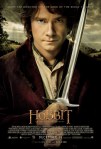
The Hobbit: An Unexpected Journey (2012)

The Hobbit - An Unexpected Journey (poster)


Today’s cinema adventure: The Hobbit: An Unexpected Journey, Peter Jackson’s long-anticipated return to the works of celebrated fantasy author J.R.R. Tolkien, whose three-part saga, The Lord of the Rings, provided the basis for the director’s phenomenally successful and critically-acclaimed trilogy of the same name.  Adapted- and expanded- from Tolkien’s earlier novel, The Hobbit, it constitutes the first part of a second trilogy which serves as a sort of prequel to The Lord of the Rings, telling of the young Bilbo Baggins’ adventures when he joins the quest of a band of Dwarves to reclaim their homeland from an ancient dragon who has taken it as his own- an expedition which sets into motion several events that will have great consequence in the later story.  Sure to be a major success on the basis of fan interest alone, it has met so far with somewhat mixed response- mostly due to Jackson’s decision to supplement the relatively short novel with additional material that connects it to the later events portrayed in The Lord of the Rings– and facilitates the splitting of its narrative into three separate films.  Reaction has also been divided about his choice to shoot the film at 48 frames per second (twice as fast as the standard rate), resulting in an ultra-high resolution image which gives his movie an almost hyper-real look, particularly when coupled with the 3D and IMAX formats in which it has been widely released.  Nevertheless, the majority of critics and audiences have been enthusiastic in their welcome for this adaptation of the much-beloved tale, and it undoubtedly marks the beginning of another triumphant achievement for Jackson and his creative collaborators.

The Hobbit, published over a decade earlier than The Lord of the Rings, was written by Tolkien as a stand-alone book, though its narrative was part of the much longer and intricately detailed story of Middle-earth that he had been developing since his youth.  The book was a success- so much so that it achieved classic status, eventually allowing Tolkien to publish the iconic trilogy of novels which turned him- and the mythical world he created, along with its inhabitants- into a cultural icon.  In an appendix at the end of The Lord of the Rings, the author provides a detailed timeline of the entire history of Middle-earth, with particular emphasis on the events leading up to the War of the Rings, which is specifically chronicled within the trilogy.  The beginnings of this great conflict coincide with the timeline of The Hobbit, through which Tolkien provided glimpses of his larger saga within the peripheral details of the central plot.  An Unexpected Journey, as mentioned, incorporates this material into its adaptation of The Hobbit proper, placing the story into the larger context of the complete epic tale.  The film begins in precisely the same time and place as the previous trilogy, at the home of Bilbo Baggins, an aged hobbit (or “halfling”) who has begun to write the history of his personal adventures, many years before, in the far-flung corners of Middle-earth.  We are transported back, as he remembers his youth, to a day 60 years prior, when Gandalf, a wandering wizard once acquainted with his family, arrives at his door to invite him on an adventure.  Bilbo, accustomed (as most of his people are) to the predictable comfort and security of his home in the Shire, declines; Gandalf, however, is not dissuaded so easily, and later that night the young hobbit is surprised to be playing host to a company of Dwarves who arrive unexpectedly, claiming to have been summoned to his home- by the wizard, who explains that he has offered Bilbo’s services as a “burglar” to assist the Dwarves in a quest to regain their ancient home under the distant Lonely Mountain, where a powerful dragon named Smaug, many years before, laid waste to their kingdom, Erebor, and claimed their vast wealth as his own private treasure trove.  Bilbo, horrified, again declines to join the expedition, protesting that he not only has no experience as a burglar but that he would, in fact, be useless on any such quest- an assessment with which the Dwarves are inclined to agree, particularly their leader, Thorin Oakenshield, heir to the throne of the kingdom under the mountain and a proven and powerful warrior.  Nevertheless, the shrewd wizard eventually persuades Bilbo, who has long suppressed a childhood yearning for adventure, to accept the job, and the hobbit joins his new comrades as they begin their long journey.  As they make their way, they encounter obstacles and enemies the likes of which the fledgling adventurer has never seen, including hungry trolls, greedy goblins, and bloodthirsty orcs- foul, mutated creatures who seem bent on pursuing them, and whose ferocious chieftain seeks a personal vendetta against Thorin.  Meanwhile, it becomes apparent that Gandalf has a larger agenda as he accompanies the fellowship; in his secret role as one of the White Council, an alliance of wizards and elves that serve as protectors of Middle-earth, he has begun to sense the growing influence of a dark and ancient presence returning to the land- a fear which he shares with his fellow guardians when the company arrives for a brief respite at the Elven capitol of Rivendell.  However, the answers he seeks remain yet hidden in the shadows, and the fate of the Dwarvish quest demands his more immediate attention.  Eventually, the band’s travels bring them within sight of their destination- but not before Bilbo manages his first successful “burglary” by stealing away the most “precious” possession of a treacherous subterranean creature named Gollum, beginning a greater adventure that will eventually decide the fate of Middle-earth itself.

The Hobbit, as written by Tolkien, was aimed at younger readers; though not exactly a children’s book, it is considerably lighter in tone than the epic trilogy which followed, with a less austere literary style and a higher level of whimsy to soften the heaviness of the story’s darker elements.  Even so, the heart of its story lies in the fabric of this remarkable writer’s meticulously plotted history of Middle-earth, a complex and lifelong undertaking inspired by his desire to create a definitively English mythology and informed by his passion for philology.  This imaginary chronicle, produced over the course of decades, provided a depth of background for his writings that lends an unprecedented level of authenticity to the fantasy world in which they are set, complete with vivid geographical detail, cultural and linguistic traditions for all of the various races which populate it, and a fully developed cosmology.  This fullness is one of the qualities which helped to make both The Hobbit and The Lord of the Rings into cultural phenomena, and legions of fans have hungrily devoured every scrap of the copious background material from which it arises, through its later publication in books like The Silmarillion, by Tolkien himself, and the collected volumes of history assembled by his son.  It is with these kinds of fans in mind that Peter Jackson- along with his partner, Fran Walsh, and their longtime collaborator, Philippa Boyens- decided to expand the narrative of The Hobbit with the inclusion of story elements that provide background and foundation for the later events depicted in The Lord of the Rings.  Operating from the conceit that Bilbo’s adventures, as related in the novel itself, are only a part of the whole story, the screenplay, by the three aforementioned collaborators (along with Guillermo del Toro, who was originally slated to direct), weaves the story of the Dwarves’ quest into the larger story arc that links The Hobbit to its more ambitious successor; the introduction of the great ring of power, pilfered by Bilbo in the subterranean lair of the pathetic Gollum (the only episode in the novel that bears significant continuity into the later books), is here seen within the context of other circumstances revealed by Tolkien only in his extraneous writings.  Thus, An Unexpected Journey is not simply an adaptation of The Hobbit, but an ambitious effort to create a more complete vision of Tolkien’s mythic realm, fleshing out the depiction of “behind the scenes” activity- such as the meeting of the White Council and the discoveries of Radagast the Brown- in order to tell more of the complete saga as the author composed it in his own imagination.

Of course, it goes without saying the Jackson and his co-writers are themselves the kind of fans at which they have aimed their own movie; it’s clear from the outset that An Unexpected Journey is as much a labor of love as The Lord of the Rings, and even more of a dream project in the sense that the creators have the opportunity for bringing to light many of the things that have, until now, remained tantalizingly hidden between the lines.   The inclusion of these “extra” scenes, of course, begs the question of how faithful Jackson et al‘s vision can be to Tolkien’s intent when the author himself chose not to include them in the book.  The answer is, I think, very faithful indeed.  An Unexpected Journey contains very little that doesn’t come directly from Tolkien, except for the kind of embellishment of detail that is necessary when realizing a written work into cinematic form; the author wrote descriptions of all the so-called “extra” scenes, and though they were omitted from The Hobbit because they were irrelevant to the book’s self-contained purpose, they were nevertheless part of his complete vision.  Jackson and crew have given us a chance to see that vision come to life, and they have done it with relish.

There is actually very little I can say about The Hobbit: An Unexpected Journey, at least in terms of standard critical commentary.  There are those who have a passion for this kind of fantasy adventure story, and there are others who have an equally passionate dislike.  No argument is likely to persuade one side or the other to change their view, and those two camps are going to either love this movie, or hate it, regardless of what anyone says; but for those many viewers in between, some guidance may be offered.  Casual fans of Tolkien’s books, who may not be well-versed in the surrounding lore, may find themselves confused by the inclusion of characters and concerns from the later trilogy, and might also feel that these elements muddle the focus of the main narrative, which centers wholly on Bilbo and his transformation from humble homebody to seasoned adventurer.  Likewise, those who have only come to the world of Middle-earth through exposure to Jackson’s earlier films might find themselves feeling a sense of all-too-familiarity over things we’ve seen before, or may not get the point of spending time on a plot line for which we have already seen the eventual outcome; this, of course, is always the pitfall of  “prequels,” and it is one which many viewers might feel is particularly needless here, when the source material does not itself contain these elements.  It is important to remember, however, that An Unexpected Journey is the first installment of a trilogy, and much of its content is meant as a set-up to the events which are to follow; though one may quibble about the necessity for padding out an already rich and complex storyline, or question the motivation for turning a single novel (which is, incidentally, shorter in itself than any of the three volumes of The Lord of the Rings) into multiple sure-fire hit movies, Jackson’s vision is an ambitious one.  He is bent on building as complete an embodiment of Tolkien’s mythos as possible, one which draws not only on the content of the novels as published but on the supplementary material with which the author infused them.  To put it another way, he is thinking “outside the box” in order to capture the total experience of the author’s epic saga in a cinematic form that both elaborates on its details and remains true in spirit to his ultimate intent and purpose.  As with any artistic translation of a pre-existing work- particularly when the original artist is no longer around to consult- there is a necessity for personal interpretation; but Jackson and his team, who are die-hard fans of the first degree, are certainly as qualified to interpret with as much validity as anyone, and with their proven mastery of the kind of breathtaking visual storytelling required, they are obviously more than up to the task.

The level of perfection and coherence to which Jackson aspires is evidenced by the painstaking efforts he has made to connect his new trilogy to the previous one with as much unity as possible.  Settings which are shared by both are duplicated in detail, and returning characters are portrayed by the same actors (with the semi-exception of Bilbo, whose younger incarnation is now represented by Martin Freeman- though original actor Ian Holm reprises his appearance as the older version of the title character).  In addition, the visual style of the original film series is maintained through the richly detailed design work, inspired by the decades of illustrative art connected to Tolkien’s books- in particular those of Alan Lee and John Howe, who served as visual consultants on this film (and its future follow-ups) as they did on the original Jackson trilogy; needless to say, the high-tech magic used to bring life to the various denizens of Middle-earth and their exploits is once again a marvel of imagination merged with state-of-the-art wizardry, and the creation of props, costumes and make-up which convincingly capture the cultural character of the land and its population is once again executed with astute perfectionism.  An Unexpected Journey is cut so distinctly from the same cloth as its spectacular predecessors that it is clear the filmmaker intends, when all is said and done, for this new trilogy to be seamlessly bound to The Lord of the Rings as a single, unified whole.

Further enhancing this continuity is the welcome return of Howard Shore’s magisterial musical scoring, an indispensable element of The Lord of the Rings, which manages the remarkable feat of incorporating here the themes and motifs created for the previous trilogy while weaving them into the new material composed specifically for The Hobbit.  It’s the same technique which gave each of the three original films their own distinctive sound yet tied them all together, as well as adding a valuable aural component to the storytelling, and once again it serves its purpose well; the soundtrack has that rare quality of seeming instantly familiar, like music you have somehow known all your life without ever having heard it before, much in the same way that the story feels like an ancient memory of some long-forgotten dream.  Tolkien’s books touch the realm of archetypes, and, like Jackson, Shore has the skill to enhance this deep unconscious connection in a powerful and irresistible way.

In the same vein are the performances; though this kind of acting is rarely acknowledged when awards are handed out every year, the ability to convey humanity and make emotional connection while playing in a necessarily heightened style is a delicate gift, and Jackson has once more populated his epic with performers who are up to the job.  Returnees Ian McKellen (whose magnificent Gandalf has been one of the highlights of the series from the beginning, and is a particular delight this time around), Hugo Weaving, Cate Blanchett, and the venerable Christopher Lee (whose personal expertise on the Tolkien canon has been of vital importance to Jackson’s project offscreen, as well)- as well as the aforementioned Holm and Elijah Wood (in a brief cameo)- are all seasoned purveyors of this craft, by now, and have become the quintessential embodiment of their characters; it is a pleasure to see them, however brief their involvement.  The new cast members, however, are every bit their equal in terms of capturing the necessary flavor; Jackson’s month-long pre-filming regime of combat and horseback training, designed with the dual purpose of establishing a tight-knit camaraderie among the players, no doubt contributed to the chemistry that is evident onscreen, and his ensemble provides a superbly symbiotic assortment of performances which are each destined to become as iconic as those from The Lord of the Rings.  Of particular note are Richard Armitage- whose brooding intensity gives Thorin Oakenshield a powerful charisma which complements his role as the destined ruler of the Dwarves- and Sylvester McCoy- whose memorable turn fleshes out Radagast the Brown, a peripheral character that has always been a subject of fan curiosity through importance of his role in the saga and the brief-but-vivid descriptions he received in Tolkien’s work.  Mention must be made as well of Andy Serkis, whose mesmerizing performance as Gollum- achieved through motion capture technology but executed live on set with his co-stars and derived entirely from his real expressions and physicality- was one of the most acclaimed elements of The Lord of the Rings and comes close to stealing the entire movie in his single scene here.  Finally, Martin Freeman is the perfect Bilbo Baggins; down-to-earth, likable, comical, and yet endowed with a great and generous spirit that shines through from early on, it is no wonder that he was Jackson’s first and only real choice for the role- the production schedule was completely rearranged to fit the actor’s availability- and his understated, everyman charm (rightly, since it’s Bilbo’s story) provides the heart and soul to the film.

There are so many wonders on display in An Unexpected Journey, and to list them all would be pointless; far better to let you discover them for yourself.  On that subject, the issue of presentation becomes an important factor.  Jackson’s audacious decision to shoot his film in the double-rate format of 48 fps. has generated much debate- and quite a few complaints from viewers who find the resulting depth and clarity to be disorienting and distracting- particularly when combined with the seemingly obligatory 3D and IMAX formats, as well as a tendency to make the various and extensive special effects trickery appear, well, obviously fake.  In answer to this, I can only say it’s entirely a matter of personal taste; I myself have seen the film twice now, once in the full-blown mega-tech format and once in the plain old 2D standard version.  I was mesmerized both times, and I had no complaints- though I will say that my second viewing, free from the “ooh-aah” factor which accompanied my first time through, allowed me to focus more attention on the content of the story itself without the bedazzlement of total sensory experience.  The content is, of course, what ultimately matters more than the gimmickry of its presentation, and it must be noted that eventually, when the film is viewed as it will later be, without the trappings of big screen showmanship on millions of smaller home screens around the world, it will be that content upon which viewers will base their judgment of the film.  In the meantime, those with a low threshold for technical bells and whistles might do well to skip the deluxe experience and visit your humble neighborhood theater; the tickets will be cheaper, and you will be able to focus on the essence of the film without the distraction of feeling more completely immersed in an imaginary world than you want to be.

The Hobbit: An Unexpected Journey is, ultimately, a film for fans.  That doesn’t make for a limited appeal, in this case; Jackson’s Lord of the Rings trilogy was one of the most popular and acclaimed film franchises of all time, and the devotion that it engenders in its fans rivals that of such other cultural phenomena as Star Wars and Harry Potter.  There will be many, of course, who will adopt a dilettante attitude towards the new trilogy, perhaps for no other reason than to separate themselves from the crowd, just as there have been critics who seemingly were poised and ready to attack the film before it was even released.  There are probably audiences who will feel that this new film is really just “more of the same,” and admittedly there are a few elements that seem like repetition of things we’ve already seen- though of course these moments are faithful to the source material, and to change or excise them would be untrue to Tolkien’s story.  No doubt the majority of fans, however, will be thrilled at the chance to return to Jackson’s rendition of Middle-earth, and will eagerly anticipate the remaining entries over the course of the next two years.  I must, in the interest of full disclosure, admit than I am definitely in this last category; it would be hard for me to have found fault with An Unexpected Journey, short of a total botch job by its director, which was never very likely- though not it’s certainly not unheard of for a trusted filmmaker to drop the ball when remounting a beloved franchise (dare I mention George Lucas’ The Phantom Menace?).  The truth is that expectation has so much to do with the enjoyment of a cinematic experience that it is sometimes impossible to have an objective reaction, particularly with a highly anticipated film such as this one.  To be sure, what it delivers might not match the expectations of many- but in reading some of the harsher reviews that have so far been published of An Unexpected Journey, I find it hard to believe they are talking about the same film I saw.  Perhaps it comes down to the “what-have-you-done-for-me-lately?” attitude that seems to pervade popular culture today, which results in a loss of interest for that which was once popular and a snarky skepticism about any attempt to revive a former glory.  Whatever the reason, there are many who would disparage Jackson for returning to familiar territory instead of taking a new direction; but exciting filmmaking does not always have to break new ground, nor does the desire to revisit a successful formula indicate a lack of creativity.  It is obvious that this New Zealander considers the definitive transfer of Tolkien’s work to the screen to be his life’s work, at least for now, and I, for one, couldn’t be more delighted.

http://www.imdb.com/title/tt0903624/


Lawrence of Arabia (1962)


Today’s cinema adventure: Lawrence of Arabia, the 1962 epic about the controversial military hero who led a successful rebellion by the Arabs as part of the British campaign against their Turkish occupiers during WWI. It’s a film that won 7 Academy Awards, made a star of Peter O’Toole, and is widely proclaimed as the masterwork of its director, David Lean. It’s also my favorite movie. Indeed, my love for it is so deeply rooted that it would be laughable for me to attempt anything like an objective review. However, it would also be unthinkable for me to have a blog dedicated to my passion for movies and not to write about my all-time favorite film; so today’s cinema adventure will be a list of the five reasons why Lawrence of Arabia is the greatest movie ever made. Forgive me in advance: I may gush.

1. The cinematography. The process of making Lawrence of Arabia took place over a grueling three-year period on location in Jordan, Morocco, and Spain. The conditions were punishing, with the cast and crew enduring the extremity of the elements for a longer period than was taken by the historical events depicted in the film. Nevertheless, cinematographer Freddie Young, using the massive and unwieldy cameras required for the film’s 70mm CinemaScope presentation, was able to capture the beauty and majesty of the desert setting to an extent unequalled before or since. The full character of the land is here to see: from the intricate rivulets of blowing sand that make the pristine dunes into a tapestry of constantly changing patterns, to the vast scope of a landscape that seemingly transforms an army of mounted warriors to the size and significance of ants, to the myriad of colors and textures that exist within the deceptively monotonous veneer. By transferring all these subtle details to the screen, Young successfully allows the desert to serve as far more than the mere backdrop it might have been in a lesser film; it plays a full-fledged role in the drama, with the constant assertion of its presence and its ever-shifting mood exerting a continual influence on the actions and the fate of the characters. In a way, Lawrence of Arabia could be characterized as a love story between its eponymous hero and the desert itself; thanks to Freddie Young, the chemistry between them is palpable.

2. The music. French composer Maurice Jarre was not the first choice for the task of creating musical accompaniment for Lean’s epic; he was virtually unknown at the time and was only approached when William Walton (elder statesman of British film composers) and Malcolm Arnold (who had worked with Lean on the highly successful Bridge on the River Kwai) were unavailable. To say he rose to the challenge is an understatement. His sweeping symphonic score is haunting and multi-faceted, from the magisterial strains of the now-familiar main theme to the rousing military marches interpolated throughout, providing the perfect complement to the enigmatic figure at the center of the story and the diverse, turbulent situation that surrounds him. Jarre’s accomplishment was made even more remarkable by the fact that he was only given two weeks to write the entire score; he also reportedly took over leading the orchestra for most of the recording sessions when credited conductor Adrian Boult was unable to coordinate his timing with the cues required by the film’s editing. It was not only the beginning of a long and prolific career as a prominent film composer, but also of a continuing work relationship with Lean that lasted for the rest of the director’s life.

3. The screenplay. Producer Sam Spiegel talked Lawrence’s younger brother into selling him the rights to Seven Pillars of Wisdom, Lawrence’s own published memoir, to use as the basis for the film. A screenplay was written by Michael Wilson that centered on the political and military aspects of the story, but Lean was unhappy with that focus. Playwright Robert Bolt was brought in to rewrite the script instead as an examination of Lawrence himself. The result is a layered and intelligent portrait of one of the century’s most controversial heroes, presenting him as a contradictory figure- an egotist plagued by self-doubt, torn between loyalty to his country and love for the Arab cause, uncomfortable with his own people, haunted by his ignoble origins, and determined to write his own destiny. Bold for its time, the script overtly implies his homosexuality, depicts his torture and presumptive rape at the hands of a sadistic Turkish commander, portrays his sadomasochistic tendencies and includes his eager participation in the bloody massacre of a retreating enemy column. Yet despite this in-depth treatment, and though he is described variously by other characters throughout as everything from a “monster” to a “genius,” he remains as much a mystery at the end as he is at the beginning- and the film’s most urgent question, as voiced to Lawrence across the Suez Canal by a stranger in black near the end of its first act, remains unanswered- “Who are you?” Don’t assume, however, that this microscopic attention to its central character means that Lawrence of Arabia avoids the other subjects that factor into his story; not content to take a simple us-against-them perspective about war, the film presents a shrewdly cynical picture of the complicated agendas being shaped by both the British and their Arabian allies-of-convenience, offering insight on a historical period that laid the foundation for a complex and volatile Middle Eastern political arena that still exists today. Its treatment of the realities of warfare reveals the horror and tragedy that lie beneath the illusion of excitement and glory. Within its sweeping scope, it explores the larger theme of destiny vs. self-determination, not with lofty philosophical discourse, but through the course of events that arise in its story- calling into question whether history is shaped by men whose actions determine it, or whether the men are in fact shaped by the events which determine their actions, indeed whether they ultimately have any more significance or influence than pawns on a cosmic chessboard. In short, Lawrence of Arabia is an epic of the largest stature, encompassing important ideas, momentous events and literally thousands of people- but it is also the intimate, personal story of a single man and his journey of self-discovery. Thanks to the brilliantly literate and insightful work of Mr. Bolt, it works on both levels.

4. The performances. For the leading role, Lean’s first choice was Albert Finney, then a relatively unknown actor, and producer Spiegel wanted Marlon Brando. Both declined, and another unknown actor was eventually chosen- Peter O’Toole. It was the perfect match of actor and role. O’Toole completely owns Lawrence, commanding the screen with his flamboyant charisma and his piercing intensity. He conveys all the complexities discussed above without softening any of it for the sake of audience sympathy, and yet by virtue of his sheer honesty and commitment, his deliciously ironic humor, and- perhaps most of all- his underlying humanity, he makes this maddening, difficult, arrogant man into someone we can admire, pity, identify with, and yes, even like. He is surrounded by a superb all-star cast of international actors, all delivering some of the best performances of their careers. Alec Guinness, one of Lean’s favorite collaborators, plays Prince Feisal, leader of the Arab rebel forces and heir presumptive to their throne, who transitions from warrior to diplomat over the course of the film, and shows us the qualities of both in each. Every word he utters is laden with significance and layered with multiple meanings, and not one of them seems contrived or forced. Anthony Quinn embodies a lion of the desert as Auda abu Tayi, a shrewd and ferocious chieftain who initially allies himself with Lawrence’s rebel army primarily for personal profit, but whose loyalty and support are unwavering. He, too, captures the multiple facets of a potentially despicable character and makes them beautiful, turning Auda into both a lovable rogue and a force to be reckoned with. Omar Sharif, also then an unknown, at least outside of his native Egypt, is magnetic as Sherif Ali, another tribal leader, who clashes with Lawrence early on only to become his trusted comrade and closest friend- and perhaps more. Sleekly handsome, his intelligence and sensitivity make Ali an ideal counterpoint to the earthiness of Auda, and the chemistry he displays with O’Toole is tangible, clearly establishing the subtext that makes their characters’ relationship feel unmistakably like the film’s romantic subplot. Jack Hawkins is deceptively straightforward as General Allenby, the chief commander of British forces in the Arabian campaign, making his bemused, stiff-upper-lip demeanor an effective mask for the calculated, strategic thinking with which he manipulates Lawrence- as well as a shield against the uncomfortable moral implications of his Machiavellian tactics. Veteran character actor Claude Rains delivers one of the film’s most delightful and memorable performances as Mr. Dryden, a composite figure designed to represent the diplomatic forces at work behind the scenes and to serve as a sort of mentor to the younger Lawrence; oozing with mischievous charm, he wears the obvious duplicity of his role in the proceedings like a comfortable shroud, providing contrast with Allenby, and giving the impression of an expert puppet-master proudly enjoying his handiwork. As Col. Brighton, the liaison between the British military authority and the Arab forces, Anthony Quayle gives us the stolid presence of a career soldier, honorable, loyal, brave and more than a little dull- though not unintelligent; he makes an excellent foil for Lawrence’s dazzling shine, and provides a necessary and refreshing flavor of the ordinary. Arthur Kennedy brings a distinctively American perspective to the tale as Jackson Bentley, a cynical Chicago news reporter who documents Lawrence’s campaigns and makes him an international hero- and also serves as a kind of Greek chorus, providing a more objective viewpoint to the action and giving voice to the outrage evoked by the perspective of an outsider. Jose Ferrer makes a brief but unforgettable contribution as the sadistic Turkish Bey who interrogates and tortures Lawrence, exuding an oily, jaded dissipation as he gradually makes it clear that his intentions are not military but sexual in nature; somehow, even this dark character elicits a glimmer of sympathetic humanity as Ferrer embodies him with the full weight of his circumstance, making us feel the frustration and dehumanizing detachment that arise from his duties and his isolation. I could continue down the list of actors, all the way to the extras who provide stunning impressions in their few seconds of screen time, but you get the idea.

5. The direction. By the time he made Lawrence of Arabia, David Lean was already respected for both his technical skill and his aesthetic vision, but this film would elevate him to the ranks of a genuine master, eventually to be held in the same esteem as auteurs like Hitchcock, Fellini and Kurosawa. It’s easy to understand why. Lean constructs his film with a keen instinct for visual storytelling, establishing complicated situations, relationships, and thematic elements, packing an entire scene’s worth of exposition into a single, elegantly composed shot. He makes every location an integral part of the action, whether it is the powerful, ever-changing desert landscape, the interior of a tent swaying uneasily in the breeze, or the austere and museum-like halls of the military headquarters. His command of the imagery is not just limited to artful composition; with the abilities derived from working as an editor throughout his early film career (a role which he continued to personally undertake when he moved into the director’s chair), he meticulously pieces together all of his remarkable footage to create this epic true-life adventure in a way that conveys all the subtleties of both the global and personal levels of the story even when he is painting in broad strokes, and never feels slow for a second, despite the film’s notorious running time of nearly 4 hours. It’s no wonder, then, that Lawrence of Arabia has provided an inspirational blueprint for directors ranging from Stephen Spielberg to David Lynch; Lean’s perfectionism is obvious in every frame, and with it he crafts a movie of dazzling complexity out of simple, economical building blocks put together in just the right way. It’s a textbook example of great filmmaking, and even if Lawrence had been Lean’s only great film (which it certainly was not) it would be enough to ensure his place on the short list of the greatest directors of the 20th Century.

It’s only fair to point out that the movie has had its detractors over the years. Lawrence’s brother deeply regretted selling the rights to the story after seeing the film, protesting that the man portrayed in Lean’s vision bore no resemblance to the one he knew in life (though others who knew Lawrence said the film’s depiction was accurate, if somewhat exaggerated); in addition, the family of chieftain Auda abu Tayi pursued legal action against Columbia Studios over the movie’s representation of him as driven by a desire for personal gain, and the family of General Allenby also lodged formal complaints. Newsman Lowell Thomas (whose coverage of Lawrence and his desert campaign were responsible for making him and his exploits famous) called the movie “pretentious and false,” disparaging its accuracy, and many historians have taken exception to its mixture of fact and fiction; real people are mixed together with fictional composites, events are chronologically rearranged for dramatic purposes, some important occurrences are omitted entirely while complete fabrications are given pivotal significance, and some of the true politics surrounding this important chapter in world history have been significantly altered in order to facilitate Lean’s storytelling agenda. These criticisms are all undeniably valid, from a certain perspective- after all, a movie which purports to offer a true presentation of historical facts would do well to stick to those facts with a minimum of artistic license. However, Lawrence of Arabia is not such a movie. It’s not a documentary, nor is it really even a biographical drama; it is a work of fiction, based on a true story, yes, but not merely a regurgitation of documented information. Lean and screenwriter Bolt are more interested in exploring the personal and political facets of human experience than in offering a retrospective of facts, and they follow in the footsteps of many other artists- Shakespeare among them- by altering the historical truth in order to get at the more intangible truths inside it. It may not offer up a fair portrait of its hero- or any of its other characters, real or imagined, and it may not be a reliable document of what really happened on the Arabian Peninsula in 1917-18, but it is a compelling study of human strength and frailty, an insightful commentary on political and social interaction, and a gripping saga of high adventure in an exotic time and place. Criticizing it for being inaccurate is the equivalent of criticizing a painting for not being a photograph.

Of course, there are those who dislike Lawrence of Arabia for reasons other than its historical inaccuracies. Those too young to remember when movies were shown with an intermission may quail at its length- even theater owners of its time protested, prompting the unfortunate cutting of several scenes, only some of which have since been able to be restored. Others have criticized it as male-centric, citing its lack of feminine presence (no women have speaking roles, and indeed, few females appear onscreen at all); and many have protested, variously, its perceived negative portrayal of native Arabs and its use of western actors in most of the major Arab roles- even Omar Sharif, an Egyptian, was an objectionable choice in many parts of the Middle East. Some have called the film “shallow” (an unbelievable criticism, in my view) or “Imperialist” (equally ludicrous), and still others have simply dismissed it as the outdated product of a bygone era. To these opinions, I can only say that everyone is entitled to their personal tastes, though for those who see the film as having an anti-Arab bias I would have to point out that its portrayal of westerners is hardly complementary, either. For those of us who love Lawrence of Arabia, however, its heartening to know we are in good company- its a film that consistently places in the top ten of most lists of the greatest movies of all time, and the contributions of almost all of its participants is widely considered among the finest work in their respective careers.

If you are among those who have yet to see Lawrence of Arabia, there couldn’t be a better time than now. In honor of the film’s 50th anniversary, a painstaking digital restoration has been prepared, returning it to a level of beauty that reportedly even surpasses its pristine, original magnificence. This new version has been screened at several major film festivals and will enjoy a one-day-only theatrical release today (October 4, 2012). If you are lucky enough to be able to get to one of these big-screen presentations, I guarantee you will enjoy an unforgettable cinematic experience. If you can’t make it, though, take heart; it will be released on BluRay for home viewing soon (its already available in the UK), and given the film’s enduring popularity and reputation, you can be assured it will make frequent returns to the big screen- where it was truly meant to be seen and where its full power reveals itself in ways unimaginable in your living room, no matter how sophisticated your equipment may be- for many years to come. If you are anything like me (and if you are reading this, odds are good that you probably are) you will jump at the chance to see it this way, whenever possible. If nothing else, it will remind you that movies, which all too often serve as mere distractions for us in this era of easy access and rapid downloads, are at their best when they are an event- and there are few films more deserving to be treated as an event than Lawrence of Arabia.

http://www.imdb.com/title/tt0056172/


Lawrence of Arabia 50th Anniversary Event: Digitally Restored

For its 50th Anniversary, David Lean’s Oscar-wining masterpiece has been restored to better than its original glory and is being screened for one day only at theaters across the U.S.  This stunningly beautiful movie can only be fully appreciated on the big screen, so if you are free this Thursday (Oct. 4, 2012) and you are reasonably close to one of the locations, I strongly advise you to jump on this rare opportunity to see it the way it was meant to be seen.  You can get tickets at the website below!  Maybe I’ll see you there!

Lawrence of Arabia 50th Anniversary Event: Digitally Restored.

The Fall (2006)


Today’s cinema adventure: The Fall, a 2006 film, directed by Tarsem Singh, about a suicidal young man who unfolds an elaborate adventure tale for a little immigrant girl as they recover from injuries in a 1920s-era Los Angeles hospital.  Filmed over the course of four years at locations throughout the world, it was a deeply personal labor of love for its director, largely financed at his own expense.  It was initially released only on the film festival circuit, but, championed by filmmakers Spike Jonez and David Fincher, it was given widespread distribution in 2008, receiving widely mixed reviews; some critics found it a visually interesting bore while others placed it on their best-of-the-year lists, but the consensus was, by and large, mostly favorable, and the film was a moderate box office success.

Based on a 1981 Bulgarian film entitled Yo Ho Ho, The Fall interweaves its main narrative with epic scenes of sweeping fantasy described in the story told by its broken adult protagonist, Roy, a novice movie stunt man whose spine has been damaged in a fall during his first film shoot.  Deeply depressed, he has lost the will to live, but his morose state of mind has less to do with his injury than with the loss of the woman he loves to the movie star for whom he was doubling.  Recovering in the same hospital is Alexandria, a precocious Romanian child whose arm was broken in a fall while picking oranges with her immigrant family; curious and imaginative; she has taken to wandering the corridors and grounds, becoming a favorite among the other patients and the staff, who treat her as something of a mascot.  When she befriends Roy, he begins to entertain her with a fabulous tale of adventure and revenge, in which a masked bandit and his heroic comrades seek revenge against an evil prince for the wrongs he has done them; it becomes clear that his story is shaped as he goes by his own real-life situation, and that his ulterior motive is to use the continuing saga as a means to coerce his young companion into stealing morphine from the hospital’s dispensary in order to facilitate his intended suicide.  As the events of both stories unfold, little Alexandria exerts her own influence, inserting herself into the fantasy and affecting its outcome even as she begins to work her way into Roy’s broken heart.  Eventually, the imaginary epic becomes a vehicle for her desperate efforts to keep Roy’s hope alive- as well as her own.

Tarsem’s screenplay, co-authored with Dan Gilroy and Nico Soultanakis, is geared towards revealing the triangulated relationship between reality, imagination, and the unconscious mind; but it is the relationship between its two protagonists that dominates the film, despite the resplendent spectacle of the fantasy sequences in which their shared psychodrama plays out.  This is not a negative criticism; on the contrary, the surreal, stream-of-consciousness yarn woven by the convalescent pair is meant to serve as illumination for the real-life process of their psychic healing, not the other way around, and it is a testament of the director’s dedication to his vision that The Fall does not make the fatal error of overwhelming its humanity by emphasizing the adventure plot over the drama which is the true center of the film.  That said, one can’t help wishing at times that a bit more effort had been made to forge a stronger coherence into the fantastical subplot, which is as all-over-the-map in its storyline as it is in its pan-geographical setting; but part of the film’s conceit is that the story morphs to suit the changing emotional needs of Roy and Alexandria, replicating the spontaneity and whimsy of a game of make believe, and though it may cause some frustration in viewers attuned to logical, linear storytelling, its structural malleability is in keeping with the larger purpose at hand.

The changing dynamics of this fantasy narrative yield numerous interesting subtleties.  We see, for example, that its visual manifestation is shaped by little Alexandria through the discrepancies between what Roy describes and what we see, reflecting her different cultural understanding- the bandits and Indians with which he fills his tale are depicted through the lens of her Eastern European, Ottoman-influenced imagination rather than the Hollywood-Western milieu he clearly intends; and the characters populating the adventure are portrayed by those surrounding the little girl in her real life (nurses, orderlies, visitors to the hospital), reflecting her associations and assumptions about them and what they represent for her.  Such clever and thoughtful touches do much to establish the elaborate meta-drama as a stage for the interaction of the two characters’ unconscious minds, as well as providing the source for a considerable amount of humor and even some subtle social commentary.

On a more obvious level, of course, it is these remarkable fantasy sequences that give The Fall its most distinctive quality- the breathtaking visual opulence that is made all the more astonishing by the knowledge that no special effects or computer enhancements were used.  Exotic, spectacular locations across the globe were used to create a surreal world of wonder; we are transported to Moorish palaces, ancient ruins, sparkling reefs, lush forests, otherworldly desertscapes, and monumental structures both well-known and unfamiliar, all beautifully photographed and magnificently showcased by Tarsem and cinematographer Colin Watkinson.  The characters are bedecked in the lavish costumes of Eiko Ishioka, which conjure a timelessly mythic quality made somehow more magical by their authenticity and their exquisite detail; and the larger-than-life majesty of these segments is undercut throughout with a playful spirit that keeps them fun and relieves the comparatively somber mood of the hospital environment in which the rest of the film is set.

Despite its inherent goofiness and its rambling inconsistency, the tale of the Blue Bandit manages to build an emotional weight as it reaches its climax; and though its characters’ fates are rendered irrelevant by the knowledge that they are wholly imaginary, they are nevertheless granted significance because we have come to care about the pair of storytellers who have created them.  It is in those less-rousing hospital scenes that the movie makes the emotional connection necessary to fuel both plots.  It succeeds in doing so largely because of the remarkable chemistry between its two leading players, Lee Pace and Catinca Untaru.  Tarsem cleverly sculpted this crucial element by shooting their segments in sequence, allowing the relationship between the two actors to develop naturally and taking care to keep the intrusiveness of his camera at a minimum- several scenes were filmed through a hole in the curtain surrounding the bed in which Pace’s character is confined, in order to preserve the feeling of intimacy- as well as allowing young Untaru (along with most of the crew) to continue in her initial belief that Pace was actually paraplegic.  In addition, much of their dialogue was unscripted, permitting the girl to use her natural expression; this not only results in a truly genuine performance from the little star, capturing her infectious real-life personality onscreen, but actually bore influence on the film’s scenario, with the director adapting certain elements of the story in response to spontaneous developments that took place in front of the camera.  This organic, delicate approach certainly paid off: the result is one of the most endearing, believable child performances ever put on film, and a magical, touching onscreen relationship that informs everything else that happens in The Fall.  Due credit goes to Pace, as well, who gives us a heart-rending portrayal of a young man crippled by morbid despair even as he manages to hold up his end of the connection with his juvenile co-star, not to mention the considerable task of embodying the fanciful hero of his fabricated saga.

Though the two central performers play an enormous part in making The Fall appealing, the real star is director Tarsem.  Having established himself as a talented film craftsman in the field of commercials and music videos (including the multi-award-winning video for REM’s “Losing My Religion”), he made his feature debut with the stylish 2000 thriller, The Cell, which was sufficiently successful to gain him the clout- and the finances- to make this highly personal film.  Choosing to pay for the bulk of it himself in order to forgo the necessity for compromising his vision to meet the demands of backers, the end result of his dedication is a visually stunning piece of filmmaking, laden with magnificent scenery, brilliantly composed frames, a dazzling array of color and light, and threaded through with an obvious reverence for the cinematic medium itself; continually incorporating elements of optical illusion and perceptual trickery (with numerous clear nods to the art of Salvador Dalì), he reminds us of the illusory nature of existence and celebrates the simple magic with which our lives can be enriched- not just on the big screen, but within our own imaginations.  He also proves that his ability is more than merely technical with his savvy handling of the actors and his wise approach of allowing their own artistry to make its contribution to his film, infusing it with an vibrant honesty that makes it much more than so many of the hollow, soulless spectacles foisted upon us in our neighborhood multiplexes today.

The most pertinent question, of course, is the same with The Fall as it is with any other move: is it sufficiently engaging to sustain interest for its two-hour running time?  Many critics- and other viewers- did not think so; doubtless those who were bored were expecting a comfortably predictable adventure fantasy, along the lines of The Princess Bride, with enough artsy quirkiness thrown in to appeal to the highbrow set.  If so, it is no wonder they were disappointed.  Tarsem’s film defies expectation, choosing instead to tell its own, bittersweet little story in a highly unorthodox style; it is a movie about the heart, the mind, and the imagination, and its characters are not the catch-phrase-spouting adventurers that populate standard blockbuster fare, nor is its action the main focus of attention.  Indeed, the movie’s formula is almost an inversion of the norm, with the action and adventure sublimated to serving the needs of the characters’ psychological journeys rather than vice-versa.  Such a switch doesn’t make for heart-pounding, adrenaline pumping excitement, and any viewer looking for such thrills is better off looking elsewhere; but if you’re looking for a rare and unique, highly affecting, thought-provoking experience that shines with the sheer joy of filmmaking as an art- as opposed to a cash cow- then you can’t ask for better than The Fall.

http://www.imdb.com/title/tt0460791/


Daybreakers (2009)


Today’s cinema adventure: Daybreakers, a 2009 sci-fi/horror/action mash-up about a dystopian near-future in which an epidemic has turned most of the world’s population into vampires, and the remaining humans are farmed for their blood.  Written and directed by Michael and Peter Spierig, it is elevated above the usual standard of B-grade schlock by the presence of an unusually distinguished cast, and features a slick and well-executed visual style enhanced by special creature effects from New Zealand’s Weta Workshop.  It was met with fairly positive critical response upon its initial release, but despite the presumably heightened appeal of its combined fantasy genres, its box office performance was somewhat disappointing, owing largely to its competition with the blockbusters Avatar and Sherlock Holmes.

Set in 2019, Daybreakers depicts a world not unlike our own, a place where high-tech convenience and corporate domination rule the day; the fact that most of its inhabitants are vampires makes little difference- modern technology ensures the uninterrupted flow of culture by providing protection from sunlight, and industrial farming procedures provide the required supply of human blood, while the military takes care of hunting down and capturing the few remaining mortal survivors.  The rewards of embracing vampirism- immortality, superhuman strength, enhanced senses- seemingly outweigh any troubling moral concerns, at least for most, and the only real problem is the dwindling supply of blood- an ongoing issue which has reached the level of an international crisis as the non-vampiric representatives of the human race have reached near-extinction.  While corporate experts race to find a synthetic substitution, rationing and poverty have begun to take their toll by causing the malnourished to “subside,” morphing them into primal, instinct-driven monsters who terrorize and feed on their own kind.  In the midst of this dire state of affairs, Edward- a blood expert whose ethical beliefs lead him to sympathize with humans- becomes involved with a group of mortal fugitives that have found a cure for vampirism, and he joins them in their quest to save humanity.  The powers that be, however, have no interest in a cure, so Edward and his new companions must fight to stay alive until they can find a way to spread their miraculous discovery and reclaim the future of the human race.

The premise is undeniably intriguing, though it clearly requires some serious suspension of disbelief for viewers beyond the age of, say, 14.  The metaphorical possibilities are provocative; Daybreakers could be viewed as an allegory for corporate greed and its ruthless bleeding of the underclasses, or as an indictment of humanity for its merciless over-exploitation of natural resources, or simply as a parable about the conflict between the dark and light sides of human nature.  Implicit as these ideas may be in the scenario, however, the Brothers Spierig have included little, if any, subtextual emphasis on anything beyond the necessary psychological conflicts of the story, such as the desire of a corporate chief executive to bring his resistant daughter into the vampiric fold or the struggle for reconciliation between Edward and his military brother, who converted him unwillingly to his undead state.  There are unavoidable parallels, too, between the vampiric “subsiders” and the homeless population of our own world- viewed as undesirables, they are feared and persecuted, a reminder of the larger social problem of which they are a symptom and of the potential fate which threatens the entire civilization.  Here too, the film’s creators have chosen to leave the obvious comparisons in the background, instead treating this element as just another complication in their plot.

With all this possible social commentary inherent in the material, one might expect the filmmakers to find creative ways to explore it within the framework of the narrative, particularly since their screenplay was an original work, unencumbered by the need to adhere to an existing storyline; but throughout their movie, opportunities for such resonance are ignored, and the script contents itself with a reliance on melodramatic confrontation and goofy one-liners, setting up its conflicts sufficiently to allow for dramatic tension and to provide the justification for its climactic bloodbath, but leaving larger and more significant questions unasked and unanswered.  In essence, the Spierigs have made an extended chase movie, spiced up with the trappings of a sci-fi/horror fantasy, and everything else within it exists merely to serve its crowd-pleasing purpose.

This is not to say that Daybreakers is without redeeming quality; indeed, its lack of pretension might be its saving grace, keeping it from becoming one of those preachy, self-important epics that gives lip service to a politically-correct stance while asking us to believe in a patently absurd premise (such as the movie that buried this one at the box office, the obscenely successful Avatar).  The Spierigs keep it simple, confining their socio-political observation to the world of the film, and incorporating only as much of it as is needed to set the stage for their story.  Unfortunately, that story is not a particularly compelling one- the protagonist is something of a wimp, and the developments which lead to the film’s resolution are even more far-fetched than its premise- but it manages to be entertaining enough; and because Daybreakers does not take itself too seriously, we can allow ourselves to enjoy the gratuitous violence and gore that we ultimately expect from any vampire movie.  There is quite a lot of it, actually, increasing in frequency and intensity as the plot progresses, until it culminates in a climax dripping with cathartic carnage.  On this level, at least, Daybreakers does not disappoint.

Besides the guilty pleasure of bodies being exploded, incinerated, beheaded and otherwise torn to bits- justifiable because they are, mostly, vampires, after all- there are some other features worth attention in Daybreakers.  Most noticeable, perhaps, is its cool, slick visualization of a not-too-distant future marked by a sterile, streamlined elegance in architecture and interior design, and rendered in a muted palette of steely grays and icy blues by cinematographer Ben Nott.  The vampiric mutants, debased by their malnutrition into anthropomorphic creatures (which look decidedly similar to the notorious “Bat Boy” of tabloid fame), are effectively creepy and pathetic at the same time, and well-executed by their aforementioned creators at Weta.  As for the acting, well, clearly nobody expects Oscar-caliber performances from a movie like Daybreakers, but that said, the presence of a particularly high-grade trio of actors in the key roles- Ethan Hawke, Willem Dafoe and Sam Neill- helps to elevate it from the level of a run-of-the-mill formula thriller to something at least a little more engaging.  Dafoe in particular deserves credit, in his role as a former-vampire-turned-human savior, for being able to utter some truly ridiculous dialogue with enough conviction to make it seem believable; and there is a nicely subdued and grounded performance from the less-familiar Claudia Karvan as the mortal female refugee who brings Hawke (as Edward) into the cause and becomes a possible love interest.  It’s also notable that she takes an active and heroic role in the proceedings instead of being presented as the typical passive woman usually seen in such male-centric adventures- though she does, ultimately, have to be rescued, it’s also true that Hawke’s character does too, and more than once, at that.

Daybreakers makes an attractive package, with its skillful technical and visual elements providing considerable distraction, and the work of its competent players ensuring that we can stay involved in its plot; but that plot is all-too-familiar despite the painfully clever conceits in which it is framed, and though it manages to grow on you as it goes, in the end it offers nothing more than a mildly interesting 90-minutes-plus of entertaining fluff.  The rich potential of its scenario seems to beg for further development, but goes unexplored, creating half-formed thoughts and ideas about its implications that are quickly left in the wake of its action agenda; the result, though not exactly a bad movie, is not exactly a good one, either.  Rather, it’s just another gimmicky thriller that capitalizes on the surging craze for vampires, and though it’s a well-made and fairly likable one, the sense of missed opportunity makes it very disappointing, indeed.


http://www.imdb.com/title/tt0433362/


Excalibur (1981)

Today’s cinema adventure: Excalibur, John Boorman’s 1981 filmic retelling of the mythic life of King Arthur, rendered against a lush backdrop of Irish locations and featuring a host of future stars before they became familiar faces.  It was a moderate hit at the box office, despite the mixed reviews of critics who praised its visual style but expressed bewilderment over its handling of the Arthurian legends; subsequent reviewers have gained an appreciation for its unique style, however, and not only has it grown in popularity among fans of the fantasy genre (over which it has exerted considerable influence), it is considered by many literary scholars and mythological experts to be the most faithful and definitive screen representation of its subject to date.

Boorman had wanted to make an Arthurian film since before his success with the thriller Deliverance in 1972, albeit focusing more specifically on Arthur’s mentor, Merlin; he presented his ideas to United Artists, who instead offered him the job of making a film version of J.R.R. Tolkein’s The Lord of the Rings.  Agreeing to the challenge, he collaborated with Rospo Pallenberg on a screenplay for a three-hour adaptation of the classic, as well as creating extensive preliminary designs for the film.  The studio, however, passed on it, having decided the project was too costly. Boorman attempted to sell other studios on the film, but to no avail; however, he was able to secure sufficient interest from backers to revive his Merlin idea. With Pallenberg as co-writer once more, he fashioned the screenplay for Excalibur, and eventually incorporated many of the design concepts from the aborted Rings project to bring his Arthurian vision to life.  Drawing mostly from Thomas Malory’s epic 16th-Century romance, Le Morte d’Arthur, with some elements added from other early versions of the tale- as well as a few original twists of their own- their script is a stripped-down narrative of the archaic British legend, focusing on the key themes of its mythology- the transition from the brutality of the Dark Ages to a more enlightened time of justice and chivalry, the passing of old pagan beliefs with the rise of the Christian faith, the connection between the well-being of the land and its king, and the legend’s parallels with the Christ story.

The film chronicles the Arthurian tale from before its hero’s birth, depicting the rise and fall of his father, Uther, who, with the help of the mysterious necromancer, Merlin, unites the divided land and becomes its king, only to be defeated and overthrown as a result of his selfishness and lust; the sword of power, Excalibur, is driven into a stone, able to be removed only by his rightful successor, and Merlin spirits away his only child to be humbly and anonymously raised in secret.  When the boy grows to maturity, his destiny unfolds; he draws the sword from the stone, becoming the unlikely king, and is tutored in the ways of rulership by Merlin, who has reappeared to continue his shepherding of mankind into a more enlightened future.  In time, Arthur re-unites and brings peace to the land, establishing justice and a code of chivalry, and creating a fellowship of champions to represent these ideals- the Knights of the Round Table; along the way he wins the love of Guenevere, who becomes his queen, and Lancelot, who becomes his best friend and greatest knight- but therein lies the seed of doom for the utopia he has built, for their eventual betrayal of their king will tear the land apart, leaving it vulnerable to the dark ambitions of the sorceress Morgana, Arthur’s jealous half-sister.  The saga ultimately leads to the redemption of Arthur’s dream, through the quest for the Holy Grail, and his final battle with the forces of his bastard son, Mordred, and reaches its bittersweet conclusion with the heroic king’s final mystic voyage to the Isle of Avalon, where he will wait until the world is ready once more to welcome his vision of peace.

This epic tale has found expression in countless works of fiction throughout the centuries, but a comparatively small number of films have dealt with it, and even fewer have attempted to tackle the story in its entirety.  It’s easy to understand why: though it is full of possibilities for adventure, romance, and drama, it is highly esoteric at its core, rich with symbolic content that makes a literal screen depiction somewhat problematic.  To be sure, there are many possible approaches to the material which can bypass these elements; but when stripped of deeper meaning, the stories seem, well, pretty cheesy.  Boorman, however, takes the opposite approach with Excalibur– far from downplaying or obscuring the archetypal connections of the myth, he places his focus squarely on them.  The pageant of the story’s familiar events moves by quickly, depicted with indelible imagery and loaded with the kind of clanging medieval action that we expect from such a movie, but infused throughout with a deliberate awareness of its thematic essence; each episode plays like a ritual, enacted for the purpose of illuminating the spiritual and psychological experience it represents.  The “Dark Ages” in which the story takes place are clearly not based in a factual period, but are rather a manifestation of the collective unconscious, a dream-world in which the artistic imagination is unfettered by concerns of historical accuracy or temporal logic.  Boorman’s vision incorporates both the realistic and the fantastical, blending authenticity of detail with wild stylization in his depiction of costumes and armor, weaponry and technology, architecture, and even geography.  All these factors are represented by a mix of designs that spans some 500-odd years of period style, a deliberately anachronistic conceit intended to remind us that we are witness to an idealize fantasy and not a recreation of a specific era.  He further elaborates this meta-reality by enhancing it with his trademark emphasis on the primal power of nature, as well as with an extensive use of back-lighting and reflected colors to evoke a surreal, other-worldly aura; and as he moves the narrative towards its climax, he progressively blurs the line between reality and dreams, so that by the end, the two have become one and the same.

Although Boorman’s film is designed to elucidate the inner mechanics of its source material, his intention is not to provide an academic experience; his purpose goes far beyond a desire to illustrate the coded significance of a classic myth for an audience already familiar with its meaning.  Instead, Excalibur is an attempt to translate this antiquated story for modern consumption, to stimulate a kind of communion in which contemporary viewers can share the revelations within and experience them as relevant to their own lives.  To this end, the director uses all his cinematic skills to convey the universally understandable human element of the tale even as he unmasks the hidden principles underpinning it; he removes all but the most important episodes of the epic saga, distilling it into a document of the emotional arc experienced by the characters as they progress through its momentous events.  Consequently, the film creates a delicate balance between its larger-than-life atmosphere and the intimacy with which its key figures are portrayed.  It’s a disconcerting effect, to be sure- Arthur and his comrades converse in an odd combination of lofty speech and familiar banality, seeming at once to be both elevated and de-mystified versions of the archetypes they personify, and the visual interpretation of the tale evokes both the romanticized pageantry of an illuminated manuscript and the garish gore of a Hammer horror movie.  Doubtless this odd approach, which makes for a film that seems reverent and iconoclastic at the same time, accounts for the initial confusion of critics who saw Boorman’s film as a stylistic mess; but on a visceral level, it works exactly as the director intended, allowing audiences to access the story on both a metaphoric and a personal level.  In some ways, Boorman’s film is reminiscent of the work of Kurosawa and other masters of the Japanese cinema, presenting his epic of a mythic realm with a stunning visual approach that captures both the timelessness of its powerful symbolism and the immediacy of its underlying human story with equal power. For some, it may be disconcerting to see this legendary tale- perhaps the most seminal story in modern western culture- being presented in the milieu of a Samurai film, and the jarring contrasts inherent in the movie’s dual purpose may strike certain viewers as vaguely ridiculous, as if there had been a sudden invasion by members of the Monty Python troupe; but for those who can get themselves in tune with Boorman’s somewhat unorthodox vibe here, his vision yields remarkable riches.

Excalibur’s visual realization of the Arthurian world is, of course, the film’s most universally acclaimed feature. Boorman has drawn inspiration from the classic chivalric paintings of the Romantic era, as well as from his obvious passion for technical accuracy in his depiction of medieval warfare; the result is another level of contrast which infuses his movie with both ethereal beauty and barbaric cruelty. The striking and imaginative costumes merge prehistoric, pagan, courtly and even space-age styles for a highly distinctive and fantastical look, while the settings are a splendid mix of the highly theatrical and the naturalistic. Much of the film was shot on location at various real-life castles and ruins, and for the interior scenes, elaborate soundstage sets were built, using highly theatrical designs, as well as mirrors and matte paintings to create an even more expansive feel. The extensive forest scenery, most of which was located within a mile of Boorman’s home in Ireland, is all genuine; lush and verdant, it has a preternatural beauty that goes a long way towards making “the Land” into a viable character in the film. Extensive rain during production helped keep the locations vibrant, and the natural magic of the setting was enhanced by being back-lit with green to bring even more color into the scene. As captured by the Oscar-nominated cinematography by Alex Thompson, the entire package is a breathtakingly gorgeous feast for the eyes, full of unforgettable imagery.

As for Boorman’s cast, it was comprised by mostly unknown or little known actors- at least, they were at the time. Liam Neeson, Patrick Stewart, Gabriel Byrne, and Ciarán Hinds all made early appearances is supporting roles, and each of them stands out in their few minutes (or less) onscreen.  The beautiful Cherie Lunghi brings a disarming contemporary charm to Guenevere, making this complex feminine icon into a believable, understandable human being- no small feat, considering the multitude of differing feminine attributes she must represent in the story.  Nicholas Clay is stiff but sincere (and supremely handsome) as Lancelot, embodying the character’s soon-to-be-tarnished moral purity and suitably conveying the strength- if not the depth- of his passion for both his lover and his friend.  In the crucial role of Arthur is Nigel Terry, whose most prominent big screen performance prior to this was as one of the scheming princes of The Lion in Winter over a decade before; he has an Everyman simplicity that makes him an ideal stand-in for this common man’s king, bringing candor and humility to the role while also rising to the task of conveying the hero’s substantial nobility and determination, and though at times his delivery borders on being a bit awkward, the honesty of his performance shines through his expressive eyes throughout, accomplishing one of the film’s primary purposes by making this towering mythological figure touchingly and accessibly human.

The center ring in Excalibur, however, is occupied by two electrifying performers who, although they technically play supporting roles, are definitely the star attraction.  Helen Mirren, already a renowned stage actress, with a few notable roles onscreen, was nevertheless mostly unknown to film audiences in 1981; but as Morgana- the duplicitous sorceress who engages in a duel of wits and a battle of wills with the powerful Merlin as she plots to usurp her half-brother’s kingdom through witchcraft, incest, and deceit- she took a major step forward in becoming a recognizable force to be reckoned with.  She gives a deliciously theatrical performance, brimming with raw sexuality, barely concealed contempt, and an almost child-like transparency, and if at times she seems over-the-top, she is positively subtle in comparison to her co-star.  That position is occupied by Nicol Williamson, at the time the film’s biggest star, with whom Mirren exhibits a palpable antipathy; the pair had developed a strained relationship while starring together in a stage production of Macbeth and were not on speaking terms, but each accepted their roles without knowing the other had been cast- and the resultant fireworks give their screen time together an intensity that would be impossible to fake.  As electric as they are together, though, it’s still Williamson’s show.  As Merlin, he is magnificently outrageous; sporting a chrome skull-cap that makes him look as much like Ming the Merciless as the archetypal wizard he portrays, he chews the scenery with gusto, careening madly between blatant comedy and deadly serious intensity, declaiming his dialogue with a clipped, eccentric panache that helps to burn his numerous memorable lines instantaneously into the brain.  Off-kilter and alien, he seems like the product of another reality- which of course, he is- but underneath his potentially off-putting manic demeanor he is so endearing, so compassionate, so loving, that we cannot help but like him.  Somehow, he makes Merlin the most human character in the film; and though Boorman’s original plan to center his Arthurian epic on this mystical personage evolved into a more all-encompassing view of the tale, Williamson makes certain that he is still the most distinctive and memorable figure onscreen.

There are so many things I could go on about in this discussion of Excalibur: the battle choreography, the willingness to explore such esoterica as the concept of the Holy Grail, the brilliant and stirring use of classical music by Wagner and Orff alongside the original score of Trevor Jones.  Ultimately though, these things are best discovered through a viewing of this odd and underappreciated classic, not by reading about them here.  It’s probably clear by now that Excalibur is one of my personal favorites; this admission, however, should not stand as a disclaimer against my personal bias, but rather as a testimony to the greatness of the film.  Quibbling about stylistic issues is perfectly understandable, but in the long run, if you take Excalibur on its own terms, you cannot help but find that it is moving, exciting, funny, sad, and spectacular, and that not only does it stick in your brain for a long time afterwards, it holds up well and reveals new surprises on repeated viewings. That’s a pretty powerful recommendation in itself, but if you need more incentive, consider this: the story of Arthur and his knights is one of the most important influences there is on our culture.  Many of the underlying tenets of our modern world view are derived from it, the kind of concepts we take so completely for granted that we don’t even think about questioning their validity or where they came from; yet a majority of contemporary people have merely a passing knowledge of this landmark tale, derived from such popular culture manifestations as Disney’s The Sword in the Stone or the musical Camelot, which may have certain charms in their own right but do little towards encapsulating the majestic scope of their original source.  John Boorman has given us a worthy rendition of the story here, preserving the integrity of its core significance while setting it in a form which allows it to live for an audience of today.  at could be wrong with taking a glimpse at this shared cultural dream of our past, perhaps to gain a little understanding of where we have come from, and why we have made the journey?  After all, a myth is like a road map, allowing us enrich our lives today with the knowledge gained by those who came before us.  It can only be beneficial to revisit Arthur and his once-and-future kingdom of Camelot, especially in a form as vital and exhilarating as this film; there are lessons worth remembering here, and in the words of the king’s wise and trusted teacher, “it is the doom of men that they forget.”

http://www.imdb.com/title/tt0082348/

The Dark Knight Rises (2012)

Today’s cinema adventure: The Dark Knight Rises, the final installment of Christopher Nolan’s Batman trilogy, which once again uses a realistic and politically charged approach in bringing the DC Comics hero to life, and puts him into a decisive battle which will determine the very fate of Gotham City.  Continuing in the dark and violent vein that characterized The Dark Knight, Nolan creates an apocalyptic finale for his exploration of the Batman universe, one designed to provoke and challenge even as it entertains; in the process he continues to develop the characters and relationships introduced in the previous chapters, as well as offering up new twists on other familiar figures making their appearances here for the first time.

In this new chapter (with the screenplay written again by Nolan and his brother, Jonathan, based on a story developed by Batman Begins co-writer David S. Goyer), eight years have passed since the “murder” of D.A. Harvey Dent, whose supposed martyrdom in the fight against crime (a fabrication created to cover up the ignoble circumstances of his death) has resulted in legislation that has all but eliminated the criminal underworld of Gotham City.  During the intervening years, billionaire Bruce Wayne has become a mysterious recluse and his financial empire has fallen into disarray, while his alter-ego, Batman, has disappeared, having become a wanted fugitive after taking the blame for Dent’s death.  The city has grown soft and complacent, and economic imbalance has led to a new kind of cynicism in its population; but its greatest threat is building beneath its streets, as Bane, a powerful urban warlord with a mysterious past and a cataclysmic agenda, prepares to enact a master plan designed to plunge it into hellish torment as a prelude to its final annihilation.  Drawn from his seclusion, Wayne must resurrect his Batman persona in order to combat the new danger; but, like the city he protects, his long stagnation has weakened him and created new conflicts within, leaving him vulnerable to defeat by this titanic enemy.  In order to triumph, he must not only regain his former strength and his faith in himself, he must also place his trust in allies- some old and reliable, some new and untested- and be prepared to face the ultimate sacrifice.

Picking up the thematic threads left hanging at the end of The Dark Knight, the Nolans show us that the uneasy compromise of image over truth has provided a temporary victory in the battle against chaos- but the consequences of the choice have taken their toll on our champions of justice, and the complacency of peace has led to its own form of disorder.  A widening gap between wealth and poverty breeds anger among the citizens, while the prosperous civic authorities seem too interested in self-congratulation and self-promotion to pay attention to the signs of danger approaching from without and within; but nevertheless, despite this uncomfortably topical political situation, when disaster strikes it is the result of a long-forgotten threat which has been festering unnoticed all along.  Bane and his plot represent the shadows of the past, deferred but not defeated, a pattern of destruction that has risen repeatedly throughout history; Gotham’s blissfully false sense of security and its unheeded civil unrest have merely provided a smokescreen for the incursion.  The only chance for averting the impending doom lies in facing the truth, taking responsibility, and working together for a common good which outweighs all considerations of ideology or principle.  Contrary to the commentary of some who have seen The Dark Knight Rises as a conservative polemic against the “Occupy” movement (due to the fact that Bane disguises his takeover of Gotham and subsequent reign of terror as a “people’s revolution”), the film in fact hinges, like its predecessor, on the idea that blind pursuit of self-interest is the real root of the problem, and that it is only through a desire to help each other that we can reclaim the power to conquer the enemies that threaten all of us together; the arrogance of the wealthy and the anger of the poor are both used by Bane as the instruments of his rise to dominion, and his defeat can only be brought about by the protagonists’ willingness to sacrifice everything they hold dear for the sake of others.  It’s also worth taking note of another factor which contributes significantly to the threat to Gotham’s future- the seeking of revenge for old wrongs, and worse yet, revenge against an entire population for the actions of a single man.  This is a powerful reminder of a principle very much at work in the world today, and one which has perpetuated the cycle of bloodshed from the most ancient of times.  Further than that, the film suggests through the telling parallels it draws that by ignoring the lessons of the past we are doomed to re-enact a historical cycle that has brought down one civilization after another; in other words, if we don’t learn from history, we can only become history.  To paraphrase an echo from the film which began the trilogy, we fall in order to learn how to get back up; but once we are on our feet again, we must always remember how we fell in the first place- after all, as more than one important character realizes before the end of The Dark Knight Rises, a fresh start is no good at all if you’re not willing to change the way you do things.

Once more, in writing about Nolan’s Batman cycle, I find myself reveling in the complexities of its themes and making new realizations as I ponder how to express them here.  In the end, however, these films- each one of them, in their own distinctive way- speak for themselves.  With his final chapter, this gifted director has once again created a movie which stands firmly on its own merits, building an epic structure on its own individual themes, while maintaining and bringing to fruition the elements of the entire trilogy.  He does it in his characteristically detailed style, full of arresting visuals, fluid camera work, spectacular action sequences, and intimate moments of unexpected emotional power.  He gives full deference to the importance of character while simultaneously driving the complex plot at full speed, juggles themes within themes while devoting every moment of screen time to the progression of the story, and manages a sweeping social and political allegory in the midst of an explosive action fantasy.  There may be those who quibble about his motives, or who take exception to his re-interpretation of the iconic characters and conceits of the Batman premise, but such concerns are, quite frankly, moot in the scope of what he has accomplished here.  The Dark Knight Rises is the final proof, if more were needed, that Christopher Nolan has done what no other director has done before him: transcended the “comic book” genre to create an intelligent, mature and wholly sophisticated series of films that is worthy to stand with the great socially significant films of our time- more worthy, in fact, than most of the self-consciously highbrow self-styled “art” films that Hollywood tries to pass off around awards season.  For this (though he is not likely to win any of those awards himself- the stigma against this kind of fantasy content still seems too strong for that), he deserves all the accolades he has received so far, as well as the satisfaction of his phenomenal box office success.

Part of Nolan’s success with all of these films, of course, lies in the work of the people he has chosen to work with him, and the names in the credits that roll at the end of this one show more or less the same list of usual suspects.  Once again, the design team is headed by Nathan Crowley (this time co-credited with Kevin Kavanaugh as production designers), and once again they have provided us with new and exciting gadgets to go with the old favorites, as well as giving Gotham yet another new look- it’s still a spectacular city, but somehow not so new and shiny, a little worn down and lived-in, and with a dirtier, more East-Coast-urban feel to it.  The locations, as always, have something to do with this, with recognizable landmarks from New York, Pittsburgh, and Los Angeles underlining the sense that this is truly meant to be a microcosmic world representing an entire culture; but the look of its skyline, clearly created with some impressive digital cutting-and-pasting, conveys the feeling of a place with a soul all its own.  Wally Pfister’s cinematography continues with the gritty-but-slick style of The Dark Knight while also echoing the sepia-infused tone of Batman Begins, a highly appropriate approach for a film that draws its life from both; he complements the worn-down look of the city with a style that evokes bleakness, particularly in the visually striking scenes of Gotham in winter which come late in the film.  Hans Zimmer, working solo this time, gives us another driving score, incorporating more vocal instrumentation than usual but still, for the most part, focusing on mood and subliminal effect than overtly recognizable melodic sounds.  In short, The Dark Knight Rises gives us more of the same outstanding, exemplary work that made the first two entries in this trilogy so effective.

The same holds true of its cast, comprised again of heavy-hitters; most of them are, of course, returnees to already-established roles, and without exception they live up to their previous work, bringing new flavors to their continued development of these familiar characters and closure to the arcs they began in the first film.  Christian Bale once again proves what a brilliant actor he is with his portrayal of Bruce Wayne; he gives us a new vision of this billionaire vigilante, grown physically and psychologically dissolute through his self-imposed isolation, but seemingly marked more by a sense of disorientation than by underlying bitterness over the events that have led to it.  He also gives his character, which has always fitted him like a tailor-made glove, a deeply personal feeling of emotional connection, building on the previous revelations of his psyche to create a complete picture of this man and the needs that drive him- showing us, ultimately, the good heart that lies beneath the darkness of his sometimes-morally-questionable actions.  We have never questioned it, of course, but he has- and his final evolution into a complete hero, with a clarity of purpose and a full understanding of his motivations, shines through in a way that makes him both admirable and infinitely likable.  It’s the first time I can honestly say I loved an onscreen “super” hero because of who he showed me he was and not because he was, well, a hero.  Michael Caine, as Alfred, has been quietly superb all along, lending his calm, assured dignity to the proceedings and serving as the key grounding influence for Bale’s Batman- but in this entry, he gets the chance to remind us all of why he has been one of the hardest-working actors in the business for fifty years.  His scenes are fewer, this time around, but they stick with you, and the dimension he has given this usually-perfunctory character pays off with some key moments that give the entire series its deepest emotional resonance, proving once more that it is the depth and honesty underlying these films that have elevated them to the level of higher art.  Gary Oldman shines once more as now-Commissioner Gordon, wearied by the chafing of his conscience over his part in the Dent cover-up, and bored by eight years of peacetime- but dedicated as always to his mission to protect Gotham and revived by the chance to jump into action once more.  Morgan Freeman’s Lucius Fox is also wearier, but with characteristically subdued optimism he gives us a refreshing energy that reminds us it is possible to gracefully endure the changing of fortune without losing one’s belief in the future.  There are a few other returning faces, but many of them are likely to be surprises so I won’t go into them here; suffice it to say that they, along with the rest of the cast, provide uniformly superb contributions.

As for the new blood, obviously there are a few that deserve mention.  Topping that list is Anne Hathaway, portraying Selina Kyle, an audacious cat burgler whose gear and manner make it clear that she represents another iconic Batman personality- though the name “Catwoman” is never used.  She nails the character, with just the right blend of saucy seductiveness and dangerous unpredictability, matching Bale’s Bruce Wayne in a way that no previous female character has done- a significant point, and one which highlights the importance of her key role in the film, as well as the timing of her appearance in his life.  It would be improper to give anything away, but it’s safe to say that she- and Nolan- bring a number of surprises to the table in their re-interpretation of this feisty, feline female.  Tom Hardy, the English heartthrob who gained 30 lbs. to portray the hulking Bane, provides an awe-inspiring physical presence and clearly conveys the disarming intelligence of his character- the trilogy’s closest thing to a “super-villain.”  He manages to give the character depth and even a degree of sympathy with his performance- not just through his voice, but in his physicality and, most importantly, with his eyes, which are left visible by the cruelly sadomasochistic mask he wears in all but one key scene of the film.  Marion Cotillard brings an elegant nobility to the proceedings as Miranda Tate, a wealthy board member of Wayne Enterprises whose dedication to an environmentally-friendly project plays an important role in the developments of the plot, and leads to a relationship with Wayne that becomes closer than he expects.  Finally, Joseph Gordon-Levitt portrays John Blake, an earnest young policeman whose personal belief in Batman leads him to deduce Wayne’s true identity and helps provide the impetus for him to return to the fight against evil; it’s a character that could very easily be too-good-to-be-true, but thanks to Gordon-Levitt he is more than believable, a welcome addition to the collection of loosely-affiliated heroes that aid Batman in his quest for law and order.  A number of other actors make their first- and, presumably, last- appearance in Nolan’s vision of the Batman legend, including Matthew Modine as Gordon’s ambivalent second-in-command, and Willam Devane as the President of the United States; as with the old-timers, the new cast does a universally stellar job.

The Dark Knight Rises, though already one of the most successful movies of all time, has generated a great deal of controversy over its supposed political leanings, one way or the other, and for a violent tone which has sadly been thrown into stark relief by tragic real-life events.  There is no denying the important influence of movies over our real-world culture, and unquestionably, an artist has a responsibility to consider this in deciding the nature of the content they wish to present.  It must be remembered, however, that Nolan’s film is, first and foremost, an action/adventure-fantasy.  Though it may be laden with recognizably current political and social issues, and though it explores questions of morality and social responsibility, these things are ultimately merely the background for a story that depicts a realistic, contemporary world- a tale in which the ongoing conflicts of society are exploited by an outside evil who is an enemy to all sides.  Likewise, by its very nature, it’s a movie filled with the kind of disturbing images of mayhem and tragedy that have been blamed by many for the casual attitude towards violence in our collective contemporary psyche; but Batman is a modern myth, and like all myth it deals in symbolism drawn from everyday experience in order to convey its true purpose.  For all its scenes of brutal combat, exploding football stadiums, and collapsing bridges, The Dark Knight Rises carries a positive message that emphasizes the importance of compassion and the value of human life; it’s a principle repeated throughout the movie, and the intense battle action is a metaphor for the difficulty of the struggle required to preserve these things.  Those who see only the overt content of this film, or indeed of any film, are likely to get the opposite meaning of the one intended; and whichever side they represent in the ongoing debate, they, like the citizens of Gotham who ignore the real menace while they seek to place blame for their troubles and justify it with sweeping generalizations, would do well to look deeper than the surface- as would those who glorify the violence they see there without recognizing the consequences it is shown to breed.  After all, cinema, like all art, holds up a mirror to society, and what we see in it depends on how closely we are willing to look at ourselves.  In the world of The Dark Knight Rises, the ability to candidly face the reality of our problems is our only hope for saving our way of life from destruction; I strongly suspect that this is also a reflection of real life, and that unless we heed the warning that is implicit in Nolan’s film, we may find that out all too soon.

http://www.imdb.com/title/tt1345836/

The Dark Knight (2008)

Today’s cinema adventure: The Dark Knight, Christopher Nolan’s massively successful 2008 sequel to his earlier Batman Begins, tracking the continuing progress of DC Comics’ iconic hero in his quest to free Gotham City from the grip of rampant crime and corruption and pitting him against a new breed of criminal- the costumed madman known only as the Joker.  Continuing his re-imagination of the comic-book premise as a crime drama grounded in realism, the director takes it even further this time around, creating a gritty, violent vision of urban warfare in which the line between right and wrong becomes blurred in a larger struggle between order and chaos.  The formula obviously struck a nerve; the film broke box office records and earned the kind of massive critical accolades usually reserved for more “serious” fare.

Working from a story developed by Batman Begins co-writer David S. Goyer, Nolan this time fashions a screenplay with his brother, Jonathan, in which billionaire Bruce Wayne, working in unofficial partnership with Police Lt. Gordon, has made headway in the campaign to weaken the control of organized crime over Gotham City.  With the rise of the city’s idealistic new D.A., Harvey Dent, he sees a chance to hand over his role as the city’s protector and at last embrace the comforts of a normal life; but a new threat arises in the form of the Joker, a disfigured psychopath in clownish makeup, who begins an escalating campaign of terror.  To combat this new adversary, Wayne and Gordon join forces with Dent, and the trio works in secret alliance to put a stop to his deadly game before Gotham deteriorates into a state of total anarchy.  The Nolans use their plot as a means to explore a wide variety of inter-connected themes, making the scope of The Dark Knight much wider and its moral landscape more ambiguous than its predecessor’s, and as a result they transform what is essentially a fantasy adventure into a complex parable about the ethical dilemmas of preserving order in the modern world.  Throughout the film, the intricately plotted storyline is threaded with dialogue and situations that clearly evoke the complicated morality of post-9/11 society; the age-old cops-and-robbers scenario has been co-opted by a battle between ideologies, in which those who would protect society come dangerously close to becoming an even greater threat to it themselves.  Indeed, the antagonist’s master plan is to subvert the established order by turning it against itself, exploiting the contradictions in its own rules and ethics to create an environment of fear and chaos in which he can, in the words of one character, “watch the world burn.”  In the course of the action, we are given a remarkably detailed portrait of Gotham City- which serves as a microcosm of American civilization- which includes a look at its politicians, its media figures, its businessmen, its criminals, its public servants, and its average citizens; the effect of the city’s peril on its population is presented as a mirror to our own society, and the drama enacted by the key figures of the story reflects our efforts to reconcile the moral conflicts inherent in dealing with our own terrorized world.  As the story moves relentlessly towards its climax, it raises questions about the implications of working outside the law for a greater good, the manipulation of public perception for political purposes, the ambiguous role of invasive technology in preserving communal security, the potential corruptibility of human nature, and the danger of becoming your enemy when you fight against him on his own terms.  Most significantly, it examines the role of choice in the struggle to define humanity; whether our actions are dictated by chance and motivated by self-interest, or whether we are ultimately responsible for the decisions we make, for good or for ill.

If it sounds like heavy, existential themes dominate The Dark Knight, that’s because they do; but that doesn’t mean it’s a film that favors philosophical debate over a good story.  Rather, the story is the debate.  Nolan uses his epic themes to propel the action, leading us through the conditional parameters until the core issue is revealed at the heart of his plot.  Batman and his allies, the self-sacrificing champions of order and justice, are pitted against the Joker, a self-serving personification of chaos and amorality.  At every step of the game, the Joker challenges his opponents’ dedication and their beliefs, forcing them into no-win situations in which they have no choice but to act against their own principles; convinced of their hypocrisy and their fallibility, and confident that he can- and will- break their spirit, he manipulates the scenario not only to prove his point, but to inflict torment for his own gratification.  It is this, perhaps, that Nolan suggests as the ultimate definition of evil- the pure selfishness that satisfies its own desires at the expense of others- and it is this basic quality that the Joker wishes to expose as the true nature of mankind.  Whether or not he is right is certainly not resolved by the end of the movie- after all, there is still another chapter to come- but Nolan’s skill at cinematic storytelling ensures that the arguments on both sides are illustrated with a sense of urgency and an emphasis on action.

In fact, the action is virtually non-stop.  Even when The Dark Knight concerns itself with quiet, more intimate matters, Nolan’s directorial choices give it a driving, restless feel- continuing the sense of momentum that he initiated in Batman Begins.  His camera is almost never still, with slow zooms and pans in almost every shot, and he pieces things together with quick edits, giving us just enough of an image to establish what we’re seeing and then sharply moving on.  He crams so much into the film this way that there are whole subplots which can go unnoticed without repeat viewings, and it allows him to provide an expansive view of the life of Gotham City into his 2 1/2 hour running time.  He confidently moves his tale through its escalating developments with a speed that keeps the viewer on edge, establishing key points without belaboring them, relying on the completeness of his screenplay- and the intelligence of his audience- to ensure clarity.  Likewise, he depends on the writing and the skill of his gifted actors to convey the important nuances of his characters that make the film so compelling, though he certainly takes the time to explore the dynamics of their relationships onscreen, rightly understanding the importance of this aspect in the overall scope of his vision.

Of course, however, as in any movie about a titanic struggle of heroes and villains, the primary focus is on thrilling action, and Nolan certainly delivers this in spades.  Continuing in the vein of Batman Begins, he chooses to construct his movie with a minimum of computer trickery, instead utilizing live action stunt work filmed in actual locations or on elaborate soundstage sets.  He fills his film with gripping set pieces, from the opening bank heist sequence- which rivals anything in the best of Hollywood’s caper films- to the climactic confused free-for-all in which Batman must fight a SWAT team to protect the Joker’s hapless hostages who have been disguised as his henchmen; in between are a breathtaking depiction of a nighttime kidnapping from Hong Kong’s tallest building and the movie’s action centerpiece- an extended urban roadway chase in which Batman rides his souped-up cycle to defend a police convoy from a semi-truck containing the heavily-armed Joker and his men.  Adding to the excitement is the fact that Nolan chose to shoot these sequences- as well as some of the smaller-scale scenes- in an IMAX format, although the effect of this is somewhat diminished by viewing on a small screen.

In service of his visual spectacle, Nolan’s production team provides an impressive display of their talents; most significantly, perhaps, cinematographer Wally Pfister, who gives the film a style that is simultaneously slick and grimy, and appropriately creates a significantly darker look than that of the earlier film.  The production designers, headed once more by Nathan Crowley, have revamped the technological aspects of Batman’s world- a redesigned, lightweight suit that makes the hero more agile, as well as the dazzlingly well-realized, aforementioned “batpod” that he rides into battle with his demented adversary, stand out as distinct advancements over the gadgetry in the previous chapter- and Gotham’s cityscape has been completely overhauled.  Gone is the deco-flavored mix of nostalgic and futuristic elements that marked the city of Batman Begins; here we find an utterly contemporary metropolis of steel, plastic and glass, a world-class capitol of industry and commerce with shining citadels and utilitarian infrastructure that is more directly representative of the typical modern urban environment of America.  Its familiarity adds another layer to the realism that is Nolan’s goal, and with this backdrop against which to play out his epic drama, the more implausible elements of the comic-book scenario are somehow more believable.  The score, once again the product of collaboration between Hans Zimmer and James Newton Howard, echoes the mood-oriented style of Batman Begins, but with even more of an emphasis on driving the pace with an undercurrent of rippling and restless rhythms, suggesting the chaos that threatens to envelop Gotham City.

Nolan’s modern re-invention of the Batman mythology, however, is most clearly and successfully exemplified by the one element of The Dark Knight that has- justifiably- received the most attention: the performance of Heath Ledger as the Joker.  The young actor delivers a stunning portrait of this well-known character, accomplishing the seemingly impossible feat of giving us something completely unexpected and unlike any interpretation we have seen before.  His psychotic clown is a million miles away from the fruity camp of Cesar Romero’s goofy TV persona, and totally unlike Jack Nicholson’s self-parodying turn in Tim Burton’s Batman film of two decades before.  Ledger makes the character a frightening, dangerous madman, clearly deranged but chillingly sharp and lucid; we are given no background for him, aside from the conflicting stories he tells himself within the film, but we can plainly see that whatever traumatic occurrence has led to the development of his deeply disturbed personality, it has left him utterly and completely devoid of humanity.  His makes it plain that his Joker lives for the thrill of the moment, taking great pleasure in pain- including his own, greeting each blow from his caped opponent with a rush of giddy adrenaline-laced delight.  His voice, his physicality, the coldness of his eyes, all combine to create an unforgettable portrait of menace, and for the first time in the history of comic-based films, he has given us an utterly believable super-villain.  The one completely human moment he exhibits comes late in the film, a reaction of genuine surprise over an unforeseen development which throws a wrench in the works of his master plan- it’s a subtle but dazzling moment which instantly casts into stark relief the sheer brilliance of everything we have seen from him before that.  Ledger’s tragic death before the film’s release may have contributed to the publicity surrounding his work here, but had he lived the performance would still have stood as a triumph, and was fully deserving of the multitude of awards and accolades it received posthumously for him.

This is not to take credit away from any of his co-stars.  Every member of Nolan’s cast gives a stellar effort, starting with Christian Bale, whose Batman is leaner and more haggard than in his previous appearance in the role, reflecting the maturity and the effects of the stress that have shaped him in the intervening years since Batman Begins.  He gives the character a wearier edge, exuding more confidence but also more contempt for his criminal prey; even his Bruce Wayne seems a little worn down from all the partying with supermodels and prima ballerinas his public image requires him to do.  Underneath it all, though, he clearly shows us the power of his dedication to the job he has appointed himself, and his refusal to yield to the Joker’s efforts to bring him down to a baser level is utterly convincing- particularly in light of the self-doubt he shows us in response to his costly failures- giving us the glimmer of hope we can cling to through the film’s dark finale.  Returning as his trusted servant and co-conspirator, Alfred, is the magnificent Michael Caine, who continues to provide a grounding center of wisdom and genuine class, and whose chemistry with Bale offers the film’s strongest example of deep, close human connection.  Maggie Gyllenhall replaces the absent Katie Holmes as Rachel, Bruce’s childhood friend and would-be sweetheart for whom he still carries a torch, and though it is somewhat jarring to see a different actress in the role, she provides a fine performance, making the character a strong, independent, and empowered woman, an equal partner in the battle against crime, rather than just another helpless female in need of rescue.  Gary Oldman and Morgan Freeman continue to expand on their own brands of quiet heroism as Lt. Gordon and Lucius Fox, respectively; and, though his work was eclipsed by Ledger’s dazzling performance, Aaron Eckhart is equally superb, in his way, as Dent- who is both the film’s secondary hero and secondary villain, transforming from the dedicated “White Knight” whose unflinching integrity gives the city hope to the vengeful and deformed “Two-Face,” driven to madness by personal loss- and providing the perfect symbol for corrupt politics with his half-handsome, half-grotesque features.

The Dark Knight has been subject to much discussion and debate regarding its political messages; some have viewed it as an endorsement of hawkish, right-wing tactics in the war against terrorism, while some have declared it as an indictment of the dangers inherent in using such methods.  Like most art- certainly most good art- it is ultimately a blank slate, a mirror in which the viewer sees their own perspectives reflected back; it seems to me that Nolan presents his subject matter without political agenda, exploring the thematic issues that arise out of the situation, but making no judgments, preferring to allow the viewer to draw their own conclusions.  What interests Nolan much more, perhaps, is the issue of basic human nature; and though his vision has the dark and cynical trappings of the noir style that has been a clear influence on his work, and though many have seen the film as a story of evil overwhelming good, at its heart is the message that, though some may waver or even fall, there is a desire inside us to do the right thing; as long as there are men who hold onto the standard of decency and set an example- even an illusory one- there is hope for us yet to conquer the forces of darkness that threaten our world, both from within and without.  That is an idea the filmmaker will explore further in the third (and supposedly final) installment of his Batman cycle; but, at least as this one rolls to an end, we can still believe in a champion that represents the best in us all, and as far as I’m concerned, that’s a pretty optimistic note for such a “dark” movie to end on.

http://www.imdb.com/title/tt0468569/