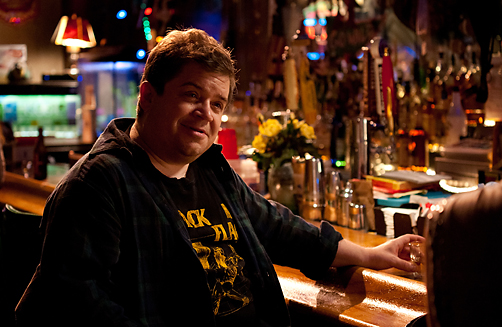
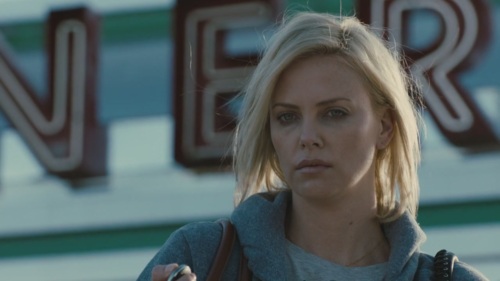
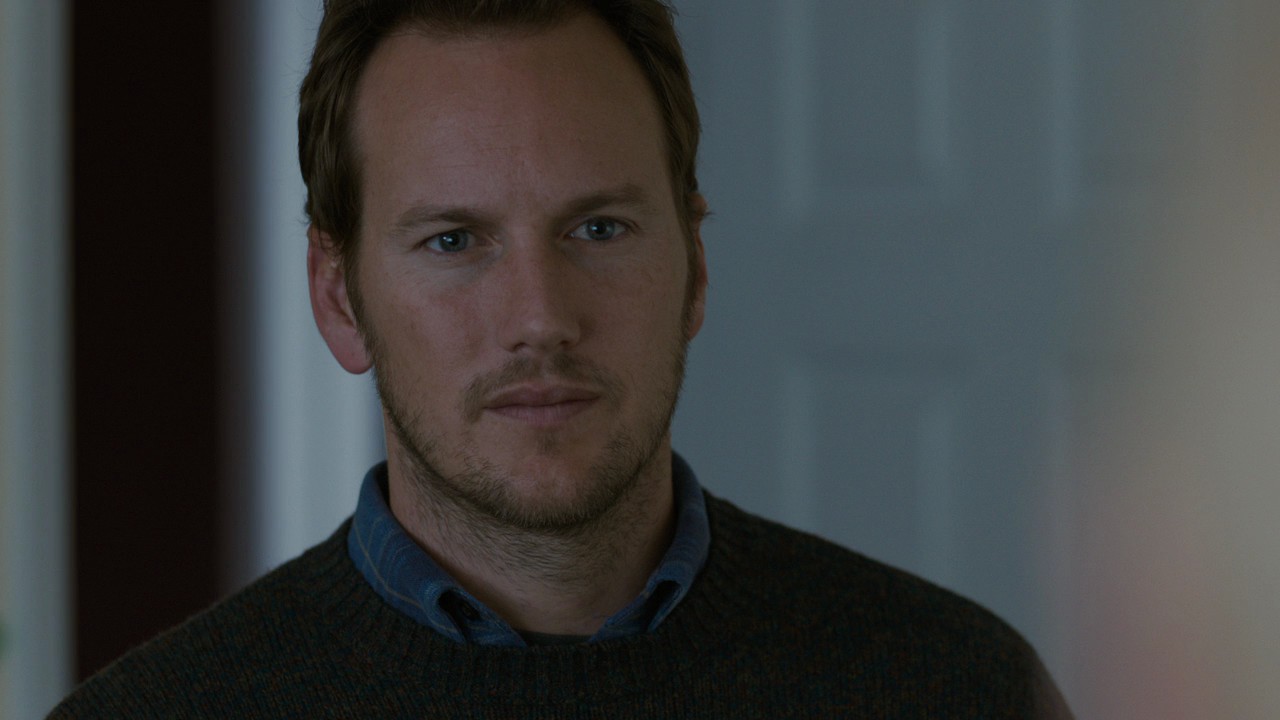
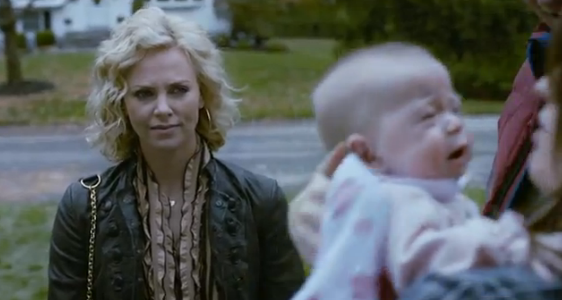
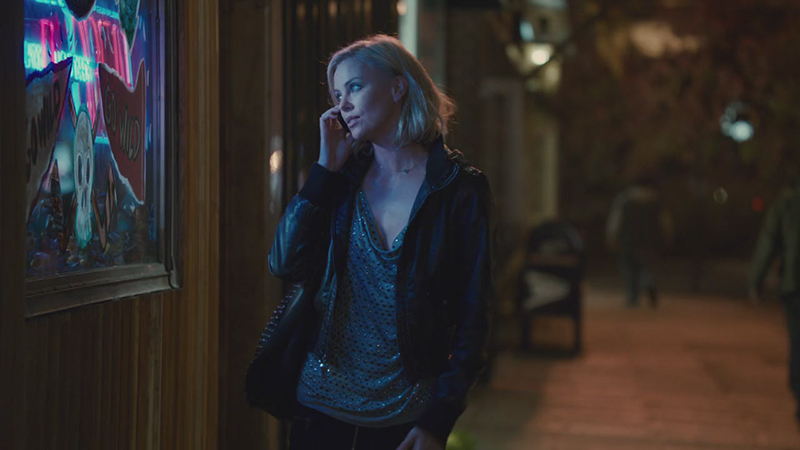
Today’s cinema adventure: Young Adult, the 2011 feature by writer Diablo Cody (Juno) and director Jason Reitman (Up in the Air). Charlize Theron stars as Mavis, a hard-drinking thirty-something writer of teen romance novels, who attempts to resolve her fractured emotional life by returning to her small hometown and stealing her former high school sweetheart away from his wife and infant daughter. Ostensibly a dark comedy, this piece is in fact a character study- and a bleak one- which hinges on the performance of Theron as its central character, and she rises brilliantly to the occasion. The actress won an Oscar for playing a serial killer in Monster, and she equals that work here with her portrait of another kind of “monster,” an alcoholic whose arrested emotional development has her teetering on the brink of self-destruction, trying to use prom queen tactics in a grown-up world and unconcerned with the havoc she wreaks on the lives of those around her; but, even as Mavis’ downward spiral becomes increasingly embarrassing and her behavior grows more and more hateful, Theron succeeds in capturing the spark of humanity that allows us to see through the affectation and attitude to which she so desperately clings, and makes it possible, if not to sympathize with her, at least to understand her- and, a little unsettlingly, even to relate to her. Providing a counterpoint to Mavis’ delusional shenanigans is Patton Oswalt, as an old schoolmate (disabled by a savage beating which may have been at least partly her fault) whose ability to see through her façade makes him both an antagonist and an unlikely ally; he delivers an unsentimental performance that keeps the character likeable while still underlining the dysfunctions that affect his own broken life. Patrick Wilson, as the object of Mavis’ obsessions, is cast once more as the stolid-but-faded golden boy, a part which he fills to a tee- though it would have been nice to see his character laced with a little more of the darkness he has so brilliantly essayed in similar roles (Angels in America, Little Children, Watchmen). The remainder of the cast is largely relegated to the background, where they serve as foils for the one-woman-show they surround; indeed, one of the film’s most significant characters is the scenery itself, an authentically realized small-town suburbia full of the bland and familiar icons of Middle American life, which provides a constant reminder of the comforting-and-maddening mediocrity from which- or to which- so many of us wish to escape. As for the work of the film’s masterminds, Cody’s screenplay is full of the kind of edgy hipster irony we have come to expect from her, infusing the dialogue with a double-edged wit that makes us cringe even as we chuckle; and Reitman’s direction displays his easy skill with visual storytelling, effortlessly blending revelatory character detail and thematic reinforcement within the straight-and-steady unfolding of the narrative. It should be said, however, that Young Adult, though strong on observation, comes up a bit short when it comes to insight; in the end, despite the exposure of numerous key moments in Mavis’ life, we are really no closer to understanding what makes her tick. Still, perhaps it is wrong to expect easy answers in a story about an alcoholic’s decline; and even though Young Adult lacks the disarming freshness of Juno or the unexpected emotional resonance of Up in the Air, both its creators deserve considerable praise for making a film brave enough to favor realism over sentiment by refusing to redeem or resolve. Though there are plenty of genuine laughs here (albeit somewhat morbid ones), this film is not for the squeamish; the rest of us, however, will be refreshed by the rare honesty behind it- and rewarded by the magnificent performance of its leading player, who continues to prove that, as beautiful as she is, it is her talent that makes her a star.
Category Archives: 2010s
We Need to Talk About Kevin (2011)
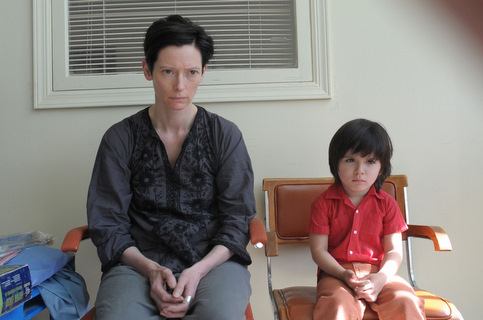
Today’s cinema adventure: We Need to Talk About Kevin, the disturbing and controversial 2011 feature based on Lionel Shriver’s award-winning 2003 novel of the same name. Tilda Swinton stars as Eva, a woman haunted by memories and repercussions as she attempts to come to terms with the horrific acts committed by her teenaged son. As directed by BAFTA-winner Lynne Ramsay, the film draws us in from its very first moments with arresting visuals and an enigmatic soundscape, unfolding its nightmarish story through a non-sequential progression of scenes and images that gradually piece together like the shattered fragments of Eva’s life. It’s riveting stuff: Ramsay (who also co-wrote the screenplay with husband Rory Kinnear) keeps us engaged and unsettled throughout, saturating us with stylish imagery marked by an ingenious use of color (with a decided emphasis on red, maintaining an ever-present suggestion of blood), layering in just enough foreshadowing and clues to conjure a growing sense of dread over the inevitable conclusion, infusing each scene with an atmosphere of resigned melancholy and foreboding, and dominating the proceedings with an uneasy silence which is only broken by spare, terse dialogue that shocks and pierces as much as it informs. As we observe Eva’s disjointed recollections and her nightmarishly surreal day-to-day life, we find ourselves drawn into her psyche; forced to face the uncomfortable- and unanswerable- questions raised about the culpability of a parent in the wrongs committed by their offspring; and in the end, the biggest question may be how to find a resolution, a sense of closure which can permit the lives of those left standing to go on- and if, indeed, such a thing is even possible. With all these psychological themes in play, one might be tempted to consider We Need to Talk About Kevin to be a complex drama, but make no mistake about it: this is unquestionably a horror film, the kind of nightmarish thriller that is rarely made these days. It follows no pre-molded formula, and there are none of the expected clichés of the genre: no sudden shocks, no scantily-clad female victims screaming as they flee through the dark night, no oceans of gore (for all the red flowing across our eyes, there is very little blood or violence onscreen, with Ramsay opting instead to paint the horrible pictures in our imagination where they are infinitely more disturbing). This is not some schlocky shocker designed for a teenagers’ date night, but rather, like other great adult horror films of the past such as The Exorcist or Rosemary’s Baby, it is an exploration of evil in our lives, of how it manifests and what might be its causes; but unlike the aforementioned classics, there is no suggestion here of supernatural forces- the responsibility is placed squarely on human shoulders, with implications that are far more chilling than the presence of any demonic scapegoat. It would be easy, in the wrong hands, for Kevin to veer off into the realm of exploitative trash; but not only is Ramsay well-equipped for the task, she has the considerable benefit of Tilda Swinton in the central role. Swinton has proven many times that she is one of the most electrifying screen performers working today, and here she solidifies that reputation with a stunning, solid portrayal of a woman for whom the joy of motherhood has been inverted into a nightmare. With a minimum of dialogue, she conveys Eva’s harrowing journey with masterfully subtle changes in her continuous expression of dull shock, bringing home the frustration, the terror, and the loneliness created by the growing comprehension that her child is a monster and she alone can see it. It’s a tour-de-force performance, and its failure to receive an Academy Award nomination for Best Actress- particularly when it was recognized by virtually every other major awards organization- was surely one of the great injustices of Oscar history. Supporting Swinton’s magnificence is John C. Reilly, likeable but obtuse as Eva’s husband, a man whose doting denial helps to enable the ever-escalating sociopathy of their son and drives an immovable wedge into their marriage; and a shining turn by Ezra Miller as the title character, who skillfully avoids the temptation of playing for sympathy- this is no misunderstood, angst-ridden adolescent, but a young cobra smugly and gleefully coiling up for a fatal strike. Mention is also deserved for Jasper Newell, as the six-to-eight year-old Kevin, who eerily projects a malicious menace beyond his years, somehow making the younger incarnation even more frightening than his future self. In addition to the stellar cast, Ramsay is aided in her vision by superb work from her technical collaborators: an eerie and atmospheric score by Johnny Greenwood (of Radiohead) meshes seamlessly with the carefully orchestrated sound design by Paul Davies; the cinematography by Seamus McGarvey provides some of the most vividly realized images in recent film memory, into which the simple-yet-striking costume design of Catherine George is brilliantly coordinated; and the editing by Joe Bini is a masterpiece of visual juggling, managing to maintain a steady flow throughout a narrative which freely jumps forward and back to multiple periods in time. It is a shame- but not a surprise- that We Need to Talk About Kevin has yet to recoup the $7 million that was spent to make it; you can chalk it up as yet another sign that the contemporary film market is driven by an increasingly less sophisticated mindset, but this would be a difficult film to sell in any era, really. It is a psychological thriller that dares to address deeply disturbing issues which most of us would prefer to keep out of sight and out of mind, and watching it is a grim and unrelenting experience which may leave you disturbed for days afterward. If that sounds as good to you as it does to me, We Need to Talk About Kevin is a film you must not miss.
The Avengers (2012)
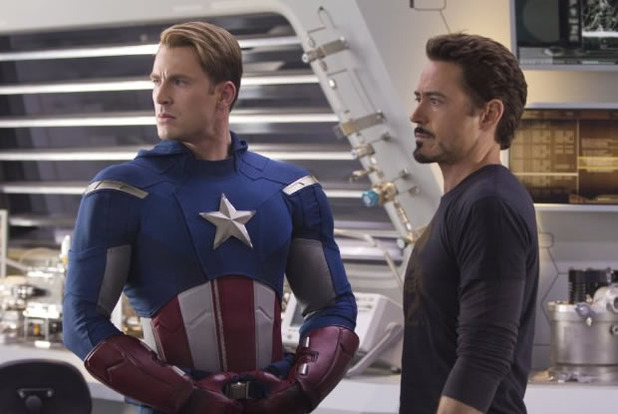
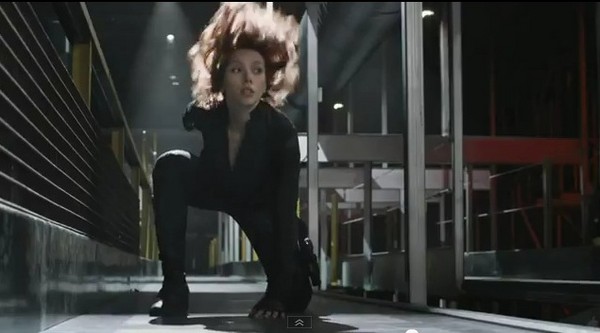
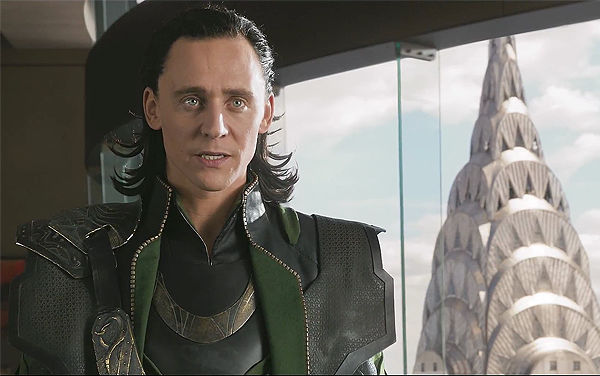
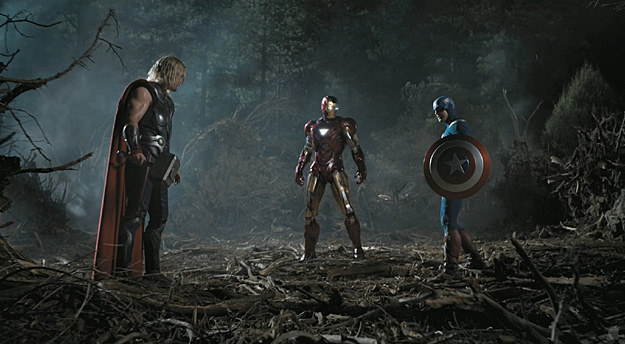
Today’s cinema adventure: The Avengers, the long-awaited 2012 action/fantasy feature from director Joss Whedon which unleashes the combined force of most of Marvel’s top superhero characters and has ensured, with its record-smashing box office returns, that the flourishing “comic book” genre is here to stay- at least for now. The plot, of course, could have been lifted from any Cold-War-era sci-fi potboiler: when a god-like being from another world brings an army to conquer the earth, a secretive government organization assembles a band of disparate heroes to head off the invasion, forcing them to set aside their own differences- and face their own weaknesses- in order to unite against the common foe. The details get a bit confusing, unless you are intricately familiar with the plot threads that have been unwinding through the various associated franchises leading up to this blockbuster, or unless you can follow the lightning-fast pseudo-technical jargon with which the various conceits are established; but none of that matters, because unlike many inferior attempts at making this sort of hyper-driven action spectacle, “The Avengers” hinges not on its ridiculous storyline- nor even on the mind-blowing, state-of-the-art special effects, though admittedly those provide a considerable amount of the fun- but on the characters which inhabit it. The legion of “fan boys” at which this movie is targeted can rejoice that, after decades of clueless studio hacks trying to capitalize on the popularity of comic books without understanding or respecting the material, at long last the genre is in the hands of artists who have grown up with a reverence for it; gone are the days of bland, leotard-clad goofballs with no charisma spewing cheesy platitudes. Here we are treated to a collection of heroes that we can truly believe in because we can relate to them: full of doubts, anger, trust issues and guilty consciences, they are nevertheless driven by hope to perform the duties thrust upon them; and there is never any question that they have the ability to face whatever the other-worldly would-be conquerors can throw at them, as long as they can overcome the obstacles they generate within their own flawed psyches. By capturing this element, Whedon (who also wrote the screenplay, from a story by himself and Zak Penn) has captured the key to what makes these far-fetched, over-the-top stories so compelling: they are, in fact, mythology that has been re-invented in a form that appeals to a modern generation. We see our own psycho-dramas acted out in symbolic form by these idealized versions of ourselves, and through their victories we see the possibility of our own. To be sure, of course, it’s not the kind of doom-and-gloom mythology that takes us through the dark night of the soul, and it would be completely wrong to think that The Avengers aims at any emotional or spiritual resonance beyond an adolescent level; but still, no matter how many millions of dollars were spent on the CG eye candy, it would have all just been visual noise without that important, cathartic element. The Avengers seeks to entertain, not to enlighten, but it’s a testament to the talent of its creative forces that it manages to do both. Whedon has levied his success as a creator of niche-targeted cult entertainment into status as a mainstream artist to be reckoned with, and he directs with a sure hand and a clear vision, striking a perfect balance between action and intimacy and keeping the whole thing roaring along at a breathless pace that makes the two-hour-plus running time feel half as long. He has considerable help from crack film composer Alan Silvestri, cinematographer Seamus McGarvey, and an army of designers and special effects artists under production designer James Chinlund; and, of course, the work of his cast is exemplary, with the always-delightful Robert Downey, Jr., Mark Ruffalo, and Scarlett Johansson standing out in particular. Special mention must be made for the driving force behind it all: comic book legend Stan Lee (one of the Executive Producers of this and all the Marvel films, which are of course his babies), who has brought his remarkable work from the printed page to the big screen (in magnificent 3-D, no less) with meticulous attention to getting it right and a vision that invites comparison to, dare I say it, Walt Disney himself. Before I am accused of gushing, I should point out that there are quibbles to be made here- the villain, Loki, is not exactly an imposing threat, for all his superhuman powers, and there are numerous points in the film when the perfunctory conflicts between the protagonists threaten to derail the driving pace- and I can’t say that The Avengers and the other films with which it forms a sort of super-franchise (pardon the pun) transcend the comic book genre, as Christopher Nolan’s rebooted Batman cycle has done. Nevertheless, in a time when rising ticket prices make it less and less appealing to go to the theater rather than just wait a few weeks for the DVD/BluRay release, it’s a film that delivers what it promises and more; and that’s a feat at least as heroic as any of those accomplished by the superteam of its title.