Beautiful Darling (2010)

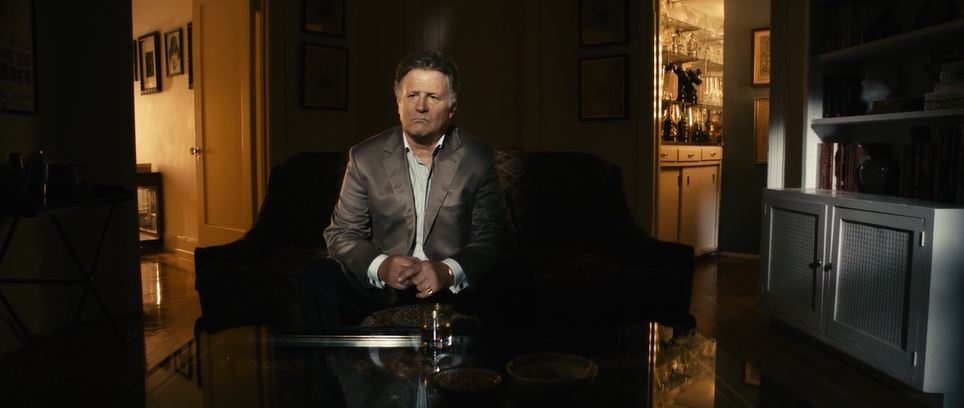
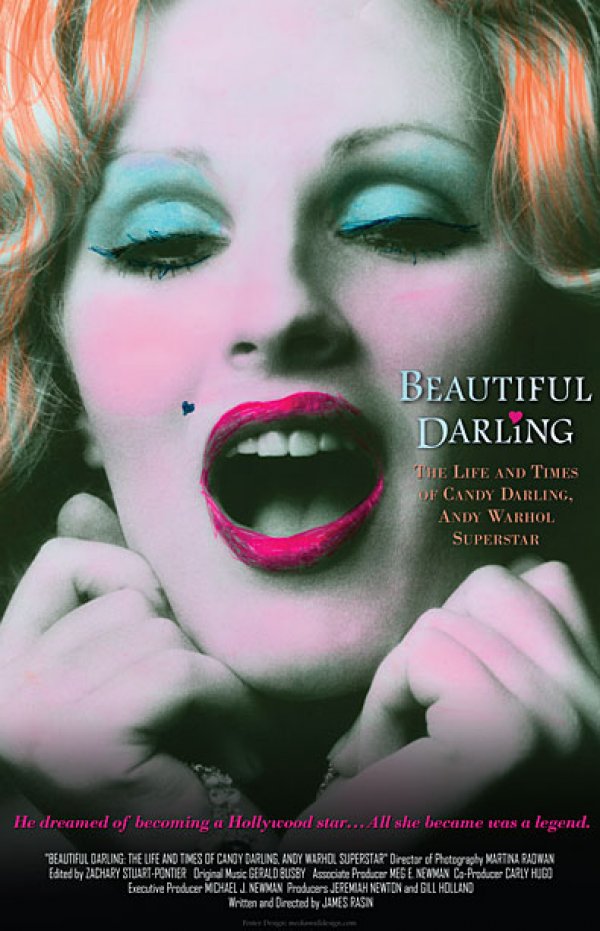
Today’s cinema adventure: Beautiful Darling, a 2010 documentary feature focusing on the life of pioneering transgendered actress and Warhol “superstar” Candy Darling, co-produced by her longtime friend and roommate, Jeremiah Newton, and featuring archival and newly-conducted interviews with numerous of her famous and not-so-famous contemporaries and colleagues.  First premiered at the Berlin International Film Festival in 2010, it has since been shown at dozens of similar events around the world, as well receiving special screenings at several prestigious art galleries and enjoying extended commercial runs in major metropolitan cities across the U.S.

Written and directed by James Rasin, the film frames its examination of Darling- who began life in Queens as James Lawrence Slattery- through Newton, whose close relationship with the pop subculture icon gives him unique insight into her personality and her story.  As he prepares to have her cremated remains buried- along with those of his own mother- nearly 40 years after her death, he reminisces about her and shares his extensive taped interviews with such figures as Tennessee Williams, Valerie Solanas, Jackie Curtis, and Darling’s own estranged mother, conducted at the time of her passing in an effort both to come to terms with his grief and to create an archive documenting her personal history and relationships.  Combining this material with contemporary interview footage of former friends and associates (Paul Morrissey, Fran Lebowitz, Holly Woodlawn, Julie Newmar, Bob Colacello, Gerard Malanga, and many others) and excerpts from Darling’s personal diary (read by actress Chloë Sevigny), as well as a wealth of photos, both personal and professional, and film clips from her storied career, Beautiful Darling constructs a portrait of its subject as a brave and determined individual who pursued a personal dream against the societal norms and expectations of the era and became a counterculture icon and alternative role model as a result.  It also goes past the campy, glitzy surface of her persona and attempts to show us the very real person behind it, allowing us to feel a connection to her as a human being and bringing home the bittersweet story of a person whose hard-won success was marginalized and yielded little in terms of personal reward, and whose premature death from cancer at the age of 29 prevented her from living to see the gradual change that has led to greater acceptance of transgendered individuals and might have brought her greater recognition within the mainstream.

Rasin’s reverence for his subject is clear, as is the adoration of her former companion, Newton, as he lovingly shares his memories and the personal effects he has cherished from their time together; all the rest offer their individual perspectives on Darling, some more charitable than others, but mostly with fond appreciation and affection.  Of course, a multitude of interpretations and attitudes emerge regarding her motives, her character, her sexuality, her talent- but these stand out in contrast to the private voice of Darling herself, which reveals a smart, savvy, self-aware person, fully aware of her role in the circus that surrounded her and- most poignantly- increasingly worn out and disillusioned from the continual struggle to embody the glamorous movie star fantasy she had committed her life to making into a reality.  The ultimate impossibility of achieving that goal only to serves to make her considerable accomplishments all the more triumphant, and her refusal to give it up- even as she lay on her deathbed posing for a final glamour photo- inspires us and moves us with unexpected emotional resonance.

There are moments throughout Beautiful Darling that touch us with an immediate sense of humanity- the numerous clips of Candy in performance reveal the spark that elevated her above the level of just another drag act, the juxtaposition of early childhood photos with the various reminiscences from her mother and other figures from her former life as a boy give us a glimpse of her monumental struggle to find her identity, and Newton’s tender concern surrounding the arrangements for her impending burial allow us to share his sense of closure over his belated final farewell to his friend.  It is the power of these elements that make the film a superb documentary; there are few revelations here regarding the historical events of her life or her associations, though there may be some surprises for those viewers unfamiliar with her career.  The usual dominant themes, recurring in any examination of the time and place in which Candy enjoyed her heyday, are present here (the extreme, drug-saturated party atmosphere, the callous fickleness of Andy Warhol, the peculiar blend of degrading squalor and ostentatious glamor), and the archival footage and photos give us a titillating glimpse of the legendary settings in which pop-culture history was made (Warhol’s Factory, the back room at Max’s Kansas City, the streets of Greenwich Village); but what sticks with us, when the film is done, is the sense of Candy as a person, a bridging of the gap between her extreme and unique experience and our own, probably more mundane lives.  We are left with a feeling of respect for her bravery, and empathy for her deep longing to simply be herself; it’s a struggle with which we can all relate- gay or straight, male or female, conservative or liberal- and one which ultimately defines our lives, whether we decide to participate in it or not.

It is this universality that makes Beautiful Darling a powerful film, though it also succeeds in entertaining and informing us, and offers us the opportunity to become familiar with its charming and beautiful subject.  By appealing to that part in all of us that identifies with Candy’s inner yearning, Rasin’s movie challenges us to confront not only our own issues of identity, but our assumptions and prejudices about sexuality and gender as well.  Though this is not overtly a film about the evolution cultural attitudes towards transgendered individuals, it gives us dark hints about the very real danger a person like Candy Darling faced in mid-20th-Century America, and invites us to compare our contemporary level of tolerance with that of her day.  Certainly there has been progress, but Beautiful Darling begs the question: how far have we really come in our acceptance?  We have yet to see a mainstream media star who is transgendered, Divine and RuPaul (cross-dressers both- not transsexuals) notwithstanding.  Perhaps that day will come, eventually, and when it does, Candy Darling will finally take her place as the true pioneer that she was.

http://www.imdb.com/title/tt0960730/

The Dark Knight Rises (2012)

Today’s cinema adventure: The Dark Knight Rises, the final installment of Christopher Nolan’s Batman trilogy, which once again uses a realistic and politically charged approach in bringing the DC Comics hero to life, and puts him into a decisive battle which will determine the very fate of Gotham City.  Continuing in the dark and violent vein that characterized The Dark Knight, Nolan creates an apocalyptic finale for his exploration of the Batman universe, one designed to provoke and challenge even as it entertains; in the process he continues to develop the characters and relationships introduced in the previous chapters, as well as offering up new twists on other familiar figures making their appearances here for the first time.

In this new chapter (with the screenplay written again by Nolan and his brother, Jonathan, based on a story developed by Batman Begins co-writer David S. Goyer), eight years have passed since the “murder” of D.A. Harvey Dent, whose supposed martyrdom in the fight against crime (a fabrication created to cover up the ignoble circumstances of his death) has resulted in legislation that has all but eliminated the criminal underworld of Gotham City.  During the intervening years, billionaire Bruce Wayne has become a mysterious recluse and his financial empire has fallen into disarray, while his alter-ego, Batman, has disappeared, having become a wanted fugitive after taking the blame for Dent’s death.  The city has grown soft and complacent, and economic imbalance has led to a new kind of cynicism in its population; but its greatest threat is building beneath its streets, as Bane, a powerful urban warlord with a mysterious past and a cataclysmic agenda, prepares to enact a master plan designed to plunge it into hellish torment as a prelude to its final annihilation.  Drawn from his seclusion, Wayne must resurrect his Batman persona in order to combat the new danger; but, like the city he protects, his long stagnation has weakened him and created new conflicts within, leaving him vulnerable to defeat by this titanic enemy.  In order to triumph, he must not only regain his former strength and his faith in himself, he must also place his trust in allies- some old and reliable, some new and untested- and be prepared to face the ultimate sacrifice.

Picking up the thematic threads left hanging at the end of The Dark Knight, the Nolans show us that the uneasy compromise of image over truth has provided a temporary victory in the battle against chaos- but the consequences of the choice have taken their toll on our champions of justice, and the complacency of peace has led to its own form of disorder.  A widening gap between wealth and poverty breeds anger among the citizens, while the prosperous civic authorities seem too interested in self-congratulation and self-promotion to pay attention to the signs of danger approaching from without and within; but nevertheless, despite this uncomfortably topical political situation, when disaster strikes it is the result of a long-forgotten threat which has been festering unnoticed all along.  Bane and his plot represent the shadows of the past, deferred but not defeated, a pattern of destruction that has risen repeatedly throughout history; Gotham’s blissfully false sense of security and its unheeded civil unrest have merely provided a smokescreen for the incursion.  The only chance for averting the impending doom lies in facing the truth, taking responsibility, and working together for a common good which outweighs all considerations of ideology or principle.  Contrary to the commentary of some who have seen The Dark Knight Rises as a conservative polemic against the “Occupy” movement (due to the fact that Bane disguises his takeover of Gotham and subsequent reign of terror as a “people’s revolution”), the film in fact hinges, like its predecessor, on the idea that blind pursuit of self-interest is the real root of the problem, and that it is only through a desire to help each other that we can reclaim the power to conquer the enemies that threaten all of us together; the arrogance of the wealthy and the anger of the poor are both used by Bane as the instruments of his rise to dominion, and his defeat can only be brought about by the protagonists’ willingness to sacrifice everything they hold dear for the sake of others.  It’s also worth taking note of another factor which contributes significantly to the threat to Gotham’s future- the seeking of revenge for old wrongs, and worse yet, revenge against an entire population for the actions of a single man.  This is a powerful reminder of a principle very much at work in the world today, and one which has perpetuated the cycle of bloodshed from the most ancient of times.  Further than that, the film suggests through the telling parallels it draws that by ignoring the lessons of the past we are doomed to re-enact a historical cycle that has brought down one civilization after another; in other words, if we don’t learn from history, we can only become history.  To paraphrase an echo from the film which began the trilogy, we fall in order to learn how to get back up; but once we are on our feet again, we must always remember how we fell in the first place- after all, as more than one important character realizes before the end of The Dark Knight Rises, a fresh start is no good at all if you’re not willing to change the way you do things.

Once more, in writing about Nolan’s Batman cycle, I find myself reveling in the complexities of its themes and making new realizations as I ponder how to express them here.  In the end, however, these films- each one of them, in their own distinctive way- speak for themselves.  With his final chapter, this gifted director has once again created a movie which stands firmly on its own merits, building an epic structure on its own individual themes, while maintaining and bringing to fruition the elements of the entire trilogy.  He does it in his characteristically detailed style, full of arresting visuals, fluid camera work, spectacular action sequences, and intimate moments of unexpected emotional power.  He gives full deference to the importance of character while simultaneously driving the complex plot at full speed, juggles themes within themes while devoting every moment of screen time to the progression of the story, and manages a sweeping social and political allegory in the midst of an explosive action fantasy.  There may be those who quibble about his motives, or who take exception to his re-interpretation of the iconic characters and conceits of the Batman premise, but such concerns are, quite frankly, moot in the scope of what he has accomplished here.  The Dark Knight Rises is the final proof, if more were needed, that Christopher Nolan has done what no other director has done before him: transcended the “comic book” genre to create an intelligent, mature and wholly sophisticated series of films that is worthy to stand with the great socially significant films of our time- more worthy, in fact, than most of the self-consciously highbrow self-styled “art” films that Hollywood tries to pass off around awards season.  For this (though he is not likely to win any of those awards himself- the stigma against this kind of fantasy content still seems too strong for that), he deserves all the accolades he has received so far, as well as the satisfaction of his phenomenal box office success.

Part of Nolan’s success with all of these films, of course, lies in the work of the people he has chosen to work with him, and the names in the credits that roll at the end of this one show more or less the same list of usual suspects.  Once again, the design team is headed by Nathan Crowley (this time co-credited with Kevin Kavanaugh as production designers), and once again they have provided us with new and exciting gadgets to go with the old favorites, as well as giving Gotham yet another new look- it’s still a spectacular city, but somehow not so new and shiny, a little worn down and lived-in, and with a dirtier, more East-Coast-urban feel to it.  The locations, as always, have something to do with this, with recognizable landmarks from New York, Pittsburgh, and Los Angeles underlining the sense that this is truly meant to be a microcosmic world representing an entire culture; but the look of its skyline, clearly created with some impressive digital cutting-and-pasting, conveys the feeling of a place with a soul all its own.  Wally Pfister’s cinematography continues with the gritty-but-slick style of The Dark Knight while also echoing the sepia-infused tone of Batman Begins, a highly appropriate approach for a film that draws its life from both; he complements the worn-down look of the city with a style that evokes bleakness, particularly in the visually striking scenes of Gotham in winter which come late in the film.  Hans Zimmer, working solo this time, gives us another driving score, incorporating more vocal instrumentation than usual but still, for the most part, focusing on mood and subliminal effect than overtly recognizable melodic sounds.  In short, The Dark Knight Rises gives us more of the same outstanding, exemplary work that made the first two entries in this trilogy so effective.

The same holds true of its cast, comprised again of heavy-hitters; most of them are, of course, returnees to already-established roles, and without exception they live up to their previous work, bringing new flavors to their continued development of these familiar characters and closure to the arcs they began in the first film.  Christian Bale once again proves what a brilliant actor he is with his portrayal of Bruce Wayne; he gives us a new vision of this billionaire vigilante, grown physically and psychologically dissolute through his self-imposed isolation, but seemingly marked more by a sense of disorientation than by underlying bitterness over the events that have led to it.  He also gives his character, which has always fitted him like a tailor-made glove, a deeply personal feeling of emotional connection, building on the previous revelations of his psyche to create a complete picture of this man and the needs that drive him- showing us, ultimately, the good heart that lies beneath the darkness of his sometimes-morally-questionable actions.  We have never questioned it, of course, but he has- and his final evolution into a complete hero, with a clarity of purpose and a full understanding of his motivations, shines through in a way that makes him both admirable and infinitely likable.  It’s the first time I can honestly say I loved an onscreen “super” hero because of who he showed me he was and not because he was, well, a hero.  Michael Caine, as Alfred, has been quietly superb all along, lending his calm, assured dignity to the proceedings and serving as the key grounding influence for Bale’s Batman- but in this entry, he gets the chance to remind us all of why he has been one of the hardest-working actors in the business for fifty years.  His scenes are fewer, this time around, but they stick with you, and the dimension he has given this usually-perfunctory character pays off with some key moments that give the entire series its deepest emotional resonance, proving once more that it is the depth and honesty underlying these films that have elevated them to the level of higher art.  Gary Oldman shines once more as now-Commissioner Gordon, wearied by the chafing of his conscience over his part in the Dent cover-up, and bored by eight years of peacetime- but dedicated as always to his mission to protect Gotham and revived by the chance to jump into action once more.  Morgan Freeman’s Lucius Fox is also wearier, but with characteristically subdued optimism he gives us a refreshing energy that reminds us it is possible to gracefully endure the changing of fortune without losing one’s belief in the future.  There are a few other returning faces, but many of them are likely to be surprises so I won’t go into them here; suffice it to say that they, along with the rest of the cast, provide uniformly superb contributions.

As for the new blood, obviously there are a few that deserve mention.  Topping that list is Anne Hathaway, portraying Selina Kyle, an audacious cat burgler whose gear and manner make it clear that she represents another iconic Batman personality- though the name “Catwoman” is never used.  She nails the character, with just the right blend of saucy seductiveness and dangerous unpredictability, matching Bale’s Bruce Wayne in a way that no previous female character has done- a significant point, and one which highlights the importance of her key role in the film, as well as the timing of her appearance in his life.  It would be improper to give anything away, but it’s safe to say that she- and Nolan- bring a number of surprises to the table in their re-interpretation of this feisty, feline female.  Tom Hardy, the English heartthrob who gained 30 lbs. to portray the hulking Bane, provides an awe-inspiring physical presence and clearly conveys the disarming intelligence of his character- the trilogy’s closest thing to a “super-villain.”  He manages to give the character depth and even a degree of sympathy with his performance- not just through his voice, but in his physicality and, most importantly, with his eyes, which are left visible by the cruelly sadomasochistic mask he wears in all but one key scene of the film.  Marion Cotillard brings an elegant nobility to the proceedings as Miranda Tate, a wealthy board member of Wayne Enterprises whose dedication to an environmentally-friendly project plays an important role in the developments of the plot, and leads to a relationship with Wayne that becomes closer than he expects.  Finally, Joseph Gordon-Levitt portrays John Blake, an earnest young policeman whose personal belief in Batman leads him to deduce Wayne’s true identity and helps provide the impetus for him to return to the fight against evil; it’s a character that could very easily be too-good-to-be-true, but thanks to Gordon-Levitt he is more than believable, a welcome addition to the collection of loosely-affiliated heroes that aid Batman in his quest for law and order.  A number of other actors make their first- and, presumably, last- appearance in Nolan’s vision of the Batman legend, including Matthew Modine as Gordon’s ambivalent second-in-command, and Willam Devane as the President of the United States; as with the old-timers, the new cast does a universally stellar job.

The Dark Knight Rises, though already one of the most successful movies of all time, has generated a great deal of controversy over its supposed political leanings, one way or the other, and for a violent tone which has sadly been thrown into stark relief by tragic real-life events.  There is no denying the important influence of movies over our real-world culture, and unquestionably, an artist has a responsibility to consider this in deciding the nature of the content they wish to present.  It must be remembered, however, that Nolan’s film is, first and foremost, an action/adventure-fantasy.  Though it may be laden with recognizably current political and social issues, and though it explores questions of morality and social responsibility, these things are ultimately merely the background for a story that depicts a realistic, contemporary world- a tale in which the ongoing conflicts of society are exploited by an outside evil who is an enemy to all sides.  Likewise, by its very nature, it’s a movie filled with the kind of disturbing images of mayhem and tragedy that have been blamed by many for the casual attitude towards violence in our collective contemporary psyche; but Batman is a modern myth, and like all myth it deals in symbolism drawn from everyday experience in order to convey its true purpose.  For all its scenes of brutal combat, exploding football stadiums, and collapsing bridges, The Dark Knight Rises carries a positive message that emphasizes the importance of compassion and the value of human life; it’s a principle repeated throughout the movie, and the intense battle action is a metaphor for the difficulty of the struggle required to preserve these things.  Those who see only the overt content of this film, or indeed of any film, are likely to get the opposite meaning of the one intended; and whichever side they represent in the ongoing debate, they, like the citizens of Gotham who ignore the real menace while they seek to place blame for their troubles and justify it with sweeping generalizations, would do well to look deeper than the surface- as would those who glorify the violence they see there without recognizing the consequences it is shown to breed.  After all, cinema, like all art, holds up a mirror to society, and what we see in it depends on how closely we are willing to look at ourselves.  In the world of The Dark Knight Rises, the ability to candidly face the reality of our problems is our only hope for saving our way of life from destruction; I strongly suspect that this is also a reflection of real life, and that unless we heed the warning that is implicit in Nolan’s film, we may find that out all too soon.

http://www.imdb.com/title/tt1345836/
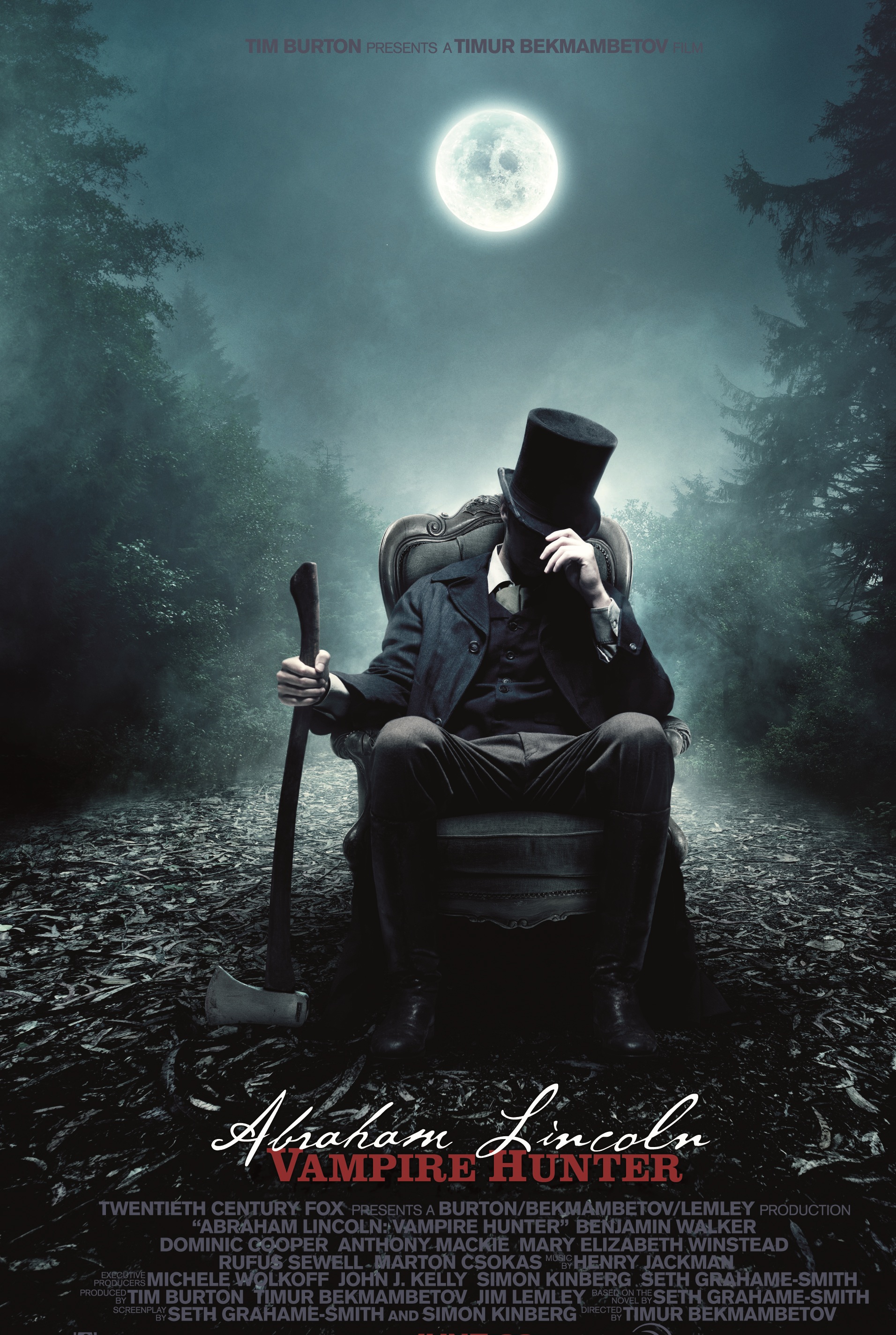
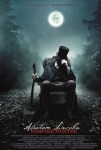
Abraham Lincoln: Vampire Hunter (2012)

Today’s cinema adventure: Abraham Lincoln: Vampire Hunter, the 2012 feature based on the bestselling historical fantasy/horror novel by Seth Grahame-Smith, casting the already-heroic 16th American president in the even more heroic role of a secret slayer of the undead.  Directed by Timur Bekmambetov and adapted by the novelist himself, it’s a movie that hinges on a bold juxtaposition of historical fact and supernatural adventure, with a flashy visual style and an emphasis on bloodshed and action.  The plot follows Lincoln from his childhood, when his mother is ostensibly poisoned by his father’s former employer; upon reaching manhood, he seeks to avenge her murder, only to discover that her killer is in fact an undead monster.  Narrowly escaping death himself, he is rescued by a mysterious stranger, who reveals to him the secret existence of vampires living in the midst of human society and offers to teach him the skills he needs to become a warrior in the ongoing battle against them.  He becomes a master hunter, and his discovery of an insidious connection between vampires and slavery fuels his parallel political career, culminating in his presidency and providing underlying motivation for the Civil War.

With such a blatantly ridiculous premise, one might expect a substantial amount of tongue-in-cheek self-mockery, coupled with a sense of goofy fun for its own sake.  These elements are definitely present, but Abraham Lincoln: Vampire Hunter takes a decidedly serious tone in its approach to this genre-mashing mixture of history and hokum; Lincoln’s secret calling is no parenthetical side job, but is integrally woven into the events that shape both his private and public lives, as well as into the fabric of some of our nation’s still-most-painful memories.  It would be unforgivably glib of the film’s creators to make these connections without investing an appropriate amount of weight in the proceedings; accordingly, Lincoln’s dedication to vampire-killing stems from deeply personal motivation, rooted in the monsters’ victimization of his family, and their thirst for blood is linked directly to the most contentious and shameful issue ever to face the United States.  Of course, tying these various personal and national tragedies to a narrative about inhuman, bloodsucking parasites may have rich metaphoric possibilities- which, unfortunately, remain largely unexplored beyond the obvious implications of the situation- but it doesn’t do much for fueling the kind of escapist melodrama promised by the audaciously wacky concept.

Most of the critical unkindness towards this film has revolved around its insistence on anchoring its bloodlust-fulfillment fantasy in a sense of earnest importance, as if its purpose were to present a legitimate portrait of Honest Abe and his far-sighted principles.  Indeed, the world of Abraham Lincoln: Vampire Hunter is a place where lofty ethical considerations seem moot, a given condition of the larger political order, perhaps, but out of place with the more immediate conflicts of our hero’s secret occupation.  The situation cries out for the kind of unapologetic amorality found in a down-and-dirty exploitation film, contrasting Lincoln’s public face as a wise and compassionate leader with his role as a one-man boundary between the forces of darkness and the unknowing society he is sworn to protect.  The very title of this movie suggests a no-nonsense, merciless killing machine, and that is not only what we expect to see, it’s what we want.  Instead, we are given an idealized version of the real man, and a slice of his personal drama thrown in to boot- for which, presumably, we could easily wait until next year’s highly anticipated Spielberg biopic.

All of these problematic reservations can be attributed to the screenplay, written by Grahame-Smith with an eye towards keeping the emotional stakes high enough to keep viewers connected to the characters in the midst of all the slaughter.  By giving the plot a sense of purposeful noblilty and including a substantial dose of Lincoln’s private life as a lover, friend, husband, and father, the author hoped, presumably, to avoid turning the whole affair into a garish cartoon.  The effort is commendable, as is the attempt to maintain at least a tenuous connection to historical accuracy (with a few notable exceptions), in the use of names and relationships, actual events and chronology, etc., even if the details are rearranged considerably.  However well-intentioned he may have been, and however well these factors may have worked in his novel, the writer may have miscalculated; though normally I am adamantly in favor of the thoughtful, character-driven approach to storytelling for the screen, in this case I believe the film as a whole would have benefited from a lighter, less self-consciously sincere touch- and more scenes of Mr. President wielding his silver-edged axe.  The very notion which drives the plot demands a film which doesn’t take itself too seriously, and thanks to its script, this one often does.

I have always, however, been an advocate of taking a movie on its own terms, and with that in mind, Abraham Lincoln: Vampire Hunter is by no means a failure.  Though the weighty trappings of pseudo-biographical drama make for some slow going from time to time, when the movie does release the giddy adolescent joyride at its core, it takes off like a silver cannonball.  Director Bekmambetov delivers the same kind of flashy, multi-speed, computer-assisted action that helped to make his previous film, Wanted, a hit, transporting us decisively into the realm of superhuman feats, where we can at last get a taste of the thrills inherent in the idea of our chief executive moonlighting as a bad-ass monster-killer.  There are a number of these electrifying set pieces scattered throughout the film- a chase across the backs of a stampeding herd of horses, a gruesome monsters’ ball in a decrepit plantation, a climactic fight on the rooftop of a moving train- all saturated with grisly, blood-spattered, and deliciously satisfying violence.  It is in these segments that the movie really comes to life, and, like a true showman, Bekmambetov always leaves us wanting more; though everything in between often feels like filler, the payoff we receive from this kind of exciting screen action is almost worth the patience it takes to get there.

Bekmambetov ‘s slick modern style brings a contemporary edge to the movie that contrasts sharply with its period setting- which is firmly established with authenticity in the clothes and the physical surroundings, and further complemented by the effect of using muted, faux-sepia tones in the cinematography (possibly the film’s finest asset, accomplished by the legendary Caleb Deschanel).  This color palette has the odd benefit of seeming both old-fashioned and yet somehow very high-tech, a double-edged description that could be used to sum up the overall production design (by François Auduoy); the look and feel of the film, heavily reliant on computer graphics, creates a heightened reality, reminiscent of the dramatic visual style of a comic book.  Though this stylized environment adds a layer of artificiality to the proceedings, it also reinforces the supernatural atmosphere necessary to sustain the film’s absurd conceit.

The actors are more than adequate for the task at hand, with Dominic Cooper and Rufus Sewell standing out in the showiest of the supporting roles- Lincoln’s mentor and the vampires’ supreme leader, respectively.  Obviously, though, it’s the title character who must shoulder the heaviest burden here, and young Benjamin Walker’s shoulders are broad enough to do it.  He does a fine job of walking the thin line between Lincoln the man, Lincoln the statesman and Lincoln the terminator, and, on top of that, is convincing playing the great man from youth to weathered middle age.  He even bears a resemblance to Lincoln, though he is considerably more handsome- a requisite Hollywood touch.

There is something about Abraham Lincoln: Vampire Hunter that draws me in.  Maybe I’m just a sucker for this kind of preposterous “what if?” speculation, or maybe I’m just a big kid at heart, but from the very moment I heard about this movie, I was excited to see it.  Though in the end it was not quite the kind of adrenaline-pumping silliness I was hoping for, I can’t say I was disappointed, either.  Sure, I would have liked a little more of the gory action that worked and a little less of the pedestrian costume drama that didn’t; but there is plenty in this movie to tickle my juvenile fancy and keep me interested throughout its running time.  Even if that weren’t the case, the final scene contains an amusing twist that left me fairly delighted as the end credits rolled- and if I can walk out of the theater with a smile on my face, I think that’s a good enough reason to recommend a film.  So consider it recommended, but with the following qualification: it’s a stupid movie, but perhaps not stupid enough.  If you can get past that, you’ll have a great time.

http://www.imdb.com/title/tt1611224/

Drive (2011)

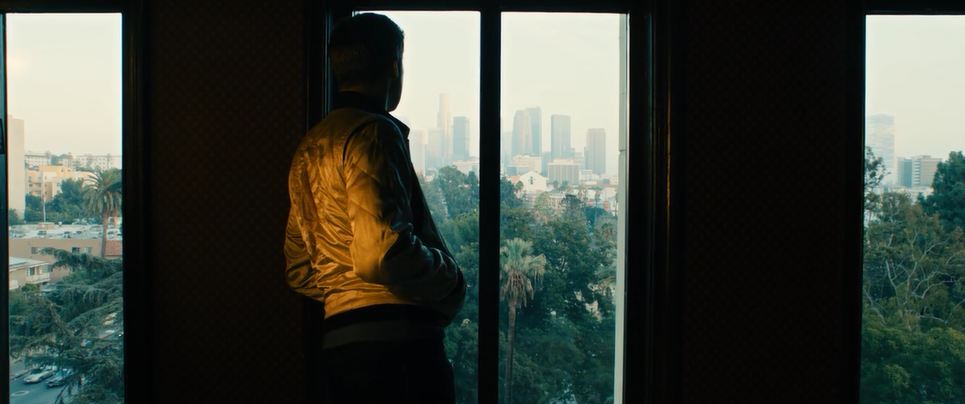
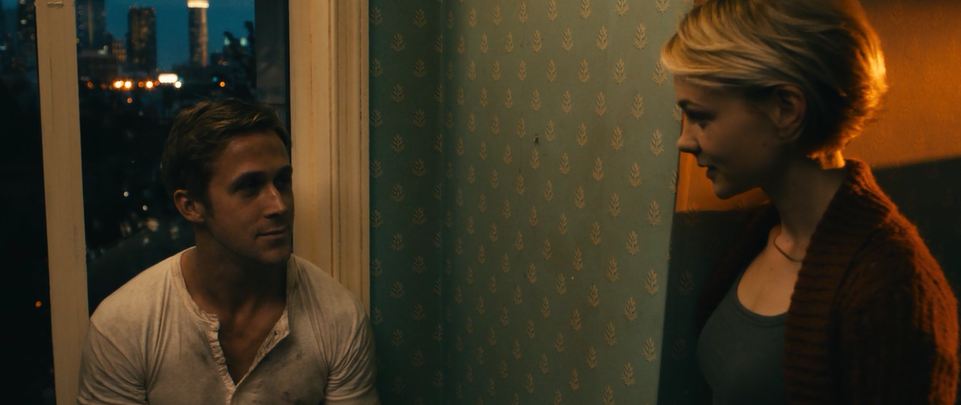
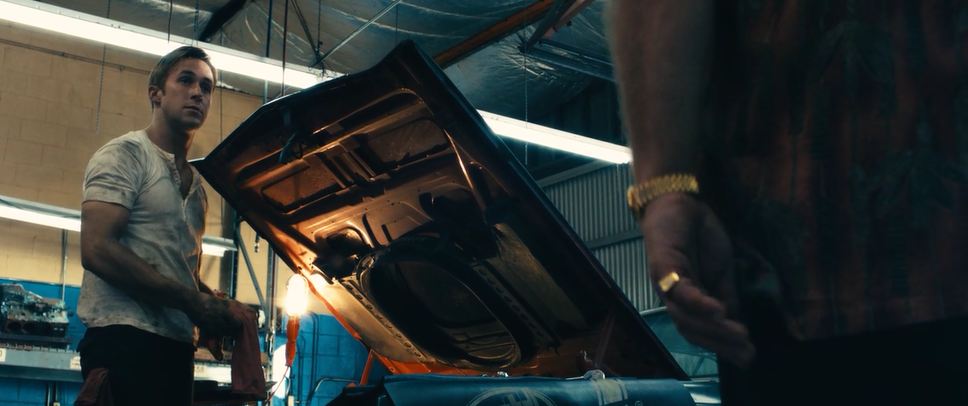
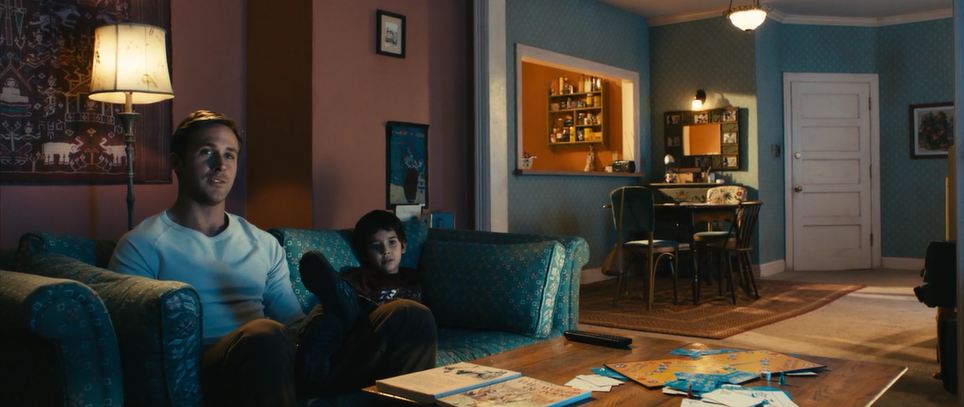
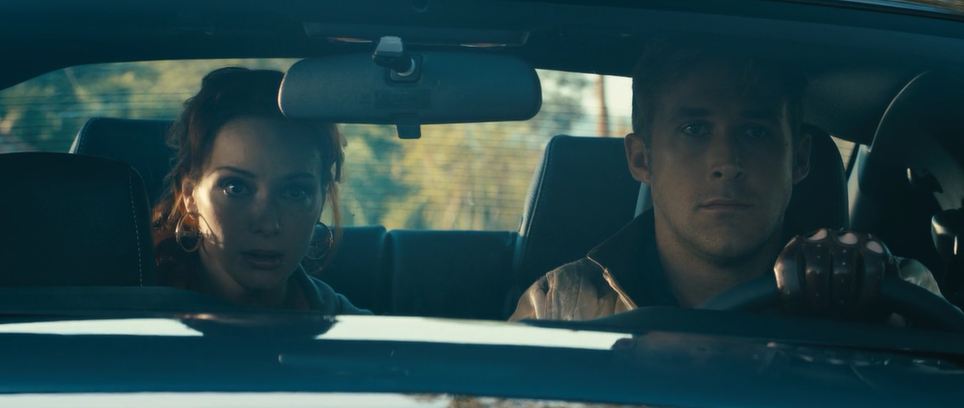
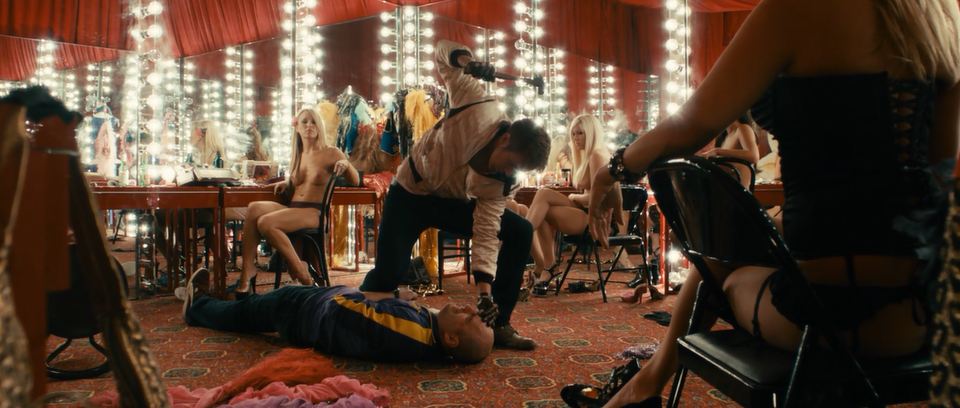
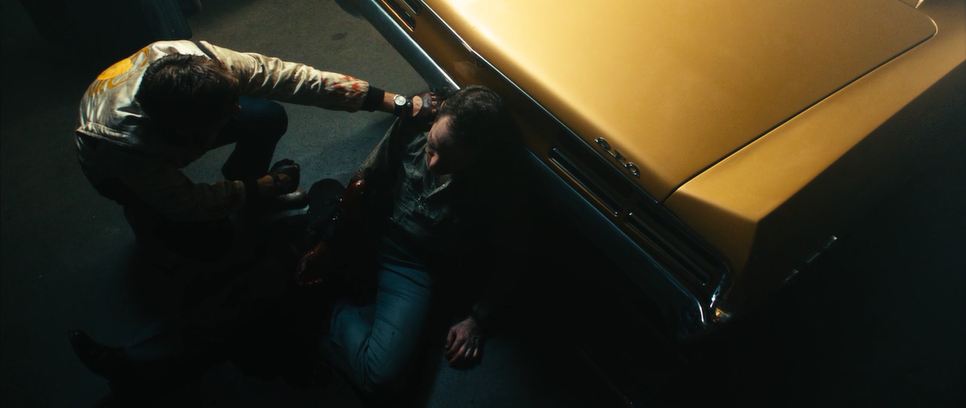
Today’s cinema adventure: Drive, the slick 2011 crime thriller starring Ryan Gosling as a Hollywood stunt driver and mechanic who moonlights as a wheelman for high-dollar robberies; a highly marketable package featuring a lot of action and a little romance, which garnered much praise for its visual style- a glossy mix of 1980s-flavored grittiness and edgy contemporary flash- and drew controversy for its bursts of brutal violence.  Essentially a post-modern film noir, set in a seemingly lawless Los Angeles populated and controlled by ruthless criminals, it seethes with an atmosphere of cynical amorality in which life is cheap and trust is for suckers and fools; and yet for all its hip, hard-edged posing, this movie is, at its core, pure Hollywood fantasy of a decidedly old-school nature.  In essence, in fact, it’s a modernized, urban reworking of Shane, the revered and iconic western classic from 1953.  All the plot elements are there: a loner with a mysterious past befriends a struggling family and becomes their protector against the machinations of a powerful gang of thugs, eventually taking justice into his own hands and embarking on a one-man crusade to eliminate the threat once and for all.  Though the details have been modernized and reconfigured a bit, the structural blueprint is the same, from the dominant themes of family and justice vs. power and greed to the fact that its tarnished hero doesn’t carry a gun.

If noting this obvious parallel to a cinematic touchstone sounds like a negative criticism, it isn’t: many good films are built upon a framework borrowed from great films that came before, and although its plot line is clearly second-hand, Drive certainly re-interprets the story on its own terms.  Part of the credit lies with Hossein Amini’s terse screenplay (adapted from a book by James Sallis), which cleverly updates the details of the plot and its characters while retaining the essence of its central conflicts.  The foremost contributor to the success of this re-invention of cinematic myth, however, is director Nicholas Winding Refn, a Danish-born filmmaker whose lack of native familiarity with the distinctly American setting and milieu has allowed him to approach the material with the empirical eye of an observer.  One of the consequences of his outsider’s viewpoint is the superb use of the L.A. locale, so often taken for granted by resident directors; he takes full advantage of it, not so much in his depiction of specific landmarks, but in the way he captures the character of it, particularly the Echo Park district where much of the action takes place.  He also brings a detached objectivity that somehow adds to the emotional resonance of the story, helping it to feel freshly-minted despite the echoes of its heritage that bounce through every scene.  With the help of cinematographer Newton Thomas Sigel, he fully utilizes his locations to create an impressive visual coherence, infusing the squalid city streets with a slick, art-house sheen that echoes the feel of genre icons like Thief and To Live and Die in L.A. while still asserting Drive’s independence and modernity with its own up-to-the-minute, slo-mo/hi-res personality.  This effect is enhanced by the dreamlike electronic score by Cliff Martinez, which also facilitates the deliberate build-and-release of tension that pushes the film towards its inevitable conclusion.

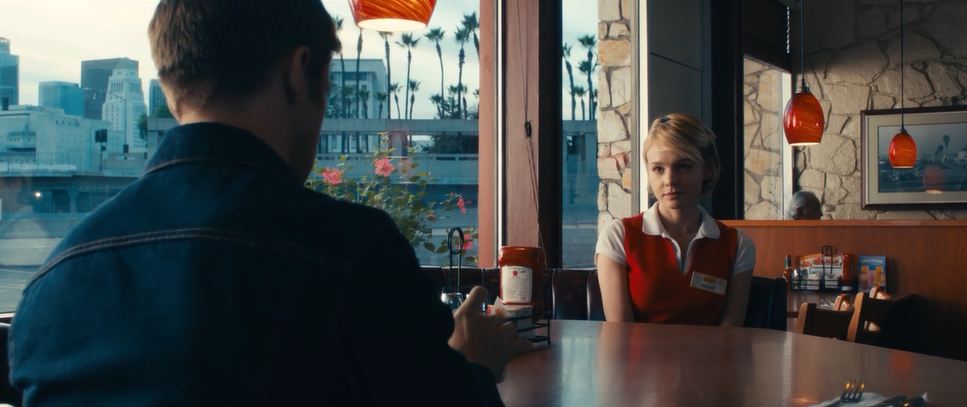
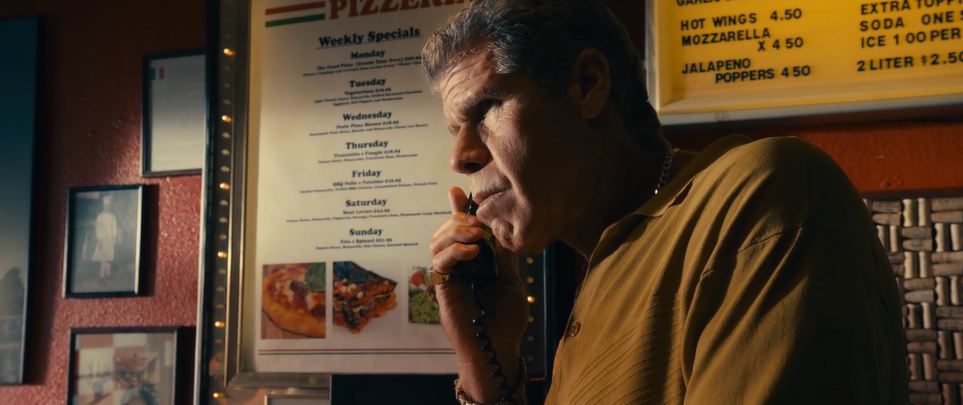
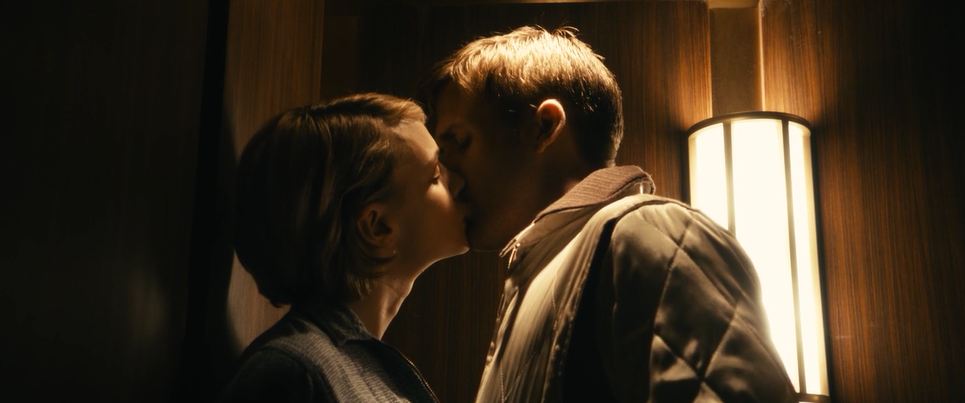
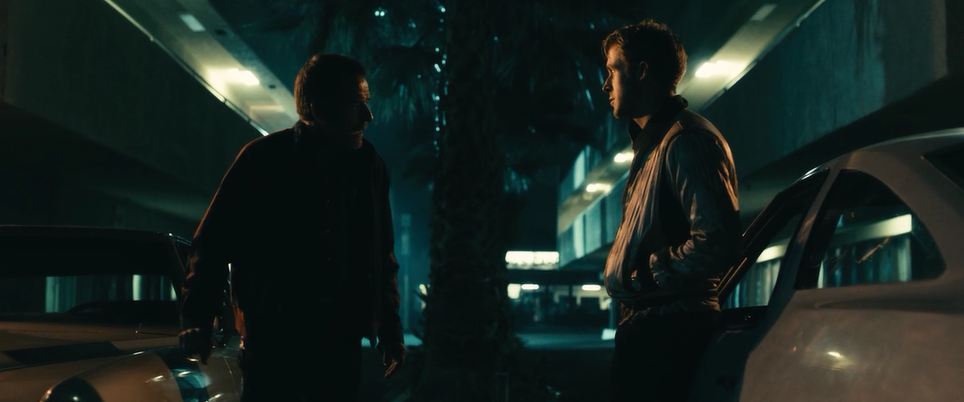
On the business end of the camera is an attractive cast comprised of talented up-and-comers, seasoned veterans, and a strategically familiar collection of supporting players.  In the latter category are a trio of high-profile TV transplants: Christina Hendricks (compelling and memorable in a bad girl role that allows her to show a markedly different side than the one we see on Mad Men, but ultimately wasted in what amounts to little more than a cameo), Bryan Cranston (in a kinder, gentler variation of his Breaking Bad persona as Gosling’s employer and surrogate father figure), and Sons of Anarchy’s Ron Perlman (lending his star power and his imposing presence to a part that could otherwise be played by any tough-guy actor).  As the little family whose plight provides the catalyst for the film’s action are Oscar Isaacs (playing admirably against expectation as the ex-convict father striving to break free of his shady past, and nicely fleshing out a character which is ultimately little more than a plot device), young Kaden Leos (projecting a muted wisdom beyond his years and showing considerable onscreen chemistry with Gosling in their scenes together, which goes a long way towards providing the heart of the film), and English actress Carey Mulligan.  Mulligan has perhaps the most difficult role here, in which she is required to maintain a quiet, attractive nobility while navigating a complex subtext of resignation, repressed attraction and nagging fear.  She manages it well, inhabiting all those facets and bringing intelligence, sweetness, and dignity to the part (making it seem, perhaps, much more fully realized than it actually is), as well as creating her own chemistry with co-star Gosling; their scenes together are nearly wordless, for the most part, yet the pair infuses the silence with volumes of unspoken feeling, and when they finally kiss, the cumulative passion of their previous interactions is sufficiently powerful to warrant the highly cinematic approach with which director Refn chooses to showcase it.

Which, of course, brings us to our star: Gosling’s character (never named, but listed in the credits merely as “Driver”), like his cowboy counterpart in Shane, is rough-edged and dangerous, despite his All-American good looks and his quiet demeanor.  Yet, street-savvy thug or not, he is also possessed of a resolutely ethical core which drives him from within just as deliberately as he himself drives his own restored 1973 Malibu.  In order to successfully embody this urban paladin, Gosling must convincingly seem both too hard to be good and too good to be true- and he must do so with an amount of dialogue that can be described as sparing, at best.  He pulls it off brilliantly, managing to be believable on both ends of this extreme spectrum with a likeably stoic performance that is (appropriately enough) reminiscent of Steve McQueen at his anti-heroic best.  It’s a hypnotic performance, and watching the young actor confidently stand in the center of this film, it’s easy to see why he is one of the hottest leading men of the new Hollywood generation.

As good as Gosling is, though, the standout performance in Drive comes from a surprising source: Albert Brooks, known for his comedic work both as an actor and filmmaker, here plays against type as a ruthless gangster.  It’s a shrewd bit of casting, and Brooks takes full advantage of it, undercutting the cold-bloodedness of the character with his familiar, likeably nebbish persona; the result is a contrast between charm and menace that makes him easily one of the most chilling big-screen bad guys in recent memory.  Despite the impressive work of director Refn and the stellar turns of the other leading players, his performance is perhaps the one element of Drive which elevates it from the level of a well-made potboiler to that of a potential Hollywood classic.

As to that, only time will tell.  Drive has a dazzling quality that keeps you mesmerized while its subliminal elements do their work; fooled by the flashy surface, we fail to recognize that we are being shrewdly manipulated by the familiar undercurrents that pull our sympathies and shape our expectations.  As a result, we are more inclined to suspend our disbelief in the blatantly romantic premise at the core of the movie, a premise summed up in its tagline, “Some heroes are real;” or at least, in theory we should be.  Some viewers, however, may not be taken in by the smoke and mirrors, and may find they are unwilling to buy into a plot that, though appropriate for a larger-than-life epic of frontier justice and heroic gunslingers, seems decidedly unconvincing for a gritty tale of corruption and betrayal in the seedy urban underworld.  It should also be noted that, in spite of its family-friendly roots, this movie contains some very graphic and disturbing violence- in particular, an elevator scene (from which the aforementioned controversy resulted) that had to be edited into a toned-down version, and which is still shockingly gruesome- so more squeamish viewers should stand warned that they might want to stay away.  However, for most filmgoers- particularly those with an admiration for the nuts and bolts of the art- Drive will likely provide a rich experience, perhaps even more so for those savvy viewers who can recognize the archetypal formula from which it is derived.  Though its plot may hold few surprises (at least for anyone who has seen Shane), and though it may, in the final analysis, be unconvincing, there is still a fascination in seeing the ways in which Refn and his crew have molded it into its new form, and the attendant implications that arise from its transposition in setting, such as the differences (and similarities) in the portrayal of masculine and feminine roles, the metaphoric associations of our obsessive American car culture, and the difficulties of defining ethical behavior in a world complicated by conflicting moral standards.   Unacknowledged remake though it may be, it is nevertheless an inventive and original piece of filmmaking, and even if we already know where its taking us, it makes getting there an exhilarating ride.

http://www.imdb.com/title/tt0780504/

Snow White and the Huntsman (2012)

;

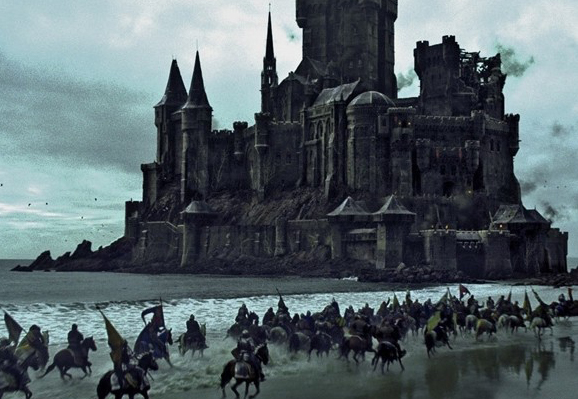
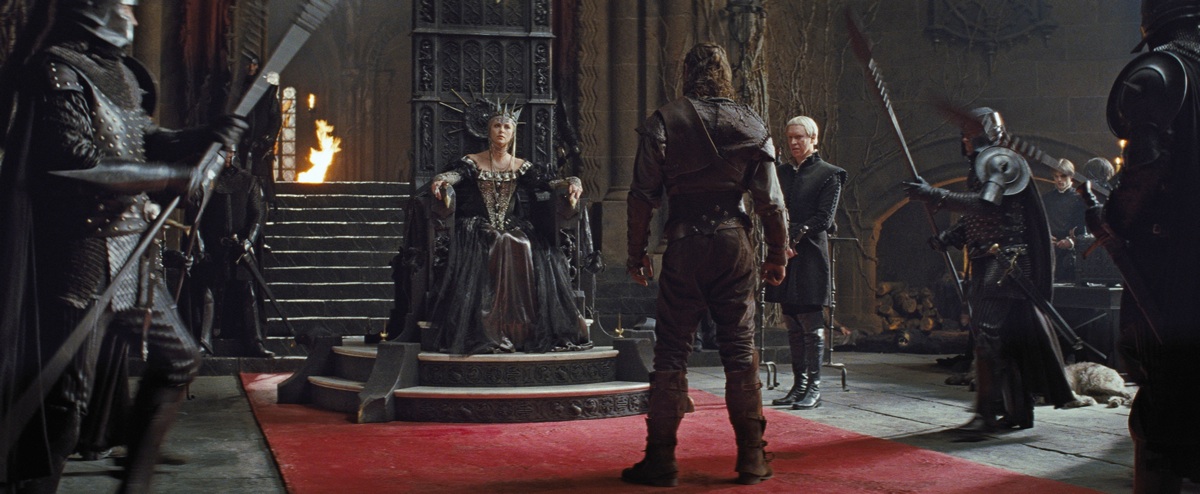
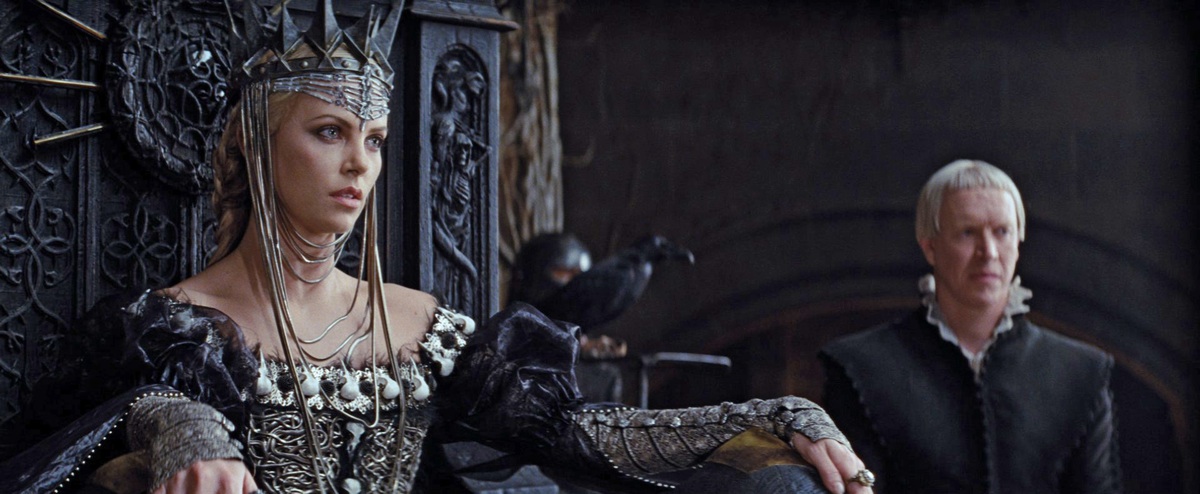
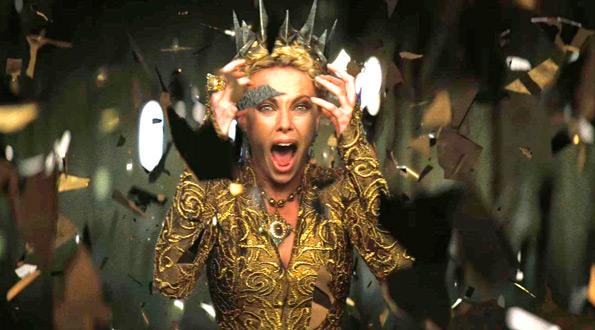
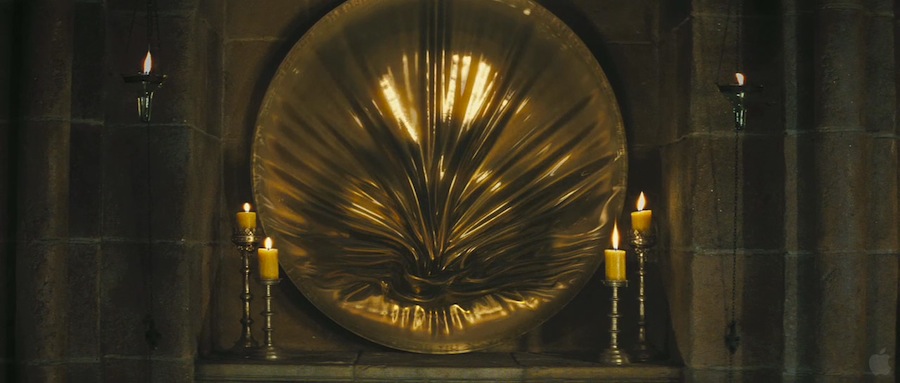
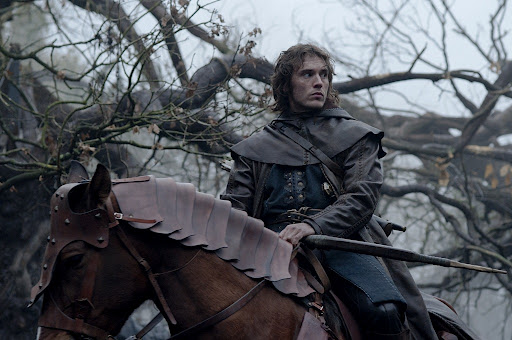
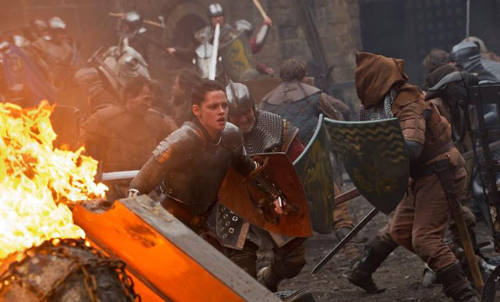
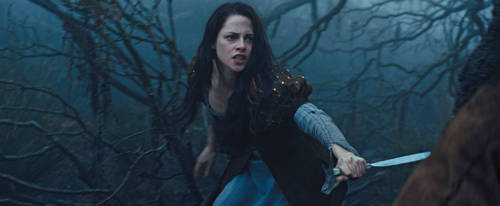
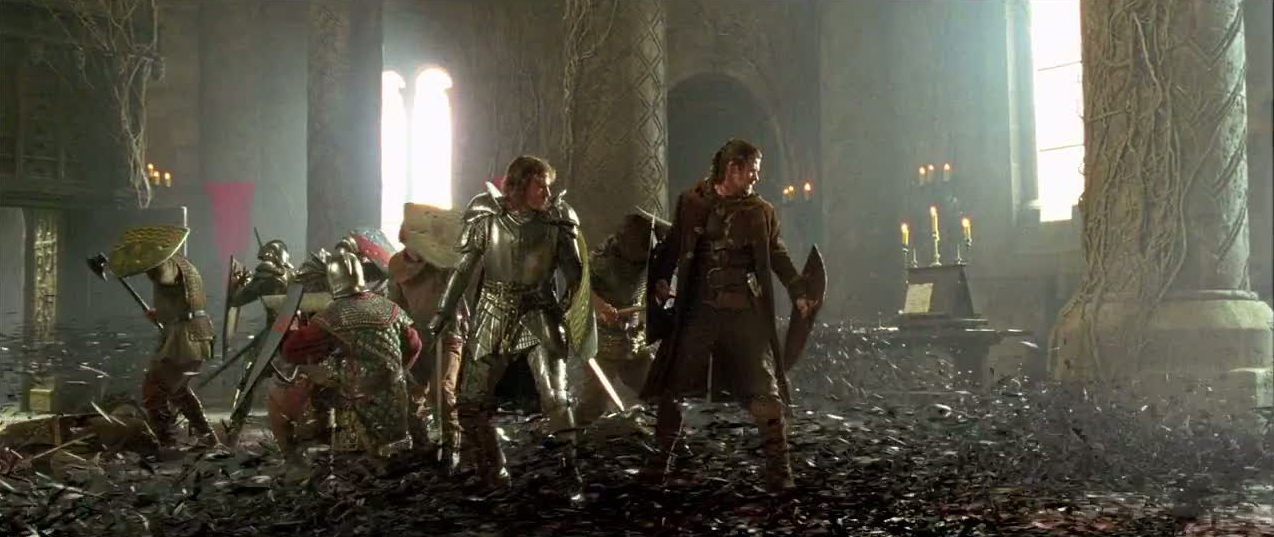
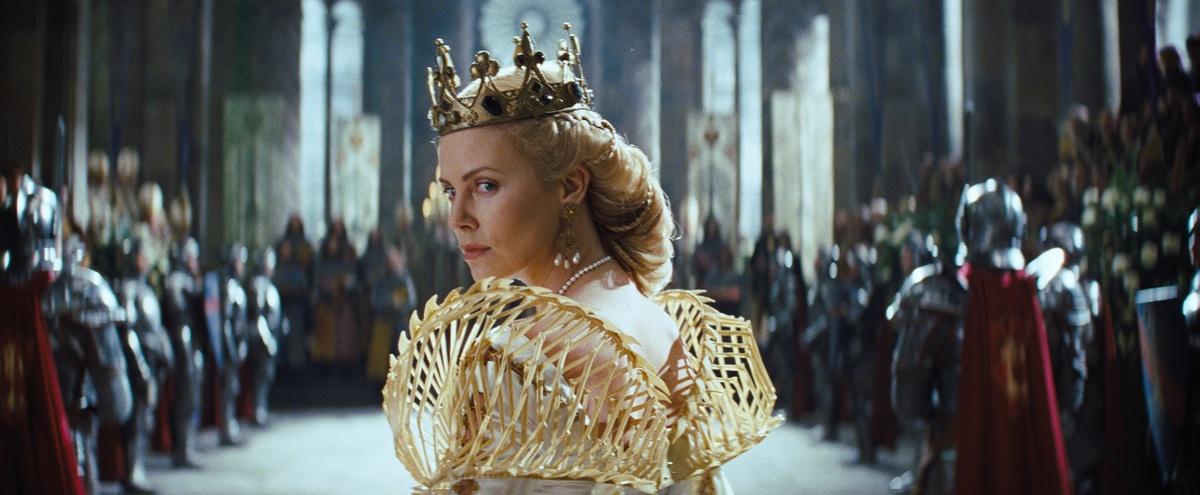
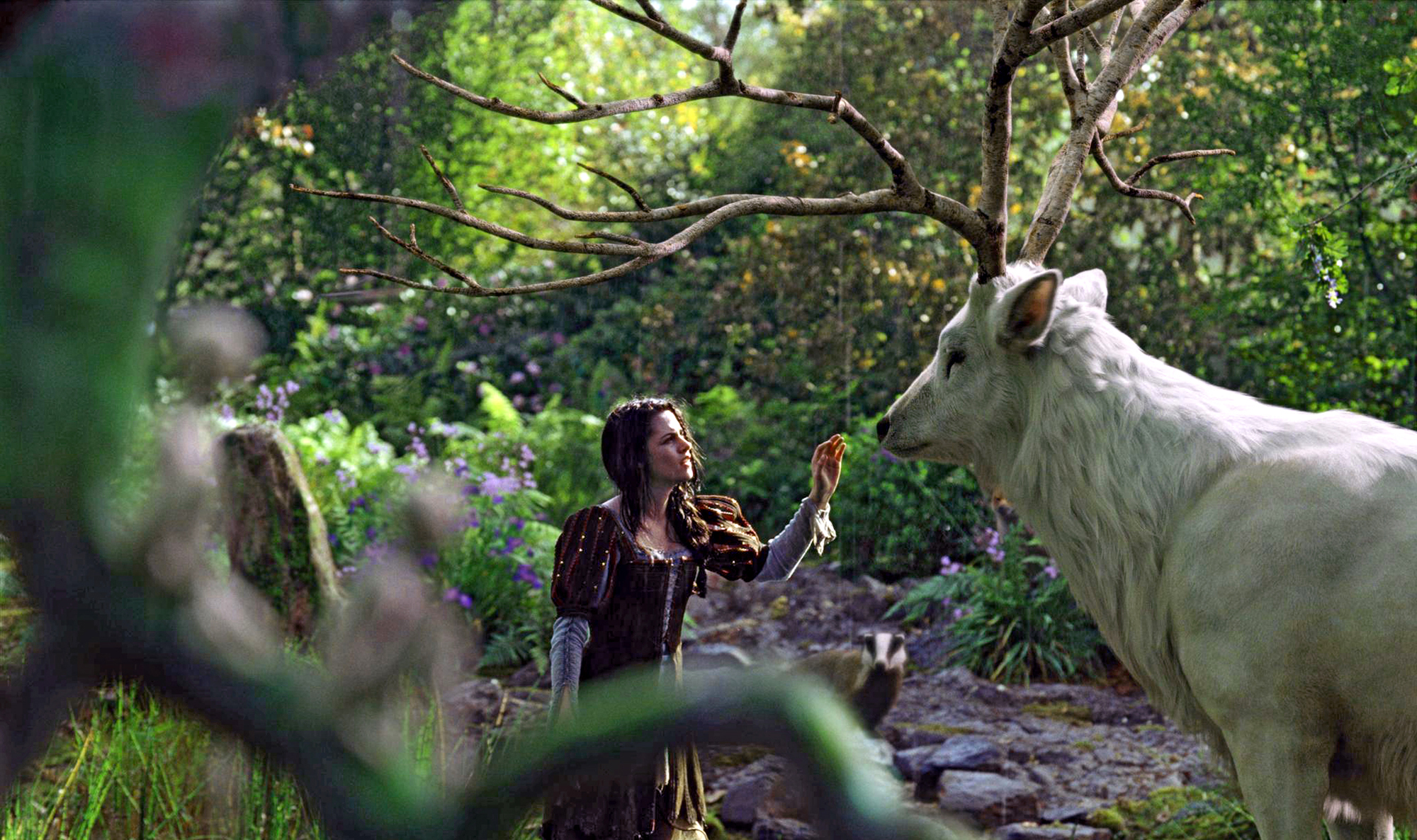
Today’s cinema adventure: Snow White and the Huntsman, a visually arresting 2012 feature that reinvents the classic fairy tale as a sword-and-sorcery fantasy with a message of female empowerment. In this version of the familiar story, the Queen is in fact a powerful sorceress who preserves her youth and beauty by draining the energy of young women, and the princess, foretold to be her undoing, is her prisoner; when Snow White escapes, the Queen sends a drunken wastrel to recapture her, but he instead becomes her protector and mentor, helping her to find the heroic force she needs to fulfill her destiny. The story is filled with great ideas, grafting elements of a medieval Arthurian-style quest saga into the Grimm Brothers’ original tale (with a dash of Shakespeare’s Macbeth), shedding insight on the origin and cause of the Queen’s wickedness and turning Snow White from a passive victim who must be validated and saved by a man (or seven) into a self-determining warrior princess who has the power to not only solve her own problems, but step into the traditionally male role of leader and bring the entire kingdom into harmony. Aiding considerably in the realization of these thematic twists is a stunning visual style that draws cinematic influence from Kurosawa and John Boorman’s Excalibur, coupled with a highly imaginative production design (under the supervision of Dominic Watkins) incorporating visual elements from the courtly romantic paintings of such artists as John Waterhouse and overflowing with the creative use of bird imagery. elemental contrasts, and the mystification of nature; of particular note are the costumes created by Colleen Atwood, especially for the Queen, and the magical CG artistry that brings life to the various fantastical settings and creatures- including the dwarfs, who are recognizable, full-scale actors rendered onto the necessarily diminutive bodies, a process that yields remarkable results but which also drew heavy protest and criticism for denying work to actual little people.

It would be nice to say that all this impressive conceptual and technical artistry was the basis for a great final product; but Snow White and the Huntsman, though passable enough as a lightweight summer diversion, fails to generate the kind of excitement and stimulation promised by its ambitious conceit. Director Rupert Sanders does a superb job of combining his various inspirations into a visual style (with the help of cinematographer Greig Frasier), but it seems hollow, lacking in the resonance and meaning required to elevate it beyond the level of a good imitation. The screenplay (by Evan Daugherty, John Lee Hancock, and Hossein Amini) fails to fully explore the possibilities suggested by the ingenious mash-up of sources at the base of their story, instead relying on familiar clichés and giving lip-service to the mythological principles inherent in the material, referencing the symbolic touchstones with all the conviction of marking off items on a checklist; the end result feels like a concept without a real direction, a meandering trip through a hodgepodge of mixed-up fantasy formulas that only pulls itself together into a resolution when it has run out of set-pieces. Likewise disappointing is the musical score by James Newton Howard, serviceable and predictable, providing the standard symphonic accompaniment heard in uncountable fantasy-adventure epics instead of taking advantage of the possibility to try something unorthodox. The acting isn’t horrible, though accents slip and mumbling abounds, but it isn’t really great, either: Charlize Theron, once again cast as a frosty bitch, manages to make us see the underlying pain of the Wicked Queen (which feels as perfunctory and inadequate as the rest of the unrealized story elements), but in the end she delivers a scenery-chewing performance that is, after all, just as over-the-top as we expect it to be; Kristen Stewart succeeds with the sweetness and vulnerability of Snow White, but somehow lacks the kind of strength to make a convincing transition into a force of destiny; Chris Hemsworth, as the roguish bad-boy who serves as secondary hero, comes off the worst, delivering a stilted, lumpish performance as a character that should provide the heart of the film. The rest of the cast all serve their purpose without surprise, providing us with the comfort of familiar stock characters instead of taking advantage of the chance to turn them inside out- a whole slew of missed opportunities in a film already over-filled with them.

That pretty much sums up the problems with Snow White and the Huntsman: despite offering a fresh perspective on its material, it’s a film which squanders its potential, offering new ideas and suggesting thought-provoking implications but delivering, in the end, just the same old Lord of the Rings-flavored conventions that make it so easy to dismiss the fantasy genre as fluff. Don’t get me wrong: I love Lord of the Rings; it’s an incredible piece of work that elevates fantasy to the level of deep, archetypal myth- but it’s already been done, and personally, the only other movie I want to see that feels just like it is the long-awaited version of The Hobbit which finds its way into theatres later this year. With Snow White and the Huntsman, I wanted something crisp and delicious, the exciting taste of a new hybrid flavor; but all this movie provides is yet another poisoned apple.

http://www.imdb.com/title/tt1735898/

Beginners (2011)

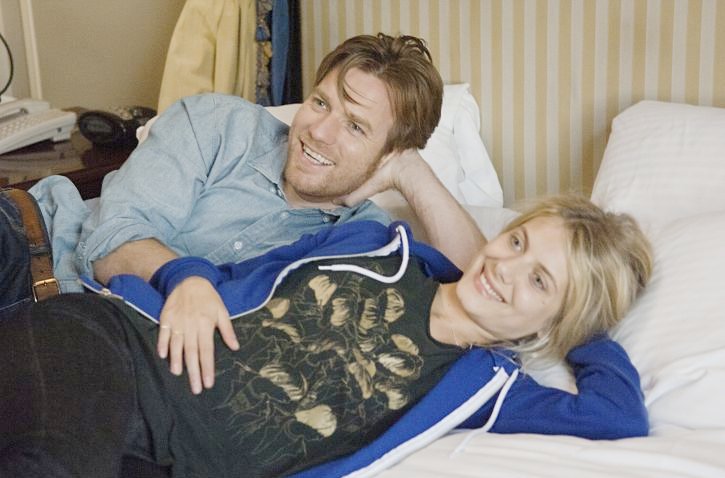
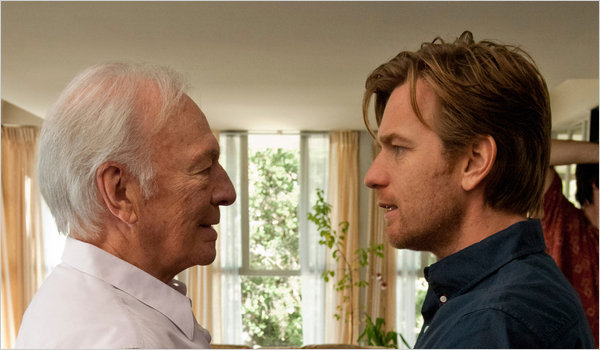
Today’s cinema adventure: Beginners, the 2011 romantic comedy/drama which garnered nearly universal critical acclaim and won multiple accolades and awards (including an Oscar) for supporting actor Christopher Plummer.  Heavily interweaving his narrative with flashbacks, filmmaker Mike Mills documents the efforts of Oliver, an L.A. graphic artist, to reconcile the memories of his childhood (and his grief over the recent death of his father) as he takes the tentative first steps towards a relationship with a young French actress.  Laced with clever, quirky humor, defying stereotypes and expectations at every turn, the film not only engages us with its charming story and likable characters but invites us to ponder the experiences of our own lives and our collective history, and how they provide us with the knowledge we need to grow and the foundation upon which to build a future beyond them.  Mills’ direction (from his own semi-autobiographical screenplay) is superb, moving the film freely between past and present, using its protagonist’s art to provide commentary and draw connections, and offering a wealth of “snapshot moments” which convey volumes about the characters and their lives without the need for extensive dialogue or exposition.  The filmmaker’s efforts would be pointless, however, if not for the superb cast, headed by the ever-lovable Ewan McGregor, giving a heart-breaking performance that manages to convey his character’s deep sadness without ever making him into a downer.  Melanie Laurent is equally effective as his new love interest- who is coping with parental issues of her own- and she, too, succeeds in maintaining both an attractive charm and a melancholy core.  But the most outstanding player here is Plummer, portraying Oliver’s father, a 75-year old man who comes out as gay following his wife’s death and embraces a new life, lived to the fullest, even as he faces his own terminal cancer.  This veteran actor is magnificent to watch as he captures the full spectrum of humanity, from the child-like glee he finds in exploring a world of which he has always dreamed to the dignity he maintains as he succumbs to the humiliation of his disease.  Fully deserving of all the accolades, it’s a performance that provides the strongest- but by no means the only- reason to see the film.  Los Angeles locals will also enjoy the Silverlake settings, lovingly captured by cinematographer Kasper Tuxen, which help to set the tone of Beginners– hip and quirky, but possessed with a keen awareness and respect for the past.  Mills’ film isn’t perfect: some would quibble that it borders on being overly precious, or that the characters’ troubles seem based on self-centered over-thinking and an arrested emotional development resulting from their insulated lifestyle.  However, this is a film about moving forward, about setting aside the emotional baggage of an imperfect past- while still honoring it- and finding the courage to face the challenges of an uncertain future.  In short, it’s a film about change, and therefore a film about fear- the kind of deeply personal fear which can make us all feel like children, no matter our age or background, and therefore cause our thinking and our behavior to seem immature from an outside standpoint.  Maturity comes with taking the leap towards something new, despite these deeply conditioned anxieties, and that is what each of the three principal characters in Beginners must do.  Frankly, I think it’s remarkable that a film addressing such a real and primal fear, and pervaded by such a tone of  bittersweet melancholy, can leave us feeling so charmed- perhaps that’s due to the fact that, above all, Beginners is a film about love, and given their emotional handicaps, if these people can make it work (and whether or not they can is by no means certain), then the rest of us can live in hope that we can, too.

http://www.imdb.com/title/tt1532503/

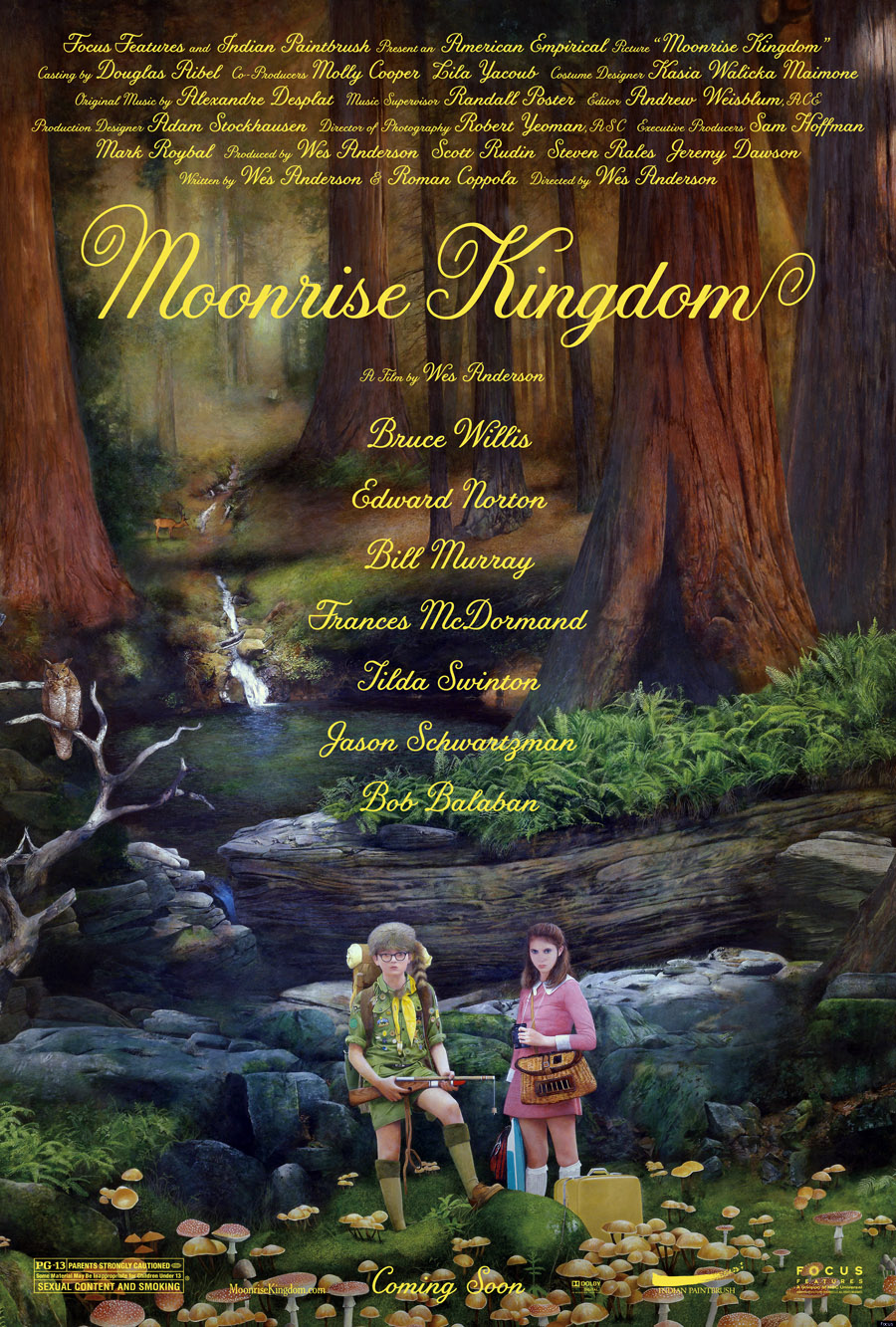
Moonrise Kingdom (2012)

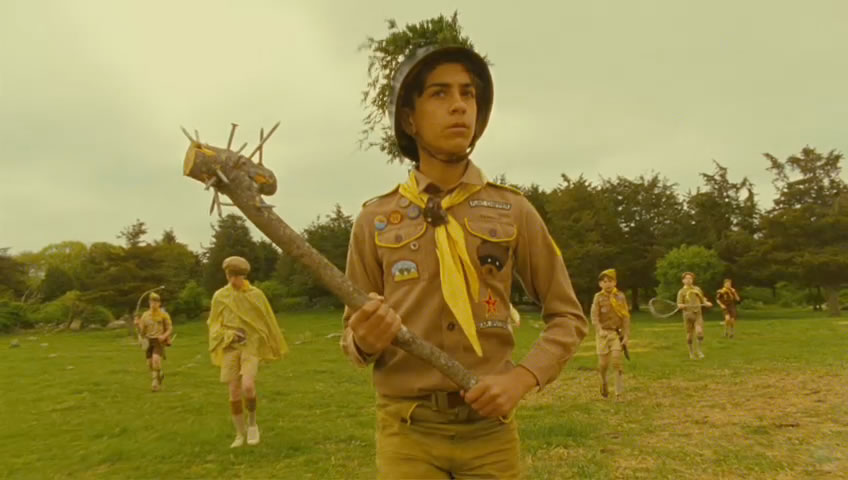
Today’s cinema adventure: Moonrise Kingdom, a 2012 feature that lets you know, from its very first frame, that it is the work of filmmaker Wes Anderson.  The quirky, bittersweet tale of a pair of star-crossed 12-year-old misfits who enact a plan to run away together, it is a film that draws heavily on the entire repertoire of its indie-icon director; all the familiar elements are here, from the visual style of vivid colors and symmetrically-framed shots to the thematic elements of dysfunctional family structures and ritualized personal mythologies.  Drawn in from the start by the methodical introduction of its characters (another Anderson trademark, here cleverly assisted by the use of Benjamin Britten’s “A Young Person’s Guide to the Orchestra” on the soundtrack), we are transported to a world at once fantastical and mundane, a nostalgic landscape of mid-century middle class life transplanted to a remote New England island setting; it is a place where the comfortable trappings of civilization exist in the midst of a verdant but unpredictable wilderness, a delicate balance reflected by its inhabitants’ constant struggle to contain the unfettered dreams of childhood by enforcing the rules of the adult world.  Here, the local scouting organization seems to carry as much civic authority as the police force (which appears to be comprised of a single officer), a meteorological researcher takes on the role of mysterious, omniscient sage, and the larger social order is dictated by a tenuous connection with an outside world represented by various austere personages mostly present only at the other end of a telephone line.  Within these oddball, darkly whimsical surroundings, Anderson unfolds a coming-of-age story, told from the perspective of the two children at its center, in which it becomes clear that the adult characters, for the most part, are the ones who must break through the barriers created by the frustration of their own youthful fantasies; the grown-ups are the ones who must “come-of-age,” and only then can the children- who think and behave in a highly adult fashion, or at least their attempted approximation of it- truly be allowed their childhood.  This inversion of formula, in which the juvenile protagonists serve as catalysts for the transformation of their adult counterparts, is certainly nothing new: it has been explored in films ranging from early classics like Chaplin’s The Kid to contemporary blockbusters like Super 8; in particular, Anderson’s film seems to draw heavily on that mid-century classic of the genre, Disney’s The Parent Trap.  This, however, is in no way meant to imply that Moonrise Kingdom is derivative or full of clichés- on the contrary, thanks to Anderson’s characteristically disarming wit and pseudo-subversive charm, it is as fresh and surprising a moviegoing experience as one could hope.  It’s probably the best Wes Anderson movie since The Royal Tennenbaums; and, of course, though the gifted director may take the lion’s share of credit for its success, it is a combination of elements provided by a worthy group of collaborators.

To begin with, the screenplay, co-written with Anderson by Roman Coppola, is full of the kind of offbeat delights we have come to expect from this director: populated with characters simultaneously familiar and unique, comprised of inventive circumstances and conceits through which the story and its various sub-plots flow, and infused with a magical tone that nevertheless keeps ever-present the potential for serious real-life consequences; the proceedings never lose their underlying weight, but they are peppered with humor throughout, ranging from the dry to the morbid, and usually unexpected; and the abundant heavy-handed symbolism (place names like “Summer’s End,” a tree house impossibly positioned at the top of a very tall tree) is treated with such good-natured irony that it comes across as clever instead of just obvious.  Anderson’s trademark visual style is captured with an almost-surreal crispness and color by cinematographer Robert D. Yeoman, and likewise contributing to the distinctive look of the film is remarkable work by Art Director Gerald Sullivan, Set Decorator Kris Moran, and Costume Designer Kasia Walicka-Maimone, who together create an eclectic style that resembles a collision of the catalogues from L.L. Bean and Eames Design Studio.  As for the soundtrack, Anderson relies both on charming original music by Alexandre Desplat and, as always, a mix of obscure-but-familiar recordings- this time mostly eschewing his usual pop/rock choices for classical selections by Britten (the aforementioned piece as well as others) and Saint-Saëns, juxtaposed with the mournful crooning of Hank Williams.

Of course, it is the ensemble cast that must ultimately bring Anderson’s cinematic symphony to life, and each member, without exception, is right on key.  Edward Norton is tremendously likable as the plucky and earnest scoutmaster; Bruce Willis, as the local police captain, plays nicely against type while still taking advantage of his image as a tough man of action; Frances McDormand and Anderson perennial Bill Murray manage to capture the percolating bitterness of a long-embattled couple without making them unsympathetic; the ever-divine Tilda Swinton radiates a kind of institutional anti-Mary-Poppins vibe as a no-nonsense bureaucrat known simply as “Social Services;” Bob Balaban, Harvey Keitel and Jason Schwartzman (another Anderson stalwart) bring their own distinctive gifts to smaller roles; and an array of young actors contribute a spectrum of personalities as the scout troupe that gets caught up in the action.  Despite this impressive collection of performances, however, the shining stars of Moonrise Kingdom are Kara Heyward and Jared Gilman, as the two pre-teen lovers around which the story revolves.  Each underplay their characters with surprising skill and maturity, capturing the dispassionate detachment affected by these antisocial youngsters while still conveying the sweetness that lurks beneath it, and complementing each other’s work with a chemistry that is rarely seen in screen pairings between seasoned adult professionals; it’s their show, and it is a testament to their talent (and their director’s) that, despite being surrounded by a gallery of all-star heavyweights that includes two Oscar-winners and several other nominees, nobody even comes close to stealing it from them.

Moonrise Kingdom is one of those rare movie experiences that creeps up on you.  After seeing it, I knew I liked it immediately, but it wasn’t until it had sunk in overnight that I realized just how much.  There is a lot to take in: a plethora of details that Anderson meticulously arranges, just as his characters often arrange the contents of their suitcases or the objects on their desk; and just as those everyday items are transformed into talismans and icons by their owners, so too are all the pieces of Anderson’s movie invested with a significance that gives them a subliminal, cumulative effect when woven together into the whole.  By the end of Moonrise Kingdom, you find that you’ve been moved on a level so deep, it doesn’t even have a name, and you didn’t even know it was happening.  It’s a feeling that makes all the delights of the previous 90 minutes seem even more rewarding.  Sadly, in a season full of mysterious alien beings and comic book action heroes, this little film is likely to be overlooked by a majority of moviegoers.  Don’t be one of them: go and see Moonrise Kingdom as soon as possible; it will likely be only the first of many times.

http://www.imdb.com/title/tt1748122/

My Week With Marilyn (2011)

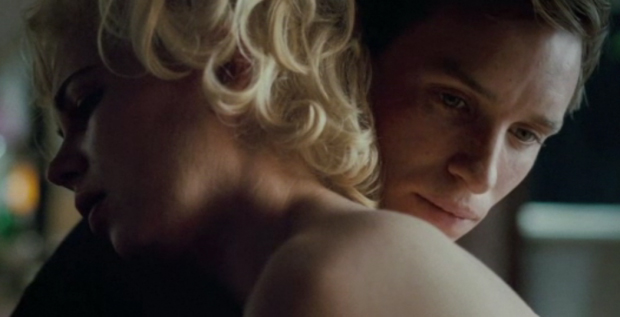
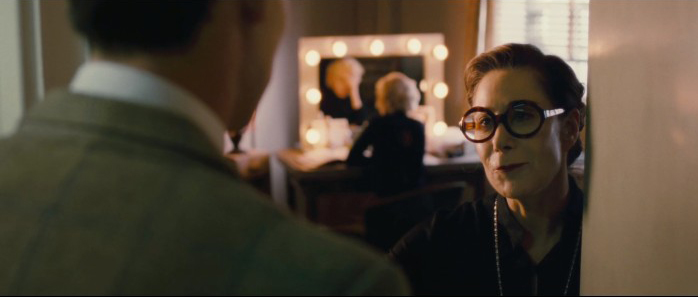
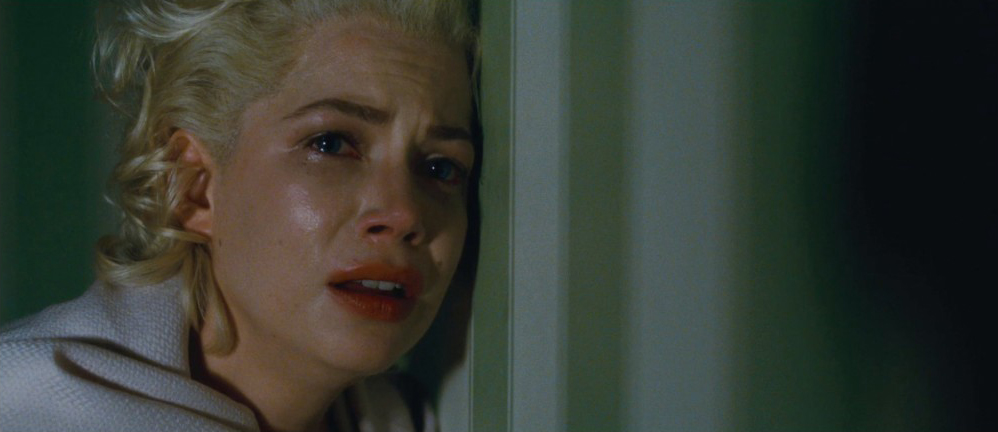
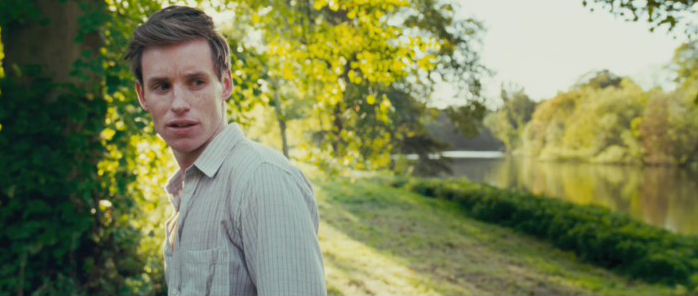
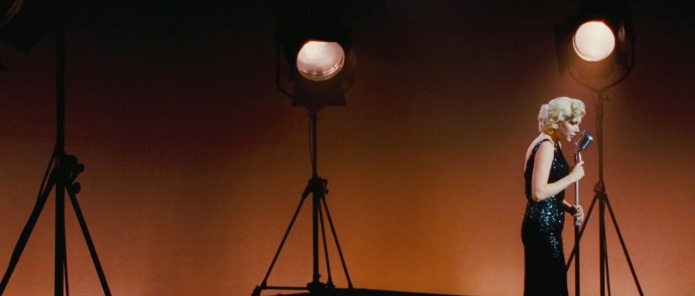
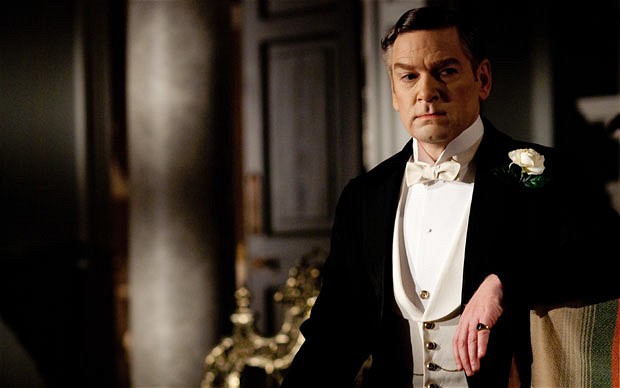
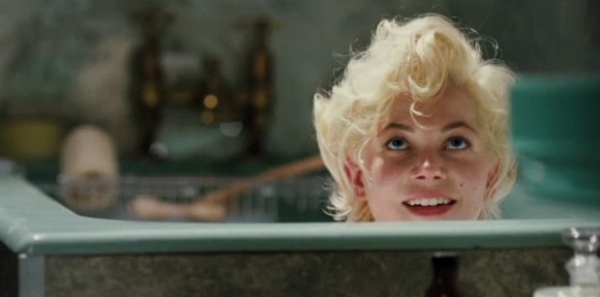
Today’s cinema adventure: My Week With Marilyn, the wistful 2011 biopic based on Colin Clark’s memoir, The Prince, the Showgirl, and Me, which detailed the author’s brief relationship with iconic starlet Marilyn Monroe during the turbulent filming of The Prince and the Showgirl with actor/director Sir Laurence Olivier.  Whereas many film biographies attempt to shed light on their subjects by presenting their life in its entirety, this charming true-life romance focuses instead on a short episode, using it as prism to cast insight into the legendary actress and her contemporaries.  As a result, the film has an intimacy and an authenticity lacking in most Hollywood bios, and the narrowing of focus allows the performers to explore the nuances of their real-life characters with much greater depth and detail, heightening the illusion that we are watching real people instead of the larger-than-life caricatures to which we are so often subjected.  Those performers, without exception, rise to the occasion: the entire ensemble clearly relishes its chance to embody this slice of mid-century mythology.  The much-lauded Michelle Williams is largely successful in capturing the enigmatic persona that made Marilyn the biggest star in the world; she gives us the contrasting blend of sensuality and insecurity we expect but infuses it with a humanity that allows us to perceive the underlying causes of her fragility and need for validation, as well as the irresistible charm that won the hearts of so many.  To be sure, her transformation is less than total- her physical attributes are not quite right, and her bearing sometimes seems mote timid than self-assured- but, of course, she is ultimately an actress interpreting a role, not a reincarnation, and as such she deserves much praise for conveying the essence of an oft-imitated woman who was, in fact, inimitable.   Less glamorous, but perhaps even more impressive, is Kenneth Branagh’s work as Olivier which likewise captures the great actor’s outward persona with remarkable accuracy while showing the inner landscape of a man struggling to keep his place at the top in the face of changing standards in the art he has mastered for so long; Olivier was not only an early mentor for Branagh but an actor with whom his own career has often been compared, so he seems well-suited to the daunting task of personifying the legendary thespian- a task which he clearly relishes, recreating Olivier’s physicality and vocal patterns with intimate familiarity with0ut resorting to out-and-out mimicry, and treating his subject with obvious respect even when portraying some of his less attractive facets.   As these two enact their clash of titans, they are surrounded by a host of worthy supporting performances, including Julia Ormond’s brief but canny portrayal of Vivien Leigh, Emma Watson’s decidedly non-Hermoine-esque turn as a wardrobe girl, and the always magisterial Dame Judi Dench as the always magisterial Dame Sybil Thorndike; but special praise should be reserved for Eddie Redmayne, who, stuck with the potentially thankless role of providing a foil for his co-stars, manages also to provide a solid ground for the proceedings by giving a quietly convincing performance as the young film crewman coming of age in the shadow of giants, and never lets us quite forget that this is, after all, his story.  With all this great acting going on, it’s easy to overlook the film’s other pleasures- the meticulous costume and scene design; the rich, golden-hued cinematography by Ben Smithard; the understated archness of the screenplay by Adrian Hodges- all overseen by the steady hand of first-time director Simon Curtis, whose wise approach here is to step back and let all these elements leave their marks without the unnecessary assistance of showy cinematic trickery.  The end result is a movie which, like the famous figure at its center, is lovely, effervescent, and hauntingly sad.  It does not promise nor does it try to present the final word on Marilyn- or Olivier, for that matter- and for that very reason, probably comes closer to giving us a truthful, fair vision of these two legends than any scandal-raking exposé could hope to deliver.

http://www.imdb.com/title/tt1655420/

Prometheus (2012)

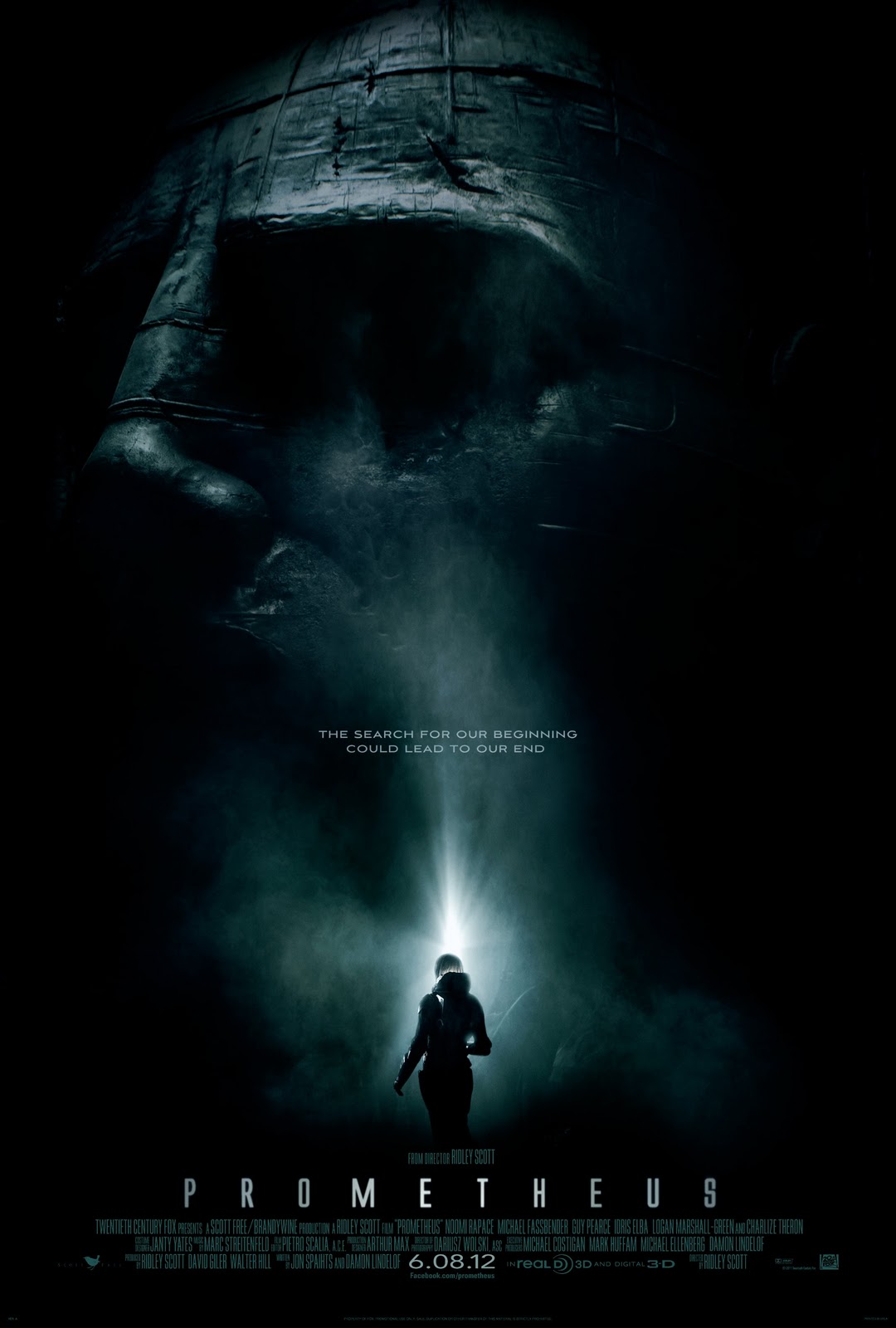
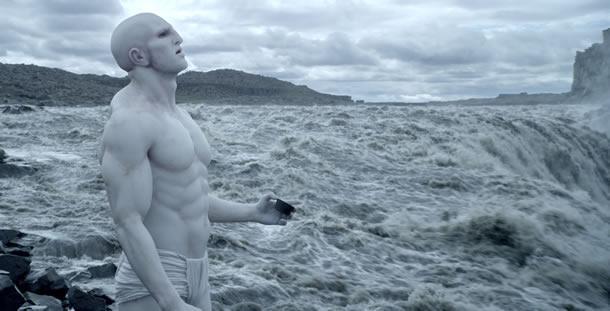
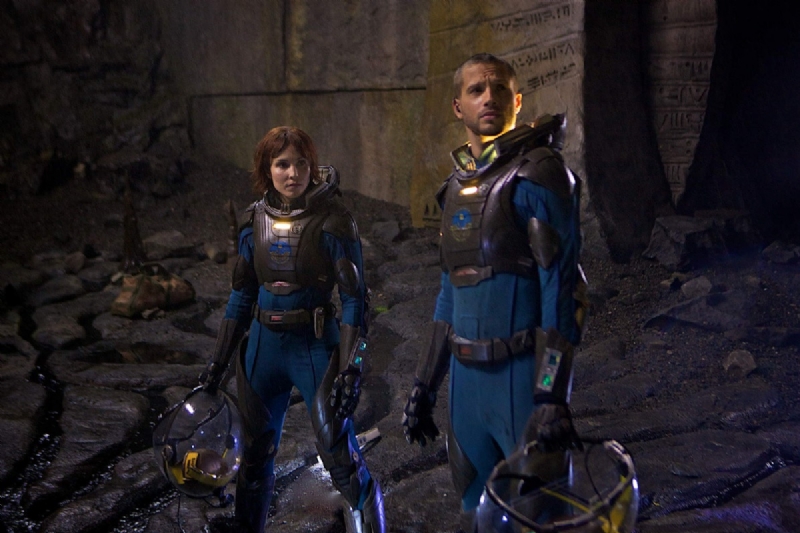
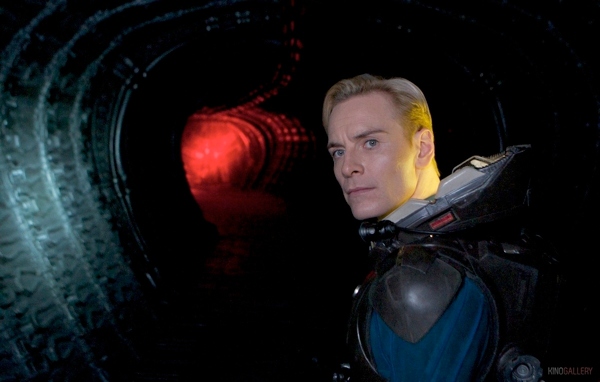
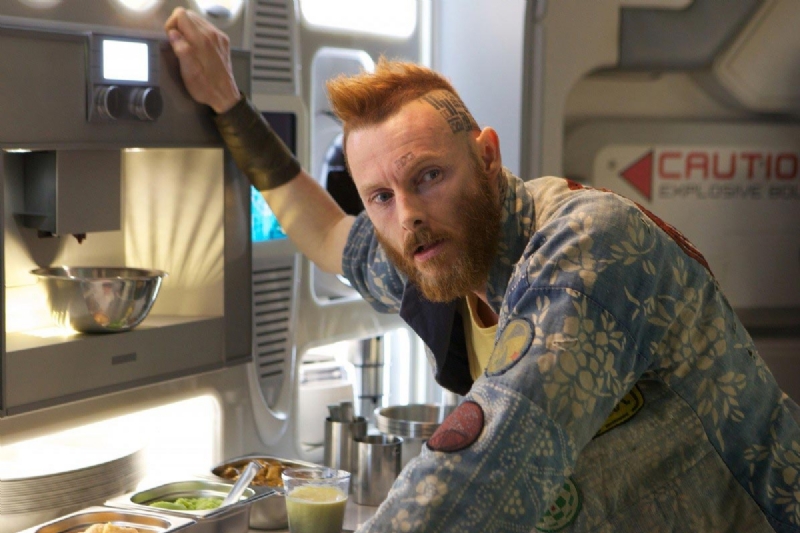
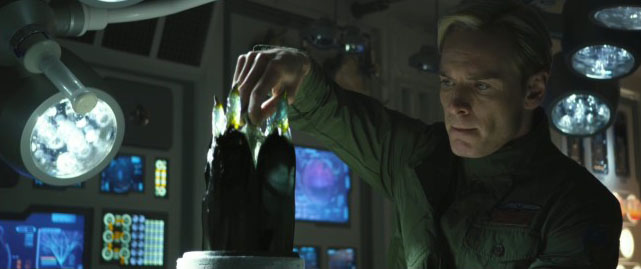
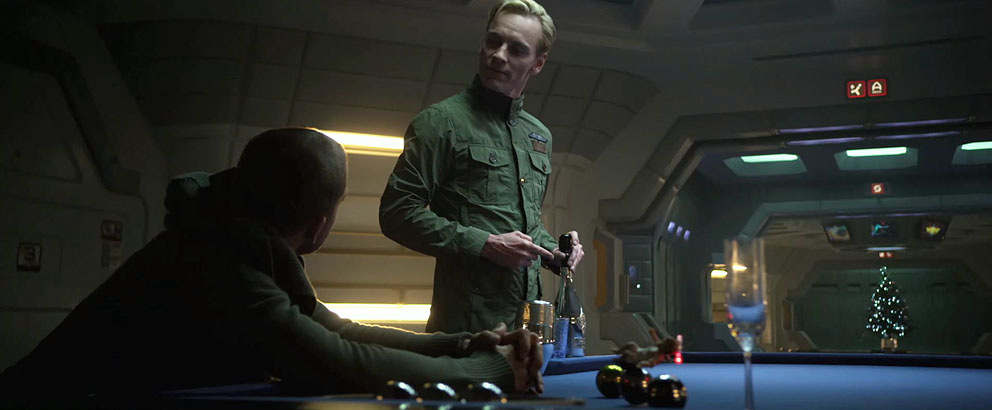
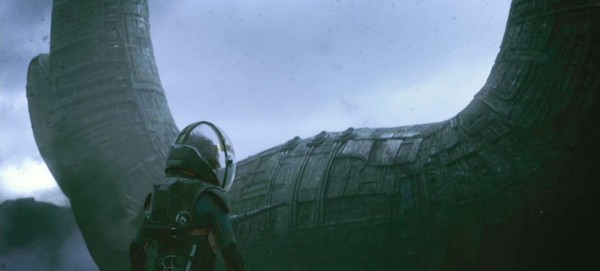
Today’s cinema adventure: Prometheus, the 2012 sci-fi thriller that marks the return of director Ridley Scott both to the genre and to the film franchise that made his name. A prequel of sorts to his 1979 classic, Alien, it follows the fate of a late-twenty-first-century space expedition which journeys to a distant planet in search of answers to the secret of human origin, revealing (partially) the background of the terrifying race of creatures that inhabited the earlier film and its sequels- but also establishing its own internal mythology, with a plot and a purpose completely independent of its predecessor, and tackling deeper, far-reaching philosophical themes along the way. Indeed, director Scott makes it clear from the very first frames that he has greater ambitions than just making a straightforward science fiction adventure: the opening shot is a direct copy of the one used by Kubrick in 2001: A Space Odyssey– in fact, the entire credits sequence is reminiscent of an important scene from 2001, and throughout Prometheus there are countless echoes- some huge, some tiny- from that venerable masterpiece. This is appropriate enough, given that Scott’s film shares many of the central themes from Kubrick’s landmark opus, such as man’s continuing quest for knowledge and his uneasy relationship with the technology he has created to aid him in that quest; indeed, the central plot (the discovery of artifacts from earth’s ancient past leads to a space mission and a confrontation with the mysteries of our creation) is essentially the same in both films. Scott, however, working from the screenplay by John Spaihts and Lost co-creator Damon Lindelof, offers his own interpretation of these ideas; his is a much darker vision of our species and its place in the universe, and one which reflects the change in our collective consciousness in the 45 years since Kubrick made his film. In place of Kubrick’s somewhat ironic vision of a future shaped by nuclear age optimism and practicality, we are given a universe more closely resembling the one seen in Scott’s earlier visits to this genre: a place in which human flaws such as ego, greed, hostility, mistrust and duplicity run rampant; and where these qualities not only threaten to undermine the greater purpose but are seen to be shared by the very creative forces that shaped us. Not that Scott gives us a universe without hope- far from it. In Prometheus, hope is arguably the central issue, and holding onto it in the face of bleak nihilism can be seen as the one saving grace of our species- coupled with undying curiosity and armed with the knowledge of what has come before, it can keep us going even when there seems no purpose for doing so. In a way, Prometheus offers us an even more inspiring conclusion than 2001, suggesting that the secret of man’s creation and continuing renewal lies within ourselves, alongside the very seeds of our own destruction- no matter what our origins may be, we are self-determining creatures and not just pawns observing a cosmic waltz in which we may be a mere side effect.

All this conjuring of the spirit of 2001 may be justified by the needs of Scott’s intellectual premise, but it also serves as a means to pay homage to his cinematic influences; the visual and thematic reflections of Kubrick’s film are just the most obvious of his tributes to the works of those who have shaped his own vision, from the overt use of Lawrence of Arabia as an inspiration for one of the central characters to the more subtle nods in the direction of such diverse movies as Citizen Kane and Forbidden Planet. With such a pedigree, it would be nice to say that Prometheus is a worthy successor to the masterworks tagged within it; but despite its lofty goals, it is a film which suffers from the all-too-common malady of formula. The cinematic building blocks so reverently placed by Scott seem to promise a work of intelligence and depth- which, for the most part, he has given us- but as the plot unfolds towards its predictably cataclysmic conclusion, his movie falls into the familiar repetition of patterns we have seen ad infinitum: the characters’ fates can be foreseen from their virtues or flaws in the same way we can tell that the bad girls are going to get offed in a slasher film, pivotal plot elements are introduced with so many red flags we can instantly see where they will lead, and, of course, anyone familiar with the original Alien and its sequels will know from the outset where the story is headed, reducing the entire experience to a detached exercise in answering questions left over from the previous franchise entries. In addition, the level of tension, so expertly built and maintained by Scott in his original film, is here allowed to rise and fall so often and with so little payoff, that by the end we are not so much excited as we are mildly curious to see how things will finally play out. Furthermore, the insistence on maintaining a rigid connection to the concrete realism dictated by its cookie-cutter storyline prohibits the director from diverging from his linear plot into the absract flights of fancy that made 2001 such a groundbreaking work and prevents him from taking his cosmic themes into an esoteric realm where they can be more fully explored.

Don’t get me wrong: by any standards, Prometheus is a well-above-average film, an ambitious labor of love by a director of considerable talent; considering that its development and production history reads like an indictment of all that is wrong with the Hollywood process today, the fact that it offers so much substance along with its profit-minded formulaic plot is a miracle in itself. Scott has always been a director with remarkable gifts, particularly in visual terms, and this film certainly lives up to his reputation; it combines the immediacy of Alien with the elegiac reflection of Blade Runner; and, like both those examples, creates a stunning, immersive world for us to experience. Superbly photographed in 3-D by Dariusz Wolski, Prometheus presents a brilliant blend of its own shrewdly futuristic design and the H.R. Giger-inspired bio-technical look of the original Alien; and, to draw another comparison with 2001, it sets a new standard for special effects, with a look and a feel derived from dedication to the artistic purpose of the whole, not merely from a desire to dazzle us. This accomplishment is achieved, under the supervision of production designer Arthur Max, by a seamless blend of CG, traditional camera trickery, and live action footage, and it yields countless examples of big screen imagery which are surely destined to become iconic. All this technical wizardry is not wasted, notwithstanding the quibbles which mar the film’s narrative: Scott rises to the occasion throughout, creating moments of breathtaking beauty and visceral terror- in fact, the film’s most effective scenes (particularly a medically-themed sequence near the climax) are those which resurrect the creepy, primal body-horror around which the original was based and the fear of which is never far from our minds from the moment the exploration team lands. Aiding him in his struggle to rise above his mundane material is a fine cast which includes superb work from Charlize Theron (proving once again that she is Hollywood’s reigning ice queen), Idris Elba and Guy Pearce; standing out above the rest is the hypnotic Michael Fassbender, who provides further evidence of his substantial talent as the film’s most memorable and enigmatic character; and in the central role, Noomi Rapace makes a convincing transition from idealistic scientist to determined survivor, stirring favorable comparative memories of the franchise’s original heroine, Sigourney Weaver. The one sour performance comes from Logan Marshall-Green, whose hot-shot demeanor and club-rat looks make him not only unconvincing as a world-class scientist but also unlikable as a hero and poorly matched with Rapace’s much more sympathetic personality.

Prometheus has been anticipated as one of the year’s biggest film events, with much hype and secrecy surrounding its content and high expectations for both critical and commercial success. With all that pressure, it is not surprising that it has met, so far, with mixed reaction: hardcore fans of the genre have expressed disappointment with its emphasis on esoteric elements instead of on providing concrete answers to the mysteries it presents- many of which are left unrevealed, begging the development of a sequel despite the insistence of its makers that it is meant to be a stand-alone project- and serious-minded filmgoers have complained (as I did) of the reliance on cliché and formula in a plot which keeps it from fully realizing its higher goals. In the long term, who can really say where it will stand in the estimation of future cinemaphiles? What is certain now is that audiences seem to love it or hate it, which for me has always been the surest sign of artistic success. Summing up my own opinion, I would have to say that I loved it- with reservations. I can’t guarantee that you will share that view, but I can tell you that it’s worth a trip to your local theater to find out for yourself. You may not be satisfied, but you will almost certainly be stimulated and provoked, and isn’t that what art- and cinema in particular- is all about?

http://www.imdb.com/title/tt1446714/

;

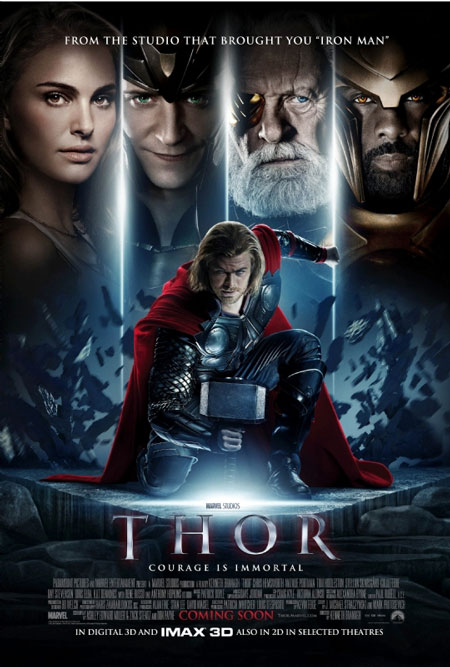
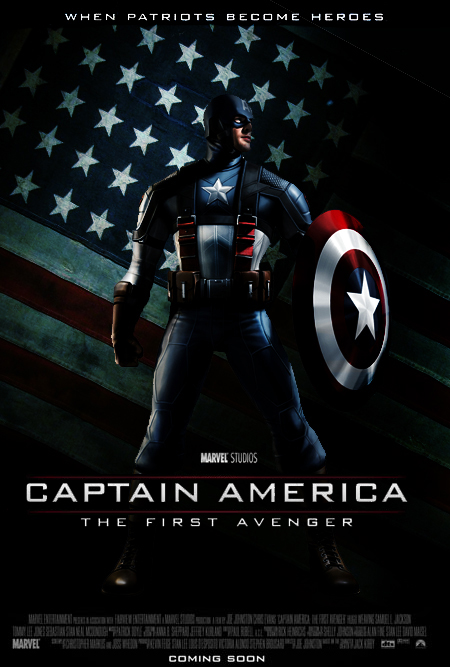
Thor (2011) & Captain America: The First Avenger (2011)

ImageImage

Today’s cinema adventure is a double feature: Thor and Captain America: The First Avenger, the two 2011 entries from Marvel that introduced audiences to seminal figures in the then-upcoming Avengers blockbuster, further establishing the groundwork begun in the successful Iron Man franchise and setting up key elements of the story arc which unites all the films.   In the first of the pair, Thor, heir to the throne of Asgard, is exiled by his angry father to the distant planet earth, precipitating a rebellion in his home world which threatens to wreak destructive havoc in both places; in the second, set during the second world war, scrawny weakling Steve Rogers is transformed by a secret government experiment into a super soldier who leads the battle against an insidious threat rising from within the ranks of the Nazi Reich.  The two films bookend each other nicely, thematically speaking: both feature heroes who rise to greatness, one by breaking through his own arrogance to find humility; and the other by holding on to his pure-hearted nature after being bestowed with super-human powers.  Both scenarios are familiar variations of the “Hero’s Journey” myth, and as such fit snugly into the comic book milieu from which the characters and their stories are drawn; and though the production teams for each film are, for the most part, comprised of different artists, under the guidance of Marvel and its mastermind, Stan Lee, both maintain a strong visual and thematic connection to the printed form of the source material.  Indeed, thanks to the heavy use of CG effects in creating the worlds of these films- which at times almost erases the line between animated and live action filmmaking- they seem like gigantic, moving comic books; the only thing missing is the presence of bubbles for the dialogue and thoughts of the characters.  This, of course, is precisely what the creators of these spectacles have intended; and on that level, they have succeeded in spades.  However, it is that candy-coated quality that handicaps both of these films, as well: in making the impossible come to life in such a clearly artificial setting, they distance us from the characters and the story, keeping us constantly reminded that what we are seeing has no real weight or consequence in our lives and preventing an emotional connection much in the way that Brechtian theatre-of-alienation tactics were designed to do; unfortunately, the purpose of that presentational technique was to provide a detachment that would allow an intellectual connection instead, and here, there is so little food for thought that the effect (for those not dazzled into submission by the visual trickery) is closer to boredom.  Between the two films, Thor fares somewhat better: though marginally more far-fetched in its content, the mythological connection provided by its use of Norse gods and goddesses as an integral part of the plot allows us, somehow, to more comfortably suspend our disbelief and buy into its premise of our world being caught up in a conflict of all-powerful titans.  Indeed, the storytelling aspect is strong enough- almost- to avoid being overwhelmed by the computer-rendered spectacle surrounding it, largely thanks to the direction of one-time Shakespearean golden-boy Kenneth Branagh, whose extensive experience with classical narratives makes him well-suited to the mythic themes in play.  Not so sure-handed at the helm is Joe Johnston, whose Captain America starts out well enough as it chronicles the eager young hero’s transformation, but then seems to move aimlessly through its progression of set pieces, content to rely on action and mood to keep us interested until it reaches the last one; rather than the unfolding of an archetypal tale, this second film feels instead like a piece of nostalgic fluff, a cliché-ridden WWII adventure souped-up with wish-fulfillment fantasy, trying painfully hard to avoid irony in its handling of the gee-whiz jingoism of its subject matter by masking it in nostalgia (mainly provided by the bathing of every scene in a golden-hued light in order to remind us that we are watching a story set in the 1940s).  This lack of real direction is exacerbated by the hollowness of the characters: whereas in Thor, the screenwriters (Ashley Miller, Zack Stentz, Don Payne) invest time and attention to the development the characters and their relationships, in Captain America the scribes (Christopher Markus, Stephen McFeely) have relied on the familiarity of the stock types that populate their film, establishing identity with glib one-liners and giving mere lip service to the bonds and rivalries that determine their loyalties; in both, the players are little more to us than obligatory ciphers required to fulfill a formula, but at least in Thor, they have real personality.  The cast lists of both movies are dotted with ringers: such heavy hitters as Anthony Hopkins, Stellan Skarsgârd and Natalie Portman (Thor) and Tommy Lee Jones, Stanley Tucci and Hugo Weaving (Captain America) all add prestige and interest to the proceedings, and manage- with varying degrees of success- to elevate the material to a level that at least gives the illusion of substance.  As for the titular heroes, Chris Hemsworth as Thor does an adequate job of enacting his transformation from entitled blowhard to compassionate champion, and Chris Evans as the Captain manages to capture the right blend of sincerity and aloofness; but, perhaps partly due to the inherent limitations of the characters, both actors ultimately comes off as little more than eye candy (not that this is a bad thing- part of the traditional appeal of this kind of escapist entertainment is the beefcake factor).  The production of both movies, as mentioned before, is breathtaking, presenting us with glossy, hyper-real visions of the Marvel Universe; united by cohesive production design (Bo Welch for Thor, Rick Heinrichs for Captain America), they continually wow us with movie magic that reminds us of how far we’ve come from the days of actors hanging on wires in front of projected skyscapes.  The musical scores, provided by Patrick Doyle (director Branagh’s long-time collaborator) on Thor and Alan Silvestri on Captain America, are appropriately stirring.  In fact, every technical aspect of both films is top-notch, Grade-A, best-of-Hollywood stuff; but ultimately, though Thor has its strengths, they both come up short in the long run, big on style and spectacle, but lacking in the kind of genuine depth that can make movies of this genre into a more meaningful experience.  There is certainly entertainment value here, but even that seems strangely lacking; both pieces feel more like prologues (which they are) than stand-on-their-own experiences, setting the stage for things to come and somehow failing to provide the satisfaction of real closure.  Of course, this is the nature of comic books- each segment ends in a cliff-hanger, ensuring that the reader will rush out to buy the next edition as soon as it is available.  Thankfully, in this case the next edition is The Avengers, which succeeds where these two predecessors have not- but that’s another review.

Thor http://www.imdb.com/title/tt0800369/

Captain America: The First Avenger http://www.imdb.com/title/tt0458339/

ImageImageImageImageImageImageImageImageImage

—————————————————————-

ImageImageImageImageImageImageImageImageImageImage