From Hell (2001)


Today’s cinema adventure: From Hell, the 2001 screen adaptation of Alan Moore and Eddie Campbell’s award-winning serialized graphic novel exploring the real-life Jack the Ripper case through a fictionalized story about its investigation, starring Johnny Depp as the Scotland Yard Inspector in charge of the case.  As directed by Allen and Albert Hughes, it condenses the 500-plus page original to fit a running time of less than two hours, omitting much of the book’s rich, immersive material in the process, effectively transforming the piece from an informed- if dark- historical fantasia into a pop-art horror movie with pseudo-sociopolitical overtones.  Nevertheless, taken on its own merits, it’s a stylish and intelligent thriller, offering a fairly accurate (though highly speculative and sensationalistic) depiction of perhaps the most infamous true crime story of all time, as well as an excursion into the dark underbelly of Victorian London.

Adapted into screenplay form by Terry Hayes and Rafael Yglesias, From Hell blends fact and fiction as it unfolds its narrative, set mostly in London’s seedy Whitechapel District in the fall of 1888.  It’s a miserable, economically depressed slum, populated by rough laborers, criminals, and prostitutes- the latter of who are being savagely killed in a series of increasingly macabre and horrific murders.  In charge of the investigation is Frederick Abberline, an opium-addicted police inspector with a gift for psychic visions; his prescient insights into the case bring him to suspect an even darker and more insidious motive to the crimes than is suggested by their brutality, as well as leading to his personal involvement with one of the Ripper’s potential victims.  As he gets closer to the truth, he finds himself enmeshed in a dangerous web of secret intrigue, racing against time and facing powerful opposition in a desperate effort to prevent the monstrous killer from claiming more lives- including his own.  The plot unfolds against a backdrop of late 19th-Century English society, offering a bleak and politically-charged vision of a world in which disrupting the illusion of propriety is a greater crime than murder; the privileged elite exist outside and above the law, orchestrating and manipulating events from behind closed doors while the impoverished masses endure an unthinkably cruel and desperate existence with little hope of escape or betterment, and even those sympathetic to their plight are powerless to help them.

Moore and Campbell engaged in painstaking research in the creation of their graphic novel, meticulously incorporating the facts of the Jack the Ripper case into their multi-layered fictional retelling.  That effort is reflected in the film, though in a somewhat diluted form; on the page, the historical facts are presented side by side with the story, making for an immersive experience in which the reader can participate in the process of speculative myth-making, whereas for obvious reasons this cannot be duplicated onscreen without disrupting the visual (and emotional) flow.  In addition, the panoramic view of Victorian society offered by the original has been necessarily stripped down; though the filmmakers have clearly made an effort to provide as much of this background as possible, their running time dictates the removal of all but the most cogent information.  An unfortunate side effect of this streamlining is that key plot points, which might have been better masked in a more comprehensive script, become painfully obvious, making the film highly predictable to savvy viewers, particularly those familiar to the true events of the Ripper case.  It can be argued, however, that the film’s purpose is not to puzzle us with its mystery- which is well-known as an unsolved and probably unsolvable case- but to offer a social commentary by using its plot and its setting to parallel our modern world.

To this end, the Hughes Brothers sculpt their film to highlight the disparity between the upper strata of the Victorian population and the impoverished lower classes amongst whom the Ripper’s crimes take place.  The wealthy are isolated, arrogant, and dismissive of the concerns of the less fortunate, while the poor, in their struggle to survive, are greedy, opportunistic, and cruel.  It’s not a pretty picture of mankind, and there are few examples of middle class decency on display- only Abberline and his Shakespeare-quoting sergeant represent a compassionate view towards humanity, and even they are characterized by a mistrustful cynicism which reflects their exposure to the harsh realities of the age.  The nobility and their bureaucratic allies are portrayed as smug, self-appointed guardians of a status quo that favors their continuing prosperity, and many of them seem possessed of a sadistic streak, exhibiting an unmistakable delight in their infliction of suffering and the exercise of their power over the weak.  Each and every member of the ruling class is portrayed as contemptuous of the poor, even those who seem, on the surface, to be more enlightened, and the underprivileged commoners beneath them are shown to have suppressed any noble sentiments in favor of self-preservational hostility and practical amorality.  Providing illumination on this ugly portrait of mankind at its worst, the directors give us an unvarnished look at the wretched conditions of existence to which these masses are subject- the filth, the corruption, the continual struggle for inadequate food and shelter- and the opposing luxury with which their economic superiors surround themselves.

From a visual standpoint, the Hughes Brothers make their objective clear from their opening shot, which pans down slowly from an austere London skyline at dusk, offering glimpses of the various strata of society through their lighted windows until it reaches the dark and squalid streets of Whitechapel, where an assortment of dehumanizing activities are plainly on view.  The pair also take pains to recreate the dramatic visual atmosphere of the comic book format, reconstructing the composition of panels from the original and utilizing a color palette which conjures memories of the lurid English horror classics from the fifties and sixties- many of which share a similar setting and were clearly inspired by the lingering cultural memory of the Ripper’s reign of terror.  However, although these iconic forbears were noted for reveling in an almost gleeful depiction of blood and gore, From Hell is relatively short on explicit violence, though there are certainly enough glimpses of horrific acts and their aftermath to create the impression of having witnessed a bloodbath.  Similarly, despite its title (a reference to a letter sent by the real-life Ripper to taunt the police), the film is not a supernatural fright fest, though there is a not-so-subtle implication of a dark, possibly otherworldly force at work behind the killings; this is no tale of demons at large, wreaking havoc on a weak but innocent humanity, but an indictment of mankind at its basest and the depths to which it will sink in order to preserve its own selfish desires.  Ultimately, From Hell aims to derive its real horror from the implications of its clearly-stated premise- that the gruesome career of Jack the Ripper is but a prelude to the larger scale horrors that await in the coming century, the tip of an iceberg formed by the clandestine machinations of the world’s tightly-knit power elite.

This darkly cynical sociopolitical viewpoint is familiar to anyone familiar with Alan Moore, whose somewhat radical sensibilities are plainly displayed in such other of his works as Watchmen and V for Vendetta, as well as his contributions to the Batman series.  While his leanings certainly come across in this screen adaptation, however, their effectiveness is certainly limited by its narrower focus.  Where the published work is overwhelmingly centered on his postulated notion of the killings as a symptom of a far-reaching social imbalance, supported by an interwoven tapestry of peripheral events which underline and reinforce his theme, the screen version fails to bring home the significance of this element, treating it more as a necessary conceit of the plot than as the main purpose towards which that plot is geared.  Though the writers and directors have clearly understood their task, and made considerable effort to stress the relevance of Moore’s allegorical subtext in their realization of his piece, they are ultimately defeated by the need to provide a Hollywood-style, story-driven thriller; the cold-hearted patrician gentry and the need-driven proletarian rabble are present, but the broad strokes with which they are painted render them clichéd, stock figures of the Grand-Guignol horror genre from which the film takes its cue, and the numerous scenes of social injustice and economic inequality come off as obligatory, the kind of standard fare usually found in dramas set in this period- and often presented with more conviction than we see here.  Coupled with the aforementioned predictability of the plot, the familiarity of these elements help to make From Hell feel like something we’ve seen before.

Though the film doesn’t quite live up to its potential, the actors acquit themselves admirably.  Johnny Depp is shrewdly cast as Abberline, who in real life was described by his colleagues as a highly capable officer with the demeanor of a mild-mannered bank clerk, though here he is portrayed as a decidedly more unorthodox figure, somewhat dissolute and highly unorthodox in his methods; Depp provides a perfect access point for a modern viewer, bringing a highly contemporary persona into the proceedings and providing his customary intelligence and commitment to the role, and if he sometimes seems to be sleepwalking through the film, this adds an appropriate layer of detachment to a character who is, after all, a drug addict and a visionary.  Heather Graham also brings a modern feel to her performance, though in this case it feels a bit less appropriate- she plays a prostitute who lives on the streets, and her level of intelligence and sensitivity seems a bit anachronistic; this is true of the portrayal of all the streetwalkers in the film, but in Graham’s case, given the conceit of her highly fictionalized role, it’s an acceptable disparity, and she succeeds in being likable and sympathetic in the midst of a cast of unpleasant characters.  The two stars, however, are ultimately less memorable than the host of fine British character actors who fill the supporting roles.  Particularly noteworthy are veteran character actor Ian Holm as gentleman doctor who assists Abberline in the case by providing his medical knowledge, and who may in fact possess more information than he is willing to share; and the always delightful Robbie Coltrane as the gruff but good-natured sergeant who serves as Abberline’s loyal assistant and friend.  The remainder of the cast get little chance to flesh out their characters, most of which come off as little more than ciphers in service of the story, but for the most part, they perform their tasks with a relish which goes a long way towards making the world of the movie seem believable, if not particularly compelling.

Despite the fact that it falls short of its considerable potential, From Hell is not a bad movie; it succeeds on a number of levels, not the least of which is providing a fairly gripping two hours of suspenseful- if unsurprising- entertainment.  It takes an oft-seen scenario and presents it in a form that both pays homage to the style of its former, more traditional incarnations and refreshes it with a modern and distinctive flavor of its own.  If it fails to capture the full power and ambitious scope of its source material, that is perhaps no surprise; Moore and Campbell’s creation is a complex work of art that is inherently best served by the medium in which it was first presented, and it is doubtful that any film could capture it faithfully without falling short on some level.  Nevertheless, it is a brave attempt, and if nothing else, it certainly provides inspiration for viewers to seek out the graphic novel and experience its brilliance for themselves.  Beyond that, it is a well-made, if ultimately ordinary, thriller, blessed with a talented cast and an impressive visual style; and for those who have an interest in Jack the Ripper and the world in which he existed, it’s a must-see, and as long as you don’t expect to learn anything new about the case (and you don’t mind seeing a long-disproved theory being put forward once again), you’ll probably find it a worthy rendering of this legendary chapter in the annals of human brutality.

http://www.imdb.com/title/tt0120681/

The Life Aquatic with Steve Zissou (2004)

Today’s cinema adventure: The Life Aquatic with Steve Zissou, Wes Anderson’s 2004 feature about a legendary oceanographer and his misadventurous quest for the giant “jaguar shark” that ate his partner.  Featuring a full array of Anderson’s trademark elements- and a cast which includes several members of his usual company of actors- it met with a mixed and bewildered response from critics, which probably played a large part in its failure at the box office, but received praise for the performance of its star, Bill Murray, and managed to earn a number of award nominations despite the lukewarm reception.  Though Anderson’s former writing partner, Owen Wilson, appears in a major role, this film marked the director’s first screenplay collaboration with fellow indie-filmmaker Noah Baumbach, a pairing which would later continue with the much more successful animated feature, Fantastic Mr. Fox.

Drawing its obvious inspiration from the real-life career of famed marine adventurer and inventor Jacques Cousteau, the plot concerns itself with the personal and professional tribulations of the title character as he embarks upon a mission to exact revenge on the possibly non-existent fish that killed his long-time colleague.  His long career, once marked by the popularity and success of the documentary films he produced of his exploits, has fallen into decline, while his personal life is in similar disarray with the onset of a mid-life crisis and the collapse of his marriage.  When his expedition is joined by a young man who is possibly his son, rivalries are sparked among the crew and Zissou finds himself struggling with his own fear of emotional connection, as things become increasingly complicated by the presence of a pregnant reporter, an incursion of marauding pirates, and the interference of a rival oceanographer.  As Team Zissou journeys the seas in search of their elusive quarry, their leader must work out his personal issues as he scrambles to prevent the failure of the mission, which may be his last chance to save his faltering reputation.  True to Anderson’s form, the insular scenario provides a metaphoric framework for the emotional and psychological landscape of his characters, and as they negotiate the conflicts and obstacles of the plot, they are really working to resolve their own dysfunctional relationships with the world and themselves; and, as always, he draws on collective pop cultural memory to provide a distinctively quirky backdrop for his deadpan psychodrama.

In this case, that backdrop is designed to specifically evoke the juvenile imagination of the late-mid-century generation he represents, a world resembling a sort of mash-up between The Undersea World of Jacques Cousteau and Jonny Quest; Zissou and his crew are not merely sea-going scientists and filmmakers, they serve as a sort of merry band of adventurers, facing intrigue and danger as they catalogue specimens, navigate unprotected waters, and weather the fickle opinions of the scientific community, film critics and their financial backers.  The sea life they encounter on their voyage is as fanciful and implausible as the names of the exotic places to which they travel, emphasizing even more the deliberate ridiculousness of the premise, and giving the whole film the air of a made-up adventure game played in the back yard after a Saturday morning cartoon marathon.  This pre-adolescent sensibility serves Anderson’s purpose in a two-fold way, suggesting thematic ideas that figure prominently in his tale.  It allows him to offer up a tongue-in-cheek exploration of the gap between the brave promise of the nuclear age and its failure to reach fruition in the reality of modern adult life.  Team Zissou’s adventurous voyage is a far cry from the optimistic visions portrayed in the treasured boyhood TV fantasies from which he has derived his inspiration; their highly-trained dolphin scouts are uncooperative and useless, they are saddled by their backers with a “bond company stooge,” and their space-age gadgetry has become broken-down equipment.  Though it’s a running source of humor throughout the movie, this pageant of ironic de-mystification carries a decided tone of sadness and disillusionment that undercuts the comical posturing and lends an unexpected poignancy to the proceedings; and appropriately so, for it informs the other major theme of the movie. The Life Aquatic is a film about boys who won’t- or can’t- grow up, a phenomenon which seems to center on issues of fatherhood; Zissou’s ambivalent feelings towards his own father figure are merely hinted at, but his failure to resolve them are evident in his self-indulgent life of adventure, in which he continually pursues the elusive, whether it be a mythic sea monster or an unattainable woman, while he proudly and flagrantly disregards authority- but simultaneously seeks approval from the establishment it represents.  His stunted emotional development is challenged by the arrival of another man-child, seeking his own validation from a father he never knew- a role Zissou is ill-prepared and unsuited for, but finds himself longing to fill.  Through their shared journey on and under the sea- with all its richly symbolic implications- they undergo a shared rite of passage to manhood, and in their belated transition to maturity they find the potential to transform their world of compromised hope and sold-out ideals back into the enlightened future promised by the bright dreams of the past.  Meanwhile, of course, the film’s few women wait, not always patiently, while the boys play at their adventure, hoping that the consequences of the game are not too dire, serving as mothers or lovers, or more accurately, both.

In presenting his male-centric delayed-coming-of-age tale, director Anderson utilizes all his now-familiar tricks of the trade: his meticulously tidy shot composition, his primary color palette (with an emphasis, this time, on yellow and blue), his visual influences drawn from a retro-hip nostalgic sensibility, his unapologetic use of obvious symbolism drawn from his own personal mythology, and, of course, his heavy use of vintage pop and folk music- here given a new twist by the inclusion of several Brazilian acoustic renditions of classic David Bowie tunes, most of them performed live onscreen by cast member Seu Jorge, adding to the film’s oddball blend of the exotic and the familiar.  Another Anderson trademark, his affinity for montage and whimsical graphic illustration for setting up key points, is here given a particularly spectacular expression through the use of a life-sized cross-section set to represent Zissou’s boat (named the Belafonte in yet another nod to Cousteau, whose own ship was famously called Calypso); this enormous visual aid allows the director to indulge his obsession for the methodical establishment of his characters’ world and the arrangement of their thematic place in the story.  For those scenes which take place off the boat, he chooses a variety of Mediterranean locations (beautifully captured by cinematographer Robert Yeoman) that evoke the flavor of the classic French and Italian cinema that has helped to shape his personal filmic style, but which also create a visual impression of old-time glamour and sophistication that- in many cases- has grown weathered and gone to seed.

Anderson’s ensemble, for the most part, is made up of the actors he had in mind when he and Baumbach wrote the screenplay, a fortunate- and uncommon- occurrence which bears testimony to the director’s popularity with his cast and crew.  Most important, of course, is the central presence of the aforementioned Murray, whose dry demeanor embodies and defines the movie’s overall tone; always a surprisingly rich and subtle player, he uses his familiar screen persona to portray Zissou as a man who is good-natured, well-intentioned, and generous of spirit- but also infuriatingly self-absorbed and remote.  These qualities are not static, however, and much of the joy that can be derived from The Life Aquatic comes from watching this perennially underappreciated actor navigate the complex changes undergone by the title character, embracing the demands of the moment with the refreshing gung-ho gusto that has always made him so likable, no matter how smarmy or pompous his role may require him to be.  It’s a good thing for the movie that he has the ability to remain endearing, for Steve Zissou could easily have come across as a fatuous, manipulative phony; thanks to Murray’s self-deprecatingly buffoonish personality, we can see the charisma that underlies the character’s less pleasant qualities and believe that he is a man who inspires the loyalty and admiration of his misfit crew.

As for the unlikely assortment of oddballs that comprise that crew- as well as the sundry other characters that populate The Life Aquatic– they are brought to varying degrees of life by a mix of familiar and not-so-familiar faces.  The most prominent is Wilson, who portrays the young newcomer who may or may not be Zissou’s son; with his earnest, gee-whiz manner and his genteel southern drawl, he provides both a contrast and a foil for the more flamboyant Murray, and suggests a child-like naïveté that reinforces the movie’s boyish-fantasy theme- though at times he comes off as too good to be true, or worse, seems simple-minded rather than simple.  Anjelica Huston and Cate Blanchett, as Zissou’s estranged wife and the ambivalent journalist, respectively, are effective in their roles but are ultimately a bit wasted in the long run; Jeff Goldblum brings his usual oily eccentricity to the role of Zissou’s shamelessly self-congratulatory rival, Michael Gambon offers well-mannered class as a mask for the hidden shadiness of Zissou’s producer, and Bud Cort (of Harold and Maude, a film that clearly ranks high in the Wes Anderson pantheon of influences) gives a disarmingly human turn as the “bond company stooge.”  As for Zissou’s crew members and interns, most of them are established as distinct “types” to flesh out the background, but unfortunately most of them remain there throughout the film without making much of an individual impression; the exceptions are the previously-mentioned Jorge, whose musical interludes are a frequent (and welcome) distraction, and Willem Dafoe, who plays Klaus, the German first mate whose petulant jealousy is aroused by the favoritism his beloved captain bestows on interloper Wilson.  His emotionalism stands out from the rest of the crew, who seem nonplused and disaffected by even the most dramatic developments, but occasionally the performance feels a bit gimmicky, as if the actor were essaying a role in a comedy sketch instead of a major character in a serious feature film.  This, in fact, sums up the most problematic element of The Life Aquatic; like all of Anderson’s work, many of the film’s situational conceits are pointedly absurd, and much of the dialogue is self-consciously glib, underplayed with a heightened detachment that gives the whole piece a somewhat artificial feel.  Most of the time, it’s a technique that works, but there are times in the film when it gives the impression we are being put-on, creating a disingenuous air that threatens to undermine the sincerity of Anderson’s ultimate message.  However, it is not the fault of Dafoe, or any of the other talented players, all of whom deliver on-the-money performances that are true to the style, that it sometimes feels like we are watching an elaborate and extended skit; rather, it is a sense that Anderson, in this particular outing, may have laid it on just a little too thick.

That said, however, I should be quick to point out that The Life Aquatic with Steve Zissou, though it may not be his best work, is a definitively Wes Anderson project, and as such, is full of more than enough delights to compensate for the occasional stylistic miscalculation.  Indeed, it has become apparent over his relatively short career that this young filmmaker is a true auteur, a visionary director with an distinct and powerful style which can, perhaps, be easily imitated or parodied but never quite duplicated; his growing body of work exhibits a rare wealth of imagination, coupled with a desire to explore his own foibles onscreen- foibles he happens to share with most of his generation, and that find a unique form of expression through his cinematic voice.  Coming at the mid-point of his career so far, and on the heels of his much-lauded The Royal Tennenbaums, The Life Aquatic with Steve Zissou perhaps represents a crystallization of his milieu, a vehicle with which he defined his personal style in the most assertive form to date.  If it sometimes seems a little too much, maybe that’s appropriate; after all, Anderson’s films are not meant to be realism- they portray a world of archetypal dream mythology, re-invented with a hipster-ish vocabulary, perhaps, but no less profound for the twist.  No matter that it sometimes feels like play-acting; indeed, in a film about boys who would rather go adventuring than grow up, that might even be the point.

http://www.imdb.com/title/tt0362270/

The Dark Knight (2008)

Today’s cinema adventure: The Dark Knight, Christopher Nolan’s massively successful 2008 sequel to his earlier Batman Begins, tracking the continuing progress of DC Comics’ iconic hero in his quest to free Gotham City from the grip of rampant crime and corruption and pitting him against a new breed of criminal- the costumed madman known only as the Joker.  Continuing his re-imagination of the comic-book premise as a crime drama grounded in realism, the director takes it even further this time around, creating a gritty, violent vision of urban warfare in which the line between right and wrong becomes blurred in a larger struggle between order and chaos.  The formula obviously struck a nerve; the film broke box office records and earned the kind of massive critical accolades usually reserved for more “serious” fare.

Working from a story developed by Batman Begins co-writer David S. Goyer, Nolan this time fashions a screenplay with his brother, Jonathan, in which billionaire Bruce Wayne, working in unofficial partnership with Police Lt. Gordon, has made headway in the campaign to weaken the control of organized crime over Gotham City.  With the rise of the city’s idealistic new D.A., Harvey Dent, he sees a chance to hand over his role as the city’s protector and at last embrace the comforts of a normal life; but a new threat arises in the form of the Joker, a disfigured psychopath in clownish makeup, who begins an escalating campaign of terror.  To combat this new adversary, Wayne and Gordon join forces with Dent, and the trio works in secret alliance to put a stop to his deadly game before Gotham deteriorates into a state of total anarchy.  The Nolans use their plot as a means to explore a wide variety of inter-connected themes, making the scope of The Dark Knight much wider and its moral landscape more ambiguous than its predecessor’s, and as a result they transform what is essentially a fantasy adventure into a complex parable about the ethical dilemmas of preserving order in the modern world.  Throughout the film, the intricately plotted storyline is threaded with dialogue and situations that clearly evoke the complicated morality of post-9/11 society; the age-old cops-and-robbers scenario has been co-opted by a battle between ideologies, in which those who would protect society come dangerously close to becoming an even greater threat to it themselves.  Indeed, the antagonist’s master plan is to subvert the established order by turning it against itself, exploiting the contradictions in its own rules and ethics to create an environment of fear and chaos in which he can, in the words of one character, “watch the world burn.”  In the course of the action, we are given a remarkably detailed portrait of Gotham City- which serves as a microcosm of American civilization- which includes a look at its politicians, its media figures, its businessmen, its criminals, its public servants, and its average citizens; the effect of the city’s peril on its population is presented as a mirror to our own society, and the drama enacted by the key figures of the story reflects our efforts to reconcile the moral conflicts inherent in dealing with our own terrorized world.  As the story moves relentlessly towards its climax, it raises questions about the implications of working outside the law for a greater good, the manipulation of public perception for political purposes, the ambiguous role of invasive technology in preserving communal security, the potential corruptibility of human nature, and the danger of becoming your enemy when you fight against him on his own terms.  Most significantly, it examines the role of choice in the struggle to define humanity; whether our actions are dictated by chance and motivated by self-interest, or whether we are ultimately responsible for the decisions we make, for good or for ill.

If it sounds like heavy, existential themes dominate The Dark Knight, that’s because they do; but that doesn’t mean it’s a film that favors philosophical debate over a good story.  Rather, the story is the debate.  Nolan uses his epic themes to propel the action, leading us through the conditional parameters until the core issue is revealed at the heart of his plot.  Batman and his allies, the self-sacrificing champions of order and justice, are pitted against the Joker, a self-serving personification of chaos and amorality.  At every step of the game, the Joker challenges his opponents’ dedication and their beliefs, forcing them into no-win situations in which they have no choice but to act against their own principles; convinced of their hypocrisy and their fallibility, and confident that he can- and will- break their spirit, he manipulates the scenario not only to prove his point, but to inflict torment for his own gratification.  It is this, perhaps, that Nolan suggests as the ultimate definition of evil- the pure selfishness that satisfies its own desires at the expense of others- and it is this basic quality that the Joker wishes to expose as the true nature of mankind.  Whether or not he is right is certainly not resolved by the end of the movie- after all, there is still another chapter to come- but Nolan’s skill at cinematic storytelling ensures that the arguments on both sides are illustrated with a sense of urgency and an emphasis on action.

In fact, the action is virtually non-stop.  Even when The Dark Knight concerns itself with quiet, more intimate matters, Nolan’s directorial choices give it a driving, restless feel- continuing the sense of momentum that he initiated in Batman Begins.  His camera is almost never still, with slow zooms and pans in almost every shot, and he pieces things together with quick edits, giving us just enough of an image to establish what we’re seeing and then sharply moving on.  He crams so much into the film this way that there are whole subplots which can go unnoticed without repeat viewings, and it allows him to provide an expansive view of the life of Gotham City into his 2 1/2 hour running time.  He confidently moves his tale through its escalating developments with a speed that keeps the viewer on edge, establishing key points without belaboring them, relying on the completeness of his screenplay- and the intelligence of his audience- to ensure clarity.  Likewise, he depends on the writing and the skill of his gifted actors to convey the important nuances of his characters that make the film so compelling, though he certainly takes the time to explore the dynamics of their relationships onscreen, rightly understanding the importance of this aspect in the overall scope of his vision.

Of course, however, as in any movie about a titanic struggle of heroes and villains, the primary focus is on thrilling action, and Nolan certainly delivers this in spades.  Continuing in the vein of Batman Begins, he chooses to construct his movie with a minimum of computer trickery, instead utilizing live action stunt work filmed in actual locations or on elaborate soundstage sets.  He fills his film with gripping set pieces, from the opening bank heist sequence- which rivals anything in the best of Hollywood’s caper films- to the climactic confused free-for-all in which Batman must fight a SWAT team to protect the Joker’s hapless hostages who have been disguised as his henchmen; in between are a breathtaking depiction of a nighttime kidnapping from Hong Kong’s tallest building and the movie’s action centerpiece- an extended urban roadway chase in which Batman rides his souped-up cycle to defend a police convoy from a semi-truck containing the heavily-armed Joker and his men.  Adding to the excitement is the fact that Nolan chose to shoot these sequences- as well as some of the smaller-scale scenes- in an IMAX format, although the effect of this is somewhat diminished by viewing on a small screen.

In service of his visual spectacle, Nolan’s production team provides an impressive display of their talents; most significantly, perhaps, cinematographer Wally Pfister, who gives the film a style that is simultaneously slick and grimy, and appropriately creates a significantly darker look than that of the earlier film.  The production designers, headed once more by Nathan Crowley, have revamped the technological aspects of Batman’s world- a redesigned, lightweight suit that makes the hero more agile, as well as the dazzlingly well-realized, aforementioned “batpod” that he rides into battle with his demented adversary, stand out as distinct advancements over the gadgetry in the previous chapter- and Gotham’s cityscape has been completely overhauled.  Gone is the deco-flavored mix of nostalgic and futuristic elements that marked the city of Batman Begins; here we find an utterly contemporary metropolis of steel, plastic and glass, a world-class capitol of industry and commerce with shining citadels and utilitarian infrastructure that is more directly representative of the typical modern urban environment of America.  Its familiarity adds another layer to the realism that is Nolan’s goal, and with this backdrop against which to play out his epic drama, the more implausible elements of the comic-book scenario are somehow more believable.  The score, once again the product of collaboration between Hans Zimmer and James Newton Howard, echoes the mood-oriented style of Batman Begins, but with even more of an emphasis on driving the pace with an undercurrent of rippling and restless rhythms, suggesting the chaos that threatens to envelop Gotham City.

Nolan’s modern re-invention of the Batman mythology, however, is most clearly and successfully exemplified by the one element of The Dark Knight that has- justifiably- received the most attention: the performance of Heath Ledger as the Joker.  The young actor delivers a stunning portrait of this well-known character, accomplishing the seemingly impossible feat of giving us something completely unexpected and unlike any interpretation we have seen before.  His psychotic clown is a million miles away from the fruity camp of Cesar Romero’s goofy TV persona, and totally unlike Jack Nicholson’s self-parodying turn in Tim Burton’s Batman film of two decades before.  Ledger makes the character a frightening, dangerous madman, clearly deranged but chillingly sharp and lucid; we are given no background for him, aside from the conflicting stories he tells himself within the film, but we can plainly see that whatever traumatic occurrence has led to the development of his deeply disturbed personality, it has left him utterly and completely devoid of humanity.  His makes it plain that his Joker lives for the thrill of the moment, taking great pleasure in pain- including his own, greeting each blow from his caped opponent with a rush of giddy adrenaline-laced delight.  His voice, his physicality, the coldness of his eyes, all combine to create an unforgettable portrait of menace, and for the first time in the history of comic-based films, he has given us an utterly believable super-villain.  The one completely human moment he exhibits comes late in the film, a reaction of genuine surprise over an unforeseen development which throws a wrench in the works of his master plan- it’s a subtle but dazzling moment which instantly casts into stark relief the sheer brilliance of everything we have seen from him before that.  Ledger’s tragic death before the film’s release may have contributed to the publicity surrounding his work here, but had he lived the performance would still have stood as a triumph, and was fully deserving of the multitude of awards and accolades it received posthumously for him.

This is not to take credit away from any of his co-stars.  Every member of Nolan’s cast gives a stellar effort, starting with Christian Bale, whose Batman is leaner and more haggard than in his previous appearance in the role, reflecting the maturity and the effects of the stress that have shaped him in the intervening years since Batman Begins.  He gives the character a wearier edge, exuding more confidence but also more contempt for his criminal prey; even his Bruce Wayne seems a little worn down from all the partying with supermodels and prima ballerinas his public image requires him to do.  Underneath it all, though, he clearly shows us the power of his dedication to the job he has appointed himself, and his refusal to yield to the Joker’s efforts to bring him down to a baser level is utterly convincing- particularly in light of the self-doubt he shows us in response to his costly failures- giving us the glimmer of hope we can cling to through the film’s dark finale.  Returning as his trusted servant and co-conspirator, Alfred, is the magnificent Michael Caine, who continues to provide a grounding center of wisdom and genuine class, and whose chemistry with Bale offers the film’s strongest example of deep, close human connection.  Maggie Gyllenhall replaces the absent Katie Holmes as Rachel, Bruce’s childhood friend and would-be sweetheart for whom he still carries a torch, and though it is somewhat jarring to see a different actress in the role, she provides a fine performance, making the character a strong, independent, and empowered woman, an equal partner in the battle against crime, rather than just another helpless female in need of rescue.  Gary Oldman and Morgan Freeman continue to expand on their own brands of quiet heroism as Lt. Gordon and Lucius Fox, respectively; and, though his work was eclipsed by Ledger’s dazzling performance, Aaron Eckhart is equally superb, in his way, as Dent- who is both the film’s secondary hero and secondary villain, transforming from the dedicated “White Knight” whose unflinching integrity gives the city hope to the vengeful and deformed “Two-Face,” driven to madness by personal loss- and providing the perfect symbol for corrupt politics with his half-handsome, half-grotesque features.

The Dark Knight has been subject to much discussion and debate regarding its political messages; some have viewed it as an endorsement of hawkish, right-wing tactics in the war against terrorism, while some have declared it as an indictment of the dangers inherent in using such methods.  Like most art- certainly most good art- it is ultimately a blank slate, a mirror in which the viewer sees their own perspectives reflected back; it seems to me that Nolan presents his subject matter without political agenda, exploring the thematic issues that arise out of the situation, but making no judgments, preferring to allow the viewer to draw their own conclusions.  What interests Nolan much more, perhaps, is the issue of basic human nature; and though his vision has the dark and cynical trappings of the noir style that has been a clear influence on his work, and though many have seen the film as a story of evil overwhelming good, at its heart is the message that, though some may waver or even fall, there is a desire inside us to do the right thing; as long as there are men who hold onto the standard of decency and set an example- even an illusory one- there is hope for us yet to conquer the forces of darkness that threaten our world, both from within and without.  That is an idea the filmmaker will explore further in the third (and supposedly final) installment of his Batman cycle; but, at least as this one rolls to an end, we can still believe in a champion that represents the best in us all, and as far as I’m concerned, that’s a pretty optimistic note for such a “dark” movie to end on.

http://www.imdb.com/title/tt0468569/

Batman Begins (2005)

Today’s cinema adventure: Batman Begins, the 2005 action fantasy feature with which director Christopher Nolan initiated his vision of the classic comic-book hero, embodied by actor Christian Bale, re-envisioning the character and his world in a darker, more realistic vein that influenced a number of other subsequent franchise re-boots and brought a new level of depth and sophistication to the genre.  Focusing on Batman’s origins, Nolan traces the story of billionaire Bruce Wayne from childhood, when he witnesses the senseless murder of his parents by a mugger, through his recruitment and training by a mysterious organization called the League of Shadows, to his eventual return to Gotham City and his efforts to fight its rampant crime and corruption using both the skills he has learned and the high-tech gadgetry made available to him by the limitless financial resources he has inherited.  As he faces a host of opponents, he must also confront the enemies inside himself, learning to conquer his own guilt, anger, and fear in order to emerge as the symbolic hero he is driven to become.

It’s a familiar premise, by now, and one which has fueled a variety of interpretations since it was first invented by DC Comics artist Bob Kane in 1939; originally presented with a serious tone,  by the 1960s cultural “sophistication” had become such that the character had deteriorated to the level of a campy and outright comedic TV series- a classic in its own way, to be sure, but a far cry from the darker complexity suggested by the original comic books themselves and loyally embraced by generations of their fans.  Though the character was later reclaimed from this goofy image by such now-renowned graphic novelists as Frank Miller and Alan Moore, his incarnations on the big screen maintained a decidedly cartoon-like sensibility.  When Nolan was approached to resuscitate the franchise on film, he decided to take an approach more in step with the traditions of the comic books themselves.  With co-writer David S. Goyer, he fashioned an adult-oriented screenplay, centering more on the exploration of the character himself than on his far-fetched exploits- and making those exploits seem less far-fetched by infusing them with a hearty dose of realism.  The standard conceits of the story are built from the ground up, explained with a fresh perspective that makes them seem plausible; everything from the hero’s dual identity and theatrical tactics to the “Bat-cave” and “Bat-mobile” (which are never referred to as such) are presented as logical and necessary extensions of his self-creation, formed from the building blocks of his unique personal situation and the psychological forces which drive him, instead of being taken as rote.  It’s an imaginative approach that breathes life into the given clichés of the material, making the well-known mythology of the character feel fresh and contemporary.  In addition, by paying more than just perfunctory attention to the dominant themes of the Batman mythos- the importance of a father figure, the thin line between hero and villain, the relationship between fear and power, the purifying role of ethical behavior in a corrupt and chaotic world- Nolan and Goyer manage to give their film at least as much weight as most mainstream films aimed at a mature audience- and more than many.

All of which is not to say that Nolan’s vision of Batman is in any way light on action.  On the contrary, he fills his film with exciting set pieces made all the more satisfying by the care he has taken in laying a solid foundation; the various technological tools are more impressive for having been de-mystified, and the personal drama woven into the action raises the stakes and solidifies our investment in the outcome.  Furthermore, the action is structured into the story in such a way that the narrative is never put on hold; instead of digressing into extended displays of flashy spectacle, the plot advances through these sequences, making certain that there isn’t an extraneous or gratuitous moment in the film’s 140 minutes.

Much of the success of Batman Begins obviously hinges on its cast.  Nolan, drawing inspiration from classic seventies-era blockbusters like Superman, peppers his movie with an all-star list of gifted players, designed not just to lend credibility to the project but to provide the depth and complexity necessary for his conception.  It is not just the central figure that is subject to the director’s humanizing treatment; the entire array of familiar characters is infused with the kind of detail that raises them from the level of stock cardboard cutouts to three-dimensional beings with a life of their own.  Clearly, the writing plays a major part in this process, but the performances are a crucial factor, and the actors rise to the challenge admirably.  Heading the list is beloved veteran Michael Caine, whose portrayal of trusted manservant Alfred Pennyworth transforms the character from a mere source of comic relief to a powerful force to be reckoned with; thanks to Caine’s justly renowned skills, this aged gentleman’s gentleman is also a man’s man, wise and compassionate, brave and capable, serving both as a much-needed surrogate father and an indispensable ally to the troubled billionaire playboy in his charge- but grounded firmly in a reality that prevents him from ever seeming too good to be true.  As the future Police Commissioner, Jim Gordon, Gary Oldman matches Caine’s understated style in the creation of a sympathetic, powerful character, far from the pompously oblivious buffoon so often seen in previous versions; representing the traditional values of honesty, humility and family, he is an Everyman who becomes an unlikely hero, a worthy and equal partner in Batman’s fight against the forces of evil.  Liam Neeson is dangerously cool as Ducard, the mysterious figure who first becomes Bruce Wayne’s mentor and then his adversary in the fight for justice; Morgan Freeman provides his usual air of approachable dignity and intelligence as Lucius Fox, the techno-genius behind Batman’s bag of tricks; and Cillian Murphy brings an eerie, off-kilter edge to the proceedings as a corrupt psychiatrist with a dual identity of his own.  Rounding things out are Tom Wilkinson, memorable as an arrogant mob boss who finds himself a pawn in a game more powerful than his own, and Katie Holmes, earnest and likable as Wayne’s childhood friend and potential love interest.

It is Christian Bale, however, that must make or break the film with his interpretation of its iconic central character; and make it he does, going well beyond the usual troubled hero persona associated with the role and giving us a layered, remarkably specific and deeply personalized incarnation.  He fully inhabits Bruce Wayne, giving us a clear window into the young billionaire’s psyche and charting his psychological journey as he grows from an angry, vengeful youth to a passionate champion of justice; we believe in his commitment to the ideal because he allows us to see where it comes from, and because he invests so much of himself in Wayne’s emotional landscape he makes it possible for us  to identify with him- a rarity in screen portrayals of this character, which usually make him an aloof, distant figure, hard to fathom and harder to relate to.   In addition, Bale plays Batman as a clear extension of Wayne, a heightened version of his real self rather than a differentiated personality; indeed, in this version, it is the persona of the shallow playboy that seems artificial, a sham perpetrated half-heartedly by a young man for whom worldly extravagances hold no appeal and whose true nature chafes at being confined in so trivial a role- all of which, of course, serves to make us like him even more.  The only unsatisfying element of Bale’s work here is his lack of chemistry with Holmes; their relationship exhibits little of the spark that might give it meaning beyond its obligatory presence in the plot, so that when the would-be emotional payoff finally comes it feels like an afterthought.  Nevertheless, it’s a minor quibble in an otherwise wholly engaging performance.

This impressive line-up of A-listers inhabits a superbly realized vision of Gotham City, created by Nolan in collaboration with production designer Nathan Crowley, which draws heavily on visual influences from Ridley Scott’s classic, Blade Runner, incorporating the use of informed imagination in its depiction of the cityscape; featuring layered architectural styles that reflect the changing tastes of its long history and the mix of elegance and squalor that marks any major real-life metropolis, it’s a place that goes a long way towards establishing the realistic base from which Nolan draws his story.  Contrasting this claustrophobic urban atmosphere are the stately expanse of Wayne Manor and the breathtaking Himalayan landscape of the early scenes, all beautifully photographed by cinematographer Wally Phister, giving Batman Begins a distinctive look and feel that lingers in the mind’s eye.  It’s worth mentioning that Nolan chose to create the environment of his film largely through old-fashioned filmmaking techniques, using extensive footage of actual locations, soundstage mockups, and miniatures, and relying only minimally on computer graphic effects (mostly for animation of the elevated train sequences and construction of scenery using a composite of different locations layered together).  The action sequences were likewise completed with live action stunt work instead of computer-generated trickery, making the slick perfection of the film’s effects somehow even more dazzling.

The force that brings everything together, of course, is Nolan’s powerful and decisive direction.  He landed this project fresh on the heels of his surprise indie hit, Memento, and instead of choosing to helm yet another predictably generic franchise-based blockbuster, he decided to make the film his own, bringing into the mix such now-familiar trademark elements as his inventive, intricate plotting, his exploration of thought-provoking psychological and metaphysical themes, and his noir-influenced use of dark, morally ambiguous characters and situations- all of which fit the Batman milieu like a glove.  Aided by a moody, atmospheric score (jointly composed by Hans Zimmer and Thomas Newton Howard, who resist using the theme-driven formats typically found in films of this genre), he keeps the story driving forward with his heavy use of fast-paced editing and his intercutting of parallel threads, seamlessly interweaving themes and character development as he goes.  Keeping the momentum is key to Nolan’s purpose here: the film, after all, is called Batman Begins for a reason; though it has a completeness and a distinctive energy of its own, it is in fact a prologue, the first chapter of a saga that is meant to continue through a full cycle of films.  The director shrewdly provides sufficient thrills and closure to allow his film to stand on its own, but one can’t help feeling that he is holding back the use of his full arsenal to leave us wanting more.  As Batman Begins rolls to its conclusion, the final scenes feel more like a pause than a full stop, and the sequel-minded hints dropped within the final minutes only serve to feed an anticipation that Nolan has already been building from the very first frames.

As to that sequel, it will hardly be a spoiler for me to say that it was to become the single most successful movie of all time (at least until it was recently deposed by another comic-book film, The Avengers) and that its financial triumph was equally matched by its critical reception; but I’ll touch more on that subject later this week, in anticipation of the imminent release of the final installment of Nolan’s Batman trilogy.  My purpose here is to revisit the first of these remarkable, genre-defying films, which, though it falls somewhat short in comparison with at least one of its future companion pieces, gives more than a sufficient hint of the audacious brilliance that is to come.  Batman Begins is polished and powerful, a movie that treats its source material with the respect and maturity it deserves and, at long last, frees the “comic-book movie” from the assumed stigma of being second-rate schlock, opening it to the possibility of being considered as worthy and important as any “serious” genre.  It’s the first movie in which a so-called superhero (though technically, of course, this particular hero possesses no super powers) is presented in a manner realistic enough to be believable, and even if its fantasy elements are strong enough to ultimately keep it from breaking completely free of its genre, it sets the stage for its creators to accomplish that landmark feat with their next effort.  All these considerations aside, however, it’s more than enough to say that Batman Begins is a pulse-quickening piece of entertainment, fully deserving of its own considerable success and worthy to stand alongside the best this increasingly popular genre has to offer.

http://www.imdb.com/title/tt0372784/

The God Who Wasn’t There (2005)

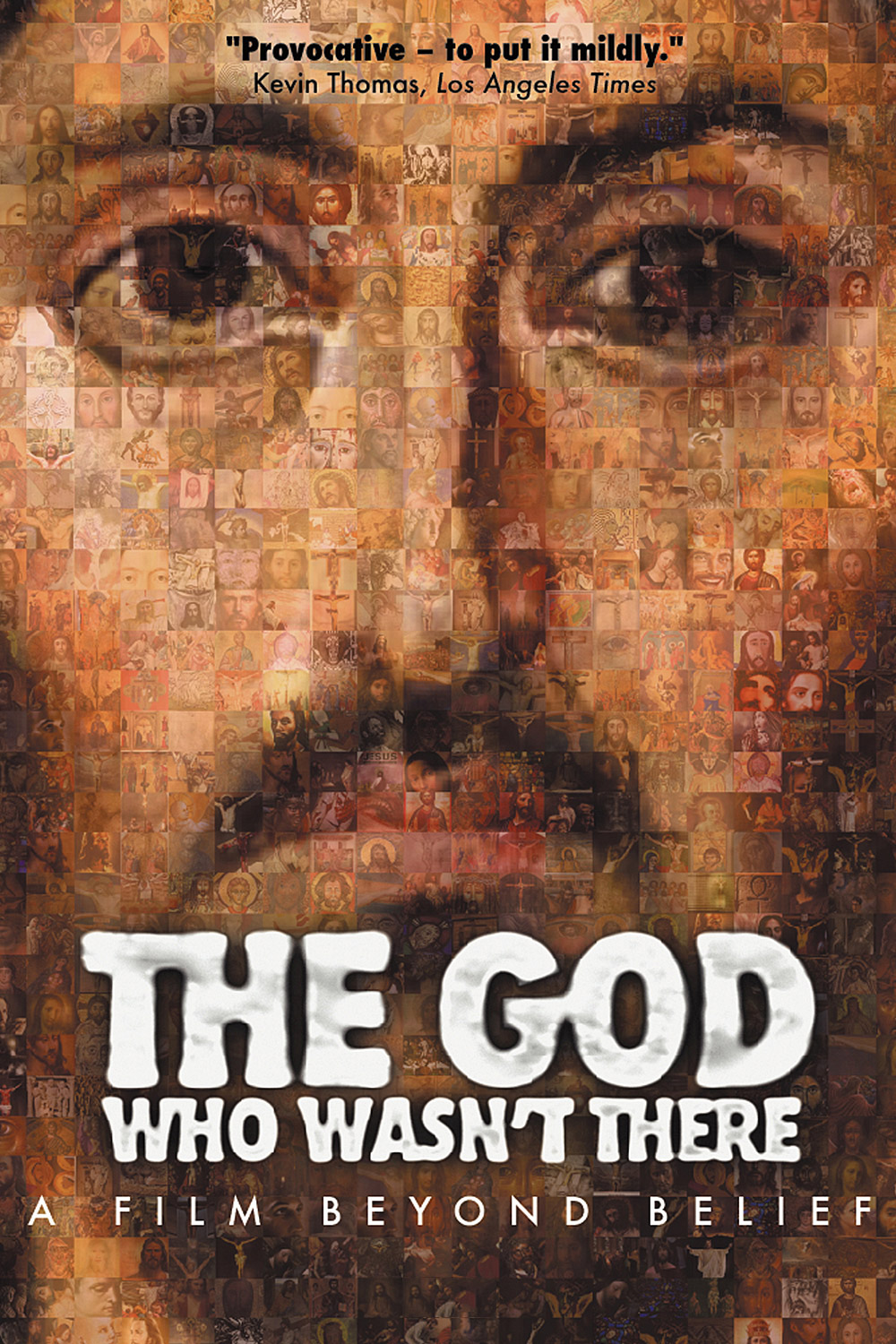
Today’s cinema adventure: The God Who Wasn’t There, a 2005 documentary by Brian Flemming, which examines fundamentalist Christian beliefs in contrast against the historical facts around the origin of the religion and explores the impact of such beliefs in a modern social and political environment. Controversial by its very nature, the film makes no pretense of objectivity, presenting its case with a heavy tone of bemused irony and using duplicitous confrontational tactics to elicit responses from interviewees, and ultimately representing the filmmaker’s personal attempt to repudiate, once and for all, his own past as a fundamentalist Christian and take a stand against the supposed moral authority that dominated his former life. More in the nature of propaganda than documentary, it’s a film that nevertheless succeeds in making its point with verifiable and persuasive facts, and, perhaps more importantly, does so in a highly entertaining manner.

The man behind the camera (and occasionally in front of it) is no stranger to controversy over his work; his previous film, Nothing So Strange, sparked outrage over its depiction of a fictitious assassination of Bill Gates, presented in “mockumentary” style. This time around, he fueled the fires already swirling about his film with various marketing and publicity ploys, including an internet contest offering free DVDs of the movie for the first 1001 people to submit a video in which they blaspheme themselves by denying the existence of the Holy Spirit. Needless to say, the filmmaker exhibits a fondness for deliberate incitement that finds its way into The God Who Wasn’t There.

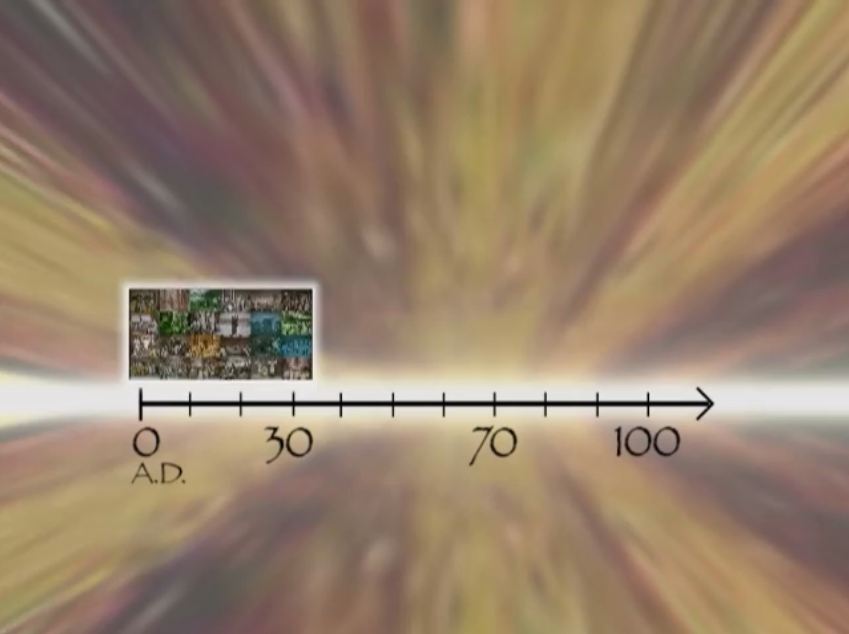
Flemming structures his film into two distinct parts. In the first half, he looks at the difference between the commonly held ideas surrounding the early days of the Christian faith and the factual information in the historical record, making the case that the commonly accepted story of Jesus is a myth, deliberately created by the founders of the church and understood as such by both them and their early followers; he goes so far as to suggest that Jesus never existed as a real person, and that literal interpretation of his life story as presented in the Bible and the surrounding traditions is in direct opposition not only to historical evidence, but even to the writings of early Christians such as the apostle Paul. In the second part of the film, he explores the effect of fundamentalist beliefs in modern society, including the idea of “The Rapture,” and culminates with a visit to the principal of the private Christian elementary school he attended as a child, examining the doctrine that the one unforgiveable sin is to disbelieve the existence of the Holy Spirit- and drawing his conclusion that the greatest blasphemy of all, in the eyes of the Christian church, is to think.

Despite its title, Flemming’s film does not directly address the existence or non-existence of God, per se; his purpose is a temporal one, namely to expose the fallacies and contradictions at the core of modern Christianity and illustrate how a belief in these outdated and misinterpreted ideas affects life in a contemporary world- not just life for the believers, but for everyone else in a society largely influenced by their prejudices and moral agendas. To say that his premise is contentious is an understatement; but it’s certainly nothing new. The ideas he presents in his analysis of the supposed life of Jesus and its basis in literal historical fact are familiar to anyone who has ever examined the faith from the perspective of comparative mythology, and there are literally hundreds, if not thousands, of books devoted to the subject- indeed, the authors of some of these books are among the experts Flemming interviews in his movie. As for the portrayal of fundamentalist Christians and their relationship to the larger culture, the basic conflict between religious dogma and reasonable political policy has been a subject of debate ever since the dawn of the Age of Reason- a fact clearly reflected by the long-standing democratic doctrine mandating the separation of church and state. The God Who Wasn’t There is not a groundbreaking source of new information or world-changing ideas; rather, it is a presentation of well-documented, oft-repeated facts, heavily flavored with flippant cynicism born of the necessity for addressing the issue yet again in a modern, supposedly enlightened world.

It is, in fact, this snarky tone that makes Flemming’s movie enjoyable. In illustrating his points, he finds amusing and pointed ways to emphasize the enormous gap between contemporary reason and the antiquated notions of fundamentalist religious beliefs. From his opening narration detailing the centuries-long dispute between science and faith regarding the revolution of the earth around the sun (or vice-versa, as the church would have kept it), to his heavy utilization of excerpts from The Passion Play (an early, stodgy French silent about the life of Jesus) and The Living Bible (a creaky “educational” film from the 1950s), he makes it clear that- in his estimation, anyway- the fiercely held tenets of Christianity are seriously out-of-step with the intellectual standards demanded by life in the present day; and through his use of interviews with hardcore believers in the faith, he underscores his observation that the majority of modern fundamentalists are not only misinformed and ignorant of the true history of their religion, they are in fact defiantly uninterested in learning anything about it. Their alliance to faith is so deeply ingrained, they exhibit skepticism and mistrust towards empirical knowledge rather than entertain any ideas which might lead them to question their beliefs. It would be easy to accuse Flemming of painting Christians as uneducated and delusional, were it not that some of the experts he brings to the discussion profess their own belief in a more enlightened interpretation of the faith- though it’s also worth noting that, in one sequence, the filmmaker points out that the idea of “moderate” Christianity, taken from the standpoint of strict adherence to Biblical teachings, is in fact not Christianity at all.

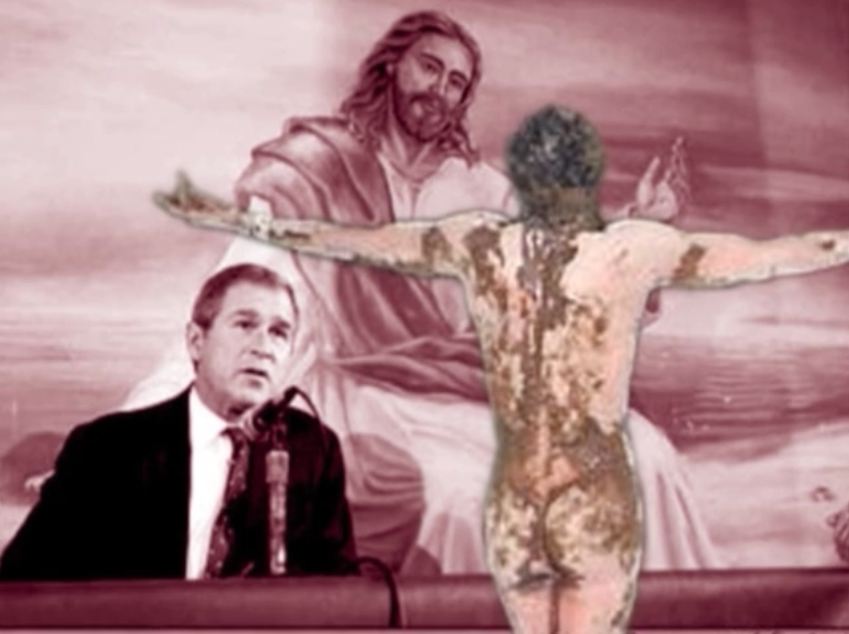
The God Who Wasn’t There features a number of sequences that are both entertaining and alarming, but one in particular stands out. Roughly midway through the film’s short running time, serving as a sort of segue from the mythological analysis into the more direct examination of the modern church, Flemming looks at the connection between Christianity and the earlier, blood-sacrificing religions that marked the culture in which it sprang up. There are obvious correlations in these ancient mythologies to the Christian idea of a man being brutally, ritualistically murdered in order to redeem the sins of everyone else; but Flemming points out how this obsession with bloodshed seems to persist within Christian consciousness even today, centuries beyond these primitive, paganistic origins. To illustrate this, he looks at the popularity of Mel Gibson’s 2004 film, The Passion of the Christ, by far the most financially successful movie ever made about Jesus; using clips from the film, edited together for maximum effect, he focuses attention on the excessive amount of highly explicit blood and gore used by Gibson, creating a scene-by-scene gore analysis showing that only a small percentage of the running time is actually blood-free, and pointing out that such an overwhelming use of graphic violence is the result of a calculated, deliberate effort on the part of the director- and one which, clearly, paid off, tapping sufficiently into something deep within the Christian community that made them come to see his movie in droves. Gibson, it’s worth mentioning, tried unsuccessfully to bring legal action against Flemming. Apparently, the free publicity for his movie was not enough to make him comfortable with the implication that his pious epic was motivated by exploitative greed.

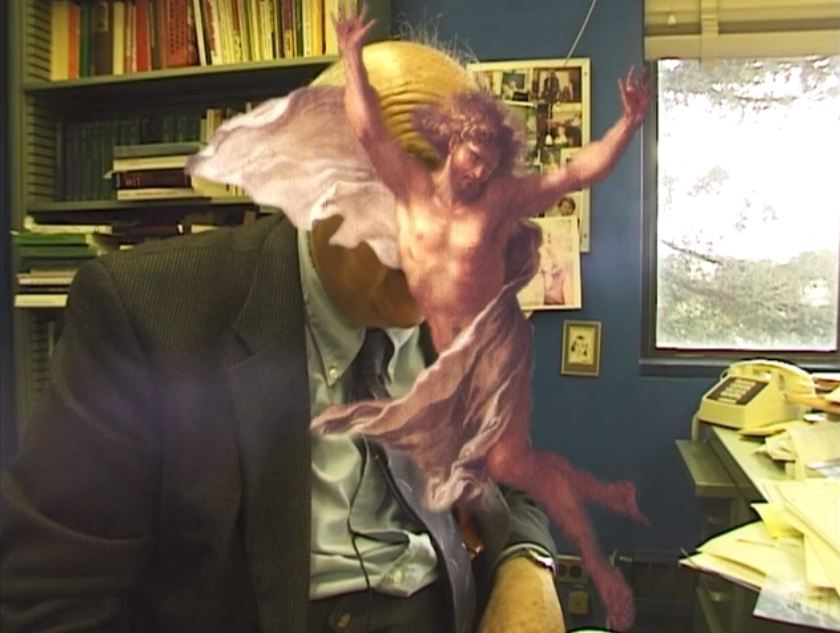
It probably goes without saying that Flemming’s movie is designed to provoke controversy and stimulate discussion about its subject matter. It is also no surprise that the issues it deals with are so emotionally volatile; the challenge of maintaining religious faith in the face of ever-increasing scientific knowledge has never been easy, and it grows more difficult every day in our world of stem-cell research and Higgs-Boson particles. The fact is, however, that The God Who Wasn’t There, like the numerous other contemporary films which challenge dogmatic religious beliefs, is not likely to be seen by many of the viewers at which it is optimistically aimed; and even if it were, those for whom fundamental belief is a cornerstone of daily life are not prone to being swayed by any amount of factual information, an observation made abundantly clear by Flemming in the film itself. As a result, his movie can be characterized as the proverbial “preaching to the choir,” in the sense that most of his audience will already be sympathetic, if not pre-acquainted, with the concepts he presents. Nevertheless, it’s a fun presentation to sit through, if you’re comfortable with using intellect in the realm of spirituality- his use of graphics in illustrating his research is eye-catchingly flashy and clever, and his musical accompaniment (executed by himself, under the pseudonym “DJ Madson”) is appropriately hip and contemporary, at least by 2005 standards. It’s also possible that there is an audience, situated in the middle-ground of this question, who may benefit from Flemming’s work here; those who are on the brink, indoctrinated by years in a church-centric environment who nevertheless have questions and doubts- in short, people who are like he once was, himself. For them, watching The God Who Wasn’t There might be an eye-opening, life-altering experience, one which has the potential to make a difference in the way they see the world and, by extension, the way they affect it. After all, the social and political issues examined here have grown even more pertinent over the seven years since the movie was made; the conflict between fundamentalist thinking and social progressivism has never been more pronounced- or more imperative- in recent memory.  I, for one, hope there are those who are drawn to Flemming’s movie by curiosity and find that it helps them choose, finally, to come over the fence on which they have been sitting for so long.

http://www.imdb.com/title/tt0455507/

C.R.A.Z.Y. (2005)

Today’s cinema adventure: C.R.A.Z.Y., a 2005 French-Canadian feature by director Jean-Marc Valée about the experiences of  a young man wrestling with his sexual identity as he grows up in a large, conservative, male-dominated Montreal family through the sixties and seventies.  The screenplay, based on the real experiences of François Boublay (who co-wrote with Valée), took 10 years to complete, but the end result was one of Canada’s most successful films of all time, becoming a box office hit and sweeping the Genie awards (the Canadian equivalent of the Oscars, for those who don’t know) with 11 wins out of 13 nominations.

Beginning with his birth on Christmas Day, 1960, the film follows the memories of Zac Beaulieu, whose family consists of three older brothers and (eventually) one younger; their father, Gervais, is a loving but authoritarian working class man with traditional ideas of masculinity, and their mother, Laurianne, a doting but submissive woman with deeply-held Catholic beliefs.  Over the course of twenty years, Zac endures the burden of being “different” in the midst of this painfully average, sometimes dysfunctional clan.  First he is branded as a “special” child with a gift for healing; then, as he grows older, he must face the ever-growing challenge of coming to terms with his homosexuality, an unthinkable and insurmountable obstacle to harmony with his family- and in particular, to his relationship with his beloved father.

With Zac’s journey to maturity and self-acceptance at its core, C.R.A.Z.Y. takes its audience on an inside tour of middle-class family life in suburbia; not only do we experience the painful struggle of a young gay man trying to first deny, then repress his sexuality in an un-accepting home environment, but also the other all-too-common scenario of drug addiction, as Zac’s older brother battles an escalating habit that is discouraged but enabled by parents without the knowledge or skills to make a difference.  Lest it seem, however, that the film presents only a bleak and dour perspective, rest assured that the conflicts and tragedies are woven delicately into a total picture that includes a great deal of quirky humor, as well as portraying the many small joys and transcendent moments that bind a family together- and the private experiences, indelibly printed in memory, that give meaning to an individual life.  In the end, though we see Zac and his family embroiled in much turmoil throughout- and mostly with each other- Valée’s film is about love, and its power to redeem and unite, no matter what seemingly irreconcilable differences may exist or how many mistakes have been made between us.

One of the key elements that contributes to the film’s effectiveness (and it is very effective) is the way it captures the third-quarter-20th-Century setting, giving it a particular significance for viewers who, like its lead character, grew up in this era.  Part of the way it does this, of course, is through its superb scenic and costume design; there is an authenticity to the choices that has to do with capturing the everyday look of the era, rather than attempting to give us a flashy, definitive period style.  It is however, the use of music that conjures the period most noticeably, all the more so because it plays a key role in the plot.  Music provides a common bond between father and son, and is an important outlet for both characters.  Highly specific choices are featured prominently throughout: for instance, father Gervais has a fondness for singing along with “Emmenez-moi,” by Charles Aznavour, mirrored later by Zac’s impassioned bedroom performance of David Bowie’s “Space Oddity;” and in one of Zac’s flights of imaginative fantasy, he has a vision of his epiphanic levitation in the church to the strains of the Rolling Stones’ “Sympathy for the Devil.”  The heavy use of the above artists, along with Pink Floyd, Patsy Cline and others, led to the somewhat staggering fact that more than half the film’s budget went to the acquisition of rights for these songs, and director Valée took a cut in his own salary in order to ensure their inclusion.

The excellence of C.R.A.Z.Y. is the result of top-notch work from everyone involved, and it’s an example of a film that is so dependent on the seamless combination of its elements that it seems unfair to single out individuals for specific praise.  Nevertheless, a few standout cast contributions deserve mention.  Most obvious, of course, is the performance of Marc-André Grondin as Zac; whether he is willfully disregarding his father’s behavioral strictures, furtively eyeing his cousin’s teen-dream boyfriend, determinedly trudging through a blizzard as penance for his sinful thoughts, or finding an outlet for his stifled passions through his love of music, he lets us inside and allows us to feel like participants in his story.  The performers who leave the deepest impression, however, are Michel Côté and Danielle Proulx, completely authentic as his father and mother; they inhabit this pair without judgment or caricature, showing us their many flaws but also the good intentions and endearing qualities that make them lovable.  Côté in particular gives an unforgettable portrait of a man who is at once larger than life and touchingly human; volatile, masculine, and charismatic, he commands the screen and makes it very clear why this relationship is so important to Zac.

C.R.A.Z.Y. is not a film that invites in-depth analysis of its underlying themes and archetypal symbols, though these things are present; rather, it is a heartfelt, sometimes painful slice-of-life movie filled with bittersweet nostalgia, ironic hindsight, disarming levity, achingly familiar moments of commonality, flashes of revelatory observation, and a cumulative emotional resonance that subtly builds to an unexpectedly powerful climax.  It accomplishes a rare feat for this type of movie, allowing us to be drawn so completely into this family that we truly feel a part of it.  This is partly due to the way Valée and Boublay show us the kind of mundane everyday details that become shared touchstones through repetition and associated memories, and their effort to invest each member of the family with as much individual life as possible, even the brothers whose smaller roles in the proceedings leave them more or less in the background; the final effect is that these characters seem like real people in our lives, people that we know intimately, and this serves to deepen our connection to them and give their experiences the weight of shared universal memory.  Perhaps most importantly, the movie possesses a sincerity which derives largely from the genuine love it has for all of its characters- even as it reveals their maddening imperfections and their often inadequate skills at coping and communication.  This quality alone makes it superb, far-and-away superior to so many similar cinematic memory-plays that start promisingly and then devolve into just another manipulative tear-jerker before the final scenes; but what makes it a truly remarkable film is the primary perspective it takes in its exploration of the trials and tribulations of family life.  With Zac as our window into the Beaulieu clan, our sympathies are naturally transferred to him, and we are therefore led to identify with his personal conflict, which is, of course, the central focus of the film.  His gradual progression- an anguished process of fear, denial, self-loathing, and self-deception, built around his emerging homosexuality-  is thereby made relevant to audiences without firsthand understanding of his experience, a sadly familiar one to millions of gay and lesbian people the world over. It’s a heartbreakingly complete and specific portrayal: Zac’s fear of humiliation and rejection from his family, his desperate bargaining through prayer to have his “curse” removed, his rejection of faith and rebellion against normalcy even as he continues to hide his true nature; all these and more are important facets of the movie’s dominant subject matter, and though it’s all so common as to border on cliché, it’s a social phenomenon that has been long obscured by stigma.  By investing us in Zac from the beginning of his life, the movie opens it up to be shared- and experienced, at least through extension- by all.  I may be wrong, but I can, unfortunately, think of no American film that even comes close to making the reality of growing up gay so painfully accessible to a wider audience; I invite your corrective examples, because if there are such films, I very much want to see them.

http://www.imdb.com/title/tt0401085/

Eyes Wide Open/Einayim Petukhoth (2009)

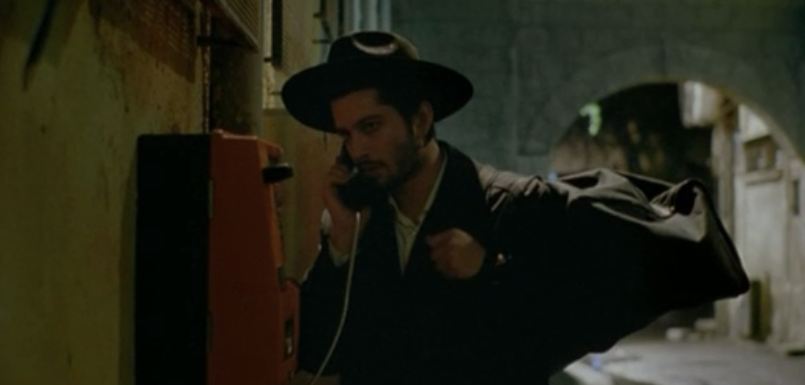
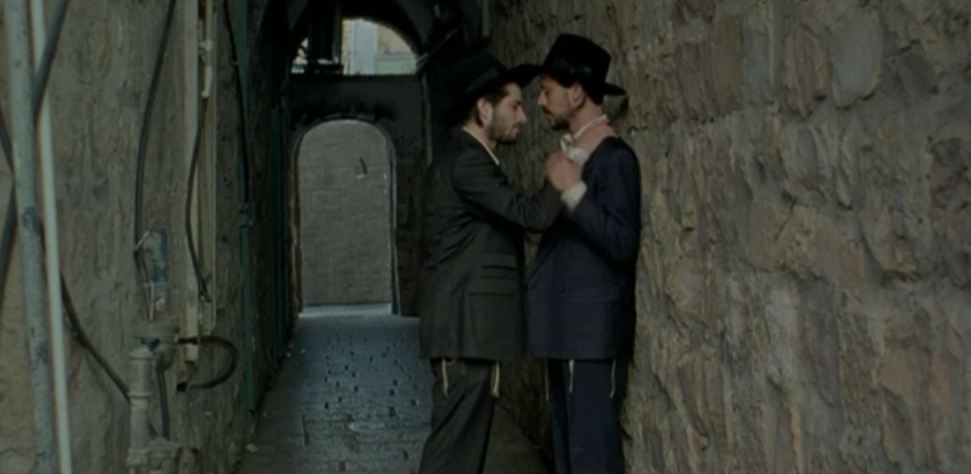
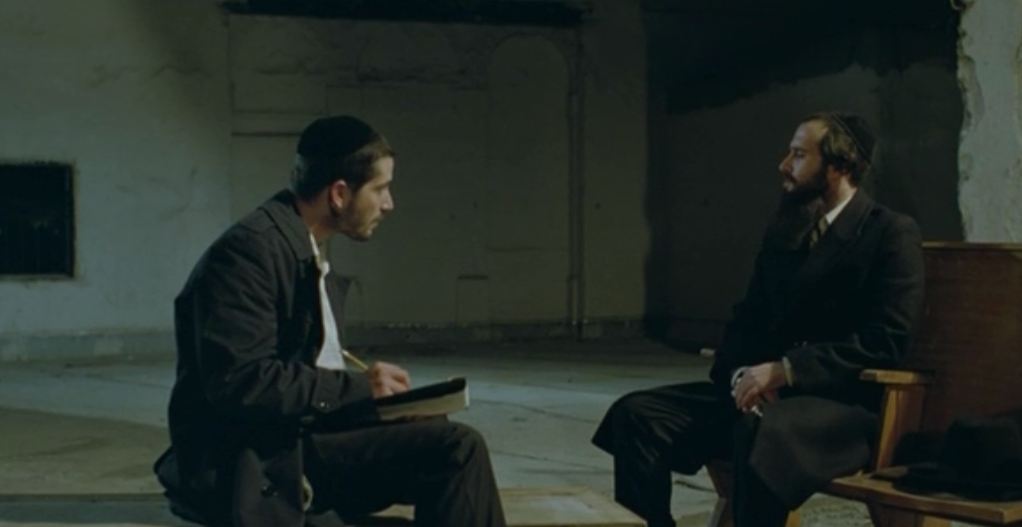
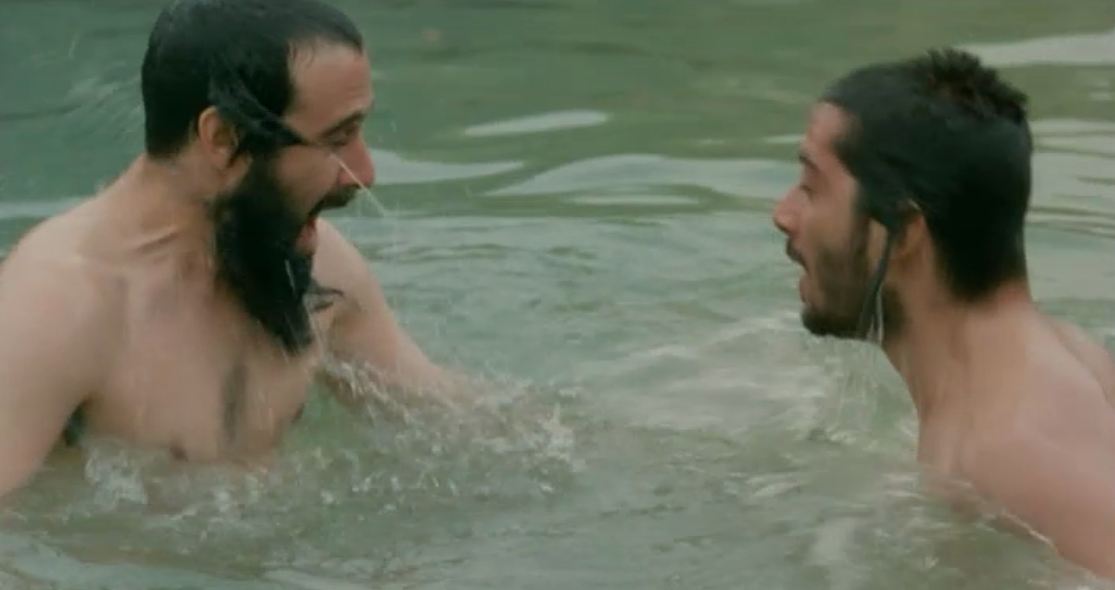
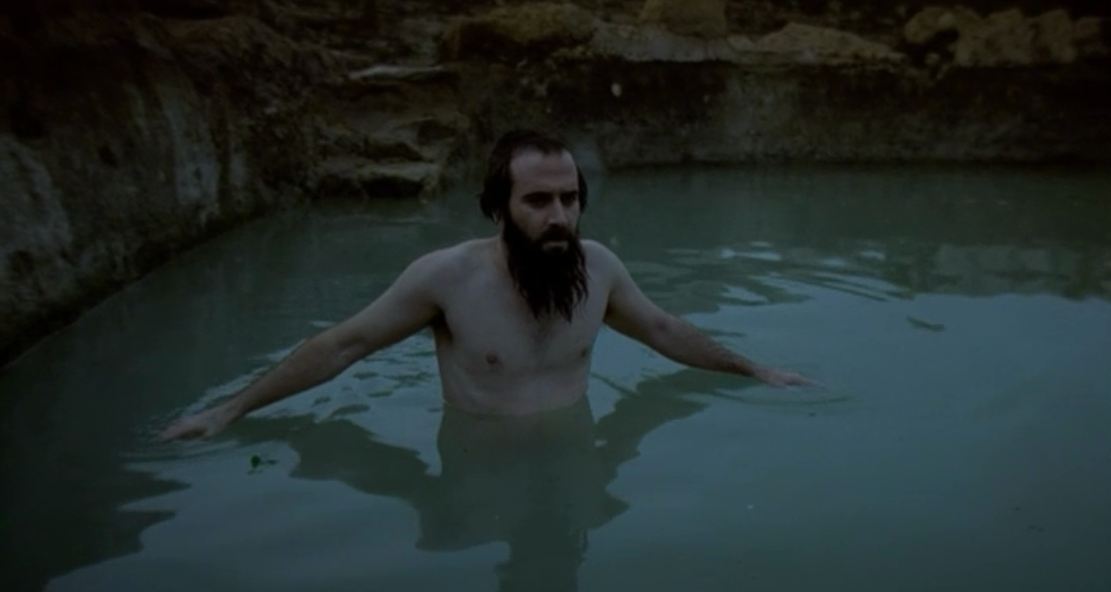
Today’s cinema adventure: Eyes Wide Open, a 2009 Hebrew-language film by first-time director Haim Tabakman depicting the spiritual and social conflict sparked by a blossoming homosexual relationship within a deeply Orthodox neighborhood of Jerusalem. One of the growing number of gay-and-lesbian-themed films to come out of Israel in recent years, it is the story of Aaron, a dedicated husband and father who inherits his father’s butcher shop; when he takes on a young homeless student as an apprentice, a forbidden attraction develops between them, eventually growing into an affair that tests his faith and threatens to cost him not only his beloved family but his place as a well-liked and respected member of the community as well. A film that treads on potentially dangerous, controversial ground, it handles its subject matter with respect for both the valued traditions of the Orthodox Jewish Church and the importance of fulfilling the needs of the heart; the screenplay by Merav Doster carefully constructs its narrative around the delicate issue at its center, choosing to offer up a chronicle of a man’s personal crisis of faith rather than an indictment of attitudes, and to focus on the honest examination of emotional experience instead of on the promotion of a particular agenda, treating its characters with sympathy regardless of which position they hold in the moral tug-of-war being staged. The result is thought-provoking without being inflammatory, moving without being manipulative, and reverent without being precious- a fine example of the kind of slice-of-life drama that achieves its goals simply by presenting its tale in a straightforward manner and allowing the viewer to make up their own mind about the issues raised within.

Despite the weighty social and spiritual matters being explored here, Eyes Wide Open is by no means an entirely solemn film. It manages to find many ways to lighten its tone, from the ironic and observational humor inherent in its situation to the more abstract metaphorical connections drawn from the large amount of meat its two main characters must handle throughout; and lest we forget it in all this talk of moral dilemmas and social obligations, this is first and foremost a romance- and a steamy one, at that. The passion between these two men is carefully crafted, building steadily from their first glimpse of each other, smoldering insistently as they grow closer and becoming stronger with each averted opportunity, until it finally explodes in a fervent love scene that is as joyful as it is erotic- and it is extremely erotic, despite (or perhaps because of) the fact that it is not visually explicit. The power of their connection does not end there, however, because the bond is not merely a sexual one; their emotional connection is built just as carefully, and it is this deeper feeling that makes their relationship so engaging and places the stakes so high. For in the end, it is the love they have for each other that turns Aaron’s life inside out, not the mere physical attraction that has brought them together; and it is the convincing portrayal of that love that keeps us invested, sharing with this illicit couple in their happiness and their heartbreak. The credit for this, of course, must go to the two actors who play them, Zoharr Strauss and Ran Danker, neither of whom, as far as I know, are gay offscreen- not that it matters. Both men are charismatic and instantly likable, and they each convey the depth and range of their roles with clarity. In particular, Strauss (who plays Aaron) does a superb job of allowing his inner landscape to show through a necessarily stoic exterior; his is the more complex role, requiring him to wrestle with a much wider range of conflicts than his younger counterpart, and he meets the challenge admirably. Which is not to say that Danker (an impossibly handsome young actor) is overshadowed or outdone; his Ezri is a portrait of a man who is resigned to the necessity of hiding his true nature, but is not ashamed of it- as he reveals in his intimate moments with Strauss when the veneer slides away and his passion and sensitivity shine through. Also delivering fine performances are Tinkerbell as Aaron’s patient wife, struggling with her growing suspicions and doing her best to fight, in her own small way, for her husband’s love; and Tzahi Grad as Aaron’s rabbi and friend, whose loyalty is stretched to its limit as he tries to maintain his support.

Director Tabakman wisely chooses to place the burden of telling the story on his actors, largely using stationary, long takes that permit an uninterrupted flow within the scenes; but he nevertheless brings his visual sense to the film with a keen eye for composing his frames, and he utilizes his Jerusalem setting- beautifully photographed by Axel Schneppat- to underscore the movie’s central conflict with the visual clash between the city’s ancient architecture and its contemporary, urban feel. His greatest accomplishment with Eyes Wide Open, however, is undoubtedly the way he allows it to deliver its full, cumulative effect without trying to tip the scales one way or the other. The scrupulous fairness with which he handles his subject is, in terms of artistic integrity, his greatest strength.

That fairness, however, also opens up the film to its greatest criticism. By refusing to overtly choose a side in this struggle between traditional religious doctrine and contemporary respect for individual freedom, the film risks interpretation as an anti-gay polemic. Certainly its treatment of homosexuality itself is beyond reproach, but so too is its sensitivity to the ancient mores of the Orthodox Hebrew culture; it is far too heavy and complicated a conflict to deserve glib or easy treatment, but those with a more progressive bent might wish for a stronger stance on the side of tolerance and equality. Personally, it is hard for me to characterize a film as anti-gay when it creates such sympathy for its homosexual characters and works so hard to generate hope from the audience for them to be together; and by virtue of exploring the conflict- which is clearly universal, for the setting could just as easily be in a heavily Christian or Muslim community- the film opens up the kind of thinking and discussion which can ultimately lead to positive change, whether socially or personally. Eyes Wide Open, however, is not a fantasy: in the end, Aaron must make a choice between holding on to the beliefs upon which he has built his life or abandoning everything he has ever known for the sake of his own happiness. The choice will not be a surprise to anyone who has paid attention to the struggle of this noble, upright man; and though one might wish that choice were a different one, how many of us would truly have the courage to make it? Still, in the film’s final moments, when Aaron is submerging himself in the waters of a cleansing spring he had once visited with Ezri, and he doesn’t come back up before the camera cuts to black, we cannot help but wonder how long he can hold his breath.

http://www.imdb.com/title/tt1424327/

An Englishman in New York (2009)

;

Today’s cinema adventure: An Englishman in New York, the 2009 British telefilm which marked the return of John Hurt to the role of noted real-life author/performer/raconteur/gay icon Quentin Crisp. A follow-up to the acclaimed1975 telefilm based on Crisp’s landmark memoir, The Naked Civil Servant, which made Hurt into a star and won him a BAFTA for Best Actor, this modest biopic covers the later years of the famous eccentric’s life, when he became a celebrated resident of Manhattan and a polarizing figure in the continuing struggle for gay rights. While Hurt maintains his customary brilliance in revisiting and expanding his legendary performance, this outing lacks the strong, central drive of the original film, which had the benefit of focusing on Crisp’s early struggle and triumph in asserting his homosexuality and his individuality in the repressive England of early 20th century. Part of the reason is likely that the first outing was built upon the solid ground of Crisp’s superb book, which portrayed his early life and experiences as a personal journey culminating in his courtroom victory blow against the antiquated morality laws which kept most English homosexuals fearfully cringing in the closet; but here, writer Brian Fillis attempts to encapsulate the remarkable life which followed those events into a 90 minute whirlwind, consolidating characters and contriving scenes in order to address key issues and events. To be sure, he has a cohesive purpose- the main focus here is Crisp’s fiercely guarded individuality, which put him at odds with the ongoing gay rights movement and often made him the object of exclusion within his own community (particularly after an infamous remark that AIDS was “a fad”)- and he does an admirable job of creating a portrait of a man who is forced into continuing growth in spite of himself; but the end result is considerably less satisfying than Civil Servant and leaves us wondering about many of the blank spots in between. Nevertheless, there are many reasons to admire this belated sequel, not the least of which is the rich background of late-century New York scenery lending an authentic documentary feel to the proceedings. By far, however, the greatest joy here is the magnificent performance of John Hurt, who once again captures to perfection the physical and vocal character of this legendary figure while simultaneously conveying the depth of emotion and experience which lies beneath that flamboyant exterior; in Hurt’s hands, the affectations of dress and manner become (as they were in real life) an expression of Crisp’s true self rather than a costume proclaiming his refusal to conform. Nevertheless, in spite of the more obvious success of his characterization, it is in the more intimate moments when Hurt’s brilliance as an actor really shines through- his weathered face and soulful eyes wordlessly express volumes, whether he is confronting the thoughtless prejudice of younger gay men or his own mortality. Supporting him are an array of established character actors- Dennis O’Hare, Swoosie Kurtz, Cynthia Nixon- who are never quite allowed to rise above the constraints of the condensed format, although Jonathan Tucker has some nice moments as artist Patrick Angus, whose work was championed into success by Crisp. Overall, though its hard to call An Englishman in New York a worthy successor to the still-lauded Civil Servant, it offers many rewards in its own right; and though it may ultimately contain less insight into Quentin Crisp than the Sting-penned song from which it takes its title, it is still a fitting and necessary epilogue to the story of a man who changed the world by refusing to change himself.

;

http://www.imdb.com/title/tt0997057/

;

Death Proof (2007)

Image

Today’s cinema adventure: Death Proof, writer/director Quentin Tarantino’s 2007 homage to the cheap exploitation movies of the sixties and seventies, originally released as half of the Grindhouse double feature (paired with Richard Rodriguez’ Planet Terror). With his trademark style on full display, Tarantino sets out to emulate- and surpass- the violent and titillating “anti-classics” he clearly loves with this tale of a psychopathic ex-stunt driver who stalks and kills young women in his souped-up, “death-proofed” muscle car. Though Kurt Russell delivers a delightful performance in the central role, and the director’s impressive visual style is as dazzling as ever, the film is ultimately sabotaged by several factors. First of all, with its conceit of recreating the genre which inspired it, Death Proof severely impairs its own ability to engage the viewer in its proceedings: the deliberately grainy cinematography, scratched film and bad splicing constantly serve as a reminder that it’s all just an elaborate gimmick; the inherently shallow formula prevents the far-fetched and sensationalistic plotline from ever becoming believable or compelling; and the characters, for all the self-consciously clever dialogue Tarantino puts in their mouths, are doomed to remain one-dimensional ciphers who exist merely to enact the filmmaker’s cars-sex-drugs-and-rock-n-roll fantasy. All these criticisms, of course, could easily serve as a description of any of the B-movies upon which Tarantino’s opus is based; and it would be correct to point out that what really matters in those films (and in this one) is the nail-biting, balls-to-the-wall action and the gratuitous violence for which everything else simply provides a framework. But where the original films managed, at their visceral best, to thrill and delight, transcending their shoddiness with their lack of pretense and their unapologetic devotion to providing guilty pleasure, Tarantino’s would-be tribute fails to achieve any of these ends. To be sure, his talent is clearly visible here: but that’s part of the problem, for where the drive-in fodder he emulates was often so bad it was good, here we have an obviously good filmmaker deliberately trying to be bad, and succeeding in just being, well, bad; and though the action sequences- two of them, to be exact- are unquestionably well-done, in order to get to them (thanks to Tarantino’s self-indulgent insistence on maintaining his own signature tension-building style) we have to sit through interminable stretches of hip, foul-mouthed dialogue, which may be meant to invest us in the characters but instead results in repeated glancing at our watches. Seriously, there was never this much talking in Death Race 2000. Don’t get me wrong- I’m not criticizing Tarantino for embracing and championing the grindhouse genre. After all, these humble movies are touchstones for a generation and have had a major influence on contemporary cinema; and in his best work (such as the Kill Bill movies and Inglorious Basterds), the director has masterfully drawn inspiration from them while incorporating their elements into his larger personal vision. With Death Proof, however, he has only succeeded in making a pale shadow of the original works, which, like a replica of some crude masterpiece of outsider art, seems pointless and unnecessary.

http://www.imdb.com/title/tt1028528/

Chris and Don: A Love Story (2007)

Today’s cinema adventure: Chris and Don: A Love Story, a 2007 documentary detailing the 34-year relationship between acclaimed writer Christopher Isherwood and his life partner, artist Don Bachardy.  Practicing documentary filmmaking at its finest, directors Tina Mascara and Guido Santi piece together the remarkable shared life of the couple while also presenting a portrait of each man individually, utilizing footage and narration from surviving partner Bachardy, excerpts from Isherwood’s diaries (read, appropriately enough, by Michael York, who portrayed the author’s alter-ego in the film version of the musical Cabaret, based on Isherwood’s Berlin Stories), interviews with various friends and archivists, and copious home movies and photographs of the couple’s life together. The relationship, which began when the 48-year old British expatriate author met the 18-year old Los Angeles boy on a beach in Santa Monica and defied the odds- and the cynical expectations of the pair’s acquaintances- to endure until Isherwood’s death in 1986, is presented with a restraint and an objective journalistic detachment which preserves the dignity of its subject matter and results in a cumulative emotional wallop, leaving the viewer moved and uplifted by the triumph of an unlikely love. Documentary purists may quibble over the occasional use of re-enactments to depict key moments in the relationship (presented only in brief, out-of-focus snippets without dialogue) and animations derived from Isherwood’s fanciful sketches from his correspondence to his partner, but these touches do nothing to alter or affect the facts presented. Though the film depicts the lives of a gay couple, it is suitable for all audiences; and anyone who watches it is bound to be, as I was, filled with admiration for two people who disregarded social prejudices from every direction and inspired by their success at building a love to last a lifetime.

http://www.imdb.com/title/tt1138002/